4 Cách viết, triển khai trong ielts writing
4 Cách viết, triển khai trong ielts writing. Tài liệu được tổng hợp và sưu tầm. Mời các bạn tham khảo
Môn: Chủ đề: Writing 14 tài liệu
Trường: Tài liệu dành cho học sinh chuyên Anh 829 tài liệu
Tác giả:








Preview text:
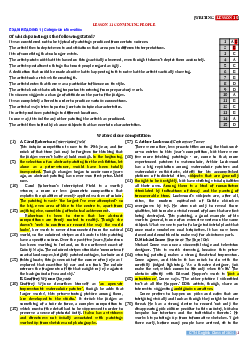
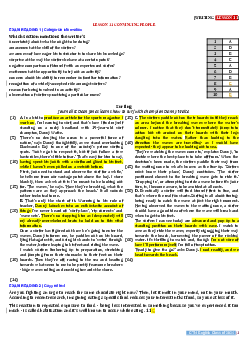
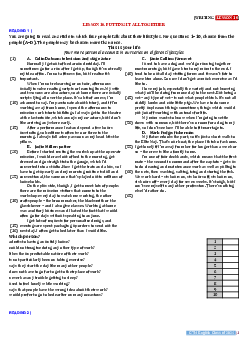
NGUYEN H. HUY 1
Some people believe that young people should choose
the jobs that they want, but other people think they should
be more realistic and think more about their future.
Discuss both views and give your own opinion. Essay 1
Moving from childhood to adulthood involves many competing
activities, and one such activity is the choice of a career path. This
option is often fraught with conflicting advice, as those on one side call
for following one’s heart while others emphasize the realities that
demand a practical approach focused on the future. The following
essay will discuss each of these arguments in turn and then reach a
general conclusion concerning this difficult issue.
The rationale in favor of doing what one loves is compelling.
Advocates will say that self-determining incentives, which are based
on one’s real interest in a profession, contain a potential for
achievement. Hence, such individuals would work tirelessly in order to
achieve more in what they are passionate about. It can lead to
solutions and developments as well as eventually a better career path.
On top of that, being in a field that one believes in and enjoys can help
a person achieve more and be more content in this life. Still, at times
this perspective tends to neglect the facts pertaining to the
employment market, such as the competition and the necessity of
possessing a high degree of specialized skills.
On the other hand, the practical viewpoint contends that it is
important to look at the general direction of the market, whether there NGUYEN H. HUY 2
are potential places for employment, and the level of income that can
be expected. Supporters of this position argue that financial security is
an essential ingredient in preparing people for life’s challenges in such
a way that they can satisfy their basic needs as well as work on some
personal goals they have. Picking a field where there is high demand
reduces the chances of becoming unemployed and offers opportunities
for advancement. But that view can in some cases disregard the
importance of self-satisfaction in a career and the danger of stress
from working in a field chosen purely for its practicality.
Ultimately, such a situation calls for a more appropriate
response. Molding oneself in pursuit of passion kindles seriousness
and zeal to complete that goal, while practicality ensures that the
target is achieved. A young person ought to try to get a profession that
they enjoy doing and that has a realistic and economically sound job
market. This requires effective research, adequate self-awareness, and
the readiness to acquire more knowledge and skills over the course of their career. Essay 2
The selection of a career path is one of the most crucial choices
that young adults make, as it will determine their involvements and
impact their well-being. This often means that one has to reconcile the
dilemma of whether to follow one’s heart or to be practical. This essay
will explore these variables, bringing an objective approach to how the
young generation can make informed career choices. NGUYEN H. HUY 3
Pursuing a passion has been widely promoted, with advocates
arguing that this leads to better use of time and increased happiness.
Such people hold that doing work well requires some inner motivation
which is born out of genuine interest. It also enables those who love
their work to pursue goals with greater drive and overcome several
hindrances. However, sustaining this passion as a business can often
diminish the excitement, especially in fields with limited market
prospects or monopolistic practices.
On the other hand, the pragmatic approach makes it compulsory
to consider things such as the stability of employment, earning
capacity, and marketability. People with this argument would say that
it is important to ensure a stable form of income because it enables
people to fulfill their obligations while at the same time working on
their goals. Nowadays, choosing a profession in a rapidly developing
and practical sphere helps to minimize the risk of losing a job and
provides opportunities for further career advancement. Nevertheless,
if too much emphasis is placed on practicality, this could raise
problems regarding dissatisfaction when the career path taken does
not coincide with one’s interests.
Lastly, sound career choices depend on balancing emotional and
practical, risk-free decisions. It is crucial for the youth to pursue their
interests as well as suitable careers without neglecting the
employment market. This involves looking into the relevant business
domains, contacting experts in these fields, and understanding the NGUYEN H. HUY 4
skills and qualifications that need to be acquired to prosper in that domain. Essay 3
When it comes to choosing an occupation, young people often
face a dilemma between what the heart says and what the brain says.
This essay will present the case for adhering to passion and also the
case for pragmatism, and in the end, provide a solution that incorporates both strategies.
It is common wisdom that the best route to professional
satisfaction is to pursue one's passion. Supporters hold the view that
when people are passionate about their work, they are likely to be
more focused and goal-oriented and hence achieve their objectives.
Passion may bring about creative and innovative skills, as well as high
levels of dedication, which lead to a more satisfying and purposeful
career overall. Nevertheless, this particular mindset can at times
overlook the challenges faced regarding the ability to sustain one's
passion in a career, particularly in fields with little room for many
people or with too much competition. However, it is important to
consider practical aspects like employment opportunities and income levels.
On the other hand, the pragmatic perspective stresses the need
to consider factors like job security, income, and the ability to advance
within the organization. The proponents of this stance argue that
financial security is a prerequisite for future safety since it allows
individuals to fulfill all financial obligations while setting aside NGUYEN H. HUY 5
amounts for personal goals. There are professions in growing and
stable sectors that tend to minimize chances of unemployment and
provide opportunities for growth in one’s career. Nevertheless, if one
becomes very practical in all their actions regarding a vocation, it is
likely that dissatisfaction may arise if that vocation does not resonate
with the individual’s passion or beliefs. One can be in this career
without any trace of excitement; it becomes mundane, and the person
eventually suffers what is known as burnout.
Thus, good professional choices are made only if the right
amounts of both enthusiasm and real-life facts are present. First of all,
young people should undertake a passion-seeking quest and search for
possible careers that could nurture such a passion while at the same
time being mindful of the job market. This includes focusing on the
current changes in the target industry, communicating with
professionals in that field to gain practical understanding, and
understanding the qualification requirements for effective work in a
desired profession. In this way, young people have made it even better
by combining passion with practicality in order to bolster their
chances of getting and maintaining a fulfilling career. Essay 4
Choosing a career path is one of the important milestones in
every young individual’s life and is usually associated with an inner
dilemma between the pursuit of one’s dreams and the adoption of a
more sensible and secure option. This essay will discuss the problem NGUYEN H. HUY 6
from all angles, providing a balanced viewpoint whereby sentiments
and reality should be incorporated.
The search for passion is often overrated as a vehicle that will
lead to an individual having an engaging and fulfilling career. It is
argued that if people love what they do, they tend to be more
productive, more motivated, and more successful in the end. Passion
can fuel innovation, creativity, and purpose, which makes the career
pathway more satisfying. Nevertheless, sometimes this approach does
not appreciate the challenges involved in converting such passion into
a marketable career, often in areas which are highly competitive and
have very few opportunities. It is also important to understand that
loving one's work does not guarantee financial security or success in one’s career.
On the other hand, in the case of the practical stance, the notions
of occupational safety, salary amounts, and the level of possible
promotion come to the forefront. Supporters of this point of view are
of the opinion that economic prosperity should be associated with the
formation of a certain base that will help individuals realize their
potential beyond simply meeting financial obligations. Opting for a job
in an ever-growing and secure sector will reduce the probability of
being jobless and offer a pathway of career growth. Nevertheless, an
exclusively practical approach may cause a sense of irritation,
especially when the profession does not conform to the attitudes and
faculties of the individual. An occupational sphere where one is
missing their passion will turn mundane, and in the long run, will lead NGUYEN H. HUY 7
to loss of motivation. There is no doubt that it is possible to achieve
more than this practical side by properly addressing how practicality meets aspirational needs.
At long last, it is necessary to see that any workable solution
should integrate enthusiasm and caution. Young people should
consider their hobbies, as these can provide them with further career
opportunities while bearing in mind the real aspects of vocation. In
doing so, it entails looking into the market prospects, building
professional contacts, and understanding the skills that are generally
accepted as minimum standards for the career path. In this way, the
young generation can enhance their probability of landing a viable and
fulfilling occupation, which in the end leads to improved well-being and satisfaction overall.