Unit 6: Learn | môn Tiếng Anh lớp 8
Unit 6: Learn | môn Tiếng Anh lớp 8. Tài liệu giúp bạn tham khảo, ôn tập và đạt kết quả cao. Mời đọc đón xem!
Chủ đề: Unit 6: Learn (FP) 10 tài liệu
Môn: Tiếng Anh 8 749 tài liệu
Tác giả:









Preview text:
UNIT 6: LEARN
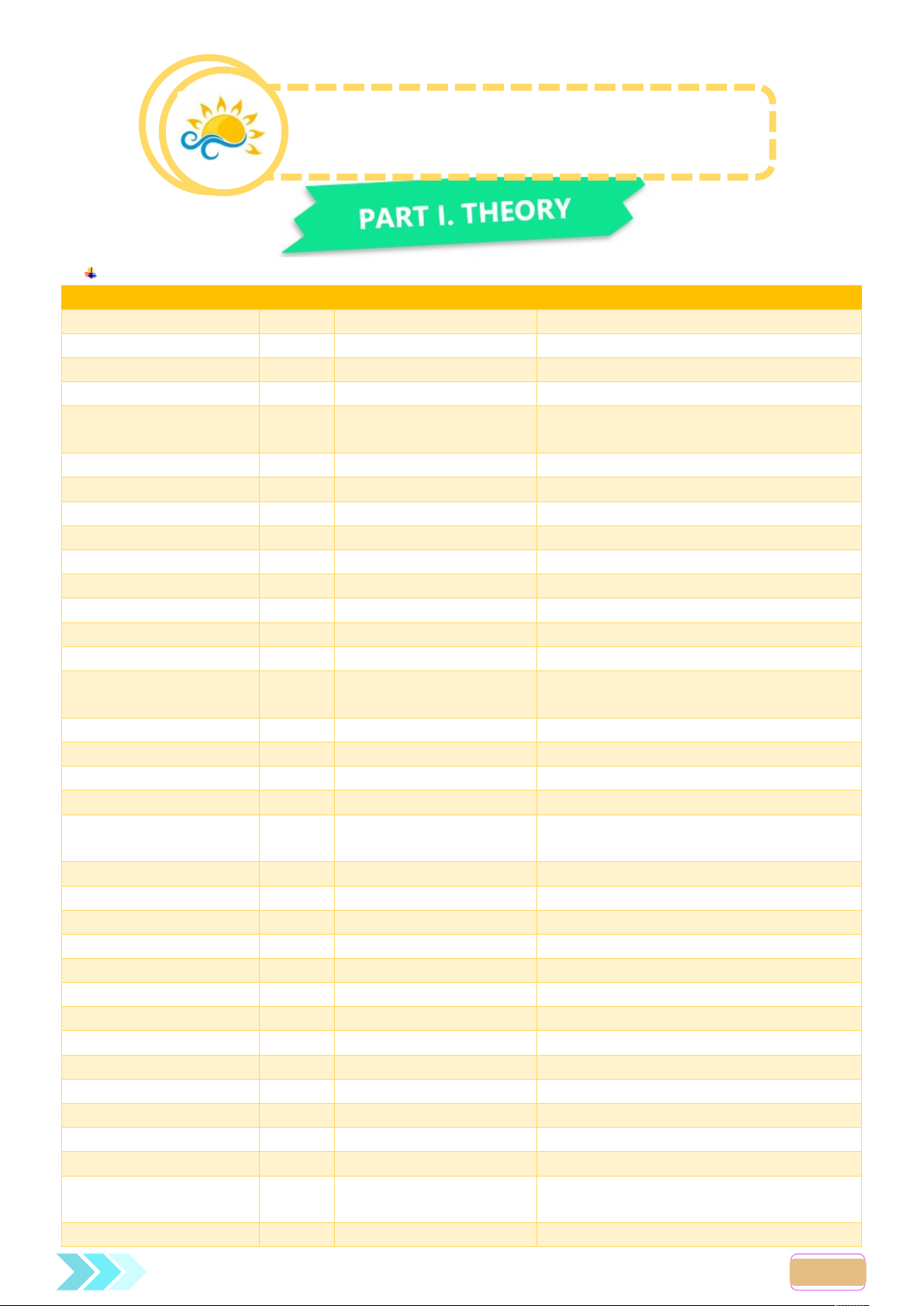
(Biên soạn Trần Trường Thành-Zalo 0369904425) A. VOCABULARIES New words (Từ mới) Word Type Pronunciation Meaning 1. a lawyer (n) /ə ˈlɔɪ.ər/ luật sư 2. alternative (n) /ɔːlˈtɜːnətɪv/ sự lựa chọn 3. apprenticeship (n) /əˈprentɪʃɪp/ giai đoạn tập sự 4. attend (v) / əˈtend/ tham gia/ tham dự 5. boarding
trường nội trú/ trường có ký túc xá (n) /ˈbɔːr.dɪŋ ˌskuːl/ school 6. bully (v) /ˈbʊli/ bắt nạt 7. career (n) /kəˈrɪə(r)/ công việc 8. challenging (adj) /ˈtʃælɪndʒɪŋ/ mang tính thử thách 9. cheat (v) /tʃiːt/ gian lận 10. concern (v) / kənˈsɜːn/ bận tâm 11. conclude (v) /kənˈkluːd/ bao gồm 12. construction (n) /kən'strʌk∫n/ công trình 13. curriculum (n) /kəˈrɪkjələm/ chương trình giảng dạy 14. enrol (n) /ɪnˈrəʊl/ đăng ký 15. entertainme giải trí (n) /ˌentəˈteɪnmənt/ nt 16. express (v) /ɪkˈspres/ bộc lộ 17. graduate (v) /ˈɡrædʒuət/ tốt nghiệp 18. graffiti art (n) /ɡrəˈfiː.ti ɑːt/ nghệ thuật vẽ graffiti 19. historic (adj) /hɪˈstɒrɪk/ có tính lịch sử 20. homeschooli giáo dục tại gia (n) /ˌhəʊmˈskuːl.ɪŋ/ ng 21. institution (n) /ˌɪnstɪˈtjuːʃn/ tổ chức 22. involve (v) /ɪnˈvɒlv/ liên quan, tham gia 23.journalism (n) / ˈdʒɜːnəlɪzəm/ ngành báo chí 24. management (n) /ˈmænɪdʒmənt/ ngành quản lí 25. obey (v) /əˈbeɪ/ tuân thủ, nghe theo 26. ordinary (adj.) /ˈɔːdnri/
thông thường, bình thường 27. panic (adj) /ˈpænɪk/ hoảng sợ 28. passion (n) /ˈpæʃn/ đam mê 29. professional (adj) /prəˈfeʃənl/ có tính chuyên nghiệp 30. prohibit (v) /prə'hibit/ cấm 31. qualification (n) /ˌkwɒlɪfɪˈkeɪʃn/ bằng cấp 32. reason (n) /ˈriːzn/ lý do 33. resist (v) / rɪˈzɪst/ chống lại, cưỡng lại 34. school-
người vừa mới rời ghế nhà trường (n) leavers 35. single- sex (n) /ˈsɪŋ.ɡəl seks skuːl/ trường dành cho nam/nữ
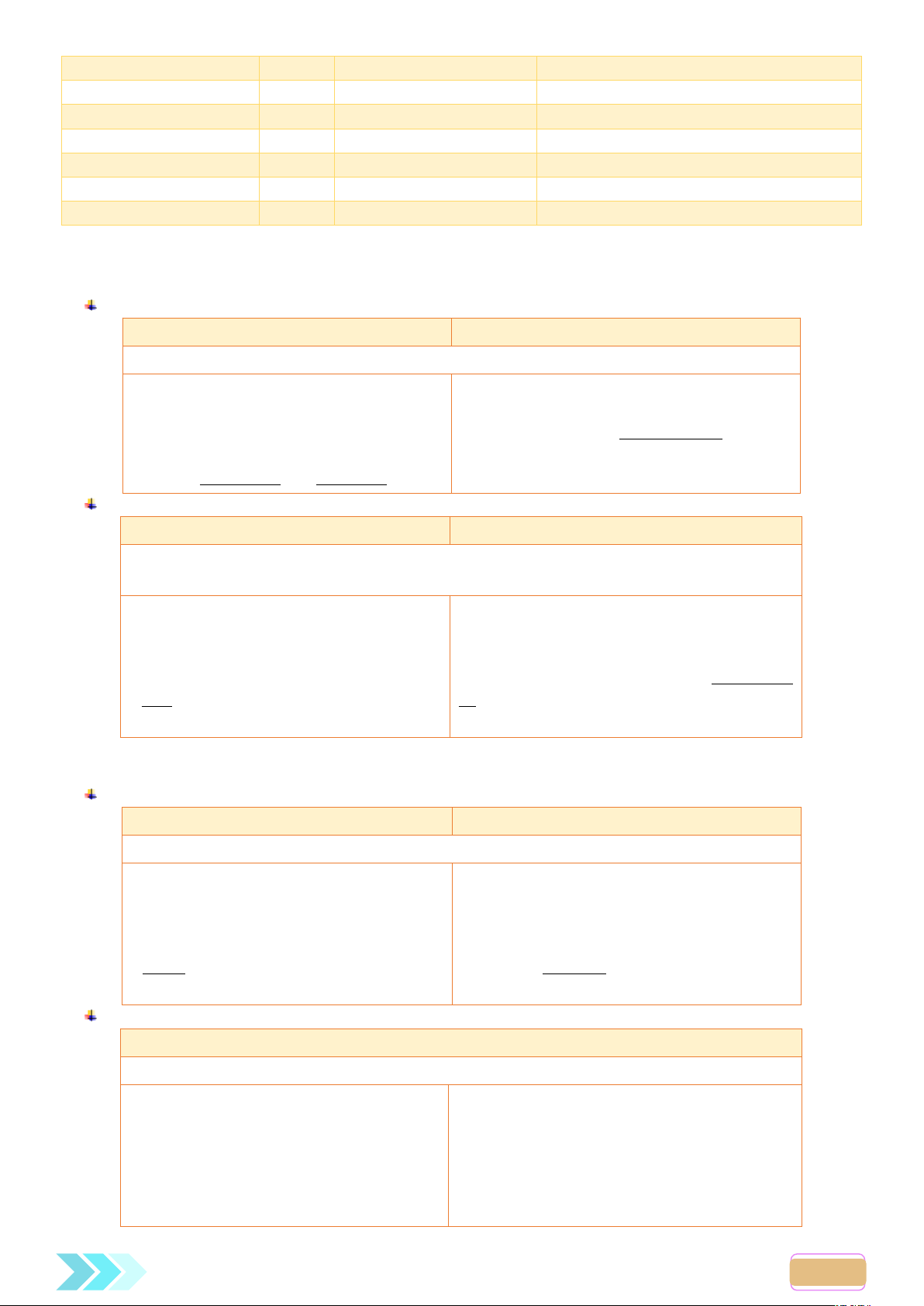
Bài tập Tiếng Anh 8 (Friends plus) 1 school 36. sociable (adj.) /ˈsəʊʃəbl/ hòa đồng 37. uniform (n) /ˈjuːnɪfɔːm/ đồng phục 38. unique (adj) /juˈniːk/ độc nhất 39. unusual (adj) /ʌnˈjuːʒuəl/ khác biệt, khác thường 40. upset (adj.) /ˌʌpˈset/ buồn, thất vọng 41. variety (n) / vəˈraɪəti/ sự phong phú B. GRAMMARS 1. Can, could, be able to Can/ could CAN COULD
“can” và “could” được dùng trong câu hỏi đề nghị, xin phép, yêu cầu.
Diễn tả khả năng hiện tại hoặc
Diễn tả khả năng xảy ra trong quá
tương lai mà một người có thể làm khứ.
được gì, hoặc một sự việc có thể
Ví dụ: My brother could speak xảy ra. English when he was five.
Ví dụ: I can swim./ It can rain. Can/ be able to CAN BE ABLE TO
“be able to” và “can” để diễn tả một khả năng hay sự có thể. Tuy nhiên,
“can” không có dạng tương lai nên ta sử dụng “will be able to”
Dùng để diễn tả những điều có thể
Dùng để diễn tả những điều có thể
làm do khả năng, năng khiếu của
làm do cố gắng, xoay xở mới làm được bản thân Ví dụ: Ví dụ:
In spite of his broken leg, he was able
I can swim. (= I have the ability to
to get out of the burning house. swim).
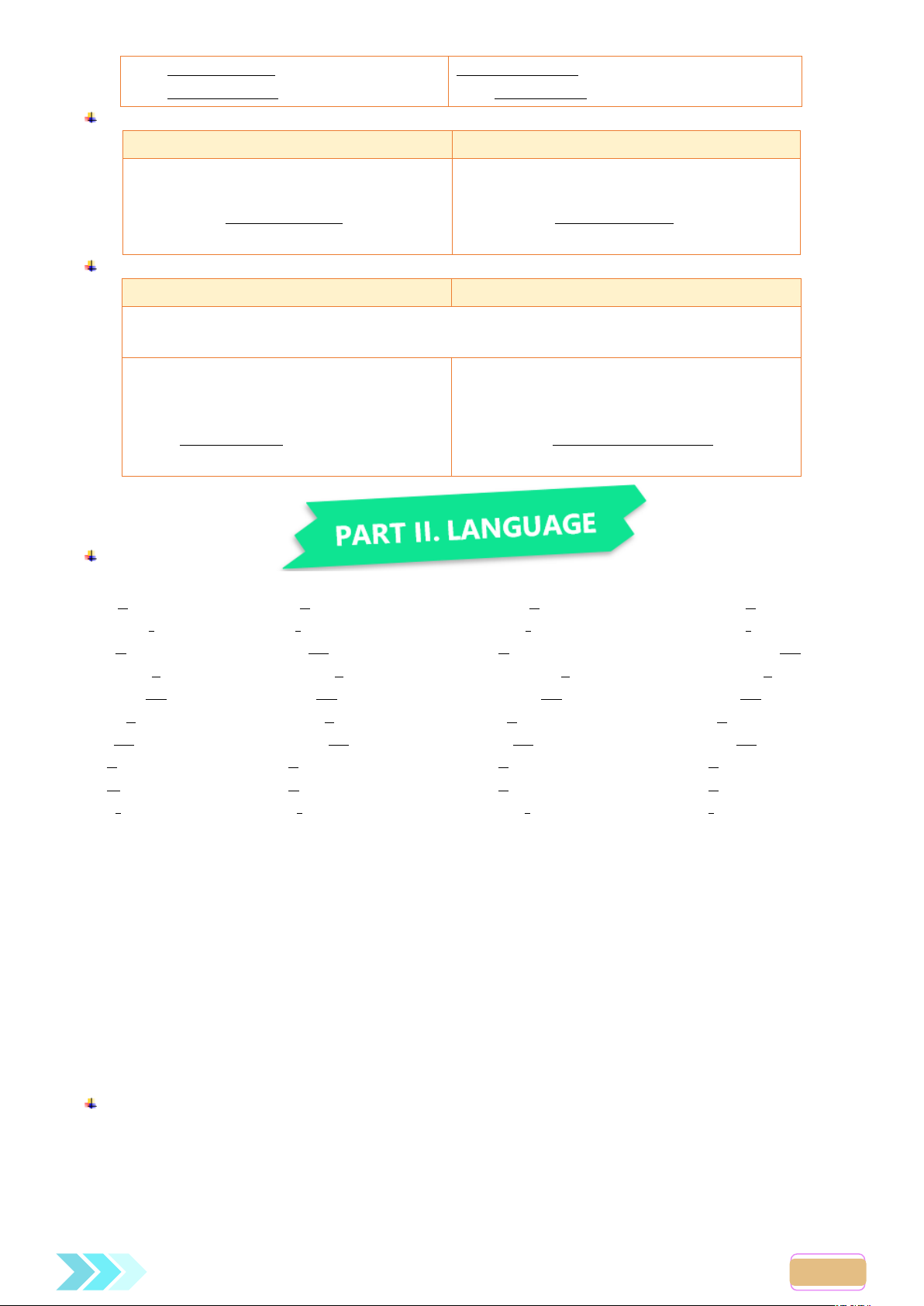
2. have to/ need to / must / should Must/ have to MUST HAVE TO
Cả “must” và “have to” đều có nghĩa là “cần phải/ phải”
Diễn tả sự cần thiết phải làm gì
Diễn tả sự cần thiết phải làm gì
nhưng là do chủ quan (tự bản thân
nhưng là do khách quan (nội quy, quy nhận thức thấy) định...) Ví dụ: Ví dụ:
I must phone my sister. (=> I am
Students have to go to school on time. aware that this is necessary).
(=> It’s school’s regulation). Need NEED (cần)
“Need” vừa là động từ thường, vừa là động từ khuyết thiếu
Need là động từ thường
Need là động từ khuyết thiếu
- Nó phải dùng trợ động từ khi
- Khi là động từ khuyết thiếu NEED
thành lập câu phủ định và nghi vấn
chỉ có hình thức hiện tại và có đầy đủ
- Động từ theo sau nó phải dùng
đặc tính của một động từ khuyết dạng “to infinitive” thiếu. Ví dụ: Ví dụ:
Bài tập Tiếng Anh 8 (Friends plus) 2 She needs to see you. Need he work so hard? She doesn’t need to see you.
You needn’t go yet, need you? Mustn’t/ needn’t MUSTN’T NEEDN’T
MUSTN’T (không được phép):
NEEDN’T (không cần thiết): mang mang ý cấm đoán. ý nghĩa không bắt buộc.
Ví dụ: You mustn’t drink it. It is
Ví dụ: You needn’t hurry. We still poisonous. have a lot time to do it. Should/ ought to SHOULD OUGHT TO
“should” và “ought to” đều có nghĩa là “nên” dùng để đưa ra lời khuyên, ý kiến
Chỉ sự bắt buộc hay bổn phận
Chỉ sự bắt buộc. Mạnh hơn “Should”
nhưng ở mức độ nhẹ hơn “Must”.
nhưng chưa bằng “Must”. Ví dụ: Ví dụ:
- You should send this report by 8th She really ought to apologize. September. PHONETICS
Exercise 1. Find the word which has a different sound in the underlined part. 1. A. believe B. because C. college D. university 2. A. graffiti B. timetable C. holiday D. qualification 3. A. rule B. shoe C. uniform D. home-schooling 4. A. marks B. exams C. holidays D. schools 5. A. passed B. failed C. studied D. joined 6. A. ascent B. muscle C. scatter D. scissors 7. A. teenage B. degree C. week D. career 8. A. enrol B. excited C. exam D. exhibition 9. A. Korea B. kumquat C. knowledge D. kangaroo 10.A. size B. rich C. thrive D. ideal
Exercise 2. Choose the word which has a different stress pattern from the others. 1. A. enrol B. attend C. obey D. study 2. A. uniform B. exam C. lesson D. college 3. A. graffiti B. ideal C. qualification D. result 4. A. obey B. offer C. graduate D. open 5. A. primary B. holiday C. graffiti D. management 6. A. apply B. degree C. pension D. finance 7. A. secondary B. kindergarten C. ordinary D. curriculum 8. A. charity B. apply C. study D. crazy 9. A. mistake B. agile C. college D. process 10.A. important B. extra C. historic D. ideal VOCABULARY AND GRAMMAR
Exercise 1. Choose the word or phrase (A, B, C or D) that best fits the blank space in each sentence.
1. We don't have to wear a school ______ at my school. A. subject B. uniform C. curriculum D. passion
2. My parents don't have to pay for my school. I go to a ______ school.
Bài tập Tiếng Anh 8 (Friends plus) 3 A. state B. high C. secondary D. private
3. My brother eats and sleeps at his school. He doesn't come home every day because it's a ______ school. A. mixed B. unique C. professional D. boarding
4. My sister is 16. She goes to the ______ school as me. A. primary B. high C. secondary D. university
5. Children in England go to ______ school between the ages of five and eleven. A. primary B. boarding C. private D. single- sex
6. My brother can't go to the same school as me and my sister. My sister and I go to a ______ school. A. boarding B. single-sex C. primary D. mixed
7. The ______ rule in many countries is 18. A. school B. career C. school-leaving age D. enrol
8. My brother will attend a college to get a ______. A. degree B. lawyer C. mark D. institution
9. Tom’s parents are ________ about his study after seeing his report at school. A. challenging B. concerned C. unusual D. historic
10.We ______ for that difficult exam every evening last week. A. revised B. resisted C. prohibited D. expressed
11.Tom ______ lots of friends at his new school. A. got B. made C. did D. passed
12.Mary ______ the exam. She got 100%. A. made B. revised C. failed D. passed
13.Our friend ______ that exam. He only got 20%. A. failed B. prohibited C. attended D. graduated
14.I ______ three hours of homework last night. A. cheated B. did C. went D. involved
15.David ______ school last year. Now he's at university. A. passed B. got C. obeyed D. left
16.My sister worked hard at school, and she ______ a lot of qualifications. A. expressed B. failed C. got D. revised
17.You mustn’t use your mobile phone in class. It’s against the _________. A. school rule B. school subjects C. school uniform D. school holidays
18.Nam is going to _________ in the IT department because he likes working on computers. A. enrol B. quit C. exit D. take
19.I need to get good qualifications so that I can get _________ university one day. A. in B. into C. at D. on
20.It’s important for me to _________ my exams because I want to be a doctor. A. write B. make C. pass D. fail
21.Please stop singing karaoke. My daughter ______ concentrate on her studies. A. mustn’t B. can’t C. shouldn’t D. needn’t
22.Let’s go. We ______ be late. A. must B. mustn’t C. haven’t D. should
23.We’re playing in the final of the competition next week, so I need ________fit. A. be B. being C. to be D. am
24.Daisy: “I’m really concerned about my English course.” – Lee: “______” A. It’s never too late. B. You aren’t going to pass.
C. You need to speak to your teacher. D. I don’t know what to do.
25.George has travelled a lot. He ___________ speak four languages. A. might B. can C. should D. have to
26.I _________ get up at half past five on Mondays. I hate Mondays.
Bài tập Tiếng Anh 8 (Friends plus) 4 A. mustn't B. have to C. has to D. should
27.You _________be late. It's rude. A. don't have to B. must C. shouldn’t D. need
28.My dad _________ start work at 7.30 am. A. has to B. have to C. should D. can
29.I_________ remember to finish my homework. A. don't have to B. must C. shouldn’t D. needn’t
30.He _________ cycle to school. It's cheaper than the bus. A. should B. shouldn't C. mustn’t D. haven’t to
31.We _________ leave now. We can leave later. A. mustn’t B. should C. don't have to D. can
32.Jack _________ do the washing-up. He's already done it three times this week. A. doesn’t have to B. mustn't C. has to D. is able to
33.You _________ copy my homework. It isn't fair. A. mustn’t B. don't have to C. should D. need
34.You _________ listen to Grandpa. His advice is really useful. A. don't have to B. should C. needn't D. shouldn’t
35.You_________ explain again. I understand it. A. shouldn't B. mustn't C. don't have to D. can’t
Exercise 2. Complete the sentences with the words below. special ordinary historic unusual challengin historical unique creative
1. The __________________ meeting of world leaders after World War II led to the set-up of the g UN.
2. During the trip, we visited several places of __________________ interest.
3. Teaching young children is a(n) __________________ and rewarding job.
4. They encourage the children to use their __________________ abilities.
5. We want to know if anyone saw something __________________ last night.
6. She was a serious young woman, rather __________________ in appearance. 7. She has a(n)
__________________ ability to communicate with animals of all kinds.
8. The film star doesn't want an ordinary wedding. She wants something __________________.
Exercise 3. Choose the correct answers.
1. I can't/ couldn't understand the book I borrowed from the library yesterday. It was too difficult.
2. Can/ Could you hear the car radio? It's very quiet. Shall we turn it up?
3. Sit in a different place in the cinema, or you couldn't/ won't be able to see the film well.
4. Nam can/ will be able to speak four languages and he's reading a book in Japanese.
5. Soon, we will be able to/ couldn't attend a virtual classroom all the time.
6. Some students are talking so loudly that we can't/ won't be able to hear the teacher.
7. Our school is going to build a smart library. With it, we can/ will be able to read all kinds of studying materials.
8. In the past, people can/ could pass the knowledge to the next generation by copying the lines on bamboo tablets.
9. We need/ don't need to leave soon. The show doesn't start until 8 o'clock.
10. You need/ don't need to decide right now. You can't make it tomorrow.
11. It's a very important meeting. You have to/ need to come.
12. He doesn't need/ needs to know what to do in his work. Nobody can help him.
13. You don't need to/ mustn't touch the chemical. It's very dangerous.
14. We need to/ must study a second foreign language. I think it's necessary for our future career.
Bài tập Tiếng Anh 8 (Friends plus) 5
15. You don't need to / mustn't do the essay right now. We need to/ have to hand it to the teacher next Friday.
16. His application shows his strength, so he doesn't need to/ mustn't have an interview to enter that university.
17. You're tired. You must/ should go to bed.
18. Children must/ should go to primary school at the age of six. It's the law.
19. Students mustn't/ shouldn't eat in class.
20. We mustn't/ shouldn't go out. It's raining.
21. You're cold. You must/ should wear a coat.
22. You must/ should be over eighteen to vote.
Exercise 4. Complete the sentences with should or shouldn't.
1. You __________________ go to bed early when you have to go to school the next day.
2. You __________________ eat a lot of fast food - it's bad for you.
3. You __________________ find someone to ask about your homework.
4. The teacher is annoyed with Quan – he __________________ behave better in class.
5. I __________________ really play these computer games - they are a waste of time.
6. We __________________ make a reservation at the restaurant for your birthday dinner.
Exercise 5. Complete the sentences with must, mustn't, should or shouldn't.
1. They __________________ worry. I'm sure everything will be fine.
2. We __________________ copy our homework from the internet.
3. You __________________ bully small children.
4. He __________________ relax. The exam has finished.
5. She __________________ borrow so much money. She __________________ save her pocket money.
6. You __________________ lose your keys. We don't have another set.
7. They __________________ wear sports clothes in the gym or they won't be allowed to play.
8. You __________________ buy a ticket before you go into the cinema.
Exercise 6. Complete the sentences using the correct form of should, must or have to.
1. If you're tired, you __________________ go to bed.
2. The team __________________ practise more. There's an important match next week.
3. We __________________ walk to school. We go by bus.
4. We __________________ get the bus at six-thirty. It's the last bus.
5. He looks ill. He __________________ see a doctor.
6. We __________________ wear jeans at school. We've got a uniform.
7. __________________ we __________________ speak English during the English lessons?
I hear that it's the rule that Ms Hoa has just given
8. You__________________ take things that aren't yours.
Exercise 7. Put the words in the correct order to make sentences or questions.
1. bed /to / earlier / go / she / should
______________________________________________________________________________________
2. go/doesn't/have/work/she/ to /to / yet
______________________________________________________________________________________
3. revise / for/exam/have/he/to/ the / does /?
______________________________________________________________________________________
4. shouldn't/wear / you/ boots/school/ at
______________________________________________________________________________________
5. should bring / some / the / picnic/food/they/to/?
______________________________________________________________________________________
6. you/have/to/to/school/ seven / at / o'clock/do/go/?
______________________________________________________________________________________
7. mustn't/ corridors/ the / in / school / run / you
Bài tập Tiếng Anh 8 (Friends plus) 6
______________________________________________________________________________________
8. don't/we/have/go/to/to/Saturday / on / school
______________________________________________________________________________________
Exercise 8. Complete the sentences using the correct form of should, must or have to and your own ideas. 1. You look tired.
_____________________________________________ 2. That book's too expensive.
_____________________________________________
3. The film starts at 6 pm. It's 5.30 pm.
_____________________________________________ 4. She's done her homework.
_____________________________________________
5. The rules about smoking are clear.
_____________________________________________ 6. It's Saturday.
_____________________________________________ 7. Tom is hungry.
_____________________________________________ 8. It's raining outside.
_____________________________________________
Exercise 8. Supply the correct form of the words in the brackets.
1. He is very __________________ about music. (passion)
2. I will __________________ the school meeting tomorrow (attendance)
3. The __________________ ceremony is a celebration of the students' (graduate) achievements.
4. He found the course academically __________________. (challenge)
5. They also do __________________ subjects, such as English, math, (ordinarily)
science and foreign languages.
6. She has a very __________________ name. ( usual)
7. I want to __________________ in the art class. (enrolment)
8. She passed her exams __________________. (success)
9. She listened __________________ to the teacher. (attentive)
10.The __________________ building has been standing for over 100 ( history) years. LISTENING
Exercise 1: Listen to the recording and decide whether these statements are true (T) or false (F)
1. Home-schooled children can choose when they want to learn. _______
2. Adrian wants to start university by the age of sixteen. _______
3. Holly's favourite subject is science. _______
4. Adrian and Holly study subjects they are not interested in. _______
5. Some people think that studying at school is more useful than learning at home. _______
Exercise 2: Listen to the benefits of teaming online and choose the best option to
answer each of the following questions.
1. Why has eLearning become more and more popular? A. It’s harder to miss. B. It has big courses. C. It’s more convenient. D. It’s more traditional.
2. Where can students engage with multimedia content? A. in the campus B. during travelling C. in the classroom D. from their own home
3. What is the second reason for the popularity of online learning?
Bài tập Tiếng Anh 8 (Friends plus) 7 A. It’s more productive. B. It’s cheaper. C. It’s more interesting. D. It’s easier.
4. Why is further training for employees a problem for corporations?
A. Corporations don’t have much money.
B. Employees are not interested in it.
C. Corporations don’t encourage them.
D. Further training courses are not easily accessible.
5. Why are many students changing to online learning courses? A. They are serious students.
B. They think it’s a better way to learn.
C. They understand many things.
D. They want to work for large organisations after studying. SPEAKING
Exercise 1: Choose the correct response. Then practise the short exchanges in pairs.
1. A: I take a test tomorrow, and I feel very B a/ You should go to bed early. nervous. What should I do? :
b/ You should tell your teacher. B
2. A: I don't know what subjects to follow. a/ Ask your teacher for help. : b/ It's never too late. B
3. A: I can't get my exam results now. a/ You won't pass the : b/ Don't panic.
4. A: Why do some children have B
a/ Children don't need lessons. homeschooling? :
b/ The parents think their children will learn better.
5. A: What would happen if students didn't B a/ They would get punishment. obey the school rules? : b/ They would get housework.
6. A: Do you think history lessons are B
a/ Definitely not. They're interesting. boring? :
b/ I've learned a lot from those. B
7. A: What's lunchtime at your school? a/ It's from 4 pm. : b/ It's from 11.30 am to 1 pm. B
8. A: My brother wants to be an engineer. a/ He used to have good marks. :
b/ He should learn maths and physics more. B
9. A: My little sister has homeschooling. a/ I'm in for that. :
b/ She will have strict timetable.
10. A: My teacher asks us to do homework B a/ It can save your time. in the afternoon. : b/ It depends on you.
Exercise 2: Match sentences 1-6 with responses a-g. There is one extra response.
1. Whatever you do, don't forget it. 1. _______
a. I don't want to talk about it.
2. I think you should tell your 2. _______ b. No, that's cheating. parents.
Bài tập Tiếng Anh 8 (Friends plus) 8 3. What should I do? 3. _______ c. Don't worry.
4. Can I copy your homework, Hoa? 4. _______ d. Yes, definitely. 5. What's the matter? 5. _______
e. Right! They can help me. 6. Are you sure? 6. _______
f. You should tell someone. g. OK, I won't.
Exercise 3: Complete the dialogue with the sentences given below. There is one extra sentence. a. I can't do that.
b. What should I do, Mai? c. What's up? d. I'm sure he'll understand.
e. I don't want to talk f. Whatever you do, don't about it. forget. Mai
You look upset, Nick. What's the matter? Nic
Nothing. (1) ____________________ k Mai
Come on. (2) ____________________
Well, I've just got this text message from a boy in my class. He wants me to take a Nic
photo of the maths exam paper tomorrow and then send it to him. (3) k ____________________
Well, whatever you do, don't cheat. (4) ____________________. They can expel you for Mai that. Nic Right. k Mai
And I think you should tell your teacher. Nic
What? Tell on him? (5) ____________________. k Mai
OK, but you should tell him what you think. Nic (6) ____________________ k Mai
Yes, definitely. Don't worry. (7) ____________________. Nic
Yes, you're right. Thanks, Mai. k READING
Exercise 1. Read the following letter. Decide if the statements from 1 to 4 are True
or False and choose the correct answer (A, B, C or D) for the questions 5 and 6.
Since the outbreak of COVID-19, online learning has been the current trend in education.
Obviously, this form of education provides a lot of benefits for learners at various levels.
Firstly, online courses are great for people who want to advance their education while
working. Unlike traditional classes whose lectures are scheduled at a specific time of the
day, learners of distance courses can decide their own schedule so that it fits their working
hours. Secondly, virtual learning helps learners to save a lot of money. For example, they can
get the right qualifications without having to traveling a long distance, therefore reducing
transportation costs. Some universities also offer students enrolling in online programmes a
discount off the regular tuition fees. Finally, students have access to course materials
repeatedly. While their note-taking skills can be boosted in traditional lecturing sessions,
students can revisit video presentations if they fail to understand some of the content. These
lecture videos can be used as a supplemental tool to help with completing assignments.
1. Online learners have to follow scheduled classes. ____________________
2. Online learners do not spend much money on travelling. ____________________
Bài tập Tiếng Anh 8 (Friends plus) 9
3. Traditional learning allows students to watch lectures again. ____________________
4. In some cases, online courses are cheaper than on-campus ones. ____________________
5. What does the passage mainly discuss? A. University life.
B. Advantages of online learning. C. How to apply to university.
D. Sites of virtual classrooms.
6. What can be inferred about online learning?
A. It is no longer popular after the outbreak of COVID-19.
B. It gives students less autonomy in learning.
C. It offers students a greater degree of flexibility.
D. It helps students enhance their note-taking skills.
My friend, Sarah, has recently shared her plans to study abroad with me. She wants to
pursue her Masters in Business Administration from a prestigious university in the USA. She
is very excited about this opportunity as it will not only help her gain valuable knowledge
and skills but also enhance her career prospects. Sarah has already started preparing for the
admission process by taking the necessary exams and getting her documents in order. She is
also exploring various scholarships and funding options to support her studies. Although she
is a bit nervous about living in a new country, she is determined to make the most of this
experience and immerse herself in the culture. I am thrilled for her and cannot wait to hear
all about her adventures abroad. I know she will do great and make us all proud.
1. Sarah wants to pursue her Masters in Business Administration from a _______
prestigious university in the USA.
2. Sarah is not excited about studying abroad. _______
3. Sarah has not started preparing for the admission process. _______
4. Sarah is exploring various scholarships and funding options to support her _______ studies.
5. What is Sarah's main goal for studying abroad?
A. To gain valuable knowledge and skills
B. To enhance her career prospects C. Both A and B D. None of the above
6. How does Sarah feel about living in a new country? A. Excited B. Nervous C. Determined D. All of the above
Exercise 2. Choose the word (A, B, C or D) that best fits the blank space in the following passage.
In my opinion, learning (1.) ________ school is the best option for young people. While
there are (2.) _______ such as homeschooling or studying online, there are several reasons
why school is the ideal place to learn. (3.) _______, students have the opportunity to work
together and learn from each other, which helps them to develop social skills. Secondly,
schools have a structured day with rules that students (4.) _______ obey. This helps them to
learn the importance of time (5.) _______ and being prepared for exams, which will be
beneficial for future jobs and society. Finally, schools provide students with the chance to
participate in group activities such as team sports and projects.
Overall, I believe that students learn best in schools (6.) _______ they have the opportunity to learn in various ways. 1. A. in B. at C. on D. from 2. A. compulsions B. forces C. musts D. alternatives 3. A. Thirdly B. Firstly C. Finally D. Secondly 4. A. need B. should C. must D. has to 5. A. management B. organization C. making D. seeking 6. A. when B. if C. as D. while
Some U.S. schools have tried to limit (1) ____________ remove technology to improve
learning. One of them is in Silicon Valley, the centre of the American tech industry.
Bài tập Tiếng Anh 8 (Friends plus) 10
The Waldorf School of the Peninsula does not use any computers or (2) ____________
technology in its education programs up to the seventh grade. The school's website says
while Waldorf teachers recognize the role technology (3) ____________ play in the classroom,
it must wait until the student reaches the right developmental age.
“We observe that a child's natural, instinctive, creative and curious way of (4) __________ to
the world may be repressed when technology is introduced into learning environments at an
early age," the website says. When students reach high school, they are allowed to use
computers and digital tools in the classroom.
There are many independent Waldorf Schools throughout North America. The schools centre
heavily (5) ____________ hands-on learning and aim to teach skills in "creativity and
innovative thinking." They also place (6) ____________ on students developing "social and
emotional intelligence" as part of the educational experience. 1. A. and B. or C. but D. so 2. A. statistical B. educational C. mathematical D. digital 3. A. must B. could C. can D. should 4. A. reporting B. returning C. recounting D. relating 5. A. in B. on C. at D. to 6. A. importance B. important C. importantly D. unimportant
Exercise 3. Read the text, and answer the statements T (true), F (false) or NM (not mentioned).
In England, most primary and secondary schools ask students to wear uniforms. Boys wear a
white shirt, long grey or black trousers, a jumper or sweater with the school logo on, school
tie, and black shoes. Girls wear black, grey, navy or brown trousers or skirts. In the summer,
girls often wear summer school dresses.
In Scotland, students at many primary or secondary schools don't wear uniform, but they
don't wear grey or white shoes. In some schools, students wear a jumper and trousers.
In Wales, each school can choose its uniform and its colours.
1. In England, boys can wear a white shirt and long black trousers, and black shoes _______ to go to school.
2. In England, girls wear trousers or skirts, and in the summer they often wear _______ school dresses.
3. Girls in England wear trousers all year round. _______
4. Girls in England often wear pink skirts to go to school. _______
5. Boys in England often have the school logo on their jumper or sweater. _______
6. In Scotland, students at primary or secondary schools don't wear uniforms but _______
they have a hat with the school logo.
7. Students at some schools in Scotland wear uniforms. _______
8. In Wales, each school can have uniforms in different colours. _______ WRITING
Exercise 1. Rearrange the given words or phrases to make meaningful sentences.
1. couldn’t go to/ Maria/ class/ yesterday/ her dance /. /
______________________________________________________________________________________
2. swim/ you/ you/ when/ were/ could/ three/? /
______________________________________________________________________________________
3. exam/ He/ with/ your/ you/ help/ can’t/. /
______________________________________________________________________________________
4. be able/ go/ by train/ they/ to/ will/?
______________________________________________________________________________________
5. get/ Dung/ for/ couldn’t/ the concert/ tickets/. /
______________________________________________________________________________________
Bài tập Tiếng Anh 8 (Friends plus) 11
6. won’t/ get into/ next September. / college/ be/ She/ able to
______________________________________________________________________________________
7. and see famous /football matches /can watch /Students /players practice.
______________________________________________________________________________________
8. three / the time he / Was he / languages by / able to speak / was five?
______________________________________________________________________________________
9. can be/ a foreign country/ challenging/ don’t know/ Travelling to/ when you/ the language.
______________________________________________________________________________________
10. If you/ and have/ performing arts, / study hard/ a passion for/ won’t be able/ you/ resist/ the Brit school.
______________________________________________________________________________________
Exercise 2. Rewrite each of the following sentences in such a way that it means
almost the same as the sentence printed before it.
1. Children are not allowed to drink any type of alcohol.
Children mustn’t ____________________________________________________________________
2. Don’t park your car on bends. It’s illegal.
You mustn’t _________________________________________________________________________
3. I don’t know what you are saying.
I can’t ______________________________________________________________________________
4. It isn’t necessary to phone me before you come.
You don’t need ______________________________________________________________________
5. It’s a good idea for the government to apply all those economic measures.
The government should ______________________________________________________________
6. It took John two hours to finish the project.
John spent ___________________________________________________________________________
7. She enjoys practicing yoga in her free time.
She is interested ____________________________________________________________________
8. Developing good study habits is crucial for academic success.
It is __________________________________________________________________________________
9. You'd better go to the doctor about your cough.
If I were you, ________________________________________________________________________
10. It isn’t necessary for you to buy me a birthday present.
You don’t need ______________________________________________________________________
Exercise 3. Read the essay title and the notes. Complete the opinion essay.
Are you in favour of exams or against them?
schools: exams test students' progress not favour-several reasons:
1. some students good in class-get nervous - not get good marks
2. students remember facts for a short while - not understand the subject
3. exams should be realistic - outside school, people can use dictionaries / calculators
Conclusion: essays and projects better than exams
Are you in favour of exams or against them?
Most schools use exams to test (1) _______________________ but I’m (2) _______________________
of exams for (3) _______________________. In my opinion, there are three reasons why schools
shouldn't use exams. Firstly, some students are (4) _______________________ but (5)
_______________________ so they never (6) _______________________. Secondly, I think it's a bad
thing to train students to remember (7) _______________________. Students who get good
marks in exams are good at exams, but they don't have to (8) _______________________ Finally,
I think that (9) _______________________. In most exams, you can't use a dictionary or a
calculator. But in the real world, people can use them all the time. So all in all, I think that
(10) _______________________ are more effective tests than exams. --- THE END ---
Bài tập Tiếng Anh 8 (Friends plus) 12
Document Outline
- 10. A. size B. rich C. thrive D. ideal