Bài giảng Chapter 4. Memory Management môn Lập trình mạng | Đại học Bách Khoa Hà Nội
Bài giảng Chapter 4. Memory Management môn Lập trình mạng | Đại học Bách Khoa Hà Nội. Tài liệu được sưu tầm giúp bạn tham khảo, ôn tập và đạt kết quả cao. Mời bạn đọc đón xem.
Môn: Lập trình mạng 40 tài liệu
Trường: Đại học Bách Khoa Hà Nội 5.7 K tài liệu
Tác giả:













Preview text:
IT3106E System Programming Course Instructors:
Pham Ngoc Hung, Hoang Van Hiep, Nguyen Dinh Thuan 1
Chapter 4. Memory Management
Dynamic Memory Allocation: Basics
Dynamic Memory Allocation: Advance
With materials from Computer Systems: A Programmer's Perspective, 3/E (CS:APP3e)
Randal E. Bryant and David R. O'Hallaron, Carnegie Mellon University 2
Dynamic Memory Allocation: Basic Concepts
(Cấp phát bộ nhớ động) 3 Allocate an array #include "stdio.h" #include "stdlib.h" #define MAXN 10000 int arr[MAXN]; int main(){ int i, n; scanf("%d", n); if(n>MAXN){
printf("input file too big\n"); }
for(i=0;iscanf("%d", &arr[i]); } } 4
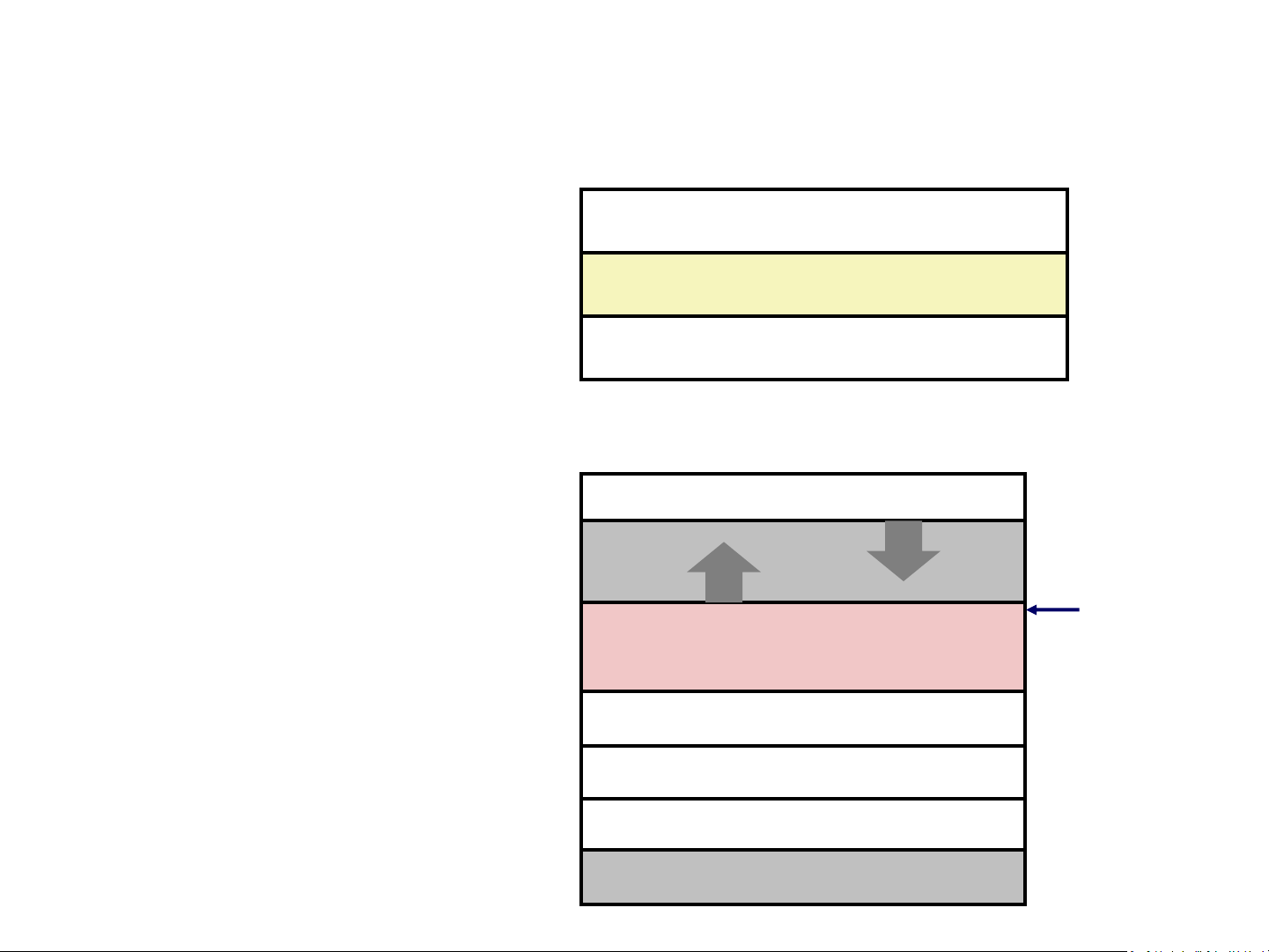
Dynamic Memory Allocation Programmers use Application dynamic memory
Dynamic Memory Allocator
allocators (such as Heap malloc)to acquire VM at run time. ▪ For data structures whose User stack size is only known at runtime. Top of heap Dynamic memory (brk ptr) Heap (via malloc) allocators manage an area of process virtual
Uninitialized data (.bss) memory known as the
Initialized data (.data) heap. Program text (.text) 0 5
Dynamic Memory Allocation
Allocator maintains heap as collection of variable sized
blocks, which are either allocated (cấp phát) or free (giải phóng) Types of allocators
▪ Explicit allocator (Cấp phát tường minh): application allocates and frees space ▪ E.g., malloc and free in C
▪ Implicit allocator (Cấp phát ngầm định): application allocates, but does not free space
▪ E.g. garbage collection in Java, ML, and Lisp 6 The malloc Package #include
void *malloc(size_t size) ▪ Successful:
▪ Returns a pointer to a memory block of at least size bytes
aligned to an 8-byte (x86) or 16-byte (x86-64) boundary
▪ If size == 0, returns NULL
▪ Unsuccessful: returns NULL (0) and sets errno void free(void *p)
▪ Returns the block pointed at by p to pool of available memory
▪ p must come from a previous call to malloc or realloc Other functions
▪ calloc: Version of malloc that initializes allocated block to zero.
▪ realloc: Changes the size of a previously allocated block.
▪ sbrk: Used internally by allocators to grow or shrink the heap 7 malloc Example #include #include void foo(int n) { int i, *p;
/* Allocate a block of n ints */
p = (int *) malloc(n * sizeof(int)); if (p == NULL) { perror("malloc"); exit(0); }
/* Initialize allocated block */ for (i=0; i p[i] = i;
/* Return allocated block to the heap */ free(p); } 8
Assumptions Made in This Lecture
Memory is word addressed.
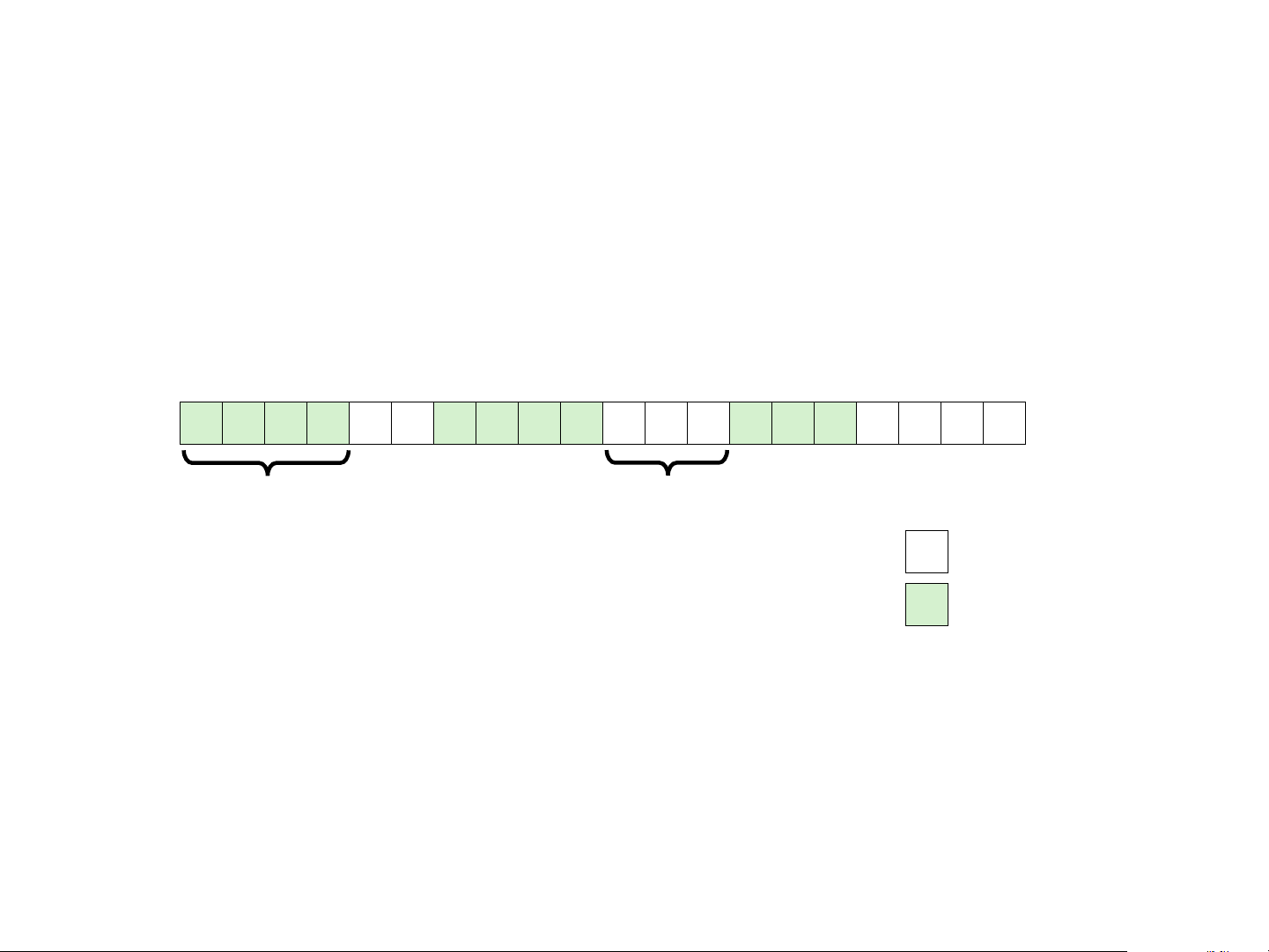
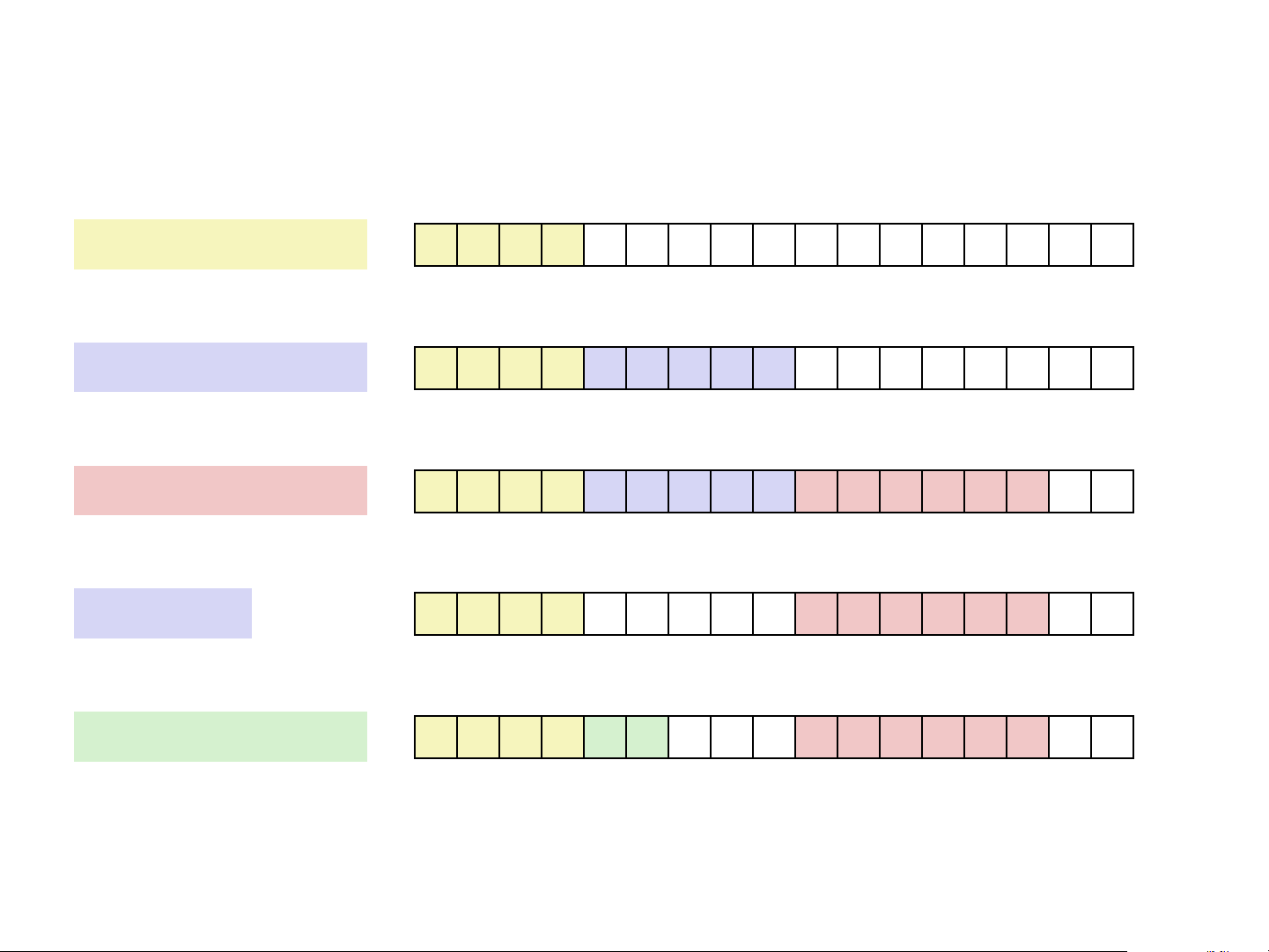
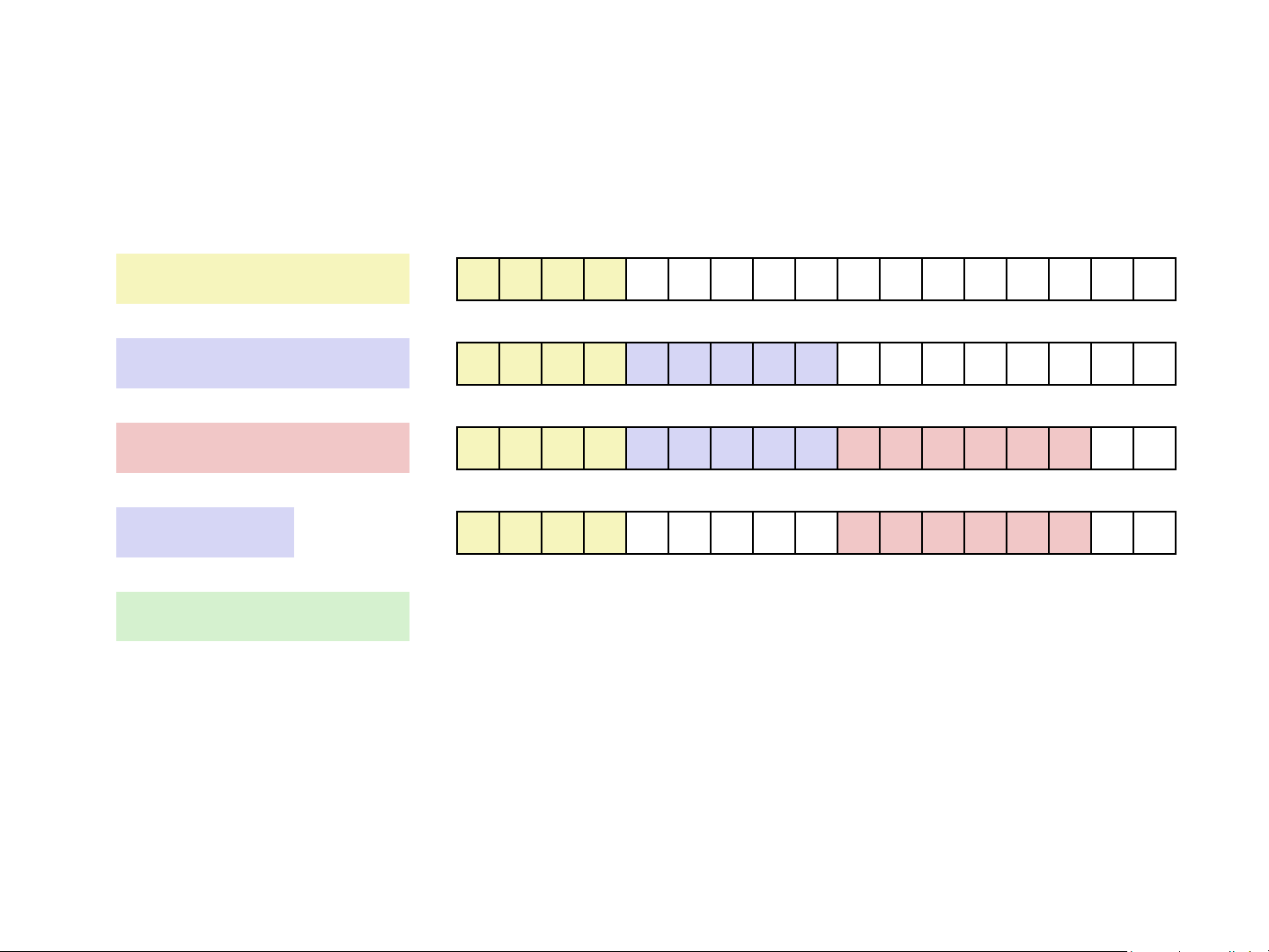
Words are int-sized. Allocated block Free block (4 words) (3 words) Free word Allocated word 9 Allocation Example p1 = malloc(4) p2 = malloc(5) p3 = malloc(6) free(p2) p4 = malloc(2) 10 Constraints Applications
▪ Can issue arbitrary sequence of malloc and free requests
▪ free request must be to a malloc’d block Allocators
▪ Can’t control number or size of allocated blocks
▪ Must respond immediately to malloc requests
▪ i.e., can’t reorder or buffer requests
▪ Must allocate blocks from free memory
▪ i.e., can only place allocated blocks in free memory
▪ Must align blocks so they satisfy all alignment requirements
▪ 8-byte (x86) or 16-byte (x86-64) alignment on Linux boxes
▪ Can manipulate and modify only free memory
▪ Can’t move the allocated blocks once they are malloc’d
▪ i.e., compaction is not allowed 11
Performance Goal: Throughput
Mục tiêu: Tối đa throughput (thông lượng bộ nhớ)
Given some sequence of malloc and free requests:
▪ R0, R1, ..., Rk, ... , Rn-1
Goals: maximize throughput and peak memory utilization
▪ These goals are often conflicting Throughput:
▪ Number of completed requests per unit time ▪ Example:
▪ 5,000 malloc calls and 5,000 free calls in 10 seconds
▪ Throughput is 1,000 operations/second 12
Performance Goal: Peak Memory Utilization
Given some sequence of malloc and free requests:
▪ R0, R1, ..., Rk, ... , Rn-1
Def: Aggregate payload Pk (payload tính gộp)
▪ malloc(p) results in a block with a payload of p bytes
▪ After request Rk has completed, the aggregate payload Pk is the sum of currently allocated payloads
Def: Current heap size Hk
▪ Assume Hk is monotonically nondecreasing
▪ i.e., heap only grows when allocator uses sbrk
Def: Peak memory utilization after k+1 requests
▪ Uk = ( maxi<=k Pi ) / Hk 13 Fragmentation
Poor memory utilization caused by fragmentation (phân mảnh)
▪ internal fragmentation
▪ external fragmentation 14 Internal Fragmentation
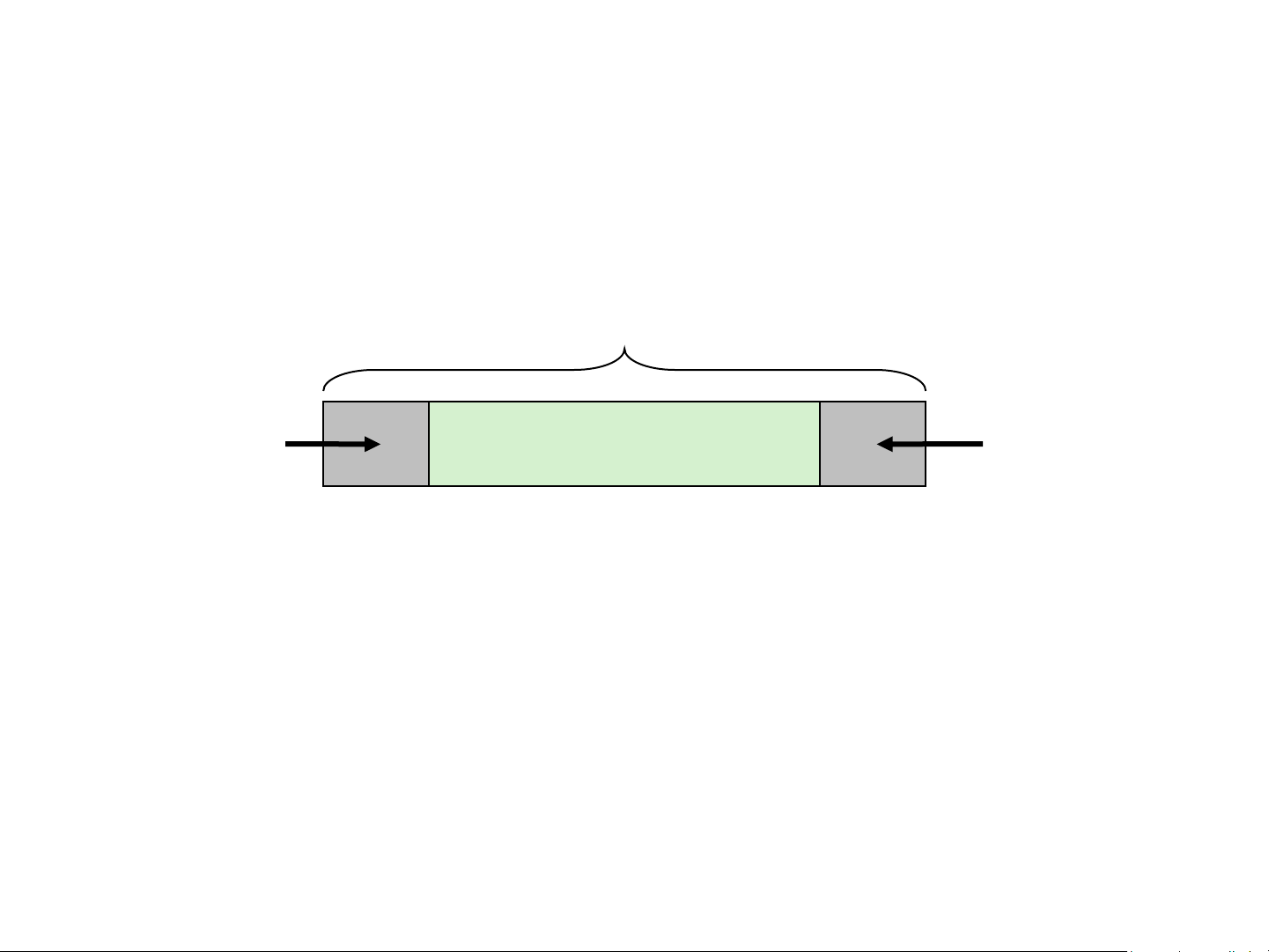
For a given block, internal fragmentation occurs if payload is smaller than block size Block Internal Internal Payload fragmentation fragmentation Caused by
▪ Overhead of maintaining heap data structures
▪ Padding for alignment purposes ▪ Explicit policy decisions
(e.g., to return a big block to satisfy a small request)
Depends only on the pattern of previous requests ▪ Thus, easy to measure 15 External Fragmentation
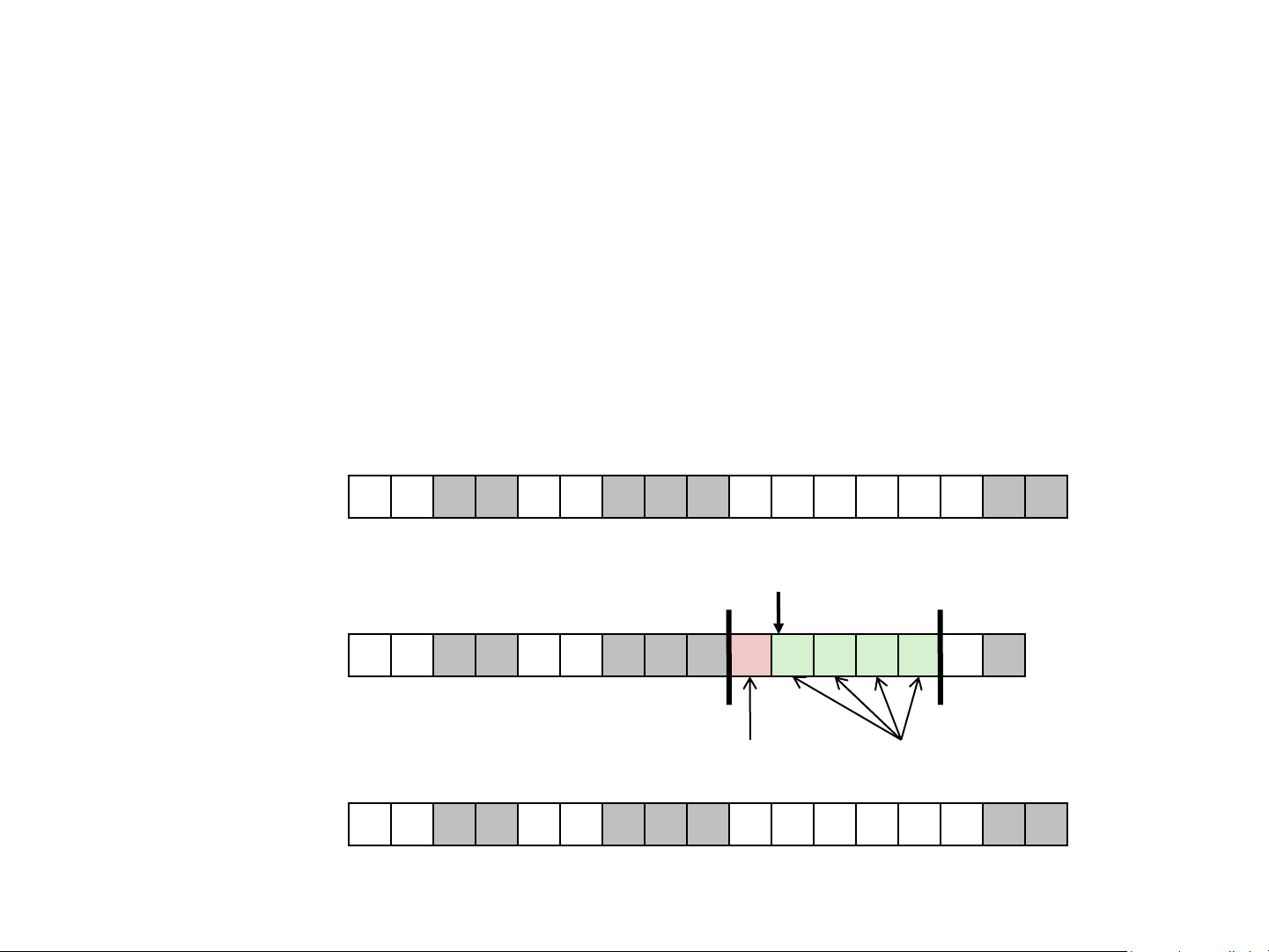
Occurs when there is enough aggregate heap memory, but no
single free block is large enough p1 = malloc(4) p2 = malloc(5) p3 = malloc(6) free(p2) p4 = malloc(6)
Oops! (what would happen now?)
Depends on the pattern of future requests ▪ Thus, difficult to measure 16 Implementation Issues
How do we know how much memory to free given just a pointer?
How do we keep track of the free blocks?
What do we do with the extra space when allocating a structure
that is smaller than the free block it is placed in?
How do we pick a block to use for allocation -- many might fit?
How do we reinsert freed block? 17
Knowing How Much to Free Standard method
▪ Keep the length of a block in the word preceding the block.
▪ This word is often called the header field or header
▪ Requires an extra word for every allocated block p0 p0 = malloc(4) 5 block size payload free(p0) 18
Keeping Track of Free Blocks
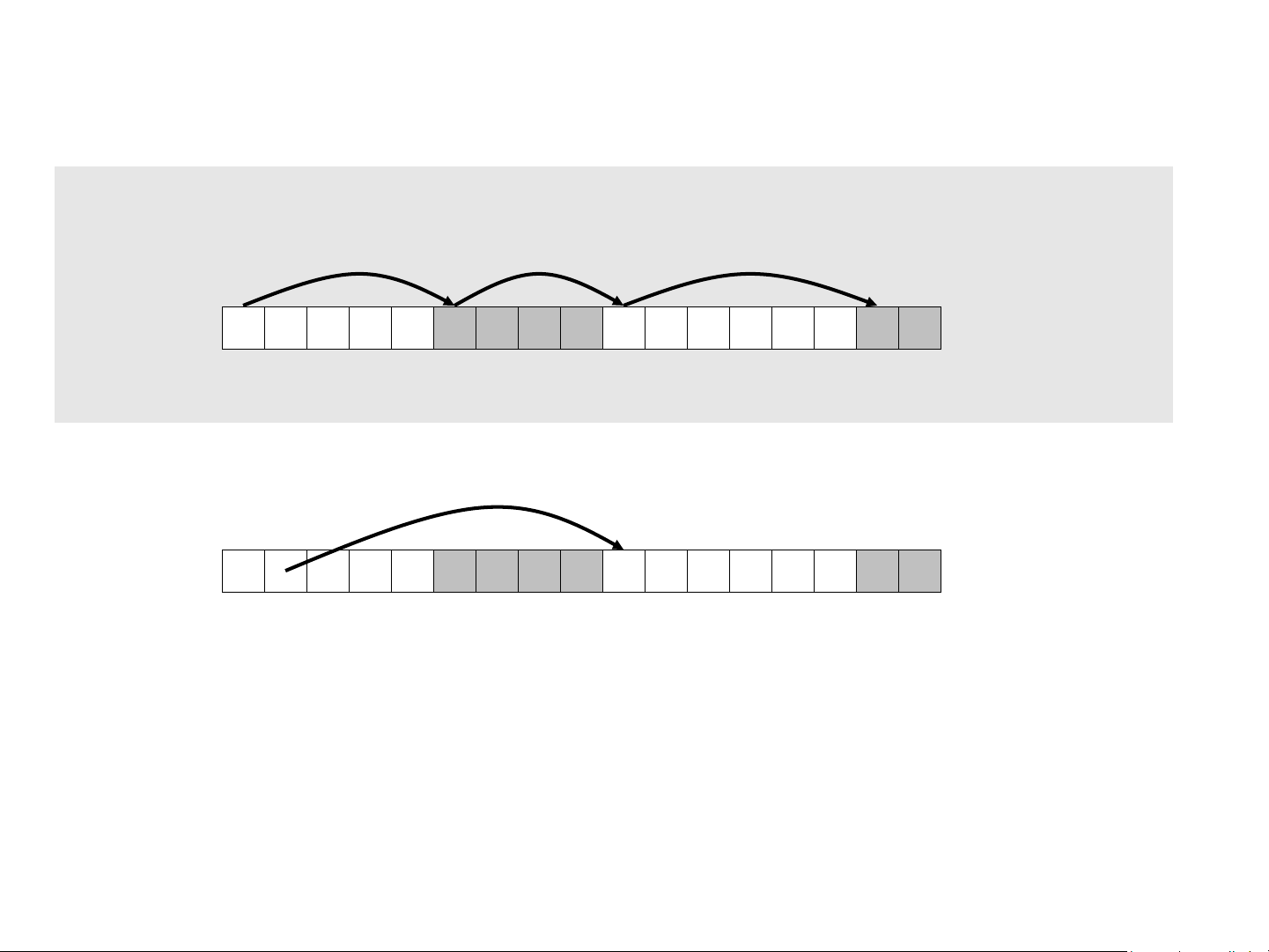
Method 1: Implicit list using length—links all blocks 5 4 6 2
Method 2: Explicit list among the free blocks using pointers 5 4 6 2
Method 3: Segregated free list
▪ Different free lists for different size classes
Method 4: Blocks sorted by size
▪ Can use a balanced tree (e.g. Red-Black tree) with pointers within each
free block, and the length used as a key 19
Dynamic Memory Allocation: Advanced Concepts 20