Bài giảng về Arrays môn Cấu trúc dữ liệu và Giải thuật | Đại học Quốc gia Hà Nội
Bài giảng về Arrays môn Cấu trúc dữ liệu và Giải thuật | Đại học Quốc gia Hà Nội. Tài liệu được sưu tầm giúp bạn tham khảo, ôn tập và đạt kết quả cao. Mời bạn đọc đón xem.
Môn: Cấu trúc dữ liệu và giải thuật 6 tài liệu
Trường: Đại học Quốc gia Hà Nội 102 tài liệu
Tác giả:

Preview text:
Presentation for use with the textbook Data Structures and
Algorithms in Java, 6th edition, by M. T. Goodrich, R. Tamassia,
and M. H. Goldwasser, Wiley, 2014 Arrays
© 2014 Goodrich, Tamassia, Goldwasser Arrays 1 Array Definition
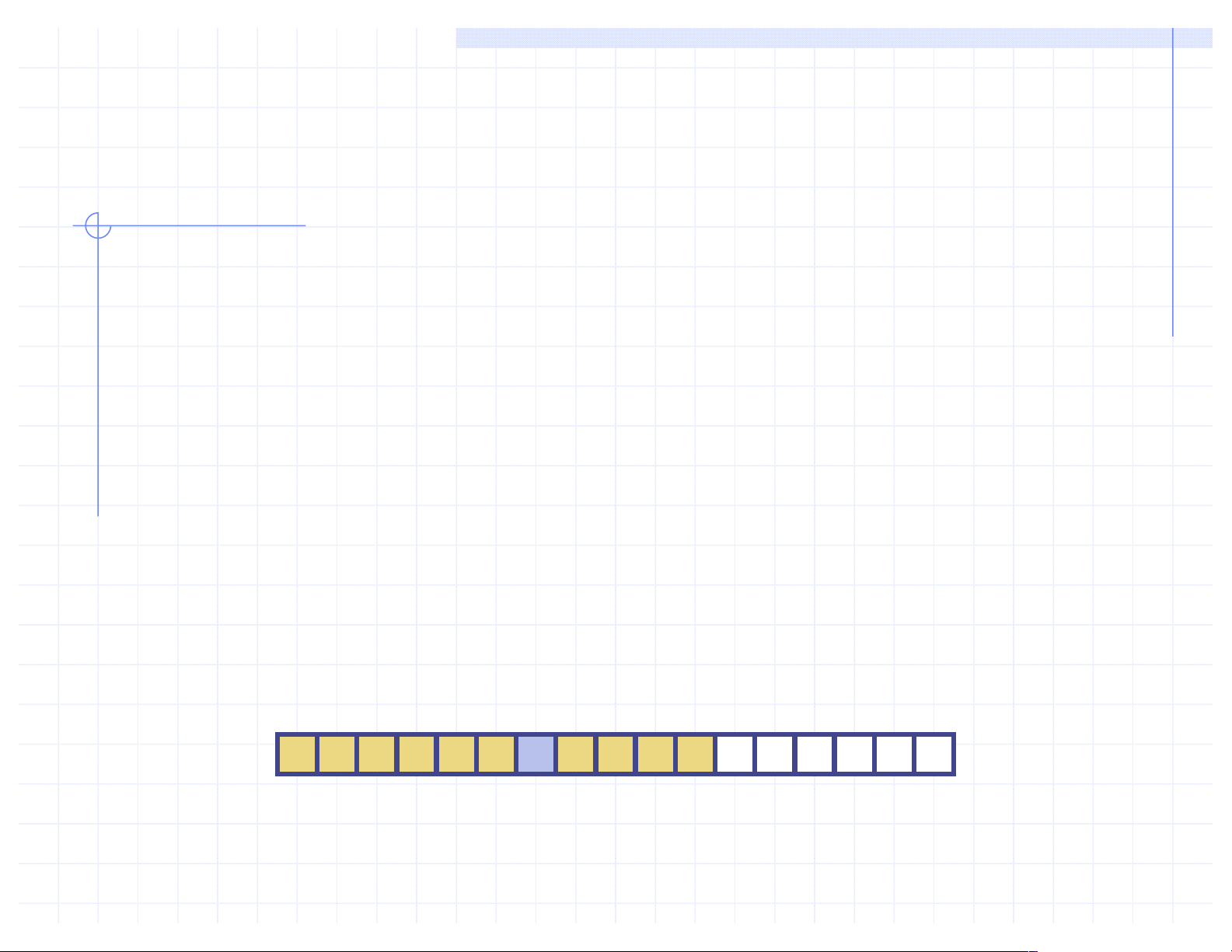
q An array is a sequenced collection of
variables all of the same type. Each
variable, or cell, in an array has an index,
which uniquely refers to the value stored in
that cel . The cel s of an array, A, are numbered 0, 1, 2, and so on.
q Each value stored in an array is often cal ed
an element of that array. A 0 1 2 i n
© 2014 Goodrich, Tamassia, Goldwasser Arrays 2 Array Length and Capacity
q Since the length of an array determines the
maximum number of things that can be stored in
the array, we wil sometimes refer to the length of
an array as its capacity.
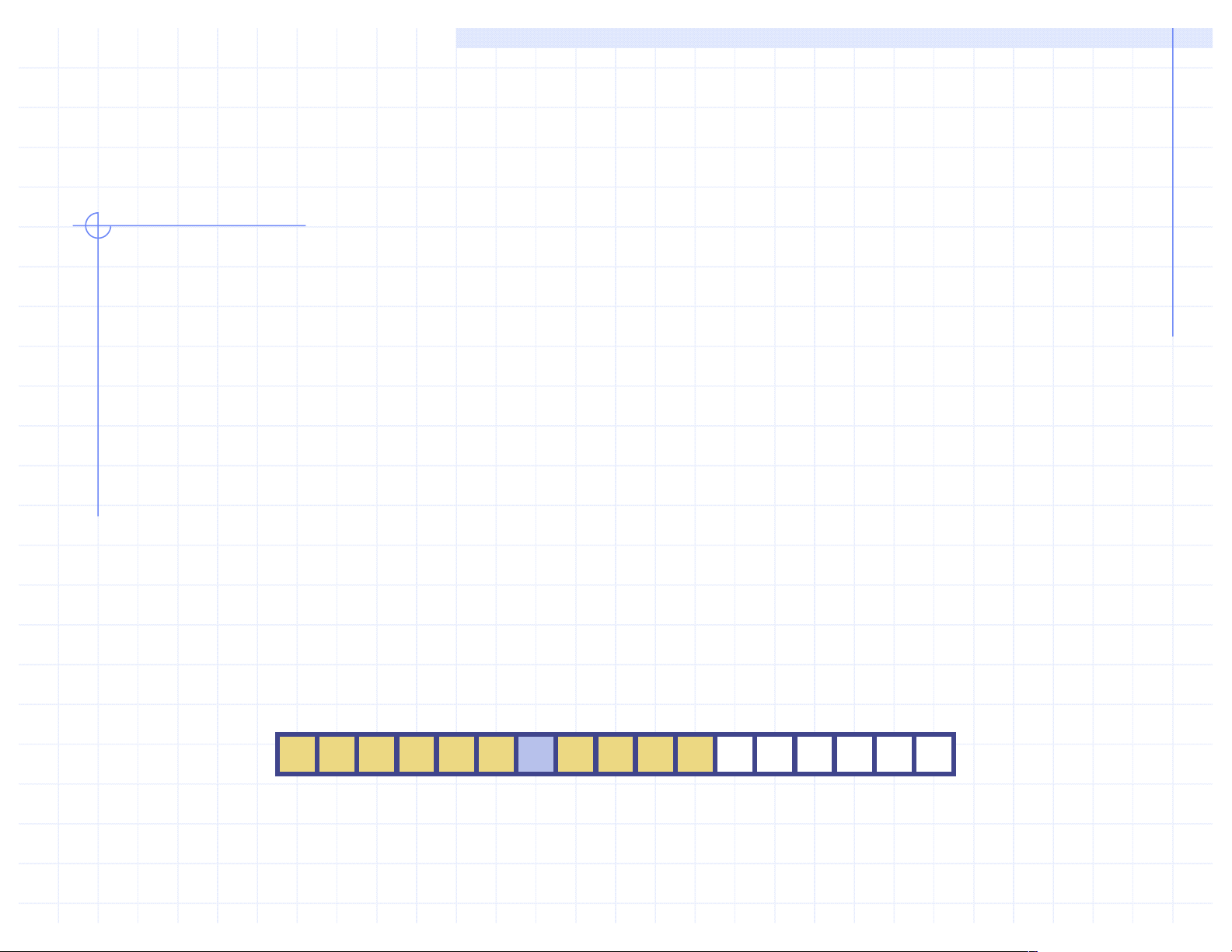
q In Java, the length of an array named a can be
accessed using the syntax a.length. Thus, the cel s
of an array, a, are numbered 0, 1, 2, and so on, up
through a.length−1, and the cell with index k can be accessed with syntax a[k]. a 0 1 2 k n
© 2014 Goodrich, Tamassia, Goldwasser Arrays 3 Declaring Arrays (first way)
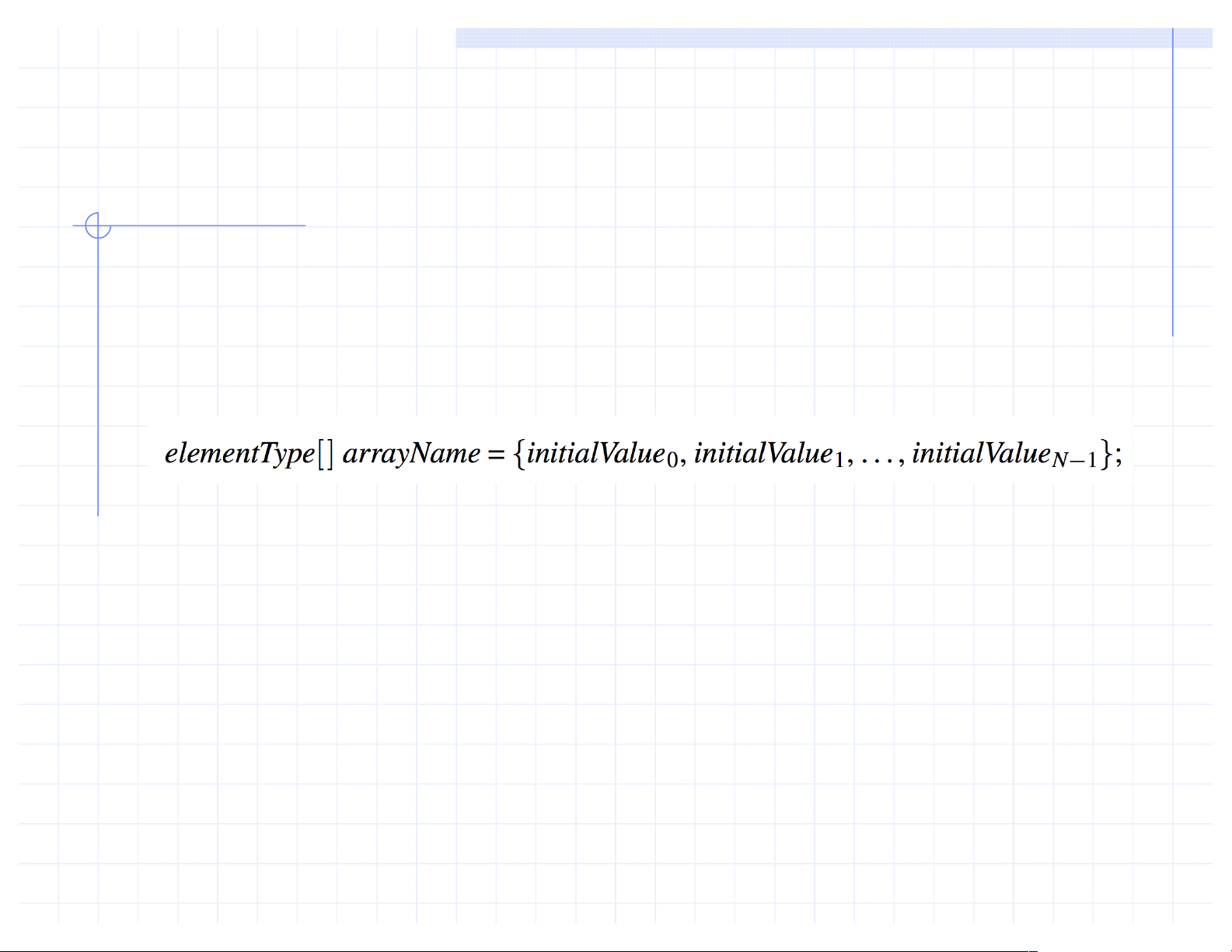
q The first way to create an array is to use an
assignment to a literal form when initial y declaring the array, using a syntax as:
q The elementType can be any Java base type or class
name, and arrayName can be any valid Java identifier.
The initial values must be of the same type as the array.
© 2014 Goodrich, Tamassia, Goldwasser Arrays 4 Declaring Arrays (second way)
q The second way to create an array is to use the new operator.
n However, because an array is not an instance of a
class, we do not use a typical constructor. Instead we use the syntax:
new elementType[length]
q length is a positive integer denoting the length of the new array.
q The new operator returns a reference to the
new array, and typical y this would be
assigned to an array variable.
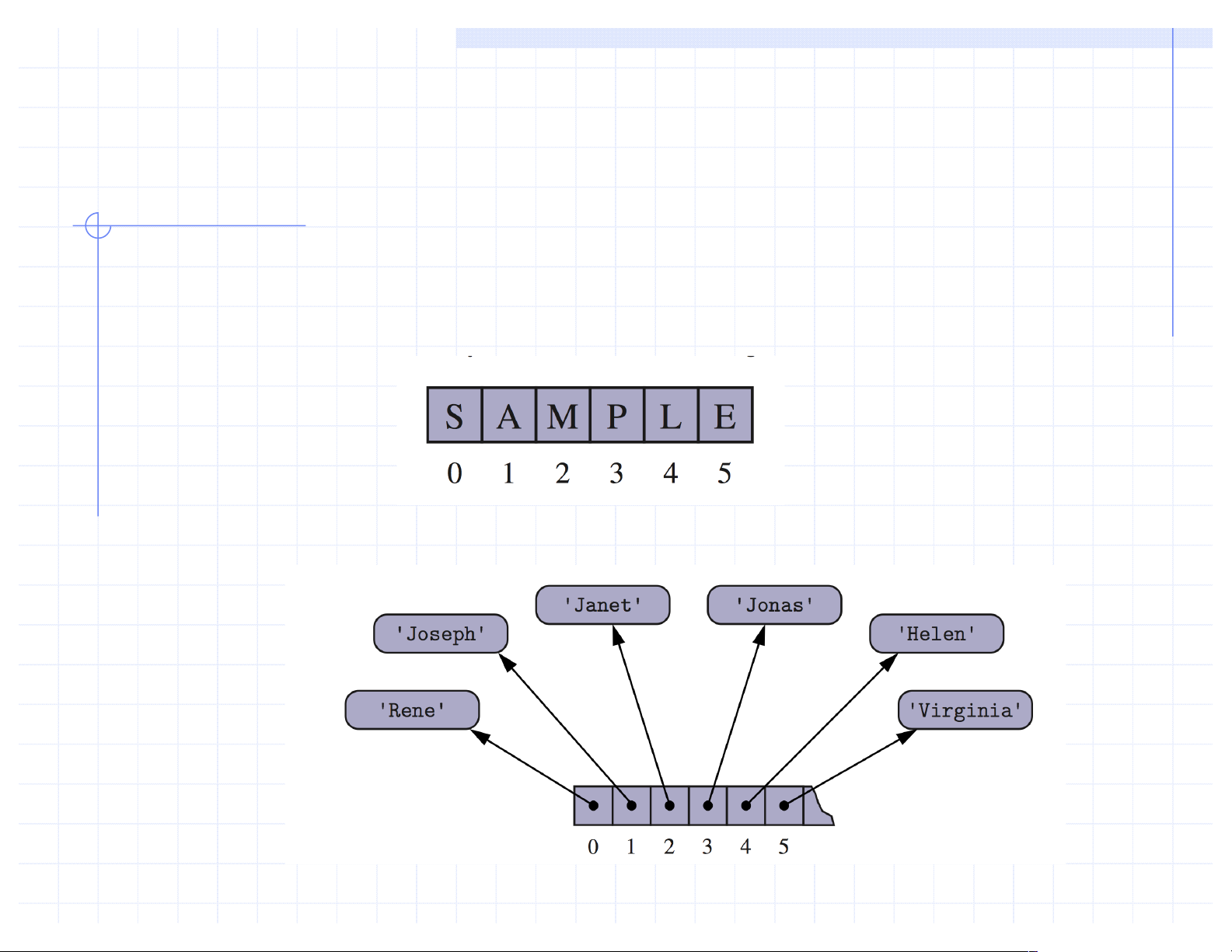
© 2014 Goodrich, Tamassia, Goldwasser Arrays 5 Arrays of Characters or Object References
q An array can store primitive elements, such as characters.
q An array can also store references to objects.
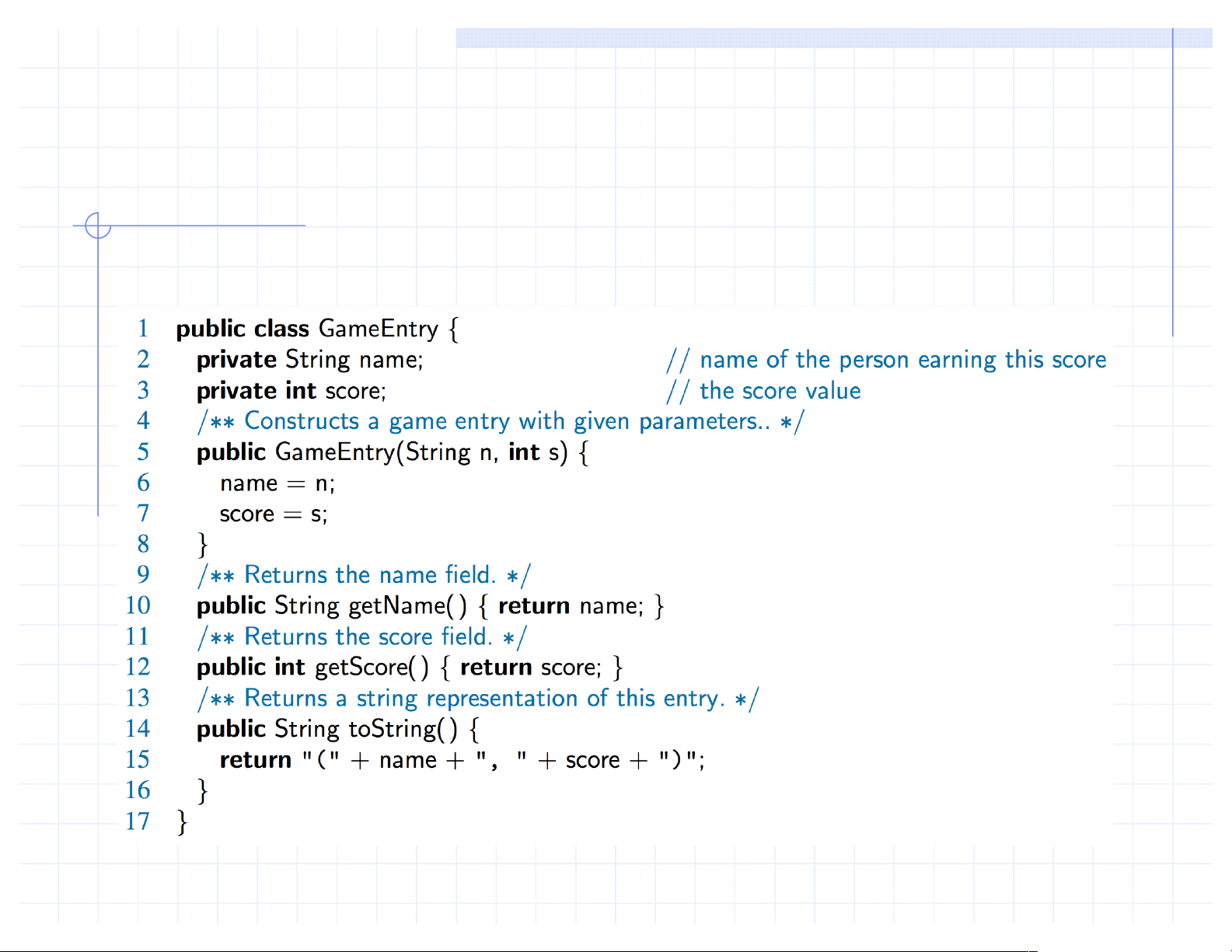
© 2014 Goodrich, Tamassia, Goldwasser Arrays 6 Java Example: Game Entries q
A game entry stores the name of a player and her best score so far in a game
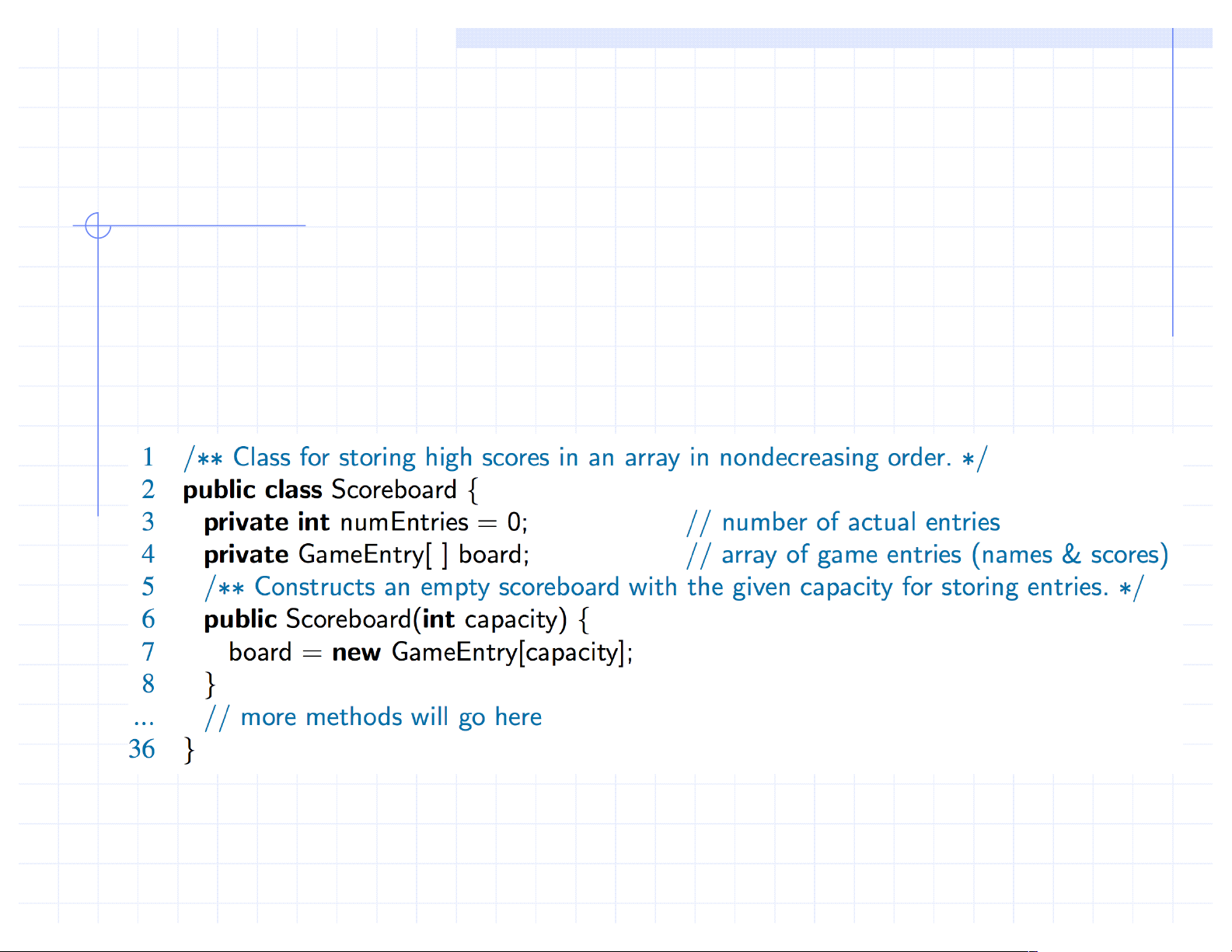
© 2014 Goodrich, Tamassia, Goldwasser Arrays 7 Java Example: Scoreboard q
Keep track of players and their best scores in an array, board n
The elements of board are objects of class GameEntry n Array board is sorted by score
© 2014 Goodrich, Tamassia, Goldwasser Arrays 8 Adding an Entry
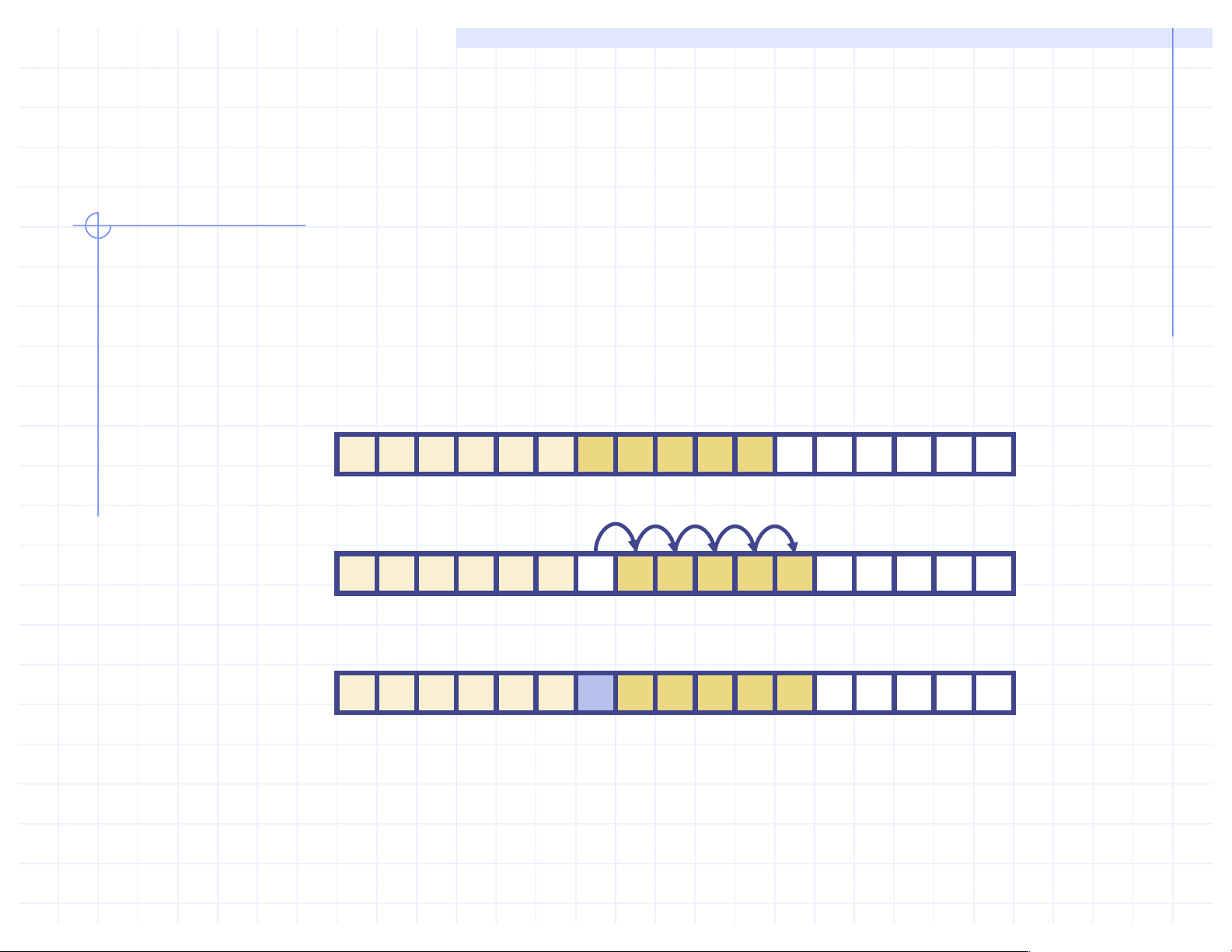
q To add an entry e into array board at index i, we
need to make room for it by shifting forward the
n - i entries board[i], …, board[n – 1] board 0 1 2 i n board 0 1 2 i n board e 0 1 2 i n
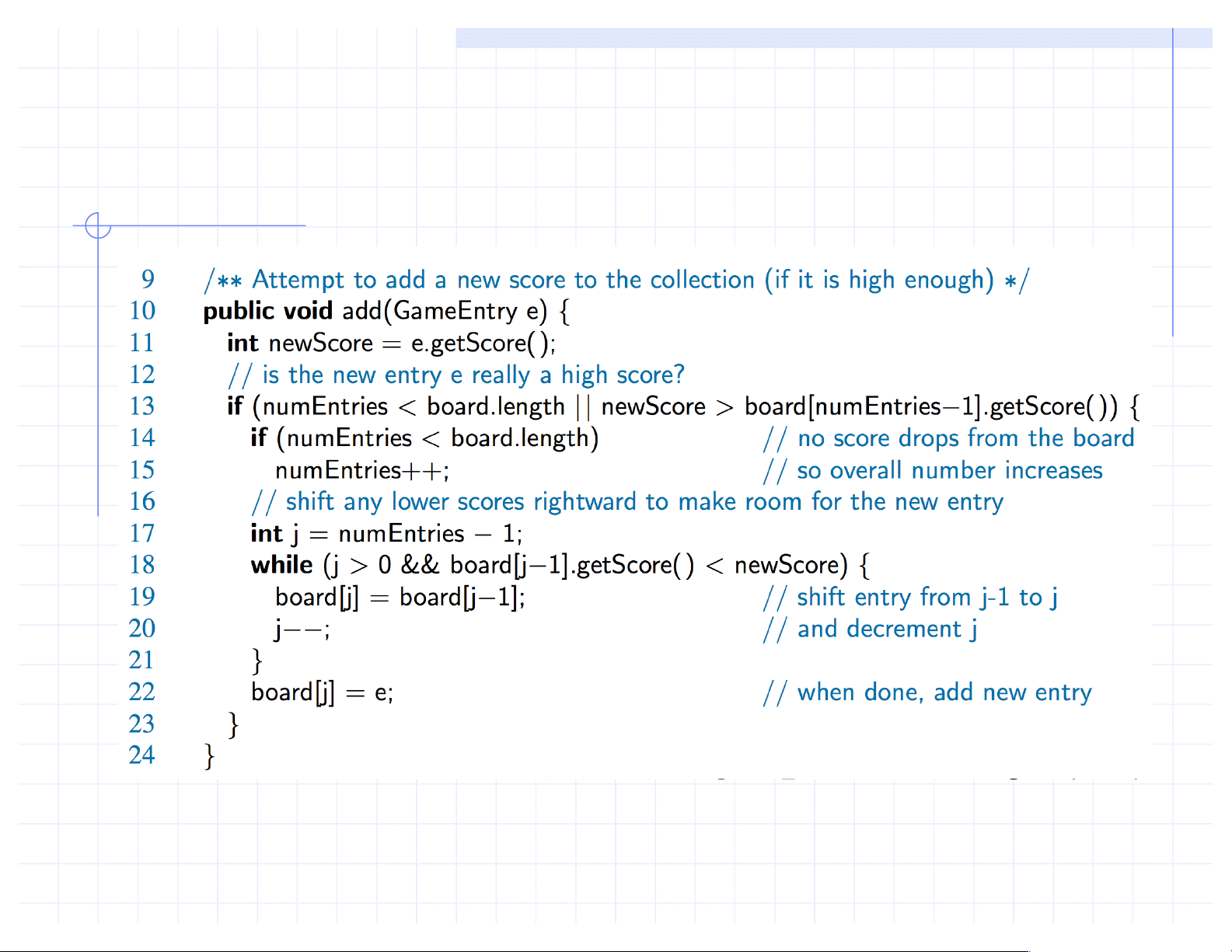
© 2014 Goodrich, Tamassia, Goldwasser Arrays 9 Java Example
© 2014 Goodrich, Tamassia, Goldwasser Arrays 10 Removing an Entry
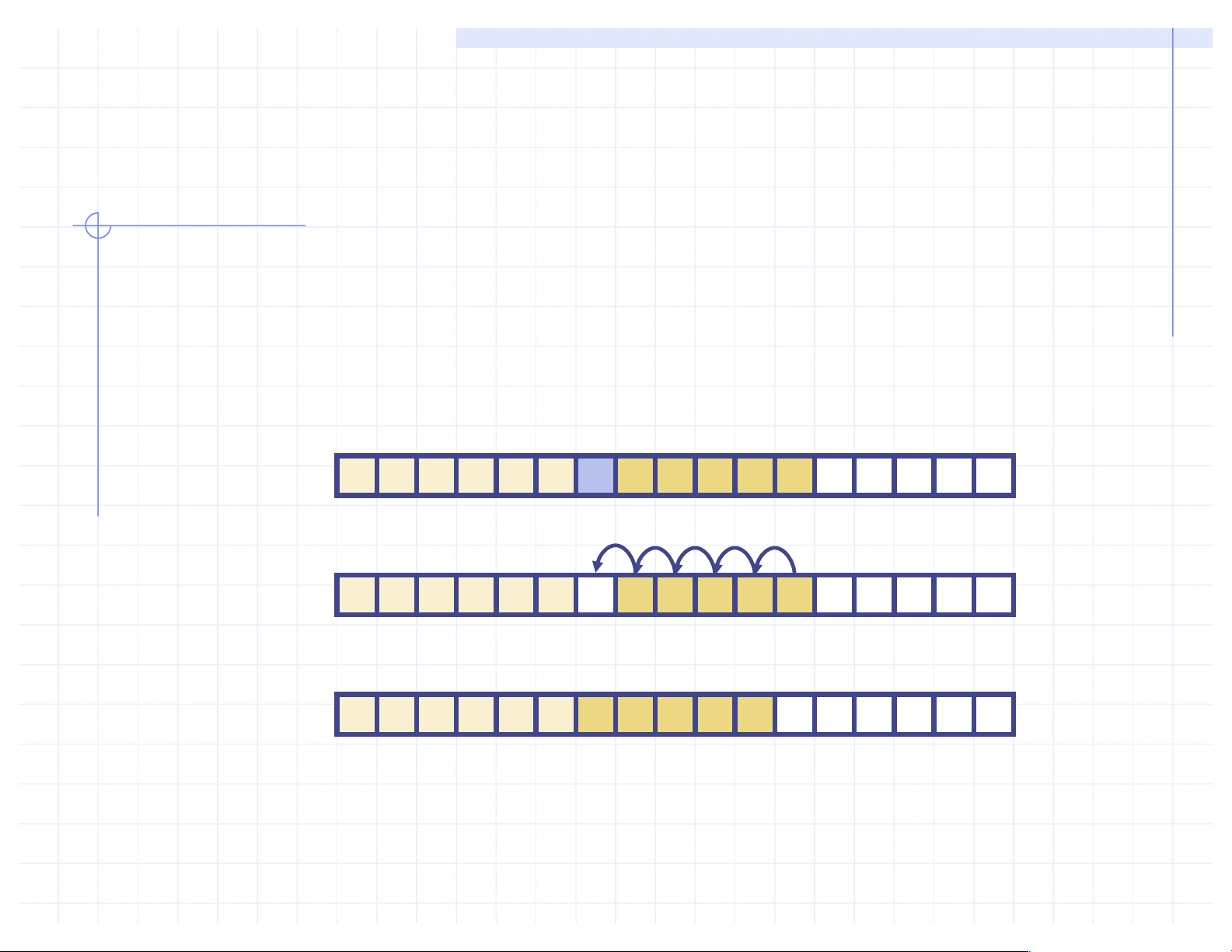
q To remove the entry e at index i, we need to fill the hole
left by e by shifting backward the n - i - 1 elements
board[i + 1], …, board[n – 1] board e 0 1 2 i n board 0 1 2 i n board 0 1 2 i n
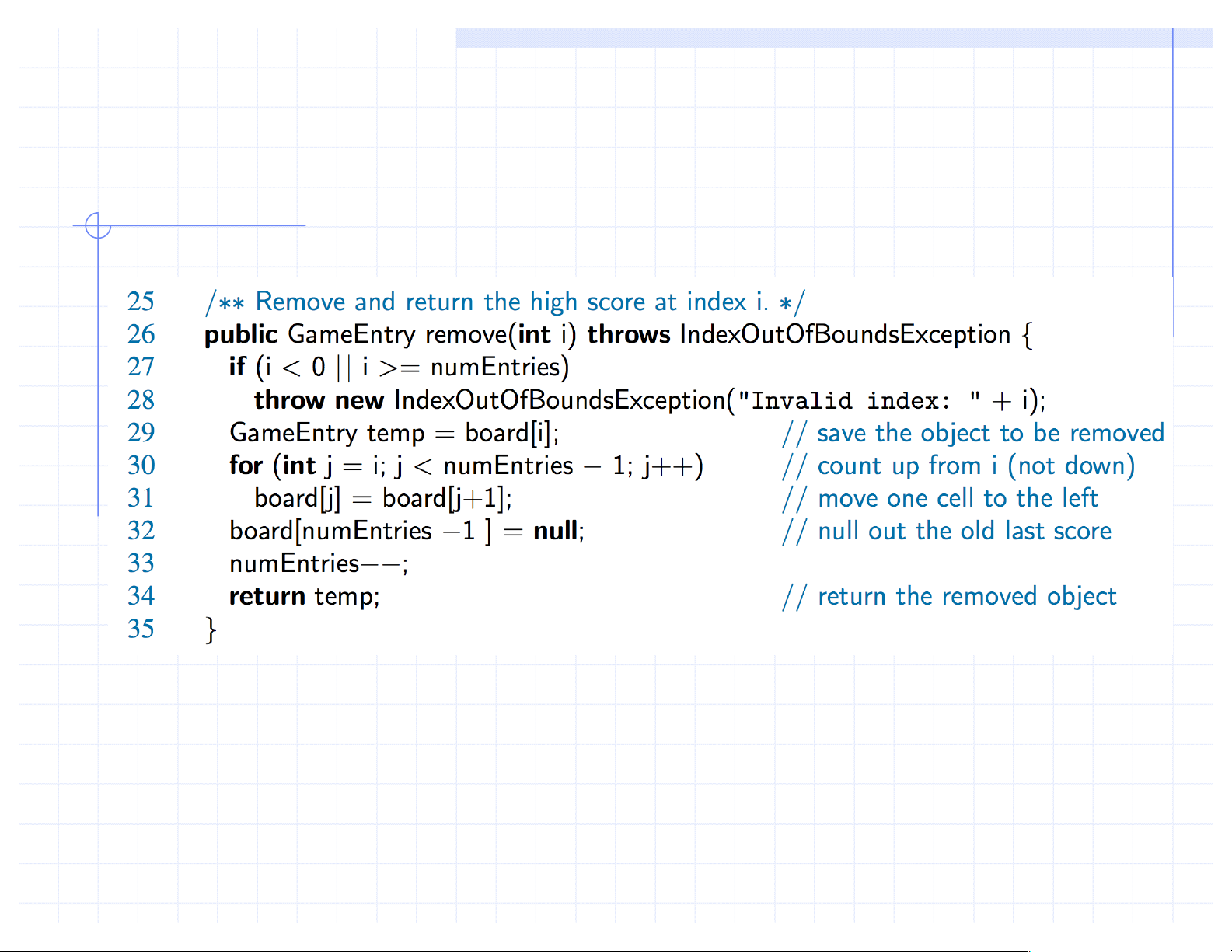
© 2014 Goodrich, Tamassia, Goldwasser Arrays 11 Java Example
© 2014 Goodrich, Tamassia, Goldwasser Arrays 12
Tài liệu liên quan:
-

BÁO CÁO NHÓM 9 - CHỦ ĐỀ 5: Xác định Cỡ Mẫu và Phương Pháp Thu Thập Dữ Liệu
1 1 -
Bài giảng về Cấp phát bộ nhớ động môn Cấu trúc dữ liệu và Giải thuật | Đại học Quốc gia Hà Nội
23 12 -

Bài giảng Chương 1: Một số khái niệm cơ bản về thiết kế giải thuật môn Cấu trúc dữ liệu và giải thuật | Đại học Quốc gia Hà Nội
38 19 -
BÁO CÁO ĐỒ ÁN THỰC HÀNH IS201 - XÂY DỰNG HỆ THỐNG QUẢN LÝ THƯ VIỆN
42 21