Bài tập Anh 8 Global Siêu Hay có đáp án Unit 7 - HSdocx

















Preview text:
UNIT 7: ENVIRONMENTAL PROTECTION A. VOCABULARY No Words Typ Pronunciation Meaning . e 1. environment /in'vaırənmənt/ môi trường (n) 2. environmental /in,vairən'mentl/ thuộc về môi trường (adj) 3. protect /prə'tekt/ bảo vệ (v) 4. protection /prə'tekʃn/ sự bảo vệ (n) 5. environmental /in,vairən'mentl bảo vệ môi trường protection prə'tekʃn/ 6. problem /ˈprɒbləm/ vấn đề (n) 7. environmental / in,vairən'mentl
các vấn đề về môi trường problems ˈprɒbləm/ 8. serious /'sıəriəs/
nghiêm trọng, trầm trọng (adj) 9. pollution /pǝ'lu:ʃn/ sự ô nhiễm (n) 10. pollute /pǝ'lu:t/ gây ô nhiễm (v) 11. habitat /ˈhæbɪtæt/
môi trường sống, nơi sống (n) 12. ecosystem /ˈiːkəʊsɪstəm/ hệ sinh thái (n) 13. resident /ˈrezɪdənt/ người dân, dân cư (n) 14. loss /lɒs/ sự mất, sự tổn hại (n) 15. quality /ˈkwɒləti/ chất lượng (n) 16. globe /ɡləʊb/ quả cầu, địa cầu (n) 17. global /ˈɡləʊbl/ toàn cầu (adj) 18. global warming /ˈɡləʊbl ˈwɔːmɪŋ/ sự ấm lên toàn cầu 19. endanger /ɪnˈdeɪndʒə(r)/ gây nguy hiểm (v) 20. species /ˈspiːʃiːz/
loài (động vật, thực vật) (n)
Bài tập Tiếng Anh 8 (Global 1 Success) 21. endangered
/ ɪnˈdeɪndʒəd ˈspiːʃiːz/
các loài có nguy cơ bị tuyệt species chủng 22. footprint /ˈfʊtprɪnt/ dấu chân, vết chân (n) 23. carbon /ˈkɑːbən/ cac-bon (n) 24. carbon footprint /ˈkɑːbən ˈfʊtprɪnt / dấu chân cac-bon 25. carbon dioxide /ˈkɑːbən daɪˈɒksaɪd / đi ô xít cac-bon 26. oxygen /ˈɒksɪdʒən/ khí ô- xi (n) 27. toxic /ˈtɒksɪk/ độc hại (adj) 28. release /rɪˈliːs/ thải, làm thoát ra (v) 29. device /dɪˈvaɪs/ thiết bị (n) 30. turn /tɜːn/ xoay, lật (v) 31. turn on /tɜːn ɒn/ mở, bật 32. turn off /tɜːn ɒf/ tắt 33. reduce /rɪˈdjuːs/ giảm, giảm bớt (v) 34. reuse /ˌriːˈjuːz/ tái sử dụng (v) 35. recycle /ˌriːˈsaɪkl/ tái chế (v) 36. avoid /əˈvɔɪd/ tránh (v) 37. stop /stɒp/ dừng, ngăn chặn (v) 38. plant /plɑːnt/ trồng (v) 39. volunteer (v, /ˌvɒlənˈtɪə(r)/
tình nguyện, người tình nguyện n) 40. save /seɪv/ cứu, tiết kiệm (v) 41. product /ˈprɒdʌkt/ sản phẩm (n) 42. single-use /ˌsɪŋɡl ˈjuːs/ để sử dụng một lần (adj) 43. single-use
/ˌsɪŋɡl ˈjuːs ˈprɒdʌkts/
các sản phẩm chỉ sử dụng một products lần 44. litter (n, /ˈlɪtə(r)/ rác, vứt rác bừa bãi v) 45. rubbish /ˈrʌbɪʃ/ rác rưởi (n)
Bài tập Tiếng Anh 8 (Global 2 Success) 46. plastic rubbish /ˈplæstɪk ˈrʌbɪʃ/ rác nhựa 47. pick up rubbish /pɪk ʌp ˈrʌbɪʃ/ nhặt, thu gom rác 48. cut /kʌt/ cắt, chặt (v) 49. cut down trees chặt cây 50. campfire /ˈkæmpfaɪə(r)/ lửa trại (n) 51. building a đốt lửa trại campfire 52. marine /məˈriːn/ thuộc biển (adj) 53. wildlife /ˈwaɪldlaɪf/ động vật hoang dã (n) 54. diverse /daɪˈvɜːs/
da dạng, gồm nhiều loại khác (adj) nhau 55. coral /ˈkɒrəl/ san hô (n) 56. dugong /ˈduːɡɒŋ/ con cá cúi, bò biển (n) 57. earth /ɜːθ/ trái đất (n) Word form Verb Noun Adjective Adverb endangered endanger endangerment endangering extinction extinct habitat habitation habitable inhabitant product produce produce production producer protect protection toxic toxicity non-toxic B. GRAMMAR
I. Complex Sentences (Câu phức)
Câu phức là câu có một mệnh đề độc lập (independent clause) và ít nhất một mệnh đề phụ
thuộc (dependent clause).
E.g. She went to work although she was very tired.
→ “She went to work” là mệnh đề độc lập và “although she was very tired” là mệnh đề phụ thuộc.
Bài tập Tiếng Anh 8 (Global 3 Success)
Note: Mệnh đề độc lập có thể đứng một mình thành câu. Mệnh đề phụ thuộc không thể đứng
một mình mà đứng trước hoặc sau mệnh đề độc lập để tạo thành câu hoàn chỉnh.
E.g. You should finish your homework before you go out.
→ “You should finish your homework” đứng một mình vẫn có ý nghĩa hoàn chỉnh; tuy
nhiên, “before you go out” đứng một mình không thể tạo thành câu hoàn chỉnh.
Câu phức sử dụng liên từ và đại từ quan hệ
CÂU PHỨC SỬ DỤNG LIÊN TỪ
Mệnh đề phụ thuộc trong câu phức có thể bắt đầu bằng các liên từ sau đây: - as, since, because
- although, even though, though
E.g. Many wild species die because
E.g. She can't write an English sentence their habitats are destroyed.
although she has studied English for a
(Nhiều loài động vật hoang dã chết do long time.
môi trường sống của chúng bị phá huỷ.)
(Cô ấy không thể viết nổi một câu tiếng
Anh mặc dù cô ấy đã học tiếng Anh lâu rồi.) - if, unless
- when, while, before, after
E.g. I will be back in the office in a
E.g. Her daughter will study abroad
fifteen minutes if there is not traffic jam.
after she graduates from high school.
(Tôi sẽ trở lại văn phòng trong 15 phút
(Con gái bà ấy sẽ đi du học sau khi tốt
nữa nếu không bị kẹt xe.)
nghiệp trung học phổ thông)
CÂU PHỨC SỬ DỤNG ĐẠI TỪ QUAN HỆ
Mệnh đề phụ thuộc trong câu phức cũng có thể bắt đầu bằng các đại từ quan hệ như who, whom, which, E.g.
He is the client who you need to persue.
I don't like the guy that is sitting on the motor over there.
Câu phức với mệnh đề trạng ngữ chỉ thời gian
Mệnh đề trạng ngữ chỉ thời gian (Adverb clauses of time) là mệnh đề dùng để diễn ra khi
nào một sự việc xảy ra. Nó thường bắt đầu với các liên từ chỉ thời gian như before, after,
when, while, till, until, as soon as, ... E.g.
We will start the party as soon as they arrive.
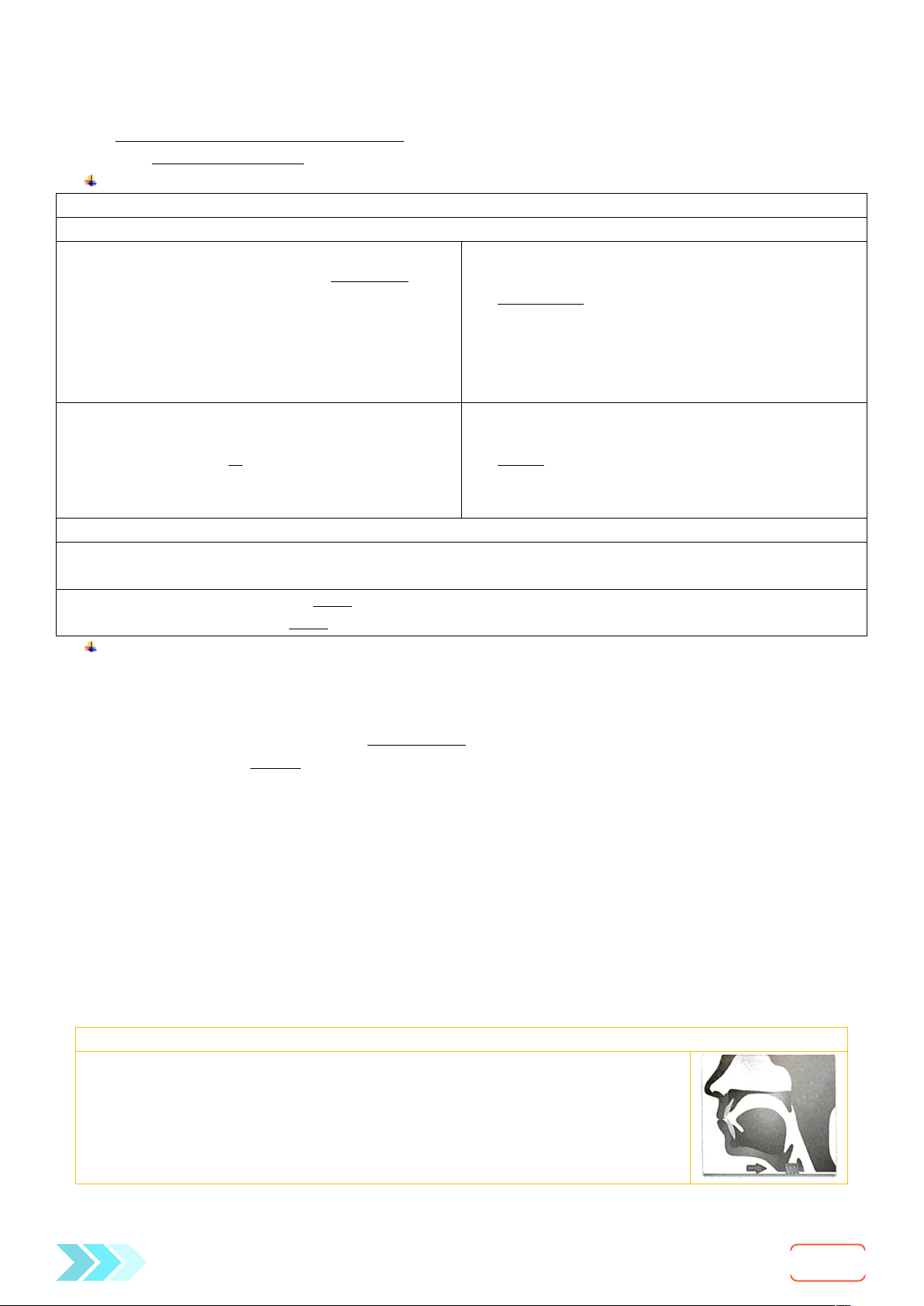
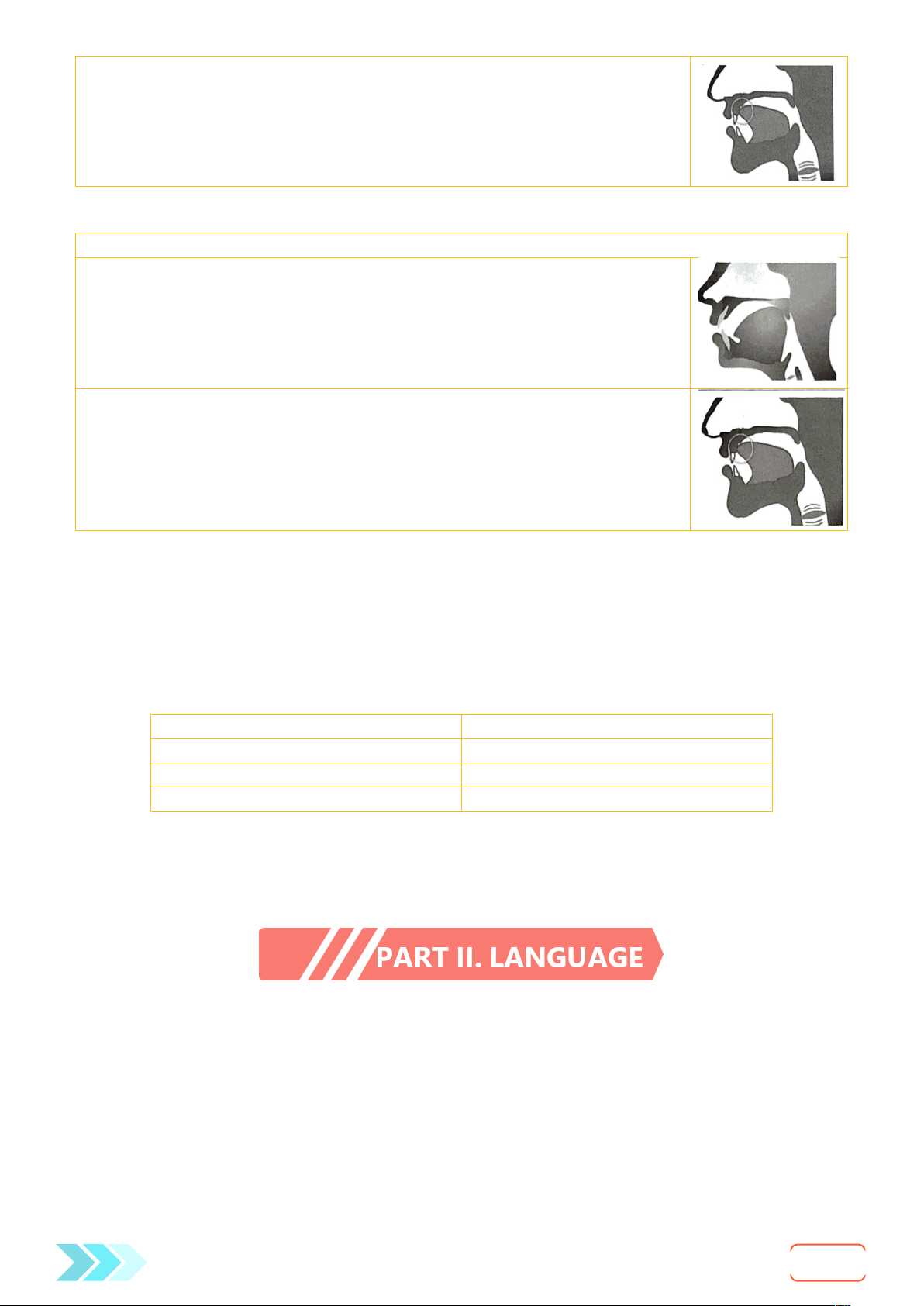
You can swim while I'm cooking. C. PRONUNCIATION Clusters: /bl/ and /kl/ 1. /bl/ /bl/ = /b/ + /l/
/b/: mím nhẹ hai môi lại và nâng phần ngạc mềm để chặn luồng hơi
trong khoang miệng, rồi mở miệng bật hơi từ phía trong ra. Khi phát
âm, dây thanh sẽ rung lên.
Bài tập Tiếng Anh 8 (Global 4 Success)
/l/: để đầu lưỡi chạm vào lợi của hàm răng trên. Khi phát âm, luồng
hơi sẽ đi qua khoảng trống giữa lưỡi và khoang miệng ra ngoài. 2. /kl/ /kl/ = /k/ + /l/
/k/: mở miệng, cuống lưỡi co lại, chạm vào phần ngạc mềm hay là
phần trong cùng của vòm miệng để chặn luồng khí trong miệng. Sau
đó bật mạnh luồng khí ra khỏi miệng mà không làm rung dây thanh trong cổ họng.
/l/: để đầu lưỡi chạm vào lợi của hàm răng trên. Khi phát âm, luồng
hơi sẽ đi qua khoảng trống giữa lưỡi và khoang miệng ra ngoài.
3. Sự khác nhau giữa /bl/ và /kl/
Về mặt âm thanh: sự khác biệt của cụm phụ âm /bl/ và /kl/ xuất phát từ sự khác biệt của vị trí
môi và lưỡi khi bật hơi phát âm âm /b/ và /k/.
- Khi phát âm âm /b/ chúng ta mím nhẹ môi, còn âm /k/ chúng ta cần mở miệng.
- Với âm /b/ các em để lưỡi thả lỏng như bình thường trong khi với âm /k/ các em co cuống
lưỡi lại, chạm vào phần ngạc mềm để chặn luồng khí trong miệng.
- Phát âm âm /b/ làm rung dây thanh trong cổ họng nhưng âm /k/ thì không. /bl/ /kl/ blue clue block clock blink clink A. PHONETIC
Exercise 1: Underline the /bl/ sound, and double underline the /kl/ sound. Then
practice reading these sentences.
1. My father usually has a cup of black coffee for breakfast. 2. His eyes were bright blue.
3. Take a deep breath and blow out the candles on the birthday cake.
4. Today she is wearing a white silk blouse.
5. He became completely blind after the car accident.
6. She's so clever with her hands.
7. Do you like classical music?
8. "Oh, dear! You blinked just as I took the photograph!"
Bài tập Tiếng Anh 8 (Global 5 Success)
9. He was climbing up the wall.
10. The apple tree is covered in blossoms.
Exercise 2: Choose the word (A, B, C, or D) whose underlined part is pronounced differently from the others. 1. A. reduce B. release C. forest D. process 2. A. cutting B. rubbish C. harmful D. substance 3. A. risk B. wild C. habitat D. pick 4. A. lock B. stop C. novel D. come 5. A. save B. preparation C. became D. signature 6. A. absorb B. coral C. saola D. tornado 7. A. tornado B. face C. marine D. save 8. A. risk B. wildlife C. title D. time 9. A. impact B. habitat C. blast D. blank 10.A. consume B. conserve C. resident D. source
Exercise 3: Choose the word (A, B, C, or D) whose main stress is different from the others in the group. 1. A. pollution B. protection C. interest D. announcement 2. A. destroy B. contain C. detail D. reduce 3. A. effective B. habitat C. animal D. national 4. A. wildlife B. before C. habit D. notice 5. A. diverse B. unsafe C. marine D. harmful 6. A. community B. conservation C. contain D. protect 7. A. renewable B. resident C. species D. wildlife 8. A. forget B. remember C. discussion D. carry 9. A. diverse B. courage C. environment D. provide 10. A. reduce B. pollute C. oxygen D. consume
B. VOCABULARY – GRAMMAR
Exercise 1: Choose the correct meaning of the following words and phrases. 1. habitat
A. the place where people live
B. the place where a tribe lives
C. the place where a type of plant or animal lives 2. ecosystem
A. the way that someone behaves
B. the way in which a person or a group of people lives and works
C. the way living and non-living things in a particular area are related to each other 3. pollution
A. the process of making water, air, soil, etc. dirty
B. the process of making water, air, soil, etc. clean
C. the act of protecting someone or something 4. global warming
A. the increase in temperature of the earth's atmosphere
B. the decrease in temperature of the earth's atmosphere
C. the process of picking up and recycling rubbish 5. endangered species
A. animals living in a natural environment
Bài tập Tiếng Anh 8 (Global 6 Success)
B. animals facing a high risk of extinction in the wild
C. creatures and plants living in the sea
6. environmental protection
A. the way to build a campfire
B. the act of cutting down trees
C. the practice of protecting the natural environment
Exercise 2: Choose the word/ phrase/ sentence (A, B, C, or D) that best fits the space
in each sentences or best answers the question.
1. We should ______ our carbon footprint to protect the environment. A. pollute B. protect C. reduce D. endanger
2. You should turn off devices that you are not using to ______ electricity. A. save B. reuse C. release D. turn
3. "Carbon footprint" is the amount of carbon dioxide that we ______ into the environment. A. stop B. plant C. recycle D. release
4. People shouldn't throw away single-use products but ______ them. A. endanger B. recycle C. protect D. pollute
5. They can ______ campfires on the beach near the hotel. A. volunteer B. cut C. build D. litter
6. The people in my village often ______ down trees to build houses. A. cut B. pollute C. avoid D. release
7. You shouldn't dump the rubbish into the river to reduce ________ pollution A. air B. water C. carbon D. campfire
8. Forests help release oxygen and absorb __________________ A. carbon dioxide B. global warming C. environmental protection D. water pollution
9. We can take part in activities like picking ______ and planting trees to protect nature and the environment. A. up B. about C. down D. to
10.A number of cleaning products contain ______ chemicals A. safeful B. helpful C. harmful D. hopeful
11.The gases from the exhausts of cars have also increased ______ pollution in most cities. A. land B. sand C. water D. air
12.The death rate would ______ if hygienic conditions were improved. A. decrease B. increase C. be D. up
13.When radiation goes into the land, air or water, it is called radioactive ______. A. pollution B. polluted C. pollutants D. polluting
14.Too much use of electric lights in cities may ______ light pollution. A. go B. result C. cause D. lead
15.______ pollution is the contamination of lakes, rivers, oceans, or groundwater, usually by human activities A. Soil B. Air C. Noise D. Water
16.Land pollution happens when human activities ______ the Earth's surface. A. cover B. destroy C. damages D. cause
17.The sight of too many telephone poles, advertising billboards, overhead power lines, or
shop signs may cause ______ pollution. A. visual B. vision C. visualize D. visible
18.People don't care much about the environment, so they keep ______ it worse. A. made B. making C. to make D. make
19.Land pollution is responsible for damage done ______ natural habitat of animals. `A. with B. for C. to D. of
20.Americans throw ______ twenty-eight and a half million tons of plastic in landfills every year.
Bài tập Tiếng Anh 8 (Global 7 Success) A. in B. at C. to D. away
21.Scientists have come up ______ new ways of saving energy. A. with B. on C. to D. out
22.Thousands of people were exposed ______ radiation when the nuclear plant exploded. A. in B. at C. to D. away
23.Waste water from many factories which is dumped ______ water bodies directly cause water pollution. A. on B. into C. out D. by
24.______ fumes from these vehicles are serious air pollutants. A. Poisonously B. Poison C. Poisonous D. Poisons
25.Air pollution occurs when the atmosphere contains gases, dust, or fumes in ______ amounts. A. unharmed B. harmless C. harm D. harmful
26.She suffered ______ a serious disease because of drinking contaminated water for a long time. A. in B. at C. to D. from
27.We hope more people join our ______ programme. A. environment B. environmental C. environmentalist D. environmentally
28.Harmful gases like nitrogen oxides and sulphur oxides are ______ into the atmosphere
during the burning of fossil fuels A. releases B. released C. release D. releasing
29.The ______ of air pollution are alarming. A. effective B. affect C. effect D. effects
30.You should drive carefully ______ the road is slippery. A. because B. while C. although D. after
31.I sleep with the window open ______ it's really cold. A. if B. unless C. as D. before
32.We will clean up the beach ______ it stops raining. A. while B. though C. since D. as soon as
33.Mary plays with the boy ______ he is naughty. A. although B. until C. when D. because
34.He won't get paid for time off ______ he hasn't got a doctor's note. A. unless B. till C. because D. if
35.She went to the gym ______ she had finished her work. A. after B. before C. unless D. while
36.Don't drink too much water ______ you are having a meal. A. till B. until C. while D. even though
37.Don't forget to turn off the lights ______ you go out. A. though B. because C. after D. before
38.I don't know the reason ______ you didn’t go to school. A. what B. whose C. why D. where
39.He was talking about the film ______ he saw last night. A. that B. how C. who D. when
40.______ thermal pollution happens, the water temperature in streams, rivers, lakes, or oceans changes. A. Until B. When C. Before D. As soon as
41.Noise pollution occurs ______ there are too many loud sounds in the environment. A. while B. and C. because D. so
42.The roads were slippery ______ it started to rain. A. so B. as soon as C. when D. before
43.Renewable ______ of energy, such as solar and wind power, are crucial for a sustainable future.
Bài tập Tiếng Anh 8 (Global 8 Success) A. sources B. pollutions C. consumption D. permission
44.We should be mindful of our carbon ______ and seek ways to reduce it. A. handprint B. printer C. fingerprint D. footprint
45.The loss of habitat and climate change contribute to the ______ of species. A. extinct B. exit C. extinction D. extincted
Exercise 3: Complete the sentences with the words in the box. footprint habitats substances effect endangere d wildlife dioxide marine reduce diverse
1. The ecosystem in Con Dao National Park is very ________________with thousands of species.
2. Do trees help absorb carbon ________________?
3. Walking and cycling are effective ways to reduce our carbon ________________.
4. Some toxic ________________from factories are usually released into rivers.
5. We should ________________the consumption of single-use products such as plastic bottles and bags.
6. The dugong is a(n) ________________animal.
7. The ________________animals are dying because of trash dumped into the ocean.
8. Air pollution has a harmful ________________on our life.
9. A national park is a special area for the protection of the environment and ________________.
10.________________of animals are damaged by human activities.
Exercise 4: Choose the letter A, B, C, or D to indicate the word(s) CLOSEST in
meaning to the underlined word(s) in each of the following sentences:
1. It is important to contain and properly dispose of hazardous materials to prevent environmental contamination. A. crucial B. unnecessary C. unimportant D. careful
2. The government should strictly regulate and permit industrial activities to minimize their impact on the environment. A. dismiss B. allow C. protect D. reduce
3. The residents of the community actively participate in environmental conservation efforts. A. throw B. ignore C. impact D. take part
4. Protecting the environment is crucial for maintaining a diverse range of ecosystems. A. varied B. same C. similar D. polluted
5. The release of toxic chemicals into the environment poses a serious threat to ecosystems and human health. A. cause B. deadly C. coral D. volunteer
Exercise 5: Choose the letter A, B, C, or D to indicate the word(s) OPPOSITE in
meaning to the underlined word(s) in each of the following sentences:
1. We should save energy by using energy-efficient appliances and adopting sustainable practices. A. store B. waste C. renew D. resident
2. It is our responsibility to protect the environment and preserve it for future generations. A. destroy B. cover C. little D. contain
3. Implementing measures to reduce greenhouse gas emissions is crucial in combating climate change. A. decrease B. cut down C. minimize D. increase
4. Remember to turn off lights and electronic devices when they are not in use to conserve energy.
Bài tập Tiếng Anh 8 (Global 9 Success) A. switch on B. tum down C. go over D. go away
5. Cleaning up polluted water sources is a challenging task that requires collaboration and expertise. A. contaminated B. forget C. pure D. non-living
Exercise 6: Fill in each blank with the appropriate form of the word in brackets.
1. We need to ________________ (protection) our oceans by reducing plastic waste and overfishing.
2. Pesticides and chemical fertilizers can be ________________(toxicity) to both the environment and human health.
3. Her younger sister can be ________________(annoy) when she behaves naughtily.
4. You must read the ________________(instruct) carefully before you use the new oven.
5. We were taken aback at the ________________(drama) changes in our village; each home owns a computer now.
6. It is always ________________ (interest) to watch the cubs at play.
7. My mother advised me to be careful in my ________________ (choose) of friends.
8. The ________________ (hot) makes everybody very drowsy during the lesson in class.
9. The couple came here at the special ________________ (invite) of the prime minister.
10. Please ________________ (low) the volume of your voice. I can even hear you from next door.
11. These men are armed and ________________ (danger), and should not be approached.
12. The latest ________________ (edit) of this book contains many illustrative pictures.
13. The giant panda is an ________________ (danger) species due to habitat loss and poaching.
14. The dodo bird went into ________________ (extinct) in the 17th century due to hunting and habitat destruction.
15. The rainforest is the ________________ (habitation) of many species of animals and plants.
Exercise 7: Choose the correct word to complete each sentence.
1. You should wait here when / until/ while your parents come back.
2. While/ After / Before the party, there was a lot of food left.
3. My sister was sleeping when / as soon as/ while I was studying for the test last night.
4. As soon as / While/ After I left home for school, It rained heavily.
5. The train arrived while / as soon as/ before Elle was having lunch.
6. Because / Although/ If the water is very cold in January, they go swimming anyway.
7. My father goes jogging every morning before / after/ until he gets ready for work.
8. I learned a lot about wildlife until / after/ as soon as I visited Cuc Phuong National Park yesterday.
9. I usually drink a glass of warm milk after/ until / before I go to bed.
10.Who takes care of the baby when / after/ before your mother is away?
11.After / Before / While we receive your confirmation email, we will send you a link to download the program.
12.I have to wait while / before / until my mum comes home.
13.Before/When / While she is ready, we will leave.
14.I'll send you a text message until / as soon as / before I hear from Nam.
15.Before/After / While she goes, she will turn off all the computers.
16.He will send them an email before / until / as soon as he arrives in London.
17.I will give you my reply before /by / this time I leave this afternoon.
18.I'll go online while / as soon as / until I get home.
19.Before/Until / When Mr. Tan phones, please let me know.
20.Let's play with the children after / until / while it is time to go.
Exercise 8: Complete each sentence with the correct preposition.
1. Coal power stations release sulfur dioxide ________________the atmosphere.
Bài tập Tiếng Anh 8 (Global 10 Success)
2. National parks play a key role ________________saving the environment.
3. What type of effect does water pollution have ________________our life?
4. Forests provide a habitat ________________hundreds of species ________________plants and animals.
5. Technology is already playing a key role ________________environmental protection.
6. There is a nice play area ________________the children.
7. The regions are home ________________bears and mountain lions.
8. I'd like to emphasize the importance ________________protecting endangered species.
9. Avoid dumping waste ________________lakes and rivers!
10.Remember to turn ________________devices when you are not using them.
11.Toxic chemicals continue to be dumped ________________the river.
12.Orange juice is rich ________________vitamin C.
13.The pools provide a rich habitat ________________water plants.
14.The first Earth Day started ________________1970 ________________America.
15.Picking ________________litter makes our environment clean.
16.People are becoming more aware ________________environmental issues.
17.The new road will cause a loss ________________the beauty of the landscape.
18.Endangered animals in the wild are facing a high risk ________________extinction.
19.After cleaning ________________everything ________________the campsite, we left.
20.We shouldn't cut ________________too many trees.
Exercise 9: Underline the dependent clauses of the following sentences.
1. She is the woman that he loves best.
2. The roads were slippery when it rained.
3. They are generous although they aren't rich.
4. Since we've booked the tickets online, we won't queue at the counter.
5. The hotel where we stayed last month wasn't very clean.
6. The man who is wearing a yellow cap is my uncle.
7. John hasn't travelled recently because he doesn't have time.
8. If she doesn't tell anyone, no one can know the truth.
9. Tien Dung married Chu Dong Tu even though he was very poor.
10. Quan ho is chosen to perform at the Lim Festival because it is the traditional folk song of Bac Ninh.
Exercise 10: Reorder the words and phrases to make complex sentences.
1. call / I / will / you / I / arrive / as soon as the /airport/ at /.
________________________________________________________________________________________
2. them / should / You / they / help / if / need /.
________________________________________________________________________________________
3. will / We/frozen/be/ you / temperature / unless / increase / the /.
________________________________________________________________________________________
4. after / The / the /shop/ closed / had left / last customer/.
________________________________________________________________________________________
5. must/You / stop / when / the /turn / red / traffic lights/.
________________________________________________________________________________________
6. always makes / My / breakfast / mother/ for / me / before / goes / to / she / work/.
________________________________________________________________________________________
7. is / her / doing / Mai / homework / Nga / while / to / music / is / listening /.
________________________________________________________________________________________
8. come/to/ She / decided/ even though/to/ didn't/like/the/ party / she / it /.
________________________________________________________________________________________
9. Can / help / me / you / the / the dishes / wash / while / cleaning / I'm/ floor/?
________________________________________________________________________________________
10. lots of / She /eat/ fried food / not good / shouldn't / as /for/your/it/is/ health /.
Bài tập Tiếng Anh 8 (Global 11 Success)
________________________________________________________________________________________
Exercise 11: Combine each pair of sentences, using the conjunction in brackets.
1. A serious road accident happened. We were waiting for the bus yesterday. (while)
________________________________________________________________________________________
2. I had to get the mop. I spilled my juice. (since)
________________________________________________________________________________________
3. He fell down the ladder. His leg was broken. (and)
________________________________________________________________________________________
4. We had picked up trash. We left the campsite. (before)
________________________________________________________________________________________
5. It started raining. They were putting up the tent. (when)
________________________________________________________________________________________
6. I get my parents' permission. I will go out with my friends. (after)
________________________________________________________________________________________
7. The weather was bad. We were on holiday last month. (when)
________________________________________________________________________________________
8. I will call my mom. I get the result. (as soon as)
________________________________________________________________________________________
9. It rains. My father usually drives me to school. (when)
________________________________________________________________________________________
10.Jack can't play games. He finishes his homework. (before)
________________________________________________________________________________________
11.You are in Ha Noi again. You must come and see us then. (when)
________________________________________________________________________________________
12.He finds somewhere to live. Then he'll give his parents the address. (when)
________________________________________________________________________________________
13.I do the shopping. Then I will come back home. (after)
________________________________________________________________________________________
14.It starts raining. Let's go home before that. (before)
________________________________________________________________________________________
15.She must apologize to him first. He won't speak to her until then. (until)
________________________________________________________________________________________
16.You leave. I will make you a cup of tea. (before)
________________________________________________________________________________________
17.She will stay at her aunt's house. She is London. (while)
________________________________________________________________________________________
18.He has read the newspaper. I will borrow it from him. (as soon as)
________________________________________________________________________________________
19.I have decided the issue. I will let you know. (when)
________________________________________________________________________________________
20.They have built a new road. The traffic will be better. (when)
________________________________________________________________________________________
21.The other passengers will get on the bus. We will leave. (as soon as)
________________________________________________________________________________________
22.I left the room. I turned off the lights. (before)
________________________________________________________________________________________
23.I won't return my book to the library. I'll finish my project. (until)
________________________________________________________________________________________
24.He was making dinner. The frying pan caught on fire. (while)
________________________________________________________________________________________
25.I finish my study. I will take a walk in the park. (as soon as)
________________________________________________________________________________________
26.She was leaving the shop. She dropped a cartoon of eggs. (when)
________________________________________________________________________________________
Bài tập Tiếng Anh 8 (Global 12 Success)
27.He had never heard about Halloween. He took part in a Halloween party last year. (before)
________________________________________________________________________________________
28.Shakespeare died in 1616. He had written more than 37 plays. (before)
________________________________________________________________________________________
29.Mr. Thanh won't answer your email. He has some free time. (until)
________________________________________________________________________________________
30.Susan chews her nails. She feels nervous. (whenever)
________________________________________________________________________________________ A. LISTENING
Exercise 1: Listen to the short talk twice and circle the correct answer to each of the following questions:
1. What does the speaker think about the pollution? A. Pollution is greed B. Pollution is great C. Pollution is good D. Pollution is nothing
2. Who pretend they are not polluting? A. Big factories B. Big companies C. Small factories D. Small companies
3. Companies polluted the air or our ______. A. mountains B. forests C. rivers D. lakes
4. What does Barack Obama help when he says he’s going to do his best? A. the sun B. the moon C. The atmosphere D. The Earth
Exercise 2: Listen to the recording and choose the best answer.
1. What do many politicians and scientists consider to be the biggest danger we face?
A. Global warming. B. Deforestation. C. Pollution. D. Overpopulation.
2. How is climate change affecting different species?
A. They are becoming more numerous.
B. They are moving to new habitats. C. They are dying. D. They are growing larger.
3. What is happening to the ice caps in the Arctic and Antarctica due to climate change? A. They are growing thicker. B. They are melting.
C. They are shifting to new locations
D. They are causing sea levels to drop.
4. How is climate change affecting our weather? A. It is making it rain less. B. It is causing less wind.
C. It is making places warmer or colder.
D. It is making earthquakes more common.
5. What can individuals do to help combat climate change? A. Drive more cars.
B. Cut down on things that produce greenhouse gases. C. Use more plastic bags.
D. Leave lights and appliances on when not in use.
Exercise 3: Listen and complete each gap in the table with ONE or TWO word from the recording. Clean-up Team
Clean the central (1) ____________
● Pick up rubbish, bottles, and (2) ____________bags
● Water small trees and flowers Donation Team Collect used items
(3) ____________the items and put them into correct bags. Media Team
(4) ____________photos of the event on the club’s website
Make (5) ____________for the club’s future activities. B. SPEAKING
Bài tập Tiếng Anh 8 (Global 13 Success)
Exercise 1: Choose the correct response. Then practice the short exchanges in pairs.
1. A: Look at the river! The fish are
B: a/ I think it's because of water pollution. dead.
b/ The water is polluting. Right?
B: a/ Because we can't find the cause.
2. A: Why are we worried about the
b/ Because more people will have breathing air pollution? problems.
3. A: Some factories dump waste
B: a/ The government must fine them heavily. into rivers.
b/ We don't use the water from the rivers.
B: a/ No problem. Bright street lights can cause light
4. A: Street lights are not very pollution. bright!
b/ I think we need much brighter street lights. It's good for the environment.
B: a/ The water becomes warmer, and aquatic animals
5. A: Do you know the effects of the will grow so fast.
increase in water temperatures?
b/ Some aquatic animals are unable to reproduce, I think so.
B: a/ Swimming pools need a lot of water. It's very
6. A: We can use water as much as cheap! we want.
b/ We save water for other people, too. 7. A: Why do you keep the air
B: a/ Well, it can save electricity.
conditioner at that temperature?
b/ It's good for the plants in the room.
B: a/ We should do something to make it greener.
8. A: How can we stop littering?
b/ We can place dustbins in various places.
9. A: Do you think graffiti is a good
B: a/ We don't know when and where it started. art?
b/ Too much graffiti can cause visual pollution.
B: a/ Certainly. It makes the water polluted.
10. A: Is acid rain harmful to us?
b/ Those factories produce a lot of acid.
Exercise 2: Match the answers to the following questions.
1. What do you mean by saying “endangered species loss"?
2. Do you mean by saying “carbon footprint”? Is it the mark made by a person’s foot?
3. Could you explain what you mean by “single-use"?
4. Could you give us an example of light pollution?
5. I wonder if you could say that in a different way about desertification.
6. I'm not quite sure what you mean that human activities may harm biodiversity?
7. Could you be more specific about green products?
8. I don't quite see what you mean that planting trees can save our environment.
9. It sounds like what you're saying is using a lot of streetlights is not good. Is that right?
10. When you say acid rain, do you mean?
A. In other words, it can lead to light pollution, and we can't see the stars in ____________ the sky.
B. To put it differently, it's rain that contains harmful chemicals from
____________ factories gases and it can damage crops and trees.
C. To say this differently, human activities can make the environment
____________ imbalanced with the loss of some species.
D. Sorry, let me explain that. Carbon footprint is a measurement of the
____________ amount of carbon dioxide that a person produces.
E. Let me give an example of that. Too much use of electric lights in cities
____________ may cause light pollution.
F. Let me explain that again. When we plant trees, we can make our
____________ environment clean and reduce pollution.
Bài tập Tiếng Anh 8 (Global 14 Success)
G. Let me explain that. Endangered species loss means that the number of
____________ species is becoming smaller.
H. Sorry, let me explain it again. They are produced with the minimum
____________ effects on the environment.
I. Let me explain that in more detail. 'Single-use' refers to something that is
____________ made to be used once only.
J. Let me put it in another way. When an area or a region becomes a desert,
____________ we call it desertification. C. READING
Exercise 1: Read the following passage and circle the letter A, B, C, or D to indicate
the correct word or phrase that best fits each of the numbered blanks.
Light pollution is not (1) _______serious as water or air pollution. Moreover, it is the type of
pollution that (2) _______more in cities than in rural areas. In the past, we could sit out at
night and gaze at glittering stars in the sky and light from objects in the out space.
Nowadays, cities are covered with lights from buildings, streets, advertising displays, many
of which direct the lights up into the sky and into many unwanted places. The real problem is
that it is very (3) _______to apply light to almost everything at night. Millions of tons of oil
and coal (4) _______to produce the power to light the sky. Eye strain, loss of vision and stress
are what people may get from light pollution. (5) _______light at night can harm our eyes and
also harm the hormones that help us to see things properly. 1. A. more B. as C. much D. only 2. A. happen B. occur C. occurs D. is occurred 3. A. waste B. wastes C. wasting D. wasteful 4. A. used B. using C. is used D. are used 5. A. Very much B. Too much C. Too many D. So many
Have a walk on a beach, listen to the sound of the sea waves, (1) _______ suddenly you see
a lot of rubbish on the beach. Pollution takes away all the (2) _______ of our beaches. I feel
really very annoyed when I see plastic bags lying on the sand, cigarette ends buried in the
sand, and soda cans floating in the sea.
There are a lot of things that we can do. (3) _______ we see rubbish, we should do our part
in the protecting the land by picking it up and throwing it in dust bins. Moreover, we can
form some kind of organization that helps (4) _______ the beaches. If everyone does their
part, the beaches will be a wonderful and beautiful place. We need to start now (5) _______
the beaches are damaged beyond repair. 1. A. or B. but C. and D. so 2. A. beauty B. beautiful C. beautifully D. being beautiful 3. A. While B. If C. Unless D. Soon 4. A. cleaning up B. clean up C. cleaning off D. clean off 5. A. before B. after C. until D. when
Environmental awareness is discussed and studied by many. However, to make an
impact, we must be aware (1) ______ the problems and solutions. We will start with what we
are doing wrong and move toward what needs to be done to improve our environment. Some
ways to take care of our environment is to practise (2) ______ follow proper garbage disposal
protocol, avoid using our cars too much and rely more on public transportation instead.
Every day we hear about how our planet is changing. The need for environmental
protection arises (3) ______ the changes in rising carbon dioxide levels, which causes drastic
changes in our environment. The rising levels of carbon dioxide result in changes in the (4)
______ Carbon dioxide traps heat and makes it difficult for plants to grow. When a plant dies,
more carbon dioxide is released (5) ______ the air. This can cause more temperature changes
Bài tập Tiếng Anh 8 (Global 15 Success)
and less oxygen in the air. To help slow down this process, we have to take care of the
environment before it is too late. 1. A. of B. to C. off D. in 2. A. recycle B. to recycle C. recycling D. to recycling 3. A. to B. for C. with D. from 4. A. water B. soil C. carbon D. atmosphere 5. A. in B. into C. on D. onto
Exercise 2: Read the following passage and circle the letter A, B, C, or D to indicate
the correct answer to each of the questions.
Pollution is any contamination of the environment which causes harm to the environment
or the inhabitants of the environment. There are three main kinds of pollution.
Air pollution can be caused by liquids, or gases that make the air harmful to breathe.
There are two main types of air pollution: primary and secondary. Primary pollutants enter
the air directly, like smoke from factories and car exhaust. Secondary pollutants are
chemicals that mix together to pollute the air, like mixtures of emissions from vehicles and
factory smoke that change to form more dangerous pollutants in the air and sunlight.
Soil pollution can be caused by pesticides, leakage from chemical tanks, oil spills, and
other chemicals which get into the soil by dumping or accidental contamination. Soil
pollution can also cause water pollution when underground water becomes contaminated by
coming into contact with the polluted soil.
Water pollution can be caused by waste products, sewage, oil spills, and litter in streams,
rivers, lakes, and oceans. Some scientists believe that water pollution is the largest cause of
death and disease in the world, causing about 14,000 deaths in the world each day.
It is not possible for anyone to predict the exact timing and effects of global, pollution
and global climate change brought about by pollution. There, is general agreement by
scientists that the global climate will continue to change, the intensity of weather elfects will
continue to increase, and some species of animals will become extinct. (Adapted from BBC)
1. What is the most suitable title for the passage? A. Solutions to pollution B. Environmental issues
C. Causes and effects of pollution D. Environmental impacts
2. What kind of pollution is considered as the cause of the most death and disease? A. Air pollution B. Water pollution C. Soil pollution D. None of the above
3. What is NOT a cause of soil pollution? A. Chemicals B. Pesticides C. Oil sprills D. Exhaust fumes
4. What kind of pollution may oil sprills cause? A. Air pollution B. Water pollution C. Soil pollution D. Both B and C are correct
5. According to the agreement of scientists, what is NOT environmental effect caused by pollution?
A. Disappearance of the rainforests
B. Intensity of weather effects C. Animal extinction D. Global climate change
Saving the Environment: One Home at a Time
Pollution can be seen not only throughout the world, but also in our own homes. It comes
from household chemicals, the amount of water people use and the waste people produce
and throw away. What can be done to stop this pollution? Surprisingly, a person can help
save the environment by doing simple things.
First, we need to recycle, which allows products to be used over and over again.
Recycling can also reduce the number of trees cut down to produce paper products. It takes
Bài tập Tiếng Anh 8 (Global 16 Success)
very little effort. It is not hard to place plastic and glass bottles, aluminum cans and paper in a bin. Anyone can do it.
Second, we need to control the amount of water used at home. It can be conserved by
taking short showers instead of baths, repairing leaky faucets, using the dishwasher or
washing machine only when fully loaded, or simply turning the faucet off while brushing your teeth.
Third, we need to reduce waste. We need to recycle whenever possible, but should also
try to use this waste effectively. For example, grass clippings and food scraps can be made
into compost for plants. The average person produces 4.3 pounds of waste every day, but we
can reduce that amount by recycling and reusing.
If we do our part in our own homes, we can help keep the planet from becoming more polluted
1. Pollution is caused from the following sources except _____________. A. water in rivers B. water from households C. wastes D. house chemicals
2. Recycling can help us _____________. A. never cut down trees B. produce more paper products C. place garbage bins easily
D. use products again and again
3. In order to save water, we can do all of the following things except _____________.
A. fully use the washing machine B. repair leaky faucets
C. take short showers instead of baths
D. tum the faucet off while brushing your teeth
4. Recycling helps to reduce waste because _____________. A. plants need to develop
B. waste can be recycled and reused
C. a person can do it in his home
D. an average man produces compost for plants
5. The word "It" in paragraph 2 refers to _____________. A. cutting down B. the number C. recycling D. effort
California has 8 national parks and 20 national forests, more than any other state.
Yosemite National Park is one of the most visited parks. It is famous for its waterfalls and
granite cliffs. Many rock climbers go to Yosemite to climb a rock wall named El Capitan.
Point Reyes National Seashore is on a peninsula north of San Francisco. It is a good place to
see harbor seals, sea lions, and many kinds of birds. Disneyland in Anaheim is another
California tourist attraction. This large amusement park was created by cartoonist Yosemite
Park Walt Disney. It features a fairyland castle, a haunted mansion, a jungle safari, and
many other attractions and rides.
San Diego has a world-famous zoo. As you wander through its Rain Forest Aviary, brightly
colored tropical birds fly by. You will think you are on safari in its outdoor Wild Animal Park,
north of San Diego. Sea World in San Diego is a great place to watch whales and dolphins
perform. California's sunny climate, long coastline, and natural beauty have made it the
most popular tourist state in the United States.
1. Yosemite National Park _________________.
A. is famous for its kinds of birds
B. is one of the 20 national parks in California
C. interests rock climbers with its El Capitan, a rock wall D. is created by a cartoonist.
2. San Francisco _________________.
A. is famous for its Point Reyes National Seashore
B. has its special waterfalls and granite cliffs
C. has more wildlife than anywhere else in California
D. attracts lots of young children
3. Anaheim attracts many tourists with its _________________.
Bài tập Tiếng Anh 8 (Global 17 Success) A. El Capitan B. Wild Animal Park C. Sea World D. Disneyland
4. San Diego is worth visiting if you are _________________. A. a newly-married couple
C. an enthusiastic rock climber B. an animal lover D. a movie fan
5. Which of the following statements is true about California?
A. It has the most national parks and forests of the US states.
B. Its Disneyland with the fairyland castle is the most famous national park.
C. It attracts lots of tourists with its modern life.
D. It is a peninsula north of the United States of America.
Yellowstone National Park was established in 1872. Located in northwestern Wyoming
and extending into Montana and Idaho, the park is known for its spectacular geysers, hot
springs, canyons, and fossil forests. Yellowstone was the world's first national park.
Yellowstone National Park encompasses a large area of unspoiled wilderness that is
almost entirely forested. The most common tree is the lodgepole pine, but other varieties of
pine, as well as spruce, fir, and juniper are also found in Yellowstone.
The park is one of the largest wildlife sanctuaries in the United States. Among the more
than 300 animal species found here are grizzly bears, elk, deer, antelope, moose, bighorn
sheep, coyotes, and lynx. During summer, thousands of wapiti, or American elk graze in the
park. More than 1,300 bison, which almost became extinct in the park, roam the eastern
sections. Wolves, once thought to be a menace, were reintroduced to the park in 1995 after
being hunted and trapped to the brink of extinction early in the 20th century. Nearly 300
species of birds, including bald eagles, osprey, white pelicans, California gulls, and Canada
geese, either live in or visit the park. The rare trumpeter swan also frequents the area and is protected within the park.
1. Which statement is NOT true according to the passage?
A. Yellowstone was established in 1872.
B. Yellowstone was the world's first national park.
C. Yellowstone is located totally in northwestern Wyoming.
D. Yellowstone is famous for its spectacular geysers, hot springs, canyons, and fossil forests.
2. What do wapiti do during summer? A. They roam in the park. C. They graze in the park. B. They visit the park. D. They frequent the park.
3. Which kind of animal almost became extinct early in the 20th century? A. bison B. bald eagles C. trumpeter swan D. wolves
4. What is the purpose of the passage?
A. To discuss the dangers the flora of the park has to face
B. To discuss the dangers the fauna of the park has to face
C. To show the bad condition of the park
D. To give information about the park
5. What is the word 'encompasses' in paragraph 2 closest in meaning to? A. surrounds B. includes C. has D. contains
Exercise 3: Read the passage and then decide whether the sentences are True (T) or False (F).
Air pollution is a serious problem in many cities. Motor vehicles, factories and other
sources create so much air pollution that it may hang in the air like dirty fog. Air pollution
threatens the health of the people who live in cities. City wastes cause water pollution when
they are poured into the waterways. These wastes kill fish and make some areas unfit for
swimming. In addition, many large cities have difficulties in disposing of their garbage. The
amount of garbage grows each year, but places to put it are quickly filling up. Citizens,
governments, industries, scientists, and business people must work together in different
Bài tập Tiếng Anh 8 (Global 18 Success)
ways to gradually reduce pollution. For example, most cities have introduced recycling programmes. Statements T F 1
Motor vehicles and factories are among some sources of air pollution. . 2
Air pollution doesn't endanger people's health in some cities. . 3
Air pollution is the only problem of the environment mentioned in this . passage. 4
Garbage disposal is a problem in many large cities. . 5
Everyone must cooperate to reduce pollution. . .
Environmental pollution is one of the impacts of human activities on the Earth. There are
four types of pollution, namely, air pollution, soil pollution, water pollution and noise pollution.
Most of the air pollution results from the burning of fossil fuels, motor vehicles, factories,
aircraft and rockets. This can cause acid rain which damages water, soil, and plants. Air
pollution also contributes to the greenhouse effect.
Soil pollution is a result of dumping plastic or other waste in the ground and the overuse of
chemicals in growing crops. The long-term effects of soil pollution are contaminated
vegetation and the decrease of soil fertility.
Water pollution is a result of dumping pollutants such as oil and other chemicals in rivers,
which makes the water unclean or contaminated. Rubbish blockages in rivers can also cause pollution.
The effects of water pollution include the destruction of rivers, lakes and the pollution of
groundwater, surface water and seawater.
Noise pollution is caused by loud and annoying sounds of motor vehicles, railway, aircraft
and jet engines, factory machinery and musical instruments. It can cause stress and
psychological and health problems for humans such as increased heart rate and hearing damage.
Environmental pollution is becoming an increasingly serious problem or threat that needs to
be taken care of as soon as possible, not only for the sake of the environment, but also for the people that live in it.
(Source: Adapted from Time and date) Statements T F 1
Environmental pollution results from natural disasters. . 2
The greenhouse effect is a result of water pollution. . 3
Water pollutants such as oil and other chemicals and rubbish blockages . in river make contaminated. 4
Noise pollution can increase heart rate and damage hearing. . 5
Environmental pollution needs to be taken care to protect the .
environment and the people that live in it. Switch to Green
In Australia it is now illegal to use traditional light bulbs. The whole country is changing
to low energy bulbs for their lights. This will reduce the amount of energy that each home
Bài tập Tiếng Anh 8 (Global 19 Success)
uses and will obviously be better for the environment. And Australia is not the only country
doing this. Will your country be next?
So, what are the advantages and disadvantages of using the new low energy bulbs? Of
course, the main advantage is for the environment. If all houses in Viet Nam used these
bulbs, the effects on the environment would be the same as taking three quarters of a
million cars off the road. Cost is another advantage. If we changed all the bulbs in our
houses, we could cut our energy bills by fifty percent.
There are a few disadvantages, however. The light that these bulbs give is not exactly the
same as light from traditional bulbs. It's colder and whiter. Some people don't like it very
much. Also, the light doesn't come on immediately. After switching on the light, you have to
wait a short time. Another disadvantage for some people is that at the moment you can't
make these bulbs give a stronger or weaker light by using a special switch. But scientists
say this will soon be possible.
But if we can help the environment by using these bulbs, are the disadvantages really such a problem? Statements T F 1
In Australia you can choose which bulbs to use. . 2
It's expensive to use low energy bulbs. . 3
It takes longer for the light to come on. . 4
The light from these bulbs is quite weak. . 5
The light from traditional bulbs is different. .
Exercise 4: Read the text and answer the questions.
Nowadays, one of the biggest problems facing the world is pollution. It has many effects
on our daily lives that something must be done. There are three major types of pollution: air
pollution, land pollution and water pollution. They are mainly caused by human activities.
Air pollution is the result of human activity where chemicals and other dangerous
materials are released into the air. This happens through the release of carbon monoxide gas
from exhaust pipes of motor vehicles. Other gases such as sulphur oxides are released from
the burning of coal and oil. High air pollution levels can cause damage to the environment. It
also brings discomfort to humans and other living organisms. In the long term, air pollution
can cause serious breathing problems, lung cancer and heart disease.
Land pollution is the destruction of the earth's land surfaces. It is often caused by human
activity such as careless disposal of wastes, over-mining of minerals and wrong use of land
for planting. All these will affect our health in the long run. They will lead to all kinds of
diseases such as cancer, heart disease and breathing problems. Land pollution also causes
natural disasters such as flash floods and landslides.
Water pollution is the contamination of lakes, caused by human activities. It can be
harmful to organisms and plants which live in the water. Some known causes of water
pollution are factory wastes or leaking underground tanks. These can be chemical
substances that are toxic. The polluted water can cause cholera, typhoid fever and the
disappearance of biodiversity and aquatic ecosystems.
1. What are the three major types of pollution mentioned in the text?
________________________________________________________________________________________
2. How is air pollution primarily caused?
________________________________________________________________________________________
3. What are some long-term health effects of air pollution?
Bài tập Tiếng Anh 8 (Global 20 Success)