bhgvcfdxfghgfdfghgghhgfgbhfgbngfdg



















Preview text:
part five The Strategy and Structure of International Business The Strategy of International Business 13
L E A R N I N G O B J E C T I V E S
After reading this chapter, you will be able to: LO13-1
Explain the concept of global strategy.
LO13-2 Recognize how firms can profit by expanding globally.
LO13-3 Understand how pressures for cost reductions and local responsiveness influence strategic choice.
LO13-4 Identify and choose the different global strategies for competing in the global marketplace.
©Bloomberg/Bloomberg/Getty Images
Sony’s Global Strategy O P E N I N G C A S E
needs of various customers by incorporating technologies
enhanced in the area of content creation.
Sony Corporation (sony.com) is one of the most well-
Beyond the 12 core segments that have served Sony
known companies in the world. With a heritage from Japan
well strategically for a long time, the company is embark-
as a multinational conglomerate that was founded in 1946,
ing on global initiatives to create new business opportuni-
the company is headquartered in Kōnan, Minato, Tokyo.
ties. They are accelerating research and development
Sony has annual sales of more than ¥8 trillion Japanese
(R&D) activities to bring about innovations that can, if suc-
yen (about $72 billion U.S. dollars), 125,000 employees,
cessful, become new strategic business segments serving
and some 100 global subsidiaries and affiliates. The global
customers’ needs and wants. To strategically evaluate and
strategy of Sony has been as an innovator in its industries
nurture potential opportunities, Sony divides these into
of electronics, semiconductors, computers, video games,
new business ventures (Life Space UX, Seed Acceleration
and telecommunications equipment.
Program, and Sports Entertainment) and R&D opportuni-
Strategically, Sony’s products and services can be clas-
ties (Future Lab Program and Sony Computer Science
sified into 12 core business segments: TV and video, audio, Laboratories Inc.).
digital camera, professional products and solutions, medi-
On the business venture side, Life Space UX is a con-
cal, FelCa, semiconductors, smartphones and Internet,
cept that is defined by delivering unique experiences and
game and network services, pictures, music, and financial
facilitating new ways to transform a person’s living space.
services. To integrate these 12 segments, Sony has a vision
The Seed Acceleration Program’s goal is to gather and
of “using our unlimited passion for technology, content and
nurture new business ideas from beyond the boundaries
services to deliver groundbreaking new excitement and
of existing Sony organizations (which is very similar to
entertainment.” The mission is even clearer. Sony is “a com-
many organizations’ strategies that are innovatively new).
pany that inspires and fulfills your curiosity.”*
Additionally, with its range of products and services de-
This strategic curiosity has served Sony well as a
signed to enrich various everyday life situations, Sony is
global innovator for more than seven decades. For exam-
focused on a new business venture of providing discover-
ple, in 1960, Sony launched the world’s first direct-view ies and experiences in sports.
portable transistor TV and developed the world’s first
The Future Lab Program is a part of Sony’s heavy in-
transistor-based videotape recorder in 1961. The strategy
vestment in R&D. It embraces an approach to technologi-
for the future is through the stunning reality of visuals that
cal R&D that emphasizes an open creative environment
can be created by big-screen TVs and dynamic sound,
and direct lines of communication with society, with the
Sony plans to transform the viewing experience from
end goal being to co-create new lifestyles and customer
“watching” to “feeling.”
value. At Sony Computer Science Laboratories Inc.—often
Behind the scenes, Sony has also spent more than 50 years
abbreviated to Sony CSL—value is assessed based on
honing its technological excellence in the field of broadcast-
achievements that can contribute to humanity and society,
ing and in the professional products. The company’s prod-
to new science and technology, to industrial progress, and
ucts are widely used in the production of movies and to product development.
television shows, as well as in live sporting events. This has
resulted in a high global market share for Sony and the
Sources: Anousha Sakoui and Yuji Nakamura, “Sony CEO Heads to
Hollywood in Push to Revive Movie Studio,” Bloomberg Business-
company receiving a number of Emmy Awards—one of the
week, January 31, 2017; “New Business and R&D,” March 22, 2017
most prestigious prizes in the broadcasting industry. Moving
(sony.net/SonyInfo/CorporateInfo/newbusiness); “Here‘s Sony’s New
forward, Sony is placing a strategic emphasis on providing
Business Strategy,” The Economist, February 21, 2015; “Sony Global
new value through end-to-end solutions that meet the
Corporate Strategy,” June 29, 2016 (sony.net/SonyInfo/IR/strategy).
*“New Business and R&D,” March 22, 2017 (sony.net/SonyInfo/CorporateInfo/newbusiness). 363 364
Part 5 The Strategy and Structure of International Business Introduction
Up to this point in the text, we have focused on the worldwide environment in which mul-
tinational corporations and so-called SMEs (small and medium-sized enterprises) com-
pete in the global marketplace.1 These chapters have included content on the different
political, economic, and cultural institutions found in nations; the international trade and
investment framework; and the international monetary system.
Starting with this chapter, our focus shifts from this “macro environment” to the firm
itself and, in particular, to the actions managers can take to compete more effectively as an
international business.2 To begin the sequence of chapters on running a firm, this chapter
looks at how organizations can increase revenue (and profitability) by expanding their
operations in foreign markets. We discuss the different strategies that firms pursue when
competing around the world, consider the pros and cons of the strategies, and elaborate on
the various factors that affect a firm’s choice of global strategy. Key issues in the global
strategy chapter are value creation and global value chains (which later on also ties to the
chapter that includes global supply chain management),3 and how multinational corpora-
tions achieve superior performance.4
The strategy of Sony Corporation as an innovator in the industries of electronics, semi-
conductors, computers, video games, and telecommunications equipment gives us a pre-
view of some of the key issues discussed in this chapter. Basically, Sony believes that the
best way to create value as well as to position the firm globally is to classify the firm’s
product and service assortment into 12 core business segments: TV and video, audio, digi-
tal camera, professional products and solutions, medical, FelCa, semiconductors, smart-
phones and Internet, game and network services, pictures, music, and financial services.
To integrate these 12 segments, Sony has a vision of “using our unlimited passion for
technology, content and services to deliver groundbreaking new excitement and entertain-
ment.” The mission is even clearer. Sony is “a company that inspires and fulfills your curi-
osity.” Sony’s management thrives on leveraging the whole firm as a value chain that takes
advantage of its globally integrated R&D, production, marketing and sales, and customer
service activities. It has a unique strength in making sure that the firm’s information sys-
tem, company infrastructure, logistics, and human resources are world class, creating op-
portunity across the 12 core business segments that other firms have a hard time competing Did You Know?
with in the global marketplace.
Another example is represented by FedEx, as we illustrate in the accompanying Did You Did you know FedEx’s global
Know segment. FedEx is consistently recognized as one of the most admired brands in the strategy focuses on more
world. Today, with 95 percent of the world’s consumers living outside the United States, than transportation?
FedEx has focused on making international shipping as easy as possible for customers who Visit your instructor’s
want to connect with opportunity in global markets. In that sense, FedEx is actually a mar-
Connect® course and click on keting company that concentrates on the various country markets the company serves.5 your eBook or SmartBook®
FedEx’s global strategy is far less about transportation or even supply chain management; to view a short video
that they will deliver on time everywhere is now taken for granted. Customers expect more, explanation from the authors.
and FedEx revamped its global strategy to serve markets with a variety of services. LO 13-1 Strategy and the Firm Explain the concept
When we talk about strategy and the firm, we refer to the firm in the most common way as of global strategy.
a method to organize activities. This means that the firm can also be called multinational
enterprise, multinational corporation, an international business, international organiza-
tion, global company, and so on. A unique type of firm, though, is what we call an SME—a
small and medium-sized enterprise. SMEs are companies that have fewer than 500 employ-
ees (U.S.) or fewer than 250 employees (Europe). Throughout the text, we use a variety of
terminologies in largely the same context for the larger firms, but we specify clearly when
we talk about SMEs since these companies have global strategies that sometimes differ
from their larger counterparts.6
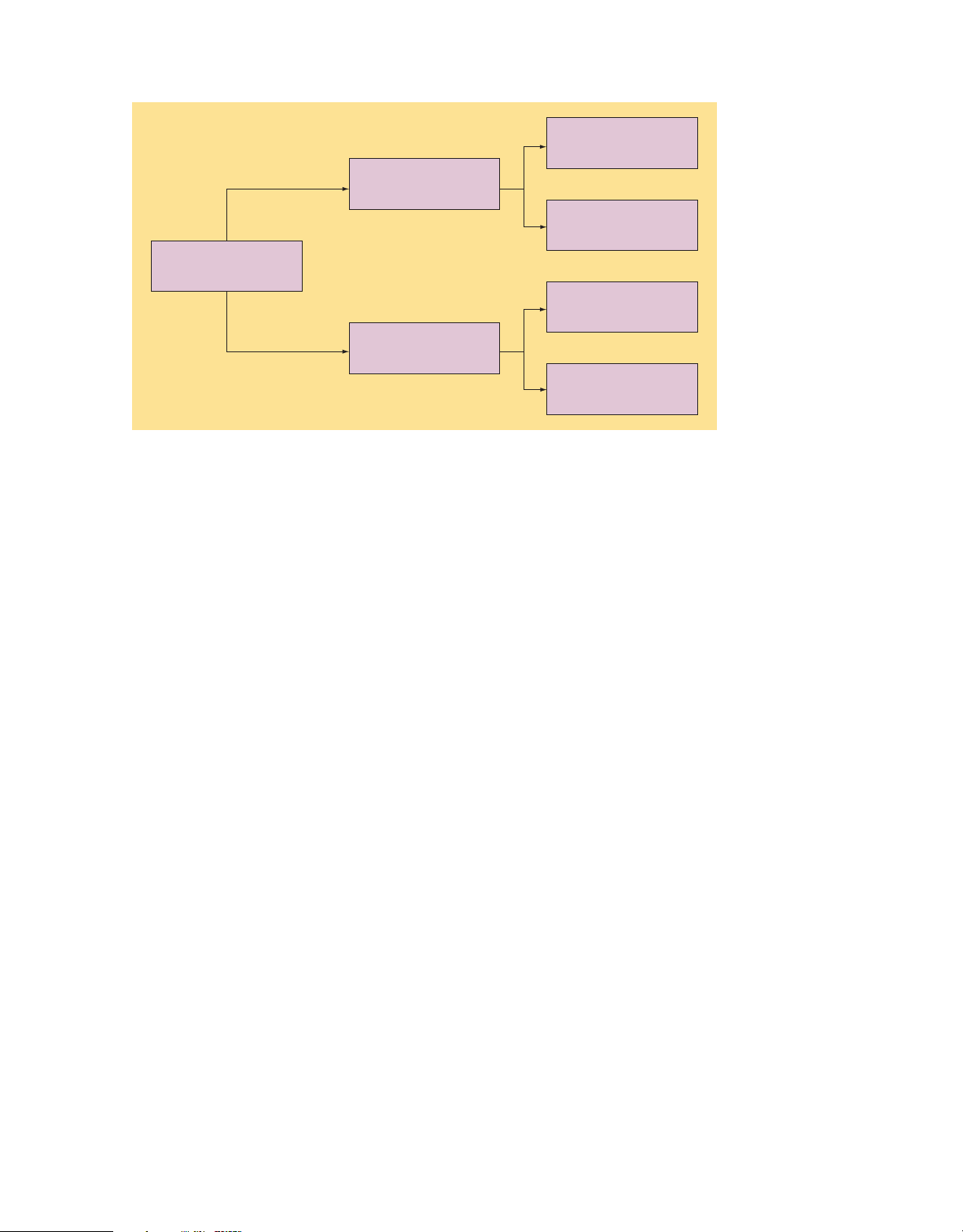
The Strategy of International Business Chapter 13 365 FIGURE 13.1 Determinants of Reduce Costs enterprise value. Profitability Add Value and Raise Prices Enterprise Valuation Sell More in Existing Markets Profit Growth Enter New Markets
Also, before we discuss the strategies that managers in the multinational enterprise can
pursue, we need to review some basic principles of strategy. A firm’s strategy can be de-
fined as the actions that managers take to attain the goals of the firm. For most firms, the
preeminent goal is to maximize the value of the firm for its owners and its shareholders
(subject to the very important constraint that the activities undertaken are done in a legal,
ethical, and socially responsible manner—see Chapter 5 for details). To maximize the value
of a firm, managers must pursue strategies that increase the profitability of the enterprise
and its rate of profit growth over time (see Figure 13.1). Profitability can be measured in a
number of ways, but for consistency, we define it as the rate of return that the firm makes
on its invested capital (ROI), which is calculated by dividing the net profits of the firm by
total invested capital.7 Profit growth is measured by the percentage increase in net profits
over time. In general, higher profitability and a higher rate of profit growth will increase
the value of an enterprise and thus the returns garnered by its owners, the shareholders.8
Managers can increase the profitability of the firm by pursuing strategies that lower
costs or by pursuing strategies that add value to the firm’s products, which enables the
firm to raise prices and/or to maintain an existing customer base.9 Managers can increase
the rate at which the firm’s profits grow over time by pursuing strategies to sell more prod-
ucts in existing markets or by pursuing strategies to enter new markets. Making a decision
to expand internationally can help managers boost the firm’s profitability and increase the
rate of profit growth over time. VALUE CREATION
The way to increase the profitability of a firm is to create more value.10 The amount of value
a firm creates is generally measured by the difference between its costs of production and the
quality that consumers perceive in its products. In general, the more value customers place
on a firm’s products, the higher the price the firm can charge for those products. However,
the price a firm charges for a good or service is typically less than the value placed on that
good or service by the customer. This is because the customer captures some of that value in
the form of what economists call a consumer surplus.11 The customer is able to do this be-
cause the firm is competing with other firms for the customer’s business, so the firm must
charge a lower price than it could were it a monopoly supplier. Also, it is normally impossible
to segment the market to such a degree that the firm can charge each customer a price that
reflects a specific customer’s assessment of the value of a product, which economists refer to
as a customer’s reservation price. For these reasons, the price that gets charged tends to be
slightly less than the value placed on the product by many customers. 366
Part 5 The Strategy and Structure of International Business FIGURE 13.2
V = value of product to an Value creation. V – P average consumer V – C P = price per unit P – C V
C = cost of production per unit P
V – P = consumer surplus per unit C C
P – C = profit per unit sold
V – C = value created per unit
Figure 13.2 illustrates these value concepts. The value of a product to an average con-
sumer is V, the average price that the firm can charge a consumer for that product given
competitive pressures and its ability to segment the market is P, and the average unit cost
of producing that product is C (C comprises all relevant costs, including the firm’s cost of
capital). The firm’s profit per unit sold (p) is equal to P − C, while the consumer surplus
per unit is equal to V − P (another way of thinking of the consumer surplus is as “value for
the money”; the greater the consumer surplus, the greater the value for the money the
consumer gets). The firm makes a profit so long as P is greater than C, and its profit will
be greater the lower C is relative to P. The difference between V and P is in part determined
by the intensity of competitive pressure in the marketplace; the lower the intensity of com-
petitive pressure, the higher the price charged relative to V.12 In general, the higher the
firm’s profit per unit sold, the greater its profitability, all else being equal.
The firm’s value creation is measured by the difference between V and C (V − C); a
company creates value by converting inputs that cost C into a product on which consum-
ers place a value of V. A company can create more value (V − C) either by lowering pro-
duction costs, C, or by making the product more attractive through superior design, styling,
functionality, features, reliability, after-sales service, and the like, so that consumers place
a greater value on it (V increases) and, consequently, are willing to pay a higher price
(P increases). This discussion suggests that a firm has high profits when it creates more
value for its customers and does so at a lower cost. We refer to a strategy that focuses primar-
ily on lowering production costs as a low-cost strategy. We refer to a strategy that focuses
primarily on increasing the attractiveness of a product as a differentiation strategy.13
Michael Porter has argued that low cost and differentiation are two basic strategies for
creating value and attaining a competitive advantage in an industry.14 According to Porter,
superior profitability goes to those firms that can create superior value, and the way to
create superior value is to drive down the cost structure of the business and/or differenti-
ate the product in some way so that consumers value it more and are prepared to pay a
premium price. Superior value creation relative to rivals does not necessarily require a
firm to have the lowest-cost structure in an industry or to create the most valuable product
in the eyes of consumers. However, it does require that the gap between value (V) and cost
of production (C) be greater than the gap attained by competitors. STRATEGIC POSITIONING
Porter notes that it is important for a firm to be explicit about its choice of strategic em-
phasis with regard to value creation (differentiation) and low cost, and to configure its in-
ternal operations to support that strategic emphasis.15 Figure 13.3 illustrates his point. The
convex curve in Figure 13.3 is what economists refer to as an efficiency frontier. The effi-
ciency frontier shows all of the different positions that a firm can adopt with regard to
adding value to the product (V) and low cost (C) assuming that its internal operations are
configured efficiently to support a particular position (note that the horizontal axis in
The Strategy of International Business Chapter 13 367 FIGURE 13.3 ) V Strategic choice in the Four Seasons international hotel Efficiency Frontier industry. Marriott Starwood alue/Differentiation ( Strategic Choices in This Area Not Viable in International Hotel Industry Increased V High Cost Low Cost (C)
Figure 13.3 is reverse scaled—moving along the axis to the right implies lower costs). The
efficiency frontier has a convex shape because of diminishing returns. Diminishing returns
imply that when a firm already has significant value built into its product offering, increas-
ing value by a relatively small amount requires significant additional costs. The converse
also holds, when a firm already has a low-cost structure, it has to give up a lot of value in
its product offering to get additional cost reductions.
Figure 13.3 plots three hotel brands with a global presence that cater to international
travelers, Four Seasons, Marriott International, and Starwood (the Starwood conglomer-
ate of hotel brands, such as Westin and Sheraton, was bought by Marriott in 2016). Four
Seasons positions itself as a luxury chain and emphasizes the value of its product offering,
which drives up its costs of operations. The Marriott and Starwood brands are positioned
more in the middle of the market. Both emphasize sufficient value to attract international
business travelers but are not luxury chains like Four Seasons. In Figure 13.3, Four Sea-
sons and Marriott are shown to be on the efficiency frontier, indicating that their internal
operations are well configured to their strategy and run efficiently. Starwood is inside the
frontier, indicating that its operations are not running as efficiently as they might be and
that its costs are too high. This implies that Starwood is less profitable than Four Seasons
and Marriott and that its managers must take steps to improve the company’s perfor-
mance. The purchase by Marriott of the Starwood collection of brands in 2016 was poten-
tially a way to leverage the global strategy across multiple hotel brands.
Porter emphasizes that it is very important for management to decide where the com-
pany wants to be positioned with regard to value (V) and cost (C), to configure operations
accordingly, and to manage them efficiently to make sure the firm is operating on the ef-
ficiency frontier. However, not all positions on the efficiency frontier are viable. In the in-
ternational hotel industry, for example, there might not be enough demand to support a
chain that emphasizes very low cost and strips all the value out of its product offering (see
Figure 13.3). International travelers are relatively affluent and expect a degree of comfort
(value) when they travel away from home.
A central tenet of the basic strategy paradigm is that to maximize its profitability, a firm
must do three things: (1) pick a position on the efficiency frontier that is viable in the
sense that there is enough demand to support that choice; (2) configure its internal opera-
tions, such as manufacturing, marketing, logistics, information systems, human resources,
and so on, so that they support that position; and (3) make sure that the firm has the right
organization structure in place to execute its strategy. The strategy, operations, and organiza-
tion of the firm must all be consistent with each other if it is to attain a competitive advantage
and garner superior profitability. By operations we mean the different value creation ac-
tivities a firm undertakes, which we review next. 368
Part 5 The Strategy and Structure of International Business FIGURE 13.4 Support Activities The value chain. Company Infrastructure Information Systems Logistics Human Resources Marketing R&D Production and Customer Sales Service Primary Activities THE FIRM AS A VALUE CHAIN
The operations of a firm can be thought of as a value chain composed of a series of dis-
tinct value creation activities,16 including production, marketing and sales, materials man-
agement, R&D, human resources, information systems, and the firm infrastructure. We
can categorize these value creation activities, or operations, as primary activities and sup-
port activities (see Figure 13.4).17 As noted, if a firm is to implement its strategy efficiently,
and position itself on the efficiency frontier shown in Figure 13.3, it must manage these
activities effectively and in a manner that is consistent with its strategy. Primary Activities
Primary activities have to do with the design, creation, and delivery of the product; its
marketing; and its support and after-sale service. Following normal practice, in the value
chain illustrated in Figure 13.4, the primary activities are divided into four functions: re-
search and development, production, marketing and sales, and customer service.
Research and development (R&D) is concerned with the design of products and produc-
tion processes. Although we think of R&D as being associated with the design of physical
products and production processes in manufacturing enterprises, many service companies
also undertake R&D. For example, banks compete with each other by developing new fi-
nancial products and new ways of delivering those products to customers. Online banking
and smart debit cards are two examples of product development in the banking industry.
Earlier examples of innovation in the banking industry included automated teller machines,
credit cards, and debit cards. Through superior product design, R&D can increase the func-
tionality of products, which makes them more attractive to consumers (raising V). Alterna-
tively, R&D may result in more efficient production processes, thereby cutting production
costs (lowering C). Either way, the R&D function can create value.
Production is concerned with the creation of a good or service. For physical products,
when we talk about production, we generally mean manufacturing. Thus, we can talk about
the production of an automobile. For services such as banking or health care, “produc-
tion” typically occurs when the service is delivered to the customer (e.g., when a bank
originates a loan for a customer, it is engaged in “production” of the loan). For a retailer
such as Walmart, “production” is concerned with selecting the merchandise, stocking the
store, and ringing up the sale at the cash register. For MTV, production is concerned with
the creation, programming, and broadcasting of content, such as music videos and the-
matic shows. The production activity of a firm creates value by performing its activities
efficiently so lower costs result (lower C) and/or by performing them in such a way that a
higher-quality product is produced (which results in higher V).
The Strategy of International Business Chapter 13 369
G LO B A LE D G E N E W S LE T TE R
In this Chapter 13, we are bringing you closer to running a globally oriented company based
on the issues we have covered on country differences, global trade and investment envi-
ronment, and the global money system. This is where many of you will “make your money”
as strategic decision makers in corporations. This also means that you need to know what
is current, important, and strategic in the global marketplace; your company’s products or
services; and your company’s uniqueness in satisfying the needs and wants of customers.
The globalEDGETM Newsletter can be subscribed to freely by providing your email contact
information on the globalEDGE system. While more than 1.5 million people are active users
of globalEDGE and more than 10 million users visit the site, the Newsletter has become a
go-to feature to stay updated on new features and cutting-edge information that the site
offers. Some 150,000 business executives subscribe to the free newsletter (globaledge. msu.edu/newsletters).
The marketing and sales functions of a firm can help create value in several ways.18
Through brand positioning and advertising, the marketing function can increase the value
(V) that consumers perceive to be contained in a firm’s product. If these create a favorable
impression of the firm’s product in the minds of consumers, they increase the price that
can be charged for the firm’s product. For example, Ford produced a high-value version of
its Ford Expedition SUV. Sold as the Lincoln Navigator and priced around $10,000 higher,
the Navigator has the same body, engine, chassis, and design as the Expedition, but
through skilled advertising and marketing, supported by some fairly minor features changes
(e.g., more accessories and the addition of a Lincoln-style engine grille and nameplate),
Ford has fostered the perception that the Navigator is a “luxury SUV.” This marketing
strategy has increased the perceived value (V) of the Navigator relative to the Expedition
and enables Ford to charge a higher price for the car (P).
Marketing and sales can also create value by discovering consumer needs and commu-
nicating them back to the R&D function of the company, which can then design products
that better match those needs. For example, the allocation of research budgets at Pfizer,
the world’s largest pharmaceutical company, is determined by the marketing function’s
assessment of the potential market size associated with solving unmet medical needs.
Thus, Pfizer is currently directing significant monies to R&D efforts aimed at finding
treatments for Alzheimer’s disease, principally because marketing has identified the treat-
ment of Alzheimer’s as a major unmet medical need in nations around the world where the population is aging.
The role of the enterprise’s service activity is to provide after-sale service and support.
This function can create a perception of superior value (V) in the minds of consumers by
solving customer problems and supporting customers after they have purchased the prod-
uct. Caterpillar, the U.S.-based manufacturer of heavy earthmoving equipment, can get
spare parts to any point in the world within 24 hours, thereby minimizing the amount of
downtime its customers have to suffer if their Caterpillar equipment malfunctions. This is
an extremely valuable capability in an industry where downtime is very expensive. It has
helped to increase the value that customers associate with Caterpillar products and thus
the price that Caterpillar can charge. Support Activities
The support activities of the value chain provide inputs that allow the primary activities to
occur (see Figure 13.4). In terms of attaining a competitive advantage, support activities
can be as important as, if not more important than, the primary activities of the firm.
Consider information systems; these systems refer to the electronic systems for managing 370
Part 5 The Strategy and Structure of International Business
inventory, tracking sales, pricing products, selling products, dealing with customer service
inquiries, and so on. Information systems, when coupled with the communications fea-
tures of the Internet, can alter the efficiency and effectiveness with which a firm manages
its other value creation activities. Dell, for example, has used its information systems to
attain a competitive advantage over rivals. When customers place an order for a Dell prod-
uct over the firm’s website, that information is immediately transmitted, via the Internet,
to suppliers, who then configure their production schedules to produce and ship that prod-
uct so that it arrives at the right assembly plant at the right time. These systems have re-
duced the amount of inventory that Dell holds at its factories to under two days, which is
a major source of cost savings.
The logistics function controls the transmission of physical materials through the
value chain, from procurement through production and into distribution. The effi-
ciency with which this is carried out can significantly reduce cost (lower C), thereby
creating more value. The combination of logistics systems and information systems is
a particularly potent source of cost savings in many enterprises, such as Dell, where
information systems tell Dell on a real-time basis where in its global logistics network
parts are, when they will arrive at an assembly plant, and thus how production should be scheduled.
The human resource function can help create more value in a number of ways. It en-
sures that the company has the right mix of skilled people to perform its value creation
activities effectively. The human resource function also ensures that people are adequately
trained, motivated, and compensated to perform their value creation tasks. In a multina-
tional enterprise, one of the things human resources can do to boost the competitive posi-
tion of the firm is to take advantage of its transnational reach to identify, recruit, and
develop a cadre of skilled managers, regardless of their nationality, who can be groomed to
take on senior management positions. They can find the very best, wherever they are in the
world. Indeed, the senior management ranks of many multinationals are becoming increas-
ingly diverse, as managers from a variety of national backgrounds have ascended to senior
leadership positions. Japan’s Sony, for example, is now headed not by a Japanese national, TEST PREP
but by Howard Stringer, a Welshman. Use SmartBook to help retain
The final support activity is the company infrastructure, or the context within which all what you have learned.
the other value creation activities occur. The infrastructure includes the organization struc- Access your instructor’s
ture, control systems, and culture of the firm. Because top management can exert consider- Connect course to check
able influence in shaping these aspects of a firm, top management should also be viewed out SmartBook or go to
as part of the firm’s infrastructure. Through strong leadership, top management can con-
learnsmartadvantage.com
sciously shape the infrastructure of a firm and through that the performance of all its value for help. creation activities. LO 13-2
Global Expansion, Profitability, and Profit Growth Recognize how firms can
Expanding globally allows firms to increase their profitability and rate of profit growth in profit by expanding global y.
ways not available to purely domestic enterprises.19 Firms that operate internationally are able to
1. Expand the market for their domestic products by selling those products (or ser-
vices) in international markets.
2. Realize location economies by dispersing value creation activities to those world-
wide locations where they can be performed most efficiently and effectively.
3. Realize greater cost economies from experience effects by serving an expanded
global market from a geographically central location, thereby reducing the costs of value creation.
4. Earn a greater return by leveraging any valuable skills developed in foreign opera-
tions and transferring them to other entities within the firm’s global network of operations.
The Strategy of International Business Chapter 13 371
As we will see, however, a firm’s ability to increase its profitability and profit growth
by pursuing these strategies is constrained by the need to customize its product offering,
marketing strategy, and business strategy to differing national conditions, that is, by the imperative of localization.
EXPANDING THE MARKET: LEVERAGING PRODUCTS AND COMPETENCIES
A company can increase its growth rate by taking goods or services developed at home and
selling them internationally. Almost all multinationals started out doing just this. For ex-
ample, Procter & Gamble developed most of its best-selling products (such as Pampers
disposable diapers and Ivory soap) in the United States and subsequently sold them
around the world. Likewise, although Microsoft developed its software in the United
States, from its earliest days, the company has always focused on selling that software in
international markets. Automobile companies such as Volkswagen (Germany) and Toyota
(Japan) also grew by developing products at home and then selling them in international
markets. The returns from such a strategy are likely to be greater if indigenous competitors
in the nations that a company enters lack comparable products. Thus, Toyota increased its
profits by entering the large automobile market of North America, offering products that
were different from those offered by local rivals (Ford and GM) by their superior quality and reliability.
The success of many multinational companies that expand in this manner is based not
just upon the goods or services that they sell in foreign nations, but also upon the core
competencies that underlie the development, production, and marketing of those goods or
services. The term core competence refers to skills within the firm that competitors can-
not easily match or imitate.20 These skills may exist in any of the firm’s value creation
activities—production, marketing, R&D, human resources, logistics, general management,
and so on. Such skills are typically expressed in product offerings that other firms find
difficult to match or imitate. Core competencies are the bedrock of a firm’s competitive
advantage. They enable a firm to reduce the costs of value creation and/or to create per-
ceived value in such a way that premium pricing is possible.
For example, Toyota has a core competence in the production of cars. It is able to pro-
duce high-quality, well-designed cars at a lower delivered cost than any other firm in the
world. The competencies that enable Toyota to do this seem to reside primarily in the
firm’s production and logistics functions.21 Similarly, IKEA has a core competence in
the design of stylish and affordable furniture that can be manufactured at a low cost and
flat-packed, McDonald’s has a core competence in managing fast-food operations (it seems
to be one of the most skilled firms in the world in this industry), and Procter & Gamble
has a core competence in developing and marketing name-brand consumer products (it is
one of the most skilled firms in the world in this business).
Because core competencies are, by definition, the source of a firm’s competitive advan-
tage, the successful global expansion by manufacturing companies such as Toyota and P&G
was based not just on leveraging products and selling them in foreign markets, but also on
the transfer of core competencies to foreign markets where indigenous competitors lacked
them. The same can be said of companies engaged in the service sectors of an economy,
such as financial institutions, retailers like IKEA, restaurant chains, and hotels. Expanding
the market for their services often means replicating their business model in foreign nations
(albeit with some changes to account for local differences, which we will discuss in more
detail shortly). Firms like Starbucks and Subway, for example, expanded rapidly outside
their home markets in the United States by taking the basic business model that they devel-
oped at home and using that as a blueprint for establishing international operations. LOCATION ECONOMIES
Earlier chapters revealed that countries differ along a range of dimensions—including the
economic, political, legal, and cultural—and that these differences can either raise or lower
the costs of doing business in a country. The theory of international trade also teaches that 372
Part 5 The Strategy and Structure of International Business
due to differences in factor costs, certain countries have a comparative advantage in the
production of certain products. Japan might excel in the production of automobiles and
consumer electronics; the United States in the production of computer software, pharma-
ceuticals, biotechnology products, and financial services.22 For a firm that is trying to
survive in a competitive global market, this implies that trade barriers and transportation
costs permitting, the firm will benefit by basing each value creation activity it performs at
that location where economic, political, and cultural conditions, including relative factor
costs, are most conducive to the performance of that activity.
Firms that pursue such a strategy can realize what we refer to as location economies,
which are the economies that arise from performing a value creation activity in the opti-
mal location for that activity, wherever in the world that might be (transportation costs
and trade barriers permitting).23 Locating a value creation activity in the optimal loca-
tion for that activity can have one of two effects: It can lower the costs of value creation
and help the firm achieve a low-cost position, and/or it can enable a firm to differentiate its
product offering from those of competitors. In terms of Figure 13.2, it can lower C and/or
increase V (which in general supports higher pricing), both of which boost the profit- ability of the enterprise.
For an example of how this works in an international business, consider ClearVision
Optical, a manufacturer and distributor of eyewear. Started by David Glassman, the firm
now generates annual gross revenues of more than $100 million. Not exactly small, but no
corporate giant either, ClearVision is a multinational firm with production facilities on
three continents and customers around the world. ClearVision began its move toward be-
coming a multinational when its sales were still less than $20 million. At the time, the U.S.
dollar was very strong, and this made U.S.-based manufacturing expensive. Low-priced
imports were taking an ever-larger share of the U.S. eyewear market, and ClearVision real-
ized it could not survive unless it also began to import. Initially the firm bought from inde-
pendent overseas manufacturers, primarily in Hong Kong. However, the firm became
dissatisfied with these suppliers’ product quality and delivery. As ClearVision’s volume of
imports increased, Glassman decided the best way to guarantee quality and delivery was to
set up ClearVision’s own manufacturing operation overseas. Accordingly, ClearVision
found a Chinese partner, and together they opened a manufacturing facility in Hong Kong,
with ClearVision being the majority shareholder.
The choice of the Hong Kong location was influenced by its combination of low labor
costs, a skilled workforce, and tax breaks given by the Hong Kong government. The firm’s
objective at this point was to lower production costs by locating value creation activities at
an appropriate location. After a few years, however, the increasing industrialization of
Hong Kong and a growing labor shortage had pushed up wage rates to the extent that it
was no longer a low-cost location. In response, Glassman and his Chinese partner moved
part of their manufacturing to a plant in mainland China to take advantage of the lower
wage rates there. Again, the goal was to lower production costs. The parts for eyewear
frames manufactured at this plant were shipped to the Hong Kong factory for final assem-
bly and then distributed to markets in North and South America. The Hong Kong factory
now employs 80 people and the Chinese plant between 300 and 400.
At the same time, ClearVision was looking for opportunities to invest in foreign eyewear
firms with reputations for fashionable design and high quality. Its objective was not to re-
duce production costs but to launch a line of high-quality differentiated, “designer” eye-
wear. ClearVision did not have the design capability in-house to support such a line, but
Glassman knew that certain foreign manufacturers did. As a result, ClearVision invested in
factories in Japan, France, and Italy, holding a minority shareholding in each case. These
factories now supply eyewear for ClearVision’s Status Eye division, which markets high- priced designer eyewear.24
Thus, to deal with a threat from foreign competition, ClearVision adopted a strategy
intended to lower its cost structure (lower C): shifting its production from a high-cost loca-
tion, the United States, to a low-cost location, first Hong Kong and later China. Then
ClearVision adopted a strategy intended to increase the perceived value of its product
The Strategy of International Business Chapter 13 373
(increase V) so it could charge a premium price (P). Reasoning that premium pricing in
eyewear depended on superior design, its strategy involved investing capital in French, Italian,
and Japanese factories that had reputations for superior design. In sum, ClearVision’s
strategies included some actions intended to reduce its costs of creating value and other
actions intended to add perceived value to its product through differentiation. The overall
goal was to increase the value created by ClearVision and thus the profitability of the en-
terprise. To the extent that these strategies were successful, the firm should have attained
a higher profit margin and greater profitability than if it had remained a U.S.-based manu- facturer of eyewear. Creating a Global Web
Generalizing from the ClearVision example, one result of this kind of thinking is the cre-
ation of a global web of value creation activities, with different stages of the value chain
being dispersed to those locations around the globe where perceived value is maximized or
where the costs of value creation are minimized.25 Consider Lenovo’s ThinkPad laptop
computers (Lenovo is the Chinese computer company that purchased IBM’s personal
computer operations in 2005).26 This product is designed in the United States by engineers
because Lenovo believes that the United States is the best location in the world to do the
basic design work. The case, keyboard, and hard drive are made in Thailand; the display
screen and memory in South Korea; the built-in wireless card in Malaysia; and the micro-
processor in the United States.
In each case, these components are manufactured and sourced from the optimal loca-
tion given current factor costs. These components are then shipped to an assembly opera-
tion in China, where the product is assembled before being shipped to the United States
for final sale. Lenovo assembles the ThinkPad in Mexico because managers have calcu-
lated that due to low labor costs, the costs of assembly can be minimized there. The mar-
keting and sales strategy for North America is developed by Lenovo personnel in the
United States, primarily because managers believe that due to their knowledge of the local
marketplace, U.S. personnel add more value to the product through their marketing efforts
than personnel based elsewhere.
In theory, a firm that realizes location economies by dispersing each of its value cre-
ation activities to its optimal location should have a competitive advantage vis-à-vis a firm
that bases all of its value creation activities at a single location. It should be able to better
differentiate its product offering (thereby raising perceived value, V) and lower its cost
structure (C) than its single-location competitor. In a world where competitive pressures
are increasing, such a strategy may become an imperative for survival. Some Caveats
Introducing transportation costs and trade barriers complicates this picture. Due to favor-
able factor endowments, New Zealand may have a comparative advantage for automobile
assembly operations, but high transportation costs of parts that often would be heavy can
make it an uneconomical location from which to serve global markets. Another caveat
concerns the importance of assessing political and economic risks when making location
decisions. Even if a country looks very attractive as a production location when measured
against all the standard criteria, if its government is unstable or totalitarian, the firm might
be advised not to base production there. (Political risk is discussed in Chapter 2.) Simi-
larly, if the government appears to be pursuing inappropriate economic policies that could
lead to foreign exchange risk, that might be another reason for not basing production in
that location, even if other factors look favorable. EXPERIENCE EFFECTS
The experience curve refers to systematic reductions in production costs that have been
observed to occur over the life of a product.27 A number of studies have observed that a
product’s production costs decline by some quantity about each time cumulative output 374
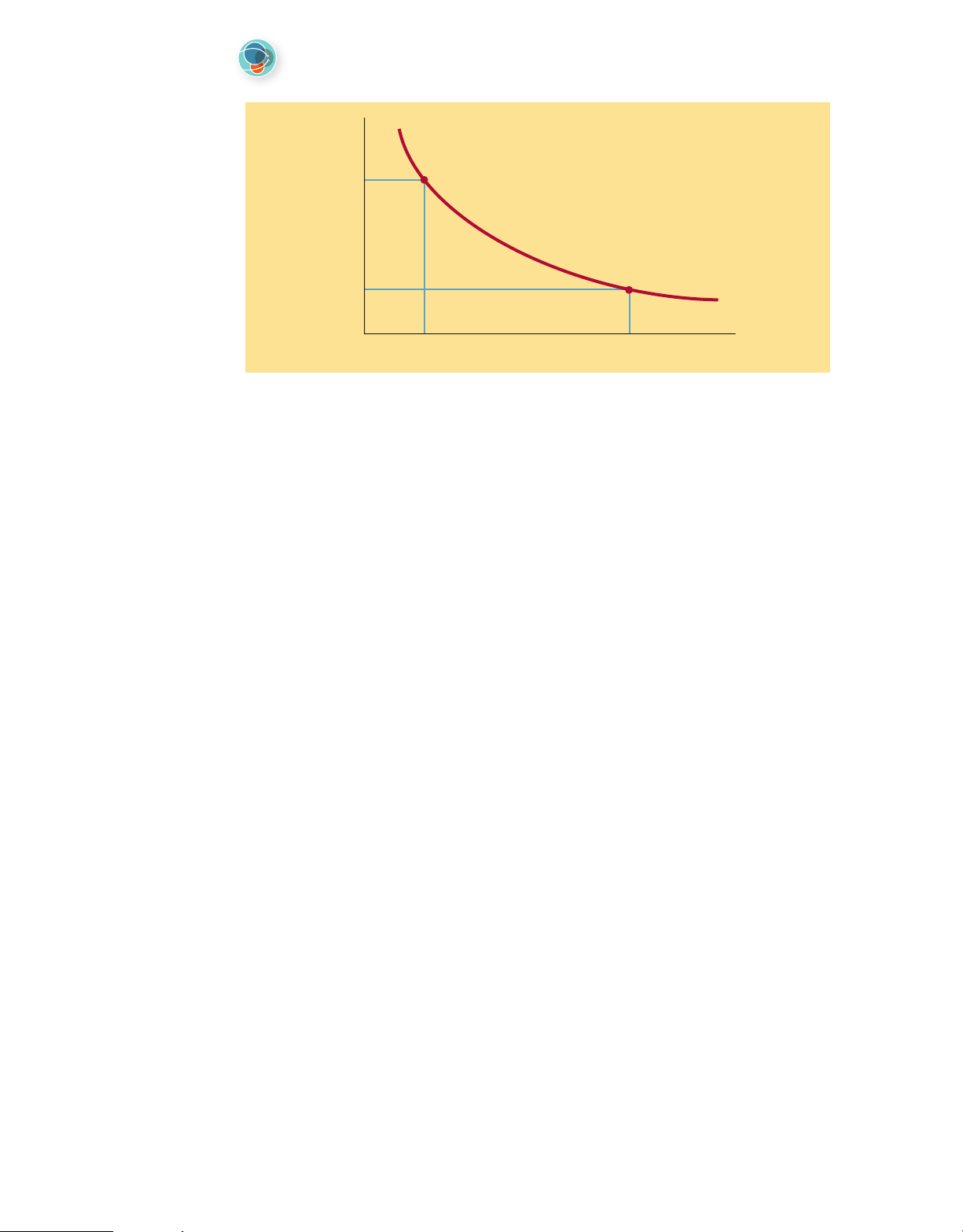
Part 5 The Strategy and Structure of International Business FIGURE 13.5 The experience curve. B Unit Costs A Cumulative Output
doubles. The relationship was first observed in the aircraft industry, where each time cu-
mulative output of airframes was doubled, unit costs typically declined to 80 percent of
their previous level.28 Thus, production cost for the fourth airframe would be 80 percent of
production cost for the second airframe, the eighth airframe’s production costs 80 percent
of the fourth’s, the sixteenth’s 80 percent of the eighth’s, and so on. Figure 13.5 illustrates
this experience curve relationship between unit production costs and cumulative output
(the relationship is for cumulative output over time and not output in any one period, such
as a year). Two things explain this: learning effects and economies of scale. Learning Effects
Learning effects refer to cost savings that come from learning by doing.29 Labor, for ex-
ample, learns by repetition how to carry out a task, such as assembling airframes, most
efficiently. Labor productivity increases over time as individuals learn the most efficient
ways to perform particular tasks. Equally important in new production facilities, manage-
ment typically learns how to manage the new operation more efficiently over time. Hence,
production costs decline due to increasing labor productivity and management efficiency,
which increases the firm’s profitability.
Learning effects tend to be more significant when a technologically complex task is re-
peated because there is more that can be learned about the task. Thus, learning effects will
be more significant in an assembly process involving 1,000 complex steps than in one of
only 100 simple steps. No matter how complex the task, however, learning effects typically
disappear after a while. It has been suggested that they are important only during the
start-up period of a new process and that they cease after two or three years.30 Any decline
in the experience curve after such a point is due to economies of scale. Economies of Scale
Economies of scale refer to the reductions in unit cost achieved by producing a large
volume of a product. Attaining economies of scale lowers a firm’s unit costs and increases
its profitability.31 Economies of scale have a number of sources. One is the ability to spread
fixed costs over a large volume.32 Fixed costs are the costs required to set up a production
facility, develop a new product, and the like. They can be substantial. For example, the
fixed cost of establishing a new production line to manufacture semiconductor chips now
exceeds $1 billion. Similarly, according to one estimate, developing a new drug and bring-
ing it to market costs about $800 million and takes about 12 years.33 The only way to re-
coup such high fixed costs may be to sell the product worldwide, which reduces average
unit costs by spreading fixed costs over a larger volume. The more rapidly that cumulative
sales volume is built up, the more rapidly fixed costs can be amortized over a large produc-
tion volume, and the more rapidly unit costs will fall.
The Strategy of International Business Chapter 13 375
Second, a firm may not be able to attain an efficient scale of production unless it serves
global markets. In the automobile industry, for example, an efficiently scaled factory is one
designed to produce about 200,000 units a year. Automobile firms would prefer to pro-
duce a single model from each factory since this eliminates the costs associated with
switching production from one model to another. If domestic demand for a particular
model is only 100,000 units a year, the inability to attain a 200,000-unit output will drive
up average unit costs. By serving international markets as well, however, the firm may be
able to push production volume up to 200,000 units a year, thereby reaping greater scale
economies, lowering unit costs, and boosting profitability.
Finally, as global sales increase the size of the enterprise, so its bargaining power with
suppliers increases, which may allow it to attain economies of scale in purchasing, bargain-
ing down the cost of key inputs and boosting profitability that way. For example, Walmart
has used its enormous sales volume as a lever to bargain down the price it pays suppliers
for merchandise sold through its stores. Strategic Significance
The strategic significance of the experience curve is clear. Moving down the experience
curve allows a firm to reduce its cost of creating value (to lower C in Figure 13.2) and in-
crease its profitability. The firm that moves down the experience curve most rapidly will
have a cost advantage vis-à-vis its competitors. Firm A in Figure 13.5, because it is farther
down the experience curve, has a clear cost advantage over firm B.
Many of the underlying sources of experience-based cost economies are plant-based.
This is true for most learning effects as well as for the economies of scale derived by
spreading the fixed costs of building productive capacity over a large output, attaining
an efficient scale of output, and utilizing a plant more intensively. Thus, one key to
progressing downward on the experience curve as rapidly as possible is to increase the
volume produced by a single plant as rapidly as possible. Because global markets are
larger than domestic markets, a firm that serves a global market from a single location
is likely to build accumulated volume more quickly than a firm that serves only its
home market or that serves multiple markets from multiple production locations. Thus,
serving a global market from a single location is consistent with moving down the expe-
rience curve and establishing a low-cost position. In addition, to get down the experi-
ence curve rapidly, a firm may need to price and market aggressively so demand will
expand rapidly. It will also need to build sufficient production capacity for serving a
global market. Also, the cost advantages of serving the world market from a single loca-
tion will be even more significant if that location is the optimal one for performing the
particular value creation activity.
Once a firm has established a low-cost position, it can act as a barrier to new competi-
tion. Specifically, an established firm that is well down the experience curve, such as firm
A in Figure 13.5, can price so that it is still making a profit while new entrants, which are
farther up the curve, are suffering losses. Intel is one of the masters of this kind of strategy.
The costs of building a state-of-the-art facility to manufacture microprocessors are so large
(now around $5 billion) that to make this investment pay Intel must pursue experience
curve effects, serving world markets from a limited number of plants to maximize the cost
economies that derive from scale and learning effects.
LEVERAGING SUBSIDIARY SKILLS
Implicit in our earlier discussion of core competencies is the idea that valuable skills
are developed first at home and then transferred to foreign operations. However, for
more mature multinationals that have already established a network of subsidiary op-
erations in foreign markets, the development of valuable skills can just as well occur in
foreign subsidiaries.34 Skills can be created anywhere within a multinational’s global
network of operations, wherever people have the opportunity and incentive to try new 376
Part 5 The Strategy and Structure of International Business
ways of doing things. The creation of skills that help lower the costs of production, or
enhance perceived value and support higher product pricing, is not the monopoly of the corporate center.
Leveraging the skills created within subsidiaries and applying them to other opera-
tions within the firm’s global network may create value. McDonald’s increasingly is find-
ing that its foreign franchisees are a source of valuable new ideas. Faced with slow
growth in France, its local franchisees have begun to experiment not only with the menu,
but also with the layout and theme of restaurants. Gone are the ubiquitous golden
arches; gone too are many of the utilitarian chairs and tables and other plastic features
of the fast-food giant. Many McDonald’s restaurants in France now have hardwood
floors, exposed brick walls, and even armchairs. Half of the 1,200 or so outlets in France
have been upgraded to a level that would make them unrecognizable to an American.
The menu too has been changed to include premier sandwiches, such as chicken on fo-
caccia bread, priced some 30 percent higher than the average hamburger. In France at
least, the strategy seems to be working. Following the change, increases in same-store
sales rose from 1 percent annually to 3.4 percent. Impressed with the impact, McDonald’s
executives are considering similar changes at other McDonald’s restaurants in markets
where same-store sales growth is sluggish, including the United States.35 Another exam-
ple of a multinational firm leveraging subsidiary skills is given in the next Management Focus feature.
For the managers of the multinational enterprise, this phenomenon creates impor-
tant new challenges. First, they must have the humility to recognize that valuable skills
that lead to competencies can arise anywhere within the firm’s global network, not
just at the corporate center. Second, they must establish an incentive system that en-
courages local employees to acquire new skills. This is not as easy as it sounds. Creat-
ing new skills involves a degree of risk. Not all new skills add value. For every valuable
idea created by a McDonald’s subsidiary in a foreign country, there may be several
failures. The management of the multinational must install incentives that encourage
employees to take the necessary risks. The company must reward people for successes
and not sanction them unnecessarily for taking risks that did not pan out. Third, man-
agers must have a process for identifying when valuable new skills have been created
in a subsidiary. And finally, they need to act as facilitators, helping transfer valuable skills within the firm.
PROFITABILITY AND PROFIT GROWTH SUMMARY
We have seen how firms that expand globally can increase their profitability and profit
growth by entering new markets where indigenous competitors lack similar competencies,
by lowering costs and adding value to their product offering through the attainment of lo-
cation economies, by exploiting experience curve effects, and by transferring valuable
skills between their global network of subsidiaries. For completeness, it should be noted
that strategies that increase profitability may also expand a firm’s business and thus enable
it to attain a higher rate of profit growth. For example, by simultaneously realizing location
economies and experience effects, a firm may be able to produce a more highly valued
product at a lower unit cost, thereby boosting profitability. The increase in the perceived
value of the product may also attract more customers, thereby increasing revenues and profits as well. TEST PREP
Rather than raising prices to reflect the higher perceived value of the product, the
Use SmartBook to help retain firm’s managers may elect to hold prices low in order to increase global market share and what you have learned.
attain greater scale economies (in other words, they may elect to offer consumers better Access your instructor’s
“value for money”). Such a strategy could increase the firm’s rate of profit growth even Connect course to check
further since consumers will be attracted by prices that are low relative to value. The strat- out SmartBook or go to
egy might also increase profitability if the scale economies that result from market share
learnsmartadvantage.com
gains are substantial. In sum, managers need to keep in mind the complex relationship for help.
between profitability and profit growth when making strategic decisions about pricing. MANAGEMENT FOCUS
Leveraging Skills Worldwide at ArcelorMittal
ArcelorMittal is the world’s largest steelmaker with 210,000
coordinates the movement and processing of iron and
employees in 60 countries, an infrastructure footprint in
steel slabs, whereas in Burns Harbor, the same work was
19 countries, and more than 100 steelmaking facilities.
done by workers relying on phone calls and paper. Em-
Early on, ArcelorMittal perfected a simple strategy—buy
ployees at Gent had also made a number of modifications
rundown steel mills; cut costs; lay off excess workers; take
to reduce waste. They developed a specially designed
actions to improve productivity, particularly through auto-
nozzle attached to a huge hose that was used to remove
mation; and transform the acquisition into a profitable en-
flakes from hot steel. Placed at a more efficient angle, the
terprise. It worked again and again all around the world.
same amount of surface impurities could be removed with
More recently, ArcelorMittal has kept the productivity
less water. Welders at Gent also cut coils of steel to order,
gains coming by pursuing a strategy known in the com-
which kept waste to a minimum as well.
pany as “twinning.” Mittal “twins” pairs of mills—usually of a
By adopting the improvements pioneered in Gent, em-
similar size, age, product mix, and output level—against
ployees at Burns Harbor found that they were able to sig-
each other. The weaker mill is told to copy the practices of
nificantly increase productivity. For example, by adopting
the stronger mill, while the stronger mill is told to keep its
the same computer software that the Gent workers had
edge. Managers are summoned to regular meetings to
developed, employees at Burns Harbor were able to in-
compare their performance and to look for ways of im-
crease the average number of cauldrons of molten steel
proving the productivity of the weaker mill.
they made each day from 42 to 50. As a result of improve-
In one example, a poorly performing plant in Burns
ments such as these, employee productivity at Burns
Harbor, Indiana, was twinned with a high-performing mill in
Harbor, measured by work hours per ton of steel produced,
Gent, Belgium. More than 100 engineers and managers
increased from around 2.0 to 1.32. By leveraging the skills
were flown from Burns Harbor to Gent and told to look at
developed at Gent, and applying them to the Burns Harbor
everything the Belgians did and copy them. The Belgium
steel mill, ArcelorMittal had boosted the performance of the
mill was one of the most efficient of its kind in the world,
acquired company, creating considerable value in the pro-
with work hours per ton of steel produced coming in at
cess and guaranteeing the future of the Burns Harbor mill.
1.25 versus an industry average of 2.0.
Sources: John W. Miller and Alex MacDonald, “ArcelorMittal Says
The Americans quickly realized that Gent’s high perfor-
Steel Markets Are Stabilizing as Losses Narrow,” The Wall Street Jour-
mance was not due to lower pay—in fact, total pay plus
nal, May 6, 2016; Jan Hromadko and John W. Miller, “ArcelorMittal,
Nippon Steel Buy ThyssenKrupp Alabama Steel Mill for $1.55 Billion,”
benefits was higher in Gent than at Burns Harbor. Rather,
The Wall Street Journal, November 29, 2013; J. W. Miller, “Indiana
the Belgium mill had adopted a number of processes that
Steel Mill Revived with Lessons from Abroad,” The Wall Street Jour-
increased productivity. For example, in Gent a computer nal, May 21, 2012.
Cost Pressures and Pressures for LO 13-3 Local Responsiveness Understand how pressures for cost reductions and local
Firms that compete in the global marketplace typically face two types of competitive pres- responsiveness influence
sure that affect their ability to realize location economies and experience effects and to strategic choice.
leverage products and transfer competencies and skills within the enterprise. They face
pressures for cost reductions and pressures to be locally responsive (see Figure 13.6).36 These
competitive pressures place conflicting demands on a firm. Responding to pressures for
cost reductions requires that a firm try to minimize its unit costs. But responding to pres-
sures to be locally responsive requires that a firm differentiates its product offering and
marketing strategy from country to country in an effort to accommodate the diverse de-
mands arising from national differences in consumer tastes and preferences, business
practices, distribution channels, competitive conditions, and government policies. In 377 378
Part 5 The Strategy and Structure of International Business FIGURE 13.6 Pressures for cost reductions and local High responsiveness. Firm A Firm C eductions Firm B w Pressures for Cost R Lo Low High
Pressures for Local Responsiveness
some cases, companies also need to differentiate between segments within countries,
placing an even greater pressure on cost than country customization. Because differentiation
across countries can involve significant duplication and a lack of product standardiza- tion, it may raise costs.
While some enterprises, such as firm A in Figure 13.6, face high pressures for cost re-
ductions and low pressures for local responsiveness, and others, such as firm B, face low
pressures for cost reductions and high pressures for local responsiveness, many companies
are in the position of firm C. They face high pressures for both cost reductions and local
responsiveness. Dealing with these conflicting and contradictory pressures is a difficult
strategic challenge, primarily because being locally responsive tends to raise costs.
PRESSURES FOR COST REDUCTIONS
In competitive global markets, international businesses often face pressures for cost reduc-
tions. Responding to pressures for cost reduction requires a firm to try to lower the costs
of value creation. A manufacturer, for example, might mass-produce a standardized prod-
uct at the optimal location in the world, wherever that might be, to realize economies of
scale, learning effects, and location economies. Alternatively, a firm might outsource cer-
tain functions to low-cost foreign suppliers in an attempt to reduce costs. A service busi-
ness such as a bank might respond to cost pressures by moving some back-office functions,
such as information processing, to developing nations where wage rates are lower.
Pressures for cost reduction can be particularly intense in industries producing
commodity-type products where meaningful differentiation on nonprice factors is difficult
and price is the main competitive weapon. This tends to be the case for products that serve
universal needs. Universal needs exist when the tastes and preferences of consumers in
different nations are similar if not identical. This is the case for conventional commodity
products such as bulk chemicals, petroleum, steel, sugar, and the like. It also tends to be
the case for many industrial and consumer products, for example, handheld calculators,
semiconductor chips, personal computers, and liquid crystal display screens. Pressures for
cost reductions are also intense in industries where major competitors are based in low-
cost locations, where there is persistent excess capacity and where consumers are powerful
and face low switching costs. The liberalization of the world trade and investment environ-
ment in recent decades, by facilitating greater international competition, has generally in- creased cost pressures.37
The Strategy of International Business Chapter 13 379
PRESSURES FOR LOCAL RESPONSIVENESS
Pressures for local responsiveness arise from national differences in consumer tastes and
preferences, infrastructure, accepted business practices, and distribution channels, and
from host-government demands. Responding to pressures to be locally responsive requires
a firm to differentiate its products and marketing strategy from country to country to ac-
commodate these factors, all of which tends to raise the firm’s cost structure.
Differences in Customer Tastes and Preferences
Strong pressures for local responsiveness emerge when customer tastes and preferences
differ significantly between countries, as they often do for deeply embedded historic or
cultural reasons. In such cases, a multinational’s products and marketing message have to
be customized to appeal to the tastes and preferences of local customers. This typically
creates pressure to delegate production and marketing responsibilities and functions to a
firm’s overseas subsidiaries.
For example, some time ago the automobile industry moved toward the creation of
“world cars.” The idea was that global companies such as General Motors, Ford, and
Toyota would be able to sell the same basic vehicle the world over, sourcing it from centralized
production locations. If successful, the strategy would have enabled automobile companies
to reap significant gains from global scale economies. However, this strategy frequently ran
aground on the hard rocks of consumer reality. Consumers in different automobile mar-
kets seem to have different tastes and preferences and demand different types of vehicles.
North American consumers show a strong demand for pickup trucks. This is particularly
true in the South and West, where many families have a pickup truck as a second or third
car. But in European countries, pickup trucks are seen purely as utility vehicles and are
purchased primarily by firms rather than individuals. As a consequence, the product mix
and marketing message needs to be tailored to consider the different nature of demand in North America and Europe.
Some have argued that customer demands for local customization are on the decline
worldwide.38 According to this argument, modern communications and transport tech-
nologies have created the conditions for a convergence of the tastes and preferences of
consumers from different nations. The result is the emergence of enormous global markets
for standardized consumer products. The worldwide acceptance of Subway sandwiches,
McDonald’s hamburgers, Coca-Cola, Gap clothes, Apple iPhones, and Microsoft’s Xbox—
all of which are sold globally as standardized products—are often cited as evidence of the
increasing homogeneity of the global marketplace.
However, this argument may not hold in many consumer goods markets. Significant
differences in consumer tastes and preferences still exist across nations and cultures. Man-
agers in international businesses do not yet have the luxury of being able to ignore these
differences, and they may not for a long time to come. For an example of a company that
has discovered how important pressures for local responsiveness can still be, read the ac-
companying Management Focus on Viacom Media Networks.
Differences in Infrastructure and Traditional Practices
Pressures for local responsiveness arise from differences in infrastructure or tradi-
tional practices among countries, creating a need to customize products accordingly.
Fulfilling this need may require the delegation of manufacturing and production func-
tions to foreign subsidiaries. For example, in North America, consumer electrical sys-
tems are based on 110 volts, whereas in some European countries, 240-volt systems
are standard. Thus, domestic electric appliances have to be customized for this differ- ence in infrastructure.
Although many national differences in infrastructure are rooted in history, some are
quite recent. For example, in the wireless telecommunications industry different techni-
cal standards exist in different parts of the world. A technical standard known as GSM
is common in Europe, and an alternative standard, CDMA, is more common in the MANAGEMENT FOCUS
Viacom International Media Networks
Viacom International Media Networks, formerly the MTV
channels have the same familiar frenetic look and feel of,
Networks, has become a symbol of globalization. Viacom
for example, MTV in the United States, a significant share
figures that every second of every day more than 2 million
of the programming and content is now local.
people are watching its network around the world, the ma-
Although a lot of programming ideas still originate in the
jority outside of the United States.
United States, with staples such as the Real World having
Despite its international success, the original MTV’s
equivalents in different countries, an increasing share of
global expansion got off to a weak start. In the 1980s,
programming is local in conception. In Italy, MTV Kitchen
when the main programming fare was still music videos, it
combines cooking with a music countdown. Erotica airs in
piped a single feed across Europe almost entirely com-
Brazil and features a panel of youngsters discussing sex.
posed of American programming with English-speaking
The Indian channel produces 21 homegrown shows
veejays. Naively, the network’s U.S. managers thought
hosted by local veejays who speak “Hinglish,” a city-bred
Europeans would flock to the American programming.
version of Hindi and English. Many feeds still feature music
But while viewers in Europe shared a common interest in
videos by locally popular performers. This localization
a handful of global superstars, their tastes turned out to
push reaped big benefits for MTV, allowing the network to
be surprisingly local. After losing share to local competi-
capture viewers back from local imitators.
tors, who focused more on local tastes, MTV changed its
strategy. It broke its service into “feeds” aimed at national
Sources: Tony Maglio, “Viacom International Media Networks Names
David Lynn CEO,” The Wrap, January 11, 2017; M. Gunther, “MTV’s
or regional markets. While the company exercises cre-
Passage to India,” Fortune, August 9, 2004, 117–122; B. Pul ey and A.
ative control over these different feeds, and while all the
Tanzer, “Sumner’s Gemstone,” Forbes, February 21, 2000, pp. 107–11.
United States and parts of Asia. Equipment designed for GSM will not work on a
CDMA network and vice versa. Thus, companies such as Nokia, Motorola, and Samsung,
which manufacture wireless handsets and infrastructure such as switches, need to cus-
tomize their product offering according to the technical standard prevailing in a given country.
Differences in Distribution Channels
A firm’s marketing strategies may have to be responsive to differences in distribution chan-
nels among countries, which may necessitate the delegation of marketing functions to na-
tional subsidiaries. In the pharmaceutical industry, for example, the British and Japanese
distribution systems are radically different from the U.S. system. British and Japanese
doctors will not accept or respond favorably to a U.S.-style high-pressure sales force. Thus,
pharmaceutical companies have to adopt different marketing practices in Britain and
Japan compared with the United States—soft sell versus hard sell. Similarly, Poland, Brazil,
and Russia all have similar per capita income on a purchasing power parity basis, but there
are big differences in distribution systems across the three countries. In Brazil, supermar-
kets account for 36 percent of food retailing, in Poland for 18 percent, and in Russia for
less than 1 percent.39 These differences in channels require that companies adapt their
own distribution and sales strategy. Host-Government Demands
Economic and political demands imposed by host-country governments may require lo-
cal responsiveness. For example, pharmaceutical companies are subject to local clinical
testing, registration procedures, and pricing restrictions, all of which make it necessary
that the manufacturing and marketing of a drug should meet local requirements. Be-
cause governments and government agencies control a significant proportion of the 380
The Strategy of International Business Chapter 13 381
health care budget in most countries, they are in a powerful position to demand a high level of local responsiveness.
More generally, threats of protectionism, economic nationalism, and local content
rules (which require that a certain percentage of a product should be manufactured lo-
cally) dictate that international businesses manufacture locally. For example, consider
Bombardier, the Canadian-based manufacturer of railcars, aircraft, jet boats, and snow-
mobiles. Bombardier has 12 railcar factories across Europe. Critics of the company ar-
gue that the resulting duplication of manufacturing facilities leads to high costs and
helps explain why Bombardier makes lower profit margins on its railcar operations than
on its other business lines. In reply, managers at Bombardier argue that in Europe, infor-
mal rules with regard to local content favor people who use local workers. To sell rail-
cars in Germany, they claim, you must manufacture in Germany. The same goes for
Belgium, Austria, and France. To try to address its cost structure in Europe, Bombardier
has centralized its engineering and purchasing functions, but it has no plans to central- ize manufacturing.40 Rise of Regionalism
Traditionally, we have tended to think of pressures for local responsiveness as being de-
rived from national differences in tastes and preferences, infrastructure, and the like. While
this is still often the case, there is also a tendency toward the convergence of tastes, prefer-
ences, infrastructure, distribution channels, and host-government demands with a broader
region that is composed of two or more nations.41 We tend to see this when there are
strong pressures for convergence due to, for example, a shared history and culture or the
establishment of a trading block where there are deliberate attempts to harmonize trade
policies, infrastructure, regulations, and the like.
The most obvious example of a region is the European Union, and particularly the euro
zone countries within that trade bloc, where there are institutional forces that are pushing
toward convergence (see Chapter 9 for details). The creation of a single EU market—with
a single currency, common business regulations, standard infrastructure, and so on—
cannot help but result in the reduction of certain national differences among countries
within the EU and the creation of one regional rather than several national markets. In-
deed, at the economic level at least, that is the explicit intent of the EU.
Another example of regional convergence is North America, which includes the United
States, Canada, and to some extent in some product markets, Mexico. Canada and the
United States share history, language, and much of their culture, and both are members of
NAFTA. Mexico is clearly different in many regards, but its proximity to the United States,
along with its membership in NAFTA, implies that for some product markets (e.g., auto-
mobiles) it might be reasonable to consider Mexico as part of a relatively homogeneous
regional market. We might also talk about the Latin America region, where shared Spanish
history, cultural heritage, and language (with the exception of Brazil, which was colonized
by the Portuguese) means that national differences are somewhat moderated. It can also
be argued that Greater China, which includes the city-states of Hong Kong and Singapore
along with Taiwan, is a coherent region, as is much of the Middle East, where a strong
Arab culture and shared history may limit national differences. Similarly, Russia and some
of the former states of the Soviet Union, such as Belarus and Ukraine, might be considered
part of a larger regional market, at least for some products.
Taking a regional perspective is important because it may suggest that localization at
the regional rather than the national level is the appropriate strategic response. For
example, rather than produce cars for each national market within Europe or North
America, it makes far more sense for car manufacturers to build cars for the European
or North American regions. The ability to standardize a product offering within a region
allows for the attainment of greater scale economies, and hence lower costs, than if each
nation had to have its own offering. At the same time, this perspective should not be
pushed too far. There are still deep and profound cultural differences among France,