Exam Booster for B1
Tài liệu luyện thi PET có kèm file nghe. Phù hợp cho người ôn và thi chứng chỉ B1 Cambridge
Tác giả:



Preview text:
key with answer y and for B1 preliminar y for schools B1 preliminar Second edition WITH AUDIO
Helen Chilton, Sheila Dignen and Mark Little For the revised exams from 2020
Cambridge University Press www.cambridge.org/elt
Cambridge Assessment English www.cambridgeenglish.org
Information on this title: www.cambridge.org/9781108682152
© Cambridge University Press and Cambridge Assessment 2020
This publication is in copyright. Subject to statutory exception and to the provisions of relevant
collective licensing agreements, no reproduction of any part may take place without the written
permission of Cambridge University Press. First published 2020
20 19 18 17 16 15 14 13 12 11 10 9 8 7 6 5 4 3 2 1
Printed in Dubai by Oriental Press
A catalogue record for this publication is available from the British Library ISBN 978-1-108-68215-2
Additional resources for this publication at www.cambridge.org/b1preliminarybooster
The publishers have no responsibility for the persistence or accuracy of URLs for external or third-party
internet websites referred to in this publication, and do not guarantee that any content on such websites
is, or will remain, accurate or appropriate. Information regarding prices, travel timetables, and other
factual information given in this work is correct at the time of first printing but the publishers do not
guarantee the accuracy of such information thereafter.
It is normally necessary for written permission for copying to be obtained in advance from a publisher.
The normal requirements are waived here and it is not necessary to write to Cambridge University Press
for permission for an individual teacher to make copies for use within his or her own classroom. Only
those pages that carry the wording ‘© Cambridge University Press and Cambridge Assessment 2020
Photocopiable’ may be copied. ContEntS Map of the book 4
How to use the Exam Booster 6 Exam overview 8
the Cambridge English Scale 10 Worksheets Reading Part 1 12 Reading Part 2 18 Reading Part 3 24 Reading Part 4 30 Reading Part 5 36 Reading Part 6 42 Writing Part 1 48 Writing Part 2 54 Listening Part 1 60 Listening Part 2 66 Listening Part 3 72 Listening Part 4 78 Speaking Part 1 84 Speaking Part 2 90 Speaking Parts 3 and 4 96 think about it 102 Exam topic lists 110 Answer key 118 ContEntS 3 MAP oF tHE BooK Reading Worksheet 1 Worksheet 2 Worksheet 3 45 minutes Daily life Social interaction Hobbies and leisure Reading Part 1 p12 Present simple and Phrasal verbs (arrangements) Talking about leisure 3-option multiple choice present continuous Making arrangements activities 5 questions Making questions Structuring a discussion 5 marks Reading Part 2 p18
Health, medicine and Free time travel and holidays Matching exercise Talking about free time Holiday advice 5 questions Health vocabulary activities Present and past tenses 5 marks Opinions and advice
Present perfect and past simple Reading Part 3 p24 Places and buildings Environment Sport 4-option multiple choice Types of building Environment vocabulary Adjectives + preposition 5 questions Asking for and giving
Will and going to Sports definitions 5 marks directions Reading Part 4 p30 Education Shopping and the natural world Gapped text Word order services Animals 5 questions Collocations Places in town Word order of 5 marks Matching sentences adjectives Reading Part 5 p36 Entertainment transport Weather 4-option multiple-choice and media Travel definitions Extreme weather and cloze Short reviews Future forms review environments 6 questions Writing a biography Conditionals 6 marks Reading Part 6 p42 People Health, medicine and Clothes and accessories Open cloze People definitions exercise Clothes and accessories 6 questions Prepositions Auxiliary verbs vocabulary 6 marks Health and fitness vocabulary Linking words Giving advice about diet Writing Worksheet 1 Worksheet 2 Worksheet 3 45 minutes Shopping and
People and relationships Weather Writing Part 1 p48 services Relationships vocabulary Strong adjectives and Replying to an email Clothes vocabulary Parts of an email descriptive verbs (about 100 words) Writing an email Conjunctions 1 question 20 marks Writing Part 2 p54 Food and drink Entertainment and media travel and holidays Article or story Food preparation words Features of a story Time expressions (about 100 words) Articles, countable and Narrative tenses Phrasal verbs (travel) 1 question uncountable quantifiers 20 marks 4 MAP oF tHE BooK Listening Worksheet 1 Worksheet 2 Worksheet 3 30 minutes Sport travel and holidays the natural world Listening Part 1 p60
Do, go and play Airport vocabulary Landscape vocabulary 3-option multiple choice Comparatives and Making comparisons Adverbs 7 short monologues/ superlatives dialogues 7 marks School life Leisure activities Sports and games Listening Part 2 p66 School vocabulary Easily confused words Sports and games vocabulary 3-option multiple choice Linking words Conjunctions Relative pronouns 6 short conversations Advantages and Favourite free-time 6 marks / questions
disadvantages of school activities Free time Shopping and services Health, medicine and Listening Part 3 p72 Mixed-tense questions Shopping vocabulary exercise Gap fill Offers and promises
Have/get something done Parts of the body 6 questions
-ing and to + infinitive 6 marks Living a healthy life Personal feelings Daily life City life Listening Part 4 p78 Adjectives Used to and past simple Compound nouns 3-option multiple choice -ing or -ed
Past and present routines Prefixes and suffixes 1 long interview 6 marks / questions Speaking Worksheet 1 Worksheet 2 Worksheet 3 12 minutes Daily life Work and education Hobbies and leisure Speaking Part 1 p84 Talking about you Job skills vocabulary Likes, dislikes and Examiner asks questions Family vocabulary Modals of ability preferences 2–3 minutes Informal linking phrases Speaking Part 2 p90 transport travel and holidays House and home Describing a photo Prepositions of place Guessing information Home vocabulary 2–3 minutes
Managing a conversation Expressing interest Paraphrasing Speaking Parts 3 Shopping Food and drink Free time and 4 p96 Cause, effect and Asking for and making Discussing opinions
Discussion task with pictures purpose suggestions
So, such, too and enough and general conversation Make and let Ordering a meal 7 minutes think about it p102 Exam topic lists p110 Answer key p118
For useful information about preparing for the B1 Preliminary and B1 Preliminary for Schools exams, go to:
https://www.cambridgeenglish.org/exams-and-tests/preliminary-for-schools/
https://www.cambridgeenglish.org/exams-and-tests/preliminary/ MAP oF tHE BooK 5
How to use tHe exam Booster
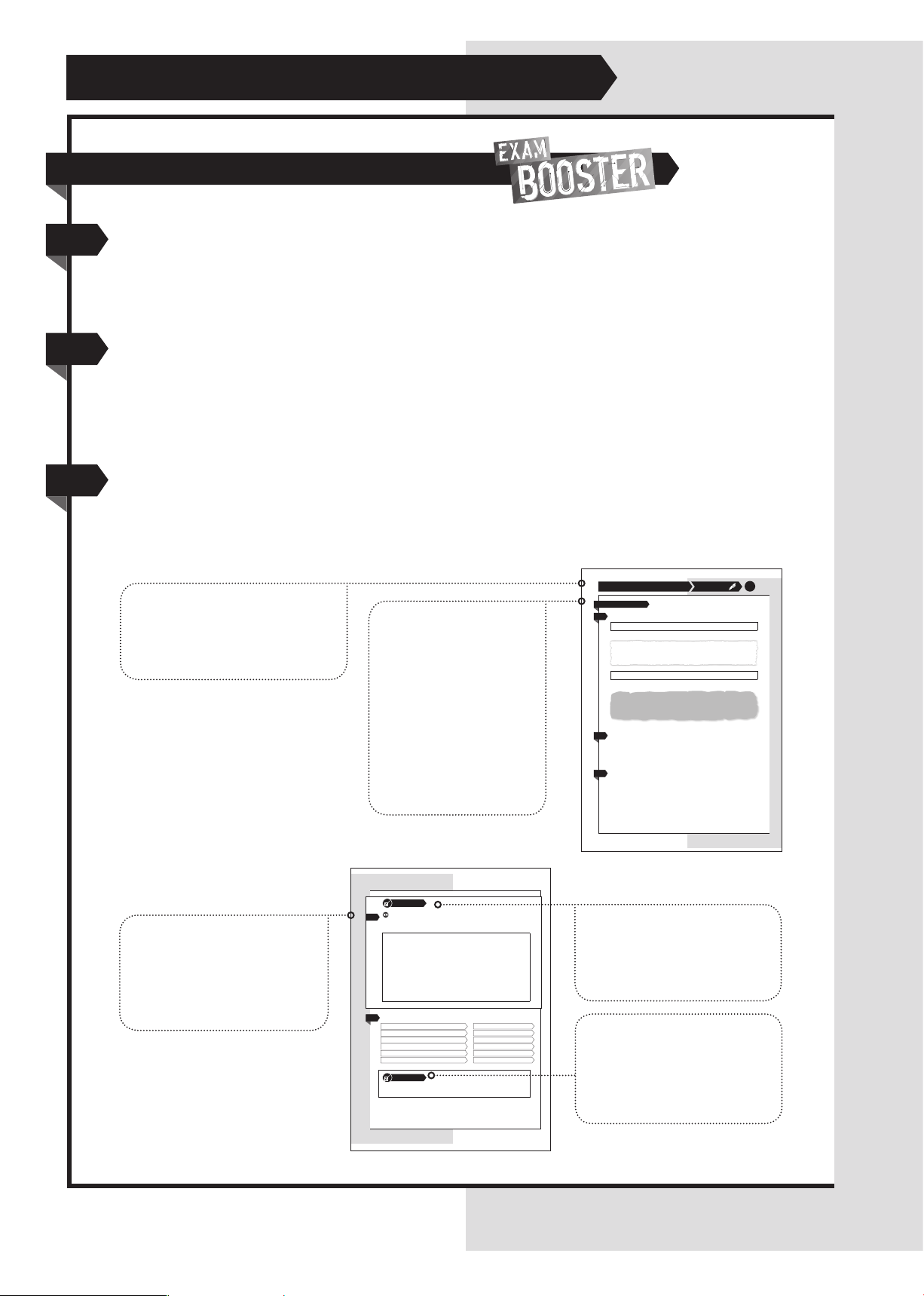
Welcome to the Cambridge English what is the exam Booster?
The Exam Booster provides focused exam practice of all parts of the Cambridge English: B1 Preliminary
and Cambridge English: B1 Preliminary for Schools exam. Prepare your students for the exam, ensuring
they gain the confidence, skills and knowledge they need for exam day. How can I use it?
• Pick and choose the areas you want to practise at any time
• Use alongside a coursebook or on its own; in class or for homework
• Photocopy worksheets for ease of use
• Use it flexibly to best support your students How is it structured?
The Exam Booster contains 15 sections which follow the order of the exam: Reading Parts 1–6, Writing
Parts 1–2, Listening Parts 1–4 and finally Speaking Parts 1–4. WRITING PART 2 1 Food and drink Check exam paper, exam part
Complete the two recipes with the words in the boxes. 1a Cover a variety of
add fresh fry onion roll serve spicy up and worksheet number at the A topics from the
Cut (1) ................. some meat and an (2) ................. into very small pieces. You can do this in a
food mixer if you have one. (3) ................. salt and pepper, and some (4) ................. herbs and top of each section.
form it into a round, flat shape. Grill this, or (5) ................. it in hot oil. (6) ................. it in a bread
(7) ................. , with tomato sauce or a hot, (8) ................. barbecue sauce. exam. Topics are
boil butter cook cover saucepan smooth stir vegetables B suitable for both
Cut onions, carrots and other fresh (1) ................. into small pieces. Put them into a large
(2) ................. with a small amount of (3) ................. or oil. (4) ................. slowly for a few
minutes on a low heat, then (5) ................. with hot water, increase the heat and (6) .................
for about 45 minutes. Mix everything together in a food mixer until it is completely (7) ................. . Cambridge English:
(8) ................. in a little fresh cream and pour into bowls. Serve with bread and butter. B1 Preliminary and
Now match each recipe to a description of the dish. There are two descriptions you don’t need. 1b
1. a lovely vegetable soup for a tasty winter lunch .........
2. a wonderful dish of meat cooked in a fresh tomato sauce .........
Cambridge English: B1
3. a tasty, healthy burger .........
4. a delicious pie made with meat and fresh vegetables .........
Choose the correct alternative to complete the sentences. 2
Preliminary for Schools
1. Would you like a / some biscuit with your coffee?
2. Stir in the chocolate, then bake a / the cake for 45 minutes.
3. I’m a vegetarian, so I don’t eat - / the meat. preparation.
4. - / The French fries aren’t very healthy.
5. I’m afraid I haven’t got any / some orange juice.
6. There are plenty of / much dishes on the menu to choose from.
7. You don’t need to add much / many salt.
8. I’ve got any / some fish for dinner.
54 WRITING | PART 2 | 1
© Cambridge University Press and
Cambridge Assessment 2020 Photocopiable Exam task 2 T
rack 7 For each question, write the correct answer in the gap. Write one or two words or
a number or a date or a time.
You will hear a film review programme on the radio. Find exam tasks easily.
The Film Review Programme Go to www.cambridge.org/ This week’s reviews
The film Jungle Fever is a (1) ................ about a family of tigers. There are three worksheets
Actor Steve Wills plays a (2) ................ in his new film, Call It.
Swim! is about a man who wants to swim in a local (3) ................ . b1preliminarybooster to
Competition for listeners for each exam part.
Listeners can enter an online quiz at www. (4) ................ .co.uk. download the audio to your
Winners will receive (5) ................ tickets.
Entries must be received on (6) ................ by 2 p.m. computer or device.
Match each sentence 1–6 to the correct response a–f. 3
1. Come on! We’re late!
a I’ll play with you, then.
2. Please call me when you get to the party. b I will!
Exam facts offer clear,
3. Are you going to see the Mad Band at the weekend?
c I’ll get you a new game, if you like.
4. Look! You’ve spilt coffee on the book you borrowed!
d Don’t worry – we won’t miss the film!
5. I’m not sure what I’d like for my birthday.
e Yes. Shall I buy you a ticket?
6. I’ll never get better at tennis on my own.
f I’m sorry. I won’t do it again. concise information about Exam facts the exercise type and
• In this part, you listen to one person talking.
• You have to complete six notes using words or numbers you hear. number of questions.
© Cambridge University Press and
LISTENING | PART 3 | 1 73
Cambridge Assessment 2020 Photocopiable 6
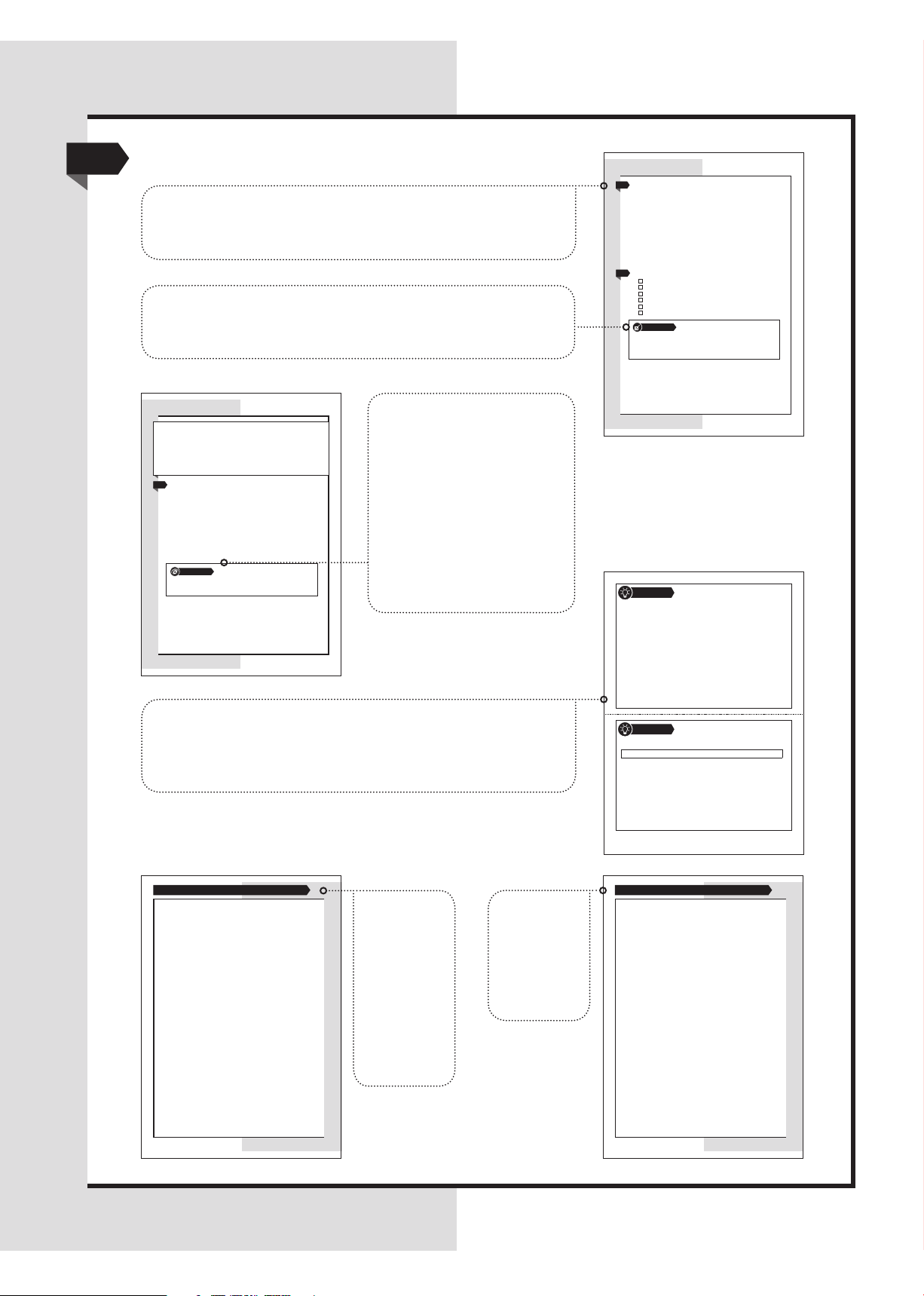
How to use tHe exam Booster
what other features are there?
Put the words into the correct order to make sentences. 3a
1. always / college / for / used to / late / I / be
.............................................................................................
2. Zijin / exercise / didn’t / at / use to / all
.............................................................................................
Practise vocabulary, grammar or functional language tested
3. son / teenager / as / my / a / get up / early / use to / didn’t
.............................................................................................
4. eat / vegetables / Stephanie / used to / never
in the exam using the additional tasks on the worksheet.
.............................................................................................
5. used to / reply / immediately / emails / you / to
.............................................................................................
6. coffee / a lot of / drink / used to / Ahmed
.............................................................................................
Match sentences 1–6 in 3a to a–f below. 3b a but she’s very healthy now. b but he drinks more water now. c
but he’s in a football team now. d
but you don’t do it as often now. e
but I make sure I’m on time now. f but he gets up at 4 a.m. now!
Exam tips provide practical strategies and advice on how to Exam tips approach the task.
• Before you listen, read the questions and options carefully.
• The questions are in the order of the recording.
• Often you need to understand when something happened. Listen carefully to the words the
speakers use – are they talking about the past, present or future? Help your students avoid the
© Cambridge University Press and
LISTENING | PART 4 | 2 81
Cambridge Assessment 2020 Photocopiable 1 A marks B notices
C signs D alarms
2 A last B following C later D other most typical mistakes that 3 A possible B likely C accepted D able 4 A accurate B close C true D near 5 A reaching B getting
C going D approaching
candidates make with Get 6 A bring B fetch C wear D take
it right! Identify and correct
Complete the conditional sentences with the correct form of the verbs. Then decide whether 3
each sentence is a zero, first or second conditional. Write zero, first or second.
1. If we ................ (not have) a lot of rain here, the fields wouldn’t be so green. ....................... common errors made by
2. If lightning ................ (hit) a building, it doesn’t always damage it. .......................
3. They will be OK on the mountain if the weather ................ (stay) fine. .......................
4. If you see lightning, you usually ................ (hear) thunder soon after. .......................
real Cambridge English: B1
5. I ................ (be) really scared if I found myself in the middle of a big storm. .......................
6. If you don’t get too close to the storm, you ................ (not be) in danger. .......................
7. We ................ (go) to the beach if it’s sunny. .......................
Preliminary and Cambridge
8. I would love to take photos of a storm if I ................ (have) a good camera. .......................
English: B1 Preliminary for Get it right!
Look at the sentence below. Then try to correct any mistakes.
If I were you I will go to the countryside because it is a lovely place and it is very peaceful.
Schools exam candidates. Think about it Reading Part 1
Read the sentences about Reading Part 1. Are the sentences TRUE or FALSE?
1. In this part of the exam, you have to read short notices, signs and messages and choose the correct
meaning. ........................
2. The texts you read will all be the same kind of text. ........................
3. There are five texts and no example. ........................
4. There are three possible answers to choose from for each text. ........................
5. Sometimes there is a question before the three options, sometimes the three options complete the sentence
© Cambridge University Press and
READING | PART 5 | 3 41
and sometimes there are just the three options. ........................
Cambridge Assessment 2020 Photocopiable
6. There is visual information, such as a picture, with every text. ........................
7. To understand the meaning, it is important to think about the situation in which each text would appear,
e.g. as a notice on a wall, or as an email. ........................
8. It is also important to think about the purpose of the text, e.g. who it is for and why someone has written it. ........................
Use Think about it sections to check students understand Think about it Reading Part 2
Read the information about Reading Part 2. Complete the information with the words in the box.
what they need to do for each part of the exam – great either
all eight five match people points suitable text
before or after attempting an exercise.
In Part 2, you have to (1) ........................ people to different products, places or activities. There are (2) ........................
short descriptions of people, saying what they each want, need or are interested in. There are (3) ........................
descriptions of products, places or activities, so there are three that you don’t need to match. It’s a good idea
to read the descriptions of the (4) ........................ first and note what each one is looking for. Each person
will mention three key (5) ........................ that they are looking for. Then you can read the descriptions of the
products, places or activities and find the one that is the most (6) ........................ for each person. Some
points are mentioned in more than one (7) ........................ , but it’s important to find the text that mentions
(8) ........................ the key points a person is looking for. 102 THINK ABOUT IT
© Cambridge University Press and Cambridge Assessment 2020 Photocopiable EXAM TOPIC LISTS ANSWER KEY Clothes and Accessories Reading Part 1:1 3 I’ve already done it. backpack go (with/together) perfume sweater
1a 1 Is the sun shining at the moment?
4 When did you move to this town? Learn and Access a bag (phr v) plastic swimming costume
2 Why are you studying English this year? 3 1 F 2 G 3 A 4 H 5 C belt handbag pocket swimsuit blouse handkerchief pullover take off
3 How often do they meet their friends? Reading Part 2:3 boot hat purse tie
4 Are you looking forward to next weekend? bracelet jacket put on tights
5 Does she like watching films? 1 1 resort 3 accommodation button jeans raincoat tracksuit
6 Where does your brother live? 2 facilities 4 reservation cap jewellery / jewelry ring trainers revise from complete chain jumper sandal trousers 1b 1 d 2 c 3 e 4 b 5 a 6 f 2 1 arrived 4 went clothes kit scarf T-shirt 2 ’re / are having 5 haven’t seen coat knit shirt try on 2 1 wake up, awake 4 leave, late 3 ’ve / have already collar label shoe umbrella 2 have, morning 5 go, buy cotton laundry shorts underpants done 3 clean, routine 6 go, weekend dress leather silk underwear 3 1 G 2 B 3 A 4 D 5 C the official B1 Answer earring make-up size undress 3 1 C 2 B 3 A 4 B 5 A fashion match (v) skirt uniform Get it right! fasten material sleeve(less) wallet Reading Part 1:2
Yesterday I bought some clothes. fit (v) necklace socks watch 1 1 up 2 in 3 over 4 out fold (v) old-fashioned (adj) stripe wear (out) Reading Part 3:1 get dressed pants suit wool(len) 5 out 6 back 7 together 8 out glasses pattern sunglasses Preliminary key and 2 1 a 2 b 3 a 4 a 1 1 office 3 prison 5 factory glove 5 b 6 b 7 a 8 b 2 guest-house 4 hospital 6 cottage Colours 3 1 C 2 C 3 B 4 C 5 A 2 1 the way to 3 in front 5 straight on 2 Turn 4 is it far 6 on (dark/light/pale) gold orange silver Reading Part 1:3 black golden pink yellow 3 1 C 2 D 3 C 4 A 5 B and B1 Audioscript. blue green purple white 1 1 club 6 galleries brown grey red 2 hobby 7 sunbathing Reading Part 3:2 3 dancing 8 magazine
Communications and Technology 1 1 climate 4 festival 9 photography 2 public transport, pollution access disc/disk machine screen 5 sightseeing 10 member 3 rubbish, recycle address dot message server Preliminary app download (n & v) mobile phone sign up 2 1 Do you agree that 4 bottle bank at! @ drag mouse smartphone 2 not sure, because 2 1 B 3 D 5 A blog DVD (player) mouse mat social media 3 What I mean is blogger electronic(s) MP3 player software 2 D 4 B
4 that’s an interesting point by post email net switch off
3 1 ’s / is going to rain 4 will not / won’t mind calculator engaged online switch on 5 like I said call (v) enter operator talk
6 What do you think about this 2 will be 5 ’m / am going to fail for Schools call back envelope parcel telephone 7 going back to 3 ’s / is going to fall 6 ’ll / will come CD (player) equipment password text
8 On a completely different subject cell phone fax PC text message Reading Part 3:3 chat file phone turn off 3 1 C 2 A 3 B 4 A 5 B 1 1 to 3 for 5 in 7 on chat room hang up photograph turn on click (v) hardware photography upload (n & v) Get it right! 2 of 4 at 6 of 8 for topic lists. computer headline podcast video clip
I’m writing to you because last week I started a 2 1 C 2 C 3 D 4 A 5 B connect homepage postcard volume
new English course in the same school. connection install print web 3 1 team 5 win data internet printer web page Reading Part 2:1 2 coach 6 stadium delete invent program(me) website dial invention reply 1 1 heart, beats 4 break, ambulance 3 competition 7 competitors dial up IT ring 2 doctors, fit 5 sick, medicine 4 take part 8 trained digital keyboard ring up 3 dangerous, rugby 6 injury, rest digital camera laptop (computer) robot Get it right! 2 1 have to 3 needn’t 5 ought to
I’m sure that you will have a great holiday here. Education 2 shouldn’t 4 mustn’t 6 should Reading Part 4:1 absent board classroom desk 3 1 C 2 D 3 E 4 H 5 G advanced book clever dictionary
1 1 Maths is my favourite subject. arithmetic bookshelf coach diploma Reading Part 2:2
2 Sam is often late for appointments. art break up college drama 1
3 Photography is a very popular hobby. 1 drama 3 order 5 sculptures beginner break(time) composition economics
4 Mrs Edwards usually teaches us. bell certificate course elementary 2 stage 4 horror 6 videos
5 This work isn’t good enough. biology chemistry curriculum essay
2 1 Where did you go on holiday last year? blackboard class degree geography
6 Miss Jones isn’t as strict as Mr Brown. 2 No, she’s just left.
7 The test was too difficult for me. 110
© Cambridge University Press and EXAM TOPIC LISTS 118 ANSWER KEY
Cambridge Assessment 2020 Photocopiable
How to use tHe exam Booster 7 EXAM OVERVIEW Reading tasks 45 mins
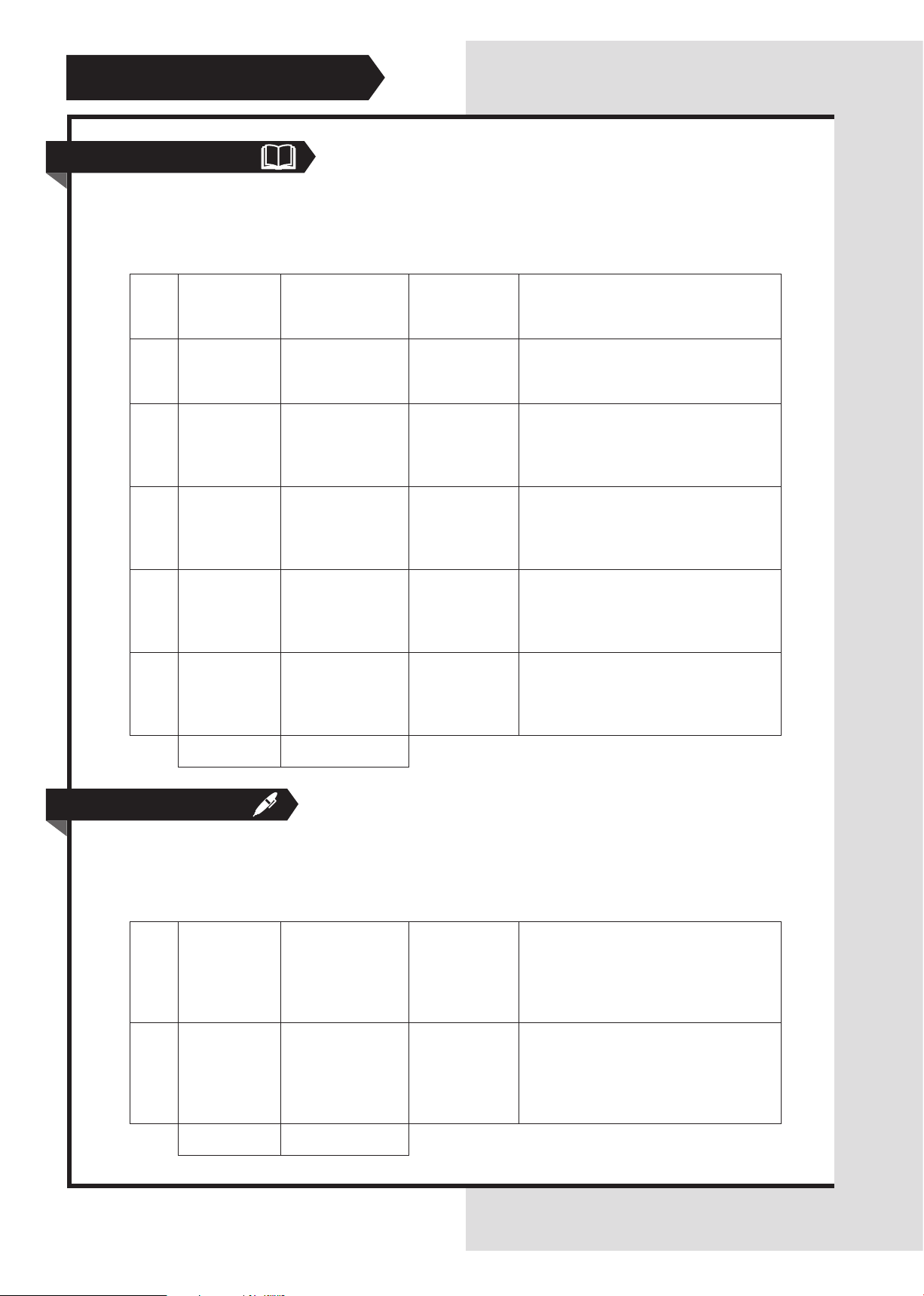
Part Number of Number of Task type
What do candidates have questions marks to do? 1 5 5 3-option
Read five real-world notices, multiple choice
messages and other short texts for the main message. 2 5 5 Matching
Match five descriptions of people to
eight short texts on a particular topic,
showing detailed comprehension. 3 5 5
4-option multiple Read a longer text for detailed choice
comprehension, gist, inference and global
meaning, as well as writer’s attitude and opinion. Reading 4 5 5 Gapped text
Read a longer text from which five
sentences have been removed. Show
understanding of how a coherent and well- structured text is formed. 5 6 6
4-option multiple Read a shorter text and choose the choice cloze
correct vocabulary items to complete gaps.
An element of grammatical knowledge may
be tested, e.g. complementation. 6 6 6 Open cloze
Read a shorter text and complete six
gaps using one word for each gap. Show
knowledge of grammatical structures,
phrasal verbs and fixed phrases. Total 32 32 Writing tasks 45 mins
Part Number of Number of Task type
What do candidates have questions marks to do? 1 1 20 An email
Write about 100 words, answering
the email and using the notes provided.
Candidates are assessed using four
subscales: Content, Communicative
Achievement, Organisation and Language. riting W 2 1 20
Choice between Write about 100 words, answering the an article or a
question of their choosing. Candidates are story
assessed using four subscales: Content,
Communicative Achievement, Organisation and Language. Total 2 40 8
© Cambridge University Press and EXAM OVERVIEW Cambridge Assessment 2020 Listening tasks about 30 mins
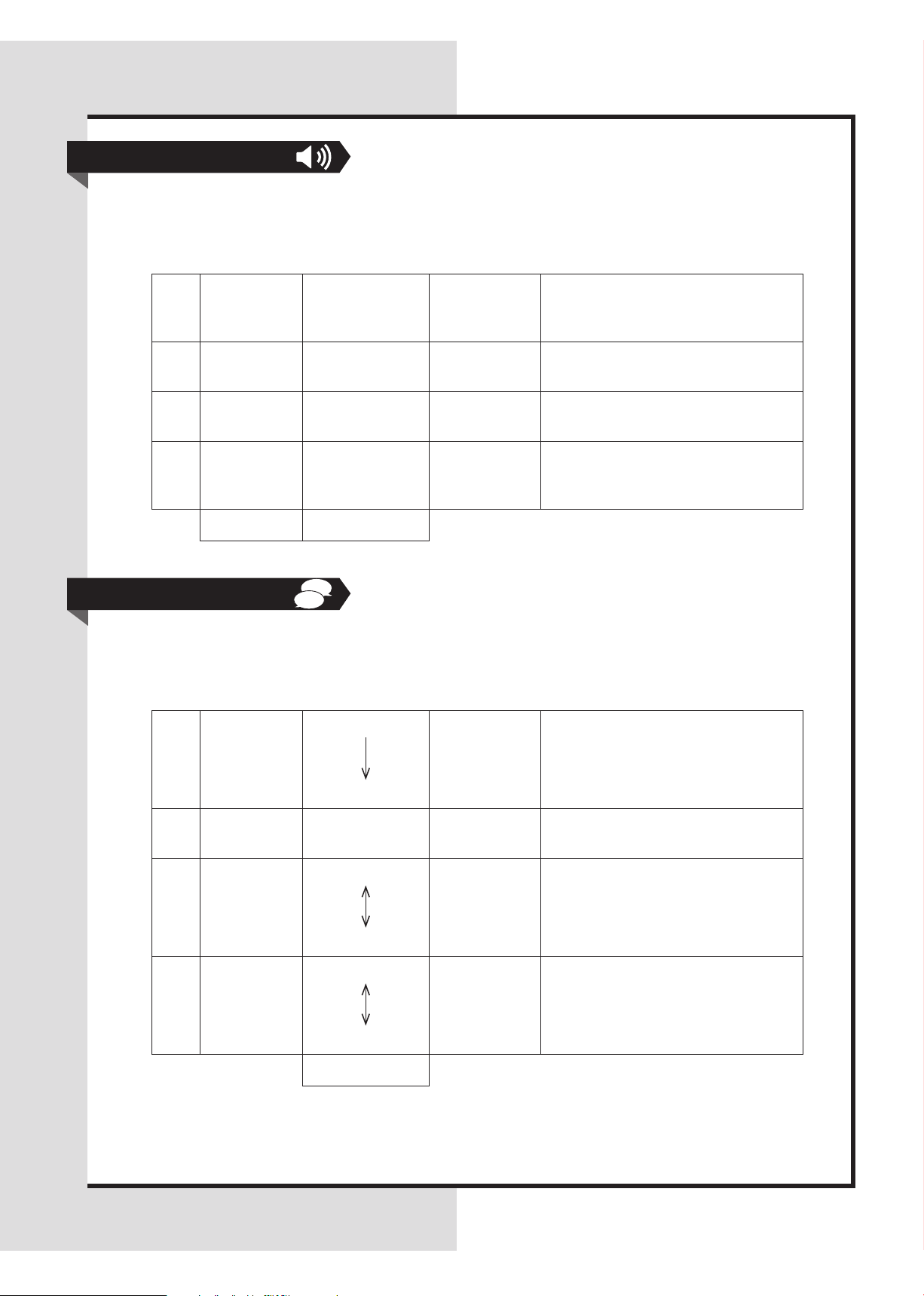
(plus 6 minutes to transfer answers)
Part Number of Number of Task type
What do candidates have questions marks to do? 1 7 7 3-option
Identify key information in seven short multiple choice
monologues or dialogues and choose the correct visual. 2 6 6 3-option
Listen to six short dialogues and multiple choice understand the gist of each. 3 6 6 Gap fill
Listen to a monologue and complete Listening six gaps. 4 6 6 3-option multiple
Listen to an interview for a detailed choice
understanding of meaning and to identify attitudes and opinions. Total 25 25 Speaking tasks 12–17 mins Part Timing Interaction Task type
What do candidates have to do? 1 2 minutes Interlocutor
Interlocutor asks Respond to questions, giving factual or questions to personal information. each candidate in turn Candidate 2 3 minutes Candidate Extended turn
Describe one colour photograph, extended turn talking for about 1 minute. 3 4 minutes Candidate Discussion
Make and respond to suggestions, task with visual
discuss alternatives and negotiate Speaking stimulus agreement. Candidate 4 3 minutes Candidate General
Discuss likes, dislikes, experiences, conversation opinions, habits, etc. Candidate Total 30
© Cambridge University Press and EXAM OVERVIEW 9 Cambridge Assessment 2020
The Cambridge English Scale explained
A guide to converting Cambridge English: B1 Preliminary
and B1 Preliminary for Schools practice test scores to Cambridge English Scale scores Common Eur C2 opean Cambridge 210 Cambridge Framework of English English: Reference (CEFR) Scale200 B1 Preliminary and B1 Preliminary for Schools C1 190 180 B2 170 A 160 B B1 150 Independent user C 140 130 A2 Level A2 120 Basic user A1 110 100 90 80
Cambridge English: B1 Preliminary and B1 Preliminary for Schools are
The conversion tables are intended to help you provide an
now reporting results on the Cambridge English Scale. For these
indication of your students’ readiness to take the relevant exam.
exams, candidates receive an individual score for each of the four
The scores you provide may not always reflect the results the
skills – Reading, Writing, Listening and Speaking. In the live exams,
students may achieve in a Cambridge English live exam. They
each of the skills is equally weighted, and a candidate’s overall score should not be used to try to predict precise scores in the live
is calculated by adding all of the individual scores together and
exam, but can be a useful diagnostic tool, indicating areas of
dividing by four (and then rounding to the nearest whole number).
relative strength and weakness.
A candidate’s grade and CEFR level are based on their performance
across the whole test, and there is no requirement to achieve a
The scores needed on any given test to achieve the scores on the minimum score in each paper.
Cambridge English Scale shown in the tables below will vary due
to a number of factors, so borderline scores need to be reviewed
The following tables can be used as guidance to help you convert
carefully. The borderline is approximately three Cambridge English
practice test scores to Cambridge English Scale scores.
scale score points above and below the score needed to achieve the
Please note that these only apply when using official Cambridge
level, e.g. 137–143 for Level B1. Students who achieve only slightly practice tests.
higher than the Cambridge English Scale score for a given level on
a practice test may not achieve that level in the live exam, and we
recommend that they continue working to improve so that they reach the desired level.
Converting Cambridge English: B1 Preliminary and B1 Preliminary for Schools
practice test scores to Cambridge English Scale scores 10 B1 B1 Reading Practice test score
Cambridge English CEFR Level Scale score
The Reading paper consists of 6 parts. Correct answers in Parts 1–6
are worth 1 mark each. There are 32 possible marks in the Reading 29 160 Level B2 paper. 23 140 Level B1 13 120 Level A2 5 102* -
*minimum score reported for B1 Preliminary Writing Practice test score
Cambridge English CEFR Level Scale score
The Writing paper consists of 2 parts. Candidates’ answers in the
Writing paper are marked by trained examiners who are certificated 34 160 Level B2
to mark at the level using assessment scales which are linked to 24 140 Level B1
the Common European Framework of Reference. 0–5 marks are 16 120 Level A2
given for each of the following criteria: Content; Communicative 10 102* -
Achievement; Organisation; and Language. Whole marks only are
*minimum score reported for B1 Preliminary
awarded; there are no half marks given. Part 1 is worth 20 marks
and Part 2 is worth 20 marks. There are 40 possible marks in the Writing paper. Listening Practice test score
Cambridge English CEFR Level Scale score
Correct answers in the Listening paper are worth 1 mark each.
There are 25 possible marks in the Listening paper. 23 160 Level B2 17 140 Level B1 11 120 Level A2 6 102* -
*minimum score reported for B1 Preliminary Speaking Practice test score
Cambridge English CEFR Level Scale score
Candidates take the test in pairs, but are assessed on their
individual performance by trained examiners certificated to 27 160 Level B2
examine at the level. Candidate speaking performances are 18 140 Level B1
assessed using scales which are linked to the Common European 12 120 Level A2
Framework of Reference. The assessor gives 0–5 marks for each 7 102* -
of the following criteria: Grammar and Vocabulary; Discourse
*minimum score reported for B1 Preliminary
Management; Pronunciation; and Interactive Communication. The
interlocutor gives a mark of 0–5 for Global Achievement and this
mark is doubled. Examiners may award half marks. Marks for all
criteria are then combined, meaning there are 30 marks available in the Speaking test.
Converting Cambridge English: B1 Preliminary and B1 Preliminary for Schools
practice test scores to Cambridge English Scale scores 11 READING PART 1 1 Daily life
Write questions. Use the present simple or present continuous. 1a
1. the sun / shine / at the moment?
4. you / look / forward / to / next weekend?
2. why / you / study / English / this year?
5. she / like / watching / films?
3. how often / they / meet / their friends?
6. where / your brother / live?
Now match questions 1–6 in 1a to answers a–f. 1b
a Yes, either at the cinema or at home.
d No, it’s cold and wet!
b Yes! I love Saturday and Sunday. e Every weekend. c Because it’s fun! f In London. 2
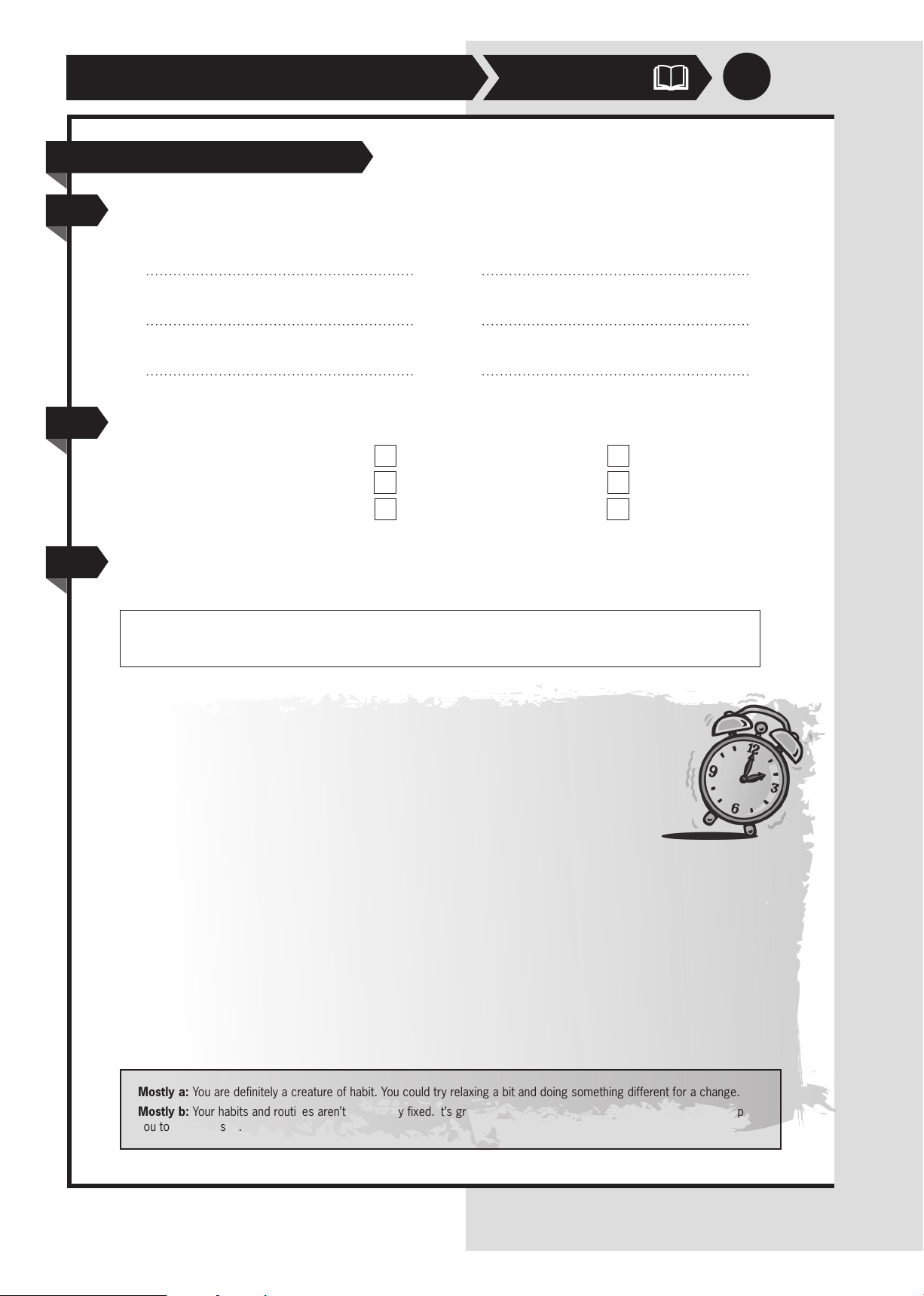
Complete the quiz with the words in the box. Then answer the questions and read the results. awake buy clean go go have late leave morning routine wake up weekend
Are you a creature of habit? 1.
Do you need an alarm clock to help you ............ in 4.
Do you ............ home at the the morning?
same time every day for work or a)
No, I’m usually ............ before my alarm goes off. college? b)
Yes. Without the alarm, I would just go on sleeping. a)
Yes, I don’t like being ............ . b) No, sometimes I’m early and 2.
Do you always ............ the same thing for breakfast? sometimes I’m a bit late. a)
Yes, I don’t like making decisions in the ............ ! 5.
Do you ............ shopping on the same day each b) No, that would be boring! week? a)
Yes, and I usually ............ the same things each 3.
Do you ever forget to ............ your teeth or brush week. your hair in the morning? b)
No, it depends what I’m doing each week. a)
No, they are part of my morning ............ , so I never forget. 6.
Do you usually ............ to bed at the same time b) Yes, if I’m in a hurry. every night? a)
Yes, during the week, but not at the ............ of course. b)
No, it depends what I’m doing each day.
Mostly a: You are definitely a creature of habit. You could try relaxing a bit and doing something different for a change.
Mostly b: Your habits and routines aren’t completely fixed. It’s great to have variety, but remember that routine can help you to be organised. 12
© Cambridge University Press and
READING | PART 1 | 1 Cambridge Assessment 2020 Exam task 3
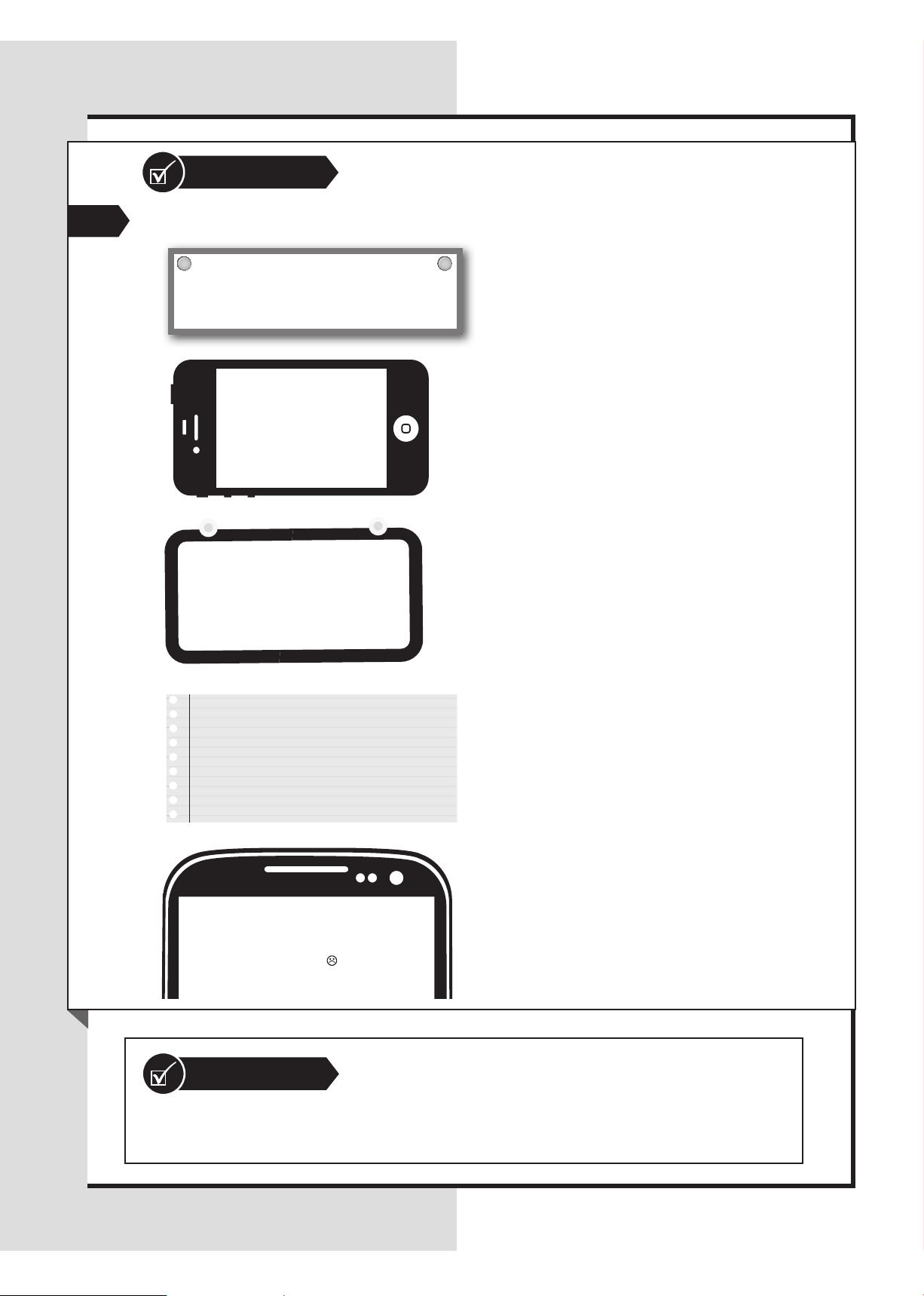
Look at the text in each question. What does it say? Choose the correct letter, A, B or C. 1
A The fitness class will only last for half an hour
This week’s fitness class will be half an hour earlier, this week.
at 6.30 p.m., and in the sports hall, not the gym! Next
week’s class will be back in the gym at the usual time.
B There won’t be a fitness class next week.
C The fitness class will be somewhere different this week.
Tara, we’ve run out of 2
coffee! Can you get some What should Tara do?
at the supermarket when A buy coffee tomorrow
you’re coming back from
college this afternoon? I’ll
B go shopping on her way home pay you back tomorrow. Daisy
C give Daisy some money to go to the supermarket 3
A You can’t go into the bank on Saturday BANk oPENING hoURs afternoons.
Monday – Friday 9 a.m. to 5 p.m.
B The cash machine can only be used when the
saturday – 9 a.m. to 11 a.m. bank is open. The cash machine outside is in use 24 hours
C The bank closes at the same time every day. 4 Max,
A Someone is mending the shower at the
There’s a problem with the shower. You can’t moment.
use it unless you want a cold one! Someone’s
B It isn’t possible to have a hot shower this
coming to fix it this afternoon, so it’ll be OK morning. tomorrow. Mum
C Max will have to take a cold shower tomorrow. 5
Why has henry written the text?
A to warn Mia that he may not be on time Hi Mia,
B to remind Mia about delays on the buses
I might be late for the band practice
C to ask which bus he should get to band practice
tonight. I usually get the bus, but there are
lots of delays this week. See you later. Henry Exam facts •
In this part, you read five short texts – for example, signs, notices and messages. •
You have to choose the option (A, B or C) that means the same as the short text.
© Cambridge University Press and
READING | PART 1 | 1 13 Cambridge Assessment 2020 READING PART 1 2
Social interaction
Choose the correct words to complete the phrasal verbs. 1
1. I usually meet up / out / together with my friends at the weekend.
2. I’m tired, so I think I’ll stay up / in / into tonight.
3. Do you want to come out / over / away to my house later?
4. My family sometimes eat out / up / away. We like pizza restaurants.
5. Who does Max usually hang up / in / out with?
6. I was at a party last night and didn’t get back / out / to until late.
7. We often get in / out / together to watch a DVD.
8. Do you fancy going in / out / up tonight, maybe to the cinema?
Choose the best response. 2
1. I’ve bought you a ticket for the concert on Saturday.
a Thank you. That’s very kind of you.
b Yes, please. That would be lovely.
2. Shall I meet you at the station?
a It’s opposite the bus stop. b Yes, good idea.
3. Do you fancy going ice skating on Friday?
a I’m sorry, I can’t. I’m doing something else. b Yes, it was great.
4. I’m sorry I’m late.
a That’s OK. No problem.
b We can wait a bit longer.
5. Why don’t we go for a pizza later?
a No, I don’t like it. b Great idea!
6. Should I invite Emma to the party?
a Yes, I’d love to. Thanks.
b No way! No one gets on with her.
7. Is it OK if my sister comes to the cinema with us?
a Of course. That’s fine. b It doesn’t matter.
8. Shall we meet up at the weekend?
a No, sorry, I don’t want it. b Yes, let’s do that. 14
© Cambridge University Press and
READING | PART 1 | 2 Cambridge Assessment 2020 Exam task 3
Look at the text in each question. What does it say? Choose the correct letter, A, B or C. 1
Why has sara sent an email? Reply Forward
A to accept Lily’s invitation Lily,
B to ask Lily to go camping
Thanks for inviting me to your house next Saturday.
C to make an apology to Lily
I’m afraid I can’t come because I’m going camping this
weekend. Maybe we can meet up when I get back? Sara 2
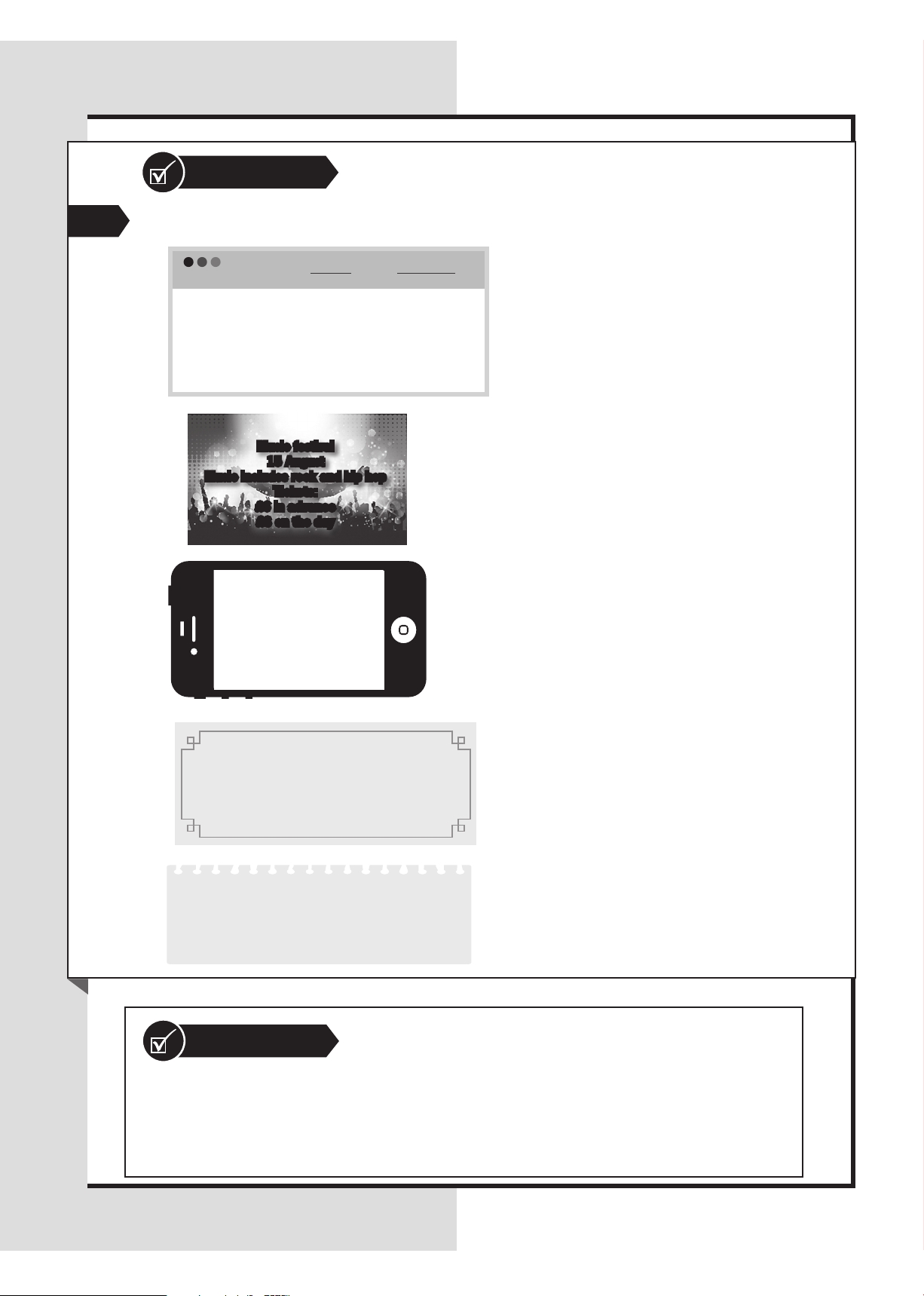
A There will only be two types of music at Music festival the festival. 15 August
B Some performances at the festival cost
Music includes rock and hip hop Tickets: more than others. £6 in advance £8 on the day
C Tickets are cheaper if you buy them before the festival. 3 What should Lucy do?
Hi Lucy, The football match
starts at 5. I’m getting the
A get the bus to the football match with Emma
bus to the stadium. I’ll meet
B ask Sam if he wants to come to the football
you there at 4.30. Don’t match
forget to invite Sam too. Emma
C meet Emma and Sam at the stadium at 5 o’clock 4 You are invited to a
A Guests should bring some food and drink.
Jungle party on June 21 from 3 p.m.
B Guests must dress up as a type of animal.
Dress up in an animal costume if you want to –
C Guests might win something if they wear a a prize for the best one! costume. Food and drink provided. 5
Why has Jenna left a note for Marcus? Marcus
A to remind him about an arrangement
Don’t forget we’re going to the cinema this afternoon with
James. I’m not sure what film we’re going to see, but we can
B to invite him to the cinema
decide when we get there. Jenna
C to suggest a film which they could see Exam tips •
Read each short text and think about where and when you might see it. •
Read the options carefully. Don’t think an option is correct just because you see the same words in the text. •
The correct answer has the same meaning as the text, but usually uses different words.
© Cambridge University Press and
READING | PART 1 | 2 15 Cambridge Assessment 2020 READING PART 1 3
Hobbies and leisure
Complete the speech bubbles with the words in the box. 1 club dancing festival galleries hobby magazine member photography sightseeing sunbathing
I joined a chess (1) .......... last year and I really enjoy it now. It’s a great (2) .......... Anna
because you have to really think about how to win. You also meet people. Ilona
I love (3) .......... to great music. My ideal weekend is going to a music (4) .......... and seeing lots of new bands. Ben
I love travel! My favourite activities are going (5) .......... and visiting museums and art (6) ........ . Lottie
My ideal leisure activity is (7) .......... on a beach and reading a fashion (8) ........ . So relaxing!
I’m quite a creative person. I bought a camera last year and took up (9) .......... . I’m not Karl
interested in being a (10) .......... of a club, though. I’m quite happy to spend time on my own.
Complete the dialogue with the phrases in the box. 2
do you agree that going back to like I said not sure, because
on a completely different subject that’s an interesting point what do you think about this what I mean is
sam: (1) ....................................................................................................
museums should be free for people to visit?
Ellie: I’m (2) ...............................................................................................
.............. they cost a lot of money to run. It seems fair that people should pay something.
sam: Yes, but museums shouldn’t only be for rich people. (3) .......................
.............................................................................. that everyone should be
able to visit them, even if they don’t have much money.
Ellie: Yes, (4) .................................................................................................... , and I agree with
you in some ways. But (5) .................................................................................................... before,
museums are expensive, and we can’t expect the government to pay the full cost. (6) ...........................
......................................................................... , Ana?
Ana: I’m not sure. I agree that someone has to pay to keep museums open, but (7) ...........................
......................................................................... what Sam said, it doesn’t seem fair that people who
don’t have much money can’t see these wonderful objects.
sam: Thank you, Ana. (8) .................................................................................................... , do you fancy watching a movie later? 16
© Cambridge University Press and
READING | PART 1 | 3 Cambridge Assessment 2020 Exam task 3
Look at the text in each question. What does it say? Choose the correct letter, A, B or C. 1
Why has Josh sent this message?
A to ask George to go camping with him next weekend
Hi George, I’m going camping next
weekend, so can I borrow your tent? You
B to tell George about a new tent he’s going
bought one last summer, didn’t you? If to buy
you’ve got a small cooker, that would be great, too. Thanks.
C to ask if George will lend him some Josh camping equipment 2 Reply Forward
What should club members do?
To: Photography club members
A come to the picnic with food to cook Subject: Picnic
B take lots of photos at the picnic
Everyone welcome – just meet at the park at 2.30 on
Saturday. Bring something for the barbecue – drinks
C tell Tom if they want to go to the picnic
provided. Bring your best pictures to share. See you there! Tom 3
A There will be five workshops each week. Art workshop
B You don’t have to be talented to go to the Saturdays 10.30 – 12.30 workshops. From 15 September for 5 weeks
C The final workshop is on Saturday Suitable for all abilities 15 September. 4
Call this number if you want to
If you enjoy playing the guitar and hanging out making
A play music with others
music, contact us, Neil and Joe. No plans to play as a band - we just relax and play! B learn the guitar Call 07796 245798 C join a band 5
A The stamps are all very old.
stamp collection for sale
B Some of the stamps are very unusual.
over 12,000 stamps from a range of countries
C You can buy just a few of the stamps.
Some antique and rare items
On offer as a collection only, not as individual items Get it right!
Look at the sentence below. Then try to correct the mistake.
I write to you because last week I started a new English course in the same school.
© Cambridge University Press and
READING | PART 1 | 3 17 Cambridge Assessment 2020 READING PART 2 1
Health, medicine and exercise
Complete the statements with the words in the box. 1 ambulance beats break dangerous doctors fit heart injury medicine rest rugby sick
1. If your ..................... is healthy, it usually ..................... around 70 times per minute.
2. According to ..................... , you should exercise for an hour a day to keep ..................... .
3. Horse-riding is a more ..................... sport than ..................... or football.
4. If you ..................... your arm, you should call an ..................... to take you to hospital immediately.
5. If you feel ..................... after eating something, you should go to a pharmacy to get some ..................... .
6. If an ..................... is painful, you should always ..................... the part of your body that’s hurt.
Choose the correct modal verbs to complete the health advice. 2
1. I’m sorry, you can’t see the doctor today. You have to / mustn’t make an appointment.
2. You don’t have to / shouldn’t eat if you have stomach ache, but it’s important to drink.
3. You needn’t / should worry – it isn’t a very serious operation.
4. It’s important to rest. You don’t have to / mustn’t do anything for a few days.
5. I think you’ve got a fever. You ought to / shouldn’t see a doctor.
6. You don’t have to / should drink lots if you have a cold or a sore throat. Exam task 3
The people below all want to join a sports class. on the next page there are descriptions of
eight classes. Decide which class would be the most suitable for the following people. For
1–5 write the correct letter A–h.
Chloe enjoys team sports but doesn’t want to play in competitions. She needs a 1
morning class. She doesn’t have much money and can’t afford to buy expensive equipment.
Mike isn’t very fit. He would like to get fitter, but he finds exercise boring. He’s 2
looking for an evening class that is different every week. He’d also like to see how he is improving over time.
Sofia loves sport but is recovering from a serious injury. She wants to train in the 3
afternoon with someone who understands her injury and can give her advice on exercises she can do at home.
Jack is very fit and is planning a challenging 200 km run. He wants to train at least 4
twice a week and would like some personal training too. He wants to train indoors and outdoors.
Tara takes sport seriously. She plays hockey and tennis and wants to improve her skills 5
and take part in competitions. She isn’t free from Monday to Friday. 18
© Cambridge University Press and
READING | PART 2 | 1 Cambridge Assessment 2020 sports classes A sport for life B Top training
Weekly sessions in seven different sports,
Our club offers individual training
including squash, tennis and basketball. Do
sessions in the gym, with a personal
your favourite sport or try new ones each
trainer. The class is ideal for people who
week. Classes take place on Thursdays
enjoy training alone and are keen to
3–4 p.m. and Sundays 2–3.30 p.m. in Green
improve their fitness, or people who have
Park and in the Park Gym. We don’t believe
particular difficulties with their fitness.
in winners and losers, just in having fun!
Classes: every morning 9–11 a.m. C Active plus! D Water-cise!
This is a great class for people who enjoy playing sport
Have fun and get fit at your local sports
with others in an informal way. Choose from a range of
centre! Classes every Tuesday and
sports, including 5-a-side football and hockey. Classes
Thursday from 6–8 p.m. No two classes
are on Saturdays from 9–11 a.m. We provide balls,
are the same! We organise regular
hockey sticks, etc. and a monthly report on how your
competitions and also offer individual fitness is improving.
fitness checks every month, plus the
chance to gain progress certificates. E Fitness for all F sport for all
If you’re looking for a gentle, low-cost exercise
This class is for people who want to take up
class, Fitness for all offers exercises to
a sport such as football or tennis for the first
improve your strength and confidence slowly.
time. It’s a great way to get fit in the fresh
Our trainers are qualified to help with individual
air. Classes start with training exercises,
problems and can give you extra ideas to try
followed by a game or small tournament.
outside the class. No equipment necessary.
Classes: every Tuesday and Thursday,
Classes: every Tuesday from 2 to 4 p.m.
6–8 p.m. All equipment provided. G Rising stars h Go for it!
We believe sports are for winners! We offer
This is a class for people who want to push
training from professional sports coaches
themselves so they can compete against other
to help you become a more successful
people or themselves! Training takes place every
player. Choose from a range of team and
Tuesday, Thursday and Saturday. Classes involve
racket sports. Players are encouraged to join
a one-hour run in the park, followed by weight
local and national leagues. Classes: every
training in the gym. Individual coaching and
Saturday and Sunday, or book an individual
advice on improving fitness at home are also
lesson with one of our trainers. available. Exam facts •
In this part, you read descriptions of five people. •
You also read eight texts on the same topic. •
You have to match what each person requires to one of the eight texts.
© Cambridge University Press and
READING | PART 2 | 1 19 Cambridge Assessment 2020 READING PART 2 2 Free time
Complete what the people say with the words in the box. 1 drama horror order sculptures stage videos Lily
“ I’m really into (1) .......... , so I love being in plays. It feels great being up on the (2) .......... in
front of lots of people. I don’t want to do it as a job, but it’s fun to do in your free time! ”
Jamie “ I often organise a movie night at the weekend. I invite a few friends and we (3) .......... a
takeaway. My favourite films are (4) .......... movies, especially really scary ones! ”
Rosie “ I’m quite creative, so I do a lot of art classes in my free time. I don’t like painting, but I love
making (5) .......... out of wood. I also make my own five-minute (6) .......... , which I put online for friends to watch.”
Write the questions and answers. Use the present perfect or past simple. 2
1. A: where / you go / on holiday / last year? ................................................................................... B: I went to Spain.
2. A: Is Martha still here?
B: No, she / just / leave ..............................................................................................................
3. A: Don’t forget to order the tickets online. B:
It’s OK. I / already / do / it ......................................................................................................
4. A: when / you / move / to this town? ...........................................................................................
B: It was about two years ago. Exam task 3
The people below all want to find a new free-time activity. on the next page there are
descriptions of eight clubs. Decide which club would be the most suitable for the following
people. For 1–5 write the correct letter A–h.
Emma loves using her imagination in a creative way. She loves working on projects 1
with other people, and she would like to visit places and see creative people at work. 2
Marco loves making things, and he enjoys meeting people from other cultures. He
would like to learn a skill that he can use outside the class.
Amina is interested in serious issues. She enjoys listening to talks and learning 3
about life in other countries. She would also like to discuss her ideas and opinions with other people.
Niko enjoys going to different places and meeting people from different 4
backgrounds. He’s also keen to find out about the place where he lives. He’s
especially interested in history.
Erica is keen to help other people. She enjoys events where there are crowds 5
of people. She wants to learn skills she can use in a job when she finishes her studies. 20
© Cambridge University Press and
READING | PART 2 | 2 Cambridge Assessment 2020