Lecture on Chapter 2: Essential Int'l Commercial Transactions (INT-101)
Lecture on Chapter 2: Essential Int'l Commercial Transactions (INT-101)
Chủ đề: Tài liệu chung Tiếng Anh 12 485 tài liệu
Môn: Tiếng Anh 12 1.2 K tài liệu
Tác giả:




















Preview text:
CHAPTER 1: INTRODUCTION TO INTERNATIONAL COMMERCIAL TRANSACTIONS
The chapter lays the foundations of the course and explains the concepts, roles and
functions of international commercial transactions, as well as give descriptions of
prevalent governing laws for international commercial transactions.
1.1. International Commercial Transactions: Concepts and roles 1.1.1 Concepts:
International commercial transactions are business transactions of parties who have
their places of business in different nations. These transactions involve the movement of
goods, services, technology, or capital across the boundaries of different nations, which
could involve the activities of the government and individual.
Trading globally gives consumers and countries opportunities to be exposed to new
markets and products. Almost every kind of product can be found on the international
market: food, clothes, spare parts, oil, jewelry, wine, stocks, currencies, and water.
Services are also traded: tourism, banking, consulting and transportation. A product that
is sold to the global market is an export, and a product that is bought from the global
market is an import. Imports and exports are accounted for in a country’s current account in the balance of payments.
Industrialization, advanced technology, including transport, globalization,
multinational corporations and outsourcing are all having a major impact on the
international trade system. International trade is not different from domestic trade as the
motivation and the behavior of parties involved in a trade do not change fundamentally
regardless of whether trade is across a border or not. The main difference is that
international trade is typically costlier than domestic trade. The reason is that a border
typically imposes additional costs such as tariffs, time costs due to border delays and
costs associated with country differences such as language, legal system or culture.
Another difference between domestic and international trade is that factors of production
such as capital and labor are typically more mobile within a country than across countries.
Thus, international trade is mostly restricted to trade in goods and services, and only to a
lesser extent to trade in capital, labor or other factors of production. Trade in goods and
services can serve as a substitute for trade in factors of production. Instead of importing a
factor of production, a country can import goods that make intensive use of that factor of production and thus embody it. 1.1.2 Roles:
International trade plays an important role in every country’s economy. The balance
of trade, or the amount of imports versus exports, drives a country’s evaluation of its
gross domestic product (GDP) and ultimately impacts the public’s perception of the
health of the economy. More importantly, international trade opens up untapped markets
for sellers and increases the home country’s productivity as workers are employed to
make the goods to sell globally.
It is a common axiom in business that 95% of a company’s potential market is
located overseas. A company that limits itself to sales generated within domestic borders
is missing out on the potential to grow the business exponentially. From a business
perspective, the role of international trade is to maximize profits for owners, the single
most important mandate for corporations and many other types of businesses.
Governments consider the role of international trade from a larger perspective on
the health of the economy. The ability of the business sector to manufacture goods for
export means that more of the country’s workforce is employed, producing a larger
amount of inventory. It also means that the country is in a stronger position globally, as it
is virtually exporting the country’s values and lifestyle along with its products. Every
domestic product that takes off in a foreign country makes it that much harder for the
foreign country’s government to risk damaging trade relations in international
negotiations on unrelated issues.
Gross domestic product, an economic indicator that monitors a country’s level of
production, is impacted by international trade. If a country imports more than it exports,
its GDP will likely decrease over time as the country becomes reliant on imported goods
and loses the ability to employ its own citizenry in the production of goods that the public
wants to buy. The role of international trade in the economy is to find a balance between
importing and exporting that keeps the country’s economy strong and its standard of living high.
Perhaps, the most important role of international trade is to keep the citizens of a
country healthy and happy. International trade provides all of the goods and resources
that a country cannot effectively produce itself. From making coffee available in Alaska
to providing wood products to desert countries, many would be unhappy if they could
only buy what their own country could produce. As people are better able to
communicate across the globe, it has become harder for governments to convince the
public that it should happily do without modern conveniences that people in other
countries enjoy. The unavailability of modern goods over time has contributed to citizen
uprising in countries with governments that attempted to cut the country off from the world.
1.2. Main factors influencing International Commercial Transactions.
Factors that influence international business transactions include political, economic,
social, technological, environmental, geographical and legal ones, and some subjective
factors such as human resources, capital, technical equipment, management system of a company.
Political factors: political policies, or political disputes particularly that result in
military confrontation can disrupt trade and investment.
Legal factors: domestic and international laws play a big role in determining how a company can operate overseas.
Economic and social factors: refer to the growth of one country. Domestic
manufacturing which develops in a country will be a good condition for producing
exports and will increase the competition ability of the exports in model, quality, and type
in the world market. The more an economy of one country develops, the more
competitive the exports in the world market are.
The development of domestic business system contributes to constrain or encourage
export because it decides the good rotation inside the country and in the world.
The finance and banking system also has a large effect on export activities. The
more developed the banking system is, the more convenient and faster the international
settlement is, which will lubricate the export-import activities.
Environmental and Geographical factors: There are many different geographical
factors that affect international business. In fact, the geographical size, the climatic
challenges happening lately, the natural resources available on a specific territory, the
population distribution in a country, etc. are some of the influences that have an effect on the international trade
1.3 Functions of International Commercial Transactions
Global competition has made the businesses to change their way of perspective. The
factors such as technological advancements, high-speed communication, and shorter
product life cycle contributed much to the change. Here are some functions of the
international commercial transactions that must be efficiently operated in an organization.
Planning: It is one of the reasons for doing international commercial transactions
for an organization that decides how to do business globally, i.e. whether to export or to
operate as a multinational company. To develop plans and procedures, an organization
should monitor environments such as currency instability, political instability, and
trademark protection very deeply.
Organizing: While doing international commercial transactions, companies should
ensure that their policies adjust the culture of the host country. The international business
must be organized in such a way so that it can be adapted to environmental and cultural differences.
Staffing: The efficiency of international commercial transactions highly depends on
staffing as it is crucial to the success of any organization. The company must closely
examine how to select the appropriate staff so that they can help in achieving the objectives.
Directing: The directing function of business become more difficult due to the
employee’s attitude. Sometimes, language barriers also create communication difficulties
and to minimize these problems, organizations used to direct employees in cross-cultural management.
Controlling: It is a crucial function that helps in monitoring the current
performance and making the necessary alterations to keep the organization moving towards its objectives.
1.4. The governing laws for International Commercial Transactions.
1.4.1 International laws, customs and practices
INCOTERMS 2010. ICC rules for the use of domestic and international trade terms,
ICC Publication 2010, No. 715
Incoterms 2010 are internationally accepted freight rules defining the respective
responsibilities of the buyer and seller in the arrangement of transportation and other
responsibilities and clarify when the ownership of the merchandise takes place. They are
used in conjunction with a sales agreement or other method of transacting the sale.
United Nations Convention on Contracts for the International Sale of Goods (Vienna, 1980) (CISG)
The contract of sale is the backbone of international trade in all countries,
irrespective of their legal tradition or level of economic development. The CISG is
therefore considered one of the core international trade law conventions whose universal adoption is desirable.
The CISG is the result of a legislative effort that started at the beginning of the
twentieth century. The resulting text provides a careful balance between the interests of
the buyer and of the seller. It has also inspired contract law reform at the national level.
The adoption of the CISG provides modern, uniform legislation for the international
sale of goods that would apply whenever contracts for the sale of goods are concluded
between parties with a place of business in Contracting States. In these cases, the CISG
would apply directly, avoiding recourse to rules of private international law to determine
the law applicable to the contract, adding significantly to the certainty and predictability
of international sales contracts.
Moreover, the CISG may apply to a contract for international sale of goods when
the rules of private international law point at the law of a Contracting State as the
applicable one, or by virtue of the choice of the contractual parties, regardless of whether
their places of business are located in a Contracting State. In this latter case, the CISG
provides a neutral body of rules that can be easily accepted in light of its transnational
nature and of the wide availability of interpretative materials.
Finally, small and medium-sized enterprises as well as traders located in developing
countries typically have reduced access to legal advice when negotiating a contract. Thus,
they are more vulnerable to problems caused by inadequate treatment in the contract of
issues relating to applicable law. The same enterprises and traders may also be the
weaker contractual parties and could have difficulties in ensuring that the contractual
balance is kept. Those merchants would therefore derive particular benefit from the
default application of the fair and uniform regime of the CISG to contracts falling under its scope. 1.4.2 National laws
Vietnam Customs law 2014
This Law stipulates the state management of customs with regard to goods
permitted to be imported, exported or transited, and vehicle of domestic and foreign
entities which are on exit or entry or in transit within the customs territory; and
organization and operation of the customs service
Law on Commerce of Vietnam 2005
The Commercial Law shall govern commercial acts, determine the legal status of
traders and provide for principles and standards for the commercial activities in the Socialist Republic of Vietnam.
Decree on detailing implementation of theLaw on Commerce of Vietnam No. 69/2018/ND-CP
This Decree details implementation of the Commercial Law with respect to
international purchases and sales of goods, including activities of export and import;
temporary import for re-export; temporary export for re-import; border-gate transfer;
activities of entrustment and receiving entrustment in importing and exporting goods; and
agency for sale and purchase, processing and transit of goods. SUMMARY
International business transactions which involve the movement of goods, services,
technology, or capital across the boundaries are business transactions of parties who have
their places of business in different nations.
International business is prerequisite for the development of any country and makes
a significant contribution to the global economy.
To govern international business, there are many sources of law, customs and
practices, and national laws as well. That utilizing the suitable sources of law depends on
the necessity of each transaction. REVISION QUESTIONS
1. What are international commercial transactions?
2. Why are international commercial transactions important for national/ global economy?
3. Which laws are applied to international commercial transactions?
CHAPTER 2: ESSENTIAL TYPES OF INTERNATIONAL COMMERCIAL TRANSACTIONS.
The chapter introduces some classical types of international commercial transactions, including: • Direct transactions
• Purchase of international goods through intermediaries • Counter trade • Processing • International auction • International bidding
• Trading at international fairs and exhibitions
• Trading in Commodity Exchanges 2.1. Direct transactions: 2.1.1. Concepts.
International sales are transactions in which the buyer and the seller are from
different nations. There are many types of international sales as follow: 2.1.1.1 Exports.
Export means to send goods or services across national frontiers for the purpose
of selling and realizing foreign exchange and import of goods means Products of foreign
origin brought into a country (National Assembly, 2005)
According to Article 28, Law on Commerce of Vietnam , 2005 stipulates Export
of goods means the bringing of goods out of the territory of the Socialist Republic of
Vietnam or into special zones in the Vietnamese territory, which are regarded as
exclusive customs zones according to the provisions of law.
On the basis of socio-economic conditions in each period and treaties to which the
Socialist Republic of Vietnam is a contracting party, the Government shall specify the
lists of goods banned from import and/or export, goods to be imported or exported under
permits of competent state management agencies, and the procedures for granting permits 2.1.1.2 Imports.
Import of goods means the bringing of goods into the territory of the Socialist
Republic of Vietnam from foreign countries or special zones in the Vietnamese territory,
which are regarded as exclusive customs zones according to the provisions of law (National Assembly, 2005).
2.1.1.3 Temporary Import for re – export.
According to article 29 Law on Commerce of Vietnam 2005 stipulates:
Temporary import of goods for re-export means the bringing of goods into Vietnam from
foreign countries or special zones locating in the Vietnamese territory, which are
regarded as exclusive customs zones according to the provisions of law, with the
completion of the procedures for importing such goods into Vietnam, then procedures for
exporting the same goods out of Vietnam.
2.1.1.4 Temporary Export for re- import.
According to article 29 Law on Commerce of Vietnam 2005 stipulates:
Temporary export of goods for re-import means the bringing of goods overseas or into
special zones in the Vietnamese territory which are regarded as exclusive customs zones according to the pro
visions of law, with the completion of procedures for exporting such goods out of
Vietnam, then procedures for importing the same goods back into Vietnam
2.1.1.5 Cross – Border Transshipment (Transfer of goods through border-gates)
Transfer of goods through border-gates indicates the activity of the buying and
selling of goods and services between businesses in neighboring countries, with the seller
being in one country and the buyer in the other country, for example, a company in the
United States selling to a company in Canada.
Law on Commerce of Vietnam 2005- VN, Article refers Transfer of goods
through border-gates means the purchase of goods from a country or territory for sale to
another country or territory outside the Vietnamese territory without carrying out the
procedures for importing such goods into Vietnam and the procedures for exporting such goods out of Vietnam.
Transfer of goods through border-gates shall be conducted in the following forms:
a/ Goods are transported directly from the exporting country to the importing country
without going through Vietnamese border-gates;
b/ Goods are transported from the exporting country to the importing country through
Vietnamese border-gates without carrying out the procedures for importing them into
Vietnam and the procedures for exporting them out of Vietnam;
c/ Goods are transported from the exporting country to the importing country through
Vietnamese border-gates and brought into bonded warehouses or areas for transshipment
of goods at Vietnamese ports without carrying out the procedures for importing them into
Vietnam and the procedures for exporting them out of Vietnam.
The Government shall provide for in detail activities of transfer of goods through
border-gate. One type of trade included in types of international trade is intra-industry
trade in which importers import goods that are similar to those produced in the country.
2.1.2. Current regulations of Vietnam in ordinary international sales.
Current regulations in international sales are regulated in Commercial Law 2005
of Socialist Republic of Vietnam and Decree on detailing implementation of the Law on
Commerce of Vietnam No. 69/2018/ND-CP.
Following are some main contents that need to be considered:
Import and export licensing procedures
Vietnam does not require a company to have an import/ export license in order to
set up a trading company. However, in order to be able to conduct import/ export
business, a foreign investor must register with the Department of Planning and
Investment. Additionally, foreign investors who wish to engage in import/ export
activities in Vietnam are required to obtain an Investment certificate. Companies that
wish to expand their current business operations in order to engage in import/ export
activities must follow the procedures for adjusting their Investment certificates.
According to Circular 34/2013/TT-BCT, there are certain goods that foreign
invested enterprises may not export from or import into Vietnam. Goods banned for
export include petroleum oil. Goods banned from import into the country include cigars,
tobacco, petroleum oils, newspapers and journals, and aircraft. Certain goods require the
trading company to obtain import and export permits from the government, these include:
Goods subject to export control in accordance with international treaties to which
Vietnam is a contracting party.
Goods exported within quotas set by foreign countries.
Goods subject to import control in accordance with international treaties to which
Vietnam is a contracting party.
Explosive pre-substances and industrial explosives.
All imports and exports must comply with the relevant government regulations on
quarantine, food safety, and quality standards, and must be inspected by the relevant
government agencies before clearing customs. Import/ Export duties
Most goods imported/ exported across the borders of Vietnam, or which pass between
the domestic market and a non-tariff zone, are subject to import/ export duties.
Exceptions to this include goods in transit, goods exported abroad from a non-tariff zone,
and goods passing from one non-tariff zone to another.
Most goods and services being exported are exempt from tax. Export duties (ranging
from zero percent to 45 percent and computed on free-on-board price) are only charged
on a few items, mainly natural resources such as minerals, forest products, and scrap metal.
Consumer goods, especially luxury goods, are subject to high import duties, while
machinery, equipment, materials and supplies needed for production, especially those
items which are not produced domestically, enjoy lower rates of import duties, or even a
zero percent tax rate. Duty rates for imported goods include preferential rates, special
preferential rates, and standard rates depending on the origin of the goods.
Import/ export duties declaration is required upon registration of customs declarations
with the customs offices. Export duties must be pain within 30 days of registration of
customs declarations. For imported goods, import duties must be paid before receipt of consumer goods.
Depending on the trade conditions, Vietnam imposes a number of different types of
duties on the import and export of goods. Companies wishing to find in-depth
information on a range of goods would be well advised to visit the website of Vietnam Customs.
2.1.3. Characteristics of ordinary international sales.
Cross border participation: There are lots of parties involved in an international
sales transaction such as exporter, importer, freight forwarder, shipping company,
transporter, insurer … who may be from different countries.
Foreign currency: currency in the contract can be of the buyer, the seller, or a third
party. Therefore, it will be foreign currency for at least one party.
Different laws applied across borders: parties in the contract are from different
countries so governing law is diversified and complicated. Law sources may be
International trade treaties, National laws, and International trade practices.
Transfer of goods/services across borders: Commodities are often transported
from this country to another or others.
Basically, any flow of value across borders.
2.1.4. Pros and cons of ordinary international sales. The pros: International growth
There is a possibility exporting companies can achieve levels of growth not possible
domestically in international markets. Therefore, a company’s sustained revenues from a
well-diversified portfolio of overseas customers are vital for a business to benefit. ROI
Overseas trade works to increase financial performance and ultimately augment the
returns on investment. There is then potential for businesses to amplify the commercial
lifespan of existing products and services, even if they had become less popular in domestic markets. Spreading business risk
A company may protect itself from unprecedented global disasters and market
upsets such as financial meltdown, earthquakes and civil unrest through overseas
business. The home market of a business could contract or even disappear during these
unstable times, but the business may be saved by the revenue it generates overseas. Market competition
If a business competes in several markets, then it may have the ability to thrive
overseas. Companies can improve their competitiveness through the observation of a
range of trends in quality, product development, design and packaging. Exchange rates
As a business begins to trade overseas the reliance it has on its domestic market
reduces and risks can be spread, especially in relation to exchange rates. For example, if a
business does most of its trade in US Dollars it may be beneficial for said business to trade
with Japan to spread the exchange rate risk between the Dollar and the Yen, therefore
creating benefit for the company. The cons: Exchange rate risk
Because exchange rates fluctuate there is also risk business trading in foreign
currencies may not be able to forecast finances accordingly. Currency fluctuations could
affect either the value of existing assets or liabilities denominated in foreign currency.
This could ultimately result in a business becoming less competitive overnight, resulting
in a loss of sales and loss of revenue. Political risk
Investing in different countries whose political regimes can change over time also
poses a few risks. Governments could discriminatorily change laws, regulations or
contracts governing an investment. Interest in emerging markets has soared and host
countries have learned more value can be extracted from foreign enterprises through
regulatory control. Firms engaged in international business use a combination of legal
contracts, insurance and trade in financial instruments to protect income streams. These
approaches, however, offer little protection against policy risk. Cultural risk
In addition to policy, cultural differences could create problems for businesses
wanting to trade overseas. Failure to take into account different cultures might lead to
damaging and costly mistakes. This could range from causing offence by not observing
correct protocol, to inappropriate packaging and marketing. It goes without saying that
the marketing of a certain business in one western country might differ to that of a
country that is still developing and has differing cultural habits and beliefs. Credit risk
It is very easy to overlook the risk of non-payment when trading overseas too.
Businesses should establish the credit rating of potential clients in many countries and
guard against non-payment through, for instance, letter of credit or arrange credit
insurance. The risk comes with the impact of a customer’s financial drawback of the firm
and how to finance the offered credit period.
2.2. Purchase of international goods through intermediaries 2.2.1 Concepts
Purchase of international goods through intermediaries is the mode of transaction in
which two parties buy and sell through a third party to sign and perform the contract (National Assembly, 2005).
The forms of selling goods through intermediation are usually expressed in the form
of: Representation of traders, commercial brokerage, purchase and sale of goods by
mandated dealers, and commercial agency (National Assembly, 2005)
2.2.2 Types of purchase of international goods through intermediaries
* Representation of traders:
Representation of traders means an activity whereby a trader (referred to as
representative) is authorized by another trader (referred to as nominator)
- Obligations of representatives
Unless otherwise agreed, a representative shall have the following obligations:
1. To conduct commercial activities in the name and for the interest of the nominator;
2. To notify the nominator of opportunities and results of performance of
authorized commercial activities;
3. To follow instructions of the nominator if such instructions do not violate the provisions of law;
4. To refrain from conducting commercial activities in his/her/its own name or in
the name of a third party within the scope of representation;
5. To refrain from disclosing or supplying to other people secrets related to
commercial activities of the nominator during the period of representation and
within two years after the termination of the representation contract;
6. To preserve assets and documents assigned for performing activities of representation. - Obligations of nominators
Unless otherwise agreed, a nominator shall have the following obligations:
1. To notify the representative immediately of the signing of contracts negotiated
by the representative, the performance of contracts entered into by the
representative, and the acceptance or non-acceptance of activities conducted by
the representative outside the scope of representation;
2. To supply assets, documents and information necessary for the representative to
perform activities of representation;
3. To pay remuneration and other reasonable expenses to the representative;
4. To notify promptly the representative of the impossibility of entering into or
performing the contract within the scope of representation
* Commercial brokerage
Commercial brokerage means a commercial activity whereby a trader acts as an
intermediary (referred to as broker) between parties selling and purchasing goods or
providing commercial services (referred to as principals) in the course of negotiations and
entering into contracts for sale and purchase of goods or provision of services and shall
be entitled to a remuneration under a brokerage contract.
- Obligations of commercial brokers
Unless otherwise agreed, a commercial broker shall have the following obligations:
1. To preserve samples of goods and documents assigned for the performance of
brokerage activities, and to return them to the principals after the completion of brokerage;
2. Not to disclose or supply information to the detriment of the interests of the principals;
3. To be responsible for the legal status, but not for the solvency, of the principals;
4. Not to take part in the performance of contracts between the principals, except
where so authorized by the principals. - Obligations of principals
Unless otherwise agreed, a principal shall have the following obligations:
1. To supply information, documents, necessary means related to goods and services;
2. To pay brokerage remuneration and other reasonable expenses to the broker.
* Purchase and sale of goods by mandated dealers
Purchase and sale of goods by mandated dealers mean commercial activities
whereby the mandatory conducts the purchase and sale of goods in his/her/its own name
under terms agreed upon with the mandator and is entitled to receive mandate commission. - Mandatories
A mandatory for purchase and sale of goods is a trader dealing in goods which are
consistent with the mandated goods and conducting the purchase and Obligations of mandators
Unless otherwise agreed, mandators shall have the following obligations:
1. To provide information, documents and means necessary for the performance of mandate contracts;
2. To pay mandate commissions and other reasonable expenses to mandatories;
3. To hand over money and goods as agreed upon;
4. To bear joint responsibility in cases where mandatories commit law violations
which are attributable to acts of mandators or intentional law-breaking act - Mandators
A mandator of purchase and sale of goods may, or may not, be a trader that
authorizes a mandatory to conduct the purchase and sale of goods at his/her/it Obligations of mandatories
Unless otherwise agreed, mandatories shall have the following obligations:
1. To conduct the purchase and sale of goods as agreed upon;
2. To notify mandators of matters related to the performance of mandate contracts;
3. To follow instructions of mandators as agreed upon;
4. To preserve assets and documents assigned to them for the performance of mandate contracts;
5. To keep secret information related to the performance of mandate contracts;
6. To hand over money and goods as agreed upon;
7. To bear joint responsibility for law violation acts of mandators, in cases where
such law violation acts are partially attributable to their own faults
* Commercial agency
Commercial agency means a commercial activity whereby the principal and the
agent agree that the agent, in its own name, sells or purchases goods for the p - Forms of agency
1. Off-take agency is a form of agency whereby the agent definitely sells or
purchases a specific quantity of goods or provides a full service for the principal.
2. Exclusive agency is a form of agency whereby a sole agent is authorized by the
principal to sell or purchase one or more goods items or to provide one or more
types of services within a given geographical area.
3. General goods sale or purchase or service provision agency is a form of agency
whereby an agent organizes a network of sub-agents to sell or purchase goods or
provide services for the principal.
The general agent represents the network of sub-agents. Sub-agents operate under
the management and in the name of the general agent.
4. Other forms of agency agreed upon by the parties
- Obligations of principals
Unless otherwise agreed, principals shall have the following obligations:
1. To guide, supply information to, and facilitate, agents to perform agency contracts;
2. To bear responsibility for quality of goods of goods sale or purchase agents, and
quality of services of service-providing agents;
3. To pay remuneration and other reasonable expenses to agents;
4. To return to agents their assets used as security (if any) upon the termination of agency contracts;
5. To bear joint responsibility for law violation acts of agents if such law violation acts
are partly attributable to their faults - Obligations of agents
Unless otherwise agreed, agents shall have the following obligations:
1. To purchase or sell goods or provide services to customers at prices or charge rates fixed by principals;
2. To comply strictly with agreements on handover and receipt of money and goods with principals;
3. To take security measures for performance of civil obligations as provided for by law;
4. To pay to principals any proceeds of the sale of goods, for sale agents; to deliver
purchased goods to principals, for purchase agents; or to pay service charges to principals, for service-providing agents;
5. To preserve goods after the receipt thereof, for sale agents, or prior to the delivery
thereof, for purchase agents; to bear joint responsibility for quality of goods of purchase
or sale agents or quality of services of service-providing agents in cases where they are at fault;
6. To submit to inspection and supervision by principals, and to report to principals on their agency activities;
7. Where it is specified by law that an agent shall be allowed to enter into an agency
contract with a principal for a certain type of goods or service, such provision of law must be strictly followed.
2.2.3 Pros and cons of purchase of international goods through intermediaries * Pros:
- Intermediaries are often persons who have knowledge of local laws and practices and
have the capacity to promote sales and avoid risks to the trustee.
- Intermediaries, especially agents often have certain facilities, so when using them, the
trustee does not need to do direct investment into foreign countries.
- Thanks to intermediary services in sorting, packaging, the trustee can reduce transportation costs. * Cons:
- The import-export business loses its direct contact with the market.
- Capital is often occupied by the agent
- Companies often have to meet the requirements of agents and brokers.
- The profit of the company is shared.
2.2.4 Current regulations of Vietnam in Purchase of international goods through intermediaries
- Firstly: It is allowable act as agents only for the items having the business
registration inscribed in the permits
- Second: When acting as sale agents for foreign countries, Vietnamese traders shall
have to open separate accounts at banks for payment under the guidance of the State
Bank of Vietnam. However, traders may pay for goods not subject to export ban,
conditional export goods. In case of payment by goods on the list of goods subject to
conditional export, they must be approved by the competent authorities
- Third, when acting as agents to help foreign parties purchase goods, Vietnamese
traders shall have to request foreign partners to transfer foreign currency (ies) which are
capable of being converted through banks so that Vietnamese parties may use such money to buy goods.
- Fourth: Goods under the agency of goods purchase and sale agency with foreign
traders shall be subject to taxes and other financial obligations as prescribed by Vietnamese law.
- Fifth: goods under sale and purchase contracts with foreign traders, when being
exported or imported, shall be carried out by Vietnamese traders as for other import and export goods.
- Sixth: Goods under sale agency contracts in Vietnam for foreign traders to be re-
exported if they cannot be sold in Vietnam and tax shall be rebated. 2.3 Counter Trade.
Over the last few decades there has been an enormous increase in countertrade
throughout the world, and the breakup of the state-planned economies of Eastern Europe
only served to accelerate this development. Some estimates suggest that in anything up to
33 percent of world trade, countertrade at least forms part of the negotiations, although
final payment might actually be made in currency.
It is obvious that the severe hard-currency shortages experienced by many developing
countries lead to countertrade being seen as the only way in which international trade can occur in some situations. 2.3.1 Concepts
Countertrade is any commercial arrangement in which sellers or exporters are
required to accept in partial or total settlement of their deliveries, a supply of products
from the importing country. In essence, it is a nation’s (or firm’s) use of its purchasing
power as a leverage to force a private firm to purchase or market its marginally
undesirable goods or exact other concessions in order to finance its imports or obtain
needed hard currency or technology. Although the manner in which the transaction is
structured may vary, the distinctive feature of such arrangements is the mandatory
performance element that is either required by the importer or the importer’s government,
or made necessary by competitive considerations (Verzariu, 1992)
2.3.2 Characteristics of countertrade. Exporter is also importer.
Currency is not a payment tool but a calculation one.
Types of commodity in countertrade are more than those of ordinary international
sales. High value goods can be exchanged for other high value goods. Low value goods
can be exchanged for low value goods.
2.3.3 Types of countertrade.
The expression “countertrade” actually covers a variety of possible procedures, which include:
Barter means the exchange of goods or services directly for other goods or
services without the use of money as means of purchase or payment. It refers to the direct
exchange of goods between two parties in a transaction.
Bartering brings benefits to individuals, companies and countries that see a mutual
benefit in exchanging goods and services rather than cash, and it enables those who are
lacking hard currency to obtain goods or services.
Barter is not uncommon in Africa and Latin America and is preferred by some oil-
dependent economies. There are specialist consultants who will handle the disposal of the
bartered products on behalf of the exporter.
For example: barter 4 tons of coffee for 1 TOYOTA automobile.
Drawbacks: Delivery is not taken at the same time so there will be difference in credit.
Switch trading refers to practice where one company sells to another its
obligation to make a purchase in a given country.
For example: Vinaconex takes delivery of brick from an Italian company,
meanwhile Bim Son Cement Company owes Vinaconex a sum of money. Therefore,
Vinaconex requires Bim Son to deliver cement for Italian company.
Counter purchase is the agreement of an exporter to purchase a quantity of
unrelated goods or services from a country in exchange for and approximate in value to
the goods exported. An agreement where one company agrees to sell products to a
foreign purchaser for cash, but also simultaneously agrees to purchase specified products
or services from the foreign partner.
The counter-purchase contract can be anything from 10 to 100 percent (or even
more) of the value of the export sale.
Buy back occurs when a firm builds a plant in a country – or supplies technology,
equipment, training, or other services to the country and agrees to take a certain
percentage of the plant’s output as partial payment for the contract.
Offset is an agreement that a company will offset a hard-currency purchase of an
unspecified product from that nation in the future. Agreement by one nation to buy a
product from another, subject to the purchase of some or all of the components and raw
materials from the buyer of the finished product, or the assembly of such product in the buyer nation.
Compensation trade is a form of barter in which one of the flows is partly in
goods and partly in hard currency. Examples of Countertrade
Indonesia negotiated for a power station project with Asea Brown Boveri and for
an air traffic control system with Hughes Aircraft. Counter-purchase obligations were to
be 100 percent of the FOB values. The firm export, through a trading company, a range
of Indonesia products: cocoa to the United States, coal to Japan, and fertilizer to Vietnam and Burma.
Lockheed Martin agreed to sell F-16 military aircraft to Hungary in exchange for
large investment and counter-purchase commitments. The firm agreed to buy $250 (U.S.)
worth of Hungarian goods. It established an office in Budapest to participate in tendering
and to procure the country’s industrial goods for export. One of the classic examples of a
barter deal of the century—that went awry—was when Pepsico Inc. signed in 1990 with
the Soviet Union to double its soft-drink sales there, open two-dozen new bottling plants
and launch its Pizza Hut restaurants in the country's biggest cities.
To finance the expansion, Pepsico promised to increase its sales of Russian vodka
in the United States and begin a new venture selling and leasing Soviet-built ships abroad.
2.3.4 Pros and cons of countertrade. Pros of countertrade:
● Transfer of technology: In exchange for a guaranteed supply of raw materials or
other scarce resources, a developed nation will provide the capital, equipment, and
technology that is needed to develop such resources. Western firms, for example, assisted
Saudi Arabia in the development of its refinery and petrochemical industry in exchange
for the right to purchase a certain amount of oil over a given period of time.
● Alleviating Balance of Payments difficulties: the debt crisis of the 1980s,
coupled with adverse movements in the price of key export commodities, such as coffee
or sugar, left may developing countries with severe balance-of-payments difficulties.
Countertrade has been used as a way of financing needed imports without depleting
limited foreign currency reserves. Some countries have been used it as a way of earning
hard currency by promoting the export of their domestic output. Countertrade has thus
helped these nations avoid the burden of additional borrowing to finance imports as well
as the need to restrict domestic economic activity.
● Countertrade is also used as method of entering a new market, particularly in
product areas that invite strong competition.
● Maintenance of stable prices of exports: Countertrade allows commodity
exporters to maintain nominal prices for their products even in the face of limited or
declining demand. The price of the product that is purchased in exchange could be
increased to take into account the inflated price of exports. In this way, an exporter can
dispose of its commodities without conceding the real price of the product in a competitive market.
● Other benefits include increased employment, higher sales, better capacity utilization. ● Benefits for exporters:
- Increased sales opportunities: Countertrade generates additional sales that
would not otherwise be possible. It also enables entry into difficult markets.
- Access to sources of supply: Countertrade provides exporters access to a
continuous supply of production components, precious raw materials, or
other natural resources in return for sales of manufactured goods or technology. -
Flexibility in prices: Countertrade enables the exporter to adjust the price of
a product in exchange for overpriced commodities Cons of countertrade:
● The value proposition may be uncertain, especially in cases where the goods
being exchanged have significant price volatility. Other disadvantages include, but are not limited to:
● Time-consuming. As in any unconventional tactic, there will be haggling over
the good trades, so expect a long, drawn-out negotiation until all parties are satisfied.
● Complexity in the nature of the negotiations. What should you do with the goods being offered?
● Higher transaction costs (including brokerage, for instance). Costs can quickly
add up, especially while looking for a buyer for the goods, commissions to middlemen and so forth.
● Logistical issues, especially if commodities are involved.
● Greater uncertainty on the value of the goods being traded and uncertainty on the quality of the goods.
2.3.5 Measures to ensure the implementation of countertrade
The measure is often stipulated in the contract:
Reciprocal L/C: this letter of credit is only valid when another letter of credit
with equivalent amount is also opened.
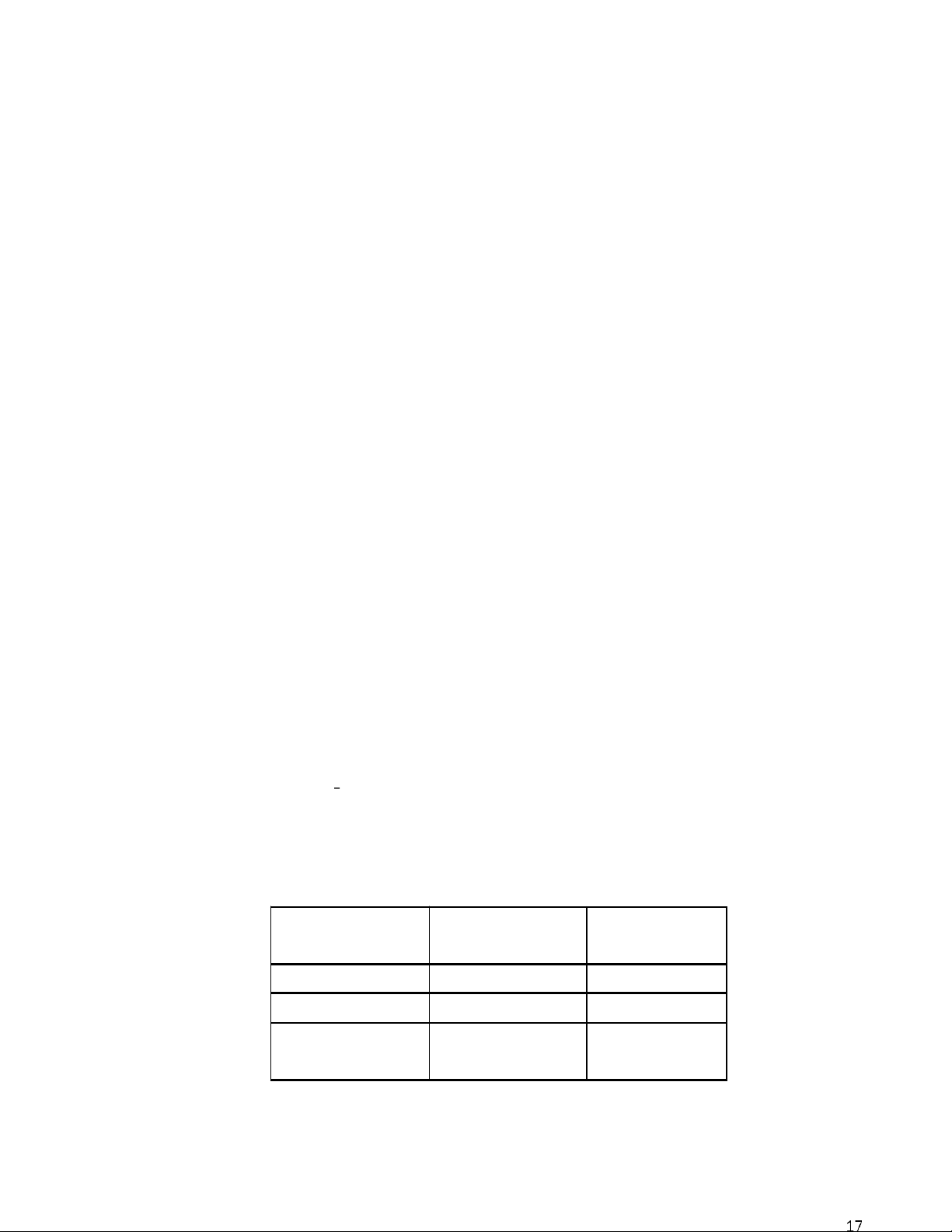
Special account: Bank will be a third party who follows, supervises and speeds up the contract. A B 1st time 2m 1m 2nd time 3m 2m End of the period 5m 3m
The bank will inform B to increase the consignment value by 2m to get equilibrium in the next period.
Tài liệu liên quan:
-
IELTS Academic Reading 1: Effects of Classroom Noise on Children with Auditory Deficits
6 3 -

IELTS Reading Practice: The Economic Importance of Coral Reefs
6 3 -
TOPIK 1: Biến Đổi Khí Hậu - Climate Change Discussion and Insights
6 3 -

Hướng Dẫn Tự Học Destination B2: Tổng Hợp Ngữ Pháp và Từ Vựng
6 3 -
Câu hỏi phản hồi chủ đề Ferien und Urlaub: Gợi ý và Thảo luận
7 4