luật thương mại quốc tế vna mở dhoc
hay và hợp lí
Môn: Luật thương mại quốc tế 89 tài liệu
Trường: Trường Đại học Luật Hà Nội 1.7 K tài liệu
Tác giả:










Preview text:
Accounting in Action 1 Learning Objectives 1
Identify the activities and users associated with accounting.
Explain the building blocks of accounting: ethics, principles, 2 and assumptions. 3
State the accounting equation, and define its components.
Analyze the effects of business transactions on the accounting 4 equation.
Describe the four financial statements and how they are 5 prepared. 1-1 LEARNING
Identify the activities and users 1 OBJECTIVE
associated with accounting.
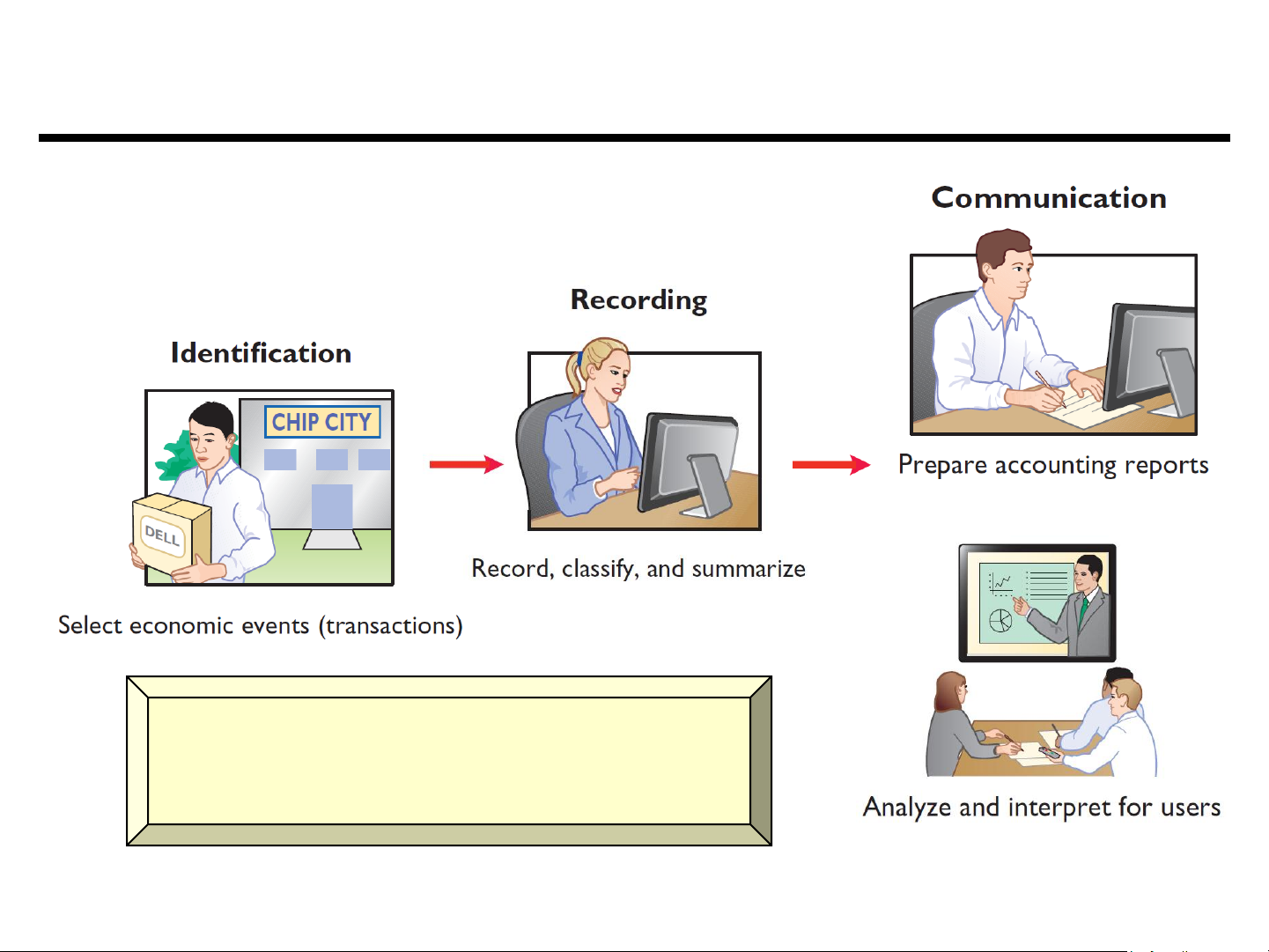
Accounting consists of three basic activities—it ◆ identifies, ◆ records, and ◆ communicates
the economic events of an organization to interested users. 1-2 LO 1 Three Activities Illustration 1-1
The activities of the accounting process
The accounting process includes
the bookkeeping function. 1-3 LO 1
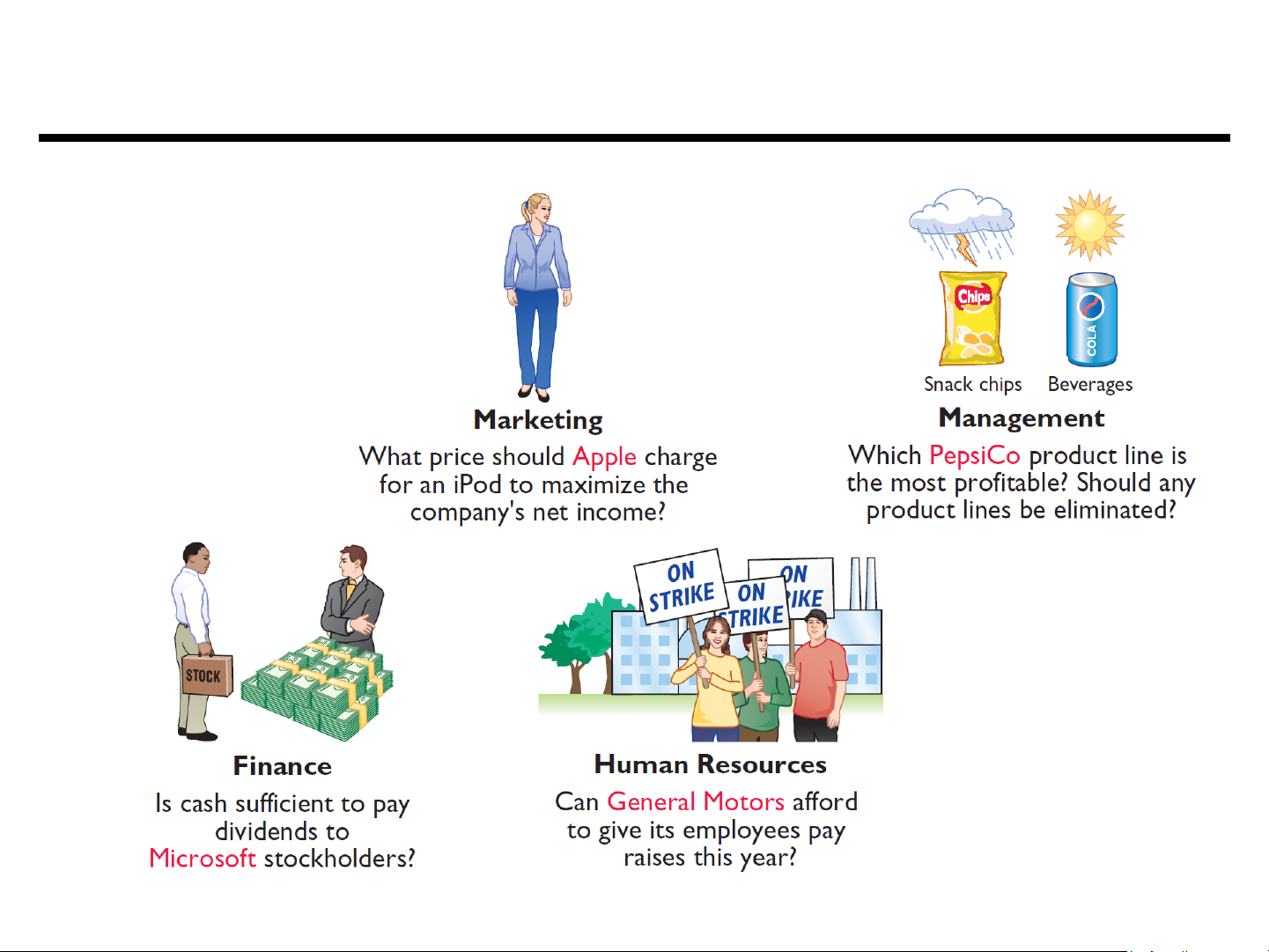
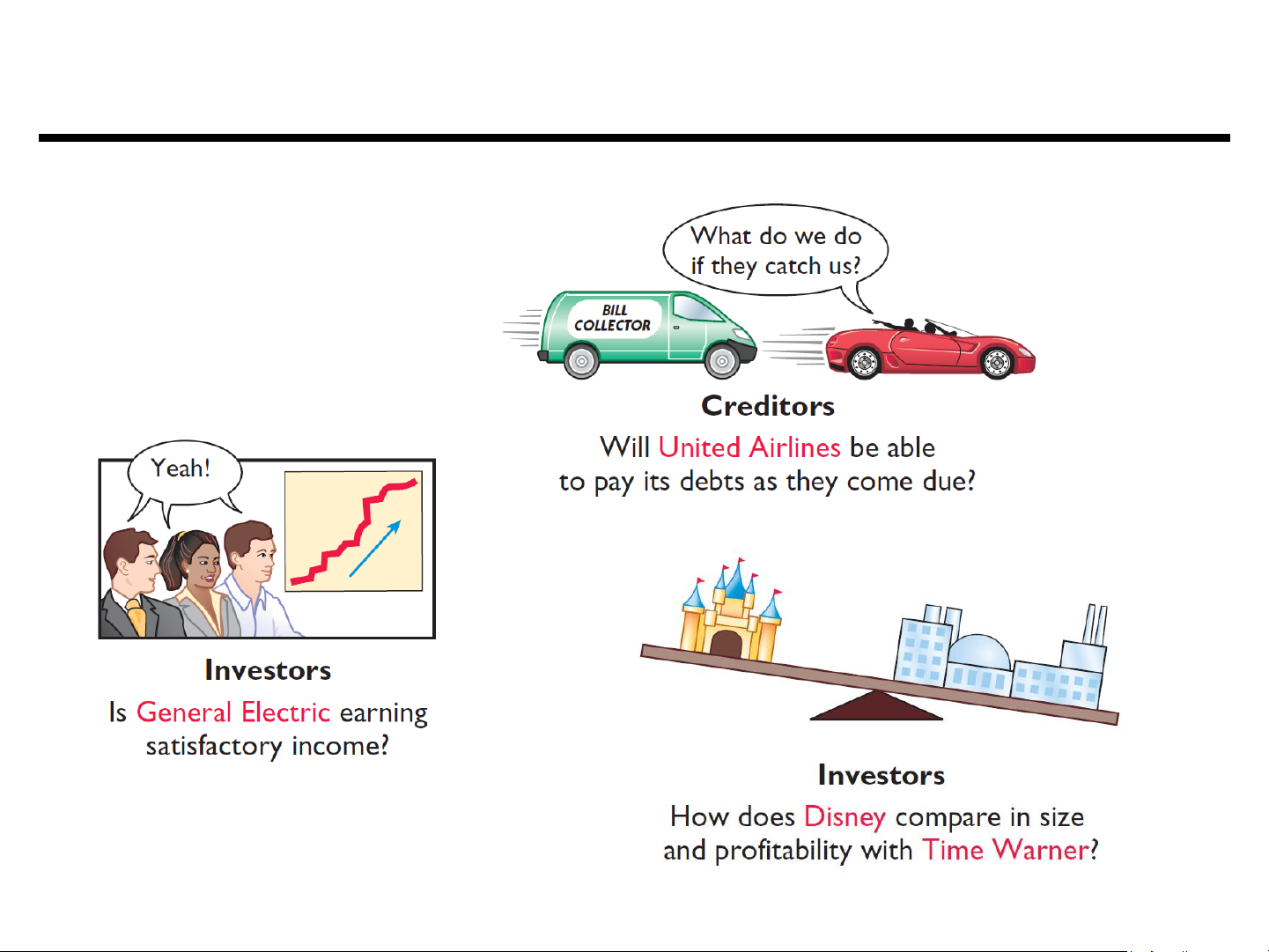
Who Uses Accounting Data INTERNAL USERS Illustration 1-2 Questions that internal users ask 1-4 LO 1 1-5 LO 1
Who Uses Accounting Data EXTERNAL USERS Illustration 1-3 Questions that external users ask 1-6 LO 1 1 Basic Concepts
Indicate whether the following statements are true or false.
1. The three steps in the accounting process are identification, recording, and communication.
2. Bookkeeping encompasses all steps in the accounting process.
3. Accountants prepare, but do not interpret, financial reports.
4. The two most common types of external users are investors and company officers.
5. Managerial accounting activities focus on reports for internal users. 1-7 LO 1 LEARNING
Explain the building blocks of accounting: 2 OBJECTIVE
ethics, principles, and assumptions.
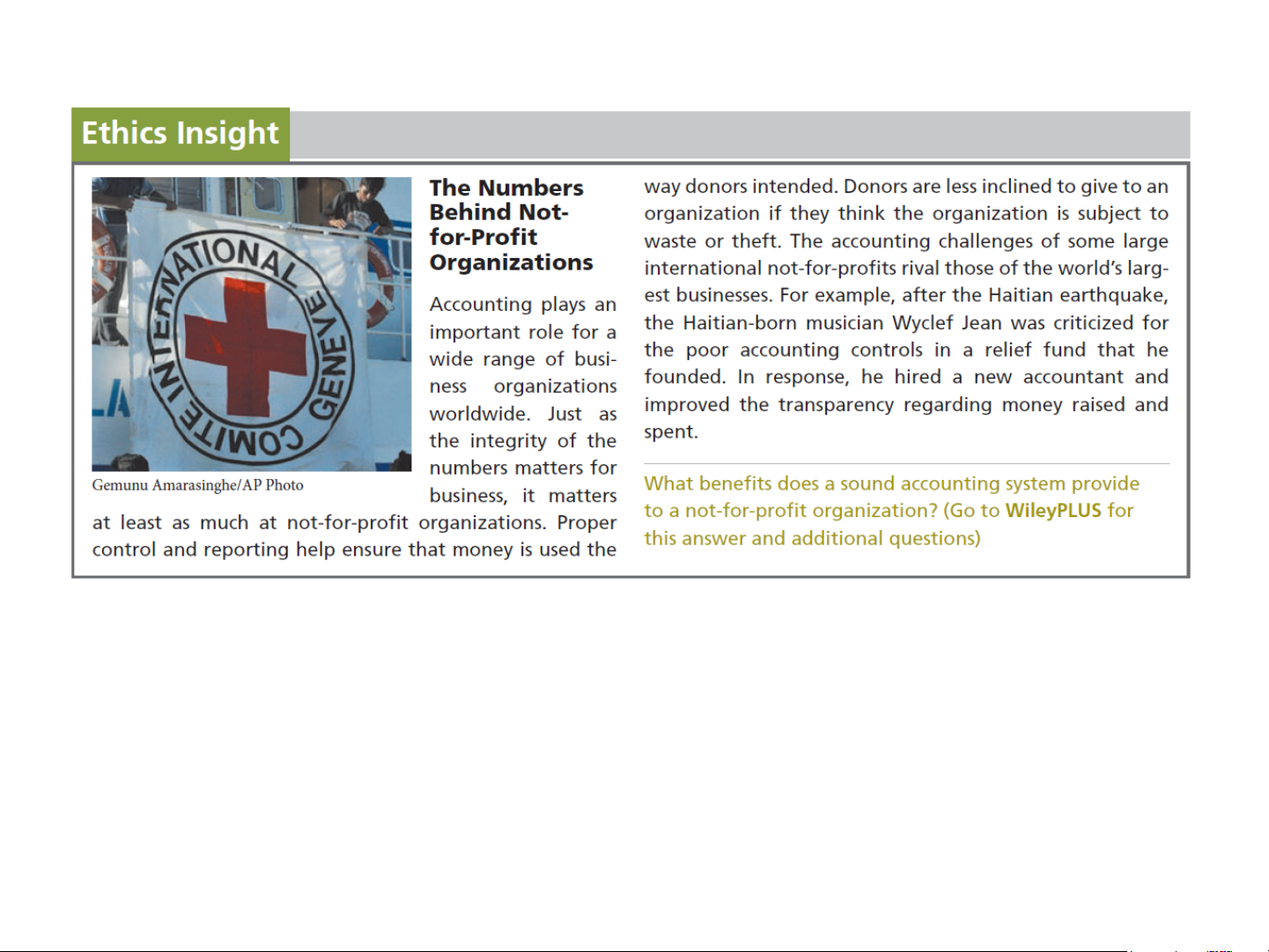
Ethics in Financial Reporting ◆
Recent financial scandals include: Enron, WorldCom,
HealthSouth, AIG, and other companies. ◆
Regulators and lawmakers concerned that economy would
suffer if investors lost confidence in corporate accounting. In response, ►
Congress passed Sarbanes-Oxley Act (SOX). ◆
Effective financial reporting depends on sound ethical behavior. 1-8 LO 2
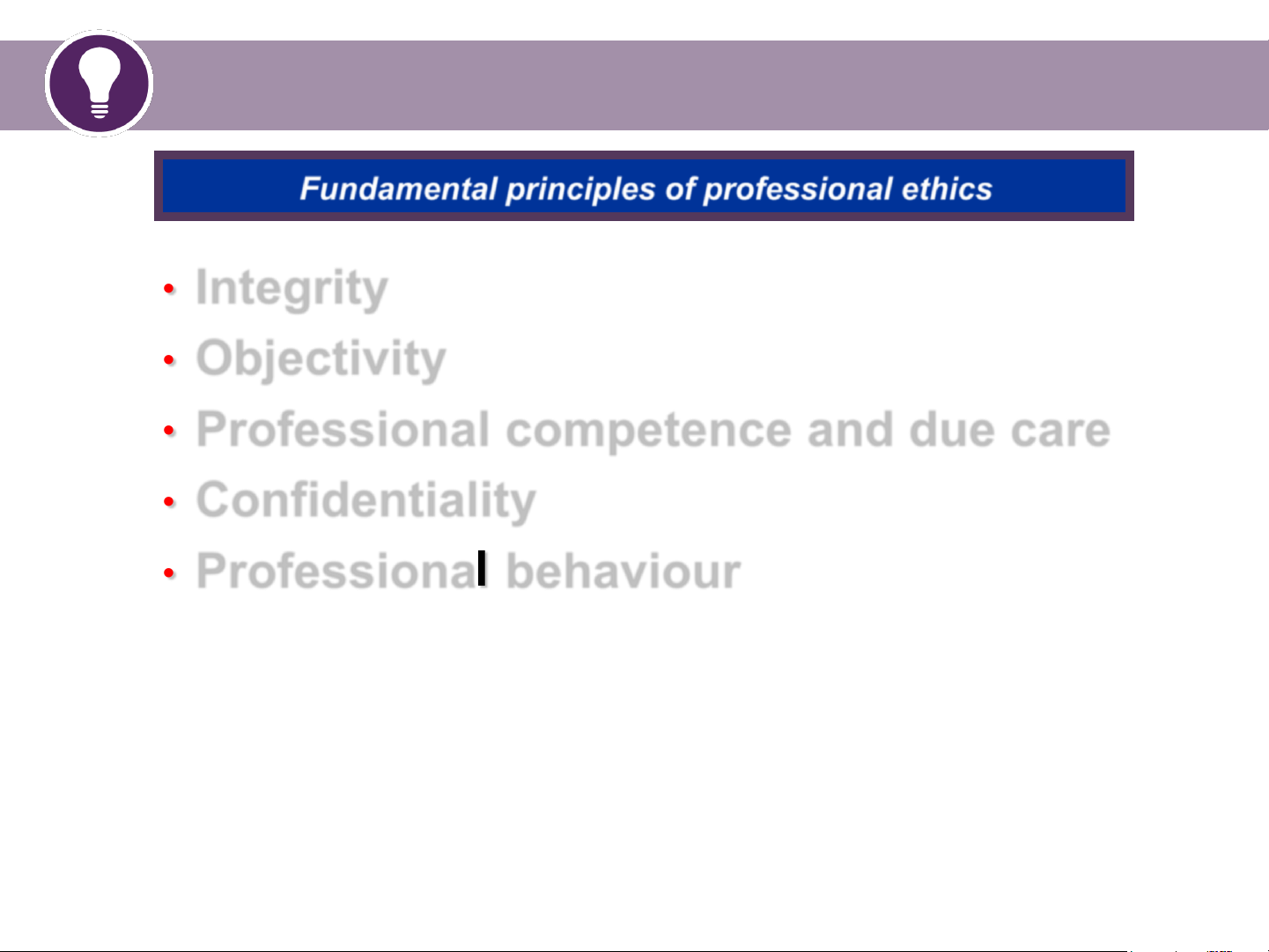
Fundamental principles of professional ethics • Integrity • Objectivity
• Professional competence and due care • Confidentiality
• Professional behaviour 1-9
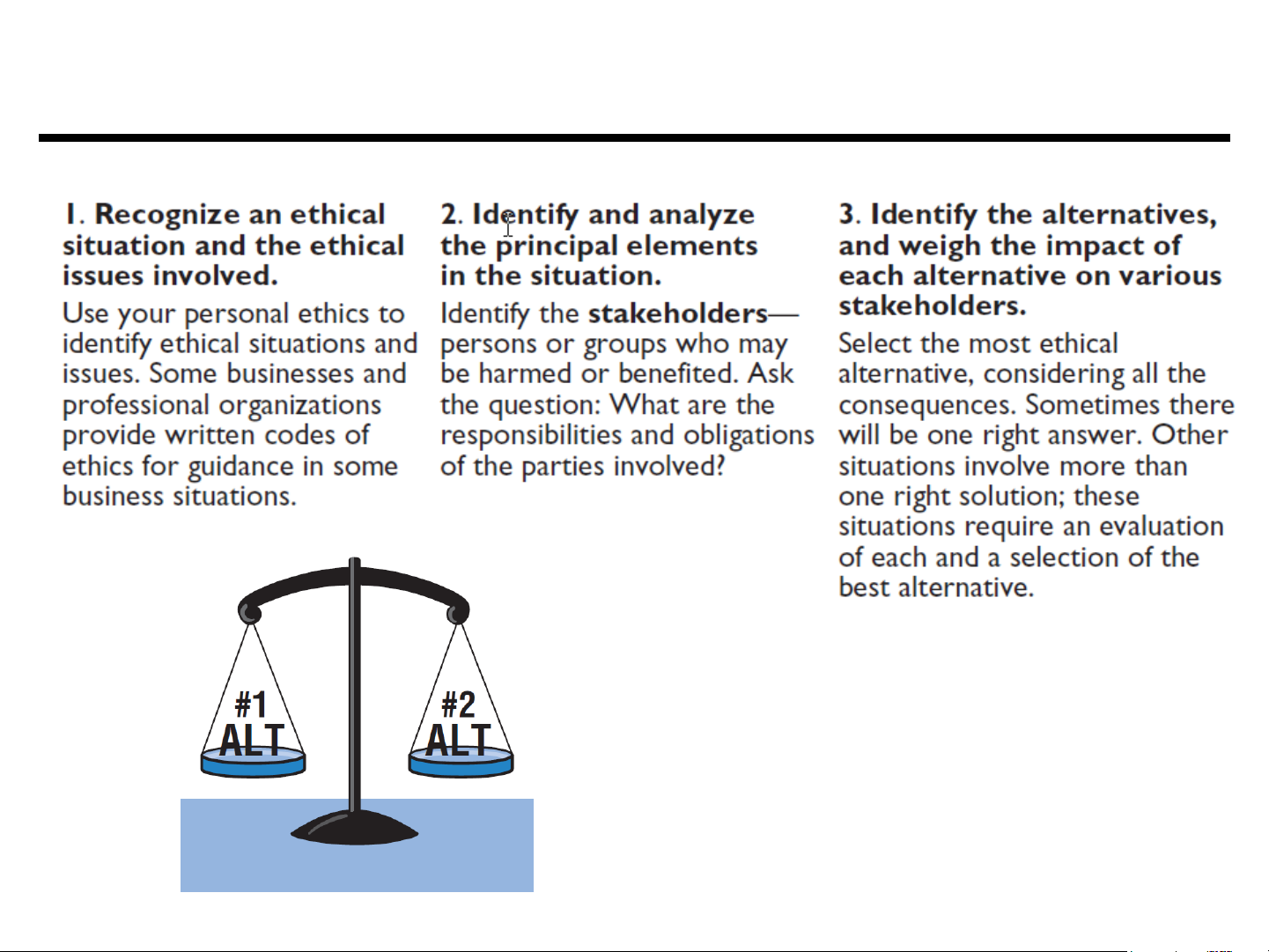
Ethics in Financial Reporting Illustration 1-4
Steps in analyzing ethics cases and situations 1-10 LO 2
Ethics in Financial Reporting Question
Ethics are the standards of conduct by which one's actions are judged as: a. right or wrong. b. honest or dishonest. c. fair or not fair. d. all of these options. 1-11 LO 2 1-12 LO 2
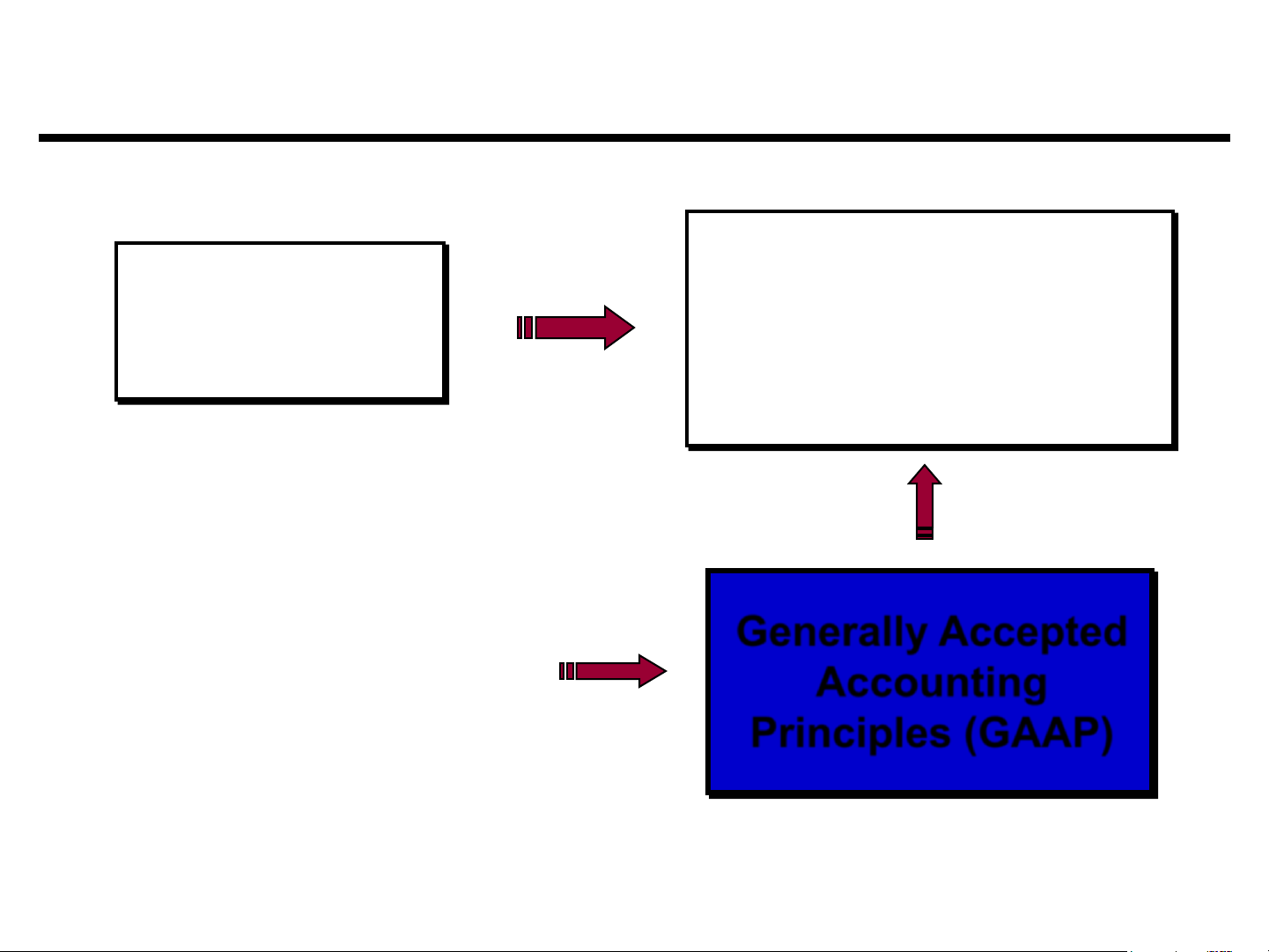
Generally Accepted Accounting Principles Financial Statements Various users ◆ Balance Sheet need financial ◆ Income Statement information
◆ Statement of Stockholders’ Equity ◆ Statement of Cash Flows ◆ Note Disclosure The accounting profession has developed standards Generally Accepted that are generally accepted Accounting Principles (GAAP) and universally practiced. 1-13 LO 2
Generally Accepted Accounting Principles
Generally Accepted Accounting Principles (GAAP) – Standards
that are generally accepted and universally practiced. These
standards indicate how to report economic events.
Standard-setting bodies: ►
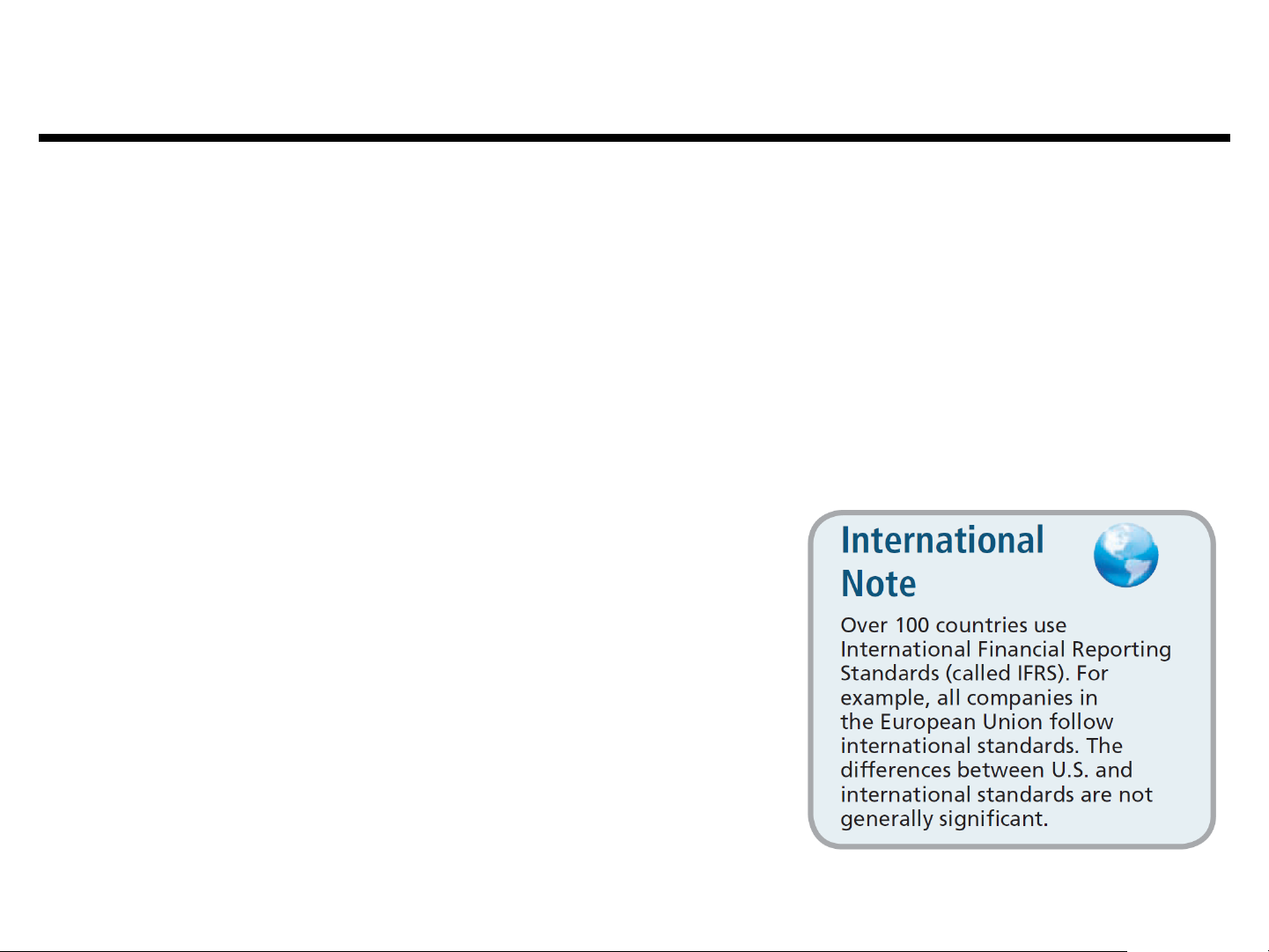
Financial Accounting Standards Board (FASB) ► Securities and Exchange Commission (SEC) ►
International Accounting Standards Board (IASB) 1-14 LO 2 Measurement Principles
HISTORICAL COST PRINCIPLE (or cost principle) dictates
that companies record assets at their cost.
FAIR VALUE PRINCIPLE states that assets and liabilities
should be reported at fair value (the price received to sell an asset or settle a liability).
Selection of which principle to follow
generally relates to trade-offs
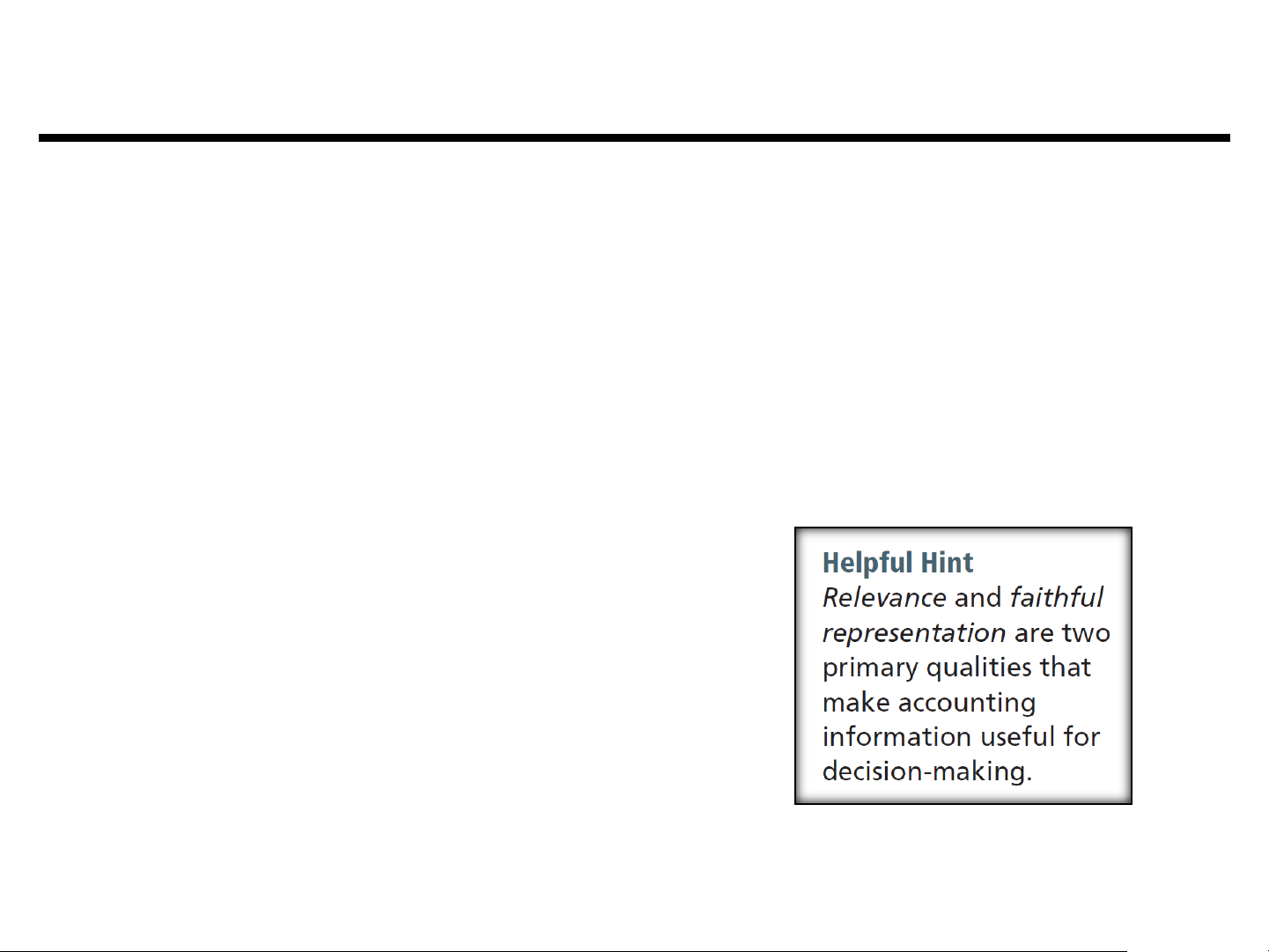
between relevance and faithful representation. 1-15 LO 2 Assumptions
MONETARY UNIT ASSUMPTION requires that companies
include in the accounting records only transaction data that can be expressed in terms of money.
ECONOMIC ENTITY ASSUMPTION requires that activities of
the entity be kept separate and distinct from the activities of its
owner and all other economic entities. ◆ Proprietorship Forms of Business ◆ Partnership Ownership ◆ Corporation 1-16 LO 2
Forms of Business Ownership Proprietorship Partnership Corporation ◆ Owned by one ◆ Owned by two or ◆ Ownership person more persons divided into shares of stock ◆ Owner is often ◆ Often retail and manager/operator service-type ◆ Separate legal businesses entity organized ◆ Owner receives under state any profits, suffers ◆ Generally any losses, and is unlimited corporation law personally liable personal liability ◆ Limited liability for all debts ◆ Partnership agreement 1-17 LO 2 Assumptions Question
Combining the activities of Kellogg and General Mills would violate the a. cost principle.
b. economic entity assumption. c. monetary unit assumption. d. ethics principle. 1-18 LO 2 Assumptions Question
A business organized as a separate legal entity under state
law having ownership divided into shares of stock is a a. proprietorship. b. partnership. c. corporation. d. sole proprietorship. 1-19 LO 2 2
Building Blocks of Accounting
Indicate whether each of the following statements presented below is true or false.
1. Congress passed the Sarbanes-Oxley Act to reduce
unethical behavior and decrease the likelihood of future corporate scandals.
2. The primary accounting standard-setting body in the
United States is the Financial Accounting Standards Board (FASB).
3. The historical cost principle dictates that companies
record assets at their cost. In later periods, however,
the fair value of the asset must be used if fair value is higher than its cost. 1-20 LO 2