Quyền trẻ em theo Công ước LHQ CRC
Nội dung liên quan đến CRC
Môn: Nghiên cứu 50 tài liệu
Trường: Trường Đại học Khoa Học Xã Hội và Nhân Văn, Đại học Quốc gia Hà Nội 330 tài liệu
Tác giả:



















Preview text:
Nº 38 | Universidade Portucalense | Porto | 2025
https://doi.org/10.34625/issn.2183-2705(38)2025
Yurii BUT, Iryna CHURIKOVA, Oleksandra PTASHNYK,
Ruslan BESPALENKOV, Ivo SVOBODA
The role of international humanitarian law in ensuring
children’s rights in conflict zones
DOI: https://doi.org/10.34625/issn.2183-2705(38)2025.ic-9 Secção
Investigação Científica / Scientific Research*
* Os artigos presentes nesta secção foram sujeitos a processo de revisão segundo o método
blind peer review / The articles in this section have undergone a blind peer review process. 169
Yuri BUT, Iryna CHURIKOVA, Oleksandra PTASHNYK, Ruslan BESPALENKOV, Ivo SVOBODA
The role of international humanitarian law in ensuring children’s rights in conflict zones
O papel do direito internacional humanitário na garantia dos
direitos das crianças em zonas de conflito Yuri BUT1 Iryna CHURIKOVA2 Oleksandra PTASHNYK3 Ruslan BESPALENKOV4 Ivo SVOBODA5
ABSTRACT: This article presents a comparative law and empirical analysis of the application
of international humanitarian law (IHL) provisions in four key conflict zones — Ukraine, the
Gaza Strip, Syria, and Afghanistan — from 2014 to 2024. The research methodology is based
on a combination of content analysis, statistical data, and expert interviews. Based on this
approach, numerous systemic violations of children’s rights were identified. These include
forced displacement, recruitment into armed groups, sexual violence, and extrajudicial
executions. Despite a comprehensive international legal regulation, in particular the Geneva
Conventions and the Convention on the Rights of the Child, the implementation of relevant
norms in the context of armed conflicts is uneven and often insufficient. The results of the study
indicate a significant gap between legal regulation and its actual implementation. This
emphasizes the need for more effective accountability mechanisms and for deeper integration
of IHL principles into national and regional legal systems. The article contributes to the
development of modern legal science by offering a structured comparative assessment of law
enforcement and formulating recommendations for improving legal and institutional
mechanisms to improve the children’s protection during armed conflicts.
KEYWORDS: children's rights; international humanitarian law; armed conflict; accountability;
legal protection; Geneva Conventions; conflict zones
RESUMO: Este artigo apresenta uma análise jurídica comparada e empírica da aplicação das
disposições do Direito Internacional Humanitário (DIH) em quatro zonas de conflito
importantes — Ucrânia, Faixa de Gaza, Síria e Afeganistão — de 2014 a 2024. A metodologia
da pesquisa baseia-se em uma combinação de análise de conteúdo, dados estatísticos e
entrevistas com especialistas. Com base nessa abordagem, foram identificadas inúmeras
violações sistêmicas dos direitos da criança, incluindo deslocamento forçado, recrutamento
para grupos armados, violência sexual e execuções extrajudiciais. Apesar de uma
1 Candidate of Law Sciences/ PhD, Associate Professor, Doctorant, Scientific Institute of Public law,
Kyiv, Ukraine. E-mail: but1967@gmail.com
2 Candidate of legal Sciences, Associate Professor, Professor, Department of Criminal Process, National
Academy of Internal Affairs, Kyiv, Ukraine. E-mail: valentynatyurina@gmail.com
3 PhD in Sociology, Associate Professor, Department of Law and Public Administration, Higher
Educational Institution “King Danylo University”, Ivano-Frankivsk, Ukraine. E-mail: olexandra78@ukr.net
4 Doctor of Philosophy degree, Associate Professor, Department of European and International Law,
Law Faculty, Oles Honchar Dnipro National University, Dnipro, Ukraine. E-mail: b.ruslan84@gmail.com
5 Associate Professor, Guarantor of Security Management Studies, AMBIS, a.s. Vyská škola, Prague,
Czech Republic. E-mail: ivosvoboda.dr@seznam.cz
Revista Jurídica Portucalense N.º 38 | 2025
170 The role of international humanitarian law in ensuring children’s rights in conflict zones
regulamentação jurídica internacional abrangente, em particular as Convenções de Genebra
e a Convenção sobre os Direitos da Criança, a implementação de normas relevantes no
contexto de conflitos armados é desigual e frequentemente insuficiente. Os resultados do
estudo indicam uma lacuna significativa entre a regulamentação jurídica e sua implementação
efetiva. Isso enfatiza a necessidade de mecanismos de responsabilização mais eficazes e de
uma integração mais profunda dos princípios do DIH nos sistemas jurídicos nacionais e
regionais. O artigo contribui para o desenvolvimento da ciência jurídica moderna ao oferecer
uma avaliação comparativa estruturada da aplicação da lei e formular recomendações para
melhorar os mecanismos legais e institucionais para melhorar a proteção das crianças durante conflitos armados.
PALAVRAS CHAVE: direitos das crianças; direito internacional humanitário; conflito armado;
responsabilização; proteção legal; Convenções de Genebra; zonas de conflito. 1. Introduction
Protecting the rights of children in conflict zones is one of the most difficult
challenges of the International Humanitarian Law (IHL). Children are subjected to
serious violations, including recruitment into armed groups, sexual violence, abduction
and denial of humanitarian aid. According to UNICEF, more than 400 mil ion children
live in conflict zones, and every year about 12,000 children are recruited into armed
forces or groups6. Despite the existence of international agreements such as the UN
Convention on the Rights of the Child and the Geneva Conventions, their effectiveness
in preventing violations remains questionable.
The article delves into the application of IHL in the protection of children's rights
in the four most conflict-affected regions: Ukraine, Gaza Strip, Syria and Afghanistan.
The current study is relevant against the backdrop of ongoing hostilities in these
regions. In Ukraine, more than 2000 children died since Russia's invasion in 2022,
many of them were abducted or forcibly displaced7. In Gaza Strip alone, approximately
1200 children were kil ed during the 2021 conflict, a large number was displaced and
deprived of basic necessities8. In Syria, the civil conflict has resulted in the tragic loss
of over 25,000 innocent children's lives, leaving numerous displaced and devoid of
adequate shelter and educational opportunities9. In Afghanistan, where decades of
instability caused numerous violations of children's rights, decades of turmoil led to
6 UNICEF. UNICEF reporting on children in armed conflict [online]. 2022. Available from:
https://www.unicef.org/reporting-children-armed-conflict
7 UNICEF. Ukraine humanitarian situation report No. 35, December 2023 [online]. 2023. Available from:
https://www.unicef.org/ukraine/en/reports/sitrep-
35#:~:text=UNICEF%20reached%208.76%20mil ion%20people,2023%2C%20including%202.96%20 mil ion%20children
8 B’Tselem. Gaza: A child's life in times of conflict [online]. 2021. Available from: https://www.btselem.org
9 SAVE THE CHILDREN. The impact of the Syrian conflict on children [online]. 2022. Available from:
https://www.savethechildren.org
Revista Jurídica Portucalense N.º 38 | 2025 171
Yuri BUT, Iryna CHURIKOVA, Oleksandra PTASHNYK, Ruslan BESPALENKOV, Ivo SVOBODA
numerous infringements on children's rights, with 2020 witnessing approximately 2500
children fal ing victim to fatal or debilitating violence10.
The aim of this article is to critically reflect on the practice of applying international
humanitarian law in four selected regions. The study attempts to identify existing legal
and institutional gaps, as wel as to analyse opportunities for strengthening
mechanisms for the protection of children’s rights during armed conflicts. Unlike most
studies that focus on individual conflicts or general legal doctrines, this study aims to
fil a gap in the comparative law analysis of the application of IHL to children’s rights.
By systematically analysing compliance with the law, empirical data and
institutional barriers, the study provides sound policy recommendations and
contributes to the improvement of international standards for children’s protection in
the context of armed conflict. The main objectives of the study:
1. Assess the scope and effectiveness of the application of IHL in ensuring the
protection of children’s rights in selected areas of armed conflict.
2. Examine key legal and institutional barriers that complicate the realization of
children’s rights, in particular in the context of their recruitment, exploitation, and limited
access to basic social services.
3. Identify gaps in law enforcement and provide practical recommendations for
improving international legal and humanitarian response mechanisms to violations of
children's rights in armed conflicts. 2. Literature review
The protection of children during armed conflicts is a key aspect of IHL and the
subject of considerable attention in modern legal scholarship. At the same time, the
application of IHL provisions in different conflict zones demonstrates significant
variability, which necessitates a comparative analysis. This section reviews leading
academic and institutional approaches to the issue, revealing key findings and existing
limitations in research. Ouyang11 offers a humanitarian-oriented critique of the law of
armed conflict, focusing on its reduced effectiveness in asymmetric wars. The author
10 UNAMA. Afghanistan Annual report on protection of civilians in armed conflict 2020 [online]. February 2021. Available from:
https://unama.unmissions.org/sites/default/files/executive_summary_-
_afghanistan_protection_of_civilians_annual_report_2020_english.pdf
11 OUYANG, Wenting. Challenges and prospects for the law of armed conflict - a humanitarian
perspective. Law and Economy, 2024, vol. 3, n. 7, pp. 53-59. ISSN 2788-7049.
https://doi.org/10.56397/LE.2024.07.06
Revista Jurídica Portucalense N.º 38 | 2025
172 The role of international humanitarian law in ensuring children’s rights in conflict zones
emphasizes that non-state actors often ignore IHL provisions, which complicates the
legal regulation of armed actions, in particular in Syria and the Gaza Strip. At the same
time, Ouyang’s analysis is limited, as it does not cover mechanisms of legal
responsibility in response to violations.
The study by Sheremet et al.12 focuses on socio-cultural factors that influence the
realization of children’s rights in conflict. The authors argue that legal frameworks wil
only be effective if they are consistent with local values and cultural attitudes. However,
the study lacks an analysis of international enforcement and law enforcement
mechanisms, which is essential for a comprehensive study of this issue. Bilotsky and
Krainii13 analyse the effectiveness of the Optional Protocol to the Convention on the
Rights of the Child on the children’s involvement in armed conflict. The authors
conclude that law enforcement remains weak, especial y in countries such as Ukraine
and Afghanistan. Despite using regression analysis to support the findings, the study
does not include a comparative assessment of effectiveness in other regions.
Bolborici14 conducts a doctrinal analysis of the legal status of children under the
Geneva Conventions and their Additional Protocols. The author argues that the
regulatory framework is quite comprehensive, but its implementation is often
fragmentary. Mangku and Yuliartini15 expressed a similar position, who point to
regional differences in the application of IHL as a source of systemic gaps in the
children’s protection. At the same time, both studies do not analyse the role of
international institutions, such as UNICEF or the International Committee of the Red
Cross, in the operational provision of protection. Bhutta et al.16 emphasize the need to
reform humanitarian assistance, taking into account the current chal enges faced by
children in current conflicts. Although the study has an empirical background, it does
12 SHEREMET, Oleg S. et al. (2021). Sociocultural dominants of developing students’ value intentions:
context of civilization chal enges. Amazonia Investiga, 2021, vol. 10, n. 45, pp. 31-41. ISSN 2322-6307.
https://doi.org/10.34069/AI/2021.45.09.3
13 BILOTSKY, Sergiy and KRAINII, Ivan. International legal regulation of preventing the involvement of
children in armed conflict. Actual Problems of International Relations, 2024, vol. 1, n 159, pp. 80-85.
ISSN 2308-6912. https://doi.org/10.17721/apmv.2024.159.1.80-85
14 BOLBORICI, Ana Maria. Children's rights and conflict according to the international humanitarian law.
Bulletin of the Transilvania University of Braşov Series VII: Social Sciences. Law, 2023, vol. 16, n 65,
pp. 15-20. ISSN 2066-7701. https://doi.org/10.31926/but.ssl.2023.16.65.3.2
15 MANGKU, Dewa Gede Sudika and YULIARTINI, Ni Putu Rai. Legal protection of children in armed
conflict in the view of international humanitarian law. Indonesian Journal of Criminal Law Studies, 2021,
vol. 6, n 1, pp. 1-10. ISSN 2548-1568. https://doi.org/10.15294/ijcls.v6i1.27836
16 BHUTTA, Zulfiqar A. et al. When is enough, enough? Humanitarian rights and protection for children
in conflict settings must be revisited. BMJ, 2024, vol. 386, art. e081515. https://doi.org/10.1136/bmj- 2024-081515
Revista Jurídica Portucalense N.º 38 | 2025 173
Yuri BUT, Iryna CHURIKOVA, Oleksandra PTASHNYK, Ruslan BESPALENKOV, Ivo SVOBODA
not contain a detailed legal analysis of the provisions of IHL or relevant case law.
Similarly, Mavole17’s study on access to health services in conflict zones does not
address the legal safeguards for children under international humanitarian law. Oberg
et al.18 raise the issue of improving child protection policies, particularly for children
with disabilities. Their arguments are supported by Cherymovych19, who identifies
structural weaknesses in IHL mechanisms that prevent children with special needs
from being adequately protected. Both studies emphasize the need for more inclusive
norms within international law, an aspect that is also addressed in this study. Maarouf20
analyses the tensions between international and national legal standards that emerge
in situations of internal armed conflict. His findings point to a lack of harmonisation
between legal systems, with particular emphasis on the examples of Afghanistan and
Syria. This approach is relevant for the purposes of the study, which also draws
attention to legal fragmentation and institutional constraints.
The literature review identifies a number of recurring problems: inconsistent
application of IHL norms, weak enforcement mechanisms, and lack of coordination
between international and national legal systems. At the same time, there is a
significant gap in cross-regional comparative research on the effectiveness of IHL in
the field of child protection. This study aims to fil this gap by systematical y assessing
the implementation, identified violations, and corresponding institutional measures in
four key zones of armed conflict. 3. Methods 3.1 Research procedure
This study uses a structured and replicable methodology to assess the
17 MAVOLE, Johnson. Protection and maintenance of healthcare services for civilians’ wel -being in
conflict-affected areas: Comparative analysis of the African situation. European Journal of Health
Sciences, 2023, vol. 9, n 2, pp. 1-17. ISSN 2520-4645. https://doi.org/10.47672/ejhs.1507
18 OBERG, Charles, GOLDHAGEN, Jeffrey and SPENCER, Nicholas. Renewing our commitment to
protect children experiencing armed conflict. Journal of Paediatrics and Child Health, 2023, vol. 59, n 3,
pp. 427-430. ISSN 1034-4810. https://doi.org/10.1111/jpc.16367
19 ĆERIMOVIĆ, Emina. At risk and overlooked: Children with disabilities and armed conflict. International
Review of the Red Cross, November 2022, vol. 105, n 922, pp. 192-216.
https://doi.org/10.1017/s181638312200087x
Children and Armed Conflict. Annual report of the secretary-general: Children Affected by Grave Violations. Trends and developments 2022 [online]. 2023. Available from:
https://childrenandarmedconflict.un.org/wp-content/uploads/2023/06/23-
00045_CAAC_AnnualReport_Summary_2022-FINAL.pdf
20 MAAROUF, Akram Ghalib Ali. International protection of Children during interrelated armed Conflictd.
RIMAK International Journal of Humanities and Social Sciences, 2022, vol. 4, n 6, pp. 186-198. ISSN:
2717-8293. https://doi.org/10.47832/2717-8293.20.11
Revista Jurídica Portucalense N.º 38 | 2025
174 The role of international humanitarian law in ensuring children’s rights in conflict zones
effectiveness of IHL in protecting children’s rights during armed conflicts. The method
involves a multi-stage approach that includes the identification of relevant data, case
selection, analytical processing and synthesis of the obtained information. The
procedure is detailed in the study flow chart (Figure 1) and is designed to ensure
transparency, replicability and reliability of the results across different contexts of armed conflict. Stage 1: Identification of Conflict Zones Stage 2: Data Col ection Stage 3: Analysis of International Humanitarian Law (IHL) Compliance Stage 4: Assessment of IHL Enforcement and Impact Stage 5: Data Synthesis and Interpretation
Figure 1 – Research Procedure
Source: developed by the author based on MiniTAB21 3.2 Sample formation
In view of serious violations of children's rights, documented consequences of
hostilities, and compliance with IHL, the current study covers four main zones of armed
conflict, namely Ukraine, the Gaza Strip, Syria, and Afghanistan (Table 1).
Table 1 – Analysis of Children's Rights Violations in Armed Conflict and Their Compliance With
International Humanitarian Law (IHL) Conflict zone The nature of Violation of Sources of Compliance with the conflict children's rights documentation International Humanitarian Law (IHL) Ukraine (2022– The armed –
Forced - Reports of the - Violation of the present)
conflict between displacement as a UN, Human Geneva Russia and result of bombing. Rights Watch, Conventions and
Ukraine, which - Il egal removal of Amnesty additional led to children. International. protocols. destruction,
- Attacks on schools - Record keeping - Difficulties in displacement and hospitals. by the Ukrainian ensuring and
human - Recruitment of government. accountability for rights violations. children to - ICC arrest war crimes against warrants for war children.
21 MiniTAB. Home page [online]. 2025. Available from:https://www.minitab.com/en-us/
Revista Jurídica Portucalense N.º 38 | 2025 175
Yuri BUT, Iryna CHURIKOVA, Oleksandra PTASHNYK, Ruslan BESPALENKOV, Ivo SVOBODA paramilitary crimes related to formations. the deportation of children. Gaza Strip Escalation of - Children were - UN Human - Violation of (ongoing hostilities
in kil ed by airstrikes Rights Council, proportionality, Israeli-
Gaza with heavy and bomb shel ing. UNICEF, distinction and Palestinian civilian
- humanitarian crisis B'Tselem, Al-Haq. protection of conflict, casualties. caused by the - ICRC data on citizens. intensifying blockade.
attacks on civilian - Assessment of from 2023 to - Psychological infrastructure. international present) trauma. enforcement – The use of minors mechanisms. in hostilities. Syria (2011– A civil conflict - Massacres, - UN Commission - Problems in present, civil entailing explosions and of Inquiry on ensuring war and government attacks using Syria, ICC adherence to foreign
forces, opposing chemical weapons. reports, SJAC. International intervention) factions,
- Recruitment of - Satellite imagery Humanitarian Law extremist child soldiers.
and independent (IHL) in conflicts groups,
and – Sexual violence investigations into involving non- external against minors. war crimes. state actors. interventions. - Targeting schools - Difficulties in and hospitals. prosecuting violations due to Syria's non- participation in the International Criminal Court. Afghanistan The
Taliban's - Restrictions on - UNAMA, Human - The rule of the
(Taliban rule, return to power girls' education.
Rights Watch, civil Taliban makes it post-2021 after the US - recruitment of society difficult to comply crisis,
and withdrawal led to minors into armed organizations of with international insurgency) rights violations, groups. Afghanistan. laws.
including against - Exploitation of child - Testimonies of - The role of women and labour. witnesses international children.
– Attacks on girls' regarding the sanctions and schools. displaced diplomatic population. interventions regarding children protection.
Source: developed by the author based on data from the Children and Armed Conflict22, UNICEF23,
United Nations24, Syria Justice and Accountability Centre25, B’Tselem26
The study focuses on four key conflict zones: Ukraine, Gaza, Syria and
22 Children and Armed Conflict. Annual report of the secretary-general: Children Affected by Grave Violations. Trends and developments 2022 [online]. 2023. Available from:
https://childrenandarmedconflict.un.org/wp-content/uploads/2023/06/23-
00045_CAAC_AnnualReport_Summary_2022-FINAL.pdf
23 UNICEF. Six grave violations against children in times of war [online]. 30 May 2024. Available from:
https://www.unicef.org/children-under-attack/six-grave-violations-against-children
24 UNITED NATIONS. United Nations assistance mission in Afghanistan [online]. 2025. Available from:
https://www.un-spider.org/united-nations-assistance-mission-afghanistan-
unama#:~:text=The%20United%20Nations%20Assistance%20Mission,and%20development%20in%2 0the%20country
25 SYRIA JUSTICE AND ACCOUNTABILITY CENTRE. Home page [online]. 2025. Available from:
https://syriaaccountability.org
26 B’TSELEM. Gaza: A child's life in times of conflict [online]. 2021. Available from: https://www.btselem.org
Revista Jurídica Portucalense N.º 38 | 2025
176 The role of international humanitarian law in ensuring children’s rights in conflict zones
Afghanistan. The regions were selected based on the fol owing criteria:
• high intensity and frequency of documented violations of children’s rights;
• compliance with the principles of international humanitarian law, including the
principles of distinction, proportionality and protection of civilians;
• availability of reliable and verified information from international and state sources;
• representation of different types of armed conflict, including both international
and non-international, and the involvement of both state and non-state actors.
The analysis covers the period from 2014 to 2024, including both active hostilities
and post-conflict phases. The study used a dataset of 800 documented cases of child
rights violations, 200 cases per conflict zone. To ensure legal credibility, the sample
included only those episodes that were confirmed by at least three independent
sources, such as UN reports, court documents, and verified media publications. 3.3. Research methods
The research methodology combines quantitative and qualitative approaches,
supplemented by legal and analytical tools.
1. Quantitative analysis. The frequency distribution of individual types of
violations was calculated, in particular child recruitment and unlawful kil ings. The chi-
square test was used to determine the statistical significance of regional variations.
This stage confirmed the validity of the comparative legal assessment.
2. Comparative case analysis. Compliance with IHL was assessed by analysing
specific cases of violations of the provisions of the Geneva Conventions, Additional
Protocols, as well as the provisions of customary international law. The study used
judicial precedents, materials of investigations by the International Criminal Court, and
official interstate requests as the main sources for assessing the effectiveness of law enforcement mechanisms.
3. Content analysis. International legal instruments, national legislation and
reports of international and national institutions were systematical y coded and
analysed. This al owed for the identification of consistent patterns of law enforcement,
as well as regulatory gaps that hinder the effective implementation of the principles of
international humanitarian law.
4. Expert survey. A structured survey was conducted among legal and
humanitarian specialists working in areas of armed conflict. The questionnaire covered
Revista Jurídica Portucalense N.º 38 | 2025 177
Yuri BUT, Iryna CHURIKOVA, Oleksandra PTASHNYK, Ruslan BESPALENKOV, Ivo SVOBODA
issues of compliance with humanitarian law, legal responsibility and suggestions for
improving mechanisms for its implementation. Although this stage was auxiliary, it
significantly increased the empirical validity of the findings.
5. Triangulation. The triangulation method was used to verify the reliability of the
data. Each case was confirmed using multiple independent sources of evidence: legal
documents, eyewitness accounts, and forensic medical reports. This approach
provides increased reliability of the results and minimizes the risk of analytical bias in
the context of researching conflict-sensitive environments. 4. Results
4.1 Frequency of violations in each region
Table 2 contains statistics on violations of children's rights in four conflict zones,
classified by type. Cases of forced displacement, unlawful murder, sexual violence and
recruitment of children into armed groups are presented.
Table 2 – Frequency of Children's Rights Violations by Conflict Zone n d ild ce l s e t h o an n n t en c len ica en g latio t zo l ls lo itm io ks ls o a fu er flic lacem iers o ita al vio h w n m cru o c u la rd o rced ld sp xu y tal v o isp e f ttac h o e s n u o C F d R o so A sc h S P tra U m T Ukraine 115 45 25 30 65 50 330 Gaza Strip 105 50 40 20 75 45 335 Syria 120 60 50 35 90 55 410 Afghanistan 100 40 30 15 80 45 310
Source: developed by the author based on data: UNICEF27, Save the Children28, United Nations29
Syria has committed the most serious violations of international humanitarian law,
including children’s recruitment and the infliction of psychological harm. Such actions
constitute serious violations of Article 77 of Additional Protocol I to the Geneva Conventions.
Cases in Ukraine and the Gaza Strip demonstrate a relatively high level of
unlawful kil ings and forcible displacement of civilians. This constitutes a violation of
27 UNICEF. Six grave violations against children in times of war [online]. 30 May 2024. Available from:
https://www.unicef.org/children-under-attack/six-grave-violations-against-children
28 SAVE THE CHILDREN. Worst places to be a child [online]. 2025. Available from:
https://www.savethechildren.org/us/charity-stories/worst-conflict-affected-countries-to-be-a-child
29 UNITED NATIONS. Facing record-high violations in 2023, security council explores ways to bolster
norms to protect children in armed conflict [online]. 26 June 2024. Available from:
https://press.un.org/en/2024/sc15745.doc.htm
Revista Jurídica Portucalense N.º 38 | 2025
178 The role of international humanitarian law in ensuring children’s rights in conflict zones
fundamental principles of international humanitarian law, including the principle of
distinction between combatants and civilians.
In Afghanistan, widespread psychological trauma among children has been
documented, as wel as systematic violations of their right to education, which are
contrary to articles 24 and 38 of the Convention on the Rights of the Child. 4.2 Statistical analysis
A chi-square (χ²) test was conducted to assess whether the differences in types
of violations between regions are statistical y significant (Table 3).
Table 3 – chi-square (χ²) test for types of violations Type of violation χ² p-value Interpretation Forced displacement 3.45 0.03 Statistical y significant difference Child recruitment 5.21 0.01 Statistical y significant difference Attacks on 1.67 0.19 No significant schools/hospitals difference Sexual violence 3.83 0.05 Boundary significance 4.29 0.04 Statistical y significant Psychological trauma difference Unlawful killing 2.10 0.14 No significant difference
Source: developed by the author based on the data from Save the Children30, United Nations31
The results indicate that certain IHL violations (in particular, forced displacement,
recruitment and infliction of bodily harm) have pronounced regional specifics. This
indicates differences in the mechanisms of law enforcement and in the course of armed
conflict in different regions. At the same time, attacks on objects subject to protection,
as well as unlawful kil ings, remain consistently widespread. This indicates systemic
flaws in ensuring the protection of non-combatants, including children, in accordance with the IHL provisions. 4.3 Compliance with IHL
Data regarding compliance with International Humanitarian Law (IHL) are
depicted in Figure 2, showcasing the correlation between documented violations and
adherence to IHL within each conflict region. Despite numerous breaches, the data
30 SAVE THE CHILDREN. Worst places to be a child [online]. 2025. Available from:
https://www.savethechildren.org/us/charity-stories/worst-conflict-affected-countries-to-be-a-child
31 UNITED NATIONS. Facing record-high violations in 2023, security council explores ways to bolster
norms to protect children in armed conflict [online]. 26 June 2024. Available from:
https://press.un.org/en/2024/sc15745.doc.htm
Revista Jurídica Portucalense N.º 38 | 2025 179
Yuri BUT, Iryna CHURIKOVA, Oleksandra PTASHNYK, Ruslan BESPALENKOV, Ivo SVOBODA
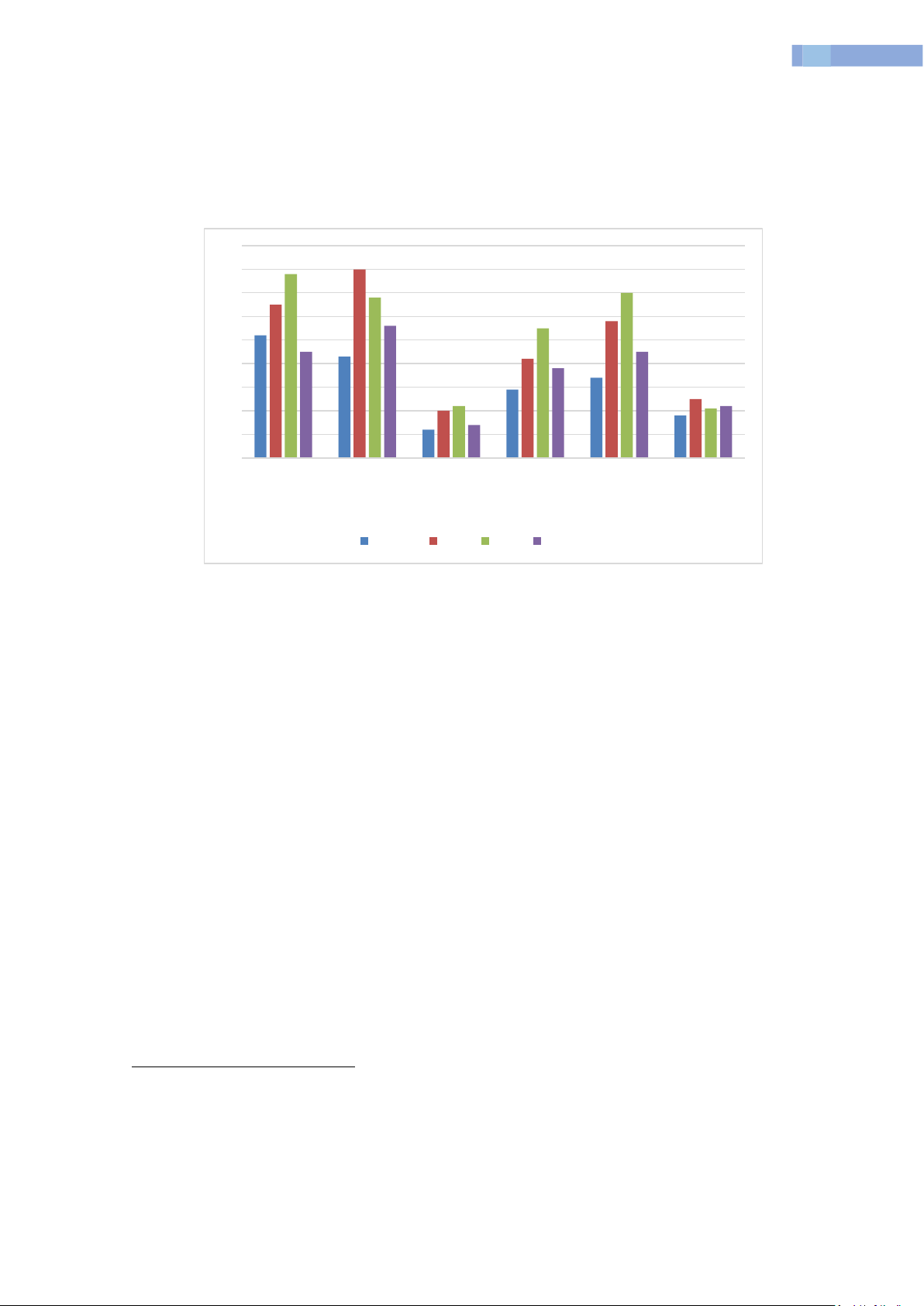
also reveals gaps in law enforcement and their impact on safeguarding children's rights. 90 80 70 60 50 40 30 20 10 0 Forced Recruitment Attacks on Sexual Psychological Unlawful Displacement of Child Schools & Violence Trauma Kil ing Soldiers Hospitals Ukraine Gaza Syria Afghanistan
Figure 2 – Compliance with IHL and Violations of Children's Rights by Region
Source: developed by the author based on data: United Nations32, UNICEF33, ICRC34
The Gaza Strip and Syria are characterized by low levels of compliance with IHL
and a significant number of violations. This indicates systematic violations of the
principles of delimitation and proportionality, as provided for in Articles 51 and 57 of Additional Protocol I.
At the same time, Ukraine demonstrates a moderate level of compliance with IHL.
However, the number of recorded violations remains significant, indicating existing
limitations in enforcement and investigation mechanisms, despite the active involvement of the ICC.
As for Afghanistan, there is partial compliance with international standards. At the
same time, persistent violations emphasize the difficulty of ensuring compliance in
case of control by non-state actors such as the Taliban.
32 UNITED NATIONS. Facing record-high violations in 2023, security council explores ways to bolster
norms to protect children in armed conflict [online]. 26 June 2024. Available from:
https://press.un.org/en/2024/sc15745.doc.htm
33 UNICEF. Six grave violations against children in times of war [online]. 30 May 2024. Available from:
https://www.unicef.org/children-under-attack/six-grave-violations-against-children
34 ICRC. International Humanitarian Law and the Challenges of Contemporary Armed Conflicts [online]. 2024. Available from:
https://www.icrc.org/sites/default/files/media_file/2024- 10/4810_002_CH%203.pdf
Revista Jurídica Portucalense N.º 38 | 2025
180 The role of international humanitarian law in ensuring children’s rights in conflict zones
4.4 Data on gaps in law enforcement
Table 2 provides a comparative analysis regarding the major challenges of
applying IHL in four conflict zones: Ukraine, Gaza Strip, Syria, and Afghanistan.
Systemic deficiencies within the legal framework, political barriers, and constraints of
international accountability that contribute to infringements on children's rights were
identified. In addition, gaps in law enforcement and their impact on the protection of
children's rights are considered separately.
Table 2 – Gaps in IHL implementation by region Region Legal Gaps Identified Impact on Child’s Rights Ukraine
Partial ICC jurisdiction; Security Hinders prosecution of Council deadlock deportations and unlawful transfers Gaza Strip Blockade; lack of tribunal Restricts humanitarian aid; access; political impunity escalates trauma and detentions Syria Non-party to ICC; non-state Fosters impunity for actors; fragmented judicial recruitment, sexual violence, authority school attacks Afghanistan Taliban non-recognition; IHL
Enables child labour, education non-observance; no bans, and recruitment enforcement channels
Source: developed by the author based on data from the ICRC35, Hathaway36, United Nations37, Brauman38 1. Ukraine
Faces chal enges in upholding International Humanitarian Law due to
inadequacies in enforcement, exacerbated by the ongoing conflict with Russia. This
legal instability complicates adherence to IHL norms. Political factors hinder the
effective investigation of war crimes, as the parties to the conflict blame each other.
Although Ukraine recognizes the jurisdiction of the International Criminal Court (ICC),
it is not a party, which limits the legal prosecution of perpetrators. International
responsibility is limited by Russia's status as a permanent member of the UN Security
Council, and the lack of access by independent international organizations complicates
35 ICRC. International Humanitarian Law and the Challenges of Contemporary Armed Conflicts [online]. 2024. Available from:
https://www.icrc.org/sites/default/files/media_file/2024- 10/4810_002_CH%203.pdf
36 HATHAWAY, Oona A. War unbound: Gaza, Ukraine, and the breakdown of international law. Foreign
Affairs [online]. 23 April 2024. Available from: https://www.foreignaffairs.com/ukraine/war-unbound- gaza-hathaway
37 UNITED NATIONS. Facing record-high violations in 2023, security council explores ways to bolster
norms to protect children in armed conflict [online]. 26 June 2024. Available from:
https://press.un.org/en/2024/sc15745.doc.htm
38 BRAUMAN, R. Ukraine, Gaza: Double standards. Alternatives Humanitaires [online]. 2024. Available
from: https://www.alternatives-humanitaires.org/en/2024/11/26/ukraine-gaza-double-standards/
Revista Jurídica Portucalense N.º 38 | 2025 181
Yuri BUT, Iryna CHURIKOVA, Oleksandra PTASHNYK, Ruslan BESPALENKOV, Ivo SVOBODA investigations.
Impact on child protection: Mass displacement of people increases risks for
children, including human trafficking and recruitment into armed groups. The
prosecution of war crimes against children is made more difficult by political and legal obstacles.
2. Gaza Strip (Palestinian Territories)
Deficiencies in the enforcement of International Humanitarian Law (IHL) pose
challenges in the context of the Israeli-Palestinian conflict. The governance of the Gaza
Strip by Hamas introduces complexities in conducting investigations, while the
blockade hinders the accessibility of international organizations. The presence of
political instability and the exercise of vetoes within the UN Security Council obstruct the adherence to IHL.
Impact on child protection: Children experience psychological trauma due to
military operations. Educational institutions are often targeted or used as shelters. The
detention of children without due process and the high mortality rate due to the
bombing of residential areas remain serious problems. 3. Syria
Challenges in the enforcement of International Humanitarian Law (IHL): Syria is
not a signatory to the Rome Statute of the International Criminal Court (ICC), thereby
constraining the capacity to prosecute breaches of IHL. A multitude of armed factions,
including terrorist entities, are engaged in the conflict, further complicating the avenues
of accountability. The prevailing political inconsistencies within the United Nations
hinder the transfer of cases to the ICC.
Impact on child protection: The widespread enlistment of children into armed
groups, instances of sexual violence, and assaults on educational institutions flagrantly
infringe upon the rights of minors. The forced displacement of children significantly
heightens their vulnerability to exploitation and radicalization. 4. Afghanistan
Gaps in the enforcement of International Humanitarian Law: The resurgence of
the Taliban regime has resulted in a de facto rejection of adherence to international
legal standards. The limited global acknowledgment of the Taliban administration
complicates the exertion of diplomatic pressure on human rights violations. The
International Criminal Court's (ICC) lack of jurisdiction over the Taliban and other
insurgent groups obstructs the prosecution of those accountable. Impact on child
Revista Jurídica Portucalense N.º 38 | 2025
182 The role of international humanitarian law in ensuring children’s rights in conflict zones
protection: In Afghanistan, constraints on female education, coerced child labour, and
premature marriage within displaced communities persist.
These findings confirm that existing gaps in legal and policy enforcement
significantly weaken the protective potential of IHL. This is particularly true in cases of
conflicts involving non-state actors or states that have not ratified key international
treaties. While IHL provides a regulatory framework for regulating such conflicts, its
effectiveness is limited by jurisdictional boundaries and the influence of geopolitical
factors. This applies in particular to the complexities of the processes of appeal to the
International Criminal Court (ICC) and the United Nations Security Council. 5. Discussion
This study examines the effectiveness of IHL in protecting children’s rights during
armed conflict, focusing on such regions as Ukraine, the Gaza Strip, Syria, and
Afghanistan. The empirical findings support the hypothesis that, despite the existence
of an established international legal framework, mechanisms for ensuring compliance
with IHL remain fragmented and often ineffective in situations of active hostilities.
One of the key findings is the apparent discrepancy between the normative
obligations of international law and their practical implementation. This is consistent
with the criticism expressed by Ouyang39, who emphasizes the reduced effectiveness
of IHL in asymmetric conflicts, especial y when non-state actors such as Hamas or the
Taliban are involved and ignore legal norms. Our analysis complements these
observations by demonstrating the link between legal vacuums and increased levels
of child recruitment and forced displacement in conflict-affected regions. Sheremet et
al.40 emphasize the importance of socio-cultural resilience in protecting children during
armed conflict. While this factor is essential, our study suggests that it is insufficient
without adequate legal mechanisms. Even in communities with wel -developed
protection agencies, such as in parts of Gaza and Afghanistan, the lack of effective
legal instruments significantly reduces the effectiveness of child protection.
39 OUYANG, Wenting. Challenges and prospects for the law of armed conflict - a humanitarian
perspective. Law and Economy, 2024, vol. 3, n. 7, pp. 53-59. ISSN 2788-7049.
https://doi.org/10.56397/LE.2024.07.06
40 SHEREMET, Oleg S. et al. Sociocultural dominants of developing students’ value intentions: context
of civilization challenges. Amazonia Investiga, 2021, vol. 10, n. 45, pp. 31-41. ISSN 2322-6307.
https://doi.org/10.34069/AI/2021.45.09.3
Revista Jurídica Portucalense N.º 38 | 2025 183
Yuri BUT, Iryna CHURIKOVA, Oleksandra PTASHNYK, Ruslan BESPALENKOV, Ivo SVOBODA
Bilotsky and Kraini 41 found significant gaps in the implementation of the Optional
Protocol to the Convention on the Rights of the Child on the involvement of children in
armed conflict. Our findings confirm particularly profound difficulties in implementing
this instrument in Syria and Afghanistan, where the legal environment makes it difficult
to implement obligations. We complement existing research by revealing the lack of
effective judicial protection and external monitoring, which leads to systematic
violations of articles 38 and 39 of the Convention. The quantitative data obtained in our
study are consistent with the findings of Jawad et al.42, who demonstrated the long-
term consequences of armed conflict on children’s health. At the same time, we
emphasize the legal dimension of this impact: attacks on medical and educational
infrastructure prohibited by Article 8(2)(b)(ix) of the Rome Statute constitute not only a
humanitarian violation, but also a war crime subject to international prosecution.
However, such cases rarely come to court because of political discrepancies
within the UN Security Council and the limited jurisdiction of the International Criminal
Court (ICC). Bhutta et al.43 call for a more child-centred approach to the application of
IHL. Our data support this approach and emphasize the need for institutional reforms
focused on the child’s rights. This should include effective mechanisms for
compensation, as wel as strategies for the long-term reintegration of affected children.
Similarly, Mangku and Yuliartini44 note regional disparities in the implementation of IHL,
which we empirically detail in the four studied conflict zones. The issue of protecting
children with disabilities in wartime, as outlined in the Ćerimović45 study, remains
poorly studied. We acknowledge this gap and propose the introduction of new
regulatory provisions that would provide for special protection for vulnerable groups in
future international instruments or regional protocols.
41 BILOTSKY, Sergiy and KRAINII, Ivan. International legal regulation of preventing the involvement of
children in armed conflict. Actual Problems of International Relations, 2024, vol. 1, n 159, pp. 80-85.
ISSN 2308-6912. https://doi.org/10.17721/apmv.2024.159.1.80-85
42 JAWAD, Mohammed et al. Implications of armed conflict for maternal and child health: A regression
analysis of data from 181 countries for 2000–2019. PLoS Medicine, 2021, vol. 18, n 9, art. e1003810.
https://doi.org/10.1371/journal.pmed.1003810
43 BHUTTA, Zulfiqar A. et al. When is enough, enough? Humanitarian rights and protection for children
in conflict settings must be revisited. BMJ, 2024, vol. 386, art. e081515. https://doi.org/10.1136/bmj- 2024-081515
44 MANGKU, Dewa Gede Sudika and YULIARTINI, Ni Putu Rai. Legal protection of children in armed
conflict in the view of international humanitarian law. Indonesian Journal of Criminal Law Studies, 2021,
vol. 6, n 1, pp. 1-10. ISSN 2548-1568. https://doi.org/10.15294/ijcls.v6i1.27836
45 ĆERIMOVIĆ, Emina. At risk and overlooked: Children with disabilities and armed conflict. International
Review of the Red Cross, November 2022, vol. 105, n 922, pp. 192-216.
https://doi.org/10.1017/s181638312200087x
Revista Jurídica Portucalense N.º 38 | 2025
184 The role of international humanitarian law in ensuring children’s rights in conflict zones
The Mavole46’s research on health infrastructure is consistent with our findings
on violations of IHL against civilian objects. Attacks on schools and hospitals have
been documented in Ukraine and Syria, which not only violate international
humanitarian law but also deprive children of their guaranteed rights to health and
education, as enshrined in the Convention on the Rights of the Child and customary
international law. Maarouf47 draws attention to the tensions between international and
domestic legal systems. Our research confirms that such contradictions are particularly
acute in Afghanistan and Syria, where state actors either reject or selectively
implement international legal obligations. This emphasizes the need to develop hybrid
enforcement mechanisms that effectively combine international standards with national regulations.
From a legal perspective, the analysis shows that States’ obligations under the
Geneva Conventions, Additional Protocols I and II, and the Convention on the Rights
of the Child are regularly violated with impunity. Despite improvements in
documentation processes through satellite imagery, ICC warrants, and field reports, a
lack of political wil and limited judicial influence continue to hinder effective
enforcement. Syria’s non-participation in the Rome Statute and Russia’s veto power in
the UN Security Council over Ukraine il ustrate the limitations of existing international enforcement mechanisms.
In summary, it is worth noting that IHL remains a conceptually powerful tool, but
its effectiveness is often undermined in practice. The implementation of IHL provisions
largely depends on the political environment, the recognition of actors and the support
of international organizations. Legal innovations are needed to overcome existing
gaps. In particular, this concerns the establishment of regional accountability courts,
the expansion of the mandates of UN missions in the field of child protection, and the
development of evidence-gathering tools, including through open-source investigations.
46 MAVOLE, Johnson. Protection and maintenance of healthcare services for civilians’ wel -being in
conflict-affected areas: Comparative analysis of the African situation. European Journal of Health
Sciences, 2023, vol. 9, n 2, pp. 1-17. ISSN 2520-4645. https://doi.org/10.47672/ejhs.1507
47 MAAROUF, Akram Ghalib Ali. International protection of Children during interrelated armed Conflictd.
RIMAK International Journal of Humanities and Social Sciences, 2022, vol. 4, n 6, pp. 186-198. ISSN:
2717-8293. https://doi.org/10.47832/2717-8293.20.11
Revista Jurídica Portucalense N.º 38 | 2025 185
Yuri BUT, Iryna CHURIKOVA, Oleksandra PTASHNYK, Ruslan BESPALENKOV, Ivo SVOBODA 5.1 Limitations
The overriding limitation of the study is its reliance on available reports and data,
which may contain political biases or be incomplete, especial y in conflict zones,
particularly in Syria and the Gaza Strip. The focus on thematic cases limits the
assessment of the global impact of international humanitarian law on children’s rights
in armed conflict. An additional chal enge is the difficulty of measuring the effectiveness
of this right due to the lack of coordinated mechanisms for its implementation, in
particular in Ukraine and Afghanistan. 5.2 Recommendations
The identified gaps and conclusions give grounds for proposing the fol owing
legal and policy recommendations:
1. Improving international law enforcement. The jurisdiction and operational
capacity of the ICC should be expanded, and the establishment of specialized tribunals
to investigate crimes against children in armed conflict should be supported. It is also
recommended to consider the possibility of applying universal jurisdiction in cases
where national or international justice mechanisms are ineffective or blocked.
2. Developing regional accountability mechanisms. The institutional capacity of
regional human rights courts (including the African Court on Human and Peoples’
Rights, the European Court of Human Rights) should be strengthened to respond more
effectively to violations of IHL against children, especial y in circumstances where
international mechanisms are hampered.
3. Codifying provisions on the protection of children in peace processes. It is
necessary to ensure that provisions on the protection of children’s rights are mandatory
in all documents related to ceasefires, peace negotiations, as wel as in the mandates
of missions implemented under the auspices of the UN. Such provisions should be
legal y binding and subject to independent monitoring by authorized legal observers.
4. Supporting open platforms for evidence col ection. It is appropriate to invest in
the development of satel ite monitoring technologies, mobile forensics and proven
crowdsourcing platforms for collecting admissible evidence of IHL violations. It is also
important to promote partnerships between international judicial institutions and
technology companies to improve the effectiveness of legal investigations.
5. Harmonize national legislation with international standards. States should be
encouraged to adopt and implement national legislation that reflects international
Revista Jurídica Portucalense N.º 38 | 2025
186 The role of international humanitarian law in ensuring children’s rights in conflict zones
standards for the protection of children, as enshrined in the Geneva Conventions, the
Convention on the Rights of the Child and the relevant protocols.
6. Empower civil society and local actors. It is worth supporting capacity-building
programmes for local NGOs, teachers, lawyers and other specialists in areas of armed
conflict. This wil facilitate the effective documentation, reporting and protection of
violations in accordance with international law.
7. Stimulating research on the protection of vulnerable groups. Research on the
legal protection of children in the most vulnerable situations needs to be deepened. In
particular, this applies to children with disabilities, girls in occupied territories, as wel
as internally displaced minors. The current practice of international humanitarian law
in these contexts remains underdeveloped. 6. Conclusion
The protection of children’s rights in armed conflicts remains a key but poorly
implemented area of IHL. The study, which covers the period from 2014 to 2024 and
focuses on the analysis of situations in Ukraine, the Gaza Strip, Syria and Afghanistan,
shows that a developed legal framework – including the Geneva Conventions, their
Additional Protocols and the Convention on the Rights of the Child – does not
guarantee its effective implementation in practice. The implementation of these legal
provisions remains inconsistent and sometimes ineffective.
Al the studied conflicts have recorded systemic violations, including the
recruitment of children into armed groups, attacks on protected objects, forced
displacement, and restrictions on access to education and health care. These
violations often go unpunished. They are directly exacerbated by political barriers, the
involvement of non-state armed actors, and the limited jurisdiction of international
judicial institutions, including the ICC. The study also found that the legal protection of
children is most vulnerable in contexts where institutional control is weakened and
state or military authorities do not demonstrate the wil ingness or ability to comply with IHL.
The academic novelty of the study is the application of a comparative law
approach, which al ows for a systematic analysis of both regulatory standards and gaps
in the mechanisms for their implementation in different conflict zones. Unlike
fragmentary case studies or general overviews, this study offers a structured
understanding of the operational shortcomings of IHL and creates an evidence base
Revista Jurídica Portucalense N.º 38 | 2025