Văn nghị luận so sánh hai tác giả/họa sĩ khác nhau
Văn nghị luận so sánh hai tác giả/họa sĩ khác nhau
Chủ đề: Tài liệu chung Ngữ Văn 12 421 tài liệu
Môn: Ngữ Văn 12 1.6 K tài liệu
Tác giả:



Preview text:
EXTENDED WRITTEN RESPOND.
Subject: Studio Investigation
Thanh Mai Huynh (Mai)_s4029235
This essay will discuss Fujiko F. Fujio and Avogado6, who are two of the well-known Japanese
artists through their works “An elegy for Mephisto” and “Wan Wan” respectively.
Fujiko F Fujio (1933-1996) is one of the most famous mangakas in Japan that make many
famous comics for both adults and children. He began his mangaka career at the age of 17. There
were serious events (WW2) involving Japan such as the conflicts with China, USA, Vietnam,
etc. Plus, in the post-war period, the situation of the country was devasting – every aspect of life
is damaged. It was a big lost for the Japanese citizens and artists in general. In Fujiko F Fujio’s
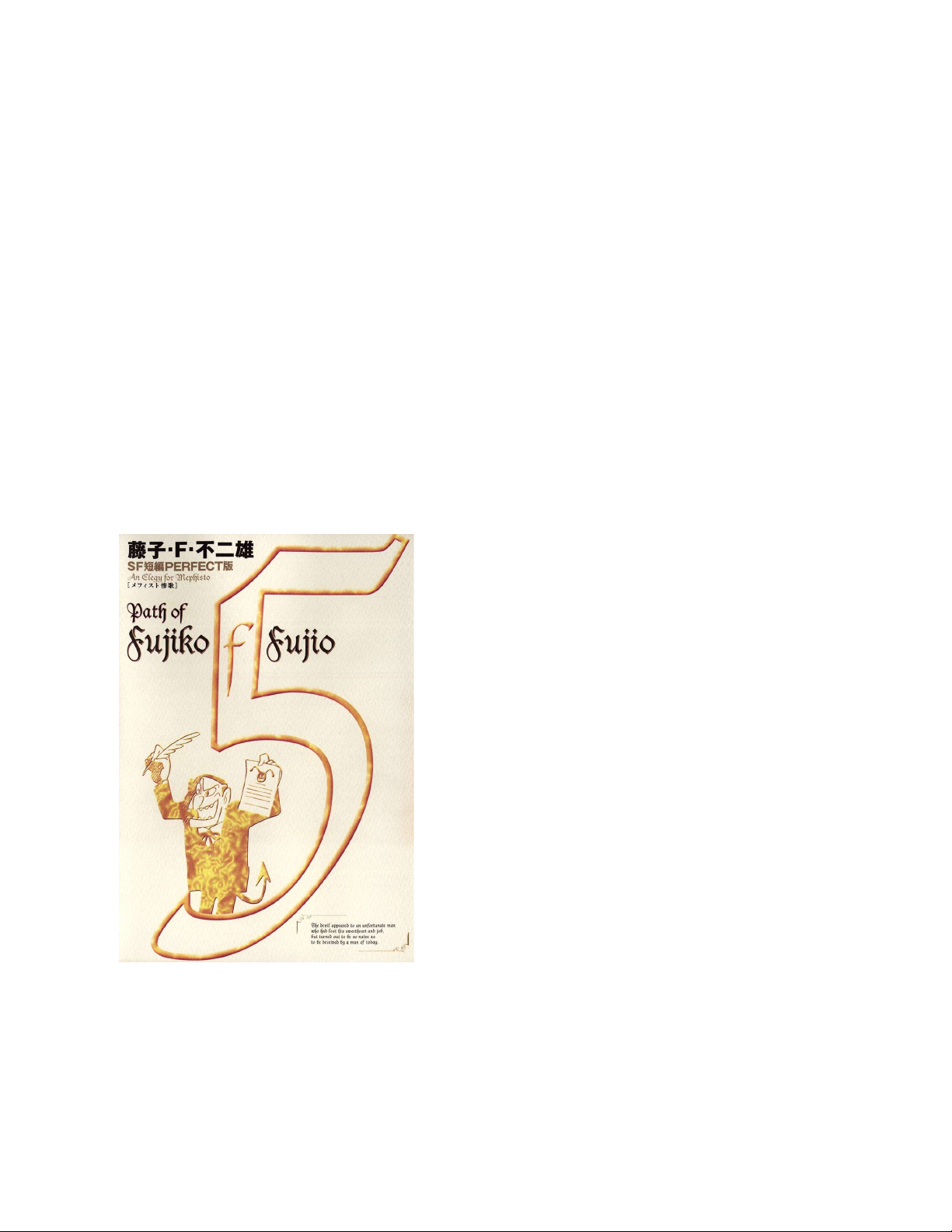
middle age (1979), he wrote the short story “An elegy for Mephisto”. It is when Japan magically
recovered and developed, including anime/manga industry, turning it from nothing to one of the biggest economic centrals.
An elegy for Mephisto, ink and paper
The story is about a foolish man just encountered many terrible events. He runs into a demon
called Mephisto who offers him to sign a contract to exchange his soul for a wish. It turns out the
main character lies and takes advantage of Mephisto to achieve what he wants. This is a comic
for mature age groups, but Fujiko still decided to draw it with his original kodomomuke style
normally aims for young children because his storytelling is good enough to deliver complicated
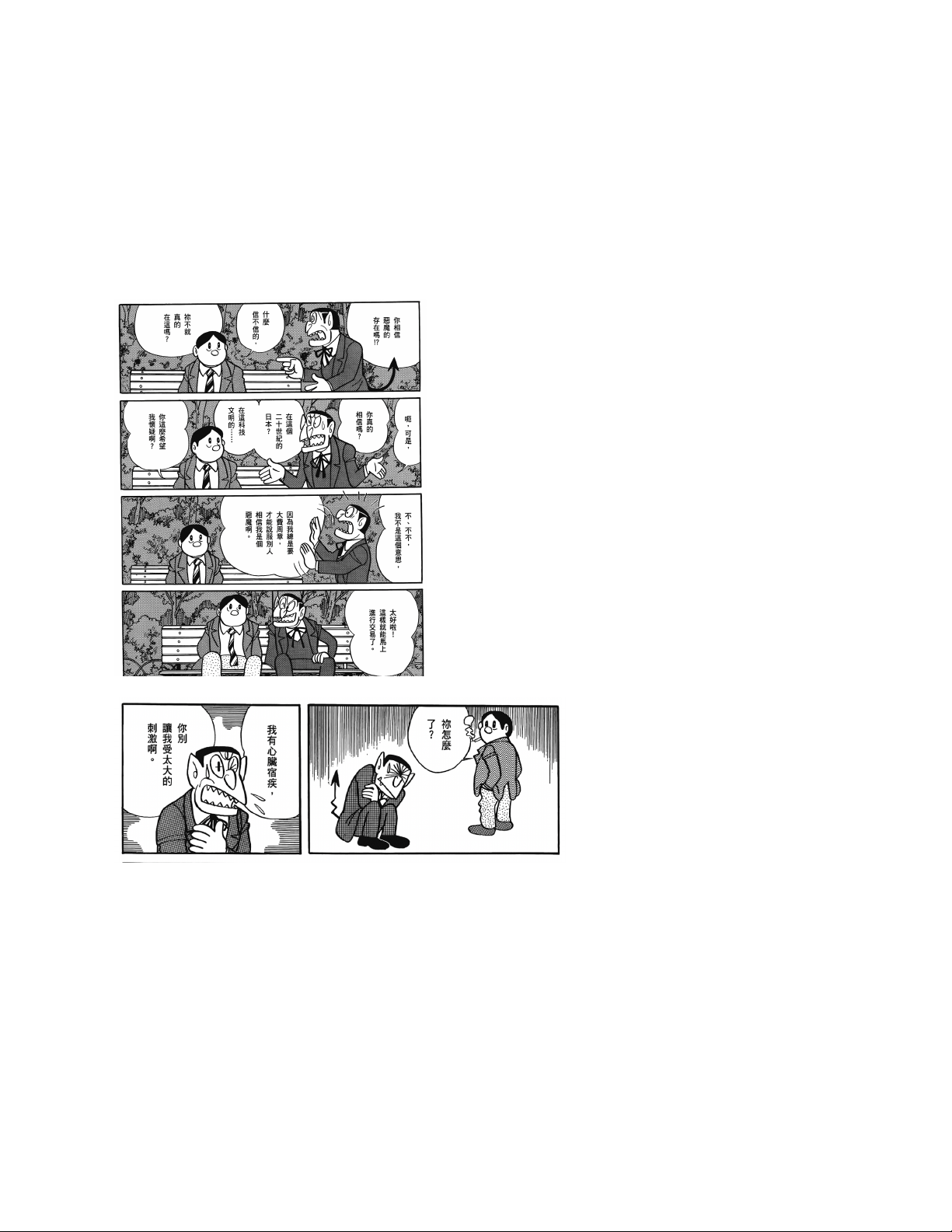
messages. For instance, through character design he illustrated the irony of this story. The main
character looks like a fool with a runny nose but throughout the comic, his emotion stays
indifferent even when seeing the demon having heart disease, emphasizing his insidious nature,
whereas the devil has many expressions, making him look more “human”.
Comparing expressions between main character (MC) and Mephisto in the comic.
The biggest moral behind this comic is how morality degenerated over time. When human life is
modernized and all their basic needs are fulfilled, their greed tends to be bigger. In the comic,
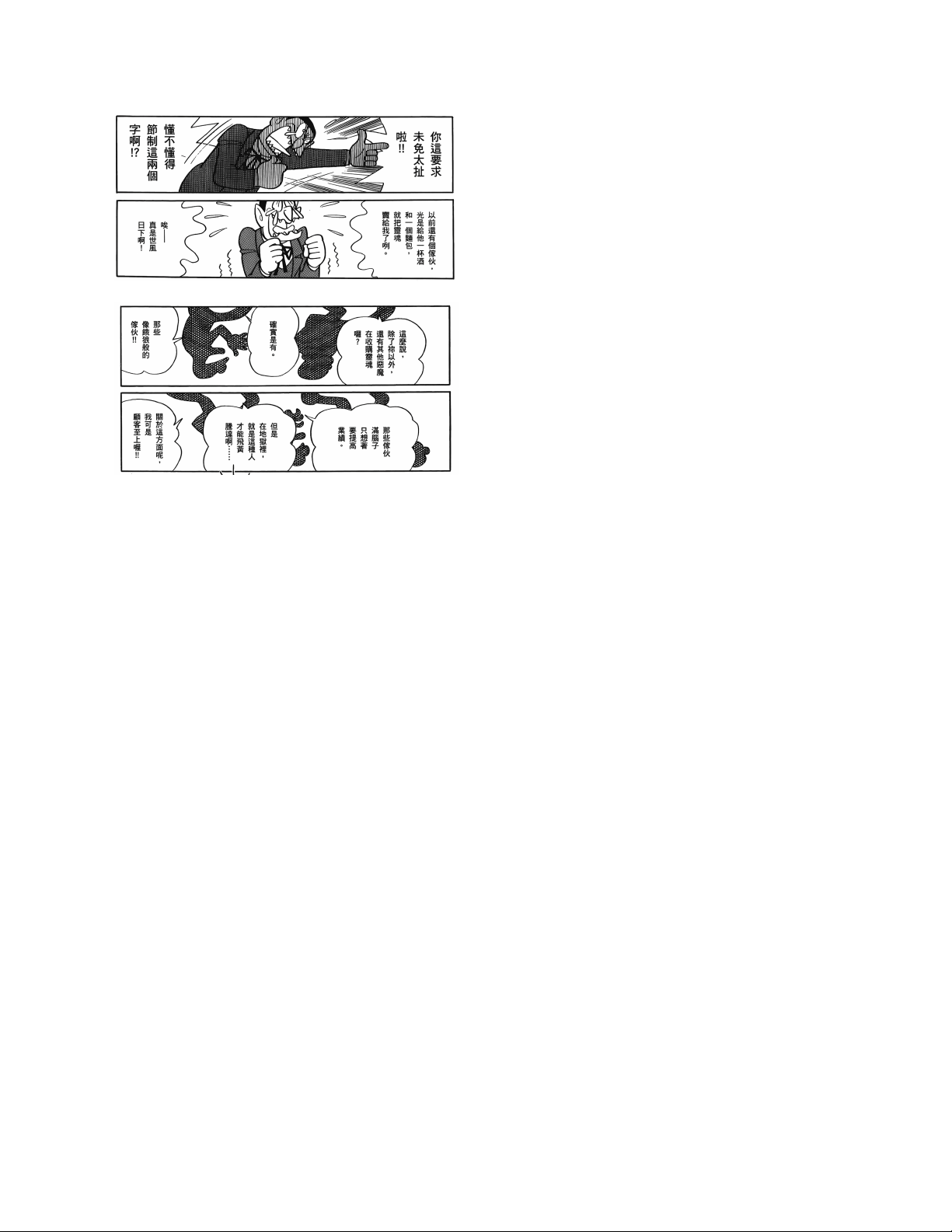
Mephisto claims that ideology and cries when remembering the time someone sold him his soul
just because of a piece of bread.
Mephisto cries (left) and Mephisto explain every
He also explains every condition in the contract for the main character’s benefit, showing that he
remains his innocence without realizing how much have humanity changes when at the same
time, he understands that other demons can achieve high success by cheating on customers. The
satire psychology comic “An elegy for Mephisto” surely succeeds in reflecting a sad reality:
honest, innocent people tend to be taken advantage of by devious individuals in today's society.
Avogado6 is a famous online illustrator with anime/manga style (this style nowadays is one of
the most famous pop cultures) who often creates simple drawings but with deep meanings
reflecting the dark side of society. He was born and worked in a much more peaceful era – the
technology era where technically almost everything is enhanced. Other human rights and
benefits that are way better than the older generations but there are still new issues appears in the
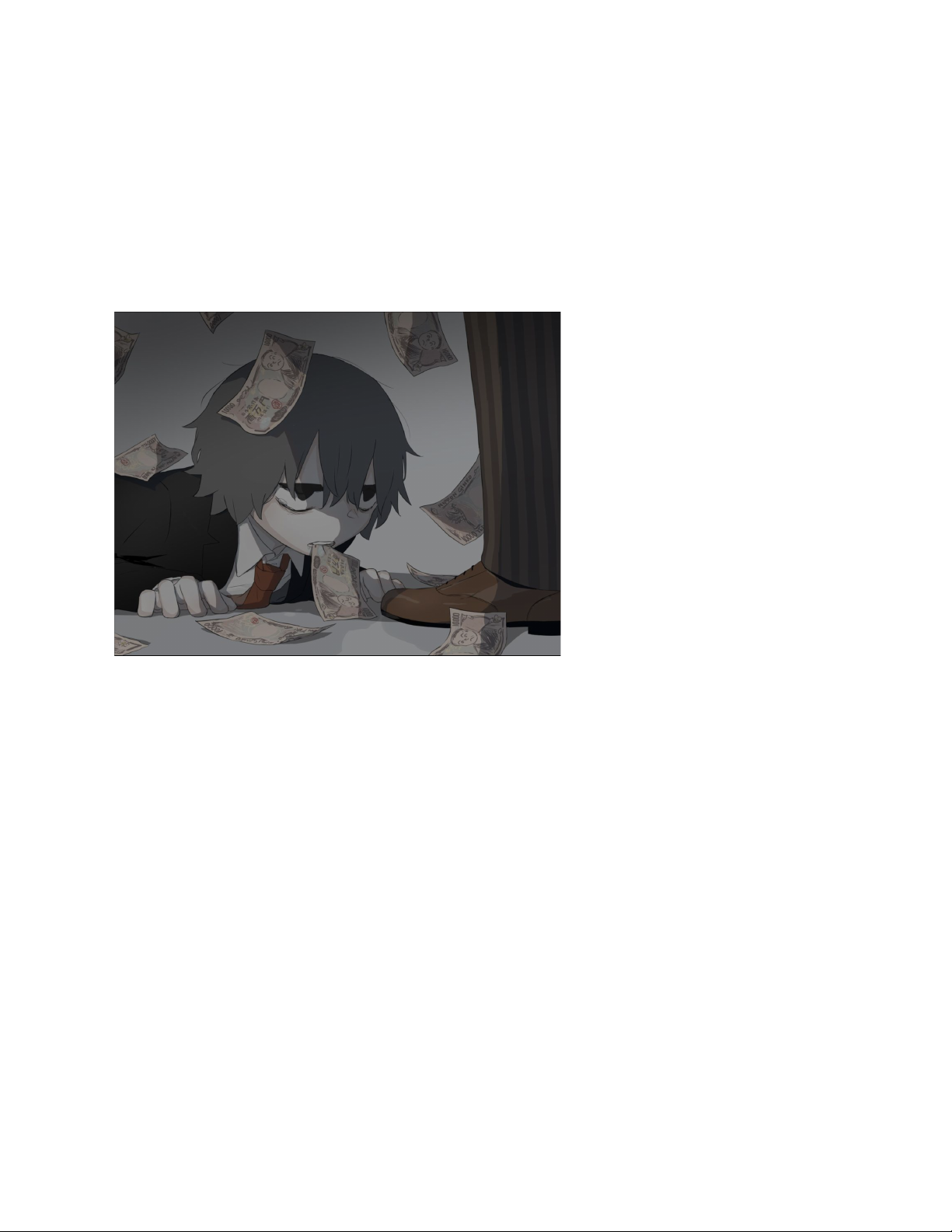
world and Japan. This artwork is published in 2021 on his social media with the title “Wan Wan”
- the sound of dog barking in Japanese. The content of this drawing is an office worker that looks
extremely depressed, laying on the ground and trying to grab a cash note with his teeth while a
rich man standing right in front of him. The money flying around in the air indicates that the rich
person throws it away, as if for them, that money is nothing more than paper. Contrastingly, the
young man holds it in his mouth but not in his hand, showing that this could be a form of
humiliation. This can also be shown by the name of the painting. Avogado6 compares the worker
with a dog, a common metaphor to dehumanize a person, in order to emphasize his low position.
The color scheme of this painting is extremely gloomy with vast shadow, highlighting the
reproachful pain the main subject has to bear. The tear in his right eye confirms that he is not
willing to act like this. The illustration may demonstrate the actual situation of workers in their
workplaces, where they are belittled, tortured by their leader or their work but still have to
behave or they have to work like a “dog” because they need money to survive. Especially in
Japan, where the working culture is extremely stressful and create many urgent mental (e.g:
suicidal behaviours) and physical health problems (e.g: high blood pressure) for a majority of Japanese.
Both of their artworks are carefully invested with different concepts and values, making their
audiences think deeply about the corruption in society and other human moralities. In “An elegy
for Mephisto” and “Wan wan”, they all portray the image of office workers with low positions in
life, the ones who being bullied and stepped on by rich people, or crafty people that take
advantage of others. It is such an irony that the good, honest individuals have to suffer when the
‘villains” take all the power and benefits. Fujiko F. Fujio and Avogado6 transparently have a lot
of differences in many aspects. They were born in very different periods of history, so it is
sensible to see that they chose different materials, styles and techniques that is more efficient at
their time to produce their art. As one of the first-generation mangakas in Japan, Fujiko F. Fujio
drew with black and white ink (traditional art). He also picked kodomomuke style probably it is
popular at the time and because Japanese comics still take a lot of inspiration from American
comic. Avogado6 worked in the digital era where anime/manga is vitally enhanced, so he chose
this style and digital programs for his work. For Fujiko F. Fujio, he uses storytelling to illustrate
the nature of humans, revealing the complexity of society, making audiences follow the given
plot and surprised with the plot twists or his creative perspective in the end. For Avogado6, he
captures dark sides of the modern world mostly by drawing metaphorical images with no clear
context and his audience mostly have to use their own interpretation to guess his intention. In
Fujiko’s short stories, there is more than one aspect of life being mentioned. For example, in “An
elegy for Mephisto”, along with the aforementioned moral, we can also discuss various other
hidden perspectives such as feminism, value of human works, and can be understood as
emphasizing the importance of knowledge and power of humanity, whereas for Avogado6’s
works there are only a few topics with similar concepts.
In summary, Fujiko F. Fujio and Avogado6’s artworks all convey messages about society and
human nature reflecting shades of life and making us contemplate about the world around or
having self-reflection and learn new lessons. I always find myself enjoying their creativity and
trying to analyze the meanings inside. Even though Fujio F. Fujiko is a master artist and possess
higher storytelling techniques in order to discuss such sophisticated problems through very brief
stories, I think Avogado6 is also extremely excellent for producing such implicit work – the
content is so simple consists of great depth. It is also important to stress that despite having their
differences in life backgrounds and skill levels, their personal choices of styles, materials, etc.
make them unique and accomplished as an artist. Their works (“An elegy for Mephisto and
“Wan Wan”) showcase their personalities, their own style and deliver the messages they wanted to share effectively.
● https://www.arabnews.com/robot-cat-doraemon-receives-residency-japan-city
● https://www.japanpitt.pitt.edu/essays-and-articles/culture/popular-culture-manga
● Ito, K (2005), "A History of Manga in the Context of Japanese Culture and Society",
Journal of Popular Culture, vol. 38, no. 3, pp. 456-475.
https://www.proquest.com/docview/195368472?accountid=13552&pq-origsite=primo
&sourcetype=Scholarly%20Journals
● Japan: History 2014, , Aperian Global, San Francisco, CA.
https://search.alexanderstreet.com/view/work/bibliographic_entity%7Cbibliographic_
details%7C2658459?account_id=13552&usage_group_id=98381
● https://ja.wikipedia.org/wiki/%E3%83%A1%E3%83%95%E3%82%A3%E3%82%B 9%E3%83%88%E6%83%A8%E6%AD%8C
● Erol, K. 2018, "SOCIAL AND CULTURAL DEGENERATION IN NECİP FAZIL’S
POEMS", ADAM AKADEMİ Sosyal Bilimler Dergisi = Adam Academy Journal of
Social Science, vol. 8, no. 1, pp. 57-80.
https://www.proquest.com/scholarly-journals/social-cultural-degeneration-necı̇p-fazil-
s-poems/docview/2216511313/se-2?accountid=13552.
● https://mangadex.org/chapter/b8208833-0a14-4fa0-902e-ff2e78cf6046/7
● Nakamura, K., Sakurai, M., Morikawa, Y., Miura, K., Ishizaki, M., Kido, T.,
Naruse, Y., Suwazono, Y. & Nakagawa, H. 2012, "Overtime Work and
Blood Pressure in Normotensive Japanese Male Workers", American
Journal of Hypertension, vol. 25, no. 9, pp. 979-85.
https://www.proquest.com/scholarly-journals/overtime-work-blood-pressure-normotensive
/docview/1034286312/se-2?accountid=13552.
● Tsutsumi, A., Kayaba, K., Ojima, T., Ishikawa, S. & Kawakami, N. 2007,
"Low Control at Work and the Risk of Suicide in Japanese Men: A
Prospective Cohort Study", Psychotherapy and psychosomatics, vol. 76, no.3,pp.177-85.
https://rmit.primo.exlibrisgroup.com/permalink/61RMIT_INST/4t5l5f/cdi_pascalfrancis_pri mary_18626591.
● https://rmit.primo.exlibrisgroup.com/permalink/61RMIT_INST/1adn3cm/alma99220140994 01341.
Tài liệu liên quan:
-
PHÂN TÍCH NHÂN VẬT HỘ TRONG “ĐỜI THỪA” - TÁC PHẨM NAM CAO
3 2 -
Đề Thi THPTQG 2022: Đọc Hiểu & Phân Tích "Vợ Chồng A Phủ"
2 1 -
Phân Tích Tác Phẩm "Chí Phèo" Của Nam Cao: Nghệ Thuật Và Giá Trị Nhân Đạo
3 2 -
Phân Tích 9 Câu Đầu Bài Thơ "Đất Nước" (Nguyễn Khoa Điềm)
4 2 -
Tóm tắt tác phẩm "Vợ Nhặt" của Kim Lân: Phân tích & Ý nghĩa
5 3