TIẾNG ANH 22110ENTH - Crazy Competitions Around the World Summary
TIẾNG ANH 22110ENTH - Crazy Competitions Around the World Summary
Chủ đề: Tài liệu chung Tiếng Anh 12 485 tài liệu
Môn: Tiếng Anh 12 1.2 K tài liệu
Tác giả:



Preview text:
VIETNAM UNIVERSITY OF COMMERCE FACULTY OF ENGLISH -----o0o----- GROUP DISCUSSION ENGLISH 1
TOPIC: CRAZY COMPETITONS IN THE WORLD Group: 2 Class: 22110ENTH1411
Teacher: Mrs. Hoa, Mrs. Hang
Group preparation assessment: . . . . . . . . . . . . . . . . . . . . . . . . . . . . . . . . . . . . .
Presentation assessment: List of students (in the order of presenting) No. Name (for students)
Comments ( for teacher only) Mark 1 Truong Linh Chi 2 Phan Thi Quynh Chi 3 Tran Thi My Duyen 4 Nguyen Thuy Duong HA NOI - 2022
MEETING MINUTES – GROUP 2
Time: from 8 PM – 10 PM
Place: Thuong Mai university’s library Participants: 1. Truong Linh Chi 2. Phan Thi Quynh Chi 3. Tran Thi My Duyen 4. Nguyen Thuy Duong
Contents for discussing:
- Reading and anylizing the content of the topic which the group will present: CRAZY COMPETITIONS IN THE WORLD.
- Searching information about strange and crazy competitions all over the world.
- Leader divides the duties for each member.
Conclusion: Members are fully present and actively participate, each member has the
same amount of work to complete.
Duties for participants: 4 members find detailed information for 4 crazy competitions
around the world (each person chooses a content that matches the requirements of the topic).
1. Truong Linh Chi: Opening the presentation by introducing the first crazy competition:
MOBILE PHONE THROWING WORLD CHAMPIONSHIP.
2. Phan Thi Quynh Chi: Presenting the next competition: BEE-WEARING.
3. Tran Thi My Duyen: Presenting the next competition: COMPETITION ON PASSING
THE “MONKEY BRIDGE” BY BICYCLE.
4. Nguyen Thuy Duong: Presenting the last competition: BABY CRYING CONTEST. LEADER MINUTE TAKER (Signature and Name) (Signature and Name) PRESENTATION OUTLINE 1. Greeting:
Good morning everyone, we are group 2. We are glad to be here today to present our topic.
2. Introducing the group's member:
There are 4 members in our group: Linh Chi, Quynh Chi, My Duyen, Thuy Duong.
3. Introducing the group's topic:
The topic of my group is about SOME CRAZY COMPETITIONS IN THE WORLD.
4. Outlining the presentation:
Our presentation includes 4 main parts:
- The first part is about general introduction and the first contest.
- The second part is about the second contest.
- The third part is about the third contest.
- The last part is about the fourth contest and general summary.
5. Presenting the introduction of the topic BODY DEVELOPMENT
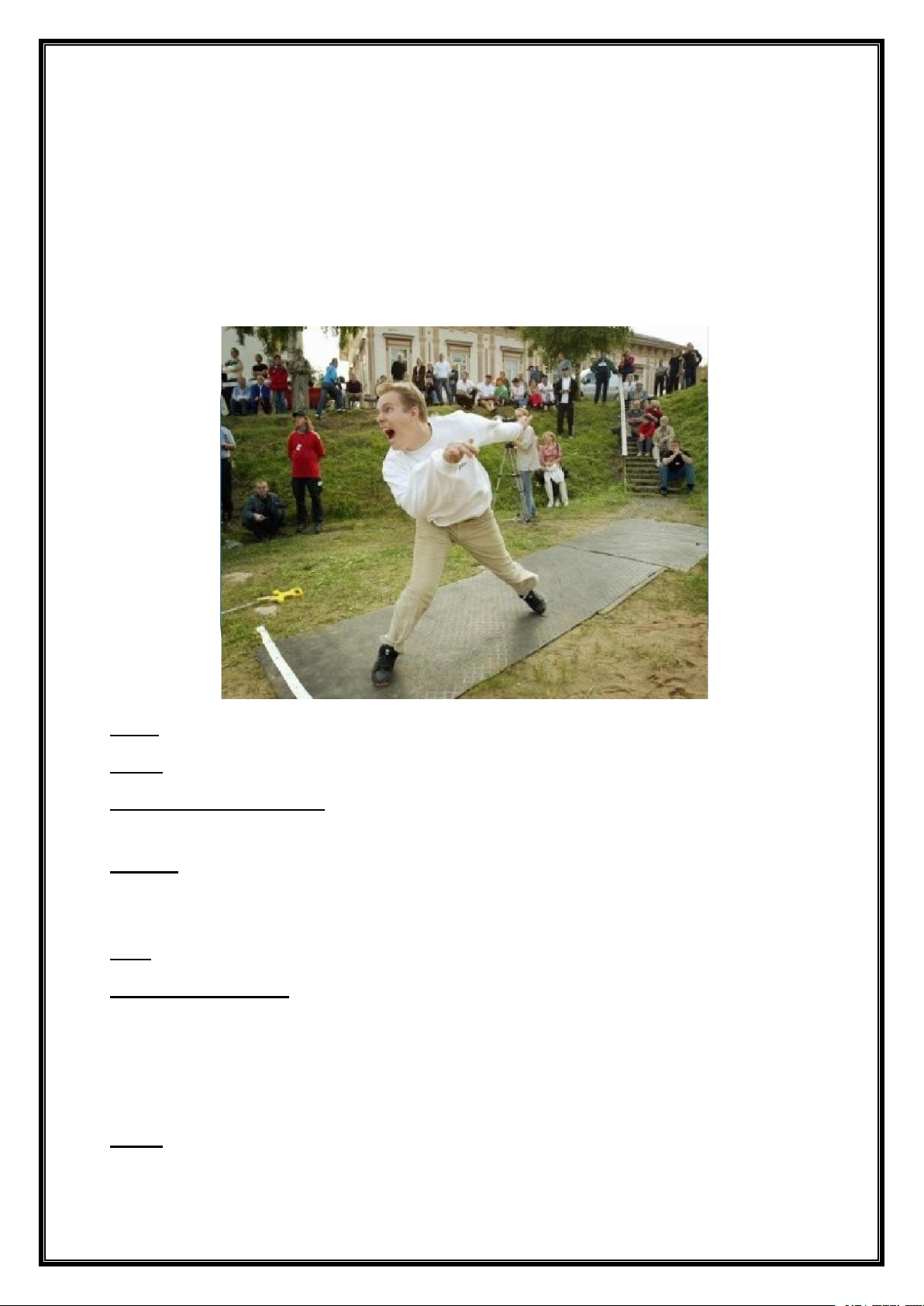
1. MOBILE PHONE THROWING WORLD CHAMPIONSHIP (PRESENTED BY LINH CHI)
Time: This contest started in 2000 and was held to this day.
Place: In Savonlinna, Finland.
Organization department: A local translation company called Fennolingua in
conjunction with a recycling center.
Reason: According to the announcement of the insurance companies in Finland: There
are a lot of phones were thrown into the river. This state polluted the environment
because of toxins from batteries.
Aim: To encourage people on how to dispose phones suitably.
Types of competitons:
- Freestyle throwing, for women and for children under 12 years old. - There are two parts: • Individual competition
• Competition in groups of no more than three people. Rules:
- Before the start of the competiton, players are not allowed to use their own
phones, but must use scrap phones weighing from 200 grams to 400 grams.
- Players need to throw the phone as far as possible.
- The person who throws the farthest is the winner. Records:
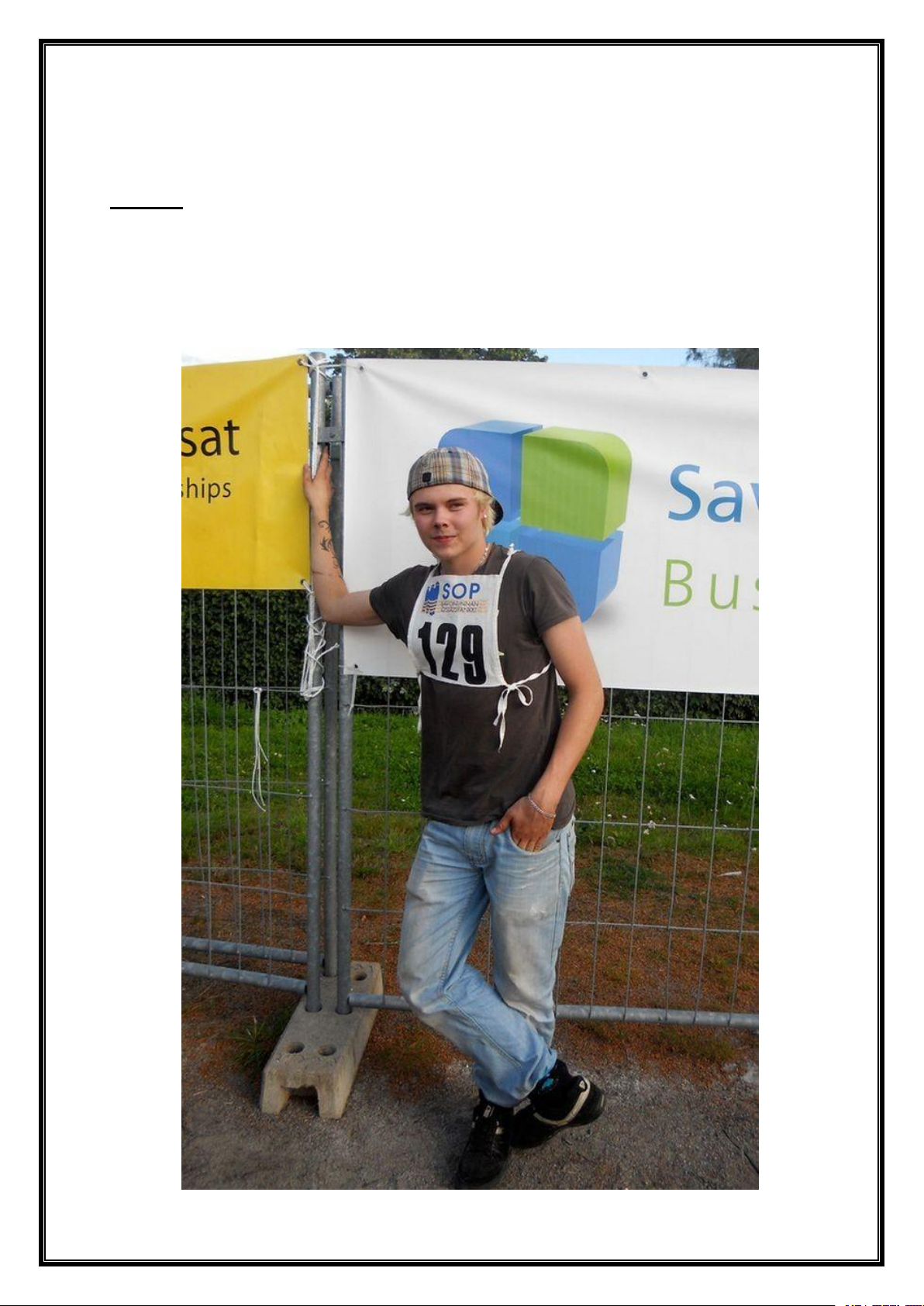
- Ere Karjalainen – an 18-year-old boy from the host country threw his mobile
phone with a distance of 101,46 meters ( 8/2012). He got the record for the
longest distance to throw a phone in the world.
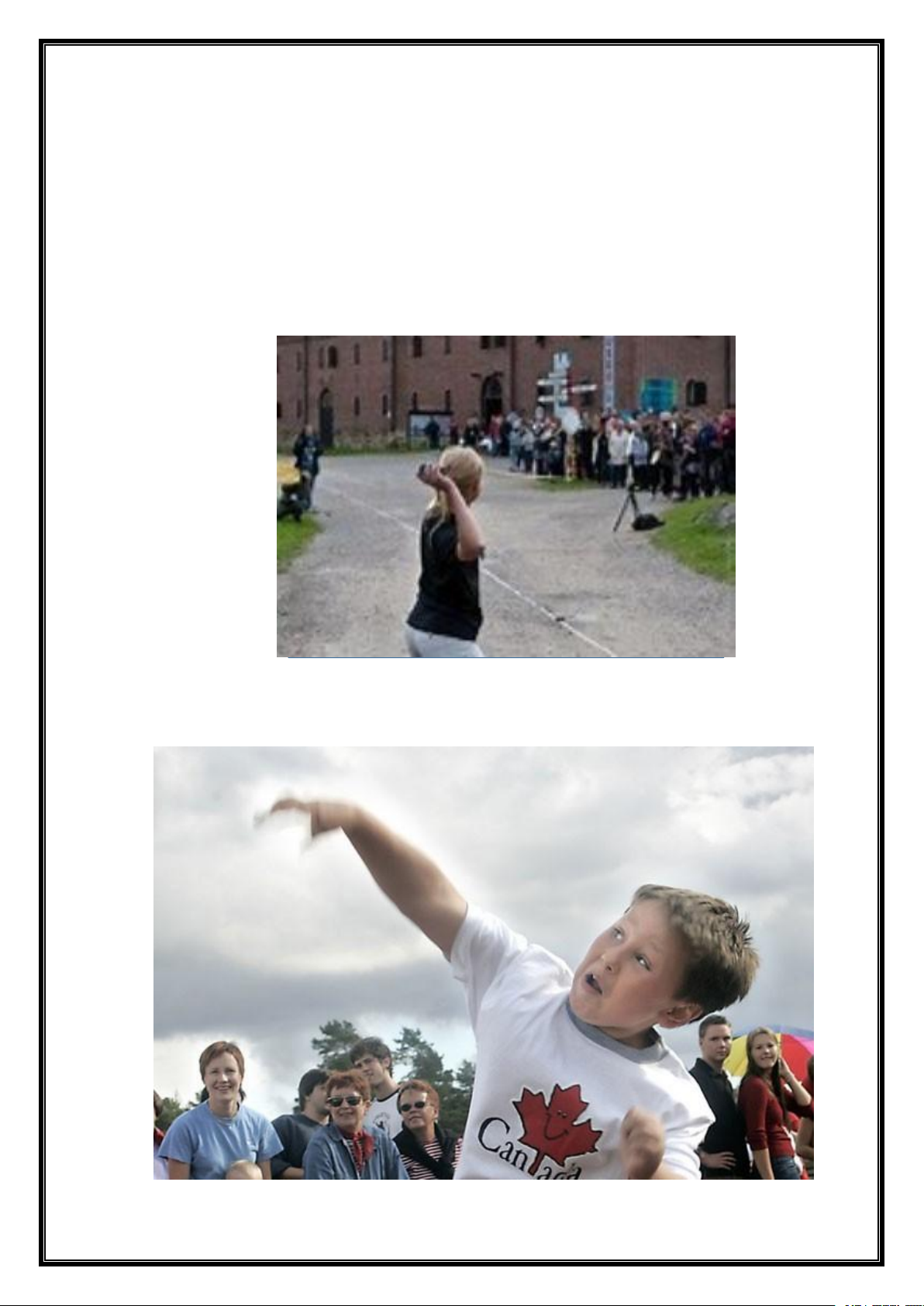
- In the competition for women: Netta Karvinen (Finnish) won with a record of 42,47 meters.
- In the competition for children under 12 years old : Aleksi Muukkonen won with distance of 39 meters. Meanings:
- This competition is to help mobile phone users relieve discomforts and worries.
- Specially, after the game the phones are taken to a waste factory for recycling.
It’s really helpful for the environment.
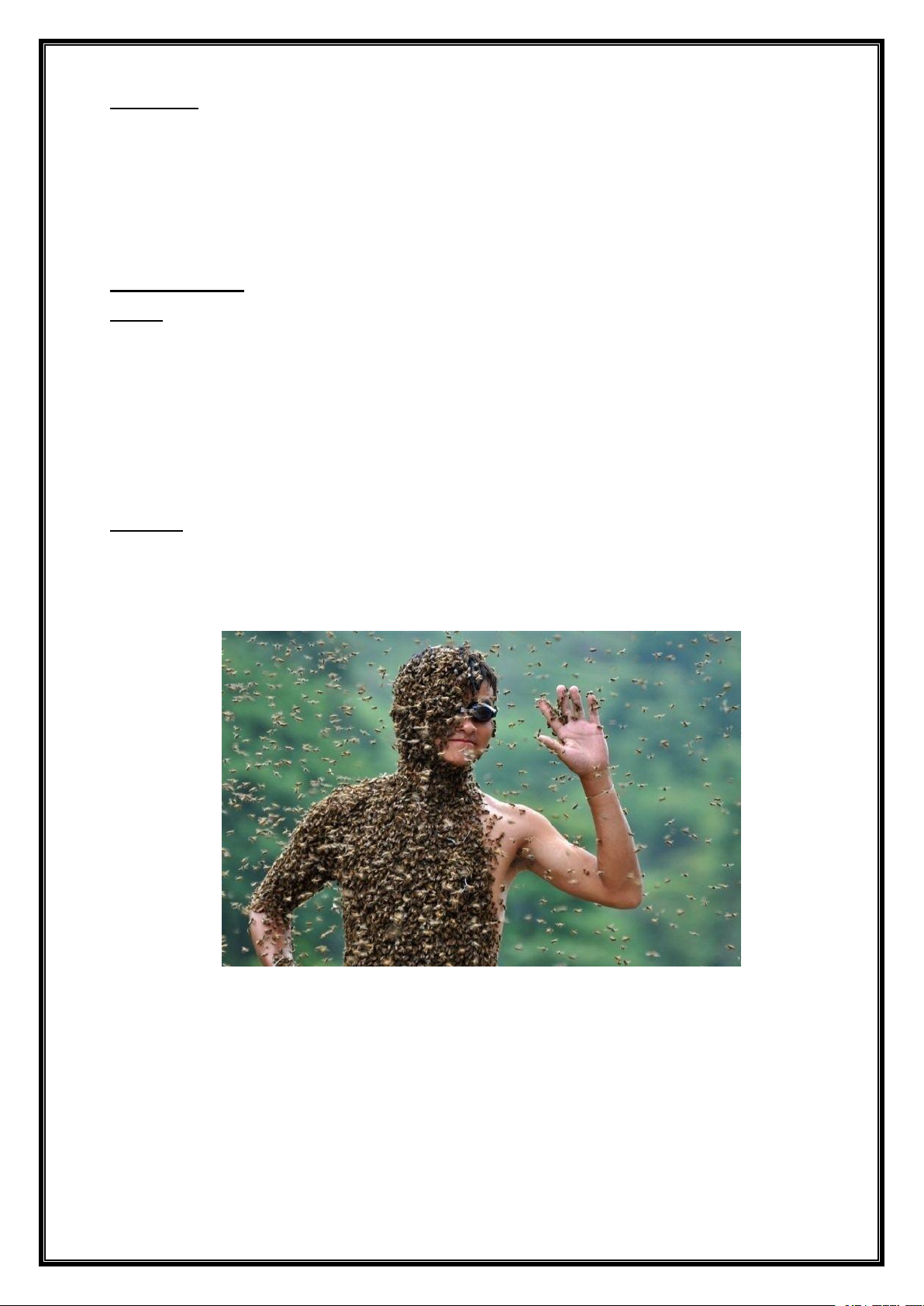
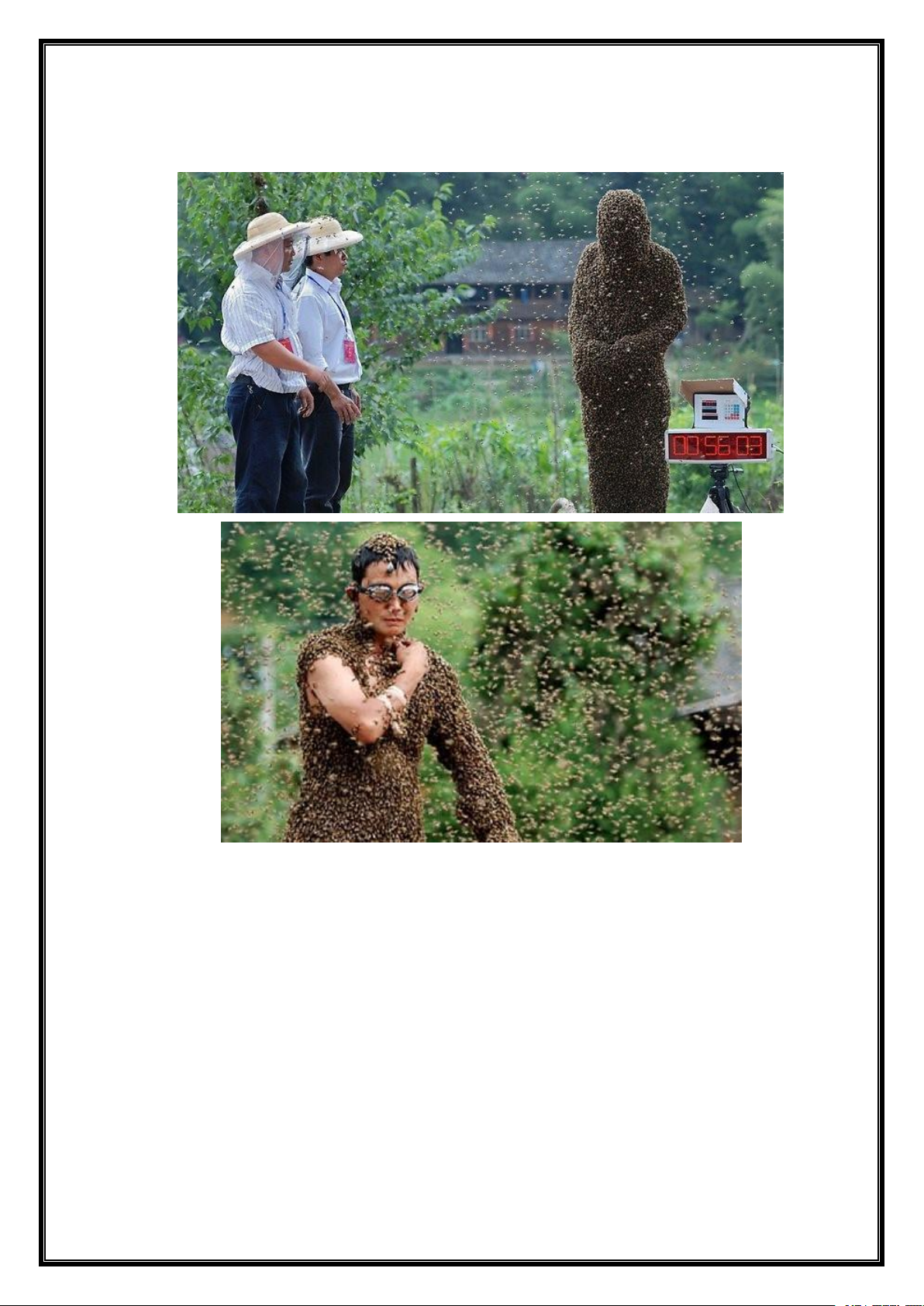
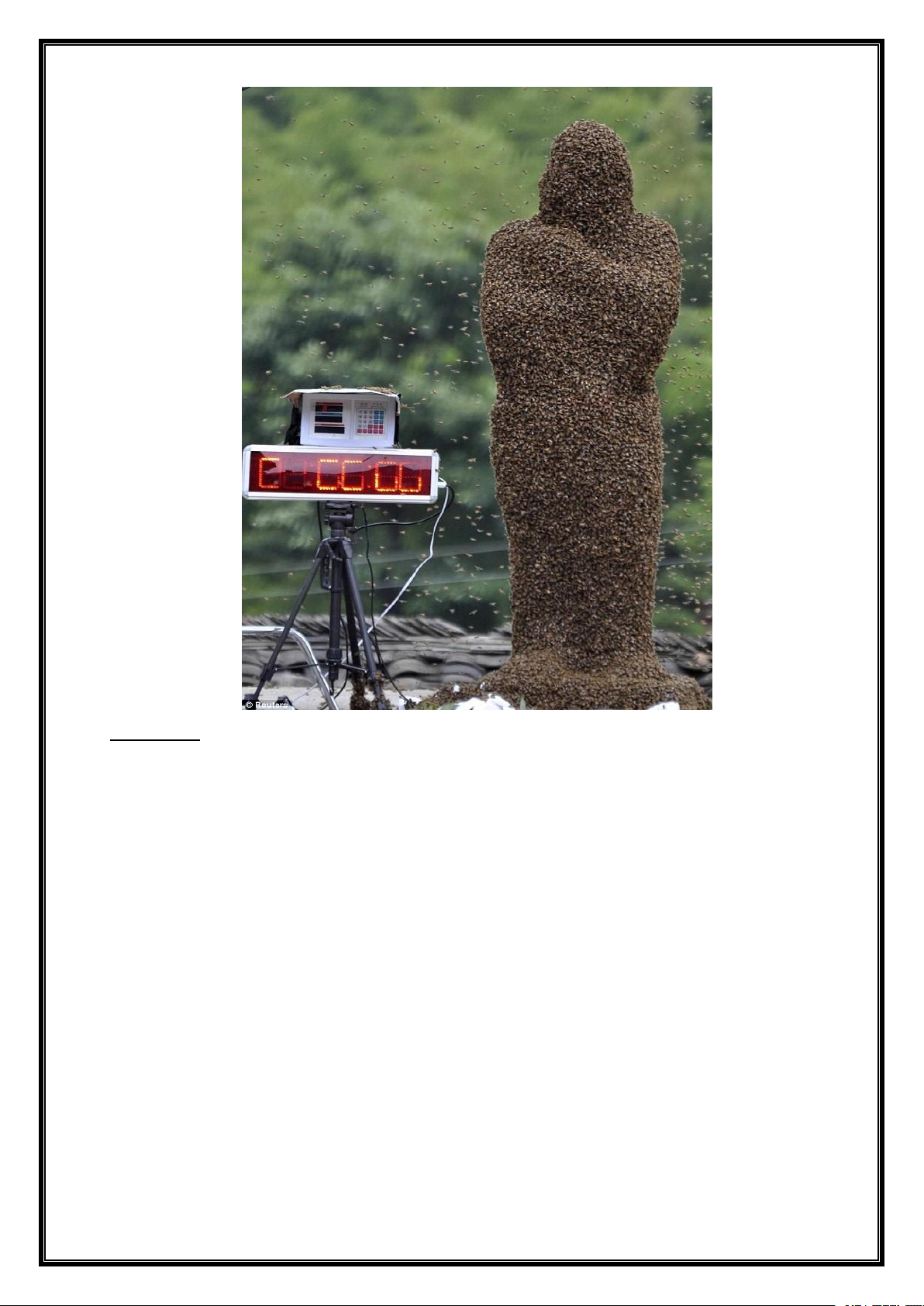
2. BEE-WEARING COMPETITION (PRESENTED BY QUYNH CHI)
Time and place: It is taken annually in China. Rules:
- The participants will go topless just wear shorts, goggles and nose plugs as protection.
- Participants stand on thrle scale with one queen bee on them, within one hour they
have to try to attract the most bees.
- When time up, they will be calculated the weight of bee. Whoever has the heaviest
number of bees will be the winner. Records:
- Wang Dalin – a 42-year-old Chinese man stood victorious wearing 26,86 kg of bees.
- The competition is not about winning a prize, it is about breaking the world record
which stand on 39.5 kg. The world record was set by an American man named Mark Biancaniello.
Meanings: Spread the message of animal protection and create a friendly relationship with insects.
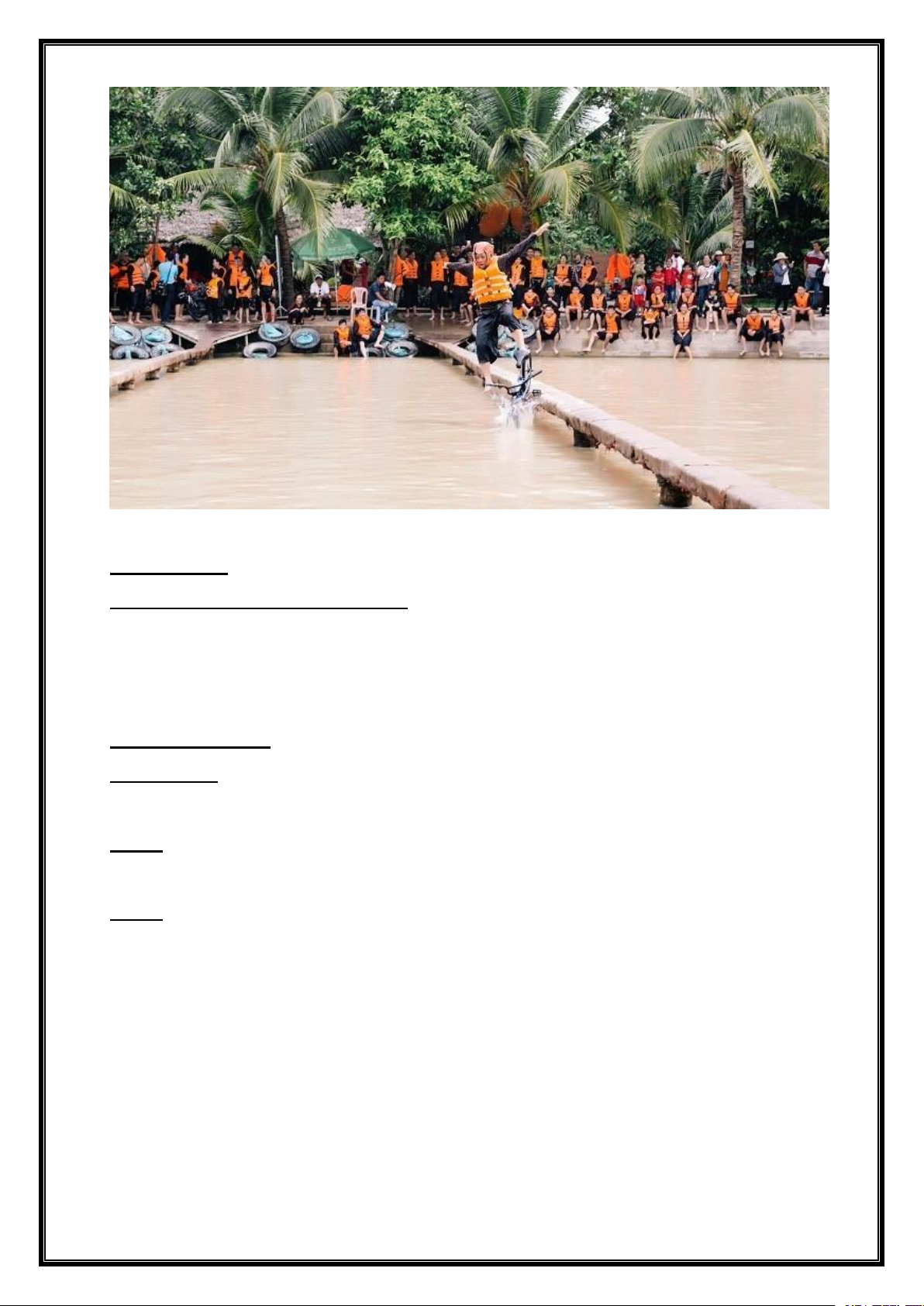
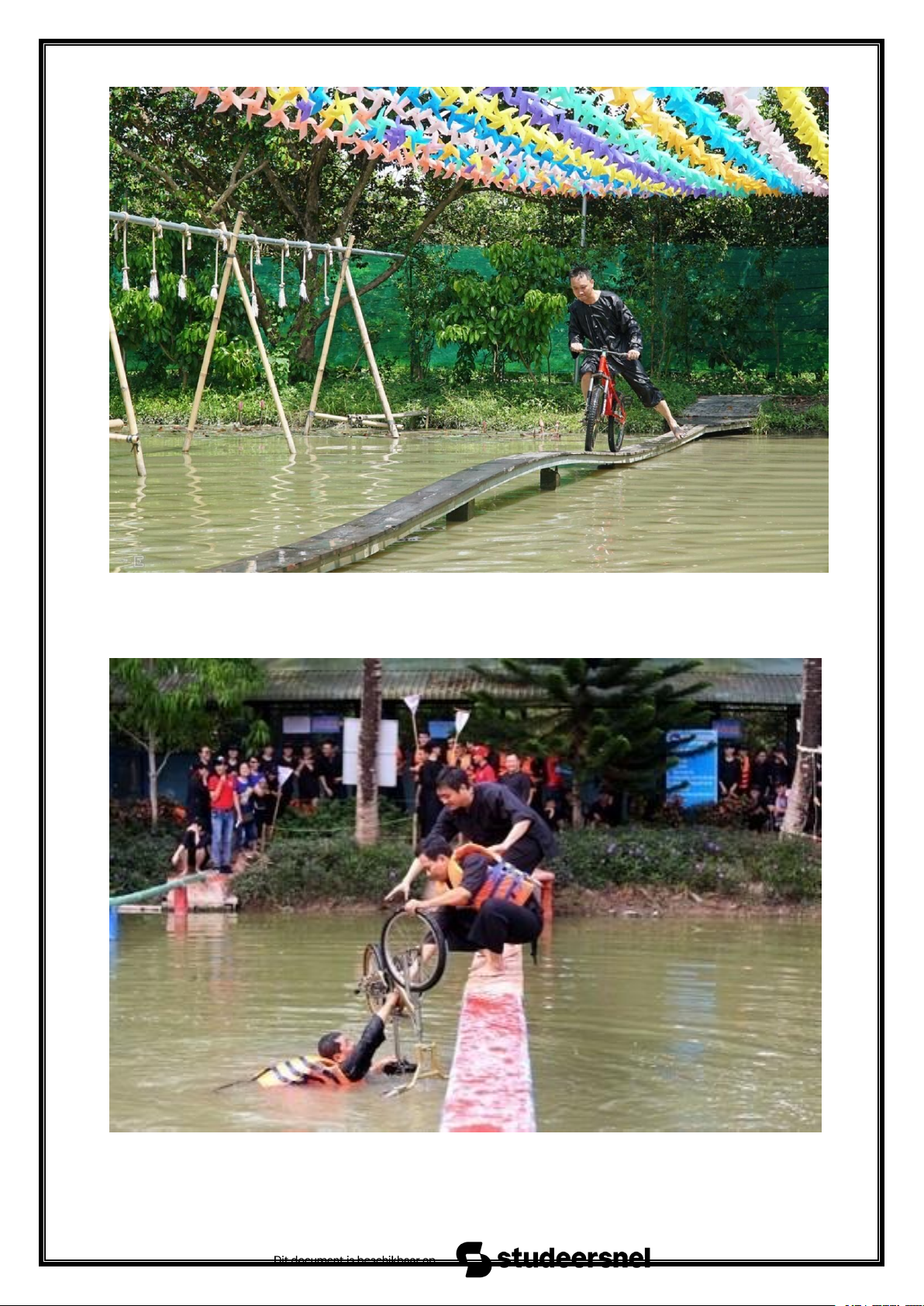
3. COMPETITION ON PASSING THE “MONKEY BRIDGE” BY BICYCLE (PRESENTED BY MY DUYEN)
Type of game: Folk game.
Purpose and meaning of the game: - To entertain. - To create a fun space.
- To promote agility and ingenuity.
Number of players: Unlimited.
Topography: Lagoon and lake wide with water level not too deep, safe for players, no dangerous obstacles.
Tools: Bicycles of small size, children’s type, without kickstands and brakes; the monkey bridge is about 20cm wide. Rules:
- The players take turns cycling across the small money bridge.
- Require always keeping balance and controlling the speed of the bike.
- The winner is the cyclist who crosses the bridge to the other side without falling into the water.
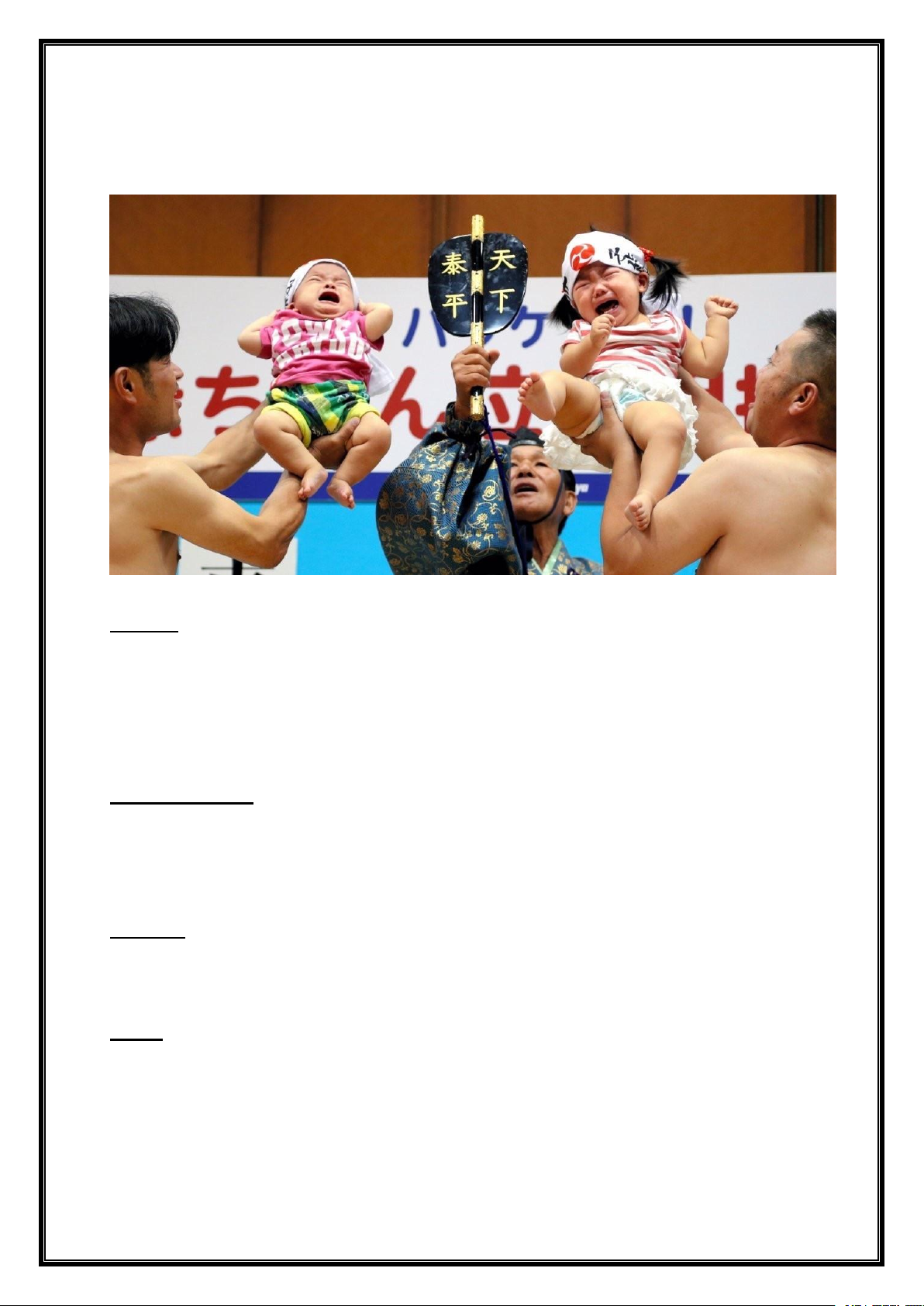
4. BABY CRYNG CONTEST (PRESENTED BY THUY DUONG)
The Naki Sumo Crying Baby Festival is an annual Japanese festival. The best-known is
Naki Sumo Festival is held each year in Senjoji Temple, Asakusa, Tokyo.
History: The Naki Sumo Festival has been held throughout Japan for over 400 years. The
festival is considered to have origins in the folk belief that the loud cry of an innocent
baby has the power to ward off demons or evil spirits while a strong, loud cry indicates
the child will grow up strong and healthy. The Japanese proverb "naku ko wa sodatsu",
meaning "crying babies grow fastest", is an additional source of inspiration for the festival. Time and Place:
- The Naki Sumo Festival is held annually at Shinto shrines throughout Japan.
- Most commonly on or around May 5 to coincide with Children's Day at the end of the Golden Week holiday.
Purpose: The specific customs and traditions of each festival vary by location, however
the main focus of every festival is a ritualistic prayer for the good health of each baby and
a competition between infants held in a sumo wrestling ring. Rules:
- Eligible competitors must be between the ages of 6 months and 18 months at the time of the festival.
- The festival is free and open to the public; however, some shrines and temples
require that parents submit an application or pay a fee to participate.
- Some locations are so popular that children are chosen by lottery, and parents will
travel across Japan to find a place to participate.
How the game starts:
- The staff at the shrine hand-make four-pronged kabuto helmets for each
participant to wear during the crying competition and create commemorative gifts and souvenirs for the parents.
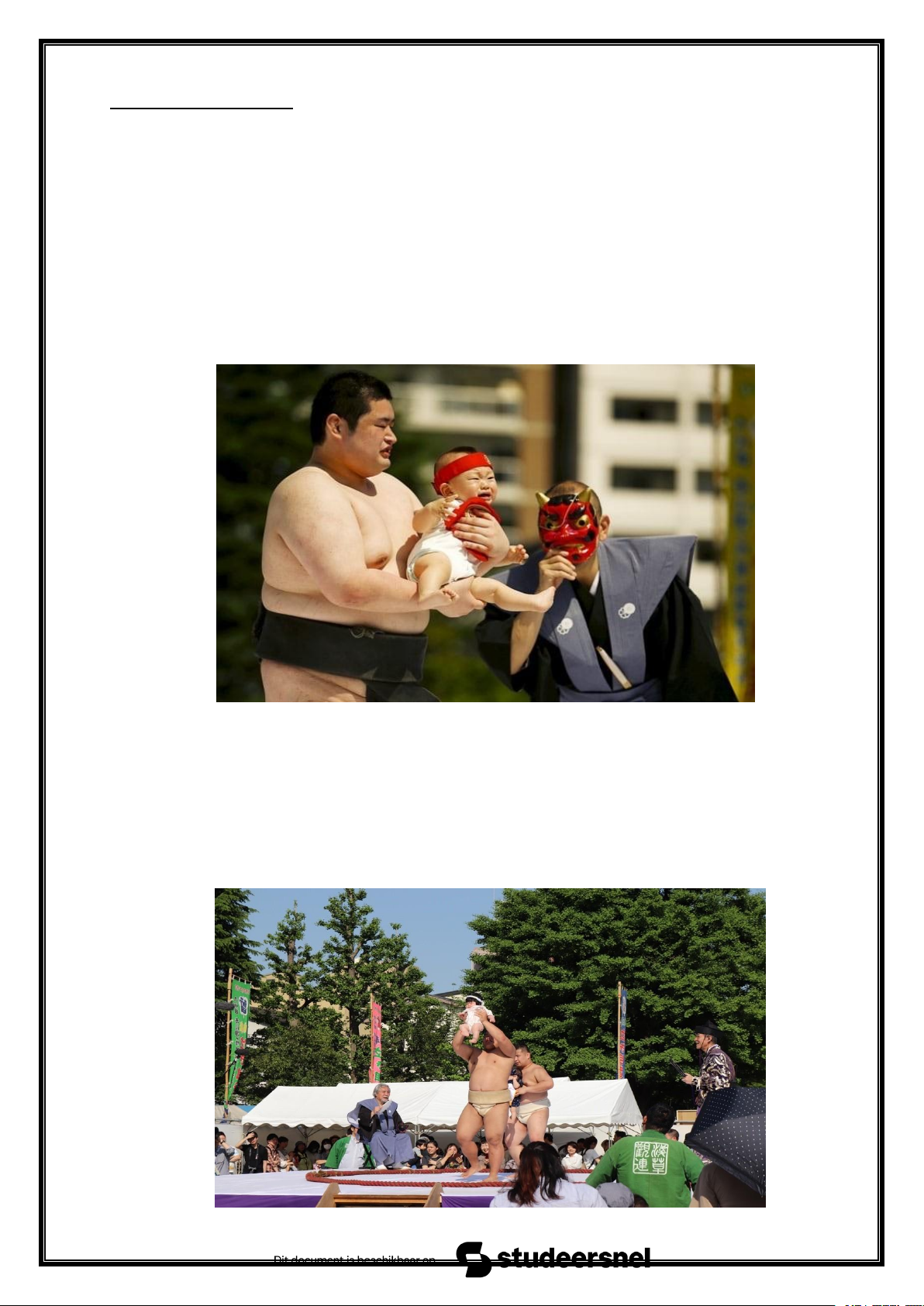
- Next, the crying baby competition is held outdoors in a handmade sumo ring. Two
babies at a time compete in short matches, while held in the arms of professional or student sumo wrestlers.
- Sumo wrestlers employ a variety of techniques to encourage crying, including
bouncing the baby in their arms, making loud noises and funny or scary facial
expressions, and chanting "Naki! Naki! Naki!" ("Cry! Cry! Cry!" in English).
- The first child to cry is declared the winner and bestowed with a blessing of good
health. If both children cry simultaneously, the baby with the louder or longer cry is typically the victor.
- When the babies begin to cry, the student sumos raise the babies higher in the air,
which is believed to strengthen the blessing endowed on each crying child.
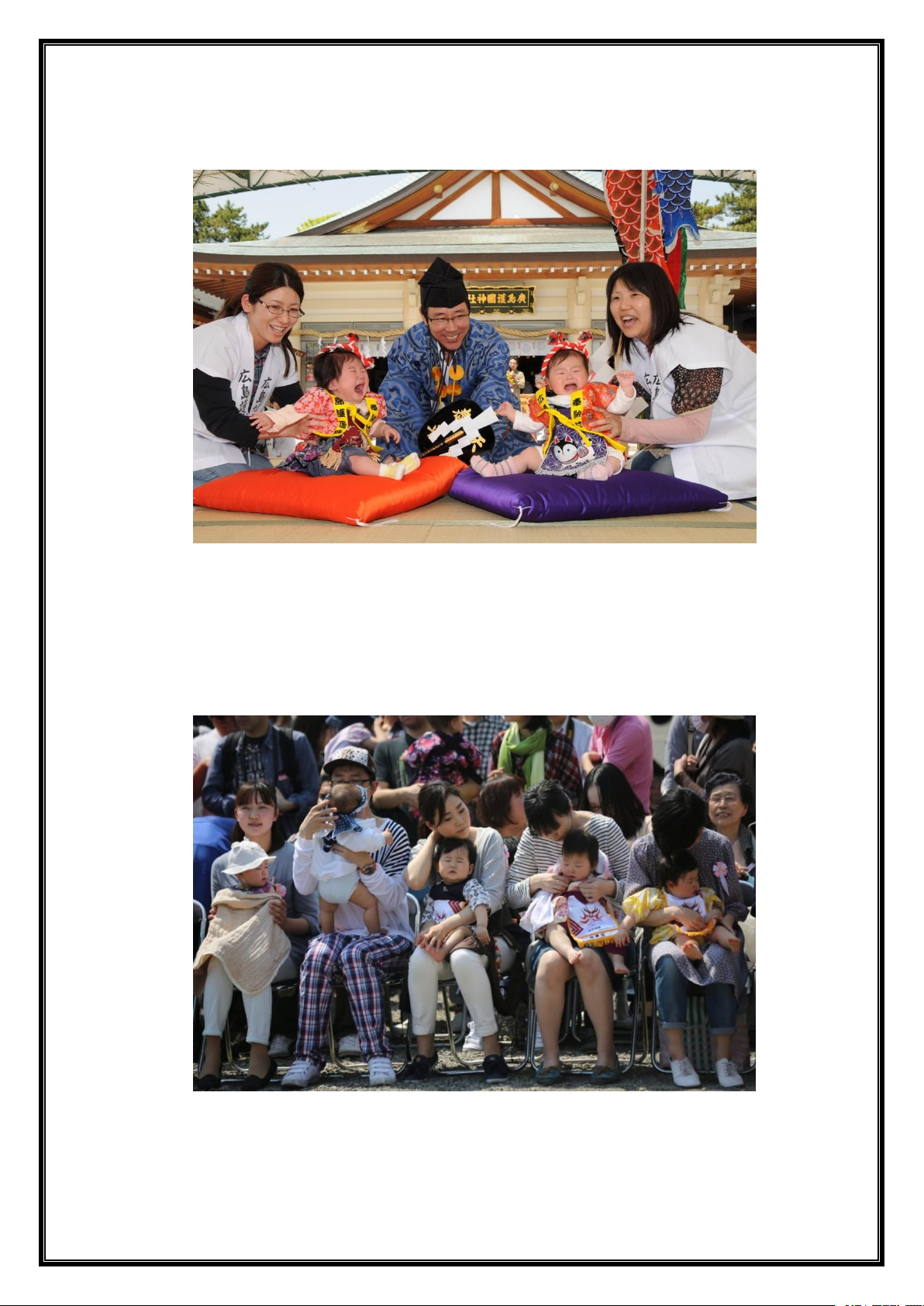
Picture: At the Gokoku Shrine in Hiroshima, babies are dressed in kimono and seated
facing one another on pillows while a sumo referee encourages the babies to cry.
Picture: Parents and babies wait their turn at the contest.
Document Outline
- VIETNAM UNIVERSITY OF COMMERCE FACULTY OF ENGLISH
- -----o0o-----
- TOPIC: CRAZY COMPETITONS IN THE WORLD
- Group: 2
- Group preparation assessment: ....................
- MEETING MINUTES – GROUP 2
- Participants:
- Contents for discussing:
- PRESENTATION OUTLINE
- 1.Greeting:
- 2.Introducing the group's member:
- 3.Introducing the group's topic:
- 4.Outlining the presentation:
- BODY DEVELOPMENT
- Types of competitons:
- Rules:
- Records:
- Meanings:
- Rules:
- Records:
- 3.COMPETITION ON PASSING THE “MONKEY BRIDGE” BY BICY
- Purpose and meaning of the game:
- Rules:
- Time and Place:
- Rules:
- How the game starts:
Tài liệu liên quan:
-
IELTS Academic Reading 1: Effects of Classroom Noise on Children with Auditory Deficits
6 3 -
IELTS Reading Practice: The Economic Importance of Coral Reefs
6 3 -
TOPIK 1: Biến Đổi Khí Hậu - Climate Change Discussion and Insights
6 3 -
Hướng Dẫn Tự Học Destination B2: Tổng Hợp Ngữ Pháp và Từ Vựng
6 3 -
Câu hỏi phản hồi chủ đề Ferien und Urlaub: Gợi ý và Thảo luận
7 4