tứ diện mahaffy (bài báo khoa học)
tứ diện mahaffy (bài báo khoa học)
Môn: TUỔI TRẺ ĐÁNG GIÁ BAO NHIÊU 138 tài liệu
Trường: Đại học 138 tài liệu
Tác giả:



Preview text:
IN THE CLASSROOM
expectations of students in particular settings;
accreditation and standardized examination Reorienting chemistry
constraints; and the need to develop appropri-
ate assessments. These chal enges, which
hinder the reorientation of chemistry
education through systems
education to take on systems thinking, are
well worth addressing. To do this, we can thinking
make use of lessons learned in engineering,
biology and other branches of science that
have long embraced systems approaches in
Peter G. Mahaffy, Alain Krief, Henning Hopf, Goverdhan Mehta both education and practice. and Stephen A. Matlin
Why systems thinking in chemistry?
It is time for chemistry learning to be reoriented through systems thinking, which
Two important strands of argument support the
offers opportunities to better understand and stimulate students’ learning of
case for reorienting chemistry education today.
chemistry, such that they can address twenty-first century challenges.
First, the current systems of chemistry
education, particularly at the undergraduate
In biology courses, it is difficult to imagine
complex, dynamic and interdependent
level, face challenges that can be addressed by
studying organisms, such as Plasmodium spp.
systems. Chemistry systems and sub-systems
approaches that incorporate systems think-
parasites that cause malaria, without attending can be small and localized (much like a reac-
ing. Chemistry education researchers have
to their function as interdependent compo-
tion in a laboratory flask), or large and diffuse
documented the urgent need for the trans-
nents of a web of biological and other systems.
(as is the distribution of carbon dioxide in
formation of current approaches to teaching
Those systems need to be understood at
the Earth’s atmosphere, hydrosphere and bio-
chemistry. The crucial first course in many
different levels — from molecular and cel ular
sphere). Moreover, chemistry systems and their university undergraduate chemistry
mechanisms, through the development and
components interact with many other systems,
programmes — which serves a small number
habitat of parasites and hosts (including the
including the surrounding environment, lead-
of chemistry majors and a large number of
Anopheles mosquito), to the entire ecosystem
ing to both beneficial and harmful effects on
students embarking on careers related to
that regulates their life cycle and ultimately the biological, ecological, physical, societal and
life sciences and engineering — has been
socio-economic and environmental parameters other systems. Despite these interconnections,
described as “a disjointed trot through a
that influence transmission of disease. Similarly, systems thinking is relatively unfamiliar to
host of unrelated topics” (J. Chem. Educ. 87,
contemporary engineering education includes
chemists and chemistry educators. The learn-
231−232; 2010). General chemistry students
explicit pedagogical strategies designed to
ing objectives for chemistry programs at both
at the post-secondary level experience numer-
help learners see the interdependence of
the high school and university level rarely
ous isolated facts — theoretical concepts of
components that make up an object under
include substantial and explicit emphasis on
apparently little relevance to everyday life or to
con struction, such as a cell phone, a bridge or
strategies that move beyond understanding
problems faced in a slightly different discipline
a space shuttle. Systems thinking in STEM —
isolated chemical reactions and processes to
of chemistry to that in which the concepts
science, technology, engineering and envelop systems thinking.
were original y introduced. Additional y, there
mathematics — describes approaches embed-
This lack of a systems thinking orientation
remains an overemphasis on preparing al
ded in the practice of engineering and biology
has important implications for the education
undergraduate chemistry students for further
that move beyond the fragmented knowledge
of practicing chemists and of those who intend study in chemistry rather than on providing
of disciplinary content to a more holistic
to work in closely related molecular sciences,
them with the fundamental understanding
understanding of the field. In this way, prac-
such as biochemistry and molecular biology,
of molecular-level phenomena that will serve
tioners can see the forest while not losing sight
of which chemistry is an important pil ar. If we their needs as future scientists, engineers and
of the trees. Systems thinking approaches
do not pay due attention to systems thinking
informed citizens (Chemistry Education:
emphasize the interdependence of components we will miss opportunities to motivate second-
Best Practices, Innovative Strategies and New
of dynamic systems and their interactions with
ary and post-secondary students to connect
Technologies. Wiley, Weinheim, 3−26; 2015).
other systems, including societal and environ-
their study of chemistry to important issues
Incorporation of systems thinking into
mental systems. Such approaches often involve in their lives.
chemistry education offers opportunities
analyzing emergent behaviour, which is how
The reticence of chemistry educators to
to extend the students’ comprehension of
a system as a whole behaves in ways that go
emphasize systems thinking can be rational-
chemistry far beyond what is achievable
beyond what can be learned from studying the
ized in terms of concerns about overcrowded
through rote learning. Such a change would
isolated components of that system.
curricula; faculty inertia and the lack of a
enhance understanding of chemistry con-
Chemical reactions and processes, both in
knowledge base outside of disciplinary
cepts and principles through their study in
nature and industry, also function as parts of
specializations; the readiness, capacities, and
rich contexts. These include developing an
NATURE REVIEWS | CHEMISTRY
VOLUME 2 | ARTICLE NUMBER 0126 | 1
© 2 0 1 8 M a c m i l a n P u b l i s h e r s L i m i t e d , p a r t o f S p r i n g e r N a t u r e . A l r i g h t s r e s e r v e d . I N T H E C L A S S R O O M
appreciation of the place of chemistry in the Achieving these objectives
into learning progressions (Chem. Educ. Res.
wider world through analysing the linkages will be easier if those who
Pract. 15, 10–23; 2014) provides insights into
between chemical systems and physical,
how student chemistry thinking evolves and
biological, ecological and human systems study chemistry are educated
how the development can link with the efforts
(the latter include legal and regulatory sys- in how to engage in systems
of their educators to teach theory, relevance,
tems, social and behavioural systems, and
thinking and cross-disciplinary
applications and consequences. Educational
economic and political systems). approaches
approaches that introduce green chemistry and
Second, the sustainability chal enges faced
engineering principles, and life cycle analysis
by today’s planetary and societal systems
provide entry points for considering overlaps
require those in the chemical sciences, as wel
between the boundaries of different systems. A
as col aborators from other disciplines, to
• Stronger engagement among the educa-
variety of tools can assist in visualizing systems
adopt systems thinking approaches. Potential
tion, research and practice elements of
and the interactions between their compo-
challenges include finding cleaner energy
chemistry, including the important inter-
nents, including causal loop diagrams, concept
sources, developing cost-effective ways of
face between academia and industry.
mapping and dynamic systems modelling
purifying water, increasing soil quality and
• Enabling students to better understand
(Learning Objectives and Strategies for Infusing
crop yields, exploring alternative forms of
the interactions between chemistry and
Systems Thinking into (Post)-Secondary General
waste disposal, avoiding the exhaustion
other systems, including the physical, eco-
Chemistry Education. 100th Canadian Society
of crucial resources and protecting and pre-
logical and human systems of the planet,
for Chemistry Conference, Toronto, ON;
serving the planetary systems that sustain life.
and develop the capacity for thinking and May 30, 2017)
Oncoming chal enges in health include the
working across disciplinary boundaries, as
emergence and re-emergence of infectious
a prerequisite for understanding the
A framework for analysis
diseases, the explosive growth of rates of
relevance of chemistry to comprehensively In the context of introducing systems thinking
non-communicable diseases and diseases of
address twenty-first century chal enges,
into chemistry education, it is pertinent to ask
ageing, and the spread of antimicrobial resist-
including sustainable development.
a number of questions. What are the chemistry
ance. Addressing any of these problems wil
• Enabling the development of an evidence- systems that need to be understood? How do
require chemistry ingenuity to be combined
based approach to thinking about, under-
learners acquire an understanding of systems
with an appreciation of the interconnections
standing and responding to risk.
concepts and the ability to use systems tools
of human, animal and environmental systems
• Providing a framework for projecting
and processes? What are the important inter-
and of the role of effective, dynamic regulatory
chemistry as a ‘science for society’ that can actions between the chemistry system and
systems that can adapt quickly to changing
help to create positive attitudes towards
other systems? How can educators facilitate
circumstances. Achieving these objectives
the discipline from the media, public and
the acquisition, by learners, of the conceptual
will be easier if those who study chemistry are policy makers.
understanding and range of knowledge of the
educated in how to engage in systems thinking
other systems that is necessary for a systems
and cross-disciplinary approaches.
Strategies for introducing systems thinking
thinking approach to be meaningful?
The case of neuroactive neonicotinoid
Very little literature explicitly describes systems
The questions above may be addressed
pesticides provides one contemporary example thinking in chemistry education. Moreover,
by making use of a proposed framework
of the need to ful y consider interdependent
none of this literature addresses the compre-
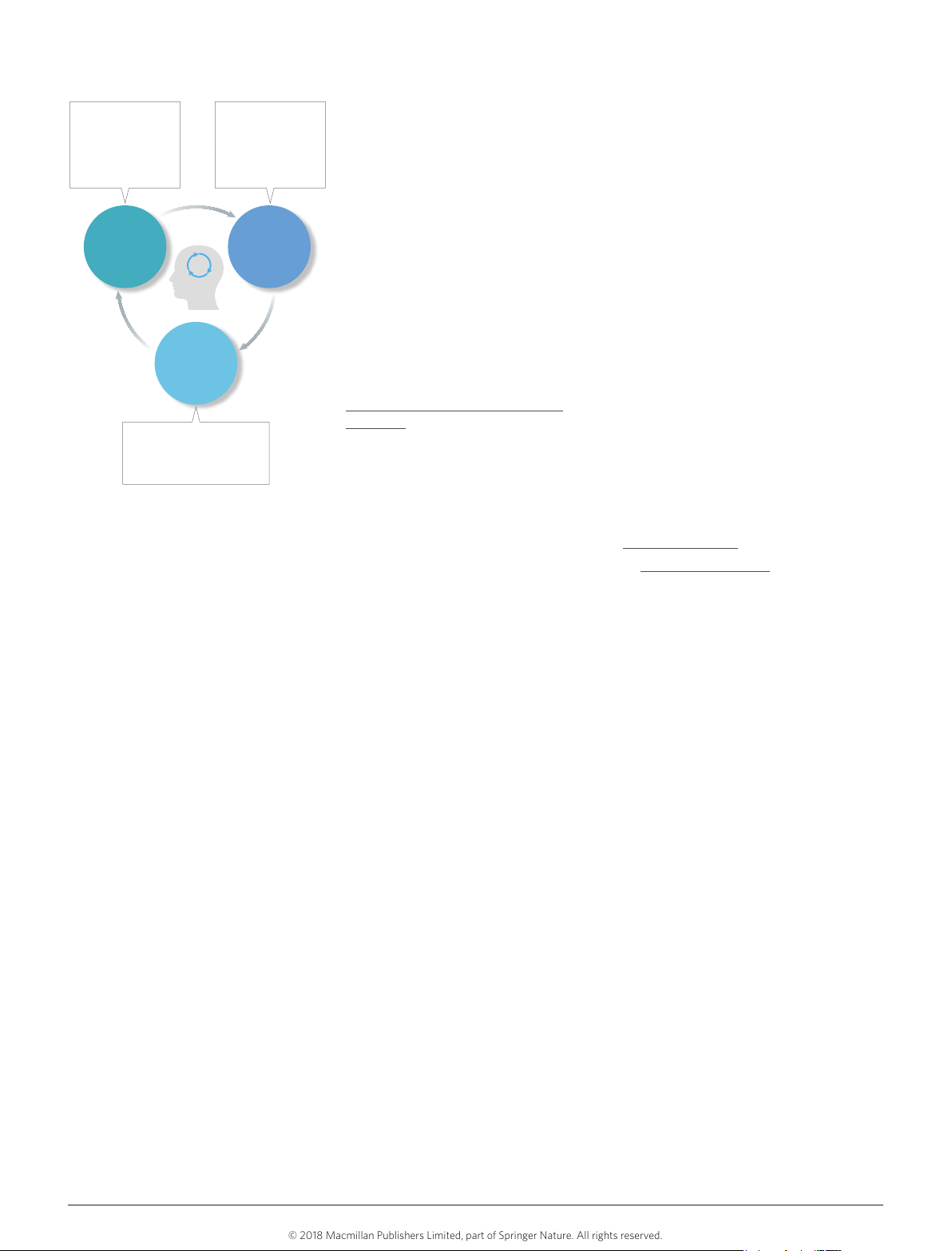
for analysis (FIG. 1) (Learning Objectives
systems for chemical substances. Widely used
hensive reorientation called for (Nat. Chem. 8,
and Strategies for Infusing Systems Thinking
in agriculture because of the protection they
393–396; 2016) or outlined here. However,
into (Post)-Secondary General Chemistry
provide against soil, timber, seed and animal
many approaches to tackling learning chal-
Education. 100th Canadian Society for
pests, these pesticides have been implicated
lenges involve strategies for introducing
Chemistry Conference, Toronto, ON; May
in the major decline of populations of honey
aspects of systems thinking to learners. Here,
30, 2017). The chemistry learner is placed
bees, which are important vehicles in pollina-
students’ viewpoints can be widened if they
at the centre of this framework, which com-
tion. The growing evidence regarding the risks
look beyond the trees and think in terms of
prises three nodes or central elements that
that neonicotinoids may pose to pollinators,
the forest. Engaging in ‘forest thinking’ enables
contribute to the understanding of the inter-
ecosystems and systems of food production
students to consider changes over time, seeing
dependent components within and among
has prompted policy makers to propose or
data and concepts in rich contexts and by using the complex and dynamic systems involved
consider substantial restrictions on the use of
case-based and problem-based approaches to
in student learning. The learner systems node
neonicotinoids in agricultural systems around
learning (ACS Sustainable Chem. Eng. 2,
explores and describes the processes at work the world.
2488–2494; 2014). At the pre-col ege level in
for learners, which include taxonomies of
On considering the challenges and exam-
the USA, the approach of the Next Generation
learning domains, learning theories, learning
ples above, one can imagine a compelling set
Science Standards (Next Generation Science
progressions, models for the phases of mem-
of potential benefits arising from re orienting Standards. www.nextgenscience.org) and the
ory, the transition from rote to meaningful
chemistry education toward systems
National Academies’ Framework on which
learning and social contexts for learning. The thinking:
they are based is to adopt three-dimensional
chemistry teaching and learning node focuses
• Strengthening opportunities for devel-
learning. This combines core ideas, practices
on features of learning processes applied to the
oping a more unified approach within
and cross-cutting concepts, placing particu-
unique challenges of learning chemistry. These
the discipline of chemistry itself, which
lar emphasis on concepts that help students
include the use of pedagogical content knowl-
is too often taught, researched and
explore connections across different domains
edge; analysis of how the intended curriculum
practiced within compartmentalized
of science. Importantly, attention is specifical y
is enacted, assessed, learned and applied; subdisciplines.
focused on understanding systems. Research
and student learning outcomes that include
2 | ARTICLE NUMBER 0126 | VOLUME 2
www.nature.com/natrevchem
© 2 0 1 8 M a c m i l a n P u b l i s h e r s L i m i t e d , p a r t o f S p r i n g e r N a t u r e . A l r i g h t s r e s e r v e d .
© 2 0 1 8 M a c m i l a n P u b l i s h e r s L i m i t e d , p a r t o f S p r i n g e r N a t u r e . A l r i g h t s r e s e r v e d . I N T H E C L A S S R O O M Features of Theoretical
Development Goals and descriptions of the
problems and advancing global sustainable learning processes frameworks of
earth’s planetary boundaries. Educational
development. These will be ample rewards for applied to the learning, learning
systems to address the interface of chemistry
making an effort that will chal enge traditional unique challenges progressions and of learning the social contexts
with earth and societal systems include green
approaches to teaching this vital y important chemistry for learning
chemistry and sustainability education, and discipline.
use tools such as life cycle analysis.
Peter G. Mahaffy is at the Department of Chemistry
and the King’s Centre for Visualization in Science,
Integrating systems thinking into practice Chemistry
The King’s University, Edmonton, Canada. teaching and Learner
Required now is the development of new learning systems
systems-oriented approaches to secondary
Alain Krief is at the International Organization for
Chemical Sciences in Development, Namur, Belgium;
school, high school and undergraduate chem-
the Chemistry Department, Namur University, Namur,
istry courses, including gateway introductory
Belgium; and the Hussain Ebrahim Jamal Research
post-high-school chemistry courses that serve
Institute of Chemistry, University of Karachi, Karachi,
both future chemists and many other future Pakistan. Earth and
scientists. New learning resources designed to
Henning Hopf is at the International Organization for societal
support such teaching are also needed
Chemical Sciences in Development, Namur, Belgium; systems
A project initiated in 2017 by the
and the Institute of Organic Chemistry, Technische
Universität Braunschweig, Braunschweig, Germany.
International Union of Pure & Applied
Chemistry (IUPAC) and supported by the
Goverdhan Mehta is at the International Organization Elements that orient
International Organization for Chemical
for Chemical Sciences in Development, Namur, chemistry education
Belgium; and the School of Chemistry, University of toward meeting societal
Sciences in Development (IOCD), with the
Hyderabad, Hyderabad, India. and environmental needs
participation of 18 global leaders in chemistry
education, has the goal of developing learn-
Stephen A. Matlin is at the International Organization
for Chemical Sciences in Development, Namur,
Figure 1 | A framework for analysis of systems ing objectives and strategies for integrating
Belgium; and the Institute of Global Health Innovation,
thinking in chemistry education. The
systems thinking into general undergraduate
Imperial College London, London, UK.
framework comprises three nodes or
chemistry education. It will use the frame- s.matlin@imperial.ac.uk
subsystems: learner systems, chemistry
work (FIG. 1) of the three interconnected nodes doi:10.1038/s41570.018.0126
teaching and learning, and earth and societal
of learner systems, chemistry learning and Published online 29 Mar 2018 systems.
teaching, and earth and societal systems as a Acknowledgements starting point.
We thank the International Organization for Chemical
responsibility for the safe and sustainable use
Reorienting chemistry education through
Sciences in Development for supporting a workshop hosted
of chemicals, chemical reactions and technol-
systems thinking can benefit students’ learning in Namur, Belgium during which this article was prepared.
We also acknowledge the contributions of Kris Ooms toward
ogies. The earth and societal systems node
of the subject. It can also enhance chemistry’s
visualizing the framework in Figure 1, and Tom Holme and
orients chemistry education toward meeting
impact as a science for the benefit of society,
Jennifer MacKellar for work on the earth and societal systems node.
societal and environmental needs articulated
further strengthening its already considerable
in initiatives such as the UN Sustainable
capacity to contribute to addressing global Competing interests
The authors declare no competing interests.
NATURE REVIEWS | CHEMISTRY
VOLUME 2 | ARTICLE NUMBER 0126 | 3
© 2 0 1 8 M a c m i l a n P u b l i s h e r s L i m i t e d , p a r t o f S p r i n g e r N a t u r e . A l r i g h t s r e s e r v e d .
© 2 0 1 8 M a c m i l a n P u b l i s h e r s L i m i t e d , p a r t o f S p r i n g e r N a t u r e . A l r i g h t s r e s e r v e d .