Lesson plan Tiếng anh 10 friends global - Unit introduction - Lesson c: vocabulary Describing people
Lesson plan Tiếng anh 10 friends global - Unit introduction - Lesson c: vocabulary Describing people . Tài liệu giúp bạn tham khảo, ôn tập và đạt kết quả cao. Mời đọc đón xem!
Chủ đề: Tài liệu chung Tiếng Anh 10 25 tài liệu
Môn: Tiếng Anh 10 697 tài liệu
Tác giả:




Preview text:
Period
LESSON PLAN
TIẾNG ANH 10 FRIENDS GLOBAL
UNIT INTRODUCTION
LESSON C: VOCABULARY
DESCRIBING PEOPLE
I. OBJECTIVES:
By the end of the lesson, Ss will be able to:
1. Knowledge:
- Get some more knowledge to talk about adjectives to describe hair
- Vocabulary: wavy, curly, fair, trousers, waistcoat
2. Ability:
- main skills: writing and speaking
- Using adjectives to describe hair
- Ask and answer about people’s appearance
3. Quality:
- have positive attitude in English language learning so that they can participate enthusiastically in all classroom activities, especially with the topic conducted by the teacher
- know how to describe people’s appearance, especially hair by using adjectives
II. TEACHER AIDS AND LEARNING MATERIALS:
Lesson plan, PPT slides, student’s book, workbook, notebook, personal computer (if any), projector/TV. Speakers, IWB software.
III. PROCEDURES:
A. Warm-up (5’)
a) Objective: Introduce the new lesson and set the scene for Ss to acquire new language; get students' attention at the beginning of the class by means of enjoyable and short activities as well as to engage them in the steps that followed.
b) Content: Warm-up game
c) Outcomes: Students can gain more confidence and interest in the lesson
d) Competence: communication, guessing, collaboration
e) Organisation of the activity:
TEACHER’S ACTIVITIES | STUDENT’S ACTIVITIES | CONTENTS |
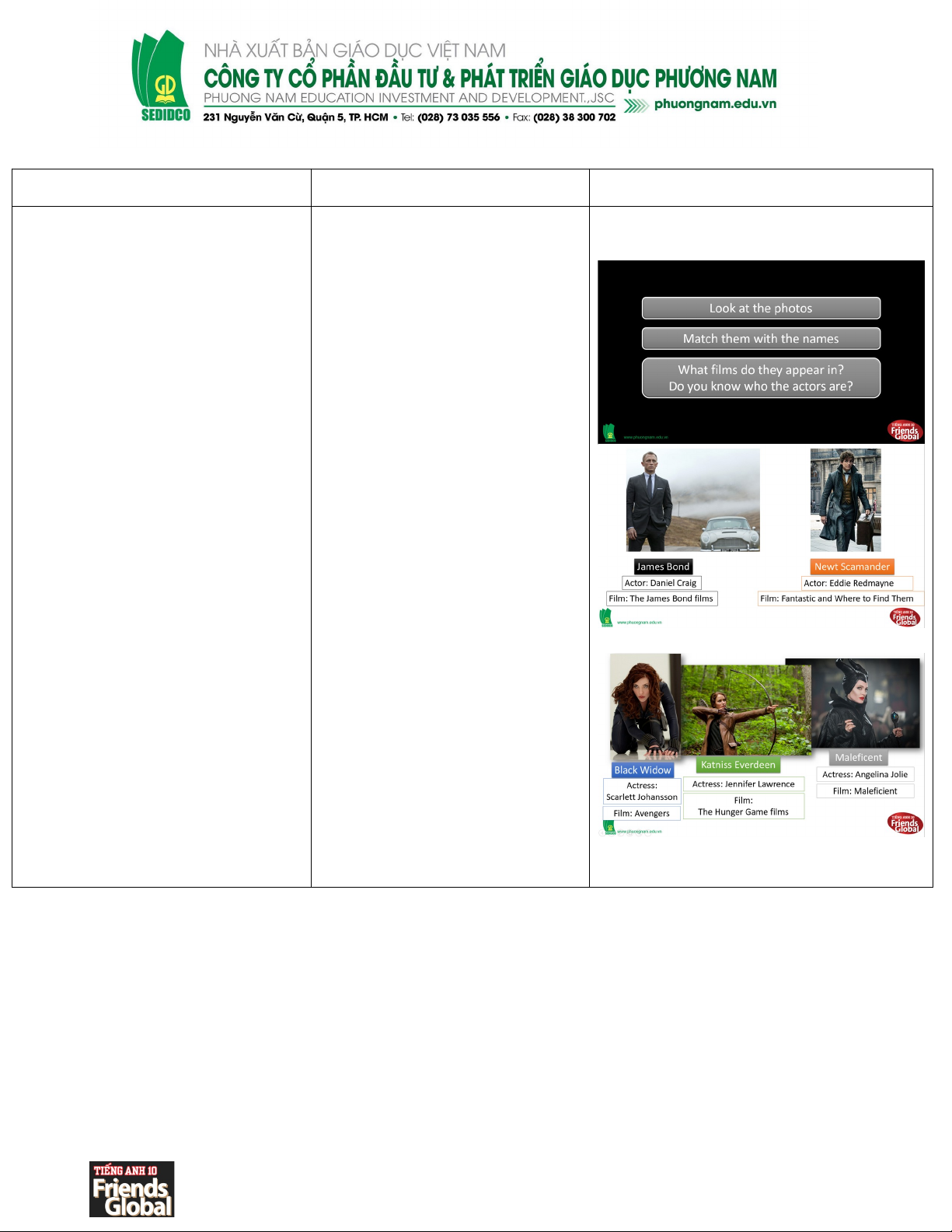
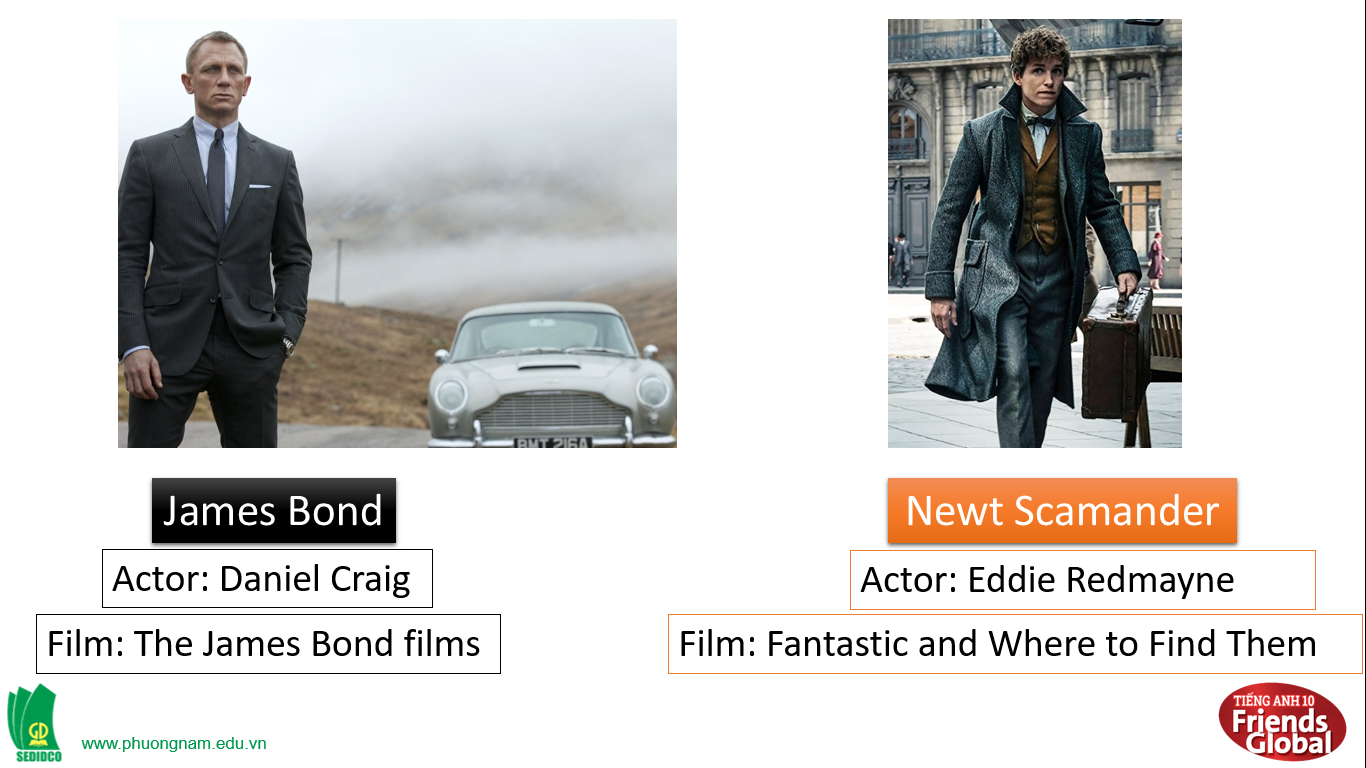
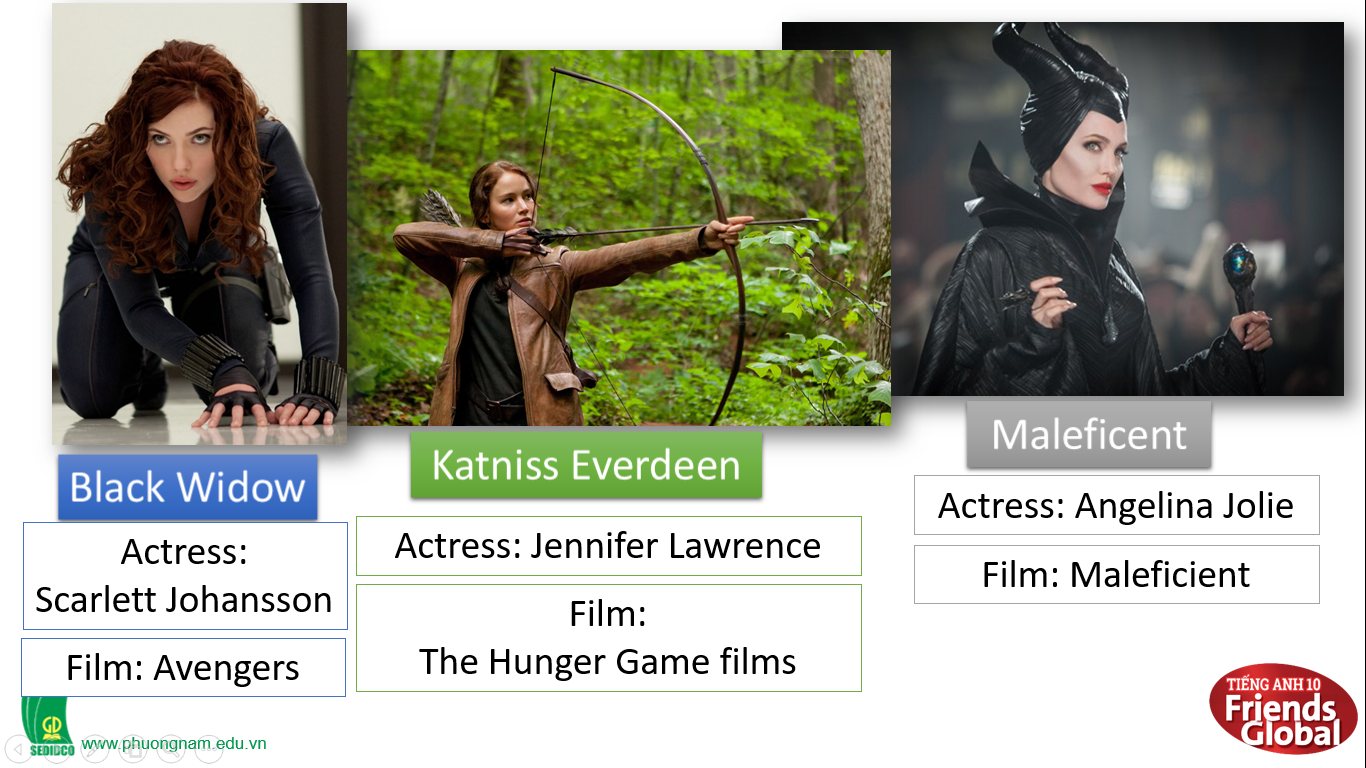
Warm-up T-Ss- T/ Ss – Ss Game “GUESSING NAMES” (5’)
|
|
|
B. New lesson (35’)
- Activity 1: Vocabulary (8’)
a) Objective: Ss know more words about adjectives to describe hair
b) Content:
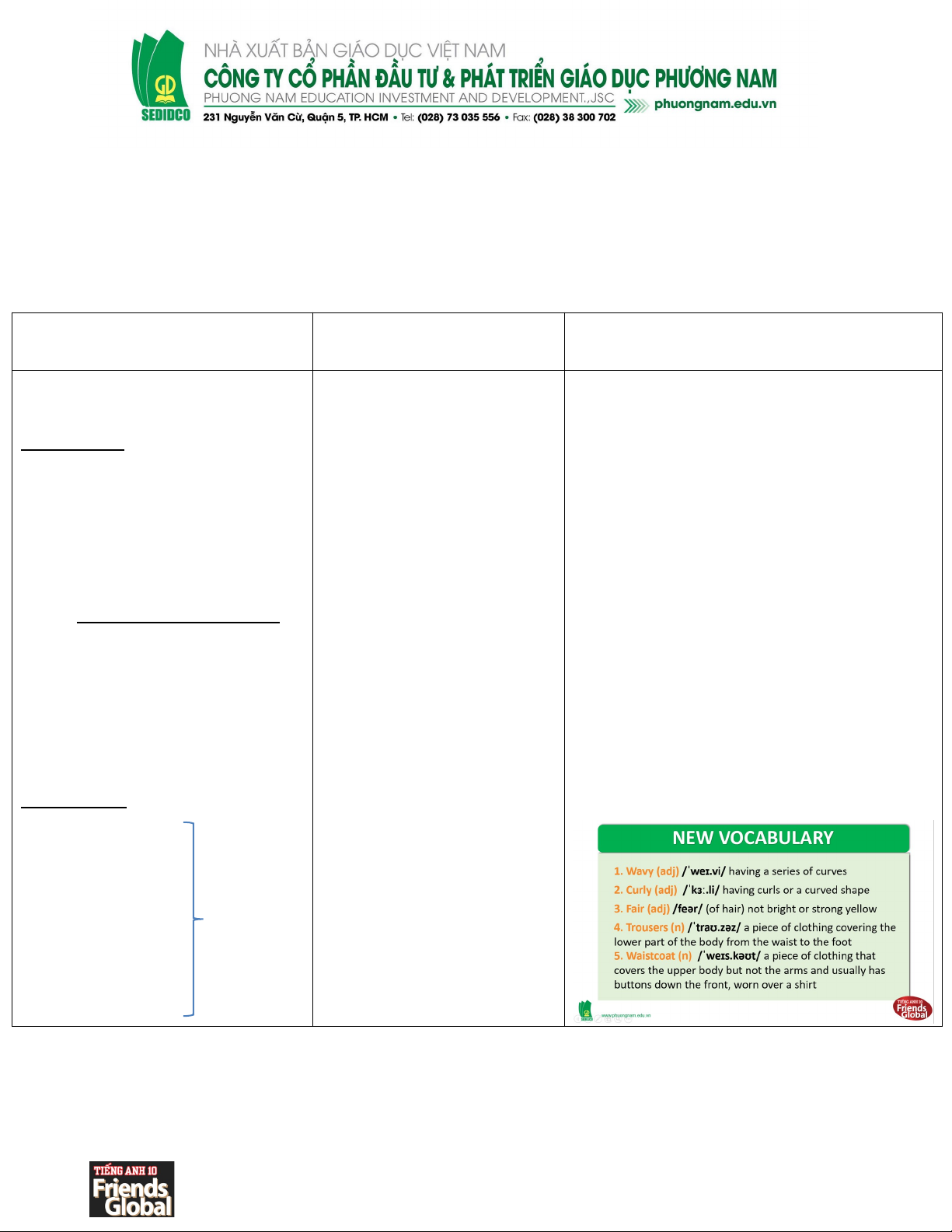
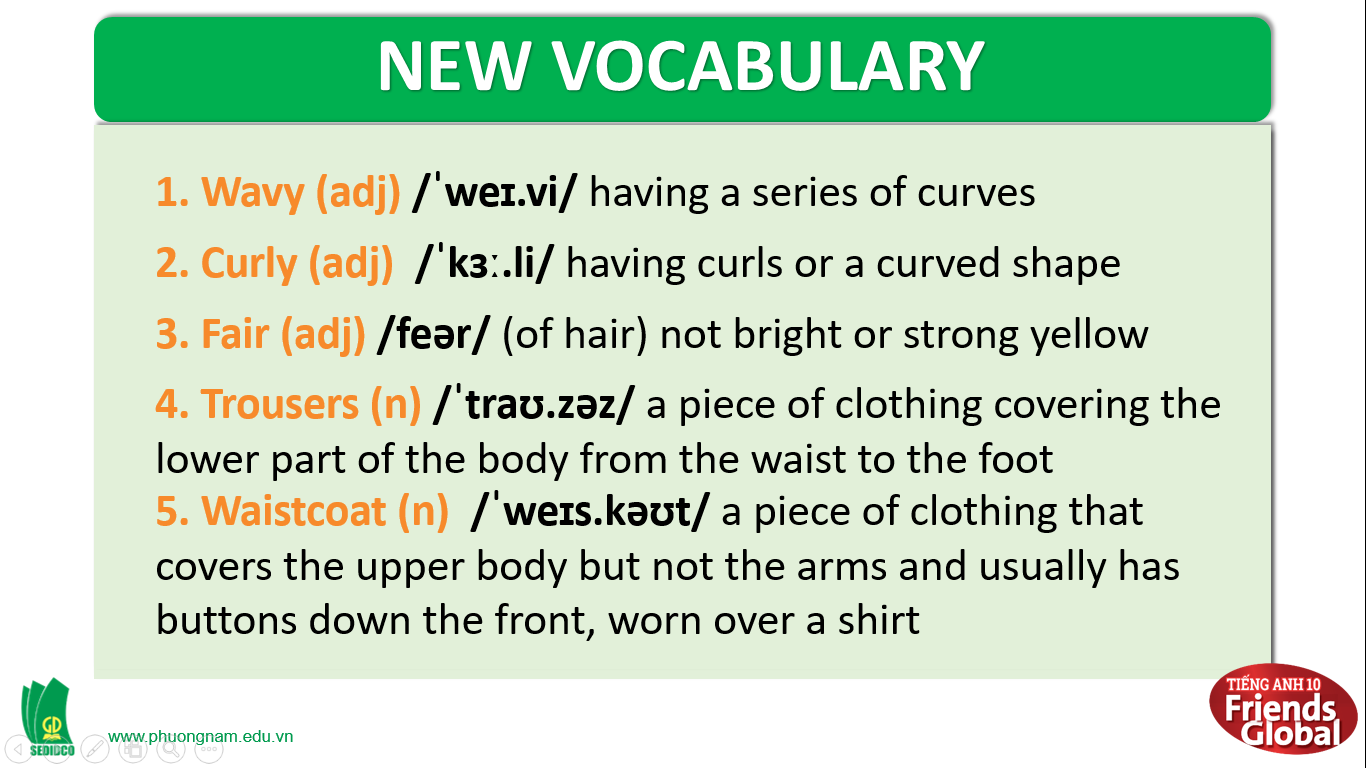
Vocabulary: wavy, curly, fair, trousers, waistcoat
Listening
c) Outcomes: Ss know how to pronounce the new words precisely and use them in appropriate contexts.
d) Competence: communication, drilling
e) Organisation of the activity:
TEACHER’S ACTIVITIES | STUDENT’S ACTIVITIES | CONTENTS |
PRESENTATION. T -Ss- T/ Ss- Ss/ Individual Set context:
New words: wavy (a) curly (a) fair (a) picture + trousers (n) meaning waistcoat (n) medium-length (a) moustache (n) |
| Question:
New words:
|
- Activity 2 Practice (22’)
a) Objective: Ss can answer the questions to critical thinking, and they can also finish the tasks in the textbook. Critical thinking skills (guessing/ reasoning) and communication can also be practiced.
b) Content: Students answer questions, classify words, choose the correct answer, read and complete, listen and match.
c) Outcomes: Ss read and listen, and they can apply the useful language in everyday listening and speaking.
d) Competence: collaboration, guessing, matching, communication
e) Organisation of the activity:
TEACHER’S ACTIVITIES | STUDENT’S ACTIVITIES | CONTENTS |
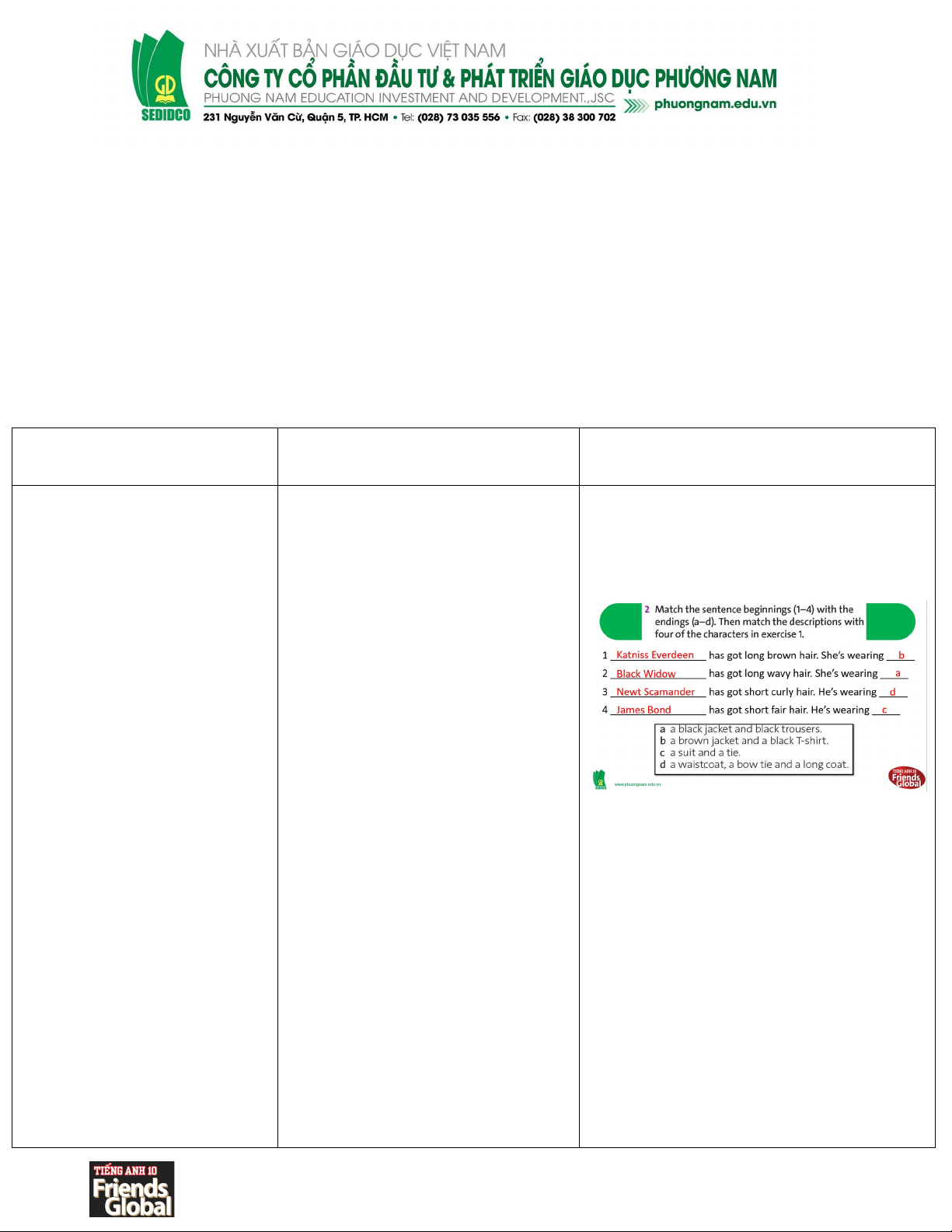
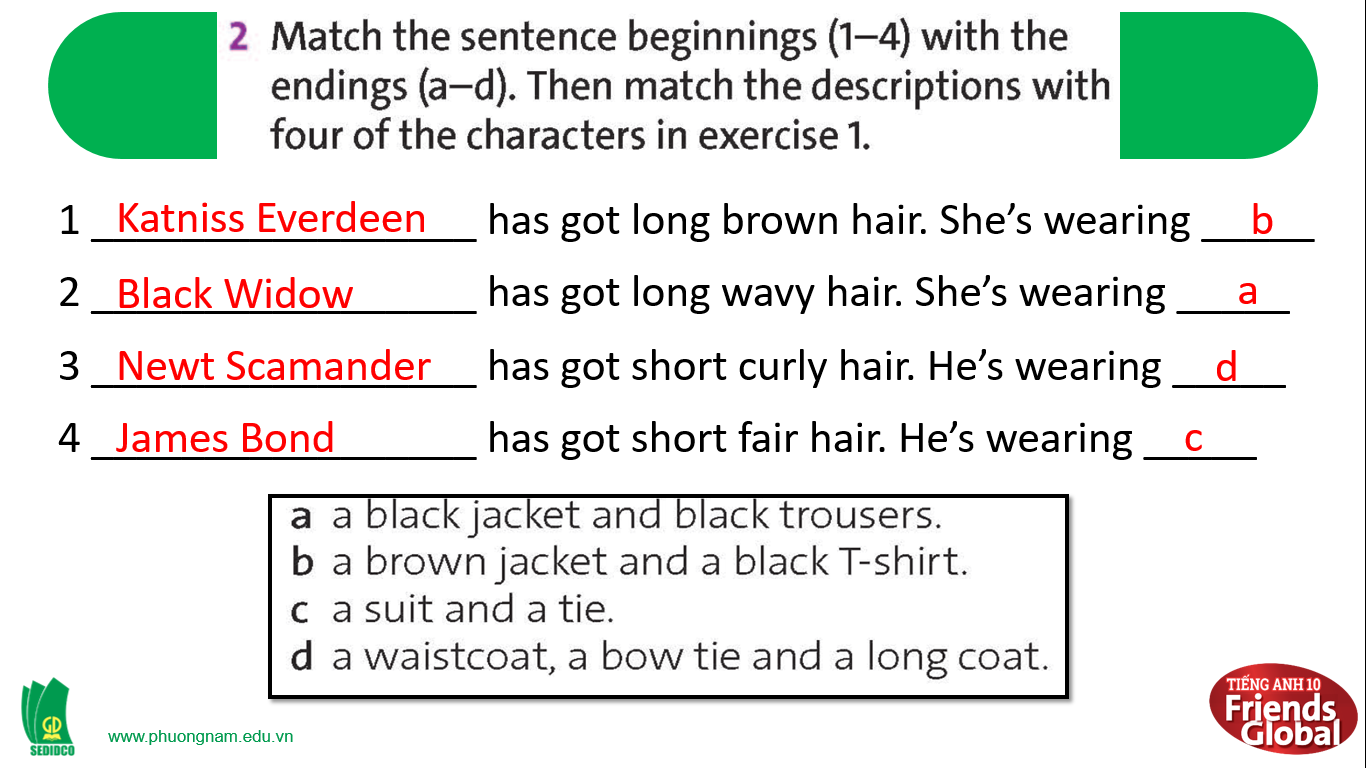
PRACTICE. T-Ss- T/ S – S/ Indiv. Activity 2 (4’) Match the sentence beginnings (1-4) with the endings (a-d). Then match the descriptions with four of the characters in exercise 1.
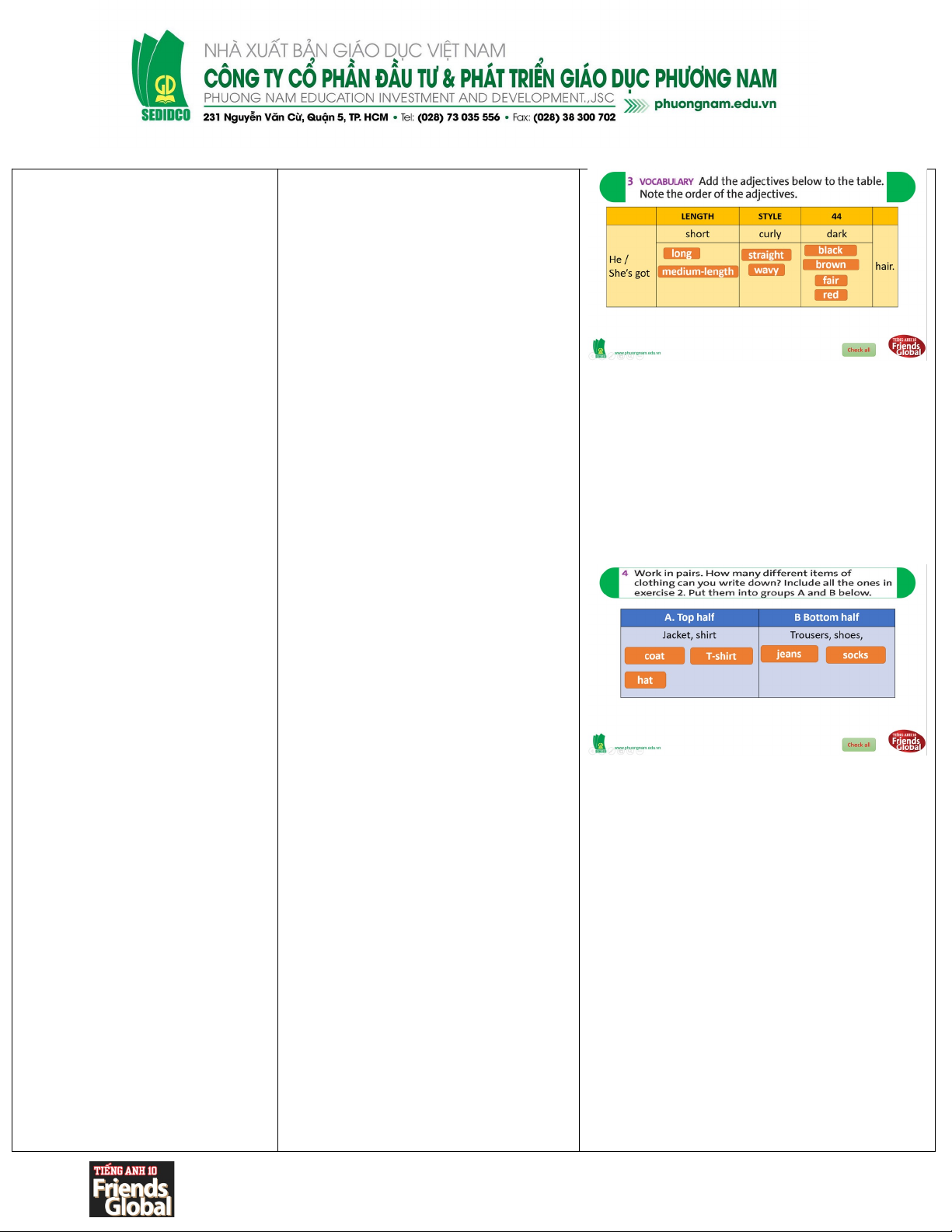
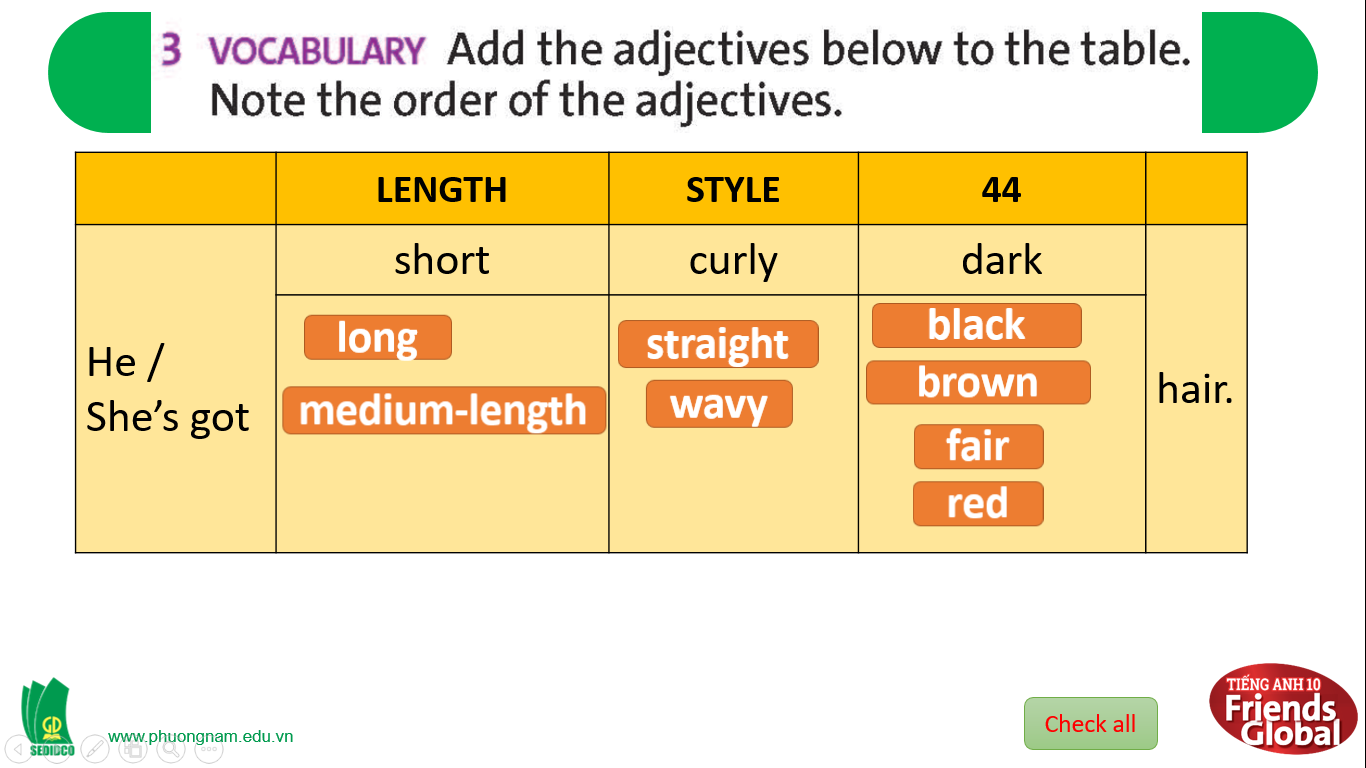
Activity 3 (3’) VOCABULARY. Add the adjectives below to the table. Note the order of the adjectives.
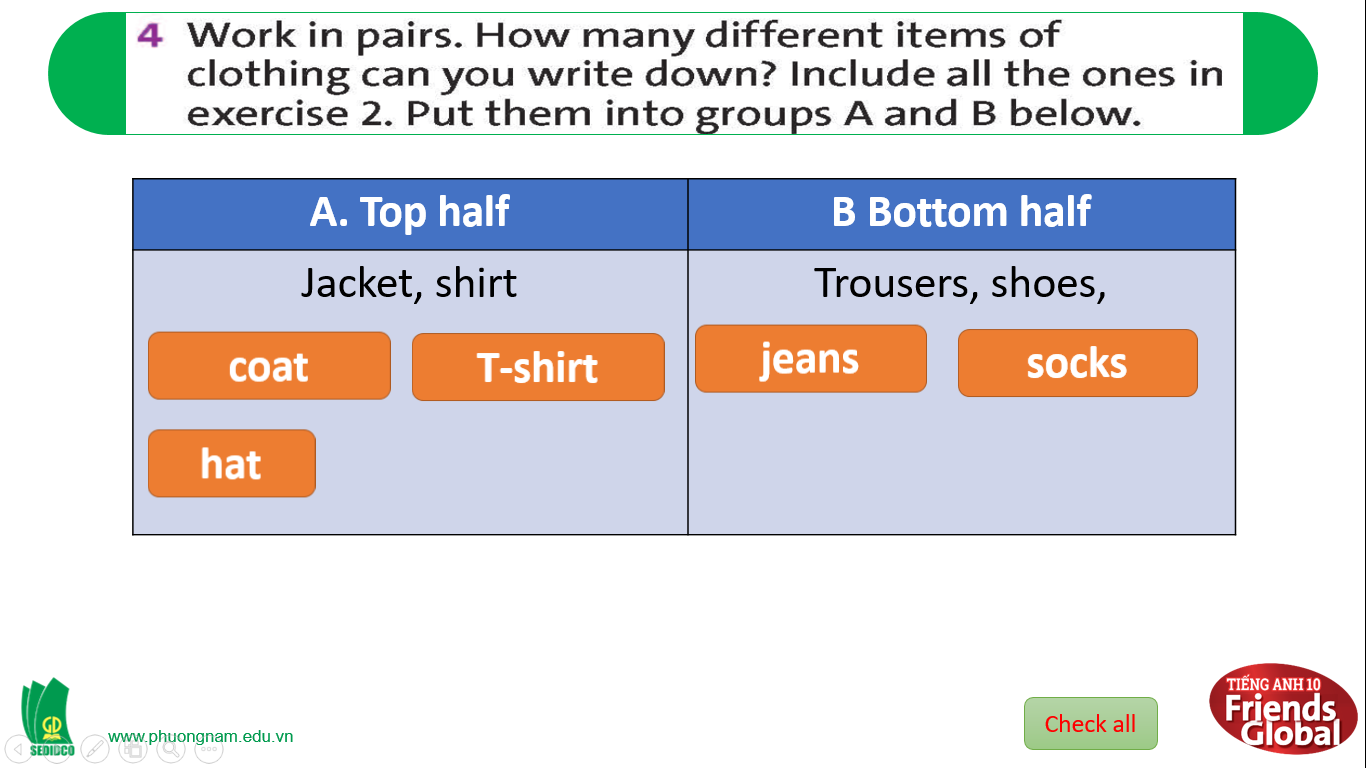
Activity 4 (4’) Work in pairs. How many different items of clothing can you write down? Include all the ones in exercise 2. Put them into groups A and B below.
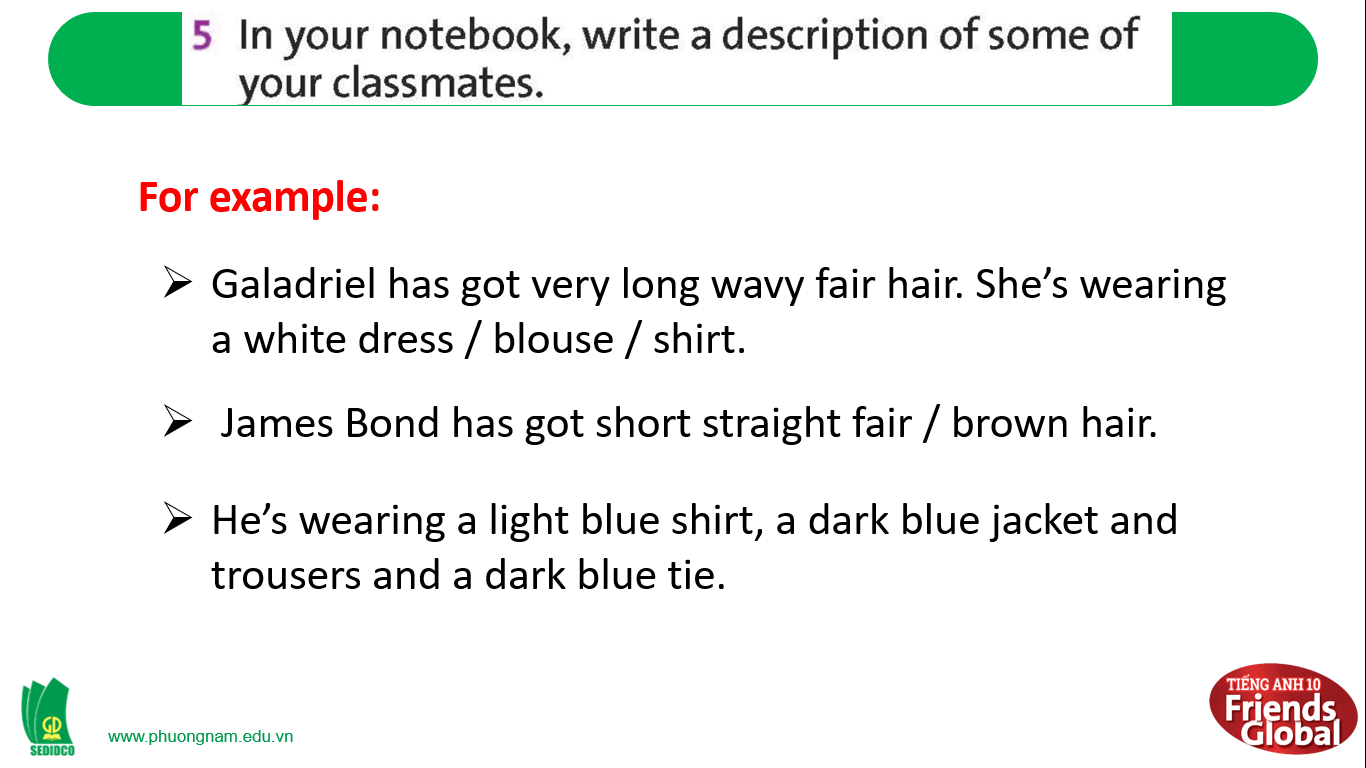
Activity 5 (6’) In your notebook, write a description of some of your classmates.
|
| Answers:
Answers:
Suggested answers:
Possible answers:
|
- Activity 3: Outcomes (5’)
a) Objective: Ss can answer the question to describe people’s appearance in some situations. Communication is also be practiced.
b) Content: Students work in pairs, speak and discuss
c) Outcomes: Ss speak and listen mutually, they can new words they have learnt in their conversation.
d) Competence: Collaboration, communication
e) Organisation of the activity:
TEACHER’S ACTIVITIES | STUDENT’S ACTIVITIES | CONTENTS |
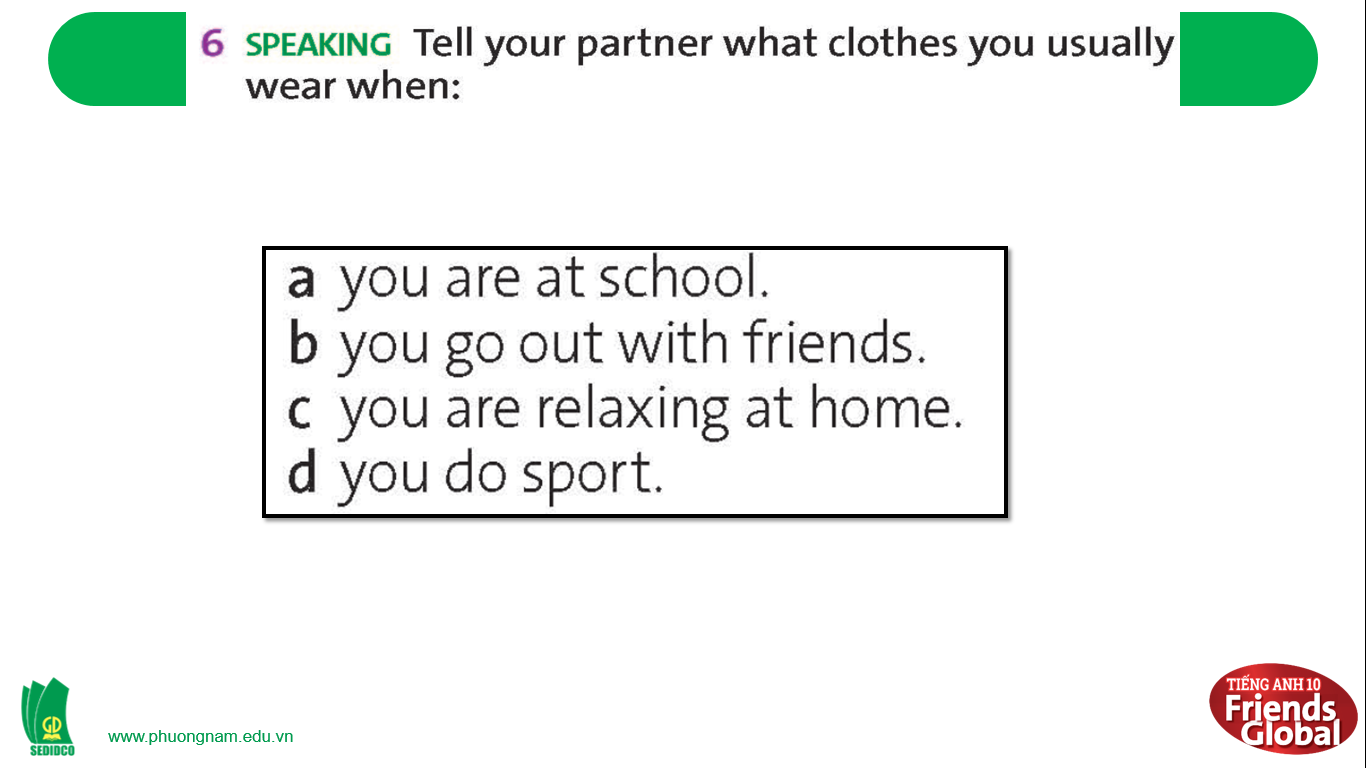
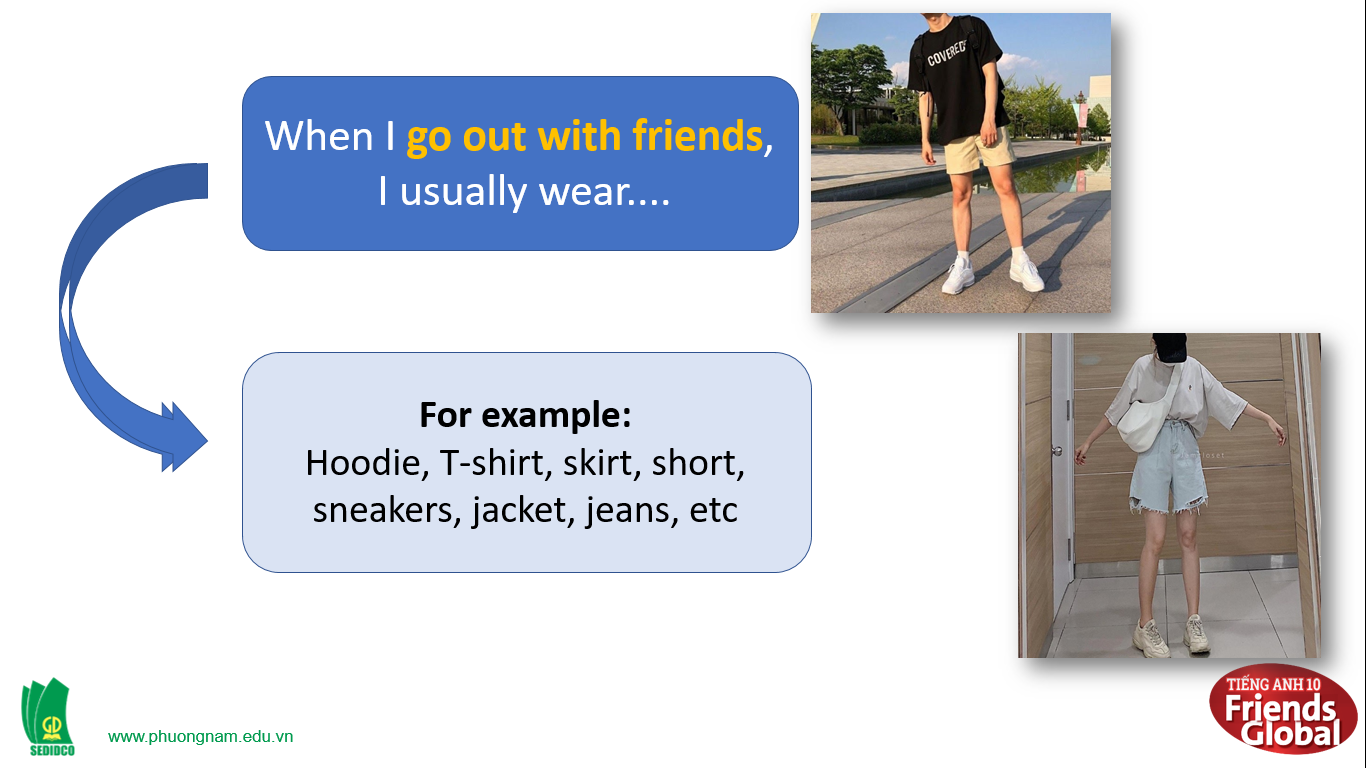
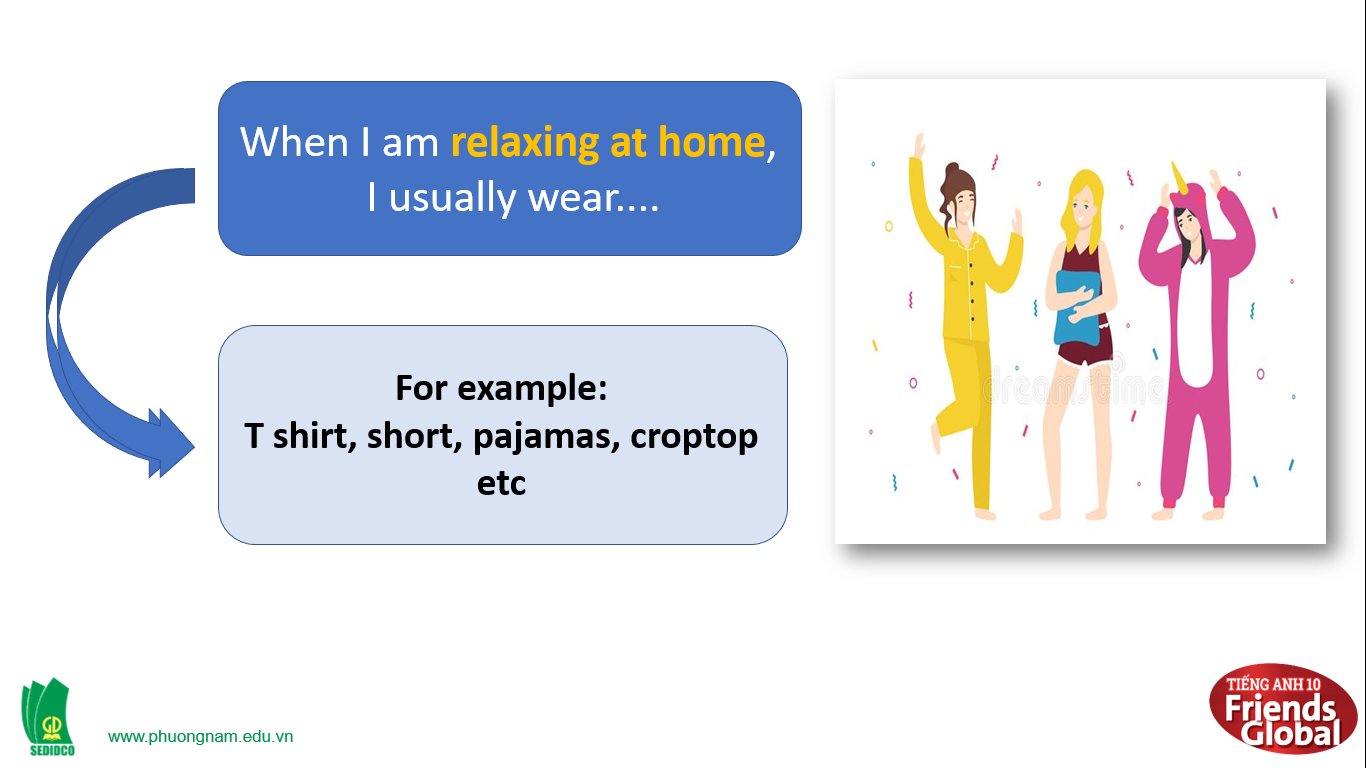
PRODUCT. S – S/ T – Ss Activity 6 (5’) SPEAKING. Tell your partner what clothes you usually wear when:
|
| Questions:
|

C. Consolidation (3’)
a) Vocabulary: wavy, curly, fair, trousers, waistcoat
b) Talking about people’s appearance especially people’s hair
D. Homework (2’)
- Learn by heart the vocabulary about people’s appearance
- Practice asking and answering about people’s appearance on specific occasions
- Do exercise in the workbook
- Prepare: Unit 0: Introduction – D-Grammar (page 7 – SB)
Tài liệu liên quan:
-
Bài Tập Unit 7 - Lớp 10: Global Success Practice Questions
22 11 -
CHUYÊN ĐỀ NGỮ PHÁP TIẾNG ANH - CÔ MAI PHƯƠNG (ANH VĂN 10-12)
21 11 -

Four Corners 2B-U11 - Expanding on the Shortcomings of Your Work
22 11 -
Tài liệu học tập GLOBAL SUCCESS lớp 10: Tổ chức quốc tế và từ vựng
22 11 -
TN Internet: Các Câu Hỏi Kiến Thức Về IPv4, IPv6 Và Elearning
29 15