A comprehensive review on background, technologies, applications,zero-trust architectures, challenges and future directions | Tài liệu Tiếng Anh
A comprehensive review on background, technologies, applications,zero-trust architectures, challenges and future directions | Tài liệu Tiếng Anh
Môn: Tiếng Anh chuyên ngành 332 tài liệu
Trường: Tài liệu Tiếng Anh chuyên ngành, Tiếng Anh cho người đi làm 432 tài liệu
Tác giả:


















Preview text:
Internet of Things and Cyber-Physical Systems 3 (2023) 213–248
Contents lists available at ScienceDirect
Internet of Things and Cyber-Physical Systems
journal homepage: www.keaipublishing.com/en/journals/
internet-of-things-and-cyber-physical-systems
Web3: A comprehensive review on background, technologies, applications,
zero-trust architectures, challenges and future directions Partha Pratim Ray Sikkim University, India A R T I C L E I N F O A B S T R A C T Keywords:
Web3, the next generation web, promises a decentralized and democratized internet that puts users in control of Web3
their data and online identities. However, Web3 faces significant challenges, including scalability, interopera- Decentralization
bility, regulatory compliance, and energy consumption. To address these challenges, this review paper provides a Blockchain
comprehensive analysis of Web3, including its key advancements and implications, as well as an overview of its Digital transformation
major applications in Decentralized Applications (DApps), Decentralized Finance (DeFi), Non-fungible Tokens DApps Zero-Trust architecture
(NFTs), Decentralized Autonomous Organizations (DAOs), and Supply Chain Management and Provenance
Tracking. The paper also discusses the potential social and economic impact of Web3, as well as its integration
with emerging technologies such as artificial intelligence (AI), the Internet of Things (IoT), and smart cities. This
article then discusses importance of zero-trust architecture for Web3. Ultimately, this review highlights the
importance of Web3 in shaping the future of the internet and provides insights into the challenges and oppor- tunities that lie ahead. 1. Introduction
them. We present a detailed background on the evolution of the interest
in this context as follows [16–20].
The Internet, as we know it today, has come a long way since its
inception. In the past few decades, it has evolved from a simple
information-sharing platform to an interactive, global network that
1.1. Background on the evolution of the internet
connects billions of people and devices [1–5]. This article aims to provide
a comprehensive understanding of the Internet's evolution and discuss
In the beginning at late 1960s, the development of the Advanced
Web3, the next stage in this ongoing transformation [6–8]. Web3, the
Research Projects Agency Network (ARPANET) by the United States
next generation web, is an emerging decentralized architecture that le-
Department of Defense as the first-ever computer network, enabling
verages blockchain technology to offer enhanced security, privacy, and
communication among connected computers. At the 1970s, Ray Tom-
autonomy to its users [9–12]. The Web3 ecosystem is rapidly evolving
linson invents email, transforming electronic communication and paving
with a wide range of dApps, DeFi platforms, NFTs, and DAOs emerging as
the way for later messaging platforms. In 1980s, introduction of the
key components. However, despite the immense potential of Web3, the
Internet Protocol Suite (TCP/IP) was done by Vint Cerf and Bob Kahn,
existing challenges such as scalability, regulatory compliance, and
which allowed multiple networks to communicate with each other,
environmental sustainability need to be addressed for its widespread
leading to the creation of the modern Internet. Tim Berners-Lee proposed adoption [13–15].
the World Wide Web (WWW) while working at CERN, laying the foun-
The motivation behind this review paper is to provide a compre-
dation for the web as we know it today. In 1990s, popularization of web
hensive overview of the Web3 ecosystem, its current state, potential
browsers took place like Mosaic and Netscape Navigator, making the
opportunities and challenges, and future perspectives. The primary
Internet more accessible to non-technical users. Launch of Amazon and
objective is to analyze the recent advancements in Web3 and explore
eBay, made the beginning of e-commerce and revolutionizing the way
their implications for various industries and sectors. Additionally, this
people shop. Rapid growth and expansion of the Internet embarked to
review paper aims to identify the key challenges hindering the wide-
include applications such as email, file sharing, and the World Wide Web,
spread adoption of Web3 and propose potential solutions to address
marking the beginning of Web 1.0. We saw the launch of Google, which
quickly becomes the dominant search engine due to its superior search
E-mail address: ppray@cus.ac.in.
https://doi.org/10.1016/j.iotcps.2023.05.003
Received 16 April 2023; Received in revised form 3 May 2023; Accepted 6 May 2023 Available online 9 May 2023
2667-3452/© 2023 The Author. Published by Elsevier B.V. on behalf of KeAi Communications Co., Ltd. This is an open access article under the CC BY-NC-ND license
(http://creativecommons.org/licenses/by-nc-nd/4.0/). P.P. Ray
Internet of Things and Cyber-Physical Systems 3 (2023) 213–248
algorithm and simple user interface. In 2020s, the broadband Internet
User-generated content: Web 2.0 platforms allowed users to create,
becomes more widely available, enabling faster connections and allow-
share, and interact with content in new ways, such as blogs, social
ing for richer online experiences, such as streaming media. We witnessed
media, wikis, and video-sharing sites. This gave rise to new forms of
the launch of Wikipedia, the collaborative online encyclopedia, show-
online collaboration, expression, and community-building, and
casing the power of user-generated content and knowledge sharing. We
challenged the traditional gatekeepers and intermediaries of the
also saw the launch of MySpace, the pioneering social networking plat-
media and entertainment industries.
form, which sets the stage for the rise of social media, Facebook, which
Social networking: Web 2.0 platforms also enabled users to connect
quickly gains popularity and eventually becomes the largest social
and communicate with each other in new ways, such as social
networking platform, connecting billions of users worldwide, YouTube,
networking sites like Facebook, Twitter, and LinkedIn. This created
revolutionizing the way people consume and share video content, and
new opportunities for personal and professional networking, social
giving rise to a new generation of content creators, Twitter, the micro-
activism, and collective intelligence, but also raised concerns about
blogging platform that allows users to share short messages (tweets) and
privacy, security, and online harassment.
follow real-time news and events. We also witnessed the rise of smart-
Personalization and recommendation: Web 2.0 platforms also used
phones, with the launch of the iPhone in 2007, followed by the release of
data analytics and algorithms to personalize and recommend content
the first Android device in 2008, greatly increases mobile Internet access
and services to users, based on their preferences, behaviors, and social
and usage at the mis of 2000s. In 2010s, we noticed the proliferation of
networks. This created new opportunities for targeted advertising,
cloud computing services, enabling individuals and businesses to store
content discovery, and user engagement, but also raised concerns
and access data remotely, and use software applications without the need
about filter bubbles, echo chambers, and algorithmic bias.
for local installations. The rise of messaging apps (e.g., WhatsApp,
Mobility and ubiquity: Web 2.0 platforms also expanded the reach
Telegram, WeChat) further revolutionized communication and paves the
and accessibility of the internet, by enabling users to access and
way for new business models and services. The emergence of IoT tech-
interact with content and services from anywhere and anytime,
nologies, connecting everyday objects to the Internet, and laid the
through mobile devices, tablets, and other portable gadgets. This
foundation for smart homes, smart cities, and Industry 4.0. In 2020s, we
created new opportunities for on-demand and location-based ser-
saw an increased focus on data privacy and security, leading to the
vices, but also raised concerns about digital addiction, distraction,
implementation of privacy regulations such as the General Data Protec- and disconnection.
tion Regulation (GDPR) in the European Union and the California Con-
Cloud computing and SaaS: Web 2.0 platforms also adopted cloud
sumer Privacy Act (CCPA) in the United States. During 2020–2021, the
computing and software-as-a-service (SaaS) models, which allowed
COVID-19 pandemic accelerated digital transformation across in-
users to access and use software and computing resources over the
dustries, highlighting the importance of the Internet in enabling remote
internet, without having to install or maintain them locally. This
work, online education, telemedicine, and contactless transactions. Also,
created new opportunities for cost savings, scalability, and collabo-
the growing awareness and adoption of blockchain technology and
ration, but also raised concerns about data security, vendor lock-in,
cryptocurrencies, with Bitcoin and Ethereum gaining mainstream and technological dependence.
acceptance, and the rise of DeFi platforms took place. Th world saw the
Overall, the key characteristics of the Web 2.0 era represented a
NFT boom, as digital artists, musicians, and content creators begin to
significant shift from the static and one-way nature of Web 1.0, to the
utilize blockchain technology to verify the uniqueness and ownership of
dynamic and interactive nature of Web 2.0. This shift empowered
digital assets. We found the emergence of DAOs, which leveraged
users to create, share, and interact with content and services in new
blockchain technology and smart contracts to enable decentralized
ways, and challenged the traditional models of media, entertainment,
decision-making and governance. The same was empowered by the
and communication. However, the Web 2.0 era also posed new
launch of Ethereum 2.0, aiming to improve the scalability, security, and
challenges and risks, such as privacy, security, and algorithmic bias,
sustainability of the Ethereum blockchain, further paving the way for the
that needed to be addressed in the evolution of the internet and the
development of Web3 applications. Later, the rise of the Metaverse, a digital economy.
collective virtual shared space, with platforms such as Decentraland,
Somnium Space, and CryptoVoxels gaining traction, and major tech
As the next stage of internet evolution, Web3 promises to revolu-
companies investing in the concept continued for the development of
tionize the digital landscape by fostering greater decentralization, user
Web3 technologies and protocols, such as Polkadot, Cosmos, and
empowerment, and innovation across various sectors, from finance and
Avalanche, focused on improving interoperability and scalability within
governance to data privacy and digital identity management. By
the blockchain ecosystem. Currently, an ongoing growth of the Web3
leveraging cutting-edge technologies and paradigms, Web3 seeks to
ecosystem, with an increasing number of dApps, NFT marketplaces, and
create a more equitable, secure, and interconnected online ecosystem for
DeFi platforms being developed and adopted by users, signaling a shift
all users. In Ref. [30], metaverse is associated with Web3 for use of
towards a more decentralized, secure, and user-centric Internet is being
simple business and economics purpose. It includes NFTs and merging noticed.
metaverse economy. This article lacks in technical detailing about Web3
As we move further into the 2020s, the Internet continues to evolve at
and its use in terms of other aspects. An article [31] focuses to examine
a rapid pace, with cutting-edge technologies like blockchain, AI, and the
the research on Web3.0 that has been published from 2003 to 2022. It
IoT pushing the boundaries of what's possible. The emerging Web3
used a technique called Latent Dirichlet Allocation (LDA) to identify
paradigm is poised to address the limitations of Web 2.0 and create a
seven research themes and their corresponding key phrases. The research
more equitable, secure, and interconnected digital world. The promise of
themes are interrelated and contribute to understanding various solu-
Web3 is increasingly tangible, as developers, entrepreneurs, and users
tions, applications, and use cases, such as metaverse and NFT. Addi-
around the globe work together to shape the future of the Internet. The
tionally, we propose an agenda for future research based on the
transition from Web1 to Web2 involves many events as discussed above
innovative work in Blockchain, decentralized networks, smart contracts, [21–26].
and algorithms. A study examines the elusive goal of Web3, which is to
create a “Universal Trust Machine” that would be owned by everyone and
no one in a truly decentralized paradigm [32]. To do so, the study first
1.2. Key characteristics of the Web 2.0 era
explains the challenge of generating trust without a middleman, drawing
from Robert Axelrod's seminal research on the evolution of cooperation
Here are some possible additions and improvements to the key
in the iterated prisoner's dilemma. The study then presents the infra-
characteristics of the Web 2.0 era [27–29]:
structural and social challenges that the Universal Trust Machine would 214 P.P. Ray
Internet of Things and Cyber-Physical Systems 3 (2023) 213–248
have to overcome to encourage long-term cooperation in a decentralized
components may destroy economic value, consumer confidence, or social
setting. Various reputation systems are presented as promising tech-
issues online. Furthermore, the importance of researchers focusing on
niques for promoting trustworthy behavior in a decentralized network
these interoperability issues and their potential impact on the positive
through indirect reciprocity. The study also discusses the emerging
and negative aspects of Web3 technologies is emphasized to help us
Distributed Ledger technologies that offer secure transaction facilitating
understand and shape our Web3 future. The competing economic and
and privacy-preserving techniques as a good complement to the limita-
philosophical approaches to the future of the internet are explored in
tions of current reputation systems. Finally, the study concludes by dis-
Ref. [38]. On one hand, the most successful internet advertising firms
cussing a future roadmap for creating the desired Universal Trust
(Facebook and Google) and their video game competitors (Roblox,
Machine. The major focus of this work remains in the trust factor no other
Microsoft's Minecraft, Epic Games, and Valve) are driving the internet,
aspects are discussed at all. In Ref. [33], the types of creative practi-
while on the other hand, Web3 advocates are focused on cryptocurren-
tioners who are utilizing web3 technologies are detailed. By examining
cies, nonfungible tokens, DeFi, and DAOs. This article reviews three core
empirical data and conducting a review of research literature and media
areas for the development of the metaverse within the context of U.S.
coverage, it is demonstrated that income is being earned by artists who
law: the regulatory environment, the transactional essentials, and the
previously struggled to monetize their work through web3 technologies.
limits on governmental intrusion into the metaverse.
In fact, many of these practitioners come from traditionally marginalized
Research Gaps of Existing Review Papers:
backgrounds or practices. Differentiation is made between creative pro-
fessionals who use blockchain technologies generally, those who inte-
Lack of understanding about the potential impact of Web3 on various
grate blockchain technologies into their creative processes, proxy users industries and sectors
who collaborate with others that engage with the technologies on their
Limited research on the technical, organizational, and regulatory
behalf, and non-users of blockchain technologies. Despite the increased
interoperability needed for Web3 to deliver on its promises
activity surrounding non-fungible tokens (NFTs) in 2021, the adoption
Uncertainty regarding the degree to which Web3 will be widely
and usage of web3 technologies in Australia is still in its early stages. A
adopted and its implications for e-commerce, digital media, online
divided response among creative practitioners towards these technolo-
social networking, online marketplaces, search engines, supply chain
gies is revealed by our survey. In Ref. [34], a comprehensive survey of
management, and finance, among other areas
Web3 is presented, with a focus on current technologies, challenges,
Limited research on the types of creative practitioners utilizing Web3
opportunities, and outlook. Several major Web3 technologies are intro- technologies and their impact
duced, and the type of Web3 applications is illustrated in detail. It is
Insufficient research on the factors that will help in the development,
explained that decentralized organizations are less trusted and more
successful adoption, and sustainable use of the Web3/metaverse and
truthful than centralized organizations, thanks to blockchain and smart its applications
contracts. Decentralized finance is emphasized as a global and inclusive
Limited understanding of the potential impact of decentralized AI and
system for unbanked people. The relationship between the Metaverse
edge intelligence on smart blockchain, Web3, metaverse, and
and Web3, as well as the differences and similarities between Web 3.0
decentralized science disciplines
and Web3, are also discussed. Maslow's hierarchy of needs theory
inspired a novel hierarchy of needs theory within Web3. Finally, several
The major contributions of this review paper include following that
future research directions of Web3 are worth considering. However, it
aims to resolve above research gaps:
lacks in in-depth understanding, challenges and future direction. An
article [35] derived from the current state-of-the-art literature, four
A detailed analysis of the Web3 ecosystem and its components,
essential elements, including appropriate decentralization, good user
highlighting the opportunities and challenges associated with each.
experience, appropriate translation and synchronization to the real
Moreover, it provides insights into the potential impact of Web3 on
world, and a viable economy, are introduced, which are required for the
various industries and sectors, as well as its future prospects,
appropriate implementation of a metaverse and its applications. The
including the metaverse, AI, and the integration with the IoT and
development of the Metaverse is dependent on decentralization, and smart cities.
blockchain can play a significant part in the future of Web3. Additionally,
Then, it presents various zero-trust architectures.
this paper sheds light on the most relevant open issues and challenges
Finally, this review paper proposes potential solutions to address the
currently facing the Web3/metaverse and its applications, with the hope
key challenges hindering the widespread adoption of Web3, including
of encouraging the development of appropriate solutions. A paper [36]
scalability, regulatory compliance, and environmental sustainability.
reviews and outlines the conceptual map, research issues, and technical
opportunities of decentralized AI and edge intelligence, going beyond
This paper is organized as follows. Section 2 presents key features of
centralized and distributed AI. The complementarity and metasynthesis
Web3. Section 3 deals with existing technologies that support Web3.
between centralized and decentralized AI are also explained. Decentral-
Section 4 discuss about various applications and use cases. Section 5
ized AI and edge intelligence are assessed for their potential to enable
presents zero-trust architecture for web3. Section 6 presents the key
and promote smart blockchain, Web3, metaverse, and decentralized
challenges of Web3. Section 7 discusses about future directions about
science disciplines in terms of discipline, technical, practical, and broader
Web3. Section 8 concludes this review paper. Table 1 presents the ab-
aspects. The next major generational evolution of the web, Web3, is
breviations and key terms used in this paper.
introduced in Ref. [37]. The fundamental evolution of the internet and
the web over the past three decades is reviewed, including a brief pre- 2. Key features of Web3
sentation of important publications in Business Horizons related to the
emergence of Web3. The implications of recent developments on orga- 2.1. Decentralization
nizations, consumers, and the public are discussed. Although it is un-
certain to what extent Web3 will be widely adopted, these technologies
Decentralization is the process of distributing and dispersing power,
are already creating both exhilarating and terrifying implications for
authority, and control away from a central authority or location. In the
e-commerce, digital media, online social networking, online market-
context of the internet and Web3, decentralization refers to the shift from
places, search engines, supply chain management, and finance, among
centralized servers, data centers, and intermediaries to distributed net-
other areas. The consideration and management of technical, organiza-
works, peer-to-peer protocols, and user-centric models. Decentralization
tional, and regulatory interoperability for Web3 to deliver on its promises
promotes a more open, transparent, and equitable digital ecosystem,
of value are proposed. Failure to consider these interoperability
reducing the risk of censorship, downtime, data breaches, and single 215 P.P. Ray
Internet of Things and Cyber-Physical Systems 3 (2023) 213–248 Table 1
points of failure. Decentralized systems can foster increased innovation Abbreviations and key terms.
and collaboration by empowering users and communities to contribute to
the development and management of platforms, applications, and digital Abbreviations Full Form
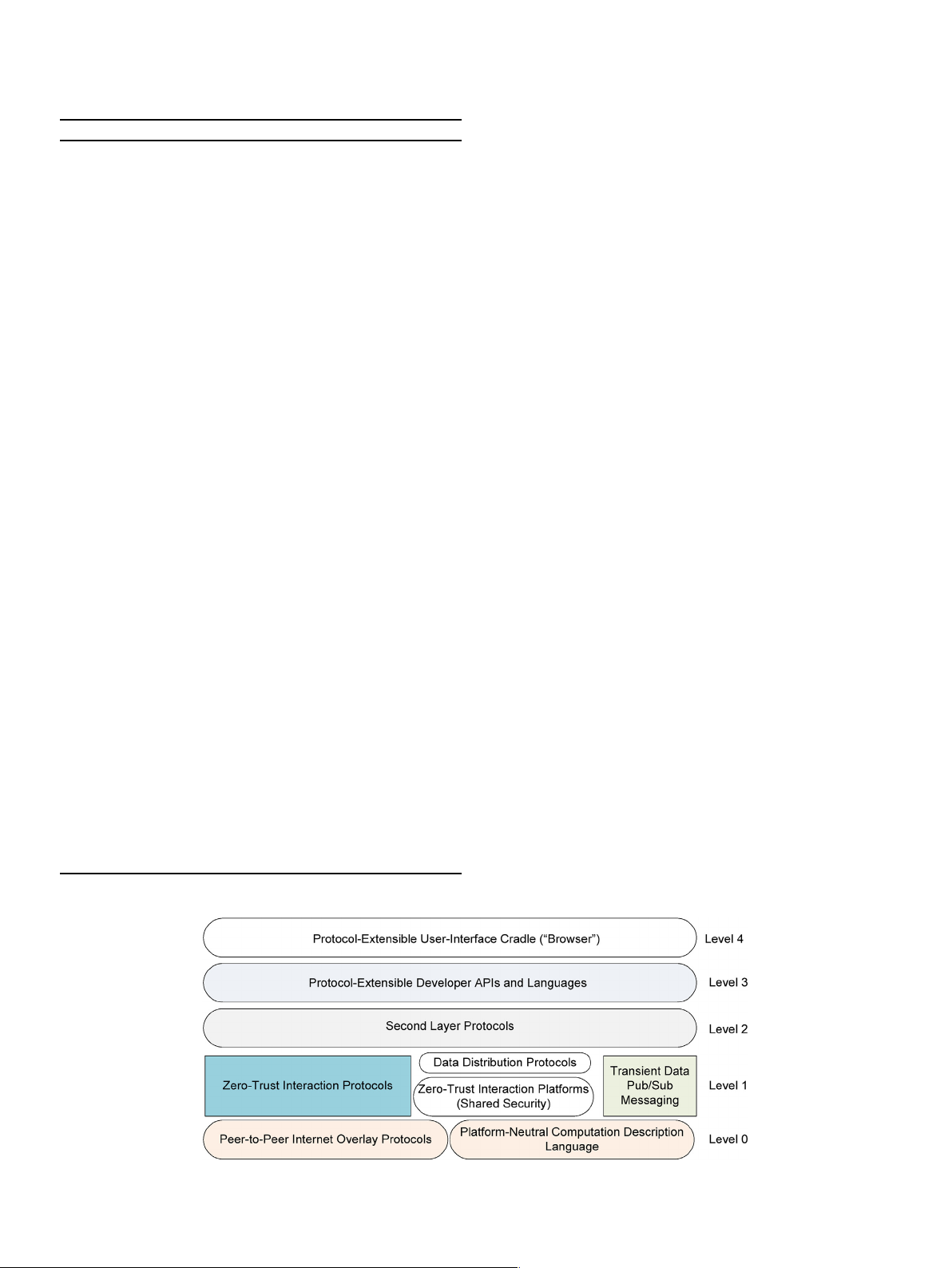
assets. In Ref. [39], a five layered Web3 technology stack is presented as AI Artificial Intelligence
shown in Fig. 1. Level 0 comprises of P2P internet overlay networks (e.g., AML Anti-Money Laundering AR Augmented Reality
Devp2p, Libp2p) and platform neural computation description lan- ARPANET
Advanced Research Projects Agency Network
guages. Level 2 includes zero-trust interaction platforms and/or protocols ASIC
Application-Specific Integrated Circuits
as well as transient data messaging tools along with data distribution ASP Adaptive Security Platform
protocols such as IPFS. Level3 uses state channels, encrypted storage, AWS Amazon Web Services
plasma protocols heavy computations, oracles, storage incentives and CCPA
California Consumer Privacy Act CMS Content Management System distributed secret management tools. Level 3 consists of DAG Directed Acyclic Graph
protocol-extension APIs such as Web3.js, Solidity, Rust and ether.js. DAOs
Decentralized Autonomous Organizations
Lever 4 uses protocol extensible user interface cradle for example DApps Decentralized Applications Metamask. dCDNs
Decentralized Content Delivery Networks dDNS
Decentralized Domain Name Systems DeE Decentralized Energy Systems 2.2. Blockchain DeFi Decentralized Finance DeG Decentralized Gaming DeH Decentralized Healthcare
Blockchain technology is a key enabler of decentralization in Web3, DeSM Decentralized Social Media
providing a secure, transparent, and tamper-proof foundation for DEXs Decentralized Exchanges
distributed networks and applications. Blockchain is a distributed ledger DID Decentralized Identity
technology (DLT) that uses cryptographic hashing, consensus algorithms, DIF
Decentralized Identity Foundation DL Deep Learning
and a network of nodes to create an immutable, shared record of trans- DLT Distributed Ledger Technology
actions and data. By removing the need for central authorities and in- EAA Enterprise Application Access
termediaries, blockchain technology allows for the creation of EVM Ethereum Virtual Machine
decentralized applications, platforms, and digital assets that can operate GDPR
General Data Protection Regulation GPU Graphics Processing Units
securely and efficiently without relying on a single point of control. IBC Inter-Blockchain Communication
Smart contracts, which are self-executing agreements encoded on a ICO Initial Coin Offerings
blockchain, can automate processes and facilitate decentralized decision- ICP
Interchain Communication Protocol
making, governance, and resource allocation. Key features of blockchain ILP Interledger Protocol
technology includes following [40 IoT Internet Of Things –43]. IPFS Interplanatory File System IPLD Interplanetary Linked Data
Immutability: The use of cryptographic hashing and consensus KYC Know Your Customer
mechanisms ensures that once data is recorded on a blockchain, it MFA Multi-Factor Authentication
cannot be easily altered or tampered with. ML Machine Learning NFTs Non-Fungible Tokens
Transparency: All transactions and data on a blockchain are visible to NLP Natural Language Processing
all participants in the network, promoting trust and accountability. P2P Peer-to-Peer
Security: The decentralized nature of blockchain networks makes PDS Personal Data Store
them resistant to attacks, as there is no single point of failure or PoS Proof of Stake control that can be exploited. PoW Proof of Work SaaS Software-as-a-Service
Interoperability: Blockchain technology enables the creation of cross- SDP Software-Defined Perimeter
chain solutions and bridges, allowing users to seamlessly interact SSI Self-Sovereign Identity
with multiple blockchain networks and digital assets. STO Security Token Offerings
Distributed ledger: Blockchain is a distributed ledger technology that UEBA
User and Entity Behavior Analytics UX User Experience
maintains a decentralized record of transactions across a network of W3C World Wide Web Consortium
computers, ensuring that no single entity can control or manipulate WWW World Wide Web the system. ZTNA Zero-Trust Network Access
Consensus mechanisms: Blockchain networks use various consensus
mechanisms, such as proof-of-work, proof-of-stake, and delegated Fig. 1. Web3 technology stack. 216 P.P. Ray
Internet of Things and Cyber-Physical Systems 3 (2023) 213–248
proof-of-stake, to validate and confirm transactions, ensuring the
intermediaries, blockchain and DLT reduce transaction costs and enable
security and integrity of the system.
more efficient and direct peer-to-peer interactions [45,46]. Decentralized
Cryptography: Blockchain technology relies on cryptographic tech-
networks minimize single points of failure, making them more resilient to
niques, such as public-key cryptography and hash functions, to secure
attacks and system failures. Trustless environments enable new business transactions and user data.
models and applications that were not possible with centralized systems,
Smart contracts: Blockchain networks support the development of
such as DeFi and DAOs. The decentralized nature of blockchain and DLT
smart contracts, programmable scripts that execute automatically
ensures that data and digital assets are owned and controlled by users,
based on predefined conditions, enabling the creation of self-
promoting data privacy and user empowerment.
executing agreements and applications.
The decentralized architecture of blockchain and DLT makes them
more resistant to cyberattacks, as compromising the entire system re-
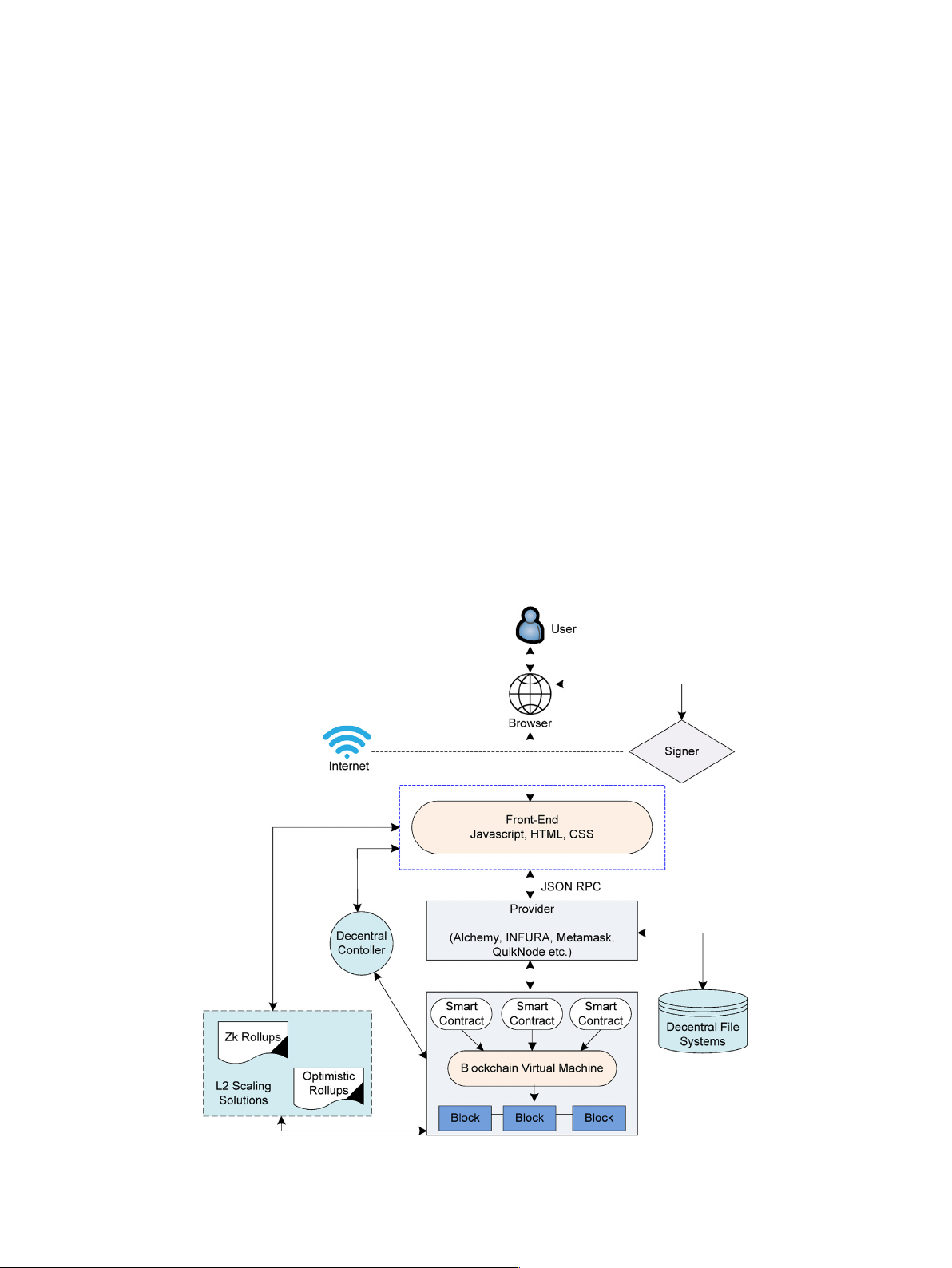
Fig. 2 presents the Web3 architecture with help of blockchain appli-
quires taking control of a majority of the network nodes. The immuta-
cations, platforms, solutions and protocols [44]. The architecture shows
bility of blockchain records ensures that once data is added to the ledger,
how blockchain platforms and protocols can support JSON RPC aware
it cannot be altered, providing a secure and auditable record-keeping
front-end for the efficient access of information by the users. The major
system. Cryptographic techniques, such as public-key cryptography and
activity is performed from the user's web browser after successful signing
hash functions, protect user data and transactions, ensuring the integrity
in. L2 scaling solutions and decentral controller together work on the
and confidentiality of the network [47]. The transparent nature of
smart contracts for providing efficient decentralized services with sup-
blockchain and DLT allows for continuous monitoring and auditing of the
port from the decentralized file systems.
network, enabling early detection of potential security threats. Decen-
tralized networks can mitigate the risks associated with central points of
control, such as insider threats and regulatory capture. Blockchain and
2.3. Role of blockchain in fostering decentralization
DLT enable secure and verifiable digital identity solutions, reducing the
risk of identity theft and fraud. Trustless environment Improved governance
Blockchain and DLT eliminate the need for trusted third parties, as
they provide a secure, transparent, and tamper-proof platform for
Decentralized networks enable more democratic and inclusive
recording transactions and managing digital assets. The consensus
decision-making processes, as users can participate in governance
mechanisms used in blockchain networks, such as proof-of-work and
through voting and consensus mechanisms. Blockchain and DLT can
proof-of-stake, ensure that no single participant can manipulate the
facilitate decentralized governance models, such as DAOs, which enable
system, fostering trust among users. By eliminating the need for
Fig. 2. Web3 architecture on top of blockchain platforms and protocols. Enhanced security 217 P.P. Ray
Internet of Things and Cyber-Physical Systems 3 (2023) 213–248
users to directly influence the direction and development of the network.
decentralized application landscape.
Transparent and auditable record-keeping on blockchain networks en-
sures that decisions and resource allocations are visible to all partici- DeFi
pants, fostering trust and accountability [48]. Decentralized governance
models can adapt more quickly to changes in the environment or user
Decentralization in Web3 has led to the emergence of DeFi, which
needs, as decision-making is not bottlenecked by centralized authorities.
aims to create a more open, transparent, and inclusive financial system
Blockchain and DLT enable token-based governance models, where users
by leveraging blockchain technology and smart contracts [52]. DeFi
can stake or delegate their tokens to influence decision-making and
platforms provide users with various financial services, such as lending,
network upgrades. Decentralized governance models can mitigate the
borrowing, trading, and asset management, without the need for tradi-
risk of regulatory capture and centralized control, fostering a more open
tional financial intermediaries like banks and brokerages. Decentralized
and equitable digital ecosystem.
exchanges (DEXs), such as Uniswap and SushiSwap, enable users to trade
digital assets directly with one another, reducing transaction costs and
Increased transparency and auditability
increasing market efficiency. DeFi protocols, such as Aave, Compound,
and MakerDAO, provide decentralized lending and borrowing services,
Blockchain technology enables a high degree of transparency by
allowing users to access credit and earn interest on their digital assets.
providing a public and verifiable record of all transactions on the
DeFi platforms can foster financial inclusion by providing users with
network. The decentralized nature of blockchain and DLT ensures that all
access to financial services regardless of their geographical location or
network participants can access and verify transaction data, promoting
socio-economic status, as long as they have an internet connection and a
accountability and trust [49]. The transparent record-keeping of block-
compatible digital wallet. DeFi platforms often employ innovative toke-
chain and DLT allows for real-time auditing of network activity, enabling
nomics and governance models, such as liquidity mining and yield
users and regulators to monitor system performance and compliance.
farming, to incentivize user participation and promote the growth of the
Increased transparency can also help prevent fraud, corruption, and other ecosystem.
malicious activities by making it easier to track and trace transactions
and assets. Transparency on blockchain networks can improve market Digital Identity and privacy
efficiency by providing users with accurate and up-to-date information
about as set prices, trading volumes, and other relevant data.
Decentralization in Web3 allows for the creation of secure and self-
Blockchain-based platforms can foster transparent supply chains,
sovereign digital identity solutions, giving users control over their per-
enabling stakeholders to track and verify the provenance of goods,
sonal data and online interactions. Blockchain-based digital identity
ensuring product quality and sustainability.
platforms, such as uPort and Civic, enable users to create and manage
their digital identities, sharing only the necessary information with ser-
Interoperability and cross-chain solutions
vice providers and other parties [53]. Decentralized identity solutions
can improve privacy by reducing the need for centralized data storage,
Decentralization in Web3 is further enhanced by the interoperability
which is often susceptible to data breaches and unauthorized access.
between different blockchain networks, allowing them to communicate
Web3 digital identity systems can facilitate seamless and secure
and interact seamlessly. Cross-chain solutions, such as Polkadot, Cosmos,
authentication and authorization processes, reducing the reliance on
and Avalanche, are developed to bridge different blockchain networks,
traditional username-password schemes and improving user experiences.
enabling the transfer of assets and data between them and expanding the
Digital identity solutions in Web3 can be used across various applica-
possibilities for dApp development [50]. Interoperability fosters a more
tions, including finance, healthcare, education, and e-commerce,
open and collaborative digital ecosystem, where users can access services
providing users with secure and interoperable identity management
and assets across various blockchain networks without the need for in-
tools. Decentralized identity platforms can empower users to monetize
termediaries. Interoperability enables the development of multi-chain
their data and engage in data-sharing agreements on their terms,
applications that leverage the unique features and capabilities of
fostering a more equitable and user-centric digital ecosystem.
different blockchain networks, providing users with more advanced and
versatile services. Decentralized exchanges and cross-chain liquidity DAOs
pools can facilitate seamless trading and asset management across
different blockchain networks, reducing friction and promoting a more
Web3 enables the creation of DAOs, which are self-governing entities
efficient and interconnected digital economy. Interoperability standards
that operate based on predefined rules encoded in smart contracts. DAOs
and protocols, such as the ICP and the TokenBridge, facilitate seamless
can be used to facilitate decentralized governance, decision-making, and
communication and asset transfers between different blockchains.
resource allocation processes, empowering users to participate in the
development and management of projects and platforms [54]. Block- DApps
chain technology and smart contracts enable the automation of various
processes within DAOs, reducing the need for manual intervention and
Blockchain technology enables the development of dApps that run on
administrative overhead. DAOs often employ token-based governance
distributed networks, removing the need for centralized servers and in-
models, allowing users to influence decision-making and network up-
termediaries. dApps can be built on various blockchain platforms, such as
grades by staking or delegating their tokens. DAOs have numerous ap-
Ethereum, Binance Smart Chain, and Solana, each offering unique fea-
plications across various industries, including finance, supply chain
tures and capabilities for developers to leverage [51]. Decentralized
management, content creation, and social networking, providing users
applications can provide users with more secure, transparent, and effi-
with more equitable and inclusive organizational structures. The devel-
cient digital services, as they are less prone to censorship, downtime, and
opment of DAO platforms and frameworks, such as Aragon, DAOstack,
data breaches. The use of smart contracts in dApps enables the creation of
and Colony, fosters innovation and collaboration in the Web3 space,
self-executing agreements and automated processes, reducing friction
promoting the growth of the decentralized organization landscape.
and improving user experiences. dApps have numerous applications
across various industries, including DeFi, gaming, social media, and
Decentralized data storage and management
supply chain management. The development of dApp ecosystems and
marketplaces, such as DappRadar and State of the DApps, fosters inno-
Web3 promotes the decentralization of data storage and manage-
vation and collaboration in the Web3 space, promoting the growth of the
ment, reducing reliance on centralized servers and data centers and 218 P.P. Ray
Internet of Things and Cyber-Physical Systems 3 (2023) 213–248
improving data privacy and security [55,56]. Decentralized data storage
various industries and sectors [62]. Decentralized finance, for example,
platforms, such as Filecoin, Storj, and IPFS, enable users to store and
can offer new opportunities for financial inclusion, wealth creation, and
share data across a distributed network of nodes, ensuring data redun-
poverty reduction, particularly in underbanked and underserved com-
dancy and resilience. Decentralized data management solutions can
munities. Non-fungible tokens can enable new forms of ownership,
improve data privacy by allowing users to control access to their data,
expression, and value creation in the arts, music, and other creative in-
sharing it only with authorized parties. Decentralized data storage can
dustries, empowering artists and creators to monetize their work and
reduce the risk of data breaches and unauthorized access by eliminating
engage with their audiences directly. Web3 can also address various
central points of failure and control. Decentralized data management
environmental challenges, such as carbon emissions and energy con-
platforms can enable more efficient and secure data exchange between
sumption, by promoting more efficient, decentralized, and sustainable
various parties, fostering collaboration and innovation in areas such as
models for data storage, processing, and communication.
research, healthcare, and finance. Decentralized data storage and man-
agement solutions can also contribute to a more sustainable digital
The role of privacy and security in Web3
ecosystem by reducing the energy consumption and environmental
impact of centralized data centers.
Privacy and security are critical aspects of Web3, enabling users to
maintain control over their personal data, assets, and identities, and
Scalability and Layer-2 solutions
protecting them from various threats, such as cyberattacks, fraud, and
theft. Web3 leverages various privacy-enhancing technologies, such as
Scalability is a crucial aspect of Web3 development, as decentralized
zero-knowledge proofs, homomorphic encryption, and multi-party
applications and platforms require high throughput and low latency to
computation, to enable secure and private data storage, sharing, and
handle growing user bases and increasing transaction volumes [57,58].
processing. Web3 also employs robust security measures, such as
Many blockchain networks, such as Ethereum, are actively working on
consensus algorithms, cryptographic hashing, and smart contract audits,
improving their scalability through upgrades, such as Ethereum 2.0,
to ensure the integrity and trustworthiness of decentralized platforms,
which introduces a proof-of-stake consensus mechanism and sharding to
applications, and digital assets. Privacy and security in Web3 require
increase the network's capacity. Layer-2 solutions, such as Optimism,
ongoing research, development, and innovation, as new threats and
zkSync, and Polygon (previously Matic), provide scalability enhance-
challenges emerge, and the ecosystem evolves and expands.
ments to existing blockchain networks by offloading some transactions
and computations off the main chain, while still retaining the security
The role of governance in Web3
and decentralization benefits. Layer-2 solutions employ various tech-
niques, including optimistic rollups, zero-knowledge rollups, and state
Governance is a critical aspect of Web3, enabling decentralized
channels, to improve transaction throughput, reduce latency, and lower
platforms, applications, and organizations to make collective decisions,
transaction fees. Scalable blockchain networks and Layer-2 solutions can
allocate resources, and enforce rules and policies [63]. Decentralized
support the development of more complex and resource-intensive
governance models, such as DAOs and other community-driven mecha-
decentralized applications, such as gaming, virtual reality, and decen-
nisms, leverage blockchain technology and smart contracts to enable
tralized social networks. Improved scalability in Web3 can contribute to a
transparent, democratic, and decentralized decision-making processes.
more accessible and user-friendly digital ecosystem, where users can
Governance in Web3 can address various challenges and issues, such as
interact with decentralized applications and platforms without experi-
security, scalability, interoperability, and user participation, by fostering
encing bottlenecks or high transaction fees.
collaboration, innovation, and consensus-based solutions. Effective
governance in Web3 requires a balance between decentralization and
Decentralized Web Infrastructure
coordination, empowering users and communities while also ensuring
the long-term sustainability and growth of the ecosystem.
Web3 aims to create a decentralized web infrastructure that can
support the next generation of internet applications, with a focus on data
The importance of user experience in Web3
privacy, security, and user control [59–61]. Decentralized Domain Name
Systems (dDNS), such as Handshake and ENS, can provide users with
User experience (UX) is a critical aspect of Web3 adoption, as many
more control over their domain names, reducing reliance on centralized
users may find the decentralized and self-custodial nature of Web3 domain registrars and promoting a more equitable and
platforms and applications confusing or intimidating [64]. Web3 can
censorship-resistant internet. Decentralized Content Delivery Networks
improve UX by designing interfaces that are intuitive, user-friendly, and
(dCDNs), such as Theta Network and Livepeer, can enable more efficient
accessible, and by providing educational resources and support to help
and resilient content distribution by leveraging the computing resources
users navigate the ecosystem. Web3 can also leverage emerging tech-
of a distributed network of nodes. Decentralized web hosting platforms,
nologies, such as virtual and augmented reality, to create immersive and
such as Dfinity's Internet Computer and Skynet, can support the devel-
engaging user experiences that enhance the value and appeal of decen-
opment and deployment of decentralized applications and websites,
tralized platforms and applications. By prioritizing UX in Web3 devel-
without the need for centralized servers or hosting providers. Decen-
opment, we can reduce barriers to adoption and promote greater user
tralized web infrastructure can contribute to a more open, accessible, and
participation and engagement in the ecosystem.
user-centric internet, where individuals and communities have greater
control over their digital assets and online interactions. By creating a
The role of interoperability in Web3
more decentralized web infrastructure, Web3 can foster innovation,
collaboration, and user empowerment, paving the way for a more equi-
Interoperability is a critical aspect of Web3, enabling different plat-
table, secure, and interconnected digital ecosystem.
forms, applications, and systems to communicate and interact with each
other seamlessly. Interoperability can facilitate greater collaboration,
2.4. Potential of Web3 in decentralization
innovation, and user adoption across the ecosystem, enabling users to
access and use different services and assets without being restricted by
The potential of Web3 for social and environmental impact:
network effects or other constraints [65]. Web3 can promote interoper-
ability through cross-chain communication standards, such as the
Web3 has the potential to drive social and environmental impact by
Inter-Blockchain Communication (IBC) protocol, and tokenization stan-
promoting greater accountability, transparency, and sustainability in
dards, such as ERC-20 and ERC-721. Interoperability in Web3 can 219 P.P. Ray
Internet of Things and Cyber-Physical Systems 3 (2023) 213–248
contribute to a more diverse and vibrant digital landscape, where users
extraction, and community governance.
have more choice, control, and freedom over the platforms and services they use.
The potential of Web3 for decentralized energy systems
The role of Web3 in the metaverse
Decentralized energy systems (DeE) are a new paradigm for energy
production, distribution, and consumption that aim to provide users with
The metaverse is a virtual universe that encompasses various digital
greater control, sustainability, and cost-effectiveness over their energy
environments, such as social media, gaming, and virtual reality [66].
use [71]. DeE leverages blockchain technology and decentralized
Web3 can play a critical role in the metaverse by providing the infra-
governance models to create a user-centric, transparent, and decentral-
structure, tools, and standards necessary to enable interoperable and
ized energy ecosystem. DeE platforms can enable users to produce, store,
decentralized digital experiences. Web3 can facilitate the creation of
and trade energy using decentralized renewable sources, such as solar
decentralized virtual worlds, digital assets, and social platforms that
and wind power, without relying on centralized utilities or fossil fuels.
enable greater user control, ownership, and participation. Web3 can also
DeE platforms can also enable greater efficiency, reliability, and resil-
promote new forms of value creation, such as virtual real estate, digital
ience in energy systems, by leveraging smart contracts, peer-to-peer en-
art, and gaming assets, that can be traded and monetized across different ergy trading, and microgrids. platforms and environments.
The potential of Web3 for decentralized healthcare
The potential of Web3 for decentralized finance
Decentralized healthcare (DeH) is a new paradigm for healthcare that
DeFi is a rapidly growing sector of Web3 that aims to provide
aims to provide users with greater control, privacy, and efficiency over
financial services and products through decentralized platforms and
their health data and services. DeH leverages blockchain technology and
protocols [67]. DeFi can offer various advantages over traditional
decentralized governance models to create a user-centric, transparent,
finance, such as greater accessibility, transparency, and efficiency, by
and decentralized healthcare ecosystem. DeH platforms can enable users
leveraging blockchain technology and decentralized governance models.
to own and control their health data, share it securely and selectively
DeFi platforms enable various financial activities, such as lending,
with healthcare providers, and participate in research and clinical trials.
borrowing, trading, and investing, using digital assets as collateral or
DeH platforms can also enable greater innovation, collaboration, and
value exchange. DeFi platforms can enable greater financial inclusion,
patient-centered care, by leveraging smart contracts, tokenization, and
particularly in underbanked and underserved communities, by providing
decentralized clinical trials [72].
access to financial services and products that were previously unavailable or restricted. 2.5. Interoperability
The potential of Web3 for decentralized identity
Web3's interoperability is crucial for enabling cross-platform and
cross-chain communication. It allows different decentralized applications
Decentralized identity (DID) is a new paradigm for identity man-
to interact and exchange value with each other, regardless of their un-
agement that aims to give individuals greater control over their personal
derlying blockchain or protocol. Here are some of the key features and
data and identity [68]. DID leverages blockchain technology and cryp-
benefits of Web3's interoperability.
tographic techniques to create a decentralized, tamper-proof, and
privacy-preserving identity infrastructure. DID can enable users to
Standardized data formats and APIs
authenticate themselves, authorize access to their data, and manage their
digital identities across different platforms and services. DID can address
Standardized data formats and APIs are crucial for enabling inter-
various challenges and issues with centralized identity management,
operability between different applications and networks, by providing a
such as data breaches, identity theft, and lack of user control and consent.
common language and interface for data exchange. These data formats
and APIs can include JSON-RPC, RESTful APIs, GraphQL, and other
The potential of Web3 for decentralized social media
standardized formats and protocols. For example, the Ethereum JSON-
RPC API is a widely used API for interacting with Ethereum nodes and
Decentralized social media (DeSM) is a new paradigm for social
smart contracts, and provides a standardized format for data exchange
media that aims to give users greater control over their data, privacy, and
between different applications and platforms [73].
community governance [69]. DeSM leverages blockchain technology and
decentralized governance models to create a user-centric, transparent,
Cross-chain asset wrapping and bridging
and decentralized social media ecosystem. DeSM platforms can enable
users to own and control their data, monetize their content, and partic-
Cross-chain asset wrapping and bridging are critical for enabling
ipate in community decision-making and resource allocation. DeSM
interoperability between different blockchain networks and assets, by
platforms can address various challenges and issues with centralized
creating a standard way to represent and transfer assets across different
social media, such as data breaches, censorship, and algorithmic bias.
networks. These wrapping and bridging mechanisms can include token
standards such as ERC-20 and ERC-721, and interoperability protocols
The potential of Web3 for decentralized gaming
such as the Wrapped Bitcoin (WBTC) protocol. For example, the WBTC
protocol allows Bitcoin to be wrapped as an ERC-20 token on the
Decentralized gaming (DeG) is a new paradigm for gaming that aims
Ethereum network, enabling Bitcoin holders to use their Bitcoin assets on
to provide users with greater ownership, control, and value exchange the Ethereum network [74].
over their gaming assets and experiences [70]. DeG leverages blockchain
technology and decentralized governance models to create a user-centric,
Interoperable identity and authentication
transparent, and decentralized gaming ecosystem. DeG platforms can
enable users to own and control their gaming assets, monetize their
Interoperable identity and authentication systems are essential for
achievements, and participate in community decision-making and
enabling cross-platform and cross-chain user identity and access man-
resource allocation. DeG platforms can address various challenges and
agement, by providing a common way to verify and authenticate users
issues with centralized gaming, such as lack of ownership, value
across different networks and applications [75]. These identity and 220 P.P. Ray
Internet of Things and Cyber-Physical Systems 3 (2023) 213–248
authentication systems can include decentralized identity protocols such
enabling interoperability between different networks and protocols, by
as Decentralized Identity Foundation (DIF) and decentralized authenti-
creating a common way to verify and authenticate user identities and
cation mechanisms such as OAuth. For example, the DIF provides a
access rights across different networks and platforms [80]. These identity
standard for decentralized identity management, enabling users to con-
verification systems can include decentralized identity verification pro-
trol their digital identities across different networks and platforms.
tocols such as uPort and Civic, and blockchain-based identity verification
systems such as Ontology and NEO. For example, uPort is a decentralized Interoperable DeFi protocols
identity verification platform that allows users to control and manage
their digital identities across different networks and platforms, and can
Interoperable DeFi protocols are crucial for enabling cross-platform
be used by various decentralized applications and services [80].
and cross-chain DeFi applications and services, by providing a common
way to interact and exchange value across different DeFi networks and
Interoperable decentralized marketplaces
protocols [76]. These DeFi protocols can include lending and borrowing
protocols such as Aave and Compound, and liquidity protocols such as
Interoperable decentralized marketplaces are important for enabling
Uniswap and Curve. For example, the Aave protocol provides a lending
cross-platform and cross-chain commerce and trade, by creating a com-
and borrowing platform that can be accessed by different applications
mon way to buy and sell goods and services across different networks and
and networks, enabling users to borrow and lend assets across different
protocols [81]. These decentralized marketplaces can include open DeFi protocols.
marketplaces such as OpenBazaar and Splyt, and protocol-based mar-
ketplaces such as the 0x protocol. For example, the 0x protocol is a
Cross-chain and cross-network governance
decentralized exchange protocol that enables users to trade assets across
different networks and platforms, and can be used by various decen-
Cross-chain and cross-network governance models are essential for
tralized marketplaces and services.
enabling interoperability between different networks and protocols, by
creating a common way to coordinate and govern the actions and de-
Cross-chain and cross-network data analytics
cisions of different stakeholders and communities. These governance
models can include DAOs and other decentralized governance frame-
Cross-chain and cross-network data analytics is essential for enabling
works that enable community-driven decision-making and coordination
interoperability between different networks and protocols, by creating a
[77]. For example, the MakerDAO protocol uses a DAO-based gover-
common way to analyze and visualize data across different networks and
nance model to manage its stablecoin ecosystem, enabling different
platforms [82]. These data analytics solutions can include decentralized
stakeholders and communities to participate in the decision-making
data analytics platforms such as Ocean Protocol and Kylin Network, and
process and contribute to the growth and development of the protocol.
blockchain-based data analytics solutions such as DEXTools and Dune
Overall, Web3's interoperability is a critical feature for enabling
Analytics. For example, Ocean Protocol is a decentralized data market-
cross-platform and cross-chain communication and value exchange. By
place that allows users to share and monetize data across different net-
leveraging standardized protocols, data formats, and APIs, as well as
works and platforms, and can be used by various decentralized data
interoperable asset wrapping, identity and authentication systems, DeFi
analytics applications and services.
protocols, and governance models, Web3 can create a more open, in-
clusive, and connected digital ecosystem, enabling greater innovation,
Cross-network and cross-protocol smart contract interoperability
collaboration, and value creation.
Cross-network and cross-protocol smart contract interoperability is
Interoperable decentralized storage
important for enabling interoperability between different networks and
protocols, by creating a common way to exchange and execute smart
Interoperable decentralized storage is important for enabling cross-
contracts across different chains and platforms [83]. These smart con-
platform and cross-chain data storage and retrieval, by creating a com-
tract interoperability solutions can include interoperability protocols
mon way to access and store data across different networks and protocols
such as Polkadot's Substrate and Cosmos' IBC, and cross-chain bridge
[78]. These decentralized storage solutions can include IPFS, Filecoin,
solutions such as ChainBridge and Wanchain. For example, Polkadot's
and other decentralized storage protocols that allow users to store and
Substrate framework provides a modular, customizable framework for
access data in a decentralized and censorship-resistant manner. For
building interoperable blockchains that can share logic and state across
example, IPFS provides a distributed file storage system that allows users different chains and networks.
to store and access files across different nodes and networks, and can be
used by various decentralized applications and services.
Interoperable governance and dispute resolution mechanisms
Interoperable messaging and communication
Interoperable governance and dispute resolution mechanisms are
important for enabling cross-network and cross-protocol coordination
Interoperable messaging and communication systems are important
and decision-making, by creating a common way to resolve disputes and
for enabling cross-platform and cross-chain communication and collab-
coordinate governance activities across different networks and protocols
oration, by creating a common way to communicate and share infor-
[84]. These governance and dispute resolution mechanisms can include
mation across different networks and protocols [79]. These messaging
decentralized arbitration and dispute resolution platforms such as Kleros
and communication systems can include decentralized messaging pro-
and Aragon Court, and decentralized governance frameworks such as
tocols such as Whisper and Matrix, and social networking protocols such
MolochDAO and Colony. For example, Kleros is a decentralized arbitra-
as ActivityPub. For example, Matrix is an open-source messaging proto-
tion platform that provides a standardized dispute resolution protocol
col that allows users to communicate and share information across
that can be used across different networks and protocols.
different networks and platforms, and can be integrated with various
decentralized applications and services.
Cross-chain and cross-protocol staking and validation
Cross-chain and cross-network identity verification
Cross-chain and cross-protocol staking and validation is important for
enabling cross-network and cross-protocol consensus and security, by
Cross-chain and cross-network identity verification is crucial for
creating a common way to validate and secure different chains and 221 P.P. Ray
Internet of Things and Cyber-Physical Systems 3 (2023) 213–248
networks using a common set of validators and stakers. These staking and
Cross-chain and cross-protocol gaming and virtual world interoper-
validation solutions can include interoperability protocols such as
ability is important for enabling cross-platform and cross-chain gaming
Cosmos' Stargate and Polkadot's Nominated Proof-of-Stake, and cross-
and virtual world experiences, by creating a common way to exchange
chain and cross-protocol validator solutions such as the Sentinel
and interact with virtual assets and environments across different chains
Network [85]. For example, the Sentinel Network provides a cross-chain
and networks. These gaming and virtual world interoperability solutions
validator network that can be used to secure various chains and pro-
can include interoperable gaming protocols such as Enjin and Animoca
tocols, including Ethereum, Binance Smart Chain, and Polkadot.
Brands, and cross-chain and cross-protocol virtual world platforms such
as Somnium Space and Decentraland. For example, Somnium Space is a
Interoperable cross-chain and cross-protocol NFTs
virtual world platform that allows users to create, own, and trade virtual
assets and environments across different networks and protocols, using
Interoperable cross-chain and cross-protocol NFTs are important for
its own interoperable virtual asset standard [90].
enabling cross-network and cross-protocol ownership and exchange of
NFTs, by creating a common way to represent and exchange NFTs across
Cross-chain and cross-protocol privacy and security solutions
different networks and platforms. These interoperable NFT solutions can
include cross-chain and cross-protocol NFT standards such as ERC-1155
Cross-chain and cross-protocol privacy and security solutions are
and NEP-171, and interoperability protocols such as ChainGuardian and
important for enabling secure and private communication and trans-
Anyswap. For example, ChainGuardian is an interoperable NFT platform
actions across different networks and protocols, by creating a common
that allows users to mint, buy, and sell NFTs across different chains and
way to ensure privacy and security across different chains and platforms.
protocols, using its own cross-chain NFT standard [86].
These privacy and security solutions can include privacy-focused pro-
tocols such as the Secret Network and Oasis Network, and cross-chain Interoperable DAOs
and cross-protocol security solutions such as CertiK and Chainlink. For
example, the Secret Network is a privacy-focused blockchain that allows
Interoperable DAOs are important for enabling cross-network and
users to communicate and transact securely across different chains and
cross-protocol coordination and decision-making among different
protocols, using its own privacy-preserving smart contract platform.
decentralized communities and stakeholders, by creating a common way
Overall, Web3's interoperability is a vital aspect of its development and
to govern and coordinate different DAOs across different networks and
growth, as it allows for greater connectivity, collaboration, and innova-
protocols [87]. These interoperable DAO solutions can include
tion across different networks and protocols. By leveraging a range of
cross-chain and cross-protocol DAO frameworks such as Aragon and
interoperable protocols, systems, and solutions, Web3 can create a more
Colony, and DAO interoperability protocols such as DAOstack's ArcHives
open and inclusive digital ecosystem, enabling greater value creation and
and Gnosis' SafeSnap. For example, Aragon is a decentralized governance
impact for users and communities around the world [91].
framework that allows users to create and manage interoperable DAOs
that can operate across different networks and protocols. Overall, Web3's
Cross-chain and cross-protocol stablecoin interoperability
interoperability is a constantly evolving and expanding field that requires
ongoing innovation and collaboration among different stakeholders and
Cross-chain and cross-protocol stablecoin interoperability is impor- communities. By leveraging a.
tant for enabling seamless and efficient value transfer across different
networks and protocols, by creating a common way to exchange and use
Cross-chain and cross-network asset transfer
stablecoins across different chains and platforms [92]. These stablecoin
interoperability solutions can include cross-chain and cross-protocol
Cross-chain and cross-network asset transfer is important for enabling
stablecoin platforms such as Terra and MakerDAO, and interoperability
interoperability between different networks and protocols, by creating a
protocols such as the Interledger Protocol (ILP). For example, Terra is a
common way to transfer assets and value across different chains and
stablecoin platform that enables cross-chain and cross-protocol sta-
platforms. These asset transfer solutions can include cross-chain and
blecoin transfer and use, using its own native stablecoins pegged to
cross-protocol bridges such as ThorChain and RenVM, and cross-network various fiat currencies.
asset wrapping and tokenization solutions such as Polkadot's XCMP and
Cosmos' IBC. For example, ThorChain is a cross-chain liquidity protocol
Cross-chain and cross-protocol insurance and risk management
that enables users to swap assets across different chains and protocols,
using its own native asset wrapping and bridging mechanism [88].
Cross-chain and cross-protocol insurance and risk management is
important for enabling secure and efficient management of risk and un-
Cross-chain and cross-protocol identity verification and reputation
certainty across different networks and protocols, by creating a common systems
way to insure and protect assets and activities across different chains and
platforms. These insurance and risk management solutions can include
Cross-chain and cross-protocol identity verification and reputation
cross-chain and cross-protocol insurance protocols such as Nexus Mutual
systems are important for enabling interoperability between different
and Opyn, and interoperable risk management platforms such as Barn-
networks and protocols, by creating a common way to verify and
Bridge. For example, Nexus Mutual is a decentralized insurance platform
authenticate user identities and assess their reputation across different
that allows users to insure their assets and activities across different
chains and platforms [89]. These identity verification and reputation
networks and protocols, using its own native risk management and
systems can include decentralized identity verification and reputation governance system [93].
protocols such as BrightID and HOPR, and blockchain-based identity
verification and reputation systems such as Ontology's ONT ID and Pol-
Cross-chain and cross-protocol energy and environmental
kadot's Kusama Identity Service (Kusama ID). For example, BrightID is a interoperability
decentralized identity verification platform that allows users to verify
their identities across different networks and protocols, using a
Cross-chain and cross-protocol energy and environmental interoper- trust-based reputation system.
ability is important for enabling more sustainable and efficient use of
energy and natural resources across different networks and protocols, by
Cross-chain and cross-protocol gaming and virtual world
creating a common way to manage and exchange energy and environ- interoperability
mental assets and data across different chains and platforms [94]. These 222 P.P. Ray
Internet of Things and Cyber-Physical Systems 3 (2023) 213–248
energy and environmental interoperability solutions can include
analytics standard and interoperability protocol.
cross-chain and cross-protocol energy platforms such as Power Ledger
and WePower, and interoperable environmental data platforms such as
Cross-chain and cross-protocol social and community interoperability
Ocean Protocol and ClimateChain. For example, Power Ledger is a decentralized energy platform that enables cross-chain and
Cross-chain and cross-protocol social and community interoperability
cross-protocol energy trading and management, using its own native
is important for enabling more connected and collaborative digital
energy token and trading platform.
communities and social networks across different networks and pro-
tocols, by creating a common way to interact and engage with different
Cross-chain and cross-protocol healthcare and medical data
communities and social networks across different chains and platforms interoperability
[99]. These social and community interoperability solutions can include
cross-chain and cross-protocol social network platforms such as HUMAN
Cross-chain and cross-protocol healthcare and medical data interop-
Protocol and Nodle Network, and interoperability protocols such as the
erability is important for enabling secure and efficient sharing and
W3C Social Web Working Group. For example, HUMAN Protocol is a
management of healthcare and medical data across different networks
decentralized identity verification and human intelligence task platform
and protocols, by creating a common way to store, share, and access
that enables cross-chain and cross-protocol interaction and engagement
medical data across different chains and platforms [95]. These healthcare
across different networks and protocols, using its own native social and
and medical data interoperability solutions can include decentralized
community interaction and engagement standard and interoperability
medical data platforms such as Medicalchain and Solve.Care, and
protocol. Cross-chain and cross-protocol decentralized storage and.
cross-chain and cross-protocol healthcare data interoperability solutions
such as the Health Nexus. For example, Medicalchain is a decentralized Computing Interoperability
medical data platform that enables secure and transparent storage and
sharing of medical data across different networks and protocols, using its
Cross-chain and cross-protocol decentralized storage and computing
own native medical data standard and interoperability protocol.
interoperability is important for enabling more secure and efficient
storage and computing of data and applications across different networks Cross-chain and cross-protocol education and learning
and protocols, by creating a common way to store and process data and interoperability
applications across different chains and platforms [100]. These decen-
tralized storage and computing interoperability solutions can include
Cross-chain and cross-protocol education and learning interopera-
cross-chain and cross-protocol storage and computing platforms such as
bility is important for enabling more accessible and inclusive education
IPFS and Substrate, and interoperability protocols such as the Cosmos
and learning experiences across different networks and protocols, by
IBC protocol. For example, InterPlanetary File System (IPFS) is a
creating a common way to share and access edu cational content and
decentralized storage and content-addressed distribution protocol that
credentials across different chains and platforms [96]. These education
enables cross-chain and cross-protocol storage and distribution of data
and learning interoperability solutions can include decentralized edu-
and applications, using its own native storage and computing standard
cation platforms such as BitDegree and LearnX, and cross-chain and
and interoperability protocol. Overall, Web3's interoperability is a crucial
cross-protocol educational credentialing and verification systems such as
factor in enabling the next stage of internet evolution, as it allows for
the Learning Ledger. For example, BitDegree is a decentralized education
greater connectivity, collaboration, and innovation across different net-
platform that enables cross-chain and cross-protocol education content
works and protocols. By leveraging a range of interoperable protocols,
sharing and access, using its own native educational content standard
systems, and solutions, Web3 can create a more open and inclusive and interoperability protocol.
digital ecosystem, enabling greater value creation and impact for users
and communities around the world.
Cross-chain and cross-protocol payment interoperability
Cross-chain and cross-protocol DeFi interoperability
Cross-chain and cross-protocol payment interoperability is important
for enabling efficient and secure payment processing across different
Cross-chain and cross-protocol DeFi interoperability is important for
networks and protocols, by creating a common way to exchange and use
enabling more accessible and inclusive financial services and products
digital currencies across different chains and platforms [97]. These
across different networks and protocols, by creating a common way to
payment interoperability solutions can include cross-chain and
access and use different DeFi platforms and applications across different
cross-protocol payment gateways such as Utrust and PayPal, and inter-
chains and platforms [101]. These DeFi interoperability solutions can
operability protocols such as Ripple's ILP. For example, Utrust is a
include cross-chain and cross-protocol DeFi platforms such as Aave and
cross-chain payment gateway that enables merchants and users to accept
Compound, and interoperability protocols such as the Ethereum Layer 2
and use a variety of digital currencies across different networks and
solutions. For example, Aave is a decentralized lending and borrowing
protocols, using its own native payment processing and conversion
protocol that enables cross-chain and cross-protocol access and use of its system.
lending and borrowing services, using its own native interoperability solutions.
Cross-chain and cross-protocol data and analytics interoperability
Cross-chain and cross-protocol governance and decision-making
Cross-chain and cross-protocol data and analytics interoperability is interoperability
important for enabling more accurate and comprehensive data analysis
and decision-making across different networks and protocols, by creating
Cross-chain and cross-protocol governance and decision-making
a common way to access and analyze data and analytics across different
interoperability is important for enabling more transparent and demo-
chains and platforms [98]. These data and analytics interoperability so-
cratic decision-making and governance across different networks and
lutions can include cross-chain and cross-protocol data and analytics
protocols, by creating a common way to participate and vote in different
platforms such as Chainlink and Ocean Protocol, and interoperability
governance and decision-making processes across different chains and
protocols such as the Streamr Network. For example, Chainlink is a
platforms [102]. These governance and decision-making interoperability
decentralized oracle network that enables cross-chain and cross-protocol
solutions can include cross-chain and cross-protocol governance and
data and analytics integration and analysis, using its own native data and
decision-making platforms such as Aragon and DAOstack, and 223 P.P. Ray
Internet of Things and Cyber-Physical Systems 3 (2023) 213–248
interoperability protocols such as the Cosmos IBC protocol. For example,
digital ecosystem. Security refers to the protection against cyber-attacks,
Aragon is a decentralized governance and decision-making platform that
hacks, and fraud, while privacy refers to the protection of personal and
enables cross-chain and cross-protocol participation and voting in
sensitive information from unauthorized access and use. In Web3, there
different governance and decision-making processes, using its own native
are several security and privacy solutions being developed and imple- interoperability solutions.
mented, such as multi-signature wallets, zero-knowledge proofs, and
decentralized identity and access management [107].
Cross-chain and cross-protocol content and media interoperability User experience and adoption
Cross-chain and cross-protocol content and media interoperability is
important for enabling more accessible and diverse content and media
User experience and adoption are key factors for driving the adoption
experiences across different networks and protocols, by creating a com-
and mainstreaming of Web3's interoperability solutions and applications.
mon way to share, distribute, and access different types of content and
User experience refers to the ease and intuitiveness of using and inter-
media across different chains and platforms [103]. These content and
acting with Web3's interoperable systems and solutions, while adoption media interoperability solutions can include cross-chain and
refers to the level of adoption and usage of these systems and solutions by
cross-protocol content and media platforms such as Livepeer and
different user groups and communities. In Web3, there are several user
Arweave, and interoperability protocols such as the InterPlanetary
experience and adoption initiatives being pursued, such as user-friendly
Linked Data (IPLD). For example, Livepeer is a decentralized video
wallets and interfaces, educational and awareness campaigns, and in-
infrastructure platform that enables cross-chain and cross-protocol dis-
centives and rewards programs. Overall, Web3's interoperability is a
tribution and streaming of video content, using its own native content
powerful enabler of the next stage of internet evolution, offering a more
and media standard and interoperability protocol.
connected, collaborative, and innovative digital ecosystem that can drive
greater value creation and impact for users and communities around the
Cross-chain and cross-protocol digital identity and reputation
world. By addressing the challenges and considerations of interopera- interoperability
bility, Web3 can unlock its full potential and create a more open and
inclusive digital future. Fig. 3 presents interoperable layered Web3 ar-
Cross-chain and cross-protocol digital identity and reputation inter-
chitecture [108]. This architecture is five-layered approach that pass data
operability is important for enabling more secure and trustworthy digital
from lowest layer to the highest applications layer. The intermediate
identity and reputation systems across different networks and protocols,
layers such as network, consensus and incentives support the whole
by creating a common way to verify, authenticate, and assess digital
Web3 activities. Several decentralized miners and millions of nodes
identities and reputations across different chains and platforms [104].
generate and validate data via blockchains, crypto-analysers, NFTs, and
These digital identity and reputation interoperability solutions can
wallets. Such decentralized data is then processed in next higher layer of
include cross-chain and cross-protocol digital identity and reputation
network where privacy, trust, network security, propagation protocols,
protocols such as Sovrin and uPort, and interoperability protocols such as
P2P protocols, and validation protocols act upon. Later, various
the World Wide Web Consortium (W3C) Verifiable Credentials. For
consensus algorithms including PoW, PoS, PoC, PoET, PBFT and Dele-
example, Sovrin is a decentralized digital identity platform that enables
gated PoS are used to provide decentralized incentives in terms of re-
cross-chain and cross-protocol verification and authentication of digital
wards, and transaction fees. Finally, metaverse aware crypto applications
identities, using its own native digital identity and reputation standard are run at the backend. and interoperability protocol.
2.6. User-centricity and data privacy
Standardization and governance
Web3's user-centricity and data privacy are crucial aspects of its next-
Standardization and governance are important considerations for
generation internet evolution. By putting users in control of their own
ensuring the compatibility and interoperability of different protocols,
data and identity, Web3 is creating a more secure, transparent, and
systems, and solutions in Web3 [105]. Standardization refers to the
personalized digital ecosystem. Here are some additional insights and
process of defining common standards and protocols that different sys-
bulleted points to further improve the section on user-centricity and data
tems can use to interact and exchange data and assets, while governance privacy.
refers to the rules and mechanisms for managing and coordinating these
standards and protocols. In Web3, there are several initiatives and or- Self-sovereign identity
ganizations working on standardization and governance, such as the
Interwork Alliance, the Web3 Foundation, and the W3C.
SSI is a key feature of Web3's user-centricity and data privacy,
enabling users to have full control and ownership of their identity and Scalability and performance
personal data. SSI allows users to create and manage their own digital
identity, which can be used across different platforms and networks
Scalability and performance are critical factors for enabling seamless
without relying on a centralized authority or intermediary. SSI is based
and efficient interoperability across different networks and protocols in
on decentralized and cryptographic technologies, such as blockchain,
Web3. Scalability refers to the ability of a system to handle increasing
which enable secure and trustless identity verification and authentication
amounts of data, traffic, and transactions, while performance refers to the
[109]. SSI can enhance privacy and security, as users can choose which
speed and reliability of the system in processing and executing these
data to share and with whom, and can revoke access at any time. SSI can
data, traffic, and transactions [106]. In Web3, there are several scal-
also improve user experience, as users can have a seamless and consistent
ability and performance solutions being developed and implemented,
identity across different platforms and networks. Some examples of SSI
such as sharding, Layer 2 solutions, and Proof-of-Stake consensus
projects and initiatives include the Sovrin Foundation, the Decentralized mechanisms.
Identity Foundation, and the W3C Verifiable Credentials Working Group. Security and privacy Data ownership and control
Security and privacy are crucial considerations for ensuring the safety
Web3's user-centricity and data privacy also enable users to have
and integrity of data, assets, and interactions in Web3's interoperable
greater ownership and control over their personal data, which can be 224 P.P. Ray
Internet of Things and Cyber-Physical Systems 3 (2023) 213–248
Fig. 3. Interoperable Web3 layered architecture.
used for various purposes, such as identity verification, authentication,
responsible and ethical use of user data and identity [112,113]. Web3
and authorization [110]. With Web3, users can choose which data to
also needs to address the issue of data interoperability and portability, as
share and with whom, and can also monetize their data through decen-
users may want to move their data across different platforms and net-
tralized data marketplaces and other incentive mechanisms. Decentral-
works without losing control or privacy. Moreover, Web3 needs to ensure
ized storage systems, such as IPFS and Filecoin, can also enable secure
that privacy-preserving technologies are user-friendly and accessible,
and efficient storage and retrieval of user data, without relying on
and do not create additional barriers or complexity for users. Finally,
centralized servers or databases. Data ownership and control can
Web3 needs to promote awareness and education on user-centricity and
enhance privacy and security, as users can prevent unauthorized access
data privacy, and engage with users and communities in a transparent
and use of their data, as well as reduce the risk of data breaches and
and participatory way. Some opportunities and benefits of Web3's
hacks. Data ownership and control can also foster innovation and
user-centricity and data privacy include empowering users and commu-
collaboration, as users can share and collaborate on data in a more open
nities, fostering innovation and collaboration, promoting diversity and
and transparent way, without relying on centralized intermediaries or
inclusion, and enhancing privacy and security in the digital ecosystem.
gatekeepers. Some examples of Web3-based data ownership and control
Self-sovereign identity and data ownership and privacy are key features
initiatives include Ocean Protocol, Data Union, and MyData.
of Web3, that aim to empower users to have full control and ownership of
their digital identity and data, and to protect their privacy from unau-
Privacy-preserving technologies
thorized access and exploitation. These features are enabled by various
technologies and mechanisms, such as DIDs, verifiable credentials,
Web3's user-centricity and data privacy also rely on various privacy-
identity wallets, data wallets, zero-knowledge proofs, and decentralized
preserving technologies and mechanisms, such as zero-knowledge
storage. Self-sovereign identity and data ownership and privacy offer
proofs, homomorphic encryption, and differential privacy. Zero-
various benefits and challenges, and require robust security, governance,
knowledge proofs enable secure and private verification and authenti-
and ethical frameworks, as well as engagement with various stakeholders
cation of data and transactions, without revealing any sensitive infor-
and communities in a transparent and participatory way.
mation [111]. Homomorphic encryption enables computation and
processing of encrypted data, without decrypting it, thus preserving
privacy and security. Differential privacy enables statistical analysis and
2.7. Tokenomics and digital assets
processing of data, while protecting individual privacy and confidenti-
ality. Privacy-preserving technologies can enhance privacy and security,
Web3 is closely linked to the concept of tokenomics and the use of
while also enabling data sharing and collaboration in a more trustworthy
digital assets [114–117]. Tokenomics refers to the study of how tokens
and efficient way. Some examples of Web3-based privacy-preserving
are designed, issued, distributed, and utilized within a given blockchain
technologies and initiatives include Zcash, Enigma, and NuCypher.
network or ecosystem. Digital assets, in this context, are tokens or coins
that represent various assets, such as cryptocurrencies, NFTs, and secu- Challenges and opportunities rity tokens.
While Web3's user-centricity and data privacy present many oppor- Cryptocurrencies
tunities and benefits, they also pose challenges and risks, such as the
potential for misuse, abuse, or manipulation of data and identity. To
Cryptocurrencies are digital currencies that use cryptography to
address these challenges, Web3 needs to develop and implement robust
secure transactions and control the creation of new units. Bitcoin, which
governance, regulation, and security frameworks that can ensure the
was introduced in 2009, was the first cryptocurrency to gain widespread
attention. Since then, numerous other cryptocurrencies have emerged, 225 P.P. Ray
Internet of Things and Cyber-Physical Systems 3 (2023) 213–248
including Ethereum, Litecoin, Ripple, and many more. Cryptocurrencies
Digital assets can be traded on DEXs and other trading platforms,
offer a range of benefits, including low transaction fees, fast settlement
allowing for greater liquidity and price discovery. This feature allows
times, and increased privacy. Some other insights into cryptocurrencies
investors and traders to buy and sell digital assets quickly and easily, are.
without the need for intermediaries or centralized exchanges. Decen-
tralized exchanges are also more resistant to hacking and fraud, as they
Cryptocurrencies are decentralized, which means that they are not
do not hold custody of users' assets.
controlled by any single entity or organization.
Cryptocurrencies have a finite supply, which makes them a defla- Transparency tionary asset.
Cryptocurrencies can be used for a variety of purposes, including
Blockchain technology provides a high level of transparency, making
payments, investments, and store of value.
it possible to track the ownership and movement of digital assets. This
feature allows for greater accountability and trust in transactions, as all
Tokenomics and digital assetsNFTs
parties can view the transaction history of a given asset. This trans-
parency is especially important in the case of public blockchains, where
NFTs are digital tokens that represent unique assets, such as artwork,
all transaction data is publicly available.
music, videos, and other creative works. NFTs are created using block-
chain technology, which ensures that each token is unique and can be Security
verified as authentic. NFTs have gained popularity in recent years, with
high-profile sales of digital art and other collectibles reaching millions of
Digital assets are secured using cryptography and distributed ledger
dollars. NFTs offer new opportunities for artists, creators, and collectors
technology, making them resistant to fraud and hacking. This feature
to monetize their work and build communities around their content.
ensures that digital assets are protected from unauthorized access or
Some other insights into NFTs are.
manipulation, as each transaction must be verified by multiple partici-
pants on the blockchain network. Additionally, the use of public and
NFTs are unique, which means that they cannot be replicated or
private keys adds an extra layer of security to digital asset ownership. duplicated.
NFTs can be used to represent a wide range of assets, including Interoperability
digital art, music, videos, and more.
NFTs have the potential to revolutionize the way that creators
Digital assets can be designed to be interoperable, meaning they can
monetize their work, by providing a direct connection between cre-
be used across different blockchain networks and ecosystems. This ators and fans.
feature allows for greater flexibility in the use of digital assets, as they can
be easily transferred between different platforms and networks. Inter-
Tokenomics and digital assetsDeFi
operability is especially important as the number of blockchain networks
and platforms continues to grow.
DeFi refers to financial services and applications that are built on
blockchain networks and operate without intermediaries. DeFi includes a Community Governance
range of services, including lending and borrowing, asset management,
insurance, and more. DeFi is enabled by smart contracts, which allow for
Digital assets can be used to incentivize participation and engagement
automated and trustless transactions between parties. DeFi has gained
in decentralized networks and communities, allowing for community-
traction in recent years, with total value locked in DeFi protocols
driven governance and decision-making. This feature is especially
reaching billions of dollars. DeFi offers new opportunities for financial
important in decentralized networks, where there is no central authority
inclusion, transparency, and innovation. Some other insights into DeFi
to make decisions. By incentivizing community participation, digital are.
assets can help ensure the long-term sustainability and growth of decentralized networks.
DeFi is built on open-source technology, which means that anyone
can participate in DeFi networks and protocols. Token Economics
DeFi allows for peer-to-peer transactions without the need for in-
termediaries, which can result in lower fees and faster settlement
Tokenomics involves the study of how digital assets are designed, times.
issued, and used within a given blockchain ecosystem. Token economics
DeFi has the potential to disrupt traditional financial services, by
can have a significant impact on the value and utility of digital assets.
providing more accessible and transparent alternatives to traditional
Factors such as token supply, distribution, and usage can all affect the banking and investing.
value of digital assets, making token economics a crucial consideration in
the design of blockchain networks and applications.
2.8. Key features of tokenomics and digital assets Cryptocurrencies Programmability
Digital assets can include cryptocurrencies, which are decentralized
digital currencies that use cryptography to secure transactions and con-
Digital assets are programmable, meaning that they can be designed
trol the creation of new units. Cryptocurrencies offer a range of benefits,
to perform specific functions or execute specific instructions. This feature
including low transaction fees, fast settlement times, and increased
allows for the creation of smart contracts, which are self-executing con- privacy.
tracts that can be programmed to automatically trigger specific actions
when certain conditions are met. Smart contracts enable a wide range of NFTs
applications, including DeFi, supply chain management, and identity verification [118].
NFTs are digital tokens that represent unique assets, such as artwork,
music, videos, and other creative works. NFTs are created using block- Liquidity
chain technology, which ensures that each token is unique and can be 226 P.P. Ray
Internet of Things and Cyber-Physical Systems 3 (2023) 213–248
verified as authentic. NFTs have gained popularity in recent years, with
solutions, decentralized identity management, and interoperability pro-
high-profile sales of digital art and other collectibles reaching millions of
tocols. We will examine how these technologies are used in Web3 ap-
dollars. NFTs offer new opportunities for artists, creators, and collectors
plications, and how they are driving the evolution of the internet towards
to monetize their work and build communities around their content
a more decentralized and user-centric future. [119].
3.1. Blockchain platforms and smart contracts DeFi
Ethereum: Ethereum is a decentralized blockchain platform that
DeFi refers to financial services and applications that are built on
supports smart contracts and decentralized applications. It is the most
blockchain networks and operate without intermediaries. DeFi includes a
widely used blockchain platform for developing decentralized appli-
range of services, including lending and borrowing, asset management,
cations and is home to the largest DeFi ecosystem [122].
insurance, and more. DeFi is enabled by smart contracts, which allow for
Polkadot: Polkadot is a next-generation blockchain platform that al-
automated and trustless transactions between parties. DeFi has grown
lows for interoperability between different blockchains. It enables
significantly in recent years, with billions of dollars in assets locked in
cross-chain communication and allows developers to create special-
various DeFi protocols. DeFi offers several benefits, including greater
ized blockchains, called parachains, to meet specific use cases [123].
accessibility, lower transaction fees, and increased transparency and
Cardano: Cardano is a blockchain platform that uses a proof-of-stake security.
consensus mechanism to validate transactions. It aims to offer a more
energy-efficient and sustainable alternative to proof-of-work block- Tokenization chains, like Bitcoin [124].
Solana: Solana is a high-performance blockchain platform that uses a
Tokenization refers to the process of representing real-world assets,
proof-of-stake consensus mechanism. It is designed to handle high
such as real estate, commodities, and securities, as digital tokens on a
transaction volumes and is known for its fast processing times and low
blockchain. Tokenization can help to increase liquidity and accessibility transaction fees [125].
for these assets, as well as reduce costs and streamline the process of
Binance Smart Chain: Binance Smart Chain is a blockchain platform buying and selling them.
that is built on top of the Binance Chain. It supports smart contracts
and is designed to be compatible with the Ethereum Virtual Machine Governance Tokens
(EVM), enabling developers to port their Ethereum-based applica-
tions to Binance Smart Chain [126].
Governance tokens are digital tokens that are used to participate in
Cosmos: Cosmos is a blockchain platform that allows for the creation
the governance of a decentralized network or platform. Governance to-
of independent blockchains that can communicate and transact with
kens allow holders to vote on proposals and decisions related to the
each other. It allows for the creation of interconnected blockchain
network or platform, and can also be used to earn rewards or incentives
networks, known as the “Internet of Blockchains” [127].
for participating in governance [120].
Tezos: Tezos is a blockchain platform that uses a self-amending pro-
tocol to enable upgrades and improvements to the network without Staking
hard forks. It uses a proof-of-stake consensus mechanism and supports smart contracts [128].
Staking involves holding digital assets in a specific wallet or account,
Avalanche: Avalanche is a blockchain platform that uses a consensus
known as a staking pool, to help secure the network and earn rewards.
mechanism called Avalanche to enable high transaction throughput
Staking is a key feature of many blockchain networks, as it helps to
and low latency. It supports smart contracts and enables the creation
ensure the security and stability of the network by incentivizing partic-
of interoperable subnets [129].
ipants to hold and use the network's digital assets.
Nervos: Nervos is a blockchain platform that uses a layered archi-
tecture to enable scalability and interoperability between different Cross-chain Interoperability
blockchain networks. It supports smart contracts and allows for the
creation of decentralized applications [130].
Cross-chain interoperability refers to the ability of digital assets to be
IOTA: IOTA is a blockchain platform that uses a directed acyclic graph
used across multiple blockchain networks and ecosystems. This feature is
(DAG) structure, known as the Tangle, to enable fast and feeless
becoming increasingly important as the number of blockchain networks
transactions. It is designed to be used for the IoT and supports smart
and platforms continues to grow, and can help to promote greater contracts [131].
liquidity and accessibility for digital assets [121].
Hedera Hashgraph: Hedera Hashgraph is a blockchain platform that
uses a consensus mechanism called Hashgraph to enable fast and
Privacy-enhancing Technologies
secure transactions. It is designed to be used for enterprise applica-
tions and supports smart contracts [132].
Privacy-enhancing technologies, such as zero-knowledge proofs and
Near Protocol: Near Protocol is a blockchain platform that uses a
secure multi-party computation, are increasingly being used to improve
sharding mechanism to enable scalability and high transaction
the privacy and security of digital assets and transactions. These tech-
throughput. It supports smart contracts and is designed to be
nologies allow for private transactions and data sharing on a blockchain, developer-friendly [133].
while still maintaining the integrity and security of the network.
Algorand: Algorand is a blockchain platform that uses a proof-of-stake
consensus mechanism to enable fast and secure transactions. It sup-
3. Web3 technologies and protocols
ports smart contracts and is designed to be scalable and energy-
efficient [134]. Table 2 presents comparison of blockchain plat-
Web3 technologies and protocols are essential for the growth and forms and smart contracts.
development of decentralized applications and networks. These tech-
nologies enable the creation of secure, transparent, and decentralized
3.2. Decentralized storage solutions
systems that allow for greater trust and innovation. In this section, we
will explore some of the key Web3 technologies and protocols, including
Decentralized storage solutions are an essential component of Web3
blockchain platforms and smart contracts, decentralized storage
technology. They enable secure and efficient storage and sharing of data 227 P.P. Ray
Internet of Things and Cyber-Physical Systems 3 (2023) 213–248 Table 2
Comparison of blockchain platforms and smart contracts. Blockchain Consensus Mechanism Scalability Interoperability Smart Contract Support Governance Data Privacy Decentralized Platform and Security Applications Ethereum Proof of Work (transitioning Medium Limited Fully Turing-Complete Decentralized Limited Wide to Proof of Stake) Polkadot Nominated Proof of Stake High Yes Cross-chain messaging and Decentralized High Wide interoperability Cardano Proof of Stake High Limited
High assurance and security for Decentralized High Wide smart contracts Solana Proof of History, Tower BFT High Limited High throughput and low Decentralized High Wide latency Binance Smart Proof of Stake High Yes Interoperability with Binance Centralized Limited Wide Chain Chain Cosmos Tendermint Consensus High Yes Interoperability between Decentralized Limited Wide blockchain networks Tezos Liquid Proof of Stake High Limited Self-amendment and formal Decentralized High Wide verification Avalanche Avalanche Consensus High Limited High throughput and low Decentralized High Wide latency Nervos Proof of Work, Proof of Stake High Yes High security and scalability Decentralized High Wide IOTA Tangle Consensus High Limited Scalability and feeless Decentralized High Narrow transactions Hedera Hashgraph Consensus High Yes High throughput and low Centralized High Narrow Hashgraph latency Near Protocol Proof of Stake High Limited High throughput and low Decentralized Limited Wide latency Algorand Pure Proof of Stake High Limited High security and Decentralized High Wide decentralization
on a decentralized network. Here are some list of decentralized storage
consensus mechanism, called the Safe Network, to ensure the secure solutions.
and efficient storage of data [140].
Bluzelle: Bluzelle is a decentralized storage platform that uses a
Swarm: Swarm is a decentralized storage platform that enables users
unique consensus mechanism, called swarming, to ensure the avail-
to store and share data on a peer-to-peer network. It uses a unique
ability and durability of stored data. It allows users to store data
incentivization mechanism to ensure the availability and durability of
securely and efficiently on a decentralized network [141]. Table 3. stored data [135].
Presents comparison of decentralized storage solutions.
Arweave: Arweave is a blockchain-based storage platform that uses a
proof-of-access consensus mechanism to ensure the permanent stor-
3.3. Decentralized identity management
age of data. It allows users to store data permanently on the block-
chain without the need for ongoing storage fees [136].
Sovrin: Sovrin is a decentralized identity management platform that
Sia: Sia is a decentralized storage platform that allows users to rent
uses a global public utility for identity verification. It allows users to
out their unused storage space to others. It uses smart contracts to
have full control over their digital identity and personal data and
automate storage agreements and provides users with a highly secure
provides a highly secure and privacy-preserving solution [142,143].
and efficient storage solution [137].
Civic: Civic is a decentralized identity management platform that uses
Filecoin: Filecoin is a decentralized storage platform that combines
blockchain technology to verify user identity. It provides a secure and
blockchain technology with traditional cloud storage. It provides
efficient way to verify identity for various use cases, such as online
users with secure and reliable storage services that are both cost-
purchases, travel, and government services [144]. effective and scalable [138].
BrightID: BrightID is a decentralized identity management platform
Storj: Storj is a decentralized storage platform that uses a distributed
that uses social connections to verify user identity. It allows users to
network of nodes to store data. It allows users to rent out their unused
prove their uniqueness and establish trust without revealing any
storage space and provides them with a highly secure and efficient
personally identifiable information [144]. storage solution [139].
HATDEX: HATDEX is a decentralized identity management platform
MaidSafe: MaidSafe is a decentralized storage platform that uses a
that uses a Personal Data Store (PDS) to allow users to control and
peer-to-peer network to store and share data. It uses a unique
manage their personal data. It enables users to share their data with
trusted third parties without compromising their privacy [145]. Table 3
Comparison of decentralized storage solutions. Blockchain Consensus Scalability Interoperability Smart Contract Governance Data Privacy and Security Decentralized Platform Mechanism Support Applications Swarm Proof of custody Medium Yes Yes DAO Private keys and encryption Yes Arweave Proof of access High Yes No DAO Encryption and data sharding Yes Sia Proof of storage High No No DAO Private keys and encryption No Filecoin Proof of replication High Yes Yes DAO Proofs and encryption Yes Storj Proof of replication High Yes No DAO Encryption and erasure coding Yes MaidSafe PARSEC consensus High No No DAO Self-encryption and data Yes sharding Bluzelle Tendermint High Yes Yes DAO Byzantine fault tolerance Yes Stori Proof of replication High No No DAO Encryption and replication Yes 228 P.P. Ray
Internet of Things and Cyber-Physical Systems 3 (2023) 213–248
3Box: 3Box is a decentralized identity management platform that uses
networks. It provides a highly secure and efficient way to exchange
a decentralized database to store and manage user profiles and data. It
assets and enables the creation of new DeFi applications [154].
allows users to control their data and share it with trusted third
Ren Protocol: Ren Protocol is a cross-chain interoperability protocol
parties while maintaining their privacy [146].
that enables the transfer of assets between different blockchain net-
SelfKey: SelfKey is a decentralized identity management platform that
works in a trustless and decentralized manner. It uses a unique ar-
uses blockchain technology to enable users to verify their identity and
chitecture that ensures the privacy and security of asset transfers
access various services. It provides a highly secure and efficient way [155].
to manage digital identity and personal data [147].
Polygon: Polygon (formerly known as Matic Network) is an interop-
DID: It is a type of decentralized identity management tool that allows
erability protocol that provides a highly scalable and efficient solu-
users to create and control their own digital identities on a decen-
tion for building decentralized applications on the Ethereum network.
tralized network. They provide a secure and privacy-preserving way
It allows for faster and cheaper transactions and enables the creation
to verify identity and enable users to share their data with trusted
of new use cases for decentralized applications [156]. Table 5 pre- third parties [148].
sents comparison of interoperability protocols.
uPort: uPort is a decentralized identity management platform that
uses blockchain technology to provide users with a secure and effi- Key Lessons Learned.
cient way to manage their digital identity and personal data. It allows
users to create and control their own identity and data and share it
Web3 technologies and protocols are crucial for the growth and
with trusted third parties [149].
development of decentralized applications and networks, promoting
ION: ION is a decentralized identity management platform that uses
secure, transparent, and decentralized systems.
the Bitcoin blockchain to enable users to create and control their own
Various blockchain platforms and smart contracts, such as Ethereum,
digital identity. It provides a highly secure and privacy-preserving
Polkadot, Cardano, Solana, Binance Smart Chain, Cosmos, Tezos,
way to verify identity and share data with trusted third parties
Avalanche, Nervos, IOTA, Hedera Hashgraph, Near Protocol, and
[150]. Table 4 presents comparison of decentralized identity man-
Algorand, provide different consensus mechanisms, scalability, agement solutions.
interoperability, and governance structures.
Decentralized storage solutions, including Swarm, Arweave, Sia, Fil-
3.4. Interoperability protocols
ecoin, Storj, MaidSafe, and Bluzelle, offer secure and efficient storage
and sharing of data on decentralized networks.
Interoperability protocols are critical for enabling communication
Decentralized identity management platforms, such as Sovrin, Civic,
and interaction between different blockchain networks and decentralized
BrightID, HATDEX, 3Box, SelfKey, DID, uPort, and ION, allow users to
applications. Here are some examples of interoperability protocols.
control their digital identities and personal data, providing privacy- preserving solutions.
Chainlink: Chainlink is an interoperability protocol that provides
Interoperability protocols, including Chainlink, Wanchain, Arkane
secure and reliable communication between blockchain networks and
Network, Polkastarter, Ren Protocol, and Polygon, enable communi-
external data sources. It enables decentralized applications to access
cation and interaction between different blockchain networks and
real-world data in a trustless and decentralized manner [151].
decentralized applications, fostering cross-chain functionality and the
Wanchain: Wanchain is a cross-chain interoperability protocol that
growth of decentralized applications.
allows for communication and transfer of assets between different
blockchain networks. It uses a unique architecture that supports both 4. Applications and use cases
public and private blockchains and enables the creation of new
decentralized applications [152].
Decentralized applications, or dApps, are software applications that
Arkane Network: Arkane Network is an interoperability protocol that
run on a decentralized network, such as a blockchain. These applications
provides a unified API for interacting with multiple blockchain net-
are built to provide the same functionality as traditional centralized ap-
works. It allows developers to build decentralized applications that
plications, but with a focus on decentralization, transparency, and se-
can interact with various blockchain networks without the need for
curity. Here are some of the popular decentralized applications as
extensive knowledge of each network's unique architecture [153]. follows.
Polkastarter: Polkastarter is an interoperability protocol that enables
cross-chain swapping of assets between different blockchain Table 4
Comparison of decentralized identity management solutions. Decentralized Identity Interoperability Smart Contract Governance Data Privacy and Decentralized User Community Management Tool Support Security Application Experience Size Sovrin Yes No Sovrin Zero-knowledge proofs Yes Good Medium Foundation Civic Yes No Civic Secure multiparty Yes Good Large Technologies computation BrightID Yes No BrightID Public key cryptography Yes Good Medium community HATDEX Yes No HAT community End-to-end encryption Yes Good Small 3Box Yes Yes 3Box community End-to-end encryption Yes Good Small SelfKey Yes Yes SelfKey End-to-end encryption Yes Good Medium Foundation DID Yes Yes Decentralized Various cryptographic Yes Good Medium methods uPort Yes Yes uPort community Public key cryptography Yes Good Medium ION Yes No Microsoft Public key cryptography Yes Good Large 229 P.P. Ray
Internet of Things and Cyber-Physical Systems 3 (2023) 213–248 Table 5
Comparison of interoperability protocols. Interoperability Consensus Scalability Interoperability Smart Contract Governance Data Privacy and Decentralized Liquidity Tool Mechanism Support Security Application Provider Chainlink Proof of Stake High Multi-chain Yes Community Confidentiality Yes Uniswap Wanchain Proof of Stake High Cross-chain Yes Community Privacy-preserving Yes WanSwap Arkane Proof of Stake High Multi-chain Yes Community Confidentiality Yes QuickSwap Polkastarter Proof of Stake High Multi-chain Yes Community Confidentiality Yes Uniswap Ren Protocol Byzantine Fault High Cross-chain Yes Community Privacy-preserving Yes Curve.fi Tolerance (BFT) Polygon Proof of Stake High Multi-chain Yes Community Confidentiality Yes QuickSwap 4.1. DApps
o Decentraland: a virtual world that is owned and operated by its users,
where users can buy, sell, and build virtual assets [166].
Decentralized Social Media Platforms Decentralized voting systems
Decentralized social media platforms aim to address the concerns of
privacy, data ownership, and censorship faced by centralized social
Decentralized voting systems are designed to ensure fair and trans-
media platforms. Some popular examples of decentralized social media
parent elections. These systems operate on a blockchain network, where platforms are as follows.
votes are recorded and stored in a tamper-proof manner. Examples of
decentralized voting systems include:
o Steemit: A social media platform where users are rewarded for their
contributions to the network in the form of cryptocurrency [157].
o Horizon State: a platform that enables secure and transparent voting
o Mastodon: A decentralized micro-blogging platform that allows users
for various use cases, such as corporate governance and community
to create their own instances of the network, giving them control over decision-making [167].
their data and moderation policies [158].
o Agora: a blockchain-based platform that enables secure and trans-
o Peepeth: A decentralized Twitter-like platform that is built on the
parent voting for national elections [168].
Ethereum blockchain and focuses on promoting ethical behavior and positive interactions [159].
Decentralized education platforms
Decentralized Marketplaces for Goods and Services
Decentralized education platforms are designed to provide accessible
and affordable education to users worldwide. These platforms operate on
Decentralized marketplaces aim to eliminate intermediaries and
a blockchain network, where users can access educational content and
provide a platform for direct peer-to-peer transactions. Here are some
earn certifications. Examples of decentralized education platforms examples: include:
o OpenBazaar: A decentralized marketplace that allows users to buy
o BitDegree: a platform that enables users to access educational content
and sell goods and services without any fees or restrictions [160].
and earn digital certifications for completing courses [169].
o Bitify: A decentralized marketplace for buying and selling digital
o TeachMePlease: a decentralized platform that enables users to access
products and services, such as software licenses and website tem-
educational content and interact with teachers from around the world plates [161]. [170].
o Origin Protocol: A decentralized platform for creating and managing
online marketplaces, built on the Ethereum blockchain [162].
Decentralized healthcare platforms
Decentralized Prediction Markets
Decentralized healthcare platforms are designed to provide secure
and transparent healthcare services to users worldwide. These platforms
Decentralized prediction markets allow users to bet on the outcome of
operate on a blockchain network, where users can access healthcare
real-world events, such as elections and sports matches. These markets
services and share their medical data in a secure manner. Examples of
are designed to incentivize accurate predictions and provide a platform
decentralized healthcare platforms include:
for people to share information and opinions. Some examples include:
o MedCredits: a platform that enables patients to connect with doctors
o Augur: A decentralized platform for creating and trading prediction
for virtual consultations and second opinions [171].
markets. It is built on the Ethereum blockchain and allows users to
o Patientory: a blockchain-based platform that enables patients to
create markets on any topic [163].
Another example of a dApp is the Brave browser, which integrates the
o Gnosis: A platform that enables the creation of decentralized pre-
Basic Attention Token (BAT) to provide a more private and secure
diction markets for various use cases, such as insurance and financial
browsing experience. Users can earn BAT by opting into viewing ads, forecasting [164].
which can be used to support their favourite content creators or
exchanged for other cryptocurrencies [172].
Decentralized gaming platforms
In addition, decentralized education platforms like ODEM offer a
Decentralized gaming platforms are built on blockchain technology
peer-to-peer marketplace for educators and students to connect and ex-
and enable peer-to-peer gaming without the need for intermediaries.
change knowledge, without the need for traditional intermediaries like
Examples of decentralized gaming platforms include:
universities. Decentralized healthcare platforms like Solve.Care aim to
streamline healthcare administration by using blockchain technology to
o Axie Infinity: a blockchain-based game that enables players to collect,
automate administrative tasks, reduce costs, and improve patient out-
breed, and battle creatures called Axies [165].
comes. For example, patients can use the platform to schedule 230 P.P. Ray
Internet of Things and Cyber-Physical Systems 3 (2023) 213–248
appointments, manage medical records, and receive remote care. Table 6
o Aave: Decentralized lending and borrowing platform on Ethereum
presents comparison of DApps in various applications. [176].
o Compound: Decentralized lending and borrowing platform on 4.2. DeFi Ethereum [177].
o MakerDAO: It is a decentralized autonomous organization that gov-
DeFi refers to a financial system built on top of blockchain technology
erns the Maker protocol, which allows users to generate the sta-
that is designed to be open, transparent, and accessible to anyone. DeFi
blecoin DAI by locking up collateral in exchange for a loan [178].
applications aim to eliminate intermediaries and replace them with smart
contracts that are self-executing and enforceable. The following are some Decentralized stablecoins of the key use cases of DeFi:
Stablecoins are cryptocurrencies that are pegged to a stable asset, DEXs
such as the US dollar or gold. Decentralized stablecoins are issued
through smart contracts and aim to provide price stability in the volatile
These are platforms that allow users to trade cryptocurrencies in a
cryptocurrency market. Examples include DAI, USDT, and USDC.
peer-to-peer (P2P) manner without the need for intermediaries. DEXs use
smart contracts to execute trades automatically, and users retain control
Dai: Decentralized stablecoin pegged to the US dollar on Ethereum
of their funds throughout the process. Examples include Uniswap, Pan- [179]. cakeSwap, and SushiSwap.
USDT (Tether): It is a stablecoin cryptocurrency pegged to the US
dollar and backed 1:1 by assets held in reserve, designed to maintain a
o Uniswap: DEX platform for ERC-20 tokens on Ethereum [173].
stable value equivalent to one USD [180].
o PancakeSwap: DEX platform for BEP-20 tokens on Binance Smart
USDC: It is a stablecoin that is pegged to the US dollar and operates on Chain [174].
the Ethereum blockchain, with the aim of providing a more stable
o SushiSwap: It is a decentralized exchange platform built on the
cryptocurrency for use in everyday transactions and financial activ-
Ethereum blockchain that allows users to trade cryptocurrencies and ities [181].
earn rewards in its native token SUSHI [175].
Decentralized insurance platforms:
Decentralized lending and borrowing platforms
These platforms offer insurance services to users through smart con-
These platforms allow users to lend or borrow cryptocurrency
tracts, eliminating the need for intermediaries. Insurance policies are
without the need for intermediaries. Loans are issued through smart
automatically executed when specific conditions are met, such as a flight
contracts, and interest rates are determined by supply and demand. Ex-
delay or a natural disaster. Examples include Nexus Mutual and Etherisc.
amples include Aave, Compound, and MakerDAO. Table 6
Comparison of DApps in various use cases. Name Functionality Scalability Interoperability Smart Governance Data Privacy and Decentralized Contract Security Application Support Steemit Decentralized social media High Low Yes Decentralized autonomous Privacy of user data Yes platform organization based with encryption and IPFS Mastodon Decentralized microblogging High Low No Decentralized moderation User data privacy with Yes platform by instance admins encryption Peepeth Decentralized microblogging High Low Yes User-owned moderation User data privacy with Yes platform encryption OpenBazaar Decentralized marketplace High Low Yes Decentralized governance User data privacy with Yes for goods and services by token holders encryption Bitify Decentralized marketplace High Low No Decentralized moderation User data privacy with Yes for goods and services by token holders encryption Origin Decentralized marketplace High Medium Yes Decentralized autonomous User data privacy with Yes Protocol for goods and services organization based encryption and IPFS Augur Decentralized prediction Medium Medium Yes Decentralized autonomous User data privacy with Yes markets organization based encryption Gnosis Decentralized prediction Medium Medium Yes Decentralized autonomous User data privacy with Yes markets and trading platform organization based encryption Axie Infinity Decentralized gaming High Low Yes Decentralized autonomous User data privacy with Yes platform organization based encryption Decentraland Decentralized virtual reality High Low Yes Decentralized autonomous User data privacy with Yes platform organization based encryption HorizonState Decentralized voting system High Low Yes Decentralized governance User data privacy with Yes for communities and groups by token holders encryption Agora Decentralized voting system High Low Yes Decentralized autonomous User data privacy with Yes for communities and groups organization based encryption BitDegree Decentralized education High Low Yes Decentralized governance User data privacy with Yes platform by token holders encryption teachMePlease Decentralized education High Low No Decentralized moderation User data privacy with Yes platform by community encryption MedCredits Decentralized healthcare High Low Yes Decentralized autonomous User data privacy with Yes platform organization based encryption Patientory Decentralized healthcare High Low Yes Decentralized moderation User data privacy with Yes platform by healthcare providers encryption 231 P.P. Ray
Internet of Things and Cyber-Physical Systems 3 (2023) 213–248
Nexus Mutual: Decentralized insurance platform for smart contract
Synthetix: Synthetix is a decentralized finance platform on the risks on Ethereum [182].
Ethereum blockchain that enables the creation of synthetic assets,
Etherisc: Decentralized insurance platform for various insurance
including cryptocurrencies, commodities, and fiat currencies, that can products on Ethereum [183].
be traded without the need for an intermediary [188]. Table 7 pre-
sents comparison of DeFi platforms.
Decentralized asset management platforms: 4.3. NFTs
These platforms allow users to manage their cryptocurrency portfo-
lios through smart contracts. Users can set up automated investment
Digital art marketplaces: NFTs have enabled the creation of digital art
strategies or follow the strategies of professional traders. Examples
that is unique, verifiable, and ownable. Platforms like SuperRare,
include Melon, Enzyme, and Set Protocol.
Nifty Gateway, and OpenSea allow artists to mint and sell their digital
artworks as NFTs, with ownership recorded on the blockchain. Ex-
Melon: Decentralized asset management platform on Ethereum amples include SuperRare, [184].
Set Protocol: Platform for creating and managing tokenized portfolios Nifty Gateway, Async Art. on Ethereum [185].
Enzyme: It is a decentralized asset management platform that enables
SuperRare - Platform for buying and selling rare digital art [189].
developers to create, scale, and monetize on-chain investment stra-
Nifty Gateway - Marketplace for limited edition NFT drops by popular tegies [186]. artists and brands [190].
Async Art - Platform for creating and selling programmable and dy-
Decentralized derivatives platforms: namic NFTs [191].
These platforms allow users to trade derivatives, such as options and
Collectibles and memorabilia platforms: NFTs have also revolution-
futures, without intermediaries. Derivatives are issued through smart
ized the way collectibles and memorabilia are bought and sold. NBA
contracts, and the terms are automatically enforced. Examples include
Top Shot is a popular platform where users can buy, sell, and trade dYdX and Synthetix.
NFT-based collectibles in the form of moments from NBA games.
Examples include CryptoKitties, NBA Top Shot, Crypto Collectibles.
dYdX: It is a DEX that provides margin trading and lending for
CryptoKitties - Game for collecting and breeding unique digital cats
cryptocurrencies, allowing traders to earn interest on their deposits [192].
and access leveraged positions [187]. Table 7 Comparison of DeFi platforms. Name Functionality Scalability Interoperability Smart Contract Governance Data Privacy and Decentralized Support Security Application Uniswap
Decentralized exchange for swapping High Low Yes Token Public data on- Yes ERC-20 tokens holders chain PancakeSwap
Decentralized exchange for swapping High Low Yes Token Public data on- Yes BEP-20 tokens holders chain SushiSwap
Decentralized exchange for swapping High Low Yes Token Public data on- Yes ERC-20 tokens holders chain Aave
Decentralized lending and borrowing High Low Yes Token Public data on- Yes platform for crypto holders chain Compound
Decentralized lending and borrowing High Low Yes Token Public data on- Yes platform for crypto holders chain MakerDAO
Decentralized platform for creating and High Low Yes Token Public data on- Yes managing DAI holders chain DAI Decentralized stablecoin High Low Yes Token Public data on- Yes holders chain USDT Decentralized stablecoin High Low Yes Token Public data on- Yes holders chain USDC Decentralized stablecoin High Low Yes Token Public data on- Yes holders chain Nexus Mutual
Decentralized platform for buying and High Low Yes Token Private data off- Yes selling insurance holders chain Etherisc
Decentralized insurance platform High Low Yes Token Private data off- Yes holders chain Melon Decentralized asset management High Low Yes Token Public data on- Yes platform holders chain Enzyme Decentralized asset management High Low Yes Token Public data on- Yes platform holders chain Set Protocol Decentralized asset management High Low Yes Token Public data on- Yes platform holders chain Augur
Decentralized platform for prediction High Low Yes Token Public data on- Yes markets holders chain Gnosis
Decentralized platform for prediction High Low Yes Token Public data on- Yes markets holders chain Synthetix
Decentralized platform for synthetic High Low Yes Token Public data on- Yes assets holders chain dYdX
Decentralized platform for margin High Low Yes Token Public data on- Yes trading holders chain 232
Tài liệu liên quan:
-

Cambridge IELTS 13 Test-1 Overview and Practice Review | Tài liệu Tiếng Anh
6 3 -
IELTS Test 2 Review - Cambridge 13 Preparation Guide | Tài liệu Tiếng Anh
9 5 -
Litfocus Litreading Survey: Student Reading Interests & Habits Questionnaire | Tài liệu Tiếng Anh
9 5 -

Sách Pre-intermediate Market leader - Business English Course Book
25 13 -

Exam booster for B1 preliminary and B1 preliminary for schools with answer key
10 5