









Preview text:
AI Agents vs. Agentic AI: A Conceptual
Taxonomy, Applications and Challenges
Ranjan Sapkota∗‡, Konstantinos I. Roumeliotis†, Manoj Karkee∗‡
∗Cornell University, Department of Biological and Environmental Engineering, USA
†University of the Peloponnese, Department of Informatics and Telecommunications, Tripoli, Greece
‡Corresponding authors: rs2672@cornell.edu, mk2684@cornell.edu
Abstract—This review critically distinguishes between AI
Notably, Castelfranchi [3] laid critical groundwork by intro-
Agents and Agentic AI, offering a structured conceptual tax-
ducing ontological categories for social action, structure, and
onomy, application mapping, and challenge analysis to clarify
mind, arguing that sociality emerges from individual agents’
their divergent design philosophies and capabilities. We begin by
actions and cognitive processes in a shared environment,
outlining the search strategy and foundational definitions, charac-
terizing AI Agents as modular systems driven by LLMs and LIMs
with concepts like goal delegation and adoption forming the
for narrow, task-specific automation. Generative AI is positioned
basis for cooperation and organizational behavior. Similarly,
as a precursor, with AI agents advancing through tool integration,
Ferber [4] provided a comprehensive framework for MAS,
prompt engineering, and reasoning enhancements. In contrast,
defining agents as entities with autonomy, perception, and
agentic AI systems represent a paradigmatic shift marked by
communication capabilities, and highlighting their applica-
multi-agent collaboration, dynamic task decomposition, persis-
tent memory, and orchestrated autonomy. Through a sequential
tions in distributed problem-solving, collective robotics, and
evaluation of architectural evolution, operational mechanisms,
synthetic world simulations. These early works established
interaction styles, and autonomy levels, we present a compara-
that individual social actions and cognitive architectures are
tive analysis across both paradigms. Application domains such
fundamental to modeling collective phenomena, setting the
as customer support, scheduling, and data summarization are
stage for modern AI agents. This paper builds on these insights
contrasted with Agentic AI deployments in research automa-
tion, robotic coordination, and medical decision support. We
to explore how social action modeling, as proposed in [3], [4],
further examine unique challenges in each paradigm including
informs the design of AI agents capable of complex, socially
hallucination, brittleness, emergent behavior, and coordination
intelligent interactions in dynamic environments.
failure and propose targeted solutions such as ReAct loops, RAG,
These systems were designed to perform specific tasks with
orchestration layers, and causal modeling. This work aims to
predefined rules, limited autonomy, and minimal adaptability
provide a definitive roadmap for developing robust, scalable, and explainable AI-driven systems.
to dynamic environments. Agent-like systems were primarily
Index Terms—AI Agents, Agentic AI, Autonomy, Reasoning,
reactive or deliberative, relying on symbolic reasoning, rule-
Context Awareness, Multi-Agent Systems, Conceptual Taxonomy,
based logic, or scripted behaviors rather than the learning- vision-language model
driven, context-aware capabilities of modern AI agents [5], [6].
For instance, expert systems used knowledge bases and infer- Source:
ence engines to emulate human decision-making in domains
like medical diagnosis (e.g., MYCIN [7]). Reactive agents, AI Agents Agentic AI
such as those in robotics, followed sense-act cycles based on
hardcoded rules, as seen in early autonomous vehicles like the
Stanford Cart [8]. Multi-agent systems facilitated coordina- Nov 2022 Nov 2023 Nov 2024 2025
arXiv:2505.10468v3 [cs.AI] 20 May 2025
tion among distributed entities, exemplified by auction-based
Fig. 1: Global Google search trends showing rising interest
resource allocation in supply chain management [9], [10].
in “AI Agents” and “Agentic AI” since November 2022
Scripted AI in video games, like NPC behaviors in early RPGs, (ChatGPT Era).
used predefined decision trees [11]. Furthermore, BDI (Belief-
Desire-Intention) architectures enabled goal-directed behavior
in software agents, such as those in air traffic control simu-
lations [12], [13]. These early systems lacked the generative I. INTRODUCTION
capacity, self-learning, and environmental adaptability of mod-
Prior to the widespread adoption of AI agents and agentic
ern agentic AI, which leverages deep learning, reinforcement
AI around 2022 (Before ChatGPT Era), the development
learning, and large-scale data [14].
of autonomous and intelligent agents was deeply rooted in
Recent public and academic interest in AI Agents and Agen-
foundational paradigms of artificial intelligence, particularly
tic AI reflects this broader transition in system capabilities.
multi-agent systems (MAS) and expert systems, which em-
As illustrated in Figure 1, Google Trends data demonstrates
phasized social action and distributed intelligence [1], [2].
a significant rise in global search interest for both terms
following the emergence of large-scale generative models in
ities, building on existing standards, securing interactions by
late 2022. This shift is closely tied to the evolution of agent
default, supporting long-running tasks, and ensuring modality
design from the pre-2022 era, where AI agents operated in
agnosticism. These guidelines aim to lay the groundwork for
constrained, rule-based environments, to the post-ChatGPT
a responsive, scalable agentic infrastructure.
period marked by learning-driven, flexible architectures [15]–
Architectures such as CrewAI demonstrate how these agen-
[17]. These newer systems enable agents to refine their perfor-
tic frameworks can orchestrate decision-making across dis-
mance over time and interact autonomously with unstructured,
tributed roles, facilitating intelligent behavior in high-stakes
dynamic inputs [18]–[20]. For instance, while pre-modern
applications including autonomous robotics, logistics manage-
expert systems required manual updates to static knowledge
ment, and adaptive decision-support [34]–[37].
bases, modern agents leverage emergent neural behaviors
As the field progresses from Generative Agents toward
to generalize across tasks [17]. The rise in trend activity
increasingly autonomous systems, it becomes critically impor-
reflects increasing recognition of these differences. Moreover,
tant to delineate the technological and conceptual boundaries
applications are no longer confined to narrow domains like
between AI Agents and Agentic AI. While both paradigms
simulations or logistics, but now extend to open-world settings
build upon large LLMs and extend the capabilities of gener-
demanding real-time reasoning and adaptive control. This mo-
ative systems, they embody fundamentally different architec-
mentum, as visualized in Figure 1, underscores the significance
tures, interaction models, and levels of autonomy. AI Agents
of recent architectural advances in scaling autonomous agents
are typically designed as single-entity systems that perform for real-world deployment.
goal-directed tasks by invoking external tools, applying se-
The release of ChatGPT in November 2022 marked a pivotal
quential reasoning, and integrating real-time information to
inflection point in the development and public perception of
complete well-defined functions [17], [38]. In contrast, Agen-
artificial intelligence, catalyzing a global surge in adoption,
tic AI systems are composed of multiple, specialized agents
investment, and research activity [21]. In the wake of this
that coordinate, communicate, and dynamically allocate sub-
breakthrough, the AI landscape underwent a rapid transforma-
tasks within a broader workflow [14], [39]. This architec-
tion, shifting from the use of standalone LLMs toward more
tural distinction underpins profound differences in scalability,
autonomous, task-oriented frameworks [22]. This evolution
adaptability, and application scope.
progressed through two major post-generative phases: AI
Understanding and formalizing the taxonomy between these
Agents and Agentic AI. Initially, the widespread success of
two paradigms (AI Agents and Agentic AI) is scientifically
ChatGPT popularized Generative Agents, which are LLM-
significant for several reasons. First, it enables more precise
based systems designed to produce novel outputs such as text,
system design by aligning computational frameworks with
images, and code from user prompts [23], [24]. These agents
problem complexity ensuring that AI Agents are deployed
were quickly adopted across applications ranging from con-
for modular, tool-assisted tasks, while Agentic AI is reserved
versational assistants (e.g., GitHub Copilot [25]) and content-
for orchestrated multi-agent operations. Moreover, it allows
generation platforms (e.g., Jasper [26]) to creative tools (e.g.,
for appropriate benchmarking and evaluation: performance
Midjourney [27]), revolutionizing domains like digital design,
metrics, safety protocols, and resource requirements differ
marketing, and software prototyping throughout 2023.
markedly between individual-task agents and distributed agent
Although the term AI agent was first introduced in
systems. Additionally, clear taxonomy reduces development
1998 [3], it has since evolved significantly with the rise
inefficiencies by preventing the misapplication of design prin-
of generative AI. Building upon this generative founda-
ciples such as assuming inter-agent collaboration in a system
tion, a new class of systems—commonly referred to as AI
architected for single-agent execution. Without this clarity,
agents—has emerged. These agents enhanced LLMs with
practitioners risk both under-engineering complex scenarios
capabilities for external tool use, function calling, and se-
that require agentic coordination and over-engineering simple
quential reasoning, enabling them to retrieve real-time in-
applications that could be solved with a single AI Agent.
formation and execute multi-step workflows autonomously
Since the field of artificial intelligence has seen significant
[28], [29]. Frameworks such as AutoGPT [30] and BabyAGI
advancements, particularly in the development of AI Agents
(https://github.com/yoheinakajima/babyagi) exemplified this
and Agentic AI. These terms, while related, refer to distinct
transition, showcasing how LLMs could be embedded within
concepts with different capabilities and applications. This
feedback loops to dynamically plan, act, and adapt in goal-
article aims to clarify the differences between AI Agents and
driven environments [31], [32]. By late 2023, the field had
Agentic AI, providing researchers with a foundational under-
advanced further into the realm of Agentic AI complex, multi-
standing of these technologies. The objective of this study is
agent systems in which specialized agents collaboratively
to formalize the distinctions, establish a shared vocabulary,
decompose goals, communicate, and coordinate toward shared
and provide a structured taxonomy between AI Agents and
objectives. In line with this evolution, Google introduced the
Agentic AI that informs the next generation of intelligent agent
Agent-to-Agent (A2A) protocol in 2025 [33], a proposed
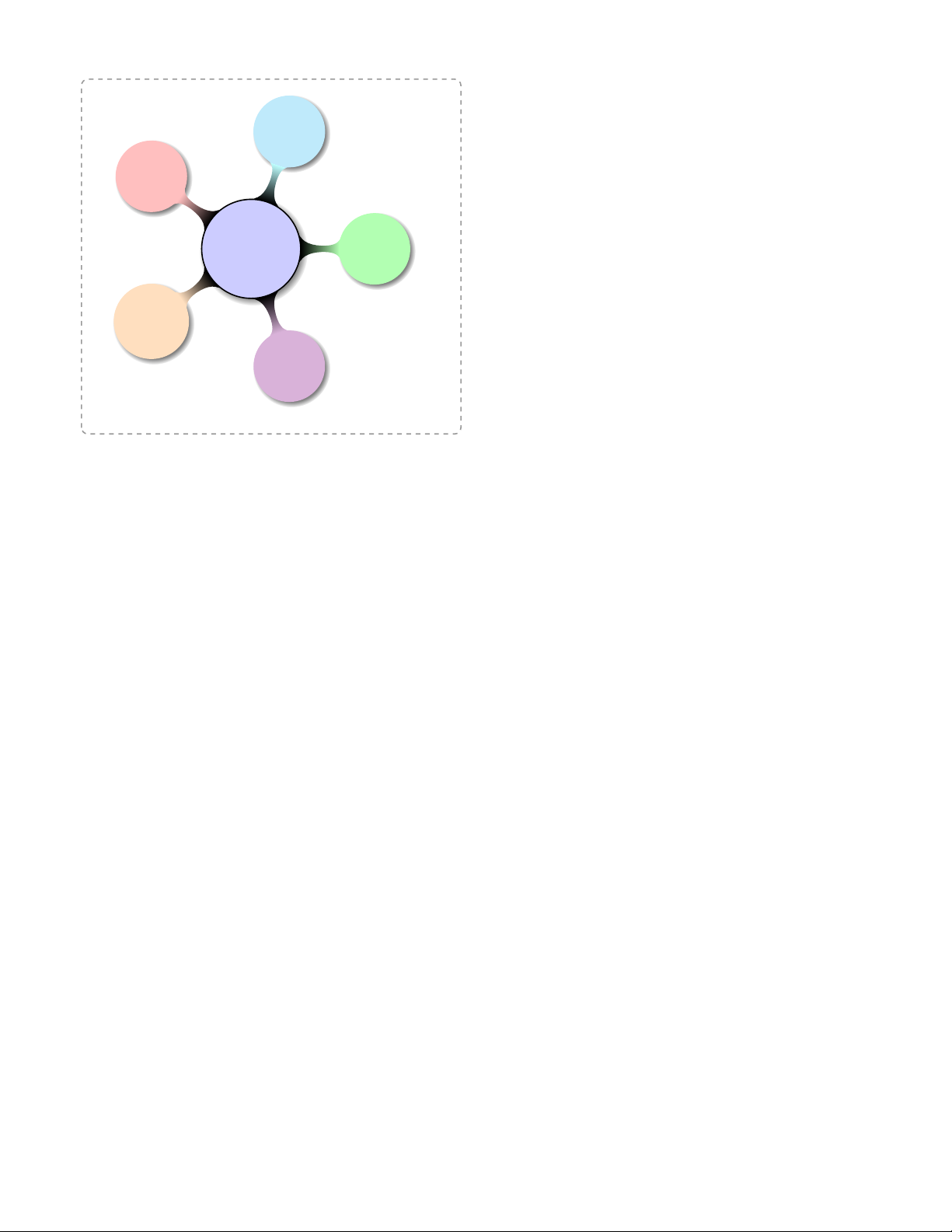
design across academic and industrial domains, as illustrated
standard designed to enable seamless interoperability among in Figure 2.
agents across different frameworks and vendors. The protocol
This review provides a comprehensive conceptual and archi-
is built around five core principles: embracing agentic capabil-
tectural analysis of the progression from traditional AI Agents
based planning. The review culminates in a forward-looking
roadmap that envisions the convergence of modular AI Agents
and orchestrated Agentic AI in mission-critical domains. Over- Autonomy
all, this paper aims to provide researchers with a structured
taxonomy and actionable insights to guide the design, deploy- Interaction
ment, and evaluation of next-generation agentic systems. A. Methodology Overview AI Agents
This review adopts a structured, multi-stage methodology & Architecture
designed to capture the evolution, architecture, application, Agentic AI
and limitations of AI Agents and Agentic AI. The process
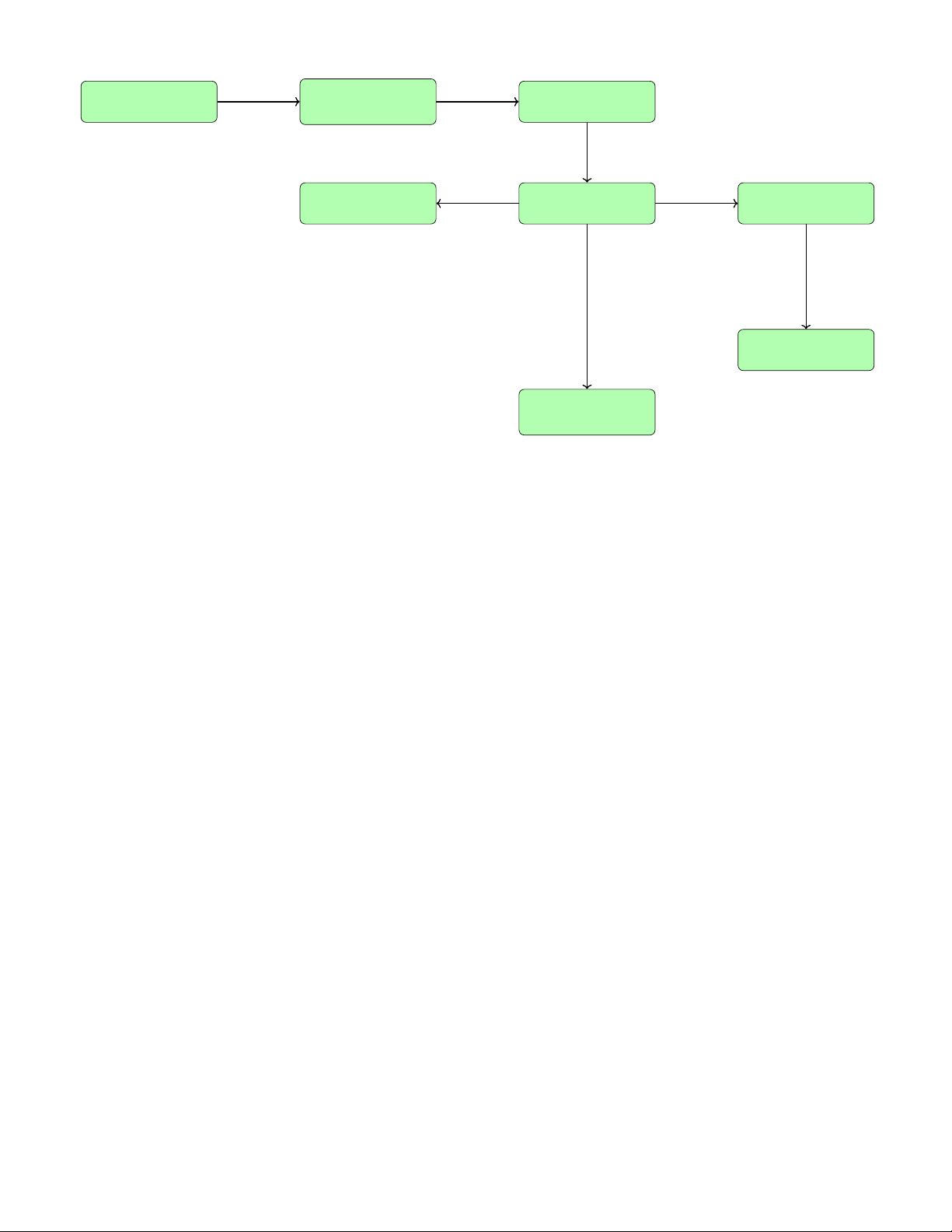
is visually summarized in Figure 3, which delineates the Scope/
sequential flow of topics explored in this study. The analytical Complexity
framework was organized to trace the progression from basic
agentic constructs rooted in LLMs to advanced multi-agent Mechanisms
orchestration systems. Each step of the review was grounded in
rigorous literature synthesis across academic sources and AI-
powered platforms, enabling a comprehensive understanding
of the current landscape and its emerging trajectories.
The review begins by establishing a foundational under-
Fig. 2: Mind map of Research Questions relevant to AI
standing of AI Agents, examining their core definitions, design
Agents and Agentic AI. Each color-coded branch represents
principles, and architectural modules as described in the litera-
a key dimension of comparison: Architecture, Mechanisms,
ture. These include components such as perception, reasoning,
Scope/Complexity, Interaction, and Autonomy.
and action selection, along with early applications like cus-
tomer service bots and retrieval assistants. This foundational
layer serves as the conceptual entry point into the broader
to emergent Agentic AI systems. Rather than organizing the agentic paradigm.
study around formal research questions, we adopt a sequential,
Next, we delve into the role of LLMs as core reasoning
layered structure that mirrors the historical and technical
components, emphasizing how pre-trained language models
evolution of these paradigms. Beginning with a detailed de-
underpin modern AI Agents. This section details how LLMs,
scription of our search strategy and selection criteria, we
through instruction fine-tuning and reinforcement learning
first establish the foundational understanding of AI Agents
from human feedback (RLHF), enable natural language in-
by analyzing their defining attributes, such as autonomy, reac-
teraction, planning, and limited decision-making capabilities.
tivity, and tool-based execution. We then explore the critical
We also identify their limitations, such as hallucinations, static
role of foundational models specifically LLMs and Large
knowledge, and a lack of causal reasoning.
Image Models (LIMs) which serve as the core reasoning and
Building on these foundations, the review proceeds to the
perceptual substrates that drive agentic behavior. Subsequent
emergence of Agentic AI, which represents a significant con-
sections examine how generative AI systems have served
ceptual leap. Here, we highlight the transformation from tool-
as precursors to more dynamic, interactive agents, setting
augmented single-agent systems to collaborative, distributed
the stage for the emergence of Agentic AI. Through this
ecosystems of interacting agents. This shift is driven by the
lens, we trace the conceptual leap from isolated, single-agent
need for systems capable of decomposing goals, assigning
systems to orchestrated multi-agent architectures, highlight-
subtasks, coordinating outputs, and adapting dynamically to
ing their structural distinctions, coordination strategies, and
changing contexts—capabilities that surpass what isolated AI
collaborative mechanisms. We further map the architectural Agents can offer.
evolution by dissecting the core system components of both
The next section examines the architectural evolution from
AI Agents and Agentic AI, offering comparative insights into
AI Agents to Agentic AI systems, contrasting simple, modular
their planning, memory, orchestration, and execution layers.
agent designs with complex orchestration frameworks. We
Building upon this foundation, we review application domains
describe enhancements such as persistent memory, meta-agent
spanning customer support, healthcare, research automation,
coordination, multi-agent planning loops (e.g., ReAct and
and robotics, categorizing real-world deployments by system
Chain-of-Thought prompting), and semantic communication
capabilities and coordination complexity. We then assess key
protocols. Comparative architectural analysis is supported with
challenges faced by both paradigms including hallucination,
examples from platforms like AutoGPT, CrewAI, and Lang-
limited reasoning depth, causality deficits, scalability issues, Graph.
and governance risks. To address these limitations, we outline
Following the architectural exploration, the review presents
emerging solutions such as retrieval-augmented generation,
an in-depth analysis of application domains where AI Agents
tool-based reasoning, memory architectures, and simulation-
and Agentic AI are being deployed. This includes six key Foundational LLMs as Core Hybrid Literature Search Understanding Reasoning Components of AI Agents Architectural Evolution: Emergence of Applications of Agents → Agentic AI Agentic AI AI Agents & Agentic AI Challenges & Limitations (Agents + Agentic AI) Potential Solutions: RAG, Causal Models, Planning
Fig. 3: Methodology pipeline from foundational AI agents to Agentic AI systems, applications, limitations, and solution strategies.
application areas for each paradigm, ranging from knowledge
academic repositories and AI-enhanced literature discovery
retrieval, email automation, and report summarization for AI
tools. Specifically, twelve platforms were queried: academic
Agents, to research assistants, robotic swarms, and strategic
databases such as Google Scholar, IEEE Xplore, ACM Dig-
business planning for Agentic AI. Use cases are discussed in
ital Library, Scopus, Web of Science, ScienceDirect, and
the context of system complexity, real-time decision-making,
arXiv; and AI-powered interfaces including ChatGPT, Per-
and collaborative task execution.
plexity.ai, DeepSeek, Hugging Face Search, and Grok. Search
Subsequently, we address the challenges and limitations
queries incorporated Boolean combinations of terms such as
inherent to both paradigms. For AI Agents, we focus on issues
“AI Agents,” “Agentic AI,” “LLM Agents,” “Tool-augmented
like hallucination, prompt brittleness, limited planning ability,
LLMs,” and “Multi-Agent AI Systems.”
and lack of causal understanding. For Agentic AI, we identify
Targeted queries such as “Agentic AI + Coordination +
higher-order challenges such as inter-agent misalignment, error
Planning,” and “AI Agents + Tool Usage + Reasoning”
propagation, unpredictability of emergent behavior, explain-
were employed to retrieve papers addressing both conceptual
ability deficits, and adversarial vulnerabilities. These problems
underpinnings and system-level implementations. Literature
are critically examined with references to recent experimental
inclusion was based on criteria such as novelty, empirical studies and technical reports.
evaluation, architectural contribution, and citation impact. The
Finally, the review outlines potential solutions to over-
rising global interest in these technologies, as illustrated in
come these challenges, drawing on recent advances in causal
Figure 1 using Google Trends data, underscores the urgency
modeling, retrieval-augmented generation (RAG), multi-agent
of synthesizing this emerging knowledge space.
memory frameworks, and robust evaluation pipelines. These
strategies are discussed not only as technical fixes but as foun-
II. FOUNDATIONAL UNDERSTANDING OF AI AGENTS
dational requirements for scaling agentic systems into high-
AI Agents are an autonomous software entities engineered
stakes domains such as healthcare, finance, and autonomous
for goal-directed task execution within bounded digital en- robotics.
vironments [14], [40]. These agents are defined by their
Taken together, this methodological structure enables a
ability to perceive structured or unstructured inputs [41],
comprehensive and systematic assessment of the state of AI
reason over contextual information [42], [43], and initiate
Agents and Agentic AI. By sequencing the analysis across
actions toward achieving specific objectives, often acting
foundational understanding, model integration, architectural
as surrogates for human users or subsystems [44]. Unlike
growth, applications, and limitations, the study aims to provide
conventional automation scripts, which follow deterministic
both theoretical clarity and practical guidance to researchers
workflows, AI agents demonstrate reactive intelligence and
and practitioners navigating this rapidly evolving field.
limited adaptability, allowing them to interpret dynamic inputs
1) Search Strategy: To construct this review, we imple-
and reconfigure outputs accordingly [45]. Their adoption has
mented a hybrid search methodology combining traditional
been reported across a range of application domains, including AI Agents
Fig. 4: Core characteristics of AI Agents autonomy, task-specificity, and reactivity illustrated with symbolic representations for
agent design and operational behavior.
customer service automation [46], [47], personal productivity
feedback loops and basic learning heuristics [17], [62].
assistance [48], internal information retrieval [49], [50], and
Together, these three traits provide a foundational profile for
decision support systems [51], [52]. A noteworthy example of
understanding and evaluating AI Agents across deployment
autonomous AI agents is Anthropic’s ”Computer Use” project,
scenarios. The remainder of this section elaborates on each
where Claude was trained to navigate computers to automate
characteristic, offering theoretical grounding and illustrative
repetitive processes, build and test software, and perform open- examples.
ended tasks such as research [53].
• Autonomy: A central feature of AI Agents is their
1) Overview of Core Characteristics of AI Agents: AI
ability to function with minimal or no human intervention
Agents are widely conceptualized as instantiated operational
after deployment [59]. Once initialized, these agents are
embodiments of artificial intelligence designed to interface
capable of perceiving environmental inputs, reasoning
with users, software ecosystems, or digital infrastructures in
over contextual data, and executing predefined or adaptive
pursuit of goal-directed behavior [54]–[56]. These agents dis-
actions in real-time [17]. Autonomy enables scalable
tinguish themselves from general-purpose LLMs by exhibiting
deployment in applications where persistent oversight is
structured initialization, bounded autonomy, and persistent
impractical, such as customer support bots or scheduling
task orientation. While LLMs primarily function as reactive assistants [47], [63].
prompt followers [57], AI Agents operate within explicitly de-
• Task-Specificity: AI Agents are purpose-built for narrow,
fined scopes, engaging dynamically with inputs and producing
well-defined tasks [60], [61]. They are optimized to
actionable outputs in real-time environments [58].
execute repeatable operations within a fixed domain, such
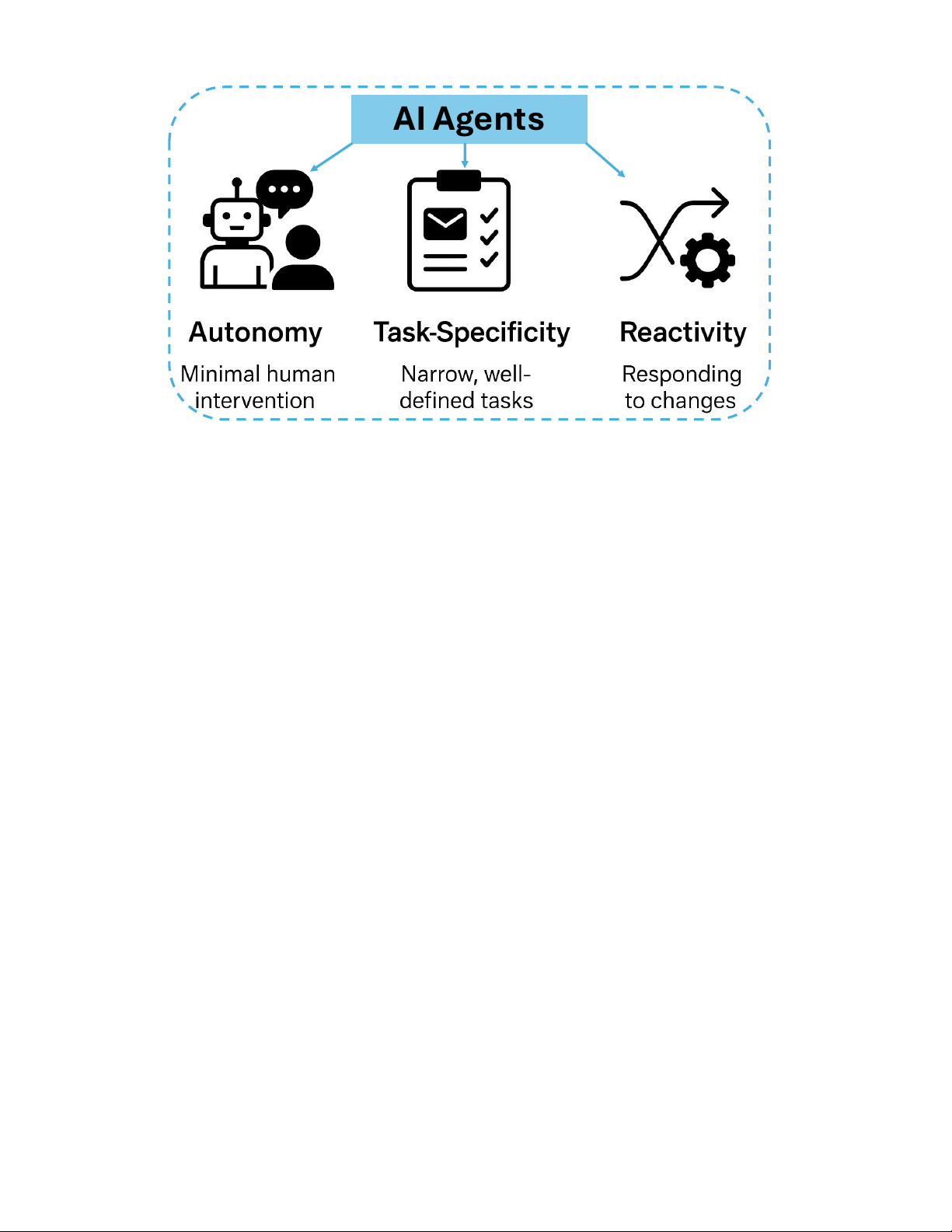
Figure 4 illustrates the three foundational characteristics that
as email filtering [64], [65], database querying [66], or
recur across architectural taxonomies and empirical deploy-
calendar coordination [39], [67]. This task specialization
ments of AI Agents. These include autonomy, task-specificity,
allows for efficiency, interpretability, and high precision
and reactivity with adaptation. First, autonomy denotes the
in automation tasks where general-purpose reasoning is
agent’s ability to act independently post-deployment, mini- unnecessary or inefficient.
mizing human-in-the-loop dependencies and enabling large-
• Reactivity and Adaptation: AI Agents often include
scale, unattended operation [47], [59]. Second, task-specificity
basic mechanisms for interacting with dynamic inputs,
encapsulates the design philosophy of AI agents being spe-
allowing them to respond to real-time stimuli such as
cialized for narrowly scoped tasks allowing high-performance
user requests, external API calls, or state changes in
optimization within a defined functional domain such as
software environments [17], [62]. Some systems integrate
scheduling, querying, or filtering [60], [61]. Third, reactivity
rudimentary learning [68] through feedback loops [69],
refers to an agent’s capacity to respond to changes in its
[70], heuristics [71], or updated context buffers to refine
environment, including user commands, software states, or
behavior over time, particularly in settings like personal-
API responses; when extended with adaptation, this includes
ized recommendations or conversation flow management
filename Open AI.pdf filename Hugging Face.pdf filename Google Gemini.pdf [72]–[74].
These core characteristics collectively enable AI Agents to
serve as modular, lightweight interfaces between pretrained AI
models and domain-specific utility pipelines. Their architec-
tural simplicity and operational efficiency position them as key
enablers of scalable automation across enterprise, consumer,
and industrial settings. Although still limited in reasoning
depth compared to more general AI systems [75], their high
usability and performance within constrained task boundaries
have made them foundational components in contemporary intelligent system design.
2) Foundational Models: The Role of LLMs and LIMs:
The foundational progress in AI agents has been significantly
accelerated by the development and deployment of LLMs
and LIMs, which serve as the core reasoning and perception
engines in contemporary agent systems. These models enable
Fig. 5: An AI agent–enabled drone autonomously inspects
AI agents to interact intelligently with their environments,
an orchard, identifying diseased fruits and damaged branches
understand multimodal inputs, and perform complex reasoning
using vision models, and triggers real-time alerts for targeted
tasks that go beyond hard-coded automation. horticultural interventions
LLMs such as GPT-4 [76] and PaLM [77] are trained on
massive datasets of text from books, web content, and dialogue
corpora. These models exhibit emergent capabilities in natural
natural language processing and large language models in
language understanding, question answering, summarization,
generating drone action plans from human-issued queries,
dialogue coherence, and even symbolic reasoning [78], [79].
demonstrating how LLMs support naturalistic interaction and
Within AI agent architectures, LLMs serve as the primary
mission planning. Similarly, Natarajan et al. [92] explore deep
decision-making engine, allowing the agent to parse user
learning and reinforcement learning for scene understand-
queries, plan multi-step solutions, and generate naturalistic
ing, spatial mapping, and multi-agent coordination in aerial
responses. For instance, an AI customer support agent powered
robotics. These studies converge on the critical importance
by GPT-4 can interpret customer complaints, query backend
of AI-driven autonomy, perception, and decision-making in
systems via tool integration, and respond in a contextually advancing drone-based agents.
appropriate and emotionally aware manner [80], [81].
Large Image Models (LIMs) such as CLIP [82] and BLIP-
Importantly, LLMs and LIMs are often accessed via infer-
2 [83] extend the agent’s capabilities into the visual domain.
ence APIs provided by cloud-based platforms such as OpenAI
Trained on image-text pairs, LIMs enable perception-based
https://openai.com/, HuggingFace https://huggingface.co/, and
tasks including image classification, object detection, and
Google Gemini https://gemini.google.com/app. These services
vision-language grounding. These capabilities are increasingly
abstract away the complexity of model training and fine-
vital for agents operating in domains such as robotics [84],
tuning, enabling developers to rapidly build and deploy agents
autonomous vehicles [85], [86], and visual content moderation
equipped with state-of-the-art reasoning and perceptual abil- [87], [88].
ities. This composability accelerates prototyping and allows
For example, as illustrated in Figure 5 in an autonomous
agent frameworks like LangChain [93] and AutoGen [94]
drone agent tasked with inspecting orchards, a LIM can
to orchestrate LLM and LIM outputs across task workflows.
identify diseased fruits [89] or damaged branches by inter-
In short, foundational models give modern AI agents their
preting live aerial imagery and triggering predefined inter-
basic understanding of language and visuals. Language models
vention protocols. Upon detection, the system autonomously
help them reason with words, and image models help them
triggers predefined intervention protocols, such as notifying
understand pictures-working together, they allow AI to make
horticultural staff or marking the location for targeted treat-
smart decisions in complex situations.
ment without requiring human intervention [17], [59]. This
3) Generative AI as a Precursor: A consistent theme in the
workflow exemplifies the autonomy and reactivity of AI agents
literature is the positioning of generative AI as the foundational
in agricultural environment and recent literature underscores
precursor to agentic intelligence. These systems primarily
the growing sophistication of such drone-based AI agents.
operate on pretrained LLMs and LIMs, which are optimized
Chitra et al. [90] provide a comprehensive overview of AI
to synthesize novel content text, images, audio, or code
algorithms foundational to embodied agents, highlighting the
based on input prompts. While highly expressive, generative
integration of computer vision, SLAM, reinforcement learning,
models fundamentally exhibit reactive behavior: they produce
and sensor fusion. These components collectively support real-
output only when explicitly prompted and do not pursue goals
time perception and adaptive navigation in dynamic envi-
autonomously or engage in self-initiated reasoning [95], [96].
ronments. Kourav et al. [91] further emphasize the role of
Key Characteristics of Generative AI:
filename BabyAGI.pdf • Reactivity:
As non-autonomous systems, generative
require adaptive planning [119], [120], real-time decision-
models are exclusively input-driven [97], [98]. Their
making [121], [122], and environment-aware behavior [123].
operations are triggered by user-specified prompts and 1) LLMs as Core Reasoning Components:
they lack internal states, persistent memory, or goal- LLMs such as GPT-4 [76], PaLM [77], Claude
following mechanisms [99]–[101].
https://www.anthropic.com/news/claude-3-5-sonnet, and
• Multimodal Capability: Modern generative systems can
LLaMA [115] are pre-trained on massive text corpora using
produce a diverse array of outputs, including coherent
self-supervised objectives and fine-tuned using techniques
narratives, executable code, realistic images, and even
such as Supervised Fine-Tuning (SFT) and Reinforcement
speech transcripts. For instance, models like GPT-4 [76],
Learning from Human Feedback (RLHF) [124], [125]. These
PaLM-E [102], and BLIP-2 [83] exemplify this capacity,
models encode rich statistical and semantic knowledge,
enabling language-to-image, image-to-text, and cross-
allowing them to perform tasks like inference, summarization, modal synthesis tasks.
code generation, and dialogue management. However, in
• Prompt Dependency and Statelessness: Although gen-
agentic contexts, their capabilities extend beyond response
erative systems are stateless in that they do not retain con-
generation. They function as cognitive engines that interpret
text across interactions unless explicitly provided [103],
user goals, formulate and evaluate possible action plans,
[104], recent advancements like GPT-4.1 support larger
select the most appropriate strategies, leverage external tools,
context windows-up to 1 million tokens-and are better
and manage complex, multi-step workflows.
able to utilize that context thanks to improved long-text Recent work identifies these models as central
comprehension [105]. Their design also lacks intrinsic to the architecture of contemporary agentic
feedback loops [106], state management [107], [108], systems. For instance, AutoGPT [30] and BabyAGI
or multi-step planning a requirement for autonomous
https://github.com/yoheinakajima/babyagi use GPT-4 as
decision-making and iterative goal refinement [109],
both a planner and executor: the model analyzes high-level [110].
objectives, decomposes them into actionable subtasks, invokes
Despite their remarkable generative fidelity, these systems
external APIs as needed, and monitors progress to determine
are constrained by their inability to act upon the environment
subsequent actions. In such systems, the LLM operates in a
or manipulate digital tools independently. For instance, they
loop of prompt processing, state updating, and feedback-based
cannot search the internet, parse real-time data, or interact
correction, closely emulating autonomous decision-making.
with APIs without human-engineered wrappers or scaffolding
2) Tool-Augmented AI Agents: Enhancing Functionality:
layers. As such, they fall short of being classified as true
To overcome limitations inherent to generative-only systems
AI Agents, whose architectures integrate perception, decision-
such as hallucination, static knowledge cutoffs, and restricted
making, and external tool-use within closed feedback loops.
interaction scopes, researchers have proposed the concept of
The limitations of generative AI in handling dynamic tasks,
tool-augmented LLM agents [126] such as Easytool [127],
maintaining state continuity, or executing multi-step plans led
Gentopia [128], and ToolFive [129]. These systems integrate
to the development of tool-augmented systems, commonly
external tools, APIs, and computation platforms into the
referred to as AI Agents [111]. These systems build upon
agent’s reasoning pipeline, allowing for real-time information
the language processing backbone of LLMs but introduce
access, code execution, and interaction with dynamic data
additional infrastructure such as memory buffers, tool-calling environments.
APIs, reasoning chains, and planning routines to bridge the
Tool Invocation. When an agent identifies a need that
gap between passive response generation and active task
cannot be addressed through its internal knowledge such as
completion. This architectural evolution marks a critical shift
querying a current stock price, retrieving up-to-date weather
in AI system design: from content creation to autonomous
information, or executing a script, it generates a structured
utility [112], [113]. The trajectory from generative systems to
function call or API request [130], [131]. These calls are
AI agents underscores a progressive layering of functionality
typically formatted in JSON, SQL, or Python dictionary,
that ultimately supports the emergence of agentic behaviors.
depending on the target service, and routed through an or-
chestration layer that executes the task.
A. Language Models as the Engine for AI Agent Progression
Result Integration. Once a response is received from the
The emergence of AI agent as a transformative paradigm
tool, the output is parsed and reincorporated into the LLM’s
in artificial intelligence is closely tied to the evolution and
context window. This enables the agent to synthesize new
repurposing of large-scale language models such as GPT-3
reasoning paths, update its task status, and decide on the next
[114], Llama [115], T5 [116], Baichuan 2 [117] and GPT3mix
step. The ReAct framework [132] exemplifies this architecture
[118]. A substantial and growing body of research confirms
by combining reasoning (Chain-of-Thought prompting) and
that the leap from reactive generative models to autonomous,
action (tool use), with LLMs alternating between internal
goal-directed agents is driven by the integration of LLMs
cognition and external environment interaction. A prominent
as core reasoning engines within dynamic agentic systems.
example of a tool-augmented AI agent is ChatGPT, which,
These models, originally trained for natural language pro-
when unable to answer a query directly, autonomously invokes
cessing tasks, are increasingly embedded in frameworks that
the Web Search API to retrieve more recent and relevant
information, performs reasoning over the retrieved content,
through tool-augmented reasoning, recent literature identifies
and formulates a response based on its understanding [133].
notable limitations that constrain their scalability in complex,
3) Illustrative Examples and Emerging Capabilities: Tool-
multi-step, or cooperative scenarios [137]–[139]. These con-
augmented LLM agents have demonstrated capabilities across
straints have catalyzed the development of a more advanced
a range of applications. In AutoGPT [30], the agent may
paradigm: Agentic AI. This emerging class of systems extends
plan a product market analysis by sequentially querying the
the capabilities of traditional agents by enabling multiple
web, compiling competitor data, summarizing insights, and
intelligent entities to collaboratively pursue goals through
generating a report. In a coding context, tools like GPT-
structured communication [140]–[142], shared memory [143],
Engineer combine LLM-driven design with local code exe-
[144], and dynamic role assignment [14].
cution environments to iteratively develop software artifacts
1) Conceptual Leap: From Isolated Tasks to Coordinated
[134], [135]. In research domains, systems like Paper-QA
Systems: AI Agents, as explored in prior sections, integrate
[136] utilize LLMs to query vectorized academic databases,
LLMs with external tools and APIs to execute narrowly scoped
grounding answers in retrieved scientific literature to ensure
operations such as responding to customer queries, performing factual integrity.
document retrieval, or managing schedules. However, as use
These capabilities have opened pathways for more robust
cases increasingly demand context retention, task interde-
behavior of AI agents such as long-horizon planning, cross-
pendence, and adaptability across dynamic environments, the
tool coordination, and adaptive learning loops. Nevertheless,
single-agent model proves insufficient [145], [146].
the inclusion of tools also introduces new challenges in or-
Agentic AI systems represent an emergent class of in-
chestration complexity, error propagation, and context window
telligent architectures in which multiple specialized agents
limitations all active areas of research. The progression toward
collaborate to achieve complex, high-level objectives [33]. As
AI Agents is inseparable from the strategic integration of
defined in recent frameworks, these systems are composed of
LLMs as reasoning engines and their augmentation through
modular agents each tasked with a distinct subcomponent of
structured tool use. This synergy transforms static language
a broader goal and coordinated through either a centralized
models into dynamic cognitive entities capable of perceiving,
orchestrator or a decentralized protocol [16], [141]. This
planning, acting, and adapting setting the stage for multi-agent
structure signifies a conceptual departure from the atomic,
collaboration, persistent memory, and scalable autonomy.
reactive behaviors typically observed in single-agent architec-
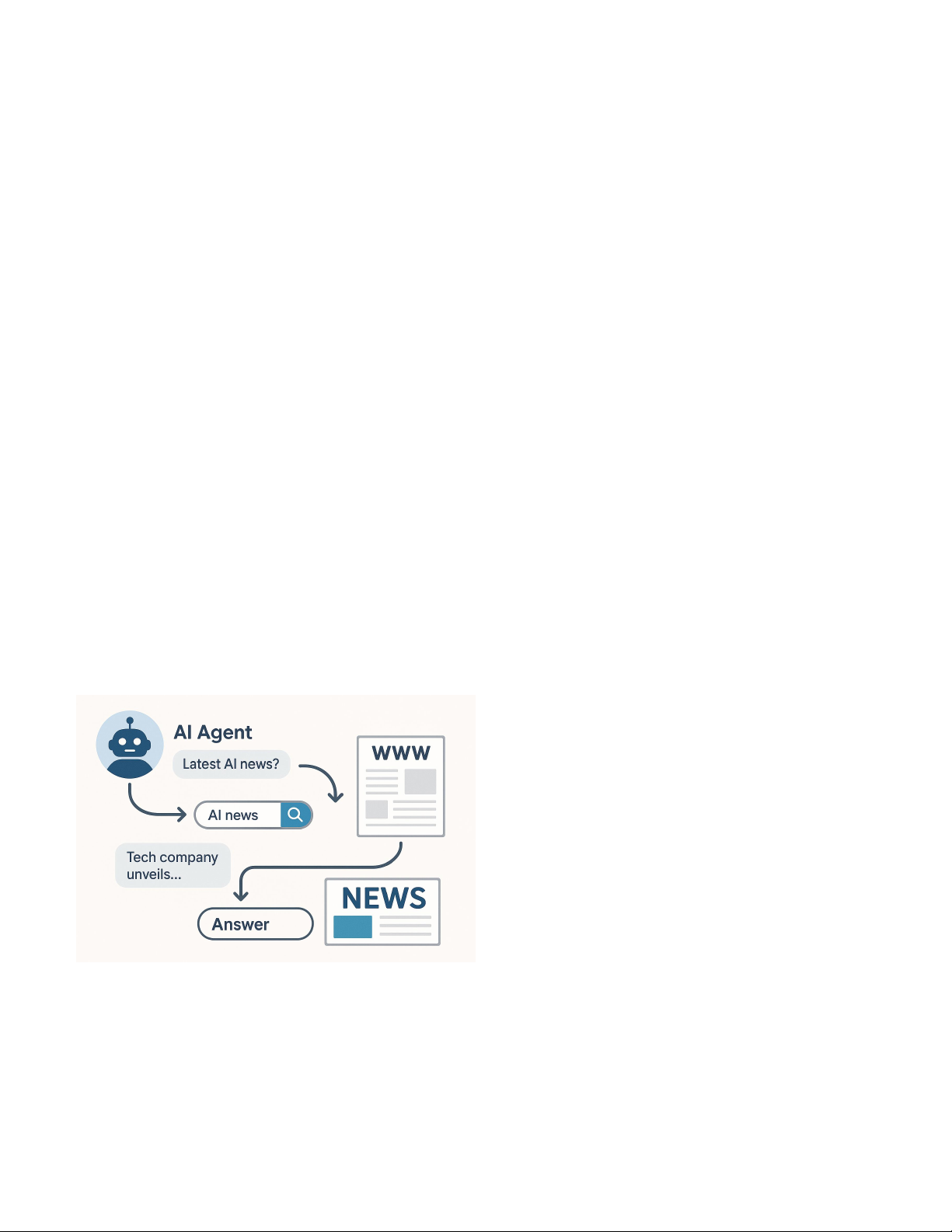
Figure 6 illustrates a representative case: a news query agent
tures, toward a form of system-level intelligence characterized
that performs real-time web search, summarizes retrieved
by dynamic inter-agent collaboration.
documents, and generates an articulate, context-aware answer.
A key enabler of this paradigm is goal decomposition,
Such workflows have been demonstrated in implementations
wherein a user-specified objective is automatically parsed and
using LangChain, AutoGPT, and OpenAI function-calling
divided into smaller, manageable tasks by planning agents paradigms.
[39]. These subtasks are then distributed across the agent
network. Multi-step reasoning and planning mechanisms
facilitate the dynamic sequencing of these subtasks, allowing
the system to adapt in real time to environmental shifts or
partial task failures. This ensures robust task execution even under uncertainty [14].
Inter-agent communication is mediated through distributed
communication channels, such as asynchronous messaging
queues, shared memory buffers, or intermediate output ex-
changes, enabling coordination without necessitating contin-
uous central oversight [14], [147]. Furthermore, reflective
reasoning and memory systems allow agents to store context
across multiple interactions, evaluate past decisions, and itera-
tively refine their strategies [148]. Collectively, these capabili-
ties enable Agentic AI systems to exhibit flexible, adaptive,
and collaborative intelligence that exceeds the operational limits of individual agents.
Fig. 6: Illustrating the workflow of an AI Agent performing
A widely accepted conceptual illustration in the literature
real-time news search, summarization, and answer generation
delineates the distinction between AI Agents and Agentic AI
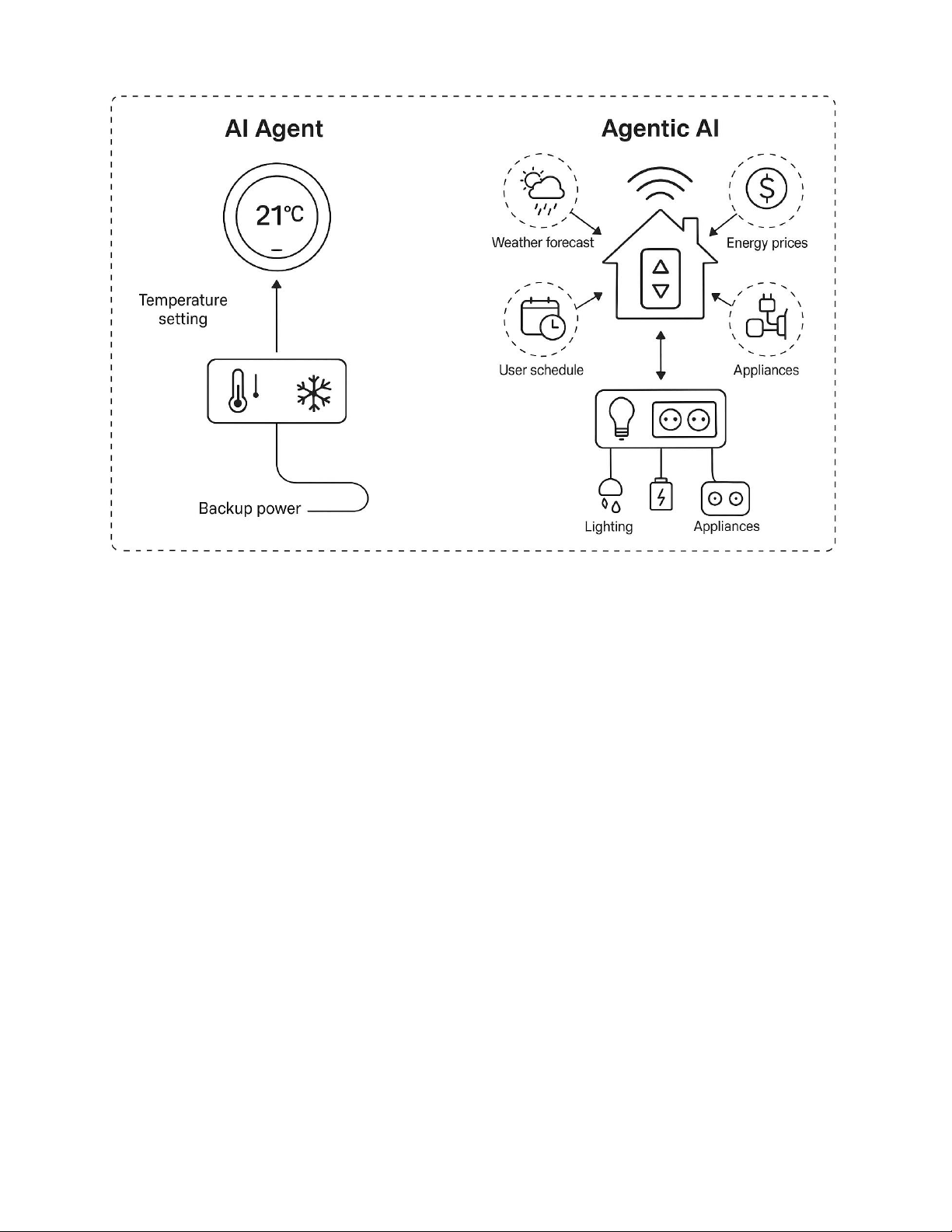
through the analogy of smart home systems. As depicted in
Figure 7, the left side represents a traditional AI Agent in the
III. THE EMERGENCE OF AGENTIC AI FROM AI AGENT
form of a smart thermostat. This standalone agent receives FOUNDATIONS
a user-defined temperature setting and autonomously controls
While AI Agents represent a significant leap in artificial in-
the heating or cooling system to maintain the target tempera-
telligence capabilities, particularly in automating narrow tasks
ture. While it demonstrates limited autonomy such as learning
Fig. 7: Comparative illustration of AI Agent vs. Agentic AI, synthesizing conceptual distinctions. Left: A single-task AI Agent.
Right: A multi-agent, collaborative Agentic AI system.
user schedules or reducing energy usage during absence, it frameworks.
operates in isolation, executing a singular, well-defined task
2) Key Differentiators between AI Agents and Agentic AI:
without engaging in broader environmental coordination or
To systematically capture the evolution from Generative AI goal inference [17], [59].
to AI Agents and further to Agentic AI, we structure our
In contrast, the right side of Figure 7 illustrates an Agentic
comparative analysis around a foundational taxonomy where
AI system embedded in a comprehensive smart home ecosys-
Generative AI serves as the baseline. While AI Agents and
tem. Here, multiple specialized agents interact synergistically
Agentic AI represent increasingly autonomous and interactive
to manage diverse aspects such as weather forecasting, daily
systems, both paradigms are fundamentally grounded in gener-
scheduling, energy pricing optimization, security monitoring,
ative architectures, especially LLMs and LIMs. Consequently,
and backup power activation. These agents are not just reactive
each comparative table in this subsection includes Generative
modules; they communicate dynamically, share memory states,
AI as a reference column to highlight how agentic behavior
and collaboratively align actions toward a high-level system
diverges and builds upon generative foundations.
goal (e.g., optimizing comfort, safety, and energy efficiency
A set of fundamental distinctions between AI Agents and
in real time). For instance, a weather forecast agent might
Agentic AI particularly in terms of scope, autonomy, architec-
signal upcoming heatwaves, prompting early pre-cooling via
tural composition, coordination strategy, and operational com-
solar energy before peak pricing hours, as coordinated by an
plexity are synthesized in Table I, derived from close analysis
energy management agent. Simultaneously, the system might
of prominent frameworks such as AutoGen [94] and ChatDev
delay high-energy tasks or activate surveillance systems during
[149]. These comparisons provide a multi-dimensional view
occupant absence, integrating decisions across domains. This
of how single-agent systems transition into coordinated, multi-
figure embodies the architectural and functional leap from
agent ecosystems. Through the lens of generative capabilities,
task-specific automation to adaptive, orchestrated intelligence.
we trace the increasing sophistication in planning, communica-
The AI Agent acts as a deterministic component with limited
tion, and adaptation that characterizes the shift toward Agentic
scope, while Agentic AI reflects distributed intelligence, char- AI.
acterized by goal decomposition, inter-agent communication,
While Table I delineates the foundational and operational
and contextual adaptation, hallmarks of modern agentic AI
differences between AI Agents and Agentic AI, a more gran-
TABLE I: Key Differences Between AI Agents and Agentic
trast, Agentic AI systems extend this capacity through multi- AI
step planning, meta-learning, and inter-agent communication,
positioning them for use in complex environments requiring Feature AI Agents Agentic AI
autonomous goal setting and coordination. Generative Agents, Autonomous software Systems of multiple AI
as a more recent construct, inherit LLM-centric pretraining Definition programs that agents collaborating to
capabilities and excel in producing multimodal content cre- perform specific achieve complex goals.
atively, yet they lack the proactive orchestration and state- tasks. High autonomy Higher autonomy with
persistent behaviors seen in Agentic AI systems. Autonomy Level within specific the ability to manage
The second table (Table III) provides a process-driven tasks. multi-step, complex tasks.
comparison across three agent categories: Generative AI, Typically handle Handle complex, Task
AI Agents, and Agentic AI. This framing emphasizes how single, specific multi-step tasks requiring Complexity tasks. coordination.
functional pipelines evolve from prompt-driven single-model Involve multi-agent
inference in Generative AI, to tool-augmented execution in AI Operate Collaboration collaboration and independently.
Agents, and finally to orchestrated agent networks in Agentic information sharing.
AI. The structure column underscores this progression: from Learn and adapt Learn and adapt across a Learning and
single LLMs to integrated toolchains and ultimately to dis- within their wider range of tasks and Adaptation specific domain. environments.
tributed multi-agent systems. Access to external data, a key Customer service
operational requirement for real-world utility, also increases Supply chain chatbots, virtual management, business
in sophistication, from absent or optional in Generative AI Applications assistants, process optimization, automated
to modular and coordinated in Agentic AI. Collectively, these virtual project managers. workflows.
comparative views reinforce that the evolution from generative
to agentic paradigms is marked not just by increasing system
complexity but also by deeper integration of autonomy, mem-
ular taxonomy is required to understand how these paradigms
ory, and decision-making across multiple levels of abstraction.
emerge from and relate to broader generative frameworks.
Furthermore, to provide a deeper multi-dimensional un-
Specifically, the conceptual and cognitive progression from
derstanding of the evolving agentic landscape, Tables V
static Generative AI systems to tool-augmented AI Agents,
through IX extend the comparative taxonomy to dissect five
and further to collaborative Agentic AI ecosystems, necessi-
critical dimensions: core function and goal alignment, archi-
tates an integrated comparative framework. This transition is
tectural composition, operational mechanism, scope and com-
not merely structural but also functional encompassing how
plexity, and interaction-autonomy dynamics. These dimensions
initiation mechanisms, memory use, learning capacities, and
serve to not only reinforce the structural differences between
orchestration strategies evolve across the agentic spectrum.
Generative AI, AI Agents, and Agentic AI, but also introduce
Moreover, recent studies suggest the emergence of hybrid
an emergent category Generative Agents representing modular
paradigms such as ”Generative Agents,” which blend gen-
agents designed for embedded subtask-level generation within
erative modeling with modular task specialization, further
broader workflows [150]. Table V situates the three paradigms
complicating the agentic landscape. In order to capture these
in terms of their overarching goals and functional intent. While
nuanced relationships, Table II synthesizes the key conceptual
Generative AI centers on prompt-driven content generation,
and cognitive dimensions across four archetypes: Generative
AI Agents emphasize tool-based task execution, and Agentic
AI, AI Agents, Agentic AI, and inferred Generative Agents.
AI systems orchestrate full-fledged workflows. This functional
By positioning Generative AI as a baseline technology, this
expansion is mirrored architecturally in Table VI, where the
taxonomy highlights the scientific continuum that spans from
system design transitions from single-model reliance (in Gen-
passive content generation to interactive task execution and
erative AI) to multi-agent orchestration and shared memory
finally to autonomous, multi-agent orchestration. This multi-
utilization in Agentic AI. Table VII then outlines how these
tiered lens is critical for understanding both the current ca-
paradigms differ in their workflow execution pathways, high-
pabilities and future trajectories of agentic intelligence across
lighting the rise of inter-agent coordination and hierarchical
applied and theoretical domains.
communication as key drivers of agentic behavior.
To further operationalize the distinctions outlined in Ta-
Furthermore, Table VIII explores the increasing scope and
ble I, Tables III and II extend the comparative lens to en-
operational complexity handled by these systems ranging
compass a broader spectrum of agent paradigms including
from isolated content generation to adaptive, multi-agent col-
AI Agents, Agentic AI, and emerging Generative Agents.
laboration in dynamic environments. Finally, Table IX syn-
Table III presents key architectural and behavioral attributes
thesizes the varying degrees of autonomy, interaction style,
that highlight how each paradigm differs in terms of pri-
and decision-making granularity across the paradigms. These
mary capabilities, planning scope, interaction style, learning
tables collectively establish a rigorous framework to classify
dynamics, and evaluation criteria. AI Agents are optimized
and analyze agent-based AI systems, laying the groundwork
for discrete task execution with limited planning horizons and
for principled evaluation and future design of autonomous,
rely on supervised or rule-based learning mechanisms. In con-
intelligent, and collaborative agents operating at scale.
TABLE II: Taxonomy Summary of AI Agent Paradigms: Conceptual and Cognitive Dimensions Conceptual Dimension Generative AI AI Agent Agentic AI Generative Agent (Inferred) Initiation Type Prompt-triggered by user or Prompt or goal-triggered Goal-initiated or orchestrated Prompt or system-level trig- input with tool use task ger Goal Flexibility (None) fixed per prompt (Low) executes specific goal (High) decomposes and (Low) guided by subtask adapts goals goal Temporal Continuity Stateless, single-session out- Short-term continuity within Persistent across workflow Context-limited to subtask put task stages Learning/Adaptation Static (pretrained) (Might in future) Tool selec- (Yes) Learns from outcomes Typically static; limited tion strategies may evolve adaptation Memory Use No memory or short context Optional memory or tool Shared episodic/task mem- Subtask-local or contextual window cache ory memory Coordination Strategy None (single-step process) Isolated task execution Hierarchical or decentralized Receives instructions from coordination system System Role Content generator Tool-using task executor Collaborative workflow or- Subtask-level modular gener- chestrator ator
TABLE III: Key Attributes of AI Agents, Agentic AI, and
on user prompts, AI Agents are characterized by their ability Generative Agents
to perform targeted tasks using external tools. Agentic AI,
by contrast, is defined by its ability to pursue high-level Aspect AI Agent Agentic AI Generative Agent
goals through the orchestration of multiple subagents each
addressing a component of a broader workflow. This shift Primary Ca- Task execution Autonomous Content genera-
from output generation to workflow execution marks a critical pability goal setting tion Planning Single-step Multi-step N/A (content
inflection point in the evolution of autonomous systems. Horizon only)
In Table VI, the architectural distinctions are made explicit, Learning Rule-based or
Reinforcement/meta- Large-scale pre- Mechanism supervised learning training
especially in terms of system composition and control logic. Interaction Reactive Proactive Creative
Generative AI relies on a single model with no built-in capabil- Style
ity for tool use or delegation, whereas AI Agents combine lan- Evaluation Accuracy, Engagement, Coherence, diver-
guage models with auxiliary APIs and interface mechanisms Focus latency adaptability sity
to augment functionality. Agentic AI extends this further by
introducing multi-agent systems where collaboration, memory
TABLE IV: Comparison of Generative AI, AI Agents, and
persistence, and orchestration protocols are central to the Agentic AI
system’s operation. This expansion is crucial for enabling
intelligent delegation, context preservation, and dynamic role Feature Generative AI AI Agent Agentic AI
assignment capabilities absent in both generative and single- Core Content genera- Task-specific Complex
agent systems. Likewise in Table VII dives deeper into how Function tion execution using workflow
these systems function operationally, emphasizing differences tools automation
in execution logic and information flow. Unlike Generative Mechanism Prompt → LLM Prompt → Tool Goal → Agent → Output Call → LLM → Orchestration →
AI’s linear pipeline (prompt → output), AI Agents implement Output Output
procedural mechanisms to incorporate tool responses mid- Structure Single model LLM + tool(s) Multi-agent sys-
process. Agentic AI introduces recursive task reallocation and tem
cross-agent messaging, thus facilitating emergent decision- External None (unless Via external APIs Coordinated Data added) multi-agent
making that cannot be captured by static LLM outputs alone. Access access
Table VIII further reinforces these distinctions by mapping Key Trait Reactivity Tool-use Collaboration
each system’s capacity to handle task diversity, temporal scale,
and operational robustness. Here, Agentic AI emerges as
uniquely capable of supporting high-complexity goals that de-
mand adaptive, multi-phase reasoning and execution strategies.
Each of the comparative tables presented from Table V
through Table IX offers a layered analytical lens to isolate
Furthermore, Table IX brings into sharp relief the opera-
the distinguishing attributes of Generative AI, AI Agents, and
tional and behavioral distinctions across Generative AI, AI
Agentic AI, thereby grounding the conceptual taxonomy in
Agents, and Agentic AI, with a particular focus on autonomy
concrete operational and architectural features. Table V, for
levels, interaction styles, and inter-agent coordination. Gener-
instance, addresses the most fundamental layer of differentia-
ative AI systems, typified by models such as GPT-3 [114]
tion: core function and system goal. While Generative AI is
and and DALL·E https://openai.com/index/dall-e-3/, remain
narrowly focused on reactive content production conditioned
reactive generating content solely in response to prompts
TABLE V: Comparison by Core Function and Goal Feature Generative AI AI Agent Agentic AI Generative Agent (Inferred) Primary Goal Create novel content based Execute a specific task us- Automate complex work- Perform a specific genera- on prompt ing external tools flow or achieve high-level tive sub-task goals Core Function Content generation (text, Task execution with exter- Workflow orchestration and Sub-task content generation image, audio, etc.) nal interaction goal achievement within a workflow
TABLE VI: Comparison by Architectural Components Component Generative AI AI Agent Agentic AI Generative Agent (Inferred) Core Engine LLM / LIM LLM Multiple LLMs (potentially LLM diverse) Prompts Yes (input trigger) Yes (task guidance) Yes (system goal and agent Yes (sub-task guidance) tasks) Tools/APIs No (inherently) Yes (essential) Yes (available to constituent Potentially (if sub-task re- agents) quires) Multiple Agents No No Yes (essential; collabora- No (is an individual agent) tive) Orchestration No No Yes (implicit or explicit) No (is part of orchestration)
TABLE VII: Comparison by Operational Mechanism Mechanism Generative AI AI Agent Agentic AI Generative Agent (Inferred) Primary Driver Reactivity to prompt Tool calling for task execu- Inter-agent communication Reactivity to input or sub- tion and collaboration task prompt Interaction Mode User → LLM User → Agent → Tool User → System → Agents System/Agent → Agent → Output Workflow Handling Single generation step Single task execution Multi-step workflow coordi- Single step within workflow nation Information Flow Input → Output Input → Tool → Output Input → Agent1 → Agent2 Input (from system/agent) → ... → Output → Output
TABLE VIII: Comparison by Scope and Complexity Aspect Generative AI AI Agent Agentic AI Generative Agent (Inferred) Task Scope Single piece of generated Single, specific, defined task Complex, multi-faceted Specific sub-task (often content goal or workflow generative) Complexity Low (relative) Medium (integrates tools) High (multi-agent coordina- Low to Medium (one task tion) component) Example (Video) Chatbot Tavily Search Agent YouTube-to-Blog Title/Description/Conclusion Conversion System Generator
TABLE IX: Comparison by Interaction and Autonomy Feature Generative AI AI Agent Agentic AI Generative Agent (Inferred) Autonomy Level Low (requires prompt) Medium (uses tools au- High (manages entire pro- Low to Medium (executes tonomously) cess) sub-task) External Interaction None (baseline) Via specific tools or APIs Through multiple Possibly via tools (if agents/tools needed) Internal Interaction N/A N/A High (inter-agent) Receives input from system or agent Decision Making Pattern selection Tool usage decisions Goal decomposition and as- Best sub-task generation signment strategy
without maintaining persistent state or engaging in iterative
• Perception Module: This subsystem ingests input signals
reasoning. In contrast, AI Agents such as those constructed
from users (e.g., natural language prompts) or external
with LangChain [93] or MetaGPT [151], exhibit a higher
systems (e.g., APIs, file uploads, sensor streams). It is
degree of autonomy, capable of initiating external tool invoca-
responsible for pre-processing data into a format inter-
tions and adapting behaviors within bounded tasks. However,
pretable by the agent’s reasoning module. For example,
their autonomy is typically confined to isolated task execution,
in LangChain-based agents [93], [154], the perception
lacking long-term state continuity or collaborative interaction.
layer handles prompt templating, contextual wrapping,
Agentic AI systems mark a significant departure from these
and retrieval augmentation via document chunking and
paradigms by introducing internal orchestration mechanisms embedding search.
and multi-agent collaboration frameworks. For example, plat- • Knowledge
Representation and Reasoning (KRR)
forms like AutoGen [94] and ChatDev [149] exemplify agentic
Module: At the core of the agent’s intelligence lies
coordination through task decomposition, role assignment,
the KRR module, which applies symbolic, statistical, or
and recursive feedback loops. In AutoGen, one agent might
hybrid logic to input data. Techniques include rule-based
serve as a planner while another retrieves information and
logic (e.g., if-then decision trees), deterministic workflow
a third synthesizes a report, each communicating through
engines, and simple planning graphs. Reasoning in agents
shared memory buffers and governed by an orchestrator agent
like AutoGPT [30] is enhanced with function-calling
that monitors dependencies and overall task progression. This
and prompt chaining to simulate thought processes (e.g.,
structured coordination allows for more complex goal pur-
“step-by-step” prompts or intermediate tool invocations).
suit and flexible behavior in dynamic environments. Such
• Action Selection and Execution Module: This module
architectures fundamentally shift the focus of intelligence
translates inferred decisions into external actions using
from single-model outputs to emergent system-level behavior,
an action library. These actions may include sending
wherein agents learn, negotiate, and update decisions based on
messages, updating databases, querying APIs, or pro-
evolving task states. Thus, the comparative taxonomy not only
ducing structured outputs. Execution is often managed
highlights increasing levels of operational independence but
by middleware like LangChain’s “agent executor,” which
also illustrates how Agentic AI introduces novel paradigms of
links LLM outputs to tool calls and observes responses
communication, memory integration, and decentralized con- for subsequent steps [93].
trol, paving the way for the next generation of autonomous
• Basic Learning and Adaptation: Traditional AI Agents
systems with scalable, adaptive intelligence.
feature limited learning mechanisms, such as heuristic
parameter adjustment [155], [156] or history-informed
A. Architectural Evolution: From AI Agents to Agentic AI
context retention. For instance, agents may use simple Systems
memory buffers to recall prior user inputs or apply
While both AI Agents and Agentic AI systems are grounded
scoring mechanisms to improve tool selection in future
in modular design principles, Agentic AI significantly extends iterations.
the foundational architecture to support more complex, dis-
Customization of these agents typically involves domain-
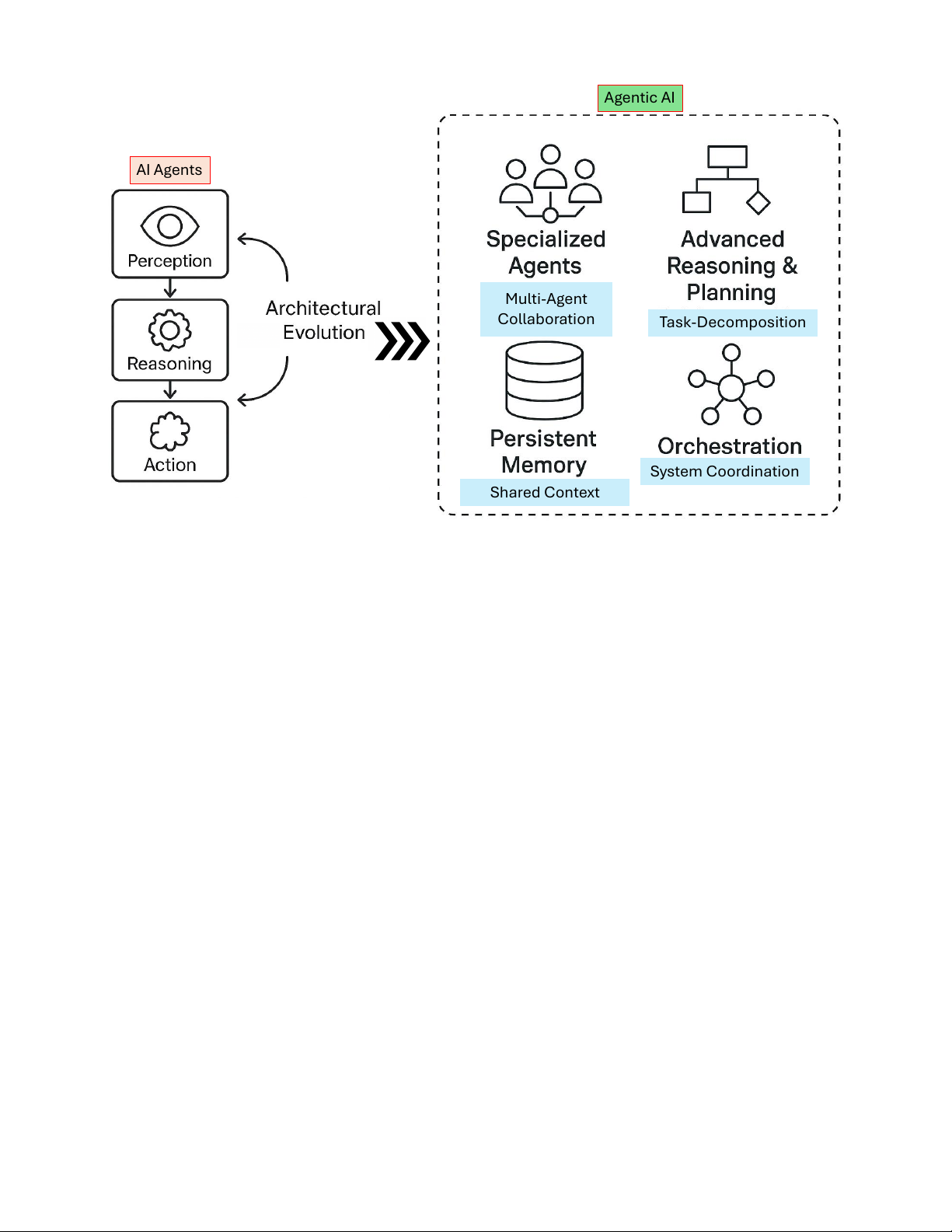
tributed, and adaptive behaviors. As illustrated in Figure 8,
specific prompt engineering, rule injection, or workflow tem-
the transition begins with core subsystems Perception, Rea-
plates, distinguishing them from hard-coded automation scripts
soning, and Action, that define traditional AI Agents. Agentic
by their ability to make context-aware decisions. Systems like
AI enhances this base by integrating advanced components
ReAct [132] exemplify this architecture, combining reasoning
such as Specialized Agents, Advanced Reasoning & Plan-
and action in an iterative framework where agents simulate
ning, Persistent Memory, and Orchestration. The figure further
internal dialogue before selecting external actions.
emphasizes emergent capabilities including Multi-Agent Col-
2) Architectural Enhancements in Agentic AI: Agentic AI
laboration, System Coordination, Shared Context, and Task
systems inherit the modularity of AI Agents but extend
Decomposition, all encapsulated within a dotted boundary
their architecture to support distributed intelligence, inter-
that signifies the shift toward reflective, decentralized, and
agent communication, and recursive planning. The literature
goal-driven system architectures. This progression marks a
documents a number of critical architectural enhancements
fundamental inflection point in intelligent agent design. This
that differentiate Agentic AI from its predecessors [157],
section synthesizes findings from empirical frameworks such [158].
as LangChain [93], AutoGPT [94], and TaskMatrix [152],
highlighting this progression in architectural sophistication.
• Ensemble of Specialized Agents: Rather than operating
1) Core Architectural Components of AI Agents: Foun-
as a monolithic unit, Agentic AI systems consist of
dational AI Agents are typically composed of four primary
multiple agents, each assigned a specialized function e.g.,
subsystems: perception, reasoning, action, and learning. These
a summarizer, a retriever, a planner. These agents inter-
subsystems form a closed-loop operational cycle, commonly
act via communication channels (e.g., message queues,
referred to as “Understand, Think, Act” from a user interface
blackboards, or shared memory). For instance, MetaGPT
perspective, or “Input, Processing, Action, Learning” in sys-
[151] exemplify this approach by modeling agents after
tems design literature [14], [153].
corporate departments (e.g., CEO, CTO, engineer), where Agentic AI AI Agents Multi-Agent Collaboration Task-Decomposition System Coordination Shared Context
Fig. 8: Illustrating architectural evolution from traditional AI Agents to modern Agentic AI systems. It begins with core
modules Perception, Reasoning, and Action and expands into advanced components including Specialized Agents, Advanced
Reasoning & Planning, Persistent Memory, and Orchestration. The diagram further captures emergent properties such as Multi-
Agent Collaboration, System Coordination, Shared Context, and Task Decomposition, all enclosed within a dotted boundary
signifying layered modularity and the transition to distributed, adaptive agentic AI intelligence.
roles are modular, reusable, and role-bound.
Orchestrators often include task managers, evaluators, or
• Advanced Reasoning and Planning: Agentic systems
moderators. In ChatDev [149], for example, a virtual
embed recursive reasoning capabilities using frameworks
CEO meta-agent distributes subtasks to departmental
such as ReAct [132], Chain-of-Thought (CoT) prompting
agents and integrates their outputs into a unified strategic
[159], and Tree of Thoughts [160]. These mechanisms response.
allow agents to break down a complex task into multiple
These enhancements collectively enable Agentic AI to sup-
reasoning stages, evaluate intermediate results, and re-
port scenarios that require sustained context, distributed labor,
plan actions dynamically. This enables the system to
multi-modal coordination, and strategic adaptation. Use cases
respond adaptively to uncertainty or partial failure.
range from research assistants that retrieve, summarize, and
• Persistent Memory Architectures: Unlike traditional
draft documents in tandem (e.g., AutoGen pipelines [94])
agents, Agentic AI incorporates memory subsystems to
to smart supply chain agents that monitor logistics, vendor
persist knowledge across task cycles or agent sessions
performance, and dynamic pricing models in parallel.
[161], [162]. Memory types include episodic memory
The shift from isolated perception–reasoning–action loops
(task-specific history) [163], [164], semantic memory
to collaborative and reflective multi-agent workflows marks a
(long-term facts or structured data) [165], [166], and
key inflection point in the architectural design of intelligent
vector-based memory for retrieval-augmented generation
systems. This progression positions Agentic AI as the next
(RAG) [167], [168]. For example, AutoGen [94] agents
stage of AI infrastructure capable not only of executing
maintain scratchpads for intermediate computations, en-
predefined workflows but also of constructing, revising, and
abling stepwise task progression.
managing complex objectives across agents with minimal
• Orchestration Layers / Meta-Agents: A key innovation human supervision.
in Agentic AI is the introduction of orchestrators meta-
IV. APPLICATION OF AI AGENTS AND AGENTIC AI
agents that coordinate the lifecycle of subordinate agents,
manage dependencies, assign roles, and resolve conflicts.
To illustrate the real-world utility and operational diver-
gence between AI Agents and Agentic AI systems, this study
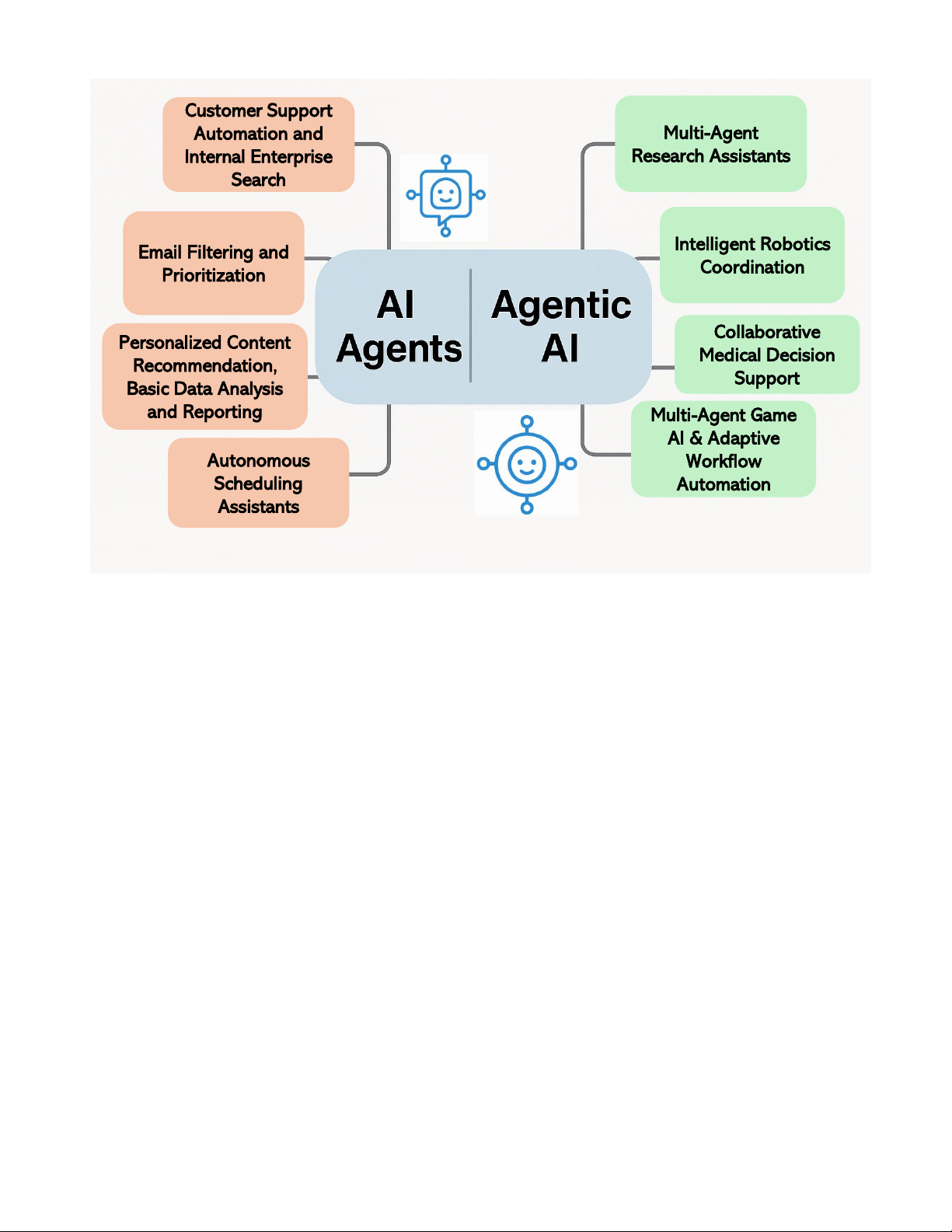
filename Salesforce AI.pdf filename Fin.pdf filename Notion AI.pdf Customer Support Automation and Multi-Agent Internal Enterprise Research Assistants Search Email Filtering and Intelligent Robotics Prioritization Coordination Personalized Content Collaborative Recommendation, Medical Decision Basic Data Analysis Support and Reporting Multi-Agent Game AI & Adaptive Autonomous Workflow Scheduling Automation Assistants
Fig. 9: Categorized applications of AI Agents and Agentic AI across eight core functional domains.
synthesizes a range of applications drawn from recent litera-
1) Customer Support Automation and Internal Enter-
ture, as visualized in Figure 9. We systematically categorize
prise Search: AI Agents are widely adopted in en-
and analyze application domains across two parallel tracks:
terprise environments for automating customer support
conventional AI Agent systems and their more advanced
and facilitating internal knowledge retrieval. In cus-
Agentic AI counterparts. For AI Agents, four primary use
tomer service, these agents leverage retrieval-augmented
cases are reviewed: (1) Customer Support Automation and
LLMs interfaced with APIs and organizational knowl-
Internal Enterprise Search, where single-agent models handle
edge bases to answer user queries, triage tickets, and
structured queries and response generation; (2) Email Filtering
perform actions like order tracking or return initia-
and Prioritization, where agents assist users in managing
tion [47]. For internal enterprise search, agents built
high-volume communication through classification heuristics;
on vector stores (e.g., Pinecone, Elasticsearch) retrieve
(3) Personalized Content Recommendation and Basic Data
semantically relevant documents in response to natu-
Reporting, where user behavior is analyzed for automated
ral language queries. Tools such as Salesforce Ein-
insights; and (4) Autonomous Scheduling Assistants, which
stein https://www.salesforce.com/artificial-intelligence/,
interpret calendars and book tasks with minimal user input.
Intercom Fin https://www.intercom.com/fin, and Notion
In contrast, Agentic AI applications encompass broader and
AI https://www.notion.com/product/ai demonstrate how
more dynamic capabilities, reviewed through four additional
structured input processing and summarization capabil-
categories: (1) Multi-Agent Research Assistants that retrieve,
ities reduce workload and improve enterprise decision-
synthesize, and draft scientific content collaboratively; (2) making.
Intelligent Robotics Coordination, including drone and multi-
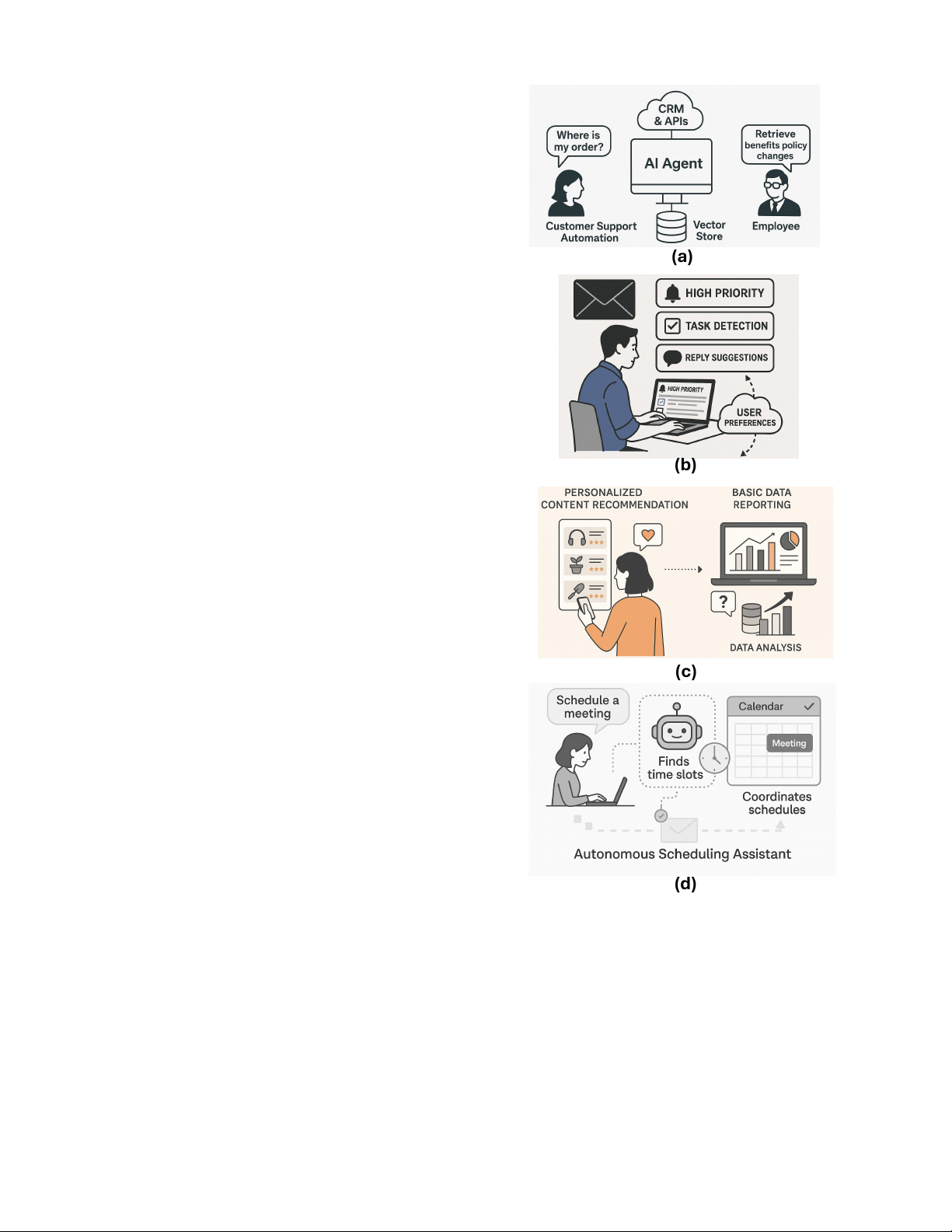
A practical example (Figure 10a) of this dual func-
robot systems in fields like agriculture and logistics; (3)
tionality can be seen in a multinational e-commerce
Collaborative Medical Decision Support, involving diagnostic,
company deploying an AI Agent-based customer support
treatment, and monitoring subsystems; and (4) Multi-Agent
and internal search assistant. For customer support, the
Game AI and Adaptive Workflow Automation, where decen-
AI Agent integrates with the company’s CRM (e.g.,
tralized agents interact strategically or handle complex task
Salesforce) and fulfillment APIs to resolve queries such pipelines.
as “Where is my order?” or “How can I return this 1) Application of AI Agents:
item?”. Within milliseconds, the agent retrieves con-
textual data from shipping databases and policy repos-
itories, then generates a personalized response using
retrieval-augmented generation. For internal enterprise
search, employees use the same system to query past
meeting notes, sales presentations, or legal documents.
When an HR manager types “summarize key benefits
policy changes from last year,” the agent queries a
Pinecone vector store embedded with enterprise doc-
umentation, ranks results by semantic similarity, and
returns a concise summary along with source links. (a)
These capabilities not only reduce ticket volume and
support overhead but also minimize time spent searching
for institutional knowledge (like policies, procedures,
or manuals). The result is a unified, responsive system
that enhances both external service delivery and internal
operational efficiency using modular AI Agent architec- tures.
2) Email Filtering and Prioritization: Within productivity
tools, AI Agents automate email triage through content
classification and prioritization. Integrated with systems
like Microsoft Outlook and Superhuman, these agents (b)
analyze metadata and message semantics to detect ur-
gency, extract tasks, and recommend replies. They apply
user-tuned filtering rules, behavioral signals, and intent
classification to reduce cognitive overload. Autonomous
actions, such as auto-tagging or summarizing threads,
enhance efficiency, while embedded feedback loops en-
able personalization through incremental learning [63].
Figure10b illustrates a practical implementation of AI
Agents in the domain of email filtering and prioriti-
zation. In modern workplace environments, users are
inundated with high volumes of email, leading to cog- (c)
nitive overload and missed critical communications. AI
Agents embedded in platforms like Microsoft Outlook
or Superhuman act as intelligent intermediaries that
classify, cluster, and triage incoming messages. These
agents evaluate metadata (e.g., sender, subject line) and
semantic content to detect urgency, extract actionable
items, and suggest smart replies. As depicted, the AI
agent autonomously categorizes emails into tags such
as “Urgent,” “Follow-up,” and “Low Priority,” while
also offering context-aware summaries and reply drafts.
Through continual feedback loops and usage patterns,
the system adapts to user preferences, gradually refining (d)
classification thresholds and improving prioritization ac-
curacy. This automation offloads decision fatigue, allow-
Fig. 10: Applications of AI Agents in enterprise settings: (a)
ing users to focus on high-value tasks, while maintain-
Customer support and internal enterprise search; (b) Email
ing efficient communication management in fast-paced,
filtering and prioritization; (c) Personalized content recom-
information-dense environments.
mendation and basic data reporting; and (d) Autonomous
3) Personalized Content Recommendation and Basic
scheduling assistants. Each example highlights modular AI
Data Reporting: AI Agents support adaptive personal-
Agent integration for automation, intent understanding, and
ization by analyzing behavioral patterns for news, prod-
adaptive reasoning across operational workflows and user-
uct, or media recommendations. Platforms like Amazon, facing systems.
YouTube, and Spotify deploy these agents to infer user
preferences via collaborative filtering, intent detection,
and content ranking. Simultaneously, AI Agents in an-
alytics systems (e.g., Tableau Pulse, Power BI Copi-
meetings and refines its suggestions over time. Tools
lot) enable natural-language data queries and automated
like Reclaim AI and Clockwise exemplify this capabil-
report generation by converting prompts to structured
ity, offering calendar-aware automation that adapts to
database queries and visual summaries, democratizing
evolving workloads. Such assistants reduce coordination business intelligence access.
overhead, increase scheduling efficiency, and enable
A practical illustration (Figure 10c) of AI Agents in
smoother team workflows by proactively resolving am-
personalized content recommendation and basic data
biguity and optimizing calendar utilization.
reporting can be found in e-commerce and enterprise
analytics systems. Consider an AI agent deployed on a
TABLE X: Representative AI Agents (2023–2025): Applica-
retail platform like Amazon: as users browse, click, and
tions and Operational Characteristics
purchase items, the agent continuously monitors inter- Model / Reference Application Operation as AI Agent
action patterns such as dwell time, search queries, and Area
purchase sequences. Using collaborative filtering and ChatGPT Deep Re- Research Analy- Synthesizes hundreds of
content-based ranking, the agent infers user intent and search Mode sis / Reporting
sources into reports; functions
dynamically generates personalized product suggestions OpenAI (2025) Deep as a self-directed research Research OpenAI analyst.
that evolve over time. For example, after purchasing Operator Web Automation
Navigates websites, fills forms,
gardening tools, a user may be recommended compat- OpenAI (2025) Opera- and completes online tasks au-
ible soil sensors or relevant books. This level of per- tor OpenAI tonomously.
sonalization enhances customer engagement, increases Agentspace: Deep Re- Enterprise Generates business
conversion rates, and supports long-term user retention. search Agent Reporting intelligence reports using Google (2025) Google Gemini models.
Simultaneously, within a corporate setting, an AI agent Agentspace
integrated into Power BI Copilot allows non-technical NotebookLM Plus Knowledge Man- Summarizes, organizes, and
staff to request insights using natural language, for Agent agement retrieves data across Google Google (2025) Workspace apps.
instance, “Compare Q3 and Q4 sales in the Northeast.” NotebookLM
The agent translates the prompt into structured SQL Nova Act Workflow Automates browser-based
queries, extracts patterns from the database, and outputs Amazon (2025) Ama- Automation tasks such as scheduling, HR
a concise visual summary or narrative report. This zon Nova requests, and email.
application reduces dependency on data analysts and Manus Agent Personal Task Executes trip planning, site Monica (2025) Manus Automation building, and product compar-
empowers broader business decision-making through Agenthttps://manus.im/ isons via browsing.
intuitive, language-driven interfaces. Harvey Legal Automates document drafting,
4) Autonomous Scheduling Assistants: AI Agents in- Harvey AI (2025) Har- Automation legal review, and predictive vey case analysis.
tegrated with calendar systems autonomously manage Otter Meeting Agent Meeting Transcribes meetings and pro-
meeting coordination, rescheduling, and conflict reso- Otter.ai (2025) Otter Management vides highlights, summaries,
lution. Tools like x.ai and Reclaim AI interpret vague and action items.
scheduling commands, access calendar APIs, and iden- Otter Sales Agent Sales Analyzes sales calls, extracts
tify optimal time slots based on learned user preferences. Otter.ai (2025) Otter Enablement insights, and suggests follow- sales agent ups.
They minimize human input while adapting to dynamic ClickUp Brain Project Manage- Automates task tracking, up-
availability constraints. Their ability to interface with ClickUp (2025) ment dates, and project workflows.
enterprise systems and respond to ambiguous instruc- ClickUp Brain
tions highlights the modular autonomy of contemporary Agentforce Customer Routes tickets and generates Agentforce (2025) Support context-aware replies for sup- scheduling agents. Agentforce port teams.
A practical application of autonomous scheduling agents Microsoft Copilot Office Productiv- Automates writing, formula
can be seen in corporate settings as depicted in Fig- Microsoft (2024) Mi- ity generation, and summarization
ure 10d where employees manage multiple overlapping crosoft Copilot in Microsoft 365.
responsibilities across global time zones. Consider an Project Astra Multimodal As- Processes text, image, audio, Google DeepMind sistance and video for task support and
executive assistant AI agent integrated with Google (2025) Project Astra recommendations.
Calendar and Slack that interprets a command like “Find Claude 3.5 Agent Enterprise Assis- Uses multimodal input for rea-
a 45-minute window for a follow-up with the product Anthropic (2025) tance soning, personalization, and
team next week.” The agent parses the request, checks Claude 3.5 Sonnet enterprise task completion.
availability for all participants, accounts for time zone
differences, and avoids meeting conflicts or working- 2) Appications of Agentic AI:
hour violations. If it identifies a conflict with a pre-
1) Multi-Agent Research Assistants: Agentic AI systems
viously scheduled task, it may autonomously propose
are increasingly deployed in academic and industrial
alternative windows and notify affected attendees via
research pipelines to automate multi-stage knowledge
Slack integration. Additionally, the agent learns from
work. Platforms like AutoGen and CrewAI assign spe-
historical user preferences such as avoiding early Friday
cialized roles to multiple agents retrievers, summarizers,
synthesizers, and citation formatters under a central
centralized memory layer accessible by all agents. Picker
orchestrator. The orchestrator distributes tasks, manages
robots are assigned to high-density zones, guided by
role dependencies, and integrates outputs into coherent
path-planning agents that optimize routes around obsta-
drafts or review summaries. Persistent memory allows
cles and labor zones. Simultaneously, transport agents
for cross-agent context sharing and refinement over
dynamically shuttle crates between pickers and storage,
time. These systems are being used for literature re-
adjusting tasks in response to picker load levels and
views, grant preparation, and patent search pipelines,
terrain changes. All agents communicate asynchronously
outperforming single-agent systems such as ChatGPT by
through a shared protocol, and the orchestrator contin-
enabling concurrent sub-task execution and long-context
uously adjusts task priorities based on weather fore- management [94].
casts or mechanical faults. If one picker fails, nearby
For example, a real-world application of agentic AI as
units autonomously reallocate workload. This adaptive,
depicted in Figure 11a is in the automated drafting of
memory-driven coordination exemplifies Agentic AI’s
grant proposals. Consider a university research group
potential to reduce labor costs, increase harvest effi-
preparing a National Science Foundation (NSF) sub-
ciency, and respond to uncertainties in complex agricul-
mission. Using an AutoGen-based architecture, distinct
tural environments far surpassing the rigid programming
agents are assigned: one retrieves prior funded proposals
of legacy agricultural robots [94], [151].
and extracts structural patterns; another scans recent
3) Collaborative Medical Decision Support: In high-
literature to summarize related work; a third agent aligns
stakes clinical environments, Agentic AI enables dis-
proposal objectives with NSF solicitation language; and
tributed medical reasoning by assigning tasks such as
a formatting agent structures the document per com-
diagnostics, vital monitoring, and treatment planning
pliance guidelines. The orchestrator coordinates these
to specialized agents. For example, one agent may
agents, resolving dependencies (e.g., aligning methodol-
retrieve patient history, another validates findings against
ogy with objectives) and ensuring stylistic consistency
diagnostic guidelines, and a third proposes treatment op-
across sections. Persistent memory modules store evolv-
tions. These agents synchronize through shared memory
ing drafts, feedback from collaborators, and funding
and reasoning chains, ensuring coherent and safe rec-
agency templates, enabling iterative improvement over
ommendations. Applications include ICU management,
multiple sessions. Compared to traditional manual pro-
radiology triage, and pandemic response. Real-world
cesses, this multi-agent system significantly accelerates
pilots show improved efficiency and decision accuracy
drafting time, improves narrative cohesion, and ensures
compared to isolated expert systems [92].
regulatory alignment offering a scalable, adaptive ap-
For example, in a hospital ICU (Figure 11c), an agentic
proach to collaborative scientific writing in academia
AI system supports clinicians in managing complex
and R&D-intensive industries.
patient cases. A diagnostic agent continuously ana-
2) Intelligent Robotics Coordination: In robotics and
lyzes vitals and lab data for early detection of sepsis
automation, Agentic AI underpins collaborative behav-
risk. Simultaneously, a history retrieval agent accesses
ior in multi-robot systems. Each robot operates as a
electronic health records (EHRs) to summarize comor-
task specialized agent such as pickers, transporters, or
bidities and recent procedures. A treatment planning
mappers while an orchestrator supervises and adapts
agent cross-references current symptoms with clinical
workflows. These architectures rely on shared spatial
guidelines (e.g., Surviving Sepsis Campaign), proposing
memory, real-time sensor fusion, and inter-agent syn-
antibiotic regimens or fluid protocols. The orchestra-
chronization for coordinated physical actions. Use cases
tor integrates these insights, ensures consistency, and
include warehouse automation, drone-based orchard in-
surfaces conflicts for human review. Feedback from
spection, and robotic harvesting [151]. For instance,
physicians is stored in a persistent memory module,
agricultural drone swarms may collectively map tree
allowing agents to refine their reasoning based on prior
rows, identify diseased fruits, and initiate mechanical
interventions and outcomes. This coordinated system
interventions. This dynamic allocation enables real-time
enhances clinical workflow by reducing cognitive load,
reconfiguration and autonomy across agents facing un-
shortening decision times, and minimizing oversight
certain or evolving environments.
risks. Early deployments in critical care and oncology
For example, in commercial apple orchards (Figure 11b),
units have demonstrated increased diagnostic precision
Agentic AI enables a coordinated multi-robot system
and better adherence to evidence-based protocols, offer-
to optimize the harvest season. Here, task-specialized
ing a scalable solution for safer, real-time collaborative
robots such as autonomous pickers, fruit classifiers, medical support.
transport bots, and drone mappers operate as agentic
4) Multi-Agent Game AI and Adaptive Workflow Au-
units under a central orchestrator. The mapping drones
tomation: In simulation environments and enterprise
first survey the orchard and use vision-language models
systems, Agentic AI facilitates decentralized task exe-
(VLMs) to generate high-resolution yield maps and
cution and emergent coordination. Game platforms like
identify ripe clusters. This spatial data is shared via a
AI Dungeon deploy independent NPC agents with goals, Using Agentic AI to
coordinate robotic harvest Central Memory Layer Retrieve prior proposals Align with solicitation Structure the Store evolving document drafts (a) (b) Goal Module Memory Store (c) (d)
Fig. 11: Illustrative Applications of Agentic AI Across Domains: Figure 11 presents four real-world applications of agentic AI
systems. (a) Automated grant writing using multi-agent orchestration for structured literature analysis, compliance alignment,
and document formatting. (b) Coordinated multi-robot harvesting in apple orchards using shared spatial memory and task-
specific agents for mapping, picking, and transport. (c) Clinical decision support in hospital ICUs through synchronized agents
for diagnostics, treatment planning, and EHR analysis, enhancing safety and workflow efficiency. (d) Cybersecurity incident
response in enterprise environments via agents handling threat classification, compliance analysis, and mitigation planning.
In all cases, central orchestrators manage inter-agent communication, shared memory enables context retention, and feedback
mechanisms drive continual learning. These use cases highlight agentic AI’s capacity for scalable, autonomous task coordination
in complex, dynamic environments across science, agriculture, healthcare, and IT security.
memory, and dynamic interactivity to create emergent
handling, and feedback-driven adaptability far beyond
narratives and social behavior. In enterprise workflows, rule-based pipelines.
systems such as MultiOn and Cognosys use agents to
For example, in a modern enterprise IT environment
manage processes like legal review or incident esca-
(as depicted in Figure 11d), Agentic AI systems are
lation, where each step is governed by a specialized
increasingly deployed to autonomously manage cyber-
module. These architectures exhibit resilience, exception
security incident response workflows. When a potential
threat is detected such as abnormal access patterns or
TABLE XI: Representative Agentic AI Models (2023–2025):
unauthorized data exfiltration, specialized agents are
Applications and Operational Characteristics
activated in parallel. One agent performs real-time threat Model / Reference Application Operation as Agentic AI
classification using historical breach data and anomaly Area
detection models. A second agent queries relevant log Auto-GPT Task Automation Decomposes high-level
data from network nodes and correlates patterns across [30] goals, executes subtasks via tools/APIs, and
systems. A third agent interprets compliance frameworks iteratively self-corrects.
(e.g., GDPR or HIPAA) to assess the regulatory sever- GPT Engineer Code Generation Builds entire codebases:
ity of the event. A fourth agent simulates mitigation Open Source (2023) plans, writes, tests, and re- GPT Engineer fines based on output.
strategies and forecasts operational risks. These agents MetaGPT Software Collab- Coordinates specialized
coordinate under a central orchestrator that evaluates [151]) oration agents (e.g., coder, tester)
collective outputs, integrates temporal reasoning, and for modular multi-role
issues recommended actions to human analysts. Through project development.
shared memory structures and iterative feedback, the BabyAGI Project Manage- Continuously creates, pri- Nakajima (2024) ment oritizes, and executes sub-
system learns from prior incidents, enabling faster and BabyAGI tasks to adaptively meet
more accurate responses in future cases. Compared user goals.
to traditional rule-based security systems, this agentic Voyager Game Learns in Minecraft, in- Wang et al. (2023) Exploration vents new skills, sets sub-
model enhances decision latency, reduces false positives, [169] goals, and adapts strategy
and supports proactive threat containment in large-scale in real time.
organizational infrastructures [94]. CAMEL Multi-Agent Simulates agent societies Liu et al. (2023) [170] Simulation with communication, ne-
V. CHALLENGES AND LIMITATIONS IN AI AGENTS AND gotiation, and emergent collaborative behavior. AGENTIC AI Einstein Copilot Customer Automates full support
To systematically understand the operational and theoret- Salesforce (2024) Ein- Automation workflows, escalates is-
ical limitations of current intelligent systems, we present a stein Copilot sues, and improves via feedback loops.
comparative visual synthesis in Figure 12, which categorizes Copilot Studio Productivity Au- Manages documents,
challenges and potential remedies across both AI Agents and (Agentic Mode) tomation meetings, and projects
Agentic AI paradigms. Figure 12a outlines the four most Microsoft (2025) across Microsoft 365 with
pressing limitations specific to AI Agents namely, lack of Github Agentic adaptive orchestration. Copilot
causal reasoning, inherited LLM constraints (e.g., hallucina- Atera AI Copilot IT Operations Diagnoses/resolves IT is-
tions, shallow reasoning), incomplete agentic properties (e.g., Atera (2025) Atera sues, automates ticketing,
autonomy, proactivity), and failures in long-horizon planning Agentic AI and learns from evolving infrastructures.
and recovery. These challenges often arise due to their reliance AES Safety Audit Industrial Safety Automates audits,
on stateless LLM prompts, limited memory, and heuristic Agent assesses compliance, reasoning loops. AES (2025) AES and evolves strategies to
In contrast, Figure 12b identifies eight critical bottlenecks agentic enhance safety outcomes.
unique to Agentic AI systems, such as inter-agent error cas- DeepMind Gato General Robotics Performs varied tasks (Agentic Mode) across modalities,
cades, coordination breakdowns, emergent instability, scala- Reed et al. (2022) dynamically learns,
bility limits, and explainability issues. These challenges stem [171] plans, and executes.
from the complexity of orchestrating multiple agents across GPT-4o + Plugins Enterprise Manages complex work-
distributed tasks without standardized architectures, robust OpenAI (2024) GPT- Automation flows, integrates external 4O Agentic tools, and executes adap-
communication protocols, or causal alignment frameworks. tive decisions.
Figure 13 complements this diagnostic framework by syn-
thesizing ten forward-looking design strategies aimed at mit-
igating these limitations. These include Retrieval-Augmented
limitations that inhibit their reliability, generalization, and
Generation (RAG), tool-based reasoning [126], [127], [129],
long-term autonomy [132], [158]. These challenges arise from
agentic feedback loops (ReAct [132]), role-based multi-agent
both the architectural dependence on static, pretrained models
orchestration, memory architectures, causal modeling, and
and the difficulty of instilling agentic qualities such as causal
governance-aware design. Together, these three panels offer
reasoning, planning, and robust adaptation. The key challenges
a consolidated roadmap for addressing current pitfalls and
and limitations (Figure 12a) of AI Agents are as summarized
accelerating the development of safe, scalable, and context- into following five points: aware autonomous systems.
1) Challenges and Limitations of AI Agents: While AI
1) Lack of Causal Understanding: One of the most foun-
Agents have garnered considerable attention for their ability to
dational challenges lies in the agents’ inability to reason
automate structured tasks using LLMs and tool-use interfaces,
causally [172], [173]. Current LLMs, which form the
the literature highlights significant theoretical and practical
cognitive core of most AI Agents, excel at identifying