Bài giảng Chapter 7: Introduction to Information Theory môn Điện tử - Viễn thông | Trường Đại học Khoa học Tự nhiên, Đại học Quốc gia Thành phố Hồ Chí Minh
Bài giảng Chapter 7: Introduction to Information Theory môn Điện tử - Viễn thông | Trường Đại học Khoa học Tự nhiên, Đại học Quốc gia Thành phố Hồ Chí Minh. Tài liệu được sưu tầm giúp bạn tham khảo, ôn tập và đạt kết quả cao. Mời bạn đọc đón xem.
Môn: Điện tử số (HCMUS) 4 tài liệu
Trường: Trường Đại học Khoa học tự nhiên, Đại học Quốc gia Thành phố Hồ Chí Minh 1.1 K tài liệu
Tác giả:





Preview text:
Viet Nam National University Ho Chi Minh City University of Science
Faculty of Electronics & Telecommunications Chapter 7:
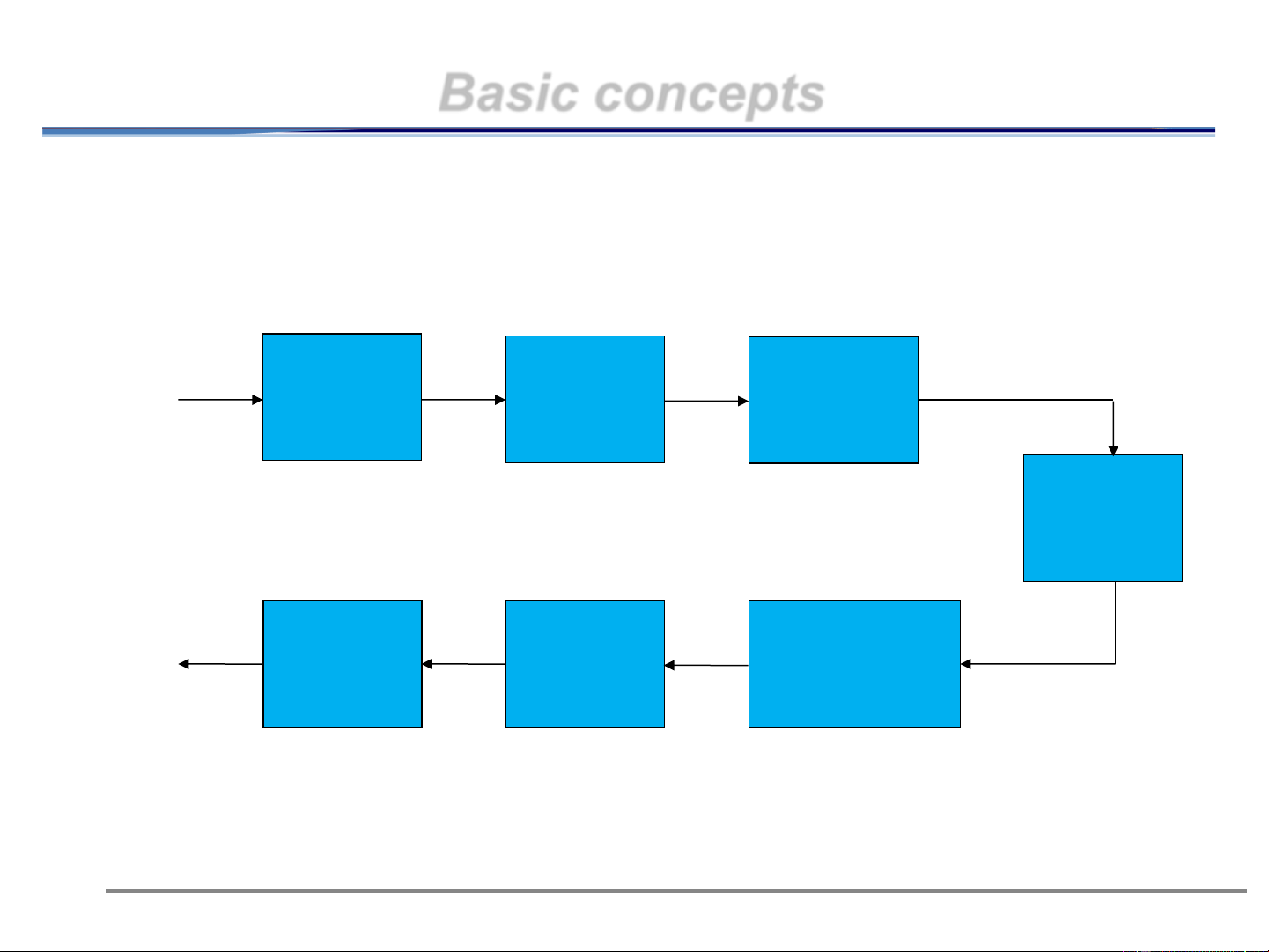
Introduction to Information Theory Dang Le Khoa Email: dlkhoa@hcmus.edu.vn Outline ⚫ Basic concepts ⚫ Information ⚫ Entropy ⚫ Source Encoding 11/13/2024 2 Basic concepts
⚫ Block diagram of digital communication system Source Source Channel Modulator encoder encoder Noisy Channel Destination Source Channel Demodulator decoder decoder 11/13/2024 3
What is Information Theory?
⚫ Information theory provides a quantitative measure of source
information, the information capacity of a channel
⚫ Dealing with coding as a means of utilizing channel capacity for information transfer
⚫ Shannon’s coding theorem (Shannon’s noisy channel coding theorem):
“If the rate of information from a source does not exceed the
capacity of a communication channel, then there exists a
coding technique such that the information can be transmitted
over the channel with an arbitrarily small probability of error,
despite the presence of error” 11/13/2024 4
Information measure
⚫ Information Theory: how much information
– … is contained in a signal? – … can a system generate?
– … can a channel transmit?
⚫ Information is the commodity produced by the source for
transfer to some user at the destination
⚫ The less likely the message, the more information it conveys
⚫ How is information mathematically defined? 11/13/2024 5 Information
⚫ Let x be an event with p(x ) is the probability of the event j j
that x is selected for transmission j
⚫ If x occurred, we have j 1 I (x ) = log = − log p(x ) (1) j a p(x ) a j j units of information
◼ I(x ) is called self-information j I(x )0 for 0 p(x )1 j j
I(x )→0 for p(x )→1 j j
I(x )>I(x ) for p(x )
j i j i 11/13/2024 6
Information ⚫ The base of the logarithm
– 10 →the measure of information is hartley
– e →the measure of information is nat
– 2 →the measure of information is bit
⚫ Examples: A random experiment with 16 equally likely outcomes:
– The information associated with each outcomes is:
I(xj)=-log2(1/16)=log216=4 bits
– The information is greater than one bit, since the probability of each outcome is much less than ½. 11/13/2024 7
Entropy and Information rate
⚫ Consider an information source emitting a sequence of symbols from
the set X={x ,x ..,x } 1 2 M
⚫ Each symbol x is treated as a message with probability p(x ) and self- i i information I(x ) i
⚫ This source has an average rate of r symbols/sec ⚫ Discrete memoryless source
⚫ The amount of information produced by the source during an arbitrary
symbol interval is a disrete random variable X.
⚫ The average information per symbol is then given by: M H ( X ) = { E I (x )} = − p x p x j ( )log ( ) b it/symbol j 2 j (2) j 1 =
⚫ Entropy = information = uncertainty
⚫ If a signal is completely predictable, it has zero entropy and no information
⚫ Entropy = average number of bits required to transmit the signal 11/13/2024 8 Example
⚫ Random variable with uniform distribution over 32 outcomes
– H(X) = - (1/32).log(1/32) = log 32 = 5
– # bits required = log 32 = 5 bits!
– Therefore H(X) = number of bits required to represent a random event
⚫ How many bits are needed for: – Outcome of a coin toss 11/13/2024 9 Entropy
⚫ The value of H(X) for a given source depends upon the
symbol probabilities p(x ) and M i ⚫ However,
0 H ( X ) log M (3) 2
⚫ The lower bound corresponds to no uncertainty
⚫ The upper bound corresponds to maximum uncertainty,
occuring when each symbol are equally likely 11/13/2024 10 Example
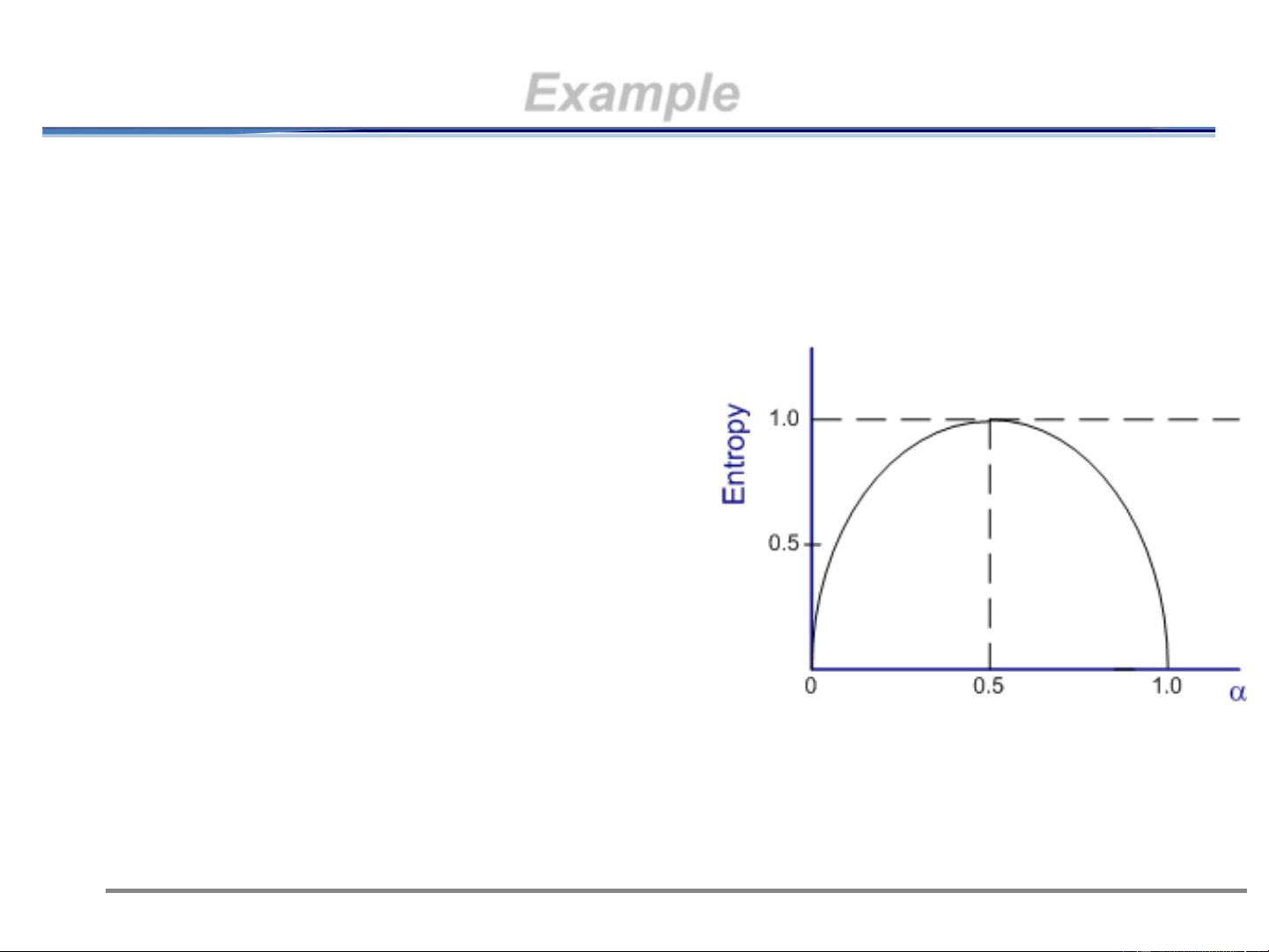
⚫ For a binary source (M=2), p(1)=
and p(0)=1- = .
⚫ From (2), we have the binary entropy:
⚫ H(X)= -.log -(1-).log(1-) 11/13/2024 11
Source coding theorem
⚫ Information from a source producing different symbols
could be described by the entropy H(X)
⚫ Source information rate (bit/s):
R = rH(X) (bit/s) s
– H(X): source entropy (bits/symbol)
– r: symbol rate (symbols/s)
⚫ Assume this source is the input to a channel: – C: capacity (bits/symbol)
– S: available symbol rate (symbols/s) – S.C: bits/s 11/13/2024 12
Source coding theorem (cont’d)
⚫ Shannon’s first theorem (noiseless coding theorem):
– “Given a channel and a source that generates information at
a rate less than the channel capacity, it is possible to encode
the souce output in such a manner that it can be
transmitted through the channel”
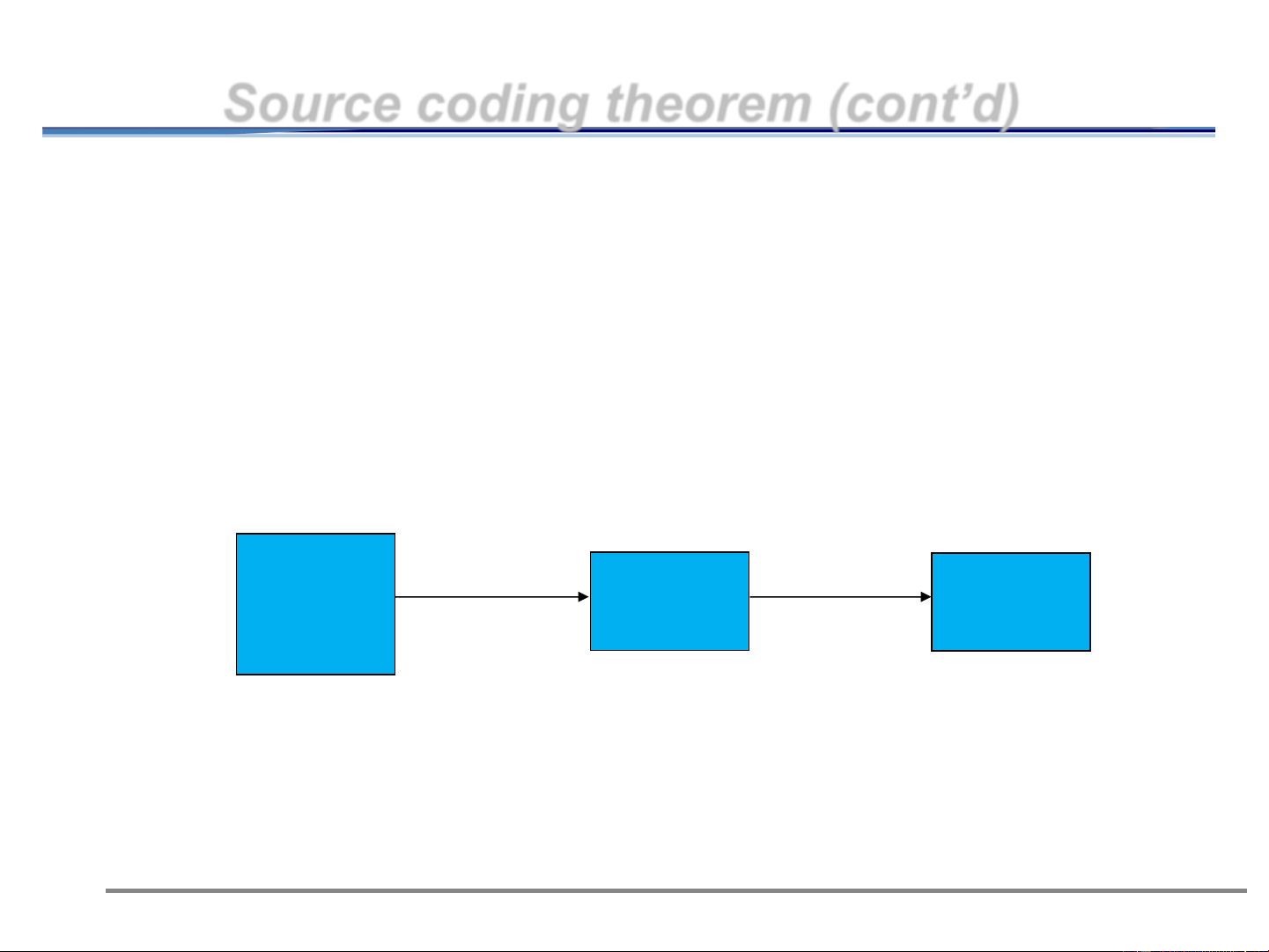
⚫ Demonstration of source encoding by an example: Discrete Source Binary binary encoder channel source Source symbol rate C = 1 bit/symbol r = 3.5 symbols/s S = 2 symbols/s SC = 2 bits/s 13 11/13/2024
Example of Source encoding
⚫ Discrete binary source: A(p=0.9), B(p=0.1)
⚫ Source symbol rate (3.5) >channel capacity (2)
source symbols cannot be transmitted directly ⚫ Check Shannon’s theorem:
– H(X)=-0.1 log 0.1-0.9log 0.9=0.469bits/symbol 2 2
– R = rH(X) = 3.5(0.469)=1.642 bits/s < S.C = 2 bits/s s
⚫ Transmission is possible by source encoding to
decrease the average symbol rate 11/13/2024 14
Example of Source encoding(cont’d)
⚫ Codewords assigned to n-symbol groups of source symbols ⚫ Rules:
– Shortest codewords for the most probable group
– Longest codewords for the least probable group
⚫ n -symbol groups of source symbols # n th-order extension of original source 11/13/2024 15
First-Order extension Source P () Codeword [P()].[Number of Code symbol Symbols] A 0.9 0 0.9 B 0.1 1 0.1 L=1.0
⚫ Symbol rate of the encoder = symbol rate of source
⚫ Larger than that of the channel can accommodate 11/13/2024 16
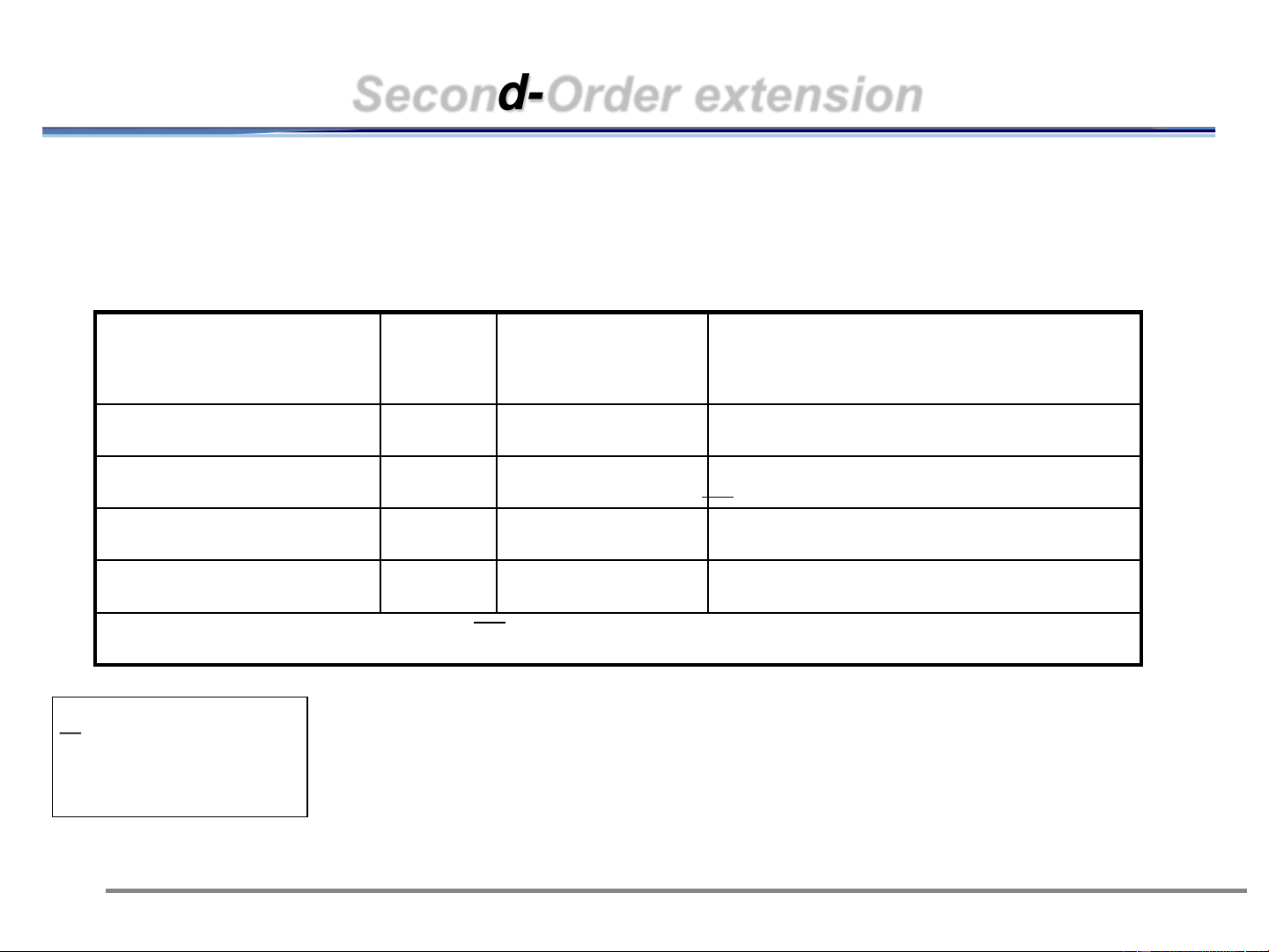
Second-Order extension
Grouping 2 source symbols at a time
The codeword is based on Shannon-Fano Coding
(explained in some slides later) Source symbol P ()
Codeword [P()].[Number of Code Symbols] AA 0.81 0 0.81 AB 0.09 10 0.18 BA 0.09 110 0.27 BB 0.01 111 0.03 L=1.29 n
L: the average code length 2
L = p(x )*l i i
p(x ): probability of the i th symbol of the extended source i i 1 = 17
l : length of the codeword corresponding to the i th symbol i 11/13/2024
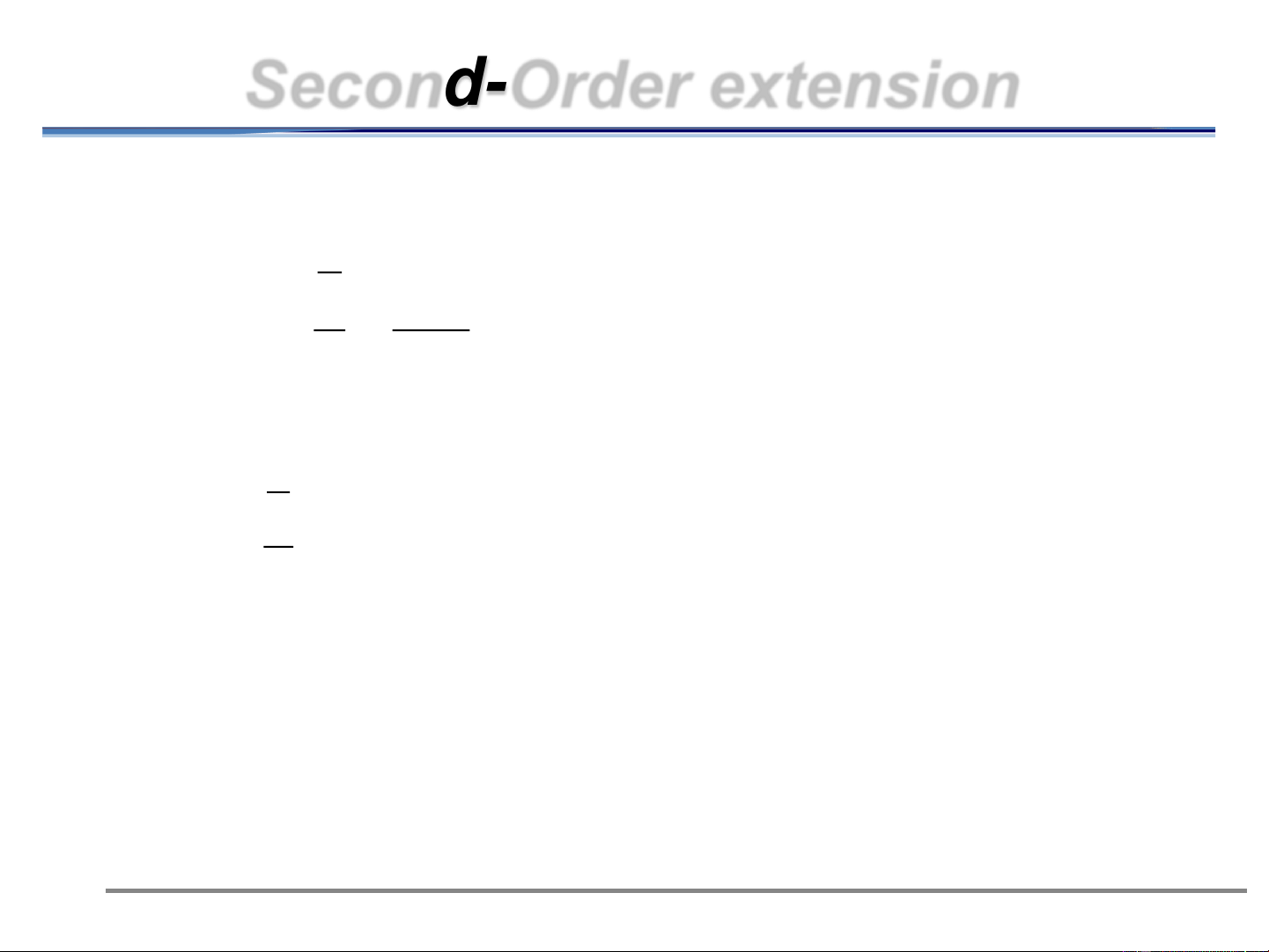
Second-Order extension L 29 . 1 = = co 645 . 0 de s ymbols/s u o rce s ymbol n 2
The symbol rate at the encoder output: L r = ( 5 . 3 ) 645 . 0 = 258 . 2 code symbols/sec >2 n
Still greater than the 2 symbols/second of the channel
So, we continue with the third-order extension 11/13/2024 18
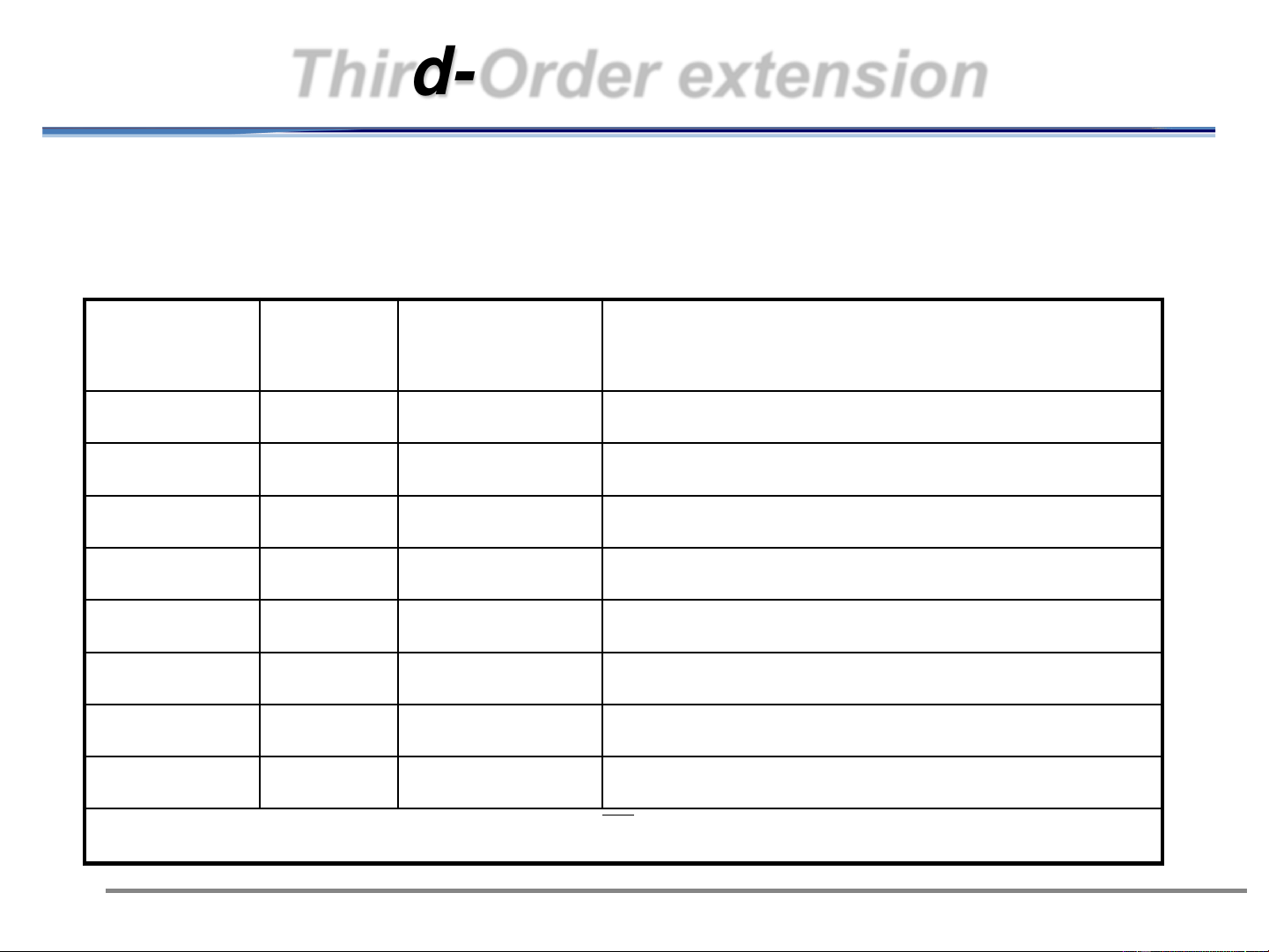
Third-Order extension
Grouping 3 source symbols at a time: Source P ()
Codeword [P()].[Number of Code symbol Symbols] AAA 0.729 0 0.729 AAB 0.081 100 0.243 ABA 0.081 101 0.243 BAA 0.081 110 0.243 ABB 0.009 11100 0.045 BAB 0.009 11101 0.045 BBA 0.009 11110 0.045 BBB 0.001 11111 0.005 L=1.598 11/13/2024 19
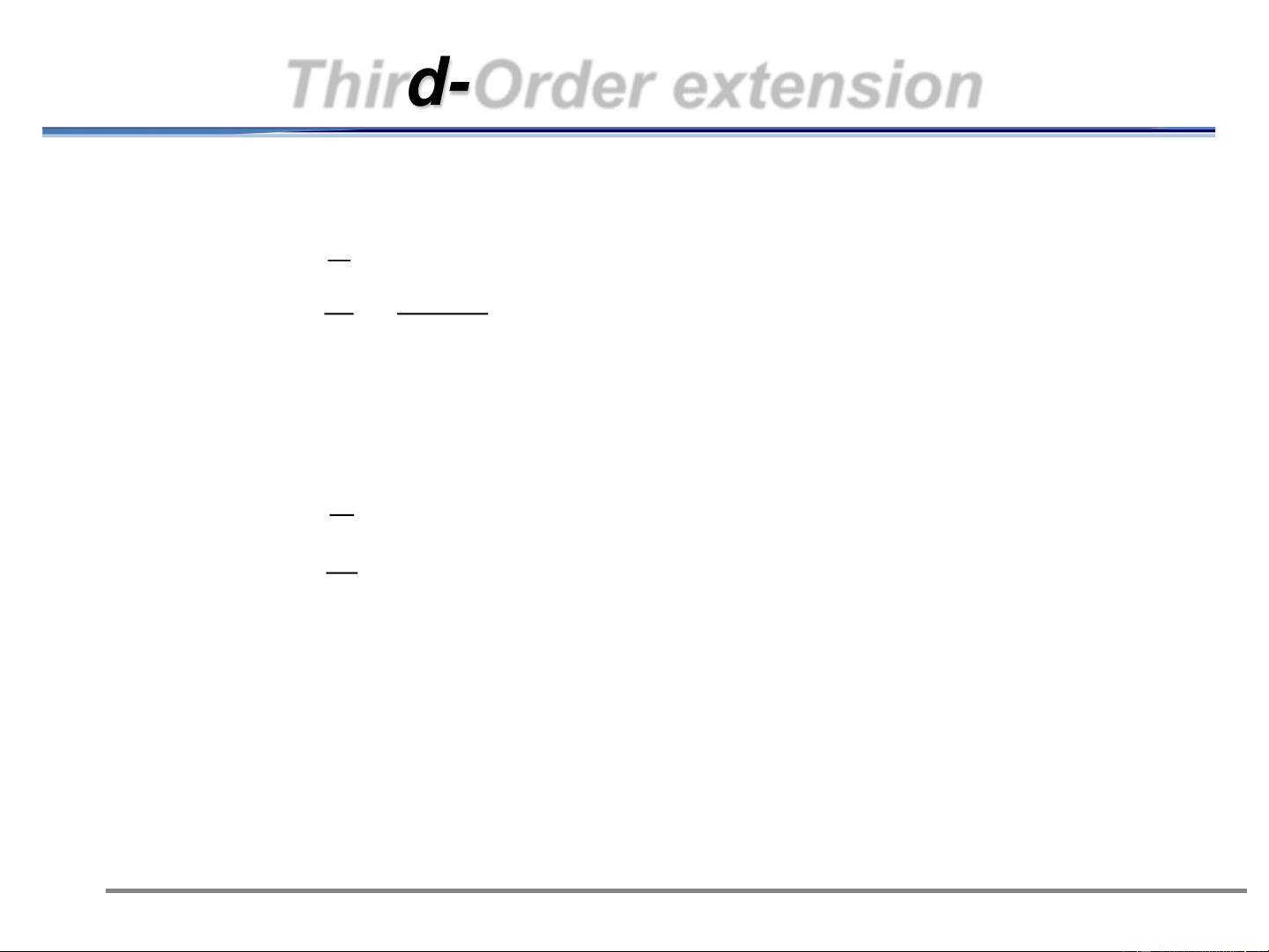
Third-Order extension L 598 . 1 = = 533 . 0 code symbols/source symbol n 3
The symbol rate at the encoder output: L r = ( 5 . 3 5 . 0 3 ) 3 = 8 . 1 64 co de s ymbols/s co e nd n
This rate is accepted by the channel 11/13/2024 20
Tài liệu liên quan:
-
Bài giảng Chapter 6: Basic Passband Digital Modulations môn Điện tử - Viễn thông | Trường Đại học Khoa học Tự nhiên - Đại học Quốc gia Thành phố Hồ Chí Minh
26 13 -

Đề thi cuối HKII học phần Điện tử số năm 2024 - 2025 | Trường Đại học Khoa học tự nhiên, Đại học Quốc gia Thành phố Hồ Chí Minh
294 147 -

Đề thi cuối HKII học phần Điện tử số năm 2024 - 2025 | Trường Đại học Khoa học tự nhiên, Đại học Quốc gia Thành phố Hồ Chí Minh
279 140