Bài giảng IoT và Ứng dụng môn Lập trình hệ nhúng | Đại học Bách Khoa Hà Nội
Bài giảng IoT và Ứng dụng môn Lập trình hệ nhúng | Đại học Bách Khoa Hà Nội. Tài liệu được sưu tầm giúp bạn tham khảo, ôn tập và đạt kết quả cao. Mời bạn đọc đón xem.
Môn: Lập trình hệ nhúng 9 tài liệu
Trường: Đại học Bách Khoa Hà Nội 5.8 K tài liệu
Tác giả:









Preview text:
IT4735 IoT VÀ ỨNG DỤNG (IoT and Applications)
Phạm Ngọc Hưng, Nguyễn Đình Thuận, Đặng Tuấn Linh
Faculty of Computer Engineering
School of Information and Communication Technology (SoICT)
Hanoi University of Science and Technology
E-mail: [hungpn, thuannd, linhdt]@soict.hust.edu.vn 1 Giới thiệu học phần
▪ IT4735 IoT và Ứng dụng (IoT and Applications) ▪ Credits: 2 (2-1-0-4) ▪ Đánh giá:
▪ Quá trình: 50%, Bài tập tuần, Bài tập Project ▪ Cuối kỳ: 50%,
• Bài tập Project, báo cáo, thuyết trình, vấn đáp (50%) • Thi trắc nghiệm (50%) 2 Mục tiêu
▪ Kiến thức tổng quan về IoT
▪ Kiến trúc, mô hình phân lớp, các thành phần của hệ thống IoT
▪ Các công nghệ IoT: thiết bị và cảm biến, một số chuẩn truyền
thông IoT, các giao thức truyền thông cho ứng dụng IoT, nền tảng đám mây
▪ Lập trình cho thiết bị, hệ thống IoT ▪ Bảo mật trong IoT
▪ Vận dụng kỹ năng thiết kế và xây dựng một hệ thống ứng dụng IoT 3 Nội dung
▪ Chương 1. Tổng quan về IoT
▪ Chương 2. Các công nghệ IoT
▪ Chương 3. Lập trình ứng dụng IoT
▪ Chương 4. An toàn và Bảo mật IoT
▪ Chương 5. Thiết kế và xây dựng hệ thống IoT 4
Chương 1. Tổng quan về IoT
▪ 1.1. Tổng quan về IoT
▪ 1.2. Kiến trúc tổng quan hệ thống IoT
▪ 1.3. Tổng quan về các công nghệ trong IoT ▪ 1.4. Các ứng dụng IoT
▪ 1.5. Các vấn đề thách thức của IoT 5 1.1. Tổng quan về IoT
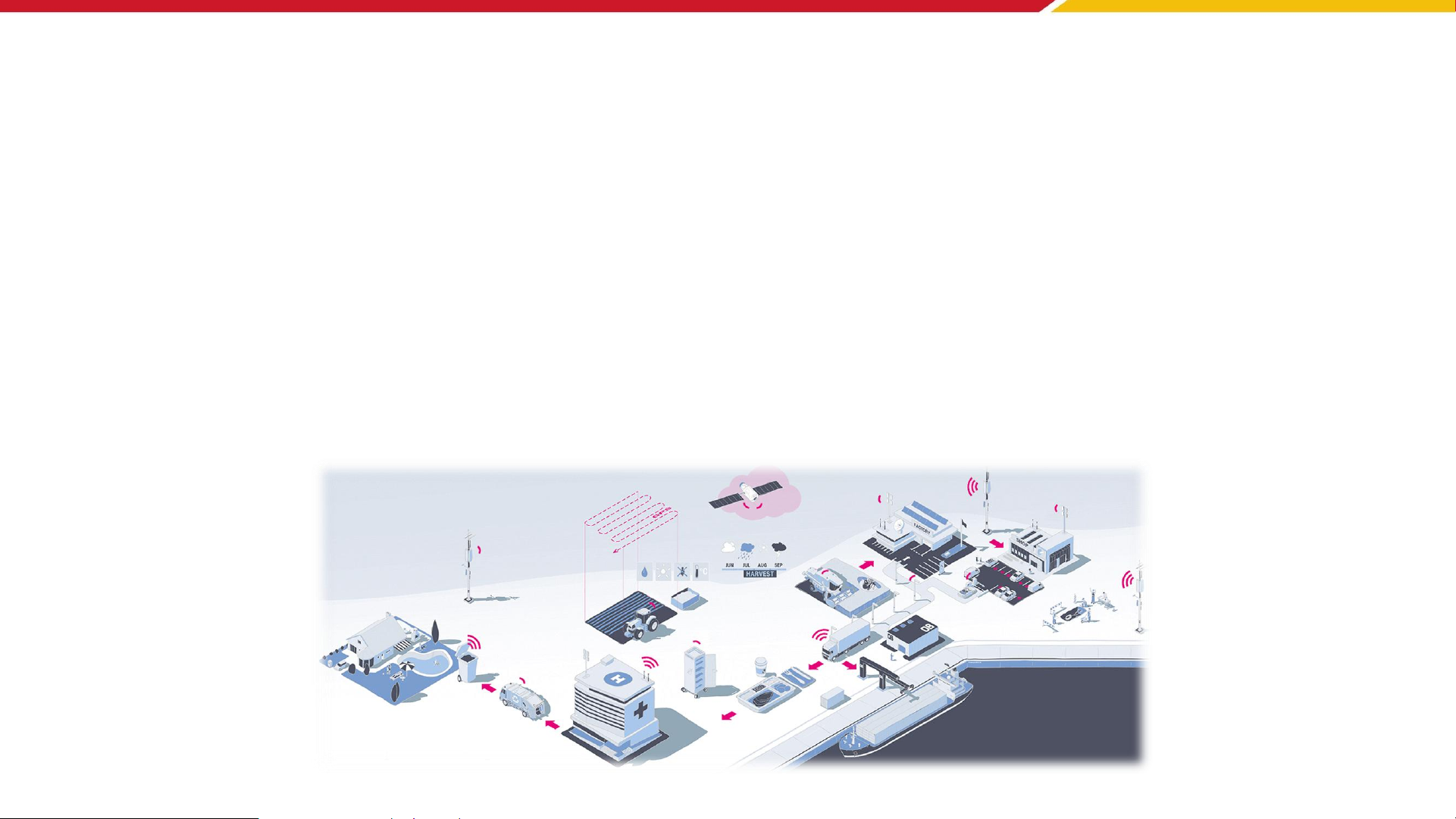
▪ What is the Internet of Things (IoT) ?
▪ IoT is the network of things, with clear element identifcation, embedded with software
intelligence, sensors, and ubiquitous connectivity to the Internet
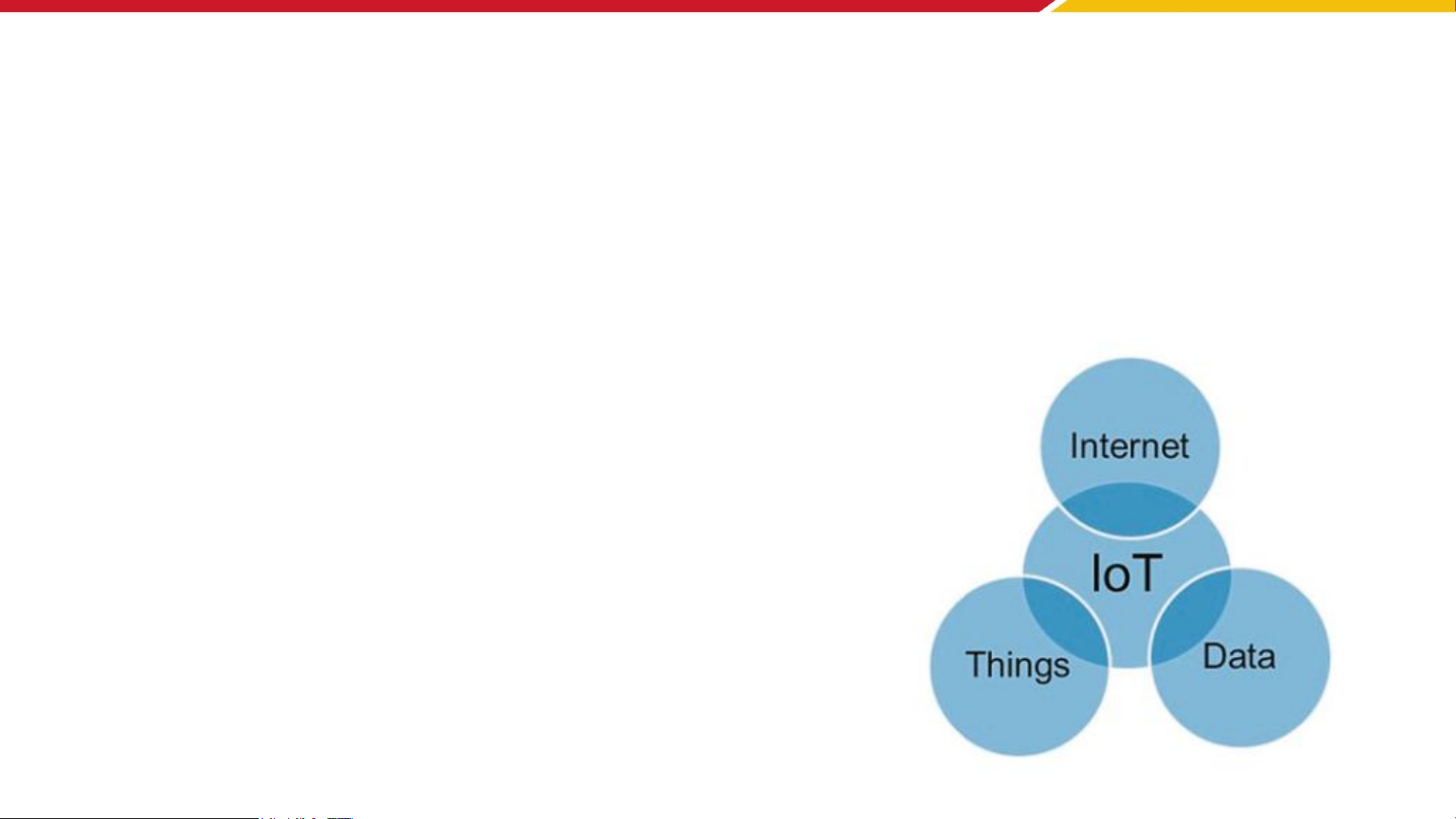
▪ (Book: Internet of Things From Hype to Reality) ▪ Components:
• Sensors: to collect information.
• Identifiers: to identify the source of data (e.g., sensors, devices).
• Software: to analyze data.
• Internet connectivity: to communicate and notify.
▪ “Things” = “anything”, “everything”
▪ Home appliances, building, car, people, animals, trees, plants, ...
IoE = Internet of Everything (by Cisco) 6 Tổng quan về IoT 7 Tổng quan về IoT
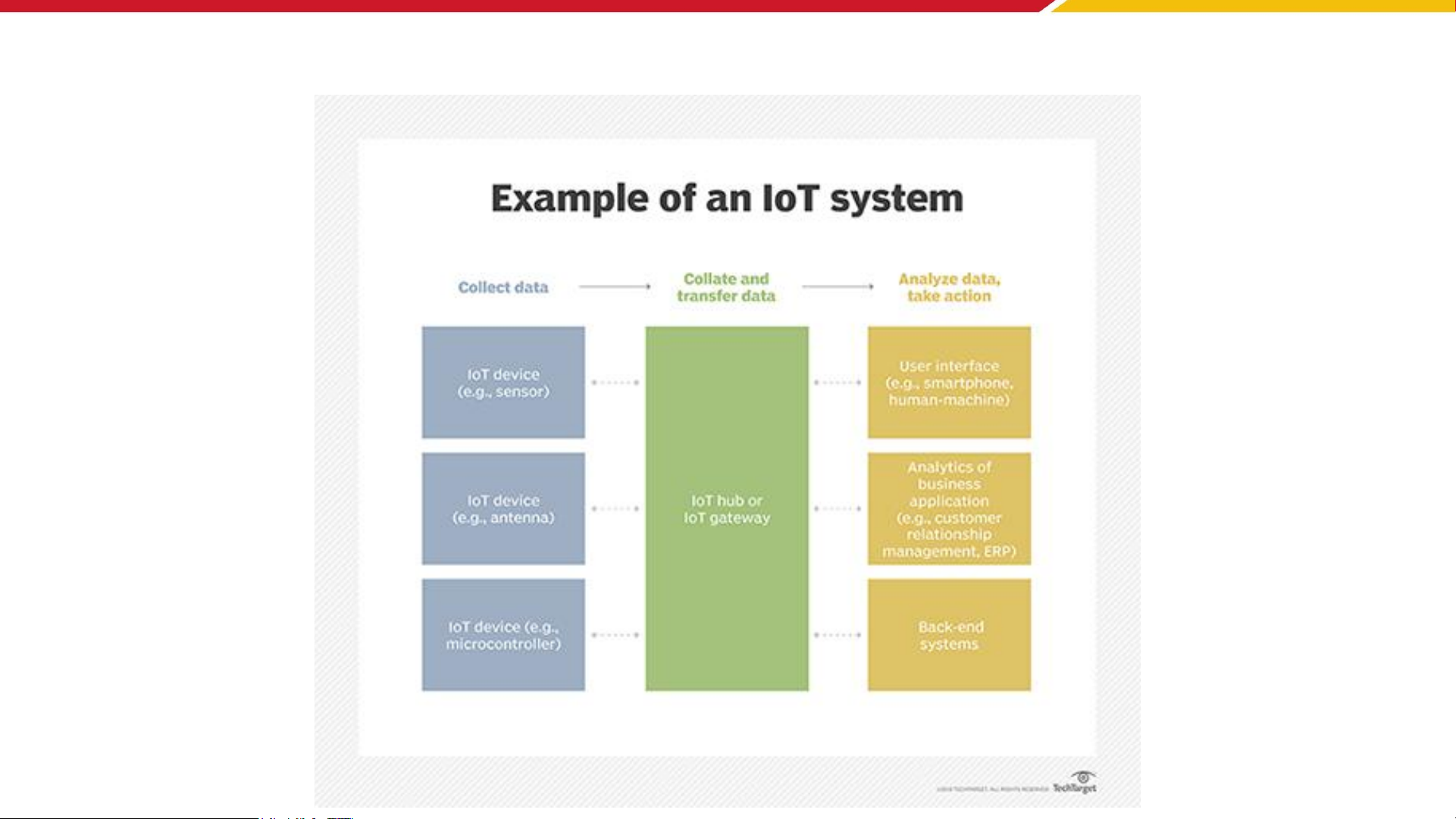
▪ How does IoT works ?
▪ IoT devices: smart devices (that use embedded systems such as
processors, sensors and communication hardware) to collect, send and
act on data they acquire from their environments.
▪ IoT devices share the sensor data they collect by connecting to an IoT
gateway, which acts as a central hub where IoT devices can send data.
▪ Before the data is shared, it can also be sent to an edge device where
that data is analyzed locally. Analyzing data locally reduces the volume of
data sent to the cloud, which minimizes bandwidth consumption. 8 Tổng quan về IoT
▪ How does IoT works ?
▪ Sometimes, IoT devices communicate with other related devices and act
on the information they get from one another.
▪ The devices do most of the work without human intervention, although
people can interact with the devices -- for example, to set them up, give
them instructions or access the data.
▪ The connectivity, networking and communication protocols used with these
web-enabled devices largely depend on the specific IoT applications deployed.
▪ IoT can also use artificial intelligence and machine learning to aid in
making data collection processes easier and more dynamic. 9 Tổng quan về IoT
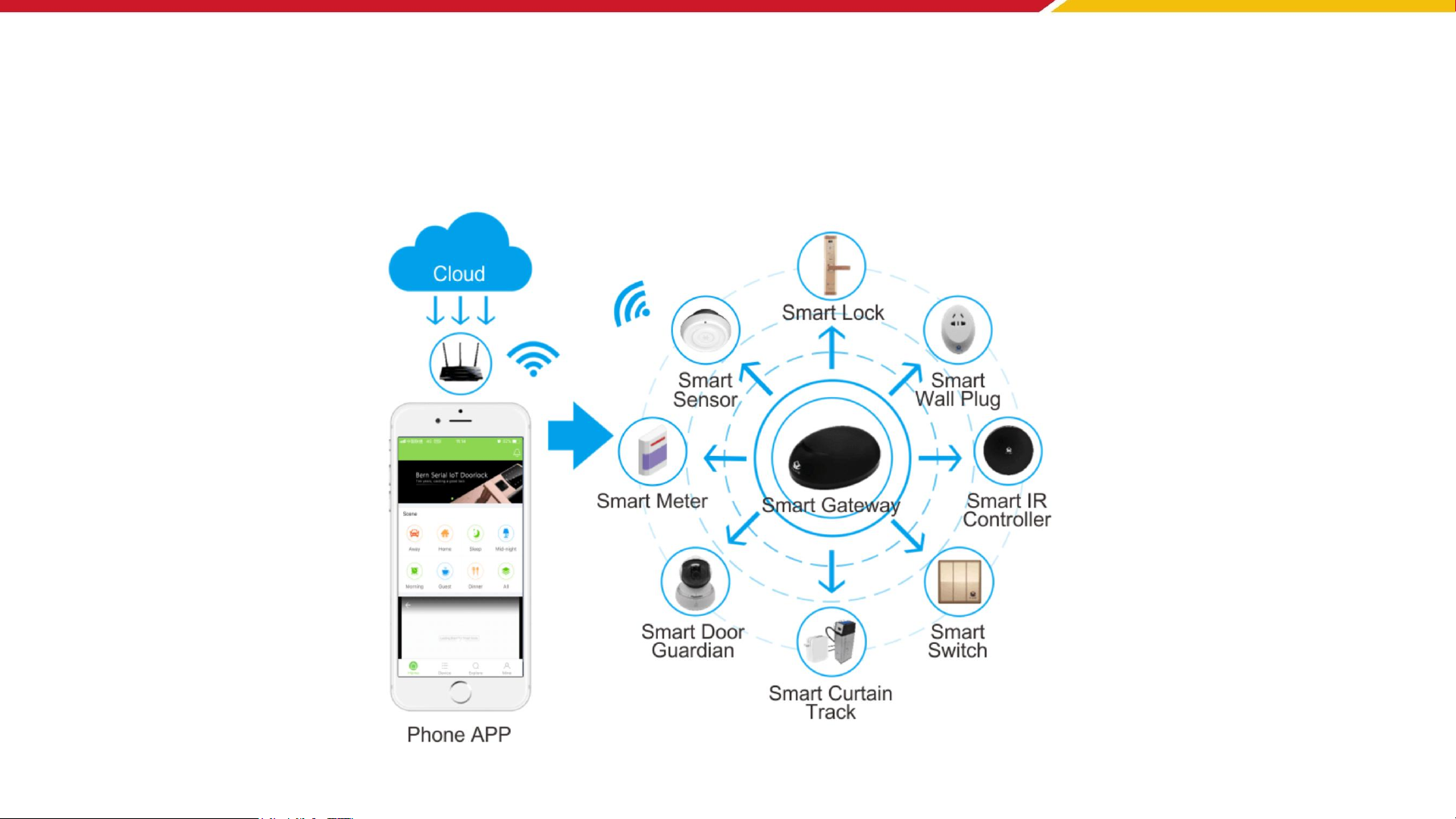
▪ An example of IoT smart home solution 10 Tổng quan về IoT
▪ Why is IoT important ?
▪ IoT helps people live and work smarter.
• For example: IoT-embedded devices -- such as cars, smartwatches or thermostats -- improve people lives.
▪ IoT is essential to business:
• Real-time supervising of products/objects/system
• Delivering insights into everything from the performance of machines to supply chain and logistics operations.
▪ IoT enables machines to complete tedious tasks without human intervention.
• automate processes, reduce labor costs, cut down on waste and improve service delivery.
• less expensive to manufacture and deliver goods,
• transparency into customer transactions. 11 Tiến hóa của IoT
▪ The field of IoT has grown tremendously
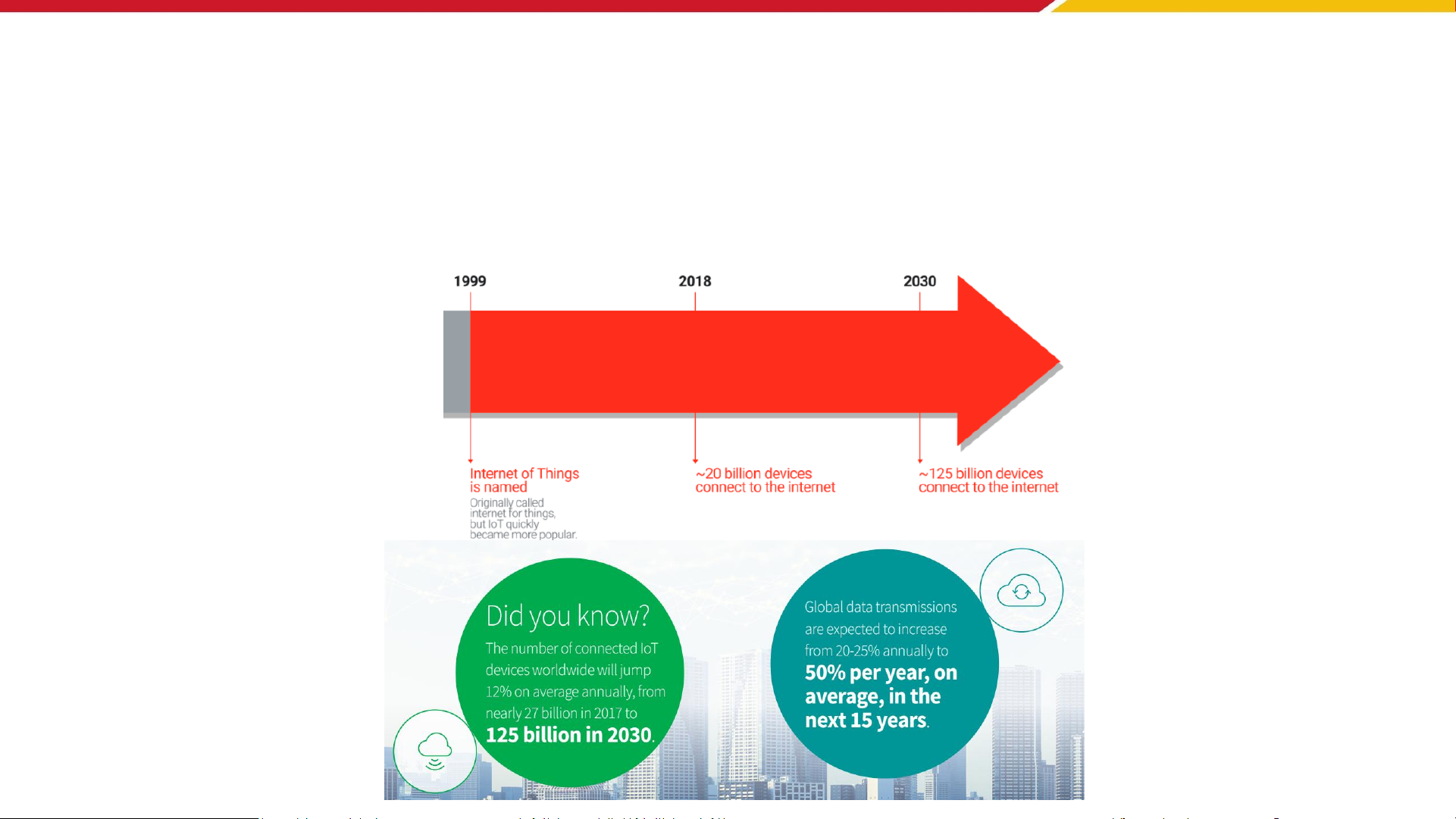
▪ 1999: Kevin Ashton (Auto-ID Center, MIT) first mentioned the
internet of things in a presentation about RFID (Source: IHS) 12 Tiến hóa của IoT
▪ IoT has evolved from the convergence of: ▪ Wireless technology
▪ Microelectromechanical systems ▪ Microservices ▪ Internet
▪ M2M (machine to machine) communication, evolved to next level
▪ 2010: broder consumer use (smart phones, smart TV)
▪ 2020: cellular IoT (2G/3G/4G/5G. LoRaWAN, LTE)
▪ 2023: billions of internet-connected devices
▪ Digital twins: virtual representation of a real-world entity or process 13 Tiến hóa của IoT
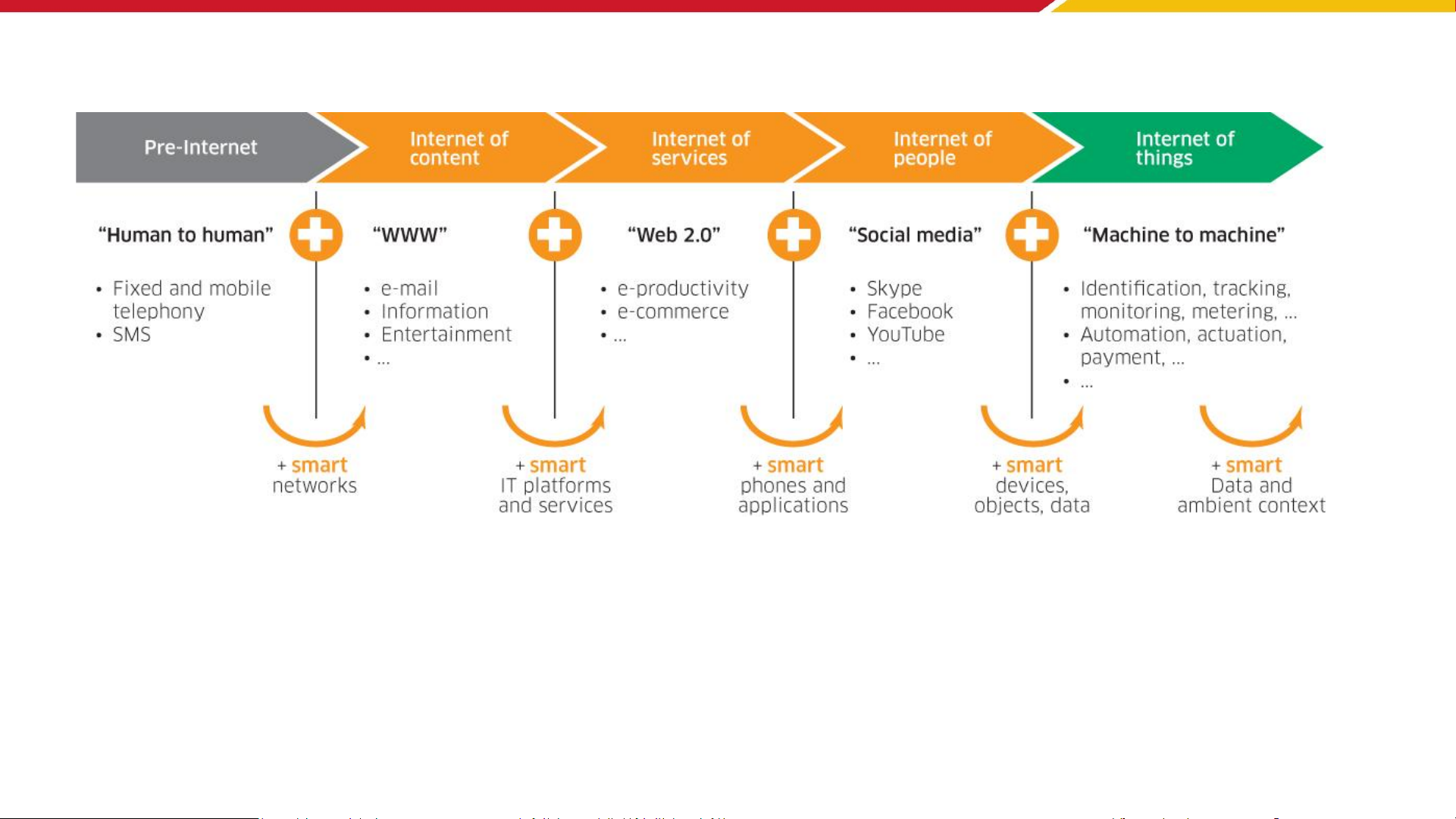
1. Pre-Internet: https://en.wikipedia.org/wiki/History_of_the_telephone
2. Internet of content (WWW, 1989, Tim Berners-Lee)
https://en.wikipedia.org/wiki/History_of_the_World_Wide_Web
3. Internet of services (Web 2.0, Yahoo, Amazon, … ~2000, dotcom companies)
4. Internet of people (smart phones, social networks, iPhone1 2007)
Internet of Things named 1999 https://iot-analytics.com/internet-of-things-definition/ 14 15 Tiến hóa của IoT
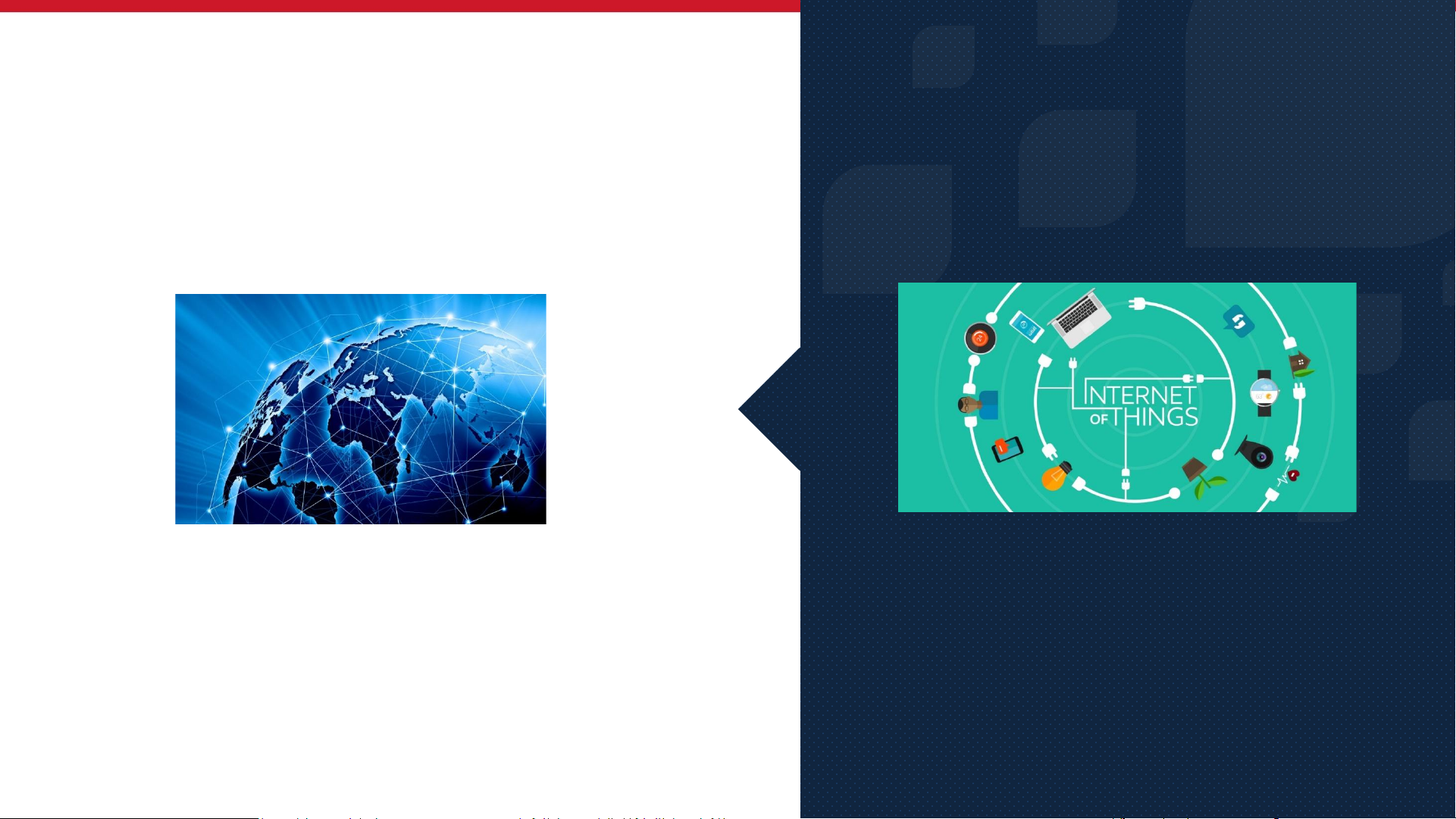
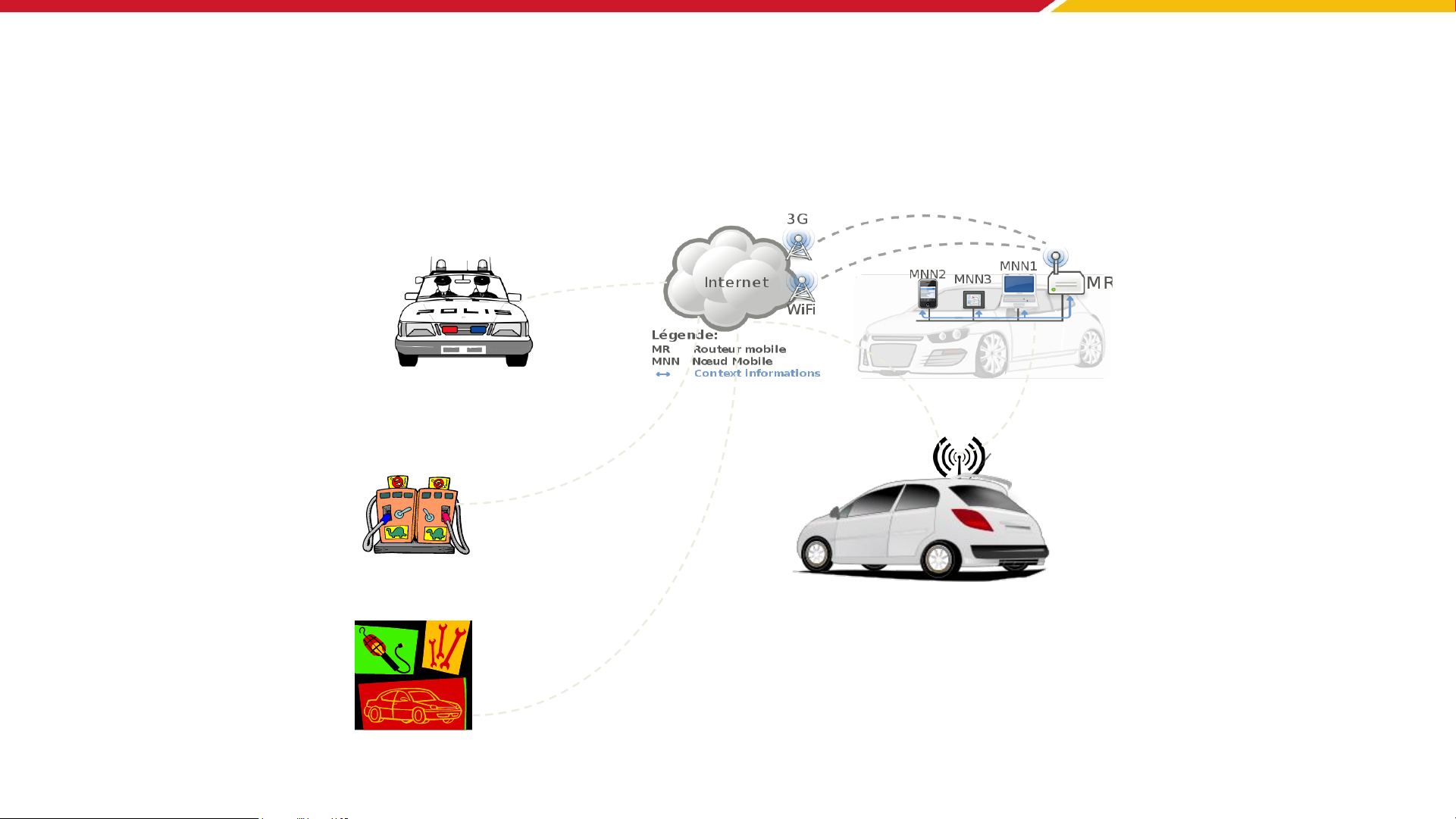
Idea: Move from Internet of People → Internet of Things
• Internet xuất hiện ở khắp nơi trên thế
❖ Internet of Things kết nối mọi thứ giới
(“things”) sử dụng các phương tiện
• Ban đầu là để kết nối con người – con hạ tầng đã có. người Tiến hóa của IoT
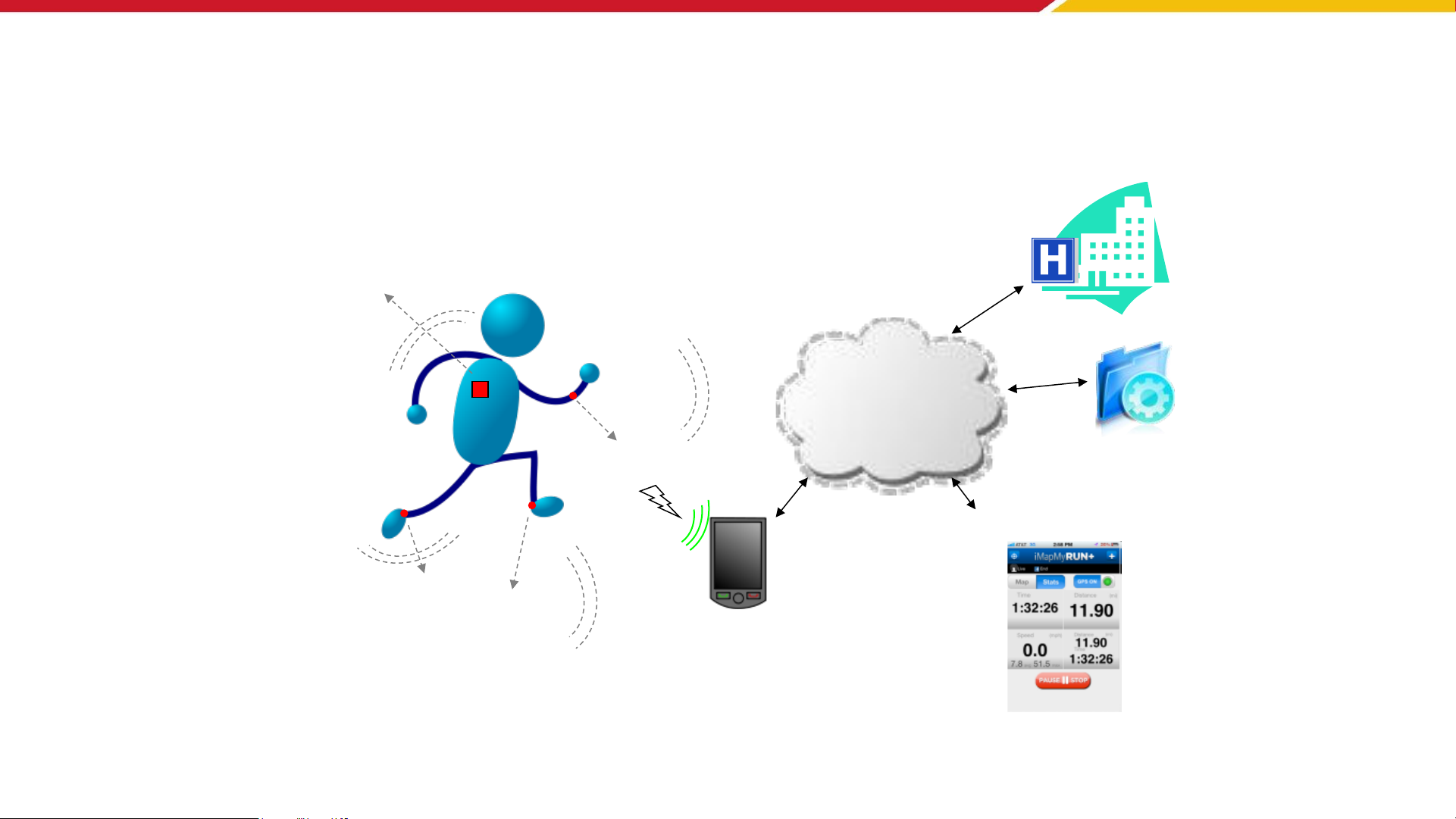
IoT: Human connecting with Things ECG sensor Internet Motion sensor Motion sensor Motion sensor 16 Tiến hóa của IoT
IoT: Things connecting with Things - Complex and heterogeneous resources and networks 17 4th IR and IoT
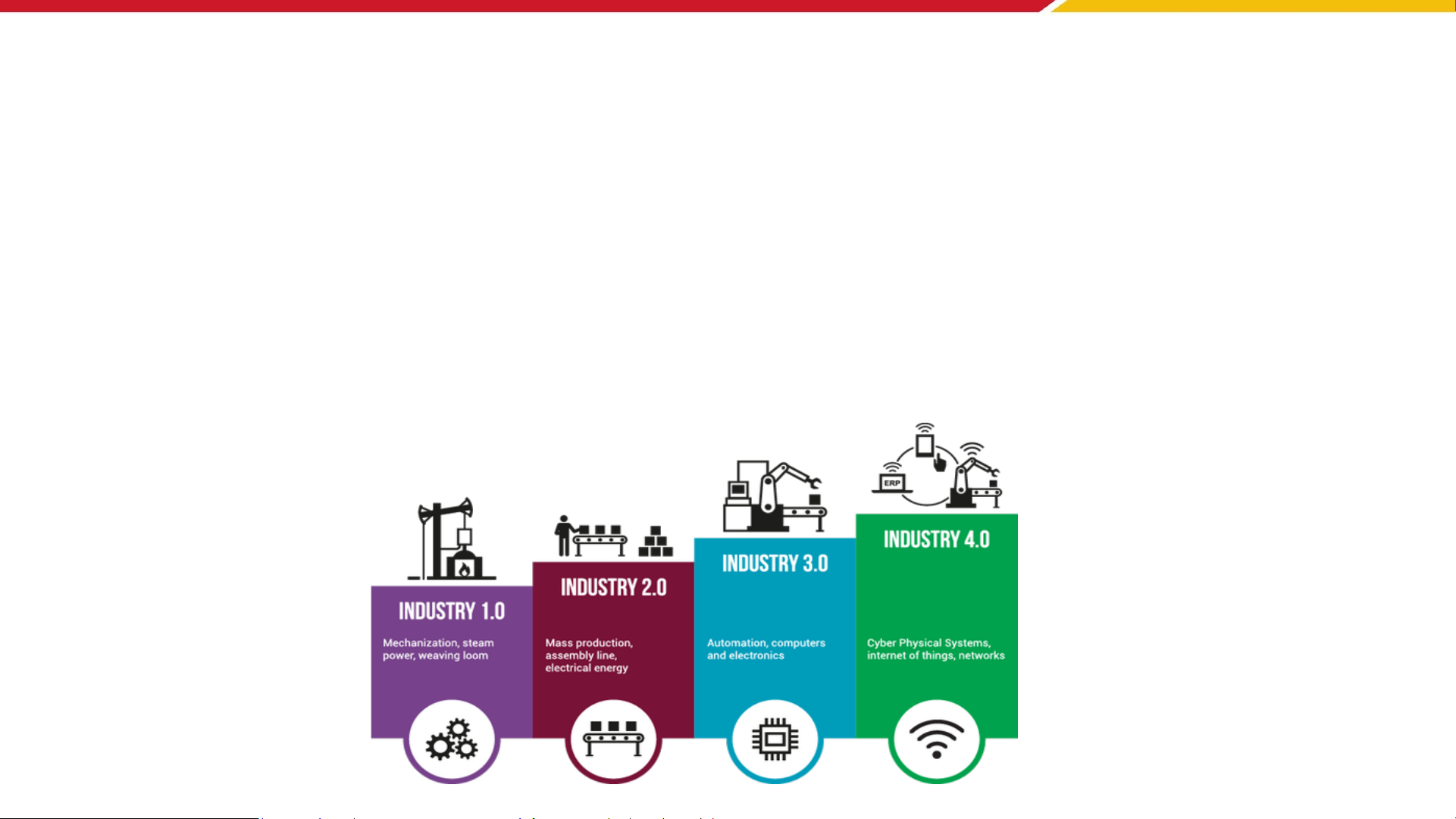
▪ The Fourth Industrial Revolution and IoT
▪ 1st IR: transformed society with the introduction of machines and mechanized production.
▪ 2nd IR: introduced electricity, which led to mass production.
▪ 3rd IR: has been called the dawn of the information age.
▪ 4th IR: as "the fusion of technologies that is blurring the lines between the physical, digital, and
biological spheres.“ (by Klaus Schwab)
▪ IoT is being called a major driver of the Fourth Industrial Revolution. Why? 18
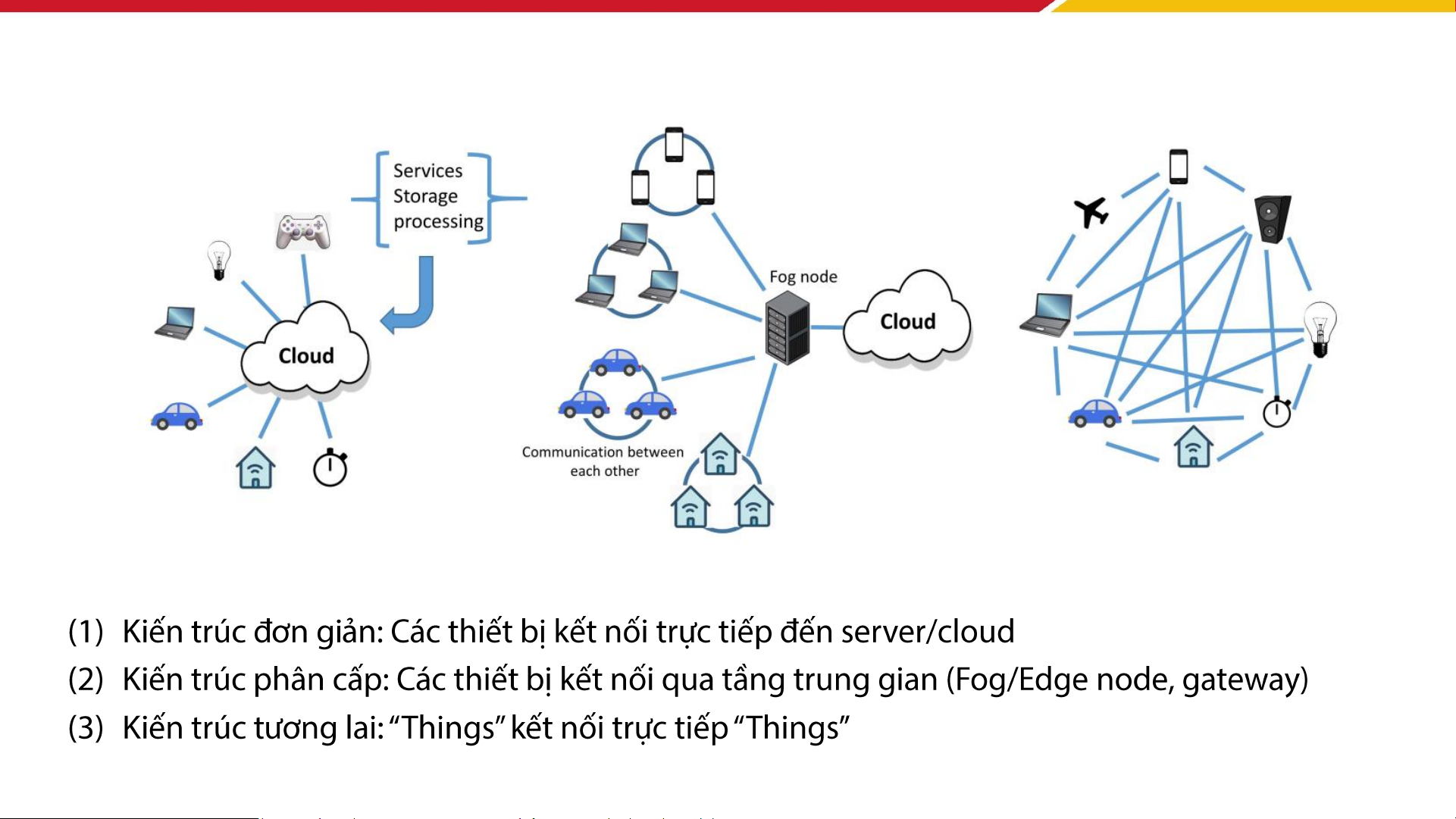
1.2. Kiến trúc tổng quan hệ thống IoT (1) (2) (3) 19
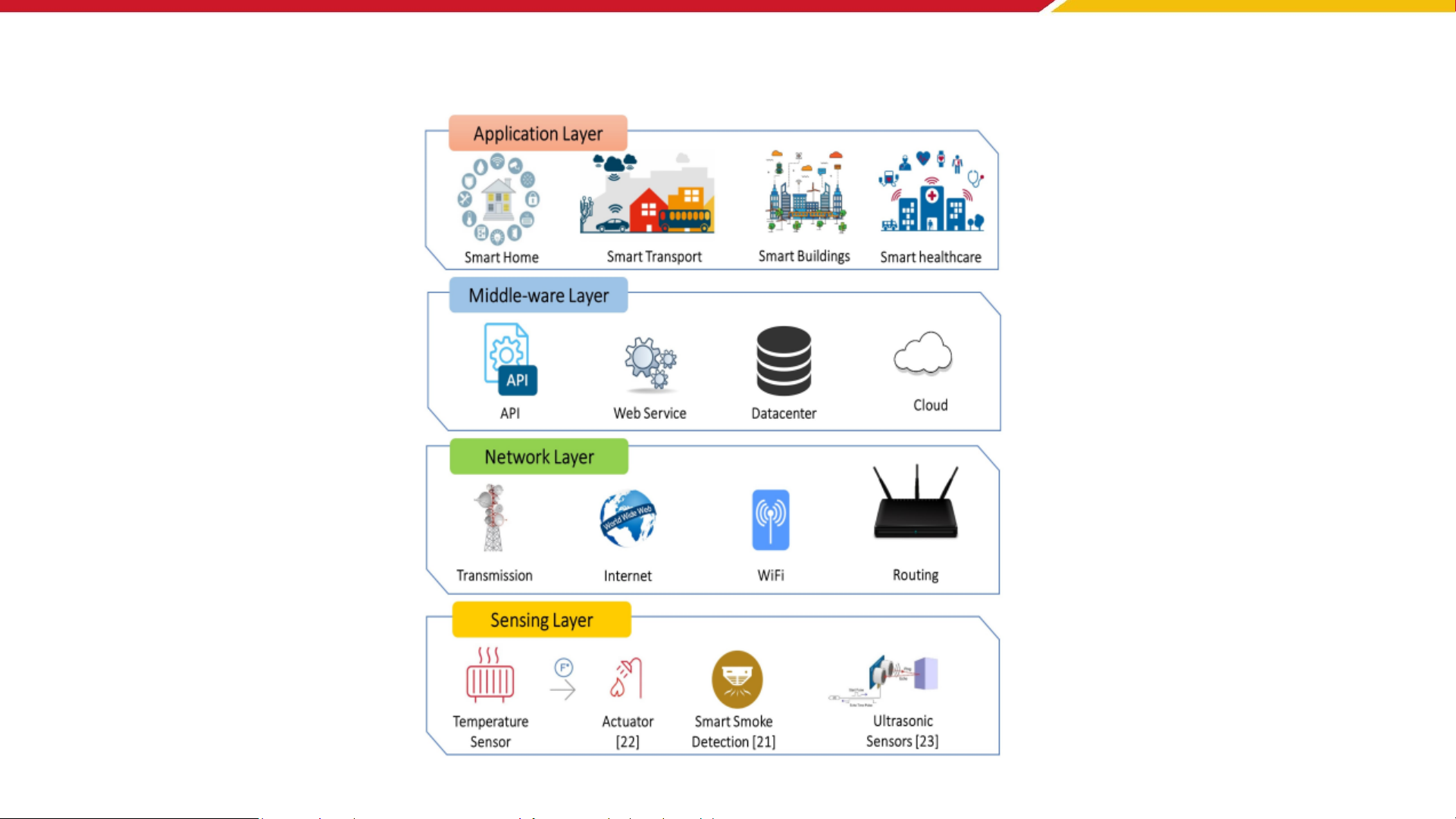
Kiến trúc phân tầng của hệ thống IoT (1) 20
Tài liệu liên quan:
-
Báo cáo bài tập lớn môn Hệ thống nhúng đa phương tiện | Đại học Bách Khoa Hà Nội
43 22 -
Báo cáo thí nghiệm Lập trình vi điều khiển môn Lập trình hệ nhúng | Trường Đại học Bách Khoa Hà Nội
93 47 -
Đề thi cuối kỳ môn Lập trình hệ nhúng | Trường Đại học Bách Khoa Hà Nội
112 56 -
Bài tập lớn Thiết kế máy soát vé tàu điện tự động môn Lập trình hệ nhúng | Trường Đại học Bách Khoa Hà Nội
88 44