Bài Tập Bổ Trợ Friends Plus 6 Với 4 Kĩ Năng Unit 3
Bài Tập Bổ Trợ Friends Plus 6 Với 4 Kĩ Năng Unit 3.Tài liệu được sưu tầm. Mời các bạn tham khảo
Chủ đề: Tài liệu chung Tiếng Anh 6 109 tài liệu
Môn: Tiếng Anh 6 1.1 K tài liệu
Tác giả:








Preview text:
UNIT 3: WILD LIFE THEORY
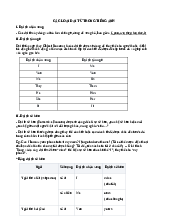
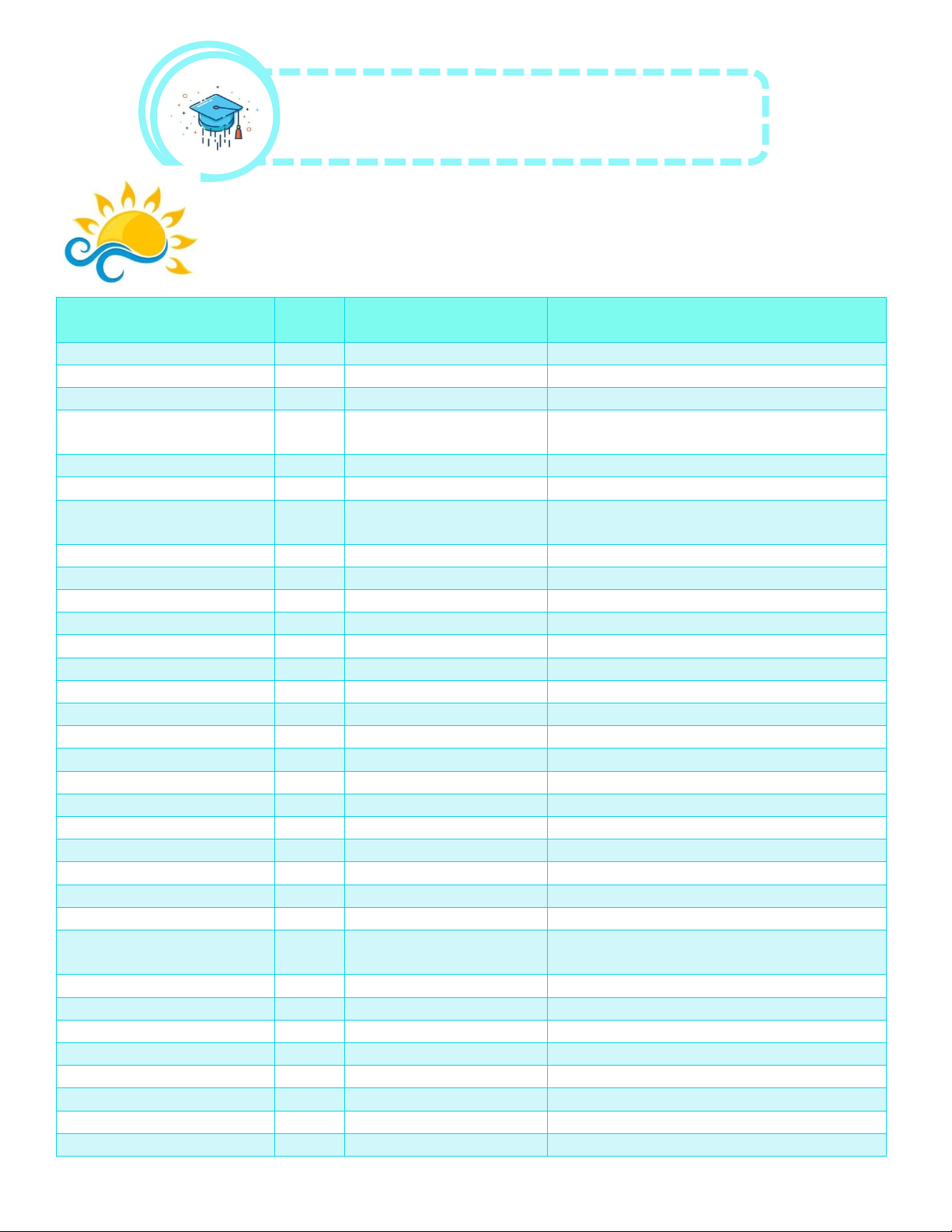
► VOCABULARY (TỪ VỰNG) WORDS TYP PRONUNCIATIO MEANING E N adopt (v) /əˈdɒpt/ nhận làm con nuôi article (n) /ˈɑːtɪkl/ bài báo animal (n) /’ænɪml/ động vật backwards (adj) /ˈbækwədz/
giật lùi,chậm tiến,lạc hậu,về phía sau bat (n) /bæt/ con dơi bear (n) /beə(r)/ con gấu become extinct
(Ph.v /bɪˌkʌm ɪkˈstɪŋkt/ bị tuyệt chủng ) butterfly (n) /ˈbʌtəflaɪ/ con bướm camel (n) /ˈkæml/ lạc đà caribou (n) /ˈkærɪbuː/ tuần lộc communicate (v) /kəˈmjuːnɪkeɪt/ giao tiếp creature (n) /ˈkriːʧə(r)/ sinh vật crocodile (n) /ˈkrɒkədaɪl/ cá sấu danger (n) /ˈdeɪnʤə(r)/ sự nguy hiểm dull (adj) /dʌl/
đần độn,tối dạ,chậm hiểu eagle (n) /ˈiːgl/ chim đại bàng explain (v) /ɪkˈspleɪn/ giải thích,giảng giải film star (n) /ˈfɪlm stɑː(r)/ ngôi sao điện ảnh fish (n) /fɪʃ/ con cá fly (n) /flaɪ/ con ruồi frog (n) /frɒg/ con ếch giraffe (n) /ʤəˈrɑːf/ hươu cao cổ gorilla (n) /gəˈrɪlə/ con khỉ đột grow (v) /grəʊ/ phát triển,lớn lên musical (n) /ˌmjuːzɪkl nhạc cụ instrument ˈɪnstrəmənt/ national park (n) /ˌnæʃnəl ˈpɑːk/ công viê quốc gia north pole (n) /ˌnɔːθ ˈpəʊl/ bắc cực octopus (n) /ˈɒktəpəs/ bạch tuộc ostrich (n) /ˈɒstrɪʧ/ đà điểu panda (n) /ˈpændə/ gấu trúc planet (n) /ˈplænɪt/ hành tinh pollution (n) /pəˈluːʃn/ sự ô nhiễm protect (v) /prəˈtekt/ bảo vệ rabbit (n) /ˈræbɪt/ con thỏ rat (n) /ræt/ con chuột scorpion (n) /ˈskɔːpiən/ con bò cạp situation (n) /sɪʧuˈeɪʃn/ vị trí snake (n) /sneɪk/ con rắn south pole /ˌsaʊθ ˈpəʊl/ nam cực species (n) /ˈspiːʃiːz/ loài, spider (n) /ˈspaɪdə(r)/ con nhện survive (v) /səˈvaɪv/
sống sót,vẫn còn tồn tại swim (v) /swɪm/ bơi tail (n) /teɪl/ đuôi( thú vật,chim,cá) weird (adj) /wɪəd/
huyền bí,kỳ lạ,khác thường whale (n) /weɪl/ cá voi wildlife (n) /ˈwaɪldlaɪf/ động vật hoang dã wing (n) /wɪŋ/ cánh wolf (n) /wʊlf/ chó sói world (n) /wɜːld/ thế giới
► GRAMMAR (NGỮ PHÁP)
I. Superlative adjectives (So sánh nhất của tính từ)
Ta sử dụng so sánh nhất để so sánh người (hoặc vật) với tất cả người (hoặc vật)
trong nhóm. Trong câu so sánh nhất, tính từ sẽ được chia làm hai loại là tính từ dài và tính từ ngắn, trong đó
- Tính từ ngắn là những tính từ có 1 âm tiết. Ex: tall, high, big,...
- Tính từ dài là những tính từ có từ 2 âm tiết trở lên. Ex: expensive, intelligent,... 1. Cấu trúc
Short adjectives ( Tính từ ngắn)
S + V +the + short adj/adv + est + ( noun)
Với tính từ ngắn,thêm đuôi “est”vào sau adj Ex: -
It was the happiest day of my life. (Đó là ngày hạnh phúc nhất trong cuộc đời tôi.) -
Giraffe is the tallest animal in the world.(Hươu cao cổ là động vật cao nhất trên thế giới) -
He is the best student in my class. (Cậu ấy là học sinh giỏi nhất lớp tôi)
Long adjectives( Tính từ dài)
S + V + the + most + long adj/adv + ( noun)
Với tính từ dài, thêm “ the most “trước adj Ex: -
Love is the most important thing.
(Tình yêu là điều quan trọng nhất.) -
Nhi speaks English the most fluently in her class. -
(Trong lớp,Nhi nói tiếng Anh lưu loát nhất) -
This book is the most interesting. (Đây là quyển sách thú vị nhất)
=> So sánh nhất có thể được bổ nghĩa bằng much hoặc by far.
Ex: Amy is the smartest by far.
(Amy thông minh nhất,hơn mọi người nhiều)
Nam’s English was much the worst. (Tiếng Anh của Nam
tệ nhất,tệ hơn mọi người nhiều
Hình thức so sánh nhất của tính từ hoặc trạng từ được thành lập bằng cách
- Thêm est vào sau tính từ hoặc trạng từ ngắn (short adj/adv) hoặc tính từ có hai âm
tiết tận cùng bằng -er, -et, -ow, -ly, le.
Ví dụ : clever( thông minh) ➔
cleverest(thông minh nhất ) quiet( yên lặng) ➔
quietest( yên lặng nhất ) shallow (nông) ➔
shallowest(nông nhất) early( sớm) ➔ Earliest( sớm nhất) simple( đơn giản) ➔
simplest( đơn giản nhất)
- Thêm the most vào trước tính từ hoặc trạng từ có hai âm tiết( trừ các tính từ tận
cùng bằng -er, -ow, -ly, le) hoặc có từ 3 âm tiết trở lên (long adj/adv).
Ví dụ : expensive( đắt) ➔
the most expensive( đắt nhất) famous (nổi tiếng) ➔
the most famous (nổi tiếng nhất) beautiful( đẹp) ➔
the most beautiful( đẹp nhất ) interesting( thú vị) ➔
the most interesting( thú vị nhất) interesting( thú vị) ➔
the most interesting( thú vị nhất)
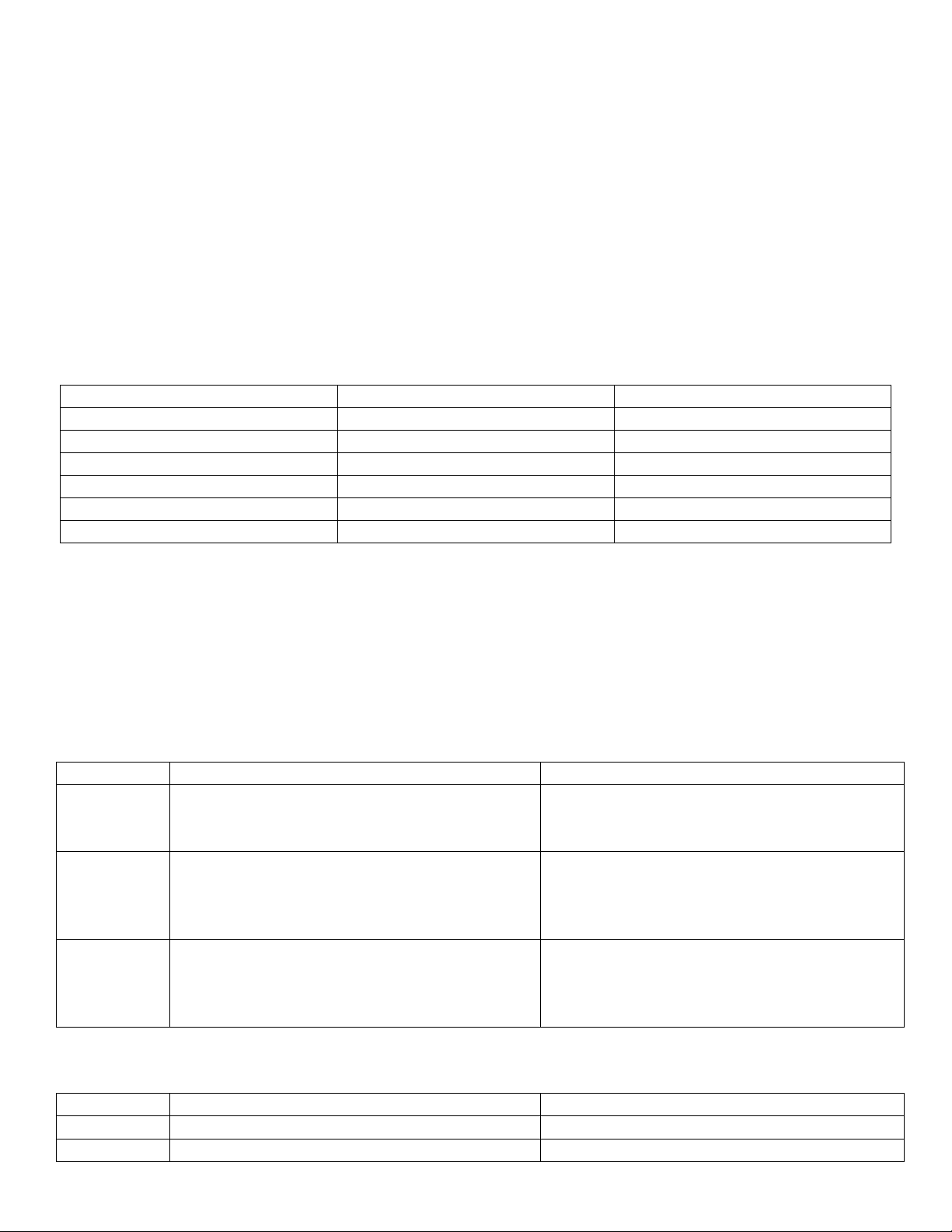
2. Hình thức so sánh bất quy tắc (Irregular comparision) Tính từ/Trạng từ Dạng so sánh hơn Dạng so sánh nhất Good/well( tốt) better best Bad/badly (tệ ) worse worst Far( xa) father/ further fathest/ furthest Many/much( nhiều) more most Little( ít) less least Old(già,cũ) older/elder oldest/eldest
- Cả fathest/furthest đều được dùng để chỉ khoảng cách. Không có sự khác nhau về nghĩa.
Ex: Nha Be is the fathest/furthest district of the three.(Nhà Bè là quận xa nhất trong ba quận)
- Further còn có nghĩa “thêm nữa,hơn nữa” (father không có nghĩa này)
Ex: Let me know if you have any futher news.(= any more news)
(Nếu bạn có thêm tin tức gì thì hãy cho tôi biết nhé.
II. Can for ability (Động từ khuyết thiếu “can” )
“Can” là động từ khuyết thiếu, do đó nó không cần chia theo các ngôi và luôn cần một
động từ nguyên thể không “to” đi đằng sau. Thể
Thể khẳng định + Thể phủ định Thể nghi vấn
S + can/ can’t + V + (…). Can + S + V + (…) ? Cấu trúc Yes, S + can. No, S + can’t.
Diễn tả khả năng của một người có
Dùng trong câu hỏi đè nghị, xin Chức
thể/ không thể làm được gì, hoặc một phép, yêu cầu. năng
sự việc có thẻ/ không thể xảy ra ở hiện tại. - She can speak Spainish. - Can I ask you a question? Ví dụ
(Cô ấy có thể nói tiếng Tay Ban Nha) (Tôi có thể hỏi bạn 1 câu không?) - It can rain. - Can you swim? (Trời có thể mưa)
( Bạn có thể bơi không?)
III. Might for possibility “Động từ khuyết thiếu “ might””
Might là động từ khuyết thiếu do đó nó không cần chia theo các ngôi và luôn cần một
động từ nguyên thể không “to” đi đằng sau Thể Thể khẳng định Thể phủ định
Cấu trúc S + might + V ...
S + might not/mightn’t + ... Chức
Dùng để nói về những hành động, sự Dùng để nói về những hành động, năng
việc có thể xảy ra trong tương lai
sự việc không thể xảy ra trong nhưng không chắc chắn.
tương lai nhưng không chắc chắn. She might come here. It might not be true.
(Có thể cô ấy đến đây)
( Có thể điều đó không đúng)
Take an umbrella with you when you There might not be a meeting on Ví dụ go out. It might rain later.
Friday because the director í ill).
( Nhớ mang theo ô khi bạn ra ngoài.
( Buổi họp ngày thứ sáu có thể Trời có thể mưa)
không diễn ra bởi vì ông giám đốc bị ốm).
Phân biệt May và Might Might May Chức năng
Đều được dùng để nói khả năng của một sự việc Khả năng xảy
Diễn tả khả năng xảy ra thấp
Diễn tả khả năng xảy ra cao ra (dưới 50%) (trên 50%) Ví dụ
She is a very busy, but I hope she I may go to Sai gon tomorrow. might join us tomorrow.
IV. Question with “how…?’’ (Dạng câu hỏi với từ để hỏi “how...?’’)
How many – How much – How tall - How heavy – How far - How old... 1. How many…?
- “How many” có nghĩa là “bao nhiêu”, nó được dùng trong câu hỏi hỏi về số lượng
của các vật đếm được.
- Với loại câu hỏi này danh từ đứng sau “How many” phải là danh từ số nhiều.
How many…? Hỏi số lượng Câu hỏi
: How many + danh từ số nhiều + are there + …?
Trả lời: There is/There are + từ chỉ số lượng. Ex:
How many students are there in your class? (Có bao
nhiêu học sinh trong lớp của bạn?)
=> There are eleven. (Có 11) 2. How much...?
- "How much" cũng có nghĩa là "bao nhiêu", dùng để hỏi số lượng của vật không đếm
được như: rice (gạo), water (nước) …
- Ngoài ra “How much” còn dùng trong câu hỏi về giá cả.
How much…? Hỏi số lượng Câu hỏi
: How much + danh từ không đếm được + is there …?
Trả lời: There is/There are + từ chỉ số lượng. Ex:
How much money is there in the wallet? Có bao nhiêu tiền ở trong ví?)
=> There is $200. (Có 200 đô.) 3. How tall...?
How tall…?Hỏi về chiều cao Câu hỏi
: How tall /high + BE (am / is / are) + S? = What + be (is) + ... height?
Trả lời: S + be (am / is / are) + number + meter / centimeters + (tall).
: ... height + be (is) + number + meter / centimeters. Ex:
How tall are you? = What is your height? ( Chiều cao của bạn là bao nhiêu?)
=> I am 170 centimeters tall. Or My height is 1 meter 70 centimeters.( tôi cao 1 mét 70) 4. How heavy...?
How heavy…?Hỏi về cân nặng Câu hỏi
: How heavy + BE (am / is / are) + S? = What + be (is) + ... weight?
Trả lời: S + be (am / is / are) + number + kilos.
: ... weight + be (is) + number + kilos. Ex:
How heavy is she? = What is her weight? ( Cân nặng của cô ấy là bao nhiêu?)
=> She is 65 kilos. Or her weight is 65 kilos. ( Cô ấy 65 ký) 5. How far...?
How far…? hỏi về khoảng cách Câu hỏi
: How far + be (am / is / are) + cụm từ chỉ chẳng đường?
= How far is it from… to…? (Từ…đến…bao xa?)
Trả lời: It is about… Ex:
How far is it to the bus station? Ex:
How far is it from your house to the bus station??
=> It is about 2km (Nó khoảng 2km)
V. Sentence Stress Rules (Quy tắc nhấn mạnh câu)
1. Phải nhấn mạnh khi gặp các loại từ sau
Những từ mang nghĩa Example
Main verbs (Động từ chính) SELL, GIVE, EMPLOY Nouns (Danh từ) CAR, MUSIC, MARY Adjectives (Tính từ) RED, BIG, INTERESTING Adverbs (Trạng từ) QUICKLY, WHY, NEVER
Negative auxiliaries (Trợ từ phủ DON'T, AREN'T, CAN'T định)
2. Không nhấn mạnh những từ về mặt cấu trúc
Từ về mặt cấu trúc Example Pronouns (Đại từ) he, we, they
Prepositions (Giới từ) on, at, into Articles (Mạo từ) a, an, the
Conjunctions (Lên từ) and, but, because Auxiliary verbs (Trợ do, be, have, can, động từ) must
Ex: I am talking to the clever students.
You’re sitting on the desk, but you aren’t listening to me.
He’s writing quickly, so it’s difficult for him to hear me.
3. Exceptions (Ngoại lệ)
- Đôi khi chúng ta nhấn mạnh vào những từ mà chỉ có ý nghĩa về mặt cấu trúc, ví dụ như
khi chúng ta muốn sửa thông tin.
Ex: "They've been to Mongolia, haven't they?"
"No, THEY haven't, but WE have."
Khi "to be" là động từ chính, nó ko được nhấn mạnh cho dù trong tình huống này "to be" là content word. PRACTICE I. Listening
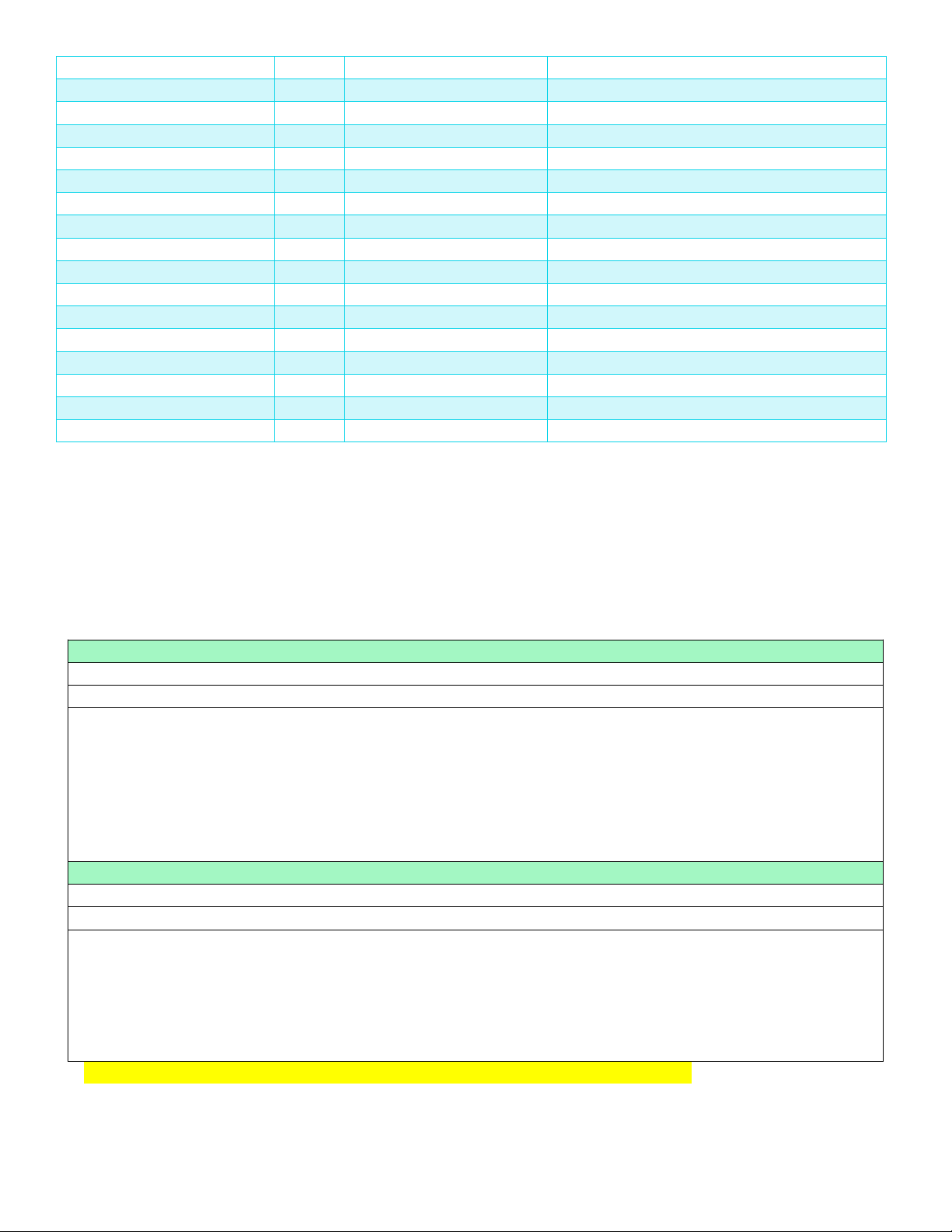
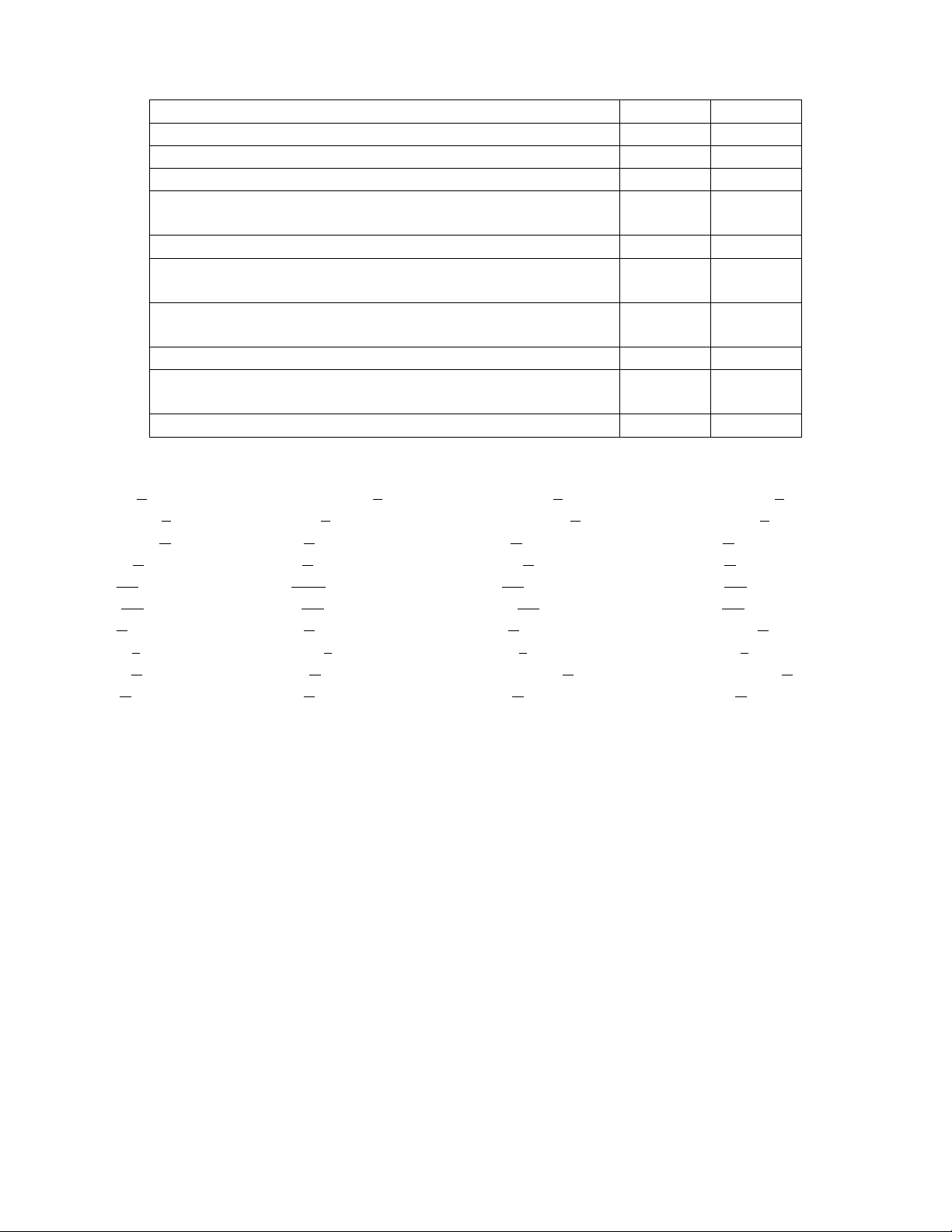
Listen to the conversation and tick the following statements are true (T) or false (F). Statements True False
1. There are a lot of big animals in Wild Park.
2. There aren’t any giraffes in Wild Park.
3. The sun bears can be dangerous.
4. The butterflies are very popular with visitors.
5. Miami blue butterflies are very rare.
6. The sun bears are the rarest animals in Wild Park.
7. The animals in the pet house can be dangerous.
8. Janet thinks the rabbits look nice.
9. It’s safe to go near the snake in the pet house.
10. Janet loves snakes.
II. Choose the word that does not have the same pronunciation of the
underlined part as that in the rest. 1. A. rats B. scorpions C. eagles D. giraffes 2. A. climbs B. kills C. survives D. jumps 3. A. gorilla B. panda C. rabbit D. cat 4. A. adopt B. communicate C. protect D. pollute 5. A. feather B. heavy C. eagle D. head 6. A. heavy b. beach c. cream D. sea 7. A. forest B. hot C. lost D. scissors 8. A. bet B. coat C. lot D. picture 9. A. island B. plaster C. mountain D. restaurant 10.A. large B. park C. valley D. apartment
III. Choose the word that does not have the same stressed syllable as that of the rest. 1. A. option B. wildlife C. forest D. survive 2. A. interesting B. important C. beautiful D. colorful 3. A. elephant B. octopus C. gorilla D. crocodile 4. A. common B. extinct C. forest D. hunting 5. A. protect B. farming C. adopt D. explain 6. A. protect B. inform C. extinct D. animal 7. A. temperature B. foundation C. maximum D. limestone 8. A. reptile B. possible C. pollution D. beautiful 9. A. mammal B. amphibian C. dangerous D. elephant 10. A. magazine B. giraffe C. American D. expensive
IV. Choose the word or phrase (A, B, C or D) that best fits the blank space in each sentence.
1. The longest snake in the world live in __________. A. Africa B. India C. Southeast Asia D. Asia
2. One of the most common wild animals in the UK is the__________. A. Rabbit B. bear C. snake D. wolf
3. The busiest zoo in Europe is in __________ .There are about 3 million visitors every year. A. Prague B. Berlin C. Italia D. Paris
4. That mountain is very high. It’s __________ mountain in the country. A. the highest B. higher C. highest D. more higher
5. Look at this colourful butterfly! It’s __________ butterfly in the park. A. more colourful
B. the most colourful C. colourful D. colourfulest
6. Olga is a good student. She’s __________ student in the school. A. better B. gooder C. the best D. the goodest
7. The tallest animal in the world is the__________ . A. elephant B. ostrich C. giraffe D. camel
8. The biggest animal in the world is the__________. A. African elephant B. blue whale C. camel D. brown bear
9. The oldest zoo in the world is in Vienna, Austria. It’s more than__________ years old. A. 100 B. 150 C. 200 D. 250
10. That’s an expensive phone . It’s __________ phone in the shop. A. more expensive B. the more expensive C. expensivest D. the most expensive
11. It’s a very hot day today. It’s __________ day in the year. A. the hottest B. hottest
C. the most hottest D. more hotter
12. This monument is really old. It’s __________ monument in our country. A. older B. the older C. more older D. the oldest
13. My brother Evan is a friendly boy. He’s __________ boy in our village .
A. friendliest B. more friendlier C. the friendliest D. the friendly
14. The lesson is very interesting. It’s __________ lesson of the morning. A. Interesting B. more interesting C. most interesting D. the most interesting
15. That’s café is really bad . It’s __________ café in the areal. A. the worst B. worst C. the worse D. the baddest
16. A __________ is bigger than any other animal in the world. It’s a fish, but it lives in the sea.
A. dolphin B. hippopotamus C. shark D. whale
17. A__________ is an insect . It flies from flower to flower. It make a food which some people eat for breakfast. A. bird B. eagle C. bee D. butterfly
18. A __________ is a bird. Some of these birds are red, yellow, orange or blue. Some
people teach these birds to speak. A. butterfly B. parrot C. eagle D. peacock
19. A __________ is green . It jumps and it likes water. It eats insects . A. Frog B. snake C. crocodile D. squid
20. A__________ lives in the sea . An octopus has got eight ‘arms’ ,but this has gotten. People eat in restaurants. A. crab B. spider C. squid D. scorpion
21. The blobfish isn’t the most beautiful or common fish on the planet.
Choose the word that is the opposite in meaning to the bold word. A. rare B. popular C. weird D. colourful
22. Which of the following animal feeds its baby with its milk? A. whale B. crocodile C. eagle D. snake
23. Reptiles don’t have__________. A. feather B. claws C. skin D. lungs
24. Which type of animals haven’t got lungs when it’s young? A. fish B. reptiles C. mammal D. A and B
25. __________ have good ears. They can hear better than humans. A. Birds B. Bats C. Cats D. Tigers
V. Match the words from 1-10 with the correct animal from a- j
1. a small creature like an insect with eight legs, two a parrot
front claws (curved and pointed arms) and a long tail that curves .
over its back and can give a poisonous sting.
2. a very large powerful African ape (= an animal like a large monkey b bat
without a tail) covered with black or brown hair. .
3. a very large animal with thick grey skin, large ears, two curved c lion
outer teeth called tusks and a long nose called a trunk. .
4. a very large African bird with a long neck and long legs, that cannot d scorpio fly but can run very fast. . n
5. a large, powerful animal of the cat family that hunts in groups and e giraffe
lives in parts of Africa and southern Asia. .
6. an animal with a long neck and one or two humps on its back, used f. camel
in desert countries for riding on or for carrying goods.
7. a tropical bird with a curved beak. There are several types of parrot, g gorilla
most of which have bright feathers. .
8. a tall African animal with a very long neck, long legs, and dark h ostrich marks on its coat. .
9. an animal like a mouse with wings that files and feeds at night. i. turtle 1
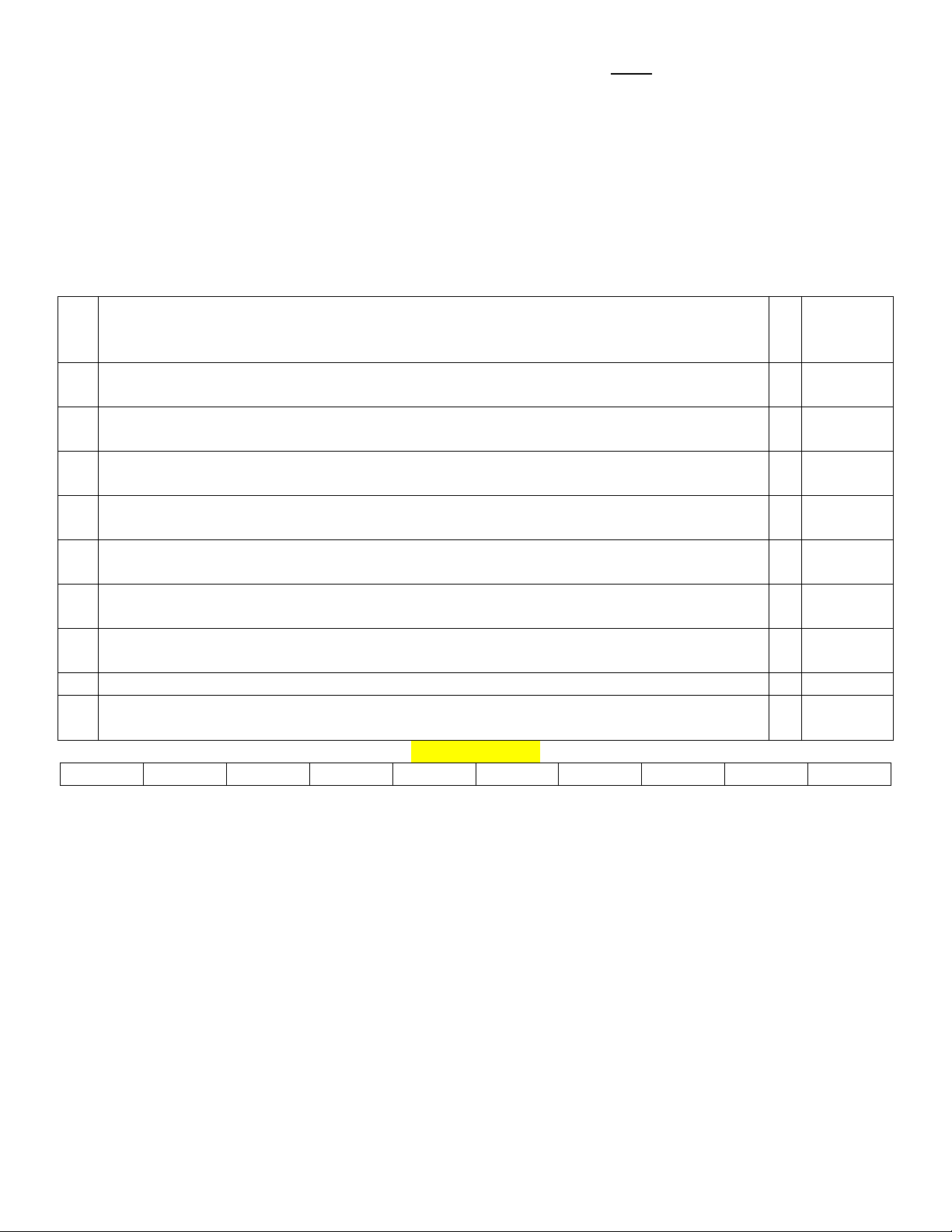
a large reptile with a hard round shell that lives in the sea. j. elepha 0. nt Answers key 1. 2. 3. 4. 5. 6. 7. 8. 9. 10.
VI. Choose the word or phrase that best fits the blank space in the following passage. Passage 1
Young birds are very small, so their mother protects them from bigger birds. Some
animals also (1) ______ trees and eat the young birds . When they are young, the mother
(2) ______food for them. When they are older , the birds (3)______away. Then they look for their own food.
Lions are dangerous animals, but not all the time. Young lions (4)______with each other,
and older lions sleep a lot ! Lions eat meat, and they (5)______other animals. They are
good at hunting, because they can (6) ______very fast . 1. A. swim B. climb C. jump D. run
2. A. protects B. takes C. flies D. finds
3. A. help B. fly C. live D. need
4. A. eat B. play C. run D. go 5. A. hunt B. kill C. survive D. catch 6. A. find B. have C. dive D. run Passage 2
Vertebrates are animals with backbones. The following groups are the different types of vertebrates.
Fish are cold- blooded animals and they live in water. They have got scales and
(1)______ . They haven’t got lungs. They have got (2)______instead .
All mammals are warm-blooded and they feed their babies milk. Most mammals live on
land, for example, humans and dogs. However, some mammals, like whales, live in
water, but they haven’t got gills. Mammals have all got (3)______.
Birds live on land, but some of them look for food in the water. They have got (4)______ ,
two legs and two (5) ______ . Some birds, like ostriches and kiwis, can’t fly. All birds lay eggs.
When amphibians are young, they live in water and they haven’t lungs. When thay are
adult, they have got lungs and four legs - for example, frogs and toads.
Most reptiles live on land. They have lungs and scales, but not gills. They haven’t got
any wings or feathers and they haven’t got any (6) ______. They are cold-blooded
animals and many of them live in warm places . 1. A. backbones B. fins C. feathers D. wings 2. A. gills B. lungs C. legs D. hair 3. A. ostrich B. heart C. skin D. lungs 4. A. hair B. feathers C. fins D. scales 5. A. wings B. gills C. lungs D. tail 6. A. feathers B. claws C. hair D. wings Passage 3
No one has ever seen a dinosaur. The last dinosaur died about 60 million years ago, a
long time(1)______ there weren’t any people on the Earth. (2)______ knows for sure whey
they died. The nearest living relatives of dinosaur are birds.
Dinosaur didn’t look all the same. There were more (3)______ 5000 kinds. Some were
very small, (4)______ others were giants. The largest were bigger than any other animals
that ever lived (5)______ land. The Brontosaurs, for example, was twenty metres long,
and it (6)______ plants. The Tyrannosaurs Rex was not as (7)______ but it was stronger. It
had sharp teeth for eating meat. Also I could run fast (8)______ it had long back legs. 1. A. that B. when C. before D. after 2. A. Everybody B. People C. Nobody D. Nothing 3. A. than B. that C. as D. so 4. A. as B. but C. or D. and 5. A. in B. on C. at D. of 6. A. ate B. eat C. eats D. eating 7. A. bigger B. biggest C. big D. biger 8. A. that B. because C. where D. so
VII. Read the following passage. Decide if the statements are True or False and
choose the correct answer (A, B, C or D) for the questions Passage 1 SERVALS
Servals are African wild cats. They live in different countries in Africa such as South
Africa and Tanzania . Servals can be one metre long. They have long legs and they are
one of the tallest animals in the cat family . Some servals can weigh eighteen kilos.
Servals are fast animals. They can run at eighty kilometres an hour. Servals eat animals
like rat, and other small creatures such as snakes and frogs. They can jump up to three metres and kill birds too !
In some parts of Africa there are now smaller number of servals and they are in danger.
The biggest problem is human activity like hunting .
1. Servals live in only Africa __________
2. They run at eighteen kilometres an hour __________
3. They can kill birds too __________
4. Small number of servals are in safety __________
5. The serval is one of the tallest animals in the _________. A. Rhinoceros family B. horse family C. dog family D.cat family
6. Which of the following sentences is NOT true, ___________.
A. Servals can jump up to three metres
B. Servals are not in danger in Africa C. Servals are fast animals. D. Servals have long legs Passage 2 AMAZING BUTTERFLIES
These are the famous monarch butterflies. Every year, they fly more than 4,500
kilometres from Canada and North America down to the mountains of Mexico. It’s the
longest journey of any butterfly. Their journey usually starts in September or October .
They can sometimes fly more than 100 kilometres in one day and they often fly very
high too – perhaps 1.6 kilometres ! Imagine thousands of butterflies in the sky. They
are orange and black with enomous wings. Sadly, many don’t survive the long and
dangerous journey because they become very cold.
Write True/False for the statements about the passage
1. The butterflies fly from South America and Canada to Mexico __________
2. In one hour , the monarchs can go more than 100 kilometres . __________
3. The butterflies have got very big wings . __________
4. When it’s very hot, a lot of the butterflies die __________ Choose the best option
5. The famous monarch butterfly can __________ more than 100km in a day A. fly B. swim C. play D. do
6. The word Their refers to__________. A. Fish B. Gorilla C. Monarch butterflies D. Eagle
VIII. Read the text carefully, and then choose the correct answers.
Where are you going for your next holiday? How about Australia?
Australia has got 37,000km of coastline and the best beaches in the world! The
GreatBarrier Reef is off the north-east coast of Australia. It’s the largest coral reef in
the sea! You can take a boat to it and dive there. It’s a fantastic undersea world.
Inland Australia is called ‘the outback’. There are lot of wild camels, and there are
some you can ride, too! There are fantastic national parks, where you can camp under
the stars. In the Uluru National Park, there’s a very big sandstone rock, called Ayers
Rock. It looks amazing in the evening sun.
Do you like adventure? Then you can take a canoe trip along the Murray River. It’s
Australia’s longest river. Another good trip for adventurous people is to the Blue
Mountains. These are west Sydney in New South Wales. The mountains look blue and
they contain lots of unusual animals and plants.
Australia has got its own rainforest. It’s along the coast of North Queensland. It’s
only 900,000 hectares today, but it once covered all of Australia. You can see lots of
interesting animals in the rainforest, but be careful of the crocodiles!
Do you like wildlife? Australia has got a unique type of animal - marsupials. These
include kangaroos, koalas and platypuses. You can see them in the Yanchep National
Park, near Perth in Western Australia. Remember the koalas aren’t teddy bears. They can be dangerous!
1. ___________ is off the coast of Australia. A. Ayers Rock B. The Yanchep National Park C. The rainforest D. The Great Barrier Reef
2. Ayer Rock is___________.
A. in the Yanchep National Park B. a huge sandstone rock C. a coral reef in the sea
D. also called Uluru National Park
3. ___________ is a marsupial. A. camel B. crocodile C. koala D. lion
4. Australia is famous for___________. A. its largest rainforest
B. the longest river in the world C. its unique animals D. beautiful national parks
5. Which sentence is not true?
A. Australia was once mostly covered in rainforest
B. The Blue Mountains are situated not far from Sydney.
C. You can see platypuses in the wild in Australia.
D. Australian crocodiles live in the outback.
IX. Complete the sentences with the superlative form of the short adjectives.
1. London is the _____________ city in the UK. (big)
2. Sandra is the _____________ player in the basketball team. (good)
3. Martin is eighty-three. He’s the oldest person in my family. (old)
4. Sam is the _____________ student in the class. (friendly)
5. Cheetah is the _____________ animal. (fast)
6. Everest is the _____________ mountain in the world. (high)
7. Li is the _____________ person in my class. (nice)
8. This is the _____________ book in the library. (good)
9. He is the _____________ singer I’ve ever met. (bad)
10. Susie is the _____________ of the four girls. (pretty)
X. Complete the sentences with the superlative form of the long adjectives.
1. I think scorpions are the _____________ animal. (dangerous)
2. Soccer is the _____________ sport in the world. (popular)
3. I love this sofa. It's the _____________ . (comfortable)
4. This is the _____________ phone in the store. (expensive)
5. Who is the _____________ singer in your country? (famous)
6. This is the _____________ movie I’ve ever seen. (boring)
7. It’s the _____________ exercise in the book. (difficult)
8. What is the _____________ word in English language? (common)
9. Pho is one of the _____________ dishes in Vietnam. (delicious)
10. In my opinion, this dress is the _____________ . (colorful)
XI. Using (can / can’t / How) to complete the sentences.
1. My sister is a great dancer. She _____________ dance well.
2. ‘Can ostriches fly?’ – ‘No, they _____________ .’
3. Frogs _____________ jump a long way.
4. _____________ tall is an adult giraffe?
5. _____________ you sing well?
6. _____________ far can an eagle see?
7. She is living in Vietnam, but she _____________ speak Vietnamese.
8. _____________ fast can you run?
9. ‘Can you make a pizza?’ ‘Yes, I _____________.’ 10.
_____________ big is your flat?
XII. Complete the sentences with the words in the box. climb drink fly grow hear jump kill move survive swim
1. Cats have good ears. They can _____________ very well.
2. Elephants can’t _____________ because they are very heavy.
3. Some whales can _____________ fifty kilometres in a day.
4. Eagles sometimes _____________ rabbits and eat them.
5. Snakes don’t have legs, but they can _____________ fast.
6. Without water, most fish can’t _____________ for long.
7. Gorillas can _____________ tall trees.
8. Most bats sleep in the day and _____________ at night.
9. Some octopuses can _____________ to four metres long!
10. Cats usually _____________ milk or water every day.
XIII. Rearrange the words in the right order to make a meaningful sentence.
1. Eiffel Tower / old / how / is / the / ? – about 130 years old.
_________________________________________________________________________
2. Jack / basketball / likes / such as / and / football / sports /.
_________________________________________________________________________
3. mountains / in / you / the / snake / see / a / might /.
_________________________________________________________________________
4. heavy / panda / how / a / is / ?- 100 kg
_________________________________________________________________________
5. London / New York/ and / modern /./ some/ cities / for example /:/ very / big / are/.
_________________________________________________________________________
6. can / tall / how / ostrich / grow / an /? – 2.7 meters.
_________________________________________________________________________
7. live / might / an / for / years / elephant / sixty /.
_________________________________________________________________________
8. can/ you / in /ways / animals / different / help/./ can /a / gorilla / adopt /you /.
_________________________________________________________________________
9. How / a / can / scorpion / long / food / survive / without /?. – for twelve months.
_________________________________________________________________________
10. Australia/ India / and / often/ they / places / like / hot / visit /.
_________________________________________________________________________
XIV. Use the given words to make meaningful sentences
1. This/be/ most/ interesting/ novel/ I/ ever/ read.
_________________________________________________________________________
2. Your parents/ watch/ TV/ evening?
_________________________________________________________________________
3. When/ they/ get home/ work?
_________________________________________________________________________
4. There/ big/ celebration/ called/ Thanksgiving/ Day.
_________________________________________________________________________
5. Nha Trang/ attract/ lots / tourists/ because/ it/be/ most/ beautiful/ beaches/ Vietnam.
_________________________________________________________________________
XV. Rewrite each of the following sentences in another way so that it means
almost the same as the sentence printed before it.
1.There is no better teacher in this school than Mr John.
_________________________________________________________________________
2.What is the length of the shelve?
_________________________________________________________________________
3.What is the width of this table?
_________________________________________________________________________ 4.How deep is the well?
_________________________________________________________________________
5.How high are the walls?
_________________________________________________________________________
6.How many rooms does his house have?
_________________________________________________________________________
7.What is the weight of the fish?
_________________________________________________________________________
8.How many people does your family have?
_________________________________________________________________________
9.What is the distance from HCM to Ha Noi?
_________________________________________________________________________
10.Hoa studies better than all students in her class?
_________________________________________________________________________
11.Out of the two sisters, Mai was shorter than me
_________________________________________________________________________
12. Hoa is more beautiful than everyone in my class.
_________________________________________________________________________
13.Perhaps Helen is busy. (might)
_________________________________________________________________________
14. Perhaps she is working. (might)
_________________________________________________________________________
15. I’m not sure that Liz will come to the party. (might not)
_________________________________________________________________________
XVI. Make questions for the underlined parts or phrases.
1. Blobfish is the ugliest in the world.
_________________________________________________________________________
2. A kangaroo can run at about 76 kph.
_________________________________________________________________________
3. Yes, a dolphin feed its baby with its milk.
_________________________________________________________________________
4. Fish doesn’t live on land.
_________________________________________________________________________
5. Blue Whales live in the sea.
_________________________________________________________________________
Document Outline
- III. Might for possibility “Động từ khuyết thiếu “ might””
- IV. Question with “how…?’’ (Dạng câu hỏi với từ để hỏi “how...?’’)
- How many – How much – How tall - How heavy – How far - How old...
- 1. How many…? - “How many” có nghĩa là “bao nhiêu”, nó được dùng trong câu hỏi hỏi về số lượng của các vật đếm được. - Với loại câu hỏi này danh từ đứng sau “How many” phải là danh từ số nhiều.
- => There are eleven. (Có 11)
- 2. How much...?
- - "How much" cũng có nghĩa là "bao nhiêu", dùng để hỏi số lượng của vật không đếm được như: rice (gạo), water (nước) … - Ngoài ra “How much” còn dùng trong câu hỏi về giá cả.