Bài tập tiếng Anh 8 Global succes
Bài tập tiếng Anh 8 Global succes. Tài liệu được sưu tầm giúp bạn tham khảo, ôn tập và đạt kết quả cao. Mời bạn đọc đón xem.
Chủ đề: Tài liệu chung Tiếng Anh 8 106 tài liệu
Môn: Tiếng Anh 8 749 tài liệu
Tác giả:







Preview text:
TEST YOURSELF 2
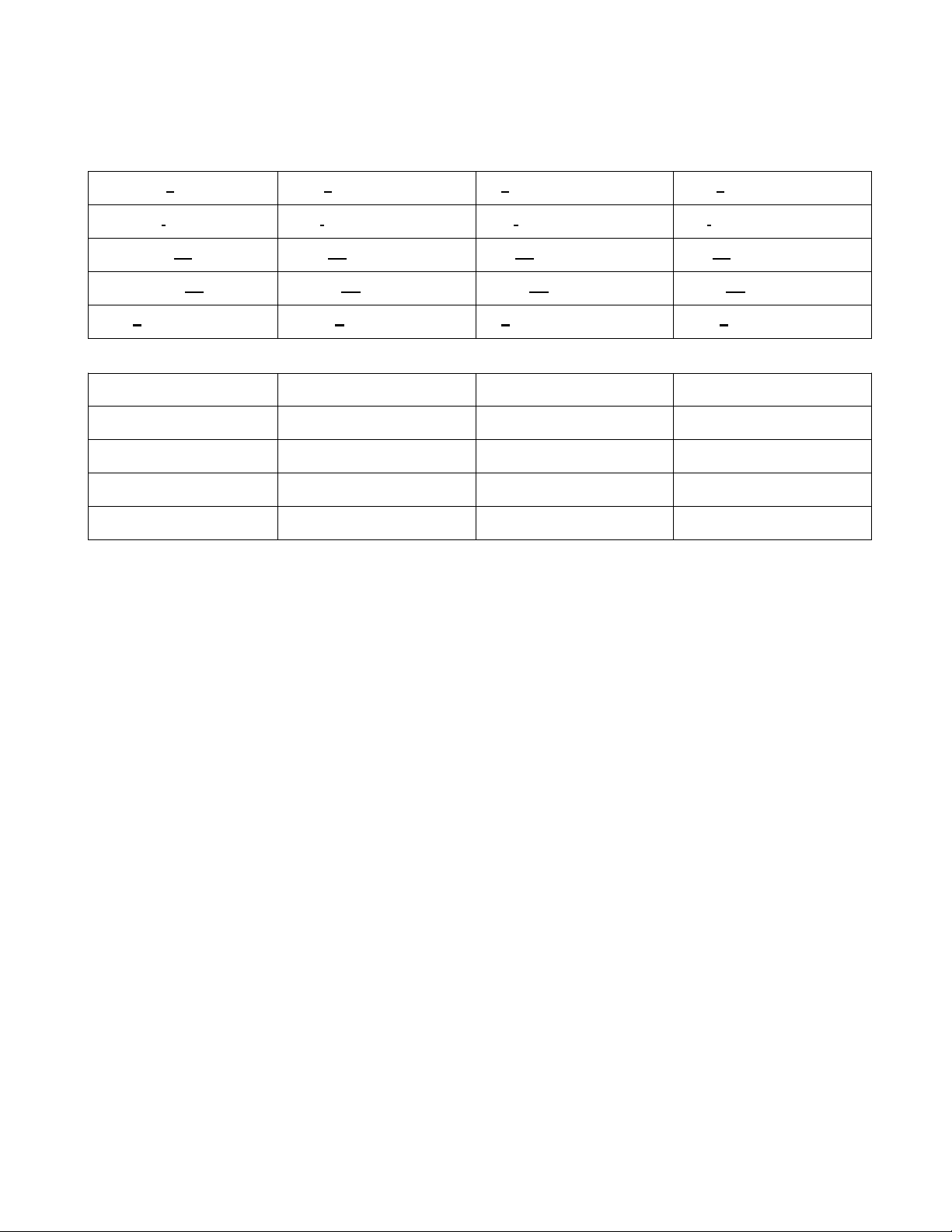
I. Choose the word whose underlined port is pronounced differently from the others. 1. a. staircase b. decorate c. communal d. receive 2. a. festival b. minority c. tribal d. title 3. a. offerings b. along c. longevity d. singer 4. a. detached b. offered c. joined d. called 5. a. garden b. villager c. gong d. pagoda
II. Choose the word that has different stress pattern. 1. a. anniversary b. celebration c. ceremony d. decoration 2. a. custom b. bamboo c. lifestyle d. surname 3. a. enter b. visit c. harvest d. attend 4. a. ornamental b. reunion c. minority d. traditional 5 .a. native b. alive c. martial d. simple
III. Filling each blank with a suitable word. The first letter of the word has been provided.
1. Tet, or Lunar New Year, is the most important f________________ in Viet Nam.
2. In the UK, there are a lot of c________________ for table manners.
3. Most Vietnamese people have family altars to w________________ their ancestors.
4. This small town in Alaska offers tourists snowmobile tours and d________________ rides.
5. Apricot blossoms and peach blossoms are typical o________________ trees at Tet.
6. Xoan singing is traditional f________________ singing originating from the northern province of Phu Tho.
7. The ceremony involved meeting the village chief as well as viewing and participating in a t________________ dance.
8. In Thai Hai village, there are about 30 s________________ houses of the Tay ethnic group.
9. Millions of Japaneses visit home towns for family r________________ during the Obon Festival.
10. They covered them in white shrouds, a common p________________ in Islamic Pakistan.
IV. Choose the best answer a, b, c or d to complete the sentence.
1. The Giong Festival is held _________ the 9th day of the 4th lunar month. a. at b. in c. on d. from
2. Last year, my family _________ tradition and travelled abroad during Tet holiday. a. broke with b. passed down c. kept on d. handed up
3. The Mid-Autumn Festival is also known as Moon Festival _________ Harvest Moon Festival. a. but b. or c. so d. and
4. It’s _________ tradition for children to open presents on _________ Christmas Day. a. the - the b. 0 - the c. a - a d. a – 0
5. I am in the _________ of taking my dog for a walk every evening after dinner. a. custom b. habit c. hobby d. practice
6. _________ is life in the northern mountainous regions of Viet Nam like? a. How b. Where c. What d. Why
7. The festival only lasted for three days; _________, they spent nearly a month preparing for it. a. therefore b. moreover c. otherwise d. however
8. Some people say that online learning is the most effective and way to learn. a. convenient b. harmful c. interactive d. dependent
9. _________ you are a culture enthusiast, you must go to Hue Arts Festival. a. As b. Unless c. If d. Though
10. ‘You should wait for the host to start eating.' - ‘Sure. _________’ a. That’s fascinating! b. I’ll remember that. c. What about you? d. You don’t know that.
V. Choose the underlined word or phrase, A, B, C or D that needs correcting.
1. How do you know about the custom to eat turkey on Thanksgiving? A. about B. to eat C. on D. Thanksgiving
2. Becky will run at the moment because she is 10 minutes late for her maths class. A. will run B. the C. because D. 10 minutes
3. Most of the streets in town are filled with festive goers during the carnival in Rio. A. of B. with C. festive D. the
4. It is considered impolite to not take off your shoes before entering a house in Japan. A. is considered B. to not take off C. before entering D. in Japan
5. Erin had a little days off; therefore, he went to Viet Nam and took part in some spring festivals. A. a little B. therefore C. went D. took part
6. Unless the homestay doesn’t overlook a terraced field, we won’t be able to enjoy the scenery. A. Unless B. terraced C. won’t D. to enjoy
7. Because breathing is something we do automatically, so we rarely think about it. A. breathing B. automatically C. so D. rarely
8. Thanks for modern technology, we can now preserve our culture for future generations. A. Thanks for B. technology
C. can now preserve D. for future generations
9. Tree Planting Day is very important in Singapore because the country needs to protect it’s natural parks and green spaces. A. important in B. because C. to protect D. it’s natural
10. The Hung King Temple Festival is annual held in honour of the Hung Kings who are the founders of the nation. A. annual B. in honour C. who D. founders
VI. Write the correct tense or form of the verbs In brackets.
1. They _________________ (hold) Do Son Buffalo Fighting Festival every year on the 9th day of the eighth lunar month.
2. We _________________ (not stay) in a stilt house during our trip to Ha Giang last month.
3. She usually _________________ (use) her mobile phone to look up for new words.
4. George _________________ (compete) in the Iditarod Trail Sled Dog two years ago.
5. _________________ (you/ watch) this programme or can I turn the TV off?
6. Jenny _________________ (help) me with the housework if she(have) enough time.
7. _________________ (Joe/ see) the lion dance when he was in Japan?
8. I think people _________________ (not use) computer in the 25th century.
9. What _________________ (you/ do) if the weather is nice tomorrow?
10. The Chinese custom of binding feet to make them smaller _________________ (cease) in the twentieth century.
VII. Supply the correct form of the words in brackets.
1. He calls people sir and madam and he is very _________________. (respect)
2. In Japan, up until recently, marriages were _________________ arranged by a special matchmaker. (custom)
3. There is the Poh Bang _________________ by a magician in the temple. (perform)
4. Opinions on online learning can _________________ greatly between students. (different)
5. Could you tell me some typical food _________________ in your country? (offer)
6. Small bells and stars are popular _________________ items to put on a Christmas tree. (decorate)
7. We argued because he _________________ with my idea of holding an online meeting. (agree)
8. The villagers use _________________ materials like wood and bamboo to build stilt houses. (nature)
9. The _________________ is also an important member in the team of unicorn dance. (drum)
10. People who _________________ drink soda are often less healthy than those who drink juice. (habit)
VIII. Match the sentences.
1. What offerings should I make?
a. Look at the cutlery on the table! They are using knife and fork.
2. Why do you say this restaurant mainly serves b. Me neither. Why not search them on the Western dishes? Internet?
3. Chasing the cheese down the hill? You’re c. Of course. It’s a good Idea! kidding!
4. I don’t know the rules of this folk game.
d. Oh, no. I’m telling you the truth. It’s one of our old traditions.
5. Buffalo fighting festival? That sounds scary!
e. How fascinating! I’ll stay In one when I visit Ha Giang.
6. Is mua sap a popular folk dance?
f. That’s interesting! It encourages family togetherness, I think.
7. We have a family tradition of eating dinner g. Yes, it is. It’s performed by the Thai people. together.
8. The stilt house overlooks a beautiful terraced h. Fruits, flowers, incense and candles. fields.
9. When is the Ok Om Bok Festival? i. Usually in October.
10. Can we study together at your house on j. Yeah, somehow terrible. But it was recognized Saturday?
as a national intangible cultural heritage.
IX. Choose the word which best fits each gap.
My friends and I are having a (1) ___________ time at this year’s Roswell UFO Festival in New Mexico,
USA. It’s a four-day event that takes (2) ___________ every year in early July. Some people believe
that an alien (3) ___________ - a UFO - crashed in a field near Roswell in 1947 and the festival (4)
___________ that event. Not everyone believes this story, of course, but the festival is stil a lot of
fun. Everyone dresses up (5) ___________ aliens for the Alien Costume Competition. The costumes
are fabulous and even family pets take part. There are dogs dyed blue and tortoises (6) ___________
in aluminium foil! Today we’re watching the (7) ___________ down Main Street and tomorrow the
firework display starts at 9 pm. They say it’s really amazing. (8) ___________ are some of the aliens you meet. 1. a. terrible b. fantastic c. leisure d. difficult 2. a. break b. part c. place d. time 3. a. spaceship b. race c. custom d. planet 4. a. symbolizes b. performs c. organizes d. celebrates 5. a. of b. as c. with d. by 6. a. covered b. filled c. included d. carved 7. a. companion b. scenery c. parade d. heritage 8. a. Such b. Much c. Neither d. So
X. Read the text carefully, then do the tasks.
People visiting Spain for the first time can find it difficult to get used to the eating customs of
the Spanish. It’s not so much the food itself, but the timing of the meals that visitors aren’t used to. I
used to live in Cadiz myself for a few years and I actually quite like the way they do things. Breakfast is
a light continental affair - just a roll and some coffee usually - eaten between 8 and 9.30 a.m. The
main meal of the day is lunch, which people usually eat sometime between 1.30 p.m. and 3.30 p.m.
Quite a few of the shops, museums and galleries close around this time, because the locals like to
take time over lunch. They will rest for a short time afterwards, although the traditional afternoon
siesta is not as common as it used to be. People eat late in the evening - rarely before 9 p.m. and at
the weekend the locals often won’t eat before 11 p.m. or even midnight. This is a much lighter meal
than lunch - often just a few tapas taken with a drink.
A. Decide whether the following sentences are true (T) or false (F).
1. ____ Mealtimes in Spain can be confusing for visitors.
2. ____ In Spain, breakfast is the largest meal of the day.
3. ____ Spaniards like to have a long lunch.
4. ____ The entire country closes up shop from about 1:30 to 3:30 p.m.
5. ____ Most Spaniards still enjoy taking a siesta after lunch.
6. ____ Dinner is generally eaten between 9 p.m. and midnight.
B. Choose the correct answers.
1. What is the passage mainly about?
a. Spanish culture b. Spanish eating customs
c. Spanish table manners d. Spanish mealtimes
2. What does the word ‘siesta’ mean? a. a light meal b. a short nap c. an afternoon snack d. a deep sleep
3. Which is the most important meal of the day in Spain? a. breakfast b. lunch c. snack d. dinner
4. What is a continental breakfast?
a. a full breakfast of cereal, bacon and eggs and toast
b. a traditional breakfast consisting of rice, soup, fish
c. a simple breakfast consisting of coffee and bread
d. a healthy breakfast of fruits, veggies and milk 5. According to the passage,.
a. Spaniards don’t often eat their evening meal anytime before 9 p.m.
b. Dinner is always served with tapas and wine
c. The locals usually eat dinner after 11 p.m.
d. Dinner is also as large as lunch
XI. Choose the correct answer a, b, c, or d to indicate the sentence that is closest in meaning to the sentence given.
1. Unless the project fails, it’ll help the tribal groups revive their culture.
a. If the project doesn’t fail, it won’t help the tribal groups revive their culture.
b. The project has to fail, or it won’t help the tribal groups revive their culture.
c. If the project succeeds, it’ll help the tribal groups revive their culture.
d. Succeed in the project, or else it’ll help the tribal groups revive their culture.
2. My family has the custom of visiting pagodas on the first day of Lunar New Year.
a. On the first day of Lunar New Year, visiting pagodas is a familiar custom.
b. It is the custom for my family to visit pagodas on the first day of Lunar New Year.
c. Visting pagodas on the first day of Lunar New Year is customarily my family.
d. My family visits pagodas on the first day of Lunar New Year because of the custom.
3. The volunteers walked to the mountainous village.
a. By foot, the volunteers came to the mountainous village.
b. Walking to the mountainous village was the only choice for the volunteers.
c. To get to the mountainous village, the volunteers had to walk.
d. The volunteers went to the mountainous village on foot.
4. Although they are living a hard life, they always feel happy.
a. They are living a hard life, but they always feel happy.
b. If they are living a hard life, they will always feel happy.
c. They aren’t living a hard life; however, they don’t always feel happy.
d. They don’t always feel happy although they aren’t living a hard life.
XII. Make sentences from the cues given.
1. People/ celebrate/ Pingxi Lantern Festival/ fifteenth day/ first lunar month.
_________________________________________________________________________________
2. Today’s children/ hardly/ listen/ stories/ their elder/ because/ they/ live/ the digital era.
_________________________________________________________________________________
3. It/ interesting/ learn/ the unique features/ ethnic group’s traditional culture.
_________________________________________________________________________________
4. We/ hang/ decorative items/ chase/ bad luck/ and/ pray/ lucky new year.
_________________________________________________________________________________
Document Outline
- B. Choose the correct answers.