Tài liệu sưu tầm. Tài liệu Tiếng Anh
Tài liệu sưu tầm. Tài liệu Tiếng Anh về hành vi người tiêu dùng về nhựa sinh học. Tài liệu sưu tầm gồm 15 trang. Mời các bạn tham khảo
Môn: Chủ đề: Reading 46 tài liệu
Trường: Tài liệu dành cho học sinh chuyên Anh 829 tài liệu
Tác giả:













Preview text:
Journal of Forest Science Original Paper
https://doi.org/10.17221/26/2022-JFS
Behaviours and attitudes of consumers towards
bioplastics: An exploratory study in Italy
Sandra Notaro1, Elisabetta Lovera1, Alessandro Paletto2
1Department of Economics and Management, University of Trento, Trento, Italy
2Council for Agricultural Research and Economics (CREA), Research Centre for Forestry and Wood, Trento, Italy
*Corresponding author: alessandro.paletto@crea.gov.it
Citation: Notaro S., Lovera E., Paletto A. (2022): Behaviours and attitudes of consumers towards bioplastics: An exploratory study in Italy. J. For. Sci.
Abstract: Bio-based and biodegradable plastics produced from wood residues can have a positive impact on the envi-
ronment by replacing conventional plastics. However, the current bioplastics market is held back by a lack of available
information and weak marketing activities aimed at final consumers. To increase the available information, the present
study investigated the consumers’ attitudes and behaviours towards bioplastic products. A web-based survey was con-
ducted on a sample of potential consumers in Italy. 1 115 consumers filled out the questionnaire with a dropout rate
in compilation of 14%. The results showed that the environmental characteristics of bioplastics (lower impact on cli-
mate change and renewable sources used to produce them) are considered more important by respondents than the
non-environmental characteristics (technical properties, origin of raw material, potential trade-off between bioplastics
and food production). The results highlighted that the most important behavioural factor is the purchase intentions,
followed by control of perceived cost and subjective norm. It is interesting to emphasize that the cost of bioplastics
compared to conventional plastics is a key variable in the choices of many Italian consumers. The results provided can
be useful to the manufacturing industries to better understand the consumers’ attitudes towards bioplastics.
Keywords: bio-based plastics; biodegradable plastics; innovative forest-based products; theory of planned behaviour; wood residues
Worldwide, the annual global production of fos- use plastics (e.g. face masks, surgical masks, face
sil fuel plastics – also known as conventional or pe- shields) production to counter the spread of the CO-
troleum-derived plastics – attained 367 Mt in 2020 VID-19 pandemic (Shams et al. 2021). Historically,
and the trend has continually grown over the past 70 the use of petroleum-derived plastics has caused
years (PlasticsEurope 2021). The year 2020 was an ex- some environmental problems, such as carbon diox-
ception to this trend with a decrease of one million ide (CO2) emissions and the long-term accumulation
tons caused by the COVID-19 pandemic. In this con- of non-biodegradable materials in the environment
text, Geyer et al. (2017) estimated that approximately (Nielsen et al. 2020). Therefore, the need to identify
6 300 millions t of plastic waste have been generated appropriate alternatives to petroleum-derived plas-
throughout the history of this material (79% ended up tics that are ecologically sustainable – e.g. bioplas-
in landfills or in the environment, 12% was destined tics – is one of the target objectives for the European
for incinerators, while only 9% of total plastic waste Union (EU) policy makers to achieve the target es-
was recycled). Since the 2000s, plastics accounted for tablished by the Paris Agreement on Climate Change
between 60% and 80% of global waste (Derraik 2002) (2015) and the European Green Deal (Emadian et al.
with a further increase in 2020–2021 due to single- 2017; Di Bartolo et al. 2021). 1 Original Paper
Journal of Forest Science
https://doi.org/10.17221/26/2022-JFS
In 2015, the European Commission (EC) pro- to decompose under microbiological activity into
posed the full legislative package on waste aimed naturally occurring substances, for example, CO2
at achieving huger harmonization and simplifica- and water (Lucas et al. 2008). Polybutylene adipate
tion of the legal framework on by-products and terephthalate (PBAT) is included in biodegradable
end-of-waste status (Scarlat et al. 2019). The waste but not bio-based plastics, while some bioplastics
legislative package revised the Waste Framework even possess both characteristics such as polylactic
Directive (2008/98/EC) stressing the circular na- acid (PLA) (Jiménez et al. 2019). This crucial distinc-
ture of bioplastics and the potential of bio-based tion between bio-based and biodegradable plastics,
compostable plastic packaging to foster an EU also as environmental impacts and benefits, is not
circular economy (Briassoulis 2019). The main ob- always perceived by consumers (Ansink et al. 2022).
jective of a circular economy is to have minimal
Currently, the bioplastics market represents
input and production of system “waste” by rede- one of the fastest growing markets; IFBB (2019)
signing the life cycle of the “product” (Biancolillo estimated the average growth in 2023 compared
et al. 2019). In this context, the role of bioplastics to 2018 at 72.8% for biodegradable and 62.4% for
to minimize the environmental and climate im- bio-based plastics. This growth trend should lead
pacts of petroleum-derived plastic packaging and to a production capacity of 1.8 million t for bio-
in reducing the dependence of EU member coun- degradable plastics and 2.6 million t for bio-based
tries on imported raw materials was emphasized plastics in 2023 (Döhler et al. 2020). Bioplastics can
(Fornabaios et al. 2019). In other words, the EU leg- be used in several industrial processes, mostly pack-
islators recognized that bio-based and recycled ma- aging, but also in electronics, agriculture, medical
terials can play a key role in the transition from the and health applications, toys and automotive. How-
“linear economy” to a “circular economy” paradigm ever, currently, the global production of bioplastics
in Europe by replacing fossil fuels with renewable still consists of less than 1% of total plastics produc-
resources and by increasing reusing and recycling tion worldwide, and therefore it can be considered
(Hetemäki et al. 2020; Tamantini et al. 2021).
a niche market (European Bioplastics 2020). High
From a terminological point of view, plastic ma- prices, low availability, poor marketing activities,
terial can be defined as bioplastic if it is bio-based, and lack of product information are the main obsta-
biodegradable or if it has both properties (Euro- cles to the demand increase for bioplastics products
pean Bioplastics 2020). Based on the EU Standard (Iles, Martin 2013; Lettner et al. 2017).
EN 16575 (2014), bio-based products are products
In the international literature, studies mainly fo-
wholly or partly derived from biomass – materials cused on bioplastic product development and en-
of biological origin such as sugar cane, starch from vironmental impact (Tsiropoulos et al. 2015; Koch,
maize or potatoes, cellulose and plant oil – through Mihalyi 2018; Benavides et al. 2020; Atiwesh et al.
a physical, chemical or biological treatment of the 2021), while few studies focused on consumers’
biomass itself. Among the various feedstocks avail- perspectives and opinions towards some specific
able, wood-based biomass is an important source bioplastic products (Lynch et al. 2017; Scherer et al.
for producing bio-based plastics in forest biorefiner- 2018; Ketelsen et al. 2020; Klein et al. 2020). To over-
ies (Kangas et al. 2011). Forest biorefineries can use come this knowledge gap, the objective of this study
multiple feedstocks – such as pulpwood, harvesting is to investigate consumers’ attitudes and behaviours
wood residues, recycled paper and industrial wastes towards bioplastics. From a theoretical point of view,
– in order to produce both low value-high volume the study was developed following the principles
and high value-low volume products (Näyhä et al. of the theory of planned behaviour (TPB) by Ajzen
2014). In the diversification of the product portfolio (1985). The premise of the TPB – an attitude-behav-
related to the opportunities provided by forest bio- iour relationship model able to predict and explain
refineries, bio-based plastics are among the most at- consumer behaviour (Ajzen 1993) – is that behav-
tractive options due to the growing demand for these ioural decisions are not made spontaneously but
products (Biancolillo et al. 2019). In fact, in bio-
are influenced by attitudes, norms, and perceptions
based plastics are included bio-based polypropylene of control over the behaviour. According to this the-
(PP), and polyethylene terephthalate (PET) (De Mar- ory, attitude, subjective norms, and perceived behav-
chi et al. 2020). Biodegradability (or compostability) ioural control influence behaviour primarily through
can be defined as the inherent ability of a material their impact on behavioural intention (Smith et al. 2
Journal of Forest Science Original Paper
https://doi.org/10.17221/26/2022-JFS
2008). In environmental issues, interest in the TPB of bioplastics. To this end, in the first question (Q1)
theory has grown (Grilli, Notaro, 2019) as it has consumers indicated whether they had already
proved adequate for the explanation of environmen- heard of bioplastics in the past, while the second
tally friendly behaviors (e.g. Kaiser, Scheuthle 2003; question asked whether they bought bioplastic
López-Mosquera, Sánchez 2012). From a practical products in the past (Q2). The next two questions
point of view, the attitude-behaviour relationship can investigated the reasons for the past purchase (Q3)
be measured through the principle of compatibility or no-purchase of bioplastics (Q4) considering the
so defined by Ajzen and Fishbein (1977): verbal and set of options shown in Table 1.
non-verbal indicators of a given attitude are compat-
The following four questions (from Q5 to Q9)
ible with each other to the extent that their action focused on consumers’ attitudes towards the
is assessed at identical levels of generality or specific- main characteristics of bioplastic products. For
ity. Taking into account these principles and practical each characteristic considered in the survey, the
aspects, the research questions analysed within this respondents assigned the degree of importance
study are the following: How do consumers value dif- using a 5-point Likert scale format (from 1 = not
ferent environmental and non-environmental char- at all important to 5 = extremely important). For
acteristics of bioplastic products? What are the most this purpose, two environmental and three non-en-
important behavioural factors influencing consumer vironmental characteristics of the bioplastics have
choices toward bioplastics? Could the socio-demo- been selected and thus described:
graphic characteristics of consumers influence pref-
– bioplastics must have the same technical prop- erences for bioplastics?
erties – e.g. impact resistance, durability, stiffness
– as conventional plastics (PROPR); MATERIAL AND METHODS
– bioplastics must have a lower climate impact
generated by the production process compared
Consumer behaviours and attitudes towards bi- to conventional plastics (CLIM);
oplastics were analysed using the same question-
– bioplastics must not be produced from fossil
naire that Notaro et al. (2022) employed to estimate sources and must not take 100 to 1 000 years to de-
hypothetical willingness to pay (WTP) for differ- compose (FOSSIL);
ent selected characteristics of two bioplastic prod-
– bioplastics must be produced from domestic
ucts. The questionnaire was administered online (Italian) crops rather than foreign crops (ORIGIN);
to a sample of consumers in Italy. A preliminary
– bioplastics can be produced from organic
version of the questionnaire was pre-tested through sources (i.e. maize and potatoes) but without di-
in-depth face-to-face interviews with 10 consumers
to verify its accuracy and adequacy.
The questionnaire was arranged in four thematic Table 1. Reasons for purchase (Q3) or no-purchase (Q4)
parts, but this paper focuses only on the three parts of bioplastic products considered in the survey
concerning the key aspects related to the TPB: the
first investigated the knowledge and attitudes of re-
Reasons for past purchase Reasons for past no-purchase
spondents towards bioplastics and their environ-
product quality (QUALITY) difficulty to find bioplastic
mental and non-environmental characteristics (e.g. products on the market
technical properties, origin and type of raw mate- convenient price (CONV) (MARKET)
rial, climate impacts of the production process), brand (BRAND) difficulty to distinguish bio-
the second focused on consumer buying behaviour,
clear ecological information plastic products from non-
while the third considered the socio-demographic about bioplastics (ECOL) bioplastic ones (DIFFER)
characteristics of the respondents. In the prelimi- clear information about
nary part of the questionnaire, the concept of bio-
product disposal at the end too high costs of bioplastics
based and biodegradable plastics was introduced of the life cycle (DISPOS) (EXPEN)
and explained with special regard to the possible
feedstocks used to produce them such as potato impact on human health I am not interested in bio- (HEALTH) plastics (INTER)
starch and wood residues. The first group of ques-
tions (from Q1 to Q4) focused on consumers’ pre- impact on environment
vious experience and familiarity with the concept (ENVIRON) – 3 Original Paper
Journal of Forest Science
https://doi.org/10.17221/26/2022-JFS
minishing the availability of these sources for food than 25 years old, 25–34, 35–44, 45–54, 55–64, and
use. In other words, there must be no trade-off be- more than 64 years old), annual income (distin-
tween bioplastics production and food production guishing among seven classes: no income, less than (FOOD).
EUR 10 000, EUR 10 000–19 999, EUR 20 000–
In the second part of the questionnaire, the three 29 999, EUR 30 000–39 999, EUR 40 000–60 000,
behavioural factors of the TPB were considered and more than EUR 60 000, and degree of education
thus defined (Cialdini et al. 1991; Smith et al. 2008; (distinguishing among elementary/middle school
Chen et al. 2020): (i) purchase intentions (the ten- degree, high school degree, university/post-univer-
dency, plan, desire and possibility of buying a prod- sity school degree).
uct or service), (ii) perceived behavioural control
During the second phase of this study, the data
(the perceived control over the performance of the was collected through a web-based survey target-
behaviour which can have a direct effect on behav- ing Italian consumers aged 18 years and more.
iour and an indirect effect via intention), and (iii) The questionnaire was written in the Italian lan-
subjective norm (the perceived social pressures guage and developed using the EUSurvey platform.
from family, partners, friends to perform the be- From November 2020 to January 2021, the final
haviour). In particular, the consumers expressed version of the questionnaire was distributed fol-
their level of agreement or disagreement with cer- lowing the method proposed by Yao et al. (2019).
tain statements using a 5-point Likert scale format Specially, a snowball sampling method was ap-
(from 1 = strongly disagree to 5 = strongly agree). plied using a preliminary list of names provided
Questions Q10 and Q11 focused on the general by many public institutions and private organiza-
purchasing intentions of consumers (PI) consider- tions located throughout Italy. Then, the question-
ing two key aspects in accordance with the meth- naire link was posted to several social network sites
od proposed by Klein et al. (2019): (i) the option (e.g. Facebook, Twitter, LinkedIn) to further recruit
to pay more attention to bioplastic products in the respondents from non-institutional and private
future purchasing decisions (FUTUR); (ii) the op- organizations.
tion to choose a plastic product made of renewable
In the last phase, the collected data were pro-
raw materials rather than a plastic product made cessed to produce the main descriptive statistics
of conventional raw materials (e.g. petroleum) (mean, median and standard deviation) for the data (RENEW).
collected using the Likert scale format, percent-
The following three questions (from Q12 to Q14) age of frequency distribution (%) for Q1. Besides,
described respondents’ control over the perceived for questions from Q2 to Q11 the non-parametric
cost of bioplastic products (CPC) based on some Kruskal-Wallis and Mann-Whitney tests were per-
key aspects formulated by Ajzen (1991) and Malo- formed using the XLStat 2020 software (Version
ney et al. (2014) and thus synthesizable:
BASIC, 2020). The non-parametric tests were ap-
– I can afford to buy bioplastic products plied rather than the parametric tests because the (AFFORD);
assumption of normality was violated (Shapiro-
– I am willing to pay a higher price for a bioplas- Wilk test: P < 0.0001, α = 0.01; Anderson-Darling tic product (WTP);
test: P < 0.0001, α = 0.01).
– if the cost of bioplastic products was the same
The Kruskal-Wallis test (α = 0.01) was used for
as the cost of a conventional plastic product, I would data collected through a Likert scale format with
be more likely to buy the bioplastic one (COSTS).
the aim to underline differences between three
The last question of the second part (Q15) con- or more groups of respondents with different so-
sidered consumers’ subjective norms (SN) through cio-demographic characteristics (age, degree of ed-
the following statement (Ajzen 1991; Klein et al. ucation, income).
2019): “People close to me (partners, children,
The Mann-Whitney test (α = 0.01) was used
parents, friends) expect me to buy products made through a Likert scale format with the aim
of bioplastics rather than of petroleum-based to highlight differences between two groups of re- plastics”.
spondents with different socio-demographic char-
Finally, the third part of the questionnaire fo- acteristics (gender).
cused on personal information of respondents
Finally, the chi-square (χ2) test was applied
such as gender, age (considering six age classes: less to analyse the group differences when the depen- 4
Journal of Forest Science Original Paper
https://doi.org/10.17221/26/2022-JFS
dent variable is measured at a nominal level like our slightly higher knowledge of bioplastics compared
questions about the reasons for purchase or non- to females as well as people over 64 years old com-
purchase of bioplastic products (Q3 and Q4).
pared to the other age classes. Conversely, the results
show that the degree of education does not influence RESULTS
the level of knowledge of bioplastics: 83.3% of re-
spondents with an elementary/middle school de-
Socio-demographic characteristics of consumers. gree heard of bioplastics before, compared to 78.9%
A total of 1 296 Italian consumers opened the ques- of respondents with a high school degree, and 82.2%
tionnaire link and 1 115 of them completed the sur- with a university/post-university degree.
vey (dropout rate in the compilation of 14.0%).
The results point out that 76.3% of respondents
The sample is mainly composed of females (67.8% bought bioplastics in the past (11.5% of consum-
of total respondents), while the remaining 32.2% ers often bought these products, 56.7% sometimes,
are males. In the sample, people under the age of 34 and 8.1% once), while the remaining 23.7% of re-
(50%) and between the ages of 35 and 54 (31%) pre- spondents have never bought bioplastic products
vail, as well as well-educated people (64.3% have despite knowing them.
a university or post-university degree). With regard
Therefore, the results highlight that our sample
to the annual income, the majority of respondents of consumers has a high level of knowledge of bio-
have an annual income between EUR 20 000 and plastics both from a theoretical (heard/read about
39 999 (33.2%), but it is interesting to emphasize bioplastics) and practical (purchased bioplastics)
that 26.3% of total respondents have no income be- point of view.
cause they are mainly university students.
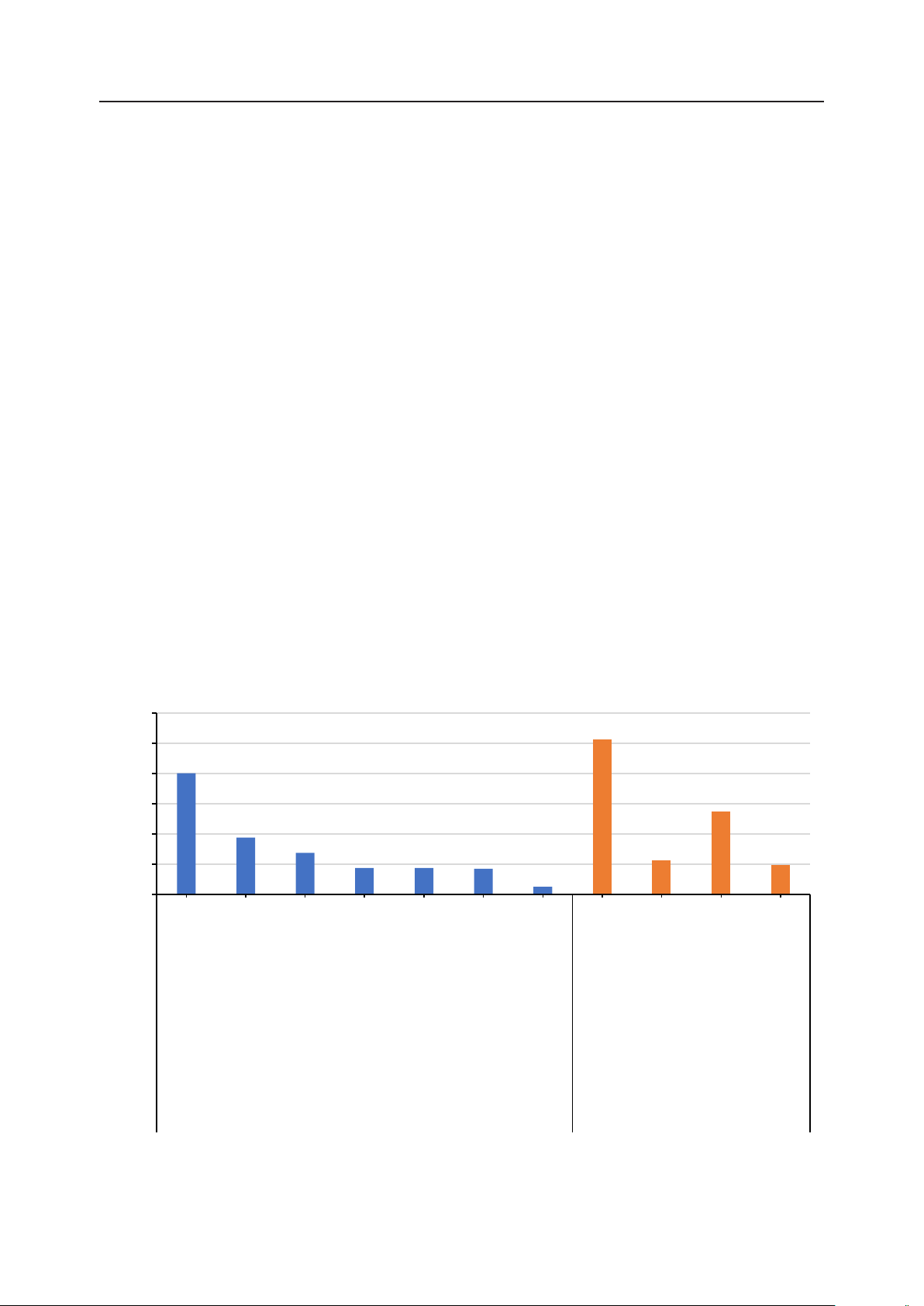
The results about the reasons that led to the
Characteristics of bioplastics. The results show purchase of bioplastics show the following order
that 81.6% of respondents declared that they had of priority (Figure 1): impacts on the environment
heard of bioplastics in the past, while 18.4% had nev- (ENVIRON), impacts on human health (HEALTH),
er heard of these products. Especially, males have clear ecological information about bioplastics 60 51.4% 50 40.1% 40 27.5% 30 ) 18.8% (% 20 13.7% 8.7% 8.7% 8.5% 11.3% 9.8% 10 2.5% 0 t n e n r e r en th ic ts ic ts eal atio ality ric atio the siv the h t p O plast oduc pen plast O io oduc vironm an form ien form pr pr um d bio ucts n en al in l in too ex tify b Product qu onven od ucts C osa re en od ts on h isp pr s a pr pacts o ologic ic pac ulty to fin Im r ec Im iffic ulty to id lea D plast C roduct d Bio iffic r p D lea C Purchase reasons Non-purchase reasons
Figure 1. Importance of the reasons for purchasing or no purchasing bioplastic products (% of respondents) 5 Original Paper
Journal of Forest Science
https://doi.org/10.17221/26/2022-JFS
(ECOL), product quality (QUALITY), convenient tional ones. The label of bioplastic products must
price (CONV), and clear information about prod- summarize the main characteristics such as the
uct disposal at the end of the life cycle (DISPOS). type and origin of raw material used, and possibly
Accordingly, there is consumer awareness of the the time of biodegradability.
negative impacts of petroleum-derived plastics
Observing the data by socio-demographic charac-
on both the environment and human health com- teristics, the results show that the females assigned
pared to bio-based and biodegradable plastics.
higher importance to ENVIRON and HEALTH
Regarding the reasons why bioplastic products compared to the males within purchase rea-
were not purchased, the most important are as fol- sons. Conversely, males emphasized two other
lows (Figure 1): difficulty to find bioplastic products reasons more than females: CONV and QUAL-
on the market (MARKET), difficulty to distinguish ITY. Regarding the no-purchase reasons, females
bioplastic products from non-bioplastic ones highlighted more than males the importance
(DIFFER), and bioplastic products are too expen- of MARKET, while males emphasized more than
sive compared to conventional plastics (EXPEN), females the importance of DIFFER. However, the
while 9.8% of respondents indicated other reasons χ2 test did not show any statistically significant
among which none exceeds 1%. These results show differences between males and females both for
that only a minority of respondents report the purchase (P = 0.943) and no-purchase (P = 0.837)
higher cost of bioplastics compared to convention- reasons. With regard to age, the results highlight
al plastics as a reason for the no-purchase of these that young people less than 25 years old assigned
more sustainable products. Conversely, the impor- higher importance among the reasons for purchas-
tance of making more information on the quality ing bioplastic products to ECOL compared to the
of bioplastic products and the environmental im- other age classes. Instead, older people more than
pacts available for consumers are two key aspects 64 years old emphasized more than young people
highlighted by our results. In particular, it is of key the importance of QUALITY and DISPOS. Even
importance to be able to find and easily recognize for age, the χ2 test did not show any statistically
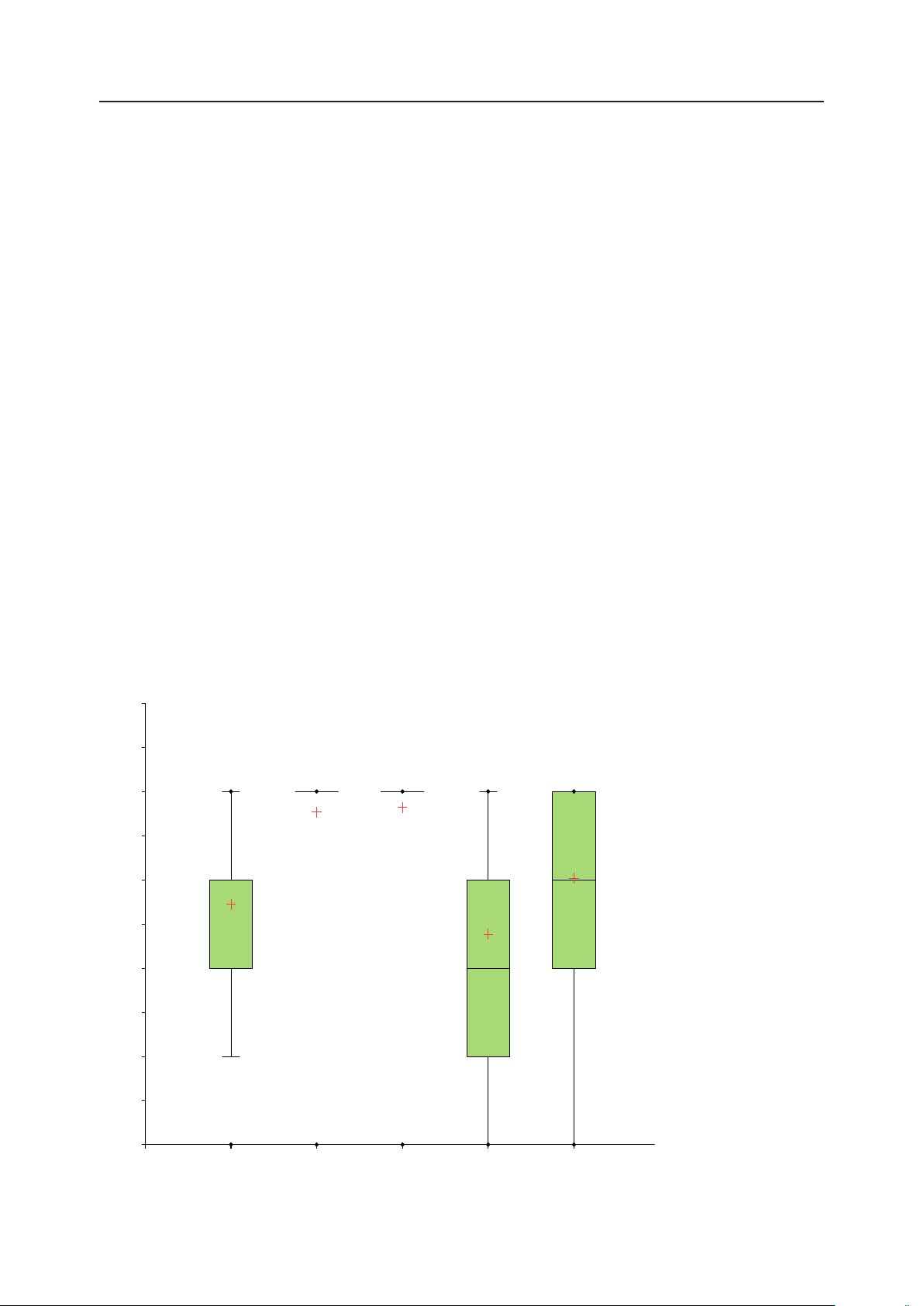
bio-based and biodegradable plastics from conven- significant differences between age classes for pur- 6.0 5.5 CLIM ORIGIN 5.0 4.5 s 4.0 Value 3.5 Figure 2. Box-plots for the importance of the 3.0 characteristics of bio- plastics 2.5 PROPR –technical proper- ties; CLIM – lower climate impact; FOSSIL – not pro- 2.0 duced from non-renewable sources; ORIGIN– pro- 1.5 duced from domestic crops; PROPR FOSSIL FOOD FOOD – not produced 1.0 using sources for food pur- Characteristics of bioplastics pose 6
Journal of Forest Science Original Paper
https://doi.org/10.17221/26/2022-JFS
chase reasons (P = 0.873), while there were statisti- to consumers than the non-environmental charac-
cally significant differences between age classes for teristics (FOOD, ORIGIN and PROPR). In particu-
non-purchase reasons (P = 0.001). Within the rea- lar, 86.2% of respondents declared that it is really
sons for bioplastics purchase, the results highlight important that bioplastics will not be produced from
that respondents with a low level of education em- non-renewable sources and will not require long de-
phasize more the importance of ENVIRON than composition times (FOSSIL), and most respondents
respondents with a high level of education. Within (82.2%) think that it is very relevant that bioplastics
the reasons for the non-purchase of bioplastics, have a much lower impact on climate change than
it is interesting to highlight that respondents with petroleum-derived plastics (CLIM). The results
a high level of education assigned higher impor- show the following mean values for the first two
tance to QUALITY and MARKET compared factors (Figure 2): FOSSIL and CLIM. In addition,
to the others. Conversely, respondents with a low the results highlight that the origin of raw material
level of education assigned higher importance used to produce bioplastics (ORIGIN) has the low-
to DIFFER. However, the χ2 test did not show any est mean value of all other characteristics.
statistically significant differences between re-
Considering the respondents’ characteristics (Ta-
spondents with different levels of education either ble 2), the results show that females assigned higher
for purchase (P = 0.828) or no-purchase reasons importance to all characteristics of bioplastics than (P = 0.554).
males except for the technical properties of bio-
The environmental characteristics of bioplastics plastics compared to conventional plastics (PRO-
(FOSSIL and CLIM) have higher average importance PR). However, the Mann-Whitney non-parametric
Table 2. Importance assigned to the characteristics of bioplastics by consumers
Socio-demographic characteristics PROPR CLIM FOSSIL ORIGIN FOOD Gender Male 3.80 ± 0.98 4.70 ± 0.72 4.77 ± 0.62 3.19 ± 1.19 3.98 ± 0.96 Female 3.69 ± 0.95 4.78 ± 0.51 4.84 ± 0.45 3.50 ± 1.17 4.03 ± 0.92 Age (years) < 25 3.83 ± 0.87 4.76 ± 0.63 4.75 ± 0.63 3.24 ± 1.17 3.90 ± 0.92 25–34 3.77 ± 0.96 4.72 ± 0.60 4.80 ± 0.53 3.26 ± 1.16 3.89 ± 0.95 35–44 3.87 ± 0.89 4.79 ± 0.52 4.83 ± 0.49 3.39 ± 1.29 4.14 ± 0.92 45–54 3.60 ± 0.98 4.75 ± 0.56 4.84 ± 0.47 3.62 ± 1.12 4.11 ± 0.94 55–64 3.64 ± 1.08 4.80 ± 0.60 4.90 ± 0.36 3.55 ± 1.22 4.26 ± 0.81 > 64 3.42 ± 1.03 4.83 ± 0.56 4.92 ± 0.28 3.69 ± 1.09 3.83 ± 1.02 Degree of education
Elementary/middle school degree 3.56 ± 1.17 4.54 ± 0.91 4.59 ± 0.85 3.69 ± 1.06 3.95 ± 0.97 High school degree 3.72 ± 0.99 4.72 ± 0.65 4.83 ± 0.51 3.60 ± 1.19 4.11 ± 0.92
University/post university degree 3.74 ± 0.94 4.79 ± 0.53 4.82 ± 0.48 3.29 ± 1.18 3.97 ± 0.93 Income (EUR) No income 3.84 ± 0.88 4.77 ± 0.55 4.79 ± 0.52 3.24 ± 1.19 3.93 ± 0.91 < 10 000 3.68 ± 0.93 4.75 ± 0.57 4.82 ± 0.50 3.37 ± 1.08 3.89 ± 0.95 10 000–19 999 3.61 ± 0.97 4.73 ± 0.64 4.74 ± 0.67 3.57 ± 1.22 4.12 ± 0.93 20 000–29 999 3.67 ± 1.01 4.77 ± 0.51 4.85 ± 0.44 3.47 ± 1.22 4.02 ± 0.94 30 000–39 999 3.77 ± 1.03 4.73 ± 0.71 4.84 ± 0.47 3.31 ± 1.12 4.06 ± 0.98 40 000–60 000 3.74 ± 1.03 4.87 ± 0.40 4.94 ± 0.24 3.61 ± 1.13 4.18 ± 0.85 > 60 000 3.94 ± 0.93 4.55 ± 0.96 4.77 ± 0.50 3.32 ± 1.28 4.13 ± 0.85
Bold – the highest value for each factor; PROPR –technical properties; CLIM – lower climate impact; FOSSIL – not produced
from non-renewable sources; ORIGIN – produced from domestic crops; FOOD – not produced using sources for food purpose 7 Original Paper
Journal of Forest Science
https://doi.org/10.17221/26/2022-JFS
test shows statistically significant differences only to the Italian origin of raw materials (ORIGIN)
for one of all characteristics of bioplastics: ORIGIN compared to the other groups of respondents. (P < 0.0001).
However, the Kruskal-Wallis non-parametric test
With regard to age, the results highlight that shows statistically significant differences only for
older respondents assigned higher importance the geographical origin of raw material ‒ ORIGIN
to three of the four characteristics of bioplastics (P = 0.0003), while there are no statistically signifi-
compared to the other age classes: CLIM, FOSSIL, cant differences for the other characteristics.
and ORIGIN. Contrariwise, for technical properties
Taking into account the income of respondents,
of bioplastics (PROPR) the highest values are as- the results evidence that people with the highest
signed by the respondents between 35 and 44 years annual income (between EUR 40 000 and 60 000,
of age, while for the impact on food availability and more than EUR 60 000) emphasized more than
(FOOD) they are assigned by the respondents be- other income classes the importance of all charac-
tween 55 and 64 years of age. Also, it is interesting teristics of bioplastics, but with limited differences.
to highlight that young people assigned less impor- For this reason, the Kruskal-Wallis non-parametric
tance than other age classes to two of the five char- test shows no statistically significant differences for
acteristics of bioplastics: FOSSIL and ORIGIN. The all characteristics considered in the survey.
Kruskal-Wallis non-parametric test shows statisti-
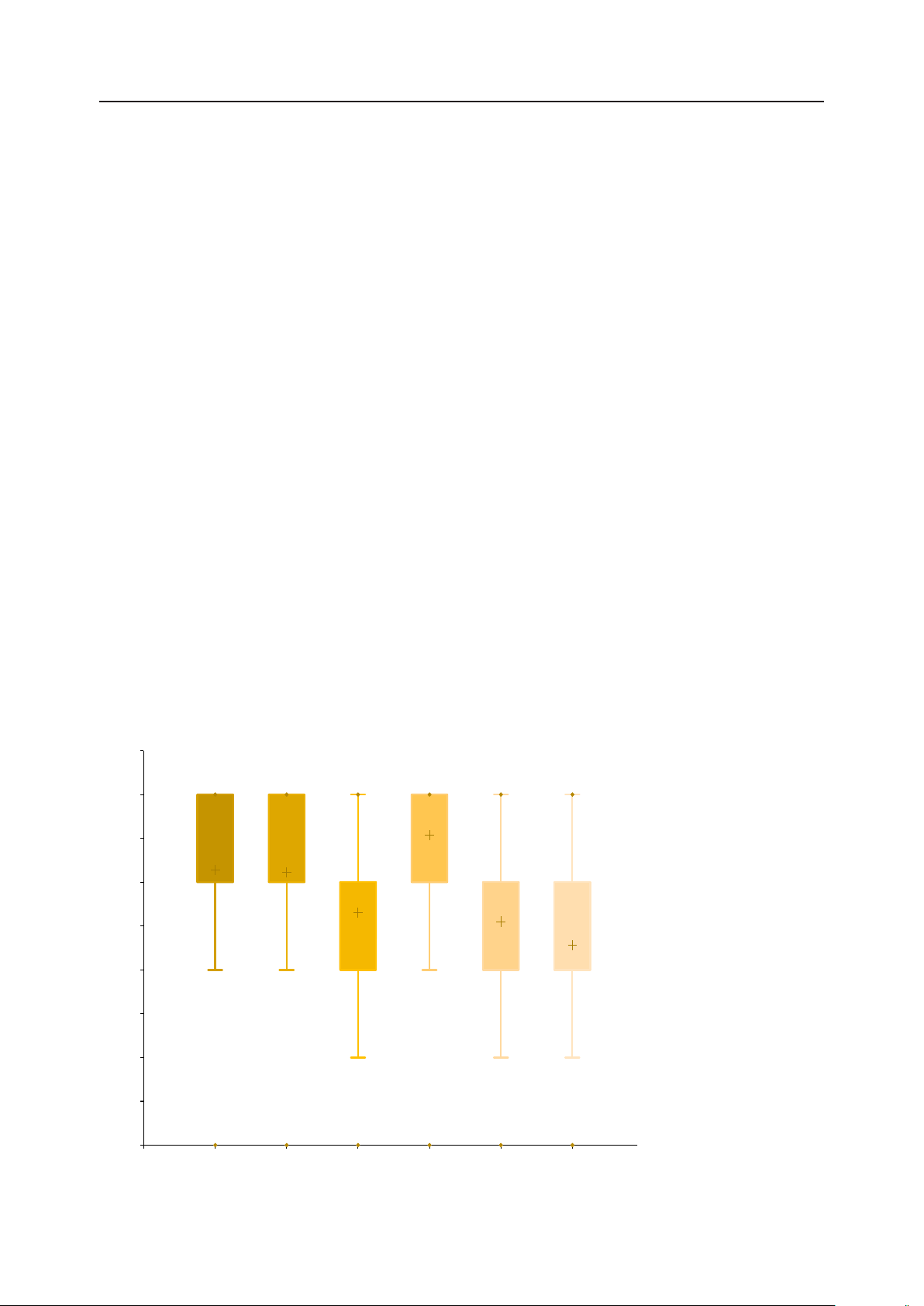
Behavioural factors. The results of the behav-
cally significant differences only for two non-en- ioural factors are shown in Figure 3. Purchase in-
vironmental characteristics: ORIGIN (P = 0.0004) tentions (PI) are characterized by the highest mean
and FOOD (P < 0.0001).
value, followed by control on perceived cost (CPC)
Regarding the degree of respondents’ education, and subjective norm (SN). In particular, in the PI
the results show that two characteristics of bio- both sub-factors have a similar level of impor-
plastics (PROPR and CLIM) are considered more tance (FUTUR and RENEW), while for the CPC,
important by respondents with a higher degree the results show that the most important sub-fac-
of education (university/post-university degree) tor is related to the costs of bioplastics compared
compared to those with a lower degree of educa- to the conventional plastics (COSTS), while the
tion. Conversely, respondents with an elementary/ other two sub-factors are considered less impor-
middle school degree attached more importance tant (WTP and AFFORD). 5.5 RENEW COSTS SN 5.0 4.5 4.0 s
Figure 3. Box-plots for the 3.5 Value behaviour factors related bioplastics 3.0 SN – subjective norms; FU- 2.5 TUR – future purchasing decisions; RENEW – plastic product made of renewable 2.0 raw materials; AFFORD – af- ford to buy bioplastic prod- 1.5 ucts; WTP – willing to pay FUTUR AFFORD WTP a higher price for a bioplas- 1.0 tic product; COSTS – cost Behavioural factors of bioplastic products 8
Journal of Forest Science Original Paper
https://doi.org/10.17221/26/2022-JFS
The results show that socio-demographics in- TUR (P < 0.0001), RENEW (P = 0.001), AFFORD
fluence the purchasing behaviour of consumers (P < 0.0001), WTP (P = 0.001), and SN (P < 0.0001).
(Table 3). Females seem to have higher purchase
With regard to the degree of respondents’ edu-
intentions (PI) than males as confirmed from the cation, the results show that people with an el-
statistical point of view by the non-parametric ementary/middle school degree stated higher
Mann-Whitney test (P = 0.0037). Older generations SN, while CPC and PI are higher for people with
stated higher values for all three behavioural factors. a high school degree. In particular, the latter group
Especially, people over 64 years old assigned higher of respondents emphasizes three sub-factors more
importance to two CPC sub-factors (AFFORD and than the other groups: FUTUR, WTP, and COSTS.
WTP) and one PI sub-factor (RENEW) compared However, the non-parametric Kruskal-Wallis test
to the other five age classes. Moreover, it is inter- showed statistically significant differences between
esting to emphasize that people under 24 years old respondents with different degrees of education
assigned particularly low importance to SN. The only in three sub-factors: AFFORD (P < 0.0001),
non-parametric Kruskal-Wallis test confirmed that WTP (P < 0.0001), SN (P < 0.0001).
there are statistically significant differences between
Finally, consumers with lower income showed
the six age classes in five of the six sub-factors: FU- a lower level of agreement with all three behav-
Table 3. Importance assigned to the behavioural factors by consumers Socio-demographic PI CPC characteristics SN FUTUR RENEW AFFORD WTP COSTS Gender Male 4.03 ± 0.69 4.03 ± 0.80 3.69 ± 0.81 3.52 ± 0.82 4.47 ± 0.82 3.26 ± 1.00 Female 4.19 ± 0.63 4.15 ± 0.70 3.57 ± 0.83 3.55 ± 0.80 4.57 ± 0.72 3.27 ± 0.93 Age (years) < 25 4.03 ± 0.71 4.06 ± 0.80 3.50 ± 0.87 3.42 ± 0.83 4.59 ± 0.68 2.92 ± 0.96 25–34 4.07 ± 0.64 4.04 ± 0.74 3.35 ± 0.90 3.47 ± 0.82 4.53 ± 0.76 3.02 ± 0.96 35–44 4.24 ± 0.67 4.05 ± 0.76 3.73 ± 0.76 3.56 ± 0.75 4.58 ± 0.78 3.21 ± 0.81 45–54 4.19 ± 0.64 4.12 ± 0.69 3.67 ± 0.74 3.56 ± 0.81 4.49 ± 0.83 3.51 ± 0.85 55–64 4.27 ± 0.52 4.27 ± 0.66 3.95 ± 0.65 3.74 ± 0.70 4.58 ± 0.68 3.79 ± 0.78 > 64 4.23 ± 0.75 4.44 ± 0.62 4.00 ± 0.55 3.79 ± 0.77 4.35 ± 0.86 3.85 ± 0.88 Degree of education Elementary/middle school degree 4.03 ± 0.81 4.13 ± 0.66 3.67 ± 0.93 3.41 ± 0.82 4.26 ± 1.02 3.59 ± 0.97 High school degree 4.16 ± 0.65 4.13 ± 0.76 3.64 ± 0.80 3.56 ± 0.84 4.54 ± 0.73 3.36 ± 1.00 University/post univer- sity degree 4.05 ± 0.65 4.09 ± 0.74 3.61 ± 0.82 3.54 ± 0.82 4.48 ± 0.80 3.21 ± 0.88 Income (EUR) No income 4.06 ± 0.66 4.04 ± 0.76 3.42 ± 0.91 3.45 ± 0.82 4.58 ± 0.72 2.93 ± 0.95 < 10 000 4.09 ± 0.62 4.09 ± 0.78 3.35 ± 0.77 3.44 ± 0.78 4.56 ± 0.69 3.16 ± 0.89 10 000–19 999 4.07 ± 0.74 4.09 ± 0.74 3.55 ± 0.86 3.45 ± 0.84 4.37 ± 0.88 3.31 ± 1.00 20 000–29 999 4.23 ± 0.62 4.12 ± 0.74 3.70 ± 0.76 3.55 ± 0.81 4.56 ± 0.73 3.38 ± 0.90 30 000–39 999 4.16 ± 0.66 4.18 ± 0.67 3.80 ± 0.72 3.70 ± 0.69 4.63 ± 0.70 3.50 ± 0.91 40 000–60 000 4.29 ± 0.51 4.29 ± 0.57 4.09 ± 0.57 3.85 ± 0.65 4.58 ± 0.73 3.69 ± 0.82 > 60 000 4.32 ± 0.60 4.19 ± 0.91 4.10 ± 0.60 3.74 ± 0.93 4.55 ± 0.77 3.58 ± 0.89
Bold – the highest value for each factor; PI – purchase intentions; CPC – control on perceived cost; SN – subjective norms;
FUTUR – future purchasing decisions; RENEW – plastic product made of renewable raw materials; AFFORD – afford to buy
bioplastic products; WTP – willing to pay a higher price for a bioplas tic product; COSTS – cost of bioplastic products 9 Original Paper
Journal of Forest Science
https://doi.org/10.17221/26/2022-JFS
ioural factors (PI, CPC, and SN), but the non-para- 2017; De Marchi et al. 2020). In summary, we can
metric Kruskal-Wallis test revealed statistically assert that the majority of consumers would shift
significant differences only in CPC (P < 0.0001) and their choices from conventional plastics to bio- SN (P < 0.0001).
plastics mainly for environmental reasons related
to climate change. Conversely, the other three
characteristics of bioplastics evaluated in this DISCUSSION
study – technical properties, the origin of raw ma-
The present study provides a preliminary over- terial, the trade-off between food and bioplastics
view of the behavioural factors that influence the production – are considered less important by our
purchasing decisions toward bioplastics based sample of consumers. Particularly, technical prop-
on the responses of a sample of Italian consumers. erties do not have a direct effect on environmen-
Our sample of respondents is mainly composed tal and climate impacts, but they are linked to the
of females (67.8% of the total) as well as the distri- intrinsic characteristics of the product influenced
bution at the national level but with more marked by the type of raw material (Kadtuji et al. 2021).
differences (Istituto Nazionale di Statistica 2021): Contrariwise, the importance of the origin of raw
51.8% of females and 48.2% of males. With regard material used for bioplastics production is relat-
to age, our sample has a higher percentage of young ed to two aspects: the first one is due to a greater
respondents and a lower percentage of older re- trust in domestic products than in those of foreign
spondents compared to the Italian population origin, while the second one includes environmen-
characterized by 8.2% of people between 18 and tal reasons due to the greater environmental and
24 years old and 27.6% over 64 years old. In addi- climate impacts of the transport phase compared
tion, our sample is overrepresented by people with to the other production phases. With regard to the
a university degree (17.9% of the Italian popula- first aspect, consumer preferences for foreign and
tion), while it is underrepresented by people with domestic products could be influenced by trust
an elementary/middle school degree (38.7%) (Isti- in foreign firms and consumer ethnocentrism
tuto Nazionale di Statistica 2021).
(Kaynak, Kara 2002; Jiménez, San Martín 2010).
The results point out that the most important Trust in firms is related to their country-of-origin
characteristics of bioplastics for our sample of con- reputation to manufacture goods with specific
sumers are related to the environmental aspects characteristics, while consumer ethnocentrism is
of the product. First of all, a bioplastic product must a belief held by consumers in the appropriateness
be produced from renewable resources (e.g. wood, and indeed morality of purchasing foreign-made
algae, maize, sugar cane) rather than from non- products (Shimp, Sharma 1987). The combina-
renewable sources (e.g. petroleum), and it must tion of these two aspects can induce consumers
be produced with a low impact on climate change. to prefer domestic products rather than foreign
This result is congruent with the international liter- products in particular low-cost products produced
ature which shows a reduction from –50% to –70% by low-reputation countries such as plastic prod-
of GHG emissions in the use of PLA rather than ucts. Regarding the second aspect, many studies
conventional petroleum-derived plastics (Ati- have emphasized the high environmental impacts
wesh et al. 2021), while other studies highlighted of the transport phase in the production process
that substituting maize-based PLA bioplastics for due to the long distances travelled (Manfredi, Vi-
conventional petroleum-derived plastics can re- gnali 2014; Notaro, Paletto 2021). For this reason,
duce GHG emissions by 25% (Sabbah, Porta 2017). environmentally friendly consumer preferences
Therefore, these two environmental characteristics are directed towards local or national products
of bioplastics are closely interrelated. Our results characterized by limited travel distances.
show that consumers are aware of the importance
Other international studies have pointed out
of using renewable resources rather than fossil comparable results with those provided by our
fuels also with the aim to reduce the negative im- study. In a study carried out in the Netherlands,
pacts of the production process on climate. This Lynch et al. (2017) showed that consumers prefer
is in line with the findings of other researchers bioplastics rather than fossil fuel plastics because
on consumer preferences for products with low they believe that these biomaterials have a more
carbon emissions (Yue et al. 2010; Scherer et al. positive impact on the environment and that pur- 10
Journal of Forest Science Original Paper
https://doi.org/10.17221/26/2022-JFS
chasing bioplastic products contributes to a green friendly products. In accordance with the theoreti-
lifestyle. In a choice-based conjoint analysis con- cal principles of TPB, the results of those studies
ducted in Germany, Scherer et al. (2018) highlight- confirmed that for consumers the most important
ed a consumer preference for a bio-based plastic influencing factors are: purchase intentions (Os-
bottle and running shoes with a biopolymer sole burg 2016), attitudes towards bioplastics, includ-
compared to conventional plastics. Those authors ing the reduction of environmental and climate
also showed that the origin of the raw materials (i.e. impacts (Osburg 2016; Scherer et al. 2017), per-
cultivated in Germany) was the most important ceived control (Maloney et al. 2014; Osburg 2016),
factor in purchasing choices (Scherer et al. 2018). and subjective norm (Osburg 2016; Onwezen et al.
In another more recent study carried out in Germany, 2017). In addition, the results of our study highlight
Klein et al. (2020) found that consumers with no pre- the importance of the purchase costs of a bioplastic
vious experience with bio-based products preferred product compared to an equivalent conventional
not to purchase the bio-based product. The results plastic product. A high number of consumers are
provided by those authors suggested that consumer willing to buy bioplastics only if the costs of these
“green” values and attitudes toward bioplastics are are not higher than those of conventional plastics.
influencing factors for purchasing decisions. Again
Finally, some socio-demographic characteristics
with reference to the German context, Rumm (2016) of respondents are shown to have a significant im-
analysed consumer preferences for bio-based shop- pact on consumer preferences. Our results show
ping bags and disposable cups highlighting that that females assigned greater importance to all
the reduction of the dependence on crude oil and environmental characteristics of bioplastics – use
carbon dioxide emissions of bio-based alternatives of renewable resources and low impacts on cli-
over the production of conventional plastics was mate – compared to males who emphasize more
a particularly positive aspect during the purchas- the technical properties of the products than fe-
ing decision process. With regard to the informa- males. In the international literature, some studies
tion to be provided on bioplastics to consumers, have shown that females have a more positive atti-
Kainz et al. (2013) highlighted that for German tude than males towards environmental protection
consumers the most important types of informa- (Hirsh 2010) and towards bioplastics purchase (Yue
tion concerning bioplastics are: the type and origin et al. 2010; Kainz 2016; Scherer et al. 2018). Be-
of raw material used to produce them (43% of total sides, our results highlight that people with a high-
respondents) and the effects of bioplastics on envi- er degree of education assigned higher importance
ronment and climate (36%). Conversely, other types to the environmental characteristics of bioplastics
of information – such as areas of application (24%), as well as older people. With regard to the influ-
price (16%), and product characteristics (7%) – are ence of consumers’ age on preferences for bioplas-
considered less important by the sample of con- tics some international studies have highlighted
sumers involved in that study. In another study conflicting results (Yue et al. 2010; Scherer et al.
conducted in Italy, Banterle et al. (2012) showed 2018), while in the literature a high degree of edu-
that consumers emphasized the lack of informa- cation is normally associated with environmentally
tion on sustainability, recyclability and reusability friendly consumers (Finisterra do Paço et al. 2009).
of packaging, noting that they would be interested
Considering the potential growth of the bioplas-
in having such additional information about the tics market in the coming decades, it is important
environmental characteristics of these products.
that the forest-based sector can supply quality raw
The present study also reveals the importance materials with low environmental impacts (Jons-
of the behavioural factors influencing consumers’ son et al. 2021). To make this possible, it is first
purchasing decisions toward bioplastics. From this of all necessary to enhance the wood residues de-
point of view, our results are consistent with the riving from silvicultural interventions and from the
TPB by Ajzen (1985, 1993), who highlighted that woodworking process rather than realizing ad hoc
positive behavioural intentions increase the prob- plantations for woody biomass production (Schna-
ability of carrying out the actual behaviour. In the bel et al. 2020). The valorisation of wood residues
international literature, other studies investigated could have low environmental impacts as required
drivers of purchase intentions and purchasing be- by final consumers and could have competitive ad-
haviour towards bio-based and environmentally vantages compared to other biomass also used for 11 Original Paper
Journal of Forest Science
https://doi.org/10.17221/26/2022-JFS
food purposes (e.g. sugar cane, starch from maize toward a zero-emission economy and to replace
or potatoes). The use of wood residues for the pro- conventional petroleum-derived plastics with en-
duction of bio-based products would be an efficient vironmentally friendly materials (e.g. bio-based
way to economically exploit this by-product of the plastics). Likewise, the present study can contrib-
forest-based sector as emphasized by many authors ute to filling up the knowledge gap on consumers’
(Tamantini et al. 2021; Paletto et al. 2022). How- behaviours and attitudes towards bioplastic prod-
ever, this innovative use of wood residues should ucts and the key factors influencing purchasing
not decrease the availability of raw materials for decisions. For this reason, the results provided can
traditional uses such as bioenergy production (po- be useful to increase the information on bioplastics
tential trade-off between bio-based products and from a consumer perspective and, consequently,
bioenergy production). In Italy, the results of some to identify new marketing strategies capable of in-
forecast models show a theoretical wood biomass creasing the market penetration of bio-based and
potential capable of satisfying a growing demand biodegradable plastics.
for bioenergy and bio-based products in the com-
With regard to the three research questions, the
ing decades (Panichelli, Gnansounou 2008; Sac- results of this study highlight that consumers assign
chelli et al. 2013). Nevertheless, the wood biomass higher importance to the environmental character-
potential from forests would only be available if the istics of bioplastic products compared to the non-
price of the raw material is higher than the harvest- environmental ones. Besides, the most important
ing and transport costs to supply it.
behavioural factor influencing consumer choices
From a methodological point of view, the main toward bioplastics is the origin of raw materials
strength of this study is the large sample size (more used (renewable raw materials rather than conven-
than a thousand respondents) and the distribu- tional raw materials). Finally, the socio-demograph-
tion of respondents by socio-demographic char- ic characteristics of consumers are an important
acteristics which permitted a comparison between explanatory factor for consumer choices. Consider-
different potential groups of consumers. The web- ing bioplastic products, females and more educated
based dissemination of the survey has acceler- people are the types of consumers most inclined to-
ated and facilitated the data collection compared wards these environmentally friendly products.
to the other administration systems such as face-
Future research could provide insights into con-
to-face, mail, and phone surveys. Instead, the main sumers’ behaviours, attitudes and preferences to-
weakness of the study is related to the snowball ward specific bioplastic products with different
sampling techniques used to identify potential con- environmental characteristics (raw material used
sumers to be involved in the survey. In the snow- in the production process, bioplastics percentage,
ball sampling techniques, the sample may depend biodegradability) and investigate the importance
on the initial contacts; therefore, it can be charac- of environmental characteristics for low, medium
terized by a potential bias. Here, an attempt was and high-end bioplastic products.
made to overcome this weakness by distributing
the questionnaire link on many social networks REFERENCES
and web pages. An additional weakness concerns
the underrepresentation of some categories of re- Ajzen I. (1985): From intentions to actions: A theory
spondents – people with an elementary/techni-
of planned behavior. In: Kuhl J., Beckmann J. (eds): Action
cal school degree and people over 64 years old
Control. Berlin and Heidelberg, Springer: 11–39.
– due to the administration system used. Usually, Ajzen I. (1991): The theory of planned behavior. Organization-
older and low-educated people are the least likely
al Behavior and Human Decision Processes, 50: 179–211.
to fill in online questionnaires for a gap and mis- Ajzen I. (1993): Attitude theory and the attitude-behavior re-
trust in the use of new technologies.
lation. In: Krebs D., Schmidt P. (eds): New Directions in At-
titude Measurement. Berlin, Walter de Gruyter: 41–57.
Ajzen I., Fishbein M. (1977): Attitude-behavior relations: CONCLUSION
A theoretical analysis and review of empirical research.
The results provided by this study can contrib-
Psychological Bulletin, 84: 888–918.
ute to supporting decision makers (policy makers Ansink E., Wijk L., Zuidmeer F. (2022): No clue about bio-
and entrepreneurs) to address suitable strategies
plastics. Ecological Economics, 191: 107245. 12
Journal of Forest Science Original Paper
https://doi.org/10.17221/26/2022-JFS
Atiwesh G., Mikhael A., Parrish C.C., Banoub J., Le T.A.T. Finisterra do Paço A.M., Barata Raposo M.L., Filho W.L.
(2021): Environmental impact of bioplastic use: A review.
(2009): Identifying the green consumer: A segmentation Heliyon, 7: e07918.
study. Journal of Targeting Measurement and Analysis for
Banterle A., Cavaliere A., Ricci E.C. (2012): Food labelled in- Marketing, 17: 17–25.
formation: An empirical analysis of consumer preferences.
Fornabaios L., Porto M.P., Fornabaio M., Sordo F. (2019):
In: Rickert U., Schiefer G. (eds): International European
Law and science make a common effort to enact a zero
Forum on System Dynamics and Innovation in Food Net-
waste strategy for beverages. Processing and Sustainability
works, Innsbruck, Feb 13–17, 2012: 252–267. of Beverages, 2: 495–516.
Benavides P.T., Lee U., Zarè-Mehrjerdi O. (2020): Life cycle Geyer R., Jambeck J.R., Law K.L. (2017): Production, use, and
greenhouse gas emissions and energy use of polylactic acid,
fate of all plastics ever made. Science Advances, 3: e1700782.
bio-derived polyethylene, and fossil-derived polyethylene.
Grilli G., Notaro S. (2019): Exploring the influence of an ex-
Journal of Cleaner Production, 277: 124010.
tended theory of planned behaviour on preferences and
Biancolillo I., Paletto A., Bersier J., Keller M., Romagnoli M.
willingness to pay for participatory natural resources
(2019): A literature review on forest bioeconomy with
management. Journal of Environmental Management,
a bibliometric network analysis. Journal of Forest Science, 232: 902–909. 66: 265–279.
Hetemäki L., Palahí M., Nasi R. (2020): Seeing the Wood
Briassoulis D. (2019): End-of-waste life: Inventory of alterna-
in the Forests. Knowledge to Action 01. Joensuu, European
tive end-of-use recirculation routes of bio-based plastics Forest Institute: 11.
in the European Union context. Critical Reviews in Envi-
Hirsh J.B. (2010): Personality and environmental concern.
ronmental Science and Technology, 49: 1835–1892.
Journal of Environmental Psychology, 30: 245–248.
Chen Y.S., Chang T.W., Li H.X., Chen Y.R. (2020): The influ-
IFBB (2019): Biopolymers Facts and statistics: Production
ence of green brand affect on green purchase intentions:
capacities, processing routes, feedstock, land and water
The mediation effects of green brand associations and
use. Available at: https://www.ifbb-hannover.de/files/IfBB/
green brand attitude. International Journal of Environ-
downloads/faltblaetter_broschueren/Biopolymers-Facts-
mental Research and Public Health, 17: 4089. Statistics_2017.pdf
Cialdini R.B., Kallgren C.A., Reno R.R. (1991): A focus Iles A., Martin A.N. (2013): Expanding bioplastics produc-
theory of normative conduct: A theoretical refinement
tion: Sustainable business innovation in the chemical
and reevaluation of the role of norms in human behavior.
industry. Journal of Cleaner Production, 45: 38–49.
In: Zanna M.P. (ed.): Advances in Experimental Social Istituto Nazionale di Statistica (ISTAT) (2021): Censimento
Psychology. Burlington, Elsevier: 201–234.
della popolazione. Available at https://www.istat.it/en/ (Ac-
De Marchi E., Pigliafreddo S., Banterle A., Parolini M., cessed Dec 15, 2021).
Cavaliere A. (2020): Plastic packaging goes sustainable: Jiménez N.H., San Martín S. (2010): The role of country-
An analysis of consumer preferences for plastic water
of-origin, ethnocentrism and animosity in promoting
bottles. Environmental Science and Policy, 114: 305–311.
consumer trust. The moderating role of familiarity. Inter-
Derraik J.G.B. (2002): The pollution of the marine environ-
national Business Review, 19: 34–45.
ment by plastic debris: A review. Marine Pollution Bul-
Jiménez L., Mena M.J., Prendiz J., Salas L., Vega-Baudrit J. letin, 44: 842–852.
(2019): Polylactic acid (PLA) as a bioplastic and its possible
Di Bartolo A., Infurna G., Tzankova Dintcheva N. (2021):
applications in the food industry. Journal of Food Science
A review of bioplastics and their adoption in the circular and Nutrition, 5: 048. economy. Polymers, 13: 1229.
Jonsson R., Rinaldi F., Pilli R., Fiorese G., Hurmekoski E.,
Döhler N., Wellenreuther C., Wolf A. (2020): Market dy-
Cazzaniga N., Robert N., Camia A. (2021): Boosting the
namics of biodegradable bio-based plastics: Projections
EU forest-based bioeconomy: Market, climate, and em-
and linkages to European policies. Hamburg, Hamburg
ployment impacts. Technological Forecasting and Social
Institute of International Economics (HWWI): 33. Change, 163: 120478.
Emadian S.M., Onay T.T., Demirel B. (2017): Biodegradation
Kadtuji S.S., Harke S.N., Kshirsagar A.B. (2021): Produc-
of bioplastics in natural environments. Waste Manage-
tion of biodegradable plastics from different crops. Jour- ment, 59: 526–536.
nal of Agriculture Research and Technology, 46: 218–224.
European Bioplastics (2020): Bioplastics Facts and Fig-
Kainz U.W. (2016): Consumers’ willingness to pay for durable
ures. Berlin, European Bioplastics Report: 16. Available
biobased plastic products: findings from an experimental
at: https://docs.european-bioplastics.org/publications/
auction. [Ph.D. Thesis.] München, Technischen Universität EUBP_Facts_and_figures.pdf München. 13 Original Paper
Journal of Forest Science
https://doi.org/10.17221/26/2022-JFS
Kainz U., Zapilko M., Decker T., Menrad K. (2013): Con-
Manfredi M., Vignali G. (2014): Life cycle assessment of
sumer-relevant information about bioplastics. In: Ger-
a packaged tomato puree: A comparison of environmental
ldermann J., Schumann M. (eds.): First International
impacts produced by different life cycle phases. Journal
Conference on Resource Efficiency in Interorganizational
of Cleaner Production, 73: 275–284.
Networks, Göttingen, Nov 13–14, 2013: 391–405.
Näyhä A., Hetemäki L., Stern T. (2014): New products out-
Kaiser F.G., Scheuthle H. (2003): Two challenges to a moral
look. In: Hetemäki L. (ed.): Future of the European Forest-
extension of the theory of planned behavior: Moral norms
Based Sector: Structural Changes towards Bioeconomy.
and just world beliefs in conservationism. Personality and
Joensuu, European Forest Institute (EFI): 43–54.
Individual Differences, 35: 1033–1048.
Nielsen T.D., Hasselbalch J., Holmberg K., Stripple J. (2020):
Kangas H.L., Lintunen J., Pohjola J., Hetemäki L., Uusi-
Politics and the plastic crisis: A review throughout the
vuori J. (2011): Investments into forest biorefineries
plastic life cycle. Wiley Interdisciplinary Reviews: Energy
under different price and policy structures. Energy Eco- and Environment, 9: e360. nomics, 33: 1165–1176.
Notaro S., Paletto A. (2021): Sustainability of local food fes-
Kaynak E., Kara A. (2002): Consumer perceptions of foreign
tivals: A framework to estimate environmental impacts.
products: An analysis of product-country images and eth-
Journal of Environmental Accounting and Management,
nocentrism. European Journal of Marketing, 36: 928–949. 9: 205–217.
Ketelsen M., Janssen M., Hamm U. (2020): Consumers’ re-
Notaro S., Lovera E., Paletto A. (2022): Consumers’ prefer-
sponse to environmentally-friendly food packaging – A sys-
ences for bioplastic products: A discrete choice experi-
tematic review. Journal of Cleaner Production, 254: 120123.
ment with a focus on purchase drivers. Journal of Cleaner
Klein F., Emberger-Klein A., Menrad K., Möhring W., Bles- Production, 330: 129870.
in J.M. (2019): Influencing factors for the purchase intention
Onwezen M.C., Reinders M.J., Sijtsema S.J. (2017): Under-
of consumers choosing bioplastic products in Germany.
standing intentions to purchase bio-based products: The
Sustainable Production and Consumption, 19: 33–43.
role of subjective ambivalence. Journal of Environmental
Klein F.F., Emberger-Klein A., Menrad K. (2020): Indicators Psychology, 52: 26–36.
of consumers’ preferences for bio-based apparel: A German
Osburg V.S. (2016): An empirical investigation of the deter-
case study with a functional rain jacket made of bioplastic.
minants influencing consumers’ planned choices of eco- Sustainability, 12: 675.
innovative materials. International Journal of Innovation
Koch D., Mihalyi B. (2018): Assessing the change in envi-
and Sustainable Development, 10: 339–360.
ronmental impact categories when replacing conventional
Paletto A., Becagli C., Geri F., Sacchelli S., De Meo I. (2022):
plastic with bioplastic in chosen application fields. Chemi-
Use of participatory processes in wood residue manage-
cal Engineering Transactions, 70: 853–858.
ment from a circular bioeconomy perspective: An ap-
Lettner M., Schöggl J.P., Stern T. (2017): Factors influencing
proach adopted in Italy. Energies, 15: 1011.
the market diffusion of bio-based plastics: Results of four Panichelli L., Gnansounou E. (2008): GIS modelling of for-
comparative scenario analyses. Journal of Cleaner Produc-
est wood residues potential for energy use based on forest tion, 157: 289–298.
inventory data: Methodological approach and case study
López-Mosquera N., Sánchez M. (2012): Theory of Planned
application. In: Sànchez-Marrè M., Béjar J., Comas J., Riz-
Behavior and the Value-Belief-Norm Theory explaining
zoli A., Guariso G. (eds.): 4th Biennial Meeting of iEMSs,
willingness to pay for a suburban park. Journal of Envi- Barcelona, July 2008: 8.
ronmental Management, 113: 251–262.
PlasticsEurope (2021): Plastics – the Facts 2021: An analysis
Lucas N., Bienaime C., Belloy C., Queneudec M., Silves-
of European plastics productions, demand and waste data.
tre F., Nava-Saucedo J.E. (2008): Polymer biodegradation:
Available at: https://plasticseurope.org/knowledge-hub/
Mechanisms and estimation techniques – A review. Che- plastics-the-facts-2021/ mosphere, 73: 429–442.
Rumm S. (2016): Verbrauchereinschätzungen zu Biokunst-
Lynch D.H., Klaassen P., Broerse J.E. (2017): Unraveling Dutch
stoffen: eine Analyse vor dem Hintergrund des heuristic-
citizens’ perceptions on the bio-based economy: The case
systematic model. [Ph.D. Thesis.] München, Technischen
of bioplastics, bio-jetfuels and small-scale bio-refineries.
Universität München. (in German)
Industrial Crops and Products, 106: 130–137.
Sabbah M., Porta R. (2017): Plastic pollution and the chal-
Maloney J., Lee M.Y., Jackson V., Miller-Spillman K.A. (2014):
lenge of bioplastics. Journal of Applied Biotechnology and
Consumer willingness to purchase organic products: Appli- Bioengineering, 2: 00033.
cation of the theory of planned behavior. Journal of Global
Sacchelli S., De Meo I., Paletto A. (2013): Bioenergy produc-
Fashion Marketing, 5: 308–321.
tion and forest multifunctionality: A trade-off analysis us- 14
Journal of Forest Science Original Paper
https://doi.org/10.17221/26/2022-JFS
ing multiscale GIS in a case study in Italy. Applied Energy,
Smith J.R., Terry D.J., Manstead A.S.R., Louis W.R., Kotter- 104: 10–20.
man D., Wolfs J. (2008): The attitude–behavior relationship
Scarlat N., Fahl F., Dallemand J.F. (2019): Status and oppor-
in consumer conduct: The role of norms, past behavior, and
tunities for energy recovery from municipal solid waste
self-identity. The Journal of Social Psychology, 148: 311–334.
in Europe. Waste and Biomass Valorization, 10: 2425–2444.
Tamantini S., Del Lungo A., Romagnoli M., Paletto A.,
Scherer C., Emberger-Klein A., Menrad K. (2017): Biogenic
Keller M., Bersier J., Zikeli F. (2021): Basic steps to pro-
product alternatives for children: Consumer preferences
mote biorefinery value chains in forestry in Italy. Sustain-
for a set of sand toys made of bio-based plastic. Sustainable ability, 13: 11731.
Production and Consumption, 10: 1–14.
Tsiropoulos I., Faaij A.P., Lundquist L., Schenker U., Briois J.F.,
Scherer C., Emberger-Klein A., Menrad K. (2018): Consumer
Patel M.K. (2015): Life cycle impact assessment of bio-
preferences for outdoor sporting equipment made of bio-
based plastics from sugarcane ethanol. Journal of Cleaner
based plastics: Results of a choice-based-conjoint experiment Production, 90: 114–127.
in Germany. Journal of Cleaner Production, 203: 1085–1094.
Yao R.T., Langer E.R., Leckie A., Tremblay L.A. (2019):
Schnabel T., Atena A., Patzelt D., Palm M., Romagnoli M.,
Household preferences when purchasing handwashing
Portoghesi L., Vinciguerra V., Paletto A., Teston F., Vol-
liquid soap: A choice experiment application. Journal
gar G.E., Grebenc T., Krajnc N. (2020): Possible Opportuni-
of Cleaner Production, 235: 1515–1524.
ties to Foster the Development of Innovative Alpine Timber
Yue C., Hall C.R., Behe B.K., Campbell B.L., Dennis J.H.,
Value Chains with regard to Bio-Economy and Circular
Lopez R.G. (2010): Are consumers willing to pay more for
Economy. Göttingen, Cuvillier Verlag: 92.
biodegradable containers than for plastic ones? Evidence
Shams M., Alam I., Mahbub M.S. (2021): Plastic pollution during
from hypothetical conjoint analysis and nonhypothetical
COVID-19: Plastic waste directives and its long-term impact
experimental auctions. Journal of Agricultural and Applied
on the environment. Environmental Advances, 5: 100119. Economics, 42: 757–772.
Shimp T.A. Sharma S. (1987): Consumer ethnocentrism: Received: March 8, 2022
Construction and validation of the CETSCALE. Journal Accepted: April 7, 2022
of Marketing Research, 24: 280–289.
Published online: April 21, 2022 15