Chapter 1. Probability môn Xác suất thống kê| Trường Đại học Ngoại Thương
I. Solution Steps+ Step 1: Define the events from the problem. + Step 2: Define the probabilities and conditional probabilities for the events defined in Step . Tài liệu giúp bạn tham khảo, ôn tập và đạt kết quả cao. Mời đọc đón xem!
Môn: Xác suất thống kê (FTU) 355 tài liệu
Trường: Trường Đại học Ngoại Thương 1.1 K tài liệu
Tác giả:





Preview text:
CHAPTER 1. PROBABILITY I. Solution Steps
+ Step 1: Define the events from the problem.
+ Step 2: Define the probabilities and conditional probabilities for the events defined in Step 1.
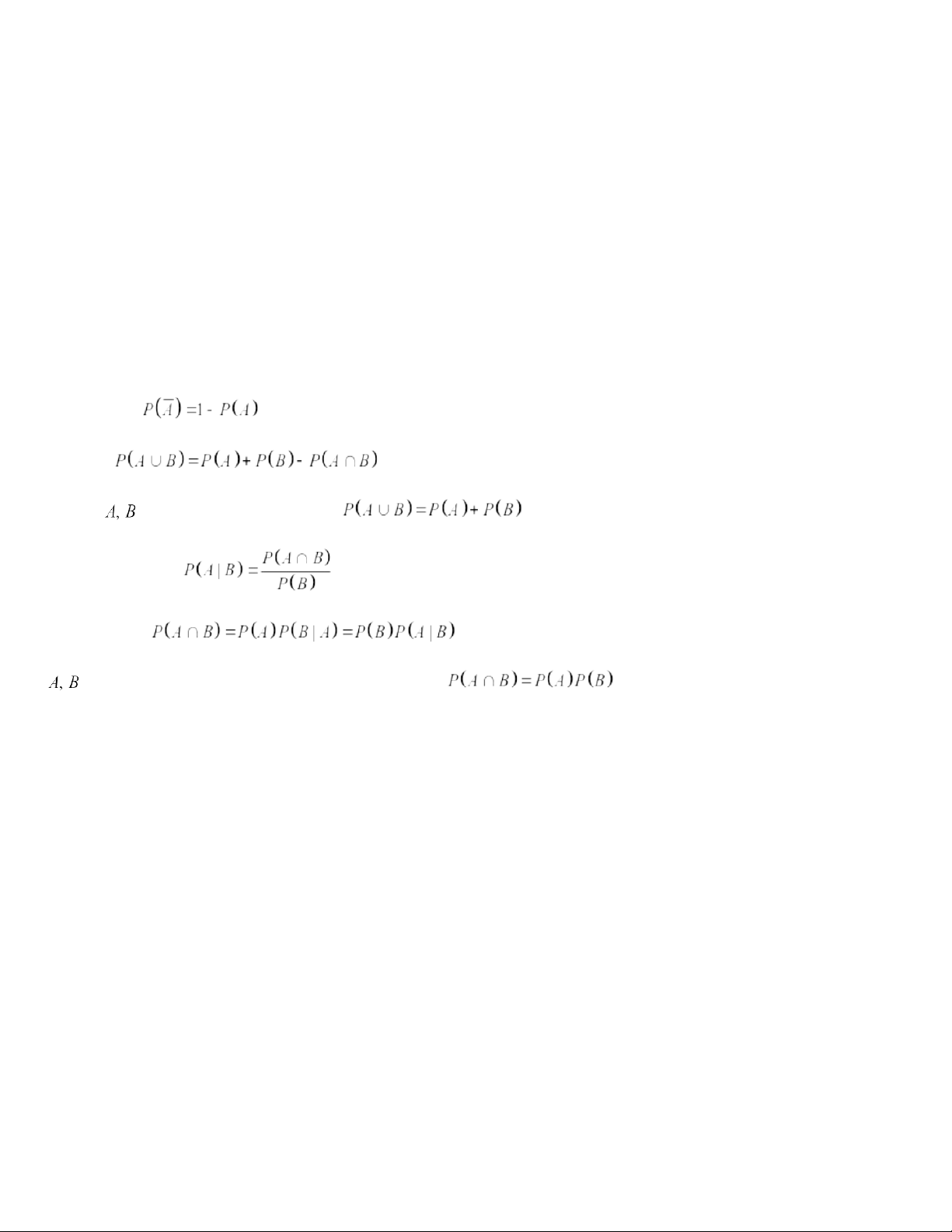
+ Step 3: Find the system of events which is both mutually exclusive and collectively exhaustive (compute the complement if needed). + Step 4: Apply the formula. II. Probability rules 1. Complement rule: . 2. Addition rule: . n particular, if are mutually exclusive, then . 3. Conditional probability: . 4. Multiplication rule: Events
are said to be statistically independent if and only if . 5. Total probability: Given the system of events
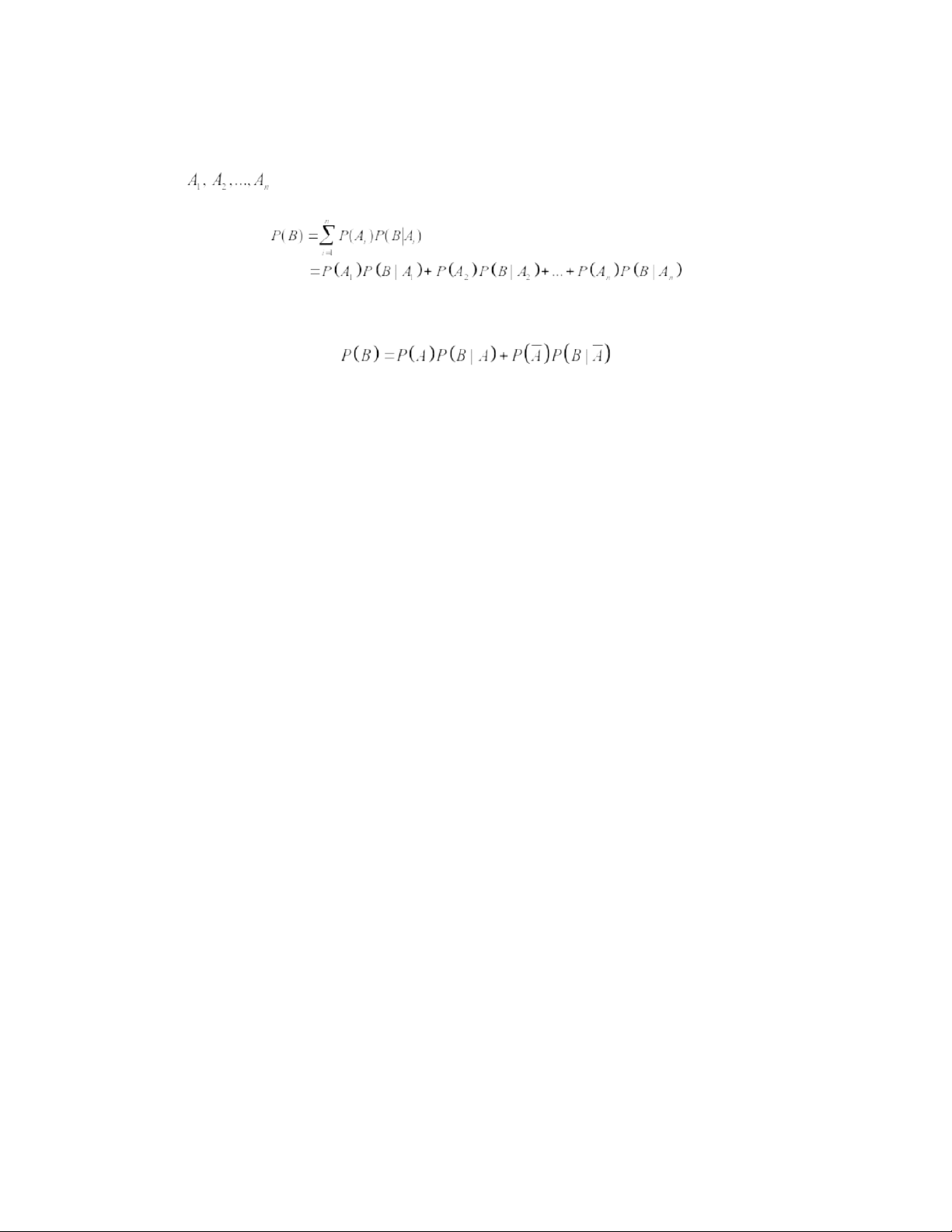
that are both mutually exclusive and collectively exhaustive, then or
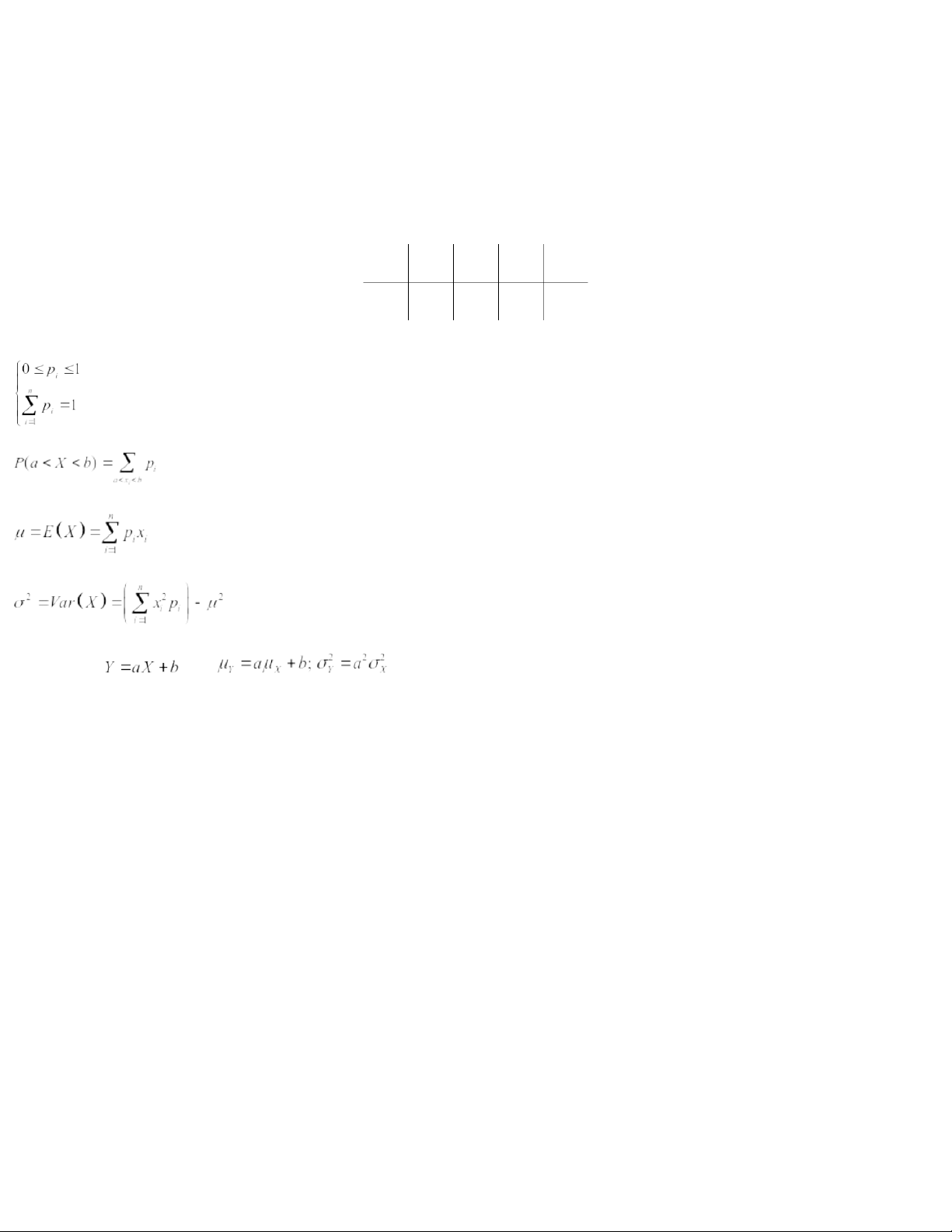
CHAPTER 2. DISCRETE RANDOM VARIABLES I. Distribution table Given the distribution table: Xx1x2….xn Pp1p2….pn Then 1. . 2. . 3. . 4. . n particular, if then .
II. Binomial Distribution Suppose that
a random experiment can result in two possible outcomes, “success” and “failure,”
and that p is the probability of a success in a single trial.
Let X be the the number of resulting successes in n independent trials.
The probability distribution of X is called binomial distribution.
III. Poisson Distribution
Let X be the number of occurrences in a given continuous interval (such as time, surface area, or length). Then the probability distribution
of X is called the Poisson distribution.
CHAPTER 3. CONTINUOUS RANDOM VARIABLES I. Density Function Given the density function
of a continuous random variable . Then i) ii) iii)t iv) v) vi) II. Normal Distribution f
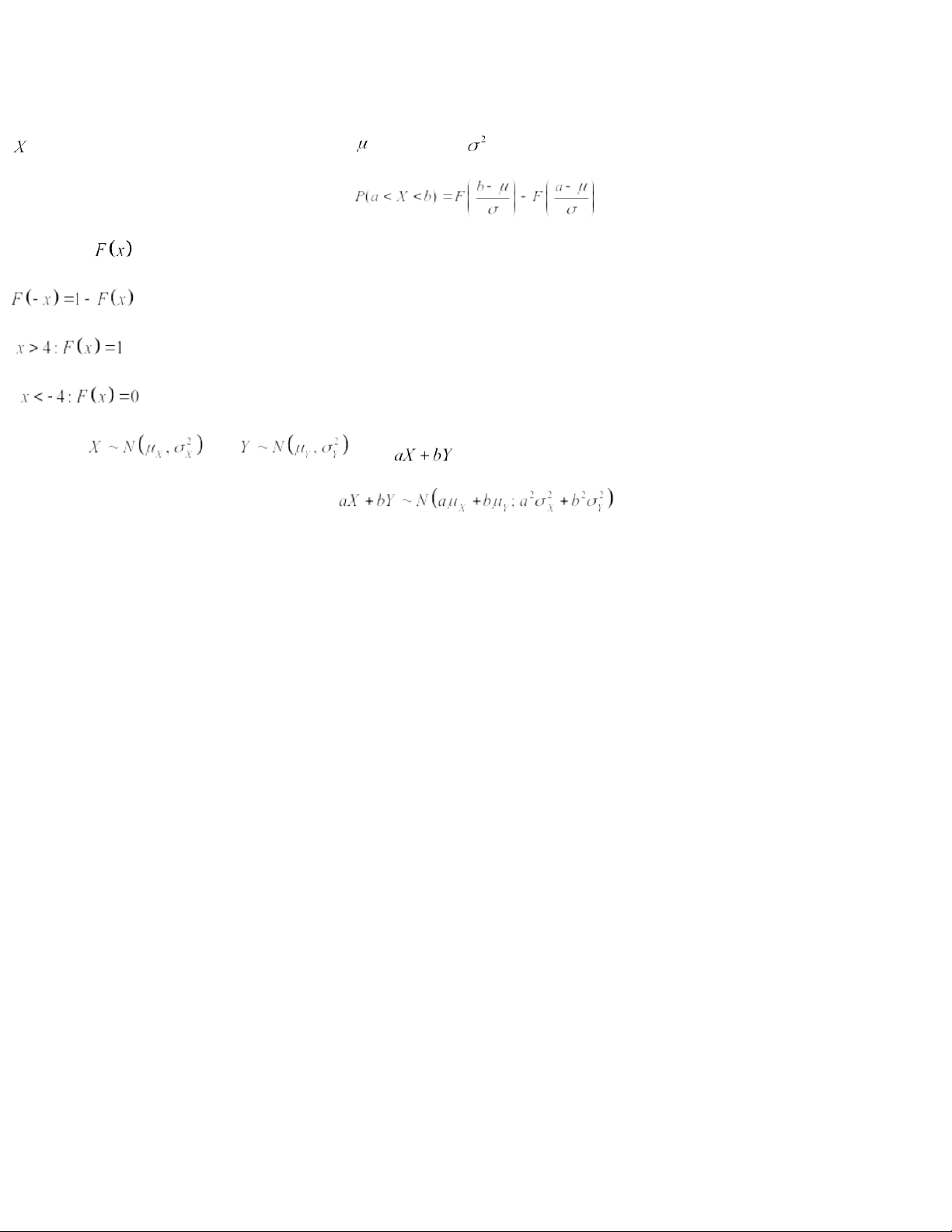
follows the normal distribution with the mean and variance , then The values of
can be found in Appendix Table 1 with the notices ) . i) ii) Moreover, if and , then
also follows the normal distribution
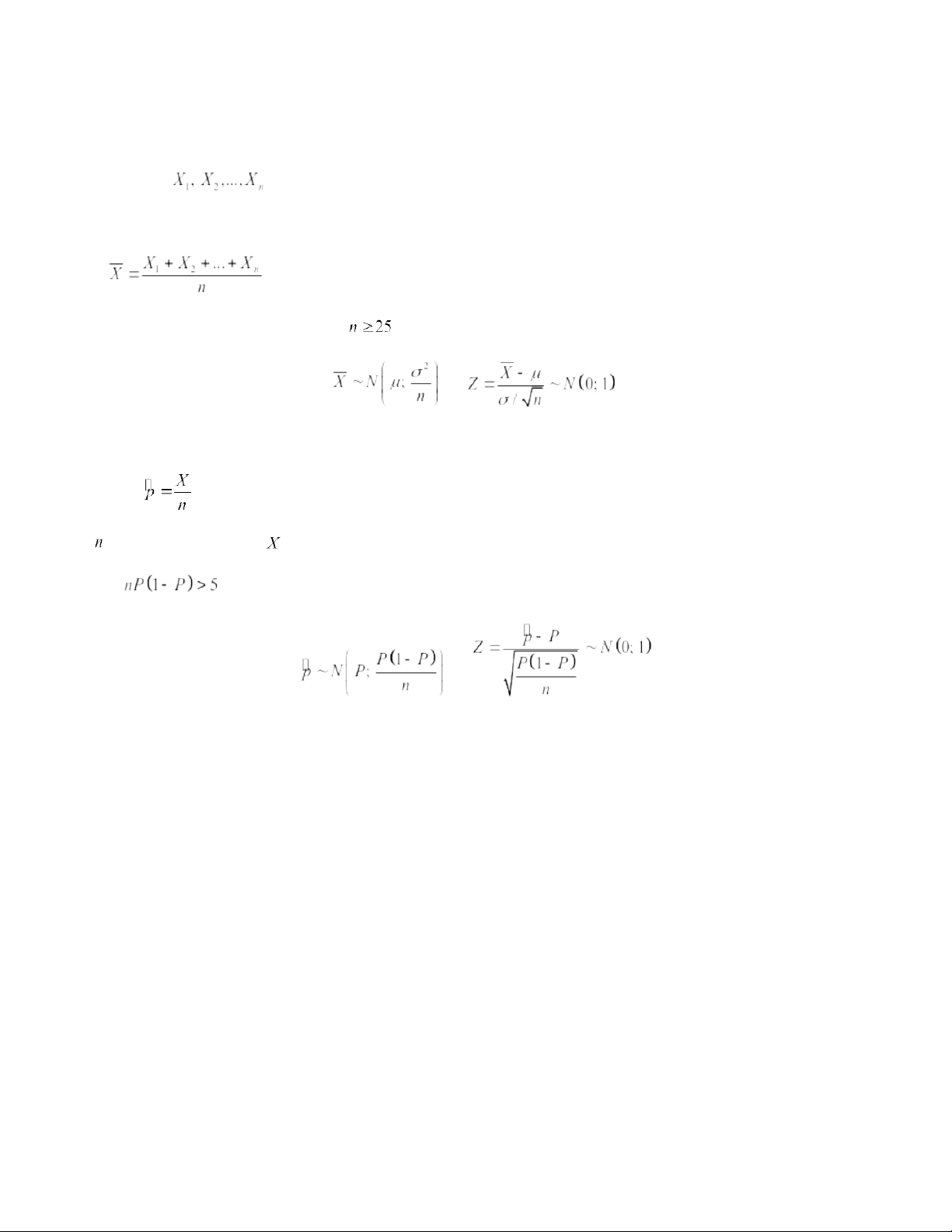
CHAPTER 4. SAMPLING DISTRIBUTION Let the random variables
denote a random sample from a population. I. Sample mean Sample mean: .
If the parent population distribution is normal (or ) then or . II. Sample proportion Sample proportion: where is the sample size and
is the number of objects having the characteristic of interest. When n is large ( ), we have or III. Sample variance Sample variance: .
If the parent population distribution is normal then
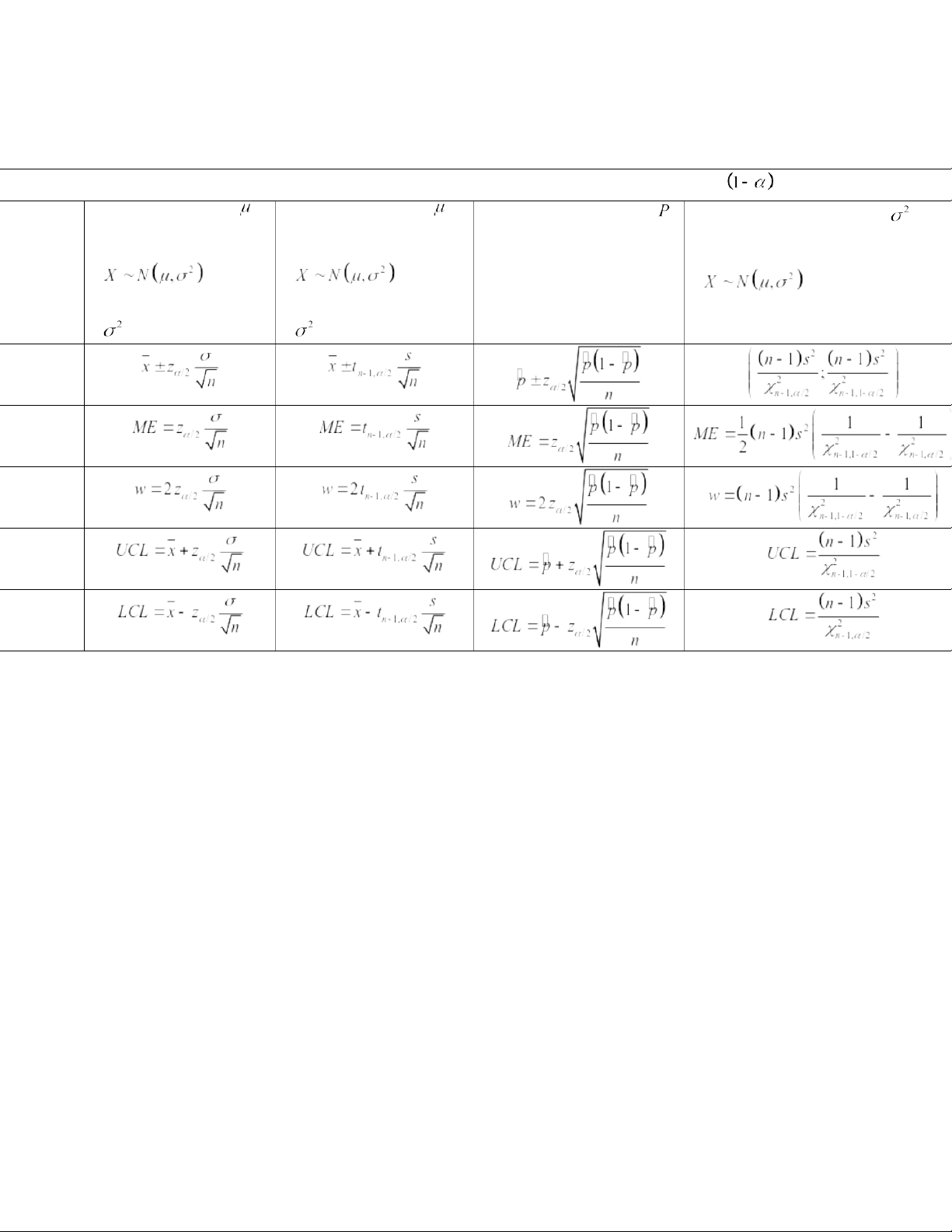
CHAPTER 5. CONFIDENCE INTERVAL ESTIMATION I. Formulas
Confidence Interval Estimation with the sample n and the confidence level Population mean Population mean Population proportion Population variance Given Given Given Estimation Given + n is large for + (or n is + (or n is + large) large) + is known + is unknown Confidenc e interval Margin of error Width Upper confidence limit Lower confidence limit II. Critical values
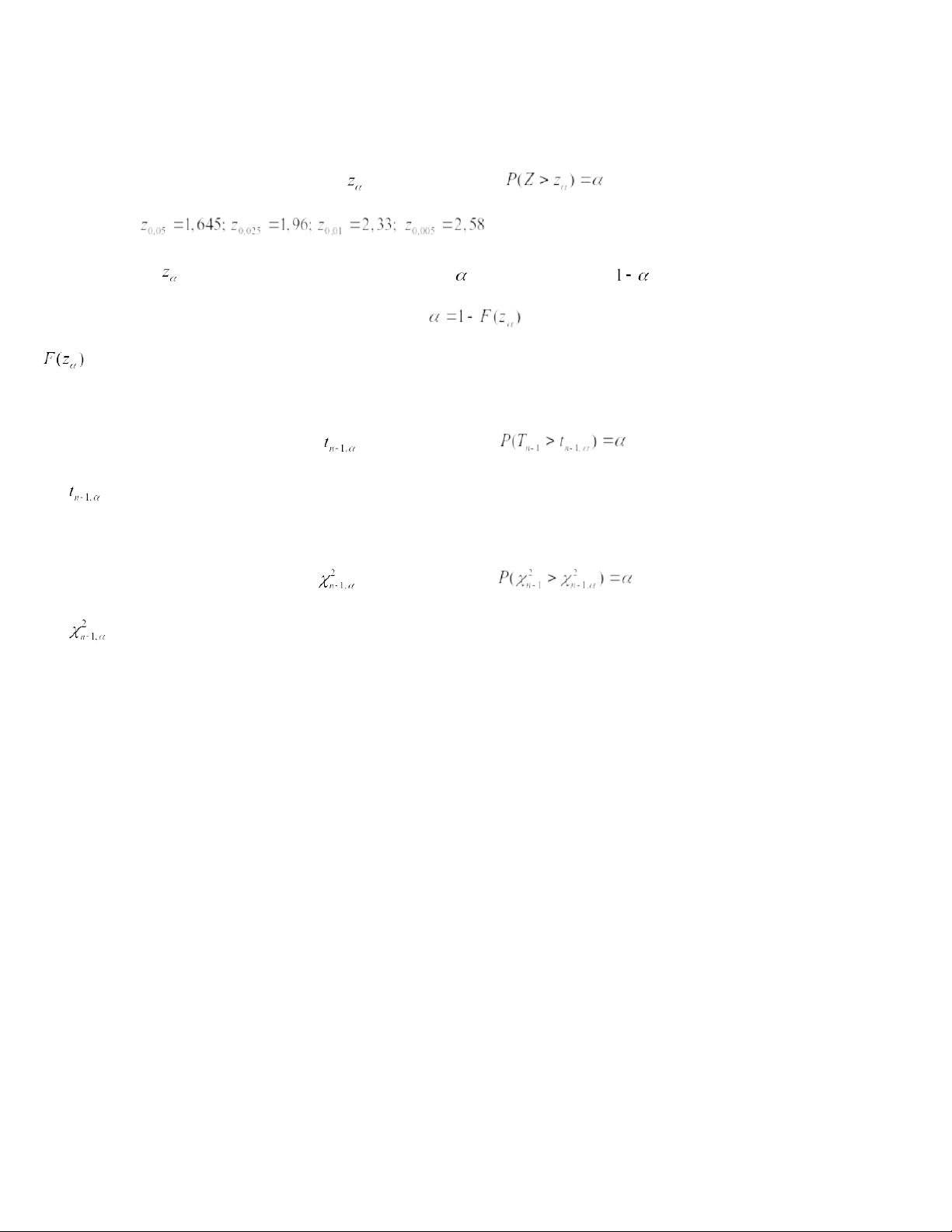
1. Critical values for the standard normal distribution: is a value such that Some critical values: Given the critical value
, we can determine the significant level (or confidence level ) by the following formula where
can be found in Appendix Table 1.
2. Critical values for the Student’s t distribution is a value such that The value
can be found in Appendix Table 8.
3. Critical values for the Chi-squared distribution is a value such that The value
can be found in Appendix Table 7a and 7b.
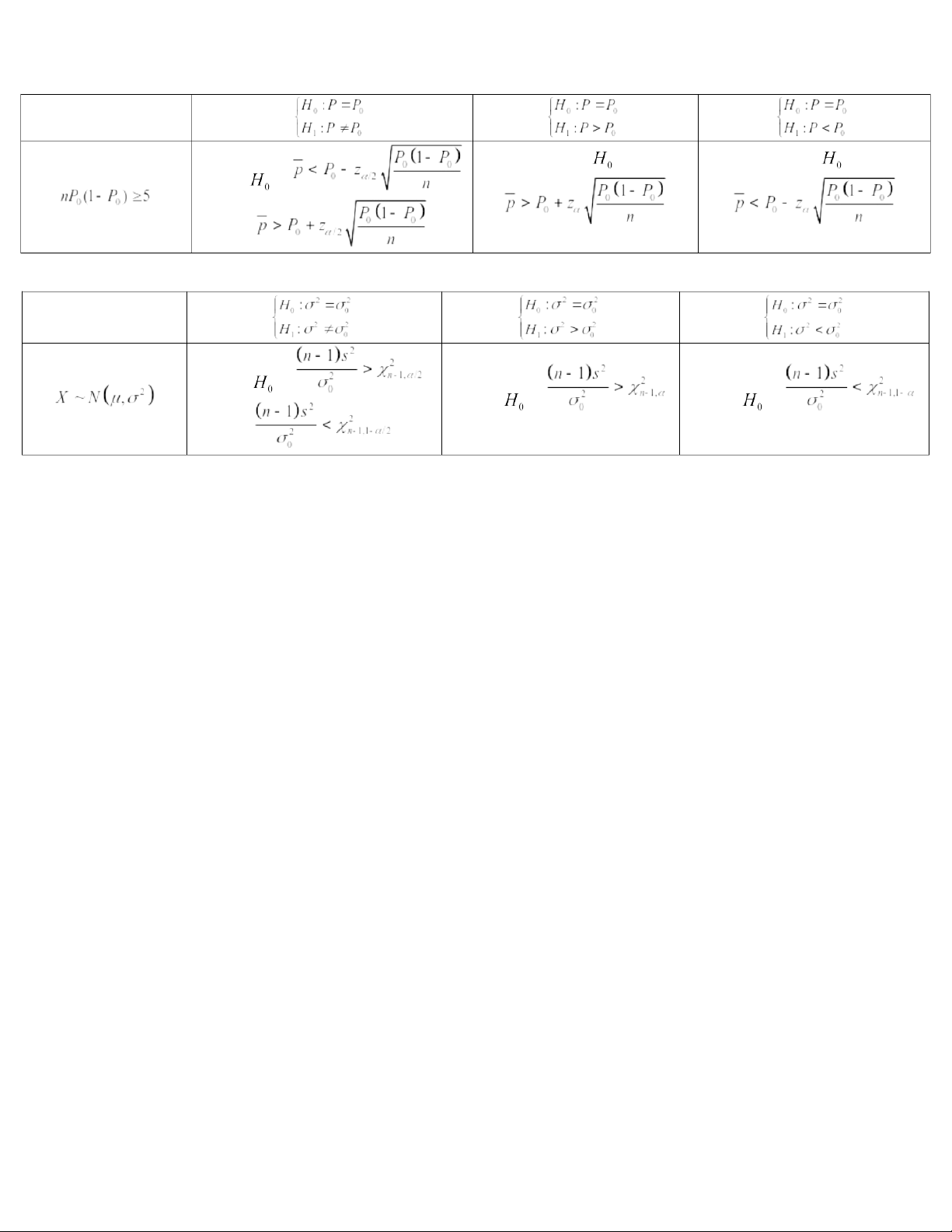
CHAPTER 6. HYPOTHESIS TESTS I. Solution steps
+ Step 1: State the null and alternative hypotheses.
+ Step 2: Summarize all information.
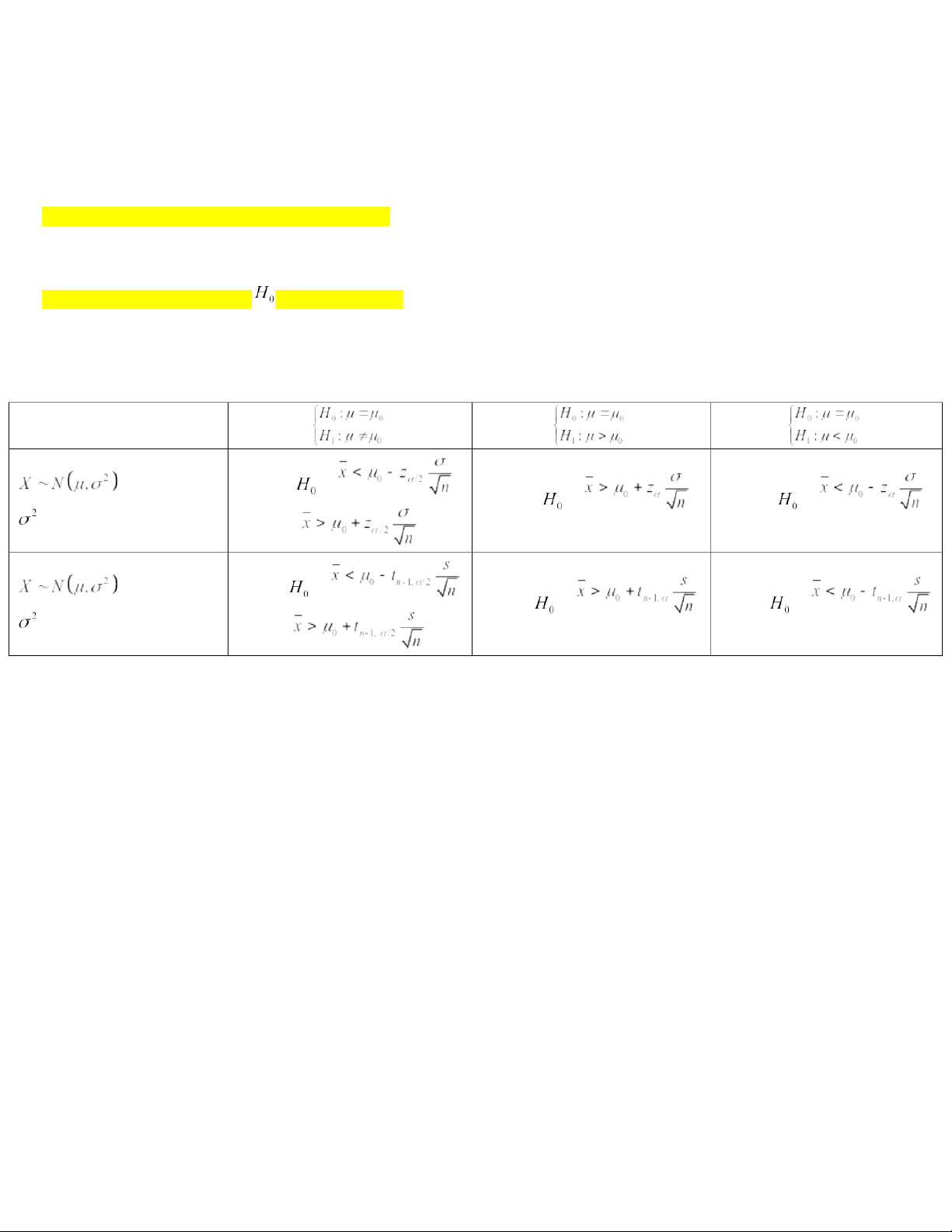
+ Step 3: Decision rule: reject if …… (Formula)
+ Step 4: Random sample => conclusion II. Decistion rule For population mean (or n is large) Reject if Reject if Reject if is known or (or n is large) Reject if Reject if Reject if is unknown or For population proportion Reject if Reject if Reject if or For population variance Reject if Reject if Reject if or
Tài liệu liên quan:
-
Bảng giá trị phân phối thống kê poisson và student môn Xác suất thống kê| Trường Đại học Ngoại Thương
27 14 -
Bảng giá trị quyết định thống kê wilcoxon rank-sum test môn Xác suất thống kê| Trường Đại học Ngoại Thương
29 15 -
Bài 1 Định nghĩa cổ điển về xác suất môn Xác suất thống kê| Trường Đại học Ngoại Thương
26 13 -
Exercises for probability & statistics môn Xác suất thống kê| Trường Đại học Ngoại Thương
26 13 -
Đề thi cuối kỳ lý thuyết môn Xác suất thống kê| Trường Đại học Ngoại Thương
27 14