Đề Thi HSG Tiếng Anh 9 Xã Thanh Thủy Phú Thọ 2025-2026 Có File Nghe Đáp Án
Đề thi HSG Tiếng Anh 9 Xã Thanh Thủy Phú Thọ 2025-2026 có file nghe đáp án được soạn dưới dạng file word và PDF gồm 8 trang. Tài liệu được tổng hợp và sưu tầm. Mời các bạn tham khảo
Chủ đề: Đề HSG Tiếng anh 9 35 tài liệu
Môn: Tiếng Anh 9 569 tài liệu
Tác giả:







Preview text:
ỦY BAN NHÂN DÂN XÃ THANH THỦY
ĐỀ THI CHỌN HỌC SINH GIỎI LỚP 9 THCS NĂM HỌC 2025 - 2026 ĐỀ CHÍNH THỨC MÔN: TIẾNG ANH
Thời gian làm bài: 150 phút, không kể thời gian giao đề.
(Đề thi có 06 trang)
- - - - - - - - - - - - - - - - - - - - - - - - - - - - - - - - - - - - - - - - - - - - - - - - - - - - - - - - - I. LISTENING (4.0 POINTS)
Part 1. You are going to hear a conversation. For questions 1 to 10, listen and complete the form
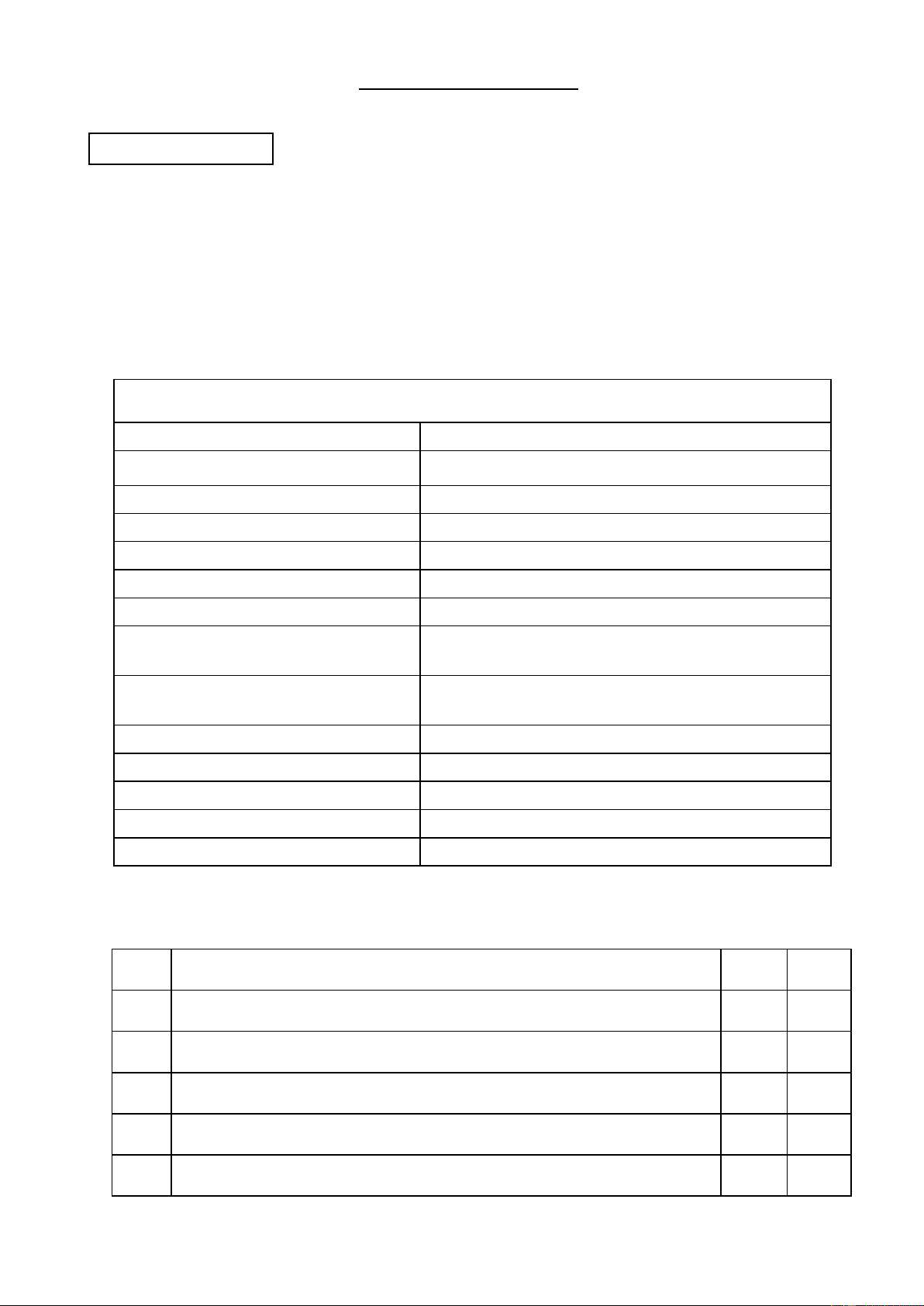
below. Write NO MORE THAN THREE WORDS AND/OR A NUMBER for each gap. (2.0 points) Office Rental - Address: 21 North Avenue - Type of company: (1)__________ - Full name: Jonathan Smith - Position: (2)__________ - Location: near the (3)__________ - No. of people: 30 - Preferred size of the area: (4)__________ ft2 24-hour (5)__________ - Requirements:
(6)__________ on ground floor
a/an (7)__________ to cook in - Preferred facilities:
a/an (8)__________ away from the workspace
- No. of power sockets Daily exercise: 40 - Daily exercise: a/an (9)__________ - Unnecessary: (10)__________ - Other requirements: WIFI - Arrangement of viewing: 3p.m on Thursday
Part 2. You will hear a girl called Lisa and a boy called Sam talking about a book they have both read. For
questions 11 to 15, decide whether the following statements are True (T) or False (F). (1.0 point) Statements T F 11.
Lisa disliked the book when she first started reading it. 12.
Sam and Lisa felt sorry for Paul, the main character in the book. 13.
Sam was interested in the mystery about Paul and his brother. 14.
Lisa thought the author helped the reader to understand Paul. 15.
Lisa liked the way the author developed Paul’s character.
Part 3. You will hear an interview with two trainee teachers, called Amy and John, about students Trang 1
using smartphones in school. For questions 16 to 20, choose the answer (А, В, C, or D) which fits
best according to what you hear. (1.0 point)
16. Amy would like schools to teach students________.
A. to be aware of advertising on smartphones
B. about the effects of overuse of smartphones
C. how to avoid being distracted by smartphones
D. to decide for themselves when to use smartphones
17. Amy and John both say that some parents________.
A. aren’t consistent in applying rules about using smartphones
B. buy smartphones for quite young children
C. fail to set a good example of smartphone use
D. don’t know which sites their children use on their smartphones
18. John approves of students using smartphones in class in order to________.
A. take photos of their work B. look up information
C. record a conversation D. use the calculator
19. John mentions workplaces to point out that company rules regarding smartphone use________.
A. vary according to the type of work done
B. should be reviewed regularly
C. are difficult to enforce
D. acknowledge that phones are valuable tools
20. What does Amy conclude about the debate on the topic of using smart-phones in school?
A. It shows parents and teachers hold very different views from each other
B. It is being used to hide more serious matters
C. It reflects significant changes in society
D. It will soon seem outdated
II. LANGUAGE (6.0 POINTS)
Part 1. Choose the word whose underlined part is pronounced differently from the rest by writing
your answer (A, B, C or D) in the numbered box. (0.6 point
21. A. marriage B. language C. massage D. encourage 22. A. opinion
B. conflict
C. adolescence
D. recognize
23. A. production B. description
C. education D. destination
Part 2. Choose the word whose main stress is placed differently from that of the others by writing
your answer (A, B, C or D) in the numbered box. (0.4 point)
24. A. remotely B. appliance C. essential D. furniture
25. A. conveniently B. opportunity
C. international D. elementary
Part 3. Write the letter A, B, C, or D on your answer sheet to indicate the correct word or phrase
that best completes each of the following sentences. (3.0 points)
26. Because English is widely used________ international conferences and academic journals, it has
become essential for researchers to share their findings effectively. A. of B. on C. for D. in
27. Sarah won’t leave the office________ she completes all the reports for tomorrow’s meeting. A. when B. until C. by the time D. since
28. Many educators________ introduce AI-based tools into their English curriculum, yet budget
limitations prevented them from implementing the plan. A. would introduce
B. were about to introduce C. had intended to D. were introducing
29. Oh, I completely forgot________ your plants while you were away. A. watering B. to water C. having watered D. to be watered
30. Let the documents________ before the deadline arrives tomorrow. A. should be signed B. signed C. sign D. be signed
31. Maybe young people would be________ these days if there were more discipline in school. A. behaved better B. better behaved C. behave better D. behaving better Trang 2
32. They've both had knee injuries, but the two friends________ light of their weaknesses. A. do B. get C. build D. make
33. We applied our minds________ a solution to our problem. A. to finding B. to find C. with finding D. for finding
34. After weeks of negotiations, the deal was finally signed, and we're________. A. home and dry B. sound and safe C. peace and quiet D. by and large
35. As soon as I________, I’m going to return to my hometown.
A. am going to graduate B. will graduate C. will have graduated D. have graduated
36. Innovative teaching methods can________ a greater interest in learning among students. A. set about B. make out C. bring about D. go through
37. The alarm clock rang loudly, and________ to get ready for his English class. A. up he jumped B. jumped up he C. did he jump up D. he jumped up
38. Children often form a strong________ to their favourite stuffed animals. A. favourite B. preference C. attachment D. relationship
39. Jane and Tom are talking about the school play.
Jane: “I heard you have a part in the school play tonight.” Tom: “________.”
A. Yes, and I'm on pins and needles
B. Yes, and I'm in deep water
C. Yes, and I'm black and blue
D. Yes, and I'm at my wits' end
40. Mark is talking to his friend.
Mark: “Don’t forget to drop me a line when you settle down.” - Donna: “________.”
A. Alright! I will buy you a ring.
B. Trust me. I won’t. I’ll keep you posted.
C. I look forward to hearing from you soon.
D. Oh, that’s great! But I’m going to miss you.
Part 2. Read the text and use the bold words in brackets to form words that fit in the numbered
blanks from 21 to 25. (1.0 point)
Nearly all the discoveries that have been made through the ages can be found in books. The
invention of the book is one of humankind’s greatest (41. achieve)________, the importance of which
cannot be overestimated. Books are very adaptable, providing us with both entertainment and information.
The (42. produce)________ of books began in Ancient Egypt, though not in a form that is (43.
recognize)________ to us today. The books read by the Romans, however, have some (44.
similar)________ to the ones we read now. Until the middle of the 15th century, in Europe, all books
were written by hand. They were often beautifully illustrated and always rare and expensive. With
printing came the (45. possible)________ of cheap, large-scale publication and distribution of books,
making knowledge more widespread and accessible.
Part 3. The following passage contains 5 mistakes. Identify the mistakes and write the corrections in
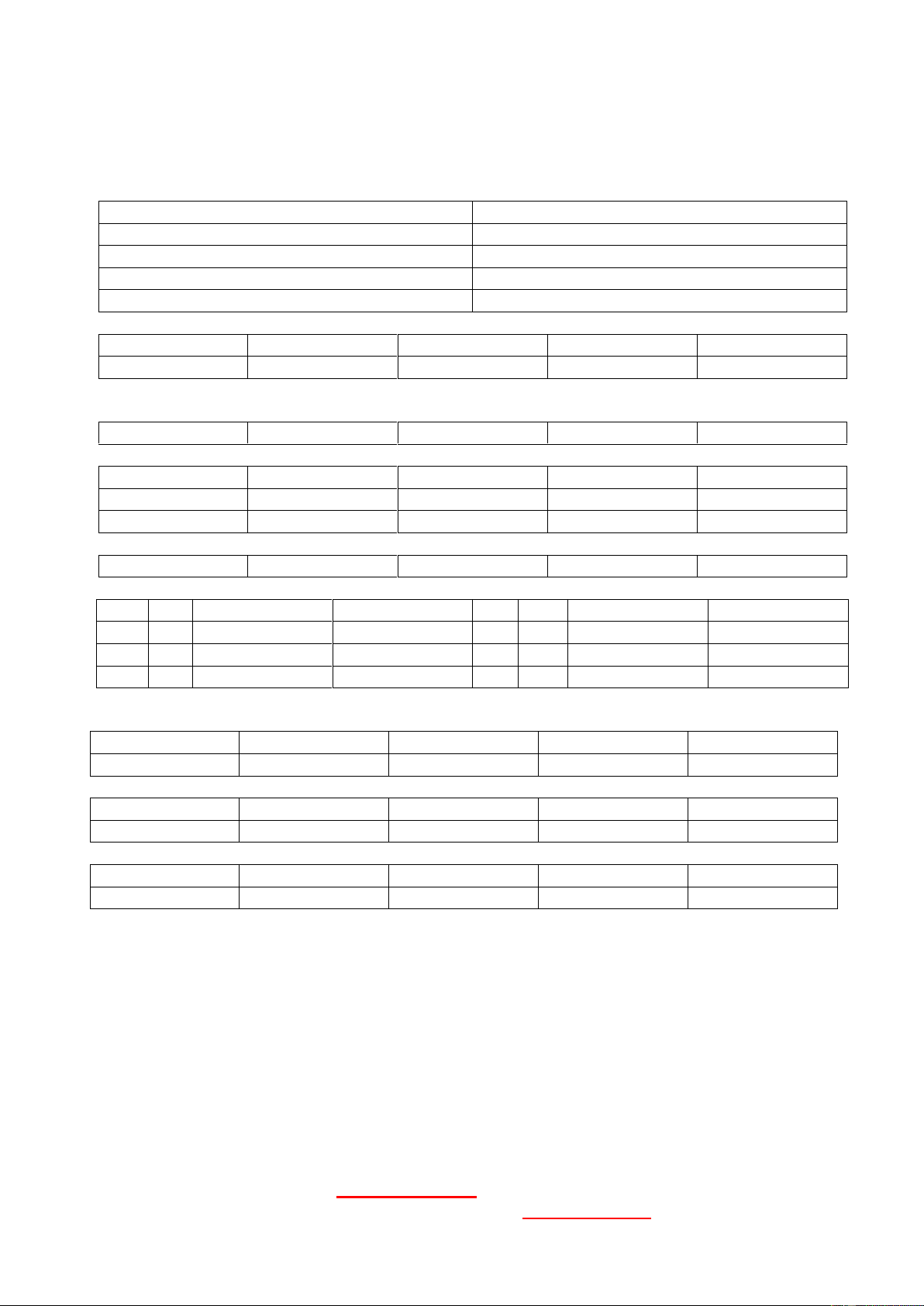
the corresponding numbered boxes. (0) has been done as an example. (1.0 point) Line Passage 1
Before long every child in West will have learnt how to use a 3D printer by the time they leave 2
school. Many of them will be wearing clothes they have designed and printed themselves. People 3
also expect there will be a huge growth in 3D food printing, allowing us to create newer, healthier 4
foods. In the future, we will be eating things like insects with realizing it, because food 5
manufacturers will have found ways to make them look like something else. 6
Some people are supposed that 3D printing will change our standard of living completely. Ten 7
years from now, on the grounds that the cost of a 3D printer will have come down so many, they 8
say people will be making all sorts of things for themselves that they couldn’t afford to buy 9
before. But others are disturbing. They think 3D printing will need to be regulated. Otherwise, 10
very soon people will be trying to print things like guns using instructions on the Internet. IV. READING (6.0 POINTS)
Part 1. Write the letter A, B, C, or D on your answer sheet to indicate the correct option that best fits Trang 3
each of the numbered blanks. (2.0 points)
It’s the end of the school year and the exam period is approaching. Undoubtedly, exams
(51)________ pressure on both students and parents alike.
Most parents would like to see their children (52)________ academically, as they believe a good
education gives them an added advantage in life. They want to see their children settled in a rewarding
job and be (53)________ well-off. But is that what their children have planned for themselves?
Apparently, it is not. Most students either can't think that far ahead or have no (54)________ of doing
so. They would rather aim low so as not to be disappointed if they get low marks. However, child
psychologists, who have been (55)________ on the matter, stress that students should aim high, but at
the same time have a(n) (56)________ of other options. As a result, students will not have to worry
about grades and in the long term they will have better chances of succeeding. On the whole, there are
many practical and invaluable things that parents can do for their children. (57)________ being people
their children can turn to, parents can plan a reasonable schedule that both they and their children
(58)________ on. According to psychologists' (59)________, this schedule should include no more
than eight hours of studying, three proper meals a day and some exercise. Above all, prior to each
exam, parents need to (60)________ their children that everything will be fine whatever the result. 51. A. put B. set C. force D. bring 52. A. to succeed B. been succeeding C. have succeeded D. succeeding 53. A. richly B. financially C. economically D. valuably 54. A. opinion B. demand C. intention D. reaction 55. A. recommended B. consulted C. advised D. suggested 56. A. amount B. sum C. collection D. variety 57. A. Nevertheless B. Instead of C. Apart from D. As far as 58. A. agree B. accept C. confirm D. approve 59. A. clues B. announcements C. instructions D. directions 60. A. ensure B. reassure C. insure D. make sure
Part 2. Read the passage below and fill each numbered blank with ONE suitable word. Write your
answers in the corresponding numbered boxes on your answer sheet. (2.0 points)
Habits are the secret sauces that make or (61)________ our planet’s future. As teens, we can turn
small daily choices into big environmental wins by swapping tasteful routines for sustainable ones.
Ready to go green? Let’s make saving the Earth our new flex. Our habits are the backbone of our
everyday (62)________. They’re likely the Wi-Fi signal keeping our lives connected, so let’s make
them eco-strong. Kicking bad habits to the (63)________ isn’t easy; it requires serious effort to ditch
single-use plastics or cut down on food waste. Experts reckon it (64)________ around 21 days to
cement a new habit, so don’t bail if it feels tough at first. Stick with it, and you’ll be a green machine
in (65)________ time. Taking that first step can feel like diving into the deep end, (66)________ it’s
worth it. Once you start recycling or thrifting, those small changes add up fast. Stepping outside your
comfort zone to try new eco-habits sparks serious growth. For example, (67)________ up a reusable
water bottle or joining a local cleanup crew can make you a planet-saving rockstar. At school or home,
green habits can open new doors. Getting (68)________ the habit of composting or biking to class can
shrink your carbon footprint and boost your cred. When you go the extra mile with eco-projects,
you’re (69)________ just helping the planet; you’re setting the stage for a brighter future. By turning
challenges into opportunities, teens (70)________ lead the charge and make the Earth a happier, healthier place.
Part 3. Read the following passage and write the letter A, B, C, or D on your answer sheet to
indicate the best answer to each of the following questions. (2.0 points)
New research suggests that volunteers aren’t just helping the communities they serve. People who
volunteer actually experience a boost in their mental health-good news at a time when more than a
third of Americans are experiencing symptoms of anxiety or depression.
In a study published this year in the Journal of Happiness Studies, researchers examined data from
nearly 70,000 research participants in the United Kingdom, who received surveys about their
volunteering habits and their mental health, including their distress and functioning in everyday life,
every two years from 1996 to 2014.
Compared to people who didn’t volunteer, people who had volunteered in the past year were more Trang 4
satisfied with their lives and rated their overall health as better. Additionally, the researchers found
that people who volunteered more frequently experienced greater benefits: Those who volunteered at
least once a month reported better mental health than participants who volunteered infrequently or not at all.
But does volunteering make people happy, or are happy people simply more likely to volunteer?
The researchers found the same results even when they accounted for participants’ initial levels of
well-being before they started volunteering. In other words, people who started to volunteer became happier over time.
Although it’s true that people who are happier do tend to spend more time volunteering, the current
study suggests that you don’t need to already feel happy in order to benefit from it. In fact, some
research suggests that people who start out with lower levels of well-being may even get a bigger boost from volunteering.
Why does volunteering support our mental health? According to Ricky Lawton, associate director at
Simetrica Research Consultancy and lead author of the paper, a combination of factors is likely at play.
First, volunteering appears to be intrinsically rewarding - when we help others, we tend to experience
what researchers call a “warm glow.” Second, volunteering is likely to help boost our sense of social
connection. In particular, for older adults, volunteering can be a way to stay connected to others after retirement.
Finally, volunteering can be a way to build professional skills and try out leadership opportunities,
which is especially relevant to young adults. In the current study, the researchers found that
participants ages 16-24 and 55-74 were especially likely to benefit from volunteering, perhaps because
of the opportunity to build social connections and new skills.
(Adapted from: https://greatergood.berkeley.edu/article/item/how_volunteering_can_help_your_mental_health)
71. Which of the following can be the best title for the passage?
A. How Volunteering Helps Volunteers Themselves
B. What is Volunteer Work?
C. Volunteers in the USA
D. Volunteers: Their Impact on Communities
72. The word “boost” in paragraph 1 is CLOSEST in meaning to________. A. loss B. pain C. explanation D. improvement
73. What did the researchers find about the relationship between happiness and volunteering?
A. Only happy people tend to volunteer.
B. Volunteering has no impact on happiness.
C. Volunteering makes people unhappy.
D. Volunteering can increase happiness over time.
74. The word “they” in paragraph 4 refers to________.
A. people who did not volunteer
B. people who volunteered C. researchers D. happy people
75. What is one reason why volunteering might support mental health, according to Ricky Lawton?
A. Volunteers receive financial rewards.
B. Volunteering helps people become famous.
C. Volunteers experience a sense of responsibility.
D. Volunteering helps volunteers come into contact with others.
76. What did the study find about people’s initial well-being levels and volunteering?
A. People with high well-being levels volunteer more.
B. People with low well-being levels avoid volunteering.
C. Volunteering only benefits those with high well-being.
D. Volunteering can benefit people regardless of initial well-being.
77. Why might volunteering be relevant to young adults? A. to earn money
B. to avoid social connections
C. to spend more time at home D. to learn new skills
78. The word “satisfied” in paragraph 3 is OPPOSITE in meaning to________. A. content B. pleased C. discontented D. fulfilled
79. According to the passage, which of the following statements is NOT true? Trang 5
A. Volunteering may improve the mental health of those who participate.
B. The study involved a large number of participants in the United Kingdom.
C. Participants in the study were surveyed annually about their volunteering habits.
D. Volunteering can help older adults maintain social connections after retirement.
80. Which of the following can be inferred from the passage?
A. People in the United Kingdom are more likely to volunteer than people in the United States.
B. Feeling happy is a prerequisite for experiencing the benefits of volunteering.
C. Volunteering can boost mental health by making people feel good and more connected.
D. Younger adults tend to experience fewer benefits from volunteering compared to older adults. V. WRITING (4.0 POINTS)
Part 1. Finish each of the following sentences in such a way that it means exactly the same as the
sentence printed before it. (1.0 point)
81. I never thought that I would win that international dancing competition.
→ It never crossed………………………………………………………………………………………
82. Various fake goods were discovered because the police officials fully investigated them.
→ But……………………………………………………………………………………………………
83. I had just finished writing the final paragraph of my report when the power went out.
→ Hardly………………………………………………………………………………………………..
84. His description of the incident was completely different from what really happened.
→ His description of the incident bore…………………………………………………………………
85. People are persuaded by advertisements to spend more than they can afford.
→ Advertisements tempt………………………………………………………………………………...
Part 2. Using the word given in each bracket and other words to complete the second sentence so
that it has the same meaning as the first. (1.0 point)
86. The needs of the poor should be given more importance than those of the middle classes. (PRIORITY)
→ The needs of the poor should…………………………………………those of the middle classes.
87. The building will be dedicated to the families who are in desperate need of help. (BREADLINE)
→ The building will be dedicated to the families who are……………………………………………
88. Jenny couldn’t stop crying when her pet rabbit died. (FLOODS)
→ Jenny was…………………………………………….……..……….……when her pet rabbit died.
89. Tom didn’t understand the situation and so made a terrible mistake. (STICK)
→ Tom got the wrong……………………………….…….….….……and so made a terrible mistake.
90. Everybody knows that he always breaks his promises. (KNOWLEDGE)
→ It's common……………………………………………….….………………back on his promises.
Part 3. Paragraph writing. (2.0 points)
These days, many students tend to be over-reliant on AI-powered tools for study or work, which may
inhibit their creativity and independence.
Write a paragraph (from 150 to 200 words) to give your own opinion. _____Hết_____
Họ và tên thí sinh:...……………...............................… SBD:..........
Cán bộ coi thi không cần giải thích gì thêm./.
ỦY BAN NHÂN DÂN XÃ THANH THỦY HƯỚNG DẪN CHẤM
ĐỀ THI CHỌN HỌC SINH GIỎI LỚP 9 THCS ĐỀ CHÍNH THỨC Trang 6 NĂM HỌC 2025 - 2026 MÔN: TIẾNG ANH
(Hướng dẫn chấm có 02 trang)
Mỗi câu đúng từ câu 1-90 được 0,2 điểm, bài viết 2,0 điểm.
I. LISTENING (4.0 POINTS) 1. advertising 2. regional manager 3. station 4. 10,000 5. security 6. reception 7. kitchen 8. basement 9. gym 10. furniture 11. F 12. F 13. F 14. T 15. T 16. D 17. C 18. B 19. A 20. C II. LANGUAGE (6.0 POINTS) 21. C 22. B 23. C 24. D 25. A 26. D 27. B 28. C 29. B 30. D 31. B 32. D 33. A 34. A 35. D 36. C 37. A 38. C 39. A 40. B
41. achievements 42. production 43. recognizable 44. similarities 45. possibility Line Error Correction Line Error Correction 46. 1 west the West 47. 4 with without 48. 6 are supposed suppose 49. 7 many much 50. 9 disturbing disturbed III. READING (6.0 POINTS) 51. A 52. D 53. B 54. C 55. B 56. D 57. C 58. A 59. C 60. B 61. break 62. routine 63. curb 64. takes 65. no 66. but 67. picking 68. into 69. not 70. can 71. A 72. D 73. D 74. C 75. D 76. D 77. D 78. C 79. C 80. C IV. WRITING (4.0 POINTS)
81. It never crossed my mind that I would win that international dancing competition.
82. But for the police officials’ full/ thorough investigation, various fake goods wouldn’t have been discovered.
83. Hardly had I finished writing the final paragraph of my report when the power went out.
84. His description of the incident bore no/little resemblance/relation to what really happened.
85. Advertisements tempt people into spending more than they can afford. /
Advertisements tempt people to spend more than they can afford.
86. The needs of the poor should take priority over those of the middle classes.
87. The building will be dedicated to the families who are on the breadline. Trang 7
88. Jenny was in floods of tears when her pet rabbit died.
89. Tom got the wrong end of the stick and so made a terrible mistake.
90. It's common knowledge that he always goes back on his promises.
Paragraph writing (2.0 points) Suggested marking criteria:
1. Task achievement: (0.5 points)
- All requirements of the task are sufficiently addressed.
- Ideas are adequately supported and elaborated with relevant and reliable explanations, examples,
evidence, personal experience, etc.
2. Organization: (0.7 points)
- Ideas are well organized and presented with coherence, cohesion, and unity.
- The paragraph is well-structured:
* Topic sentence consists of topic and controlling idea.
* Supporting sentences support directly the main idea stated in the topic sentence and provide
logical explanations, persuasive examples.
* Concluding sentence summarizes the main points/ restates the topic sentence, offers personal
opinions (prediction, recommendation, consideration,...) on the issue.
3. Language use: (0.6 points)
- Demonstration of a variety of topic-related vocabulary.
- Excellent use and control of grammatical structures.
4. Punctuation, spelling: (0.2 points)
- Correct use of punctuation and spelling. - Legible handwriting.
Penalty mark: If the whole paragraph is off-topic, it gets no mark.
Tổng điểm toàn bài: 20,0 điểm. Trang 8
Tài liệu liên quan:
-
Đề Thi Chọn HSG Tiếng Anh 9 Xã Vạn Xuân Phú Thọ 2025-2026 Có Đáp Án
1 1 -
Đề thi chọn học sinh giỏi tỉnh lớp 9 năm học 2024 – 2025 môn Tiếng Anh - Bảng A
30 15 -
Đề thi chọn học sinh giỏi văn hóa cấp tỉnh môn Tiếng Anh lớp 9
30 15 -
Đề khảo sát chất lượng học sinh giỏi năm học 2023-2024 môn Tiếng Anh lớp 9
58 29