Design of Analog CMOS Integrated Circuit 2nd Edition ElectroVoltir | Tài liệu Tiếng Anh
Design of Analog CMOS Integrated Circuit 2nd Edition ElectroVoltir | Tài liệu Tiếng Anh . Tài liệu giúp bạn tham khảo, ôn tập và đạt kết quả cao. Mời đọc đón xem!
Môn: Tiếng Anh chuyên ngành 332 tài liệu
Trường: Tài liệu Tiếng Anh chuyên ngành, Tiếng Anh cho người đi làm 432 tài liệu
Tác giả:



















Preview text:
Razavi-3930640 raz24936˙FM˙00i-xviii December 18, 201510:37 i Design of Analog CMOS Integrated Circuits Second Edition Behzad Razavi
Professor of Electrical Engineering
University of California, Los Angeles Razavi-3930640 raz24936˙FM˙00i-xviii December 18, 201510:37 ii
DESIGN OF ANALOG CMOS INTEGRATED CIRCUITS, SECOND EDITION
Published by McGraw-Hill Education, 2 Penn Plaza, New York, NY 10121. Copyright c 2017 by McGraw-Hill
Education. All rights reserved. Printed in the United States of America. Previous edition c 2001. No part of
this publication may be reproduced or distributed in any form or by any means, or stored in a database or
retrieval system, without the prior written consent of McGraw-Hill Education, including, but not limited to, in
any network or other electronic storage or transmission, or broadcast for distance learning
Some ancillaries, including electronic and print components, may not be available to customers outside the United States.
This book is printed on acid-free paper.
1 2 3 4 5 6 7 8 9 0 QVS/QVS 1 0 9 8 7 6 ISBN 978-0-07-252493-2 MHID 0-07-252493-6
Senior Vice President, Products & Markets: Kurt L. Strand
Vice President, General Manager, Products & Markets: Marty Lange
Vice President, Content Design & Delivery: Kimberly Meriwether David
Managing Director: Thomas Timp
Global Brand Manager: Raghu Srinivasan
Director, Product Development: Rose Koos
Product Developer: Vincent Bradshaw
Marketing Manager: Nick McFadden
Director of Digital Content: Chelsea Haupt, Ph. D
Director, Content Design & Delivery: Linda Avenarius
Program Manager: Faye M. Herrig
Content Project Managers: Heather Ervolino; Sandra Schnee Buyer: Jennifer Pickel
Content Licensing Specialists: Lorraine Buczek (Text) Compositor: MPS Limited
Printer: Quad/Graphics
All credits appearing on page or at the end of the book are considered to be an extension of the copyright page.
Library of Congress Cataloging-in-Publication Data Razavi, Behzad.
Design of analog CMOS integrated circuits / Behzad Razavi, professor of electrical engineering,
University of California, Los Angeles. – Second edition. pages cm
Includes bibliographical references and index.
ISBN 978-0-07-252493-2 (alk. paper) – ISBN 0-07-252493-6 (alk. paper) 1.
Analog CMOS integrated circuits. 2. Linear integrated circuits–Design and
construction. 3. Metal oxide semiconductors, Complementary. I. Title. TK7874.654.R39 2017 621.3815–dc23 2015035303
The Internet addresses listed in the text were accurate at the time of publication. The inclusion of a website does
not indicate an endorsement by the authors or McGraw-Hill Education, and McGraw-Hill Education does not
guarantee the accuracy of the information presented at these sites. mheducation.com/highered Razavi-3930640 raz24936˙FM˙00i-xviii December 18, 201510:37 iii
To the memory of my parents Razavi-3930640 raz24936˙FM˙00i-xviii December 18, 201510:37 iv
Preface to the Second Edition
When I submitted proposals to publishers for the first edition of this book, they posed two questions to
me: (1) What is the future demand for analog books in a digital world? and (2) Is it wise to publish a book
dealing solely with CMOS? The words “analog” and “CMOS” in the book’s title were both in question.
Fortunately, the book resonated with students, instructors, and engineers. It has been adopted by
hundreds of universities around the world, translated to five languages, and cited 6,500 times.
While many fundamentals of analog design have not changed since the first edition was introduced,
several factors have called for a second: migration of CMOS technologies to finer geometries and lower
supply voltages, new approaches to analysis and design, and the need for more detailed treatments of
some topics. This edition provides:
• Greater emphasis on modern CMOS technology, culminating in a new chapter, Chapter 11, on
design methodologies and step-by-step op amp design in nanometer processes
• Extensive study of feedback through the approaches by Bode and Middlebrook
• A new section on the analysis of stability using Nyquist’s approach—as the oft-used Bode method
falls short in some common systems • Study of FinFETs
• Sidebars highlighting important points in nanometer design
• A new section on biasing techniques
• Study of low-voltage bandgap circuits • More than 100 new examples
Some instructors ask why we begin with square-law devices. This is for two reasons: (1) such a path
serves as an intuitive entry point and provides considerable value in the analysis of amplifiers in terms of
allowable voltage swings, and (2) despite their very short channel lengths, FinFETs—the devices used
in 16-nm nodes and below—exhibit nearly square-law characteristics.
This book is accompanied with a solutions manual and a new set of PowerPoint slides, available at www.mhhe.com/razavi. Behzad Razavi July 2015 iv Razavi-3930640 raz24936˙FM˙00i-xviii December 18, 201510:37 v Preface to the Second Edition v
Preface to the First Edition
In the past two decades, CMOS technology has rapidly embraced the field of analog integrated circuits,
providing low-cost, high-performance solutions and rising to dominate the market. While silicon bipolar
and III-V devices still find niche applications, only CMOS processes have emerged as a viable choice for
the integration of today’s complex mixed-signal systems. With channel lengths projected to scale down
to 0.05 μm, CMOS technology will continue to serve circuit design for another two decades.
Analog circuit design itself has evolved with the technology as well. High-voltage, high-power analog
circuits containing a few tens of transistors and processing small, continuous-time signals have gradually
been replaced by low-voltage, low-power systems comprising thousands of devices and processing large,
mostly discrete-time signals. For example, many analog techniques used only ten years ago have been
abandoned because they do not lend themselves to low-voltage operation.
This book deals with the analysis and design of analog CMOS integrated circuits, emphasizing fun-
damentals as well as new paradigms that students and practicing engineers need to master in today’s
industry. Since analog design requires both intuition and rigor, each concept is first introduced from an
intuitive perspective and subsequently treated by careful analysis. The objective is to develop both a solid
foundation and methods of analyzing circuits by inspection so that the reader learns what approximations
can be made in which circuits and how much error to expect in each approximation. This approach also
enables the reader to apply the concepts to bipolar circuits with little additional effort.
I have taught most of the material in this book both at UCLA and in industry, polishing the order, the
format, and the content with every offering. As the reader will see throughout the book, I follow four
“golden rules” in writing (and teaching): (1) I explain why the reader needs to know the concept that is
to be studied; (2) I put myself in the reader’s position and predict the questions that he/she may have
while reading the material for the first time; (3) With Rule 2 in mind, I pretend to know only as much
as the (first-time) reader and try to “grow” with him/her, thereby experiencing the same thought process;
(4) I begin with the “core” concept in a simple (even imprecise) language and gradually add necessary
modifications to arrive at the final (precise) idea. The last rule is particularly important in teaching circuits
because it allows the reader to observe the evolution of a topology and hence learn both analysis and synthesis.
The text comprises 16 chapters whose contents and order are carefully chosen to provide a natural
flow for both self-study and classroom adoption in quarter or semester systems. Unlike some other books
on analog design, we cover only a bare minimum of MOS device physics at the beginning, leaving more
advanced properties and fabrication details for later chapters. To an expert, the elementary device physics
treatment my appear oversimplified, but my experience suggests that (a) first-time readers simply do
not absorb the high-order device effects and fabrication technology before they study circuits because
they do not see the relevance; (b) if properly presented, even the simple treatment proves adequate for a
substantial coverage of basic circuits; (c) readers learn advanced device phenomena and processing steps
much more readily after they have been exposed to a significant amount of circuit analysis and design.
Chapter 1 provides the reader with motivation for learning the material in this book. Chapter 2 describes
basic physics and operation of MOS devices.
Chapters 3 through 5 deal with single-stage and differential amplifiers and current mirrors, respectively,
developing efficient analytical tools for quantifying the behavior of basic circuits by inspection.
Chapters 6 and 7 introduce two imperfections of circuits, namely, frequency response and noise. Noise
is treated at an early stage so that it “sinks in” as the reader accounts for its effects in subsequent circuit developments.
Chapters 8 through 10 describe feedback, operational amplifiers, and stability in feedback sys-
tems, respectively. With the useful properties of feedback analyzed, the reader is motivated to design
high-performance, stable op amps and understand the trade-offs between speed, precision, and power dissipation. Razavi-3930640 raz24936˙FM˙00i-xviii December 18, 201510:37 vi vi Preface to the Second Edition
Chapters 11 through 13 deal with more advanced topics: bandgap references, elementary switched-
capacitor circuits, and the effect of nonlinearity and mismatch. These three subjects are included here
because they prove essential in most analog and mixed-signal systems today.
Chapter 14 is concerned with high-order MOS device effects and models, emphasizing the circuit
design implications. If preferred, the chapter can directly follow Chapter 2 as well. Chapter 15 describes
CMOS fabrication technology with a brief overview of layout design rules.
Chapter 16 presents the layout and packaging of analog and mixed-signal circuits. Many practical issues
that directly impact the performance of the circuit are described and various techniques are introduced.
The reader is assumed to have a basic knowledge of electronic circuits and devices, e.g., pn junctions,
the concept of small-signal operation, equivalent circuits, and simple biasing. For a senior-level elective
course, Chapters 1 through 8 can be covered in a quarter and Chapters 1 through 10 in a semester. For a
first-year graduate course, Chapters 1 through 11 plus one of Chapters 12, 13, or 14 can be taught in one
quarter, and almost the entire book in one semester.
The problem sets at the end of each chapter are designed to extend the reader’s understanding of the
material and complement it with additional practical considerations. A solutions manual will be available for instructors. Behzad Razavi July 2000
Acknowledgments for the Second Edition
The second edition was enthusiastically and meticulously reviewed by a large number of individuals in
academia and industry. It is my pleasure to acknowldege their contributions:
Saheed Adeolu Tijani (University of Pavia)
Firooz Aflatouni (University of Pennsylvania)
Pietro Andreani (Lund University)
Emily Allstot (University of Washington)
Tejasvi Anand (University of Illinois, Urbana-Champaign) Afshin Babveyh (Stanford) Nima Baniasadi (UC Berkeley)
Sun Yong Cho (Seoul National University)
Min Sung Chu (Seoul National University) Yi-Ying Cheng (UCLA) Jeny Chu (UCLA) Milad Darvishi (Qualcomm) Luis Fei (Intel)
Andrea Ghilioni (University of Pavia) Chengkai Gu (UCLA) Payam Heydari (UC Irvine)
Cheng-En Hsieh (National Taiwan University)
Po-Chiun Huang (National Tsing-Hua University)
Deog-Kyoon Jeong (Seoul National University) Nader Kalantari (Broadcom) Razavi-3930640 raz24936˙FM˙00i-xviii December 18, 201510:37 vii Preface to the Second Edition vii Alireza Karimi (UC Irvine)
Ehsan Kargaran (University of Pavia)
Sotirios Limotyrakis (Qualcomm Atheros) Xiaodong Liu (Lund University)
Nima Maghari (University of Florida)
Shahriar Mirabbasi (University of British Columbia)
Hossein Mohammadnezhad (UC Irvine)
Amir Nikpaik (University of British Columbia)
Aria Samiei (University of Southern California) Kia Salimi (IMEC)
Alireza Sharif-Bakhtiar (University of Toronto)
Guanghua Shu (University of Illinois, Urbana-Champaign) David Su (Qualcomm Atheros) Siyu Tan (Lund University)
Jeffrey Wang (University of Toronto)
Tzu-Chao Yan (National Chiao-Tung University)
Ehzan Zhian Tabasy (University of Texas A&M)
In addition, my colleague Jason Woo explained to me many subtleties of nanometer devices and their physics. I wish to thank all.
The production of the book has been in the hands of Heather Ervolino and Vincent Bradshaw of
McGraw-Hill, who tirelessly attended to every detail over a six-month period. I would like to thank both.
Finally, I wish to thank my wife, Angelina, for her continual help with typing and organizing the chapters.
Acknowledgments for the First Edition
Writing a book begins with a great deal of excitement. However, after two years of relentless writing,
drawing, and revising, when the book exceeds 700 pages and it is almost impossible to make the equations
and subscripts and superscripts in the last chapter consisent with those in the first, the author begins to
feel streaks of insanity, realizing that the book will never finish without the support of many other people.
This book has benefited from the contributions of many individuals. A number of UCLA students read
the first draft and the preview edition sentence by sentence. In particular, Alireza Zolfaghari, Ellie Cijvat,
and Hamid Rafati meticulously read the book and found several hundred errors (some quite subtle).
Also, Emad Hegazi, Dawei Guo, Alireza Razzaghi, Jafar Savoj, and Jing Tian made helpful suggestions
regarding many chapters. I thank all.
Many experts in academia and industry read various parts of the book and provided useful feedback.
Among them are Brian Brandt (National Semiconductor), Matt Corey (National Semiconductor), Terri
Fiez (Oregon State University), Ian Galton (UC San Diego), Ali Hajimiri (Caltech), Stacy Ho (Analog
Devices), Yin Hu (Texas Instruments), Shen-Iuan Liu (National Taiwan University), Joe Lutsky (National
Semiconductor), Amit Mehrotra (University of Illinois, Urbana-Champaign), David Robertson (Analog
Devices), David Su (T-Span), Tao Sun (National Semiconductor), Robert Taft (National Semiconductor),
and Masoud Zargari (T-Span). Jason Woo (UCLA) patiently endured and answered my questions about device physics. I thank all. Razavi-3930640 raz24936˙FM˙00i-xviii December 18, 201510:37 viii viii Preface to the Second Edition
Ramesh Harjani (University of Minnesota), John Nyenhius (Purdue University), Norman Tien (Cornell
University), and Mahmoud Wagdy (California State University, Long Beach) reviewed the book proposal
and made valuable sugegstions. I thank all.
My wife, Angelina, has made many contributions to this book, from typing chapters to finding nu-
merous errors and raising questions that made me reexamine my own understanding. I am very grateful to her.
The timely production of the book was made possible by the hard work of the staff at McGraw-Hill,
particularly Catherine Fields, Michelle Flomenhoft, Heather Burbridge, Denise Santor-Mitzit, and Jim Labeots. I thank all.
I learned analog design from two masters: Mehrdad Sharif-Bakhtiar (Sharif University of Technology)
and Bruce Wooley (Stanford University), and it is only appropriate that I express my gratitude to them
here. What I inherited from them will be inherited by many generations of students. Razavi-3930640 raz24936˙FM˙00i-xviii December 18, 201510:37 ix About the Author
Behzad Razavi received the BSEE degree from Sharif University of Technology in 1985 and the MSEE
and PhDEE degrees from Stanford University in 1988 and 1992, respectively. He was with AT&T Bell
Laboratories and Hewlett-Packard Laboratories until 1996. Since 1996, he has been Associate Professor
and subsequently Professor of Electrical Engineering at University of California, Los Angeles. His current
research includes wireless transceivers, frequency synthesizers, phase-locking and clock recovery for
high-speed data communications, and data converters.
Professor Razavi was an Adjunct Professor at Princeton University from 1992 to 1994, and at Stanford
University in 1995. He served on the Technical Program Committees of the International Solid-State
Circuits Conference (ISSCC) from 1993 to 2002 and VLSI Circuits Symposium from 1998 to 2002. He
has also served as Guest Editor and Associate Editor of the IEEE Journal of Solid-State Circuits, IEEE
Transactions on Circuits and Systems, and International Journal of High Speed Electronics.
Professor Razavi received the Beatrice Winner Award for Editorial Excellence at the 1994 ISSCC,
the best paper award at the 1994 European Solid-State Circuits Conference, the best panel award at the
1995 and 1997 ISSCC, the TRW Innovative Teaching Award in 1997, the best paper award at the IEEE
Custom Integrated Circuits Conference in 1998, and the McGraw-Hill First Edition of the Year Award in
2001. He was the corecipient of both the Jack Kilby Outstanding Student Paper Award and the Beatrice
Winner Award for Editorial Excellence at the 2001 ISSCC. He received the Lockheed Martin Excellence
in Teaching Award in 2006, the UCLA Faculty Senate Teaching Award in 2007, and the CICC Best
Invited Paper Award in 2009 and in 2012. He was the corecipient of the 2012 VLSI Circuits Symposium
Best Student Paper Award and the 2013 CICC Best Paper Award. He was also recognized as one of the top
10 authors in the 50-year history of ISSCC. He received the 2012 Donald Pederson Award in Solid-State
Circuits and the American Society for Engineering Education PSW Teaching Award in 2014.
Professor Razavi has served as an IEEE Distinguished Lecturer and is a Fellow of IEEE. He is the
author of Principles of Data Conversion System Design, RF Microelectronics, Design of Analog CMOS
Integrated Circuits, Design of Integrated Circuits for Optical Communications, and Fundamentals of
Microelectronics, and the editor of Monolithic Phase-Locked Loops and Clock Recovery Circuits and
Phase-Locking in High-Performance Systems. ix Razavi-3930640 raz24936˙FM˙00i-xviii December 18, 201510:37 x Brief Contents 1
Introduction to Analog Design . . . . . . . . . . . . . . . . . . . . . . . . . . . . . . . . . . . . . . . . . . . . . . . . 1 2
Basic MOS Device Physics . . . . . . . . . . . . . . . . . . . . . . . . . . . . . . . . . . . . . . . . . . . . . . . . . . . . 7 3
Single-Stage Amplifiers . . . . . . . . . . . . . . . . . . . . . . . . . . . . . . . . . . . . . . . . . . . . . . . . . . . . . . . 45 4
Differential Amplifiers . . . . . . . . . . . . . . . . . . . . . . . . . . . . . . . . . . . . . . . . . . . . . . . . . . . . . . . 100 5
Current Mirrors and Biasing Techniques . . . . . . . . . . . . . . . . . . . . . . . . . . . . . . . . . . . . . . 134 6
Frequency Response of Amplifiers . . . . . . . . . . . . . . . . . . . . . . . . . . . . . . . . . . . . . . . . . . . . 173 7
Noise . . . . . . . . . . . . . . . . . . . . . . . . . . . . . . . . . . . . . . . . . . . . . . . . . . . . . . . . . . . . . . . . . . . . . . . . 219 8
Feedback . . . . . . . . . . . . . . . . . . . . . . . . . . . . . . . . . . . . . . . . . . . . . . . . . . . . . . . . . . . . . . . . . . . . 274 9
Operational Amplifiers . . . . . . . . . . . . . . . . . . . . . . . . . . . . . . . . . . . . . . . . . . . . . . . . . . . . . . . 344
10 Stability and Frequency Compensation . . . . . . . . . . . . . . . . . . . . . . . . . . . . . . . . . . . . . . . 410
11 Nanometer Design Studies . . . . . . . . . . . . . . . . . . . . . . . . . . . . . . . . . . . . . . . . . . . . . . . . . . . . 459
12 Bandgap References . . . . . . . . . . . . . . . . . . . . . . . . . . . . . . . . . . . . . . . . . . . . . . . . . . . . . . . . . . 509
13 Introduction to Switched-Capacitor Circuits . . . . . . . . . . . . . . . . . . . . . . . . . . . . . . . . . . 539
14 Nonlinearity and Mismatch . . . . . . . . . . . . . . . . . . . . . . . . . . . . . . . . . . . . . . . . . . . . . . . . . . . 576
15 Oscillators . . . . . . . . . . . . . . . . . . . . . . . . . . . . . . . . . . . . . . . . . . . . . . . . . . . . . . . . . . . . . . . . . . . 607
16 Phase-Locked Loops . . . . . . . . . . . . . . . . . . . . . . . . . . . . . . . . . . . . . . . . . . . . . . . . . . . . . . . . . 651
17 Short-Channel Effects and Device Models . . . . . . . . . . . . . . . . . . . . . . . . . . . . . . . . . . . . . 691
18 CMOS Processing Technology . . . . . . . . . . . . . . . . . . . . . . . . . . . . . . . . . . . . . . . . . . . . . . . . 712
19 Layout and Packaging . . . . . . . . . . . . . . . . . . . . . . . . . . . . . . . . . . . . . . . . . . . . . . . . . . . . . . . . 733
Index . . . . . . . . . . . . . . . . . . . . . . . . . . . . . . . . . . . . . . . . . . . . . . . . . . . . . . . . . . . . . . . . . . . . . . . . 774 x Razavi-3930640 raz24936˙FM˙00i-xviii December 18, 201510:37 xi Contents
Preface to the Second Edition . . . . . . . . . . . . . . . . . . . . . . . . . . . . . . . . . . . . . . . . . . . . . . . . . . . . . . . . . . . . . . iv
About the Author . . . . . . . . . . . . . . . . . . . . . . . . . . . . . . . . . . . . . . . . . . . . . . . . . . . . . . . . . . . . . . . . . . . . . . . . . ix 1
Introduction to Analog Design . . . . . . . . . . . . . . . . . . . . . . . . . . . . . . . . . . . . . . . . . . . . . . . . 1
1.1 Why Analog? . . . . . . . . . . . . . . . . . . . . . . . . . . . . . . . . . . . . . . . . . . . . . . . . . . . . . . . . . . . . . . . . . . . . 1
1.1.1 Sensing and Processing Signals . . . . . . . . . . . . . . . . . . . . . . . . . . . . . . . . . . . . . . . . . . . . . . 1
1.1.2 When Digital Signals Become Analog . . . . . . . . . . . . . . . . . . . . . . . . . . . . . . . . . . . . . . . . 2
1.1.3 Analog Design Is in Great Demand . . . . . . . . . . . . . . . . . . . . . . . . . . . . . . . . . . . . . . . . . . . 3
1.1.4 Analog Design Challenges . . . . . . . . . . . . . . . . . . . . . . . . . . . . . . . . . . . . . . . . . . . . . . . . . . . 4
1.2 Why Integrated? . . . . . . . . . . . . . . . . . . . . . . . . . . . . . . . . . . . . . . . . . . . . . . . . . . . . . . . . . . . . . . . . . . 4
1.3 Why CMOS? . . . . . . . . . . . . . . . . . . . . . . . . . . . . . . . . . . . . . . . . . . . . . . . . . . . . . . . . . . . . . . . . . . . . . 5
1.4 Why This Book? . . . . . . . . . . . . . . . . . . . . . . . . . . . . . . . . . . . . . . . . . . . . . . . . . . . . . . . . . . . . . . . . . 5
1.5 Levels of Abstraction . . . . . . . . . . . . . . . . . . . . . . . . . . . . . . . . . . . . . . . . . . . . . . . . . . . . . . . . . . . . . 5 2
Basic MOS Device Physics . . . . . . . . . . . . . . . . . . . . . . . . . . . . . . . . . . . . . . . . . . . . . . . . . . . . 7
2.1 General Considerations . . . . . . . . . . . . . . . . . . . . . . . . . . . . . . . . . . . . . . . . . . . . . . . . . . . . . . . . . . . . 7
2.1.1 MOSFET as a Switch . . . . . . . . . . . . . . . . . . . . . . . . . . . . . . . . . . . . . . . . . . . . . . . . . . . . . . . 7
2.1.2 MOSFET Structure . . . . . . . . . . . . . . . . . . . . . . . . . . . . . . . . . . . . . . . . . . . . . . . . . . . . . . . . . 8
2.1.3 MOS Symbols . . . . . . . . . . . . . . . . . . . . . . . . . . . . . . . . . . . . . . . . . . . . . . . . . . . . . . . . . . . . . . 9
2.2 MOS I/V Characteristics . . . . . . . . . . . . . . . . . . . . . . . . . . . . . . . . . . . . . . . . . . . . . . . . . . . . . . . . . . 10
2.2.1 Threshold Voltage . . . . . . . . . . . . . . . . . . . . . . . . . . . . . . . . . . . . . . . . . . . . . . . . . . . . . . . . . . 10
2.2.2 Derivation of I/V Characteristics . . . . . . . . . . . . . . . . . . . . . . . . . . . . . . . . . . . . . . . . . . . . . 12
2.2.3 MOS Transconductance . . . . . . . . . . . . . . . . . . . . . . . . . . . . . . . . . . . . . . . . . . . . . . . . . . . . . 19
2.3 Second-Order Effects . . . . . . . . . . . . . . . . . . . . . . . . . . . . . . . . . . . . . . . . . . . . . . . . . . . . . . . . . . . . . 20
2.4 MOS Device Models . . . . . . . . . . . . . . . . . . . . . . . . . . . . . . . . . . . . . . . . . . . . . . . . . . . . . . . . . . . . . . 26
2.4.1 MOS Device Layout . . . . . . . . . . . . . . . . . . . . . . . . . . . . . . . . . . . . . . . . . . . . . . . . . . . . . . . . 26
2.4.2 MOS Device Capacitances . . . . . . . . . . . . . . . . . . . . . . . . . . . . . . . . . . . . . . . . . . . . . . . . . . . 27
2.4.3 MOS Small-Signal Model . . . . . . . . . . . . . . . . . . . . . . . . . . . . . . . . . . . . . . . . . . . . . . . . . . . 31
2.4.4 MOS SPICE models . . . . . . . . . . . . . . . . . . . . . . . . . . . . . . . . . . . . . . . . . . . . . . . . . . . . . . . . 34
2.4.5 NMOS Versus PMOS Devices . . . . . . . . . . . . . . . . . . . . . . . . . . . . . . . . . . . . . . . . . . . . . . . 35
2.4.6 Long-Channel Versus Short-Channel Devices . . . . . . . . . . . . . . . . . . . . . . . . . . . . . . . . . . 35
2.5 Appendix A: FinFETs . . . . . . . . . . . . . . . . . . . . . . . . . . . . . . . . . . . . . . . . . . . . . . . . . . . . . . . . . . . . . 36
2.6 Appendix B: Behavior of a MOS Device as a Capacitor . . . . . . . . . . . . . . . . . . . . . . . . . . . . . . . 37 xi Razavi-3930640 raz24936˙FM˙00i-xviii December 18, 201510:37 xii xii Contents 3
Single-Stage Amplifiers . . . . . . . . . . . . . . . . . . . . . . . . . . . . . . . . . . . . . . . . . . . . . . . . . . . . . . . 45
3.1 Applications . . . . . . . . . . . . . . . . . . . . . . . . . . . . . . . . . . . . . . . . . . . . . . . . . . . . . . . . . . . . . . . . . . . . . 45
3.2 General Considerations . . . . . . . . . . . . . . . . . . . . . . . . . . . . . . . . . . . . . . . . . . . . . . . . . . . . . . . . . . . . 45
3.3 Common-Source Stage . . . . . . . . . . . . . . . . . . . . . . . . . . . . . . . . . . . . . . . . . . . . . . . . . . . . . . . . . . . . 47
3.3.1 Common-Source Stage with Resistive Load . . . . . . . . . . . . . . . . . . . . . . . . . . . . . . . . . . . 47
3.3.2 CS Stage with Diode-Connected Load . . . . . . . . . . . . . . . . . . . . . . . . . . . . . . . . . . . . . . . . 52
3.3.3 CS Stage with Current-Source Load . . . . . . . . . . . . . . . . . . . . . . . . . . . . . . . . . . . . . . . . . . 58
3.3.4 CS Stage with Active Load . . . . . . . . . . . . . . . . . . . . . . . . . . . . . . . . . . . . . . . . . . . . . . . . . . 59
3.3.5 CS Stage with Triode Load . . . . . . . . . . . . . . . . . . . . . . . . . . . . . . . . . . . . . . . . . . . . . . . . . . 60
3.3.6 CS Stage with Source Degeneration . . . . . . . . . . . . . . . . . . . . . . . . . . . . . . . . . . . . . . . . . . 61
3.4 Source Follower . . . . . . . . . . . . . . . . . . . . . . . . . . . . . . . . . . . . . . . . . . . . . . . . . . . . . . . . . . . . . . . . . . 68
3.5 Common-Gate Stage . . . . . . . . . . . . . . . . . . . . . . . . . . . . . . . . . . . . . . . . . . . . . . . . . . . . . . . . . . . . . . 75
3.6 Cascode Stage . . . . . . . . . . . . . . . . . . . . . . . . . . . . . . . . . . . . . . . . . . . . . . . . . . . . . . . . . . . . . . . . . . . . 82
3.6.1 Folded Cascode . . . . . . . . . . . . . . . . . . . . . . . . . . . . . . . . . . . . . . . . . . . . . . . . . . . . . . . . . . . . . 90
3.7 Choice of Device Models . . . . . . . . . . . . . . . . . . . . . . . . . . . . . . . . . . . . . . . . . . . . . . . . . . . . . . . . . . 92 4
Differential Amplifiers . . . . . . . . . . . . . . . . . . . . . . . . . . . . . . . . . . . . . . . . . . . . . . . . . . . . . . . 100
4.1 Single-Ended and Differential Operation . . . . . . . . . . . . . . . . . . . . . . . . . . . . . . . . . . . . . . . . . . . . 100
4.2 Basic Differential Pair . . . . . . . . . . . . . . . . . . . . . . . . . . . . . . . . . . . . . . . . . . . . . . . . . . . . . . . . . . . . . 103
4.2.1 Qualitative Analysis . . . . . . . . . . . . . . . . . . . . . . . . . . . . . . . . . . . . . . . . . . . . . . . . . . . . . . . . . 104
4.2.2 Quantitative Analysis . . . . . . . . . . . . . . . . . . . . . . . . . . . . . . . . . . . . . . . . . . . . . . . . . . . . . . . 106
4.2.3 Degenerated Differential Pair . . . . . . . . . . . . . . . . . . . . . . . . . . . . . . . . . . . . . . . . . . . . . . . . 116
4.3 Common-Mode Response . . . . . . . . . . . . . . . . . . . . . . . . . . . . . . . . . . . . . . . . . . . . . . . . . . . . . . . . . 118
4.4 Differential Pair with MOS Loads . . . . . . . . . . . . . . . . . . . . . . . . . . . . . . . . . . . . . . . . . . . . . . . . . . 123
4.5 Gilbert Cell . . . . . . . . . . . . . . . . . . . . . . . . . . . . . . . . . . . . . . . . . . . . . . . . . . . . . . . . . . . . . . . . . . . . . . 126 5
Current Mirrors and Biasing Techniques . . . . . . . . . . . . . . . . . . . . . . . . . . . . . . . . . . . . . . 134
5.1 Basic Current Mirrors . . . . . . . . . . . . . . . . . . . . . . . . . . . . . . . . . . . . . . . . . . . . . . . . . . . . . . . . . . . . . 134
5.2 Cascode Current Mirrors . . . . . . . . . . . . . . . . . . . . . . . . . . . . . . . . . . . . . . . . . . . . . . . . . . . . . . . . . . 139
5.3 Active Current Mirrors . . . . . . . . . . . . . . . . . . . . . . . . . . . . . . . . . . . . . . . . . . . . . . . . . . . . . . . . . . . . 146
5.3.1 Large-Signal Analysis . . . . . . . . . . . . . . . . . . . . . . . . . . . . . . . . . . . . . . . . . . . . . . . . . . . . . . . 149
5.3.2 Small-Signal Analysis . . . . . . . . . . . . . . . . . . . . . . . . . . . . . . . . . . . . . . . . . . . . . . . . . . . . . . . 152
5.3.3 Common-Mode Properties . . . . . . . . . . . . . . . . . . . . . . . . . . . . . . . . . . . . . . . . . . . . . . . . . . . 156
5.3.4 Other Properties of Five-Transistor OTA . . . . . . . . . . . . . . . . . . . . . . . . . . . . . . . . . . . . . . 159
5.4 Biasing Techniques . . . . . . . . . . . . . . . . . . . . . . . . . . . . . . . . . . . . . . . . . . . . . . . . . . . . . . . . . . . . . . . 160
5.4.1 CS Biasing . . . . . . . . . . . . . . . . . . . . . . . . . . . . . . . . . . . . . . . . . . . . . . . . . . . . . . . . . . . . . . . . . 161
5.4.2 CG Biasing . . . . . . . . . . . . . . . . . . . . . . . . . . . . . . . . . . . . . . . . . . . . . . . . . . . . . . . . . . . . . . . . 164
5.4.3 Source Follower Biasing . . . . . . . . . . . . . . . . . . . . . . . . . . . . . . . . . . . . . . . . . . . . . . . . . . . . . 165
5.4.4 Differential Pair Biasing . . . . . . . . . . . . . . . . . . . . . . . . . . . . . . . . . . . . . . . . . . . . . . . . . . . . . 166 6
Frequency Response of Amplifiers . . . . . . . . . . . . . . . . . . . . . . . . . . . . . . . . . . . . . . . . . . . . 173
6.1 General Considerations . . . . . . . . . . . . . . . . . . . . . . . . . . . . . . . . . . . . . . . . . . . . . . . . . . . . . . . . . . . . 173
6.1.1 Miller Effect . . . . . . . . . . . . . . . . . . . . . . . . . . . . . . . . . . . . . . . . . . . . . . . . . . . . . . . . . . . . . . . 174
6.1.2 Association of Poles with Nodes . . . . . . . . . . . . . . . . . . . . . . . . . . . . . . . . . . . . . . . . . . . . . 179
6.2 Common-Source Stage . . . . . . . . . . . . . . . . . . . . . . . . . . . . . . . . . . . . . . . . . . . . . . . . . . . . . . . . . . . . 180
6.3 Source Followers . . . . . . . . . . . . . . . . . . . . . . . . . . . . . . . . . . . . . . . . . . . . . . . . . . . . . . . . . . . . . . . . . 188 Razavi-3930640 raz24936˙FM˙00i-xviii December 18, 201510:37 xiii Contents xiii
6.4 Common-Gate Stage . . . . . . . . . . . . . . . . . . . . . . . . . . . . . . . . . . . . . . . . . . . . . . . . . . . . . . . . . . . . . . 193
6.5 Cascode Stage . . . . . . . . . . . . . . . . . . . . . . . . . . . . . . . . . . . . . . . . . . . . . . . . . . . . . . . . . . . . . . . . . . . . 196
6.6 Differential Pair . . . . . . . . . . . . . . . . . . . . . . . . . . . . . . . . . . . . . . . . . . . . . . . . . . . . . . . . . . . . . . . . . . 198
6.6.1 Differential Pair with Passive Loads . . . . . . . . . . . . . . . . . . . . . . . . . . . . . . . . . . . . . . . . . . 198
6.6.2 Differential Pair with Active Load . . . . . . . . . . . . . . . . . . . . . . . . . . . . . . . . . . . . . . . . . . . . 201
6.7 Gain-Bandwidth Trade-Offs . . . . . . . . . . . . . . . . . . . . . . . . . . . . . . . . . . . . . . . . . . . . . . . . . . . . . . . 203
6.7.1 One-Pole Circuits . . . . . . . . . . . . . . . . . . . . . . . . . . . . . . . . . . . . . . . . . . . . . . . . . . . . . . . . . . . 204
6.7.2 Multi-Pole Circuits . . . . . . . . . . . . . . . . . . . . . . . . . . . . . . . . . . . . . . . . . . . . . . . . . . . . . . . . . 205
6.8 Appendix A: Extra Element Theorem . . . . . . . . . . . . . . . . . . . . . . . . . . . . . . . . . . . . . . . . . . . . . . . 206
6.9 Appendix B: Zero-Value Time Constant Method . . . . . . . . . . . . . . . . . . . . . . . . . . . . . . . . . . . . . 208
6.10 Appendix C: Dual of Miller’s Theorem . . . . . . . . . . . . . . . . . . . . . . . . . . . . . . . . . . . . . . . . . . . . 212 7
Noise . . . . . . . . . . . . . . . . . . . . . . . . . . . . . . . . . . . . . . . . . . . . . . . . . . . . . . . . . . . . . . . . . . . . . . . . 219
7.1 Statistical Characteristics of Noise . . . . . . . . . . . . . . . . . . . . . . . . . . . . . . . . . . . . . . . . . . . . . . . . . . 219
7.1.1 Noise Spectrum . . . . . . . . . . . . . . . . . . . . . . . . . . . . . . . . . . . . . . . . . . . . . . . . . . . . . . . . . . . . 221
7.1.2 Amplitude Distribution . . . . . . . . . . . . . . . . . . . . . . . . . . . . . . . . . . . . . . . . . . . . . . . . . . . . . . 224
7.1.3 Correlated and Uncorrelated Sources . . . . . . . . . . . . . . . . . . . . . . . . . . . . . . . . . . . . . . . . . 225
7.1.4 Signal-to-Noise Ratio . . . . . . . . . . . . . . . . . . . . . . . . . . . . . . . . . . . . . . . . . . . . . . . . . . . . . . . 226
7.1.5 Noise Analysis Procedure . . . . . . . . . . . . . . . . . . . . . . . . . . . . . . . . . . . . . . . . . . . . . . . . . . . 227
7.2 Types of Noise . . . . . . . . . . . . . . . . . . . . . . . . . . . . . . . . . . . . . . . . . . . . . . . . . . . . . . . . . . . . . . . . . . . 228
7.2.1 Thermal Noise . . . . . . . . . . . . . . . . . . . . . . . . . . . . . . . . . . . . . . . . . . . . . . . . . . . . . . . . . . . . . 228
7.2.2 Flicker Noise . . . . . . . . . . . . . . . . . . . . . . . . . . . . . . . . . . . . . . . . . . . . . . . . . . . . . . . . . . . . . . . 234
7.3 Representation of Noise in Circuits . . . . . . . . . . . . . . . . . . . . . . . . . . . . . . . . . . . . . . . . . . . . . . . . . 236
7.4 Noise in Single-Stage Amplifiers . . . . . . . . . . . . . . . . . . . . . . . . . . . . . . . . . . . . . . . . . . . . . . . . . . . 243
7.4.1 Common-Source Stage . . . . . . . . . . . . . . . . . . . . . . . . . . . . . . . . . . . . . . . . . . . . . . . . . . . . . . 244
7.4.2 Common-Gate Stage . . . . . . . . . . . . . . . . . . . . . . . . . . . . . . . . . . . . . . . . . . . . . . . . . . . . . . . . 249
7.4.3 Source Followers . . . . . . . . . . . . . . . . . . . . . . . . . . . . . . . . . . . . . . . . . . . . . . . . . . . . . . . . . . . 253
7.4.4 Cascode Stage . . . . . . . . . . . . . . . . . . . . . . . . . . . . . . . . . . . . . . . . . . . . . . . . . . . . . . . . . . . . . . 254
7.5 Noise in Current Mirrors . . . . . . . . . . . . . . . . . . . . . . . . . . . . . . . . . . . . . . . . . . . . . . . . . . . . . . . . . . 254
7.6 Noise in Differential Pairs . . . . . . . . . . . . . . . . . . . . . . . . . . . . . . . . . . . . . . . . . . . . . . . . . . . . . . . . . 256
7.7 Noise-Power Trade-Off . . . . . . . . . . . . . . . . . . . . . . . . . . . . . . . . . . . . . . . . . . . . . . . . . . . . . . . . . . . . 263
7.8 Noise Bandwidth . . . . . . . . . . . . . . . . . . . . . . . . . . . . . . . . . . . . . . . . . . . . . . . . . . . . . . . . . . . . . . . . . 264
7.9 Problem of Input Noise Integration . . . . . . . . . . . . . . . . . . . . . . . . . . . . . . . . . . . . . . . . . . . . . . . . . 265
7.10 Appendix A: Problem of Noise Correlation . . . . . . . . . . . . . . . . . . . . . . . . . . . . . . . . . . . . . . . . . 265 8
Feedback . . . . . . . . . . . . . . . . . . . . . . . . . . . . . . . . . . . . . . . . . . . . . . . . . . . . . . . . . . . . . . . . . . . . 274
8.1 General Considerations . . . . . . . . . . . . . . . . . . . . . . . . . . . . . . . . . . . . . . . . . . . . . . . . . . . . . . . . . . . . 274
8.1.1 Properties of Feedback Circuits . . . . . . . . . . . . . . . . . . . . . . . . . . . . . . . . . . . . . . . . . . . . . . 275
8.1.2 Types of Amplifiers . . . . . . . . . . . . . . . . . . . . . . . . . . . . . . . . . . . . . . . . . . . . . . . . . . . . . . . . . 282
8.1.3 Sense and Return Mechanisms . . . . . . . . . . . . . . . . . . . . . . . . . . . . . . . . . . . . . . . . . . . . . . . 284
8.2 Feedback Topologies . . . . . . . . . . . . . . . . . . . . . . . . . . . . . . . . . . . . . . . . . . . . . . . . . . . . . . . . . . . . . . 286
8.2.1 Voltage-Voltage Feedback . . . . . . . . . . . . . . . . . . . . . . . . . . . . . . . . . . . . . . . . . . . . . . . . . . . 286
8.2.2 Current-Voltage Feedback . . . . . . . . . . . . . . . . . . . . . . . . . . . . . . . . . . . . . . . . . . . . . . . . . . . 291
8.2.3 Voltage-Current Feedback . . . . . . . . . . . . . . . . . . . . . . . . . . . . . . . . . . . . . . . . . . . . . . . . . . . 294
8.2.4 Current-Current Feedback . . . . . . . . . . . . . . . . . . . . . . . . . . . . . . . . . . . . . . . . . . . . . . . . . . . 297
8.3 Effect of Feedback on Noise . . . . . . . . . . . . . . . . . . . . . . . . . . . . . . . . . . . . . . . . . . . . . . . . . . . . . . . 298 Razavi-3930640 raz24936˙FM˙00i-xviii December 18, 201510:37 xiv xiv Contents
8.4 Feedback Analysis Difficulties . . . . . . . . . . . . . . . . . . . . . . . . . . . . . . . . . . . . . . . . . . . . . . . . . . . . . 299
8.5 Effect of Loading . . . . . . . . . . . . . . . . . . . . . . . . . . . . . . . . . . . . . . . . . . . . . . . . . . . . . . . . . . . . . . . . . 303
8.5.1 Two-Port Network Models . . . . . . . . . . . . . . . . . . . . . . . . . . . . . . . . . . . . . . . . . . . . . . . . . . . 303
8.5.2 Loading in Voltage-Voltage Feedback . . . . . . . . . . . . . . . . . . . . . . . . . . . . . . . . . . . . . . . . . 304
8.5.3 Loading in Current-Voltage Feedback . . . . . . . . . . . . . . . . . . . . . . . . . . . . . . . . . . . . . . . . . 308
8.5.4 Loading in Voltage-Current Feedback . . . . . . . . . . . . . . . . . . . . . . . . . . . . . . . . . . . . . . . . . 310
8.5.5 Loading in Current-Current Feedback . . . . . . . . . . . . . . . . . . . . . . . . . . . . . . . . . . . . . . . . . 313
8.5.6 Summary of Loading Effects . . . . . . . . . . . . . . . . . . . . . . . . . . . . . . . . . . . . . . . . . . . . . . . . . 315
8.6 Bode’s Analysis of Feedback Circuits . . . . . . . . . . . . . . . . . . . . . . . . . . . . . . . . . . . . . . . . . . . . . . . 315
8.6.1 Observations . . . . . . . . . . . . . . . . . . . . . . . . . . . . . . . . . . . . . . . . . . . . . . . . . . . . . . . . . . . . . . . 315
8.6.2 Interpretation of Coefficients . . . . . . . . . . . . . . . . . . . . . . . . . . . . . . . . . . . . . . . . . . . . . . . . . 317
8.6.3 Bode’s Analysis . . . . . . . . . . . . . . . . . . . . . . . . . . . . . . . . . . . . . . . . . . . . . . . . . . . . . . . . . . . . 320
8.6.4 Blackman’s Impedance Theorem . . . . . . . . . . . . . . . . . . . . . . . . . . . . . . . . . . . . . . . . . . . . . 325
8.7 Middlebrook’s Method . . . . . . . . . . . . . . . . . . . . . . . . . . . . . . . . . . . . . . . . . . . . . . . . . . . . . . . . . . . . 331
8.8 Loop Gain Calculation Issues . . . . . . . . . . . . . . . . . . . . . . . . . . . . . . . . . . . . . . . . . . . . . . . . . . . . . . 332
8.8.1 Preliminary Concepts . . . . . . . . . . . . . . . . . . . . . . . . . . . . . . . . . . . . . . . . . . . . . . . . . . . . . . . 332
8.8.2 Difficulties with Return Ratio . . . . . . . . . . . . . . . . . . . . . . . . . . . . . . . . . . . . . . . . . . . . . . . . 334
8.9 Alternative Interpretations of Bode’s Method . . . . . . . . . . . . . . . . . . . . . . . . . . . . . . . . . . . . . . . . 336 9
Operational Amplifiers . . . . . . . . . . . . . . . . . . . . . . . . . . . . . . . . . . . . . . . . . . . . . . . . . . . . . . . 344
9.1 General Considerations . . . . . . . . . . . . . . . . . . . . . . . . . . . . . . . . . . . . . . . . . . . . . . . . . . . . . . . . . . . . 344
9.1.1 Performance Parameters . . . . . . . . . . . . . . . . . . . . . . . . . . . . . . . . . . . . . . . . . . . . . . . . . . . . . 344
9.2 One-Stage Op Amps . . . . . . . . . . . . . . . . . . . . . . . . . . . . . . . . . . . . . . . . . . . . . . . . . . . . . . . . . . . . . . 349
9.2.1 Basic Topologies . . . . . . . . . . . . . . . . . . . . . . . . . . . . . . . . . . . . . . . . . . . . . . . . . . . . . . . . . . . 349
9.2.2 Design Procedure . . . . . . . . . . . . . . . . . . . . . . . . . . . . . . . . . . . . . . . . . . . . . . . . . . . . . . . . . . . 353
9.2.3 Linear Scaling . . . . . . . . . . . . . . . . . . . . . . . . . . . . . . . . . . . . . . . . . . . . . . . . . . . . . . . . . . . . . . 354
9.2.4 Folded-Cascode Op Amps . . . . . . . . . . . . . . . . . . . . . . . . . . . . . . . . . . . . . . . . . . . . . . . . . . . 355
9.2.5 Folded-Cascode Properties . . . . . . . . . . . . . . . . . . . . . . . . . . . . . . . . . . . . . . . . . . . . . . . . . . . 358
9.2.6 Design Procedure . . . . . . . . . . . . . . . . . . . . . . . . . . . . . . . . . . . . . . . . . . . . . . . . . . . . . . . . . . . 359
9.3 Two-Stage Op Amps . . . . . . . . . . . . . . . . . . . . . . . . . . . . . . . . . . . . . . . . . . . . . . . . . . . . . . . . . . . . . . 361
9.3.1 Design Procedure . . . . . . . . . . . . . . . . . . . . . . . . . . . . . . . . . . . . . . . . . . . . . . . . . . . . . . . . . . . 363
9.4 Gain Boosting . . . . . . . . . . . . . . . . . . . . . . . . . . . . . . . . . . . . . . . . . . . . . . . . . . . . . . . . . . . . . . . . . . . . 364
9.4.1 Basic Idea . . . . . . . . . . . . . . . . . . . . . . . . . . . . . . . . . . . . . . . . . . . . . . . . . . . . . . . . . . . . . . . . . . 364
9.4.2 Circuit Implementation . . . . . . . . . . . . . . . . . . . . . . . . . . . . . . . . . . . . . . . . . . . . . . . . . . . . . . 368
9.4.3 Frequency Response . . . . . . . . . . . . . . . . . . . . . . . . . . . . . . . . . . . . . . . . . . . . . . . . . . . . . . . . 371
9.5 Comparison . . . . . . . . . . . . . . . . . . . . . . . . . . . . . . . . . . . . . . . . . . . . . . . . . . . . . . . . . . . . . . . . . . . . . . 373
9.6 Output Swing Calculations . . . . . . . . . . . . . . . . . . . . . . . . . . . . . . . . . . . . . . . . . . . . . . . . . . . . . . . . 373
9.7 Common-Mode Feedback . . . . . . . . . . . . . . . . . . . . . . . . . . . . . . . . . . . . . . . . . . . . . . . . . . . . . . . . . 374
9.7.1 Basic Concepts . . . . . . . . . . . . . . . . . . . . . . . . . . . . . . . . . . . . . . . . . . . . . . . . . . . . . . . . . . . . . 374
9.7.2 CM Sensing Techniques . . . . . . . . . . . . . . . . . . . . . . . . . . . . . . . . . . . . . . . . . . . . . . . . . . . . . 377
9.7.3 CM Feedback Techniques . . . . . . . . . . . . . . . . . . . . . . . . . . . . . . . . . . . . . . . . . . . . . . . . . . . 380
9.7.4 CMFB in Two-Stage Op Amps . . . . . . . . . . . . . . . . . . . . . . . . . . . . . . . . . . . . . . . . . . . . . . . 386
9.8 Input Range Limitations . . . . . . . . . . . . . . . . . . . . . . . . . . . . . . . . . . . . . . . . . . . . . . . . . . . . . . . . . . . 388
9.9 Slew Rate . . . . . . . . . . . . . . . . . . . . . . . . . . . . . . . . . . . . . . . . . . . . . . . . . . . . . . . . . . . . . . . . . . . . . . . . 390 Razavi-3930640 raz24936˙FM˙00i-xviii December 18, 201510:37 xv Contents xv
9.10 High-Slew-Rate Op Amps . . . . . . . . . . . . . . . . . . . . . . . . . . . . . . . . . . . . . . . . . . . . . . . . . . . . . . . . 397
9.10.1 One-Stage Op Amps . . . . . . . . . . . . . . . . . . . . . . . . . . . . . . . . . . . . . . . . . . . . . . . . . . . . . . 397
9.10.2 Two-Stage Op Amps . . . . . . . . . . . . . . . . . . . . . . . . . . . . . . . . . . . . . . . . . . . . . . . . . . . . . . 399
9.11 Power Supply Rejection . . . . . . . . . . . . . . . . . . . . . . . . . . . . . . . . . . . . . . . . . . . . . . . . . . . . . . . . . . 400
9.12 Noise in Op Amps . . . . . . . . . . . . . . . . . . . . . . . . . . . . . . . . . . . . . . . . . . . . . . . . . . . . . . . . . . . . . . . 402
10 Stability and Frequency Compensation . . . . . . . . . . . . . . . . . . . . . . . . . . . . . . . . . . . . . . . 410
10.1 General Considerations . . . . . . . . . . . . . . . . . . . . . . . . . . . . . . . . . . . . . . . . . . . . . . . . . . . . . . . . . . 410
10.2 Multipole Systems . . . . . . . . . . . . . . . . . . . . . . . . . . . . . . . . . . . . . . . . . . . . . . . . . . . . . . . . . . . . . . . 414
10.3 Phase Margin . . . . . . . . . . . . . . . . . . . . . . . . . . . . . . . . . . . . . . . . . . . . . . . . . . . . . . . . . . . . . . . . . . . 416
10.4 Basic Frequency Compensation . . . . . . . . . . . . . . . . . . . . . . . . . . . . . . . . . . . . . . . . . . . . . . . . . . . 420
10.5 Compensation of Two-Stage Op Amps . . . . . . . . . . . . . . . . . . . . . . . . . . . . . . . . . . . . . . . . . . . . . 426
10.6 Slewing in Two-Stage Op Amps . . . . . . . . . . . . . . . . . . . . . . . . . . . . . . . . . . . . . . . . . . . . . . . . . . 433
10.7 Other Compensation Techniques . . . . . . . . . . . . . . . . . . . . . . . . . . . . . . . . . . . . . . . . . . . . . . . . . . 436
10.8 Nyquist’s Stability Criterion . . . . . . . . . . . . . . . . . . . . . . . . . . . . . . . . . . . . . . . . . . . . . . . . . . . . . . 439
10.8.1 Motivation . . . . . . . . . . . . . . . . . . . . . . . . . . . . . . . . . . . . . . . . . . . . . . . . . . . . . . . . . . . . . . . 439
10.8.2 Basic Concepts . . . . . . . . . . . . . . . . . . . . . . . . . . . . . . . . . . . . . . . . . . . . . . . . . . . . . . . . . . . 440
10.8.3 Construction of Polar Plots . . . . . . . . . . . . . . . . . . . . . . . . . . . . . . . . . . . . . . . . . . . . . . . . 442
10.8.4 Cauchy’s Principle . . . . . . . . . . . . . . . . . . . . . . . . . . . . . . . . . . . . . . . . . . . . . . . . . . . . . . . . 447
10.8.5 Nyquist’s Method . . . . . . . . . . . . . . . . . . . . . . . . . . . . . . . . . . . . . . . . . . . . . . . . . . . . . . . . 447
10.8.6 Systems with Poles at Origin . . . . . . . . . . . . . . . . . . . . . . . . . . . . . . . . . . . . . . . . . . . . . . 450
10.8.7 Systems with Multiple 180◦ Crossings . . . . . . . . . . . . . . . . . . . . . . . . . . . . . . . . . . . . . . 454
11 Nanometer Design Studies . . . . . . . . . . . . . . . . . . . . . . . . . . . . . . . . . . . . . . . . . . . . . . . . . . . . 459
11.1 Transistor Design Considerations . . . . . . . . . . . . . . . . . . . . . . . . . . . . . . . . . . . . . . . . . . . . . . . . . 459
11.2 Deep-Submicron Effects . . . . . . . . . . . . . . . . . . . . . . . . . . . . . . . . . . . . . . . . . . . . . . . . . . . . . . . . . 460
11.3 Transconductance Scaling . . . . . . . . . . . . . . . . . . . . . . . . . . . . . . . . . . . . . . . . . . . . . . . . . . . . . . . . 463
11.4 Transistor Design . . . . . . . . . . . . . . . . . . . . . . . . . . . . . . . . . . . . . . . . . . . . . . . . . . . . . . . . . . . . . . . . 466
11.4.1 Design for Given ID and VDS,min . . . . . . . . . . . . . . . . . . . . . . . . . . . . . . . . . . . . . . . . . . . 466
11.4.2 Design for Given gm and ID . . . . . . . . . . . . . . . . . . . . . . . . . . . . . . . . . . . . . . . . . . . . . . . 469
11.4.3 Design for Given gm and VDS,min . . . . . . . . . . . . . . . . . . . . . . . . . . . . . . . . . . . . . . . . . . . 470
11.4.4 Design for a Given gm . . . . . . . . . . . . . . . . . . . . . . . . . . . . . . . . . . . . . . . . . . . . . . . . . . . . 471
11.4.5 Choice of Channel Length . . . . . . . . . . . . . . . . . . . . . . . . . . . . . . . . . . . . . . . . . . . . . . . . . 472
11.5 Op Amp Design Examples . . . . . . . . . . . . . . . . . . . . . . . . . . . . . . . . . . . . . . . . . . . . . . . . . . . . . . . 472
11.5.1 Telescopic Op Amp . . . . . . . . . . . . . . . . . . . . . . . . . . . . . . . . . . . . . . . . . . . . . . . . . . . . . . . 473
11.5.2 Two-Stage Op Amp . . . . . . . . . . . . . . . . . . . . . . . . . . . . . . . . . . . . . . . . . . . . . . . . . . . . . . . 487
11.6 High-Speed Amplifier . . . . . . . . . . . . . . . . . . . . . . . . . . . . . . . . . . . . . . . . . . . . . . . . . . . . . . . . . . . . 495
11.6.1 General Considerations . . . . . . . . . . . . . . . . . . . . . . . . . . . . . . . . . . . . . . . . . . . . . . . . . . . 496
11.6.2 Op Amp Design . . . . . . . . . . . . . . . . . . . . . . . . . . . . . . . . . . . . . . . . . . . . . . . . . . . . . . . . . . 500
11.6.3 Closed-Loop Small-Signal Performance . . . . . . . . . . . . . . . . . . . . . . . . . . . . . . . . . . . . 501
11.6.4 Op Amp Scaling . . . . . . . . . . . . . . . . . . . . . . . . . . . . . . . . . . . . . . . . . . . . . . . . . . . . . . . . . . 502
11.6.5 Large-Signal Behavior . . . . . . . . . . . . . . . . . . . . . . . . . . . . . . . . . . . . . . . . . . . . . . . . . . . . 505
11.7 Summary . . . . . . . . . . . . . . . . . . . . . . . . . . . . . . . . . . . . . . . . . . . . . . . . . . . . . . . . . . . . . . . . . . . . . . . 507 Razavi-3930640 raz24936˙FM˙00i-xviii December 18, 201510:37 xvi xvi Contents
12 Bandgap References . . . . . . . . . . . . . . . . . . . . . . . . . . . . . . . . . . . . . . . . . . . . . . . . . . . . . . . . . . 509
12.1 General Considerations . . . . . . . . . . . . . . . . . . . . . . . . . . . . . . . . . . . . . . . . . . . . . . . . . . . . . . . . . . 509
12.2 Supply-Independent Biasing . . . . . . . . . . . . . . . . . . . . . . . . . . . . . . . . . . . . . . . . . . . . . . . . . . . . . . 509
12.3 Temperature-Independent References . . . . . . . . . . . . . . . . . . . . . . . . . . . . . . . . . . . . . . . . . . . . . . 513
12.3.1 Negative-TC Voltage . . . . . . . . . . . . . . . . . . . . . . . . . . . . . . . . . . . . . . . . . . . . . . . . . . . . . . 513
12.3.2 Positive-TC Voltage . . . . . . . . . . . . . . . . . . . . . . . . . . . . . . . . . . . . . . . . . . . . . . . . . . . . . . 514
12.3.3 Bandgap Reference . . . . . . . . . . . . . . . . . . . . . . . . . . . . . . . . . . . . . . . . . . . . . . . . . . . . . . . 515
12.4 PTAT Current Generation . . . . . . . . . . . . . . . . . . . . . . . . . . . . . . . . . . . . . . . . . . . . . . . . . . . . . . . . 523
12.5 Constant-Gm Biasing . . . . . . . . . . . . . . . . . . . . . . . . . . . . . . . . . . . . . . . . . . . . . . . . . . . . . . . . . . . . 524
12.6 Speed and Noise Issues . . . . . . . . . . . . . . . . . . . . . . . . . . . . . . . . . . . . . . . . . . . . . . . . . . . . . . . . . . 525
12.7 Low-Voltage Bandgap References . . . . . . . . . . . . . . . . . . . . . . . . . . . . . . . . . . . . . . . . . . . . . . . . . 529
12.8 Case Study . . . . . . . . . . . . . . . . . . . . . . . . . . . . . . . . . . . . . . . . . . . . . . . . . . . . . . . . . . . . . . . . . . . . . . 533
13 Introduction to Switched-Capacitor Circuits . . . . . . . . . . . . . . . . . . . . . . . . . . . . . . . . . . 539
13.1 General Considerations . . . . . . . . . . . . . . . . . . . . . . . . . . . . . . . . . . . . . . . . . . . . . . . . . . . . . . . . . . 539
13.2 Sampling Switches . . . . . . . . . . . . . . . . . . . . . . . . . . . . . . . . . . . . . . . . . . . . . . . . . . . . . . . . . . . . . . 543
13.2.1 MOSFETS as Switches . . . . . . . . . . . . . . . . . . . . . . . . . . . . . . . . . . . . . . . . . . . . . . . . . . . 543
13.2.2 Speed Considerations . . . . . . . . . . . . . . . . . . . . . . . . . . . . . . . . . . . . . . . . . . . . . . . . . . . . . 547
13.2.3 Precision Considerations . . . . . . . . . . . . . . . . . . . . . . . . . . . . . . . . . . . . . . . . . . . . . . . . . . 549
13.2.4 Charge Injection Cancellation . . . . . . . . . . . . . . . . . . . . . . . . . . . . . . . . . . . . . . . . . . . . . . 553
13.3 Switched-Capacitor Amplifiers . . . . . . . . . . . . . . . . . . . . . . . . . . . . . . . . . . . . . . . . . . . . . . . . . . . 555
13.3.1 Unity-Gain Sampler/Buffer . . . . . . . . . . . . . . . . . . . . . . . . . . . . . . . . . . . . . . . . . . . . . . . . 555
13.3.2 Noninverting Amplifier . . . . . . . . . . . . . . . . . . . . . . . . . . . . . . . . . . . . . . . . . . . . . . . . . . . 562
13.3.3 Precision Multiply-by-Two Circuit . . . . . . . . . . . . . . . . . . . . . . . . . . . . . . . . . . . . . . . . . 567
13.4 Switched-Capacitor Integrator . . . . . . . . . . . . . . . . . . . . . . . . . . . . . . . . . . . . . . . . . . . . . . . . . . . . 568
13.5 Switched-Capacitor Common-Mode Feedback . . . . . . . . . . . . . . . . . . . . . . . . . . . . . . . . . . . . . 571
14 Nonlinearity and Mismatch . . . . . . . . . . . . . . . . . . . . . . . . . . . . . . . . . . . . . . . . . . . . . . . . . . . 576
14.1 Nonlinearity . . . . . . . . . . . . . . . . . . . . . . . . . . . . . . . . . . . . . . . . . . . . . . . . . . . . . . . . . . . . . . . . . . . . 576
14.1.1 General Considerations . . . . . . . . . . . . . . . . . . . . . . . . . . . . . . . . . . . . . . . . . . . . . . . . . . . 576
14.1.2 Nonlinearity of Differential Circuits . . . . . . . . . . . . . . . . . . . . . . . . . . . . . . . . . . . . . . . . 579
14.1.3 Effect of Negative Feedback on Nonlinearity . . . . . . . . . . . . . . . . . . . . . . . . . . . . . . . . 581
14.1.4 Capacitor Nonlinearity . . . . . . . . . . . . . . . . . . . . . . . . . . . . . . . . . . . . . . . . . . . . . . . . . . . . 583
14.1.5 Nonlinearity in Sampling Circuits . . . . . . . . . . . . . . . . . . . . . . . . . . . . . . . . . . . . . . . . . . 584
14.1.6 Linearization Techniques . . . . . . . . . . . . . . . . . . . . . . . . . . . . . . . . . . . . . . . . . . . . . . . . . . 585
14.2 Mismatch . . . . . . . . . . . . . . . . . . . . . . . . . . . . . . . . . . . . . . . . . . . . . . . . . . . . . . . . . . . . . . . . . . . . . . . 591
14.2.1 Effect of Mismatch . . . . . . . . . . . . . . . . . . . . . . . . . . . . . . . . . . . . . . . . . . . . . . . . . . . . . . . 593
14.2.2 Offset Cancellation Techniques . . . . . . . . . . . . . . . . . . . . . . . . . . . . . . . . . . . . . . . . . . . . 598
14.2.3 Reduction of Noise by Offset Cancellation . . . . . . . . . . . . . . . . . . . . . . . . . . . . . . . . . . 602
14.2.4 Alternative Definition of CMRR . . . . . . . . . . . . . . . . . . . . . . . . . . . . . . . . . . . . . . . . . . . 603
15 Oscillators . . . . . . . . . . . . . . . . . . . . . . . . . . . . . . . . . . . . . . . . . . . . . . . . . . . . . . . . . . . . . . . . . . . 607
15.1 General Considerations . . . . . . . . . . . . . . . . . . . . . . . . . . . . . . . . . . . . . . . . . . . . . . . . . . . . . . . . . . 607
15.2 Ring Oscillators . . . . . . . . . . . . . . . . . . . . . . . . . . . . . . . . . . . . . . . . . . . . . . . . . . . . . . . . . . . . . . . . . 609
15.3 LC Oscillators . . . . . . . . . . . . . . . . . . . . . . . . . . . . . . . . . . . . . . . . . . . . . . . . . . . . . . . . . . . . . . . . . . . 618 Razavi-3930640 raz24936˙FM˙00i-xviii December 18, 201510:37 xvii Contents xvii
15.3.1 Basic Concepts . . . . . . . . . . . . . . . . . . . . . . . . . . . . . . . . . . . . . . . . . . . . . . . . . . . . . . . . . . . 618
15.3.2 Cross-Coupled Oscillator . . . . . . . . . . . . . . . . . . . . . . . . . . . . . . . . . . . . . . . . . . . . . . . . . . 621
15.3.3 Colpitts Oscillator . . . . . . . . . . . . . . . . . . . . . . . . . . . . . . . . . . . . . . . . . . . . . . . . . . . . . . . . 624
15.3.4 One-Port Oscillators . . . . . . . . . . . . . . . . . . . . . . . . . . . . . . . . . . . . . . . . . . . . . . . . . . . . . . 626
15.4 Voltage-Controlled Oscillators . . . . . . . . . . . . . . . . . . . . . . . . . . . . . . . . . . . . . . . . . . . . . . . . . . . . 630
15.4.1 Tuning in Ring Oscillators . . . . . . . . . . . . . . . . . . . . . . . . . . . . . . . . . . . . . . . . . . . . . . . . . 633
15.4.2 Tuning in LC Oscillators . . . . . . . . . . . . . . . . . . . . . . . . . . . . . . . . . . . . . . . . . . . . . . . . . . 641
15.5 Mathematical Model of VCOs . . . . . . . . . . . . . . . . . . . . . . . . . . . . . . . . . . . . . . . . . . . . . . . . . . . . 644
16 Phase-Locked Loops . . . . . . . . . . . . . . . . . . . . . . . . . . . . . . . . . . . . . . . . . . . . . . . . . . . . . . . . . 651
16.1 Simple PLL . . . . . . . . . . . . . . . . . . . . . . . . . . . . . . . . . . . . . . . . . . . . . . . . . . . . . . . . . . . . . . . . . . . . . 651
16.1.1 Phase Detector . . . . . . . . . . . . . . . . . . . . . . . . . . . . . . . . . . . . . . . . . . . . . . . . . . . . . . . . . . . 651
16.1.2 Basic PLL Topology . . . . . . . . . . . . . . . . . . . . . . . . . . . . . . . . . . . . . . . . . . . . . . . . . . . . . . 653
16.1.3 Dynamics of Simple PLL . . . . . . . . . . . . . . . . . . . . . . . . . . . . . . . . . . . . . . . . . . . . . . . . . 660
16.2 Charge-Pump PLLs . . . . . . . . . . . . . . . . . . . . . . . . . . . . . . . . . . . . . . . . . . . . . . . . . . . . . . . . . . . . . . 666
16.2.1 Problem of Lock Acquisition . . . . . . . . . . . . . . . . . . . . . . . . . . . . . . . . . . . . . . . . . . . . . . 666
16.2.2 Phase/Frequency Detector . . . . . . . . . . . . . . . . . . . . . . . . . . . . . . . . . . . . . . . . . . . . . . . . . 667
16.2.3 Charge Pump . . . . . . . . . . . . . . . . . . . . . . . . . . . . . . . . . . . . . . . . . . . . . . . . . . . . . . . . . . . . 669
16.2.4 Basic Charge-Pump PLL . . . . . . . . . . . . . . . . . . . . . . . . . . . . . . . . . . . . . . . . . . . . . . . . . . 671
16.3 Nonideal Effects in PLLs . . . . . . . . . . . . . . . . . . . . . . . . . . . . . . . . . . . . . . . . . . . . . . . . . . . . . . . . . 677
16.3.1 PFD/CP Nonidealities . . . . . . . . . . . . . . . . . . . . . . . . . . . . . . . . . . . . . . . . . . . . . . . . . . . . . 677
16.3.2 Jitter in PLLs . . . . . . . . . . . . . . . . . . . . . . . . . . . . . . . . . . . . . . . . . . . . . . . . . . . . . . . . . . . . 681
16.4 Delay-Locked Loops . . . . . . . . . . . . . . . . . . . . . . . . . . . . . . . . . . . . . . . . . . . . . . . . . . . . . . . . . . . . . 683
16.5 Applications . . . . . . . . . . . . . . . . . . . . . . . . . . . . . . . . . . . . . . . . . . . . . . . . . . . . . . . . . . . . . . . . . . . . 685
16.5.1 Frequency Multiplication and Synthesis . . . . . . . . . . . . . . . . . . . . . . . . . . . . . . . . . . . . . 685
16.5.2 Skew Reduction . . . . . . . . . . . . . . . . . . . . . . . . . . . . . . . . . . . . . . . . . . . . . . . . . . . . . . . . . . 687
16.5.3 Jitter Reduction . . . . . . . . . . . . . . . . . . . . . . . . . . . . . . . . . . . . . . . . . . . . . . . . . . . . . . . . . . 688
17 Short-Channel Effects and Device Models . . . . . . . . . . . . . . . . . . . . . . . . . . . . . . . . . . . . . 691
17.1 Scaling Theory . . . . . . . . . . . . . . . . . . . . . . . . . . . . . . . . . . . . . . . . . . . . . . . . . . . . . . . . . . . . . . . . . . 691
17.2 Short-Channel Effects . . . . . . . . . . . . . . . . . . . . . . . . . . . . . . . . . . . . . . . . . . . . . . . . . . . . . . . . . . . . 695
17.2.1 Threshold Voltage Variation . . . . . . . . . . . . . . . . . . . . . . . . . . . . . . . . . . . . . . . . . . . . . . . 695
17.2.2 Mobility Degradation with Vertical Field . . . . . . . . . . . . . . . . . . . . . . . . . . . . . . . . . . . . 697
17.2.3 Velocity Saturation . . . . . . . . . . . . . . . . . . . . . . . . . . . . . . . . . . . . . . . . . . . . . . . . . . . . . . . 698
17.2.4 Hot Carrier Effects . . . . . . . . . . . . . . . . . . . . . . . . . . . . . . . . . . . . . . . . . . . . . . . . . . . . . . . 700
17.2.5 Output Impedance Variation with Drain-Source Voltage . . . . . . . . . . . . . . . . . . . . . . 700
17.3 MOS Device Models . . . . . . . . . . . . . . . . . . . . . . . . . . . . . . . . . . . . . . . . . . . . . . . . . . . . . . . . . . . . . 701
17.3.1 Level 1 Model . . . . . . . . . . . . . . . . . . . . . . . . . . . . . . . . . . . . . . . . . . . . . . . . . . . . . . . . . . . . 702
17.3.2 Level 2 Model . . . . . . . . . . . . . . . . . . . . . . . . . . . . . . . . . . . . . . . . . . . . . . . . . . . . . . . . . . . . 702
17.3.3 Level 3 Model . . . . . . . . . . . . . . . . . . . . . . . . . . . . . . . . . . . . . . . . . . . . . . . . . . . . . . . . . . . . 704
17.3.4 BSIM Series . . . . . . . . . . . . . . . . . . . . . . . . . . . . . . . . . . . . . . . . . . . . . . . . . . . . . . . . . . . . . 706
17.3.5 Other Models . . . . . . . . . . . . . . . . . . . . . . . . . . . . . . . . . . . . . . . . . . . . . . . . . . . . . . . . . . . . 707
17.3.6 Charge and Capacitance Modeling . . . . . . . . . . . . . . . . . . . . . . . . . . . . . . . . . . . . . . . . . 707
17.3.7 Temperature Dependence . . . . . . . . . . . . . . . . . . . . . . . . . . . . . . . . . . . . . . . . . . . . . . . . . . 708
17.4 Process Corners . . . . . . . . . . . . . . . . . . . . . . . . . . . . . . . . . . . . . . . . . . . . . . . . . . . . . . . . . . . . . . . . . 708 Razavi-3930640 raz24936˙FM˙00i-xviii December 18, 201510:37 xviii xviii Contents
18 CMOS Processing Technology . . . . . . . . . . . . . . . . . . . . . . . . . . . . . . . . . . . . . . . . . . . . . . . . 712
18.1 General Considerations . . . . . . . . . . . . . . . . . . . . . . . . . . . . . . . . . . . . . . . . . . . . . . . . . . . . . . . . . . 712
18.2 Wafer Processing . . . . . . . . . . . . . . . . . . . . . . . . . . . . . . . . . . . . . . . . . . . . . . . . . . . . . . . . . . . . . . . . 713
18.3 Photolithography . . . . . . . . . . . . . . . . . . . . . . . . . . . . . . . . . . . . . . . . . . . . . . . . . . . . . . . . . . . . . . . . 714
18.4 Oxidation . . . . . . . . . . . . . . . . . . . . . . . . . . . . . . . . . . . . . . . . . . . . . . . . . . . . . . . . . . . . . . . . . . . . . . . 715
18.5 Ion Implantation . . . . . . . . . . . . . . . . . . . . . . . . . . . . . . . . . . . . . . . . . . . . . . . . . . . . . . . . . . . . . . . . . 716
18.6 Deposition and Etching . . . . . . . . . . . . . . . . . . . . . . . . . . . . . . . . . . . . . . . . . . . . . . . . . . . . . . . . . . 718
18.7 Device Fabrication . . . . . . . . . . . . . . . . . . . . . . . . . . . . . . . . . . . . . . . . . . . . . . . . . . . . . . . . . . . . . . . 718
18.7.1 Active Devices . . . . . . . . . . . . . . . . . . . . . . . . . . . . . . . . . . . . . . . . . . . . . . . . . . . . . . . . . . . 718
18.7.2 Passive Devices . . . . . . . . . . . . . . . . . . . . . . . . . . . . . . . . . . . . . . . . . . . . . . . . . . . . . . . . . . 721
18.7.3 Interconnects . . . . . . . . . . . . . . . . . . . . . . . . . . . . . . . . . . . . . . . . . . . . . . . . . . . . . . . . . . . . . 727
18.8 Latch-Up . . . . . . . . . . . . . . . . . . . . . . . . . . . . . . . . . . . . . . . . . . . . . . . . . . . . . . . . . . . . . . . . . . . . . . . 730
19 Layout and Packaging . . . . . . . . . . . . . . . . . . . . . . . . . . . . . . . . . . . . . . . . . . . . . . . . . . . . . . . . 733
19.1 General Layout Considerations . . . . . . . . . . . . . . . . . . . . . . . . . . . . . . . . . . . . . . . . . . . . . . . . . . . 733
19.1.1 Design Rules . . . . . . . . . . . . . . . . . . . . . . . . . . . . . . . . . . . . . . . . . . . . . . . . . . . . . . . . . . . . . 734
19.1.2 Antenna Effect . . . . . . . . . . . . . . . . . . . . . . . . . . . . . . . . . . . . . . . . . . . . . . . . . . . . . . . . . . . 736
19.2 Analog Layout Techniques . . . . . . . . . . . . . . . . . . . . . . . . . . . . . . . . . . . . . . . . . . . . . . . . . . . . . . . 736
19.2.1 Multifinger Transistors . . . . . . . . . . . . . . . . . . . . . . . . . . . . . . . . . . . . . . . . . . . . . . . . . . . . 737
19.2.2 Symmetry . . . . . . . . . . . . . . . . . . . . . . . . . . . . . . . . . . . . . . . . . . . . . . . . . . . . . . . . . . . . . . . 739
19.2.3 Shallow Trench Isolation Issues . . . . . . . . . . . . . . . . . . . . . . . . . . . . . . . . . . . . . . . . . . . . 743
19.2.4 Well Proximity Effects . . . . . . . . . . . . . . . . . . . . . . . . . . . . . . . . . . . . . . . . . . . . . . . . . . . . 744
19.2.5 Reference Distribution . . . . . . . . . . . . . . . . . . . . . . . . . . . . . . . . . . . . . . . . . . . . . . . . . . . . 744
19.2.6 Passive Devices . . . . . . . . . . . . . . . . . . . . . . . . . . . . . . . . . . . . . . . . . . . . . . . . . . . . . . . . . . 746
19.2.7 Interconnects . . . . . . . . . . . . . . . . . . . . . . . . . . . . . . . . . . . . . . . . . . . . . . . . . . . . . . . . . . . . . 753
19.2.8 Pads and ESD Protection . . . . . . . . . . . . . . . . . . . . . . . . . . . . . . . . . . . . . . . . . . . . . . . . . . 757
19.3 Substrate Coupling . . . . . . . . . . . . . . . . . . . . . . . . . . . . . . . . . . . . . . . . . . . . . . . . . . . . . . . . . . . . . . 760
19.4 Packaging . . . . . . . . . . . . . . . . . . . . . . . . . . . . . . . . . . . . . . . . . . . . . . . . . . . . . . . . . . . . . . . . . . . . . . 764
Index . . . . . . . . . . . . . . . . . . . . . . . . . . . . . . . . . . . . . . . . . . . . . . . . . . . . . . . . . . . . . . . . . . . . . . . . 774 Razavi-3930640 book December 17, 201516:16 1 CHAPTER 1
Introduction to Analog Design 1.1 Why Analog?
We are surrounded by “digital” devices: digital cameras, digital TVs, digital communications (cell phones
and WiFi), the Internet, etc. Why, then, are we still interested in analog circuits? Isn’t analog design old
and out of fashion? Will there even be jobs for analog designers ten years from now?
Interestingly, these questions have been raised about every five years over the past 50 years, but mostly
by those who either did not understand analog design or did not want to deal with its challenges. In this
section, we learn that analog design is still essential, relevant, and challenging and will remain so for decades to come.
1.1.1 Sensing and Processing Signals
Many electronic systems perform two principal functions: they sense (receive) a signal and subsequently
process and extract information from it. Your cell phone receives a radio-frequency (RF) signal and, after
processing it, provides voice or data information. Similarly, your digital camera senses the light intensity
emitted from various parts of an object and processes the result to extract an image.
We know intuitively that the complex task of processing is preferably carried out in the digital domain.
In fact, we may wonder whether we can directly digitize the signal and avoid any operations in the analog
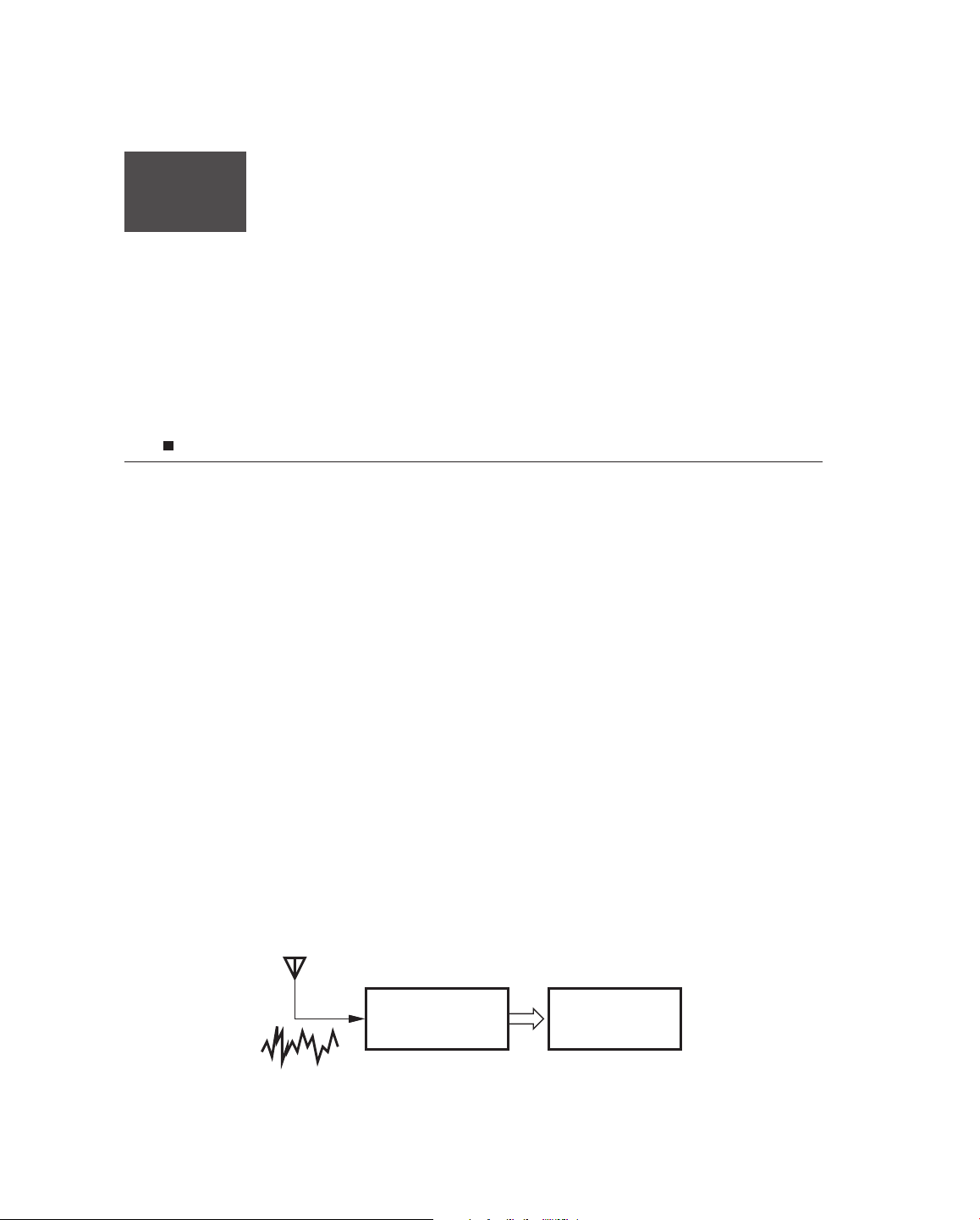
domain. Figure 1.1 shows an example where the RF signal received by the antenna is digitized by an
analog-to-digital converter (ADC) and processed entirely in the digital domain. Would this scenario send
analog and RF designers to the unemployment office? 0 1 Antenna 0 0 1 1 0 1 1 0 Analog−to−Digital Digital Signal Converter Processor RF Signal
Figure 1.1 Hypothetical RF receiver with direct signal digitization. 1
Tài liệu liên quan:
-

Cambridge IELTS 13 Test-1 Overview and Practice Review | Tài liệu Tiếng Anh
5 3 -

IELTS Test 2 Review - Cambridge 13 Preparation Guide | Tài liệu Tiếng Anh
7 4 -
Litfocus Litreading Survey: Student Reading Interests & Habits Questionnaire | Tài liệu Tiếng Anh
6 3 -

Sách Pre-intermediate Market leader - Business English Course Book
22 11 -

Exam booster for B1 preliminary and B1 preliminary for schools with answer key
8 4