Development of dairy farming in the Netherlands 1960-2000 | Tài liệu Tiếng Anh
Development of dairy farming in the Netherlands 1960-2000 | Tài liệu Tiếng Anh . Tài liệu giúp bạn tham khảo, ôn tập và đạt kết quả cao. Mời đọc đón xem!
Môn: Tiếng Anh chuyên ngành 332 tài liệu
Trường: Tài liệu Tiếng Anh chuyên ngành, Tiếng Anh cho người đi làm 432 tài liệu
Tác giả:


















Preview text:
Development of dairy farming in the Netherlands in the period 1960-2000 Peter van Horne Henri Prins Project code 61534 June 2002 Report 2.02.07
Agricultural Economics Research Institute (LEI), The Hague I
The Agricultural Economics Research Institute (LEI) is active in a wide array of research
which can be classified into various domains. This report reflects research within the fol- lowing domain: Statutory and service tasks ;
Business development and competitive position
Natural resources and the environment Land and economics Chains Policy
Institutions, people and perceptions Models and data II
Development of dairy farming in the Netherlands in the period1960-2000 Horne, P. van and H. Prins
The Hague, Agricultural Economics Research Institute (LEI), 2002
Report 2.02.07; ISBN 90-5242-729-1; Price € 9.- (including 6% VAT) 26 p., fig., tab.
The report gives a brief description of the development of dairy farming in the Netherlands
during the period 1960-2000. The report provides a statistical review of the development of
the Dutch dairy sector. It also provides an overview of technology development in dairy
farming in the Netherlands. The application of new technologies is set against the back-
ground of some major changes in agricultural policies. Orders: Tel: 31.70.3358330 Fax: 31.70.3615624
E-mail: publicatie@lei.wag-ur.nl Information: Tel: 31.70.3358330 Fax: 31.70.3615624
E-mail: informatie@lei.wag-ur.nl © LEI, 2002
Reproduction of contents, either whole or in part: ;
permitted with due reference to the source not permitted
The General Conditions of the Agricultural Research Department apply to
all our research commissions. These are registered with the Central
Gelderland Chamber of Commerce in Arnhem. III IV Contents Page Preface 7 Summary 9 1. Introduction 11 2.
Statistical review of Dutch dairy sector 1960-2000 12 3.
1960-1980: fast growing production of milk 16 3.1 Introduction 16 3.2
1960-1965: from hand-milking and horse traction
to milking machines and tractors 16 3.3
1965-1970: towards specialised farms 17 3.4
1971-1975: modernisation of the housing system,
mechanisation of roughage production and improvement of infrastructure 17 3.5
1976-1980: the introduction of the milking tank and maize 19 4.
1980-2000: Focus on quality, environment and labour productivity 20 4.1 Introduction 20 4.2
1980-1985: milk quota and artificial insemination 20 4.3
1986-1990: new ways of breeding 21 4.4
1990-1995: the need to reduce pollution, a new challenge 21 4.5
1995-2000: introduction of the milking robot 22 References 23 Annex 1
Development of dairy farming in the Netherlands according to
national statistics; all farms with at least 1 dairy cow 25 2
Development of dairy farming in the Netherlands
according to the representative sample of LEI (BIN); specialised dairy farms 26 5 6 Preface
'The Experience of Dutch Agricultural Development and its Importance to China' is a joint
research project of the Agricultural Economics Research Institute of the Chinese Agricul-
tural Academy of Sciences (IAE-CAAS) in Beijing and the Agricultural Economics
Research Institute (LEI) of Wageningen University and Research Centre in The Hague.
The Chinese Ministry of Agriculture, the Dutch Ministry of Foreign Affairs (Asian Facil-
ity) and the Dutch Ministry of Agriculture, Nature Management & Fisheries jointly finance
the project. The objectives of the project are: -
to reveal the causes of the considerable differences between agricultural productivity
in China and the Netherlands, and to find ways to improve the efficiency of Chinese agriculture; -
to analyse developments in Chinese agriculture with special reference to market op-
portunities for Dutch agribusiness; -
to provide the Chinese partners with on-the-job training, to familiarise them with re-
search approaches and methodologies used at LEI.
This case study details the technical development of the dairy sector in the Nether-
lands between 1960 and 2000. The authors are by P. van Horne and H. Prins from the agriculture division of LEI.
We hope the results will contribute to the further development of dairy in the
Yangtze Delta and to the fruitful cooperation between those involved in the Chinese and Dutch dairy sectors. The managing director, Prof. Dr. L.C. Zachariasse 7 8 Summary
Dairy production is one of the most important production sectors in Dutch agriculture. The
last forty years have seen important changes in the dairy sector. Milk production grew
enormously during the first part of this period, although after 1984 this development was
halted by a change in EU dairy policy. The number of dairy farms decreased dramatically
and milk production per hour and per hectare showed a strong increase in particular until
1985. These developments were technological changes and should be seen against the
background of changes in the economic environment, institutions and market conditions.
The main technological changes during the first half of the sixties were the large-
scale introduction of the milking machine and the introduction of the tractor (see table 1).
The milking machine made it possible for one worker to milk more cows thereby reducing
labour costs per kilogram of milk. This period also saw the introduction of artificial in- semination.
The second half of the sixties can be characterised by specialisation in dairy farming.
The investments in milking machines, milking parlours and pipelines for the transport of
milk convinced many farmers to specialise in dairy production. Many farmers with dairy cows stopped farming. Table 1
Summary overview of development in dairy farming in the Netherlands (LEI data) Period Land/ Yield Cows New technology input farm /cow /farm (ha) (kg) (#) 1961-1965 14 4,120 18
- wide-scale introduction of milking machines - artificial insemination 1966-1970 16 4,350 22
- higher fertiliser use on grassland - specialisation in dairy 1971-1975 20 4,875 34 - milk cooling tank - from hay to grass-silage
- loose housing system with cubicles 1976-1980 22 5,340 48 - maize feeding - higher concentrate feeding 1981-1985 25 5,700 54
- cow identification for individual feeding
- wide-scale use USA Holstein-Friesian blood 1986-1990 29 6,575 49 - embryo transplantation 1991-1995 31 6,975 51
- environmental protection (e.g. manure injection) 1996-2000 35 7,525 55 - introduction milking robot 9
A further enlargement in the scale of production was stimulated in the seventies by
the introduction of the cubicle shed and the milk-cooling tank. The European Union
stimulated this process by subsidies. The introduction of the cooling tank made it possible
to reduce the transport costs of the dairy factories by changing the system of transporting
the milk to the dairy factory from milk cans to milk tank. The dairy factories stimulated the
introduction of the milk-cooling tank on farms because of this advantage in transport costs.
Two important changes in the seventies took place with respect to roughage. The
first change was from the production of hay to the silage of grass. This made it possible to
reduce labour costs and improve the quality of the feed. The second change was the intro-
duction of the production of maize and the feeding of maize silage to cattle.
After the introduction in the European Union of the milk quota system in the eight-
ies, the focus in the Dutch dairy sector changed from expanding production to reduction of
costs. In artificial insemination a change took place from breeding dual-purpose cows
(milk and meat) to breeding cows with a high milk yield with the help of imported sperm
from bulls from America. At the same time a personal computer was introduced to give
each individual cow the right amount of feed for the optimal milk yield. The introduction
of embryo transplantation significantly increased the number of high milk yielding cows.
In the nineties the environment became more and more a subject of concern. Dairy
farming is one of the sources of environmental pollution. Many regulations came into force
to reduce pollution. As a consequence many new techniques were introduced to reduce air
and water pollution and to make a better use of available manure.
An important event for the nineties was the introduction of the milking robot, a
Dutch invention. At the end of the nineties half of the 500 robots in Europe could be found
in the Netherlands. A further increase is expected as the milking robot helps to reduce la-
bour costs and contributes to the health of the cow. 10 1. Introduction
Since land and labour are expensive in the Netherlands, the production systems used in ag-
riculture are generally intensive. Land and labour productivity are high to be competitive
with other production areas. Due to economic growth, land and labour are becoming more
and more expensive. As a consequence there is a need for a continuous increase in produc-
tivity to maintain competetivity. Dairy farmers make this increase in productivity possible
by a continual adaptation of new technologies. Agricultural policies of the Dutch govern-
ment and later of the European Union have stimulated the modernisation of dairy farming.
The current use of fertiliser on grassland is about 300 N per hectare, the milk yield
per cow is 7,500 kg and 1 worker can handle more than 50 cows by using modern housing
systems, automatic milking and some of the fieldwork is done by contractors. Under the
climate conditions prevailing in the Netherlands, grass and maize are the most suitable
crops for dairy production. Since nitrogen is cheap leguminous crops like lucerne are not
used in intensive systems, also because of the complicated farm management. In addition
to grass and silage the cows get about 2,200 kg of concentrate per year. This includes the
concentrate for young stock (200-250 kg). Almost all farms use cubicle sheds in combina-
tion with parlour milking. This has many advantages: lower labour input, easier to
mechanise and manage and improved animal health and welfare. 11
2. Statistical review of Dutch dairy sector 1960-2000
This section describes the trends in the Dutch dairy sector based on the evolution of a
number of indicators between 1960 and 2000. The data are partly derived from the annual
agricultural censuses carried out by the Central Bureau of Statistics (CBS). Another part of
the data is derived from the Farm Accountancy Data Network of the Agricultural Eco-
nomics Research Institute (LEI). The first source consists of data of all farms with at least
one cow. The second source is a representative sample of farms specialised in dairy with a
farm size above a minimum threshold. These specialised farms represent more than % of
the total milk production in the Netherlands.
In 2000, the number of dairy cows was at the same level as in the beginning of the
nineteen fifties. However, important changes have taken place during this period. Until
1984 the number of milking cows increased year by year, reaching an almost seventy per-
cent higher level than in the early fifties. Later the number of dairy cows decreased year by
year. This drastic change in development was largely due to the introduction by the Euro-
pean Union of a milk quota system per member country. The introduction of this quota
system was necessary to limit the surplus production of milk in the European Union. At the
time of its introduction, the level of the milk quota for the Netherlands was such that milk
production had to be decreased. In addition, after 1984 the level of the quota was reduced
several times. Consequently the development of milk production reversed. In 1984 milk
production was twice as much as in 1960, while afterwards it declined by 16%. Table 2.1
Development of dairy farming in the Netherlands 1960 1985 2000 Farms with dairy cows x 1,000 185 58 29 Dairy cows x 1,000 1,628 2,367 1,504 Dairy cows per farm 9 41 51 Milk yield per cow in kg 4,205 5,371 7,034 Milk production x 1 mln kg 6,721 12,525 11,173 a) a) 1999
Resource: Land- en tuinbouwcijfers, different years.
The changes in the acreage for roughage were limited since 1960. It remained nearly
stable until 1985 and afterwards it declined by 9%. However it has to be kept in mind that
roughage is not only used for dairy cows but also for beef cattle and sheep. During the sev-
enties and eighties part of the grassland was substituted by maize land.
The number of farms with cows decreased continuously. In 2000 only 29,000 farms
with dairy cows were left compared with over 185,000 in 1960 (see table 2.1). Many farm- 12
ers stopped farming and a number of farmers with dairy cows specialised in another direc-
tion. Most of the farmers with milking cows now specialise in dairy production.
Consequently the number of dairy cows per farm increased from 9 in 1960 to 51 in 2000.
Only in the second half of the eighties did the number of milking cows per farm decrease
somewhat due to the introduction of the quota system. The milk production per dairy cow
increased strongly, in particular after 1970. In 1999 the milk production per cow was more
than 50% higher than in 1970. As a consequence of the increase of the number of cows per
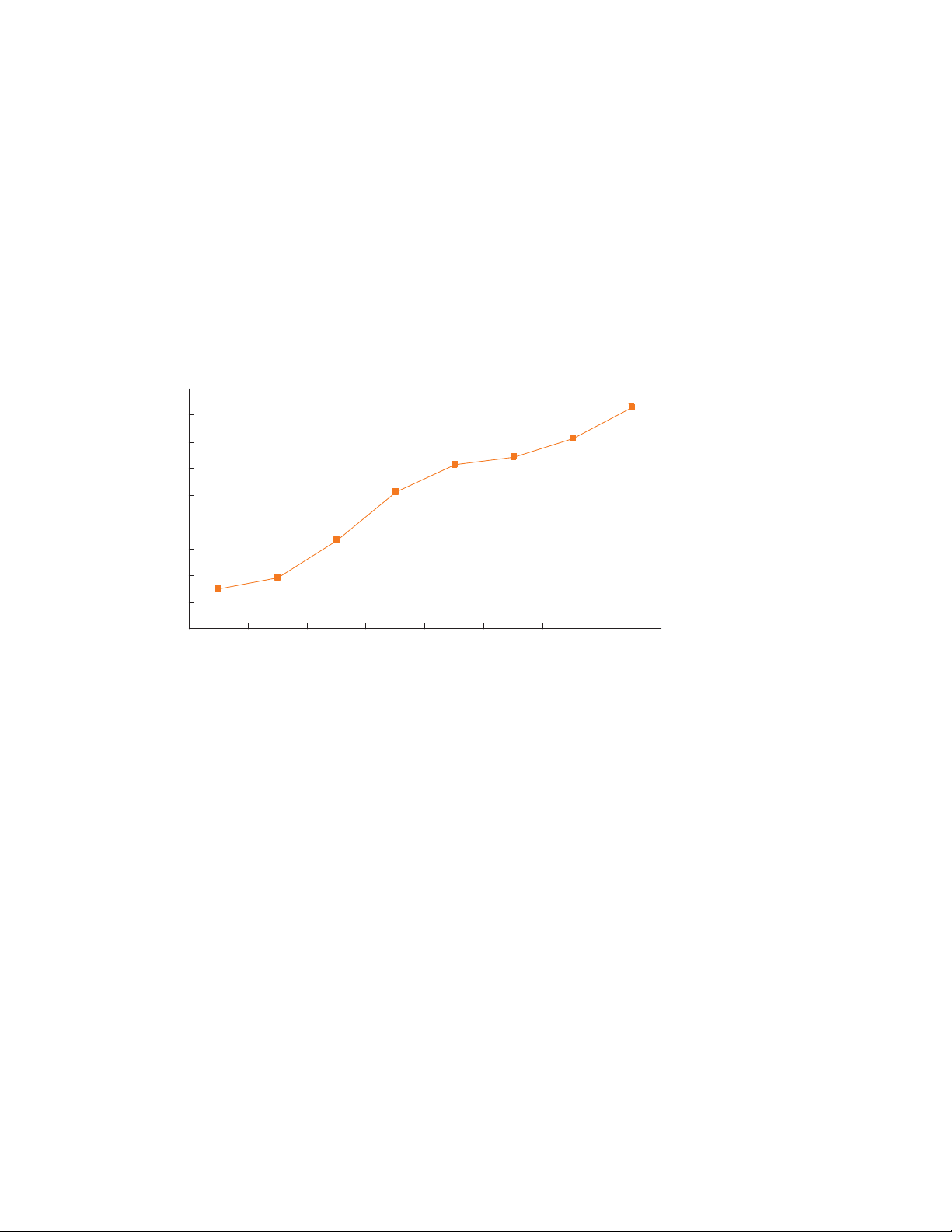
farm and the growth of the milk yield per cow the milk production per farm showed a con-
tinuous increase (see figure 2.1). All these developments are related to the technological
developments, which are described in this report and to changes in policies and economic environment. 450.000 400.000 350.000 300.000 250.000 200.000 150.000 100.000 50.000 0 1965 1970 1975 1980 1985 1990 1995 1999 Figure 2.1
Production of milk in kg per farm
It was not only the number of farms with dairy cows which declined during the last
decades, but also the number of labour hours per farm. On the specialised dairy farms in
the Farm Accountancy Data Network the number of labour hours decreased by more than
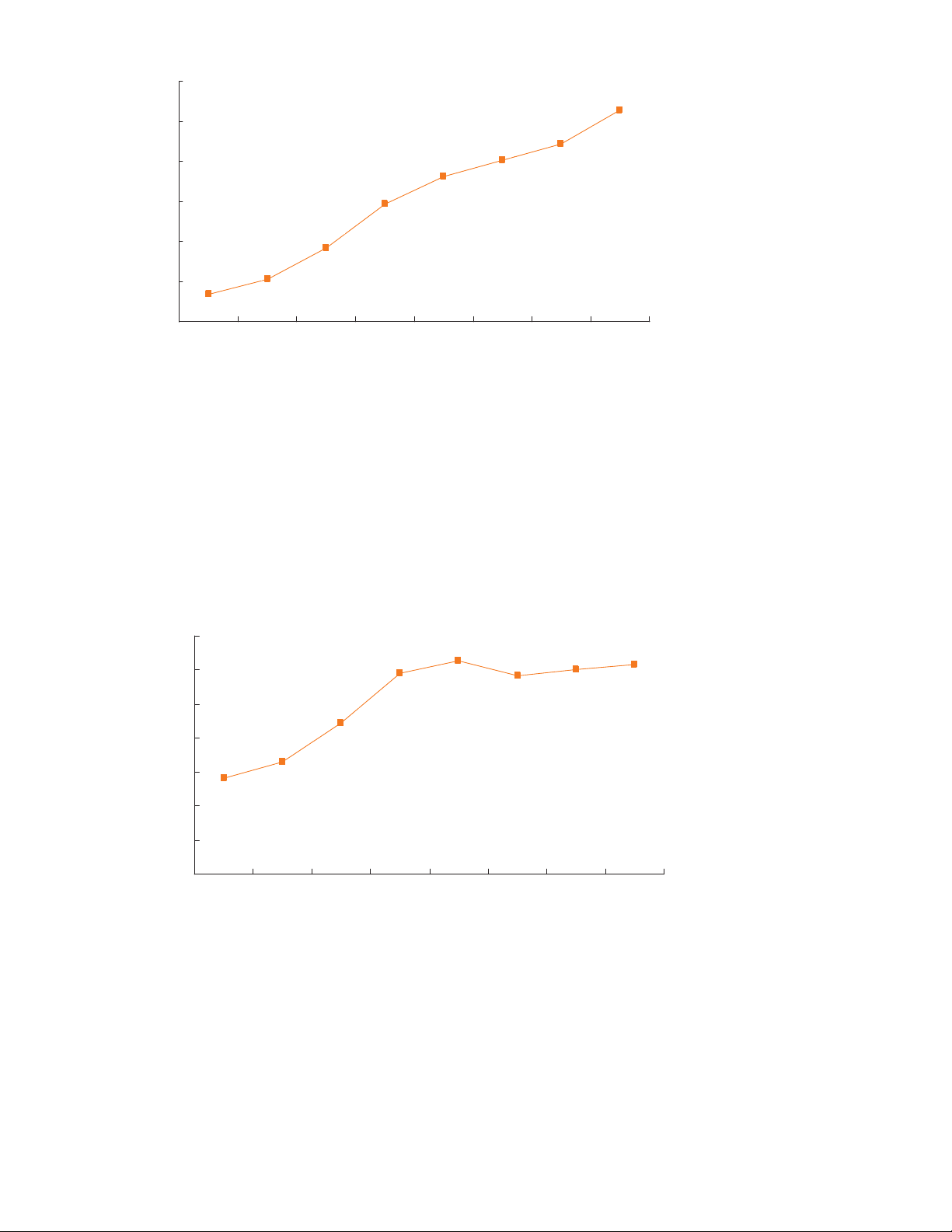
25% from 5,350 in 1965 to 3,900 in 1999. As the milk production increased during this pe-
riod the labour productivity expressed as the production of milk per labour hour showed a
strong growth (see figure 2.2). In 1965 72 labour hours were needed for the production of
1,000 kg milk and in 1999 only 9.5. In the eighties and nineties, however, the increase of
this indicator was not as high as it was in the sixties and seventies. 13 120 100 80 60 40 20 0 1965 1970 1975 1980 1985 1990 1995 1999 Figure 2.2
Production of 1,000 kg milk per hour of labour
The size of the specialised dairy farms in the Farm Accountancy Data Network
measured in hectares also increased. In 1965 it was only 14 hectares, but by 1999 it had in-
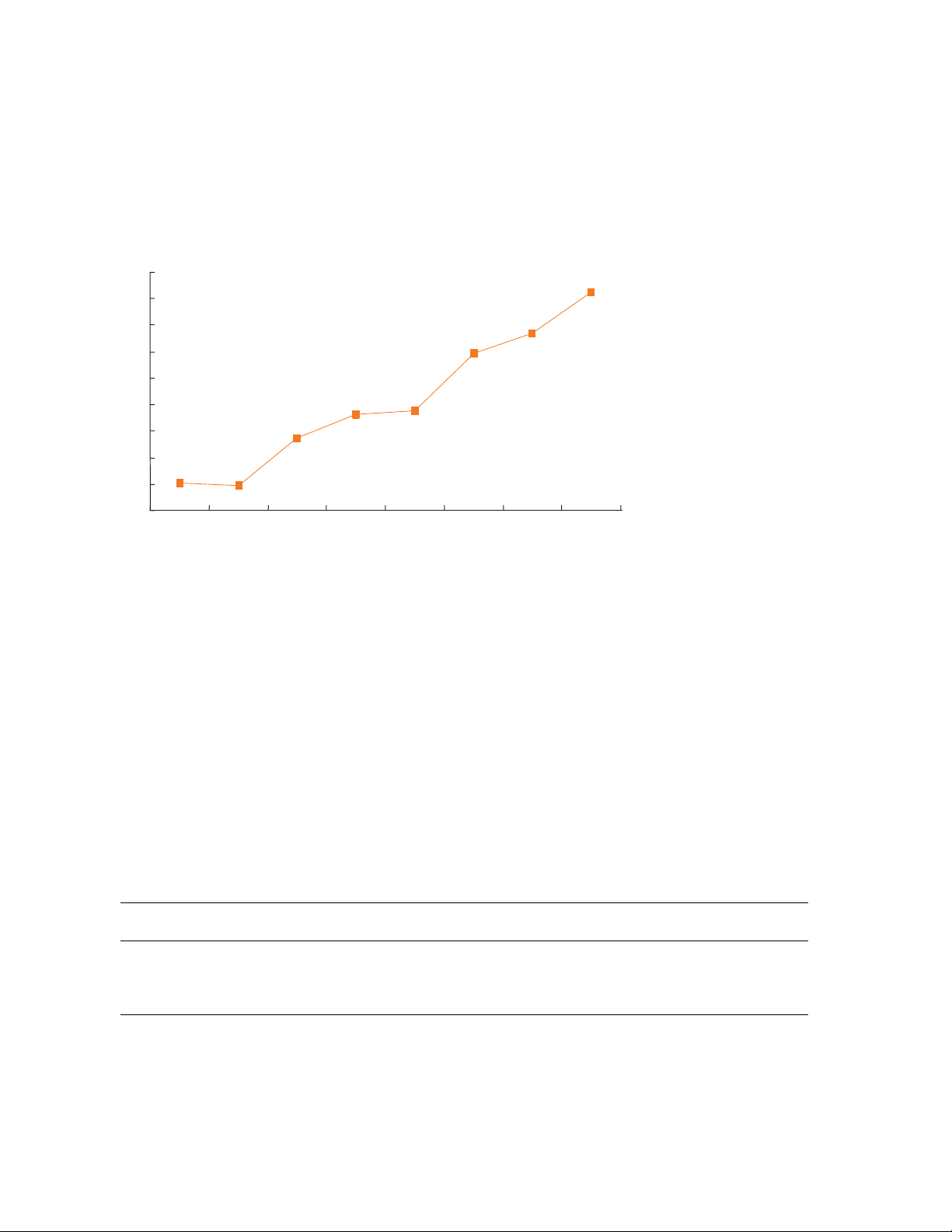
creased by almost 150% to 35 ha. Most of this acreage is grassland and maize. The milk
production per hectare grassland and maize more than doubled between 1965 and 1980
(see figure 2.3). This was partly the result of the use of more fertilisers and concentrates.
After the introduction of the quota system the production of milk showed a temporary de-
crease, but in 1999 it was almost as high as in 1985. 14000 12000 10000 8000 6000 4000 2000 0 1965 1970 1975 1980 1985 1990 1995 1999 Figure 2.3
Production of milk in kg per ha grassland and foddercrops
The increase in land and labour productivity was partly the result of substitution of
land and labour by capital. As an indicator for this substitution the value of machinery per
farm can be used. In 1999 this value was on dairy farms in the Farm Accountancy Data 14
Network, measured in prices of 1999, almost six times as high as in 1965. However, ex-
pressed per kg milk, in 1999 the value of the machinery was only 5% higher than in 1965.
It can be concluded that not only labour and land productivity increased but also factor productivity. 15
3. 1960-1980: fast growing production of milk 3.1 Introduction
The period 1960-1980 can be characterised by a fast growing production of milk per farm.
This was accompanied by a strong growth in labour productivity. These developments
were largely due to a number of changes in production technology. These developments
were stimulated by the agricultural policy of the Dutch government and afterwards by the
agricultural policies of the European Community. In this respect the Dutch Agricultural
Development and Reorganisation Fund has played an important role. On the one hand sub-
sidy schemes were set up for farmers who want to leave farming, while on the other hand
grants were made to improve the company structure of those who stayed on. An important
scheme of the fund was the interest subsidy (1972-1985), a consequence of the EU guide-
line 72/159 stimulating the modernisation of agricultural enterprises with development
possibilities. Of the support granted, a subsidy on the interest of loans, the European Ori-
entation and Guarantee Fund compensated 25%. In addition many dairy farmers,
particularly the younger farmers, made use of the Agricultural Loan Guarantee Fund. This
fund, set up in 1951, targeted profitable investments by farmers with inadequate securities.
The fund guaranteed the bank the payment of interest and repayment of the loan if the
farmer was unable to do so. In the period 1972-1985, 60% of the expansion of dairy live-
stock was in enterprises that were in receipt of the interest subsidy. This chapter describes
the most important changes in production technology. 3.2
1960-1965: from hand-milking and horse traction to milking machines and trac- tors
In this period an average farm had only 10 to 15 hectares of land and the yield per cow was
around 4,100 kg. Cows were kept in traditional barns and tied up during winter. Particu-
larly during the winter, this was a labour intensive housing system. Milking by hand was
still common practice. One worker could handle 10 to 15 cows. It was during this period
the large-scale introduction of milking machines took place. The milking machine had
been introduced earlier in the Netherlands, but cheap labour available after the second
world war and technical problems with the first prototypes delayed the great breakthrough
towards the early sixties. Between 1960 and 1965, the number of milking machines grew
from 39,000 to 63,000. Milking parlours were not used at that time. The bucket milking
system was common. In the winter, when the cows were tied up, the milker went to every
individual cow. In the summer the cows were tied up during the milking too, either in the
tie-up cowhouse or at a special movable fence. The milker usually milked with two or
three buckets. The milk was delivered in milking cans. 16
This is also the period in which the tractor was introduced to almost all farms. Soon
after World War II the tractor was introduced in Holland (Marshal plan), first on machine-
corporations and contract work companies and later on the bigger farms. In the early six-
ties the medium-sized and even most of the smaller farms switched over to mechanical traction. 3.3
1965-1970: towards specialised farms
According to LEI data the average size of farms did grow slightly. On average the cow got
900 kg of concentrate. In this period more farms specialised on one 'agricultural activity'.
With the investment in milking machines and parlours many farmers decided to specialise
their farms on dairy. The milking machines developed. Pipelines were introduced to trans-
port the milk from the cow to the can. The fertiliser input on grassland grew in this period from 175 kg to 230 kg of N/ha. 3.4
1971-1975: modernisation of the housing system, mechanisation of roughage
production and improvement of infrastructure
Modernisation of the housing system
In this period an almost revolutionary switch from traditional to modern housing systems
took place. Cubicle sheds in combination with parlour milking were introduced on many
farms. Cubicle sheds were mostly provided with slatted floors. Under the slats, and some-
times under the entire house, some of the slurry (or even all slurry) could be stored. At the
same time on almost all farms cooling tanks were introduced. From 1970 the number of
tanks grew from 25,000 to 45,000 in 1975. Table 3.1
Development of mechanisation on specialised dairy farms a) 1965 1980 1999 Farms with milking machine (%) - 98 100 Farms with milking tanks (%) 0 100 100 Farms with cubicle (%) 0 45 80 Tractors (HP/Farm) 25 - 172
Milk production per farm (x 1,000 kg) 74.2 256.3 414.6 Value of machinery in guilders per kg milk/prices of 1999 0.98 0.94 1.03
a) Sample of representative farms
Before its introduction in the Netherlands, the cooling tank (an American) was used
in Scandinavia and England. Between 1971 and 1975 the introduction of the cooling tank
was stimulated by both government and the dairy industry. Smaller farms in particular 17
were granted subsidies to install a milking tank. This made it possible for the dairy facto-
ries to change the milk transport system from the farm to the factory from transport in cans
to transport in tanks. The milking tank was part of a further development towards more
mechanisation on the dairy farm.
Mechanisation of roughage production
In the sixties a lot of grass was still harvested as hay. Hay was stored in haystacks and fed
to the cows during the winter. Harvesting the hay, storing it and also feeding the cows was
very labour-intensive. In the middle of the sixties research focussed on storage methods
through grass silage. With this method the drying period for the grass on the field is just
some days, which is a big advantage in the Dutch climate. Between 1970 and 1980 the per-
centage of hay in the diet of the dairy cows (as % of the Dry matter offered) changed from
70% to 20%. At the same time mowing, tedding and windrowing of the grass was mecha-
nised. The switch to silage instead of hay implicated an adjustment of management. The
silage made it possible to harvest high quality young grass (high energy-contents per kg
dry matter). Over the years the method of ensiling improved. The period required to dry
the grass was reduced to 1-2 days. This was important because of minimising the risk of
loss of quality because of rainfall. The reduction of the drying time was made possible by a
conditioner constructed on the mower and by tedding and windrowing soon after mowing.
If necessary, additions were added to ensure a good ensiling process. This all required a lot
of advanced machinery on the farm. The development of the mechanisation can be illus-
trated by the amount of horsepower of tractors and of labour. In 1965 mechanisation was
very low. The average farm produced about 75,000 kg of milk. This required more than
5,000 hours of labour. On most farms a 20-30 hp tractor was available. The value of the
total machinery was about ƒ 72,000 (value 1999, see table 3.1).
Nowadays the average farm produces 415,000 kg milk, requiring less than 4,000 la-
bour hours. Mechanisation has grown to a value of ƒ 425,000 per farm and the tractors on
the farm have a total capacity of 172 hp. This might seem quite a lot, but expressed per 100
kg milk mechanisation did not change much. Labour per 100 kg milk fell by almost 90% in
35 years (see annex 2 and figure 2.2).
Improvement of infrastructure
Another development to facilitate the exploitation of grassland in the seventies was the
parcellation and reallocation of the land. Almost all farms in the Netherlands participated
in the so-called 'ruilverkavelingen'. This implied enlargement of the parcels, levelling, ex-
change of land between farmers, improvement of drainage and accessibility, sometimes
even moving complete farms to another location. The government supported these expen-
sive operations by providing high subsidies and a government service supervised the land consolidation projects 18 3.5
1976-1980: the introduction of the milking tank and maize
From milking can to milking tank
In this period the dairy industry completely converted to the use of milking tanks on the
farms. The industry no longer only stimulated the use of milking tanks, but also forced
farmers to switch, so that the dairy industry could complete the change of the milk trans-
port system to transport of milk in tanks. 18 16 14 12 10 8 6 4 2 0 1965 1970 1975 1980 1985 1990 1995 1999 Figure 3.1
Maize per percentage of grassland and fodder crops The advance of maize
As a result of breeding, maize 'breeds' became available which were suitable for the Dutch
climate. Feeding maize silage to the dairy cows is attractive for farmers, as the protein
content of maize is lower than that of grass. For that reason maize can play an important
role in the optimisation of the feed ration. Although maize is an expensive crop it is par-
ticularly popular on the sandy soils in the Netherlands. For the Netherlands as a whole the
area of maize as a percentage of the area of grassland and fodder crops increased from 2%
in the sixties to more than 16% in the end of the nineties (see figure 3.1). On the sandy
soils up to 50% of the winter diet currently consists of maize silage (see table 3.2). Table 3.2
Forage in the diet of dairy cows (as % of dry matter offered) in winter (estimate by S. Schuk- king, 2000) 1960 1970 1980 1990 2000 Hay 90 70 20 5 5 Grass silage 10 28 55 65 60 Maize silage - 2 25 30 35 19
4. 1980-2000: Focus on quality, environment and labour productivity 4.1 Introduction
The development during the last two decades of the century differs in many aspects from
that of the previous period. An additional factor during this period was the continuous need
to increase labour productivity. However the circumstances under which this had to be re-
alised changed. Most important was that it was impossible to increase the production of
milk any further, even though this was required as a result of measures introduced by the
EU. In addition the focus of society became more directed at the quality of the environ-
ment. New legislation came into force to protect the environment and to reduce pollution.
For the dairy sector, legislation aimed at reducing air and water pollution was particularly
important. Dairy farms have to satisfy the criteria for environmental licences, entailing
costs in the form of specific investments required to adapt the concern, for example to be
able to store enough manure in the right way and to apply it properly to the land. These
regulations are also increasingly influenced by European policy. In addition more farmers
try to distinguish themselves in the market by sustainable production (organic or ecological
products) and thus in some cases obtaining higher prices for their products. The govern-
ment has stimulated such developments in recent years. 4.2
1980-1985: milk quota and artificial insemination
Quota for milk production: From quantity to quality
During the seventies milk production in the European Community increased very quickly.
The self-sufficiency grew well over 100%. There were few opportunities to export milk
products to destinations outside the EC and these were supported by high export subsidies.
Stocks of milk powder and butter became 'mountains'. In 1983 a milk production quota
was introduced for all the member countries of the European Community to stop surplus
production. Each member country and each dairy farmer within the member countries was
given a milk production quota. Both the milk production quota per member country and
the milk production quota per dairy farmer were based on the production of milk during
the last few years before the introduction of the system. Milk quotas have had an enormous
influence on the development of dairy farming. The focus on expanding production
changed to interest in reducing the costs. In particular the direct costs per kg milk fell. The
yield per cow grew from 5,700 kg/cow in 1985 to 7,530 in 1999, whereas the amount of
concentrate per cow stayed at the same level. Moving up of the Yankees
After the Second World War, artificial insemination in dairy cows was organised in a
'structured' way. In 1983 more than 75% of the 'pregnancies' was achieved through artifi- 20
Tài liệu liên quan:
-
Cambridge IELTS 13 Test-1 Overview and Practice Review | Tài liệu Tiếng Anh
6 3 -
IELTS Test 2 Review - Cambridge 13 Preparation Guide | Tài liệu Tiếng Anh
8 4 -
Litfocus Litreading Survey: Student Reading Interests & Habits Questionnaire | Tài liệu Tiếng Anh
7 4 -
Sách Pre-intermediate Market leader - Business English Course Book
23 12 -

Exam booster for B1 preliminary and B1 preliminary for schools with answer key
9 5