v
e
r
b
a
l
c
o
m
m
u
n
i
c
a
t
i
o
n
v
e
r
b
a
l
c
o
m
m
u
n
i
c
a
t
i
o
n
P
r
e
s
e
n
t
e
d
b
y
G
r
o
u
p
5
Members
Members
Trịnh Thị Ngọc Trâm
Đào Phuong Thuỳ
Huỳnh Thị Mỹ Hạnh
,
,
I. HIGH
INVOLVEMENT
I. HIGH
INVOLVEMENT
High Involvement" is an high-energy
communication style where rapid speech and
overlapping/interrupting talk are accepted
signals of enthusiasm and a desire for deep
connection between participants.
Definition
Definition
Russian
Italian
Greek
Spanish
South American
Arab
African
High Involvement cultures
Features
Features
Examples
Examples
In Italy, the High Involvement style is clear during family
meals. People often interrupt (talk over each other), usually
with strong hand gestures.
This is not seen as rude; it's a sign of excitement, passion, and
that everyone is truly engaged in the topic.
Examples
Examples
In Vietnam, High Involvement traits appear in
informal group talks (like at a sidewalk café).
People quickly jump in or talk over one
another to share feelings, jokes, or ideas.
This shows closeness, intimacy, and a
willingness to participate right away, rather
than strictly waiting for turns to speak.
ii. high considerateness
conversation pattern
ii. high considerateness
conversation pattern
The “high considerateness” conversational style is a communication
pattern in which speakers avoid overlapping talk, wait carefully for their
turn, speak more slowly, and allow longer pauses between turns.
They follow the conversational rule of “do not impose”, meaning they
minimize interruption, avoid dominating the interaction, and maintain
harmony in communication.
1. definition
1. definition
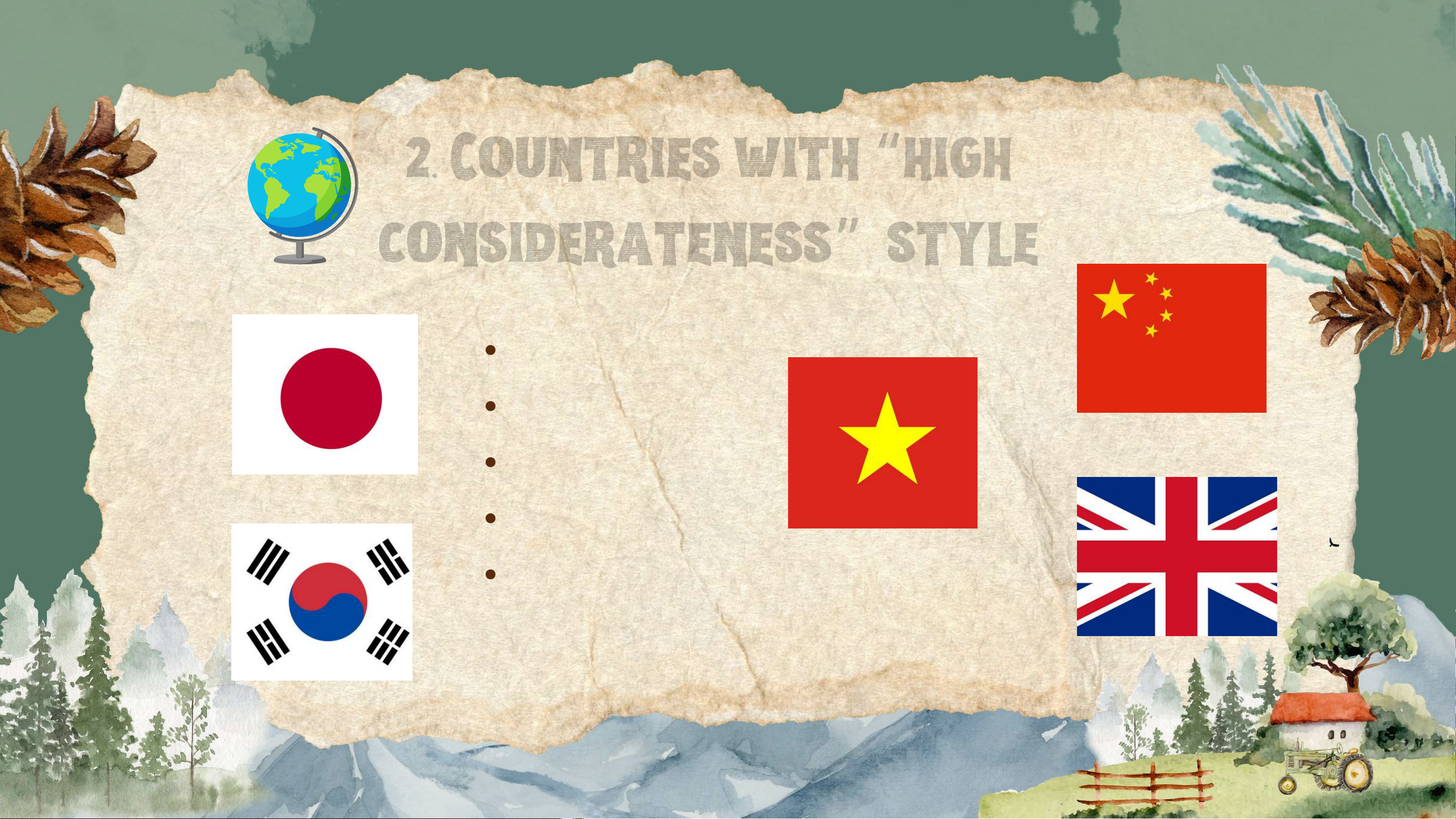
2. Countries with high
considerateness style
2. Countries with high
considerateness style
Japan.
South Korea.
China.
Vietnam.
The United Kingdom.
(1) Speak one at a time.
(2) Use polite listening sounds.
(3) Refrain from interrupting.
(4) Give plenty of positive and respectful responses to their
conversation partners.
3. features
3. features
4. Examples
4. Examples
In Vietnam, we can clearly see the “high
considerateness” style in family conversations. For
example, during a family meeting, younger members
rarely interrupt older ones. Instead, they wait
patiently, and when the elder finishes speaking,
they polite say: “Excuse me, may I add something?”
4. Examples
4. Examples
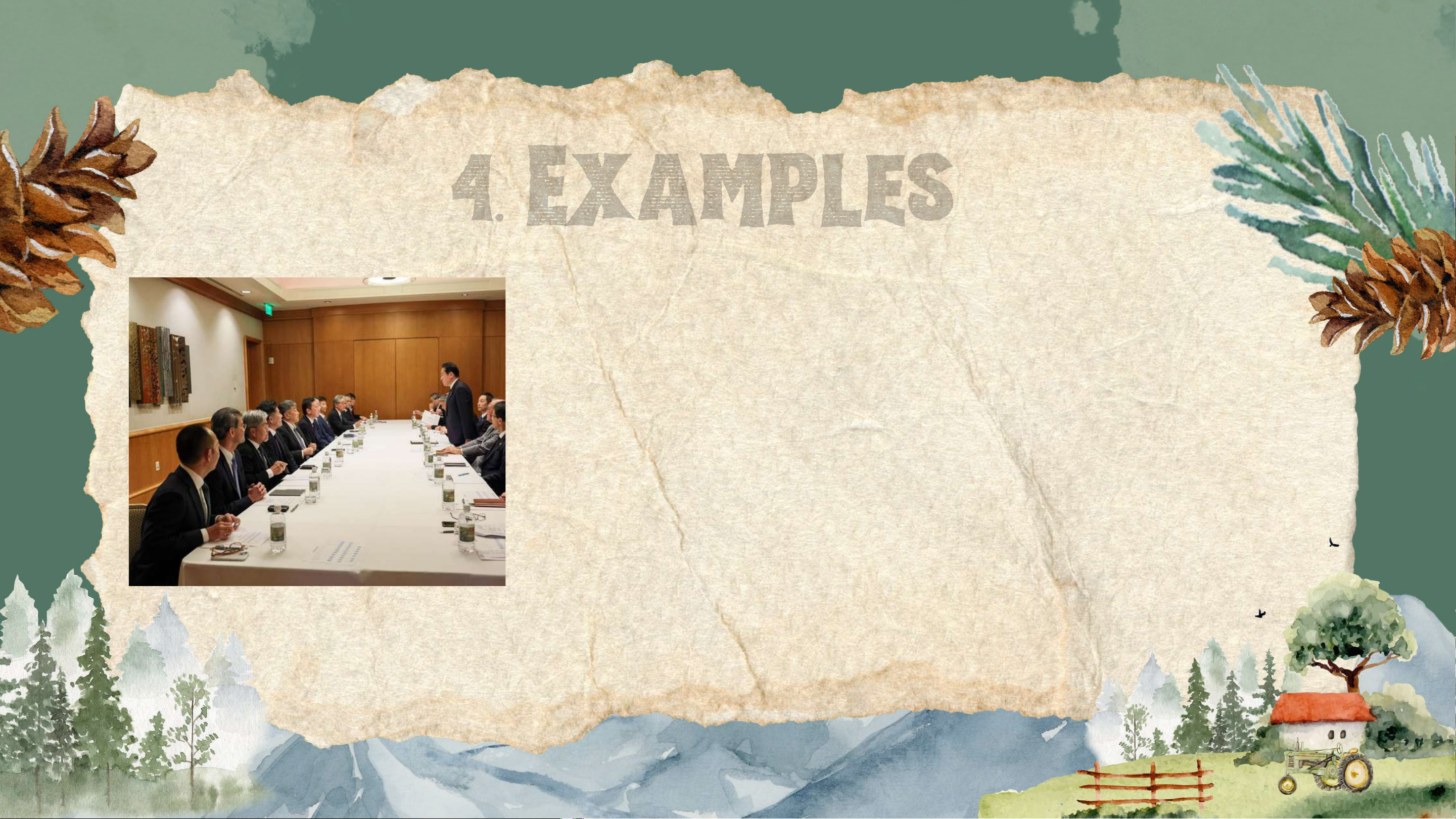
In Japan, this style is especially common in the
workplace.
If an employee disagrees with a supervisor, they don’t
express disagreement directly.
Instead, they use soft, indirect language such as:
“Maybe we could also consider another option…”
III. comparison
Between two patterns
III. comparison
Between two patterns
Criteria
High Involvement
High Considerateness
Definition
The speaker actively participates,
expresses emotions clearly, often
interrupts, and reacts quickly.
The speaker focuses on the listener,
speaks slowly and clearly, rarely
interrupts, and avoids causing
embarrassment.
Communication
speed
Fast, continuous, and overlapping
between speakers.
Slow, measured, allowing the listener
time to understand.
Response style
Interrupts frequently to show
agreement or disagreement
immediately.
Waits for the other person to finish,
responds carefully, chooses words
thoughtfully.
Emotional
expression
Laughs loudly, nods quickly, uses
gestures, shows strong emotions.
Controls emotions, smiles lightly, limited
body language, avoids embarrassing
others.
Communication
goals
To create closeness, energy,
enthusiasm, and show active
participation in the conversation.
To respect the listener, maintain harmony,
avoid conflict, and uphold formality.
Cultural
examples –
specific behaviors
- Mexico/Brazil: People talk loudly and
often overlap each other.
- Vietnam (friends): Friends interrupt
each other during casual
conversations.
- Japan: People wait their turn and avoid
interrupting.
- Vietnam (talking to elders/superiors):
Speakers talk slowly and politely without
interrupting.
Criteria
High Involvement
High Considerateness
conclusion
conclusion
High involvement = enthusiasm, fast responses, active
participation
High considerateness = respect, patience, polite turn-taking
Each style fits different cultural and social contexts
Understanding both helps avoid misunderstandings
Adapting our style improves cross-cultural communication
Resources
Resources
https://www.researchgate.net/figure/Examples-of-greetings-with-
High-Involvement-and-High-Considerateness-styles_tbl1_342042466
https://faculty.georgetown.edu/bassr/githens/tannen.htm
https://fixanswer.com/what-is-high-involvement-in-verbal-
communication/#google_vignette
https://www.coursera.org/articles/verbal-communication?
msockid=130263afe3606f3e02647119e2726e54
t
h
a
n
k
y
o
u
t
h
a
n
k
y
o
u

Preview text:

verbal co n mmunicatio Presented by Group 5 Members
Trịnh Thị Ngọc Trâm
Huỳnh Thị Mỹ Hạnh Đào Phuo , n,g Thuỳ I. HIGH INVOLVEMENT Definition
High Involvement" is an high-energy
communication style where rapid speech and
overlapping/interrupting talk are accepted
signals of enthusiasm and a desire for deep
connection between participants. High Involvement cultures Russian Italian Greek Spanish South American Arab African Features 1. Talk more 2. Interrupt more 3. Expect to be interrupted 4. Talk more loudly at times
5. Talk more quickly than those from cultures
favoring “high considerateness” styles. Examples
In Italy, the High Involvement style is clear during family
meals. People often interrupt (talk over each other), usually
with strong hand gestures.
This is not seen as rude; it's a sign of excitement, passion, and
that everyone is truly engaged in the topic. Examples
In Vietnam, High Involvement traits appear in
informal group talks (like at a sidewalk café).
People quickly jump in or talk over one
another to share feelings, jokes, or ideas.
This shows closeness, intimacy, and a
willingness to participate right away, rather
than strictly waiting for turns to speak. ii. “high considerateness” conversation pattern 1. definition
The “high considerateness” conversational style is a communication
pattern in which speakers avoid overlapping talk, wait carefully for their
turn, speak more slowly, and allow longer pauses between turns.
They follow the conversational rule of “do not impose”, meaning they
minimize interruption, avoid dominating the interaction, and maintain harmony in communication. 2. Countries with “high considerateness” style Japan. South Korea. China. Vietnam. The United Kingdom. 3. features (1) Speak one at a time.
(2) Use polite listening sounds. (3) Refrain from interrupting.
(4) Give plenty of positive and respectful responses to their conversation partners. 4. Examples
In Vietnam, we can clearly see the “high
considerateness” style in family conversations. For
example, during a family meeting, younger members
rarely interrupt older ones. Instead, they wait
patiently, and when the elder finishes speaking,
they polite say: “Excuse me, may I add something?” 4. Examples
In Japan, this style is especially common in the workplace.
If an employee disagrees with a supervisor, they don’t express disagreement directly.
Instead, they use soft, indirect language such as:
“Maybe we could also consider another option…” III. comparison Between two patterns Criteria High Involvement High Considerateness
The speaker focuses on the listener,
The speaker actively participates,
speaks slowly and clearly, rarely Definition
expresses emotions clearly, often interrupts, and avoids causing
interrupts, and reacts quickly. embarrassment. Communication
Fast, continuous, and overlapping
Slow, measured, allowing the listener speed between speakers. time to understand. Interrupts frequently to show
Waits for the other person to finish, Response style agreement or disagreement
responds carefully, chooses words immediately. thoughtfully. Criteria High Involvement High Considerateness
Controls emotions, smiles lightly, limited Emotional
Laughs loudly, nods quickly, uses
body language, avoids embarrassing expression
gestures, shows strong emotions. others. To create closeness, energy, Communication
To respect the listener, maintain harmony, enthusiasm, and show active goals
avoid conflict, and uphold formality.
participation in the conversation.
- Mexico/Brazil: People talk loudly and - Japan: People wait their turn and avoid Cultural often overlap each other. interrupting. examples –
- Vietnam (friends): Friends interrupt - Vietnam (talking to elders/superiors):
specific behaviors each other during casual
Speakers talk slowly and politely without conversations. interrupting. conclusion
High involvement = enthusiasm, fast responses, active participation
High considerateness = respect, patience, polite turn-taking
Each style fits different cultural and social contexts
Understanding both helps avoid misunderstandings
Adapting our style improves cross-cultural communication Resources
https://www.researchgate.net/figure/Examples-of-greetings-with-
High-Involvement-and-High-Considerateness-styles_tbl1_342042466

https://faculty.georgetown.edu/bassr/githens/tannen.htm
https://fixanswer.com/what-is-high-involvement-in-verbal-
communication/#google_vignette
https://www.coursera.org/articles/verbal-communication?
msockid=130263afe3606f3e02647119e2726e54
thank you