Guest user 0 Followers 0 Uploads 0 Upvotes Home My Library AI Notes Ask AI AI Quiz Recent Courses Studylists New Scientist Weekly News - June 24, 2023 Highlights môn English Studies| Trường Đại học Thăng Long
. Tài liệu giúp bạn tham khảo, ôn tập và đạt kết quả cao. Mời đọc đón xem!
Môn: English Studies 199 tài liệu
Trường: Trường Đại học Thăng Long 550 tài liệu
Tác giả:















Preview text:
00:08, 10/01/2026
New Scientist Weekly News - June 24, 2023 Highlights - Studocu OUR PICK OF THE BEST BOOK SO FAR THIS YEA THE MICROBES TH CAN FIGHT CANCE WHY 2023 IS SET TO BE THE HOTTES YEAR ON RECOR LIFE’S MAGIC NUMBER WEEKLY June 24 - 30, 2023
Have we discovered the 15 crucial steps required for matter to come alive? 00:08, 10/01/2026
New Scientist Weekly News - June 24, 2023 Highlights - Studocu No3444 US$7.99 CAN$9.99
PLUS WEIRD STINK BUG / FASTEST STAR IN THE GALAXY /
QUICKER HOMEMADE PASTA / TELLING THE TIME ON MARS
Science and technology news www.newscientist.com 00:08, 10/01/2026
New Scientist Weekly News - June 24, 2023 Highlights - Studocu 00:08, 10/01/2026
New Scientist Weekly News - June 24, 2023 Highlights - Studocu 00:08, 10/01/2026
New Scientist Weekly News - June 24, 2023 Highlights - Studocu This week’s issue 28 Our pick of the best On the 32 Features books so far this year cover “ We want 40 The microbes that 32 Life’s magic number can fight cancer to discover Have we discovered the 15 crucial steps required 8 Why 2023 is set to be the alien life by for matter to come alive? hottest year on record making it 7 Weird stink bug from scratch 18 Fastest star in the galaxy 44 Quicker homemade pasta in the lab” 46 Telling the time on Mars Vol 258 No 3444
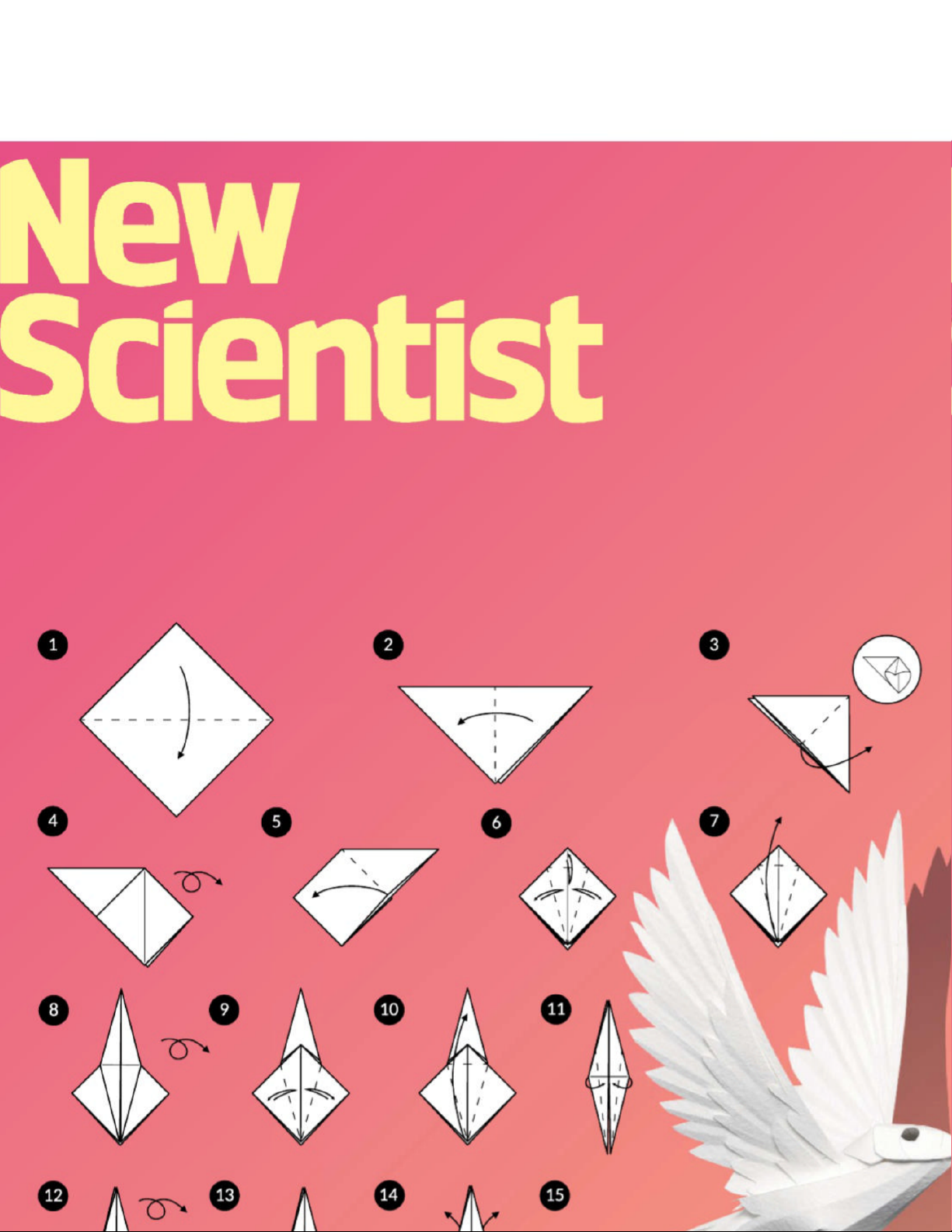
Cover image: Bird: Andy Singleton Origami: bor-zebra/iStock News Features 10 Quantum cryptocurrency 32 What is life? Mining bitcoin on quantum Culture
Astrobiologist Sara Imari Walker devices may slash energy use
on discovering the 15 steps that make matter come alive 11 Wobbling Earth People pumping groundwater 36 A very mucky problem
has shifted the planet’s axis How farming is cleaning up
its act to save Britain’s rivers 17 Not so clever “Smart drugs” make people 40 Tumour microbiome worse at problem-solving test The weaponised microbes providing a whole new way to fight cancer Views The back pages 21 Comment
Why medical studies of diverse 44 The science of cooking populations benefit humanity
How to make quick pasta at home 22 The columnist 45 Puzzles Chanda Prescod-Weinstein Try our crossword, quick quiz on the problem of mass and logic puzzle 24 Letters 46 Almost the last word We can talk to the animals, If people colonised Mars, so chat with ET is possible how would they tell the time? 00:08, 10/01/2026
New Scientist Weekly News - June 24, 2023 Highlights - Studocu p y 26 Aperture 48 Feedback The impact of climate change Not-so-comforting comfort on people in Bangladesh food and missing missiles 30 Culture 48 Twisteddoodles Exciting science books SIMO f No Br O N TT e O w ML ES Y/ c G iEe T n T t Y iIs Mt AGES to engage kids of all ages
28 The joy of reading Science and sci-fi books to escape into
Picturing the lighter side of life
24 June 2023 | New Scientist | 1 00:08, 10/01/2026
New Scientist Weekly News - June 24, 2023 Highlights - Studocu Elsewhere on New Scientist Virtual event Newsletter Video Ageless: How science “ We thought can help us live longer and better South
What if we could reverse ageing America had
to prevent conditions including
Alzheimer’s? Join computational no ancient
biologist Andrew Steele to explore
the efforts to do just that, and writing
pick up some tips on how to slow systems.
down the ageing process in your
body. Watch this free subscriber- That is now only event online at 6pm BST/ 1pm EDT on 22 August. changing” newscientist.com/benefits Hidden secrets
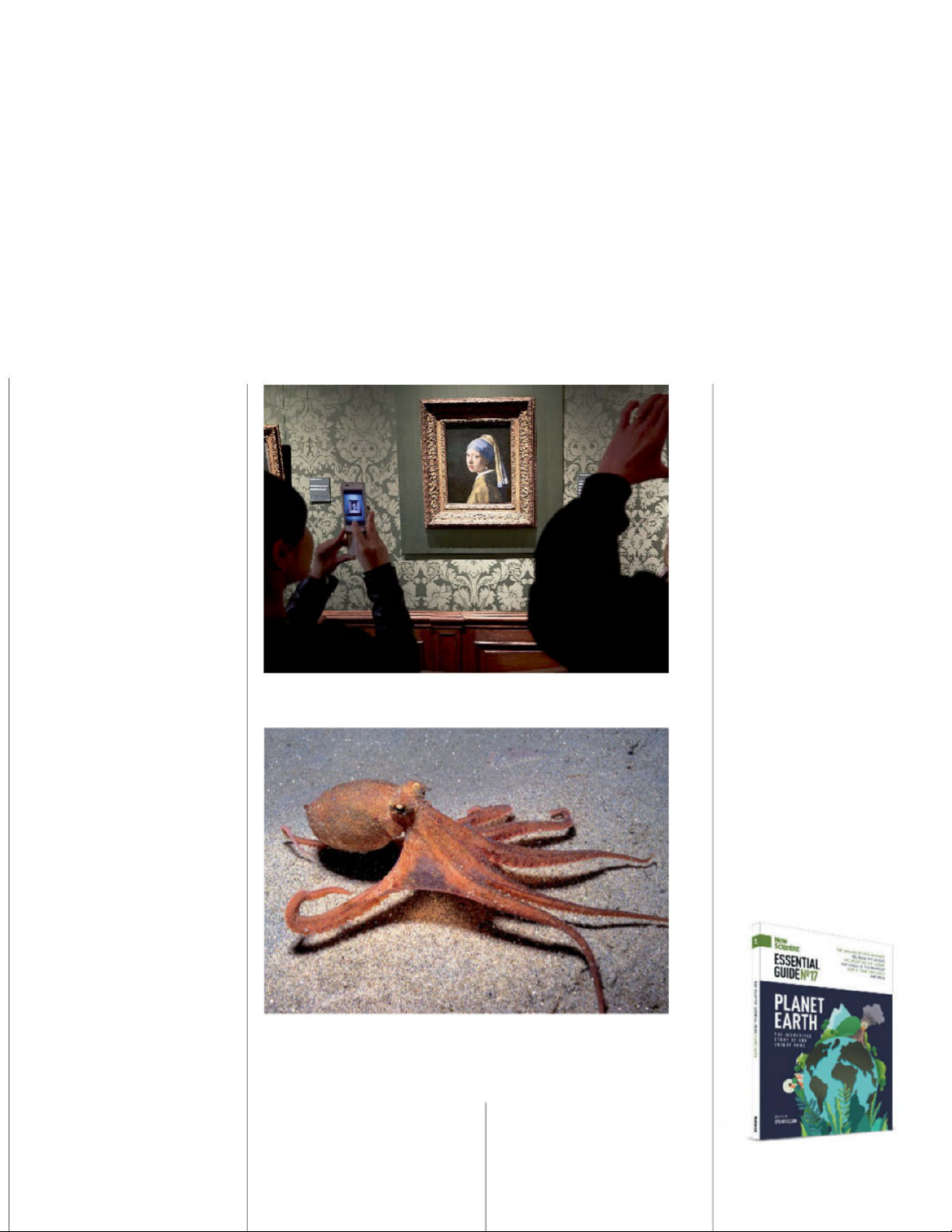
Scans reveal new details in Vermeer’s masterpiece Tour Podcast Total solar eclipse 2024: Houston to San Antonio Experience one of nature’s most magnificent events at an exclusive viewing location in Texas. Joined by renowned astronomer John Mason and New Scientist features editor
Abigail Beall, you will visit several astronomical sites including NASA’s Space Center Houston and two observatories. The MARK CONLIN/VWPICS/ALAMY
eight-day tour begins on 3 April 2024 and tickets cost £4399. Survival tactic
Cephalopods can edit their own genetic material newscientist.com/tours Podcast Video Newsletter Weekly Art history Our Human Story The team discusses how our
On our YouTube channel this week, South America was the last Essential guide
gut microbiome might influence
there is an interview with painting continent settled by humans,
our intelligence. There is also
conservator Abbie Vandivere and
but we are learning that early
Our planet still holds many secrets. news of cephalopods that can microscope specialist Emilien
inhabitants were as artistic and How did Earth form? How is it 00:08, 10/01/2026
New Scientist Weekly News - June 24, 2023 Highlights - Studocu p p p p
edit their own genetic material
Leonhardt about a new exhibition
creative as other populations, changing with global warming? to survive environmental
at the Mauritshuis Museum in the writes Michael Marshall. For
And are there other Earth-like
changes. Plus, in a bonus episode,
Netherlands. By scanning Johannes instance, we have found that worlds out there? This New comment and culture editor
Vermeer’s Girl with a Pearl Earring, a writing system was in use
Scientist Essential Guide offers Alison Flood talks to author
researchers have revealed many
in the region that is now Peru
answers. Available to download Lewis Dartnell about how our
hidden details, including that more than 1000 years ago.
in the New Scientist app or to biology has shaped history.
the girl originally had eyelashes. newscientist.com/
purchase in print from our shop. newscientist.com/nspod youtube.com/newscientist our-human-story shop.newscientist.com
2 | New Scientist | 24 June 2023 00:08, 10/01/2026
New Scientist Weekly News - June 24, 2023 Highlights - Studocu 00:08, 10/01/2026
New Scientist Weekly News - June 24, 2023 Highlights - Studocu 00:08, 10/01/2026
New Scientist Weekly News - June 24, 2023 Highlights - Studocu 00:08, 10/01/2026
New Scientist Weekly News - June 24, 2023 Highlights - Studocu 00:08, 10/01/2026
New Scientist Weekly News - June 24, 2023 Highlights - Studocu The leader Net-zero action
The biggest buzzword in climate action is being used as a cop-out
BURNING fossil fuels releases carbon
“net” in net zero – temperatures will
appeared “scientifically incoherent”.
dioxide into Earth’s atmosphere. As the
rise. Many countries and companies
The broader issue is that the “net”
levels of CO2 in the atmosphere increase,
have pledged to hit this goal by 2050.
in net zero offers a tantalising cop-out.
so too do global temperatures. Beyond
But we cannot simply slam on the
It was intended to acknowledge that some
a given temperature limit, life on Earth
brakes at the last moment. If our carbon
sectors will be near impossible to fully
becomes impossible. Stop us if you have
emissions remain net positive until 2049,
decarbonise, and must be offset. Instead, heard this one before.
hitting zero only in 2050, we will blow it.
it has become the carbon equivalent of
The basic science of climate change is
a tax wheeze. If we balance the books
so universally accepted that only the most
“ For executives with an eye
with carbon offsets, the thinking goes,
fringe elements of society now deny it.
on the next financial quarter,
emissions can continue to rise. Better still,
Instead, there is a new group of people
net zero offers clear appeal”
if we release carbon today, we can remove
holding back climate action – delayers,
it later, with technology that doesn’t yet
not deniers – that have been enabled by
Despite this, Shell announced last week
exist at scale. For executives or politicians two simple words: net zero.
that it plans to grow its natural gas business
with an eye on the next financial quarter
The science of net zero is also well
while committing to an earlier pledge to
or electoral cycle, net zero has clear appeal.
accepted. Since releasing CO2 increases
reach net zero by 2050, following a similar
But the atmosphere doesn’t work like
global temperatures, we must stop doing
announcement by BP earlier this year
that. As we face possibly the warmest year
so. Until we are removing as much carbon
(see page 18). This, in the opinion of one
on record (see page 8), it is time to go back
from the atmosphere as we put in – the
researcher who spoke to New Scientist,
to basics. Cut emissions. Now. Fast. ❚ PUBLISHING & COMMERCIAL EDITORIAL
Commercial and events director Adrian Newton Chief executive Nina Wright Editor-in-chief Emily Wilson
Managing director Laurence Taylor
Magazine editor Catherine de Lange Display advertising
Executive assistant Lorraine Lodge
News and digital director Penny Sarchet
Tel +44 (0)203 615 6456 Email displayads@newscientist.com Creative director Craig Mackie Sales director Justin Viljoen Finance & operations
Account manager Matthew Belmoh, Mila Gantcheva News
Chief financial officer Amee Dixon
Partnerships account manager David Allard
Commercial finance manager Charlotte Thabit News editor Jacob Aron
Assistant news editors Chris Simms,
Commercial finance manager Anna Labuz Recruitment advertising Alexandra Thompson, Sam Wong
Management accountant Charlie Robinson
Tel +44 (0)203 615 6458 Email nssales@newscientist.com
Reporters (UK) Madeleine Cuff, Michael Le Page,
Commercial management accountant Alexandra Lewis
Recruitment sales manager Viren Vadgama
Chen Ly, Jason Arunn Murugesu, Matthew Sparkes,
Key account manager Deepak Wagjiani Human resources
Alex Wilkins, Clare Wilson, (Aus) Alice Klein
HR business partner Purnima Subramaniam New Scientist Events Digital
Tel +44 (0)203 615 6554 Email live@newscientist.com
Acting head of digital Matt Hambly
Sales director Jacqui McCarron Podcast editor Rowan Hooper
Head of event production Martin Davies
Head of editorial video David Stock
Head of product management (Events, Courses
SEO and analytics manager Finn Grant
& Commercial Projects) Henry Gomm Intern Obomate Briggs
Marketing manager Emiley Partington CONTACT US Features
Marketing executive Naomi Edge
Head of features Daniel Cossins and Helen Thomson
Events and projects executive Georgia Peart newscientist.com/contact
Editors Colin Barras, Abigail Beall, Kate Douglas,
Events and projects coordinator Gemma Dowie General & media enquiries
Alison George, Joshua Howgego, Thomas Lewton
Events team assistant Olivia Abbott
US PO Box 80247, Portland, OR 97280 Feature writer Graham Lawton New Scientist Discovery Tours UK Tel +44 (0)203 615 6500 Culture and Community Director Kevin Currie 9 Derry Street, London, W8 5HY
Comment and culture editor Alison Flood
Senior product manager Lara Paxton
Australia 58 Gipps Street, Collingwood, Victoria 3066 Senior culture editor Liz Else Marketing & Data
US Newsstand Tel +1 973 909 5819 Subeditors Marketing director Jo Adams
Distributed by Time Inc. Retail, a division of Meredith
Corporation, 6 Upper Pond Road, Parsippany, NJ 07054
Chief subeditor Eleanor Parsons
Head of campaign marketing James Nicholson
Bethan Ackerley, Tom Campbell,
Digital marketing manager Jonathan Schnaider
Syndication Tribune Content Agency Tom Leslie, Jon White
Campaign marketing coordinator Charlotte Weeks
Tel 1-800-346-8798 Email tca-articlesales@tribpub.com
Head of customer experience Emma Robinson Design
Subscriptions newscientist.com/subscribe
Senior customer experience marketing manager Esha Bhabuta Art editor Ryan Wills
Marketing executive Bethan Smith Tel 1 888 822 3242 Joe Hetzel
Head of CRM & audience data Rachael Dunderdale
Email subscriptions.us@newscientist.com
Post New Scientist, PO Box 3806, Picture desk 00:08, 10/01/2026
New Scientist Weekly News - June 24, 2023 Highlights - Studocu , ,
Senior email marketing executive Natalie Valls Chesterfield MO 63006-9953 Picture editor Tim Boddy
Email marketing executive Ffion Evans
Assistant picture editor Jenny Quiggin Junior analyst Hamied Fahim Production Technology
© 2023 New Scientist Ltd, England.
Production manager Joanne Keogh
Technology director Tom McQuillan
New Scientist ISSN 0262 4079 is published weekly except
Production coordinator Carl Latter
Senior developer and UX designer Amardeep Sian
for the last week in December by New Scientist Ltd, England.
Senior developers Maria Moreno Garrido, Piotr Walków
New Scientist (Online) ISSN 2059 5387. New Scientist Limited, New Scientist US
Lead digital designer and developer Dan Pudsey
51 Astor Place, New York NY 10003
US Editor Tiffany O’Callaghan
Front end developer Damilola Aigoro
Editors Timothy Revell, Chelsea Whyte
Junior front end developer Matthew Staines
Periodicals postage paid at New York, NY and
Reporters Leah Crane, James Dinneen, Jeremy Hsu,
Program manager Jennifer Chilton
other mailing offices. Postmaster: Send address changes to
Karmela Padavic-Callaghan, Grace Wade, Corryn Wetzel
New Scientist, PO Box 3806, Chesterfield, MO 63006-9953, USA. Subeditor Alexis Wnuk
Registered at the Post Office as a newspaper and printed in USA
by Quad, 555 South 108th Street, West Allis, WI 53214-1145
24 June 2023 | New Scientist | 5 00:08, 10/01/2026
New Scientist Weekly News - June 24, 2023 Highlights - Studocu YOUR SUBSC INCLUDE Subscriber Event S ONLINE EVENT AGELESS: HOW SCIENCE CAN HELP US LIVE LONGER AND BETTER
22 August, 6 - 7pm BST, 1-2 pm EDT and on demand
Join Andrew Steele, a computational biologist and science
writer, as he reveals the true process of ageing and the practical ways
we can help slow it down. Find out how uncovering the scientific
implications of ageing could lead to the greatest revolution in the history
of medicine – one that has the potential to improve billions of lives, save
trillions of dollars and transform the human condition. Scan me to register 00:08, 10/01/2026
New Scientist Weekly News - June 24, 2023 Highlights - Studocu To register your place, visit newscientist.com/ageing
You will need your eight-digit subscriber number which can be found on our
customer service and event emails and above your address on your print copy. 00:08, 10/01/2026
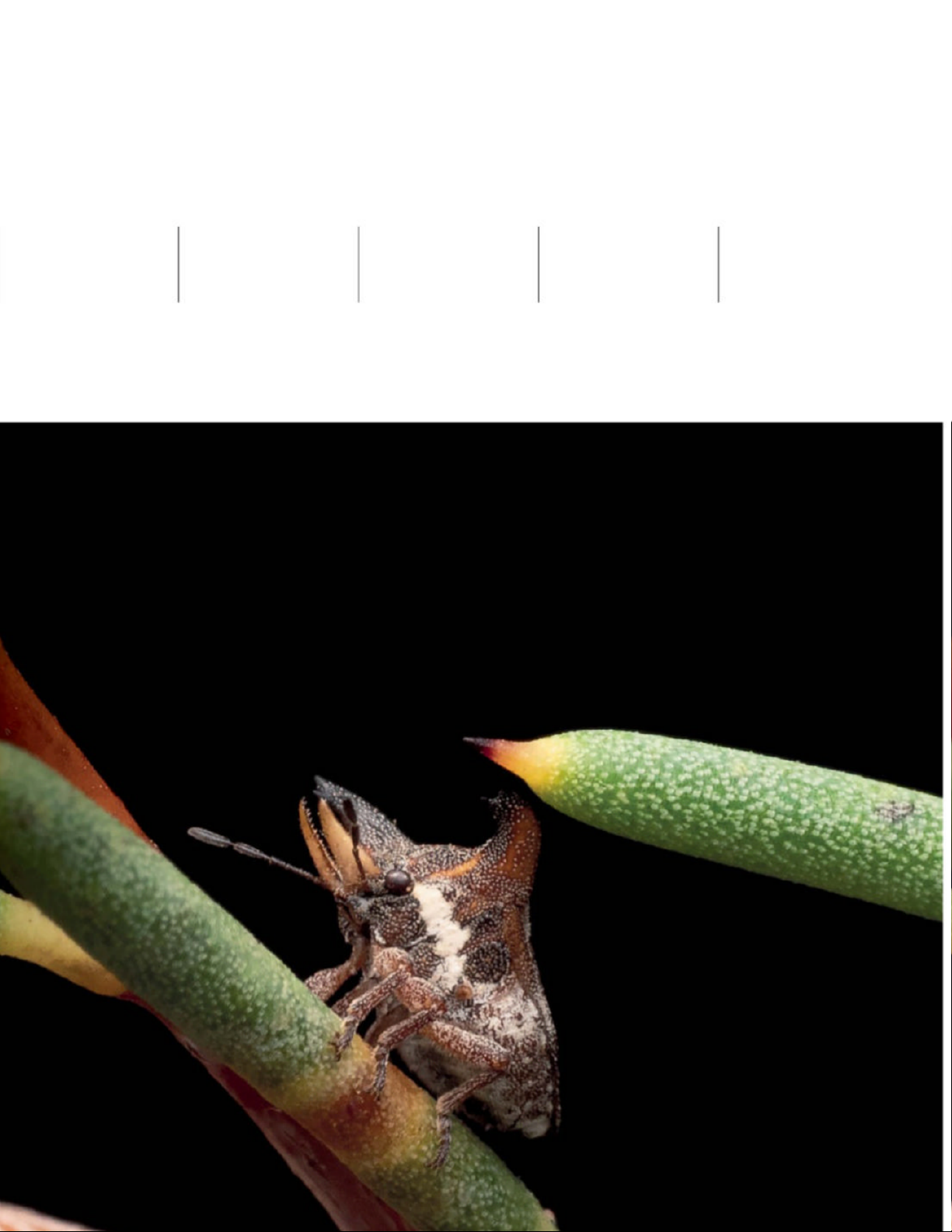
New Scientist Weekly News - June 24, 2023 Highlights - Studocu News Compounded error Microbiome boost Cirrus changes Out of sequence Giant ancestor AIs will be useless Giving bacteria to North American Ancient plant’s leaves Extinct lizard if they only learn newborns alters wildfires may create didn’t follow the was a supersized, from other AIs p9 development p14 clouds in Europe p15 golden ratio p16 armoured skink p19 Life Fearsome stink bug has tusks Entomologists have spotted a strange horned stink bug in Tjaltjraak Boodja Park in Western Australia. The pea- sized creature is believed to
be new to science and is yet to
be officially named. Males and females both have two large forked horns, but the males also have two orange tusks
(pictured), which aren’t seen in any other known stink bug species in the world. 00:08, 10/01/2026
New Scientist Weekly News - June 24, 2023 Highlights - Studocu ARKS AUSTRALIA
24 June 2023 | New Scientist | 7 00:08, 10/01/2026
New Scientist Weekly News - June 24, 2023 Highlights - Studocu News Analysis Climate
Why 2023 is shaping up to be the hottest year on record
Global weather phenomena are conspiring to raise temperatures further
this year, adding to human-driven climate change, finds Madeleine Cuff SPIKING temperatures in the human history has ever seen
world’s oceans and the arrival of ocean temperatures this warm,
El Niño weather conditions in the and the air temperatures that
Pacific mean that 2023 is shaping
we’re seeing as well are coming
up to be the hottest year on record, up to record-breaking.”
with researchers saying the planet Although the broad drivers
is entering “uncharted territory”.
of warming – El Niño conditions The hottest year on record is
plus climate change – are the same
2016, which is also when the world
as in 2016, this year the heat is
was last in a warming El Niño
SALMAN ALI/HINDUSTAN TIMES VIA GETTY IMAGES
manifesting differently. Whereas
weather pattern (although other
in 2016 spikes in temperature were
agencies say 2020 also tied for
concentrated over the Siberian
the top spot). Now, temperature
Arctic, in 2023 the warmth has
records this month suggest 2023 been seen in multiple spots,
could be tracking close to 2016.
including in the Southern Ocean
The first 11 days of June registered
and Antarctica earlier this year.
the highest global temperatures Over recent months, there has
on record for this time of the year, been growing concern over the according to Copernicus, the
lack of Antarctic sea ice, with European Union’s Earth February 2023 setting a new observation programme, all-time record for minimum following on from the second- sea ice of just 1.79 million warmest May on record and the Workers filling water
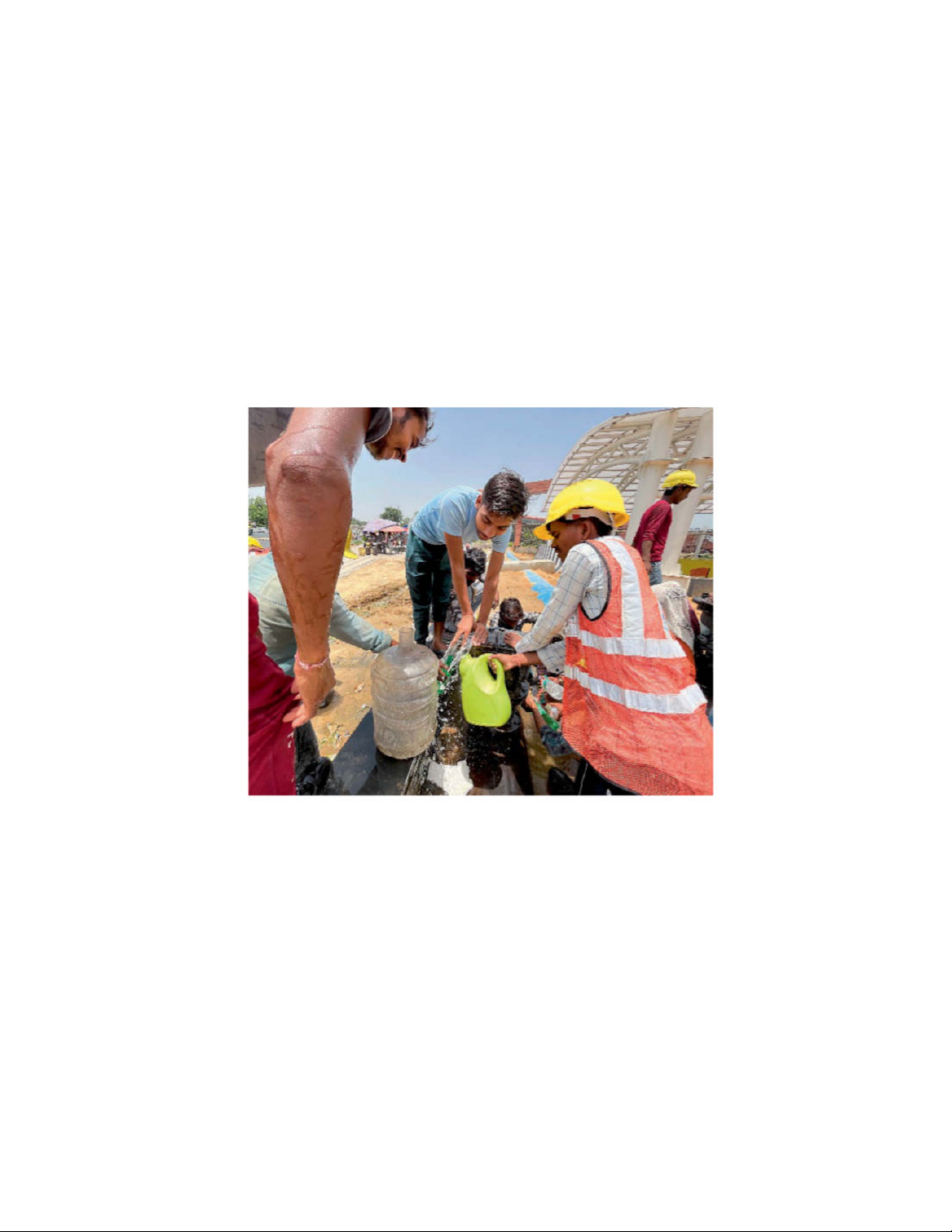
drive warmer sea temperatures, square kilometres. The ice is fourth-warmest April. bottles during a heatwave
have only just arrived and won’t
reforming as winter takes hold The peak occurred on 9 June, in June in New Delhi, India
peak until the end of the year.
there, but is still tracking well when the average global air Weakened trade winds as a below average.
temperature was 16.7°C (62°F),
result of changes in atmospheric This atmospheric variability, just 0.1°C below the warmest dynamics is perhaps the most
with El Niño on top of general
ever recorded on 13 August 2016.
likely explanation, says Samantha
warming, is the same as it was While human-driven climate Burgess at Copernicus. In the
seven years ago, says Christopher
change continues to raise global
North Atlantic, a slump in wind Merchant at the University of
temperatures, there is no evidence strength may have reduced the
Reading, UK. “There is a good
to suggest that the process is
amount of dust blowing through
chance that we’re heading for
accelerating this year. Instead,
this part of the ocean from the another record-breaking year, specific warming conditions Sahara, which usually has this year or next year.”
are being layered on top of the a cooling impact.
As El Niño builds, scientists
1.3°C temperature rise caused by The surge in ocean and air
expect to see more temperature
climate change so far, pushing
temperatures is surprising for the
anomalies as its influence starts to records ever higher.
time of year, says Burgess. Globally
tilt weather patterns. “On top of 2016
One of the drivers of the recent
speaking, the first few days of
the world as a whole being slightly
heat surge has been the warmth in The hottest year
June breached a 1.5°C increase
warmer, you tend to get regional
and above the oceans. For months, on record so far in temperatures compared with
weather patterns, which gives you
scientists have been warning that
the same time of the year in pre-
climate anomalies,” says Manoj sea surface temperatures have
industrial times – a threshold
Joshi at the University of East 00:08, 10/01/2026
New Scientist Weekly News - June 24, 2023 Highlights - Studocu p Jos at t e U ve s ty o ast
been at record highs, driven by
only previously surpassed during Anglia in Norwich, UK. marine heatwaves around the Warmest average global northern hemisphere winters, The way the warmth manifests 16.8°C
world. In the North Atlantic on air temperature (62°F) , when temperature anomalies
won’t be the same as in 2016, 17 June, temperatures peaked seen on 13 August 2016 are more common.
says Merchant. “I think there
at 23°C (73.4°F), 0.2°C above the
“What we’ve observed to date
are unlikely to be parallels in previous high set in 2010.
is suggesting that 2023 will be the exact patterns of warm 16.7°C
It isn’t yet clear why the oceans
probably in the top five warmest ocean temperatures or land
are so hot now, particularly given
Average global air temperature
years,” says Burgess. “We are in
temperatures, because the climate
that El Niño conditions, which recorded on 9 June 2023
uncharted territory. No one in
doesn’t really repeat like that.” ❚
8 | New Scientist | 24 June 2023
Tài liệu liên quan:
-
English-Vietnamese Translation Guide: The World is Flat môn English Studies| Trường Đại học Thăng Long
30 15 -
Midterm Exam - IC Course: Intercultural Communication Insights môn English Studies| Trường Đại học Thăng Long
33 17 -
Outline and Essay on Apathy's Effects on Individuals & Society môn English Studies| Trường Đại học Thăng Long
35 18 -
Listening Practice: Tapescripts and Exercises - Level 1 môn English Studies| Trường Đại học Thăng Long
34 17 -
TOEIC Sample Tests: Speaking and Writing Overview môn English Studies| Trường Đại học Thăng Long
37 19