Lifelong learning - Why education doesnt end at graduation (1) | Tài liệu Tiếng Anh về việc tự học lâu dài
Lifelong learning - Why education doesnt end at graduation (1) | Tài liệu Tiếng Anh về việc tự học lâu dài
Môn: Tiếng Anh chuyên ngành 332 tài liệu
Trường: Tài liệu Tiếng Anh chuyên ngành, Tiếng Anh cho người đi làm 432 tài liệu
Tác giả:










Preview text:
VN-UK Institute for Research and Executive Education GROUP 1 LIFELONG LEARNING
Why education doesn't end at graduation? Communication Skills 2
VN-UK Institute for Research and Executive Education GROUP 1 GROUP MEMBERS LƯƠNG TUẤN ĐẠT NGUYỄN QUỲNH GIANG BÙI VĨNH NGUYÊN
ĐẶNG NGUYỄN NHẤT HUY CAO THỤC QUYÊN Communication Skills 2
VN-UK Institute for Research and Executive Education GROUP 1 TABLE OF CONTENTS 01. CONCEPT 02. BENEFITS 03. MAINTENANCE STEPS 04. REAL-LIFE EXAMPLES 05. REVISION Communication Skills 2
VN-UK Institute for Research and Executive Education GROUP 1 CONCEPT OF LIFELONG LEARNING
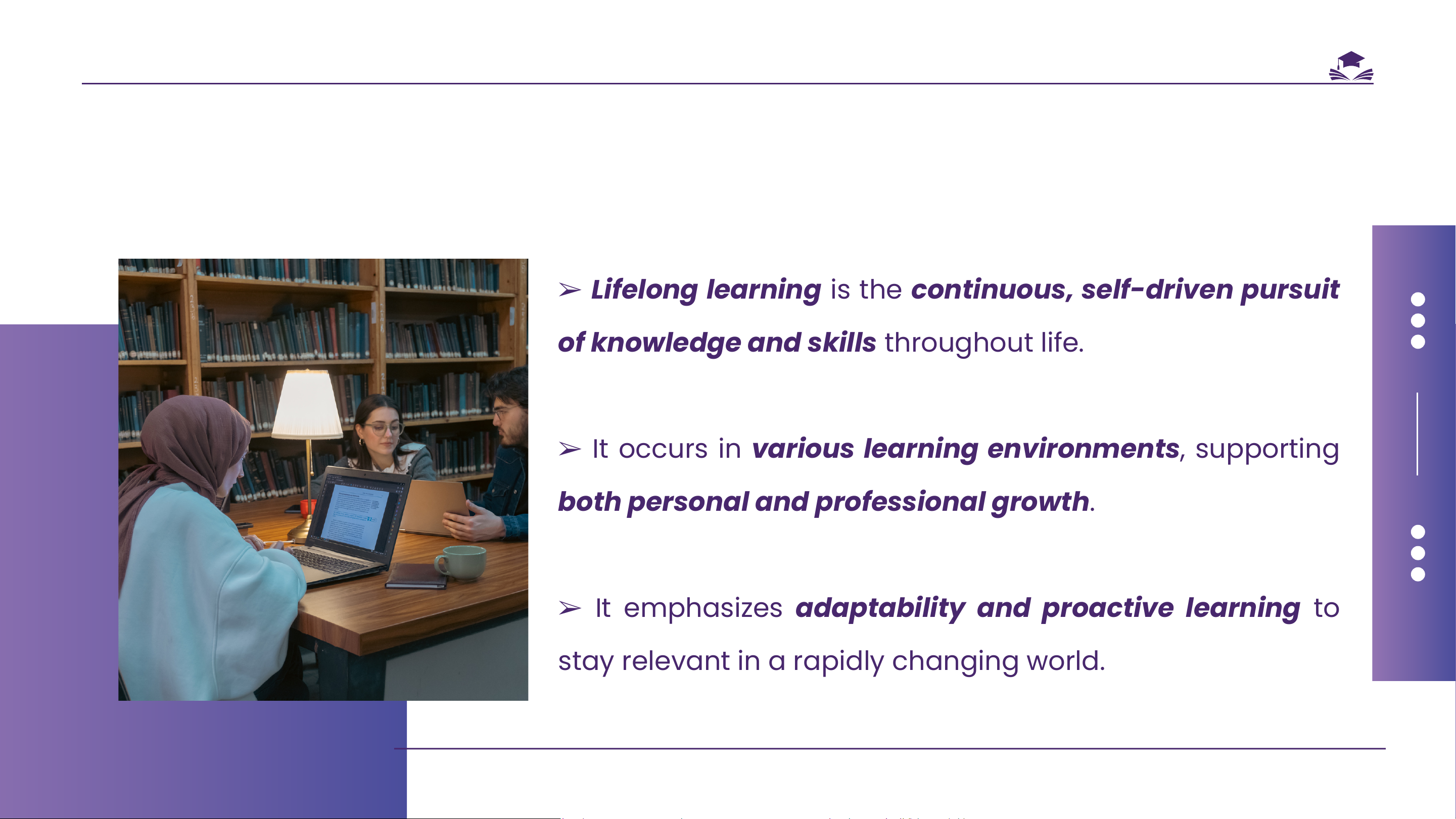
➢ Lifelong learning is the continuous, self-driven pursuit
of knowledge and skills throughout life.
➢ It occurs in various learning environments, supporting
both personal and professional growth.
➢ It emphasizes adaptability and proactive learning to
stay relevant in a rapidly changing world. Communication Skills 2
VN-UK Institute for Research and Executive Education GROUP 1
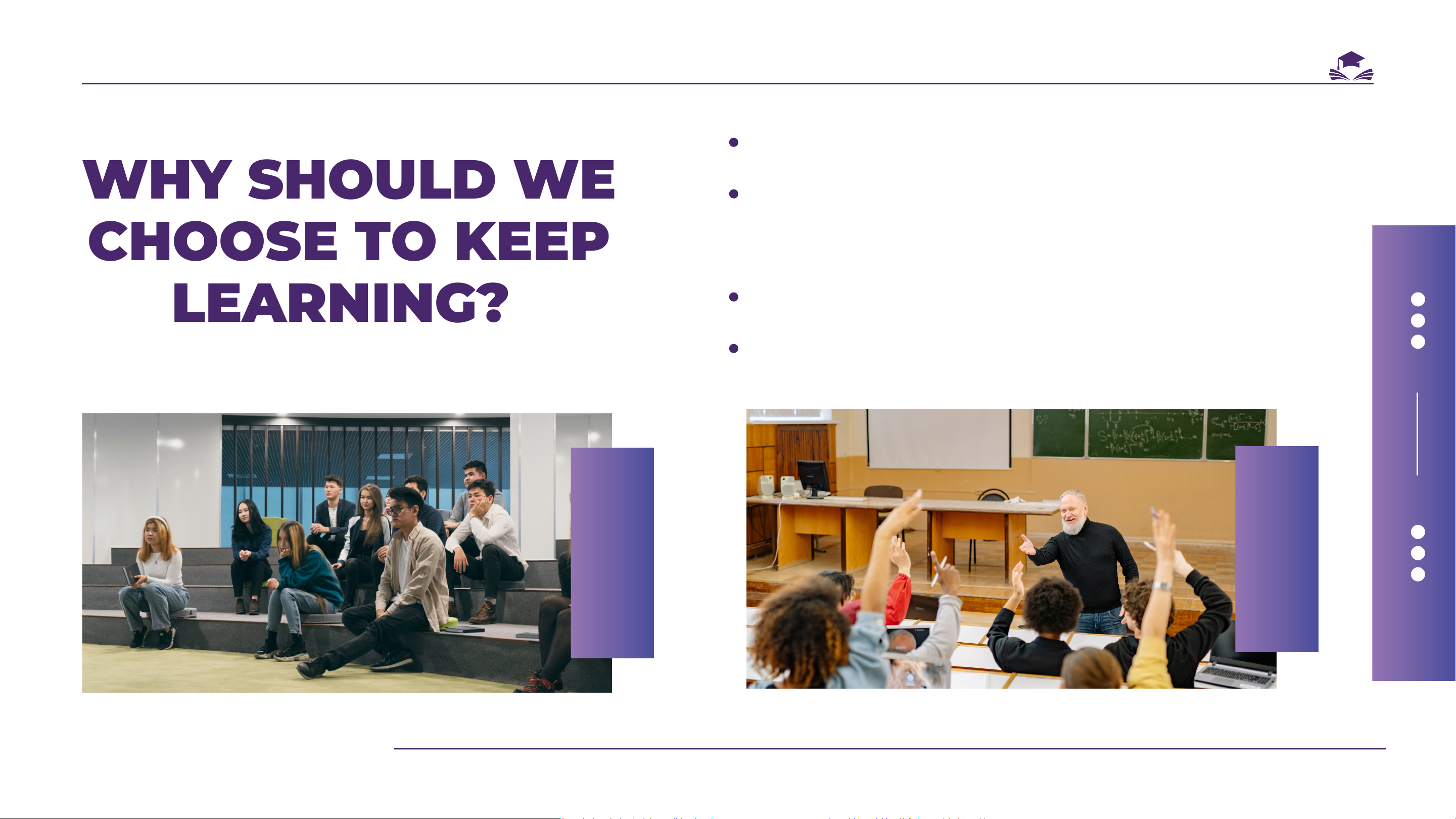
To keep up with the changing world WHY SHOULD WE
To acquire new useful skills and ideas to CHOOSE TO KEEP spot opportunities LEARNING?
To achieve goals in our career paths
To be the better version of ourselves Communication Skills 2
VN-UK Institute for Research and Executive Education GROUP 1 Maintenance Steps
Keep learning, keep growing
Maintain your lifelong learning: assess,
set goals, grow skil s, and reflect. Communication Skills 2
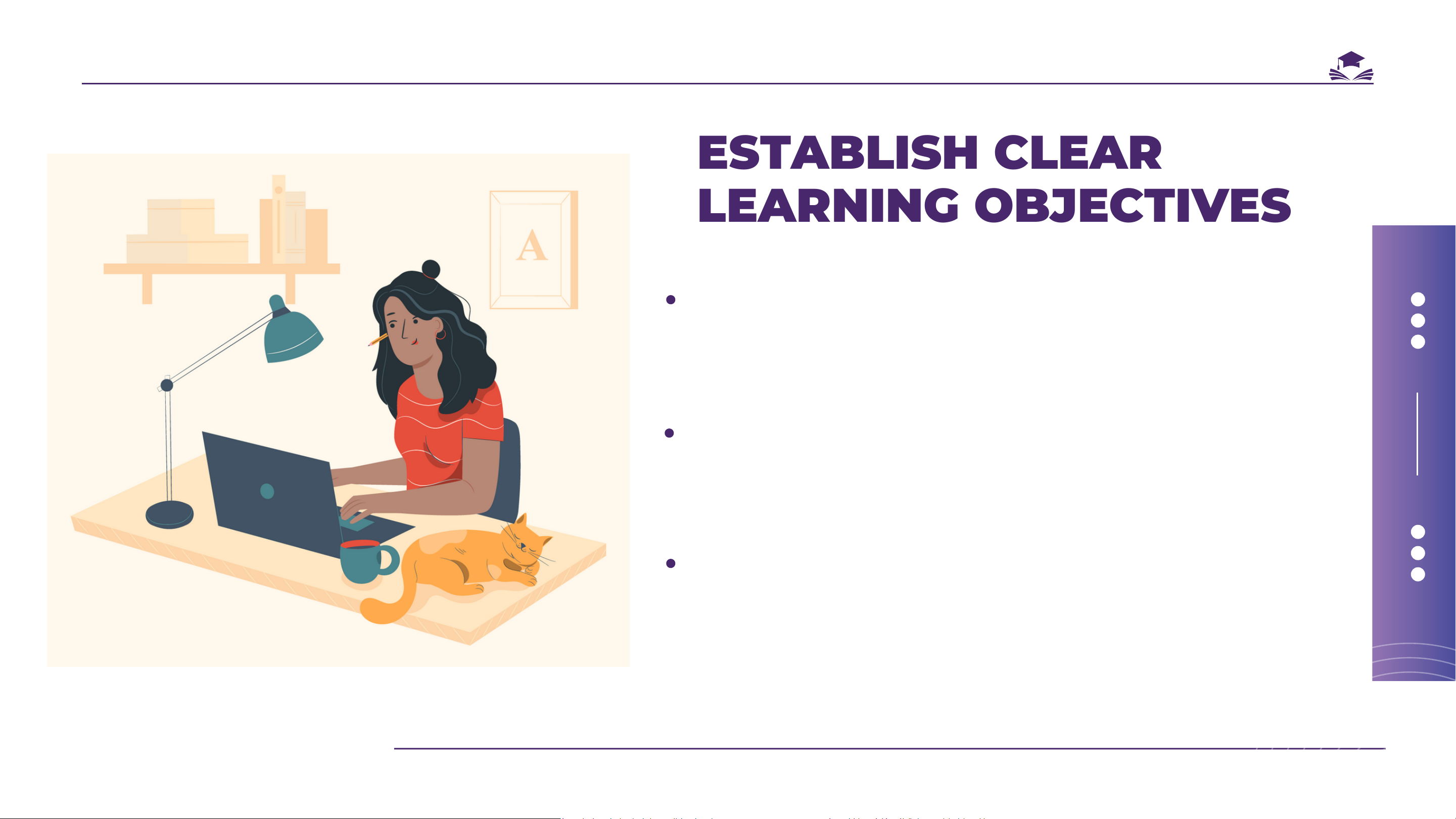
VN-UK Institute for Research and Executive Education GROUP 1 ESTABLISH CLEAR LEARNING OBJECTIVES
Define clear and achievable learning goals is
essential for sustaining lifelong learning.
Identify desired skills or knowledge helps learners
plan their learning path with purpose.
Establish clear objectives also offer measurable benchmarks to track progress. Communication Skills 2
VN-UK Institute for Research and Executive Education GROUP 1 CULTIVATE
Lifelong learning requires regular engagement and dedicated study time. CONSISTENT LEARNING
Scheduling daily or weekly periods for reading, research, or
skill practice helps build lasting habits. HABITS
Consistent micro-learning sessions can significantly support long-term growth. Communication Skills 2
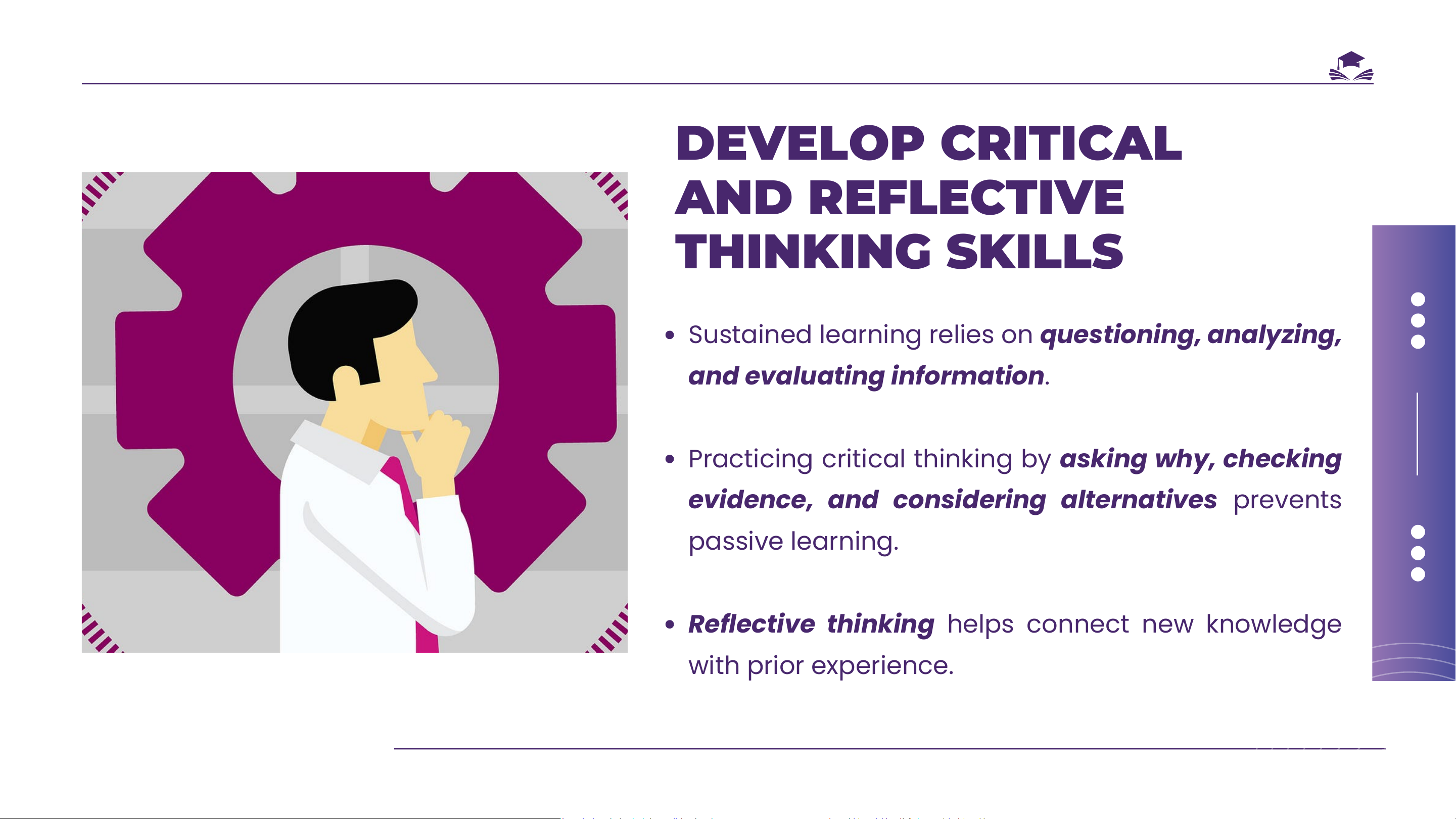
VN-UK Institute for Research and Executive Education GROUP 1 DEVELOP CRITICAL AND REFLECTIVE THINKING SKILLS
Sustained learning relies on questioning, analyzing,
and evaluating information.
Practicing critical thinking by asking why, checking
evidence, and considering alternatives prevents passive learning.
Reflective thinking helps connect new knowledge with prior experience. Communication Skills 2
VN-UK Institute for Research and Executive Education GROUP 1 REAL-LIFE EXAMPLES Communication Skills 2
VN-UK Institute for Research and Executive Education GROUP 1
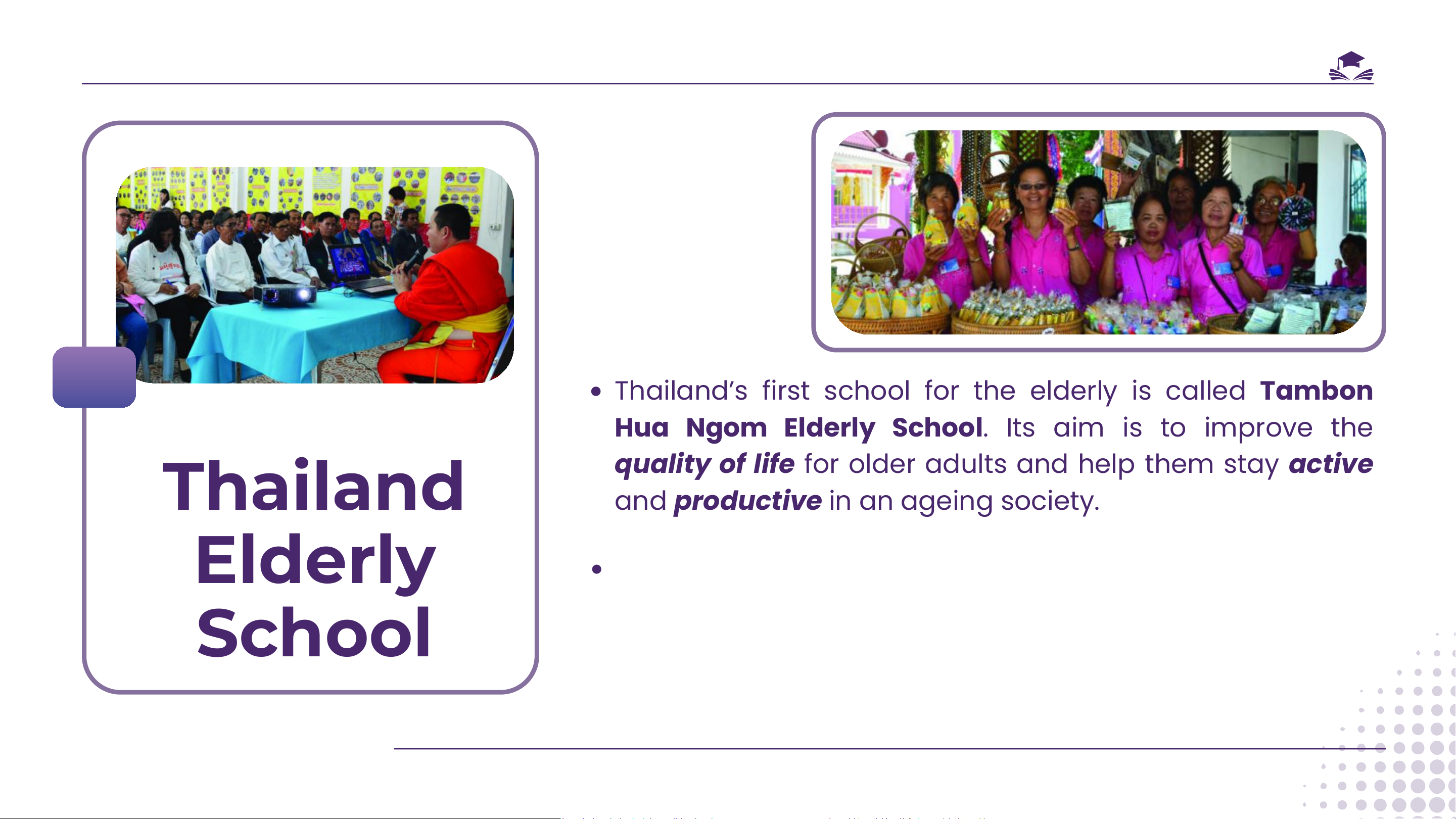
Thailand’s first school for the elderly is cal ed Tambon
Hua Ngom Elderly School. Its aim is to improve the
quality of life for older adults and help them stay active Thailand
and productive in an ageing society. Elderly
The school recruits local teachers and monks to teach a School
wide range of subjects. Besides language classes, older
learners can join handicraft workshops and learn about local traditions. Communication Skills 2
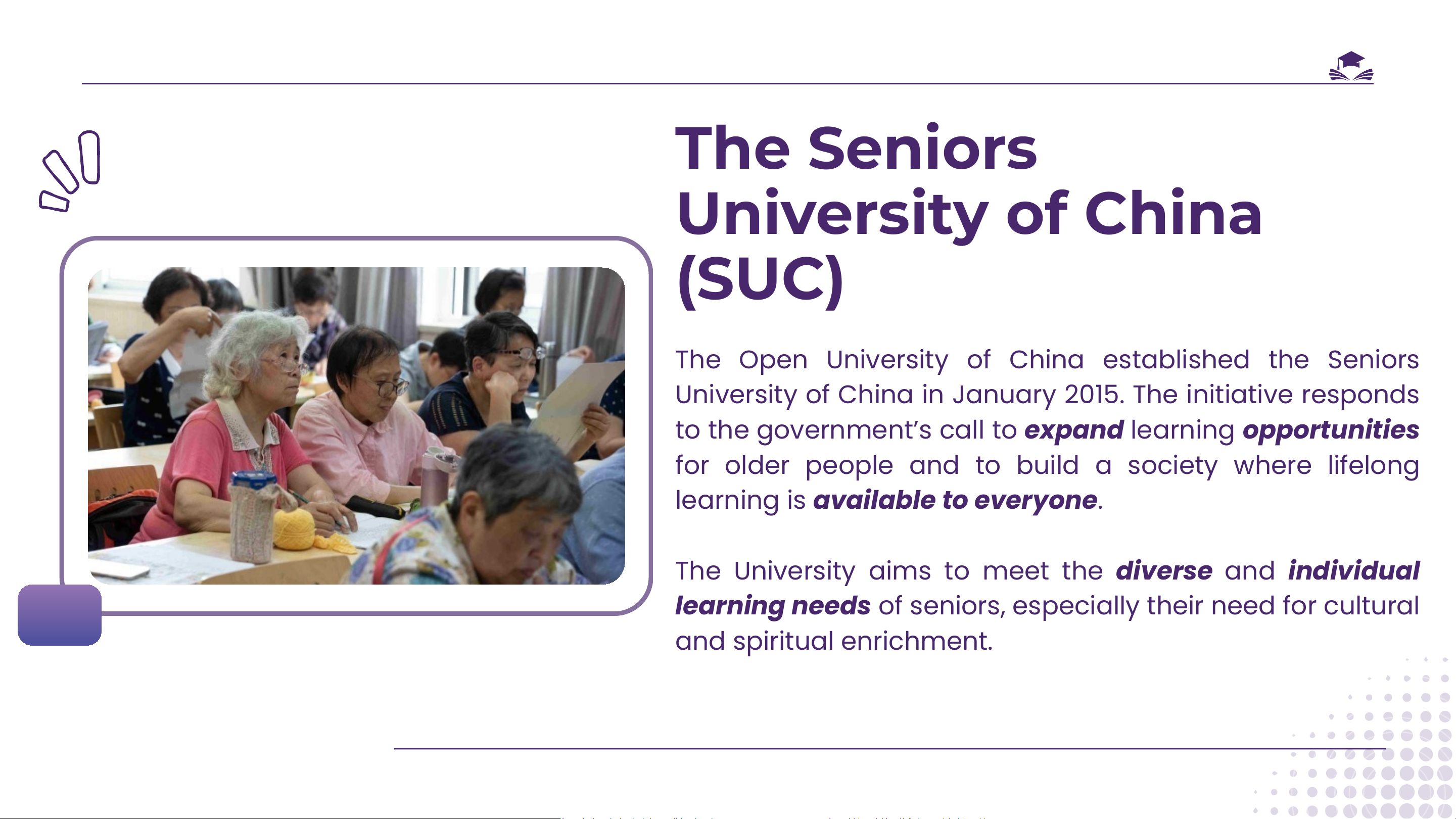
VN-UK Institute for Research and Executive Education GROUP 1 The Seniors University of China (SUC)
The Open University of China established the Seniors
University of China in January 2015. The initiative responds
to the government’s cal to expand learning opportunities
for older people and to build a society where lifelong
learning is available to everyone.
The University aims to meet the diverse and individual
learning needs of seniors, especial y their need for cultural and spiritual enrichment. Communication Skills 2
VN-UK Institute for Research and Executive Education GROUP 1
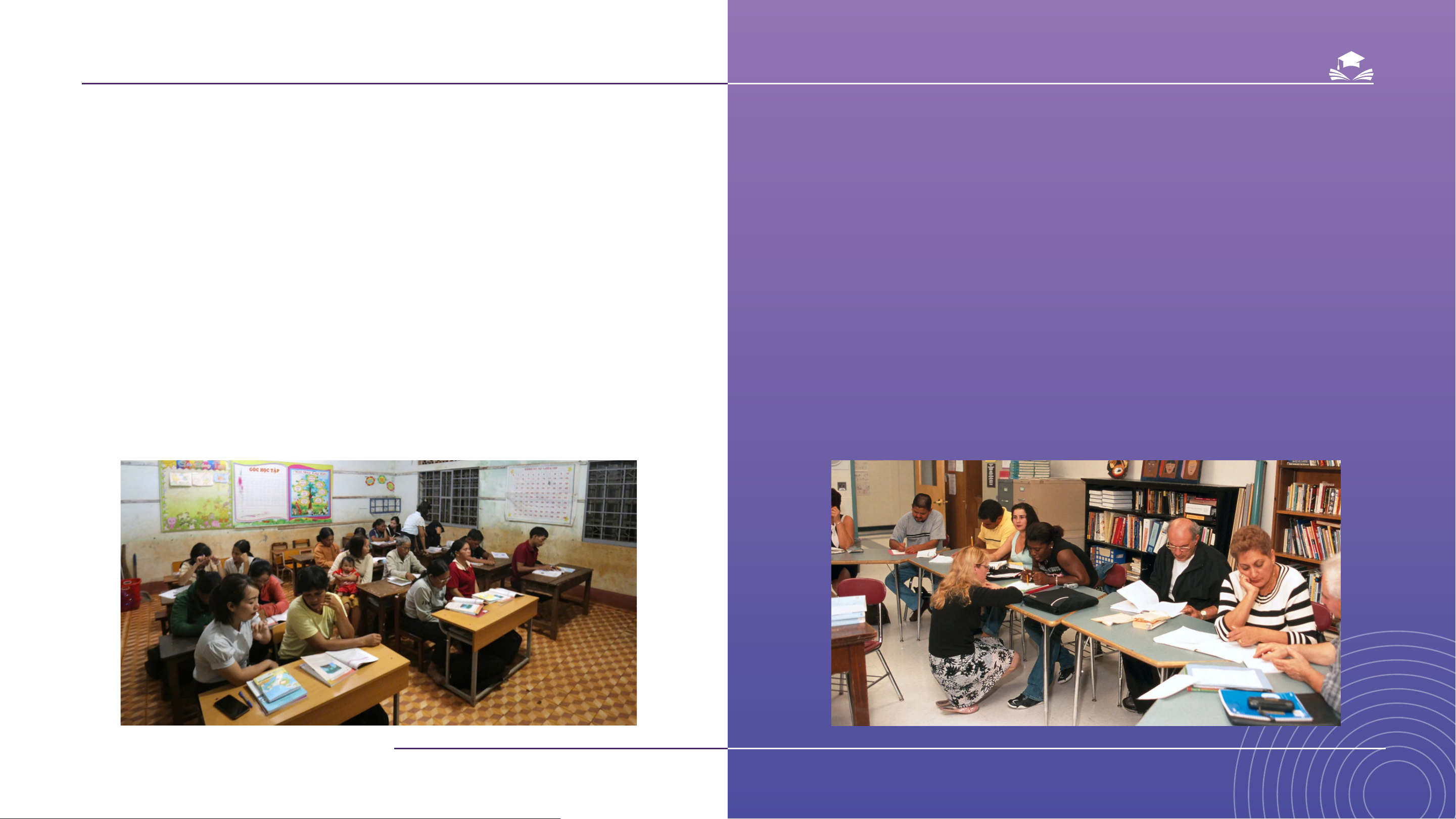
VIETNAM (2024–2025) GLOBAL (2025)
➢ Vietnam’s continuing education system
➢ Adults with high cognitive and problem-
enrolled over 26.3 million learners
solving skills show a 74% participation rate in nationwide. lifelong learning.
➢ Adult literacy rates (ages 15–60) reached
➢ Adults with lower skill levels participate far
99.10% at level 1 and 97.72% at level 2.
less, at only 42%, highlighting global inequality
in access to lifelong learning. Communication Skills 2
VN-UK Institute for Research and Executive Education GROUP 1 REVISION Communication Skills 2
VN-UK Institute for Research and Executive Education GROUP 1
1. WHICH OF THE FOLLOWING BEST EXPLAINS WHY
LEARNING CONTINUES BEYOND GRADUATION?
A. Because students must complete unfinished school tasks
B. Because knowledge and skil s constantly change in modern life
C. Because employers require everyone to return to school every year
D. Because learning after graduation is optional and mostly for fun ⟶ ANSWER: B Communication Skills 2
VN-UK Institute for Research and Executive Education GROUP 1
2. WHICH IS NOT AN EXAMPLE OF LIFELONG LEARNING?
A. Taking online courses to update digital skil s
B. Learning a new language for work or travel
C. Stopping al forms of study after leaving university
D. Attending workshops or seminars to improve professional abilities ⟶ ANSWER: C Communication Skills 2
VN-UK Institute for Research and Executive Education GROUP 1
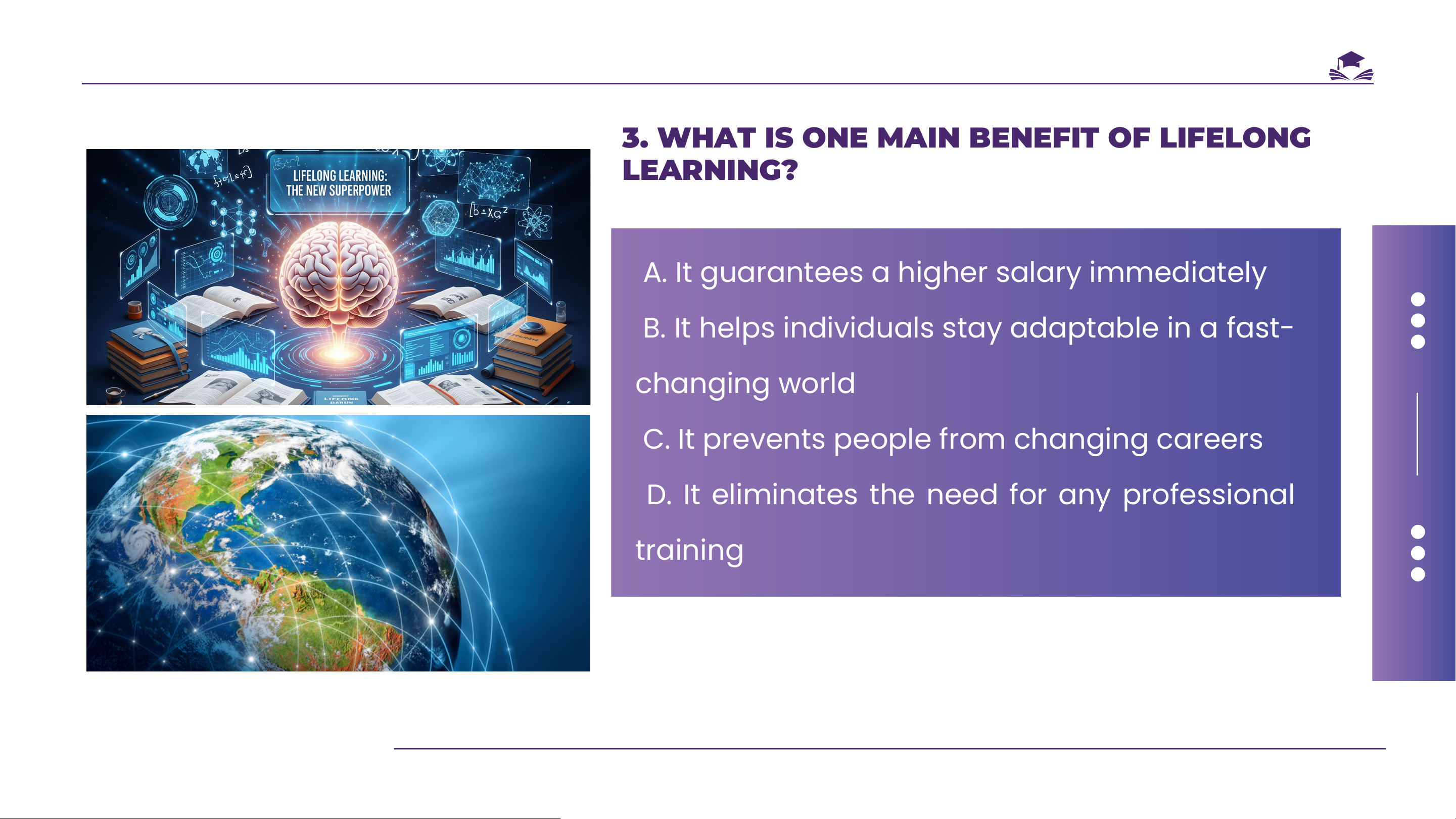
3. WHAT IS ONE MAIN BENEFIT OF LIFELONG LEARNING?
A. It guarantees a higher salary immediately
B. It helps individuals stay adaptable in a fast- changing world
C. It prevents people from changing careers
D. It eliminates the need for any professional training ⟶ ANSWER: B Communication Skills 2
VN-UK Institute for Research and Executive Education GROUP 1
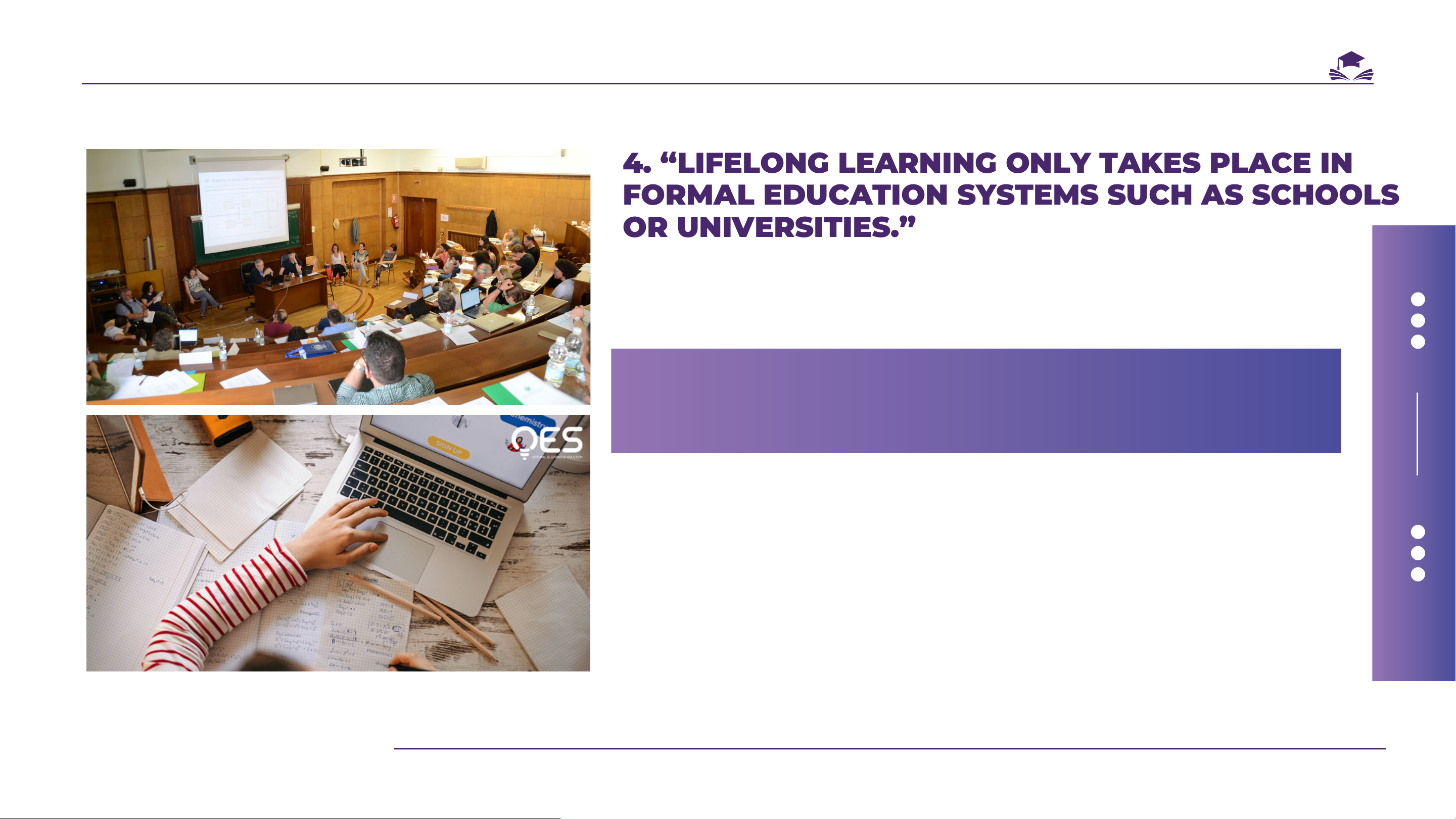
4. “LIFELONG LEARNING ONLY TAKES PLACE IN
FORMAL EDUCATION SYSTEMS SUCH AS SCHOOLS OR UNIVERSITIES.” True or False ⟶ ANSWER: FALSE Communication Skills 2
VN-UK Institute for Research and Executive Education GROUP 1
“The beautiful thing about learning is
that no one can take it away from you.” – B.B. King Communication Skills 2
VN-UK Institute for Research and Executive Education GROUP 1 THANK YOU Communication Skills 2
Tài liệu liên quan:
-

Cambridge IELTS 13 Test-1 Overview and Practice Review | Tài liệu Tiếng Anh
6 3 -
IELTS Test 2 Review - Cambridge 13 Preparation Guide | Tài liệu Tiếng Anh
9 5 -
Litfocus Litreading Survey: Student Reading Interests & Habits Questionnaire | Tài liệu Tiếng Anh
9 5 -
Sách Pre-intermediate Market leader - Business English Course Book
25 13 -
Exam booster for B1 preliminary and B1 preliminary for schools with answer key
10 5