Present Some Common Sales Techniques | Bài thảo luận tiếng anh thương mại
Sales techniques are structured methods sales professionals use to guide potential
customers through the buying process.They involve understanding customer needs, building relationships, and persuading potential buyers to purchase. Effective sales techniques combine communication skills, product knowledge, and an understanding of buyer psychology. Tài liệu giúp bạn tham khảo, ôn tập và đạt kết quả cao. Mời đọc đón xem!
Môn: Tiếng anh Thương mại tatm 90 tài liệu
Trường: Trường Đại học Thương Mại 2.9 K tài liệu
Tác giả:




















Preview text:
THUONG MAI UNIVERSITY ENGLISH FACULTY -------- -------- DISCUSSION
BUSINESS ENGLISH 2.3 TOPIC:
PRESENT SOME COMMON SALES TECHNIQUES Group : 07 Class : 242_ENPR5411_03 Lecturer
: Ms. Tran Anh Thu Hanoi, 2025 Contents
A. INTRODUCTION........................................................................................................5
B. CONTENT....................................................................................................................6
I. What are Sales Techniques?.....................................................................................6
1. Definition..............................................................................................................6
2. Roles of Sales Technique......................................................................................6
II. Types of sales technique..........................................................................................8
1. AIDA model..........................................................................................................8
2. SPIN selling........................................................................................................11
3. Upselling and Cross-selling................................................................................15
4. Foot-in-the-door Technique...............................................................................19
5. Social Proof: Build credibility and track...........................................................22
6. Scarcity and Urgency..........................................................................................26
6.1. Scarcity technique.............................................................................................26
6.2. Urgency technique...........................................................................................28
6.3. Examples..........................................................................................................29
III. Tips to find out suitable sale techniques.............................................................31
1. Understand your product or service...................................................................31
2. Know your target audience.................................................................................31
3. Adapt to the sales context...................................................................................31
4. Keep learning and stay updated.........................................................................32
IV. Conclusion............................................................................................................33
C. MINIGAME...............................................................................................................35
REFERENCES...............................................................................................................37 2
TABLE OF REVIEW AND EVALUATION No. Name Student’sID Task Comment Score - Content: Part - Complete tasks well and 27 Nguyễn Thị Minh IV, Minigame submit on time. A Phương 22D170194 - Presentation - Slides design - Content: - Complete tasks well and
Introduction, Part submit on time. 28 Nguyễn Thu Phương 22D170195 I - Have positive A - Presentation contribution - Slides design - Content: Part - Completed tasks well and Nguyễn Minh II.1,2 submit on time. 29 Quang- 22D170201 - A Presentation - Have positive Leader - Slides design contribution
- Content: Part III - Complete tasks well and 30 Lô Thị Xuân Quỳnh 22D170207 - Presentation submit on time. A - Slides design - Content: II. 3,4 - Complete tasks well and 31 Nguyễn Ngọc - Presentation submit on time. Quỳnh 22D170208 - A Slides design - Have positive contribution - Content: II.5,6 - Complete tasks well and 32 Nguyễn Diệu Thảo 22D170216 - Presentation submit on time. A - Slides design 3
SOCIALIST REPUBLIC OF VIETNAM
Independence- Liberty- Happiness
Hanoi, 22nd April , 2025
GROUP MEETING REPORT
I. Time, location, participants
1. Time: 22h00, 22nd April, 2025.
2. Location: Online meeting room Google Meet.
3. Participants: 6/6 members of group 7, subject Business English 2.3 – 242_ENPR5411_03
II. Meeting content
- Rehearsing for a presentation. - Checking and editing slides.
III. Conclusion of the meeting
- Everybody discussed positively and actively.
- All members of the group agreed and reached a consensus on their tasks.
- The meeting ended at 23h00 on the same day. 4 A. INTRODUCTION
We would like to express our deepest gratitude to Ms. Tran Anh Thu, our esteemed
lecturer for Business English 2.3, for your unwavering support and valuable guidance
throughout the process of researching and preparing this presentation on “Present Some
Common Sales Techniques”. Your insightful lectures, constructive feedback, and
encouragement have been instrumental in helping us gain a deeper understanding of the
topic. The dedication to teaching and your enthusiasm for the subject have truly enhanced
our understanding of effective sales strategies and tips to find a suitable sales technique.
We are also immensely grateful to our fellow group members for their hard work,
dedication, and teamwork in compiling and organizing the research materials. The
collective effort, mutual support, and shared responsibility have played a crucial role in
the successful completion of this presentation. Each member's contribution, whether in
research, content development, design, or delivery, has been essential in ensuring the
quality and coherence of our work.
Furthermore, we appreciate the various sources of information—books, academic articles,
and online resources—that have provided us with a wealth of knowledge on the historical,
social, and cultural aspects of sports in different societies. These resources have
significantly enriched our perspective and allowed us to present a well-rounded analysis.
Finally, we would like to extend our heartfelt thanks to our classmates for their interest
and engagement. Their thoughtful discussions and feedback have encouraged us to refine
our ideas and present our findings more effectively. This project has been a valuable
learning experience, and we are grateful for the opportunity to delve into such an exciting and meaningful topic. 5 B. CONTENT
I. What are Sales Techniques? 1. Definition
Sales techniques are structured methods sales professionals use to guide potential
customers through the buying process.
They involve understanding customer needs, building relationships, and persuading
potential buyers to purchase. Effective sales techniques combine communication skills,
product knowledge, and an understanding of buyer psychology. These techniques play a
pivotal role in converting prospects into loyal customers, ensuring that the sales process is
efficient, effective, and tailored to meet each client’s unique needs.
At its core, a sales technique aims to achieve specific outcomes, such as closing a deal,
upselling a product, or building long-term customer relationships, by enhancing the
salesperson’s ability to connect with prospects, understand their needs, and offer resonating solutions.
2. Roles of Sales Technique
The sales cycle encompasses the journey from identifying potential customers to sealing
the deal. It includes stages like prospecting, presenting, handling objections, and finally,
closing. Each stage requires a unique approach, focusing on understanding the customer’s
mindset and addressing their specific concerns.
Sales techniques are structured methods sales professionals use to guide potential
customers through the buying process. These techniques play a pivotal role in converting
prospects into loyal customers, ensuring that the sales process is efficient, effective, and
tailored to meet each client's unique needs.
Effective sales techniques are crucial for the success of any business that relies on sales.
By listening to customers, building rapport, demonstrating product knowledge, creating a
sense of urgency, and balancing persistence and respect, salespeople can increase their
chances of success and maximize revenue.
Salespeople bridge a company’s products or services and its customers. Essential skills
include active listening, effective communication, and problem-solving, while traits like
empathy, resilience, and adaptability are crucial for success. Moreover, a successful 6
salesperson is proactive, always seeking opportunities to learn and adapt to the ever- changing market dynamics. 7
II. Types of sales technique 1. AIDA model
+) Definition: The AIDA Model identifies cognitive stages an individual goes through
when buying a product or service.
+) Characteristics: The AIDA model includes 4 stages:
Awareness: Firstly, businesses aim to create brand recognition or establish an
association between the consumer and the product or service. The goal is to
capture the attention of potential customers through effective communication
channels such as advertising, social media, or viral marketing campaigns
Interest: At this stage, businesses try to generate curiosity about the benefits the
product or service can offer. The company must pique their interest and hold it
long enough to communicate information about their product or service. An
effective way to maintain a potential customer's interest is to present them with
concise, well-paced information, delivered by an interesting character, voice actor
or mascot. Information that's engaging, persuasive and presented in the right way
to the target audience enables buyers to learn more about the product and
understand its benefits, increasing the probability they will decide to buy it.
Desire: Companies can stimulate a desire to buy their product by showing how it
is superior to similar products and by demonstrating its versatility. Essentially, this
is the presentation of its value proposition. A reliable method here is to build an
emotional connection with the customer rather than focusing on the transactional aspects of a potential sale.
Action: The final step in AIDA is closing the sale and convincing the customer to
act on their interest by presenting them with a compelling call to action (CTA).
The business might also need to overcome any objections the buyer might still
have. Besides that, companies can give out policies to satisfy customers. For
example, first presenting a higher price for the product and then lowering it to
entice purchase. Buyers might also be presented with offers, such as buy two for
the price of one, get free shipping, and more, to further encourage their move 8
toward a sale. Improving the product's perceived value in the customer's mind can
motivate them and alleviate their doubts.
+) Strengths and weakness: - Strengths
A thorough understanding of the market
The AIDA model specifies the process stages. It investigates their nature, and
marketers may learn a great deal, providing them with extensive market knowledge.
Enhanced customer relationships
The AIDA model focuses on client stages and gives insight into customers'
behaviour. This allows marketers to learn more about consumers, meet their needs,
and enhance their interaction with clients. Market updates
The AIDA model informs marketers about client requirements. Marketers may also
be aware of the prevalent trends, keeping them current continuously. Marketers
might modify their plans based on the updates, suit the clients' needs, and
contribute to consumer retention. Engaged clients
The AIDA model also adds to the process's appeal. Marketers become familiar
with consumers, and they're able to meet their demands, strengthening the
connection. Consumers can then express their views and have a sense of ease, making the process persuasive. Saves time
By using the AIDA framework, marketers may also save time. The AIDA model
specifies the necessary stages, and marketers may conveniently follow the
recommendations. It's efficient, swift, and time-saving, enhancing marketing efforts and increasing sales. - Weaknesses
The AIDA model is now outdated 9
The AIDA model began a century ago. Since then, marketing has developed
significantly with several variations, and the market now has several updates.
Thus, the AIDA model cannot accommodate numerous marketing strategies. For
instance, there was no internet back then, but now most activities are digital.
The AIDA model is missing some components
The AIDA model is straightforward. It concentrates only on the four constituents,
while marketing covers several further activities. It does not mention consumer
satisfaction and is not typically concerned with consumer retention.
Not applicable to branding
It's essential for every organization to have a powerful brand name. The AIDA
framework disregards brand royalties and doesn't include the aspect of reputation.
It can be helpful to consider these aspects separately to create a more in-depth assessment. +) Example:
I will sell tickets for the England Derby match between Manchester United and Liverpool:
Step 1: Attention
Firstly, I will use social media posts to grab the customers’ attention. Specifically,
in the post, I will use an eye-catching image of Old Trafford packed with fans or a
highlight clip of Marcus Rashford scoring, with a bold caption: “Manchester
United vs. Liverpool – The BIGGEST match of the season is coming! Are you ready?"
Besides that, to approach potential buyers, I will send them a mailshot with an
engaging question: "Are you a true Red Devils fan? United is playing their biggest rival next week!"
Step 2. Interest
In order to raise customers’ interest, I will highlight exclusivity & urgency by
some top comments in my post, for example:
"Only 50 premium seats left with the best view of Ruben Amorim’s dugout!" 10
"This is a classic Premier League derby—your chance to see Bruno
Fernandes and Garnacho live in action!"
Besides that, I would also use some comments to appeal to emotions, for
example: "Imagine singing 'Glory Glory Man United' with 75,000 fans at Old Trafford!" Step 3. Desire
Firstly, I will create FOMO (Fear of Missing Out), to create a big desire and,
somehow, like a small “threat” to my customers if they don’t hurry, for example:
"Last season, tickets for MU vs Liverpool sold out in 2 hours—don’t miss out this time!"
Besides, I would also add some for my customers, for example: "Buy today and get
a FREE limited-edition MU scarf or signed poster!"
Step 4. Action
Like creating FOMO in the previous part, but this time it is the “small threat” at
present, this will urge my customers to confirm the deal quickly, for example:
"Fans from Asia are snapping up tickets fast—secure yours now!"
Besides that, simplifying the process of buying a ticket would also make your
customers feel more engaged to buy the ticket. For example: "Click ‘Buy Now’ to
reserve your seat in just 2 minutes!" 2. SPIN selling
+) Definition: SPIN selling is a sales strategy that Neil Rackham discusses in his book,
SPIN Selling, published in 1988. The SPIN selling technique helps sales representatives
navigate challenging sales calls by asking a series of questions that entice customers and encourage them to buy +) Characteristics:
SPIN selling technique includes 4 main parts, referring to the content of the questions
asked by the salesmen to gain information from the customers to give out the best service,
satisfy the customers, and gain their loyalty. Here are some examples: Situation 11
When starting a sales pitch, it's beneficial for salespeople to gather information about the
customer's situation and understand how the product or service can assist the individual.
Starting with questions about the customer also helps them feel like the sales rep is
focusing on them and not on the company's goods. Using situation questions can also help
a sales representative plan out their questions and topics for the rest of the sales pitch. Problem
Asking problem questions allows employees to identify major issues or challenges the
customer might face and determine if their product or service can assist them. With this
sales strategy, it's beneficial to ask customers more problem questions than situation
questions, so sales reps can thoroughly understand the customer's current experience to
help them find a solution. When asking problem questions, sales reps need to understand
what areas of a customer's life or business their product or service can help Implication
Implication questions help give the customers' problems a sense of urgency, encouraging
them to find an immediate solution. The main goal of implication is for sales
representatives to use questions instead of statements, to persuade customers to solve their
problems quickly and avoid negative results. Need-payoff
The need-payoff questions help customers understand how the company's product can
help them with their problems and create an effective solution. Sales representatives can
help direct customers toward it by asking them leading questions and incorporating other
sales techniques. This leads customers to develop the idea that they need the product themselves.
+) Strengths and weaknesses: - Strengths
Increasing sales and revenue: Using a sales method that focuses the product or
service toward consumers' problems and needs can help increase the company's
sales and revenue. It can also help them understand the current demand for their
goods and if they can make adjustments to the sales pitch or product itself. 12
Training and developing sales representatives: When sales representatives use
the SPIN selling method, it can help them develop strong analytical and
communication techniques. Knowing when and how to reignite the customer's
interest or change the conversation can help sales reps perform their job duties more effectively.
Improving customer interactions: When sales representatives tailor their sales
pitch toward the customer with specific questions, the conversation feels more
natural. A more natural conversation can help customers feel like the company
cares, increasing their satisfaction and motivating them to make a purchase. - Weaknesses
Situational Constraints: One of the primary limitations of SPIN Selling is its
reliance on a specific conversational flow. In fast-paced sales environments, where
time is of the essence, lengthy questioning can become impractical. Sometimes,
prospects are in a hurry, and the standard SPIN approach may seem cumbersome.
Moreover, complex sales situations may present barriers that force the salesperson
to adapt the SPIN technique beyond its intended framework.
Rigid Structure: SPIN Selling follows a systematic approach in asking questions,
which can become a crutch for inexperienced salespeople. When practitioners
adhere too strictly to the guidelines, they might overlook spontaneous opportunities
or valuable insights outside the SPIN framework. Flexibility in adapting one's
technique is vital, especially in dynamic environments, and can often be at odds with rigid methodologies.
Assumed Knowledge: The methodology presupposes that the salesperson has a
significant understanding of both their own products and the client’s business.
However, if this foundational knowledge is absent, the effectiveness of the SPIN
questions can diminish considerably. A lack of insight can hinder the salesperson’s
ability to engage meaningfully and draw out essential information from the client.
Cultural Variability: SPIN Selling might not translate well across different
cultures or markets. What works in a Western business context might not resonate
in Eastern societies where relationship-building and indirect communication hold 13
more weight. Sales professionals operating globally need to be mindful of these
cultural distinctions to avoid misinterpretation of their questions or gestures. +) Examples
I am still a salesman who sells Manchester United tickets Situation
In this stage, I want to understand what they’re looking for — whether it's their first time
at Old Trafford, if they’re planning a family outing, or if they’re die-hard fans looking for
the best seats in the house. Starting with questions about them shows that I’m focused on
their experience, not just on selling tickets. It also helps me figure out how Manchester
United tickets can fit perfectly into what they’re hoping for. By asking the right questions
early on, I can plan out the rest of my pitch and tailor it to exactly what they need, for example:
"Have you ever attended a live football match before?"
"Have you had the chance to visit Old Trafford or any European stadiums?" Problems
When I talk to customers, I make sure to ask problem questions to find out what
challenges they might be facing when it comes to attending matches. By asking more
problem questions than situation questions, I can understand what’s holding them back
and figure out how Manchester United tickets can be the perfect solution. When I ask
these kinds of questions, I focus on how our tickets can improve their matchday
experience and make it easier and more enjoyable for them., for examples:
Have you ever had trouble finding reliable or authentic tickets to big football matches?"
"Do you find organizing travel and accommodations for a football trip stressful or confusing?"
"Have you missed out on attending a match because tickets sold out too quickly or
weren’t available in your area?" Implication
In this stage, I use implication questions to help them see why solving their problems
quickly is important. Instead of just telling them, I ask questions that make them think 14
about what might happen if they miss out, like not being able to see a big match live,
losing out on special seat deals, or missing the chance to experience the atmosphere at
Old Trafford. By using questions instead of statements, I help create a sense of urgency,
encouraging them to act fast and secure their Manchester United tickets before it’s too late.
If you wait too long to buy tickets, how likely is it that you’ll miss out on your
preferred match or seat location?"
"How would it feel if you finally travel to the UK, but can’t get into Old Trafford because tickets are sold out?"
"If you keep watching matches on TV, do you think you’ll ever get the full
experience of being part of the atmosphere?" Need pay-off
In this part, I use need-payoff questions to help them see how getting Manchester United
tickets can solve their problems. I ask questions that guide them to think about how
amazing it would be to experience the atmosphere at Old Trafford, how easy it would be
to secure their seats early, or how special it would be to share a live match with friends or
family. By asking the right questions and using other sales techniques, I help customers
realize for themselves that they don’t just want the tickets — they need them to create unforgettable memories.
Would it be valuable to you if we could guarantee authentic tickets and great seats for the match you want?"
"How much more enjoyable would your trip be if everything — tickets, hotel, and
transport — was taken care of for you?"
"Would having early access to match tickets help you plan your trip with less stress and more confidence?"
3. Upselling and Cross-selling +) Definition
Cross-selling and upselling are two techniques used in sales and marketing to increase
revenue by offering customers additional products or services. 15
Upselling encourages customers to buy a more expensive or premium version of the
product they are already considering, by offering a better, enhanced, or feature-rich alternative.
Cross-selling introduces existing customers to complementary products that meet needs
not addressed by their original purchase. +) Characteristics
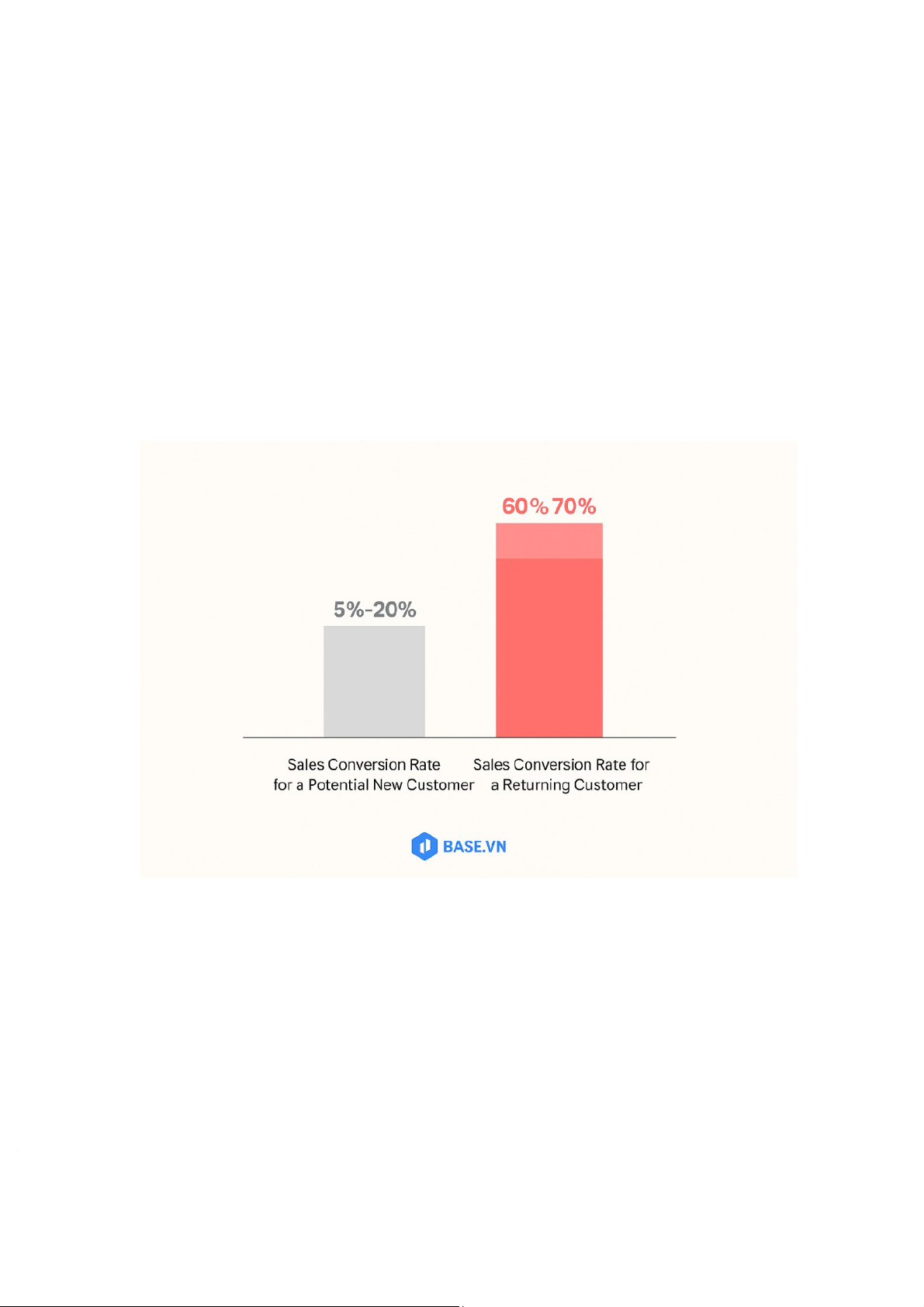
Consumers tend to prioritize purchasing products from brands with which they have
previously interacted and formed a positive impression. A study featured in the book
Marketing Metrics revealed some impressive figures:
The success rate of selling to a new customer is 5–20%.
The success rate of selling to an existing customer is 60–70%.
+) Strengths and weaknesses - Strengths
Increase profits: When customers purchase more, businesses naturally generate
more revenue. Business growth involves not only retaining customers but also
encouraging them to allocate a greater portion of their spending toward additional 16 products.
An excellent untapped market may very well be the existing customer base. Once
customer trust is established, businesses can capitalize on significant further
investments by effectively applying upselling and cross-selling techniques.
Build customer loyalty: In practice, up-selling and cross-selling are closely linked
to customer satisfaction. By aiming to provide customers with all suitable products
to enable optimal decision-making, these strategies deliver a strong message: the
business cares about the customers' needs and financial capabilities.
When customers feel that their purchasing power and value are being considered,
they are more likely to feel respected and develop stronger attachment to the business.
Moreover, these strategies not only enhance customer loyalty but also serve as a
powerful form of free marketing, as satisfied customers often become the most
effective KOLs and marketers—something no amount of money can easily secure. Improve ROI
Acquiring new customers is an extremely costly endeavor. Meanwhile, up-selling
and cross-selling allow businesses to boost revenue quickly without the additional
costs associated with advertising and customer acquisition.
Essentially, neglecting up-selling and cross-selling means leaving potential profits
untapped. By offering customers products related to their interests, businesses can
maximize their earnings with minimal additional investment.
Increase customer lifetime value
Up-selling and cross-selling not only deliver greater immediate profits from
customers' first transactions but also significantly increase their overall lifetime
value to the business. For example, offering a credit card to a customer who has
just financed a new home will likely yield much more profit over time compared to
only handling the mortgage. Building customer loyalty thus provides long-term advantages for businesses.
Provide convenience and flexibility for customers 17
The benefits of up-selling and cross-selling are not limited to businesses. In fact,
these strategies succeed precisely because they also benefit customers. By offering
more options or relevant add-ons, businesses enable customers to fulfill their needs
without having to seek out new providers.
Through up-selling and cross-selling, businesses deliver greater convenience and
flexibility, helping customers stay within a trusted ecosystem while choosing
products that best suit their needs. - Weaknesses
Risk of customer annoyance when overused
If staff continuously suggest additional products or services that the customer does
not need, it can make the customer feel pressured or irritated. Especially when the
suggestions are irrelevant to the main product, customers may feel that the business
cares more about profit than understanding their needs.
Negative impact on trust and customer experience
When upselling and cross-selling are done in an overly aggressive or obvious way,
customers may become suspicious of the business’s true intentions. This can harm
the brand image and reduce long-term customer loyalty.
High dependence on staff training and skill
To apply upselling and cross-selling effectively, staff must have a deep
understanding of the products, good communication skills, and the ability to
identify customer needs. Without proper training, these strategies can backfire and
lead to lower sales effectiveness and negative impressions.
Potential loss of focus on core offerings
If a business focuses too much on selling add-ons, it may lose focus on improving
its core offerings. This can affect long-term strategic goals and reduce the overall
quality of the main products or services. +) Example
KFC (Kentucky Fried Chicken) is one of the world’s most famous fast food chains,
specializing in fried chicken along with side dishes such as fries, salad, rice, and soft
drinks. KFC is known for its delicious crispy fried chicken, unique seasoning recipe, and 18
friendly customer service. With an extensive network of restaurants across many
countries, KFC continually strives to improve customer experience and grow its revenue
through creative marketing strategies.
Upselling at KFC:
When a customer orders fried chicken, the staff might suggest upgrading to a larger
combo, such as the “Bucket with 6 pieces” instead of the 4 pieces bucket, offering better
value for money compared to purchasing individual items.
Or when a customer selects regular fried chicken, the staff might suggest trying the extra
spicy fried chicken or the special roasted chicken, which costs more but offers a unique experience.
Cross-selling at KFC:
When a customer orders fried chicken, the staff may recommend adding fries or a soft drink.
For example, when a customer orders chicken, the staff might say, “Would you like to
add fries and a soft drink to your meal? It’s only an extra 20,000 VND!”
This not only provides customers with more options but also helps increase sales for KFC.
Both upselling and cross-selling help KFC increase revenue and provide customers with a
richer dining experience. These strategies not only boost sales but also enhance customer
satisfaction by introducing products that align with their preferences and needs.
4. Foot-in-the-door Technique +) Definition
The Foot-in-the-Door (FITD) technique is a persuasion strategy in which a person first
makes a small, easy-to-agree request, and then follows up with a larger, related request.
The goal is to get the person to feel committed to the first action and more likely to agree to the second, larger request.
This term was first introduced by Jonathan Freedman and Scott Fraser in 1966 in their psychological research. +) Characteristics
Starts with a small request 19
The persuader begins with a simple and easy request, such as asking for a
signature, a few minutes of time, or a free trial. The goal is to make it easy for the
person to say “yes” without feeling bothered or pressured.
Based on the principle of consistency
Once someone agrees to a small request, they are more likely to accept a larger one
because they want to appear consistent in their behavior and decisions.
Requests are related
The second, larger request is usually closely connected to the first.
For example, after agreeing to try a free sample, a person is more likely to consider
purchasing the full product. This makes the transition feel smooth and natural.
Psychological commitment effect
After performing a small action, people begin to see themselves as supportive or
helpful. This internal commitment motivates them to continue acting in a way that matches this self-image.
+) Strengths and weaknesses - Strengths
Increases the likelihood of agreeing to larger requests
Once someone agrees to a small request, they tend to comply with a larger one—
especially if both requests are logically connected. This behavior reflects the
human desire to remain consistent in thoughts and actions.
Low initial pressure
The first request is usually simple and non-threatening. This lowers resistance and
makes the person more willing to cooperate with the next request.
Flexible and widely applicable
FITD can be effectively used in various fields such as sales, marketing, education,
fundraising, social campaigns, and personal communication. Its versatility makes it
a popular and practical psychological tool.
Builds trust and goodwill
When people feel they are participating voluntarily (rather than being forced), they
are more likely to trust the requester and have a more positive attitude toward 20
Tài liệu liên quan:
-
The Importance of Telephoning in Business and its Etiquette | Bài thảo luận tiếng anh thương mại
13 7 -
How to Become a Good Presenter | Bài thảo luận tiếng anh thương mại
18 9 -
How to handle negative publicity in your business and someillustrations | Bài thảo luận tiếng anh thương mại
22 11 -
Important events in our life | Bài thảo luận tiếng anh thương mại
20 10 -
Technological Innovations in Customer Experience for Vietnam's F&B Industry | Bài thảo luận tiếng anh thương mại
17 9