Relationship Between Emotional Neglect of Parents and Children’s Internalizing, Externalizing Behavior Problems and Academic Achievement
và thông tin bổ ích giúp sinh viên tham khảo, ôn luyện và phục vụ nhu cầu học tập của mình cụ thể là có định hướng, ôn tập, nắm vững kiến thức môn học và làm bài tốt trong những bài kiểm tra, bài tiểu luận, bài tập kết thúc học phần, từ đó học tập tốt và có kết quả
Môn: Social Phsycology (PSYC 241) 53 tài liệu
Trường: Trường Đại học Hoa Sen 5.3 K tài liệu
Tác giả:







Preview text:
Advances in Health Sciences Research, volume 24
5th Universitas Ahmad Dahlan Publ ic Health Conference (UPHEC 2019)
Relationship Between Emotional Neglect of Parents
and Children’s Internalizing, Externalizing Behavior
Problems and Academic Achievement Kee Jiar Yeo Sii Jiing Chan
Faculty of Social Sciences and Humanities
Faculty of Social Sciences and Humanities
University Teknologi Malaysia
University Teknologi Malaysia Malaysia Malaysia kjyeo@utm.my siijiingchan90@hotmail.com
Abstract— The aim of this study was to investigate the effects
Positive Parenting Malaysia (2014) also claimed that
of emotional neglect of parents on the behaviors and academic
emotionally neglected children often exhibit some
achievement of primary five children in Pasir Gudang, Johor.
problematic or self-destructive social or behavioral patterns
In this quantitative research, a sample of 340 primary five
such as anxiety or depression (internalizing behavior
children and their parents were involved by using cluster
problems) , temper tantrums, destructive behavior, unwilling
sampling method. Using a survey research design, two sets of
questionnaires; namely: Neglect Scale, Child Behavior
to follow rules, running away, chronic lying, and extreme
Checklist (6-18) and achievement test were used to collect data.
risk taking (externalizing behavior problems). Research
The analysis of data collected revealed that the children
findings suggest that there is a relationship between
experienced mild level of emotional neglect of parents. Besides,
emotional neglect of parents and academic achievement of
the children also had mild internalizing and externalizing
children. According to Iwaniec (2007) [2], emotionally
behavior problems and their academic achievement was at
neglected children have difficulty paying attention in class,
satisfactory level. In addition, there was a significant difference
which results in poor academic achievement. Leiter &
between emotional neglect of parents and genders. Male
Johnsen (2014) also found that neglected children had the
children experienced slightly higher level of emotional neglect
of parents compared to female children. High correlations were
poorest school performance of all maltreated children. In
found between emotional neglect of parents and children’s
Malaysia, urban primary school children had showed poor
internalizing and externalizing behavior problems whereas
academic achievement [4]. Findings of the study by Ong et
moderate correlation was found between emotional neglect of
al. (2010) showed that there was 14 percent out of 1470
parents and children’s academic achievement.
eligible children who had poor academic achievement. The
main reason caused poorer academic achievement among
Keywords: emotional neglect, internalizing, externalizing
the children was their parents who showed low level of
behavior problems, academic achievem ent
interest on their children’s academic performance [4]. I. INTRODUCTION
Maltreated children who often undergo different forms
of maltreatment and emotional neglect may actually be the
Children are important human capitals to the country. It
most ordinary types [5]. However, it is the most hidden,
is important for every country and society to nurture a
underreported and least studied type of abuse [6]. In a study
strong, intellectual and healthy youth. However, based on
conducted by Bernstein and Fink (1998), emotional neglect
the data collected by the National Child Abuse and Neglect
was defined as the failure of caretakers to attend to their
Data System (NCANDS), the number of victims had been
children’s psychological needs which include love,
increasing in an alarming rate in the past 5 years.
belonging, nurturance and support. In another study by
Approximately 75.3% of child maltreatment cases in 2015
Schimmenti, A., et al. (2015) [7], they claims that emotional
were classified as child neglect [1]. Based on a national
neglect happens when parents overlooks the symptoms that
clinical dataset of over 11000 trauma-exposed youth,
a child needs attention or comfort. It happens intentionally
psychological maltreatment (emotional abuse and emotional
or unintentionally and involves a few of parental behaviors
neglect) was identified as the most prevalent (38%) form of
which include failure to provide needed psychological care
maltreatment (Brigss, et al., 2013). It arose due to
such as rejection of the child, failure to express positive
insufficient nurturing, lack of care, and insufficient affection
feelings to the child and withholding love.
[2]. It is now increasingly believed that parental emotional
neglect increases risk for the children’s internalizing and
Various studies have been looking into the gender
externalizing behavior, as well as delays in cognitive
differences in the level of parental emotional neglect. Kylie,
development [3]. According to Teoh (2013), children who
Amanda & Patrick (2016) reported that there was no gender
encountered emotional neglect were at least 25% more
differences in reported exposure to emotional neglect
likely to involve in internalizing and externalizing
although the prevalence rate was approximately one in ten
behavioral problems such as low self-esteem, mood swing
children [8]. Similarly, the fourth National Incidence Study and delinquency.
Copyright © 2020 The Authors. Published by Atlantis Press SARL.
This is an open access article distributed under the CC BY-NC 4.0 license -http://creativecommons.org/licenses/by-nc/4.0/. 304
Advances in Health Sciences Research, volume 24
(NIS-4) did not find gender differences in the prevalence of
Emotional neglect of parents increases children’s
emotional neglect. However, study by Sentse et al. (2010)
academic problems [14]. Kathleen (2011) had examined the
used the Parental Acceptance-Rejection questionnaire to
impacts of emotional neglect on academic achievement of
determine the level of emotional neglect experienced by the
elementary, junior high and senior high students [17].
male and female children [9]. The T-test result shows that
Compared with non-maltreated samples, emotionally
girls are more likely to be accepted by parents compared to
neglected children and adolescents did perform more poorly,
boys. Therefore, boys tend to experience higher level of
had lower grades, got more suspensions and more grade parental emotional neglect.
repetitions even when controlling for socioeconomic status
and gender of child. Another study by Spratt et al. (2013)
The results of Sharon et al.’s (2017) study showed that
also revealed similar findings [18]. They found out that
psychological neglect of caregiver had a substantial and
emotionally neglected children had lower academic
significant relationship with depression [10]. Vachon et al.
achievement, repetitions of grade and more suspensions
(2015) also found that different types of child maltreatment
[18]. In Bangladesh, Uddin (2011) had conducted a study to
had equivalent psychiatric and internalizing behavioral
explore the possible association between parental acceptance
effects like anxiety and depression [11]. Moreover, similar
and academic achievement of adolescents [19]. Findings of
study done by Marie-Eve et al. (2013) examined the
this study showed that parental warmth is correlated to
emotional profiles of 41 neglected children, aged 6 to 12
academic achievement of children whereas indifferent
years and compared them with a control group of 41
(neglecting) and undifferentiated rejection of parents was
children [12]. Findings of the study revealed that
not significantly correlated to children’s academic
emotionally neglected children had more internalized
achievement. Study by David, James & Gaudin (2013) also
behavior problems than controlled group children. Findings
revealed that emotionally neglected children displayed
of Wark, Kruczek and Boley’s (2003) study showed that
severe academic delays [20]. They scored lower on reading,
respondents who were being emotionally neglected by a
math and language compared to the controlled group.
primary male or by a primary female caregiver would
Neglected children tended to have lower academic
exhibit higher levels of psychological distress than those
performance. David, James & Gaudin (2013) claimed that it
without neglect experiences [13]. Besides, respondents who
was not surprising that neglected children may have trouble
perceived primary female caregiver as neglectful reported
in school performance [20]. This is because intellectual
higher levels of psychological distress too.
development of children depends on the quality of the
interaction between parent and child.
Externalizing behavior problems are defined as problems
that are manifested externally [14]. In Swedish, a study was
The neglectful, unavailable parenting induces deficit in
conducted by Hadborg, Tidefors and Fahlke’s (2017) to
intellectual development of the child. In Singapore, Grace
explore the effect of emotional neglect on mental health and
(2014) had explored the relationship between parental
behavioral problems of young adolescents. Findings of this
behaviors and the academic achievement of their children in
study demonstrated that emotional neglect of parents had
primary schools [21]. Parents of EM 1 students were warmer
significant influence on externalized symptoms for both
than parents of EM2 and EM3 students. Besides, the
gender. Tamara et al. (2016) claimed that parental emotional
analysis of the subscale on parental communication with
neglect was strongly correlated with externalizing behaviors
their child also found that EM1 and EM 2 students inclined
like aggression, impulsivity and criminality. Similarly,
to tell their parents everything that happens to him/her in
Young, Lennie & Minnis (2011) did found that adolescents
school more than an EM3 child. The findings indicated that
who were being emotionally neglected by parents at 11-age
parents who were warm and nurturing tended to have EM1
had a greater risk to exhibit conduct problem symptoms at
or EM2 children. Emotional neglect of parents is a serious age 15 [15].
problem. It leads to harmful influence on children especially
on their behavioral development and academic achievement.
In United State, Spinazzola et al. (2014) analyzed the This study i
s aimed to investigate the effects of emotional
independent and addictive predictive effects of emotional
neglect of parents on children’s behaviors and academic
neglect on an array of behavioral problems, symptoms, and achievement.
disorders with children and adolescents as the sample [16].
A subsample of 5616 with history of one or several forms of
This research attempted to identify the impact of
maltreatment such as psychological maltreatment (emotional
emotional neglect of parents on children’s internalizing,
abuse and emotional neglect), physical abuse and sexual
externalizing behavior problems and their academic
abuse were analyzed. Surprisingly, findings revealed that
achievement. Specifically, this study aimed to achieve the
psychological maltreated children showed more levels of following objectives:
behavioral problems, symptoms, and disorders compared to
i. To identify the level of emotional neglect of parents, the
children who are physically and sexual abused. Study by
level of children’s internalizing and externalizing
White and Renk (2012) also showed that adolescents’
behavior problems, and the level of children’s academic
perceived experiences at each level of the ecological model achievement.
would be closely associated with their externalizing
ii. To examine whether there is any significant difference in problems.
emotional neglect of parents between male and female children. 305
Advances in Health Sciences Research, volume 24
iii. To investigate whether there is any significant
domain whereas 34 items in externalizing behavior problems
relationship between emotional neglect of parents and domain.
children’s internalizing behavior problems. III. RESULT
iv. To determine whether there is any significant
relationship between emotional neglect of parents and
To analyze the collected data, two types of statistical
children’s externalizing behavior problems.
methods, descriptive and inferential analyses, were applied
v. To determine whether there is any significant
to answer the research questions.
relationship between emotional neglect of parents and
children’s academic achievement
A. Demographic Information of Respondents II. METHOD
In this study, data were collected from parents and
In this study, quantitative approach was used. The design
children in four Chinese National-type primary schools in
of this study was descriptive in nature. The approach that
Pasir Gudang district. A total of N=340 primary five
widely used in descriptive research to collect data and
children and their parents participated in this study. Out of
information is survey research design (Berg and Bruce L.,
all respondents, 163 (47.9%, n=163) of them were male and
2009). According to Creswell (2012). Survey research
177 (52.1%, n=177) were female. Table 1 showed the
design was employed to the entire population or a selected
frequency and percentage of respondents’ gender.
sample to describe the perceptions, characteristics or
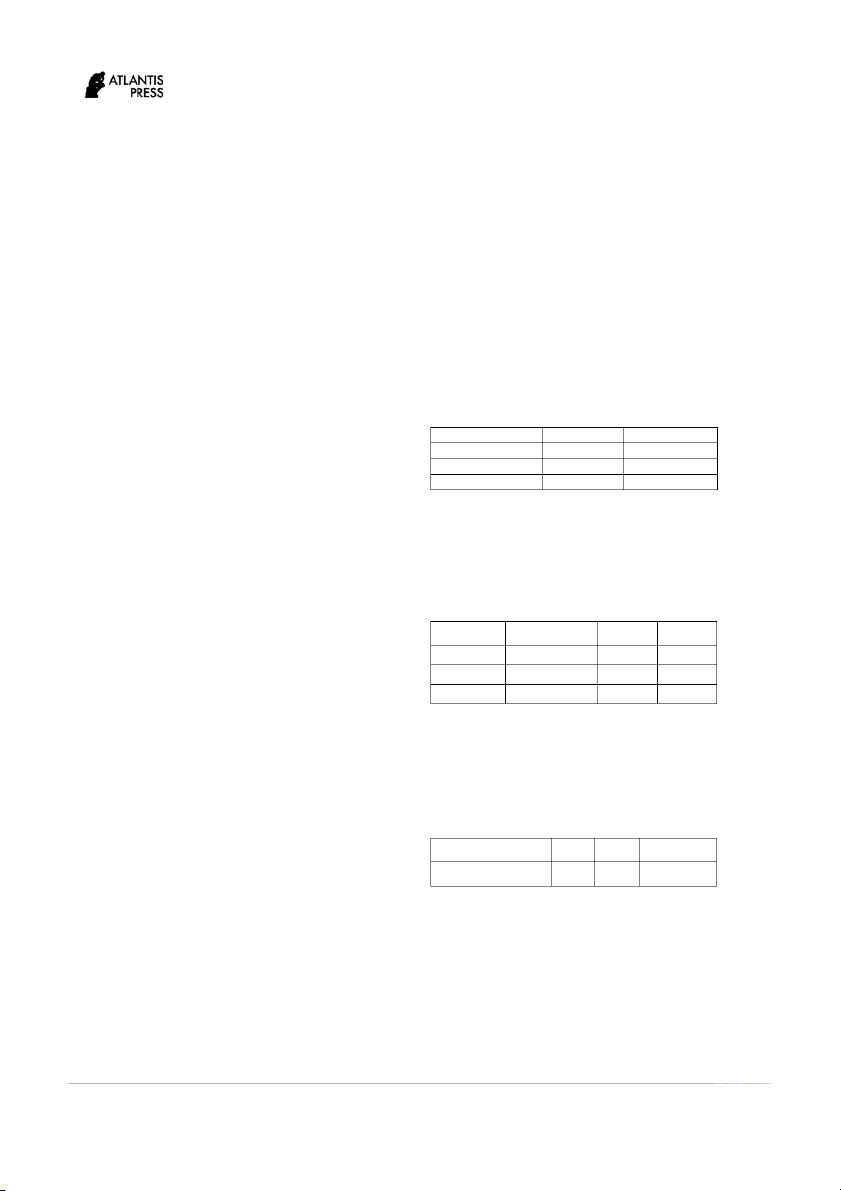
TABLE I. FREQUENCY AND PERCENTAGE OF RESPONDENTS’
attitudes of the population . As with other typical survey GENDER
research design, questionnaire was used in this study to
collect data. Neglect Scale and Child Behavior Checklist Gender Frequency Percentage (%)
were used to collect data on the level of parental emotional Male 163 47.9
neglect and children’s internalizing and externalizing Female 177 52.1
behavior problems. The sample method employed in this Total 340 100.0
study was cluster sampling.
A. Population and Sample
B. Level of Emotional Neglect of Parents
In this study, the target population were 11 Chinese
To determine the magnitude of emotional neglect of
National-type primary schools in Pasir Gudang district
parents, a total score was calculated. The mean of the total
which further divided into different areas (cluster) according
score was used to determine the level of parental emotional
to their postcode. The four different areas were Johor Bahru,
neglect experienced by the primary five children.
Ulu Tiram, Masai and Pasir Gudang. There were three
schools located in Johor Bahru area, another three schools in
TABLE II. DISTRIBUTION OF TOTAL NEGLECT SCALE SCORE S
Ulu Tiram, four schools were located in Masai and only a
school was located in Pasir Gudang. The samples involved Total Neglect Levels of Percentage Frequency Scale Score Emotional Neglect (%)
in this study were primary five children from the four
schools in Masai area. In each school, three classes were 20-40 Mild 222 65.29
randomly selected as they were heterogeneously streamed. 41-60 Moderate 109 32.06 61-80 Severe 9 2.65 B. Neglect Scale
The Neglect Scale questionnaire consisted of two
sections. Section A of the questionnaire consisted of
The findings in Table 2 shows that he majority of
demographic variables which were gender and average score
children (65%, n=222) were experiencing mild emotional
obtained by the children in the year-end assessment. In
neglect of parents while (32%, n=109) of children were
Section B, the items in the questionnaire were in a form of
experiencing moderate emotional neglect of parents and
self-report to identify the level of emotional neglect of their
only (3%, n=9) of them fall within the severe range.
parents. The Neglect Scale consisted of a total of 20 items
that were directly related to the theoretical definition of
TABLE III. MEAN AND STANDARD DEVIATION OF NEGLECT SCALE
emotional neglect in this study. It included the level of care
and support received from the caregivers, time spent and Standard Variable N Mean
communication with the caregivers and lastly children’s Deviation
assessment of their caregivers’ positive affection towards Total Neglect Scale Score 340 37.52 11.00 them.
C. Child Behavior Checklist
Table 3 shows that from the analysis done on 340
respondents, the mean value for the overall score was 37.52
Child Behavior Checklist (CBCL) was rated by
caregivers to identify behavior problens in children. In this
with a standard deviation of 11.00. By referring to the scale
study, there were two domains in the adapted CBCL namely
of Emotional Neglect, primary five children were
internalizing and externalizing behavior problems. It
experiencing mild emotional neglect of parents.
consisted of 30 items in internalizing behavior problems 306
Advances in Health Sciences Research, volume 24
C. Level of Children’s Internalizing Behavior Problems
behavior problems and 20% (n=69) of the children were
having moderate externalizing behavior problems. There
To determine the level of respondents’ internalizing
was only 1% (n=3) of the children had severe externalizing
behavior problems, a total score was calculated and the total behavior problems.
mean score was used to determine the level of primary five
children’s internalizing behavior problems. Higher scores
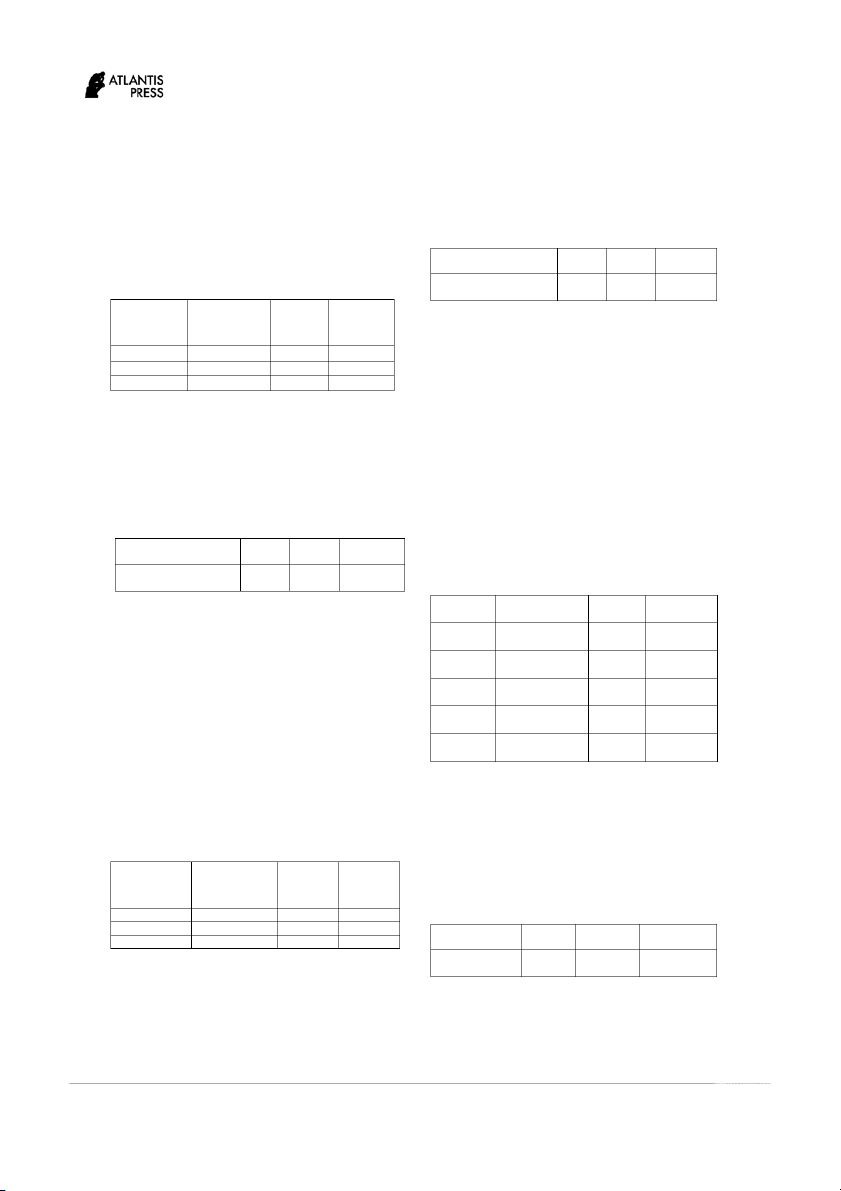
TABLE VII. MEAN AND STANDARD DEVIATION OF CBCL
indicated a higher level of respondents’ internalizing
(EXTERNALIZING BEHAVIOR PROBLEMS) behavior problems. Standard Variable N Mean TABLE I . D V
ISTRIBUTION OF TOTAL CBCL (INTERNALIZING Deviation BEHAVIOR PROBLEMS) SCORES Total Externalizing 340 63.71 19.25 Behavior Score Total Level of Internalizing Internalizing Percentage Frequency Behavior Behavior (%)
Table 6 revealed the mean value for the total Scores Problems
externalizing behavior score was 63.71 with standard 30-70 Mild 301 88.53
deviation of 19.25. It demonstrated primary five children 71-110 Moderate 39 11.47
were having mild externalizing behavior problems. 111-150 Severe 0 0.00
E. Level of Children’s Academic Achievement
By referring to Table 4, the findings revealed that the
majority of the children (89%, n=301) were having mild
In this study, the level of children’s academic
internalizing behavior problems while the remaining
achievement was determined by the average scores of their
children (11%, n=39) were found to be within the range of
year-end assessment. The scores and the status were based
moderate internalizing behavior problems and none of them
on the grading system in Primary School Achievement Test
were having severe internalizing behavior problems.
(UPSR) in Malaysia. It should be remarked that higher
scores indicated a higher level of their academic
TABLE V. MEAN AND STANDARD DEVIATION OF CBCL
achievement. Table 4.8 showed the frequency and
(INTERNALIZING BEHAVIOR PROBLEMS)
percentage of children’s average scores in year-end assessment. Standard Variable N Mean Deviation
TABLE VIII. ACADEMIC ACHIEVEMENT OF PRIMARY FIVE Total Internalizing Behavior 340 52.44 15.05 CHILDREN Score Average Percentage
Table 4 shows that the mean value for the total Status Frequency Scores (%)
internalizing behavior score was 52.44 with a standard
deviation of 15.05. by comparing to the scale of CBCL score 80-100 Excellent 8 2.35
indicator, it demonstrated primary five children were having 65-79 Good 95 27.94
mild internalizing behavior problems 50-64 Satisfactory 76 22.35
D. Level of Children’s Externalizing Behavior Problems
Again, Child Behavior Check List (CBCL) served as 40-49 Minimum standard 79 23.24
purpose in assessing the level of children’s externalizing Below minimum
behavior problems. A total score was calculated to 0-39 82 24.12 standard
determine the level of respondents’ externalizing behavior
problems and the total mean score was used to determine the
Table 7 shows academic achievement of primary five
level of primary five children’s externalizing behavior
children. Only 2% (n=8) of the children had excellent problems.
scores, 28% (n= 95) of children had good scores, 22%
(n=76) of children had satisfactory scores while the
TABLE VI. DISTRIBUTION OF TOTAL CBCL (EXTERNALIZING
remaining of 23% (n=79) and 24% (n=82) of children were BEHAVIOR) SCORES
found to have score reaching the minimum standard and Level of below minimum standard. Total Externalizing Percentage Externalizing Frequency Behavior (%) Behavior Scores
TABLE IX. MEAN AND STANDARD DEVIATION OF AVERAGE Problems SCORES IN YEAR-END ASSESSMENT 34-79 Mild 268 78.82 80-125 Moderate 69 20.29 Standard Variable N Mean 126-170 Severe 3 0.89 Deviation Total Average 340 51.13 18.75
Referred to table 5, it reveals that majority of the Score
children (79%, n=268) were having mild externalizing 307
Advances in Health Sciences Research, volume 24
Table 8 shows the mean and standard deviation of
dependent variable was children’s externalizing behavior
average scores in year-end assessment. The mean value of problems.
the total average scores obtained by the primary five
children was 51.13 with standard deviation of 18.75. By
TABLE XII. PEARSON CORRELATION BETWEEN EMOTIONAL
comparing the mean value to the UPSR grading system, the
NEGLECT OF PARENTS AND CHILDREN’S EXTERNALIZING BEHAVIOR PROBLEMS
academic achievement of the primary five children was at the satisfactory level. Total Neglect Total Externalizing Parameter Scale Score Behavior Scores
F. Difference in Emotional Neglect of Parents between Male Pearson and Female Children 1 .692* Correlation Sig. (2-tailed) .000
TABLE X. INDEPENDENT SAMPLES T-TEST BETWEEN MALE AND N 340 340
FEMALE CHILDREN AND TOTAL SCORE OF EMOTIONAL NEGLECT SCALE
From Table 11, the results shows that there was strong
t-Test for Equality of Means
positive correlation between emotional neglect of parents
and children’s externalizing behavior problems (r = 0.692, p Variable Significan Mean t df t (2-tailed) Difference
< 0.01). The results revealed that children who were
experiencing emotional neglect of parents were more likely Total Emotional 2.064 338 .040 2.45291
to exhibit externalizing behavior problems. Neglect Scale
I. Relationship between Emotional Neglect of Parents and
The result of the t-Test analysis was summarized in
Children’s Academic Achievement
Table 9. The t-Test result shows that there were significant
differences between male and female respondents in the
Table 12 shows the Pearson Correlation between
level of emotional neglect of parents (t = 2.06, df = 338, p =
emotional neglect of parents and children’s academic
0.04). The mean differences between male and female
achievement. By using Pearson’s interpretation, it revealed
respondents are 2.45. It demonstrated that male children
that children’s academic achievement was negatively
were experiencing slightly higher level of emotional neglect
correlated to emotional neglect of parents variable (r = -
of parents compared to female children.
0.353, p < 0.01). It showed that children who perceived their
parents as emotionally neglectful were more likely to have
G. Relationship between Emotional Neglect of Parents and
poorer academic achievement and the strength of this
Children’s Internalizing Behavior Problems relationship is moderate.
TABLE XI. PEARSON CORRELATION BETWEEN EMOTIONAL
TABLE XIII. PEARSON CORRELATION BETWEEN EMOTIONAL
NEGLECT OF PARENTS AND CHILDREN’S INTERNALIZING
NEGLECT OF PARENTS AND CHILDREN’S ACADEMIC BEHAVIOR PROBLEMS ACHIEVEMENT Total Neglect Scale Total Internalizing Academic Total Emotional Parameter Parameter scores Behavior Scores Achievement Neglect Scores Pearson Correlation 1 -.353* Pearson 1 .690* Correlation Sig. (2-tailed) .000 Sig. (2-tailed) .000 N 340 340 N 340 340 IV. DISCUSSION
From Table 10, it demonstrates that there was a strong
positive correlation between emotional neglect of parents
A. Level of Emotional Neglect of Parents
and children’s internalizing behavior problems (r = 0.690, p
The overall mean score was 37.52 which indicated that
< 0.01). The results showed that children who were more
primary five children in Pasir Gudang district experienced
likely to experience emotional neglect of parents were more
mild emotional neglect of parents. The findings correspond
likely to exhibit internalizing behavior problems and the
with Hadborg, Tidefors and Fahlke (2017) where they found
strength of this relationship is strong.
that most of the respondents perceived their parents as not
“neglectful”. As much as 60.2% of boys and 64.3% of girls
H. Relationship between Emotional Neglect of Parents and
were not experiencing emotional neglect of parents whereas
Children’s Externalizing Behavior Problems
28.7% of boys and 25.3% of girls were in moderate range.
There were only 11.1% of boys and 10.4% of girls were in
Pearson Correlation was computed to measure the
severe range. Similarly, study by Young, Lennie & Minnis
relationship between emotional neglect of parents and
(2011) also found that only a small (3%) group of children at
children’s externalizing behavior problems. The independent
age 11 perceived their parents as “neglectful” and most of
variable was emotional neglect of parents whereas the
them (97%) perceived their parents as “caring” [15].
However, study by Wark, Kruczek and Boley (2003) found 308
Advances in Health Sciences Research, volume 24
that respondents who characterized their relationship with
(Rohner and Khaleque, 2002). Therefore, one of the best
their caregiver as neglectful (n=60) were more than the
explanations to mild level of externalizing behavior
respondents reported no neglect (n=49) [13]. The
problems among the primary five children was due to mild
differences in the level of emotional neglect of parents were
level of parental emotional neglect experienced by the
probably due to different age groups of respondents
children. This explanation was further supported by the
involved in the studies. Three studies that reported similar
study conducted by Spratt et al. (2013), control group of
levels of parental emotional neglect as the current study
respondents had significantly better scores on behavioral
[15]had been involved pre-adolescents with a mean age of
measures than children with history of neglect [18].
12 whereas the respondents involved in Wark, Kruczek and
Boley’s (2003) study was undergraduate students with an
D. Level of Children’s Academic Achievement
average age of 21.90 [13]. Besides, good parent-child
The findings of this study showed that the academic
relationship is also one of the explanations to the occurrence
achievement of primary five children was at satisfactory
of mild level of parental emotional neglect. When children
level. The mean value of the total average score obtained by
were asked about their interaction with their parents, 57%
the primary five children was 51.13. To answer the question
(n=194) of the children rated strongly disagree to the item
of the occurrence of satisfactory level of academic
20 “Interact with me only when necessary”. It showed that
achievement among the children, one of the best
primary five children had good interaction with their
explanations was parental behaviors. When children were
parents. According to Sawyer et al. (2011) [22], in their
asked about their parent’s behavior towards their study, most
study, parent-child relationship variable differentially
of the children (64%) rated “strongly disagree to the item
predict child neglect potential. It implied that negative
“Did not show interest in my grades at school”. This
parent-child relationship predicted the occurrence of
indicated that parents showed interest and cared about their
emotional neglect of parents and vice versa. Specifically,
children’s study. The finding of this study was supported by
good parent-child relationship decreases the level of parental
previous study conducted by Grace (2014) [21]. According emotional neglect.
to Grace (2014), parental behavior is closely linked to a
child’s academic achievement. It indicated caring parents
B. Level of Children’s Internalizing Behavior Problems
tended to have EM1 (highest level) or EM2 (level where
Child Behavior Checklist was used to measure the level
majority are posted) children [21].
of children’s internalizing behavior problems. The findings
showed that primary five children had mild internalizing
E. Differences in Emotional Neglect of Parents Between
behavior problems as the parental emotional neglect
Male and Female Children
perceived by the children were at mild level. The findings of
Findings from many studies had shown that there were
the current study corresponds with other similar studies
no significant gender differences in the level of parental
[12][13] where emotional neglect of parents is associated
emotional neglect. Emotional neglect occurred at the same
with internalizing behavior problems of children. According
frequency among female and male children [8]. However, in
to Wark, Kruczek and Boley’s (2003) [13], the results
comparison with the earlier findings, the findings in this
indicated respondents who reported no neglected by
study were inconsistent with the earlier studies. In the
caregivers exhibit lower level of psychological distress than
current study, male children were experiencing slightly
those respondents reporting a childhood experience of
higher level of emotional neglect of parents compared to
emotional neglect. Marie-Eve et al. (2013) [12] also found
female children. This result was supported by the study
that controlled group children had less internalized problems
carried out by Sentse et al. (2010) which found out that girls
than emotionally neglected children. This phenomenon has
perceived more parental acceptance whereas boy perceived
been discussed by Bowlby (1988), that secure attachment
more parental rejection [9]. Therefore, it implied that boys
relationship promotes adolescents’ cognitive, social and
inclined to experience emotional neglect of parents. The
emotional competence and less symptoms of psychological
findings of this study were further supported by a study
problems such as depression and anxiety. On the other hand,
carried out Irene & Choo (2016) who claimed that there was
insecure attachment represented by parental emotional
a notable proportion of young adolescents (22%) were
neglect will cause problematic outcomes especially
exposed to multiple types of neglect. Male reported much
internalizing symptoms of children.
more emotional victimizations compared to females.
C. Level of Children’s Externalizing Behavior Problems
F. Relationship Between Emotional Neglect of Parents and
In this study, children were having mild level of
Children’s Internalizing Behavior Problems
externalizing behavior problems. According to White and
The result of Pearson Correlation showed that children’s
Renk (2012), parental acceptance was associated with lower
internalizing behavior problems were strongly correlated to
levels of externalizing behavior problems whereas parental
emotional neglect of parents. The result corresponded with
rejection (parental emotional neglect) was related to higher
Wark, Kruczek and Boley’s (2003) findings where they
levels of externalizing behavior problems in early
found emotional neglect of parents would cause greater level
adolescents. According to PAR Theory, accepting parents
of internalizing behavior problems of children [13]. For
will express their love and affection toward their children.
instances, in the study conducted by Sharon et al. (2017),
All these behaviors tend to promote a child to feel love and
caregiver emotional neglect had significant and substantial
accepted and exhibited less externalizing behavior problems
relationship with depression [10]. 309
Advances in Health Sciences Research, volume 24
G. Relationship between Emotional Neglect of Parents and
For future research, it is suggested the research on
Children’s Externalizing Behavior Problems
similar issue can be carried out longitudinally. For instance,
In the prior research, there were a lot of researchers
research can be conducted to identify the influence of
studied the levels of emotional neglect of parents on
parental emotional neglect on participants over late
children’s externalizing behavior problems. One of the
adulthood. Future researchers who are interested in this topic
research was carried out by Spratt et al. (2013) to compare
also can include the demographic variables especially
the behavioral functioning between two groups of children
socioeconomic status to study the relationship between the
[18]. The two groups of children were children with no
emotional neglect of parents and social class, as well as the
history of neglect (n=30) and children who undergone
levels of children’s behavioral problems. Moreover, this
emotional neglect from caregivers (n=30). Findings of their
research can be conducted using qualitative research design.
study revealed that emotionally neglected group exhibited
Tools like interviews and observation can be implemented to
lower levels of behavioral functioning than control groups.
gather a great deal of data provided by the interviewees. By
From this past study, it had been proven that emotional
interviewing the participants, future researcher can gain an
neglect of parents was positively related to children’s
insight into the negative impact of emotional neglect.
externalizing behavioral problems. This result was in line
with the current study that emotional neglect or parents was REFERENCES
positively related to children’s externalizing behavior problems. [1]
U.S. Department of Health & Human Services, “Child Maltreatment 2015,” 2015. [Online]. Available:
https://www.acf.hhs.gov/sites/default/
H. Relationship Between Emotional Neglect of Parents and
files/cb/cm2015.pdf. [Accessed: 13-Mar-2017].
Children’s Academic Achievement [2]
Iwaniec, The Emotionally Abused and Neglected Child. Identification,
The relationship between emotional neglect of parents
Assessment and Intervention A Practice Handbook. United Kingdom:
and children’s academic achievement was identified using
John Wiley & Sons, Ltd., 2007. [3]
S. N. Hart, M. R. Brassard, N. J. Binggeli, and H. A. Davidson,
Pearson correlation. The result showed that there was a
Psychological maltreatment. In J.E.B. Myers, L. A. Berliner, J. N.
significant relationship between the level of parental
Briere, C. T. Hendrix, T. A. Reid, & C. A. Jenny (Eds.). Thousand
emotional neglect and children’s academic achievement.
Oaks, CA: Sage Publications, 2012.
The result of this study was supported by the study carried [4]
L. C. Ong, V. Chandran, Y. Y. Lim, A. H. Chen, and B. K. Poh,
“Factors associated with poor academic achievement among urban
out by Kathleen (2011) who stated that emotionally
primary school children in Malaysia,” 2010. [Online]. Available:
neglected children and adolescents did perform more poorly,
https://www.researchgate.net/profile/Bee_Poh2/publication/43352716
having lower grades, more suspensions and more grade
_Factors_associated_with_poor_academic_attainment_among_urban_
repetitions even when controlling for gender of child and
primary_school_children_in_Malaysia/links/0deec5294bd67be7cc000
000/Factors-associated-with-poor-academic-attainment-among-urban.
socioeconomic status [17]. The findings of this study was [Accessed: 20-Apr-2017].
consistent with David, James & Gaudin’s (2013) findings [5]
R. Hibbard, J. Barlow, and H. Macmillan, “Psychological
which revealed that there was a strong link between parental
maltreatment,” Pediatrics, vol. 130, no. 2, pp. 372–378, 2012.
emotional neglect and children’s academic performance [6]
O. Barnet, C. L. Miller-Perrin, and R. D. Perrin, “Child psychological
[20]. According to David, James & Gaudin (2013),
maltreatment. In O. Barnet, C. L. Miller-Perrin, & R. D. Perrin
(Eds.),” Fam. violence across Lifesp. An Introd., vol. 2, pp. 151–178,
emotionally neglected children displayed severe academic 2005.
delays [20]. They scored lower on reading, math and [7]
A. et al Schimmenti, “). ‘Why Do I Feel So Bad?’ Childhood
language compared to the controlled group. Neglected
Experiences of Emotional Neglect, Negative Affectivity, and Adult
children tended to have lower academic performance. These
Psychiatric Symptoms,” Mediterr. J. Soc. Sci., vol. 6, no. 6, 2015. [8]
A. B. Kylie, L. B. Amanda, M. Patrick, and J. K. David, “The
emotionally neglected children were confirmed to have
Influence of Parental Emotional Neglect on Assault Victims Seeking
below average levels of working and learning skills
Treatment for Depressed Mood and Alcohol Misuse: A Pilot Study,”
compared with their classmates.
J. Clin. Med., vol. 5, no. 10, p. 88, 2016. [9]
Sentse et al, “Rejection and Acceptance Across Contexts: Parents and
Peers as Risks and Buffers for Early Adolescent Psychopathology. V. CONCLUSION
The TRAILS Study,” J Abnorm Child Psychol, vol. 38, pp. 119–130, 2010.
The findings revealed the children were experiencing
[10] L. C. et al Sharon, “The joint impact of parental psychological neglect
mild level of emotional neglect of parents. Besides, the
and peer isolation on adolescents’ depression,” J. Child Abus. Negl., pp. 151 162, 2017. –
children were also having mild internalizing and
[11] D. D. et al Vachon, “Assessment of the Harmful Psychiatric and
externalizing behavior problems and their academic
Behavioral Effects of Different Forms of Child Maltreatment,” JAMA
achievement was at satisfactory level. In addition, there was
Psychiatry, vol. 72, no. 11, pp. 1135 1142, 2015. –
a significant difference between emotional neglect of parents
[12] N. et al Marie-Eve, “Behavioral and Emotional Profiles of Neglected
Children,” J. Child Adolesc. Trauma, pp. 11–24, 2013.
and genders. Male children were experiencing slightly
[13] M. J. Wark, T. Kruczek, and A. Boley, “Emotional neglect and family
higher level of emotional neglect of parents compared to
structure: impact on student functioning,” J. Child Abus. Negl., pp.
female children. High correlations were found between 1033–43, 2003.
emotional neglect of parents and children’s internalizing and
[14] A. C. et al Petersen, New Directions in Child Abuse and Neglect externalizing behavior problems whereas moderate
Research. National Academy of Sciences. 2013.
[15] R. Young, S. Lennie, and H. Minnis, “Children’s perceptions of
correlation was found between emotional neglect of parents
parental emotional neglect and control and psychopathology,” J Child
and children’s academic achievement.
Psychol Psychiatry, pp. 889–97, 2011.
[16] Spinazzola et al, “Unseen Wounds: The Contribution of Psychological 310
Advances in Health Sciences Research, volume 24
Maltreatment to Child and Adolescent Mental Health and Risk
[20] P. K. David and J. M. Gaudin, “Maltreatment and the school-aged
Outcomes,” Am. Psychol. Assoc., pp. S18–S28, 2014.
child: School performance consequences,” J. Child Abus. Negl., pp.
[17] A. K. T. Kathleen, “The effects of neglect on academic achievement 581–589, 2013.
and disciplinary problems: A developmental perspective,” J. Child
[21] D. Grace, “Parental Behaviors and Academic Achievement,” Am. Int.
Abus. Negl., pp. 161 169, 2011. –
J. Soc. Sci., vol. 3, no. 1, 2014.
[18] E. G. et al Spratt, “The Effects of Early Neglect on Cognitive,
[22] G. GG, S. RG, and M. EB, Health Educattion. Creating Strategies for
Language, and Behavioral Functioning in Childhood,” Psychol., vol.
School and Community Health. Jones and Bartlett Publishers. 3, no. 2, pp. 175–182, 2013.
[19] M. K. Uddin, “Parental warmth and academic achievement of
adolescent children,” J. Behav. Sci., vol. 21, no. 1, 2011. 311
Tài liệu liên quan:
-
Development and validation of a brief sc - Tài liệu tham khảo | Đại học Hoa Sen
282 141 -

Adverse Childhood Experiences (ACE) Study - Tài liệu tham khảo | Đại học Hoa Sen
359 180 -
Adverse ChildhoodExperiences (ACEs) - Tài liệu tham khảo | Đại học Hoa Sen
345 173 -
Ctq to aces preprint 20221107 - Tài liệu tham khảo | Đại học Hoa Sen
259 130