Where is the opportunity without the customer?An integration of marketing activities, the entrepreneurshipprocess, and institutional theory | Tài liệu Tiếng Anh
Where is the opportunity without the customer?An integration of marketing activities, the entrepreneurshipprocess, and institutional theory | Tài liệu Tiếng Anh
Môn: Tiếng Anh chuyên ngành 332 tài liệu
Trường: Tài liệu Tiếng Anh chuyên ngành, Tiếng Anh cho người đi làm 432 tài liệu
Tác giả:


















Preview text:
J. of the Acad. Mark. Sci. (2011) 39:537–554 DOI 10.1007/s11747-010-0237-y
Where is the opportunity without the customer?
An integration of marketing activities, the entrepreneurship
process, and institutional theory
Justin W. Webb & R. Duane Ireland & Michael A. Hitt &
Geoffrey M. Kistruck & Laszlo Tihanyi
Received: 4 August 2010 / Accepted: 10 November 2010 / Published online: 26 November 2010
# Academy of Marketing Science 2010
Abstract Marketing and entrepreneurship have long been
tunity exploitation. We then examine how entrepreneurship
recognized as two key responsibilities of the firm. Despite
leads to innovation directed toward market orientation and
their tight integration in practice, marketing and entrepreneur-
marketing mix activities. Based on this foundation, we
ship as domains of scholarly inquiry have largely progressed
examine differences in marketing and entrepreneurship
within their respective disciplinary boundaries with minimal
activities across institutional contexts.
cross-disciplinary fertilization. Furthermore, although firms
increasingly undertake their marketing and entrepreneurial
Keywords Entrepreneurship process . Market orientation .
activities across diverse settings, academe has provided little
Marketing mix . Institutional theory . Customer needs .
insight into how changes in the institutional environment may Opportunity
substantially alter the processes and outcomes of these
undertakings. Herein, we integrate research on marketing
Marketing and entrepreneurship have long been recognized
activities, the entrepreneurship process, and institutional
as two key responsibilities for firms (Drucker 1954; Mohr
theory in an effort to address this gap. We first discuss market
and Sarin 2009). Despite the central and complementary
orientation as enhancing a firm’s opportunity recognition and
roles of marketing and entrepreneurship responsibilities,
innovation, whereas marketing mix decisions enhance oppor-
research has largely examined marketing activities and the
entrepreneurship process separately. Marketing scholars
have extensively examined research questions related to
identifying and understanding the customer and translating J. W. Webb (*)
School of Entrepreneurship, Oklahoma State University,
customer needs into new products (e.g., Narver and Slater 104C Business Building,
1990; Troy et al. 2001). In contrast, entrepreneurship Stillwater, OK 74078, USA
scholars have largely assumed market opportunities (in
e-mail: justin.w.webb@okstate.edu
essence, the presence of customers) to exist.1 As such,
R. D. Ireland : M. A. Hitt : L. Tihanyi
entrepreneurship scholars have instead examined the fac-
Mays Business School, Texas A&M University,
tors, such as an entrepreneur’s traits and behaviors (e.g.,
College Station, TX 77843-4221, USA
Baron 2008; Dyer et al. 2008), that influence how R. D. Ireland
entrepreneurs recognize opportunities, innovate, and then e-mail: direland@mays.tamu.edu
exploit opportunities. The variance in the nature of the M. A. Hitt e-mail: mhitt@mays.tamu.edu
1 More recently, a “creation” perspective has been advanced as L. Tihanyi
complementary to the “discovery” perspective (Alvarez and Barney e-mail: ltihanyi@tamu.edu
2007). Nevertheless, even in this perspective, the opportunity is
merely described as a market without any discussion of the prevalence G. M. Kistruck
or hierarchy of customer needs that define the “value” component of
Fisher College of Business, The Ohio State University,
an opportunity and determine whether a viable market exists. As of Fisher Hall, 2100 Neil Avenue,
yet, the activities of creation have not concerned how the entrepreneur Columbus, OH 43210-1144, USA
interacts with and comes to understand customers to create an
e-mail: kistruck_1@fisher.osu.edu opportunity. 538
J. of the Acad. Mark. Sci. (2011) 39:537–554
primary questions that marketing and entrepreneurship
To examine institutional influences, we compare mar-
scholars pursue creates a significant theoretical gap
keting and entrepreneurship within domestic, developed
concerning (1) the integrated role of these key responsibil-
markets versus base-of-the-pyramid (BOP) markets (i.e.,
ities in firms and (2) the relationships between these
the least-developed markets in which individuals earn on
responsibilities under different environmental conditions.
average $3,000 per year, scaled to 2002 U.S. dollars
By integrating theory regarding the entrepreneurship
[Arnould and Mohr 2005; World Resources Institute
process (Shane 2003; Venkataraman 1997) and marketing
2007]). We focus on BOP markets for two reasons. First,
activities (Kohli and Jaworski 1990; Narver and Slater
BOP markets represent significant social and economic
1990), we first aim to provide a theoretical foundation for
opportunities for firms, accounting for four billion of the
examining the intersection of marketing and entrepreneur-
world’s population and a five trillion dollar bloc of potential
ship. More specifically, our first research question asks:
consumers annually (World Resources Institute 2007), yet
What are the relationships between key marketing activities
have received little academic attention by marketing and
and the entrepreneurship process? To examine this ques-
entrepreneurship scholars. Second, we focus on two aspects
tion, we argue that marketing activities and a firm’s
of the BOP institutional context that provide a stark contrast
entrepreneurship process are reciprocally related.
to the context in developed markets and that influence
Viewing marketing as a set of activities through which
marketing activities of firms originating in developed
firms manage knowledge,2 we first describe how marketing
markets: institutional distance and formal institutional
activities support the firm’s entrepreneurship process of
voids. Institutional distance, defined as the difference
opportunity recognition, innovation, and opportunity ex-
between institutional settings (Xu and Shenkar 2002), can
ploitation. Through cross-level effects, market-oriented
create a significant knowledge gap that undermines a firm’s
activities support the firm’s acquisition and dissemination
ability to serve a local market. Marketing activities can fill
of knowledge about customer needs that informs individual
this gap so that a firm can efficiently and effectively acquire
employees’ opportunity recognition and innovation, where-
knowledge about customers’ needs as the foundation for
as marketing mix activities disseminate knowledge to
subsequently serving those needs. However, the specific
potential and current customers regarding the firm’s
marketing activities that support efficiency and effective-
products (i.e., supporting opportunity exploitation). Cus-
ness differ depending on the degree of institutional
tomer needs, however, are constantly evolving. Marketing
distance. Similarly, formal institutional voids, such as the
activities through which firms understand and communicate
lack of or poorly developed nature of formal institutions
with customers can become obsolete or too narrowly
and public-use infrastructures (e.g., capital markets, trans-
focused on a waning set of customers (Baker and Sinkula
portation, media, and communication infrastructures)
1999; Christensen and Bower 1996). Entrepreneurship can
(Khanna and Palepu 1997), influence the types of market-
lead to innovation directed toward marketing activities,
ing activities that are effective in creating awareness and
thereby enabling firms to maintain pace with market
attracting customers to new products.
changes and both react to and proactively address changes.
Several contributions flow from this work. Responding
Research has also suggested that a firm’s institutional
to calls for stronger interdisciplinary research between
context may influence its marketing activities and the
marketing and entrepreneurship scholars (Ireland and Webb
entrepreneurship process (Ireland et al. 2008; Webb et al.
2007) and the need for more theory in marketing (e.g.,
2009). Therefore, our second research question concerns:
Yadav and MacInnis 2010), we provide a theoretical
How do institutions influence marketing activities and
integration for research at the intersection of marketing
entrepreneurship? Institutional theory (North 1990) asserts
and entrepreneurship. Despite the complementary domains
that institutions are stable social structures that define what
of marketing and entrepreneurship, scholars have largely
is socially acceptable within a society (Clemens and Cook
operated in silos. In developing this theoretical framework,
1999; Jepperson 1991). However, institutions tend to differ
we hope to facilitate scholarly pursuits of interdisciplinary
significantly across country markets in terms of their level
research by explicating how various marketing activities
of development, the degree to which incentive, monitoring,
support the entrepreneurship process and vice versa. As a
and enforcement apparatuses are effectively in place, and
second contribution, we draw upon institutional theory to
the norms, values, beliefs, regulations, and laws that are
explain differences in marketing activities across institu-
salient (Holmes et al. 2011; Xu and Shenkar 2002).
tional contexts. While marketing scholars have generally
controlled for differences across institutional contexts, less
research has been devoted to understanding the mecha- 2
nisms through which institutions influence key marketing
Marketing scholars use the term “intelligence,” whereas entrepre-
activities throughout the entrepreneurship process. The
neurship scholars use the term “knowledge.” We use the terms interchangeably.
extant research provides a basis for understanding why
J. of the Acad. Mark. Sci. (2011) 39:537–554 539
broad differences in marketing activities exist across
mental and perhaps the most-studied stages of the entre-
markets. Finally, integrating marketing research in entre-
preneurship process, are viewed as involving cognitive
preneurship process theory provides important insights for
processes (Shane 2003; Short et al. 2010; Smith and Di
entrepreneurship scholars in terms of (1) how opportunities
Gregorio 2002). Nevertheless, these processes may surface
are defined based on an assessment of the prevalence and
as individuals act independently or within existing firms. In
hierarchy of customer needs, and (2) how firm-level
their research, entrepreneurship scholars, especially when
mechanisms/activities support key individual-level activities,
examining questions related to opportunity recognition/
such as opportunity recognition.
evaluation, have either (1) focused on the CEO as the
The paper proceeds as follows. We first describe theory
entrepreneur or (2) referred to an “entrepreneur” in general
regarding the entrepreneurship process and key departures
without distinguishing whether the entrepreneur is the
in terms of how marketing and entrepreneurship scholars
CEO, an employee in the R&D department, a sales
approach entrepreneurship-related questions. Next, we
employee, an individual serving in some other capacity
address our first research question by examining the role
for the firm, or an individual acting independently.
of marketing activities at each stage within the entrepre-
In marketing, less scholarly attention has been given to
neurship process, and vice versa. We then discuss institu-
the cognitive aspects and the individual within the
tions and how institutions influence firm-level activities.
entrepreneurship process. Rather, the focus of marketing
Comparing the entrepreneurship process in domestic and
scholars in terms of the “entrepreneur” has actually been
BOP markets, we describe differences in key marketing
the entrepreneurial firm. Consistent with this focus,
activities that surface due to varying levels of institutional
scholars have sought to understand the factors that
distance and the presence of formal institutional voids. We
influence how the firm generates intelligence about the
close with a discussion of our implications for future
market/opportunity, disseminates this intelligence through- research and conclusions.
out the firm, and cross-functionally coordinates the intelli-
gence with the purpose of developing innovative, customer-
driven solutions (Kohli and Jaworski 1990; Narver and Marketing and entrepreneurship
Slater 1990). The marketing focus emphasizes firm-level
activities with perhaps the implicit recognition that while
As research disciplines, marketing and entrepreneurship
the idea for product innovations may occur through
bring different, yet highly complementary perspectives to
cognitive processes within individuals, firm activities
addressing customer needs. Table 1 compares marketing
support these processes within individuals by enabling
(with a focus on market orientation) and entrepreneurship
effective social interactions and ultimately facilitating the
process research on several criteria. The table provides a
transformation of ideas into marketable products. Going
snapshot of highly complementary research by marketing
forward, our approach is to refer to entrepreneurs as
and entrepreneurship scholars yet significant gaps in
individuals within existing firms that recognize opportunities,
knowledge given a lack of integration. While others could
innovate, and support opportunity exploitation (i.e., an
be highlighted, particularly important to our integration of
entrepreneurship process at the firm level).
marketing and entrepreneurship are key complementarities
Slight yet important differences also distinguish entre-
in terms of how scholars study the entrepreneur (i.e., at the
preneurship and marketing scholars’ conceptualizations of
individual or the firm level) and opportunity as pillars of
opportunities. An assumption held in the entrepreneurship the entrepreneurship process.
domain is that prices convey all relevant information to
To elaborate on the level of analysis, the entrepreneur-
direct resource allocation (Eckhardt and Shane 2003).
ship process includes the set of activities through which
Opportunities surface with situational conditions that allow
individuals, acting independently or within a firm, seek to
an individual or an organization to create value by
satisfy customer needs through innovation that provides a
providing more efficient or effective means and/or ends,
more efficient or effective means and/or ends (Casson
where means refer to processes and ends refer to factors or
1982; Shane and Venkataraman 2000). As such, entrepre-
products (Casson 1982). When exploiting an opportunity,
neurship occurs at the nexus of individuals and opportuni-
an entrepreneur creates new information that disrupts the
ties (Shane 2003). In the entrepreneurship domain, scholars
price system, allowing the entrepreneur to appropriate value
define the individual as an entrepreneur based upon his or
from his/her risk-taking actions (Eckhardt and Shane 2003).
her actions (Holcomb et al. 2009). An individual is not an
The situational conditions that define an opportunity have
entrepreneur at all times but only in circumstances in which
been examined as surfacing with technological innovations,
the individual undertakes certain activities supporting
changes in the institutional environment, and sociocultural
organizational creation (Aldrich 2005; Rindova et al.
shifts (e.g., Ozgen and Baron 2007). These types of
2009). Alertness and opportunity recognition, as funda-
changes in the external environment are viewed as allowing 540
J. of the Acad. Mark. Sci. (2011) 39:537–554
Table 1 Comparison of marketing and entepreneurship process research Marketing Entrepreneurship Key Idea
Performance depends on integration of customer
Performance depends on the ability to
orientation, competitor orientation,
recognize and exploit an opportunity
organizational-wide responsiveness, and
for the creation of more efficient or
interfunctional coordination in differentiating effective means and/or ends
the firm’s products to satisfy customer needs Opportunity Created by Customers and their needs
External environmental changes (e.g., technological advancements, regulatory changes)
Antecedent to Opportunity Recognition
Market orientation, or the firm's tendency to
Alertness, or the motivation to
support organization-wide understanding of
create an image of the future that
the market and competitors, enacted through leads individuals to knowledge
intelligence generation, dissemination, and
search, make connections across organizational responsiveness knowledge stocks, and evaluate new knowledge Opportunity Recognition
Firm awareness of a set of customers with a
Facilitated by social interaction, a particular set of unmet needs cognitive process in which an
individual “connects the dots” Innovation
Internal development and adoption of a product
As in marketing, internal development that is new to the firm
and adoption of a product that is
new to the firm (the connection
to the entrepreneurship process remains understudied) Opportunity Exploitation
Focus on how the firm can effectively communicate
Creation of a new organization to
knowledge to customers regarding its products leverage an innovation, with a (i.e., marketing mix)
focus on business models, resource
management, and founding effects Dependent Variables
Customer satisfaction, repeat customers, market
Profit, growth, survival/failure,
share, innovation, opportunity recognition opportunity recognition
entrepreneurs (and entrepreneurial firms) the potential to
understand customer needs, from broad marketing studies
more efficiently or effectively address market needs.
to sales employee–customer interactions to co-creative
However, entrepreneurship scholars have implicitly as-
means (Chan et al. 2010; Joshi 2010; Urban and Hauser
sumed that such external environmental changes create 2004).
new markets of customers without explicitly studying the
The complementary perspectives of marketing and
relationship between entrepreneurs and market character-
entrepreneurship (i.e., individual as opposed to firm-level
istics (e.g., specific market needs, hierarchy of needs,
activities; environmental sources of opportunity versus
customer distribution in the market).
market understanding of opportunities) provide unique
In contrast, marketing scholars have invested consider-
and valuable insights regarding how firms address market
able efforts into understanding the market aspect of
needs. However, the two disciplines’ respective research
opportunities. Although opportunities may surface with
streams have developed largely separate from one another.
changing situational conditions, ultimately the potential to
Scanning the citations and references in each discipline’s
create value, as a key part of the opportunity definition,
journals quickly highlights a lack of cross-pollination of
depends on the presence of a market and the ability of the
ideas. Accordingly, we integrate marketing and entrepre-
entrepreneur to provide a product that satisfies customers’
neurship scholarship in the next two sections.
needs. By supporting firms’ understanding of customers’
current and future needs (Baker and Sinkula 2007; Ketchen
et al. 2007; Narver et al. 2004; Slater and Narver 1999),
Marketing in the entrepreneurship process
marketing competencies facilitate firms’ ability to effec-
tively serve markets (i.e., exploit opportunities), accounting
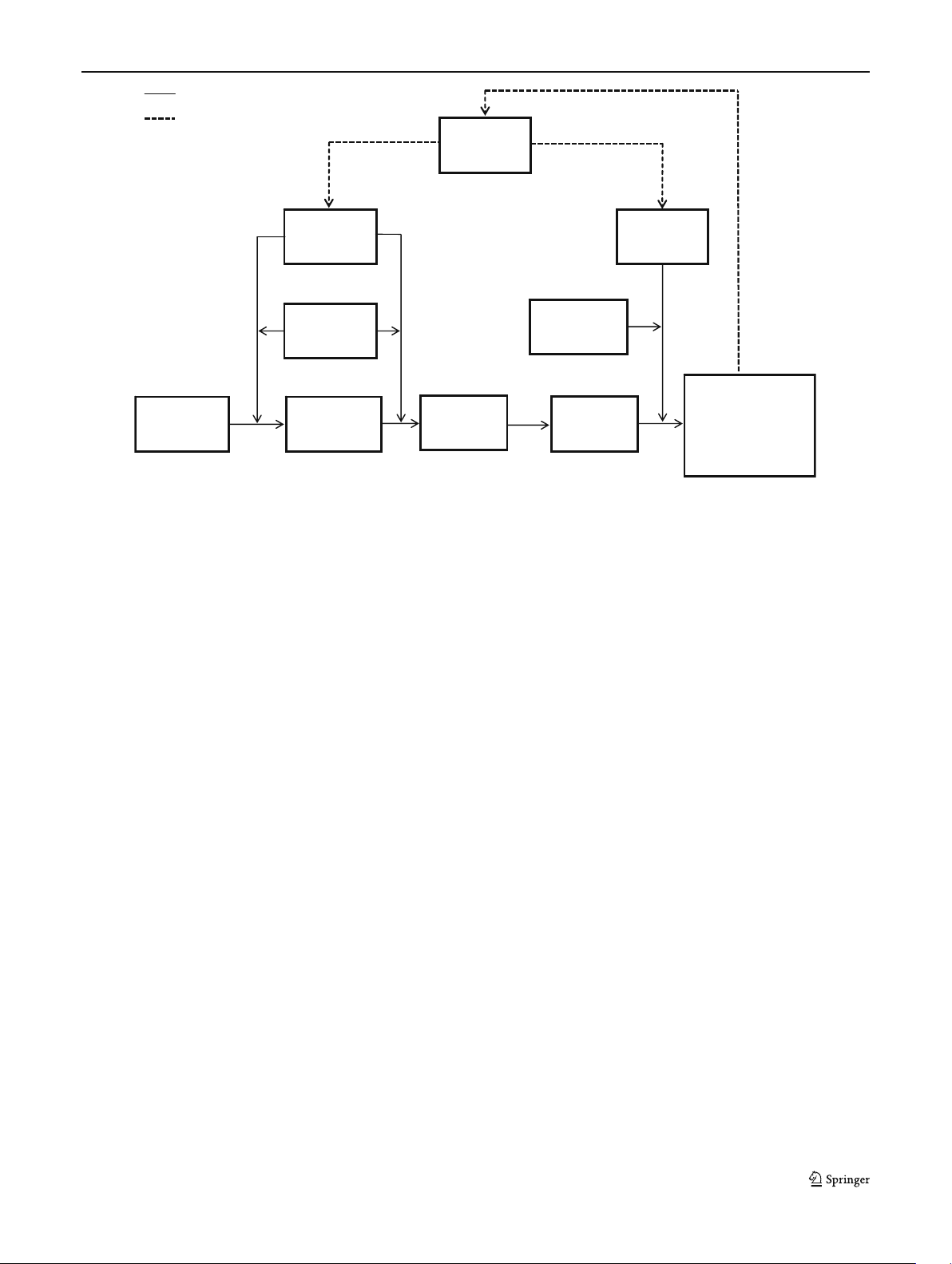
We draw upon the model illustrated in Fig. 1 to facilitate
for greater variance in firm performance than R&D and
our integration. The entrepreneurship process begins with
operational competencies that alone could be misdirected
entrepreneurial alertness, which then leads to the recogni-
(Krasnikov and Jayachandran 2008). Marketing scholars
tion of an opportunity, innovation, and exploitation of the
have examined various means through which firms seek to
opportunity (Bygrave and Hofer 1991). Research has
J. of the Acad. Mark. Sci. (2011) 39:537–554 541 Primary relationships Feedback relationships g Learning Market Marketing Mix Orientation Formal Institutional Institutional Distance Voids Firm Performance - Customer Entrepreneurial Opportunity Opportunity satisfaction Innovation Alertness g p - Repeat Recognition Exploitation customers - Profits - Growth
Fig. 1 Marketing and the entrepreneurship process: comparing developed and base-of-the-pyramid markets
shown that marketing (i.e., market orientation and market-
to detect patterns within this knowledge, and biases in
ing mix) influences each of these activities in ultimately
truncating alternative prospects (Baron and Ensley 2006;
improving firm performance. Next, we discuss opportunity
Deligonul et al. 2008). Upon detecting patterns within his/
recognition, innovation, and opportunity exploitation sepa-
her knowledge, the entrepreneur then undertakes a sense-
rately in defining marketing’s roles in each.
making process by discussing ideas with others regarding
the attractiveness and feasibility of the opportunity (Felin Opportunity recognition
and Zenger 2009; Wood and McKinley 2010). By con-
stantly updating their knowledge, alert entrepreneurs are
As noted above, the entrepreneurship process begins with
able to move the opportunity from third-person status (i.e.,
entrepreneurial alertness. Alertness refers to an individual’s
a view that there is a potential to create value for someone)
inherent motivation to construct an image of the future
to a first-person, actionable opportunity (i.e., a view that
(Gaglio and Katz 2001). This motivation leads the
there is potential for the individual him or herself
entrepreneur to seek out sources of knowledge that
specifically to create value) (Shepherd et al. 2007).
complement existing knowledge (Kaish and Gilad 1991).
Entrepreneurs may update their knowledge stocks
The entrepreneur may be able to extrapolate an image of
through various means of search. For example, entrepre-
how things will work in the future and the types of products
neurs may draw upon informal industry networks, profes-
that will be needed by drawing upon the knowledge of how
sional forums, or mentors to learn about changes and trends
things currently work, knowledge gained through prior
in technologies, markets, government policies, and other
experiences and understanding of how those experiences
relevant sources of information (Ozgen and Baron 2007).
transpired, and the creative knowledge to integrate all of
Dyer et al. (2008) found that CEOs of entrepreneurial firms
these different pieces of information and experiences.
exhibited specific search behaviors, such as questioning the
The ability to recognize an opportunity is not shared
status quo and asking “what if”, observing everyday
equally among individuals. A heterogeneous distribution of
experiences, experimenting with new experiences, gadgets,
knowledge throughout society creates a context in which
and places, and networking with a cognitively diverse set of
only certain individuals possessing unique stocks of
individuals. Equating opportunity recognition with problem
knowledge will have the ability to recognize any given
solving, Hsieh et al. (2007) suggest that as problem
opportunity (Felin and Zenger 2009). Therefore, an alert
complexity increases (i.e., the problem becomes less
entrepreneur’s potential to recognize an opportunity forms
decomposable into specialized areas of knowledge), the
through the idiosyncratic accumulation of knowledge and
efficiency of how entrepreneurs organize their search
experiences, the cognitive schemas that allow the individual changes. 542
J. of the Acad. Mark. Sci. (2011) 39:537–554
In the marketing domain, a significant body of research
Generating intelligence regarding competitors also provides
suggests that a firm’s market orientation enhances an
valuable information that allows the firm to differentiate its
entrepreneur’s ability to recognize opportunities. Market
products in meaningful ways (Kohli and Jaworski 1990). The
orientation has been viewed as a firm-level posture or
extent to which an opportunity exists depends not only on the
behavioral orientation, similar to an entrepreneurial or
presence of a market with a threshold level of customers but
technology orientation (Matsuno et al. 2002; Miles and
also on the firm’s ability to create more value for this market
Arnold 1991; Morris and Paul 1987; Zhou et al. 2005). As
compared to the value competitors are able to create (Day
such, a market orientation captures general tendencies and
and Wensley 1988). Specific competitor knowledge process-
preferences regarding firm activities. More specifically, a
es, such as regularly searching for and collecting information
market orientation captures a firm’s posture characterized
on competitors’ products and strategies or integrating
by an organization-wide understanding of the market and
competitor information as a benchmark for a firm’s own
competitors, thereby facilitating a firm’s ability to effec-
products, provide an advantage for the firm in understanding
tively differentiate itself in the eyes of its customers. Kohli
customers’ specific needs (Li and Calantone 1998).
and Jaworski (1990) provide an activity-based conceptual-
Market-oriented firms also establish means through
ization of market orientation. Their conceptualization
which intelligence can be disseminated throughout the
includes activities associated with (1) intelligence genera-
firm. Establishing reward systems is vital to encouraging
tion as a set of means through which to understand and
intelligence dissemination (Gebhardt et al. 2006; Jaworski
anticipate customer needs and the conditions within the
and Kohli 1993; Kirca et al. 2005). The extent to which the
industry, (2) dissemination of intelligence throughout the
firm is able to enact formal (e.g., processes guided by
organization, and (3) organization-wide responsiveness in
established protocols, pre-set meetings with customers) and
terms of using the intelligence to select appropriate target
informal (i.e., more casual interactions with customers)
customers and to develop and bring appropriate customer
processes can benefit intelligence dissemination. Maltz and solutions to market.3
Kohli (1996) suggest that while formal processes can
Market orientation manifests in various mechanisms and
increase motivation and ability to transmit information,
activities at all levels of the organization to support under-
informal interactions enable receivers of knowledge to
standing of the customer. For example, market-oriented firms
query senders more openly and in greater detail regarding
can undertake, to varying degrees, different forms of market-
sensitive information. In addition, firms may also want to
focused intelligence generation, including market studies,
control the frequency of intelligence dissemination as
focus groups, and the development of market databases to
transmitting intelligence too often can lead to information
identify broader trends in the external environment (Slater and
overload and only a shallow understanding of knowledge
Narver 2000). Other approaches allow market-oriented firms
by receivers (Maltz and Kohli 1996). While a behavioral
to capture a finer-grained understanding of customer needs
orientation may be adopted by top management through
(e.g., the hierarchy of those needs, when those needs arise
various structural and process-based decisions, realizing
during the customer’s daily activities, how those needs
and leveraging key sources from which intelligence
influence the customer’s other activities [Griffin and Hauser
originates is also critical to effective dissemination efforts.
1993]), such as having customers handle and react to
Joshi (2010), for example, highlights the ability for sales
prototypes in “clinics,” more market-based pilot testing of
employees to disseminate intelligence and influence product
prototypes, customer participation from very early stages in
modifications based on perceived customer needs, thereby
idea development, and listening in to dialogues between enhancing product performance.
customers and Web-based advisors (Alam 2002; Chan et al.
Because the opportunity embodies a confluence of not only 2010; Urban and Hauser 2004).
knowledge of customer needs but also technical, diagnostic,
operational, and other forms of knowledge, market-oriented
3 Narver and Slater (1990) discuss market orientation as also including
firms seek to engender organization-wide responsiveness.
three behavioral components: customer orientation, competitor orien-
Effectively understanding the opportunity rests on the firm
tation, and inter-functional coordination. Within their conceptualiza- ’s
tion, firms characterized by a market orientation (1) seek to understand
ability to integrate a breadth of knowledge dispersed
customers’ current and future needs and how to satisfy these needs,
throughout the firm. Specific knowledge integration mecha-
(2) study current and potential competitors’ strengths and weaknesses
nisms may include face-to-face discussions among cross-
in terms of how they serve customers’ needs, and (3) promote
functional team members, regular formal reports, and the use
coordinated, firm-wide resource management to provide superior
customer value. Considering Narver and Slater’s conceptualization
of experts and consultants to provide integrative assessments
alongside Kohli and Jaworski’s, significant overlap seems to exist
(De Luca and Atuahene-Gima 2007; Zahra et al. 2000).
with customer/competitor orientations and intelligence generation, and
As discussed above, market orientation is expected to
between inter-functional coordination and intelligence dissemination/
enhance the relationship between entrepreneurial alertness and
organizational responsiveness (Cadogan and Diamantopoulos 1995; Lafferty and Hult 2001).
the ability to recognize opportunities. Market orientation
J. of the Acad. Mark. Sci. (2011) 39:537–554 543
represents a firm’s motivation to construct an image of the
1991; Garcia and Calantone 2002). As a product, an
future based upon customer understanding (Narver and Slater
innovation represents an embodiment of knowledge. More
1990). A market orientation shapes key organizational search
specifically, innovation occurs at the boundaries between
processes, thereby supporting individual employees’ search
knowledge domains (Carlile 2004; Leonard-Barton 1995),
for information (Kaish and Gilad 1991). More specifically,
incorporating to varying degrees technological, market-
intelligence generation influences the firm’s approach to
based, operational, design, and other forms of knowledge
knowledge search and accumulation in terms of understand-
(Ardichvili et al. 2003; Shane 2000). The knowledge
ing customer needs, the hierarchy of these needs, the types of
embodied within innovations follows from the opportunity
products customers desire to fill these needs, and the specific
recognized by the alert entrepreneur in terms of the saliency
attributes of competitors’ products that customers find (un)
of customer needs. Knowledge about customer needs is
attractive, among other key forms of customer/competitor
integrated with current technological knowledge in terms of
knowledge. This intelligence can facilitate some initial
how to satisfy these needs, operational knowledge for how
recognition by individual employees that value can be
internal processes should work together in developing the
created through serving a specific market. Firms with
innovation, and so on. In other words, opportunity
stronger market orientations further enhance alertness
recognition involves a sense-making process for determin-
through their support of intelligence dissemination and
ing whether key market needs exist and whether value can
organization-wide responsiveness, thereby creating social
be created by satisfying these needs through existing
interactions that enable entrepreneurs to evaluate opportuni-
internal (i.e., technological/operational) competencies. In
ties (Felin and Zenger 2009). Market-oriented structural
contrast, innovation involves actually integrating needs-
decisions (e.g., decentralization, formalized group meetings,
and solution-based knowledge to develop a new product,
incentives) likely transform (1) individual employees’ alert-
thereby allowing the potential for the firm to exploit an
ness by influencing what pieces of intelligence should be opportunity.
associated and evaluated more strongly (Tang et al. 2010),
A significant amount of research supports a positive
and (2) overall firm alertness by encouraging dissemination
relationship between market orientation and various inno-
(Slater and Narver 1995) and allowing more people within
vation outcomes (Grinstein 2008). As its role in supporting
the firm to process generated intelligence (Kirzner 1980). As
opportunity recognition, intelligence generation provides
important to alertness (Tang et al. 2010), support for
key market knowledge regarding what existing and future
organization-wide responsiveness helps move evaluation
needs are unmet by the firm’s and competitors’ existing
from idea recognition to opportunity recognition (Shepherd
products. In doing so, the firm can identify novel and
et al. 2007; Wood and McKinley 2010). Individual employ-
meaningful ways in which to satisfy customers’ needs,
ees can make sense of disparate pieces of information
enhancing the firm’s creativity and leading to more
through key processes supporting dissemination and inter-
effective innovations (Im and Workman 2004). Intelligence
functional coordination. These activities help employees
dissemination, as the transfer of knowledge not only from
coordinate needs-based and solution-based knowledge (Troy
the marketing department through the rest of the firm but
et al. 2001) and encourage the resolution of divergent
also vice versa, allows a breadth of knowledge from various
functional perspectives (De Luca and Atuahene-Gima 2007;
functions that enhances innovation (Leiponen and Helfat
Olson et al. 1995). Given this logic, we propose:
2010). Perhaps most importantly, organization-wide respon-
siveness and interfunctional coordination (i.e., collaboration
P1: A market orientation positively moderates the relation-
across functions within a firm) of market-oriented firms
ship between entrepreneurial alertness and opportunity
support innovation. Interfunctional coordination provides recognition within a firm.
settings in which employees from the firm’s various
functions share ideas, bridge knowledge boundaries, and Innovation
influence the need to modify the ways in which things are
done (Carlile 2002; Gatignon and Xuereb 1997). Support-
Innovation plays a central role in the entrepreneurship process.
ing this, Atuahene-Gima (2005) finds that interfunctional
However, the construct has been surprisingly overlooked in key
coordination directly predicts both incremental and radical
models in the theory’s development (e.g., Shane 2003) and
innovations (i.e., minor modifications to existing products
process-related research (a notable exception being Shane
and major technological advancements to existing products,
(2000)). Nevertheless, innovation is a major concern of
respectively). Moreover, while interfunctional coordination
entrepreneurship (Ireland et al. 2003) and is considered to be
does not appear to enhance exploitation competence (likely
the essence of entrepreneurship (Drucker 1985).
due to earlier interfunctional investments in building the
Innovation refers to the internal development and
foundation for this competence), it does enhance explora-
adoption of a product that is new to the firm (Damanpour
tion competence that leads to increased radical innovation 544
J. of the Acad. Mark. Sci. (2011) 39:537–554
performance (Atuahene-Gima 2005).4 In accordance with
operational capabilities may not allow it to develop the prior research, we propose:
product on a scale that is financially viable. In such cases,
the firm may be forced to develop an innovation that
P2: A market orientation positively moderates the relation-
satisfies only a subset of customers’ needs.
ship between opportunity recognition and innovation.
The heterogeneity of customer needs within the market and
competing firms that provide different products based upon Opportunity exploitation
their own unique interpretations of the market are additional
factors that may create a gap between innovation benefits and
Opportunity exploitation includes activities to organize around
customer needs. Even with accurate interpretations of market
the innovation (Bygrave and Hofer 1991), such as gathering,
needs and effective capabilities, the plurality of the market is
bundling, and leveraging resources to organize around the
likely to leave significant portions of the market for which
innovation (Sirmon et al. 2007) and developing a strategy and
needs remain un-served or underserved (Sheth et al. 2000). A
business model for coordinating/mobilizing these resources
firm can develop a line of products to address different sets of
(Combs et al. 2010; Zott and Amit 2007). These activities
customer-need hierarchies that are identified, yet resource
introduce the innovation to the market and support its market
constraints are likely to limit the potential to serve all
deployment in order to satisfy the customer-related needs that
customers (Johnson and Kaplan 1987). The presence of
are associated with the initially recognized opportunity.
competing products also complicates a firm’s ability to serve
The instrumental role of innovation in the entrepreneurship
customer needs. A market orientation supports intelligence
process (and the extent to which opportunity exploitation is
generation in terms of competitors’ offerings, strengths, and
effective) becomes readily apparent when including marketing
weaknesses (in addition to customer needs), yet the firm’s
as part of the theoretical analysis. If innovations perfectly
potential to discern existing competitors’ future innovations
satisfied opportunities, the need for marketing activities beyond
and the innovations of new entrants can be constrained. As
creating awareness would be minimal in terms of supporting
such, unforeseen competitor innovations that more effectively
opportunity exploitation. However, for a number of reasons,
serve customer needs can decrease the value and even
innovations may not perfectly satisfy opportunities. First, presence of an opportunity.
perceptions of which customer needs are valuable are based
Because of these interpretation, capability, and competition
upon unique interpretations of what customers convey. As
issues, marketing activities can enhance the entrepreneur’s
knowledge about customer needs may not always be directly or
ability to exploit opportunities by conveying innovation
easily conveyed and may be complex and multi-faceted, the
benefits to customers (as opposed to merely creating awareness
interpretation of these needs may be somewhat inaccurate. A
that a product innovation exists), thereby increasing firm
market orientation supports intelligence generation in regards
performance. More specifically, as the means through which
to customer needs that may allow the entrepreneurial firm to
product benefits are communicated to potential customers,
absorb such knowledge across a larger market of customers,
capabilities supporting the firm’s marketing mix decisions
perhaps providing a level of reliability in the firm’s interpreta-
enhance opportunity exploitation (Boulding et al. 1994;
tion. Moreover, intelligence dissemination and organization-
Vorhies et al. 2009). Commonly referred to as the 4 P’s of
wide responsiveness enable the firm to make sense of broad
marketing, the marketing mix is a higher-order concept
customer-need knowledge by drawing upon a breadth of
(Borden 1964) composed of product-, price-, place- (distribu-
employees’ internal knowledge to reconcile discrepancies in
tion), and promotion-related decisions. The product category
their interpretations. However, even these processes are biased
includes not only the product specifications but also packag-
by the employees’ idiosyncrasies and interactional nuances.
ing, brand name, and guarantees that jointly are intended to
Even when interpretations are accurate, the firm’s
satisfy customer needs; price includes expectations for what
capabilities to provide what is valuable may undermine
customers can expect to pay, such as the list price, discount,
the innovation’s potential to meaningfully satisfy the
and terms of credit; place or distribution captures the various
opportunity. The firm may not have the technological
channels through which products will be made available to
capabilities to develop a product that addresses the entire
customers; and promotion involves the various means through
set of customer needs identified. Similarly, the firm’s
which awareness and knowledge of the product are conveyed
to customers (van Waterschoot and Van den Bulte 1992).
4 Zhou et al. (2005) provide further support for these findings in terms
Especially with new products, the marketing mix reduces
of radical innovation, although they find that market orientation
information asymmetries for potential customers (Kirmani and
actually decreases disruptive innovations (i.e., products that create
Rao 2000). As noted previously, new products embody
wholly new markets and supplant existing products). Together, these
various forms of knowledge (e.g., marketing, technological,
findings suggest that market orientation may support market-driven
design, operational). In considering the purchase of a recent
behaviors but undermine market-driving behaviors (Jaworski et al. 2000).
product innovation, a customer cannot know the product’s
J. of the Acad. Mark. Sci. (2011) 39:537–554 545
quality (e.g., will the product satisfy the customer’s needs, is
product attributes positively moderates the relationship
the product durable, is the product worth the price). The
between opportunity exploitation and firm performance.
marketing mix can reduce these information asymmetries and
positively influence the customer’s preference for and
perceptions of the product (van Waterschoot and Van den
Entrepreneurship of marketing activities
Bulte 1992). For example, by reminding customers of how
their needs are being satisfied, advertising that emphasizes the
Market orientation and marketing mix represent the sets of
product’s unique sources of value can engender and sustain
activities through which firms come to understand their
customer perceptions of differentiation and reduce the
customers’ needs and communicate how the firms’ products
product’s susceptibility to price competition (Boulding et al.
satisfy those needs, respectively. Marketing activities
1994). As part of the product component of the marketing
strongly influence a firm’s entrepreneurship process. As
mix, packaging’s appearance can serve to attract customers so
such, marketing activities represent a set of means that
that they read an accompanying list of specifications as a
facilitate firms’ ability to exploit opportunities and satisfy
means of determining the likelihood that the product will
customer needs. As a set of means, however, marketing
satisfy their needs. Pricing is a particularly sensitive issue as
activities may also be the focus of a firm’s entrepreneur-
lower pricing may be viewed as an inducement to try out a
ship. More specifically, firms can recognize and exploit
new product but may also signal lower quality (Szymanski et
opportunities to more efficiently or effectively serve
al. 1993). Sales promotions and routinely offered price
customer needs through the innovation of marketing
inducements can reduce brand equity (Yoo et al. 2000) and activities.
lead to customer purchases only when the products carry
Opportunities represent the potential to create value by
these inducements (Ailawadi et al. 2001). Finally, the
efficiently and effectively serving customer needs. However,
reputation of distribution outlets may carry over to customers’
customer needs are constantly evolving, whether due to
perceptions of product quality; however, increasing the
external environmental trends, enhanced production possibil-
number of distribution outlets for a product enhances the
ities, or entrepreneurial activities within society (Holcombe
purchasing convenience for customers and overall brand
2003). To the extent that the firm responds ineffectively to equity (Yoo et al. 2000).
changes in customer needs, its performance is likely to
In summary, the components of the marketing mix can
decline. As illustrated in Fig. 1, reduced firm performance
reduce customers’ information asymmetries about a new
leads decision makers to undertake learning activities to
product’s potential to satisfy their needs. In doing so, the
discern the causes of this decline and the adjustments that
marketing mix can induce customers to purchase new
can be made to resolve the issues (Minniti and Bygrave
products. As long as the marketing mix accurately commu-
2001; Politis 2005).6 Learning occurs when a firm’s expect-
nicates information, the potential for customers’ post-
ations are inconsistent with its outcomes, leading the firm to
purchase dissonance is likely to be minimal, thereby increas-
update its internal theories of how things work (Argyris and
ing customer satisfaction and propensity to repeat purchase
Schon 1978) and potentially influencing its future activities
(Anderson and Sullivan 1993). With reduced dissonance, (Huber 1991).
satisfied customers are likely to remain loyal to the firm and
By leading to the adjustment of theories in the firm’s
its products, thereby also increasing the firm’s financial
knowledge and employees’ cognitive schemas, learning can
performance (Anderson et al. 1994).5 Therefore, we propose:
support a firm’s opportunity recognition and innovation
P3: The extent to which marketing mix components (e.g.,
(Hanvanich et al. 2006; Lumpkin and Lichtenstein 2005).
packaging, advertising, distribution channels) accurately
Learning not only provides employees with key pieces of
convey information regarding unique, need-satisfying
information concerning the firm’s market inadequacies but
also changes their cognitive schemas (i.e., internal theories)
5 To this point, we have presented market orientation as having an
indirect effect on firm performance through its effects on the
entrepreneurship process. While a significant amount of research has
6 We do not expect all firms to equally undertake learning activities in
shown that innovativeness only partially mediates the relationship
response to reduced performance. In a highly complementary stream
between market orientation and firm performance (Kirca et al. 2005),
of research, scholars have examined a firm’s learning orientation, or
innovativeness (and the innovation that results from this emphasis) is
the firm’s orientation to support a commitment to learning, shared
only one aspect of the entrepreneurship process. The firm must also
vision, and open-mindedness in questioning assumptions about the
leverage this innovation to exploit the opportunity to realize
firm’s relationship with its environment (Baker and Sinkula 1999;
performance outcomes. As Hult et al. (2005) illustrate, organizational
Hurley and Hult 1998; Sinkula et al. 1997). While we strongly believe
responsiveness fully mediates the relationship between market
that a learning orientation shapes how and to what extent a firm learns,
orientation and performance. In accordance, we believe that the effect
we do not explicitly address the role of a firm’s learning orientation
of market orientation on firm performance surfaces completely
here in order to maintain focus specifically on the integration of
through its influence on the entrepreneurship process.
marketing and entrepreneurship. 546
J. of the Acad. Mark. Sci. (2011) 39:537–554
regarding what factors are important. As customer needs
comes (e.g., customer dissatisfaction, customer post-purchase
evolve, market-oriented learning allows the firm and its
dissonance). Knowledge gained through learning may include
employees to stay abreast of market changes and to
recognizing the firm’s inability to understand (1) finer-grained
introduce new product innovations. In other cases, howev-
aspects of customer needs, (2) shifts in the hierarchy of
er, market-oriented learning is inadequate in addressing
customer needs, (3) diminishing needs of existing customers evolving customer needs.
and the emergence of new sets of customers with wholly
There are at least two reasons why market-oriented firms
different and poorly understood needs, and (4) the cause of ill-
can be ineffective in responding to customer needs. First,
structured intelligence generation or dissemination processes,
while market-oriented firms are able to both incrementally
among other inadequacies of the firm’s market orientation. In
and radically innovate in response to changing customer
turn, this knowledge can be used to innovate, thereby
needs (Atuahene-Gima 2005), evidence suggests that
producing new market-oriented mechanisms supporting intel-
competitors can emerge exploiting disruptive technologies
ligence generation, dissemination, and organizational respon-
developed for wholly different markets and quickly steal
siveness. For example, a firm may realize the need to shift (or
market share away from once-dominant firms (Christensen
complement) existing intelligence generation activities of
and Bower 1996; Zhou et al. 2005). In such instances,
sales employee/customer interactions to more Web-based
customer needs and the technological solutions can change
mechanisms (e.g., customer blogs). Similarly, the firm may
so rapidly that even market-oriented firms cannot adapt. A
realize that the organization’s responses to customer needs
second reason for reduced performance in market-oriented
require more in-depth discussions than what are allowed in
firms is that while the customer set may remain primarily
weekly cross-functional meetings. Based on this logic, we
the same, the customers’ needs change in a way that the propose:
firm’s market-oriented activities cannot effectively discern
P4: Learning is positively related to market orientation
attributes of the customers’ evolved needs.7 innovation.
When market orientation alone is inadequate in
addressing customer needs, learning can still influence
In other cases, the firm’s performance may decline not
opportunity recognition and innovation. Sinkula (1994)
due to problems related to market orientation but rather due
highlights key differences between market-oriented learn-
to marketing mix issues. While a firm’s market orientation
ing and more general organizational learning activities. In
may be able to address changing customer needs, the
at least one key difference, research suggests that, as
marketing mix may undermine performance for a number
opposed to market-oriented learning, the firm’s more
of reasons. First, a growing market may leave the firm’s
general processes of learning stimulated by performance
current investments in promotion and distribution unable to
declines can shift the emphasis of entrepreneurship from
reach potential customers. Second, an increasing presence
product innovations to more internally-oriented process and
of market sub-groups with differing hierarchies of needs
system-oriented innovations. More specifically, support for
may lead a firm’s existing marketing mix to become
learning can encourage “employees to constantly question
ineffective in communicating with the overall market if
the organizational norms that guide their [marketing
the mix is tailored to a part of the market. Third, a firm’s
information processing] activities and organizational
marketing mix developed for prior products may not be
actions” (i.e., market orientation [Baker and Sinkula 1999,
suited for new products. Spurred by performance declines,
p. 413] as well as the effectiveness of their marketing mix
learning can lead the firm to recognize these shortcomings [Sinkula et al. 1997]).
(i.e., the opportunity to more effectively communicate with
These more general forms of organizational learning focus
customers, thereby creating greater customer satisfaction
on the “means” aspect of entrepreneurial opportunities (i.e.,
and market share). Knowledge gained through learning can
situational conditions that allow one to create value through
provide important information where key gaps in the
new “means”, ends, or “means”/ends relationships). Recog-
marketing mix exist. In doing so, learning can support the
nizing that the firm’s products fail to effectively address
firm’s ability to innovate the various components of the
customer needs (i.e., an opportunity exists to operate more
marketing mix, such as channel design innovations that
effectively), learning seeks to establish connections between
enhance the image of new products and stimulate impulse
existing marketing-related systems/procedures and their out-
purchases (Davis and Rawwas 1994; citing Hutto 1992) or
innovative promotional decisions that more effectively
7 An additional reason that could be offered for why market-oriented
attract niche customers (Lodish et al. 2001). Consistent
firms can be ineffective in responding to changing customer needs is with this logic, we propose:
that competitors are just more effective in their response. Interestingly,
counter to this logic, Slater and Narver (1994) provide evidence
P5: Learning is positively related to marketing mix
suggesting that market-oriented firms can sustain firm performance
despite hostile and turbulent competitive environments. innovation.
J. of the Acad. Mark. Sci. (2011) 39:537–554 547
The influence of the institutional context on marketing
and BOP markets and often across BOP markets as well
and the entrepreneurship process
(Karnani 2007; Webb et al. 2009).
While the markets exist and MNEs are able to exploit
Thus far, we have synthesized and integrated research
viable opportunities by serving local customer needs, the
related to marketing and entrepreneurship. In doing so, we
institutional context of BOP markets (i.e., markets in which
have generally discussed how a firm’s market orientation
consumers earn an average annual income of $3,000 a year,
supports various mechanisms and activities that enhance a
scaled to 2002 U.S. dollars [World Resources Institute
firm’s opportunity recognition and innovation and, subse-
2007]) affects the activities within the entrepreneurship
quently, how marketing mix decisions support a firm’s
process (Webb et al. 2009). In terms of opportunity
ability to exploit opportunities by organizing around its
recognition, large institutional distance relative to devel-
innovations. Interestingly, though, research has shown that
oped markets suggests that the opportunity (i.e., the
institutions influence the activities within the entrepreneur-
situational conditions that allow one to create value by
ship process (e.g., Ireland et al. 2008; Webb et al. 2009).
serving customer needs) is characterized by different
Institutions refer to the relatively stable structures that guide
customer needs and/or activities through which these needs
expectations and determine socially acceptable actions and
can be efficiently served. A market orientation still offers
outcomes in society (Suchman 1995). Formal institutions
the ability to generate and disseminate intelligence regard-
include laws, regulations, and supporting apparatuses that
ing customer needs and perhaps how competitors currently
monitor and enforce, whereas informal institutions include
or previously have tried serving these needs. However,
the society’s norms, values, and beliefs complementing
large institutional distance between developed and BOP
formal institutions in guiding activities and their outcomes
markets means that large-scale marketing studies tailored
(North 1990). In this section, we use an institutional theory
for environments with sophisticated market institutions are
lens to compare a developed economy firm’s entrepreneur-
less likely to capture the nuances of local markets, such as
ial and marketing activities within developed versus base-
the daily norms and routines, differences in core values, and of-the-pyramid (BOP) markets.
beliefs regarding the efficacy of technologies. Without first
Despite poorly developed/undeveloped institutions, the
understanding the local norms, values, and beliefs, broad
overall size of BOP markets creates significant business
marketing studies are likely to unknowingly overlook
opportunities (Hart 2005; Prahalad and Hart 2002). Many
questions that may be critical to a local market understand-
basic needs, such as the availability of food, clean water,
ing. Instead, richer, high-touch intelligence generation
and healthcare, are unfilled or are sold at exorbitant rates by
activities are likely to serve as more effective means of
exploitative intermediaries (Prahalad 2006). Several multi-
generating needed information (Viswanathan et al. 2010).
national enterprises (MNEs) have found these business
For example, co-creation techniques that involve the
opportunities attractive and have considered their entry into
customers in product development from idea generation
BOP markets (Prahalad and Hammond 2002).
phases through new product testing provide important
The stark differences between BOP and developed
insight into how local customers think, what they value,
markets represent significant institutional distance for firms
how they behave, and so on (Prahalad and Ramaswamy
seeking to recognize and exploit BOP opportunities (Webb
2004). Similarly, when a firm is adapting existing technol-
et al. 2009). Institutional distance refers to the differences
ogies, extensive pilot testing of new products can provide
between institutional settings, which may surface in terms
detailed knowledge of how the product fits into the local
of differences in formalized laws, regulations, and moni-
customers’ daily lives and how the customer uses the
toring/enforcement approaches or differences in the more
product differently than in developed markets, among other
informal norms, values, and beliefs between settings (Bae
important forms of intelligence (Hughes and Lonie 2007).
and Salomon 2010; Xu and Shenkar 2002). As institutional
Beyond generating intelligence about customer needs,
distance increases, the ability to interpret signals from the
intelligence on what “competitors” are doing in other BOP
local environment is reduced. Because they are embedded
markets can provide important insights as to how to deal
in local interactions, historical and cultural nuances, and
with institution-related challenges. Given the overall size of
identity-specific artifacts (e.g., language, traditions, and
the opportunity in BOP markets, the issue of competitor
local stories), differences in norms, values, and beliefs are
intelligence generation really is less about developing
particularly difficult to detect and manage. Moreover, the
important forms of differentiation for customers and more
undeveloped nature that limits mobility and communication
about transferring best practices from one BOP market to
across BOP markets means that these markets remain
others. For example, microfinance lending, which is a
largely separated from one another and from developed
community-based form of lending, has been adopted across
markets, creating pockets of unique institutions. As such,
BOP markets to help overcome formal institutional voids in
significant institutional distance exists between developed
terms of capital markets. MNEs can form relationships with 548
J. of the Acad. Mark. Sci. (2011) 39:537–554
microfinance providers to support their business activities
and their customers. In contrast, the infrastructure of BOP
in local BOP markets (Kistruck and Beamish 2010).
markets is poorly developed or in some cases even
However, the principles that make microfinance work in
nonexistent, making such communication costly to the
some local markets may not be as easily transferred to other
firm. Furthermore, while relationships between firms and
BOP markets based upon different institutional contexts
their customers, as well as firms and their internal employ-
given the heterogeneity across BOP markets as well as
ees, are governed by strong legal institutions and formal-
between the BOP market and developed markets. There-
ized property rights and contractual laws in developed
fore, a much more detailed and lengthy intelligence
markets, relationships in BOP markets are primarily
generation process may be needed before recognizing
governed by informal networks which can be difficult for
which best practices are transferable across institutional
firms to access and leverage (Webb et al. 2009) contexts.
Formal institutional voids influence the ability for
Significant institutional distance between developed and
marketing mix decisions to enhance opportunity exploita-
BOP markets undermines the MNE’s ability to understand
tion in BOP markets. The lack of or poorly developed
local market needs and the means through which to
nature of public-use infrastructures limits the extent to
effectively understand those needs. While market orienta-
which mass media outlets can be used to increase
tion remains important to understanding the specific
awareness and convey benefits of new products. Moreover,
nuances of the local market, market orientation activities
the fragmented nature across BOP markets due to differ-
formed in developed markets are likely to be less effective
ences in norms, values, and beliefs compounded by a
in capturing the specific hierarchy of customer needs in
history of violence creates an atmosphere of distrust in
BOP markets. Given this logic, we propose:
many BOP markets (Karnani 2007). Therefore, MNEs use
local individuals to travel among communities and spread
P6a: Market orientation activities intended to enhance the
knowledge of products via word-of-mouth advertising
firm’s ability to recognize opportunities and innovate
(Kistruck et al. 2010). Having gained the trust in local
will require significant adaptation (e.g., emphasis on
communities through their presence over extended periods
high-touch intelligence generation, understanding
and by identifying with both local and the MNE’s domestic
cultural nuances across BOP markets in transferring
institutions, nonprofits are particularly helpful in facilitating
benchmark practices and intended sources of value)
new product promotion through educational-type seminars
to overcome institutional distance-related challenges
to entire communities that bridge the institutional distance
when operating in BOP versus developed markets.
(Webb et al. 2009). Even when an opportunity may be
The comparative weakness of institutions within BOP
generalizable across BOP markets (i.e., cases in which
markets also presents what are known as formal institu-
specific customer needs, such as the need for clean water or
tional voids (London and Hart 2004). A formal institutional
nutritionally-enhanced foods, are common across BOP
void refers to poorly developed or wholly undeveloped
markets), poorly developed and maintained transportation
formal institutions and infrastructures that can significantly
infrastructures decrease the ease with which the MNE can
reduce transaction efficiency (Khanna and Palepu 1997).
scale its operations (i.e., distribute) to capture an oppor-
For example, voids in the legal systems are evidenced by
tunity’s economic value. Moreover, the low purchasing
the lack of property rights (De Soto 2000), the need to
power of BOP markets further creates a market of price-
enforce via informal means, the difficulty to enforce
sensitive customers. Customers are likely to forego prod-
contracts, which are instead used more for setting expect-
ucts, such as water filtration kits and nutritionally-enhanced
ations, and courts and regulating bodies that are plagued by
foods having longer-term ramifications, if they cost more
bribery and involve prohibitively expensive, protracted
and harm the customers’ potential short-term viability.
processes (Kistruck and Beamish 2009). Similarly, voids
Therefore, efficient and effective solutions are likely those
in public infrastructure undermine energy-intensive oper-
that incorporate existing technologies in new and different
ations and the ability to easily scale across geographic
ways versus developing wholly new technologies for the
markets (Khanna et al. 2005). Roads, bridges, and other
BOP market (i.e., considerations for the product component of
forms of transportation infrastructure are often (but poorly) the marketing mix).
maintained by local communities, media and communica-
In summary, formal institutional voids in BOP markets
tion channels are non-existent or sporadic in transmission,
present challenges to marketing mix decisions that are
and businesses are labor-intensive yet draw upon primarily
commonly used in developed markets. While the marketing unskilled labor.
mix remains important to MNEs in communicating product
Developed markets are characterized by strong commu-
benefits to customers in BOP markets, the forms through
nication, transportation, and media infrastructures which
which this communication can be conveyed are limited and/
allow for efficient exchange of information between firms
or changed by the local context. Therefore, we propose:
J. of the Acad. Mark. Sci. (2011) 39:537–554 549
P6b: Marketing mix decisions intended to enhance the
shared throughout the firm. Integrating this needs-based
firm’s ability to exploit opportunities will require
knowledge with solution-based knowledge (e.g., techno-
significant adaptation (e.g., more interactive forms of
logical and operational knowledge) across the firm’s
advertising, product specifications that fill the need
various functions enhances creativity and the firm’s ability
yet draw upon less advanced, more efficient technol-
to develop innovations that are both new and differentiated
ogies) to overcome formal institutional void-related
from competitors’ products in meaningful ways that create
challenges when operating in BOP versus developed value for customers. markets.
By transforming knowledge of customer needs into new
product innovations, the firm can exploit its recognized
opportunity. Due to various reasons (e.g., the firm’s
idiosyncratic interpretation of customer needs, a plurality
of needs, competition and environmental changes), the Discussion
innovation is not likely to fully satisfy the opportunity. The
firm’s marketing mix includes decisions regarding the
Marketing and entrepreneurship play important, integrated
product and its price, place (i.e., distribution), and promo-
roles in firms. While extensive research in marketing
tion. The components of the marketing mix inform
examines entrepreneurship-related phenomena, the knowl-
customers about key sources of the product’s differentiation
edge and insights resulting from these scholarly efforts have
to attract the customer and to convey how the product’s
yet to be fully integrated within theory regarding the
benefits satisfy customer needs. While market orientation
entrepreneurship process. With few exceptions, entrepre-
reduces information asymmetries for firms regarding
neurship scholars also rarely draw upon insights from
customer needs and the value of the overall opportunity,
marketing in their research. The lack of cross-disciplinary
the marketing mix reduces information asymmetries for
research between entrepreneurship and marketing has left
customers regarding new product attributes and the overall
significant gaps in terms of defining opportunity, under-
value to the customer. By creating value for the customer,
standing the interactions of individual- and firm-level
the firm enjoys increased firm performance in the form of
activities, and understanding how marketing activities
customer satisfaction, repeat customers, profits, and growth.
integrate with the entrepreneurship process. Similarly, while
A number of reasons can explain, however, why firms
firms commonly seek to satisfy opportunities across diverse
that emphasize a market orientation and carefully construct
settings, scholars have yet to adequately address how the
their marketing mix experience declining performance.
institutional context influences marketing activities and the
Disruptive technologies and fundamental changes in cus-
entrepreneurship process. As a means of synthesizing a
tomer needs can be overlooked by firms with market
foundation for future marketing/entrepreneurship scholarly
orientations. Similarly, a growing market, shifts in or
inquiries, our objectives have been to (1) integrate
increasing plurality of customers’ hierarchy of needs, and
marketing research with theory regarding the entrepreneur-
the introduction of highly innovative products can lead to
ship process, and (2) provide an understanding of how the
sources of ineffectiveness in the firm’s existing marketing
institutional context influences the integration of marketing
mix. The declining performance that results from ineffec-
and entrepreneurship activities.
tive market orientations or marketing mixes can stimulate
Facilitating a firm’s efforts to understand its customers’
learning that can then serve as the basis for supporting
current needs as well as their unmet needs is the role of
entrepreneurship directed toward market orientation and
marketing activities. Robust understandings of both needs
marketing mix. More specifically, the learning that derives
are key sources of intelligence that support opportunity
from declining performance can lead employees to question
recognition and innovation within a firm. We draw upon
the firm’s internal theories of what activities work in terms
market orientation research to discuss the mechanisms and
of understanding customer needs, disseminating this under-
activities that support a firm’s opportunity recognition and
standing throughout the organization, interfunctionally
subsequent innovation. As a behavioral posture, market
coordinating, and communicating with customers. The
orientation captures the firm’s general tendencies or
knowledge that derives from these internally-directed
preferences regarding intelligence generation, dissemina-
questions can lead firms to innovate their market-oriented
tion, and organization-wide responsiveness to customers.
and marketing mix-related activities.
Firms with stronger market orientations enact various
An important stream of research examines the influence
mechanisms and activities (e.g., market studies, customer
of institutions on the entrepreneurship process. To address
involvement in idea generation and product development,
the second objective of this work, we utilize the differences
reward systems, face-to-face interactions) through which
in developed and BOP markets to describe how the
customer-need and competitor knowledge is gathered and
institutional context influences marketing activities in 550
J. of the Acad. Mark. Sci. (2011) 39:537–554
supporting the entrepreneurship process. Large institutional
entrepreneurship scholars’ treatment of opportunities rarely
distance between developed and BOP markets (and across
goes beyond merely stating that opportunities represent
BOP markets) and formal institutional voids are two
competitive market imperfections or listing market trends
specific challenges that influence the entrepreneurship
alongside numerous other factors, such as new technolo-
process in BOP markets. Large institutional distance
gies, government policies, and changes in firm stake-
increases the gap between a firm’s knowledge and the
holders, as leading to opportunities. Marketing scholars’
often idiosyncratic needs of local customers. A market
techniques for assessing the prevalence and hierarchy of
orientation supports the firm’s ability to understand and
customer needs can provide important insights into deter-
respond to local customer needs. The significance of the
mining the value of opportunities (Urban and Hauser 2004).
knowledge gap suggests, however, that the activities
Scholars have primarily examined how market orienta-
supported by a market orientation should be higher-touch
tion leads to greater customer understanding. Interestingly,
activities, such as co-creative processes and extensive pilot
outside of an early conceptualization of market orientation
testing. Formal institutional voids undermine the exploita-
(Jaworski and Kohli 1993), the activities through which
tion of opportunities created by innovations in BOP
firms inform customers of their new products and influence
markets, specifically because of weak mass media adver-
purchasing have been less emphasized in the domain of
tising, poorly developed distribution infrastructure, and low
market orientation. Innovation, however, represents a key
purchasing power. Therefore, more interactive forms of
activity in the entrepreneurship process in which the firm
advertising (i.e., word-of-mouth advertising and education-
transforms customer need knowledge into new products. As
al seminars) and techniques to reduce product costs, such as
noted previously, for various reasons, the new products are
drawing primarily upon existing technologies, enhance a
not likely to perfectly embody customer needs in satisfying
firm’s ability to exploit opportunities in BOP markets.
the opportunity. Therefore, an important implication for
Our model suggests a number of scholarly implications that
scholars is to extend market orientation to the opportunity
are linked to a more robust integration of marketing and
exploitation stage in determining how market-oriented
entrepreneurship process research. Whereas entrepreneurship-
firms translate product benefits into customers’ perceptions
domain research on the entrepreneurship process has largely of value.
advanced at the individual level (e.g., Baron 2008; Shepherd
Finally, the institutional context influences how firms
et al. 2007), marketing research has focused on firm-level
address market needs and ultimately the value of opportunities
mechanisms and activities through which firms come to
in a number of different ways (Webb et al. 2009). The
understand and respond to the customer attributes of
development of a particular institutional context influences
opportunities (Kohli and Jaworski 1990; Narver and Slater
the efficiency with which firms can communicate product
1990). In reality, the key activities of entrepreneurship are
benefits to potential customers, distribute products, access
multilevel; they occur through interactions across individual
resources (e.g., labor, financial capital), appropriate and
and firm levels. More specifically, opportunity recognition is
protect the value of their investments and property rights,
a cognitive process in which an individual detects patterns
and establish/maintain customer relationships. Differences
using his/her mental models based upon previous knowledge
between institutional contexts also influence the effectiveness
and experience (Baron and Ensley 2006). While it is a
with which firms can understand market needs and, perhaps
cognitive process, individual entrepreneurs draw upon ties
more importantly, understand the specific types of activities
with those around them to identify and understand opportu-
through which they can identify what these market needs are.
nities, suggesting that opportunity recognition has a collec-
Institutional contexts also often include different levels of
tive component as well. Research concerning intelligence
prescriptions (e.g., country, state, region, industry) that may
dissemination and sharing can provide important insights
conflict or complement each other in establishing social
into how firms coordinate employees and knowledge (e.g.,
acceptability (Ostrom 2005). The complexity of operating in
through the use of rewards, meetings focused on specific
such environments may influence the activities through
types of interaction) to stimulate the cognitive pattern
which firms recognize and exploit opportunities. Additional
detection that leads to opportunity recognition.
research is needed to understand how specific institution-
A significant body of research has been conducted
related characteristics affect specific marketing decisions/
examining activities related to opportunities, such as
activities and stages of the entrepreneurship process.
recognition, evaluation, and exploitation (Short et al.
2010). Less research has focused on the composition of
an opportunity. Importantly, as the situational conditions to Conclusion
create value by serving customer needs (Shane and
Venkataraman 2000), an opportunity does not exist without
Marketing and entrepreneurship have long been recognized
a set of customers having unmet needs. Nevertheless,
as two key responsibilities of the firm. Moreover, marketing
J. of the Acad. Mark. Sci. (2011) 39:537–554 551
activities and the entrepreneurship process are tightly
Baker, W. E., & Sinkula, J. M. (2007). Does market orientation
facilitate balanced innovation programs? An organizational
integrated in firms. Despite their practical integration,
learning perspective. Journal of Product Innovation Management,
scholarly efforts in marketing and entrepreneurship have 24, 316–334.
largely progressed within the respective disciplinary bound-
Baron, R. A. (2008). The role of affect in the entrepreneurship
aries with minimal cross-disciplinary fertilization. We
process. Academy of Management Review, 33, 328–340.
Baron, R. A., & Ensley, M. D. (2006). Opportunity recognition as the
sought to fill this void by integrating research on marketing
detection of meaningful patterns: evidence from comparisons of
activities and the entrepreneurship process. We discuss
novice and experienced entrepreneurs. Management Science, 52,
market orientation as enhancing a firm’s opportunity 1331–1344.
recognition and innovation whereas marketing mix deci-
Borden, N. H. (1964). The concept of the marketing mix. Journal of
Advertising Research, 4, 2–7.
sions enhance opportunity exploitation. In addition, we
Boulding, W., Lee, E., & Staelin, R. (1994). Mastering the mix: do
discuss learning as supporting the firm’s entrepreneurship
advertising, promotion, and sales force activities lead to
directed toward market-orientation and marketing-mix
differentiation. Journal of Marketing Research, 31, 159–172.
activities. From this foundation, we examine how the
Bygrave, W. D., & Hofer, C. W. (1991). Theorizing about
entrepreneurship. Entrepreneurship Theory and Practice, 16(2),
institutional context can shape the implementation of 13–22.
market orientation and marketing mix in supporting the
Cadogan, J. W., & Diamantopoulos, A. (1995). Narver and Slater,
entrepreneurship process. We hope this research stimulates
Kohli and Jaworski and the market orientation construct:
future endeavors at the intersection of marketing activities
integration and internationalization. Journal of Strategic Marketing, 3(1), 41–60.
and the entrepreneurship process, especially within the
Carlile, P. R. (2002). A pragmatic view of knowledge and boundaries:
context of institutional influences.
boundary objects in new product development. Organization Science, 13, 442–455.
Carlile, P. R. (2004). Transferring, translating, and transforming: an References
integrative framework for managing knowledge across boundaries.
Organization Science, 15, 555–568.
Casson, M. (1982). Entrepreneur: An economic theory. Totowa:
Ailawadi, K. L., Lehmann, D. R., & Neslin, S. A. (2001). Market Barnes & Noble.
response to a major policy change in the marketing mix: learning
Chan, K. W., Yim, C. K., & Lam, S. S. K. (2010). Is customer
from Procter & Gamble’s value pricing strategy. Journal of
participation in value creation a double-edged sword? Evidence Marketing, 65, 44–61.
from professional financial services across cultures. Journal of
Alam, I. (2002). An exploratory investigation of user involvement in Marketing, 74, 48–64.
new service development. Journal of the Academy of Marketing
Christensen, C. M., & Bower, J. L. (1996). Customer power, strategic Science, 30, 250–261.
investment, and the failure of leading firms. Strategic Management
Aldrich, H. E. (2005). Entrepreneurship. In N. Smelser & R. Journal, 17, 197–218.
Swedberg (Eds.), Handbook of economic sociology (pp. 451–
Clemens, E. S., & Cook, J. M. (1999). Politics and institutionalism:
478). Princeton: Princeton University Press.
explaining durability and change. Annual Review of Sociology,
Alvarez, S. A., & Barney, J. B. (2007). Discovery and creation: 25, 441–466.
alternative theories of entrepreneurial action. Strategic Entrepre-
Combs, J.G., Ketchen, D.J., Ireland, R.D., & Webb, J.W. (2010). The neurship Journal, 1, 11–26.
role of resource flexibility in leveraging strategic resources.
Anderson, E. W., Fornell, C., & Lehmann, D. R. (1994). Customer
Journal of Management Studies, in press.
satisfaction, market share, and profitability: findings from
Damanpour, F. (1991). Organizational innovation: A meta-analysis of
Sweden. Journal of Marketing, 58, 53–66.
effects of determinants and moderators. Academy of Management
Anderson, E. W., & Sullivan, M. W. (1993). The antecedents and Journal, 34, 555–590.
consequences of customer satisfaction for firms. Marketing
Davis, C. H., & Rawwas, M. Y. A. (1994). Distribution in new/ Science, 12, 125–143.
growing firms. In G. E. Hills (Ed.), Marketing and entrepreneurship:
Ardichvili, A., Cardozo, R., & Ray, S. (2003). A theory of
Research ideas and opportunities (pp. 163–187). Westport: Quorum
entrepreneurial opportunity identification and development. Books.
Journal of Business Venturing, 18, 105–123.
Day, G. S., & Wensley, R. (1988). Assessing advantage: a framework for
Argyris, C., & Schon, D. A. (1978). Organizational learning: A
diagnosing competitive superiority. Journal of Marketing, 52, 1–20.
theory of action perspective. Reading: Addison-Wesley.
De Luca, L. M., & Atuahene-Gima, K. (2007). Market knowledge
Arnould, E. J., & Mohr, J. J. (2005). Dynamic transformations for
dimensions and cross-functional collaboration: examining the
base-of-the-pyramid market clusters. Journal of the Academy of
different routes to product innovation performance. Journal of
Marketing Science, 33, 254–274. Marketing, 71, 95–112.
Atuahene-Gima, K. (2005). Resolving the capability-rigidity paradox
Deligonul, Z. S., Hult, G. T. M., & Cavusgil, S. T. (2008).
in new product innovation. Journal of Marketing, 69, 61–83.
Entrepreneuring as a puzzle: an attempt to its explanation with
Bae, J.-H., & Salomon, R. (2010). Institutional distance in interna-
truncation of subjective probability distribution of prospects.
tional business research. In T. Devinney, T. Pedersen, & L.
Strategic Entrepreneurship Journal, 2, 155–167.
Tihanyi (Eds.), Advances in international management: The past,
De Soto, H. (2000). The mystery of capital: Why capitalism triumphs
present, and future of international business and management
in the west and fails everywhere else. New York: Basic Books.
(vol. 23) (pp. 327–352). Bingley: Emerald Group Publishing.
Drucker, P. (1954). The practice of management. New York: Harper &
Baker, W. E., & Sinkula, J. M. (1999). The synergistic effect of market Row.
orientation and learning orientation on organizational performance.
Drucker, P. (1985). Innovation and entrepreneurship. New York:
Journal of the Academy of Marketing Science, 27, 411–427. Harper & Row. 552
J. of the Acad. Mark. Sci. (2011) 39:537–554
Dyer, J. H., Gregersen, H. B., & Christensen, C. (2008). Entrepreneur
Ireland, R. D., Tihanyi, L., & Webb, J. W. (2008). A tale of two
behaviors, opportunity recognition, and the origins of innovative
politico-economic systems: implications for entrepreneurship in
ventures. Strategic Entrepreneurship Journal, 2, 317–338.
Central and Eastern Europe. Entrepreneurship Theory and
Eckhardt, J. T., & Shane, S. A. (2003). Opportunities and entrepreneurship. Practice, 32, 107–130.
Journal of Management, 29, 333–349.
Ireland, R. D., & Webb, J. W. (2007). A cross-disciplinary exploration
Felin, T., & Zenger, T. R. (2009). Entrepreneurs as theorists: on the
of entrepreneurship research. Journal of Management, 33, 891–
origins of collective beliefs and novel strategies. Strategic 927.
Entrepreneurship Journal, 3, 127–146.
Jaworski, B. J., & Kohli, A. K. (1993). Market orientation:
Gaglio, C. M., & Katz, J. A. (2001). The psychological basis of
antecedents and consequences. Journal of Marketing, 57, 53–
opportunity identification: entrepreneurial alertness. Small Business 70. Economics, 16, 95–111.
Jaworski, B., Kohli, A. K., & Sahay, A. (2000). Market-driven versus
Garcia, R., & Calantone, R. (2002). A critical look at technological
driving markets. Journal of the Academy of Marketing Science,
innovation typology and innovativeness terminology: a literature 28, 45–54.
review. Journal of Product Innovation Management, 19, 110–132.
Jepperson, R. L. (1991). Institutions, institutional effects, and
Gatignon, H., & Xuereb, J.-M. (1997). Strategic orientation of the firm
institutionalism. In W. W. Powell & P. J. DiMaggio (Eds.), The
and new product performance. Journal of Marketing Research,
new institutionalism in organizational sociology (pp. 143–163). 34, 77–90.
Chicago: University of Chicago Press.
Gebhardt, G. F., Carpenter, G. S., & Sherry, J. F. (2006). Creating
Johnson, T. J., & Kaplan, R. S. (1987). Relevance lost: The rise and
a market orientation: a longitudinal, multiform, grounded
fall of management accounting. Cambridge: Harvard Business
analysis of cultural transformation. Journal of Marketing, 70, School Press. 37–55.
Joshi, A. W. (2010). Salesperson influence on product development:
Griffin, A., & Hauser, J. R. (1993). The voice of the customer.
insights from a study of small manufacturing organizations. Marketing Science, 12, 1–27.
Journal of Marketing, 74, 94–107.
Grinstein, A. (2008). The effect of market orientation and its
Kaish, S., & Gilad, B. (1991). Characteristics of opportunities search
components on innovation consequences: a meta-analysis.
of entrepreneurs versus executives: sources, interests, general
Journal of the Academy of Marketing Science, 36, 166–173.
alertness. Journal of Business Venturing, 6, 45–61.
Hanvanich, S., Sivakumar, K., & Hult, G. T. M. (2006). The relationship
Karnani, A. (2007). The mirage of marketing to the bottom of the
of learning and memory with organizational performance: the
pyramid: how the private sector can alleviate poverty. California
moderating role of turbulence. Journal of the Academy of
Management Review, 49(4), 90–111.
Marketing Science, 34, 600–612.
Ketchen, D. J., Hult, G. T. M., & Slater, S. F. (2007). Toward greater
Hart, S. L. (2005). Capitalism at the crossroads: The unlimited
understanding of market orientation and the resource-based view.
business opportunities in solving the world’s most difficult
Strategic Management Journal, 28, 961–964.
problems. Upper Saddle River: Wharton School.
Khanna, T., & Palepu, K. (1997). Why focused strategies may be
Holcomb, T. R., Ireland, R. D., Holmes, R. M., Jr., & Hitt, M. A.
wrong for emerging markets. Harvard Business Review, 75(4),
(2009). Architecture of entrepreneurial learning: exploring the 41–51.
line between heuristics, cognition and action. Entrepreneurship
Khanna, T., Palepu, K., & Sinha, J. (2005). Strategies that fit emerging
Theory and Practice, 33, 167–192.
markets. Harvard Business Review, 83(6), 63–76.
Holcombe, R. G. (2003). The origins of entrepreneurial opportunities.
Kirca, A. H., Jayachandran, S., & Bearden, W. O. (2005). Market
Review of Austrian Economics, 16, 25–43.
orientation: a meta-analytic review and assessment of its
Holmes, R. M., Miller, T., Hitt, M. A., & Salmador, M. P. (2011). The
antecedents and impact on performance. Journal of Marketing,
interrelationship among informal institutions, formal institutions 69, 24–41.
and foreign direct investment. Journal of Management, in press.
Kirmani, A., & Rao, A. R. (2000). No pain, no gain: a critical review
Hsieh, C., Nickerson, J. A., & Zenger, T. R. (2007). Opportunity
of the literature on signaling unobservable product quality.
discovery, problem solving and a theory of the entrepreneurial
Journal of Marketing, 64, 66–79.
firm. Journal of Management Studies, 44, 1255–1277.
Kirzner, I. M. (1980). The primacy of entrepreneurial discovery. In A.
Huber, G. P. (1991). Organizational learning: the contributing
Seldon (Ed.), The prime mover of progress: The entrepreneur in
processes and the literatures. Organization Science, 2, 88–115.
capitalism and socialism (pp. 1–30). London: The Institute of
Hughes, N. & Lonie, S. (2007). M-Pesa: Mobile money for the Economic Affairs.
“unbanked”: Turning cellphones into 24-hour tellers in Kenya.
Kistruck, G.M. & Beamish, P.W. (2009). Comparative institutional
Innovations, Winter and Spring, 63–81.
arrangements of social intermediation in developing countries.
Hult, G. T. M., Ketchen, D. J., & Slater, S. F. (2005). Market
Presented at the Academy of Management Meetings: Chicago, Il.
orientation and performance: an integration of disparate
Kistruck, G. M., & Beamish, P. W. (2010). The interplay of form, structure,
approaches. Strategic Management Journal, 26, 1173–1181.
and embeddedness in social intrapreneurship. Entrepreneurship
Hurley, R. F., & Hult, G. T. M. (1998). Innovation, market orientation, and
Theory and Practice, 34(4), 735–761.
organizational learning: an integration and empirical examination.
Kistruck, G.M., Webb, J.W., Sutter, C., & Ireland, R.D. (2010).
Journal of Marketing, 62, 42–54.
Microfranchising in base-of-the-pyramid markets: Institution-
Hutto, A. (1992). Exploring why manufacturers implement channel
al challenges and adaptations to the franchise model.
design innovations. In R.L. King (Ed.), Proceedings (pp. 337–
Presented at Alleviating Poverty through Entrepreneurship Sum-
340). Southern Marketing Association. mit: Columbus, OH.
Im, S., & Workman, J. P. (2004). Market orientation, creativity, and
Kohli, A. K., & Jaworski, B. J. (1990). Market orientation: the
new product performance in high-technology firms. Journal of
construct, research propositions, and managerial implications. Marketing, 68, 114–132.
Journal of Marketing, 54, 1–18.
Ireland, R. D., Hitt, M. A., & Sirmon, D. G. (2003). A model of
Krasnikov, A., & Jayachandran, S. (2008). The relative impact of
strategic entrepreneurship: the construct and its dimensions.
marketing, research-and-development, and operations capabilities
Journal of Management, 29, 963–989.
on firm performance. Journal of Marketing, 72, 1–11.
J. of the Acad. Mark. Sci. (2011) 39:537–554 553
Lafferty, B. A., & Hult, G. T. M. (2001). A synthesis of contemporary
Prahalad, C. K., & Ramaswamy, V. (2004). Co-creation experiences:
market orientation perspectives. European Journal of Marketing,
the next practice in value creation. Journal of Interactive 35, 92–109. Marketing, 18(3), 5–14.
Leiponen, A., & Helfat, C. E. (2010). Innovation objectives,
Rindova, V., Barry, D., & Ketchen, D. J. (2009). Entrepreneuring
knowledge sources, and the benefits of breadth. Strategic
as emancipation. Academy of Management Review, 34, 477–
Management Journal, 31, 224–236. 491.
Leonard-Barton, D. (1995). Well springs of knowledge: Building and
Shane, S. (2000). Prior knowledge and the discovery of entrepreneurial
sustaining the sources of innovation. Boston: Harvard University
opportunities. Organization Science, 11, 448–469. Press.
Shane, S. (2003). A general theory of entrepreneurship: The
Li, T., & Calantone, R. J. (1998). The impact of market knowledge
individual-opportunity nexus. Northampton: Edward Elgar.
competence on new product advantage: conceptualization and
Shane, S., & Venkataraman, S. (2000). The promise of entrepreneur-
empirical examination. Journal of Marketing, 62, 13–29.
ship as a field of research. Academy of Management Review, 25,
Lodish, L. M., Morgan, H. L., & Kallianpur, A. (2001). Entrepre- 217–226.
neurial marketing: Lessons from Wharton’s pioneering MBA
Shepherd, D. A., McMullen, J. S., & Jennings, P. D. (2007). The course. New York: Wiley.
formation of opportunity beliefs: overcoming ignorance and
London, T., & Hart, S. L. (2004). Reinventing strategies for emerging
reducing doubt. Strategic Entrepreneurship Journal, 1, 75–95.
markets: beyond the transnational model. Journal of International
Sheth, J. N., Sisodia, R. S., & Sharma, A. (2000). The antecedents and
Business Studies, 35, 350–370.
consequences of customer-centric marketing. Journal of the
Lumpkin, G. T., & Lichtenstein, B. B. (2005). The role of
Academy of Marketing Science, 28, 55–66.
organizational learning in the opportunity-recognition pro-
Short, J. C., Shook, C. L., Ketchen, D. A., Jr., & Ireland, R. D. (2010).
cess. Entrepreneurship Theory and Practice, 29(4), 451–472.
The concept of ‘opportunity’ in entrepreneurship research: past
Maltz, E., & Kohli, A. K. (1996). Market intelligence dissemination
accomplishments and future challenges. Journal of Management,
across functional boundaries. Journal of Marketing Research, 33, 36, 40–65. 47–61.
Sinkula, J. M. (1994). Market information processing and organiza-
Matsuno, K., Mentzer, J. T., & Ozsomer, A. (2002). The effects of
tional learning. Journal of Marketing, 58, 35–45.
entrepreneurial proclivity and market orientation on business
Sinkula, J. M., Baker, W. E., & Noordewier, T. (1997). A framework
performance. Journal of Marketing, 66, 18–32.
for market-based organizational learning: linking values, knowl-
Miles, M. P., & Arnold, D. R. (1991). The relationship between
edge, and behavior. Journal of the Academy of Marketing
marketing orientation and entrepreneurial orientation. Entrepre- Science, 25, 305–318.
neurship Theory and Practice, 15, 49–65.
Sirmon, D. G., Hitt, M. A., & Ireland, R. D. (2007). Managing firm
Minniti, M., & Bygrave, W. (2001). A dynamic model of entrepreneurial
resources in dynamic environments to create value: looking
learning. Entrepreneurship Theory and Practice, 25(3), 5–16.
inside the black box. Academy of Management Review, 32, 273–
Mohr, J. J., & Sarin, S. (2009). Drucker’s insights on market 292.
orientation and innovation: Implications for emerging areas in
Slater, S. F., & Narver, J. C. (1994). Does competitive environment
high-technology marketing. Journal of the Academy of Marketing
moderate the market orientation-performance relationship? Journal Science, 37, 85–96. of Marketing, 58, 46–55.
Morris, M. H., & Paul, G. W. (1987). The relationship between
Slater, S. F., & Narver, J. C. (1995). Market orientation and the
entrepreneurship and marketing in established firms. Journal of
learning organization. Journal of Marketing, 59, 63–74.
Business Venturing, 2, 247–259.
Slater, S. F., & Narver, J. C. (1999). Market-oriented is being more
Narver, J., & Slater, S. F. (1990). The effect of a market orientation on
than customer-led. Strategic Management Journal, 20, 1165–
business profitability. Journal of Marketing, 54, 20–35. 1168.
Narver, J. C., Slater, S. F., & MacLachlan, D. L. (2004).
Slater, S. F., & Narver, J. C. (2000). Intelligence generation and
Responsive and proactive market orientation and new-
superior customer value. Journal of the Academy of Marketing
product success. Journal of Product Innovation Management, Science, 28, 120–127. 21, 334–337.
Smith, K. G., & Di Gregorio, D. (2002). Bisociation, discovery, and
North, D. C. (1990). Institutions, institutional change and economic
the role of entrepreneurial action. In M. A. Hitt, R. D. Ireland, S.
performance. New York: Cambridge University Press.
M. Camp, & D. L. Sexton (Eds.), Strategic entrepreneurship:
Olson, E. M., Walker, O. C., & Ruekert, R. (1995). Organizing for
Creating a new mindset (pp. 129–150). Oxford: Blackwell.
effective new product development: the moderating role of
Suchman, M. C. (1995). Managing legitimacy: strategic and institu-
product innovativeness. Journal of Marketing, 59, 48–62.
tional approaches. Academy of Management Review, 20, 571–
Ostrom, E. (2005). Understanding institutional diversity. Princeton: 610. Princeton University Press.
Szymanski, D. M., Bharadwaj, S. G., & Varadarajan, P. R. (1993).
Ozgen, E., & Baron, R. A. (2007). Social sources of information in
Standardization versus adaptation of international marketing
opportunity recognition: effects of mentors, industry networks, and
strategy: an empirical investigation. Journal of Marketing, 57,
professional forums. Journal of Business Venturing, 22, 174–192. 1–17.
Politis, D. (2005). The process of entrepreneurial learning: a
Tang, J., Kacmar, K.M., & Busenitz, L. (2010). Entrepreneurial
conceptual framework. Entrepreneurship Theory and Practice,
alertness in the pursuit of new opportunities. Journal of Business 29(4), 399–424. Venturing, in press.
Prahalad, C. K. (2006). The fortune at the bottom of the pyramid:
Troy, L. C., Szymanski, D. M., & Varadarajan, P. R. (2001).
Eradicating poverty through profits. Upper Saddle River:
Generating new product ideas: An initial investigation of the Wharton School Publishing.
role of market information and organizational characteristics.
Prahalad, C. K., & Hammond, A. (2002). Serving the world’s poor,
Journal of the Academy of Marketing Science, 29, 89–101.
profitably. Harvard Business Review, 80(9), 48–57.
Urban, G. L., & Hauser, J. R. (2004). “Listening in” to find and
Prahalad, C. K., & Hart, S. (2002). The fortune at the bottom of the
explore new combinations of customer needs. Journal of
pyramid. Strategy and Business, 26, 54–67. Marketing, 68, 72–87. 554
J. of the Acad. Mark. Sci. (2011) 39:537–554
van Waterschoot, W., & Van den Bulte, C. (1992). The 4P
World Resources Institute. (2007). The next 4 billion: Market size and
classification of the marketing mix revisited. Journal of Market-
business strategy at the base of the pyramid. Washington, DC: ing, 56, 83–93.
World Resources Institute and International Finance Corporation.
Venkataraman, S. (1997). The distinctive domain of entrepreneurship
Xu, D., & Shenkar, O. (2002). Institutional distance and the
research. In J. Katz & R. Brockhaus (Eds.), Advances in
multinational enterprise. Academy of Management Review, 27,
entrepreneurship, firm emergence and growth (Vol. 3, pp. 119– 608–618. 138). Greenwich: JAI.
Yadav, M.S. & MacInnis, D. (2010). Ideas that matter: a dialog on
Viswanathan, M., Ritchie, R. & Sridhan, S. (2010). Understanding
enhancing theory development in marketing. Pre-conference at
consumption and entrepreneurship in subsistence marketplaces.
AMA Summer Educator’s Conference: Boston, MA.
Journal of Business Research, in press.
Yoo, B., Donthu, N., & Lee, S. (2000). An examination of selected
Vorhies, D. W., Morgan, R. E., & Autry, C. W. (2009). Product-market
marketing mix elements and brand equity. Journal of the
strategy and the marketing capabilities of the firm: impact on
Academy of Marketing Science, 28, 195–211.
market effectiveness and cash flow performance. Strategic
Zahra, S. A., Ireland, R. D., & Hitt, M. A. (2000). International
Management Journal, 30, 1310–1334.
expansion by new venture firms: international diversity, mode of
Webb, J. W., Kistruck, G. M., Ireland, R. D., & Ketchen, D. J. (2009).
market entry, technological learning, and performance. Academy
The entrepreneurship process in base of the pyramid markets: the
of Management Journal, 43, 925–950.
case of multinational enterprise/nongovernment alliances. Entre-
Zhou, K. Z., Yim, C. K., & Tse, D. K. (2005). The effects of strategic
preneurship Theory and Practice, 34(3), 555–581.
orientations on technology- and market-based breakthrough
Wood, M. S., & McKinley, W. (2010). The production of entrepre-
innovations. Journal of Marketing, 69, 42–60.
neurial opportunity: a constructivist perspective. Strategic Entre-
Zott, C., & Amit, R. (2007). Business model design and the performance
preneurship Journal, 4, 66–84.
of entrepreneurial firms. Organization Science, 18, 181–199.
Document Outline
- Where...
- Abstract
- Marketing and entrepreneurship
- Marketing in the entrepreneurship process
- Opportunity recognition
- Innovation
- Opportunity exploitation
- Entrepreneurship of marketing activities
- The influence of the institutional context on marketing and the entrepreneurship process
- Discussion
- Conclusion
- References
Tài liệu liên quan:
-

Cambridge IELTS 13 Test-1 Overview and Practice Review | Tài liệu Tiếng Anh
6 3 -

IELTS Test 2 Review - Cambridge 13 Preparation Guide | Tài liệu Tiếng Anh
9 5 -

Litfocus Litreading Survey: Student Reading Interests & Habits Questionnaire | Tài liệu Tiếng Anh
9 5 -

Sách Pre-intermediate Market leader - Business English Course Book
25 13 -

Exam booster for B1 preliminary and B1 preliminary for schools with answer key
10 5