Slide Hệ Điều Hành chương 1 SPK
Slide Hệ Điều Hành chương 1 SPK
Môn: Hệ điều hành (OPSY330280) 12 tài liệu
Trường: Trường Đại học Sư phạm Kỹ thuật Thành phố Hồ Chí Minh 4.3 K tài liệu
Tác giả:




Preview text:
www.9slide.vn Chapter 3.1 PROCESSES MANAGEMENT
The system call fork() belongs to which category? A. File management B. Device management C. Process control D. Communication
Operating System Concepts – 10th Edition 3.2
Silberschatz, Galvin and Gagne ©2018
When calling printf("Hello"), which system call is
typically invoked at the lowest level? A. write() B. read() C. open() D. exec()
Operating System Concepts – 10th Edition 3.3
Silberschatz, Galvin and Gagne ©2018
When a user types the command ls in a Linux terminal, what happens?
A. The kernel directly executes the ls command
B. The shell parses the command → runs the program → the program invokes system calls
C. The BIOS handles the command
D. The hardware processes the command
Operating System Concepts – 10th Edition 3.4
Silberschatz, Galvin and Gagne ©2018 OUTLINE 1. Process Concept 2. Process Scheduling 3. Operations on Processes
Operating System Concepts – 10th Edition 3.5
Silberschatz, Galvin and Gagne ©2018 PROCESS CONCEPT
▪ An operating system executes a variety of programs that run as a process
▪ Process – a program in execution; process execution must progress in sequential
fashion. No parallel execution of instructions of a single process ▪ Multiple parts
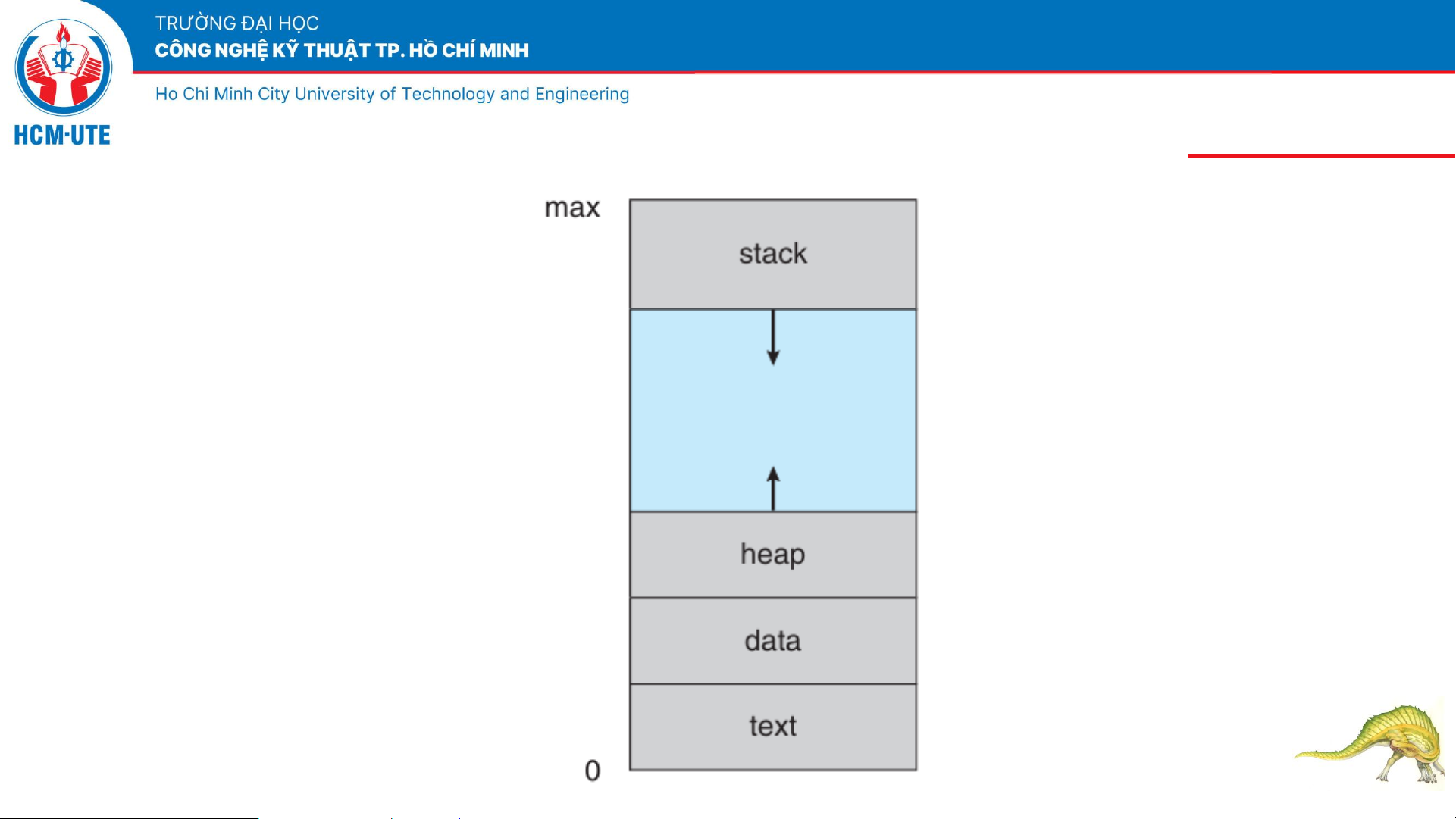
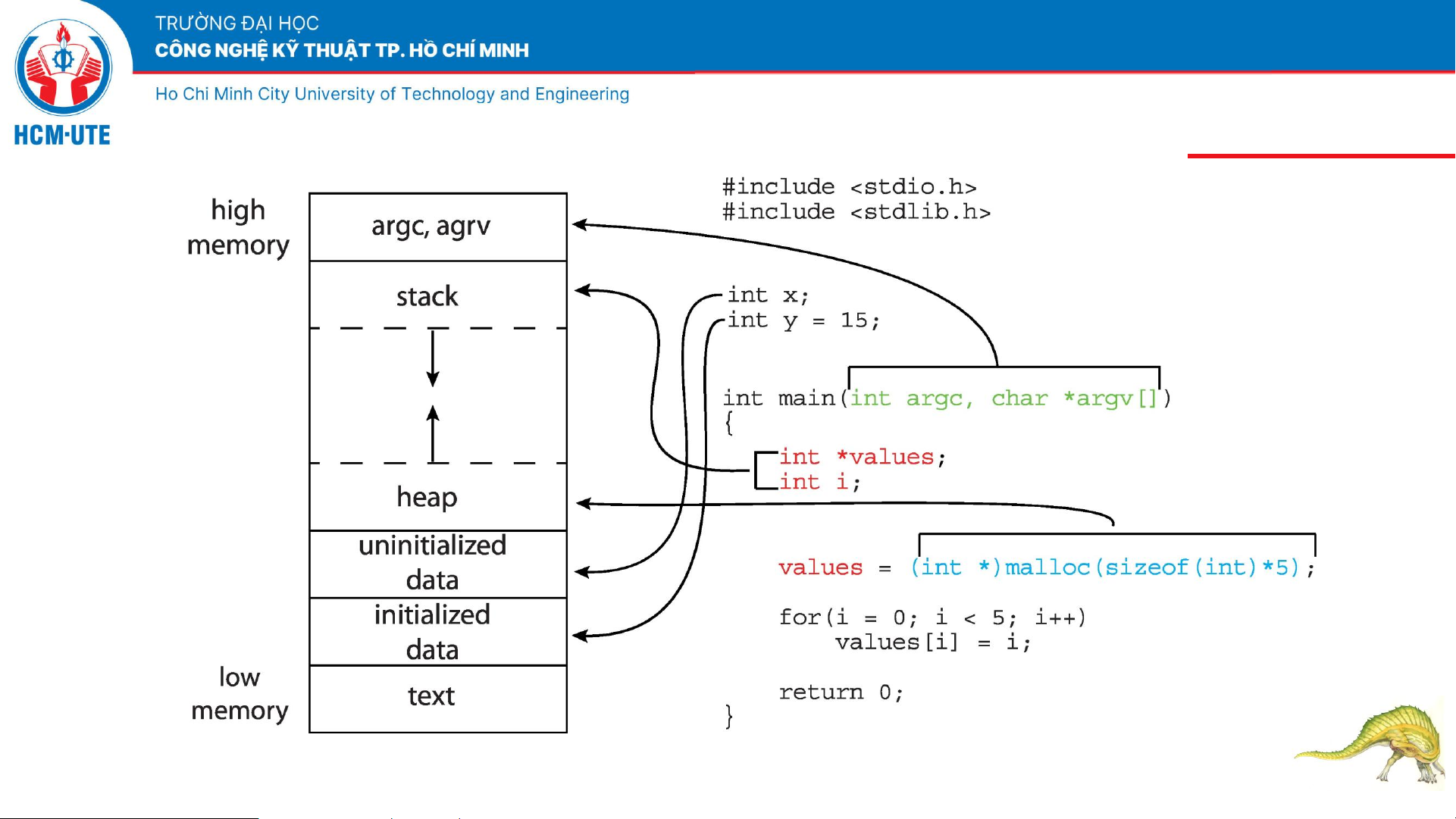
▪ The program code, also called text section
▪ Current activity including program counter, processor registers
▪ Stack containing temporary data
▪ Function parameters, return addresses, local variables
▪ Data section containing global variables
▪ Heap containing memory dynamically allocated during run time
Operating System Concepts – 10th Edition 3.7
Silberschatz, Galvin and Gagne ©2018 PROCESS CONCEPT
▪ Program is passive entity stored on disk (executable file); process is active
▪ Execution of program started via GUI mouse clicks, command line entry of its name, etc
▪ One program can be several processes
▪ Consider multiple users executing the same program
Operating System Concepts – 10th Edition 3.8
Silberschatz, Galvin and Gagne ©2018
LAYOUT OF A PROCESS OF MEMORY
Operating System Concepts – 10th Edition 3.9
Silberschatz, Galvin and Gagne ©2018
MEMORY LAYOUT OF A C PROGRAM
Operating System Concepts – 10th Edition 3.10
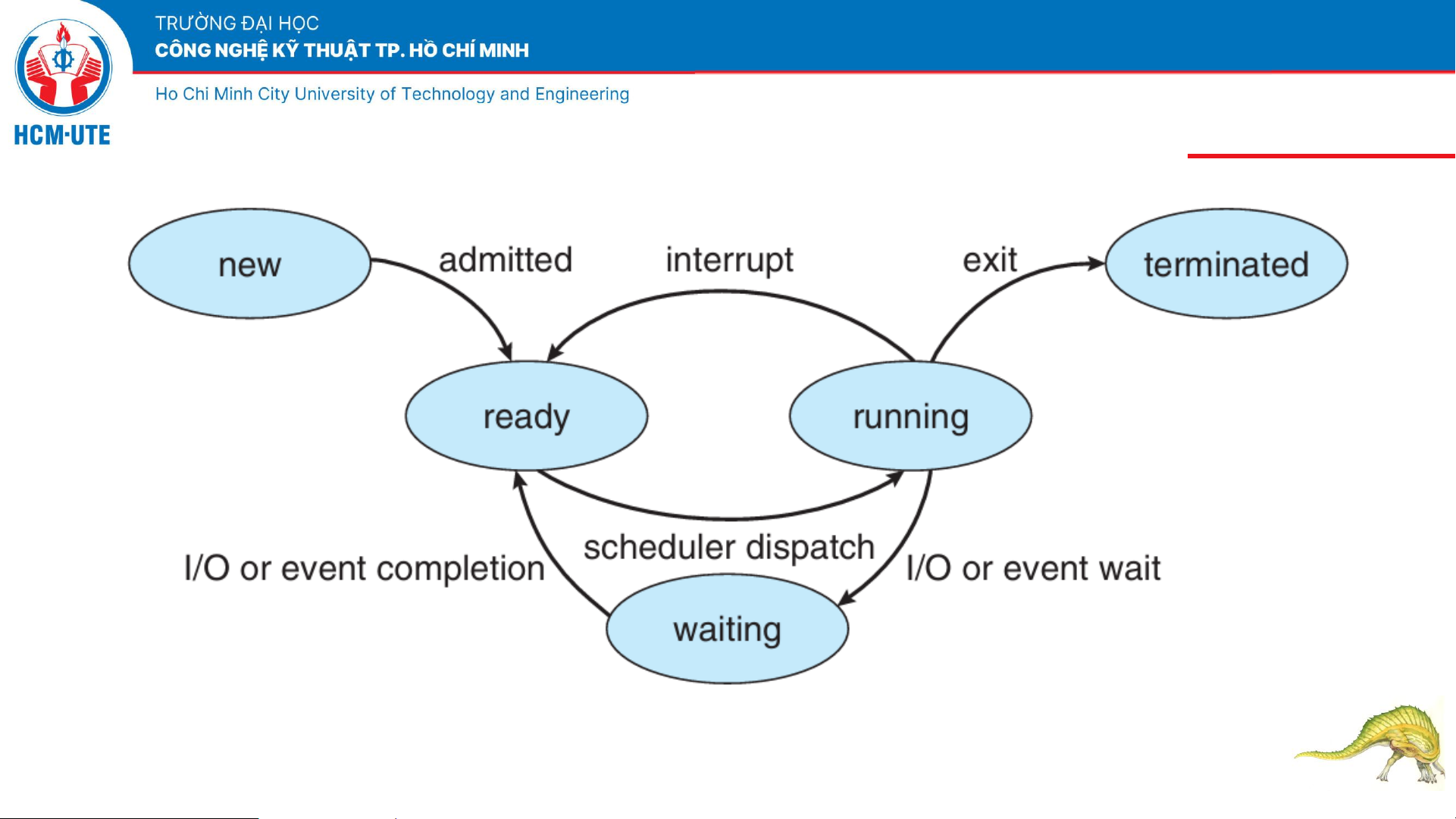
Silberschatz, Galvin and Gagne ©2018 PROCESS STATE
▪ As a process executes, it changes state
• New: The process is being created
• Running: Instructions are being executed
• Waiting: The process is waiting for some event to occur
• Ready: The process is waiting to be assigned to a processor
• Terminated: The process has finished execution
Operating System Concepts – 10th Edition 3.11
Silberschatz, Galvin and Gagne ©2018
DIAGRAM OF PROCESS STATE
Operating System Concepts – 10th Edition 3.12
Silberschatz, Galvin and Gagne ©2018
DIAGRAM OF PROCESS STATE
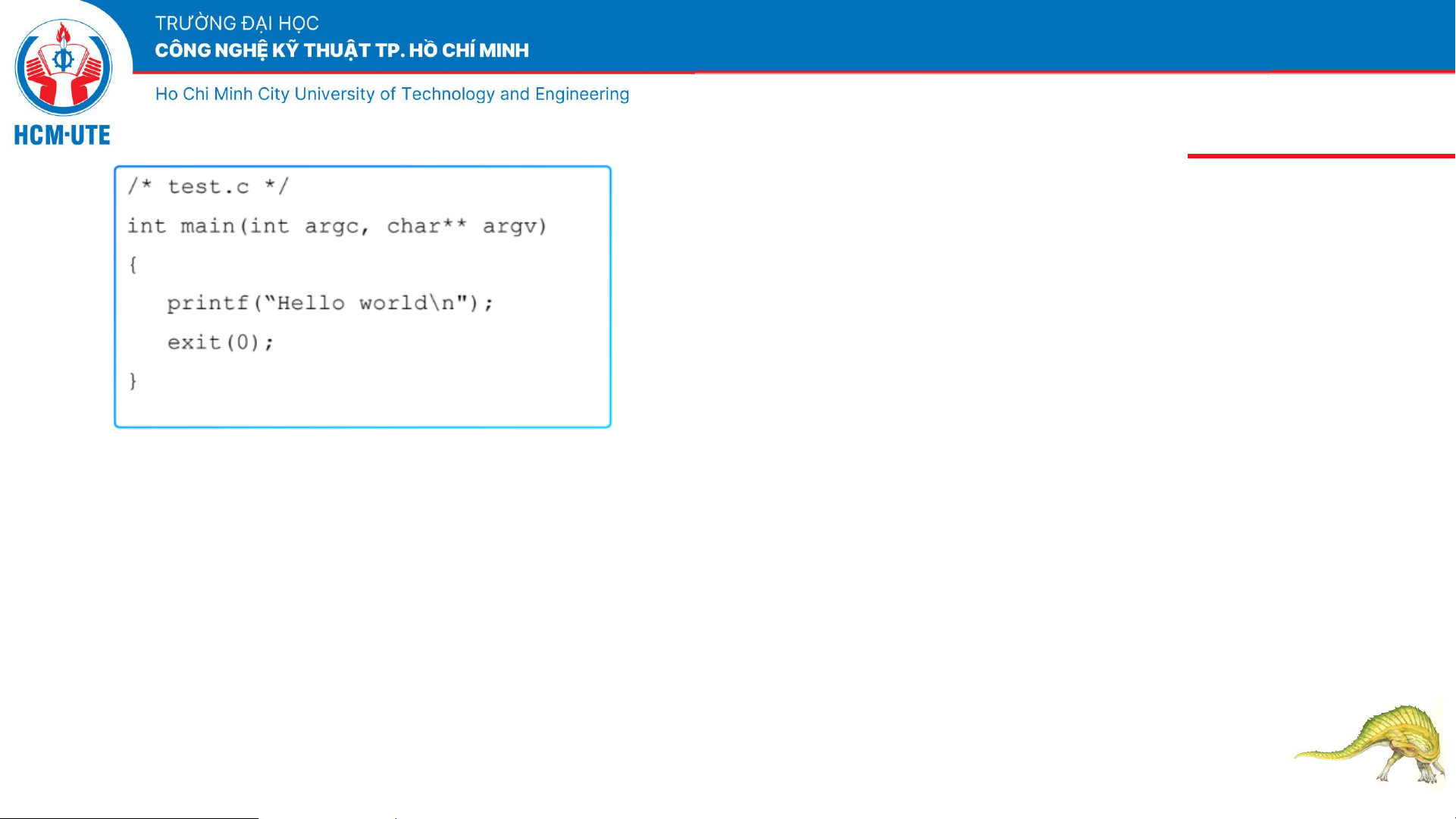
▪ Process state sequence of the test program (best-case scenario) • New • Ready • Running
▪ Compile the program on Linux:
• Waiting (waiting for I/O when calling gcc test.c –o test printf)
▪ Execute the test program: ./test • Ready
▪ In the system, a process named • Running
test is created, executed, and • Terminated then terminated.
Operating System Concepts – 10th Edition 3.13
Silberschatz, Galvin and Gagne ©2018
DIAGRAM OF PROCESS STATE
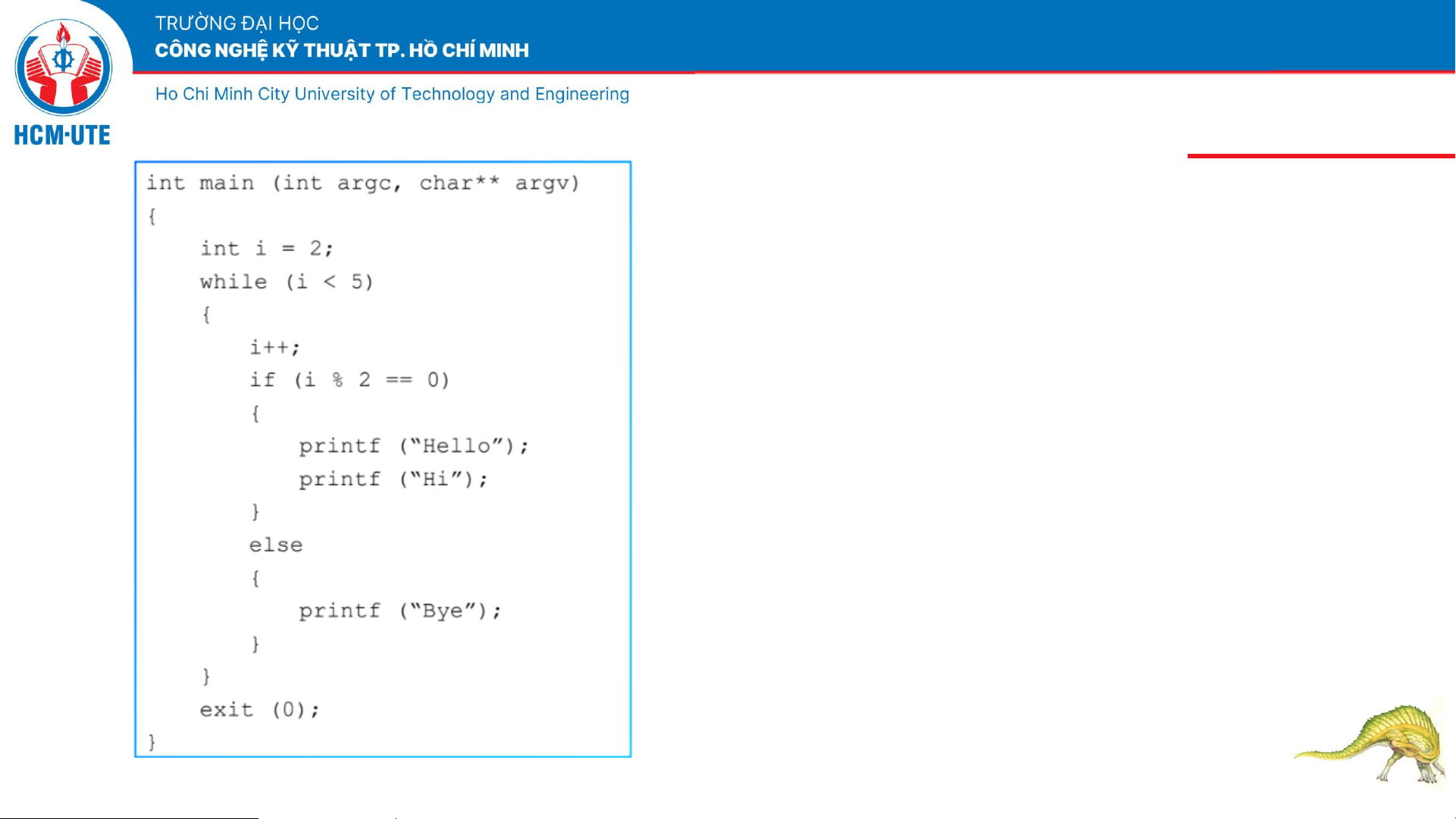
After the program finishes executing, how
many times does the process enter the waiting queue?
New – ready – running – waiting – ready –
running – waiting – ready – running – waiting –
ready – running – waiting – ready – running – terminated
Operating System Concepts – 10th Edition 3.14
Silberschatz, Galvin and Gagne ©2018
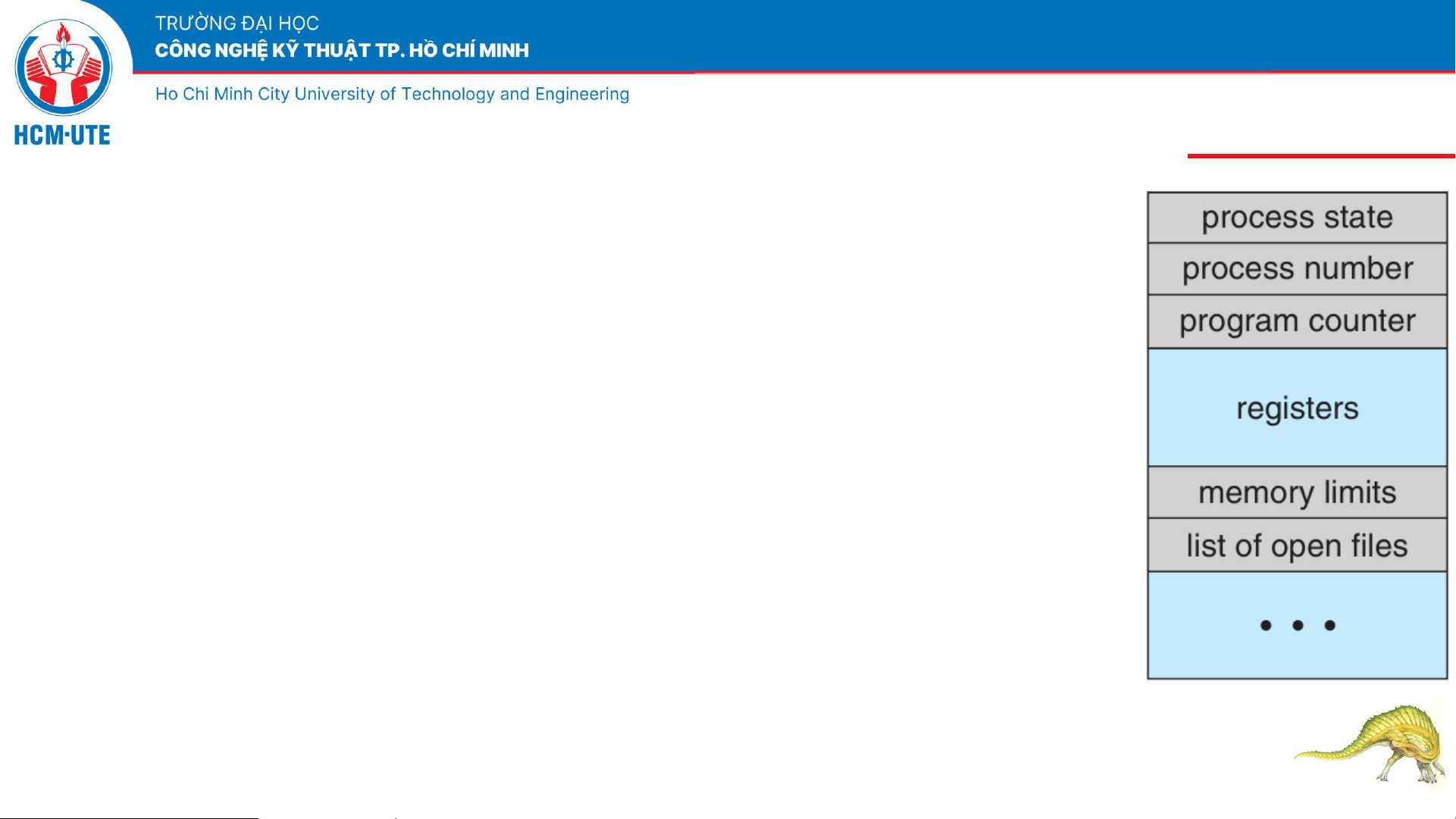
PROCESS CONTROL BLOCK (PCB)
Information associated with each process (also called task control block)
▪ Process state – running, waiting, etc.
▪ Program counter – location of instruction to next execute
▪ CPU registers – contents of all process-centric registers
▪ CPU scheduling information- priorities, scheduling queue pointers
▪ Memory-management information – memory allocated to the process
▪ Accounting information – CPU used, clock time elapsed since start, time limits
▪ I/O status information – I/O devices allocated to process, list of open files
Operating System Concepts – 10th Edition 3.15
Silberschatz, Galvin and Gagne ©2018 THREADS
▪ So far, process has a single thread of execution
▪ Consider having multiple program counters per process
• Multiple locations can execute at once
Multiple threads of control → threads
▪ Must then have storage for thread details, multiple program counter in PCB
▪ Explore in detail in Chapter 4
Operating System Concepts – 10th Edition 3.16
Silberschatz, Galvin and Gagne ©2018
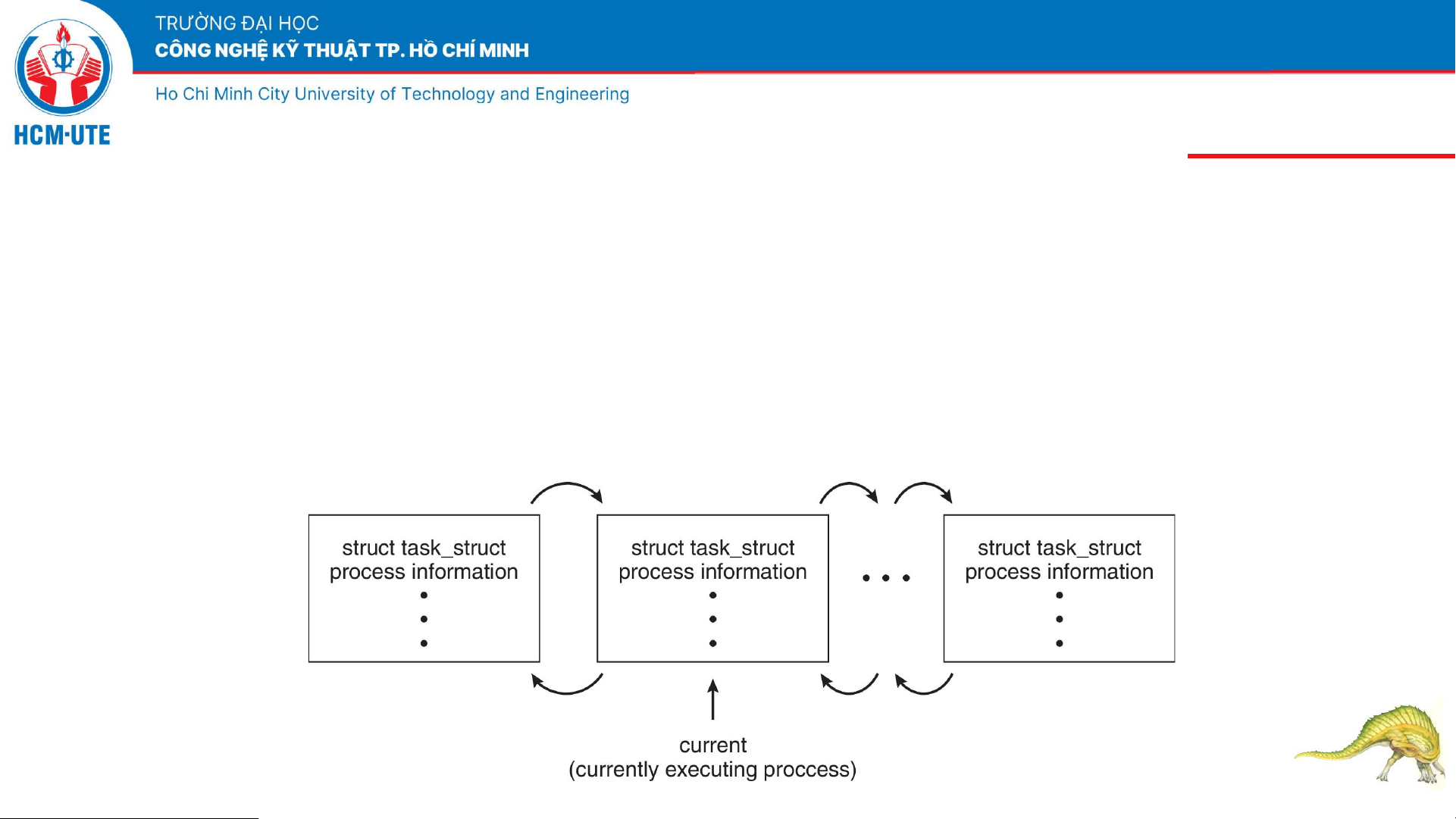
PROCESS REPRESENTATION IN LINUX
Represented by the C structure task_struct pid t_pid; /* process identifier */ long state; /* state of the process */ unsigned int time_slice /* scheduling information */ struct task_struct *parent; /* this process’s parent */ struct list_head children;
/* this process’s children */ struct files_struct *files; /* list of open files */ struct mm_struct *mm;
/* address space of this process */
Operating System Concepts – 10th Edition 3.17
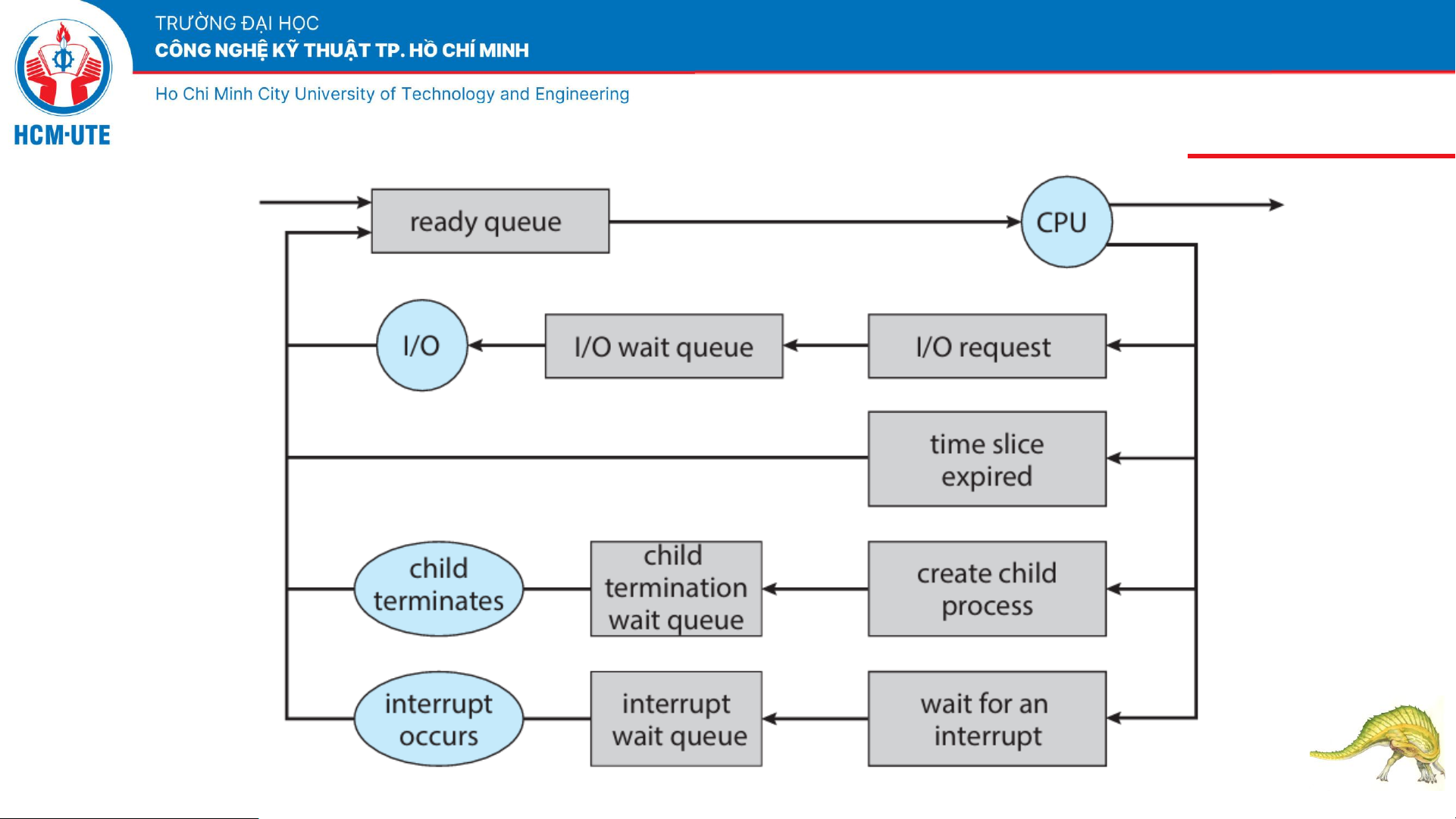
Silberschatz, Galvin and Gagne ©2018 PROCESS SCHEDULING
▪ Process scheduler selects among available processes for next execution on CPU core
▪ Goal – Maximize CPU use, quickly switch processes onto CPU core
▪ Maintains scheduling queues of processes
• Ready queue – set of all processes residing in main memory, ready and waiting to execute
• Wait queues – set of processes waiting for an event (i.e., I/O)
• Processes migrate among the various queues
Operating System Concepts – 10th Edition 3.18
Silberschatz, Galvin and Gagne ©2018 READY AND WAIT QUEUES
Operating System Concepts – 10th Edition 3.19
Silberschatz, Galvin and Gagne ©2018
REPRESENTATION OF PROCESS SCHEDULING
Operating System Concepts – 10th Edition 3.20
Silberschatz, Galvin and Gagne ©2018
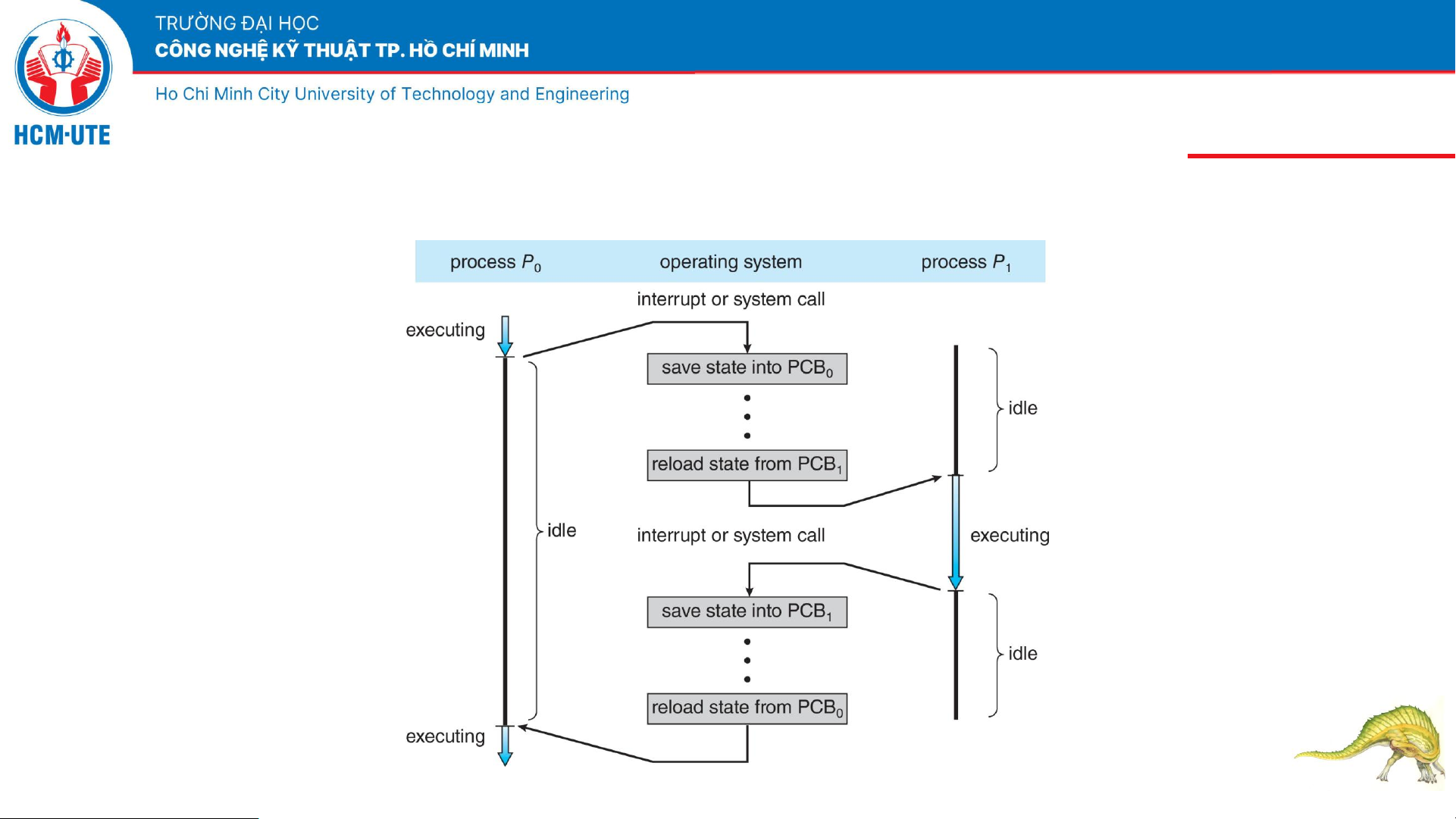
CPU SWITCH FROM PROCESS TO PROCESS
A context switch occurs when the CPU switches from one process to another
Operating System Concepts – 10th Edition 3.21
Silberschatz, Galvin and Gagne ©2018
Tài liệu liên quan:
-

Giới thiệu về Hệ điều hành 1: Cấu trúc và Chức năng cơ bản | Môn Hệ điều hành - Đại học Sư phạm Kỹ thuật Thành phố Hồ Chí Minh
96 48 -

Tổng Hợp Lý Thuyết Hệ Điều Hành Theo Chủ Đề | Môn Hệ điều hành - Đại học Sư phạm Kỹ thuật Thành phố Hồ Chí Minh
118 59 -

Tóm tắt kiến thức Chương 2: Tổng quan về Hệ điều hành | Môn Hệ điều hành - Đại học Sư phạm Kỹ thuật Thành phố Hồ Chí Minh
195 98 -

Ôn thi cuối kì 2 về Deadlock và Quản lý Bộ nhớ | Môn Hệ điều hành - Đại học Sư phạm Kỹ thuật Thành phố Hồ Chí Minh
139 70