Speaking & Listening Questions | Trường Đại học Khoa Học Xã Hội và Nhân Văn, Đại học Quốc gia Hà Nội
If you had to choose just one word to describe yourself, what word would you choose? The qualities that you expect from a good friend and the qualities that you
don’t expect from a good friend? What kind of family do you like? Why? Tài liệu giúp bạn tham khảo, ôn tập và đạt kết quả cao. Mời đọc đón xem!
Môn: Tiếng anh (KHXHNV) 18 tài liệu
Trường: Trường Đại học Khoa Học Xã Hội và Nhân Văn, Đại học Quốc gia Hà Nội 330 tài liệu
Tác giả:






Preview text:
SPEAKING QUETIONS
I. Talking about yourself, your friend and members in your family
1. If you had to choose just one word to describe yourself, what word would you choose?
2. The qualities that you expect from a good friend and the qualities that you
don’t expect from a good friend?
3. What kind of family do you like? Why?
4. Tell about some of the changes in your city
II. Intercultural Communication:
1. Have you ever met someone from another country? What was it like?
2. What is an important custom in your country?
3. How do people greet each other in your culture?
4. What are some differences between your culture and another culture?
5. What languages would you like to learn to communicate with others?
III. Talking About Places on Campus:
1. Where is your favorite place to study on campus?
2. How do you get to the library from your classroom?
3. Can you describe your campus cafeteria?
4. Where do students usually relax on your campus?
5. What facilities do you use most often on campus?
IV. Talking about learning and teaching methods and strategies
1. Advantages and disadvantages student study in group?
2. Describe your college/university. What are two things you don’t like
about your college? What are two things you most like about your college?
3. How many the 21st century skills do you have? What are they? Let’s
describe your experience to get these skills?
4. What ways would you like to get involved in your school? Do you have any
interest in playing a sport or joining a club at your school? If have, what club have you joined?
5. Do you like to study in the library? Where else do you like to study? Why?
V. Technology-Enhanced Teaching and Learning:
1. How do you use technology to learn new things?
2. Do you prefer learning from videos or textbooks? Why?
3. What is your favorite educational app or website?
4. How can teachers use technology to make learning easier?
5. Do you like online classes or face-to-face classes? Why?
VI. Making a Plan for Study Goals:
1. What is one goal you have for this school year?
2. How do you plan to organize your study time?
3. Do you prefer studying alone or with friends? Why?
4. How do you prepare for exams?
5. What subjects do you want to focus on this semester? Rubrics Criteria Excellent (5) Good (4) Satisfactory (3) Needs Poor (1) Improvement (2) Content
Fully addresses the Mostly addresses the Addresses the topic Partially addresses Does not address topic with clear and topic with a few but lacks detail or the topic, with the topic or ideas relevant ideas. missing details. clarity. many irrelevant are unclear. points. Pronunciation Clear and correct Mostly clear with Generally clear, Difficult to Unclear, with pronunciation only minor with some understand due to frequent errors throughout. pronunciation errors. pronunciation several making speech errors. pronunciation hard to follow. errors. Fluency Speaks smoothly Speaks well but with Some hesitations or Frequent Very hesitant, with little to no some hesitations. pauses, but still hesitations or long making speech hesitation. understandable. pauses that hard to follow or interrupt speech. disjointed. Vocabulary Uses a variety of Uses mostly Limited Vocabulary is too Very limited appropriate words appropriate words, vocabulary, repeats limited, often vocabulary, often correctly. but lacks variety. words, but still incorrect or using incorrect understandable. repetitive. words. Grammar Uses correct Few grammatical Some grammatical Frequent Major grammatical grammar with few errors, but they errors that slightly grammatical errors errors that make or no errors. don’t affect affect that affect speech hard to understanding. understanding. understanding. understand. EXAM PREPARATION
Here are the instructions for EXAM PREPARATION
1. Down load audios and their scripts
2. Listen carefully and take note to help you remember ideas
3. Outline and layer information in the text.
4. Make guesses some questions which can be asked in the text.
5. Re-listen and find a Fix.
6. The more hours you spend listening, the more quickly you improve your listening skills. SPEAKING
-Extract at least 3 questions from 20 questions;
-Present your topics in 4-8 minutes;
-Answer questions from the Interviewers;
-See the Rubric to evaluate your presentation.
You have prepared very well for this examination so I’m 100% confident you will pass it and
pass it very well. Good luck, dear all my lovely students. HINTS ???
Use T-Chart with two sides. It helps you compare two things by putting HINTS ???
Let’s draw or find the images that related to the topic and find out what they have in common.
Compare images A and B. What is different? In which situation would you like to be?
Say why you prefer the one situation to the other.
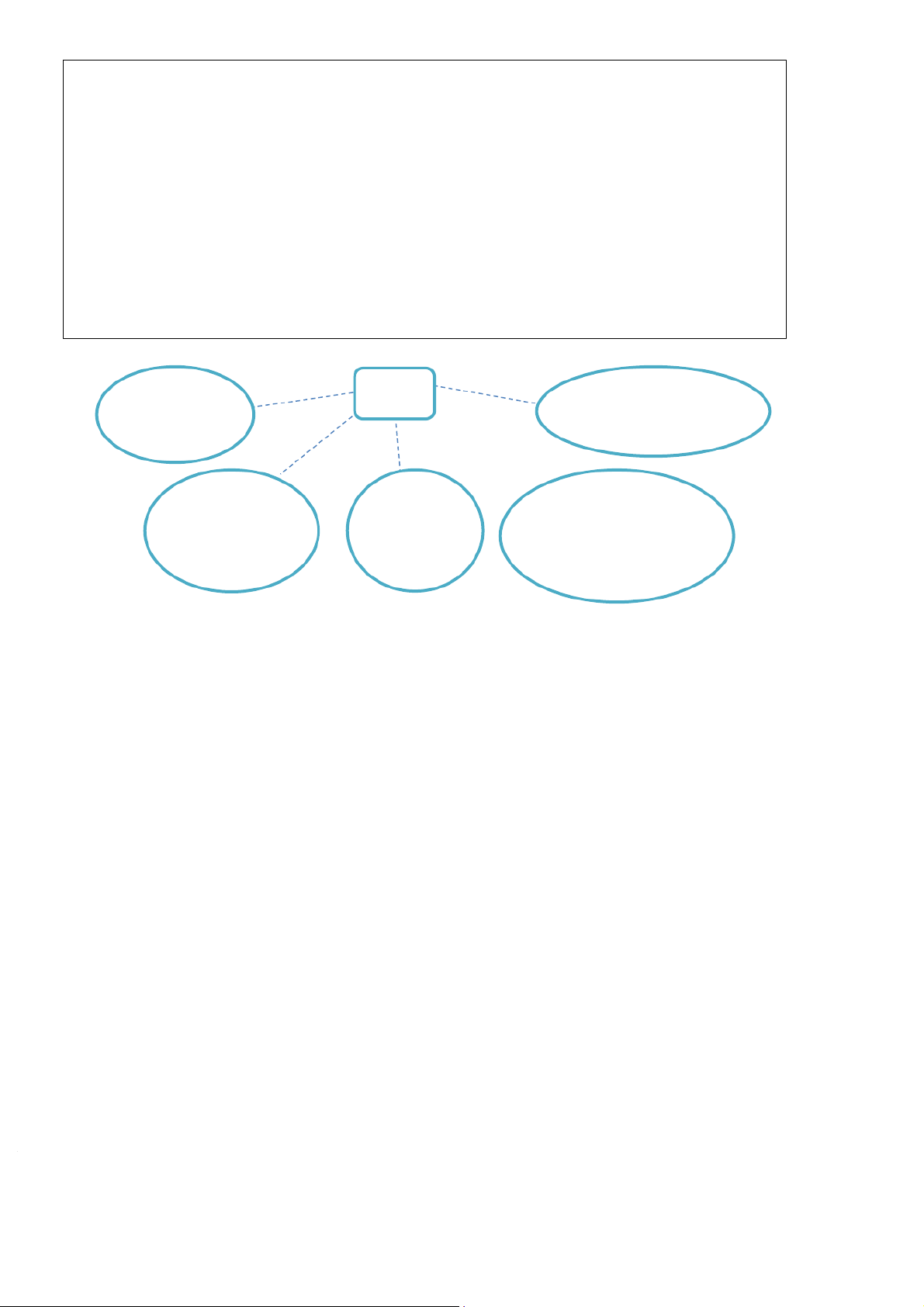
Brainstorming is a strategy for expressing and sharing a lot of ideas quickly.
You can use a “spider diagram” or “mind map” for this. Cities Cultural Shopping activities (malls) (movies, museums) Transportation Eating Tourism (bus, train, (restaurant) (sites) MRT)
Tài liệu liên quan:
-
Một số công thức luyện nói Tiếng Anh cơ bản
9 5 -

English for Business Communication: Effective Strategies and Tips
8 4 -
CAE Reading and Use of English Practice Test 1 (Printable, 2024 Edition)
10 5 -

cam nang chung chi b1 tieng anh khxhvanv
18 9 -
Tiếng Anh B1 CUỐI KỲ: Từ Vựng và Bài Tập về Môi Trường | Trường Đại học Khoa Học Xã Hội và Nhân Văn, Đại học Quốc gia Hà Nội
12 6