Tài liệu ôn tập môn Xác suất thống kê| Trường Đại học Ngoại Thương
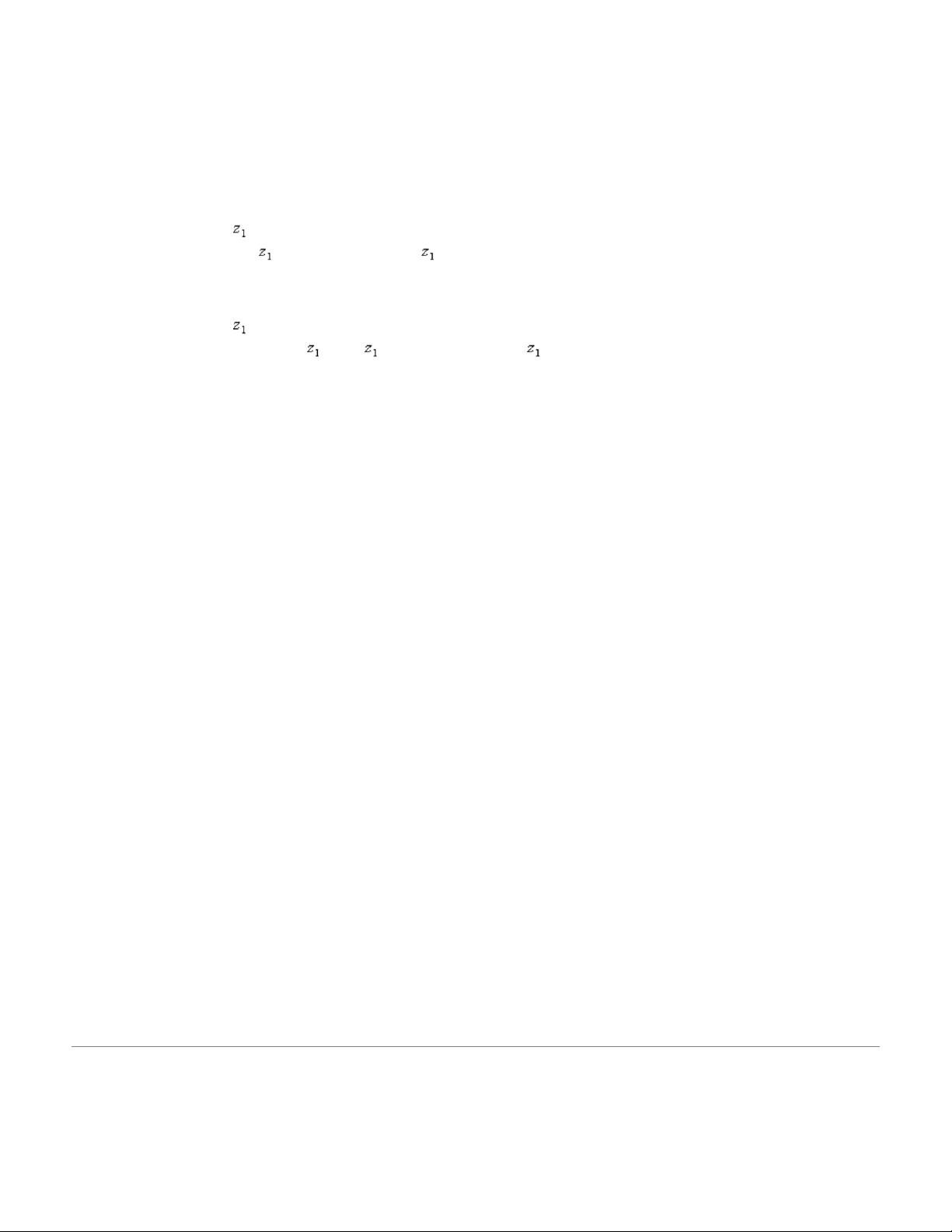
A normal random variable x is standardized by expressing itsvalue as the number standard deviations it lies to the right or left of its mean. Tài liệu giúp bạn tham khảo, ôn tập và đạt kết quả cao. Mời đọc đón xem!
Môn: Xác suất thống kê (FTU) 355 tài liệu
Trường: Trường Đại học Ngoại Thương 1.1 K tài liệu
Tác giả:














Preview text:
MBB.IntroProb13.ch06sec1-3 TRUE/FALSE
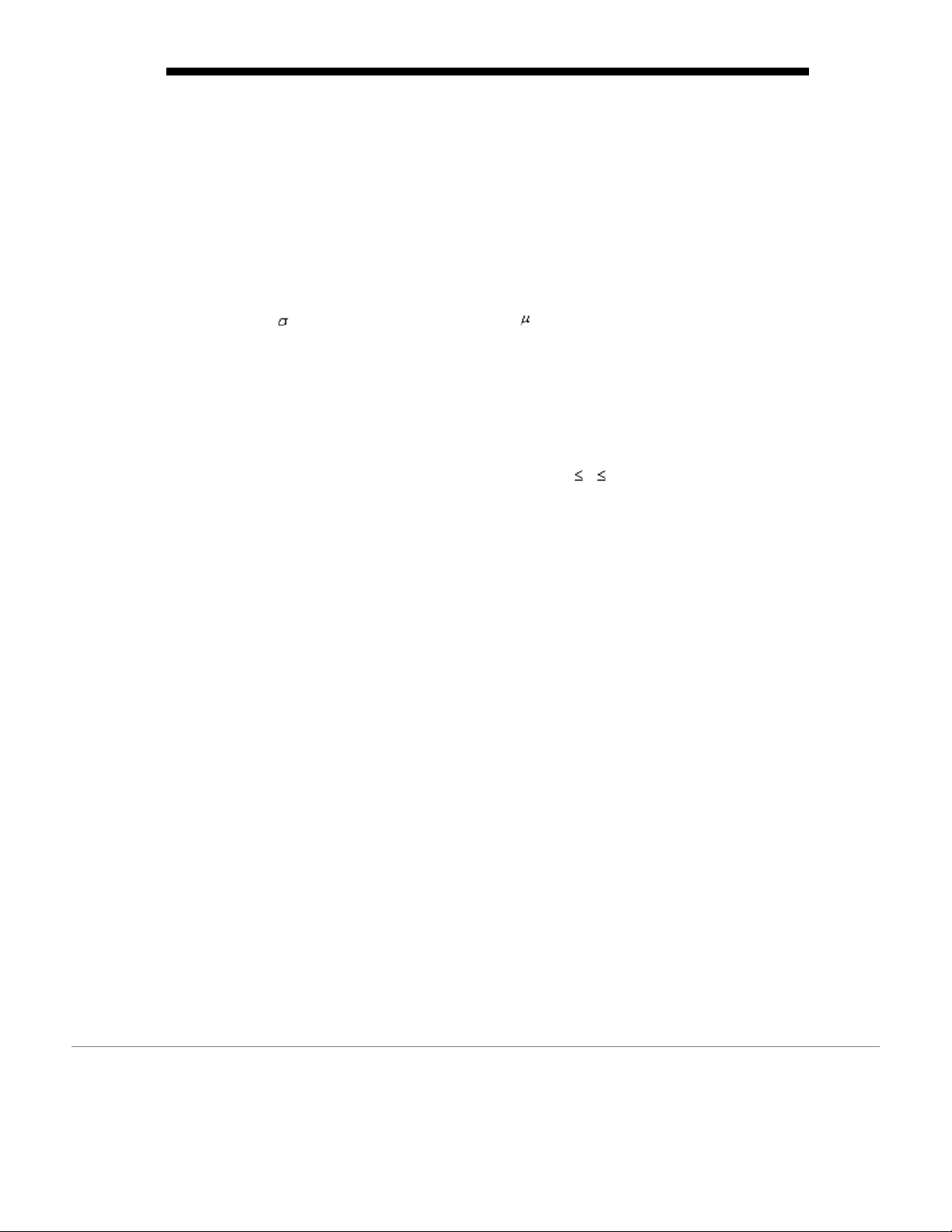
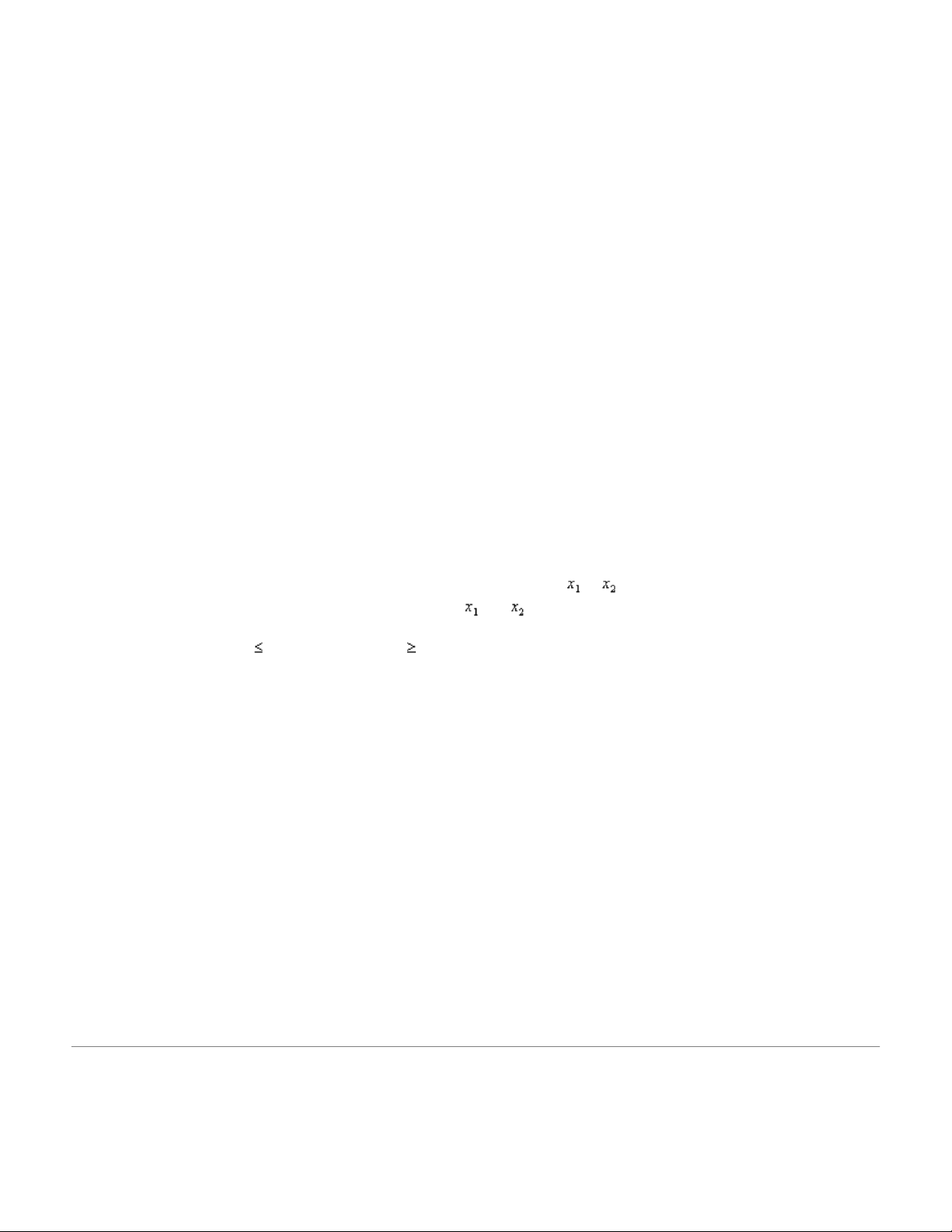
1. If denotes a continuous random variable, x P( = c) = 0 for every num x ber c. ANS: T PTS: 1
2. For a continuous random variable , x P(6 < < 8) i x
s represented by the area under the
probability function over the interval from 6 to 8. ANS: T PTS: 1
3. A normal random variable is standardized b x
y expressing its value as the number standard
deviations it lies to the right or left of its mean . ANS: T PTS: 1
4. The mean, median, and standard deviation of a normally distributed random variable are all at
the same position on the horizontal axis since the distribution is symmetric. ANS: F PTS: 1
5. For a continuous random variable , the probabilities x
P(0 x 1) and P(0 < < 1) are always x equal. ANS: T PTS: 1
6. Any continuous random variable cannot take on negative values. ANS: F PTS: 1
7. For any continuous random variable , x P( = 5) = 1 is alway x s true. ANS: F PTS: 1
8. Continuous random variables can assume infinitely many values corresponding to points on a line interval. ANS: T PTS: 1
9. The relative frequency associated with a particular class in the population is the fraction of
measurements in the population falling in that class. ANS: T PTS: 1
10. The relative frequency associated with a particular class in the population is the probability of
drawing a measurement from that class. ANS: T PTS: 1
11. The total area under the curve f( ) of any continuous random variable x is equal to one. x ANS: T PTS: 1
12. The normal probability distribution is important because a large number of random variables
observed in nature possess a frequency distribution that is approximately a normal probability distribution. ANS: T PTS: 1
13. The left half of the normal curve is slightly smaller than the right half. ANS: F PTS: 1
14. Using the standard normal curve, the area between z = 0 and z = 2.2 is 0.4868. ANS: T PTS: 1
15. The shape of the normal probability distribution is determined by the population standard
deviation . Small values of reduce the height of the curve and increase the spread; large
values of increase the height of the curve and reduce the spread. ANS: F PTS: 1
16. The proportion of the total area under the normal curve that lies within one standard deviation
of the mean is approximately 0.75. ANS: F PTS: 1
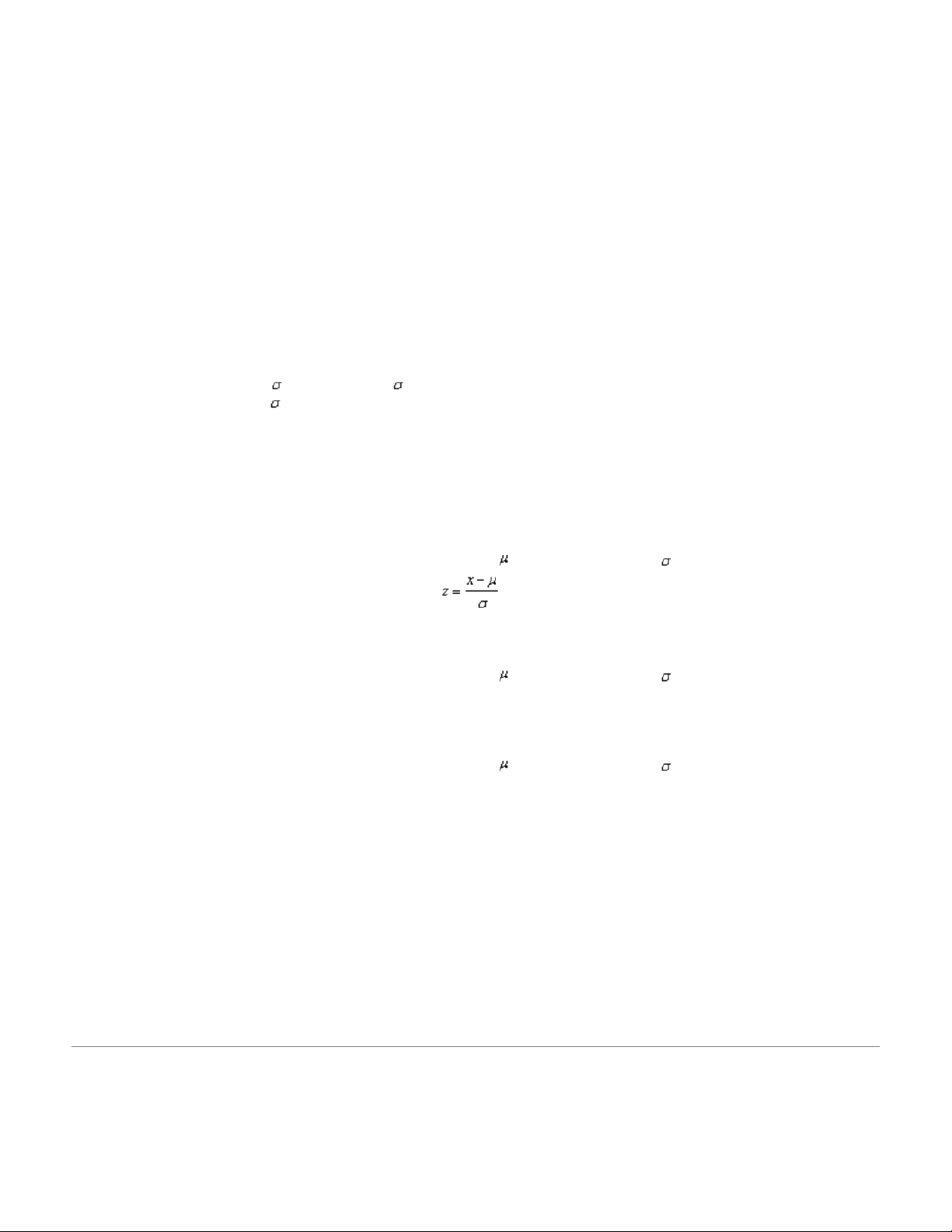
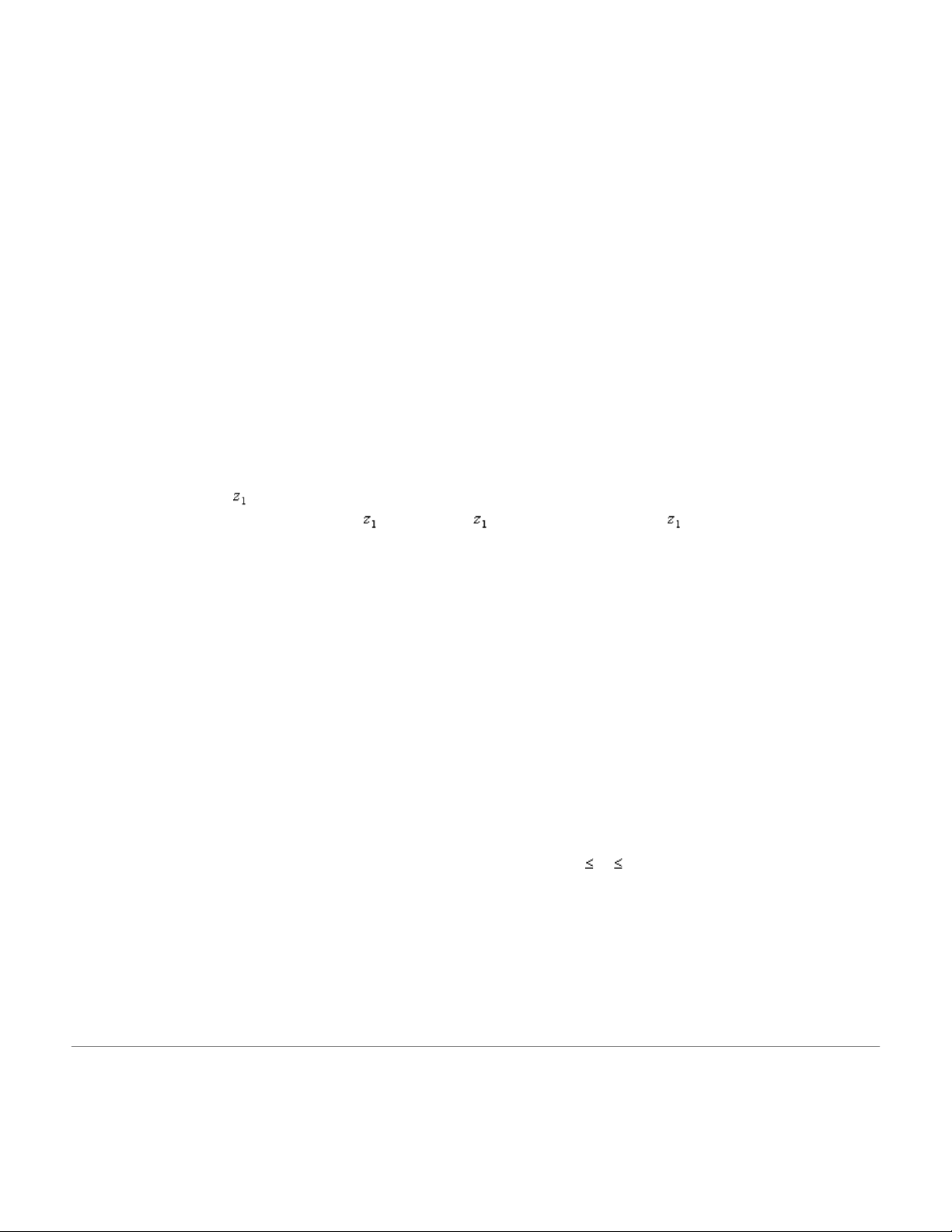
17. Given a normal random variable with mean x
and standard deviation , the standard normal
random variable associated with is x . ANS: T PTS: 1
18. Given a normal random variable with mean x
and standard deviation , the mean of the
standard normal random variable z associated with is 1. x ANS: F PTS: 1
19. Given a normal random variable with mean x
and standard deviation , the variance of the
standard normal random variable z associated with is 0. x ANS: F PTS: 1
20. Given a normal random variable with mean of 82 and standard deviation of 12, the val x ue of
the standard normal random variable z associated with = 70 is smaller than zero. x ANS: T PTS: 1
21. Given a normal random variable with mean of 70 and standard deviation of 12, the val x ue of
the standard normal random variable z associated with = 82 is lar x ger than zero. ANS: T PTS: 1
22. A continuous random variable is normally distributed with a mean of 1200 and a standard x
deviation of 150. Given that = 1410, its corresponding x z-score is 1.40. ANS: T PTS: 1
23. Given that z is a standard normal random variable, a negative value of z indicates that the
standard deviation of z is negative. ANS: F PTS: 1
24. Given that z is a standard normal random variable, a value of z that is equal to zero indicates
that the standard deviation of z is zero also. ANS: F PTS: 1
25. If x is a normal random variable with mean of 2 and standard deviation of 5, then P( < 3) = x P(x > 7). ANS: F PTS: 1
26. If x is a normal random variable with mean = 4 and standard deviation = 2, and Y is a
normal random variable with mean = 10 and standard deviation = 5, then P(x < 0) = P(Y < 0). ANS: T PTS: 1
27. Using the standard normal curve, the area between z = –1.50 and z = 1.50 is 0.4332. ANS: F PTS: 1
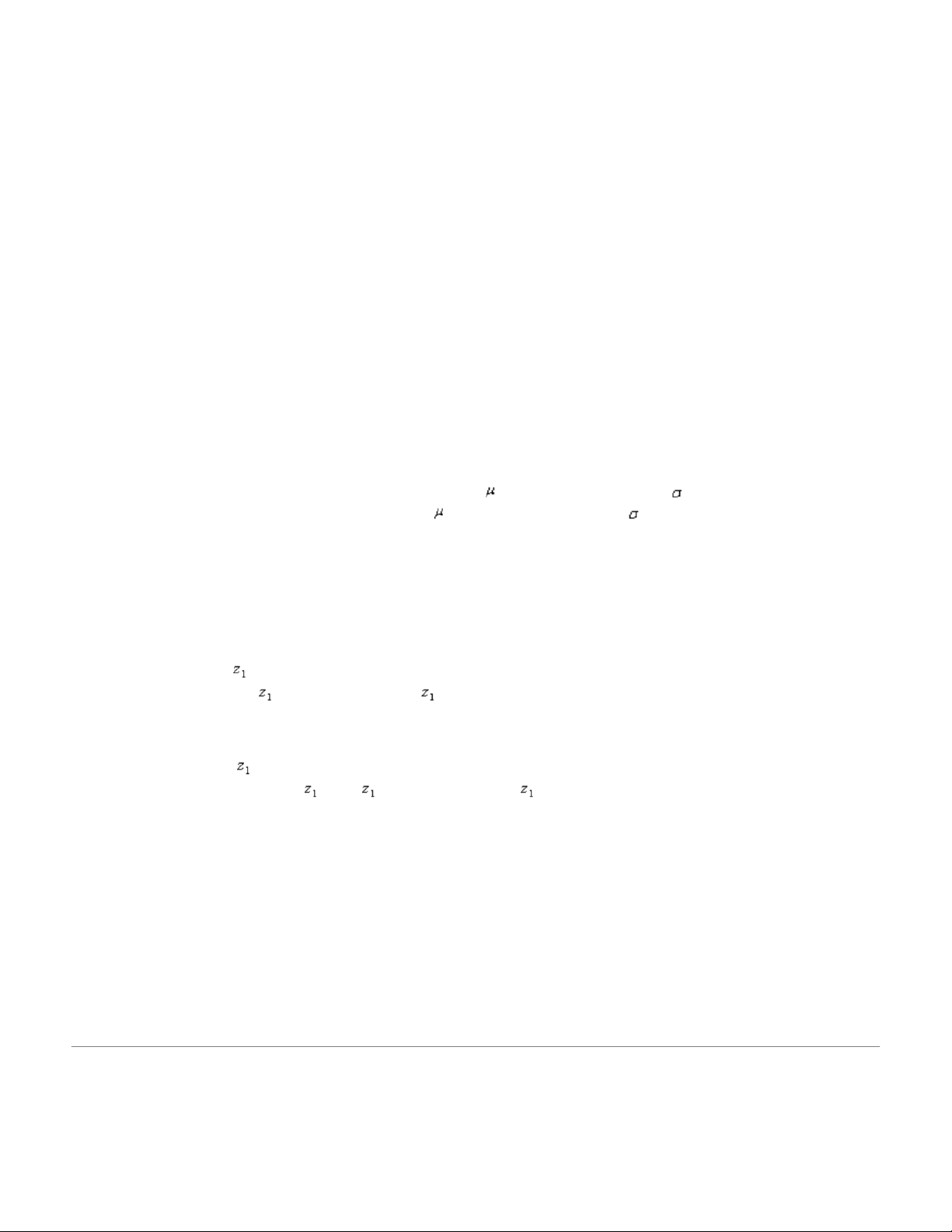
28. Let be a z-score that is unknown but identifiable by position and area. If the area to the
right of is 0.8849, the value of is 1.2. ANS: F PTS: 1
29. Let be a z-score that is unknown but identifiable by position and area. If the symmetrical
area between - and + is 0.903, the value of is 1.66. ANS: T PTS: 1
30. The z-score representing the 10th percentile of the standard normal curve is -1.28. ANS: T PTS: 1
31. Using the standard normal curve, the z-score representing the 95th percentile is 1.645. ANS: T PTS: 1
32. The mean and variance of any normal distribution are always zero and one, respectively. ANS: F PTS: 1
33. A continuous random variable is normally distributed with a mean of 100 oz. and a standard x
deviation of 20 oz. Given that = 120, its corresponding x z-score is –1.0. ANS: F PTS: 1
34. The z-score representing the 99th percentile of the standard normal curve is 3.0. ANS: F PTS: 1
35. Continuous random variables can assume values at all points on an interval, with no breaks between possible values. ANS: T PTS: 1
36. The possible observations about continuous random variables are infinite in number;
characteristics measured in units of money, time, distance, height, volume, length, or weight exemplify the matter. ANS: T PTS: 1
37. A smooth frequency curve that describes the probability distribution of a continuous random
variable is called a standard normal curve. ANS: F PTS: 1
38. For a continuous random variable, P(x a) = P( > x a) because P( = x a) = 0. ANS: T PTS: 1
39. Examples of continuous probability distributions include the normal probability distribution,
the Poisson probability distribution, and the binomial probability distribution. ANS: F PTS: 1
40. The normal random variable's density function is (1) single-peaked above the variable's mean,
median, and mode, all of which are equal to one another, (2) perfectly symmetric about this
peaked central value and, thus, bell-shaped, and (3) characterized by tails extending
indefinitely in both directions from the center, approaching (but never touching) the horizontal
axis, which implies a positive probability for finding values of the random variable anywhere
between minus infinity and plus infinity. ANS: T PTS: 1
41. A standard normal curve is a normal probability density function with a mean of 1 and a standard deviation of 0. ANS: F PTS: 1
42. For any random variable, P(x a) = P( < x a) because P( = x a) = 0. ANS: F PTS: 1 43. For any random variable , x P( = x a) = 0. ANS: F PTS: 1
44. For a continuous random variable x, P(x a) = P(x > a) and P(x a) = P( < x a). ANS: T PTS: 1
45. The total area under the normal probability distribution curve is equal to 1. ANS: T PTS: 1
46. The normal probability distribution is one of the most commonly used discrete probability distributions. ANS: F PTS: 1
47. One difference between a binomial random variable and a standard normal random variable x
z is that with the binomial random variable we cannot determine P(x = a), while for the
standard normal variable we can determine P(z = a). ANS: F PTS: 1
48. If the mean, median, and mode are all equal for a continuous random variable, then the
random variable must be normally distributed. ANS: F PTS: 1
49. The time it takes a student to finish a final exam test is known to be normally distributed with
a mean equal to 84 minutes with a standard deviation equal to 10 minutes. Given this
information, the probability that it will take a randomly selected student between 75 and 90
minutes is approximately .0902. ANS: F PTS: 1
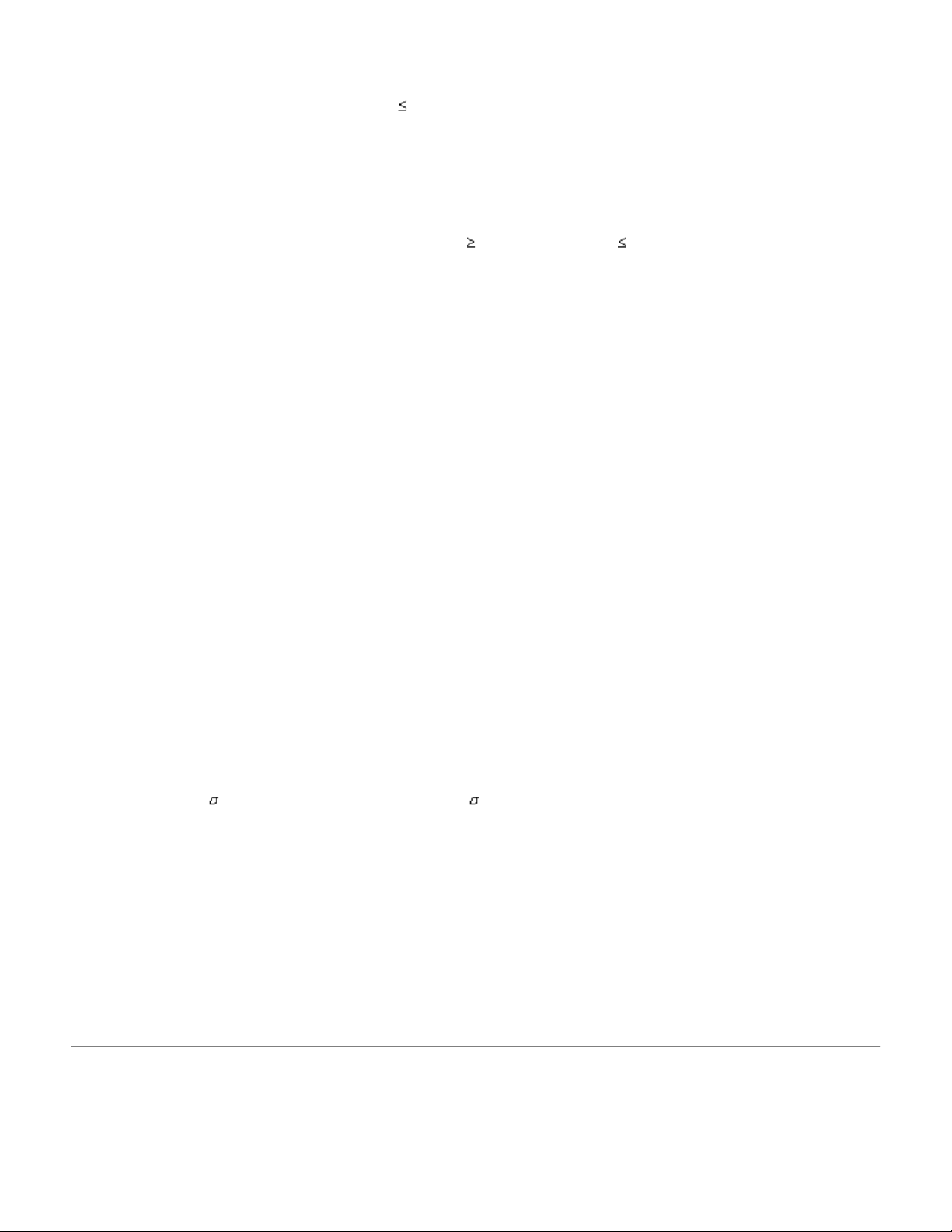
50. The normal probability distribution is right-skewed for large values of the standard deviation
, and is left-skewed for small values of . ANS: F PTS: 1
51. Assume that is a normally distributed random variable with a m x ean equal to 13.4 and a
standard deviation equal to 3.6. Given this information and that P( > x a) = .05, the value of a must be 19.322. ANS: T PTS: 1
52. Using the standard normal curve, the area between z = 0 and z = 3.50 is about 0.50. ANS: T PTS: 1
53. Using the standard normal curve, the probability or area between z = –1.28 and z = 1.28 is 0.3997. ANS: F PTS: 1
54. Let be a z-score that is unknown but identifiable by position and area. If the area to the
right of is 0.8413, the value of is 1.0. ANS: F PTS: 1
55. Let be a z-score that is unknown but identifiable by position and area. If the symmetrical
area between – and + is 0.9544, the value of is 2.0. ANS: T PTS: 1
56. Using the standard normal curve, the z-score representing the 10th percentile is 1.28. ANS: F PTS: 1
57. Using the standard normal curve, the z-score representing the 75th percentile is 0.67. ANS: T PTS: 1
58. Using the standard normal curve, the z-score representing the 90th percentile is 1.28. ANS: T PTS: 1
59. The mean and standard deviation of a normally distributed random variable which has been
"standardized" are one and zero, respectively. ANS: F PTS: 1
60. A random variable is normally distributed with a mean of 150 and a variance of 36. Given x that = 120, its corresponding x z-score is 5.0. ANS: F PTS: 1
61. A random variable is normally distributed with a mean of 250 and a standard deviation of x
50. Given that x = 175, its corresponding z-score is –1.50. ANS: T PTS: 1
62. For a normal curve, if the mean is 25 minutes and the standard deviation is 5 minutes, the area
to the left of 10 minutes is about 0.50. ANS: F PTS: 1
63. For a normal curve, if the mean is 20 minutes and the standard deviation is 5 minutes, the area
to the right of 13 minutes is 0.9192. ANS: T PTS: 1
64. Given that Z is a standard normal random variable, a negative value of Z indicates that the
standard deviation of Z is negative. ANS: F PTS: 1
65. The mean of any normal distribution is always zero. ANS: F PTS: 1 MULTIPLE CHOICE
1. Which of the following statements is true with regard to continuous random variables?
a. The height of the curve shows the probability of an event.
b. The probability of exactly an event A occurring is always equal to one.
c. Probabilities of events are determined from areas under the curve.
d. The probability distribution is always mound-shaped. e. All of these. ANS: C PTS: 1
2. Let x be a continuous random variable and let c be a constant. Which of the following statements is false?
a. The probability that assumes a value in the interval x to is the area under the
probability density function between and . b. P(x = c) = 0 c. P(x c ) = P(x < c) and P(x c ) = P(x > c) d. All of these. e. None of these. ANS: E PTS: 1
3. Which of the following incorrectly describes the discrete probability distributions and
continuous probability density functions?
a. They both reflect the distribution of a random variable.
b. They both have outcomes, which occur only in integers.
c. They both assist in determining the probability of a given outcome.
d. They are both relative frequency distributions. e. None of these. ANS: B PTS: 1
4. What proportion of the data from a normal distribution is within two standard deviations from the mean? a. 0.4772 b. 0.3413 c. 0.6826 d. 0.9544 e. 0.8824 ANS: D PTS: 1
5. The z-score representing the first quartile of the standard normal distribution is: a. 0.67 b. –0.67 c. 1.28 d. –1.28 e. 0.28 ANS: B PTS: 1
6. Let be a z score that is unknown but identifiable by position and area. If the area to the right
of is 0.7088, then the value of is: a. 1.06 b. –0.55 c. 1.06 d. 0.55 e. 0.70 ANS: B PTS: 1
7. If z is a standard normal random variable, the area between z = 0.0 and z = 1.20 is 0.3849,
while the area between z = 0.0 and z = 1.40 is 0.4192. What is the area between z = –1.20 and z = 1.40? a. 0.0808 b. 0.1151 c. 0.0343 d. 0.8041 e. 0.1646 ANS: D PTS: 1
8. If z is a standard normal random variable, the area between z = 0.0 and z = 1.25 compared to
the area between z = 1.25 and z = 2.5 will be: a. larger b. smaller c. the same d. zero
e. There is not enough information to answer this question. ANS: A PTS: 1
9. If x is a normal random variable with mean of 1228 and a standard deviation of 120, the
number of standard deviations from 1228 to 1380 is: a. 10.233 b. 3.1989 c. 11.50 d. 1.267 e. 2.435 ANS: D PTS: 1
10. Using the standard normal table, the total probabilities to the right of z = 2.0 and to the left of z = –2.0 is: a. 0.0228 b. 0.4772 c. 0.9544 d. 0.0456 e. 0.1494 ANS: D PTS: 1
11. Let be a z score that is unknown but identifiable by position and area. If the symmetrical
area between a negative and a positive is 0.8132, then the value of is: a. z = 1.32 b. z = 0.89 c. z = 2.64 d. z = 1.78 e. z = 8.13 ANS: A PTS: 1
12. The z-score representing the third quartile of the standard normal distribution is: a. 0.67 b. –0.67 c. 1.28 d. –1.28 e. 0.33 ANS: A PTS: 1
13. Given that Z is a standard normal random variable, P(–1.2 Z 1.5) is: a. 0.8181 b. 0.4772 c. 0.3849 d. 0.5228 e. 0.2656 ANS: A PTS: 1
14. Given that z is a standard normal variable, the value for which P( ) = 0.242 is: a. –0.70 b. 0.72 c. 0.68 d. –0.65 e. –0.61 ANS: A PTS: 1
15. A standard normal distribution is a normal distribution with:
a. a mean of zero and a standard deviation of one
b. a mean of one and a standard deviation of zero
c. a mean zero and a standard deviation of zero
d. a mean of one and a standard deviation of one e. none of these ANS: A PTS: 1
16. If Z is a standard normal random variable, then P(–1.25 Z –0.75) is: a. 0.6678 b. 0.1056 c. 0.2266 d. 0.1210 e. 0.3482 ANS: D PTS: 1
17. If the random variable is normally distributed with a me x
an of 88 and a standard deviation of 12, then P(X 96) is: a. 0.2486 b. 0.2514 c. 0.1243 d. 0.4972 e. 0.3398 ANS: B PTS: 1
18. Which of the following is always true for all probability density functions of continuous random variables? a. They are symmetrical.
b. They are skewed to the right.
c. They are skewed to the left.
d. The area under the curve is 1.0.
e. The area under the curve is 0.1. ANS: D PTS: 1
19. Many different types of continuous random variables give rise to a large variety of probability density functions, including:
a. the binomial probability distribution
b. the hypergeometric probability distribution
c. the normal probability distribution
d. the Poisson probability distribution
e. both the binomial probability distribution and the hypergeometric probability distribution ANS: C PTS: 1
20. Which of the following statements about continuous random variables is correct?
a. They can assume values at all points on an interval with no breaks between possible values.
b. We can gauge the likely occurrence of specific values of such variables with the
help of one or another of certain probability distributions, including the binomial,
Poisson, or hypergeometric distributions.
c. They are defined at specific values. d. All of these. e. None of these. ANS: A PTS: 1
21. Continuous random variables that can assume values at all points on an interval of values,
with no breaks between possible values, are quite common. Examples include: a. profit per dollar of sales
b. cost per credit taken by graduate students
c. the average time it takes to assemble a car, or write a test d. height e. all of these ANS: E PTS: 1
22. Which of the following correctly describes a continuous random variable?
a. We cannot list all the possible values of a continuous random variable.
b. We cannot list all the probabilities for each one of the infinite number of
conceivable values of the variable.
c. We commonly associate probabilities with ranges of values along the continuum of
possible values that the random variable might take on. d. All of these. e. None of these. ANS: D PTS: 1
23. Which of the following correctly describes the normal probability distribution?
a. It is single-peaked above the random variable's mean, median, and mode, all of
which are equal to one another.
b. It is perfectly symmetric about this peaked central value and, thus, said to be bell- shaped.
c. It features tails extending indefinitely in both directions from the center,
approaching (but never touching) the horizontal axis, which implies a positive
probability for finding values of the random variable anywhere between minus infinity and plus infinity. d. All of these. e. None of these. ANS: D PTS: 1
24. Members of the normal probability distribution family differ from one another only by: a. mean and standard deviation
b. median and standard deviation c. mode and standard deviation d. any of these e. none of these ANS: D PTS: 1
25. The more peaked a normal curve will appear,
a. the smaller is the value of the standard deviation
b. the larger is the value of the standard deviation
c. the larger is the value of the mean
d. the more closely mean, median, and mode coincide
e. the smaller is the value of the mean ANS: D PTS: 1
26. Given a normal distribution with a mean of 80 and a standard deviation of 20, an observation
of x = 50 corresponds to a standard normal deviate: a. of z = +1.5 b. of z = +3.0 c. of z = –1.5 d. of z = –3.0 e. of none of these ANS: C PTS: 1
27. If the standard normal deviate of a random variable value of = 2 is x z = –2, while the standard
deviation of the random variable equals 2, then the mean of x is: x a. 6 b. 4 c. 8 d. 2 e. 0 ANS: A PTS: 1
28. Which of the following is not a characteristic of the normal distribution? a. It is symmetric. b. It has a bell-shape. c. Mean = median = mode. d. All of these. e. None of these. ANS: E PTS: 1
29. Mean, median, and mode are:
a. equal to one another in any Poisson probability distribution
b. equal to one another in any normal probability distribution
c. different measures of center and, therefore, cannot possibly be equal to one another
d. different measures of center, but can equal each other only if the probability
distribution is negatively or positively skewed
e. equal to one another in any normal probability distribution and different measures
of center and, therefore, cannot possibly be equal to one another ANS: B PTS: 1
30. Which of the following probability distributions can be used to describe the distribution for a continuous random variable? a. Binomial distribution b. Normal distribution c. Poisson distribution d. Hypergeometric distribution
e. Both Poisson distribution and Hypergeometric distribution ANS: B PTS: 1
31. If the random variable x is normally distributed with a mean equal to .45 and a standard
deviation equal to .40, then P(x .75) is: a. .7500 b. .7734 c. .2266 d. .2734 e. .4525 ANS: C PTS: 1
32. If and are normally distributed random variables with a mean of 95 and a standard
deviation of 20, and that and are independent of each other, then P( and < 60) is: a. .0401 b. .0802 c. .2115 d. .0016 e. .1255 ANS: D PTS: 1
33. Assume that is normally distributed random variable with a m x ean of and a standard
deviation of .15. Given this information and that P(x < 2.10) = .025, what is the value of ? a. 2.394 b. 2.104 c. 2.096 d. 1.806 e. 1.235 ANS: D PTS: 1
34. If x is normally distributed random variable with a mean of 8.20 and variance of 4.41, and that
P(x > b) = .08, then the value of b is: a. 11.161 b. 3.409 c. 3.448 d. 3.452 e. 8.418 ANS: A PTS: 1
35. The time it takes Jessica to bicycle to school is normally distributed with mean 15 minutes
and variance 4. Jessica has to be at school at 8:00 am. What time should she leave her house
so she will be late only 4% of the time? a. 15 minutes before 8:00 b. 11.5 minutes before 8:00 c. 22 minutes before 8:00 d. 18.5 minutes before 8:00 e. 10.5 minutes before 8:00 ANS: D PTS: 1
36. The time it takes Jessica to bicycle to school is normally distributed with mean 15 minutes
and variance 4. Jessica has to be at school at 8:00 am. Suppose you saw her at class, and she
said it took her 23 minutes to get to school that day. Which of the following is a reasonable inference or conclusion?
a. Twenty-three minutes to school is not an unusually long commute time.
b. A commuting time of 23 minutes is highly unusual or atypical.
c. The distribution of commute times must not be normal with mean 15 minutes and standard deviation 2 minutes.
d. Both “A commuting time of 23 minutes is highly unusual or atypical” and “The
distribution of commute times must not be normal with mean 15 minutes and
standard deviation 2 minutes” are feasible conclusions.
e. Both “Twenty-three minutes to school is not an unusually long commute time” and
“The distribution of commute times must not be normal with mean 15 minutes and
standard deviation 2 minutes” are feasible conclusions. ANS: D PTS: 1
37. Given that Z is a standard normal random variable, P(–1.0 Z 1.5) is: a. 0.7745 b. 0.8413 c. 0.0919 d. 0.9332 e. 1.932 ANS: A PTS: 1
38. Given that Z is a standard normal variable, the value z for which P(Z z) = 0.2580 is: a. 0.70 b. 0.758 c. –0.65 d. 0.242 e. –0.242 ANS: C PTS: 1
39. A standard normal distribution is a normal distribution with:
a. a mean of zero and a standard deviation of one
b. a mean of one and a standard deviation of zero
c. a mean of one and a standard deviation of one
d. a mean usually larger than the standard deviation
e. a mean always larger than the standard deviation ANS: A PTS: 1
40. If Z is a standard normal random variable, then P(–1.75 Z –1.25) is: a. 0.1056 b. 0.0401 c. 0.8543 d. 0.0655 e. 0.165 ANS: D PTS: 1
41. If Z is a standard normal random variable, then the value z for which P(–z Z z) equals 0.8764 is: a. 0.3764 b. 1.54 c. 3.08 d. 1.16 e. 0.5512 ANS: D PTS: 1
42. If the random variable X is normally distributed with a mean of 75 and a standard deviation of 8, then P(X 75) is: a. 0.125 b. 0.500 c. 0.625 d. 0.975 e. 0.250 ANS: B PTS: 1
43. Given that Z is a standard normal random variable, what is the value z if the area to the right of z is 0.1949? a. 0.75 b. –0.51 c. 0.86 d. –0.68 e. –0.55 ANS: C PTS: 1
44. Given that Z is a standard normal random variable, what is the value z if the area to the right of z is 0.9066? a. 1.66 b. –1.32 c. 0.66 d. –0.66 e. 1.02 ANS: B PTS: 1
45. Given that Z is a standard normal random variable, P(Z > –1.58) is: a. –0.4429 b. 0.0571 c. 0.9429 d. 0.5571 e. 0.6910 ANS: C PTS: 1
46. Given that the random variable X is normally distributed with a mean of 80 and a standard
deviation of 10, P(85 X 90) is: a. 0.5328 b. 0.3413 c. 0.1915 d. 0.1498 e. 0.5841 ANS: D PTS: 1
47. What proportion of the data from a normal distribution is within two standard deviations from the mean? a. 0.3413 b. 0.4772 c. 0.6826 d. 0.9544 e. 0.8290 ANS: D PTS: 1
48. Given that Z is a standard normal random variable, the area to the left of a value z is expressed as: a. P(Z z) b. P(Z z) c. P(0 Z z) d. P(Z –z) e. P(z Z 0) ANS: B PTS: 1
49. Which of the following distributions are always symmetrical? a. Exponential b. Normal c. Binomial
d. All continuous distributions are symmetrical. e. None of these. ANS: B PTS: 1
50. If the z-value for a given value of the random variable x
X is z = 1.96, and the distribution of
X is normally distributed with a mean of 60 and a standard deviation of 6, to what x-value does this z-value correspond? a. 71.76 b. 67.96 c. 61.96 d. 48.24 e. 54.99 ANS: A PTS: 1
51. If Z is a standard normal random variable, the area between z = 0.0 and z = 1.30 is 0.4032,
while the area between z = 0.0 and z = 1.50 is 0.4332. What is the area between z = –1.30 and z = 1.50? a. 0.0300 b. 0.0668 c. 0.0968 d. 0.8364 e. 0.1428 ANS: D PTS: 1
52. If Z is a standard normal random variable, the area between z = 0.0 and z = 1.50 compared to
the area between z = 1.5 and z = 3.0 will be: a. the same b. larger c. smaller d. zero e. none of these ANS: B PTS: 1
53. Which of the following is not true for a normal distribution? a. It is unimodal. b. It is symmetrical. c. It is discrete. d. It has a bell-shape.
e. It is unimodal and discrete. ANS: C PTS: 1
54. Which of the following distributions is considered the cornerstone distribution of statistical inference? a. Binomial distribution b. Normal distribution c. Poisson distribution d. Uniform distribution e. Geometric distribution ANS: B PTS: 1
55. The probability density function f(x) of a random variable X that is normally distributed is
completely determined once the:
a. mean and median of X are specified
b. median and mode of X are specified
c. mean and mode of X are specified
d. mean and standard deviation of X are specified
e. mode and standard deviation of X are specified ANS: D PTS: 1
56. For some positive value of z, the probability that a standard normal variable is between 0 and
z is 0.3770. The value of z is: a. 0.18 b. 0.81 c. 1.16 d. 1.47 e. 1.12 ANS: C PTS: 1
57. For some value of z, the probability that a standard normal variable is below z is 0.2090. The value of z is: a. –0.81 b. –0.31 c. 0.31 d. 1.96 e. 1.62 ANS: A PTS: 1
58. For some positive value of x, the probability that a standard normal variable is between 0 and + 2 is 0.1255. x The value of x is: a. 0.99 b. 0.40 c. 0.32 d. 0.16 e. 0.44 ANS: D PTS: 1
59. For some positive value of x, the probability that a standard normal variable is between 0 and + 1.5 is 0.4332. x The value of x is: a. 0.10 b. 0.50 c. 1.00 d. 1.50 e. 2.00 ANS: C PTS: 1 PROBLEM
1. A random variable is normally distributed with x m = 100 and = 20.
What is the median of this distribution? ______________ Find . ______________ Find . ______________ ANS: 100; 0.50; 0.1056 PTS: 1
2. Let z denote a standard normal random variable. Find P(z > 1.48). ______________
Find P(–0.44 < z < 2.68). ______________
Determine the value of z which satisfies 0 P(z z ) = 0.7995. 0 ______________ Find P(z < –0.87). ______________
Find P(–1.66 < z –0.48). ______________
Tài liệu liên quan:
-
Bảng giá trị phân phối thống kê poisson và student môn Xác suất thống kê| Trường Đại học Ngoại Thương
27 14 -
Bảng giá trị quyết định thống kê wilcoxon rank-sum test môn Xác suất thống kê| Trường Đại học Ngoại Thương
30 15 -
Bài 1 Định nghĩa cổ điển về xác suất môn Xác suất thống kê| Trường Đại học Ngoại Thương
26 13 -
Exercises for probability & statistics môn Xác suất thống kê| Trường Đại học Ngoại Thương
26 13 -
Đề thi cuối kỳ lý thuyết môn Xác suất thống kê| Trường Đại học Ngoại Thương
27 14