Tài liệu tiếng anh 6 sưu tầm Unit-4
Tài liệu tiếng anh 6 sưu tầm Unit-4
Chủ đề: Tài liệu chung Tiếng Anh 6 109 tài liệu
Môn: Tiếng Anh 6 1.1 K tài liệu
Tác giả:




Preview text:
Unit 4
B. VOCABULARY - TỪ VỰNG
Từ mới | Phiên âm | Nghĩa |
antique shop | /ӕnˈtiːk ʃɒp/ | cửa hàng đồ cổ |
Bakery | /beikəri/ | cửa hàng bánh mì |
Barbers | /ˈbɑːbə(r)z/ | hiệu cắt tóc |
beauty salon | /ˈbjuːti ˈsӕlon/ | cửa hàng làm đẹp |
Boring | /´bɔ:riη/ | buồn chán |
Cathedral | /kəˈθiːdrəl/ | nhà thờ lớn |
Cemetery | /ˈsemətri/ | nghĩa trang |
charity shop | /ˈtʃӕrətiʃɒp/ | cửa hàng từ thiện |
chemists/ pharmacy | /ˈkemɪst/ ˈfaːməsi/ | cửa hàng thuốc |
children’s playground | /ˈtʃɪl.drənz pleiɡraʊnd/ | sân chơi trẻ em |
Convenient | /kənˈviːniənt/ | tiện nghi |
department store | /dɪˈpaːtmənt stoː(r)/ | cửa hàng bách hóa |
dress shop | /dres ʃɒp/ | cửa hàng quần áo |
fire station | /ˈfaiə(r) ˈsteiʃən/ | trạm cứu hỏa |
general store | /ˈdʒenərəl stoː(r)/ | cửa hàng tạp hóa |
gift shop | /ɡɪft ʃɒp/ | hàng lưu niệm |
Greengrocers | /ˈɡriːŋɡrəʊsə(r)/ | cửa hàng rau quả |
Hairdressers | /ˈheədresə/(r)/ | hiệu uốn tóc |
health centre | /helθˈsentə(r)/ | trung tâm y tế |
high street | /haɪ stri : t/ | phố lớn |
Historic | /hɪˈstɒrɪk/ | có tính chất lịch sử |
lamp post | /lӕmp pəʊst/ | cột đèn đường |
Marketplace | /ˈmɑːkɪtpleɪs/ | chợ |
Noisy | /ˈnɔɪzi/ | ồn ào |
pedestrian subway | /pəˈdestriən ˈsʌbweɪ/ | đường hầm đi bộ |
petrol station | /ˈpetrəl ˈsteɪʃn/ | trạm xăng |
police station | /pəˈliːs s ˈsteɪʃn/ | đồn cảnh sát |
Polluted | /pə ' lu : t/ | ô nhiễm |
shoe shop | /ʃu: ʃɒp/ | cửa hàng giầy |
sports shop | /spɔ : t ʃɒp/ | cửa hàng đồ thể thao |
Square | /skweə(r)/ | quảng trường |
town square | /taʊn skweə(r)/ | quảng trường thành phố |
GRAMMAR - NGỮ PHÁP
COMPARATIVE ADJECTIVES - Tính từ so sánh
- Định nghĩa tính từ: Tính từ chỉ chất lượng là tính từ chỉ về chất lượng của người, động vật hoặc của một đồ vật cụ thế.
- Tính từ chỉ chất lượng trong tiếng Anh được phân ra làm 2 loại:
+ Tính từ ngắn- short adjective
+ Tính từ dài - long adjective
- Phân biệt tính từ ngắn và tính từ dài:
Tính từ ngắn (Short adjectives) | Tính từ dài (Long adjectives) |
Là tính từ có một âm tiết Ví dụ: red, long, short, hard,... | Là tính từ có từ 2 âm tiết trở lên Ví dụ: beautiful, friendly, humorous,... |
- Cấu trúc so sánh hơn:
Với tính từ ngắn: | S + V + adj + er + than + Noun/ Pronoun |
Với tính từ dài: | S + V + more + adj + than + Noun/ Pronoun |
Ví dụ:
This book is thicker than that one.
(Cuốn sách này dày hơn cuốn sách kia.)
She is more intelligent than you are.
(Cô ấy thông minh hơn bạn.)
🏵CHÚ Ý:
⮊Một số tính từ có 2 âm tiết nhưng có tận cùng là "y, le, OW, er" khi sử dụng ở so sánh hơn ta áp dụng cấu trúc so sánh hơn của tính từ ngắn.
Ví dụ:
happy →happier
clever →cleverer
Now they are happier than they were before. (Bây giờ họ hạnh phúc hơn trước kia.)
⮊Một số tính từ và trạng từ biến đổi đặc biệt khi sừ dụng so sánh hơn
good/well → better
bad/ badly →worse
much/ many → more
a little/ little → less
far → farther/ further
⮊ Các tính từ dưới đây dùng "more"
•Tính từ kết thúc bằng "-ful" hoặc "less": careful, helpful; useful;...
•Tinh từ kết thúc bằng "-ing" hoặc "-ed": boring; willing; annoyed; surprised;...
• Các tính từ khác: afraid; certain; correct; eager; exact; famous; foolish; frequent; modern; nervous; normal; recent;...
⮊Quy tắc viết đặc biệt với các tính từ ngắn
- Với các tính từ ngắn kết thúc bằng "-e": ta chi cần thêm "r"
Ví dụ:nice →nicer; large →larger; late → later; safe → safer
- Với các tính từ ngắn tận cùng bằng "y": đổi "y" thành "i" lồi mới thêm "er"
Ví dụ: happy →happier
- Với các tính từ kết thúc bằng một nguyên âm đơn + phụ âm đơn: ta gấp đôi phụ âm lồi mói thêm "er"
Ví dụ: hot →hotter; big →bigger; thin → thinner
Unit 4 MY NEIGHBOURHOOD
A – Pronunciation
1. Find the word which has a different sound in the part underlined. Say the words aloud.
1. A. advice B. price C. nice D. police
2. A. express B. exciting C. expensive D. excellent
3. A. coffee B. see C. agree D. free
4. A. city B. cathedral C. central D. cinema
5. A. treat B. clean C. great D. beach
2. Give the names of the following pictures. Then read the words aloud (The first letter of each word is given).
B – Vocabulary & Grammar
1. Find one odd word A, B, C, or D. Then read them aloud.
1. A. grocery B. restaurant C. café D. cathedral
2. A. better B. smaller C. worker D. hotter
3. A. candy B. bread C. cake D. juice
4. A. baker B. grocer C. neighbour D. barber
5. A. factory B. park C. theatre D. cinema
2 a. What are these places? Write the answers in the spaces.
Example: It’s a place where we go for a walk, play and relax. (It is) a park.
1. It’s a place where we go to buy stamps or send letters. ______________
2. It’s a place where we borrow books. ______________
3. It’s a place where trains stop for people to get on or off. ______________
4. It’s a place where we can do physical exercise, often with equipment. ______________
5. It’s a place in an open area in the centre of a town or city. ______________
6. It’s a place where we can see paintings and other works of art. ______________
b. Now match the places you have written in a with the following pictures.
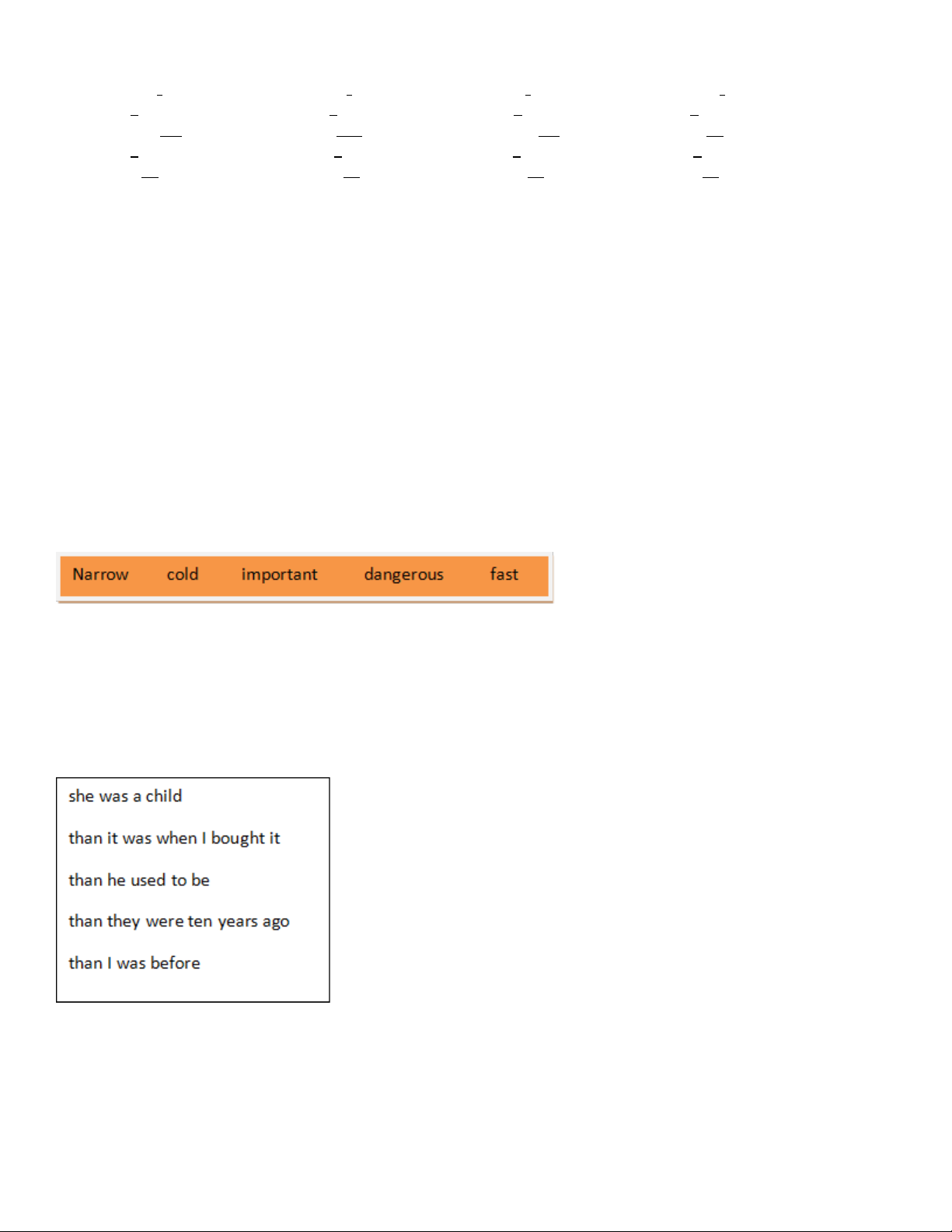
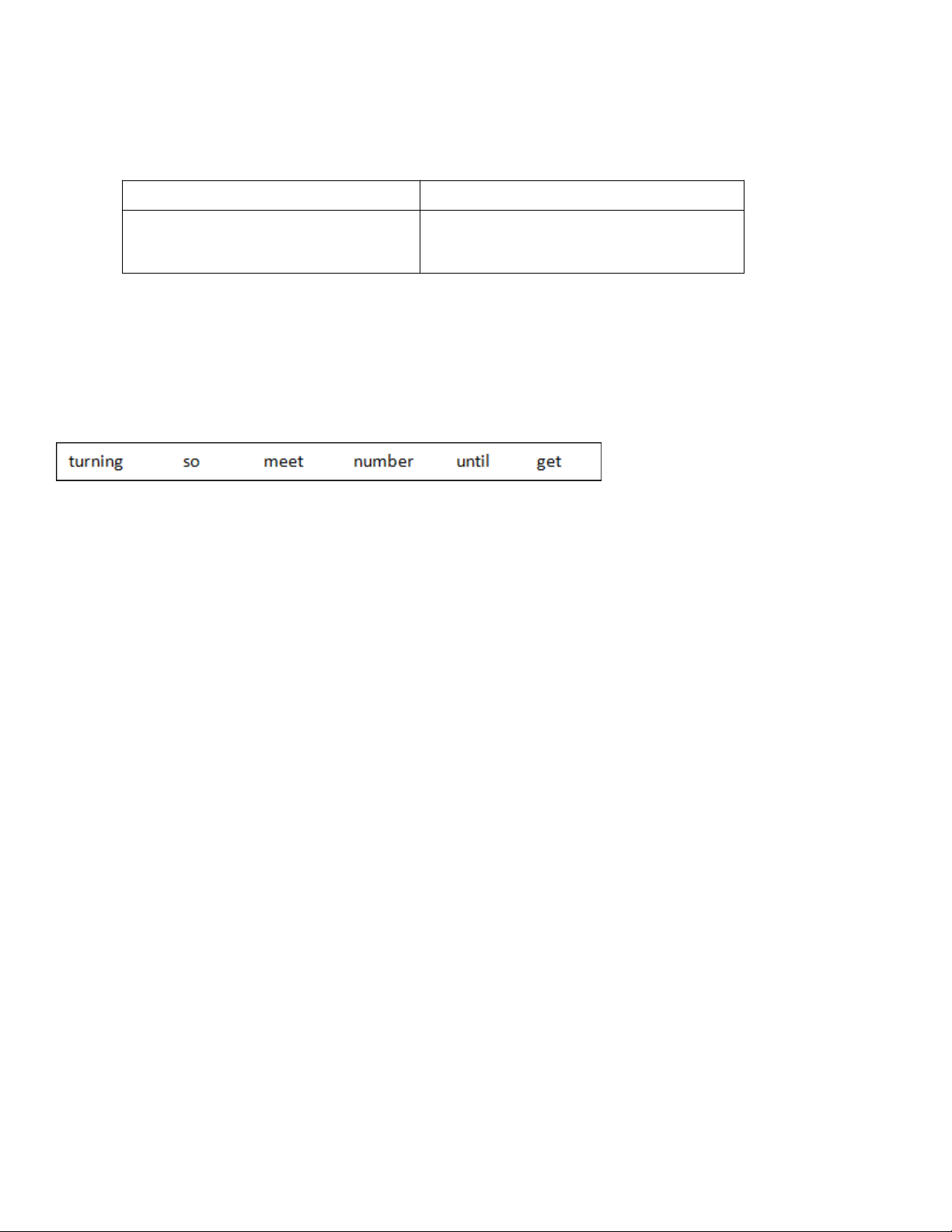
 3. Complete the sentences with the correct comparative form of the adjectives in the box.
1. It’s ______________ in the north of Viet Nam than in the south.
2. Is a snake ______________ than a dog?
3. Doing homework is ______________ than playing video games.
4. The streets in my neighbourhood are ______________ than in your neighbourhood.
5. Travelling by air is ______________ than travelling by bus.
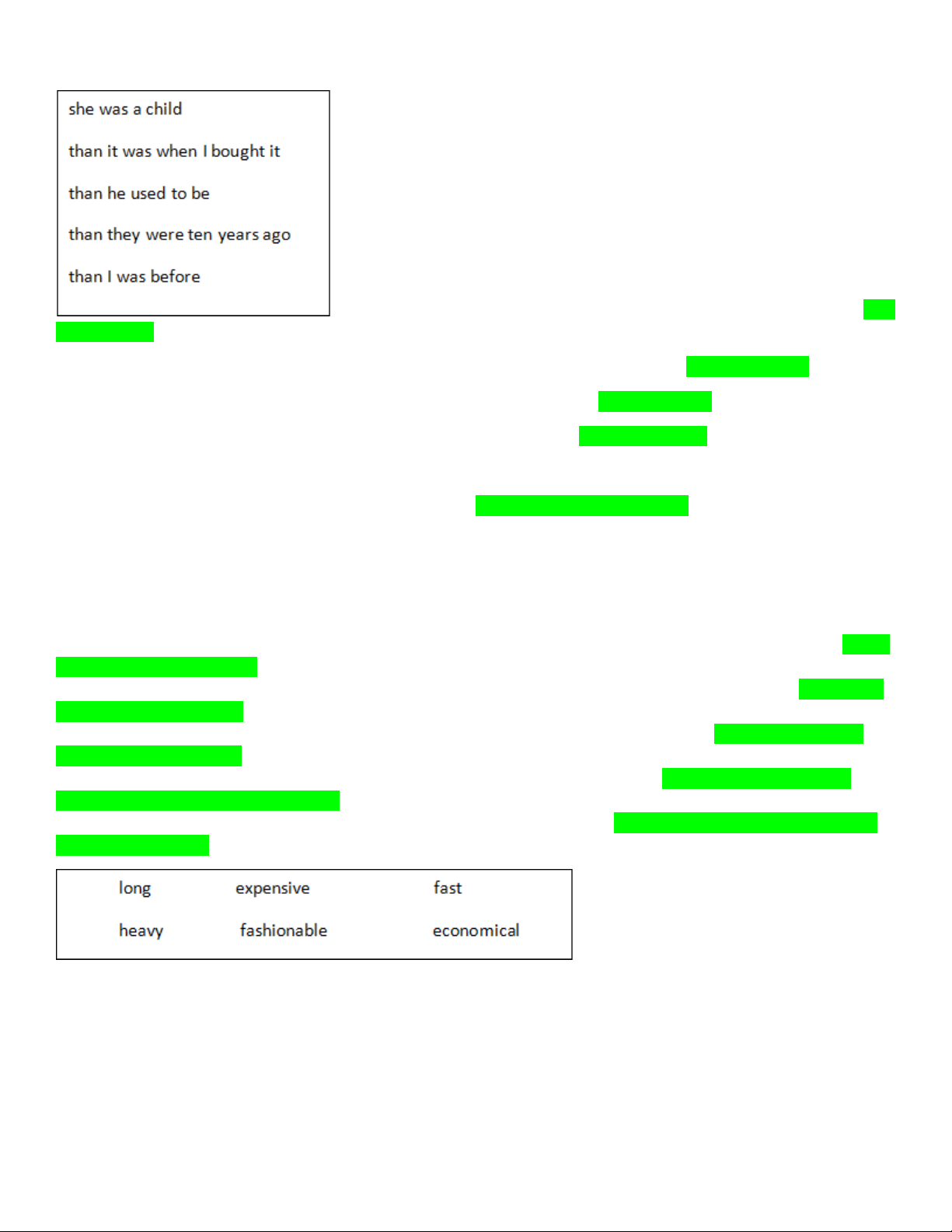
4. Complete the sentences with the phrases in the box to make comparisons.
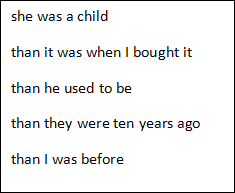 1. My brother is more confident __________.
2. My watch is much older _____________.
3. She is more attractive than when________.
4. I’m happier in my new school__________.
5. Today, houses in the city are much more
expensive ________________.
5. Write sentences, using the comparative form of the adjectives.
Example: Son / tall / Hung.
Son is taller than Hung.
1. Mai / intelligent / Kien. _____________________________________________________________________________ 2. My brother / strong / my sister. ______________________________________________________________________________3. My school / big / my brother’s school. ______________________________________________________________________________4. Living in the city / exciting / living in the countryside. ______________________________________________________________________________ 5. Peter’s exam results / bad / Nick’s exam results. ______________________________________________________________________________
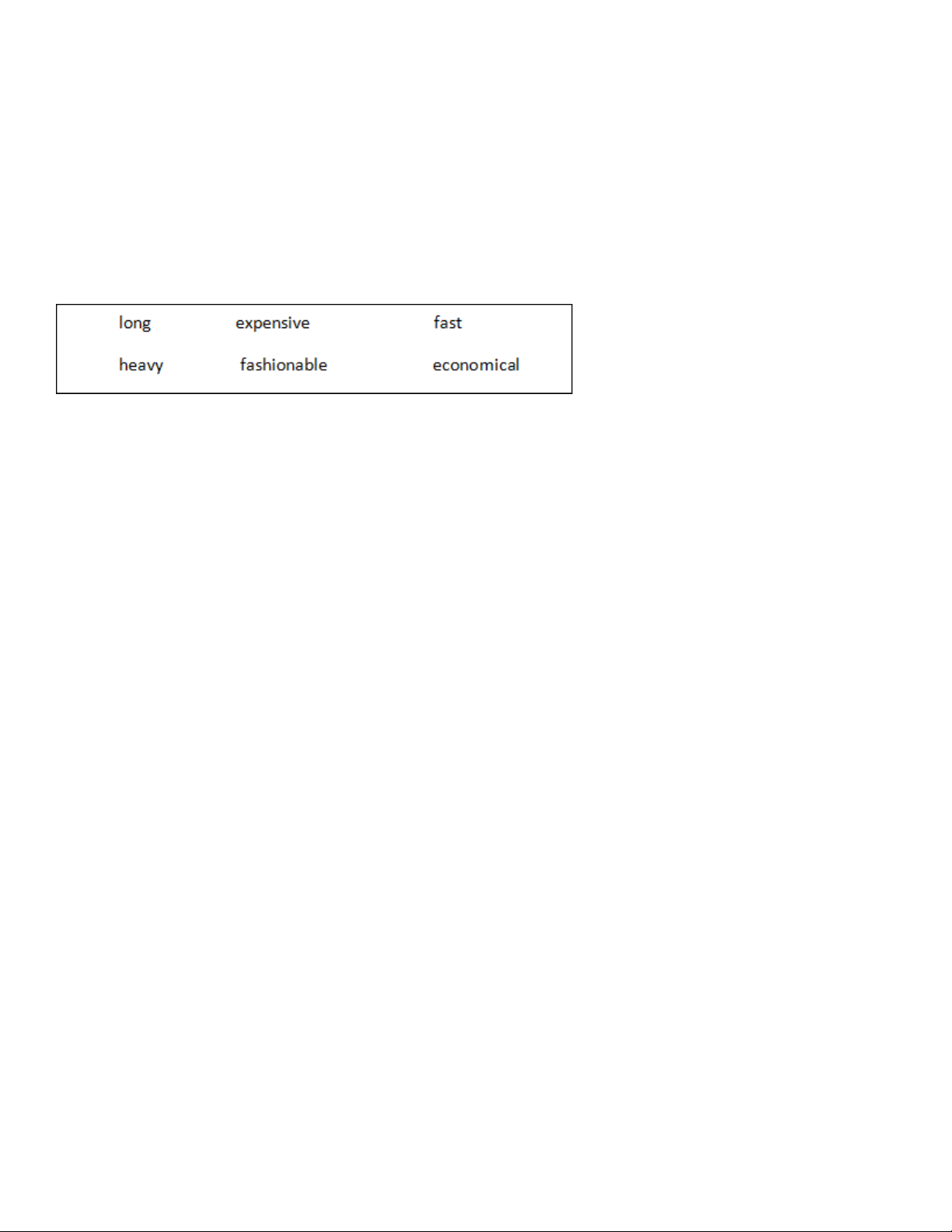
 6. Write sentences comparing the two cars. Use the comparative form of the adjectives in the box.
LUXUREX TINEX
$120,000,000 $20,000,000 1,600 kg 600 kg 350 km/h 220 km/h 3.8 m 2.5 m 8 km per litre 15 km per litre
Example: The Luxurex is longer than the Tinex. ____________________________________________________________________________________________________________________________________________________________ ____________________________________________________________________________________________________________________________________________________________
C – Speaking
1. Look at the map and complete the following dialogues. Then practise them with a partner.
1. A: Can you tell me the way to the post office? B: _________________________________________________ 2. A: _______________________________________________? B: Yes, there is one on Nguyen Du Street. First go straight, then turn left. It’s on your right. 3. A: Excuse me, is there a bank near here? B: ________________________________________________ 4. A: ______________________________________________? B: First take the second turning on your left. Then keep straight. It’s on your left. 5. A: Where can we see a film in this neighbourhood? B: _______________________________________________ 6. A: _____________________________________________? B: There’s an internet café on Le Loi Street. First go past the traffic lights, and then turn left. Go to the end of the street. It’s on your right.
2. Complete the following conversations about your neighbourhood. Then practise the conversations with a friend.
1. Stranger: Excuse me, is there a post office near here? You: ______________________________________________________________________ 2. Visitor: Excuse me, where is the bus stop? You: ______________________________________________________________________ 3. Visitor: Excuse me, I need some medicine. Is there a chemist’s near here? You: ______________________________________________________________________ 4. Visitor: Excuse me, where is the bakery? You: ______________________________________________________________________ 5. Visitor: Excuse me, I’m lost. Where is the hospital? You: ______________________________________________________________________
3 a. Make notes of what you like and dislike about your neighbourhood.
What you like | What you dislike |
-a school near my house _____________________________ | _________________________________ |
b. Work with your friend. Take turns asking and answering about what you like and dislike about your neighbourhood.
You: What do you like about your neighbourhood? Your friend: _______________________________________________________ You: And what do you dislike about it? Your friend: _______________________________________________________
D – Reading
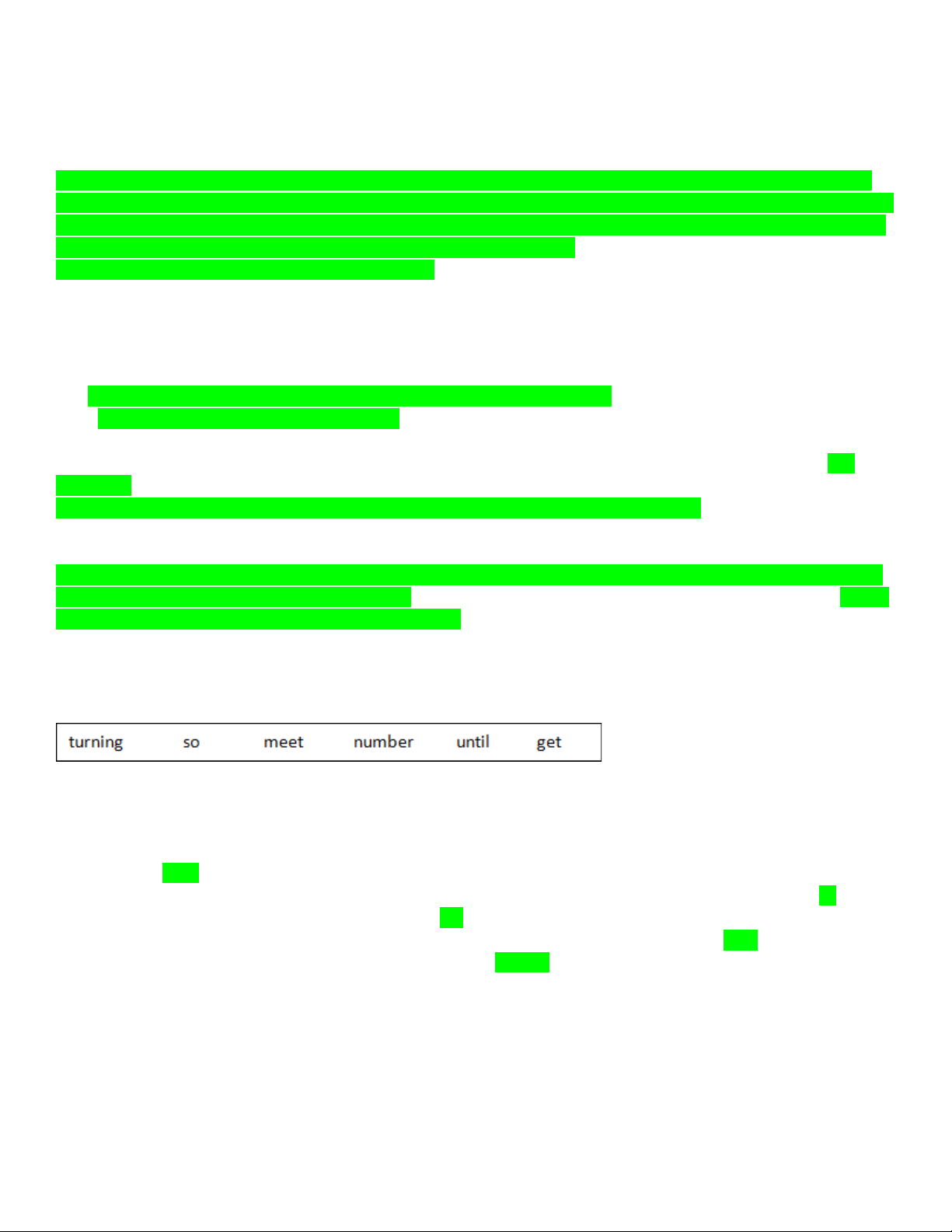
 1. Complete the letter using the words in the box.
Dear Ha, Let’s (1) ______________ on Sunday evening at Quynh Café on Tran Quang Dieu Street. There’s a post office on the corner of the street. The café is next to the post office. There’s a cinema opposite the café (2) ______________ we can see a film after we have coffee. To (3) ______________ to the café, take bus (4) ______________ 8 to Truong Thi Street. Get off at the bus stop in front of a park. Go along the street (5) ______________ you get to the traffic lights and then turn right. Take the first (6) ______________ on your right. Go straight ahead – just about 500 metres and it’s on your left. See you there! Khang
2. Choose the correct answer A, B, C, or D for each of the gaps to complete the following text.
OAK CITY Oak City is a great city. There’s so (1) ______________ to do! There are cinemas, parks anddiscos. It’s got some great clothes and music shops (2) ______________. Oak City is very modern and beautiful. There aren’t any (3) ______________ buildings and there’s some beautiful (4) ______________ around the city. Is there any pollution in Oak City? There isn’t much pollution (5) ______________ there isn’t much traffic. Everyone travels (6) ______________ bike and walks, so there aren’t many accidents.
1. A. much B. many C. some D. any 2. A. neither B. either C. too D. so 3. A. beautiful B. ugly C. pretty D. unpleasant 4. A. scenery B. scene C. view D. sight 5. A. so B. because C. although D. if 6. A. on B. in C. with D. by
3. Read the email and answer the following questions.
Dear Phong, I’m sorry I couldn’t write to you earlier because I was very busy. Now, we’re staying in a small hotel near a shopping area in District 10. Near my hotel, there’s a cinema, a post office, a supermarket and some cafés. There are some big shops at the end of the street. It’s also very noisy here because there’s always a lot of traffic, day and night. In my home town, I live in a quieter street. There are some small shops, a school and a post office in my neighbourhood but there isn’t a park or a cinema. The streets are narrower but they are cleaner and there isn’t so much traffic. The air is much fresher, too. Love, Nam
1. Where is Nam staying now? ______________________________________________
2. Why is it very noisy around his hotel? ______________________________________
3. What are the streets in his neighbourhood like? ________________________________
4. Is there a park in his neighbourhood? _________________________________________
5. What is the air in his neighbourhood like? _____________________________________
E – Writing
1. Rearrange the words / phrases to make correct sentences.
1. There / many things / my / I / about / neighbourhood / like / are / . ______________________________________________________________________________2. It’s / because / big supermarket / very convenient / there is a / near my house / . ______________________________________________________________________________3. There / shops, / many / and cafés / here / restaurants, / are / also / . ______________________________________________________________________________ 4. The / are / and / clean / streets / wide / . ______________________________________________________________________________5. The / very / friendly / are / here / and / helpful / people / . ______________________________________________________________________________
2. Rewrite the sentences using the words in brackets. Do not change the meaning of the sentences and do not change the form of the words.
1. Quang is lazier than Ha. (HARD-WORKING). ______________________________________________________________________________ 2. A city is noisier than a village. (PEACEFUL) ______________________________________________________________________________ 3. There’s a post office on one side of my house and a café on the other. (BETWEEN) ______________________________________________________________________________ 4. Please tell me something about your neighbourhood. (CAN) ______________________________________________________________________________5. Oranges are cheaper than apples. (EXPENSIVE) ______________________________________________________________________________
3. Write a paragraph about your neighbourhood (about 60 words), using the cues below: – Where is your neighbourhood? (in the city, near a city, in the country, in the mountains, etc.) – What can you see in your neighbourhood? (streets, houses, trees, hills, shopping centres, schools, cinemas, etc.) – What are the streets / the houses / the shops, etc. in your neighbourhood like? – Do you like living in your neighbourhood? Why / Why not? ________________________________________________________________________________________________________________________________________________________________________________________________________________________________________________________________________________________________________________________________________________________________________________________________
ĐÁP ÁN
Unit 4 MY NEIGHBOURHOOD
A – Pronunciation
1. Find the word which has a different sound in the part underlined. Say the words aloud.
1. A. advice B. price C. nice D. police
2. A. express B. exciting C. expensive D. excellent
3. A. coffee B. see C. agree D. free
4. A. city B. cathedral C. central D. cinema
5. A. treat B. clean C. great D. beach
2. Give the names of the following pictures. Then read the words aloud (The first letter of each word is given).
B – Vocabulary & Grammar
1. Find one odd word A, B, C, or D. Then read them aloud.
1. A. grocery B. restaurant C. café D. cathedral
2. A. better B. smaller C. worker D. hotter
3. A. candy B. bread C. cake D. juice
4. A. baker B. grocer C. neighbour D. barber
5. A. factory B. park C. theatre D. cinema
2 a. What are these places? Write the answers in the spaces.
Example: It’s a place where we go for a walk, play and relax. (It is) a park.
1. It’s a place where we go to buy stamps or send letters. (It’s) a post office.
2. It’s a place where we borrow books. (It’s) a library.
3. It’s a place where trains stop for people to get on or off. (It’s) a railway station.
4. It’s a place where we can do physical exercise, often with equipment. (It’s) a gym.
5. It’s a place in an open area in the centre of a town or city. (It’s) a square.
6. It’s a place where we can see paintings and other works of art. (It’s) an art gallery.
b. Now match the places you have written in a with the following pictures.
 3. Complete the sentences with the correct comparative form of the adjectives in the box.
1. It’s ___colder___ in the north of Viet Nam than in the south.
2. Is a snake __more dangerous___ than a dog?
3. Doing homework is __more important___ than playing video games.
4. The streets in my neighbourhood are __narrower__ than in your neighbourhood.
5. Travelling by air is ___faster__ than travelling by bus.
4. Complete the sentences with the phrases in the box to make comparisons.
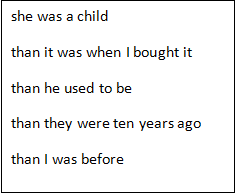 1. My brother is more confident than he used to be
2.My watch is much older than it was when I bought it
3. She is more attractive than when she was a child
4. I’m happier in my new school than I was before
5. Today, houses in the city are much more
expensive than they were ten years ago
5. Write sentences, using the comparative form of the adjectives.
Example: Son / tall / Hung.
Son is taller than Hung.
1. Mai / intelligent / Kien. Mai is more intelligent than Kien. 2. My brother / strong / my sister. My brother is stronger than my sister 3. My school / big / my brother’s school. My school is bigger than my brother’s school. 4. Living in the city / exciting / living in the countryside. Living in the city is more exciting than living in the countryside 5. Peter’s exam results / bad / Nick’s exam results. Peter’s exam results are worse than Nick’s exam results.
 6. Write sentences comparing the two cars. Use the comparative form of the adjectives in the box.
LUXUREX TINEX
$120,000,000 $20,000,000 1,600 kg 600 kg 350 km/h 220 km/h 3.8 m 2.5 m 8 km per litre 15 km per litre
Example: The Luxurex is longer than the Tinex.
1. The Luxurex is more expensive than the Tinex. 2.The Luxurex is faster than the Tinex. 3.The Luxurex is heavier than the Tinex. 4.The Luxurex is more fashionable than the Tinex. / The Luxurex looks more fashionable than the Tinex. 5.The Tinex is more economical than the Luxurex.
C – Speaking
1. Look at the map and complete the following dialogues. Then practise them with a partner.
1. A: Can you tell me the way to the post office? B: . First turn left, then turn right. Go past the bus station. It’s on your left. 2. A: Excuse me, is there a grocery near here? B: Yes, there is one on Nguyen Du Street. First go straight, then turn left. It’s on your right. 3. A: Excuse me, is there a bank near here? B: No, there isn’t. 4. A: Where is the bakery (in this neighbourhood)? / Can you tell me the way to the bakery? B: First take the second turning on your left. Then keep straight. It’s on your left. 5. A: Where can we see a film in this neighbourhood? B: There’s a cinema on Bach Lieu Street. Take the second left. / Take the second turning on your left. Go past the traffic lights and then turn left. It’s on your left. 6. A: Where can we check our email? / Where can we have coffee? B: There’s an internet café on Le Loi Street. First go past the traffic lights, and then turn left. Go to the end of the street. It’s on your right.
D – Reading
 1. Complete the letter using the words in the box.
Dear Ha, Let’s (1) ____meet____ on Sunday evening at Quynh Café on Tran Quang Dieu Street. There’s a post office on the corner of the street. The café is next to the post office. There’s a cinema opposite the café (2) ____so_____ we can see a film after we have coffee. To (3) ____get_____ to the café, take bus (4) ____number_____ 8 to Truong Thi Street. Get off at the bus stop in front of a park. Go along the street (5) _____until____ you get to the traffic lights and then turn right. Take the first (6) ____turning_____ on your right. Go straight ahead – just about 500 metres and it’s on your left. See you there! Khang
2. Choose the correct answer A, B, C, or D for each of the gaps to complete the following text.
OAK CITY Oak City is a great city. There’s so (1) ______________ to do! There are cinemas, parks anddiscos. It’s got some great clothes and music shops (2) ______________. Oak City is very modern and beautiful. There aren’t any (3) ______________ buildings and there’s some beautiful (4) ______________ around the city. Is there any pollution in Oak City? There isn’t much pollution (5) ______________ there isn’t much traffic. Everyone travels (6) ______________ bike and walks, so there aren’t many accidents.
1. A. much B. many C. some D. any 2. A. neither B. either C. too D. so 3. A. beautiful B. ugly C. pretty D. unpleasant 4. A. scenery B. scene C. view D. sight 5. A. so B. because C. although D. if 6. A. on B. in C. with D. by
3. Read the email and answer the following questions.
1. Where is Nam staying now? He is staying in a small hotel near a shopping area in District 10
2. Why is it very noisy around his hotel? Because there’s always a lot of traffic, day and night
3. What are the streets in his neighbourhood like? They are narrow but they are clean and there isn’t so much traffic.
4. Is there a park in his neighbourhood? No, there isn’t.
5. What is the air in his neighbourhood like? It is fresh.
E – Writing
1. Rearrange the words / phrases to make correct sentences.
1. There / many things / my / I / about / neighbourhood / like / are / . There are many things I like about my neighbourhood 2. It’s / because / big supermarket / very convenient / there is a / near my house / . It’s very convenient because there is a big supermarket near my house 3. There / shops, / many / and cafés / here / restaurants, / are / also / . There are also many shops, restaurants, and cafés here. / There are also many restaurants, shops, and cafés here 4. The / are / and / clean / streets / wide / . The streets are wide and clean. / The streets are clean and wide 5. The / very / friendly / are / here / and / helpful / people / . The people here are very friendly and helpful. / The people here are very helpful and friendly.
2. Rewrite the sentences using the words in brackets. Do not change the meaning of the sentences and do not change the form of the words.
1. Quang is lazier than Ha. (HARD-WORKING). Ha is more hard-working than Quang 2. A city is noisier than a village. (PEACEFUL) A village is more peaceful than a city. 3. There’s a post office on one side of my house and a café on the other. (BETWEEN) My house is between a post office and a café. 4. Please tell me something about your neighbourhood. (CAN) Can you tell me something about your neighbourhood, please? 5. Oranges are cheaper than apples. (EXPENSIVE) Apples are more expensive than oranges.