The TKT Teaching Knowledge Test Course - English | Trường Đại học Bách khoa, Đại học Đà Nẵng
The TKT Teaching Knowledge Test Course - English | Trường Đại học Bách khoa, Đại học Đà Nẵng. Tài liệu được sưu tầm giúp bạn tham khảo, ôn tập và đạt kết quả cao. Mời bạn đọc đón xem.
Môn: English Studies (ES) 28 tài liệu
Trường: Trường Đại học Bách khoa, Đại học Đà Nẵng 1.7 K tài liệu
Tác giả:

















Preview text:
Young Learners Module Kate Gregson
Published online by Cambridge University Press
Shaftesbury Road, Cambridge CB2 8EA, United Kingdom
One Liberty Plaza, 20th Floor, New York, NY 10006, USA
477 Williamstown Road, Port Melbourne, VIC 3207, Australia
314–321, 3rd Floor, Plot 3, Splendor Forum, Jasola District Centre, New Delhi – 110025, India
103 Penang Road, #05–06/07, Visioncrest Commercial, Singapore 238467
Cambridge University Press & Assessment is a department of the University of Cambridge.
We share the University’s mission to contribute to society through the pursuit of
education, learning and research at the highest international levels of excellence. www.cambridge.org
Information on this title: www.cambridge.org/9781009300766
© Cambridge University Press & Assessment 2024
This publication is in copyright. Subject to statutory exception and to the provisions
of relevant collective licensing agreements, no reproduction of any part may take
place without the written permission of Cambridge University Press & Assessment. First published 2024
20 19 18 17 16 15 14 13 12 11 10 9 8 7 6 5 4 3 2 1
Printed in Great Britain by Ashford Colour Press Ltd.
A catalogue record for this publication is available from the British Library
ISBN 978-1-009-30076-6 Paperback ISBN 978-1-009-30078-0 eBook
ISBN 978-1-009-30079-7 Cambridge Core
Cambridge University Press & Assessment has no responsibility for the persistence
or accuracy of URLs for external or third-party internet websites referred to in this
publication and does not guarantee that any content on such websites is, or will
remain, accurate or appropriate.
Published online by Cambridge University Press Acknowledgements
First and foremost, thank you to the various teams at Cambridge University Press &
Assessment: the Teacher Qualification team, in particular to Magnus Coney, who pored
over initial drafts; Jo Timerick and Karen Momber for their continued help, support
and dedication in seeing the writing project through to completion; and of course
David Bunker, whose careful eye as editor helped improve both the quality of this
book and my own thinking and writing. I’d also like to express my immense gratitude
to Simon Smith, especially for his support with content, but also for all the help he
has given me throughout much of my career. And finally, thank you to my husband,
Richard Pearson, and our son James, whose patience with me was greatly appreciated. Kate Gregson
The authors and publishers acknowledge the following sources of copyright material
and are grateful for the permissions granted. While every effort has been made, it has
not always been possible to identify the sources of all the material used, or to trace
all copyright holders. If any omissions are brought to our notice, we will be happy to
include the appropriate acknowledgements on reprinting and in the next update to
the digital edition, as applicable. Key: U = Unit. Text
U2: Quote about learning strategies by Simon Smith. Copyright © Simon Smith.
Reproduced with kind permission; U3: Text adapted from Academy Stars Level 5 Pupil’s
Book Pack by Steve Elsworth and Jim Rose. Copyright © 2017 Springer Nature.
Reproduced with kind permission of the Springer Nature via PLSclear; U4: How
to ask for help figure taken from The 6 Principles for Exemplary Teaching of English
Learners by Joan Kang Shin, Vera Savic, Tomohisa Machida. Copyright © 2021 TESOL
International Association. Reproduced with permission from TESOL International
Association via CCC; U5: Text adapted from Children Learning English by Jayne Moon.
Copyright © 2000 Macmillan Education Limited. Reproduced with kind permission
of the Macmillan Education through CCC; U9: Text adapted from Teaching Languages
to Young Learners by Lynne Cameron. Copyright © 2001 Cambridge University Press.
Reproduced with kind permission of the Cambridge University Press through PLSclear;
Practice test: Practice TKT YL test sourced from Teaching Knowledge Test Young Learners.
Copyright © 2023 University of Cambridge Local Examinations Syndicate. Photography
All the photographs are sourced from Getty Images.
U7: Liudmila Chernetska/iStock/Getty Images Plus; Lexi Claus/iStock/Getty Images
Plus; U8: robertcicchetti/iStock/Getty Images Plus. Illustrations
Practice test: Practice TKT YL test illustrations sourced from Teaching Knowledge
Test Young Learners. Copyright © 2023 University of Cambridge Local Examinations Syndicate. Typeset Typesetting by QBS Learning. iii
Published online by Cambridge University Press Contents Acknowledgements iii Introduction 1
Part 1 Knowledge of young learners and principles of teaching English to young learners
Introduction to Part 1 6 Unit 1
Children as language learners: What are the
characteristics of children as language learners? 8 Unit 2
Developing children’s learning strategies:
How can I help children develop their learning
strategies through language learning? 16 Unit 3
Developing thinking skills: How can I help children
develop cognitive strategies in language learning? 25 Unit 4
Developing communication skills: How can I help
children develop communication strategies through language learning? 32
Reflection on learning in Part 1 41
References and further recommended reading 41
Part 2 Planning and preparing young learner lessons
Introduction to Part 2 43 Unit 5
Lesson planning: What do I need to think about
when planning language lessons for children? 45 Unit 6
Classroom materials: How can I challenge and
support children’s learning when I select and use classroom materials? 54 Unit 7
Additional classroom resources: How can I select,
adapt and supplement classroom resources? 64
Reflection on learning in Part 2 75
References and further recommended reading 75
Part 3 Teaching young learners
Introduction to Part 3 77 Unit 8
Supporting children’s language: How can
I scaffold children’s understanding and use of language? 79 Unit 9
Classroom activities for language practice: How can
I use practice activities to consolidate children’s language learning? 91
Unit 10 Managing learning: How can I manage children in class? 103
Reflection on learning in Part 3 114
References and further recommended reading 114 iv
Published online by Cambridge University Press
Part 4 Assessing young learner learning in the classroom
Introduction to Part 4 116
Unit 11 Why assess learning: What purposes do different
types of classroom-based assessment have? 118
Unit 12 What to assess: What focuses do different types of
classroom-based assessment have? 126
Unit 13 Responding to assessment: How can I act on the results
of classroom-based assessment? 136
Reflection on learning in Part 4 147
References and further recommended reading 147
Follow-up activities: Answer keys and commentaries 149
List of terms found in the TKT Glossary 159
Glossary of TKT: Young Learners terms 164
Test tips for TKT: Young Learners 168
Teaching knowledge test young learners: Practice test 169
Sample test answer sheet for TKT: YL practice test 184
Answer key for TKT: YL practice test 186 v
Published online by Cambridge University Press
Published online by Cambridge University Press Introduction
■ What are TKT and the TKT: YL specialist module?
The Teaching Knowledge Test (TKT) is a series of modular teaching qualifications which
test knowledge in specific areas of English language teaching. It is internationally
recognised and has been developed by Cambridge English. In addition to the main
modules (Modules 1–3), there are the specialist modules, namely: TKT: Young Learners
and TKT: CLIL (Content and Language Integrated Learning). Candidates can take as
many TKT modules as they want, in any order and over any time period.
The TKT: Young Learner Module (TKT: YL) focuses on language learners aged 6–12;
the term young learner is used in this book to refer to this age group. Six years old
is usually the age when children start formal schooling in many countries, while
twelve years old is around the end of primary, elementary or basic schooling.
Developmentally, children in this age group are beyond the stage of early childhood,
but are not yet adolescent. As such, they have particular developmental needs which
are somewhat different from very young children or teenagers.
TKT: YL tests candidates’ knowledge of concepts related to young learner learning
and development, as well as knowledge of young learners from a teaching perspective:
the planning, teaching and assessment of young learners’ work. There are no entry
requirements, such as previous language teaching experience or qualifications,
however candidates’ language skills should be at least at a B1 level on the CEFR scale.
This is equivalent to Cambridge B1 Preliminary or Cambridge IELTS Bands 4–5, which
is an intermediate level of English. Candidates are also expected to be familiar with
key language teaching terminology, which can be found in the TKT Glossary on the Cambridge English website.
The TKT: YL test is a paper-based test lasting 1 hour and 20 minutes. It consists of
objective tasks, for example matching or multiple choice, with 80 closed questions in
total. Candidates respond by selecting answers and marking them on the answer sheet.
There are no open response questions where candidates write their answers in words,
phrases or sentences. Each question carries one mark, and performance is reported
using four bands, which indicate the depth of the candidates’ knowledge.
The test covers four syllabus areas, which are reflected in the four parts of this book,
The TKT Course: YL Module:
1 Knowledge of young learners and principles of teaching English to young learners
2 Planning and preparing young learner lessons 3 Teaching young learners
4 Assessing young learner learning in the classroom
Note the TKT: YL Module is NOT a test of practical classroom skills or English language
proficiency. The TKT: YL syllabus and other information about the test can be found in
the TKT: YL Handbook for Teachers, which is available on the Cambridge English website. 1
https://doi.org/10.1017/9781009300797.001 Published online by Cambridge University Press The TKT Course: YL Module
■ About this book: The TKT Course: Young Learners Module
What are the aims of The TKT Course: YL Module?
The TKT Course: Young Learners Module has five main aims:
1 To introduce readers to some of the main concepts, theories and activities that are
central to TKT: YL and teaching language to young learners more generally.
2 To encourage readers to make links between theory and practice by analysing and
exploring the usefulness of concepts, theories and activities in their own current or future teaching contexts.
3 To share with readers some of the resources available to teachers of young learners.
4 To give readers an opportunity to do test practice with TKT: YL sample tasks and a
complete test paper (with answer keys).
5 To build on other TKT modules, for those who have done that course before doing The TKT Course: YL.
Who is The TKT Course: YL Module written for?
The TKT Course: YL Module is ideal for readers involved in teaching, who speak English
as a first or additional language, and who: ●
are training to become teachers or who are already teachers. ●
are in a teacher, classroom assistant or course co-ordinator role. ●
intend to take the TKT: YL test. They might be preparing for it on a course, with or
without this as a core textbook, or preparing alone as self-directed learners. ●
have done (an)other TKT module(s) and would like to continue their professional
development in teaching young learners. ●
are subject, generalist or language teachers of children aged 6–12. ●
are already or are planning to teach English language to children aged 6–12. ●
are already or are planning to teach English language in mainstream schools, private
language schools or independently. ●
are already or planning to be classroom assistants working with young English language learners aged 6–12. ●
are undertaking in-service or pre-service training in teaching young learners. ●
are young learner teacher trainers developing or delivering a TKT: YL test
preparation course or other young learner teacher training courses. The TKT Course:
YL Module may be used in its entirety or as a supplementary resource. ●
are young learner course co-ordinators or teacher supervisors.
What is the content of The TKT Course: Young Learners Module?
The TKT Course: YL module consists of four parts, divided into units which follow
the content and order of the TKT: YL syllabus and specifications. See the table on
pages 4–5 for information on the organisation of each part.
The units build on each other so that the ideas introduced in one unit provide a
foundation for ideas introduced in a following unit.
Part 1 focuses on knowledge of young learners and principles of teaching English to young learners. 2
https://doi.org/10.1017/9781009300797.001 Published online by Cambridge University Press Introduction
Part 2 focuses on planning young learner lessons.
Part 3 focuses on teaching young learners.
Part 4 focuses on assessing young learner learning in the classroom. The book also contains: ●
A glossary of terms specific to teaching young learners which are used in the book.
These occur throughout and are shown in bold.
Terms in bold italics are those terms defined in the TKT Glossary, which can be found online.
Other terms used are explained or defined as they first arise in the book. ●
A complete TKT: YL practice test, answer key and sample answer sheet. ●
Test tips for taking the TKT: YL test. ●
An alphabetical list of the terms used in this book which are from the TKT Glossary. ●
A glossary of young learner specialist terms and those which are included in the TKT: YL test. ●
A list of titles referred to in-text and recommended further reading for each of the four parts of the book.
How is The TKT Course: YL Module organised, and how can it be used?
The advice in the following table is intended for those using the book on a taught
course or for self-directed readers. The book can also be selected from or adapted for
use by young learner teacher trainers.
The book is designed to help you, the reader, gain knowledge to prepare you for the
TKT: YL test and also to support your professional development through insights
gained from course content which you can apply in your own contexts. You are
recommended to choose a young learner coursebook, supplementary materials and/or
website to use for the activities found in each unit. Where possible, identify and keep
in mind a specific learner, group of learners or teaching context for these activities.
If you are not currently a practising young learner teacher, you could perhaps use
another teacher’s class of young learners.
You are strongly recommended to keep a TKT: YL Professional Development (PD) Journal
as you use the book. In this PD Journal, you can keep notes and your responses to
self-assessment, starter questions and activities, reflect on your learning from each
unit, and consider how it might apply to your context. This could be in English or in your own language.
We hope you enjoy the challenge of teaching young learners, enjoy reflecting on your
teaching of young learners and find yourself develop as a teacher of young learners.
For those readers who take the TKT: YL test, all the best! 3
https://doi.org/10.1017/9781009300797.001 Published online by Cambridge University Press The TKT Course: YL Module
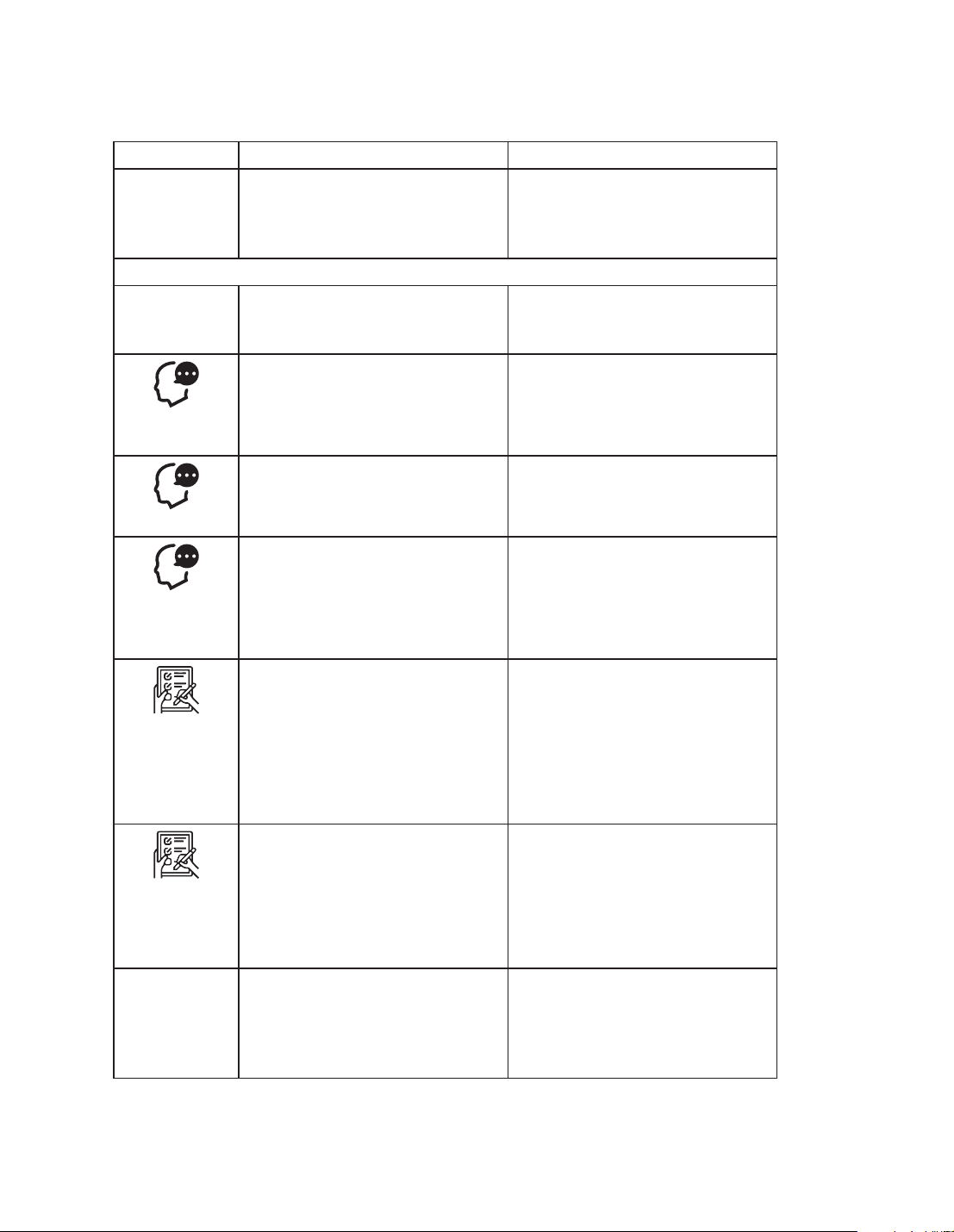
Each part of The TKT Course: YL Module follows the same structure: Section Purpose
Suggestions for use
Introduction to To encourage the reader to reflect on
Do the self-assessment tasks before
each part of the their current knowledge and experience beginning this part of the book. book
in the broad topic area; to articulate
their own learning objectives.
Three or four units, each with the same structure: Learning
To inform the reader of the knowledge Read these before you start the unit; outcomes
and skills they should have after
add more if appropriate, based on completing the unit. your self-assessment.
To give the reader the opportunity to
Answer the question(s) before reading
reflect on their understanding of the
the answer(s); you could use your TKT:
meaning of key terms or concepts
YL PD Journal to note and organise Starter before reading about these. your ideas and answers. question(s)
To introduce the main ideas of the
Read this after answering the Key
unit content, drawing on the TKT: YL
Concepts pre-reading question. Build syllabus.
on your notes based on your reading. Key concepts
To consider how the key concepts
Read this after answering the Key
influence or are relevant to young
Concepts and the YL Classroom pre-
learner teaching and learning,
reading question. Build on your notes Key concepts specifically. based on your reading. and the YL classroom
To extend and deepen understanding Do these tasks to extend your
of key concepts through active
understanding on unit content, then engagement.
check your answer in the commentary Exploring the
N.B. These questions do NOT follow
section towards the back of the book. concepts in
the TKT: YL test question formats.
You could use your TKT: YL PD Journal practice: for this. Follow-up activity
To encourage the reader to think
Follow the guidelines for individual
critically about questions and issues
and/or group reflection tasks. You
related to the key concepts in the unit. could use your TKT: YL PD Journal Exploring the for this. concepts in practice: Reflection Exploring the
To explore, investigate and develop
Follow the guidelines for these concepts in
key concepts in practice and assess
activities, which require exploration practice: their usefulness.
by reading, trying out new ideas, Discovery
conducting classroom investigation activity and talking to others*. 4
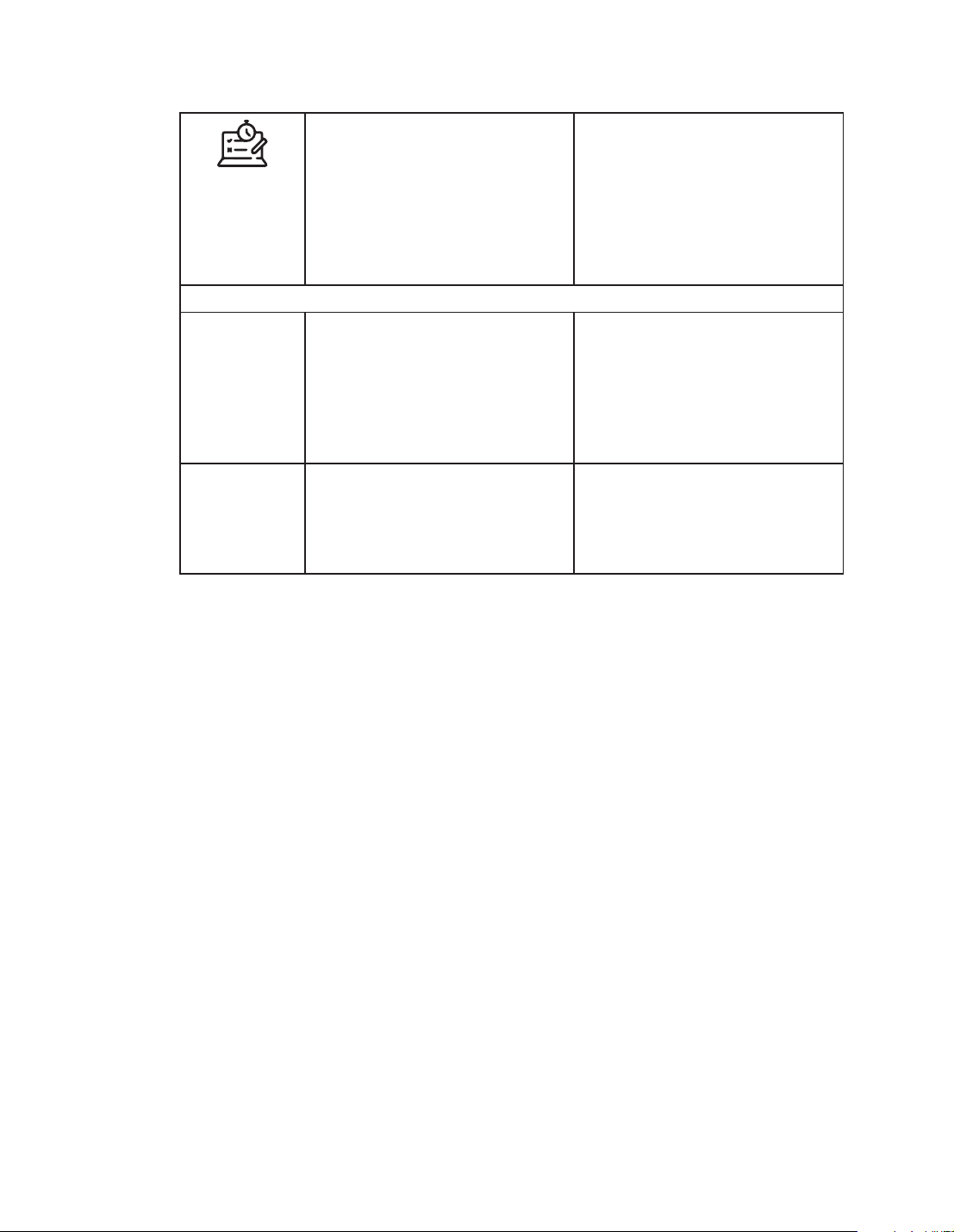
https://doi.org/10.1017/9781009300797.001 Published online by Cambridge University Press Introduction
To review the unit content and to help Do this task to familiarise yourself
readers become familiar with the TKT: with the format of TKT: YL and to test
YL task formats and level of language yourself on the content of the unit.
TKT: YL practice used in the text.
Recommended timing is built up to task
help you be ready for the test by the end of the book.
Check your answers in the answer key on page 158.
Reflection on learning in each part of the book Reflecting on
To encourage the reader to self-assess Follow the guidelines in this section Learning
their learning in this part of the book, for self-assessment and goal setting;
identify any gaps in knowledge or
you could use your TKT: YL PD Journal
understanding and articulate new for this. learning goals, as necessary.
Return to your self-assessment of
the can-do statements in the unit introduction. References To give ideas for extended,
Note and follow up on sources which and further independent reading on topics
are useful to you for your own further recommended
covered in this part of the book. development. reading
To list the sources referred to in this part of the book.
* Some activities recommend classroom investigation. In cases where data from
or about children or other third parties, such as other teachers, is collected, it is
essential that ethical procedures are followed in order to protect the rights of the
participants. This will normally include gaining informed consent and/or assent from
parents or caregivers before any data is collected for any purpose. 5
https://doi.org/10.1017/9781009300797.001 Published online by Cambridge University Press Part 1
Knowledge of young learners and
principles of teaching English to young learners Introduction to Part 1
In Part 1, you will deepen your understanding of the characteristics of children aged
6–12 as learners, and consider the implications of this for teaching English to these
learners. This part of The TKT Course: Young Learner Module will help you extend your
knowledge and skills in preparation for the first part of the TKT: YL module test,
namely, Knowledge of young learners and principles of teaching English to young learners. You
can find more information in the TKT: YL syllabus in the module handbook, which is available online.
Specifically, in Unit 1, you will find out more about what makes young learners of
English different from older learners, first by looking at the developmental benefits
of learning English, and then by looking at ways we can enhance their language
learning so that they can have these benefits. Finally, we look at classroom activities
which are suitable for young learners, based on their characteristics.
Units 2, 3 and 4 will each introduce one of three kinds of strategy that children
can develop through language learning: learning strategies, cognitive strategies and
communication strategies. Each unit will explain what these strategies are, consider
why they are important, and look at ways to develop and practise them in the English language classroom.
Each unit also includes suggested reader activities for extension, reflection and
investigation into your practice. These activities will help you consolidate your
understanding and relate your learning to your own classroom context. A range of
activities are suggested in each unit, and you can find a sample TKT: YL practice test
section on the unit topic at the end of each one. You could use your TKT: YL PD
Journal to keep your notes and reflections for the questions and activities organised.
Before you begin, look at the can-do statements. Evaluate your own understanding
and skills for each one. After completing Part 1, return to these and re-assess yourself.
From that, you can develop an action plan so that you can continue to focus on any
particular areas you feel you still need or want to develop. 6
https://doi.org/10.1017/9781009300797.002 Published online by Cambridge University Press
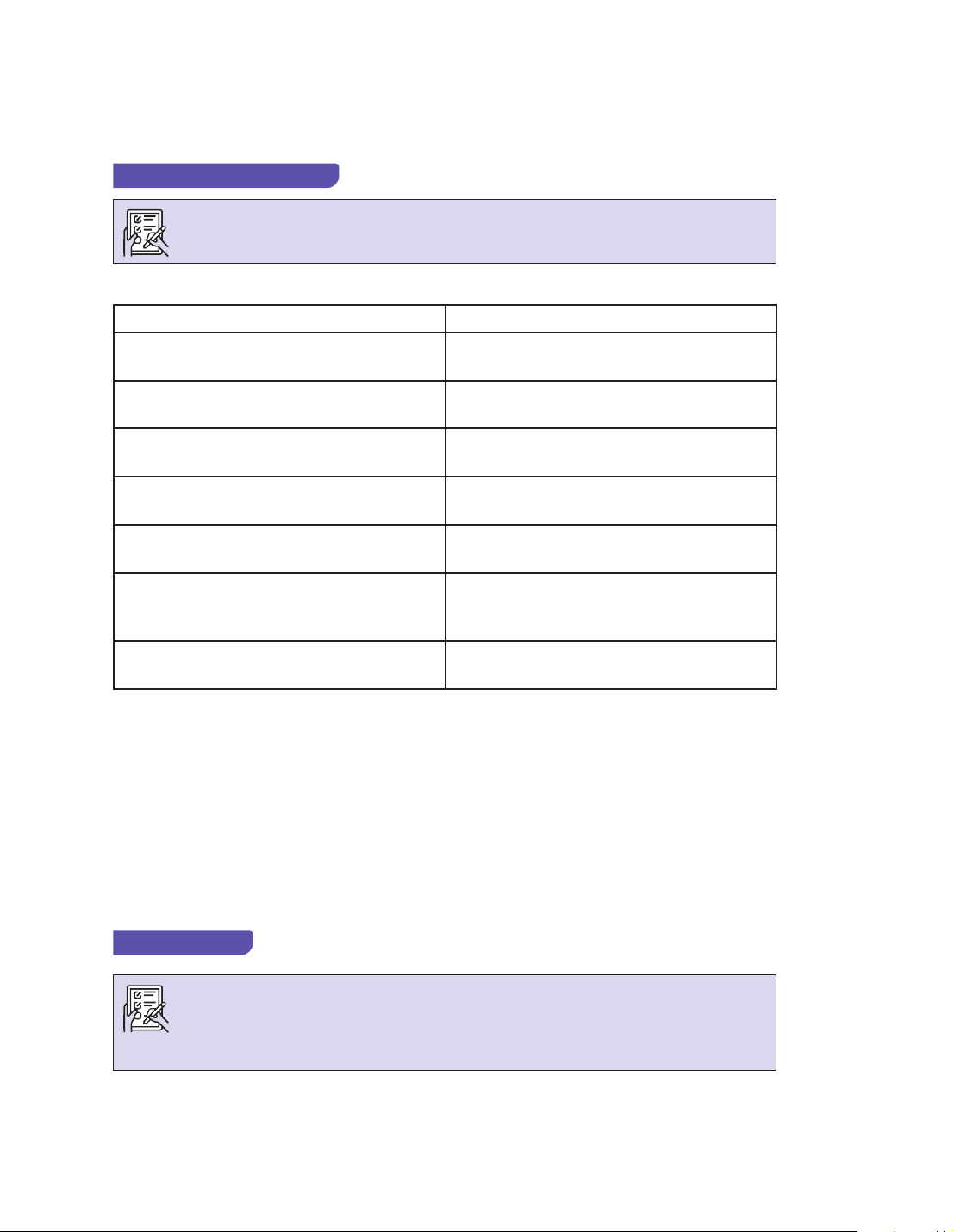
Part 1 Knowledge of young learners and principles of teaching English to young learners SELF-ASSESSMENT Rate yourself from: Rating Rating
1 (Limited or not at all) to 5 (This is a strength)
before Part 1 after Part 1 1
I can talk about some characteristics of 6–12-year-old children as language learners. 2
I can identify and justify a range of language learning
activities which help children develop learning strategies. 3
I can identify and justify a range of language learning
activities which help children develop cognitive strategies. 4
I can identify and justify a range of language learning
activities which help children develop communication strategies.
In your TKT: YL PD Journal, identify two or three questions or areas you’d like to
know more about in each unit in Part 1. When you have finished Part 1, return to
these to see if you have answered them. If you haven’t, read around the topic using
the recommended reading list at the end of Part 1. You can also find CPD advice on
the Cambridge English website, and many more resources for teacher professional development online. 7
https://doi.org/10.1017/9781009300797.002 Published online by Cambridge University Press
Unit 1 Children as language learners: What
are the characteristics of children as language learners? LEARNING OUTCOMES
By the end of this unit, you will…
KNOWLEDGE: know about some characteristics children bring to language learning
SKILLS: be able to make connections between activity types and the benefits they
bring to the young learner classroom ■ Starter Question
Before you begin this unit, read the starter question and make some notes. Then read the
commentary and compare it to your notes.
Why do we teach English to 6–12-year-old children? Note at least three points. COMMENTARY
Nowadays, children around the world are beginning to learn English from an ever
younger age at school and outside of school (extracurricular). This is partly because
of a popular belief that starting earlier with English will give children greater linguistic
benefit than starting later, so it will allow them to finish school with a higher level of
English, ready for their futures as young adults. However, research shows that older
learners usually make faster progress and learn more efficiently as they are cognitively
more mature, have better learning skills and are more skilled at interaction and
communication (see Read, 2003 for a more detailed discussion on this).
Despite this, there are plenty of benefits in other areas to an earlier start. 6–12-year-
old children are still developing cognitively, physically, socially and emotionally,
as learners, as individuals, and as thinkers; learning English can play a part in this
development. Classroom learning at primary level, usually from around 5 or 6 until
10 to 12 years old, is often based around fun and engaging activities which help
children develop in different areas, and English language learning also lends itself to
these kinds of activities more than to formal desk-based learning. If positive learning
conditions are established through such activities, then it is likely that learning English
as a foreign language may help children develop positive attitudes and improved
motivation for English in preparation for secondary school. Learning English can
also help them to develop personal and educational skills as well as the ‘4 Cs’:
Communication, Collaboration, Critical thinking and Creativity, which are important to their
all-round development and being ready for the 21st-century world. 8
https://doi.org/10.1017/9781009300797.003 Published online by Cambridge University Press
Unit 1 Children as language learners Attitudinal benefits
If children receive positive experiences of learning English in primary school, this
will help them to develop self-esteem as well as a positive attitude towards English,
other English speakers and learners, and to their own abilities as learners. Even in
a society which uses little English, many children also encounter English outside of
the classroom, such as on the TV or in songs, and for some older primary children, in
video games or on social media. These learning opportunities can be highlighted and
exploited for learning in school to help children develop a positive attitude. All this
lays the foundation for the confidence and skills needed for the more formal learning
of English which typically happens in secondary school. Social benefits
Children can learn skills to socialise from communicating and collaborating with
other children in pairs, in groups and as a whole class, as well as in communication
with their teacher. They may learn, for example, to take turns in a guessing game, to
listen to a classmate’s idea without interrupting or to ask the teacher a question if they
don’t understand an instruction; children can also learn to collaborate by contributing individually to a group task. Intercultural benefits
Children can learn to understand their own culture as well as other cultures and
people through learning English. Classroom activities involving songs and stories
from their own and other countries, for example, can help them see similarities and
differences between known and unfamiliar cultures. Intercultural projects, for example
eTwinning, or email exchange projects with children in other countries can also provide
excellent opportunities for children to develop intercultural understanding, tolerance
and global awareness while using English for real communication with other learners,
which is an authentic use of language. Cognitive benefits
Children aged 6 to 12 are also developing as thinkers, and some may still be learning
to carry out such mental tasks as classifying, sequencing, and hypothesising. Language
learning activities involving puzzles, questions or games, and open questions from
the teacher will enable them to develop their critical thinking skills. Learning to learn benefits
Children can develop strategies such as predicting the content of a story from looking
at pictures or a book’s cover, planning work when doing a group project, reviewing
and evaluating their learning at the end of a coursebook unit. These are known as
learning strategies. Learning English, then, can help children to learn educational
skills which are important in all school subjects and in their life outside school.
Physical development benefits
Children aged between 6 and 12 are still developing physically. Younger children
are still developing fine motor skills such as cutting and folding paper and are also
learning to coordinate their hands and eyes so that they can do such things as write on
lines, colour in pictures neatly and use space on the page when they make drawings.
This means that language learning activities which require children to make or draw
things may have a value in the child’s overall development, which adds to the benefit 9
https://doi.org/10.1017/9781009300797.003 Published online by Cambridge University Press
Part 1 Knowledge of young learners and principles of teaching English to young learners
they gain from learning language. Such activities also help children’s creativity, as can
other design activities, creating stories, characters, funny animals and so on. Academic benefits
Children can extend or consolidate learning in other school subjects through
English. This combination of English and subject-related learning is known as CLIL
(Content and Language Integrated Learning). English may be used as a language of
instruction in schools, or learning might be extra-curricular, that is in addition to
what children learn in school: for example, they may find out about different animal
habitats through a communicative activity in an English language lesson which they
haven’t learned about in their science lessons at school. ■ Key concepts
Reflect on the key concept question. Brainstorm your ideas, then expand your notes as you read.
What are some similarities and differences in teaching children of various
ages? Note one or two of each. COMMENTARY
There is a big difference between teaching English to a class of 6- and 7-year-olds and
to a class of 11- and 12-year-old children, and these differences are generally greater
than we would find in a similar age range difference in adults. In comparison to 6-
and 7- year-olds, for example, children aged 11–12 are likely to have more developed
literacy skills and a more mature first language system. They are often better able
to control their emotions, can sometimes explain their thoughts about learning and
language and have more experience and knowledge of the world in general. However,
characteristics often depend more on the individual child than their age because all
children learn and develop in different ways and at different speeds.
Even though there is a difference within the age group, there are plenty of common
characteristics which, in turn, distinguish the 6 to 12 age group from older children or adults as learners of English: A capacity for play and fun
Language and skills practice can be transformed into game-like activities which will
let children satisfy this capacity. We can review vocabulary and practise speaking by
playing charades or drawing games (such as Pictionary-like games), or mime actions
while listening to an action song, for example. Children may also be engaged by
online or app-based games for language learning, some of which are specifically
designed for children learning English, for example, Ruby Rei by Cambridge English/
Wibbu. Halliwell (1992, p. 6–7) gives an example of children making an activity game-
like: a class of 9- and 10-year-olds were following directions on a map in order to
check whether statements the teacher made about the shops on the map were true or
false. One pair of children had a paper clip and pretended to ‘drive’ it around the map
in response to the teacher’s directions. They made car and brake noises as they ‘drove’
their paper clip. This example illustrates children’s ability to use their imagination, and
the pleasure many of them take in physical activity. 10
https://doi.org/10.1017/9781009300797.003 Published online by Cambridge University Press
Unit 1 Children as language learners
A capacity for indirect learning
Although some children at the upper end of the 6–12 age spectrum are able to analyse
language as a system, many younger children may have limited abilities to do this. On
the other hand, most younger children will respond very well to motivating activities
which give them a chance to experience and use the language. Their motivation
is likely to come less from the concept of language as a system, and more from the
idea of language they can use to have an enjoyable experience such as singing a
song, saying a chant, or playing a game. Children are more likely to understand and
remember language if it involves tasks and situations like these, which seem familiar
in their world, as they provide a motivating and memorable context for the foreign
language. As an example, children may enjoy and experience a game in which they
guess where the class puppet has hidden a toy. It is of course a guessing game, but the
teacher may also be using it to practise yes/no questions. In other words, language is
the vehicle of classroom learning, not the driver.
An ability to make sense of language
When children learn their first language, they don’t understand all the words that
people around them say to them. They rely on intonation, gestures, facial expressions
and other clues in the situation they are in to understand the different messages they
hear, and from this making sense, they are able to learn the language itself.
When children start to learn a foreign language at school, they can be encouraged to
use these same skills involved in interpreting the general message in order to make
sense. This is partly because many children at the beginning of primary education may
be starting to read and write English at the same time as they are learning to read and
write their own language, which means they are not able to support their learning by
reading or writing. This is particularly true if children’s first language has a different script from English.
An ability to learn from interacting with others
Many young children, therefore, learn well from talking and listening to peers and to
the teacher, as listening and speaking are the main channels they use to make sense
in their world. Pair work, group work and shared whole-class activities provide a
platform for children to learn both concepts and language from each other and the
teacher. They can also help children develop social skills of interaction.
An ability to use limited language creatively to communicate
Consider the child who is talking about what they find in the kitchen. This child says,
‘a hotter’, referring to the cooker, because she had recently learned the word ‘hot’,
but didn’t know the word ‘cooker’ or ‘oven’. This example shows how the child was
using their mental and linguistic resources imaginatively in order to communicate
the meaning of an unknown word. It also demonstrates the child’s willingness to
experiment and take risks with language in order to express their own meaning. Board
games and other similar games, such as the word game Taboo, can help children in this
way: the player has to explain a given word without using certain other words (which
are commonly associated with the word to be guessed). 11
https://doi.org/10.1017/9781009300797.003 Published online by Cambridge University Press
Part 1 Knowledge of young learners and principles of teaching English to young learners
An ability to use chunks to communicate
Children may be able to use complete phrases such as It’s my turn, Don’t do that! or
See you later! in the correct situations even though they haven’t been taught them
formally. Such phrases are called chunks, and are examples of language children
have learned as whole phrases by picking them up from other people. This is a very
different characteristic from the ability to experiment with language to create meaning,
and also typical of young learners of a foreign language. Chunks are particularly useful
because they help children to join in conversations or to meet a need in the English-
speaking classroom and because children can often use them to create new phrases.
If a child has learned Can I go to the toilet?, for example, they can use part of the chunk
in other phrases such as Can I turn on my microphone? or Can I get my pencil case?.
A need to feel valued, relaxed and safe
Children are not very different from adults in this respect. However, children are
still developing socially and emotionally as people, so they respond especially well to
environments where they feel confident enough to contribute without fear of being
laughed at or criticised by others. Some children may not say very much because they
don’t feel comfortable speaking English when they first begin learning, a phenomenon
known as ‘the Silent Period’. Avoiding pressure to speak until ready, and providing
plenty of receptive skill activities (e.g. listening) where learners are not required to
speak before having children use productive skills (e.g. speaking) is recommended. We
can help children feel valued in the classroom by giving them responsibilities, such as
cleaning the board, shutting down the computer, collecting or distributing materials.
Listening and giving feedback on each learner’s efforts also helps them feel a part of
the class. This all further helps their confidence as well as develops them emotionally.
Characteristics which vary among children
Every child is unique. We saw above that children develop in different ways and at
different rates, and each child brings their own personality and experience to the
classroom. Added to this, individuals have different learning preferences, for example
they may find they remember words better when they see a picture or when they hear
a word in different contexts. Some children will enjoy singing or dancing to English
songs, while others may prefer to work quietly on their own or with a friend; younger
children often have shorter attention spans, and need to move around or change
activities frequently, much more than older children or adults, although this will again
vary among children. While these differences are the same in adult and older learners,
young learners may vary more widely and become disengaged in something that does
not suit them. So, we should include a wide variety of different activity types in our
lessons and try to notice how well our learners respond to different activities.
■ Key concepts and the YL classroom
Reflect on the key concepts and the YL classroom question. Brainstorm your
ideas, then expand your notes as you read.
What kinds of classroom activity might be suitable for young learners, based
on their characteristics? 12
https://doi.org/10.1017/9781009300797.003 Published online by Cambridge University Press
Unit 1 Children as language learners COMMENTARY
When teachers teach young learners aged 6 to 12, we need to keep the characteristics
we have identified in mind. We can do this by planning for different kinds of
classroom activity so that we can support different children at their stage and pace of
development and learning. The following principles are useful to keep in mind: ●
We can motivate children by stimulating their creativity, imagination, physical
and cognitive development through activities such as visualisation, art and craft
activities and other creative tasks which play with language. Using and creating
props, flashcards, pictures, video and digital media can also support learning. ●
We can use various interaction patterns such as pair work, group work and
individual work, helping children learn to work in these ways by giving particular
roles for group work, and clear guidance on behaviour. ●
We can make connections between children’s home and their school by involving
and communicating with parents/caregivers, having children bring things from
home and using familiar activity and material types such as picture books, songs and familiar games. ●
We can manage children’s energy and attention by planning for lots of short
activities (increasing in length as children get older), varying the lesson pace and
intensity, following a pattern of stir (active, higher energy activities) then settle
(calmer, quieter activities), stir then settle, stir then settle and so on. ●
We can also bring plenty of physical movement into our lessons to help manage
energy further, for example using Total Physical Response (TPR) activities. TPR is
a language teaching method which involves children responding in a physical way
to orders or instructions the teacher gives (e.g. Point to the window; Jump three times).
As children’s comprehension and confidence develops, the teacher can build longer
chains of instructions or more complex instructions for children to follow, and
children can also start to give their own instructions for their classmates to follow.
TPR builds on children’s ability to make sense of language input, responds to their
need for physical movement, exposes them to understandable and useful chunks of
language and can appeal to their sense of play and fun, especially if the orders are
humorous. TPR can also support children’s need to feel relaxed and safe, as they are
not forced to speak until they feel confident enough to do so. ●
We can set up routines for any stage of the lesson, although commonly at the
beginning and end of a lesson. Routine actions are those we do regularly (e.g.
daily routine), while routines in the classroom are activities or interactions which
are repeated at the same point or for the same purpose in a lesson. They can help
classroom management during transitions or particular activity types (e.g. moving
to circle time). For example, a routine might be when we use a particular song
or exchange as a greeting at the start or end of a lesson, to organise the giving out
and collecting of materials for a lesson, for children to make pairs, or to quickly
stop a groupwork activity. Routines are important because their familiarity can
help children to feel relaxed, safe and confident. They also provide important
opportunities for children to make sense of meaning, to interact and to learn
language (see Cameron, 2001, for more on routines). Routines can also support
social and emotional development by encouraging good social behaviour, such as
when the teacher asks children to tidy up at the end of an art and craft activity. 13
https://doi.org/10.1017/9781009300797.003 Published online by Cambridge University Press
Part 1 Knowledge of young learners and principles of teaching English to young learners
■ Exploring the concepts in practice
FOLLOW-UP ACTIVITY (see page 149 for answers)
Read about the series of classroom activities shown in part of a
lesson outline and answer the question. Lesson outline extract Teacher action Student action
Ask students to mime what they do in the
Mime some daily morning routine actions morning before school
Play the YouTube video animated story about Mime the daily routine actions daily routines
Review/introduce target language and set up
Practise target language: ‘What time do you…?’ pairwork activity
Set up short group survey activity
In groups, plan and conduct short survey to find
out about friends’ daily morning routine Set at-home task
At home, survey family or friends about their daily morning routine NEXT LESSON
Create a table on the computer to present their
Show example of table and model how to make a findings; print it and stick to notice boards
table on the computer; provide technical help
Model and participate in gallery walk
Walk around, ask questions and talk about each other’s tables Question:
Which of the following statements are true and which are false? Explain your answers.
A The activities help children use and develop physical, cognitive and social skills.
B Children work individually, in pairs and as a group in these activities.
C Children hear the target language (daily routine vocabulary and question-answers) before they have to say it.
D Children use chunks of language. E This is a classroom routine.
F There are possible home-school connections in these activities.
G These activities are only suitable for children in the younger age range. REFLECTION
Arrange to meet other teachers in your institution, school or context,
if possible. Alternatively, you could meet online or do this task in an
online group or forum with teachers in another context. Do the task together. 14
https://doi.org/10.1017/9781009300797.003 Published online by Cambridge University Press
Tài liệu liên quan:
-
Sách English Pronunciation in Use Elementary | Trường Đại học Bách khoa, Đại học Đà Nẵng
50 25 -
Đề cương môn English studies- Trường Đại học bách khoa - Đại học đà nẵng
53 27 -

Đề cương môn English studies- Trường Đại học bách khoa - Đại học đà nẵng.
74 37 -
Đề cương môn English studies- Trường Đại học bách khoa - Đại học đà nẵng.
68 34