Worker Switching Intention from Pay Later Apps to Card : An HCM Approach of Traveloka Customers in Jakarta | Tài liệu Tiếng Anh
The Traveloka Pay later card's launch in September 2019 byTraveloka collaborates with Bank BRI to improve digital payment services. The last digital payment service expects to increase thenumber of members to reach 5 million by 2025, considering that BRI is the bank with the most extensive network. It is interesting to know Traveloka customers' behaviour to switch for the new product. Tài liệu giúp bạn tham khảo, ôn tập và đạt kết quả cao. Mời đọc đón xem!
Môn: Tiếng Anh chuyên ngành 353 tài liệu
Trường: Tài liệu Tiếng Anh chuyên ngành, Tiếng Anh cho người đi làm 454 tài liệu
Tác giả:












Preview text:
Sao Paulo, Brazil, April 5 - 8, 2021
Worker Switching Intention from Pay Later Apps to Card :
An HCM Approach of Traveloka Customers in Jakarta Gidion P. Adirinekso
Department of Management Faculty Economics and Business
Universitas Kristen Krida Wacana, Jakarta 11470, Indonesia
gidion.adirinekso@ukrida.ac.id John Tampil Purba
Department of Management Faculty of Economics and Business
Universitas Pelita Harapan, Tangerang 15811, Indonesia john.purba@uph.edu Sidik Budiono
Department of Management Faculty of Economics and Business
Universitas Pelita Harapan, Tangerang 15811, Indonesia sidik.budiono@uph.edu Abstract
The Traveloka Pay later card's launch in September 2019 by Traveloka collaborates with Bank BRI to improve digital
payment services. The last digital payment service expects to increase the number of members to reach 5 million by
2025, considering that BRI is the bank with the most extensive network. It is interesting to know Traveloka customers'
behaviour to switch for the new product. A research survey was conducted in Jakarta in March 2020. This study uses
a push-pull-mooring (PPM) framework to show the Traveloka customer switching behaviour determinants from pay
later to pay later card. SEM conducted on data from 1117 workers using pay later card in Jakarta province. HCM
was used to prove the impact of second-order variables on switching intention. This study shows that only pull
variables in the second-order cause switching intention from pay later to pay later card. Even though the aesthetic
design explains the push effect, Inertia and perceived substitutability caused a mooring effect, but those cannot explain
the switching intention. Only pull-effect as a latent variable of economic benefit, convenience for a transaction,
gamification, and locatability cause switching intention significantly. For future research, comparing four types of
HCM are essentials to select suitable ones. Keywords
Switching intention, Push-Pull-Mooring, Pay Later Card, Higher Component Model 1. Introduction
At present, when the digital era covers all aspects of life, including in business, mainly when it associated
with the COVID-19 pandemic, it dramatically affects the dynamics of business development. For this reason, the
business sector must innovate marketing strategies related to the trend of digital mobile services (Heo & Kim, 2017).
Traveloka made changes to the payment method in its business. If previously Traveloka customers used the pay later
application, then in September 2019, collaborating with Bank BRI, one of the banks with the broadest network in
Indonesia, issued a pay later card (www.tirto.id, 2020). This development occurred because of the emphasis on service
convenience (Adirinekso G. , Purba, Budiono, & Rajagukguk, 2020), especially in the e-business sector (Purba,
Budiono, Rajagukguk, Samosir, & Adirinekso, 2020).
Credit cards designed to make it easier for users. Besides being practical and can be used in an emergency,
the transaction tool can also help users evaluate their expenses. The bank will send a bill to users to judge for what
purposes they spent. However, in many ways, convenience also has an unfortunate effect. Without accurate
transaction notification — things that then make users unaware of the number of transactions — and the need to pay
an annual fee are examples of how having a credit card is often considered a boomerang by its users. © IEOM Society International 1348
Proceedings of the International Conference on Industrial Engineering and Operations Management
Sao Paulo, Brazil, April 5 - 8, 2021
This kind of problem is what Traveloka PayLater Card tries to solve. Some considerations on use and
acceptance pay later technology from Traveloka has conducted in the previous year (Adirinekso, Purba, & Budiono,
Measurement of Performance, Effort, Social Influence, Facilitation, Habit and Hedonic Motives toward Pay later
Application Intention: Indonesia Evidence, 2020). President of the Traveloka Group, Henry Hendrawan, said that
apart from providing an innovative user experience, the new product provides solutions to Traveloka users' obstacles.
The advantages of the product offered and online transactions on the Traveloka PayLater Card can use in 53 million
locations around the world that accept payments via Visa. Furthermore, a pay later card is a credit solution with
accurate time control by the customer (Traveloka, 2020). This good product offered to pay later customers who have never been overdue.
Does the product excellence offered to Traveloka customers pay later users who have never had a problem
with their transactions immediately switch to the pay later card? Does the appeal of the pay later card encourage
customers to use it? What is the driving force for the customer to switch to the new product? These questions need to
answer, even if there is no customer movement. This understanding of switching behaviour is essential for brand
managers to anticipate customer voices and develop strategies to retain customers through interesting fintech.
We will use the pull-push-mooring (PPM) framework widely applied in various studies to answer some of
these problems. Some of them are technology products (Wu, Vassileva, & Zhao, 2017), the aviation industry (Jung,
Han, & Oh, 2017), and social network sites (Xu, Yang, Cheng, & Lim, 2014). This study examines the switching
behaviour between company products. In particular, this study will examine self-switching behaviour for customers, as was done by Li (Li, 2018).
Traveloka, as one of the early unicorns in Indonesia (Ramadhani, 2019), became the subject of research because, at
the same time, customers were allowed to become members of the Traveloka Pay later Card and Traveloka Pay later
which were introduced to the customer first. On the other hand, even though Traveloka pays later card provides many
conveniences, there are still many complaints about just registration from consumers' voices.
Studies related to the shift between membership cards and car applications using the ppm approach, for
example, were carried out by Li (Li, 2018) Starbucks case in Taiwan, Kuo (Kuo, 2020), the shift in-car payment
service platforms in Taiwan, Hsieh (Hsiesh, Hsieh, Chiu, & Feng, 2012), replacement of online services by bloggers
to social networks, sites. Meanwhile, Liu Fan (Fan, Zhang, Rai, & Du, 2021) examines the shift in payment methods
from internet payment to mobile payment. Lai (Lai, Debbarma, & Ulhas, 2012), observes consumer switching
behaviour towards mobile shopping. All of these researchers use a push-pull-mooring framework in explaining the displacement that occurs
This research will contribute to the moving behaviour of a person related to payment methods for Traveloka customers.
If it is proved that there are factors that influence displacement, managerial implications will arise. Studies on the
transfer of payment methods by customers for the same product have been relatively under-studied, especially in Indonesia.
1.1 Objectives and Contribution
This study will apply PPM Framework to analyze the switching intention of an urban worker in Jakarta, from
Traveloka Pay Later Apps to Pay Later Card. In applying the framework, we compare two types of the higher component model.
This research is expected to contribute to the moving behaviour of a person related to payment methods for
Traveloka customers. If it is proven that there are factors that influence displacement, it is hoped that managerial
implications will arise. Studies on the transfer of payment methods by customers for the same product have been
relatively under-studied, especially in Indonesia. 2. Literature Review
As a dominant paradigm in migration research (Li, 2018), Pull-Push-Mooring, has identified negative factors
that will push the people away. Low satisfaction, quality value, trust, commitment, and high price perceptions are
examples of push factors. Meanwhile, other factors which attract people as pull factors. Moon, including mooring
variables like personal variables or contextual constraints in the PPM framework (Moon, 1995). The application of
the PPM framework to investigate customer behaviour switching has developed by Li (Li, 2018). It will now be
implemented to capture the switching behavior between Traveloka pay later, and Traveloka pay later cards.
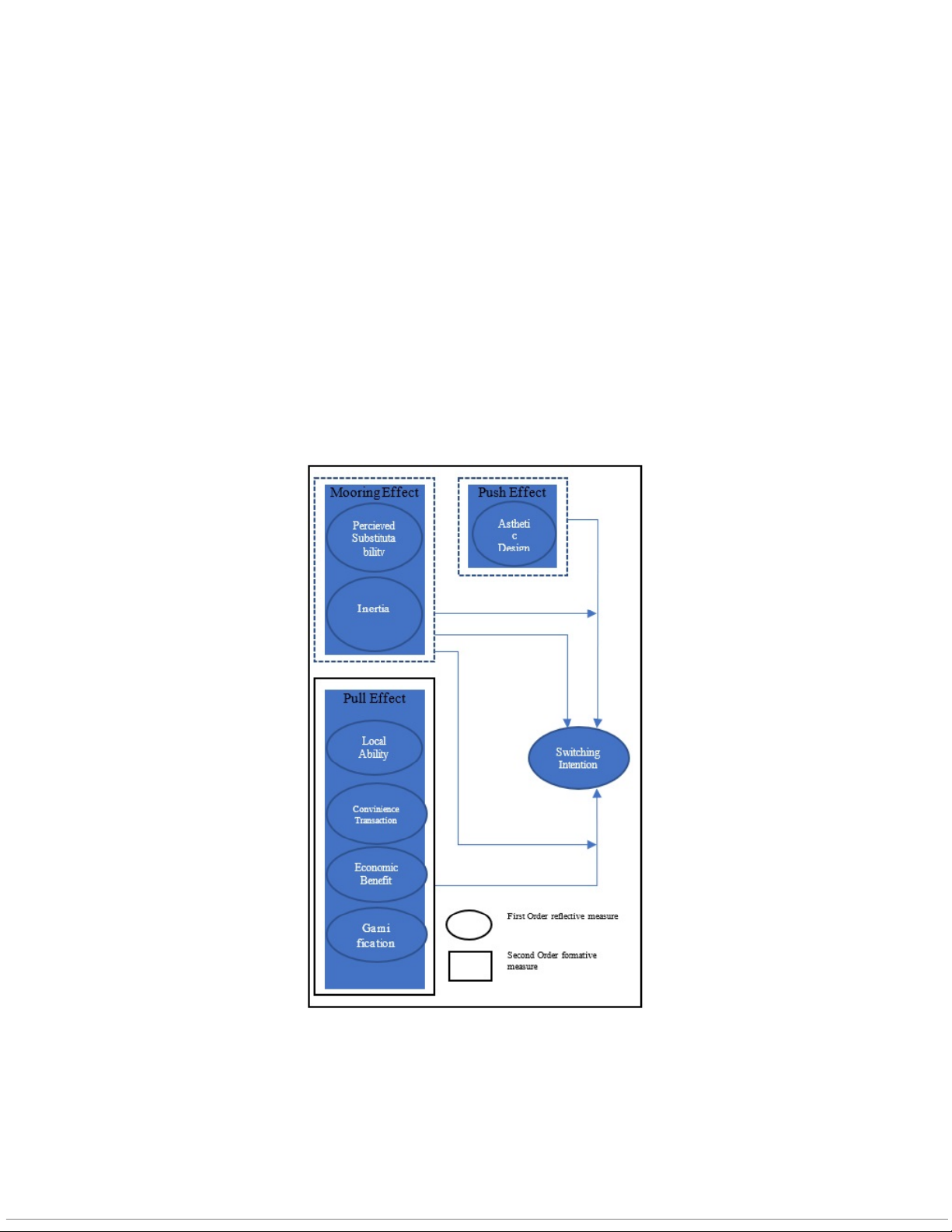
Push factors refer to aesthetics design (Hyeuk, 2016), and adopt the indicators by Li (Li, 2018). Aesthetics is
defined as the feelings, concepts, and judgment arising from an appreciation of the arts or the broader class of objects
considered moving, beautiful, or sublime. It means aesthetic design provides intangible benefit related to © IEOM Society International 1349
Proceedings of the International Conference on Industrial Engineering and Operations Management
Sao Paulo, Brazil, April 5 - 8, 2021
psychological needs (Candi & Saemundsson, 2011). Therefore, the consumer will evaluate more profitable products
endowed with aesthetically pleasing from those lacking such styling. If the products have a poor aesthetic design, it
will push the customer away from using pay later card.
Pull factors include local ability, transaction convenience, economic benefits, and gamification. Those pull
factors motivate the customer to switch from Traveloka pay later card to Traveloka pay later. Local ability or
usefulness will capture the ease of getting up-to-date information, accessible for relevant information, and timely
information (Xu, Teo, Tan, & Agarwal, 2009). If customers efficiently complete their purchase, quick to complete
the Transaction, and need a little time to make a transaction, they will convenient for a transaction (Chang & Polonsky,
2012). After that, financial gain, lower financial cost, spending less, and save customer money will reflect their
economic benefits (Chang & Polonsky, 2012). Gamification in this study adopts Hsu (Hsu, Chang, & Lee, 2013).
Customers feel clear about purchasing and reward, varying reward, automatic notification, and their experiences retrievable.
Mooring factors are substitutability and Inertia. Customer switching is a complex decision because even
though pull or push factors are substantial. Li defines mooring effects as switching barriers because these represent
forces that make switching difficult or costly (Li, 2018). Substitutability in this study represents the ability of
Traveloka pay later card to compensate Traveloka pay later. If customers satisfy the same need, but in different forms,
then two products are substitute. Meanwhile, Inertia in this study focuses on consumption patterns associated with
various services under a single brand, Traveloka.
The research framework in this study refers to Li (Li, 2018), as shown in figure 1.
Figure 1 The Research Framework © IEOM Society International 1350
Proceedings of the International Conference on Industrial Engineering and Operations Management
Sao Paulo, Brazil, April 5 - 8, 2021 2.1. Hypothesis
When the product's design appeals to the customers, they effectively connect with the outcome and visually
improve its experience. A better aesthetic communicates the service's attribute more positively, leading to customer
perception of increased usability (Candi & Saemundsson, 2011). The visual appeal of the product influences consumer
perception and behaviour (Wang & Li, 2017). If the design of membership pay later cards low, the consumer cannot
receive the value that compensates for drawbacks in functionality. Therefore the aesthetic design will push switching
intention. H1: Aesthetic Design associated with Traveloka pay later influences consumer switching intentions with
Traveloka to pay later membership card. Ye and Potter (Ye & Potter, 2011) stated that consumers consider switching
when a substitute offers relative advantages over the existing service. If Traveloka pay later, cards give many benefits
for consumers, it will push them to change. Locatability or usefulness using navigational services creates benefits for
consumers (Junglas & Watson, 2008).
Consumers can receive information based on their current location; it means Traveloka pay later card will
give precise information about their transactions. Locatability of Traveloka pay later card will push consumer's to
switch from the old one. H2: Locatability influences the switching intention of customers.
In the current modern world, all consumers need convenience to make the Transaction more practical, straightforward,
and easy to use. Park and Ryoo (Park & Ryoo, 2013) also proposed that the potential for enhanced performance
stimulates consumers switching intention. We have known that Traveloka Pay Later Card also has some advantaging
features than Traveloka pay later. When consumers feel the convenience of doing a transaction for new services,
they switch to new ones. As Teo et al. (Teo, Tan, Ooi, Hew, & Yew, 2015) said, transaction convenience affects
users' performance expectations and will influence intention. H3: Transaction convenience of Traveloka pay later card
influence consumers to switch intention.
Traveloka pay later cards give some benefit to their customers. First, ill perform monetary value (Venkatesh,
Thong, & Xu, 2012), gaining financial savings (Hong & Tam, 2006). Second, consumers choose their choice,
considering price as big weighted than others (McFadden, 2001). From those perspectives, the H4 in this study is
Economic Benefit influence consumer switch intention.
The last pull factor in the PPM framework is gamification (Li, 2018). As a marketing strategy, gamification adds game
elements to the nongame environment, product, or services. It is like an extra value (Bittner & Schipper, 2014),
motivating the consumer to exhibit the desired behaviours (Darejeh & Salim, 2016). The impact of gamification on
consumer behaviour is explicitly found in entertaining customers, accelerating purchase, and retaining consumers. In
addition, it improves customer motivation and engagement in performing a particular task (Hofacker, de Ruyter, Lurie,
Manchanda, & Donaldson, 2016), and increase customer loyalty and better customer experiences (Rodrigues, Costa,
& Oliveira, 2016). H5: Gamification influence consumer switching intention to Traveloka pay later card.
Another factor that causes workers' switch to use other applications is the mooring in the application's
substitution capability. If the substitution level of the two applications. If the usability, convenience, and similarities
of Traveloka pay later card and their apps are the same, this will be a mooring for workers to move. Worker or
consumer perception of substitutability affects their attitude toward brand extension (Ganesh Pillai & Bindroo, 2014).
If two products or services are substitutable, an increase in one product or service activity may reduce the marginal
benefit received from the other (Hagedoorn & Wang, 2012). The substitutability will affect purchase intention
(Dennis, Jayawardhena, & Papamatthaiou, 2010). This study proposed that perceived substitutability positively
influences customers' intention to switch from pay later to pay later card. H6: Perceived Substitutability influence on
switch intention from pay later to pay later card.
Consumers who already have a good perception of a product or service are reluctant to look for other products
or services. If Traveloka pay later users have a good perception of it, they will be unwilling to switch to Traveloka
pay later card. It could be that they are reluctant to switch to a new product because they do not analyze the choice of
the products (White & Yanamandram, 2004). Therefore, switching intention will be negatively affected by these
inertia consumers. H7: Inertia has a negative influence on switching intention from pay later to pay later card. 3. Methods
In this study, PLS-SEM used as an analytical method applied in many marketing research. Structural Equation
Modeling (SEM) currently used to cover the regression method's weaknesses (Ghozali, 2014). SEM is an evolution
of multiple equation models developed from econometrics principles and combined with the organizing principles of
psychology and sociology (Ghozali, 2014). As a result, SEM has emerged as an integral part of academic, managerial © IEOM Society International 1351
Proceedings of the International Conference on Industrial Engineering and Operations Management
Sao Paulo, Brazil, April 5 - 8, 2021
research. This study's indicator approach combines the reflective and formative approaches, where the indicators can reflect latent variables.
An Outer Model Test carried out to ensure the measurements used are appropriate to measures (convergent and
discriminant validity and reliable test). In the SEM PLS approach, a measurement meets convergent validity if it meets several criteria.
Loading factor parameters > 0.7; Average Variance Extracted (AVE) parameter > 0.5; Communality
parameter > 0.5 (Hair, Hult, Ringle, & Sarstedt, 2017). AVE value is higher than the correlation value squared (Hair,
Black, Babin, & Anderson, 2014). Practically, the discriminant validity test formulated as follows: AVE root
parameters and correlation of latent variables > potential variable association. Cross loading parameters > 0.7 in one variable (Vinzi, 2010)
Reliability testing can use two methods—first, Cronbach's alpha and composite reliability. Cronbach's alpha measures
the lower limit of a construct's reliability value, while composite reliability measures the actual value of a construct's
reliability. Alpha value or composite reliability is higher than 0.7, although the amount of 0.6 is still acceptable (Hair,
Black, Babin, & Anderson, 2014).
Inner Model Test. These tests carry out to test the relationship between latent constructs. There are several structural
or inner model tests. a) R Square > 0.67 (strong), 0.33 (moderate), 0.19 (weak); b) Estimate for Path Coefficients
performed by the Bootstrapping procedure; c) Prediction Relevance (Q Square) or also known as Stone-Geisser's. d).
Q Square if the values obtained are 0.02 (small), 0.15 (medium) and 0.35 (large) (Vinzi, 2010).
Hypothesis testing. To test the hypothesis will be analyzed from the P-value of the SEM PLS test. The hypothesis
will accept if the probability value lower than 0, with a significance level of 1-95% or 0.05. In the P-value test, test
hypotheses often use P < 0.05 rather than P ≤ 0.05 (Kock & Hadaya, 2018). 4. Data Collection
The convenience sampling method is using to choose the sample. The author surveys Traveloka customers
in March 2020 who have used pay later and now pay later cards. The 1.117 samples, especially workers in DKI Jakarta.
A measurement of a construct, as an abstraction of a phenomenon or reality, will be operationalized in a form that
various values can measure. The operational definition explains the specific ways in which researchers operate to
operationalize constructs into testable variables. Construct variables can be measured using numbers or attributes that
use a Likert's scale. For example, likert scale can measure people's attitudes, opinions, and perceptions about a person
or group of people about a symptom or phenomenon (Djaali, 2008). All questionnaires related to main variables use
close questions with a five Likert scale. The questionnaires adopt from Li (Li, 2018) with some adjustments regarding
the different research objects. The list of questionnaires shows in the appendix. 5. Results and Discussion
In this study, we use a higher construct model. Several variables include aesthetic design, locatability,
transaction convenience, economic benefit, gamification, substitutability, and inertia included as first-order constructs.
Meanwhile, the pull effect conceptualized as a second-order formative measurement construct.
From table 1 it shows that the construct validity and reliability in the model fulfilled the criteria. The validity and
reliability values show the fulfilment of the requirements set for the construct validity and reliability. However, some
indicators like IN3, L3, L4, B1, B4, CT2, G1, G2, G5, L3, L4, SI2, SI3, SI4 dropped because they did not match
with criteria of outer loading.
Fornell-Larker and Heterotrait-monotrait (HTMT) were used to evaluate discriminant validity. HTMT values
of Push effect – aesthetic design (0,85), mooring effect-inertia (0,85), and perceived substitutability-mooring effect
(0,85) were very small upper the predefined threshold 0.85. So the criteria still fulfilled in two digits, indicating the
main constructs measured different aspects. This study also tested potential multicollinearity among items on
formative constructs using variance inflation factor VIF value. The value of VIF of all indicators is below the cut of
point 3.3 (Ghozali, 2014) and (Roldan & Sanchez-Franco, 2012) with maximum values 2.5.
Table 1. Construct Validity & Reliability Items Loadings AVE CR Rho_A Push Effect_ 0.689 0.899 0.850 Aesthetic Design_ AD1 0.809 0.689 0.899 0.850 © IEOM Society International 1352
Proceedings of the International Conference on Industrial Engineering and Operations Management
Sao Paulo, Brazil, April 5 - 8, 2021 AD2 0.840 AD3 0.827 AD4 0.843 Mooring Effect 0.519 0.882 0.845 Percieved Subtitutability_ PS1 0.725 0.643 0.900 0.861 PS2 0.759 PS3 0.788 PS4 0.788 PS5 0.779 Inertia_ IN1 0.849 0.698 0.822 0.571 IN2 0.822 Pull Effect 1000 Locatalability_ L1 0.906 1000 L2 0.913 Convinience for Transaction_ CT1 0.842 1000 CT3 0.918 Benefit B2 0.893 1000 B3 0.919 Gamification G3 0.873 1000 G4 0.846 Moderating Pull Effect 1022 1000 1000 1000 Moderating Push Effect 1000 1000 1000 1000 Switching Intention SI1 1000 1000 1000 1000
Table 2 shows the estimation results of the empirical model using the bootstrapping method. The results show
that processed data support several hypotheses. The following is a detailed explanation for each idea.
There are some research findings. First, the push effect did not significantly affect the switching intention of urban
workers. The results of this study differ from those of Li (Li, 2018), Hsieh (Hsiesh, Hsieh, Chiu, & Feng, 2012), or
Kuo (Kuo, 2020). Second, the existence of a membership card should encourage consumers to switch from the usual
payment methods. One possible reason is as a member of the Traveloka pay later card. Third, urban workers did not
find an attractive card, professionally designed, visually appealing, meaningful. Even all aesthetic design indicators
significantly reflected the push effect. The implications are that the aesthetic design is unsuitable as a push factor or
another variable should be considered a component of the push effect.
Second, the pull effect, in terms of economic benefit, the convenience of the Transaction, gamification, locatability,
did not affect urban worker switching intention. This result is inconsistent with Li (Li, 2018) and Kuo (Kuo, 2020).
The Traveloka pay later card offered provides comfort in commerce, but it does not provide economic benefits.
Workers in urban areas feel that they are not getting financial services or reducing their financial costs, which reduces
their expenses when using Traveloka pay later card. This result is essential for Traveloka and BRI managers in
designing Traveloka pay later cards to indicate the need for product improvements. Let us look at various sources on
the internet, the complaints about the ease and speed for city workers who have become customers to make Traveloka
pay later cards. Understandably, there is an uncomfortable perception. It could be a trigger factor why even though
the product provided has more value, it becomes less attractive than the Traveloka pays later app. A brand manager
must extend its service scope by integrating location-based services and other technology systems and fixing their
registration process problems, including improving its "together service works" with BRI.
As we know from Table 2, even though economic benefit, gamification, locatability, and convenience for Transaction
formed a pull effect. Urban workers pull to use Traveloka pay later card because it is easy to complete the Transaction,
more quickly and short time for purchase. However, these contributions did not remove urban workers who feel little
economic benefits like financial gain, lower financial cost, and spend the same time using Traveloka pay later card to
compare with Traveloka pay later. © IEOM Society International 1353
Proceedings of the International Conference on Industrial Engineering and Operations Management
Sao Paulo, Brazil, April 5 - 8, 2021
Gamification includes actual notification, statistics about their progress, or status upgrade are relatively the
same between using Traveloka pay later card and Traveloka pay later as before. The indifference between the two
products makes urban workers stay with the previous method to do their Transaction.
A similarity services between Traveloka pay later card and Traveloka pay later app, confused to give pull effect for
an urban worker. An up to date information, access information, and found information on time have been offered by
Traveloka pay later apps. Then pull affect insignificantly switching intention. The general functionality of pay later
cardholders to make an online or offline transaction on million merchants will confuse them to know their switching intention.
Third, inertia and substitutability are the moorings for urban workers. The influence of variable inertia on the
mooring effect arises from his satisfaction with Traveloka pay later and using it to shop for flight tickets at Traveloka.
Meanwhile, the substitution rate for Traveloka pay later card is relatively high for Traveloka pay later. The
replacement arises from the same services provided, the same method, providing the same satisfaction, the same
situation, and almost the same tools. However, this mooring variable is not significant in influencing switching
intention, but it is a factor that urban workers consider. It means the function of a pay later card can substitute with
pay later apps. This result does not support other studies by Li (Li, 2018), Kuo (Kuo, 2020), Liu Fan (Fan, Zhang, Rai, & Du, 2021).
Forth, the mooring effect variable, in this study, cannot be a moderator variable for the push and the pull effect on
switching intention. It means Inertia and perceived substitutability does not increase or decrease the impact of the push
and pull effect on switching intention. This result is different from the findings of Li (Li, 2018), Kuo (Kuo, 2020)
which can increase the effect of the push and pull effect to switching intention.
Moreover, the mooring effect does not affect changing urban workers' behaviour to change from Traveloka pay later
to Traveloka pay later card. In this study, the mooring effect is only potential to be a moderating variable Table 2. Path Coefficients Original Path Coef Sample (O) P Values
Push effect_ -> Aesthetic Design_ 1.000 0.000
Push Effect_ -> Switching Intention_ 0.033 0.300 Benefit -> Pull Effect 0.335 0.000
Convinience for Transaction_ -> Pull Effect 0.331 0.000
Gamification -> Pull Effect 0.335 0.000
Locatalability_ -> Pull Effect 0.210 0.000
Pull Effect -> Switching Intention_ 0.026 0.458 Mooring Effect -> Inertia_ 0.700 0.000
Mooring Effect -> Percieved Subtitutability_ 0.959 0.000
Mooring Effect -> Switching Intention_ 0.048 0.124
Moderating Pull Effect -> Switching Intention_ -0.013 0.674
Moderating Push Effect -> Switching Intention_ 0.029 0.408
Based on the estimation results above, it cannot be conclude that the factors significantly affect the shift in
the use of pay later apps to pay later cards by urban workers (Adirinekso & Assa, 2021). For this reason, the analysis
is continued at the next stage by making other estimates using the High Component Model (HCM) or often referred to as the High Order Model.
There are various forms of HCM, namely Reflective-Reflective, Reflective-Formative, Formative-
Formative, and Formative-Reflective (Sarstedt, Hair, Jun-Hwa, Becker, & Ringle, 2019). In this paper, we use a
Reflective-Reflective model. The latent variable model generated from the reflective-reflective form through the
estimation procedure and high order construct validation shown in Figure 2.
In the high order construct in PLS-SEM, it is necessary to adjust the algorithm used. There are two different
types of estimating measurement models. In this case, mode A. Using mode A (i.e., correlation weights), the bivariate
correlations between each indicator and the construct determine the indicator weights used to compute the latent © IEOM Society International 1354
Proceedings of the International Conference on Industrial Engineering and Operations Management
Sao Paulo, Brazil, April 5 - 8, 2021
variable scores (Sarstedt, Hair, Jun-Hwa, Becker, & Ringle, 2019). Mode A used because it estimates the reflective shape.
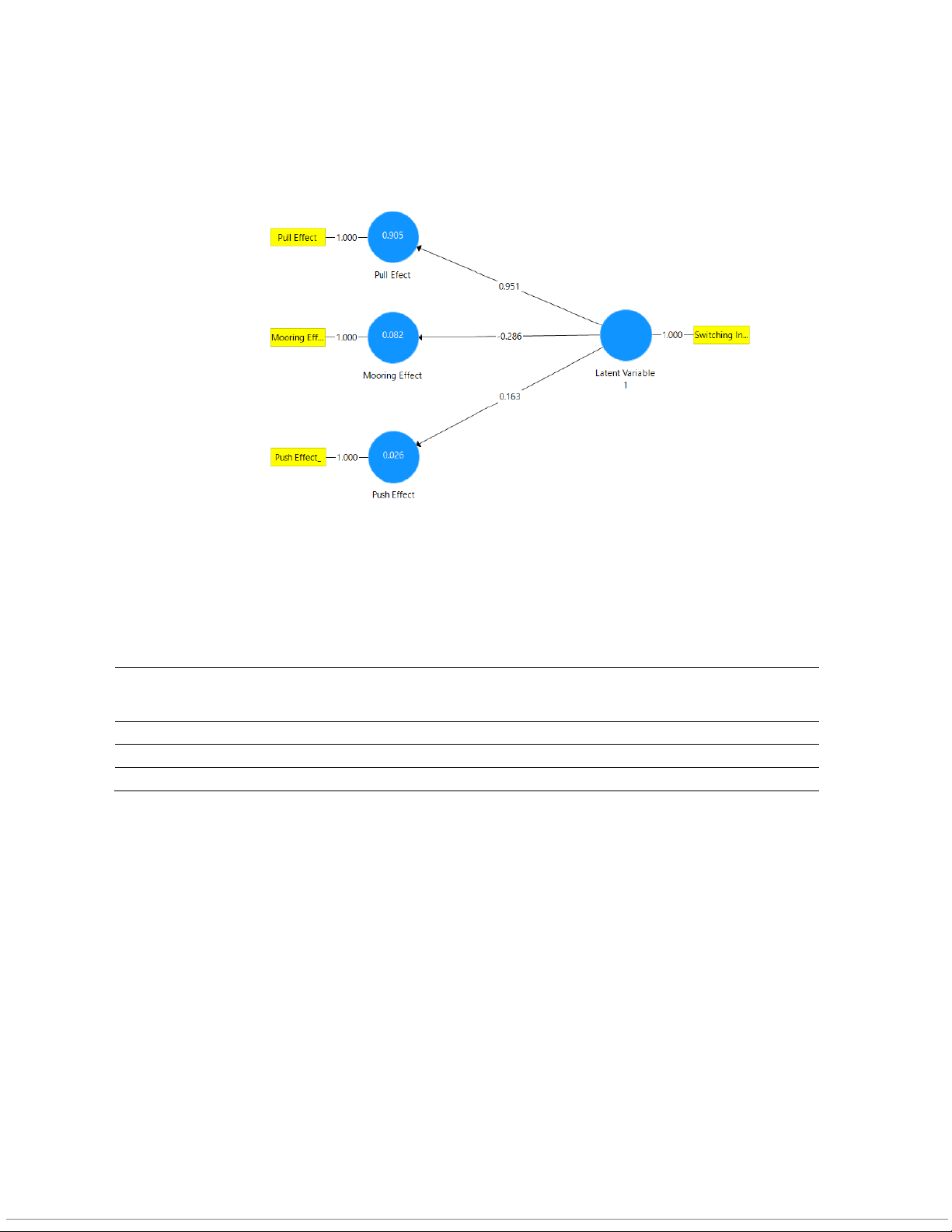
Figure 2. Latent Variable in Higher Order Model
A two-stage approach. After applying the procedures and criteria in measurement models and structural
model, stage one considers all measurement models, including those of lower-order component (LOC). In this stage,
repeated indicators to identify the higher-order construct are not being evaluated. The estimation of two-stage
approach describes in table 3.
Table 3 Path Coefficient Higher-Order Model Original Sample Standard Sample Mean Deviation T Statistics (O) (M) (STDEV) (|O/STDEV|) P Values
Latent Variable 1 -> Mooring Effect -0.286 -0.255 0.312 0.916 0.360
Latent Variable 1 -> Pull Efect 0.951 0.960 0.019 49.878 0.000
Latent Variable 1 -> Push Effect 0.163 0.142 0.412 0.395 0.693
The estimation results in Table 3 show that 2 latent variables, namely the mooring effect and the push effect,
do not significantly influence the migration of urban workers in Jakarta in using pay later apps to pay later cards. It is
probably because pay later apps are not strong enough to encourage or sustain these urban workers to use them anymore.
The pay later card offered by Traveloka in collaboration with Bank BRI has attracted low-income urban
workers from using pay later apps. The perceived benefits, convenience in transactions, locatability, and gamification
offered by pay later cards have lured consumers to switch to using pay later cards. This effort is certainly proof of the
success of the marketing strategy undertaken by Traveloka and Bank BRI. 6. Conclusion
Based on the above discussion, it several conclusions. First, the simple SEM model estimation shows that
the evaluation of the push-pull-mooring model applied in the new products offered by Traveloka company can prove
several hypotheses. However, the higher latent variables, namely Push Effect, Pull effect, and Mooring Effect, do not
significantly affect the product shift from pay later apps to pay later cards. Second, the estimation results using the
high order component approach type I can explain the effect of high order constructs on product displacement. Thus © IEOM Society International 1355
Proceedings of the International Conference on Industrial Engineering and Operations Management
Sao Paulo, Brazil, April 5 - 8, 2021
the High Component Model is more suitable for evaluating product displacement when using a PPM framework. For
further research, we can compare the best high component model among four types of HCM. References
Adirinekso, G. P., & Assa, A. F. (2021). Is There Any Customer Switching the Intention from Traveloka
PayLater to Traveloka PayLater Card? A Preliminary Investigation on Worker in Jakarta.
Proceedings of the Ninth International Conference on Entrepreneurship and Business
Management (ICEBM 2020) (pp. 570 - 577). Jakarta: Atlantis Press B.V.
Adirinekso, G. P., Purba, J. T., & Budiono, S. (2020). Measurement of Performance, Effort, Social
Influence, Facilitation, Habit and Hedonic Motives toward Pay later Application Intention:
Indonesia Evidence. Proceedings of the 2nd African International Conference on Industrial
Engineering and Operations Management (pp. 208 - 219). Harare, Zimbabwe: IEOM Society International.
Adirinekso, G., Purba, J. T., Budiono, S., & Rajagukguk, W. (2020). The Role of Price and Service
Convenience on Jakarta’s Consumer Purchase Decisions in Top 5 Marketplace Mediated by
Consumer’s Perceived Value. The 5th North America International Conference on Industrial
Engineering and Operations Management (p. Retrieved from http://www.ieomsociety.org).
Detroit, Michigan USA: ieomsociety.org.
Bittner, J., & Schipper, J. (2014). Motivational Effects and Age Differences of Gamification in Product
Advertising. The Journal of Consumer Marketing, 31(5), 391 - 400.
Candi, M., & Saemundsson, R. (2011). Exploring the relationship between aesthetic design as an element
of new service development and performance. The Journal of Product Innovation Management, 28(4), 536-557.
Chang, Y., & Polonsky, M. (2012). The influence of multipel types of service convinience on behavioral
intentions: The Mediating role of consumer satisfaction in a Taiwanese leisure setting.
International Journal of Hospitality Management, 31(1), 107-118.
Darejeh, A., & Salim, S. (2016). Gamification Solutions to Enhance Software User Engagement: A
Systematic Review. International Journal of Human - Computer Interaction, 32(8), 613.
Dennis, C., Jayawardhena, C., & Papamatthaiou, E. (2010). Antecedents of Internet Shopping Intention
and Moderating Effect of Substitutability. The International Review of Retail, Distribution, and
Consumer Research, 20(4), 411 - 430.
Djaali. (2008). Psikologi Pendidikan. Jakarta: Sinar Garfika Offset.
Fan, L., Zhang, X., Rai, L., & Du, Y. (2021). Mobile Payment: The Next Frontier of Payment Systems? -
An Empirical Study Based on Push-Pull-Mooring Framework. JOurnal of Theoretical and
Applied Electronic Commerce Research, 16(2), 155 - 169.
Ganesh Pillai, R., & Bindroo, V. (2014). The Moderating Roles of Perceived Complementarity and
Substitutability on the Perceived Manufacturing Diffculty-extention Attitude Relationship.
Journal of Business Research, 67(7), 1353 - 1359.
Ghozali, I. (2014). Structural Equation Modeling, Metode Alternatif dengan Partial Least Square (PLS).
Semarang: Badan Penerbit Universitas Diponegoro. © IEOM Society International 1356
Proceedings of the International Conference on Industrial Engineering and Operations Management
Sao Paulo, Brazil, April 5 - 8, 2021
Hagedoorn, J., & Wang, N. (2012). Is There Complementarity or Substitutability between Internal and
External R&D Strategies. Research Policy, 41(6), 1072 - 1083.
Hair, J., Black, W., Babin, B., & Anderson, R. (2014). Multivariate Data Analysis. Essex: Pearson Education Limited.
Hair, J., Hult, G., Ringle, C., & Sarstedt, M. (2017). A primer on Partial Least Squares Structural
Equation Modelling PLS-SEM . Thousand Oaks, CA : Sage.
Heo, J., & Kim, K. (2017). Development of a Scale to Measure the Quality of mobile location-based
services. Service Business, 141 - 159.
Hofacker, C., de Ruyter, K., Lurie, N., Manchanda, P., & Donaldson, J. (2016). Gamification and Mobile
Marketing Effectiveness. Journal of Interactive Marketing, 34, 25.
Hong, S., & Tam, K. (2006). Understanding the Adoption of Multipurpose Information Appliance: The
Case of Mobile Data Services. Information Systems Research, 17(2), 162 - 179.
Hsiesh, J.-K., Hsieh, Y.-C., Chiu, H.-C., & Feng, Y.-C. (2012). Post-adoption switching behavior for
online service substitutes: A perspective of the push-pull-mooring framework. Computer in
Human Behavior, 28, 1912 - 1920.
Hsu, S., Chang, J., & Lee, C. (2013). Designing Attractive gamification features for collaborative
storytelling websites. Cyberpsychology, Behavior, and Social Networking, 16(6), 426-435.
Hyeuk, C. (2016). Consumer brand engagement by virtue of using Starbucks's branded mobile app based
on grounded theory methodology. International Journal of Asia Digital Art & Design , 19(4), 91 - 97.
Jiang, Y., Zhan, L., & Rucker, D. D. (2014). Power and Action Orientation: Power as a Catalyst for
Consumer Switching Behavior. Journal of Consumer Research, 41, 183 - 196.
Jung, J., Han, H., & Oh, M. (2017). Travelers Swicthing behavior in the airline industry from the
perspective og the push-pull-mooring framework. Tourism Management, 59, 139-153.
Junglas, I., & Watson, R. (2008). Task-Technology fit for Mobile Locatable Information Systems.
Decision Support Systems, 45(4), 104601057.
Kock, N., & Hadaya, P. (2018). Minimum sample size estimation in PLS‐SEM: The inverse square root
and gamma‐exponential methods. Information Systems Journal, 28(1), 227–261.
Kuo, R.-Z. (2020). Why do people switch mobile payment service platforms? An empirical study in
Taiwan. Technology in Society, 62, 1 - 16.
Lai, J.-Y., Debbarma, S., & Ulhas, K. R. (2012). An empirical study of consumer switching behaviour
towards mobile shopping: a Push-Pull-Mooring model. International Journal Mobile
Communication, 10(4), 386 -404.
Li, C.-Y. (2018). Consumer Behavior in Switching between Membership Cards and Mobile Applications:
The Case of Starbucks. Computer in Human Behavior, 84(July), 171-184.
McFadden, D. (2001). Economic Choices. American Econmic Review, 91(3), 351 - 378. © IEOM Society International 1357
Proceedings of the International Conference on Industrial Engineering and Operations Management
Sao Paulo, Brazil, April 5 - 8, 2021
Moon, B. (1995). Paradigms in migration research: Explooring moorings a a schema. Progress in Human Geography, 19(4), 504 - 524.
Park, C., & Ryoo, S. (2013). An Empirical Investigation of End-Users switching toward Cloud
Computing: A Two Factor Theory Perspective. Computers in Human Behavior, 29(1), 160 - 170.
Purba, J., Budiono, S., Rajagukguk, W., Samosir, P., & Adirinekso, G. (2020). E-Business Services
Strategy with Financial Technology: Evidence from Indonesia. 5th North American International
Conference on Industrial Engineering and Operations Management. Detroit: ieomsociety.org.
Ramadhani, Y. (2019, Februari 18). tirto.id. Retrieved May 3, 2020, from https://tirto.id/3-unicorn-
pertama-indonesia-gojek-tokopedia-dan-traveloka-dhfB
Rigdon, E. E. (2012). Rethinking Partial Least Square Path Modeling: In Praise of Simple Methods. Long
Range Planning, 45(5 - 6), 341 - 358.
Rodrigues, L., Costa, C., & Oliveira, A. (2016). Gamification: A Framework for Designing Software e-
Banking. Computer in Human Behavior, 62, 620 - 634.
Roldan, J., & Sanchez-Franco, M. (2012). Variance-based Structural Equation Modelling: Guideline for
Using Partial Least Square in Information Systems Research. In Research Metodologies,
Innovation and Philosophies in Software Systems Engineering and Information Systems (pp. 103-
121). Hershey, PA: IGI Global.
Sarstedt, M., Hair, J., Jun-Hwa, C., Becker, J.-M., & Ringle, C. M. (2019). How to Specify, Estimate, and
Validate Highher Order Constructs in PLS-SEM. Australasian Marketing Journal, 27(3), 197 - 211.
Song, S., Zhao, Y., & Sun, J. (2018). Understanding User’s Switching Intention on Mobile Payment
Platforms. Nanjing: Nanjing University.
Teo, A., Tan, G., Ooi, K., Hew, T., & Yew, K. (2015). The Effects of Conveninece ans Speed in
Payment. Industrial Management and Data Systems, 115(2), 311 - 333.
Traveloka. (2020, May 1). Traveloka.com. (Traveloka) Retrieved September 13 September, 2020, from
https://www.traveloka.com/id-id/paylatercard/consent
Venkatesh, V., Thong, J., & Xu, X. (2012). Consumers Acceptance and Use Information Technology :
Extending The Unified Theory of Acceptance and Use of Technology. MIS Quarterly, 36(1), 157 - 178.
Vinzi, V. E. (2010). Vinzi, V. E., Chin, W., HenseHandbook of Partial Least Squares: Concep, Methods,
and Applications. Berlin Heidelberg: Springer-Verlag.
Wang, L., Xin (Robert) Luo, X. Y., & Qiao, Z. (2019). Easy come or easy go? Empirical evidence on
switching behaviors in mobile payment applications. Information & Management, 56.
Wang, M., & Li, X. (2017). Effect of the aesthetic design of icon on app download: evidence from an
android market. Electronic Commerce Research, 17(1), 82-102.
White, L., & Yanamandram, V. (2004). Why the Customers Stay: Reason and Consequences of Inertia in
Financial Services. Managing service Quality, 14(2), 183 - 194. © IEOM Society International 1358
Proceedings of the International Conference on Industrial Engineering and Operations Management
Sao Paulo, Brazil, April 5 - 8, 2021
Wieringa, J. E., & Verhoef, P. C. (2007). Understanding Customer Switching Behavior in a Liberalizing
Service Market: An Exploratory Study. Journal of Service Research, 10(2), 174 - 186.
Wu, K., Vassileva, J., & Zhao, Y. (2017). Understanding Users Intention to Switch personal cloud storage
services: Evidence from Chinese market . Computers in Human Behavior, 68, 300 - 314.
www.tirto.id. (2020, March 30). tirto.id. Retrieved April October, 2020, from https://tirto.id/kartu-sakti- traveloka-paylater-card-eJKB
Xu, H., Teo, H., Tan, B., & Agarwal, R. (2009). The Role of Push-pull technology in privacy calculus:
the case of location-based services. Journal of Management Information Systems, 26(3), 135-174.
Xu, Y., Yang, Y., Cheng, Z., & Lim, J. (2014). Retaining and Attracting users in social networking
services: An empirical investigation of cyber migration. The Journal of Strategic Information Systems, 23(3), 239 - 253.
Ye, C., & Potter, R. (2011). The Role of Habit in Post-Adoption Switching of Personal Information
Technologies: An Empirical Investigation. Communications of The Association for Information Systems, 28(1), 585 - 610.
Yongqiang Sun, D. L.-L. (2017). Understanding users’ switching behavior of mobile instant messaging
applications: An Empirical Study from the Perspective of Push-Pull-Mooring Framework.
Computers in Human Behavior, doi: 10.1016/j.chb.2017.06.014. Biographies
Gidion P. Adirinekso joint with the Department of Management Faculty of Economics and Business Krida Wacana
Christian University in Jakarta. Dr Adirinekso graduated with his master's and a doctoral degree from the Departement
of Economics Faculty of Economics and Business Universitas Indonesia Jakarta after completing his bachelor's degree
from the Department of Economics, Satya Wacana Christian University. His interests in research on economic
behaviour, urban dan regional economics, urban community development and economic development.
John Tampil Purba, obtained a degree in Doctor (S3) majoring in Management from De La Salle University Systems
Manila, the Philippines in 2002. Dr. Purba also has several certifications international competition in management
information systems and technology, among others; MCP, MCSA, MCSE, MCSES, MCSAS, MCDL, and MCT from
Microsoft Technologies, USA and CSE from Cisco System USA. He is also Professional Membership of the IEOM
Society since the last year 2019. He has several managerial experiences in the Big Companies and Service Industries
for more than 25 years. He is currently as Associate Professor at the Faculty of Economics and Business Pelita Harapan
University, Karawaci Banten, Indonesia.
Sidik Budiono currently serves as full-time Associate Professor in Economics at the Department of Management
Faculty of Economics and Business Pelita Harapan University, Lippo Karawaci Tangerang Banten. Dr. Budiono
graduated Bachelor of Economics from the Department of Economics, Universitas Kristen Satya Wacana, Salatiga
Central Java, Masteral and Doctoral Degree in Economics from Faculty of Business and Economics Universitas
Indonesia, Depok West Java, Indonesia. He interests in research in the area of National Economics Policy, Regional
Economic Development, and International Economics. © IEOM Society International 1359
Tài liệu liên quan:
-

Reading and Writing Module 1 | Tài liệu Tiếng Anh
33 17 -
Cambridge IELTS 13 Test-1 Overview and Practice Review | Tài liệu Tiếng Anh
30 15 -
IELTS Test 2 Review - Cambridge 13 Preparation Guide | Tài liệu Tiếng Anh
34 17 -
Litfocus Litreading Survey: Student Reading Interests & Habits Questionnaire | Tài liệu Tiếng Anh
31 16 -

Sách Pre-intermediate Market leader - Business English Course Book
55 28