Practicum lesson study: insights froma design-based research in Englishlanguage teaching practicum
SEL in ELT that you need to know to protect students from developing bad mental health
Môn: Tài liệu Tổng hợp 3.6 K tài liệu
Trường: Tài liệu khác 3.9 K tài liệu
Tác giả:











Preview text:
The current issue and full text archive of this journal is available on Emerald Insight at:
https://www.emerald.com/insight/2046-8253.htm
Practicum lesson study: insights from International Journal for Lesson
a design-based research in English & Learning Studies
language teaching practicum Kenan Çetin 1
Department of Foreign Language Education, Bartın University, Bartın, Turkey, and Ays¸eg€ ul Dalo� glu Received 19 August 2024 Revised 16 October 2024
Department of Foreign Language Education, Middle East Technical University, 19 October 2024 Accepted 4 November 2024 Ankara, Turkey Abstract
Purpose – This study investigates the implementation of the Practicum Lesson Study (PLS) model, which is
designed to be used by preservice teachers (PSTs), mentor teachers and advisors during school practicum.
Design/methodology/approach – Employing a design-based research (DBR) framework and a multiple case
study design, the research in this study evaluated the PLS model through eight distinct cases across two phases of
research. In both phases, the qualitative research explored the nature of the stages and steps followed in each
case, providing detailed descriptions of the procedural arrangements, teaching sessions and discussion meetings.
Views of the participants regarding their satisfaction levels towards the PLS model, its benefits and challenges
were collected through semi-structured interviews and a questionnaire.
Findings – The results of the research highlighted significant benefits of the PLS model, such as self-reflection,
peer reflection and collaborative practices. These processes notably enhanced PSTs’ abilities to dynamically
adjust teaching strategies based on real-time observations and feedback, effectively integrating suggestions
from meetings with practical classroom experiences. However, the study also identified several challenges, such
as managing diverse opinions and coping with information overload.
Research limitations/implications – Based on the comprehensive exploration of the PLS model, the study
offers several implications for practitioners and suggestions for future research such as a closer examination of
changes in beliefs and identity over time during PLS.
Originality/value – The study carries the significance of employing a DBR in the context of implementing LS during ELT school practicum.
Keywords Lesson study, Practicum, English language teaching, Practicum lesson study
Paper type Research paper Introduction
Teaching can be considered a three-step activity: planning, teaching and assessing. Yinger
(1979) defines classroom time as “interactive teaching” and time spent alone (e.g. during
recess) as “preactive teaching” when teachers contemplate their lessons. This reflection leads
to planning, which Harmer (2001) describes as “art of combining a number of different
elements into a coherent whole so that a lesson has an identity which students can recognize,
work within, and react to” (p. 308). Planning a lesson involves setting goals, determining
learner profiles, focusing on skills and language and selecting materials. While all teachers
plan to some degree, experienced teachers may plan less; however, it is particularly beneficial
for novice and preservice teachers (PSTs).
Views of scholars in the field of teacher education regarding how to train teachers are
divided into two parts. While some advocate for technicist and craft-oriented techniques,
others defend that more research-based developmental approaches should be used in teacher
education (Larssen et al., 2018). While the supporters of the technicist approach point out the
importance of the acquisition of critical craft skills (Gove, 2010), scholars who advocate the
research-based developmental approaches state that the goal of teacher education should be to
International Journal for Lesson & Learning Studies Vol. 14 No. 1, 2025 pp. 1-13
The data presented in this study were collected as a part of the first author’s doctoral dissertation published © Emerald Publishing Limited 2046-8253
at Middle East Technical University. DOI 10.1108/IJLLS-08-2024-0184 IJLLS
prepare student-teachers for lifelong learning by providing them with much more than a starter
kit of technical abilities. For the supporters of the latter, “new teachers should be encouraged to 14,1
build knowledge and abilities in this manner so that they can become both learner and context-
responsive, and, therefore better prepared to deal creatively and effectively with the diversity
of classrooms in real life” (Larssen et al., 2018, p. 9).
Incorporating lesson study (LS hereafter) into PST education offers a structured
framework for continuous improvement through reflective practice (Dudley, 2015). By 2
actively engaging in reflective processes, PSTs critically evaluate their teaching methods and
refine them based on collaborative feedback. This iterative process has been shown to
cultivate reflective practitioners who are more aware of their instructional strategies and
better prepared to adapt lessons to meet the diverse needs of their students (Angelini and �
Alvarez, 2018; Cajkler and Wood, 2015; Larssen et al., 2018; Ousseini, 2019; Skott and Møller, 2017).
The context and literature review
Although LS has been known to be practiced more commonly among in-service teachers for
professional development, its potential in teacher education has attracted attention due to its
features such as observing mentors, collaborating in planning, constructive feedback and
reflective thinking (Larssen et al., 2018). Despite the growing number of studies, empirical
research conducting LS in teacher education still receives relatively low attention (Schipper
et al., 2020). This is due to the fact that despite the immense potential, it still needs to be
carefully tailored for contexts such as school practicum, which encompasses different
dynamics than in-service teaching practices (Cajkler and Wood, 2015; Gurl, 2011; Larssen
et al., 2018; Leavy and Hourigan, 2016; Ousseini, 2019; Selen Kula and Demirci-G€ uler, 2021).
Accordingly, this study examines the implementation of LS in the school practicum context by
utilizing a design-based research (DBR) framework to address the necessities of its context.
The context of the study included the school practicum setting at the English Language
Teaching (ELT hereafter) undergraduate program at a state university in T€ urkiye, where language
teachers undergo a four-year program, with the curriculum set by the Council of Higher Education
(CoHE). The first two years focus on theoretical courses, followed by practical courses before
PSTs begin their school practicum in the fourth year. The practicum spans 15 weeks per semester,
totaling 90 h at a state school, with assignments to primary, secondary or high schools. PSTs in T€
urkiye must submit a portfolio after their practicum, monitored by mentor
teachers and advisors through observation and feedback. Though portfolio requirements vary,
practicum experiences differ significantly across universities (Selen Kula and Demirci-G€ uler,
2021). Typically, PSTs work in groups of three to six, observing mentors and peers but mainly
planning and teaching lessons independently. Reflection is mainly encouraged through self-
evaluation forms in portfolios, with no officially recommended practices from faculties. The
need for greater collaboration and reflection throughout the curriculum, including the
practicum, has been highlighted in T€
urkiye for over a decade (Cos¸kun and Dalo� glu, 2010;
Karakas¸, 2012; Karaman et al., 2019). In T€
urkiye, LS has primarily been studied with in-service teachers (Bayram and Bıkmaz, 2021; Us¸tuk and Çomo�
glu, 2021) or in micro-teaching LS with PSTs (Cos¸kun, 2021). Few
studies have applied LS within school practicum due to the involvement of multiple
stakeholders, including mentor teachers, advisors and PSTs. Altınsoy (2020) and Yalçın-
Arslan (2019) explored the traditional Japanese LS model in school practicum. Altınsoy
(2020) closely followed the traditional model, with one group of six PSTs designing and
teaching a lesson plan at five different schools. Yalçın-Arslan (2019) included mentor teachers
in the lesson design process, forming three smaller groups and conducting the study at a single
high school. The studies differed in mentor-teacher involvement, the number of schools and
the size of PST groups. Additionally, data collection in these studies occurred before the 2018
curriculum changes by the CoHE in T€
urkiye, which impacted the practical component of school practicum.
The proposed practicum lesson study model International
After reviewing the literature on LS in the school practicum context in T€
urkiye, the PLS model Journal for Lesson
was developed to offer a structured and sustainable adaptation of LS for PSTs, mentor teachers & Learning
and advisors. Key modifications were made to address operational challenges, such as logistical Studies
issues with visiting multiple schools and large group sizes, resulting in the foundation for the
PLS model. PLS was created to address the challenges in implementing LS during practicum in T€
urkiye, where PSTs stay at a single state school for 15 weeks. Since practicum content doesn’t
involve visiting other schools, organizing LS across multiple schools complicates coordination 3
and requires lengthy, bureaucratic approval from the ministry.
PLS ensures PSTs teach in familiar classrooms, avoiding logistical difficulties. The model
promotes smaller groups, typically including two PSTs, a mentor and an academic advisor, to
enhance collaboration. It redefines roles for active PST engagement, emphasizing shared
responsibility in planning, teaching, observing and revising lessons. Unlike some LS models
where PSTs only observe, PLS fosters ownership of the research lesson (Baldry and Foster, 2019).
Mentors assist in planning and revisions, while advisors facilitate the process, preventing conflicts.
Critical components of PLS. As emphasized by Seleznyov (2018), any implementation of
LS must identify some critical components. The critical components of PLS include
identifying a specific focus for improvement rather than long-term goals, collaborative
planning between PSTs and mentors and the teaching cycles that include post-lesson
discussions with revising the lesson plan and implementing the plan to achieve an immediate
result from the feedback received from the members. Accordingly, the critical components of PLS include
(1) Identifying a point of focus: PLS shifts the focus from long-term goals to addressing
specific needs or gaps in students’ knowledge, identified through observation or mentor recommendations.
(2) Collaborative planning: PSTs work closely with their mentors to develop lesson
plans that address the identified focus area.
(3) Teaching and revising lessons: Unlike traditional LS, where experienced teachers
lead the lesson, PSTs teach the lesson and the plans are then revised based on post- lesson discussions.
(4) Post-lesson discussions: PLS ensures that discussions focus on lesson effectiveness
and student outcomes rather than critiquing the teaching abilities of the PSTs.
(5) Repeated cycles: PLS incorporates iterative teaching cycles, where the same lesson is
taught and revised, promoting continuous improvement.
(6) Outside expertise: Mentors and advisors participate in planning and discussions.
(7) Mobilizing knowledge: PLS emphasizes the importance of sharing the knowledge
gained from the LS process. PSTs are encouraged to disseminate their findings through
presentations, reports or peer-led events.
With these critical components laid out, the primary aim of this study was to develop and refine
a model named PLS for school practicum and implement it in an ELT school practicum at a state university in T€
urkiye. Accordingly, this study sought to answer the following two research
questions: “How does PLS take place during school practicum at the English Language
Teaching B.A. program at a state university in T€
urkiye?” and “What are the views of the PSTs
and mentor teachers towards benefits and challenges in implementing the PLS model?” Methodology
The research process involved designing the model, testing it in Phase 1 and refining it based
on participant feedback for reimplementation in Phase 2. This DBR approach combined IJLLS
empirical investigation with practical solutions to educational challenges, aligning with the
study’s goals. Investigation of multiple case studies was used to conduct within- and cross-case 14,1
comparisons, leading to model refinement.
DBR follows nine principles emphasizing iterative, adaptive processes, continuous
refinement, context sensitivity and the integration of theoretical and practical insights to
enhance educational interventions (Wang and Hannafin, 2005). DBR is interventionist,
process-oriented, utility-oriented and theory-oriented, focusing on designing and improving 4
interventions in real-world settings (Barab and Squire, 2009; Van den Akker et al., 2006). This
approach was chosen to ensure the PLS model’s rational and empirical implementation,
highlighting the need for innovation in education (Macalister and Nation, 2020). Eight cases
were analyzed across two phases, each involving PLS groups, with the multiple case study
design investigating contemporary phenomena in depth within their real-world contexts (Yin,
2018). The research phases provided the context, with conclusions drawn holistically.
Research setting and participants
In the total of 8 cases, 10 preservice English as a Foreign Language (EFL) teachers and 3 in-
service mentor teachers participated in LS implementations. All PSTs were enrolled in ELT
bachelor’s program at a state university in T€
urkiye, and their ages varied between 22 and 23.
While six of the PSTs participated in both phases, only four of them participated in one phase
of the DBR. The 3 mentor teachers, each with over 10 years of experience, participated in the
following phases: Mentor 1 at High School A (with over 800 students) in both phases, Mentor
2 at High School B (an all-girls religious Imam Hatip School with over 200 students) took part
in Phase 1 and Mentor 3 at Middle School A (over 800 students) participated in Phase 2. Research procedures
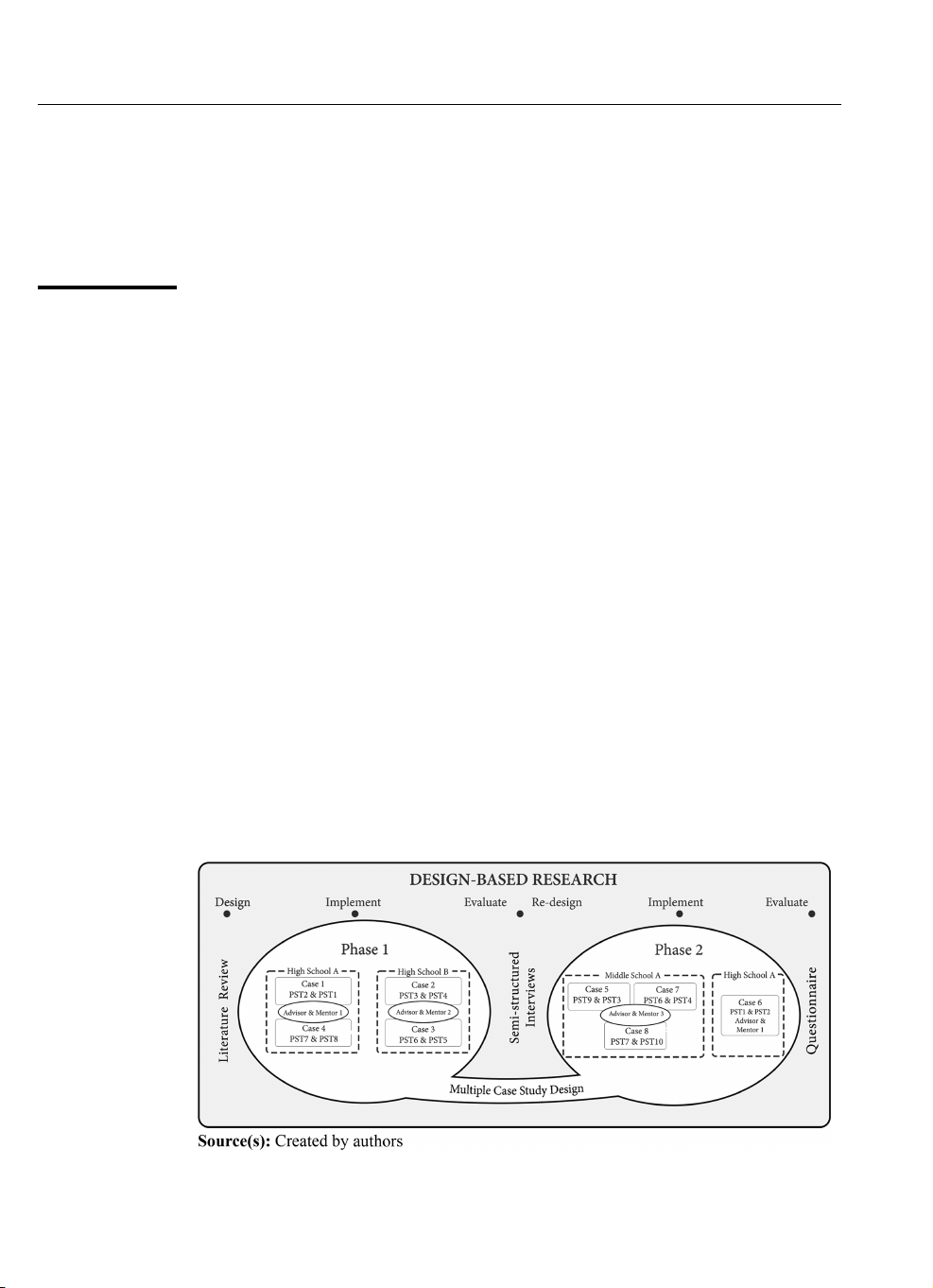
DBR, depicted as the largest component in Figure 1, starts with a literature review and the
initial draft (design) of the PLS guidebook (Çetin, 2022). In Phase 1 (implement), four cases
took place across two schools. After implementation, semi-structured interviews were
conducted with the PSTs. Insights from these interviews (evaluate) led to a re-design (of the
procedures and the guidebook) before conducting four additional cases in Phase 2
(implement), also at two schools with different mentors. The final Phase 2 step included a
questionnaire (evaluate), concluding the research. The advisor, who is also the researcher,
participated in all cases. Semi-structured interviews and questionnaires were integral to the
case study design, as shown in the figure. In addition, the approval of the ethics committee
Figure 1. A holistic view of the research design and procedures
from Middle East Technical University was obtained with the protocol number 0545- International
ODTUIAK-2022 before the research procedures started. Journal for Lesson & Learning Studies
Data collection tools and analyses
Data for this research were collected from various sources such as observation notes and self-
and peer-evaluation forms included in PSTs’ practicum portfolios. Snapshots from these
documents were used in presenting the findings (examples included in the figures). In addition, 5
the semi-structured interviews conducted with PSTs at the end of Phase 1, along with expert
opinions, led to revisions of the guidebook and procedures. At the end of Phase 2, PSTs
responded to open-ended questions in an online questionnaire.
Individual semi-structured interviews were conducted one week after Phase 1 to gather
PSTs’ views on the process, benefits and challenges (some questions adapted from Ayra,
2021). In Phase 2, PSTs answered similar questions to confirm and explore new findings.
Content analysis was used for materials such as lesson plans and evaluations, while interviews
were coded inductively. The transcripts of the interviews were collaboratively coded by two
experts in the field of language teaching, and intercoder agreement was ensured with a Kappa
>0.90 and a mean percentage of 92.5% for the datasets on MAXQDA24 software (R€ adiker and Kuckartz, 2020). Findings
The findings of the study are organized into three sub-sections: the first two sub-sections aim to
present the cases that address the first research question, while the third sub-section presents
PSTs’ views to answer the second research question. Cases in phase 1
Each PST taught one lesson in four cases, totaling eight lessons, followed by post-lesson
discussions in December 2022. Two cases were at High School B and two at High School A.
The four cases proceeded at their own pace before the first teaching began, but all first and
second teaching cycles, post-lesson discussions and final reflection meetings occurred in a
single day but on different days. Discussion time varied from over four hours (Case 1) to
50 min (Case 3). Despite time differences, all groups completed lessons and meetings using
their observation notes effectively.
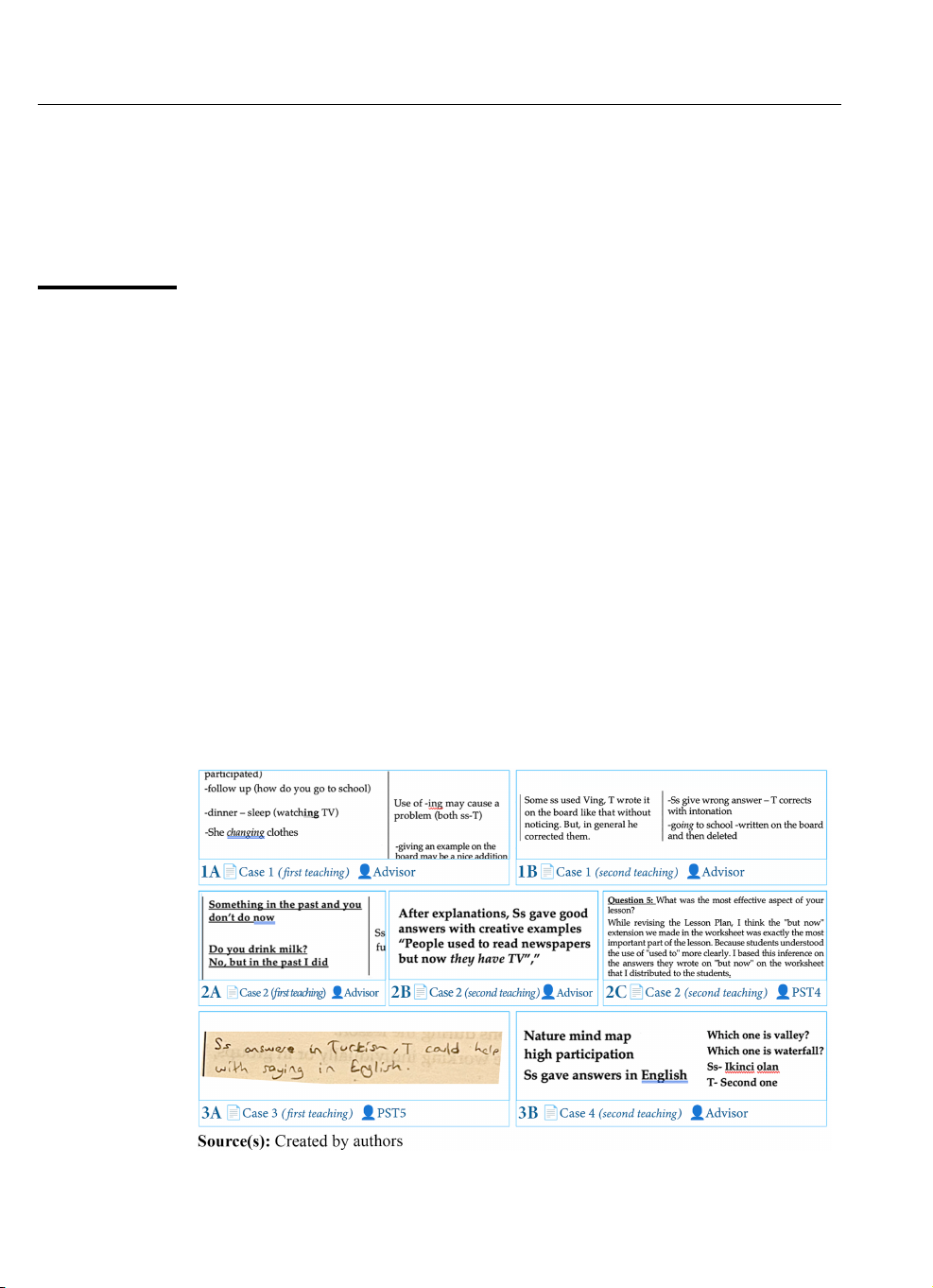
The figure above includes seven snapshots from multiple documents used in Phase 1. For
example, the advisor’s notes (Snapshot 1A) in the first teaching in Case 1 include a potential
threat to the flow of an activity. The snapshot highlights a pupil mistake (she is changing
clothes), and it is discussed in the post-lesson discussion that followed:
[00:03:38 Advisor] Still, I think they answered nice here. . .. . . . But they used -ing here. I suggest that
when they use -ing, you should immediately make a correction since we have simple present, general
sample sentences in the samples. In the samples (on the board) do not ever use -ing, or gerund form. I
get up or I get dressed . . . these are okay. But if a student says getting dressed, you should write this (on
the board) as “get dressed”. . . .
[00:11:57 Mentor 1] . . . you also wrote down some of the words with -ing.
The advisor and mentor raised concerns about a potential threat, leading the group to agree on
correcting it in the second teaching. In Snapshot 1B, this mistake recurred, and the PST
addressed it using intonation and board writing for corrections. Additionally, Snapshots 2A
and 2B show that during first teaching in Case 2, pupils repeatedly used the phrase “but now” to
compare old and current habits. The group then discussed incorporating this phrase into the activity:
[00:12:22 Advisor] Can I take a look at the worksheet? For example, in here, a pupil said “We go to IJLLS
beach every summer” and I heard she continued with “but now”. 14,1
Should we add this to the activity? Let’s ask PST4 and how did PST3 feel? Let’s also ask that.
[00:12:40 PST4] It would be nice to add to the activity.
[00:12:45 Advisor] . . . I mean, if the pupil could do “but now” it means they completely understood it. 6
After the exchange above, the group agreed to revise the activity and the worksheet to include
“but now” in the sentences. Moreover, this addition to the plan was observed by the PSTs to be
an improvement in the answers gathered from the pupils:
[00:02:43 Advisor] . . . The group of 5, you’ve done it again, it was nice. They gave answers. I
remember . . . what was it . . . “People used to read newspapers but now they have TV” that was written
(and read out loud) by a pupil.
[00:03:21 PST4] I was really proud there.
As seen in Snapshot 2C in Figure 2, PST4 highlighted that the post-lesson revision was crucial
as it clarified the structure for pupils. In Case 3, where pupils frequently relied on their mother
tongue and translated new language structures, PSTs struggled to shift the focus to English.
Snapshot 3A shows that PST5 observed this dependency and suggested increasing English
usage during the lesson. Throughout the semester, PSTs at High School B voiced concerns
about translation and explicit grammar explanations. In Case 3, pupils habitually translated
new vocabulary into Turkish. However, Snapshot 3B reveals that this issue was addressed in
the second teaching session, where the PST reinforced the use of English by repeating
vocabulary items in the target language.
Findings from the interviews
Immediately after the cases were finalized, individual semi-structured interviews were held
with the PSTs. Along with their satisfaction towards the PLS model, they were inquired about
Figure 2. Snapshots from multiple documents from cases in Phase 1
the benefits and challenges during the process. All PSTs who participated in the procedures International
expressed high satisfaction towards the model: Journal for Lesson & Learning
. . . Every stage went smoothly like clockwork. It all turned perfectly like a well-oiled machine, as if Studies
everything was going flawlessly. (PST1)
It’s enjoyable, and for us, it hasn’t been too demanding. I mean, we were already volunteers and
willing. I don’t think there’s anything to be taken out. In my opinion, everything is good. (PST2) 7 Benefits of the PLS model
Collaborative practices. While explaining their views towards the model, the PSTs pointed out
the benefits they have gained through participating. One of the most frequently reported
benefits of the model was the collaboration established in conducting PLS. While one
participant directly quoted “collaboration” as a benefit, others pointed out how they benefitted
from working together and compared it to the times they teach alone.
For instance, I generated some ideas, got input from the mentor, collected those ideas, and this stage
was both collaborative . . . it provided the benefit of working together. Working with PST2 (the peer)
provided collaborative working. (PST1)
In the interviews, the PSTs expressed that while collaborating, new ideas generated by the
members of the group provided great benefits. The statements related to idea generation made
by the PSTs during the interviews were related to preparing or revising a lesson plan. The
benefits of the new ideas and perspectives of the group members was a topic expressed by the
PSTs, as the following excerpts illustrate:
. . . everyone’s opinion may be different. For example, in their classes, some teachers apply certain
things excessively. Some teachers apply different things. My peer may also think differently. So,
you’ll get different thoughts, different perspectives. (PST7)
Different than the previous code, the coded segments included in this section were related to
the feedback given and received by the group during the teaching and reflecting stages in cases.
In the interviews, PSTs stated that the group benefitted from the feedback:
We create lesson plans and receive feedback . . . We also get feedback from the teacher at school.
These already contribute . . . Seeing more details on top of that is more helpful in understanding certain things. (PST2)
Teaching a revised lesson. Another frequent code emerged from the interviews as teaching a
revised lesson. Although teaching a revised plan is a natural part of PLS, when asked in the
interviews, PSTs stated that the act of “teaching a revised plan” itself was a benefit. They
explained how this benefited them:
I felt like mine went more smoothly . . . felt like it went better. Because some changes were important.
The changes we made were important. Especially in the worksheet, for example, if I had done the
worksheet like Professor PST3, I would probably have struggled a lot. (PST4)
It was common view that teaching a revised plan was beneficial for the PSTs. They explained
that it made the process easier as they were already going to teach the same topic. PSTs also
stated that the revisions made after the first teaching were important, and he thought he could
have struggled without the revisions.
Reflection. During the interview, PSTs were asked to recall back to the process of PLS.
When asked about their own lesson, they gave explanations about how their teaching went
and what changes occurred or could have occurred if they were not in the PLS group. These
explanations showed that they still reflected on their own teaching even after the implementation of PLS:
. . . of course, it (PLS) creates awareness on a personal level as well . . . I added it to the professional IJLLS
aspect because I thought of it professionally, I mean, I thought of reflection as a framework. (PST2) 14,1
Another code included under the reflection theme was peer reflection. Peer reflection refers to
the act of a PST observing a peer’s lesson, reflecting on the lesson during a group meeting after
the teaching in order to give feedback and suggest a revision to the lesson plan. In this sense,
many PSTs stated that they reflected on their peer’s teaching: 8
Well, actually, I did (noted) it (observations) according to her. Like, “Can she teach (the activity)
on time?”, ”How much did it take?”, “What was the waiting time?”, I tried to observe these more. (PST5)
Instructional development. In the interviews, PSTs stated that the benefit of the model was that
it provided instructional development. Some participants directly used the term professional
development, while others referred to learning how to teach a lesson and creating or improving a lesson plan:
It was very beneficial for me. It was very beneficial for my teaching development . . . Both for my
learning and teaching development. (PST1)
Benefits on pupils. One of the common topics reported by the PSTs was how PLS affected
pupil learning. While some PSTs explained that they noticed an increase of participation in the
classroom, others stated that their collaboration and reflection affected pupil learning:
PST1 says something during the break. If there is a similar activity that he mentioned for the second
hour, I say, “Let me pay attention to this,” actually, the pupils don’t feel it, but it has an effect on them,
of course, in a more indirect way. (PST2)
Challenges in conducting PLS
As seen in the previous themes and codes, the views of the PSTs were positive and they mostly
expressed how they benefited from the model. Nevertheless, they also stated a few challenges
in implementing PLS. The codes included in the challenges theme were information overload, being observed and timing. Information overload
One of the challenges expressed in the interviews was information overload. This code
included the segments related to thinking in too much detail, which could cause them to
struggle to remember what was in the plan. Another important point raised in the interviews
was thinking of anticipated pupil response:
. . . we prepared the lesson plan in 3 days, in a total of around 6 hours. That was very exhausting . . . (PST3)
Being observed. A challenge stated by a participant was the experience of being observed.
One of the participants, PST7, expressed that being observed, especially by the mentor teacher, made her feel tense:
I don’t think the mentor teacher should be in the classroom. One of the factors affecting my
performance, I attribute it to this because I get tense, especially during observations. I feel tense while being observed. (PST7)
Nevertheless, in the following conversations, we agreed that observation is a natural part of the
practicum, and it is necessary for receiving feedback. PST7 also agreed that it is necessary, but
it may affect performance. She also suggested videorecording the lesson to reflect on it;
however, she decided that it would not be appropriate to do so without obtaining permissions.
Familiarity with the classroom. One participant PST reported that being familiar with the
classroom was a challenge during the practices:
I think.. I think sir, knowing the classroom is a little bit harder because there are some pupils who . . . International
when the mentor teacher is teaching, they talk but when we teach they do not talk much. And guessing Journal for Lesson
what they will ask is hard.(PST1) & Learning
As PST1 commented, familiarity with the classroom posed a challenge where anticipating Studies
pupil response could be difficult, especially in some classrooms where, as PST1 explained,
pupils could surprise the teachers with their interesting questions. PST1 also explained that
sometimes they do not talk as much as they talk during the mentor teacher’s lessons when they 9 are teaching.
Timing. The most frequently reported challenge in the process of conducting PLS was
timing. Some of the PSTs stated that their biggest concern was having more time to prepare.
Although having more time was more of an external factor that was controlled by their
decisions, they reported that it could improve the process.
. . . I think the time could have been a bit longer. Because after changing the lesson plan, I was a bit
stunned. I said “Wait a minute. This changed, I need to work on it”. The time could have been a bit longer. (PST4)
Similarly, while teaching a revised plan was seen as a benefit for the ones who taught second, it
was a seen as a disadvantage for the ones who taught first:
. . . but still, there’s this issue. Because we think of too many activities, during the lesson, I often feel
like, “What was the last thing in the lesson plan? Let me check.” (PST2)
Suggestions made by the PSTs
In the interviews, PSTs were asked if they had any suggestions for the PLS model. The PSTs
mostly explained that they were satisfied with the model, and they could not think of anything to change:
During observation, sir, I believe there should be a special place for this. During practicum . . . you
know, we go for observation . . . for such things, there should be a special . . . There should be a task
because I think the response from the pupils is an important matter (PST1)
PST1 recommended that a task could be added to their practicum for observing a specific
aspect of teaching during the lessons in order to better observe pupil responses. This
suggestion was considered in Phase 2. Cases in phase 2
In Phase 2, procedures of the model were slightly adjusted in terms of timing. The findings
from the previous phase, specifically PSTs’ suggestions, led to a schedule, which allowed more
timing between the procedures. Unlike the previous phase, the second teaching session in
Phase 2 often occurred three days after the first one. Additionally, two new tasks were
introduced to replace two of the 12 weekly reports in the PSTs’ practicum portfolio. Task I for
the PSTs involved profiling classroom English proficiency by analyzing exam results,
consulting the mentor teacher and observing the class. Task II focused on assessing student
motivation to learn English through discussions and written responses.
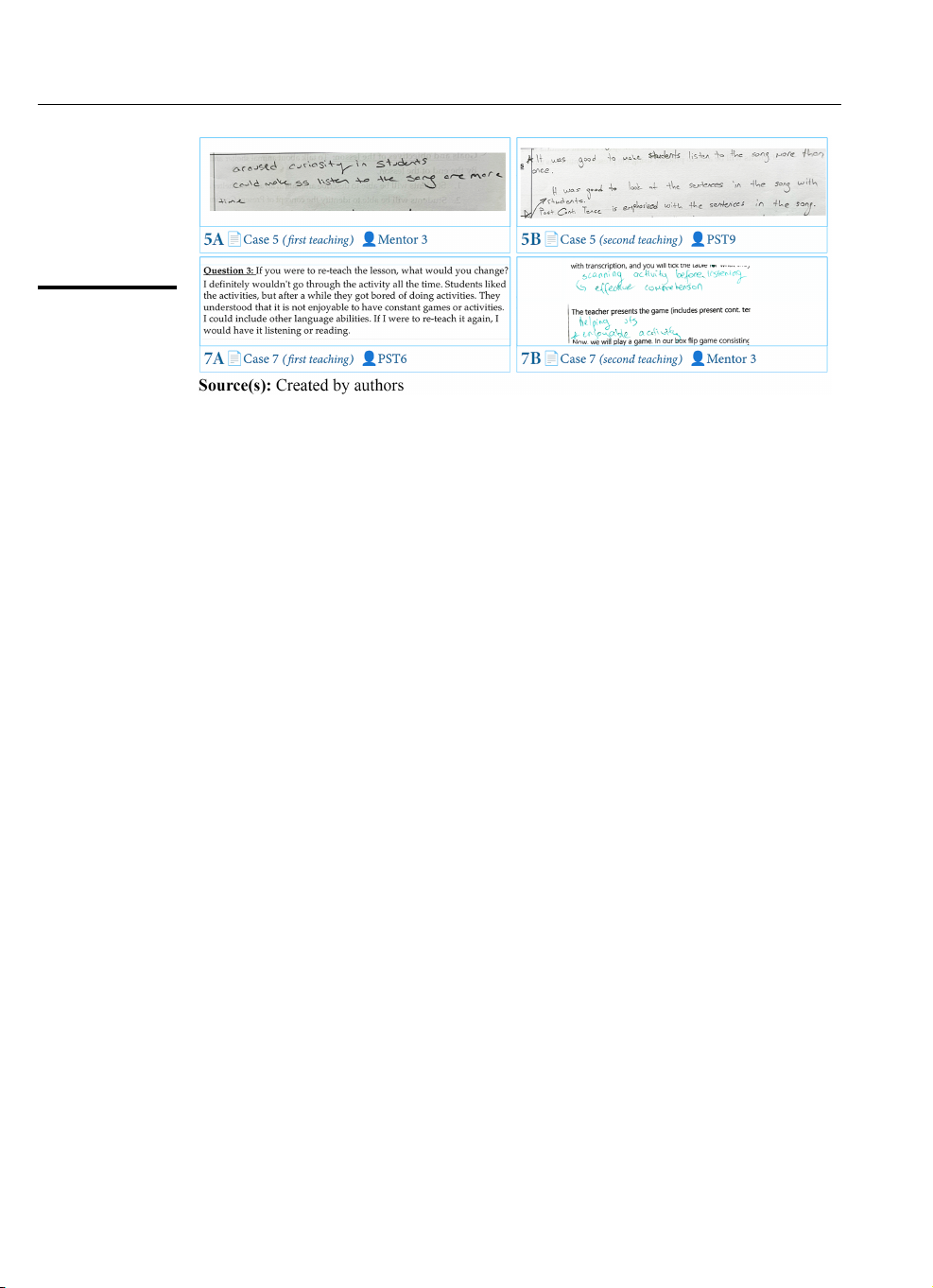
Similar to Phase 1, group members focused their observations and discussions on their
plan. The notes in Snapshots 5A and 5B in Figure 3, for example, shows how the members
viewed increasing the time of playing the audio affected the flow of an activity. Snapshot
7A shows that PST6 noted that the plan could use more activities directed towards language
abilities, and Snapshot 7B illustrates how this listening activity was viewed by the mentor in the second teaching. IJLLS 14,1 10
Figure 3. Snapshots from multiple documents in Phase 2 Discussion
Findings of this study revealed high satisfaction with the PLS model, particularly for its
collaborative nature. For example, PST1 described it as a “well-oiled machine,” and PST8 saw it
as similar to previous group work experiences. The PLS model was praised for its collaborative
nature, refining teaching practices and immediate feedback, aligning with the findings of
Ousseini (2019). Participants appreciated shared insights and problem-solving, enhancing their
teaching strategies, a finding similar to Cos¸kun (2021), who conducted Micro-LS with PSTs.
PSTs reported that teaching a revised plan was beneficial. Although not the primary aim of
PLS, this outcome was seen as an advantage. Some scholars warn that this benefit might lead
participants to wrongly focus on the pitfall of creating a perfect plan, which can detract from
the main goal of LS (Larssen et al., 2018). Angelini and �
Alvarez (2018) term this the “perfect
lesson utopia,” advising PSTs to avoid this mindset (p. 25). Hird et al. (2014) argue that
improving lesson plans should not be viewed as a pitfall, as it can enhance pedagogical
understanding even when lessons are not taught. Despite differing views, some PSTs in this
study appreciated teaching a revised plan. In relation, some also reported this situation as
challenging. Although teaching first or second might not be important for in-service teachers,
data from this study suggest that PSTs might benefit from participating in PLS more than once
to experience various circumstances. Reflection on their own and peers’ actions was
highlighted as a key benefit, aligning with findings that LS promotes deep reflection and
pedagogical improvement (Karadimitrou et al., 2014; Leavy and Hourigan, 2016).
Instructional development, though not directly observed, was noted by some PSTs as a
benefit of discussions and revisions. Furthermore, two PSTs observed that PLS had indirect benefits on pupil learning.
One of the most frequently stated challenge, timing, significantly affected some cases in
Phase 1. Procedural adjustments were made in Phase 2, including extending breaks between
sessions to allow for more effective discussions and revisions. Some PSTs reported
information overload, particularly in the planning stages. Gurl (2011) cautions that the heavy
workload in LS can deter commitment, underscoring the need for clear communication about
the demands of PLS. In this study, while this was challenging, it also contributed to richer
discussions. Being observed during teaching was another concern, though PSTs recognized
that this is a standard part of practicum. This reinforces the importance of emphasizing that
PLS is a collaborative process rather than an evaluation of individual performance. Conclusion
Over the last decade, scholars have been exploring LS in the context of teacher education.
Many stated that LS in teacher education is in its infancy (Cajkler and Wood, 2015). This study
contributes to the literature by revealing how PLS unfolded itself in ELT practicum while International
showcasing the benefits and identifying the challenges during the process. In this study, the Journal for Lesson
PLS model provided a framework for immediate feedback, which can enhance the & Learning
effectiveness of feedback sessions during school practicum. Studies
This study also suggests that teacher educators may benefit from incorporating the PLS
model in their school practicum, as the procedural arrangements of PLS proved effective
within the practicum setting. Teacher educators are encouraged to consider the timing
challenges identified in this study and to provide training and preparation for PSTs before 11 starting the PLS procedures.
Future research can explore strategies to manage information overload, reduce
observation-related stress and ensure equitable benefits for all participants during PLS.
Further studies can also focus on individual lived experiences to reveal the complexity of
learning during PLS, similar to the work of Skott and Møller (2017). Additionally, studies may
explore the formation of teacher identities within the collaborative PLS environment (Karaman and Edling, 2021). Limitations
The study acknowledges several limitations that may have affected the findings. Although
meeting protocols were encouraged in PLS, participants were free to discuss topics as they saw
fit, which could have impacted the consistency of the data. The study did not specifically
measure the participants’ instructional development, and any perceived effects on
instructional development reported in interviews should be interpreted with caution. References
Altınsoy, E. (2020), “Lesson study - a personal and professional development model for pre-service
ELT teachers”, Doctoral dissertation, Çukurova University, (Publication No. 643244), available
at: https://tez.yok.gov.tr/UlusalTezMerkezi/TezGoster?key5fl0Kw4p1rmMDotyKRdYv1PC9l-
PqTolpiPJlxV1ILlNhM7ueJWL7W8T7F9KU4Xl2 Angelini, M.L. and �
Alvarez, N. (2018), “Spreading lesson study in pre-service teacher instruction”,
International Journal for Lesson and Learning Studies, Vol. 7 No. 1, pp. 23-36, doi: 10.1108/ IJLLS-03-2017-0016.
Ayra, M. (2021), “The effect of lesson study professional development approach on primary teachers’
pedagogical content knowledge development and students’ academic achievement”, Doctoral
Dissertation, Amasya University, (Publication No. 699459), available at: https://tez.yok.gov.tr/ UlusalTezMerkezi/TezGoster?
key5tqUiYt63sTQLTpozMJ92QnUmNit4qPGIHTyQOzziImYrIhPXHTkpC9wqCwUJsbHx.
Baldry, F. and Foster, C. (2019), “Lesson study in mathematics initial teacher education in England”, in
Theory and Practice of Lesson Study in Mathematics, Springer, pp. 578-592.
Barab, S. and Squire, K. (2009), “Design-based research: putting a stake in the ground”, Journal of the
Learning Sciences, Vol. 13 No. 1, pp. 1-14, doi: 10.1207/s15327809jls1301_1.
Bayram, _I. and Bıkmaz, F. (2021), “Implications of lesson study for tertiary-level EFL teachers’
professional development: a case study from T€
urkiye”, Sage Open, Vol. 11 No. 2, 1,15 doi: 10.1177/21582440211023771.
Cajkler, W. and Wood, P. (2015), “Lesson study in initial teacher education”, in Lesson Study, Routledge, pp. 107-127.
Çetin, K. (2022), Practicum Lesson Study Guidebook, doi: 10.6084/m9.figshare.25295965.
Cos¸kun, A. (2021), “Microteaching lesson study for prospective English language teachers: designing a
research lesson”, Psycho-Educational Research Reviews, Vol. 10 No. 3, pp. 362-376, doi:
10.52963/PERR_Biruni_V10.N3.23. Cos¸kun, A. and Dalo�
glu, A. (2010), “Evaluating an English language teacher education program IJLLS
through Peacock’s model”, Australian Journal of Teacher Education, Vol. 35 No. 6, pp. 24-42, 14,1
doi: 10.14221/ajte.2010v35n6.2.
Dudley, P. (2015), Lesson Study: Professional Learning for Our Time, Routledge, New York.
Gove, M. (2010), “Speech to the national college annual conference”, available at: https://www.ukpol.
co.uk/michael-gove-2010-speech-to-the-national-college-annual-conference/
Gurl, T. (2011), “A model for incorporating lesson study into the student teaching placement: what 12
worked and what did not?”, Educational Studies, Vol. 37 No. 5, pp. 523-528, doi: 10.1080/ 03055698.2010.539777.
Harmer, J. (2001), The Practice of English Language Teaching, 3rd ed., Longman, Cambridge.
Hird, M., Larson, R., Okubo, Y. and Uchino, K. (2014), “Lesson study and lesson sharing: an appealing
marriage”, Creative Education, Vol. 5 No. 10, pp. 769-779, doi: 10.4236/ce.2014.510090,
available at: http://hdl.handle.net/1721.1/102999
Karadimitrou, K., Galini, R. and Maria, M. (2014), “The practicum in pre-service teachers’ education
in Greece: the case of lesson study”, Procedia-Social and Behavioral Sciences, Vol. 152
No. 2014, pp. 808-812, doi: 10.1016/j.sbspro.2014.09.325.
Karakas¸, A. (2012), “Evaluation of the English language teacher education program in T€ urkiye”, ELT
Weekly, Vol. 4 No. 15, pp. 1-16, available at: https://eltweekly.com/2012/04/vol-4-issue-15-
research-article-evaluation-of-the-english-language-teacher-education-program-in-turkey-by-ali- karakas/
Karaman, A.C. and Edling, S. (2021), Professional Learning and Identities in Teaching: International
Narratives of Successful Teachers, Routledge, New York. Karaman, A.C., €
Ozbilgin-Gezgin, A., Rakıcıo� glu-S€ oylemez, A., Er€ oz, B. and Akcan, S. (2019),
“Professional learning in the ELT practicum: Co-constructing visions”, Bolu Abant Izzet Baysal
University Journal of Faculty of Education, Vol. 19 No. 1, pp. 282-293, doi: 10.17240/ aibuefd.2019.19.43815-492119.
Larssen, D.L.S., Cajkler, W., Mosvold, R., Bjuland, R., Helgevold, N., Fauskanger, J., Wood, P.,
Baldry, F., Jakobsen, A., Bugge, H.E., Næsheim-Bjørkvik, G. and Norton, J. (2018), “A
literature review of lesson study in initial teacher education: perspectives about learning and
observation”, International Journal for Lesson and Learning Studies, Vol. 7 No. 1, pp. 8-22, doi: 10.1108/IJLLS-06-2017-0030.
Leavy, A.M. and Hourigan, M. (2016), “Using lesson study to support knowledge development in
initial teacher education: insights from early number classrooms”, Teaching and Teacher
Education, Vol. 57, pp. 161-175, doi: 10.1016/j.tate.2016.04.002.
Macalister, J. and Nation, I.P. (2020), Language Curriculum Design, Routledge, New York.
Ousseini, H. (2019), “Preservice EFL teachers’ collaborative understanding of lesson study”,
International Journal for Lesson and Learning Studies, Vol. 9 No. 1, pp. 31-42, doi: 10.1108/ IJLLS-12-2018-0092. R€
adiker, S. and Kuckartz, U. (2020), Focused Analysis of Qualitative Interviews with MAXQDA,
MAXQDA Press, available at: https://www.maxqda-press.com/wp-content/uploads/sites/4/978- 3-948768072.pdf
Schipper, T.M., Goei, S.L., Van Joolingen, W.R., Willemse, T.M. and Van Geffen, E.C. (2020), “Lesson
study in Dutch initial teacher education explored: its potential and pitfalls”, International
Journal for Lesson & Learning Studies, Vol. 9 No. 4, pp. 351-365, doi: 10.1108/IJLLS-04- 2020-0018.
Selen Kula, S. and Demirci-G€
uler, M.P. (2021), “University-school cooperation: perspectives of pre-
service teachers, practice teachers and faculty members”, Asian Journal of University Education,
Vol. 17 No. 1, pp. 47-62, doi: 10.24191/ajue.v17i1.12620.
Seleznyov, S. (2018), “Lesson Study: an exploration of its translation beyond Japan”, International
Journal for Lesson and Learning Studies, Vol. 7 No. 3, pp. 217-229, doi: 10.1108/IJLLS-04- 2018-0020.
Skott, C.K. and Møller, H. (2017), “The individual teacher in lesson study collaboration”, International International
Journal for Lesson and Learning Studies, Vol. 6 No. 3, pp. 216-232, doi: 10.1108/IJLLS-10- Journal for Lesson 2016-0041. & Learning Us¸tuk, € O. and Çomo�
glu, _I. (2021), “Reflexive professional development in reflective practice: what Studies
lesson study can offer”, International Journal for Lesson and Learning Studies, Vol. 10 No. 3,
pp. 260-273, doi: 10.1108/IJLLS-12-2020-0092.
Van den Akker, J., Gravemeijer, K., McKenney, S. and Nieveen, N. (2006), “Introducing educational
design research”, in Van Den Akker, J., Gravemeijer, K., McKenney, S. and Nieveen, N. (Eds), 13
Educational Design Research, Routledge, pp. 3-7.
Wang, F. and Hannafin, M.J. (2005), “Design-based research and technology-enhanced learning
environments”, Educational Technology Research and Development, Vol. 53 No. 4, pp. 5-23,
doi: 10.1007/bf02504682, available at: https://www.jstor.org/stable/30221206
Yalçın-Arslan, F. (2019), “The role of lesson study in teacher learning and professional development of EFL teachers in T€
urkiye: a case study”, TESOL Journal, Vol. 10 No. 2, pp. 1-13, doi: 10.1002/ tesj.409.
Yin, R.K. (2018), Case Study Research and Applications Design and Methods, 6th ed., Sage, CA.
Yinger, R. (1979), “Routines in teacher planning”, Theory into Practice, Vol. 18 No. 3, pp. 163-169,
doi: 10.1080/00405847909542827. Corresponding author
Kenan Çetin can be contacted at: kenancetin@mail.com
For instructions on how to order reprints of this article, please visit our website:
www.emeraldgrouppublishing.com/licensing/reprints.htm
Or contact us for further details: permissions@emeraldinsight.com
Document Outline
- Practicum lesson study: insights from a design-based research in English language teaching practicum
- Introduction
- The context and literature review
- The proposed practicum lesson study model
- Critical components of PLS
- Methodology
- Research setting and participants
- Research procedures
- Data collection tools and analyses
- Findings
- Cases in phase 1
- Findings from the interviews
- Benefits of the PLS model
- Collaborative practices
- Teaching a revised lesson
- Reflection
- Instructional development
- Benefits on pupils
- Challenges in conducting PLS
- Information overload
- Being observed
- Familiarity with the classroom
- Timing
- Suggestions made by the PSTs
- Cases in phase 2
- Discussion
- Conclusion
- Limitations
- References
- Introduction
Tài liệu liên quan:
-

Ung dung game hoa trong cac chien dich MKT
21 11 -

Bao cao Chi so TMDT Viet Nam 2025
23 12 -
Thông tư quy định về việc phân quyền, phân cấp và phân định thẩm quyền quản lý nhà nước về giáo dục cho chính quyền địa phương
29 15 -
Nghị quyết về phát huy các giá trị di sản văn hóa gắn với phát triên du lịch bền vững tỉnh Khánh Hòa đến năm 2025, định hướng đến năm 2030
22 11 -

Quyết định phê duyệt Chiến lược phát triển du lịch Việt Nam đến năm 2030
15 8