A Better Medicine Cabinet - Tài liệu Nghiên cứu khoa học | Trường Đại học Sư phạm - Đại học Huế
A Better Medicine Cabinet - Tài liệu Nghiên cứu khoa học | Trường Đại học Sư phạm - Đại học Huế. Tài liệu được sưu tầm giúp bạn tham khảo, ôn tập và đạt kết quả cao. Mời bạn đọc đón xem.
Môn: Nghiên cứu khoa học (SPH) 5 tài liệu
Trường: Trường Đại học Sư phạm - Đại học Huế 110 tài liệu
Tác giả:

Preview text:
A Better Medicine Cabinet: Conta inner Team 8: Eun-Joung Lee Christopher Leitz Billy Lo Caroline Park Becky Roberts Matthew Ward Project Mission
To create an aesthetically pleasing medicine
cabinet with enhanced functionality.
¾ Stray from the conventional look
¾ Increase the ability to store items efficiently
¾ Become a centerpiece for the bathroom Top Customer Needs
The medicine cabinet should be ¾ Enclosed and secure ¾ Functional ¾
Spacious and flexible on the inside ¾ Sturdy ¾ Easily accessible Target Market ¾ Young, upwardly mobile ¾ Growing families
¾ Want custom look at IKEA price ¾ Design conscious Concept Evolution Initial Prototype
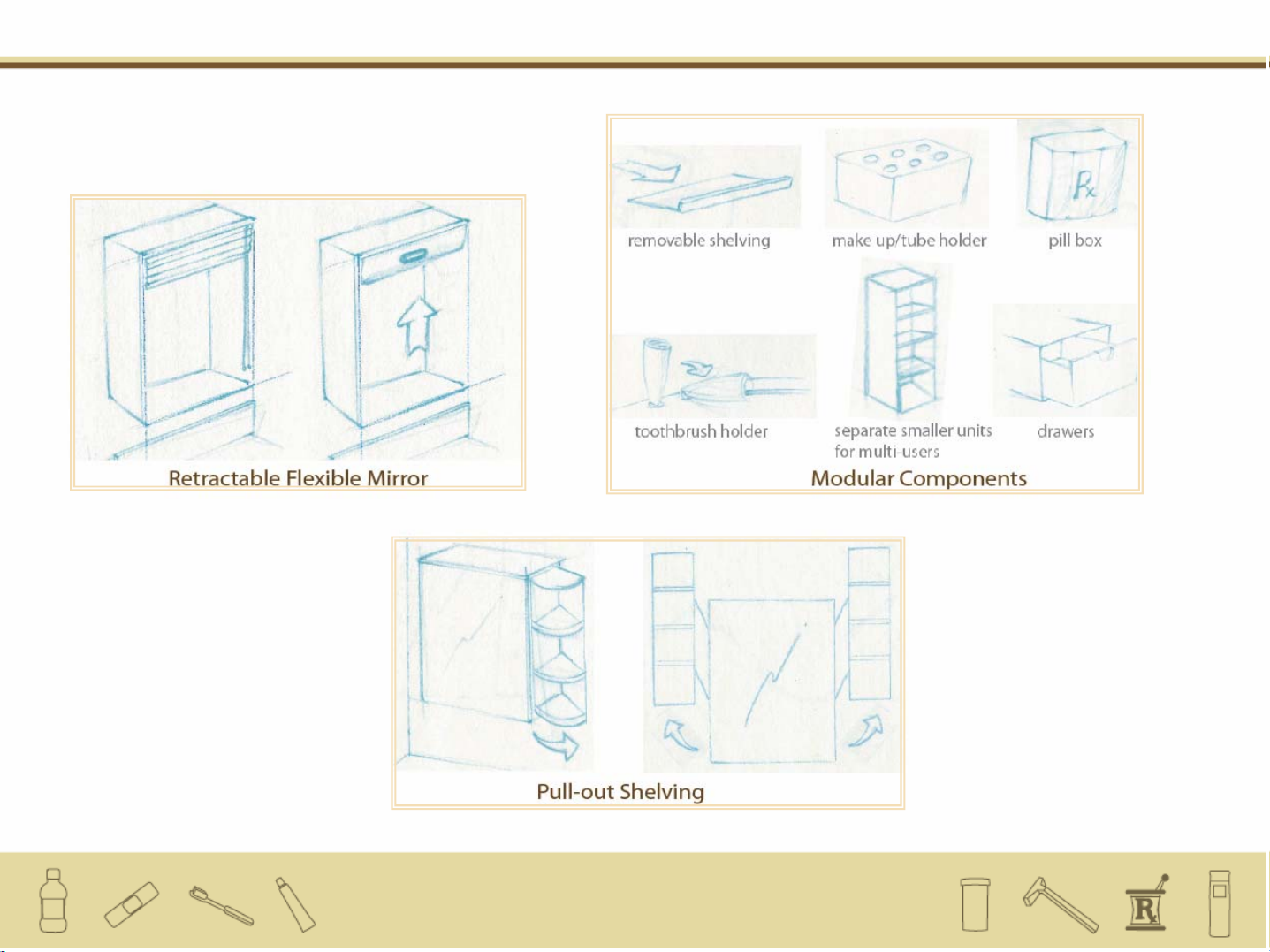
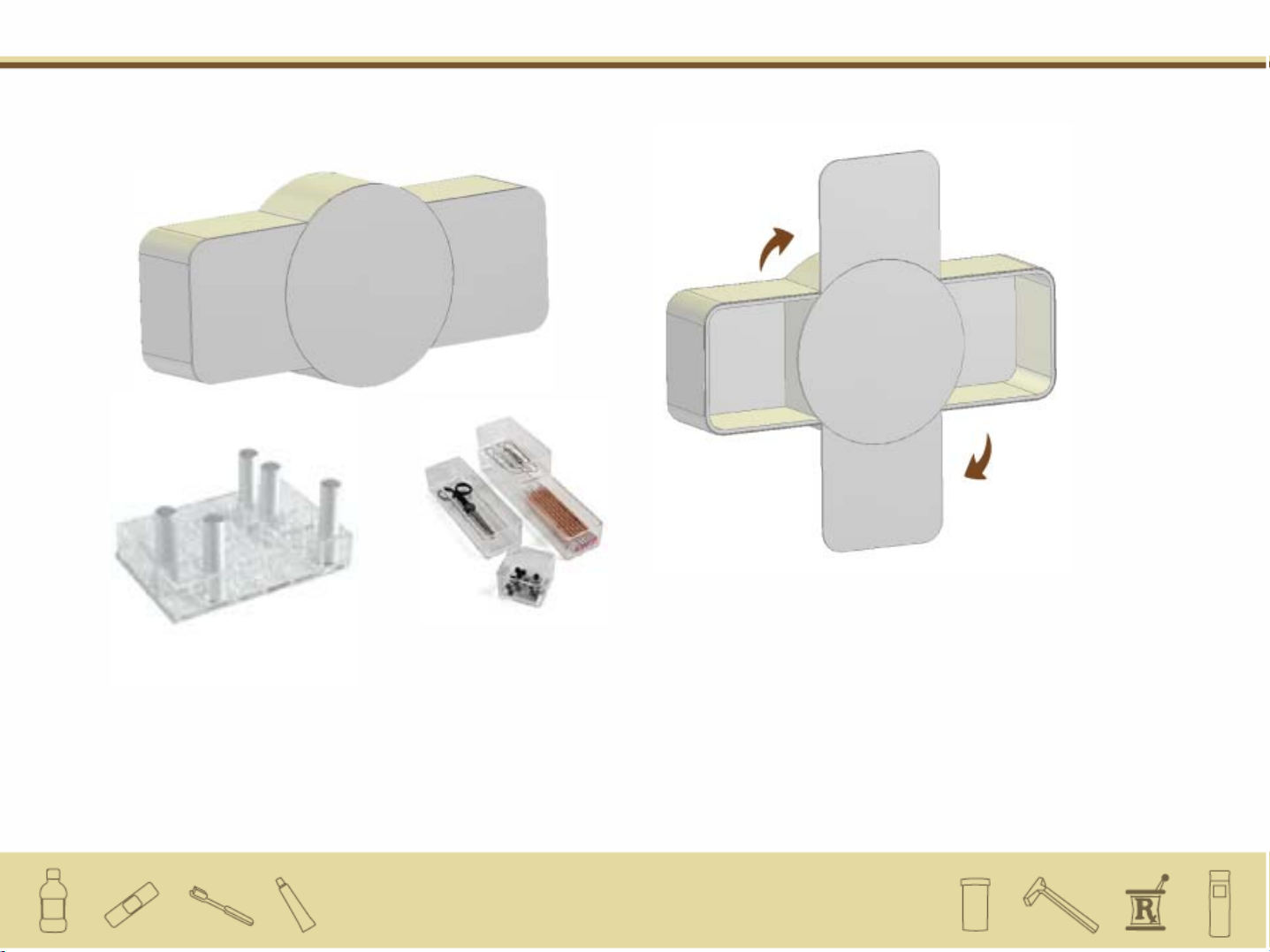
Rotating mirror – mirror and cabinet
can be used simultaneously α-Prototype
¾ Based on two-compartment design with pegboard interior backing
– Modular components plug into pegboard
– Shelves, drawers, toothbrushes, make- up holders
¾ Open center area for lighting or decorative storage Limitations of Concepts
¾ Trade-offs between form and functionality
– Initial directions functional but boring
– Later designs focused on exterior aesthetics
but sacrificed interior functionality
– Our α-prototype veered too heavily toward interior solutions
¾ Final design integrates interior storage
capabilities within an aesthetically pleasing package Putting It All Together Conta inner Product Features
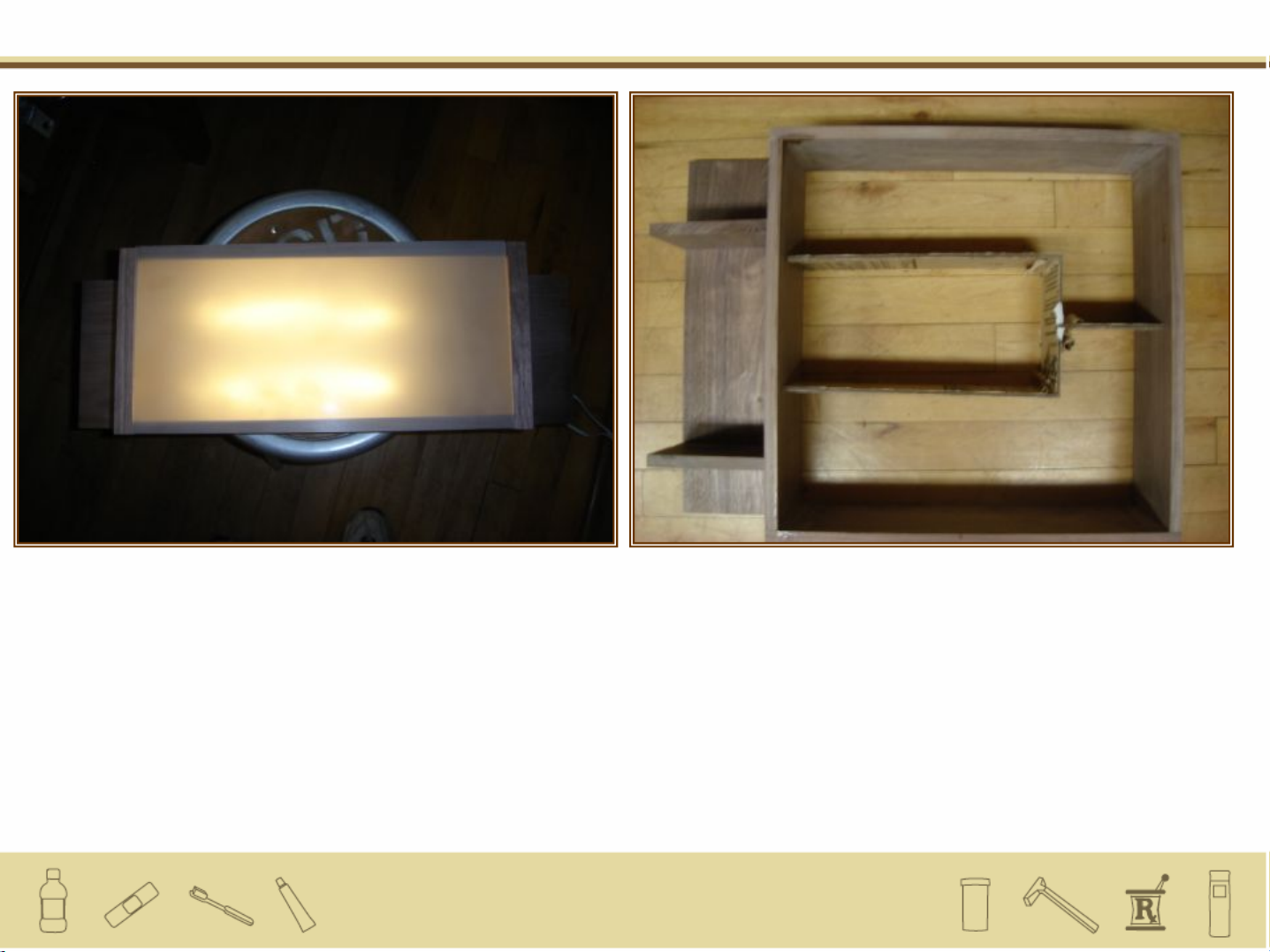
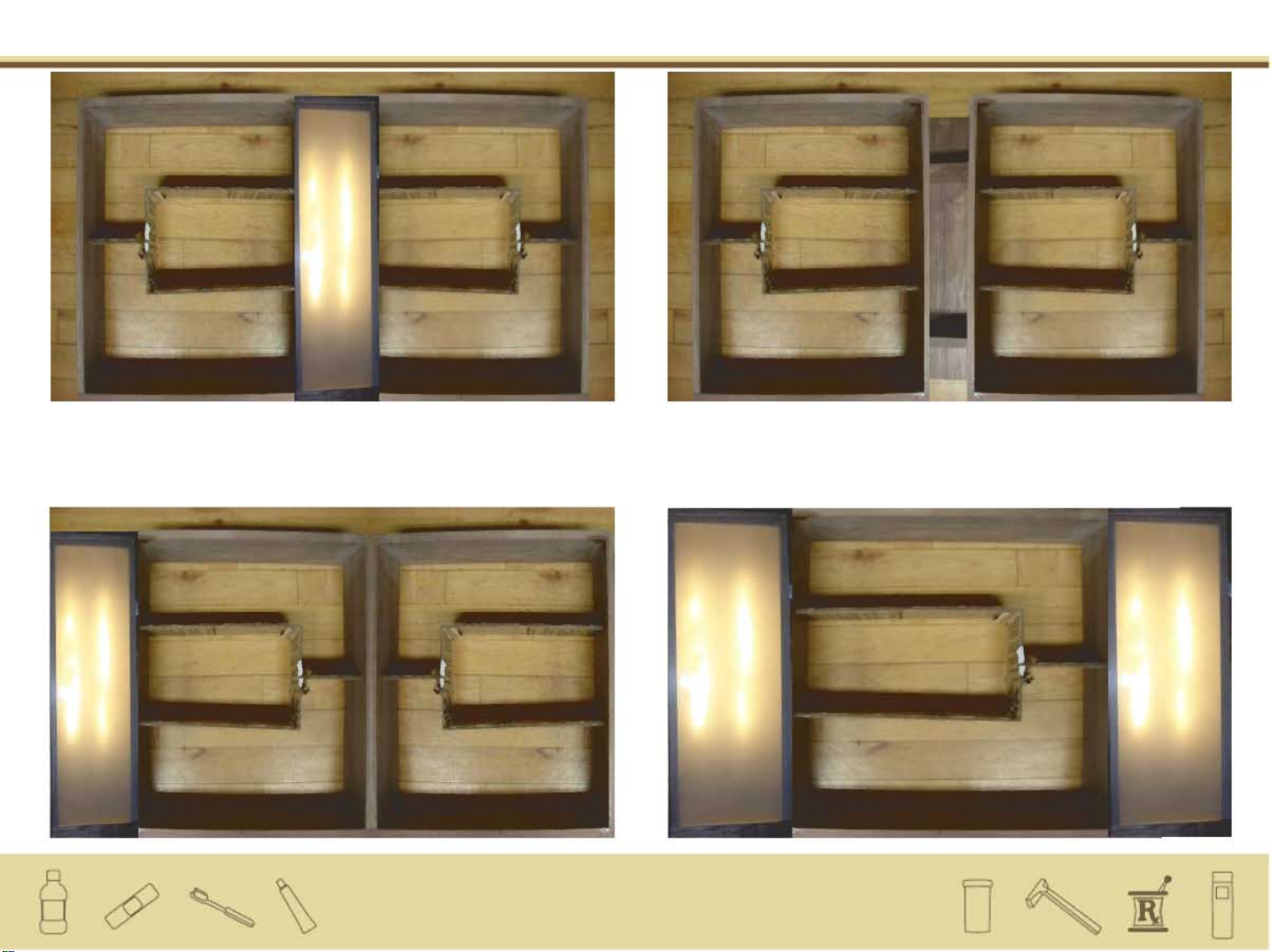
Dimensions: 24” × 24” × 6.5” Main Cabinet
24” × 7” × 6.5” Lighting Module
¾ Variable shelving heights to store most objects ¾ Aesthetically striking
– Soft lighting, frosted glass
¾ Modularity (between and within cabinets) ¾ …at a reasonable price
β−Prototype versus Mass Production ¾ Existing Materials – Walnut exterior – Acrylic mirror – Plastic shelving – Metal hinges – Fluorescent lighting ¾ Mass-Produced Version
– Lightweight and inexpensive metal – Glass shelving
– Selective use of accents (wood, metal trim) Financial Model
¾ Based on previously described mass- produced version
– Utilized conservative estimates of material cost
– Assumptions: $100,000 ramp-up cost,
$10,000/year marketing cost, 16,000 units/year, 10% discount rate
– Determined cost of $196/unit
¾ Selling price of $300 yields $3.9M NPV over four years
Document Outline
- A Better Medicine Cabinet:
- Project Mission
- Top Customer Needs
- Target Market
- Concept Evolution
- Initial Prototype
- a-Prototype
- Limitations of Concepts
- Putting It All Together
- Product Features
- b-Prototype versus Mass Production
- Financial Model
Tài liệu liên quan:
-
Bài giảng Families of materials, properties applications and selection criteria môn Nghiên cứu khoa học | Trường Đại học Sư phạm - Đại học Huế
43 22 -

Sách Niêm giám thống kê Việt Nam 2022 môn Nghiên cứu khoa học | Trường Đại học Sư phạm - Đại học Huế
149 75 -
Báo cáo Nghiên cứu khoa học: Đánh giá quá trình học nhằm nâng cao kỹ năng nói của người học tiếng anh | Trường Đại học Sư phạm - Đại học Huế
66 33 -
Một đề cương nghiên cứu khoa học mẫu | Đại học Sư Phạm Huế
446 223