An Investigation into the Influence of Embodied Agents on the Social Presence Between Humans in Virtual Reality Rowing
An Investigation into the Influence of Embodied Agents on the Social Presence Between Humans in Virtual Reality Rowing. Tài liệu được sưu tầm giúp bạn tham khảo, ôn tập và đạt kết quả cao. Mời bạn đọc đón xem.
Môn: Tài liệu Tổng hợp 3.6 K tài liệu
Trường: Tài liệu khác 3.9 K tài liệu
Tác giả:










Preview text:
PDF Download 3749385.3749390.pdf 09 February 2026 Total Citations: 0 . Total Downloads: 279 .
Latest updates: hps://dl.acm.org/doi/10.1145/3749385.3749390 . . Published: 17 November 2025 . . . RESEARCH-ARTICLE . Citation in BibTeX format
An Investigation into the Influence of Embodied Agents on the Social . .
Presence Between Humans in Virtual Reality Rowing
SportsHCI 2025: Annual Conference on
Human-Computer Interaction and Sports November 17 - 19, 2025
FREDERIQUE VOSKEUIL, University of Twente, Enschede, Overijssel, Netherlands Enschede, Netherlands . . .
ARMAĞAN KARAHANOĞLU, University of Twente, Enschede, Overijssel, Netherlands .
DEES POSTMA, University of Twente, Enschede, Overijssel, Netherlands .
DENNIS REIDSMA, University of Twente, Enschede, Overijssel, Netherlands . . .
Open Access Support provided by: . University of Twente .
SportsHCI '25: Proceedings of the First Annual Conference on Human-Computer Interaction and Sports (November 2025)
hps://doi.org/10.1145/3749385.3749390 ISBN: 9798400714283 .
An Investigation into the Influence of Embodied Agents on the
Social Presence Between Humans in Virtual Reality Rowing Frederique Voskeuil Armağan Karahanoğlu Interaction Technology Interaction Design Group University of Twente University of Twente Enschede, Netherlands Enschede, Netherlands frevoskeuil@gmail.com a.karahanoglu@utwente.nl Dees Postma Dennis Reidsma Human-Media Interaction Human-Media Interaction University of Twente University of Twente Enschede, Netherlands Enschede, Netherlands d.b.w.postma@utwente.nl d.reidsma@utwente.nl
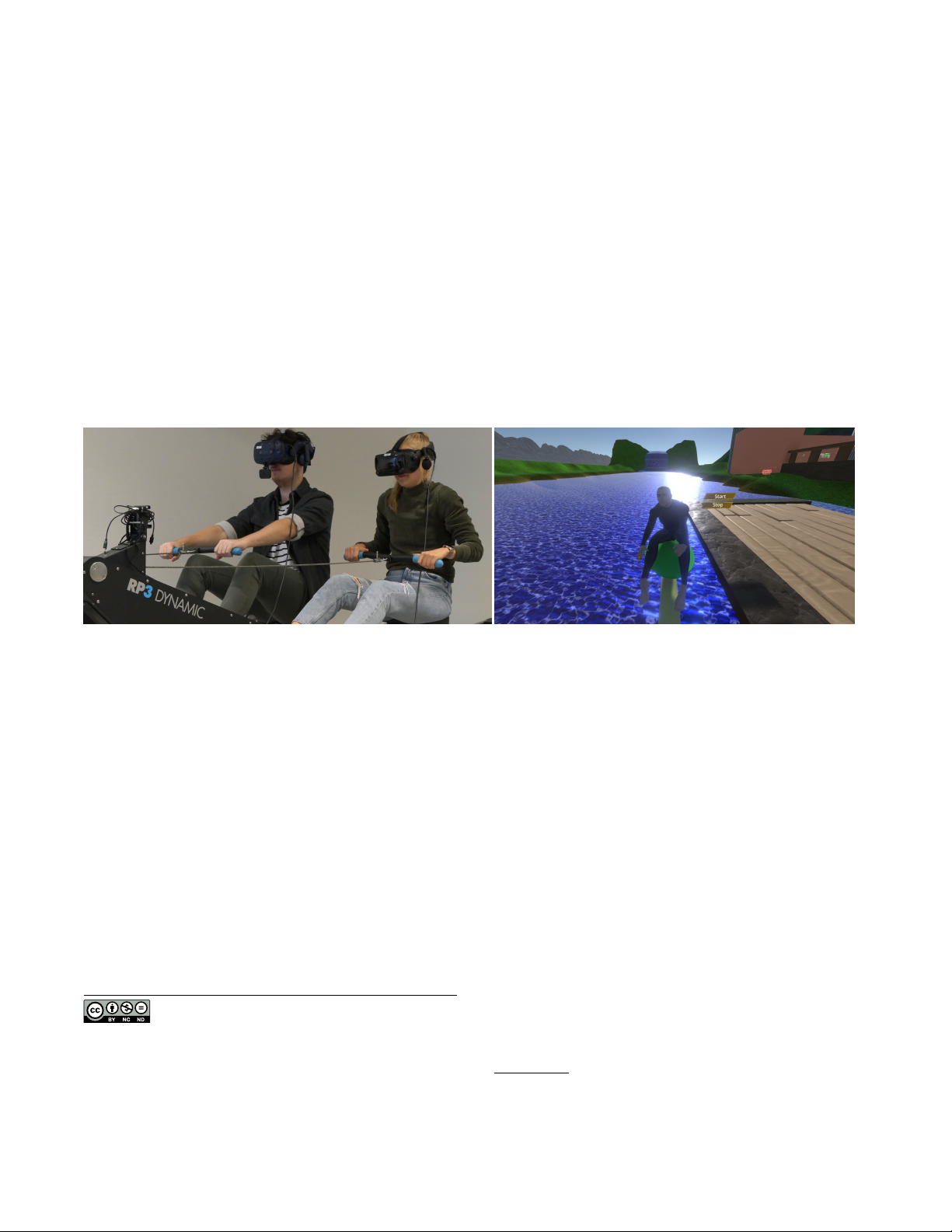
Figure 1: Left: 2 people on ergometer. Right: a coxswain addressing the rower in the back of the Virtual boat. Abstract CCS Concepts
This paper investigates the relations between the embodiment of
• Human-centered computing → Empirical studies in col-
virtual agents and the sense of social presence in virtual reality
laborative and social computing; User studies; Virtual reality;
(VR) for rowing simulation. We carried out observations and an
• Software and its engineering → Virtual worlds training
experimental study to investigate the role of embodied agents in simulations.
social presence. We developed an embodied coxswain and set up
an experimental study with two RP3 rowing machines, VR head- Keywords
sets, and various hardware and software components. Twenty-two
SportsHCI, virtual rowing, virtual reality, social presence
participants tested the system under two conditions: with an embod-
ied coxswain and with a non-embodied agent. Experiment results ACM Reference Format:
Frederique Voskeuil, Armağan Karahanoğlu, Dees Postma, and Dennis
showed a significant increase in perceived social presence in the
Reidsma. 2025. An Investigation into the Influence of Embodied Agents on
VR between participants when rowing together with the embodied
the Social Presence Between Humans in Virtual Reality Rowing. In Annual
coxswain. Our findings illustrate the challenges and benefits of
Conference on Human-Computer Interaction and Sports (SportsHCI 2025),
more realistic coxswain representations in VR rowing and pave
November 17–19, 2025, Enschede, Netherlands. ACM, New York, NY, USA,
the path for further exploration into the virtual agent characteris-
11 pages. https://doi.org/10.1145/3749385.3749390
tics in other sports that can enhance social presence for colocated participants in VR settings. 1 Introduction
In recent years, virtual collaborative sports have attracted growing
attention within HCI, and particularly in SportsHCI. These activi-
ties allow people to exercise in digitally mediated environments,
from running with fitness apps such as RunKeeper1 or Strava2, to
This work is licensed under a Creative Commons Attribution-NonCommercial-
NoDerivatives 4.0 International License.
more immersive virtual experiences that use Augmented or Virtual
SportsHCI 2025, Enschede, Netherlands
Reality (VR) headsets or haptics. Many of these systems integrate
© 2025 Copyright held by the owner/author(s).
ACM ISBN 979-8-4007-1428-3/25/11
1Runkeeper – https://runkeeper.com/cms/
https://doi.org/10.1145/3749385.3749390
2Strava – https://www.strava.com/?hl=nl-NL
SportsHCI 2025, November 17–19, 2025, Enschede, Netherlands Voskeuil et al.
social features to keep users engaged. For instance, Zwift3 enables
members of a boat is key to performance in on-water rowing. Often,
indoor cyclists to train and compete in an online community, while
crew rowers are supported by a coxswain. The coxswain is seated in
iFit4 offers interactive running, cycling, and yoga classes. In such
the bow-facing direction and is the only boat member who does not
settings, a strong sense of social presence, feeling connected and
row. They are responsible for steering the boat and communicating
“with” others, is often central to a positive experience [21, 31, 60].
with the rowers. Besides, a good coxswain motivates the rowers
Social presence holds the potential to enrich many facets of
and ensures the game plan of the coach is executed.
virtual collaborative sports experiences, such as improving perfor-
mance and attracting broader user participation [45]. While the 2.1 Rowing on Land
influence of social presence in virtual collaborative sports experi-
While rowing is an outdoor sport and requires specific equipment
ences has been researched in the fields of cycling [3, 11], volleyball
for training (e.g., the boat) and training conditions (e.g., still wa-
[71], jogging [47, 50], boxing [42] and other sports [43], it remains
ter), weather conditions can sometimes restrict training on water,
a compelling topic to explore further, due to many unexplored
making indoor rowing on a rowing machine an integral part of
impacts on performance and joy of sports. For example, virtual
this sport. Ergometers and virtual reality systems stood out in the
collaborative experiences offer both opportunities and challenges
last decade as alternatives to in-water rowing training to tackle the
for team sports like rowing, which rely on social inter-personal
challenges stemming from seasons and weather conditions.
coordination and social interaction among team members.
Several commercial systems enhance the on-land virtual rowing
With this context in mind, the primary aim of this paper is to
experience. For example, Holofit5 is a VR rowing fitness app that
explore how to enhance social presence between team rowers in a
users can download onto their VR headset. In rowing exercises,
Virtual Reality (VR) rowing session by employing a virtual coxswain.
the user can explore different environments from real-world or
The study is motivated by the aspiration to unlock the potential
imaginative locations while rowing. Another example is Quiske6
of embodied coaching to enhance team dynamics within rowing
which employs motion-tracking devices to provide real-time feed-
teams and aims to contribute to the realm of virtual collaborative
back to rowers about their performance. Similarly, BioRowTech7
sports experiences. Such systems have been built and investigated
provides equipment and technology for optimizing rowing perfor-
in the past [e.g. 16, 48, 73]; we build on a similar setup, while the
mance, which provides visual feedback to rowers about common
team setup and the ways to foster social presence have not been
errors, like incorrect arm movements, bending the back too early, addressed yet.
and excessive back movement at the finish. Finally, the M3 (Multi-
In this paper, we aim to explore how to enhance a social pres-
Modal Motion synthesis) simulator8 offers an immersive rowing
ence between rowers in a VR setting. We do this by introducing
experience which combines haptic oar movement with visual and
a virtual character acting as a coxswain (i.e. the person steering
auditory feedback, and guides the path of the oar of the rower. All
the boat, managing pace and race strategy, and coaching the other
these examples help rowers improve their technique, efficiency, and
crew members) that interacts with both the rowers together, ex- overall performance.
plicitly addressing them in a multi-party multi-modal interaction
In research systems, technology has been used in various ways,
manner. After grounding this design in preliminary observations,
mostly for exploring the role of feedback in learning and perfor-
we show through an empirical study that the presence of this vir-
mance, with VR as well as without it. [2, 19, 48, 63, 65–67, 73].
tual character with its behavioural strategies increases perceived
Adaptive, context-aware feedback has been shown to increase en-
social presence between the rowers themselves in a team rowing
gagement and training effectiveness in VR settings [18, 23]. By
task. Given the interpersonal dependencies that play a role in team
linking agent responses to real-time biometric or performance data,
rowing, we argue that such increased perceived presence may have
designers can create a more credible and personalised coaching
a positive impact on learning and performance in VR-based training
experience, which our findings suggest would further enhance so- setups like our system.
cial presence. While existing systems and prior studies investigated
Thus, our research question is: How can social presence between
the technological aspects of virtual rowing and the role and ef-
two rowers during a Virtual Reality rowing session be enhanced
fect of feedback in various modalities, there is no study yet which
by employing embodied virtual agents? By addressing this question,
investigates the social presence for multiple participants in VR
we contribute to the state of the art in the design of Virtual Reality
rowing as an integral part of rowing. In the next section, we will
sports experiences. In the following lines, we will first explain the
tackle the definitions of social presence which forms the core of
context of rowing, the current state of SportsHCI for rowing and our investigation.
social presence in VR. Following, we will explain our participant
studies in which we addressed our research question.
2.2 Defining Social Presence in VR 2 Related Work
Social presence is a multifaceted construct which is the degree of
awareness or connectedness with other users in a (virtual) environ-
Rowing is an on-water activity, which requires athletes to use their
ment [25]. It contributes to the overall experience of exercising in
muscle power and technique in “rowing strokes”. A rowing stroke
virtual environments, as it enhances enjoyment and engagement
consists of four phases: the catch, the drive, the finish, and the re-
covery. The relative timing of these phases 5 within and between crew
Holofit – https://www.holodia.com/
6Quiske – https://www.rowingperformance.com/
7BioRowTech – https://biorow.com/index.php?route=product/product&path=61_108&
3Zwift – https://us.zwift.com/ product_id=55
4iFit – https://www.ifit.com/connected-fitness
8Multi-Modal Motion synthesis) – https://www.rowing.ethz.ch/
An Investigation into the Influence of Embodied Agents on the Social Presence
Between Humans in Virtual Reality Rowing
SportsHCI 2025, November 17–19, 2025, Enschede, Netherlands
[34, 70], fosters friendships [44] and can even increase the efficacy
In summary, the prior work shows that social presence is highly
of training and therapy programs [70]. Moreover, the perception
subjective and necessary to acquire to enhance the virtual experi-
of presence generally improves learning, efficiency, planning, and
ences, while the absence of the feeling can distract the experience.
cognitive or sensorimotor performance, and facilitates the transfer
Considering the importance of togetherness in team sports, we will
of training to real-world situations [29].
address how to enhance the “togetherness” in VR rowing.
Prior work on avatar-based social interaction highlights the role
of embodiment in shaping presence and rapport [5, 28, 49, 59]. These
3 Design for VR Social Presence in Rowing
studies help us understand how anthropomorphism, agency cues,
and sensory fidelity interact to influence perceived co-presence,
We carried out (1) a preliminary observation and (2) an experi-
providing a foundation for interpreting our findings. Meanwhile,
mental study to address our research question. The preliminary
several aspects affect the perception of social presence in real and
study mainly served to inform our design of the embodied virtual
virtual environments (i.e., space and interactions, perception and
coxswain as a means to influence the perceived social presence
understanding and emotional connectedness). These aspects will
between two team rowers in VR; the experimental study explored
provide us with a grounding for addressing the research question
its actual effects. We obtained ethical approval from our institute
that we will tackle through a set of studies.
before contacting any participants and obtained their informed consent. 2.2.1
Space and Interactions. Social presence is often characterized
as the experience of being in one place, while physically being 3.1 Preliminary Observations
located in another [27, 37, 52, 69, 76]. It is a feeling of being present
To gain deeper insights into the behavioural and social dynamics
or in another world without mentioning the transition from the
in crew rowing, we carried out semi-structured observations at a
physical world to a virtual world [25, 34, 70, 71] or a computer-
local rowing club. The first author investigated the behavioural
simulated environment [29]. Yet, social presence is feeling present
and social dynamics in a (coxed) eight training sessions, consisting
in a virtual environment while physically being located in another
of eight male rowers, a coxswain, and a coach (aged 18-25). The
one [25, 37, 70, 71, 76]. The sense of social presence is further shaped
training sessions took place along the local canal. Additionally, we
by interactions, [10, 11, 25, 26, 37, 42–44, 47, 51, 70, 74], especially
performed an unstructured interview with the coach after the train-
with other (virtual) humans [10, 11, 25, 42–44, 46, 47, 50, 70, 74]. All
ing. In addition to on-site observations, we made semi-structured
these prior works highlight the importance of the social context,
observations on video-recorded rowing matches to improve our
including terms like social play, sense of community and social
understanding of team dynamics in rowing. We selected videos
interaction, for the perception of social presence.
featuring Olympic rowing teams, as these matches are often well-
recorded and have a high video quality [53–58, 64]. The rowers 2.2.2
Perception and Understanding. Harms and Biocca [26] ex-
press the need to understand other (virtual) humans in addition
in the videos were male and female Olympic rowers. The dataset
to the exchange of social cues. They propose that presence can be
included videos of two men’s eight boats, one men’s two boat,
defined by the degree to which the user understands messages, and
three women’s eight boats, two women’s two boats, and a video
the emotional and attitudinal state to and from other users. Yet,
specifically of a coxswain during a match. Olympic rowing teams,
understanding messages to and from others in virtual environments
composed of professionals, are expected to present strong team
is an important element of social presence [28]. These highlight
dynamics. In our notes, we documented the (relative) occurrence of
that the awareness of the presence of other (virtual) humans and
various social and behavioural events, such as ‘high fives’ and other
understanding messages to and from these humans defines the user
(social) interactions. The notes of the author were then discussed
perception and understanding of presence.
with the research team to decide upon the important elements of social presence in VR rowing. 2.2.3
Emotional Connectedness. Emotional connectedness is sub-
We noticed that only the coxswain and the coach used verbal
jective and characterized by the relationship between the user and
communication during the training. The coxswain spoke in a rhyth-
other (virtual) humans. Consider for instance that people show
mic pattern and took the role of the coach within the boat. Addi-
greater (emotional) connection and affection to avatars that share
tionally, the coach used a megaphone to communicate instructions
great resemblance to the user as opposed to avatars that share lit-
to the coxswain. Notably, the rowers interacted very little with each
tle resemblance [6, 7]. It includes the degree to which users feel
other during rowing because they were often too exhausted to talk.
united with others. Consequently, social presence is the perception
They communicated a lot with each other pre- and post-training
of being together with others [25, 34, 70]. Moreover, some prior
– these interactions were often casual in nature. A strong sense
work draws a connection between emotional states and social pres-
of team spirit was evident within the team. We observed that the
ence [26], which express that social presence not only influences
team coach actively provided feedback during intermediate dis-
the emotional and attitudinal state of others but also affects the
cussions. However, the rowers did not communicate much during
behaviour of each other. For example, social presence relies on
rowing matches, while they did engage in casual interactions in
the degree of warmth, sociability, personalization, sensitivity, or pre-matches.
intimacy of a medium when it is employed to interact with others
In Olympic rowing match videos, we uncovered several shared
Lombard et al. [37], Nunez et al. [51]. Conclusively, (emotional)
experiences such as shared celebrations and shared grief. The videos
connectedness entails the subjective experience of being with or
showed that rowers often use non-verbal communication when
feeling (emotionally) connected to other (virtual) humans.
they win, such as high-fives, handshakes, and shoulder taps. The
SportsHCI 2025, November 17–19, 2025, Enschede, Netherlands Voskeuil et al.
celebration forms of the male rowers showed a wide range of di-
versity [55, 58, 64]. Especially shoulder taps (observed four times)
and hugs (observed three times) were the most frequently observed
methods, followed by handshakes (observed two times), sometimes
even with opponents (observed two times), and taps on other body
parts, such as the head or knee (observed two times). In contrast,
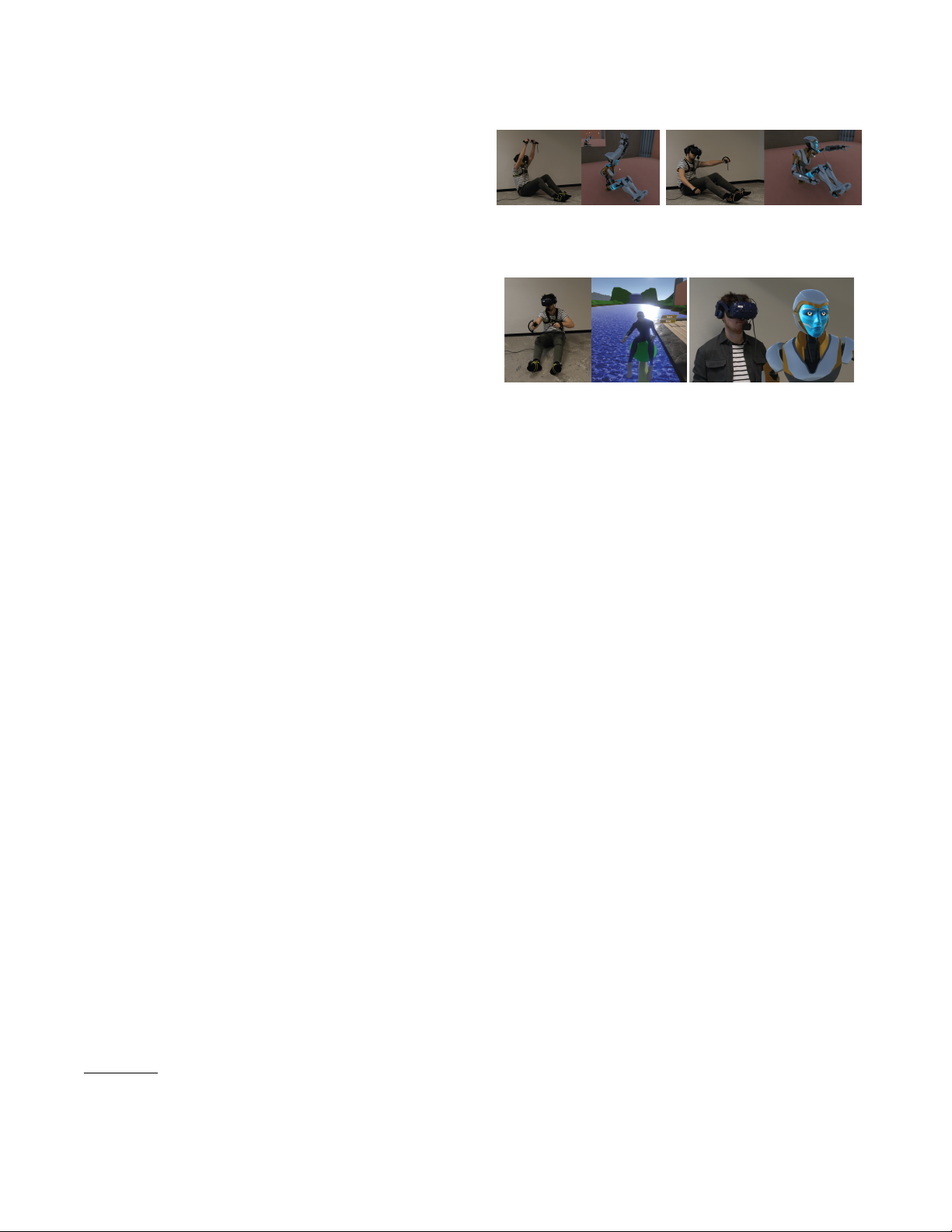
Figure 2: The movements captured in real-time and trans-
in the videos, female rowers primarily hugged when celebrating lated into a virtual avatar
[53, 54, 56, 57]. Male rowers tended to tap on each other’s knees
during moments of grief (observed two times), whereas there was
almost no interaction between female rowers [55]. Only an occa-
sional tap on the knee is observed (observed once) [53]. When the
rowers experienced victories or losses in the race (as part of train-
ing), there were limited occurrences of shared celebrations or grief
among the rowers. This entails a variety of verbal or non-verbal
interactions between the rowers as a result of them winning or losing.
An analysis of the coxswain’s video [62] makes it apparent that
Figure 3: The figure on the left shows the coxswain reproduc-
the coxswain communicates a lot, especially in contrast to the
ing the movement of an actor. The figure on the right shows
rowers who minimally engage in communication. It is observed that
the real-time facial tracking from the Vive Facial Tracker
a coxswain uttered rhythmic and motivational sentences, which
were different every time. The coxswain constantly reminded the
Our system tracks the animation of the face and gestures of
rowers how important it is to win and how hard they have trained.
the virtual coxswain as well as the positions and movements of
Notably, the coxswain occasionally gave a rhythm, especially during
the rowers on the rowing machine in real time and maps these
pace adjustments, and to remind the rowers to manage their rhythm.
to animations in the used VR platform (NeosVR). Furthermore, to
Moreover, the coxswain addresses the rowers as a team and keeps
keep the experiment flowing smoothly, we implemented ways to
them informed on the positions of other boats. Lastly, the coxswain
start, stop, and pause animations to deal with unexpected events
gave updates on the distance until the finish line.
during a session. First, the animations are tested on a free character
3.2 Development of VR Coxswain for
from the NeosVR library. This character is already equipped for
face tracking. After considering the number an positioning of the Enhancing Social Presence
trackers, animations with this character are recorded and reviewed.
Our preliminary observations demonstrated that (emotional) con-
Once the animations seem satisfactory, a more suitable avatar is
nectedness and social interaction are the two important aspects of
searched. Multiple characters are inspected, and a male, sporty
social presence. Our findings also demonstrated that the rowers do
character is eventually chosen. This character contains a mesh,
not communicate with each other but with the coxswain during
textures, and a rig (including the face) and is ready for animation.
training and race. By building on these findings, we decided to cre-
ate a scripted virtual coxswain and investigate the effect of virtual
4 Testing the Effect of Virtual Coxswain on
coxswain in social presence in VR rowing. Social Presence
Based upon our deliberate decision, we developed a virtual
Our experiment aimed to test whether a virtual coxswain would
coxswain, by using motion tracking technology (Tundra Track-
enhance the social presence between two rowers during a Virtual
ers) in combination with the Metagen AI platform 9. We used the
Reality rowing session. In our experiment, we asked participants to
physical input to animate our virtual coxswain. To achieve motion
engage in a virtual rowing task consisting of two conditions: partic-
capture, we used trackers which were positioned at the chest, hips,
ipants were guided by a non-embodied coxswain, and participants
and feet of a male individual. Additionally, we used a headset and
were guided by the embodied coxswain we described in section
controllers to create a life-like animation of the virtual coxswain
3. Our goal was not to validate that a virtual coxswain would be
(see Figure 2). In addition to a realistic appearance, the coxswain
the ultimate solution for the challenge we are tackling, but more
should have a realistic voice, therefore, A 21-year-old male provided
to explore the ways to address it. Hence, we see our experiment the voice to our coxswain.
as a research through design experiment [22, 77] which aimed to
To achieve a high level of realism to the coxswain, we used
produce knowledge rather than testing a solution. Our experiment
face tracking through the Vive Facial Tracker. The Vive Facial
was approved by the ethics board of our institute, and informed
Tracker 10 can record up to 38 different facial movements and can
consent was obtained from the participants.
be easily attached to the Vive Pro Headset (see Figure 3). Face
tracking allowed us to develop the virtual coxswain to make eye 4.1 Participants
contact with the rowers and to show appropriate facial responses
when communicating with the rowers.
The participant pool consists of 22 individuals, of which 14 are males
and 8 are females. The ages of the participants ranged from 19 to
9Metagen – https://github.com/MetaGenAI/MetaGenNeos
25 years old, and they were all students at our institute living in the
10VIVE Facial Tracker – https://www.vive.com/accessory/facial-tracker/
same town. Additionally, 21 participants had the local nationality
An Investigation into the Influence of Embodied Agents on the Social Presence
Between Humans in Virtual Reality Rowing
SportsHCI 2025, November 17–19, 2025, Enschede, Netherlands
and spoke the local language as their native language whereas one
Minds Measure Questionnaire [26], the Rapport Scale [1], and the
participant exclusively spoke English. Prior knowledge of rowing
ASA Questionnaire [20] – see also ‘Measurements section’ below.
or Virtual Reality was not a requisition for the participants. Lastly,
After completion of the second condition, participants were again
all participants were physically able to join the rowing exercises.
asked to fill out the same questionnaires. The experiment ended
with post-experiment interviews. 4.2 Measurements
In our setup, participants alternated between bow and stroke
We obtained different measurements to investigate social presence
positions. The bow seat faces the coxswain directly and is typi-
in VR rowing. We used the Networked Minds Measure Question-
cally responsible for synchronising with the stroke seat, who sets
naire by Harms and Biocca [26] to assess the sense of social presence
the rowing pace. This positional difference may have affected the
between the members of a rowing dyad. The Networked Minds
salience of the coxswain’s gestures and gaze direction.
questionnaire concerns social presence and consists of six sub-
dimensions (co-presence, attentional allocation, perceived message 4.4 Analysis
understanding, perceived affective understanding, perceived affec-
Data from the questionnaires were analysed using mixed effects re-
tive interdependence, and perceived behavioural interdependence).
gression [see e.g., 13, 17, 75]. With mixed effects regression, we are
The reliability of the original questionnaire is high with Chron-
able to account for nested dependencies in the data. In the present
bach’s Alpha ranging between .81 and .87 for the sub-scales. To as-
case, such nested dependencies arise because two participants form
sess the perceived level of anthropomorphism of the non-embodied
a dyad, meaning that the data points from one participant are
agent and the embodied coxswain, we used a combination of the
not truly independent. Data from the Networked Minds Measure
ASA questionnaire [20] and the Rapport Scale [1]. The ASA scale is
Questionnaire and the combined ASA/Rapport questionnaire were
an instrument for evaluating human interaction with an artificial
analysed separately. Shapiro-Wilk’s test for normality indicated
social agent and the Rapport Scale offers a measure of cognitive rap-
that the assumption for normality was met for both the Networked
port. This allowed us to discuss whether our design of the coxswain
Minds questionnaire (p=0.27) and the combined ASA/Rapport ques-
behaviours was appropriate to their task.
tionnaire (p=0.77). Data were analysed using the lme4-package [8]
Finally, we engaged in a post-experiment discussion with par-
and the lmerTest-package [32] in R-statistics [61]. For both ques-
ticipant dyads. For our discussion, we prepared a number of open-
tionnaires, we constructed a regression model with the summed
ended questions (e.g., What did you like about the rowing exercise
questionnaire data as the dependent variable, condition and seating
in condition n”; what did you dislike about the rowing exercise in
position as the main effects, and an interaction effect for condition
condition? and why?). Further, we asked participants to reflect on
and seating position. To model the random-effects structure, we
the nature of the presented agents through a number of pictures
allowed model intercepts to vary per dyad. Finally, a Bonferroni
(adapted from Charisi et al. [15], see Figure 4) prompting them to
correction was applied to account for alpha inflation due to multiple
explain which picture would best fit the nature of the virtual agent. testing.
The post-experiment discussions were analysed using an induc-
tive thematic analysis approach [14]. Notes from the observations
4.3 Experiment Design and Procedure
and post-test discussion findings were categorized and grouped
To examine the effect of avatar realism on the sense of social pres-
into similar topics using the thematic analysis method proposed by
ence, we carried out a within-subjects experiment in which the
them. Following this, reoccurring patterns or trends were identified,
participants were invited to test two conditions: ‘non-embodied’ interpreted, and analysed.
and ‘embodied’. In the non-embodied condition, participants were
asked to engage in a virtual reality rowing session which was 4.4.1
Limitations. Some technical issues emerged throughout the
guided by a non-embodied agent (Figure 5). Guidance from this
experiments. During three experiments, audio-related issues arose,
agent came in the form of verbal instructions that were also visible
causing the participants to be unable to hear each other through
on a virtual pane. In the embodied condition, participants were
the VR headsets. This occurred during experiments one, two, and
instructed by a virtual embodied coxswain and asked to perform
five. Although the participants could hear each other via mobile
the same rowing tasks (Figure 5). All participants experienced both
phones, one participant noted that she could not hear the other
the non-embodied and the embodied coxswain conditions. To elim-
person due to the noise of the rowing machine. During the other
inate order effect in the results, we randomised the order of the
experiments, the participants could hear each other via the VR
conditions between rowing dyads. For the experiment, we used the
headsets. Another technical issue arose during the first experiment
networked virtual reality rowing setup. Each of the ergometers was
when rowers were unexpectedly thrown out of the (virtual) boat
placed in a different room and participants were connected through
during their rowing session. They were placed back in the boat
the audio-visual feedback that was relayed to them through the
after which the experiment continued. virtual world.
Before the start of the experiment, participants were randomly 5 Results
paired and randomly assigned a seating position in the boat (i.e.
front-seat or back-seat). They were then asked to indicate their level
5.1 Perceived Presence in Virtual Rowing
of perceived closeness using the IOS-Scale [4]. After completing the
Mixed effects regression analysis of the Networked Minds ques-
first condition, participants were asked to fill out the Networked
tionnaire for social presence revealed that there was a significant
SportsHCI 2025, November 17–19, 2025, Enschede, Netherlands Voskeuil et al. Board game Car Notebook Friends Dog Laptop Teacher
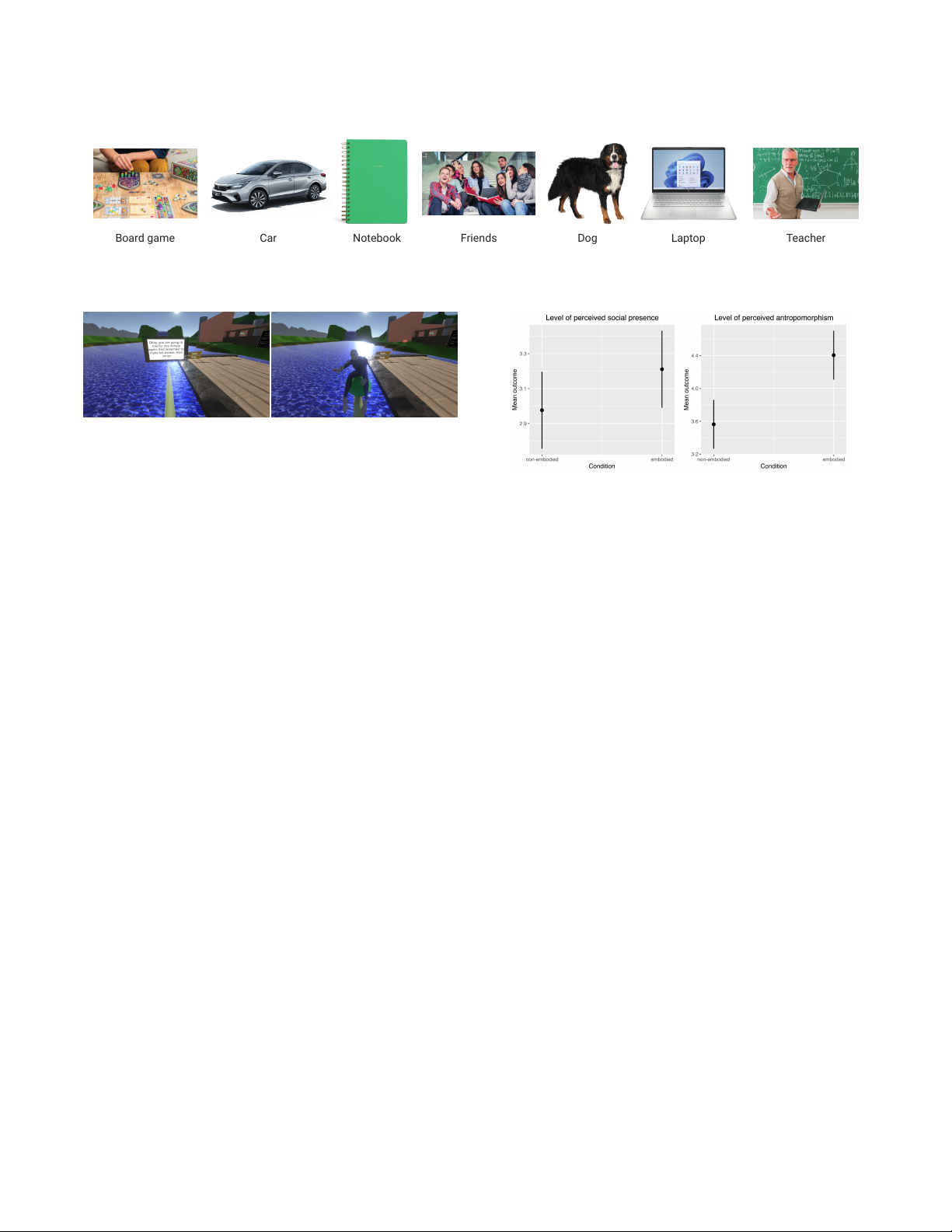
Figure 4: Pictures used in the post-experiment discussions, adapted from Charisi et al. [15] to fit an adult audience
Figure 5: The two conditions of the experiment: a human-
like coxswain (right) and a text-based form of feedback (left).
Figure 6: Partial effect plots for ‘condition’ for the level of
perceived social presence (Panel A) and for the level of per-
ceived anthropomorphism (Panel B). Levels of condition (i.e.
effect of condition (p = 0.02) on the sense of social presence be-
non-embodied / embodied) are on the x-axis; the grand-mean
tween members of a rowing dyad (Figure 6). Participants scored
centred values (±2 SD) for the respective questionnaires are
higher on the Networked Minds questionnaire (M = 0.23; SE = 0.07) on the y-axis.
when the avatar was presented as an embodied coxswain than as a
non-embodied entity. In the regression model, we also tested the
effect of seating position on social presence. It might have been
the case that a sense of social presence (towards the other rower) 5.2.1
Perceptions about Non-Embodied agent. When looking at
was related to seating position (e.g., being able to see the other
how the participants perceive the agents, the non-embodied agent
participant, or not). This was, however, not the case, as we found
was often described as programmed (N=11), robot-like (N=11), and
no significant effect of seating position (
emotionless (N=8), accordingly linking the picture of the laptop p = 0.72) or interaction
effect of seating position and condition (
to the agent (N=20). One of the participants stated: “It was just p = 0.68).
Data from the combined ASA / Rapport Scale for anthropomor-
like an instruction system, and you see that often with laptops. It
phism were also analysed using mixed effects regression. It was
also didn’t have a face, it wasn’t a person” (experiment 8, back-seat
found that there was a significant effect of ‘condition’ (
rower). Nevertheless, N=8 participants noted that the agent gives p < 0.001)
on the perceived level of anthropomorphism (Figure 6). Partici- clear instructions.
pants perceived the level of anthropomorphism to be significantly
Meanwhile, almost half of the participants thought the agent
higher (M = 0.84; SE =0.18) for the embodied agent than for the non-
gave clear instructions (N=8). One participant noted: “I think this
embodied agent. In the model, we also tested the effect of seating
agent was much clearer than the other agent, but it was boring”
position on the perceived level of anthropomorphism. It might have
(experiment 2, back-seat rower). Still, some participants noted that
been the case that the virtual seating position in the boat obscured
the agent’s feedback was not directly related to the actions of the
a clear view of the agent, lowering the differences between the
user (N=3). One participant said: “He said, ‘you are doing all right’,
two types of agents. This was, however, not the case, we found no
but I know it is not because he is triggered by something that hap-
significant effect of seating position (
pened. It’s not because he really understands what you do, I think”
p = 0.67 ) or interaction effect
of seating position and condition (
(experiment 9, back-seat rower). Furthermore, N=4 participants p = 0.82).
thought the agent had similarities with the notebook, while five
participants thought it resembled a car, particularly a navigation
5.2 Results of post-experiment interviews
system. One participant stated: “It looked like a navigation system
During the post-experiment discussions, we found that N=13 par-
that also tells you to go left here, go right now” (experiment 3,
ticipants referred to the non-embodied agent as “it”, while the other
back-rower). Finally, two participants associated the agent with
participants referred to it as “he”. Conversely, it was the other way
images of a teacher or a board game.
around for the embodied agent, as the majority of the participants
Nearly all participants pointed out that the agent had the least
often referred to the embodied agent as “he” (N=17), while five
similarities to a dog (77%), as the participants stated that the system
participants addressed the avatar with “it”. We will elaborate our
lacked emotions (36%), a characteristic that is often associated with
findings in the following sections.
dogs. One participant stated: “It doesn’t look like anything that lives.
An Investigation into the Influence of Embodied Agents on the Social Presence
Between Humans in Virtual Reality Rowing
SportsHCI 2025, November 17–19, 2025, Enschede, Netherlands
A dog is always cute, fun or happy, and an AI doesn’t have any
human-like, or human-like by being interactive” (experiment 3, front-
emotions, it is emotionless” (experiment 10, front-rower). Another
seat rower). On the other hand, four participants did not realize
participant agreed: “Dogs are very nice, spontaneous and sweet and
that the embodied agent was pre-programmed. Three of these four
the laptop wasn’t” (experiment 7, back-seat rower). In addition to
participants thought that the responses of the agent were very well
a dog, almost half of the participants pointed out that the agent
timed, and therefore it seemed like the agent responded to them.
did not resemble a friend. One participant expressed: “I think a
A participant asked: “The coxswain was giving specific feedback
computer screen to be the farthest from a friend” (experiment 5, front-
for only one person at the time, right?”. When she heard that the
seat rower). Further, another participant described the interaction
embodied agent was scripted, she noted: “He gave feedback for one
with the agent as being static: “I would say the least similarities with
person at the time, so that’s why we thought that he sees differences
friends. It was a somewhat static interaction, which is not the case with
between the first and the second person” (experiment 11, front-rower).
friends” (experiment 4, front-seat rower). Lastly, a minority of the
Finally, six participants commented the embodied agent gave clear
participants mentioned that the agent did not have any resemblance instructions.
to a laptop (13%), a board game (9%), or a notebook (5%).
According to the participants, the agent had the least resem-
blance to a notebook (N=8). One participant articulated: “The note- 5.2.2
Perceptions about the Embodied Agent. The embodied agent
book has the fewest similarities because that is the least human-like
is often characterised by his friendly voice (N=10), kind tone (N=10),
and interactive thing here” (experiment 9, front-seat rower). In a sep-
and good feedback (N=5), which yielded participants’ perceptions
arate experiment, a participant remarked: “I had more of a teacher
of the embodied agent as similar to a teacher (N=16) or a friend
on board than a textbook” (experiment 3, front-seat rower). Besides, (N=9).
four participants noted the agent is least similar to the car. A par-
On the other hand, nine participants noted that the embodied
ticipant claimed: “The car, notebook and the other things are not
agent had a strange placement and movements, and N=8 mentioned
interactive and the coxswain is interactive” (experiment 2, back-seat
that the feedback of the agent was not a result of the rower’s actions.
rower). Another participant agreed by expressing that a car oper-
N=5 participants noticed that the agent was boring due to the voice.
ates the other way around, as the driver controls it, while in this
One participant described the embodied agent as “monotone” and
scenario, the agent guides the participant (experiment 2, front-seat
“robot-like” (experiment 4, back-seat rower). The voice of the agent
rower). Lastly, participants indicated the lowest level of resemblance
played a role in this perception, as one participant pointed out: “It
between the agent and a board game (N=3), a dog (N=3), a teacher
was a very computer-like voice, so you associate that with robots,
(N=2), friends (N=1) and a laptop (N=1).
laptops, computers, and such. A mechanical voice” (experiment 2, front-seat rower). 5.2.3
Personal Preferences. More than two-thirds of the partici-
Participants associated the agent with being a teacher (N=16),
pants preferred the condition with the embodied agent (68%). Four
while two of them thought the agent lacked the authoritative traits
participants compared the two agents and observed that the em-
expected from a teacher. N=9 associated the agent with the “friends”
bodied agent had higher levels of motivation, enthusiasm, and
and described the agent as being nice or friendly (N=6). One par-
engagement. In contrast, three participants favoured the condition ticipant stated:
with the non-embodied agent, as they noticed that the embodied
“His voice was very friendly and he gave a lot of
agent could be distracting. One participant expressed this as:
compliments” (experiment 10, back-seat rower). “I
Yet, some participants considered the agent to be flawed, which
didn’t know where to look, at him or to still focus on the side of the
added a human-like feature. One participant noted: “Sometimes he
boat to see the oars behind me” (experiment 11, front-seat rower).
Yet, it was perceived to be fun by the front-seat rower of experiment
had to correct himself, and therefore I would say friends instead of a 8:
teacher” (experiment 1, back-seat rower). Additionally, multiple par-
“As soon as the coxswain started talking for a longer period of time,
ticipants sensed there was something off about the embodied agent
I found it a bit distracting. I responded to it, which is fun, but it does
(N=9). A participant expressed: “He tried to level with us. I would
distract a bit from the task, rowing”. Another participant indicated
being more focused on the environment when rowing with the
think he resembled a friend, not your best friend, but he tried to be”
(experiment 6, front-seat rower). The movements and placement of
non-embodied agent (experiment 9, front-seat rower). On the other
the agent were perceived as strange (N=9), and three participants
hand, back-seat rower of experiment 5 disagreed with this, as he
were even frightened of the agent. One of the participants stated:
was too busy reading the instructions during the non-embodied agent condition.
“I thought he was human-like, however there was something off about
the face and his posture. His voice was very human-like and nice
to listen to, but the rest of the appearance wasn’t real. Therefore, I 6 Discussion
thought he was scary” (experiment 8, back-seat rower). Two partici-
Prior research highlighted the effectiveness of virtual characters on
pants liked that the agent was pointing at them, Additionally, one
motivation and performance levels [24]. Studies by Li et al. [36] and
participant would prefer the agent to call him by his name.
Hoffman et al. [29] demonstrate that rowing with immersive VR
Due to the perceived odd facial expressions and posture, four
improves performance, motivation levels, and energy management.
participants stated that the agent resembled the picture of the laptop.
Moreover, Mouatt et al. [41] and IJsselsteijn et al. [30] suggest that
Additionally, 36% of the participants thought that the feedback
immersive VR can enhance enjoyment and engagement in exercise
of the agent was not related to their actions. For example, one
compared to non-immersive VR and without VR. Building upon
participant stated: “It would be good if he could give specific points
these studies, our goal in this paper was to discover ways to enhance
you can recognize in your actions. Maybe that would make him more
the sense of social presence between human rowers. Our results
SportsHCI 2025, November 17–19, 2025, Enschede, Netherlands Voskeuil et al.
showed that participants generally liked the embodied agent, and
could contribute to the relationship between human rowers. Indeed,
it seemed that the embodied agent was perceived as more social
the embodied agent seemed to have more social characteristics than
than the non-embodied agent. From our findings, three points of
the non-embodied agent, which was the expected result of our ex-
discussion emerged about the experience of virtual coxswains in
periment. We found that our participants frequently expressed
VR rowing: (1) the use of virtual humans to modify the perceived
having a different emotional connection to the embodied agent
interaction and relation between human users in virtual reality; (2)
compared to the non-embodied agent, as the embodied agent was
the experience of the social agent characteristics; and (3) the value
often perceived as more friendly, positive, and engaging. It also
of using virtual humans for other purposes in VR rowing and other
seemed that the embodied agent was experienced as more of a
sports. Finally, we point out drawbacks that we observed regarding
person (seen LMER analysis of the Rapport Scale and ASA question-
the behaviours that we designed for our virtual coxswain.
naire and the analysis of the post-experiment discussions). These
mean that our manipulation achieved what we expected. Still, some
6.1 Virtual Humans Change the Interaction
participants reported that the coxswain’s feedback was not con- Between Real Humans
tingent on their rowing performance point to a conceptual, not
Our findings signal that introducing an embodied coxswain signif-
merely technical, limitation. In social presence theory [12] contin-
icantly enhances social presence
gent, context-relevant behaviour is central to sustaining credibility between human team rowers in
a VR rowing session. While rowing with an embodied coxswain
and mutual engagement. Without such responsiveness, perceived
appears to enhance social presence, it is also uncertain which char-
authenticity of the interaction is diminished.
acteristics of the coxswain cause this change. Our study did not
Our results also showed that rowers describe the embodied agent
have evidence which characteristics of the embodied coxswain have
as friendly and enthusiastic, linking it to a teacher or a friend. These
the most impact on social presence. It is conceivable that other char-
attitudes are reflected in the friendly voice and tone of the agent,
acteristics of the athlete’s interpersonal relation may similarly be
as well as the provided positive feedback. In contrast, the non-
influenced through the well-designed use of virtual characters.
embodied agent was perceived as emotionless and robotic and
To further unpack what elements of embodiment contribute
correlated the agent to a laptop. This emotional distinction aligns
(most) to the sense of social presence, future research might specif-
with the study by Lester et al. [35], who states several benefits for
ically investigate key aspects of nonverbal communication (e.g.
agents who can express life-like emotions. According to them, these
gesturing, gaze behaviour, and facial expression [see e.g., 6]); avatar
agents can provide clear problem-solving advice and keep learners
appearance [7]; and proxemics [21, 31, 60]. In doing so, it is cru-
highly motivated and engaged. Baylor and Ryu [9], found that the
cial to also control for possible confounders such as the avatar’s
visual appearance of an agent may be important to enhance the
responsiveness, adaptivity, and emotional intelligence. While it is
experience. Lala and Nishida [33], finally, showed that computer
impossible to test – and control for – all of these factors simultane-
agents can effectively improve communication and boost engage-
ously, factorial designs be helpful in further charting the realm of
ment through realistic verbal and non-verbal communication.
virtual avatars and social presence in sports.
On the other hand, while embodiment is generally expected to
Yet, our findings were reinforced through the findings of the
enhance perceived realism, some participants described the em-
LMER analysis of the Networked Minds Measure questionnaire. A
bodied coxswain as “scary” or “monotone.” Such reactions can be
virtual coxswain may, thus contribute to those facets of VR rowing
interpreted through the uncanny valley [40, 68], which posits that
training where presence plays a role. For example, in team row-
agents approaching human-like appearance without perfect fidelity
ing, interpersonal coordination is important and rowers in a team
may evoke discomfort [38]. This suggest that embodiment choices
should be very attuned to each other through behavioral and social
should balance realism with design simplicity to avoid undermining
cues. Other sports may have similar characteristics, and may simi-
social presence. Thus, the behaviours that we developed for our
larly benefit from using virtual characters to influence the relation
embodied coxswain may point in a useful direction for making
between human athletes that are together in VR.
virtual agents in VR sports applications, which we address in the
Although our study centred on the coxswain–rower relation- next section.
ship, rowing is inherently collaborative between rowers. Future
work could explore how embodied agents might facilitate inter-
rower synchronisation, possibly by mediating feedback or enhanc-
6.3 Other Uses of Virtual Humans
ing non-verbal coordination cues (e.g., [10]). Besides, given that
most participants reported little or no prior VR experience, it is
Our findings show that, even though both agents gave the same
plausible that part of the observed social presence effect reflects a
positive feedback, the embodied agent was mentioned as giving
novelty response to immersive technology [39]. Therefore, a lon-
good feedback throughout the experiments, compared to the non-
gitudinal evaluation would help determine whether the impact of
embodied agent. This observation can well be explained by the
embodiment persists after repeated exposure.
research of Graf et al. [24], which posits that positive feedback could
cause feelings of relatedness between the player and an embodied
6.2 Effects of Social Characteristics of the
coach. Consequently, rowers might have more awareness of the
feedback of the embodied agent compared to the non-embodied Virtual Human agent.
In our experiment, we introduced an embodied coxswain as we
Our findings thus provide a starting point for exploring the
thought that through its social characteristics, an embodied coxswain
advantages of deploying embodied coaches who provide positive
An Investigation into the Influence of Embodied Agents on the Social Presence
Between Humans in Virtual Reality Rowing
SportsHCI 2025, November 17–19, 2025, Enschede, Netherlands
feedback and behave naturally. Realism offers other potential ben-
between two rowers compared to a non-embodied agent within a
efits, for instance, training within realistic 3D environments has
VR rowing experience. Our findings demonstrate that the influence
proven to effectively prepare users for real-world scenarios [72].
of virtual embodied agents in rowing is promising, which supports
Besides, observing the agent can help understand and learn certain
prior work, and therefore future studies hold the potential to extend
movements, like catching a ball in basketball. Our findings further
the use of embodied agents to different exercise fields. Embodied
resonate with those by Graf et al. [24], which show that adding
coaches not only enhance social presence but can also be deployed
emotional elements to virtual coaches within exergames (VR games
to improve performance, skill development, motivation, and en-
involving physical exercise) can enhance performance and moti-
gagement. In that sense, our findings also pave the way for other
vation. Specifically, a happy coach contributes to a more positive
sports where coaches also play a significant role.
gaming experience and can increase happiness and perceived com-
petence. Additionally, an embodied agent can enhance feelings of Acknowledgments
relatedness between the player and the coach. These results are
This work was funded by the VU Amsterdam–University of Twente
likely caused by the positive feedback and praise provided by the
Alliance (‘Rowing Reimagined’ project). cheerful virtual coach. References
6.4 Challenges Stem from the Behaviors of
[1] Jaime C Acosta and Nigel G Ward. 2011. Achieving rapport with turn-by-turn, Virtual Agents
user-responsive emotional coloring. Speech Communication 53, 9-10 (2011), 1137– 1148.
Our results showed that the feedback of the agents often seemed in-
[2] Ross Anderson and Mark J. Campbell. 2015. Accelerating Skill Acquisition in
sincere, as it did not result directly from their actions. This caused a
Rowing Using Self-Based Observational Learning and Expert Modelling during
Performance. International Journal of Sports Science & Coaching 10, 2-3 (2015),
disconnect between the rowers and the agent which aligns with the
425–437. https://doi.org/10.1260/1747-9541.10.2-3.425
study of Covaci et al. [18], who express that personalized feedback
[3] Cay Anderson-Hanley, Amanda L Snyder, Joseph P Nimon, and Paul J Arciero.
could enhance performance, as it allows to take the current perfor-
2011. Social facilitation in virtual reality-enhanced exercise: competitiveness
moderates exercise effort of older adults. Clinical Interventions in Aging 6 (2011),
mance of the user and help them adjust it for the next trial. Besides,
275–280. https://www.tandfonline.com/doi/abs/10.2147/CIA.S25337
virtual situations can guide users by giving additional information
[4] Arthur Aron, Elaine N Aron, and Danny Smollan. 1992. Inclusion of other in the
self scale and the structure of interpersonal closeness.
and can easily adapt to different competitive situations. Journal of personality and
social psychology 63, 4 (1992), 596.
Our participants also frequently seemed confused during the ex-
[5] Jeremy Bailenson, Kayur Patel, Alexia Nielsen, Ruzena Bajscy, Sang-Hack Jung,
periments, specifically when the agents stopped providing a rhythm.
and Gregorij Kurillo. 2008. The effect of interactivity on learning physical actions
in virtual reality. Media Psychology 11, 3 (2008), 354–376.
This occurrence was remarkable, as the pre-observations made it
[6] Jeremy N Bailenson, Andrew C Beall, Jack Loomis, Jim Blascovich, and Matthew
clear that it is not the role of the coxswain to constantly provide
Turk. 2004. Transformed social interaction: Decoupling representation from
the stroke rhythm since this is the responsibility of the first person
behavior and form in collaborative virtual environments. Presence: Teleoperators
& Virtual Environments 13, 4 (2004), 428–441.
in the boat. Due to these observations, in the design phase, it was
[7] Jeremy N Bailenson, Jim Blascovich, and Rosanna E Guadagno. 2008. Self-
intentionally chosen not to provide a constant rhythm during the
Representations in immersive virtual environments 1. Journal of Applied Social
experiment. However, given that many participants had limited ex-
Psychology 38, 11 (2008), 2673–2690.
[8] Douglas Bates, Martin Mächler, Ben Bolker, and Steve Walker. 2015. Fitting
perience in rowing, they expected the coxswain to give the rhythm
Linear Mixed-Effects Models Using lme4. Journal of Statistical Software 67, 1
continuously. The more experienced rowers did not express the
(2015), 1–48. https://doi.org/10.18637/jss.v067.i01
[9] A.L. Baylor and J Ryu. 2003. The Effects of Image and Animation in Enhancing need for a constant rhythm.
Pedagogical Agent Persona. In Journal of Educational Computing Research, Vol. 28.
Finally, our findings show that some participants positioned in
373–394. https://doi.org/10.2190/V0WQ-NWGN-JB54-FAT4
the front of the boat reported a lack of awareness of the rower
[10] Thomas Beelen, Robert Blaauboer, Noraly Bovenmars, Bob Loos, Lukas Zielonka,
Robby W van Delden, Gijs Huisman, and Dennis Reidsma. 2013. The art of tug
behind them. However, the LMER analysis revealed no significant
of war: investigating the influence of remote touch on social presence in a dis-
difference in social presence between the front and back positions.
tributed rope pulling game. In International Conference on Advances in Computer
This might imply that auditory feedback might have a stronger
Entertainment Technology. Springer, 246–257.
[11] Marit Bentvelzen, Gian-Luca Savino, Jasmin Niess, Judith Masthoff, and Paweł W
influence on social presence than visual factors, which requires
Wozniak. 2022. Tailor My Zwift: How to Design for Amateur Sports in the Virtual
further research. A factorial design isolating individual embodiment
World. Proceedings of the ACM on Human-Computer Interaction 6, MHCI (2022), 1–23.
features, such as facial animation, voice tone, and agent position,
[12] Frank Biocca, Chad Harms, and Judee K. Burgoon. 2003. Toward a More Robust
could reveal which elements most strongly influence perceived
Theory and Measure of Social Presence: Review and Suggested Criteria. Presence:
social presence [35]. This would guide more targeted design choices
Teleoperators and Virtual Environments 12, 5 (10 2003), 456–480. https://doi.org/ 10.1162/105474603322761270 for virtual coaches.
[13] Winter Bodo and Martijn Wieling. 2016. How to analyze linguistic change
using mixed models, Growth Curve Analysis and Generalized Additive Modeling. 7 Conclusions
Journal of Language Evolution 1, 1 (2016), 7–18. https://doi.org/10.1093/jole/ lzv003
Our findings provide a proof-of-concept that embodiment can en-
[14] V Braun and V Clarke. 2012. Thematic analysis. Vol. 2, Research designs: Quanti-
tative, qualitative, neuropsychological, and biological. APA handbook of research
hance perceived social presence in VR rowing. Given the limited
methods in psychology. 57–71 pages. https://doi.org/10.1037/13620-004
sample, scripted feedback, and short-term exposure, these results
[15] Vicky Charisi, Daniel P. Davison, Frances M. Wijnen, Dennis Reidsma, and
Vanessa Evers. 2017. Measuring Children’s Perceptions of Robots’ Social Compe-
should be interpreted as context-specific rather than generalisable
tence: Design and Validation. In Social Robotics, Abderrahmane Kheddar, Eiichi
to all sports or VR team training scenarios. Through our observa-
Yoshida, Shuzhi Sam Ge, Kenji Suzuki, John-John Cabibihan, Friederike Eyssel,
tions and experimental study, we demonstrated that including an
and Hongsheng He (Eds.). Springer International Publishing, Cham, 676–686.
[16] Emanuele Ruffaldi Charles P. Hoffmann, Alessandro Filippeschi and Benoit G.
embodied coxswain can significantly enhance the social presence
Bardy. 2014. Energy management using virtual reality improves 2000-m rowing
SportsHCI 2025, November 17–19, 2025, Enschede, Netherlands Voskeuil et al.
performance. Journal of Sports Sciences 32, 6 (2014), 501–509. https://doi.org/10.
[40] Masahiro Mori, Karl F MacDorman, and Norri Kageki. 2012. The uncanny valley 1080/02640414.2013.835435
[from the field]. IEEE Robotics & automation magazine 19, 2 (2012), 98–100.
[17] Judd C.M., Westfall J., and Kenny D.A. 2017. Experiments with More Than
[41] Brendan Mouatt, Ashleigh E Smith, Maddison L Mellow, Gaynor Parfitt, Ross T
One Random Factor: Designs, Analytic Models, and Statistical Power. Annu Rev
Smith, and Tasha R Stanton. 2020. The use of virtual reality to influence moti-
Psychol. 68 (Jan 2017), 601–625. https://doi.org/10.1146/annurev-psych-122414-
vation, affect, enjoyment, and engagement during exercise: A scoping review. 033702
Frontiers in Virtual Reality 1 (2020), 564664.
[18] Alexandra Covaci, Anne-Hélène Olivier, and Franck Multon. 2015. Visual perspec-
[42] Florian’Floyd’ Mueller, Stefan Agamanolis, Martin R Gibbs, and Frank Vetere.
tive and feedback guidance for VR free-throw training. IEEE computer graphics
2008. Remote impact: shadowboxing over a distance. In CHI’08 extended abstracts
and applications 35, 5 (2015), 55–65.
on Human factors in computing systems. 2291–2296.
[19] Alfred O. Effenberg, Ursula Fehse, Gerd Schmitz, Bjoern Krueger, and Heinz
[43] Florian Mueller, Stefan Agamanolis, and Rosalind Picard. 2003. Exertion inter-
Mechling. 2016. Movement Sonification: Effects on Motor Learning beyond
faces: sports over a distance for social bonding and fun. In Proceedings of the
Rhythmic Adjustments. Frontiers in Neuroscience 10 (2016), 1–18. http://dx.doi.
SIGCHI conference on Human factors in computing systems. 561–568. org/10.3389/fnins.2016.00219
[44] Florian’Floyd’ Mueller, Luke Cole, Shannon O’Brien, and Wouter Walmink. 2006.
[20] Siska Fitrianie, Merijn Bruijnes, Deborah Richards, Amal Abdulrahman, and
Airhockey over a distance: a networked physical game to support social interac-
Willem-Paul Brinkman. 2019. What are We Measuring Anyway? -A Literature
tions. In Proceedings of the 2006 ACM SIGCHI international conference on Advances
Survey of Questionnaires Used in Studies Reported in the Intelligent Virtual
in computer entertainment technology. 70–es.
Agent Conferences. In Proceedings of the 19th ACM International Conference on
[45] Florian Mueller, Martin R Gibbs, and Frank Vetere. 2010. Towards understand-
Intelligent Virtual Agents. 159–161.
ing how to design for social play in exertion games. Personal and Ubiquitous
[21] Maiken Hillerup Fogtmann. 2011. Designing bodily engaging games: learning
Computing 14, 5 (2010), 417–424.
from sports. In Proceedings of the 12th Annual Conference of the New Zealand
[46] Florian‘Floyd’ Mueller, Gunnar Stevens, Alex Thorogood, Shannon O’Brien, and
Chapter of the ACM Special Interest Group on Computer-Human Interaction. 89–96.
Volker Wulf. 2007. Sports over a Distance. Personal and Ubiquitous Computing
[22] William Gaver. 2012. What should we expect from research through design?. 11, 8 (2007), 633–645.
In Proceedings of the SIGCHI conference on human factors in computing systems.
[47] Florian’Floyd’ Mueller, Frank Vetere, Martin R Gibbs, Stefan Agamanolis, and 937–946.
Jennifer Sheridan. 2007. Jogging over a distance: the influence of design in parallel
[23] Linda Graf, Sophie Abramowski, Felix Born, and Maic Masuch. 2023. Emotional
exertion games. In Proceedings of the 5th ACM SIGGRAPH Symposium on Video
virtual characters for improving motivation and performance in VR exergames. Games. 63–68.
Proceedings of the ACM on Human-Computer Interaction 7, CHI PLAY (2023),
[48] Edward G Murray, David L Neumann, Robyn L Moffitt, and Patrick R Thomas. 1115–1135.
2016. The effects of the presence of others during a rowing exercise in a virtual
[24] Linda Graf, Sophie Abramowski, Felix Born, and Maic Masuch. 2023. Emotional
reality environment. Psychology of Sport and Exercise 22 (2016), 328–336.
Virtual Characters for Improving Motivation and Performance in VR Exergames.
[49] Kristine L Nowak and Frank Biocca. 2003. The effect of the agency and anthro-
Proc. ACM Hum.-Comput. Interact. 7, CHI PLAY, Article 417 (10 2023), 21 pages.
pomorphism on users’ sense of telepresence, copresence, and social presence in
https://doi.org/10.1145/3611063
virtual environments. Presence: Teleoperators & Virtual Environments 12, 5 (2003),
[25] Wen Hai, Nisha Jain, Andrzej Wydra, Nadia Magnenat Thalmann, and Daniel 481–494.
Thalmann. 2018. Increasing the feeling of social presence by incorporating
[50] Mateus Nunes, Luciana Nedel, and Valter Roesler. 2014. Motivating People to Per-
realistic interactions in multi-party vr. In Proceedings of the 31st International
form Better in Exergames: Competition in Virtual Environments. In Proceedings
Conference on Computer Animation and Social Agents. 7–10.
of the 29th Annual ACM Symposium on Applied Computing (SAC ’14). 970–975.
[26] Chad Harms and Frank Biocca. 2004. Internal consistency and reliability of the
https://doi.org/10.1145/2554850.2555009
networked minds measure of social presence. In Seventh annual international
[51] Eleuda Nunez, Masakazu Hirokawa, Ari Hautasaari, and Kenji Suzuki. 2022.
workshop: Presence, Vol. 2004. Universidad Politecnica de Valencia Valencia, Spain.
Remote Communication via Huggable Interfaces-Behavior Synchronization and
[27] Carrie Heeter. 1992. Being There: The Subjective Experience of Presence. Presence:
Social Presence. In CHI Conference on Human Factors in Computing Systems
Teleoperators and Virtual Environments 1 (01 1992), 262–. https://doi.org/10.1162/ Extended Abstracts. 1–7. pres.1992.1.2.262
[52] Catherine S Oh, Jeremy N Bailenson, and Gregory F Welch. 2018. A systematic
[28] Paul Heidicker, Eike Langbehn, and Frank Steinicke. 2017. Influence of avatar
review of social presence: Definition, antecedents, and implications. Frontiers in
appearance on presence in social VR. In 2017 IEEE symposium on 3D user interfaces Robotics and AI 5 (2018), 114.
(3DUI). 233–234. https://doi.org/10.1109/3DUI.2017.7893357
[53] Olympics. 2008. United States win Women’s Eight Olympic gold | Beijing 2008.
[29] Hunter G Hoffman, Jerrold Prothero, Maxwell J Wells, and Joris Groen. 1998.
https://www.youtube.com/watch?v=kdTpCrqUGr4&ab_channel=Olympics
Virtual chess: Meaning enhances users’ sense of presence in virtual environments.
[54] Olympics. 2012. Final - Women’s Pair Rowing Replay – London 2012 Olympics.
International Journal of Human-Computer Interaction 10, 3 (1998), 251–263.
https://www.youtube.com/watch?v=Dt9W2NnQZQE&ab_channel=Olympics
[30] W. A IJsselsteijn, Y. A. W. de Kort, J Westerink, M. de Jager, and R Bonants.
[55] Olympics. 2012. Murray & Bond (NZL) Win Rowing Men’s Pair Gold - Lon-
2006. Virtual Fitness: Stimulating Exercise Behavior through Media Technology.
don 2012 Olympics. https://www.youtube.com/watch?v=jkeAPV-8ZBA&ab_
Presence: Teleoperators and Virtual Environments 15, 6 (12 2006), 688–698. https: channel=Olympics
//doi.org/10.1162/pres.15.6.688
[56] Olympics. 2016. Rio Replay: Women’s Double Sculls Final. https://www.youtube.
[31] Kalman J Kaplan. 1977. Structure and process in interpersonal “distancing”.
com/watch?v=Ge1ajQZz5dg&ab_channel=Olympics
Environmental psychology and nonverbal behavior 1 (1977), 104–121.
[57] Olympics. 2016. Rio Replay: Women’s Eight Rowing Final. https://www.youtube.
[32] Alexandra Kuznetsova, Per B. Brockhoff, and Rune H. B. Christensen. 2017.
com/watch?v=paRQ7IgYLhk&ab_channel=Olympics
lmerTest Package: Tests in Linear Mixed Effects Models. Journal of Statistical
[58] Olympics. 2021. Germany Win Men’s Eight Rowing Gold - London 2012 Olympics.
Software 82, 13 (2017), 1–26. https://doi.org/10.18637/jss.v082.i13
https://www.youtube.com/watch?v=B7U0B4szsNs&ab_channel=Olympics
[33] Divesh Lala and Toyoaki Nishida. 2012. Joint Activity Theory as a Framework
[59] Xueni Pan and Antonia F de C Hamilton. 2018. Why and how to use virtual
for Natural Body Expression in Autonomous Agents. In Proceedings of the 1st
reality to study human social interaction: The challenges of exploring a new
International Workshop on Multimodal Learning Analytics (Santa Monica, Cali-
research landscape. British Journal of Psychology 109, 3 (2018), 395–417.
fornia) (MLA ’12). Association for Computing Machinery, New York, NY, USA,
[60] Dees Postma, Annabelle de Ruiter, Dennis Reidsma, and Champika Ranasinghe.
Article 2, 8 pages. https://doi.org/10.1145/2389268.2389270
2022. SixFeet: An Interactive, Corona-Safe, Multiplayer Sports Platform. In
[34] Kwan Min Lee. 2004. Presence, explicated. Communication theory 14, 1 (2004),
Proceedings of the Sixteenth International Conference on Tangible, Embedded, and 27–50. Embodied Interaction. 1–7.
[35] James Lester, Stuart Towns, and Patrick Fitzgerald. 1998. Achieving Affective
[61] R Core Team. 2021. R: A Language and Environment for Statistical Computing. R
Impact: Visual Emotive Communication in Lifelike Pedagogical Agents. Interna-
Foundation for Statistical Computing, Vienna, Austria. https://www.R-project.
tional Journal of Artificial Intelligence in Education 10 (01 1998). org/
[36] Xuecheng Li, Zhengyu Wu, and Ting Han. 2019. Gamification-Based VR Rowing
[62] Betsy Ratliffe. 2016. Green Lake Crew WV8+ Northwest Rowing Regionals,
Simulation System. 484–493. https://doi.org/10.1007/978-3-030-22643-5_38
Coxswain Recording. https://www.youtube.com/watch?v=GLSK_u5nKGc&ab_
[37] Matthew Lombard, Theresa B Ditton, and Lisa Weinstein. 2009. Measuring channel=WorldRowing
presence: the temple presence inventory. In Proceedings of the 12th annual inter-
[63] Georg Rauter, Roland Sigrist, Kilian Baur, Lukas Baumgartner, R Riener, and P
national workshop on presence. 1–15.
Wolf. 2011. A virtual trainer concept for robot-assisted human motor learning in
[38] Karl F MacDorman and Debaleena Chattopadhyay. 2016. Reducing consistency
rowing. In BIO Web of Conferences, Vol. 1. 72.
in human realism increases the uncanny valley effect; increasing category uncer-
[64] Regaproject. 2015. 2015 World Rowing Championships Aiguebelette, France
tainty does not. Cognition 146 (2016), 190–205.
men’s eight. https://www.youtube.com/watch?v=luiFz9zeRTI&ab_channel=
[39] Ines Miguel-Alonso, David Checa, Henar Guillen-Sanz, and Andres Bustillo. 2024. regaproject
Evaluation of the novelty effect in immersive virtual reality learning experiences.
[65] Emanuele Ruffaldi. 2011. SPRINT Rowing System - SKILLS Project Review
Virtual Reality 28, 1 (2024), 27.
2011. Video. Retrieved June 29, 2020 from https://www.youtube.com/watch?v=
An Investigation into the Influence of Embodied Agents on the Social Presence
Between Humans in Virtual Reality Rowing
SportsHCI 2025, November 17–19, 2025, Enschede, Netherlands OP88ICd5yj0
[72] Wan-Lun Tsai. 2018. Personal Basketball Coach: Tactic Training through Wireless
[66] Emanuele Ruffaldi and Alessandro Filippeschi. 2013. Structuring a virtual en-
Virtual Reality. In Proceedings of the 2018 ACM on International Conference on Mul-
vironment for sport training: A case study on rowing technique. Robotics and
timedia Retrieval (Yokohama, Japan) (ICMR ’18). Association for Computing Ma-
Autonomous Systems 61, 4 (2013), 390–397.
chinery, New York, NY, USA, 481–484. https://doi.org/10.1145/3206025.3206084
[67] Nina Schaffert, Klaus Mattes, and Alfred O Effenberg. 2009. A sound design
[73] Robby van Delden, Sascha Bergsma, Koen Vogel, Dees Postma, Randy Klaassen,
for the purposes of movement optimisation in elite sport (using the example
and Dennis Reidsma. 2020. VR4VRT: Virtual reality for virtual rowing training. In
of rowing). In Proceedings of the fifteenth International Conference on Auditory
Extended Abstracts of the 2020 Annual Symposium on Computer-Human Interaction
Display. Georgia Institute of Technology, 1–4. in Play. 388–392.
[68] Jun’ichiro Seyama and Ruth S Nagayama. 2007. The uncanny valley: Effect of
[74] Robby W van Delden, Steven Gerritsen, Dennis Reidsma, and Dirk Heylen. 2016.
realism on the impression of artificial human faces. Presence 16, 4 (2007), 337–351.
Distributed embodied team play, a distributed interactive pong playground. In
[69] Mel Slater and Martin Usoh. 1993. Representations Systems, Perceptual Position,
International Conference on Intelligent Technologies for Interactive Entertainment.
and Presence in Immersive Virtual Environments. Presence 2 (01 1993), 221–233. Springer, 124–135.
https://doi.org/10.1162/pres.1993.2.3.221
[75] Bodo Winter. 2013. Linear models and linear mixed effects models in R with
[70] Vinicius Souza, Anderson Maciel, Luciana Nedel, and Regis Kopper. 2021. Mea-
linguistic applications. arXiv preprint arXiv:1308.5499 (2013).
suring Presence in Virtual Environments: A Survey. 54, 8 (2021). https:
[76] Bob G Witmer and Michael J Singer. 1998. Measuring presence in virtual envi- //doi.org/10.1145/3466817
ronments: A presence questionnaire. Presence 7, 3 (1998), 225–240.
[71] Daniel Thalmann, Jun Lee, and Nadia Magnenat Thalmann. 2016. An evaluation
[77] John Zimmerman, Jodi Forlizzi, and Shelley Evenson. 2007. Research through
of spatial presence, social presence, and interactions with various 3D displays.
design as a method for interaction design research in HCI. In Proceedings of the
In Proceedings of the 29th International Conference on Computer Animation and
SIGCHI conference on Human factors in computing systems. 493–502. Social Agents. 197–204.
Document Outline
- Abstract
- 1 Introduction
- 2 Related Work
- 2.1 Rowing on Land
- 2.2 Defining Social Presence in VR
- 3 Design for VR Social Presence in Rowing
- 3.1 Preliminary Observations
- 3.2 Development of VR Coxswain for Enhancing Social Presence
- 4 Testing the Effect of Virtual Coxswain on Social Presence
- 4.1 Participants
- 4.2 Measurements
- 4.3 Experiment Design and Procedure
- 4.4 Analysis
- 5 Results
- 5.1 Perceived Presence in Virtual Rowing
- 5.2 Results of post-experiment interviews
- 6 Discussion
- 6.1 Virtual Humans Change the Interaction Between Real Humans
- 6.2 Effects of Social Characteristics of the Virtual Human
- 6.3 Other Uses of Virtual Humans
- 6.4 Challenges Stem from the Behaviors of Virtual Agents
- 7 Conclusions
- Acknowledgments
- References
Tài liệu liên quan:
-

Ung dung game hoa trong cac chien dich MKT
17 9 -

Bao cao Chi so TMDT Viet Nam 2025
15 8 -
Thông tư quy định về việc phân quyền, phân cấp và phân định thẩm quyền quản lý nhà nước về giáo dục cho chính quyền địa phương
22 11 -
Nghị quyết về phát huy các giá trị di sản văn hóa gắn với phát triên du lịch bền vững tỉnh Khánh Hòa đến năm 2025, định hướng đến năm 2030
12 6 -

Quyết định phê duyệt Chiến lược phát triển du lịch Việt Nam đến năm 2030
12 6