Analysis of the Global Supply Chain Management of PANASONIC | Môn Quản trị chuỗi cung ứng quốc tế - Đại học Kinh Tế Quốc Dân
Panasonic is a famous Japanese manufacturer founded in 1918 by Kōnosuke Matsushita to manufacture and market lightbulb sockets. It was incorporated in 1935 and began expanding rapidly into several varied electrical product lines. During the 1930s it added such electrical devices as irons, radios, phonographs, and light bulbs. Tài liệu được sưu tầm gồm 39 trang, giúp bạn ôn tập tốt hơn. Mời các bạn đón xem.
Môn: Quản trị chuỗi cung ứng quốc tế 80 tài liệu
Trường: Trường Đại học Kinh Tế Quốc Dân 8.2 K tài liệu
Tác giả:


















Preview text:
lOMoAR cPSD| 58950985
NATIONAL ECONOMICS UNIVERSITY
SCHOOL OF ADVANCED EDUCATION PROGRAM
GLOBAL SUPPLY CHAIN MANAGEMENT TOPIC
Analysis of the Global Supply Chain Management of PANASONIC
Course: International Supply Chain Management 01
Instructor: M.S. Tran Hoang Kien
Presented by Group 5 - POHE Commercial Business Management 63 Student Name Student ID Luong Hai Yen 11216372 Hoang Thuy Duong 11211555 Nguyen Thu Hoa 11219700 Nguyen Minh Trang 11210154 Hanoi, 2023 lOMoAR cPSD| 58950985 TABLE OF CONTENTS
I. ABOUT PANASONIC ..................................................................................................... 5
1. Introduction of PANASONIC ...................................................................................... 5
1.1. Overview ............................................................................................................. 5
1.2. Mission ................................................................................................................ 5
1.3. The new slogan “Live Your Best” ....................................................................... 5
2. Development history of PANASONIC ........................................................................ 6
2.1. 1918-1961: Focus on domestic product development and export of
someproducts .............................................................................................................. 6
2.2. 1961-1990s: Establish many factories in foreign countries ................................ 6
2.3. 1990s-now: Rapidly expansion to global ............................................................ 6
II. MOTIVATION TO ESTABLISH A GLOBAL SUPPLY CHAIN OF
PANASONIC61. Business model ........................................................................................ 7
2. International business strategy ..................................................................................... 8
2.1. Pre-1990 period ................................................................................................... 8
2.2. Post-1991 period .................................................................................................. 8
3. Motivation to establish a Global Supply chain ............................................................ 8
III. FACTORS AFFECTING THE DECISION TO IMPLEMENT THE ................... 10
FUNCTIONS OF GLOBAL SUPPLY CHAIN MANAGEMENT OF PANASONIC . 10
1. Since 1950s ................................................................................................................. 10
1.1. Market globalization drivers .............................................................................. 10
1.2. Cost globalization drivers .................................................................................. 10
1.3. Government globalization drivers ..................................................................... 11
1.4. Competitive globalization drivers ..................................................................... 11
2. Since 1990s ................................................................................................................. 11
2.1. Market globalization drivers .............................................................................. 11
2.1.1. Common customer lifestyles, needs and tastes ......................................... 11
2.1.2. Global ecommerce .................................................................................... 12
2.1.3. Global marketing ....................................................................................... 13
2.1.4. Sustainability at customer levels ............................................................... 13
2.2. Cost globalization drivers .................................................................................. 14
2.2.1. Global scale economies ............................................................................. 14
2.2.2. Product development cost ......................................................................... 14
2.2.3. Accelerating innovation ............................................................................ 15
2.2.4. Logistics cost ............................................................................................. 15
2.3. Government globalization drivers ..................................................................... 16
2.3.1. Policies and regulations ............................................................................ 16
2.3.2. Tariff barriers ............................................................................................. 16
2.3.3. Non tariff barriers ...................................................................................... 17 lOMoAR cPSD| 58950985
2.4. Competitive globalization drivers ..................................................................... 17
2.4.1. Competitive advantages ............................................................................ 17
2.4.2. Competitors ............................................................................................... 17
IV. GLOBAL SUPPLY CHAIN MANAGEMENT ACTIVITIES OF PANASONIC . 18
1. Purchasing Activities .................................................................................................. 18
1.1. Purchasing planning and strategy ...................................................................... 18
1.2. Global Supplier Selection .................................................................................. 19
1.3. Global Supplier Network ................................................................................... 20
2. Operations Activities .................................................................................................. 20
2.1. Research and Development (R&D) Management ............................................. 20
2.1.1. Organization of R&D Centers ................................................................... 20
2.1.2. R&D activities ........................................................................................... 21
2.2. Production Management .................................................................................... 22
2.3. Quality management in global production ........................................................ 23
2.4. Lean supply chain management ........................................................................ 25
3. Logistics Activities ..................................................................................................... 26
3.1. Global Logistics Process ................................................................................... 26
3.2. Application of logistics ...................................................................................... 28
3.3. Global freight transport ..................................................................................... 29
3.4.1. Sea Transport ............................................................................................. 29
3.4.2. Rail Transport ............................................................................................ 29
3.4.3. Air Transport ............................................................................................. 30
3.4.4. Road Transport .......................................................................................... 30
3.5. Reverse Logistics ............................................................................................... 30
4. Market Channels Activities ........................................................................................ 31
4.1. 4P Strategy ......................................................................................................... 31
4.1.1. Place .......................................................................................................... 31
4.1.2.Price............................................................................................................ 31
4.1.3. Promotion .................................................................................................. 32
4.1.4. Product ...................................................................................................... 32
4.2. Customer Management in the Global Supply Chain ......................................... 32
4.2.1. Customer Management with Technology and Supply Chain Digitization32
............................................................................................................................. 32
4.2.2. Developing a Unified Data Platform ........................................................ 32
4.2.3. Enhancing Flexibility and Improving Customer Experience ................... 33
4.2.4. Strategic Partnerships for Digital Transformation .................................... 33
V. RECOMMENDATIONS .............................................................................................. 33
1. Adopt Technology ...................................................................................................... 33
2. Optimize online purchasing experience ..................................................................... 33
VI. RECOMMENDATIONS FOR PANASONIC VIET NAM ..................................... 34 lOMoAR cPSD| 58950985
1. About Panasonic Viet Nam ......................................................................................... 34
1.1. Overview ........................................................................................................... 34
1.2. Supply chain Management ................................................................................ 35
2. Recommendations ...................................................................................................... 37
2.1. Selecting domestic suppliers combined with increasing the domestic ratio
inproduction .............................................................................................................. 37
2.2. Optimize transportation processes to improve sustainability ............................ 37 lOMoAR cPSD| 58950985 CONTENT I. ABOUT PANASONIC 1. Introduction of PANASONIC 1.1. Overview
Panasonic is a famous Japanese manufacturer founded in 1918 by Kōnosuke
Matsushita to manufacture and market lightbulb sockets. It was incorporated in 1935 and
began expanding rapidly into several varied electrical product lines. During the 1930s it
added such electrical devices as irons, radios, phonographs, and light bulbs.
After World War II, all consumers wanted a television, washing machine, and
refrigerator. Panasonic had foreseen the dawn of the electrification age, so it began
producing washing machines in 1951, TV sets in 1952, and refrigerators in 1953.
In 1956, the company’s first electric, automatic rice cooker was put on the market,
and this product suddenly increased in demand and led to the rice cooker boom of 1957. In
the next year, home air conditioner was released. Until now, Panasonic has provided various
home appliances, such as: air conditioner, air purifier, refrigerator, washer, shower, iron, vacuum cleaner, bidet, TV,...
Besides home appliances, Panasonic also manufactures other product lines, including
rechargeable batteries, automotive and avionic systems, industrial systems,...
Currently, Panasonic has 166 bases with around 90,000 employees worldwide. The head
office location is 1006, Kadoma, Kadoma City, Osaka 571-8501, Japan. 1.2. Mission
In 1932, at the first company foundation meeting, the Founder, Konosuke Matsushita
said "The mission of a manufacturer is to overcome poverty by producing an abundant
supply of goods. Even though water can be considered a product, no one objects if a passerby
drinks from a roadside tap. That is because the supply of water is plentiful and its price is
low. Our mission as a manufacturer is to create material abundance by providing goods
as plentifully and inexpensively as tap water. This is how we can banish poverty, bring
happiness to people's lives, and make this world a better place."
“Ideal society with affluence both in matter and mind” is an ideal society that the
Founder Konosuke pursued throughout his life and until now, the next generations of
Panasonic are still following.
1.3. The new slogan “Live Your Best”
Mr. Yuki Kusumi - the current CEO of Panasonic has launched a new slogan for
Panasonic “Live your Best” to improve the happiness of each individual in society by
helping them pursue happiness both in matter and mind. At the same time, Panasonic will lOMoAR cPSD| 58950985
continue addressing global environmental issues. This slogan still commits to the mission that Panasonic is pursuing.
2. Development history of PANASONIC
2.1. 1918-1961: Focus on domestic product development and export of some products
In 1918, Panasonic was founded in 1918 as Matsushita Electric Housewares
Manufacturing Works in Fukushima, Osaka by Kōnosuke Matsushita with two products:
attachment plug and two-way socket. Then, Panasonic invented and manufactured many
other electrical products such as square bicycle lamps, radios, washing machines, black and
white TVs, and refrigerators,...
In 1932, the company established an export department and started exporting such
products as wiring devices and dry batteries.
In 1959, ready to expand business activities abroad, Konosuke founded MECA in
New York as the first post-war overseas sales company.
2.2. 1961-1990s: Establish many factories in foreign countries
In 1961, the company began to provide technical assistance to several overseas
countries and construct plants abroad to expand its operations on a global scale.
In 1961, Panasonic’s first overseas manufacturing facility, National Thai
Manufacturing Company was established. Manufacturing facilities were subsequently
established in countries with difficulty importing household appliances due to foreign
exchange shortages. In the same year, Founder Matsushita visited the United States and met
with American dealers, then the company began producing televisions for the American
market under the Panasonic brand and expanded the use of this brand to Europe in 1979.
In 1972, Matsushita established its first overseas factory producing air conditioners in Malaysia.
In 1987, Panasonic expanded production in Taiwan, Thailand, and Indonesia.
Panasonic established its first overseas factories producing wiring devices in Taiwan and
conduit pipes in Thailand. Through a technology licensing agreement with National Gobel
in Indonesia, its fluorescent lamp ballasts were produced outside of Japan for the first time.
2.3. 1990s-now: Rapidly expansion to global
In the early 1990s, Panasonic focused on expanding to the Chinese market, which
was growing and developing rapidly. Based on its experience in delivering comfortable
lifestyles for Japanese consumers, Panasonic established a joint company for manufacturing
and sales in China, promoting globalization while responding to high demand.
Post 2000, Panasonic rapidly expanded its global reach through. In 2007, Panasonic
acquired Anchor Electricals in India. In 2014, Panasonic acquired VIKO in Turkey and also
opened a new factory for electrical installation materials in Binh Duong, Viet Nam to expand
its production presence in Vietnam and ASEAN countries. lOMoAR cPSD| 58950985
Now, Panasonic has a strong global presence when sells in more than 50 countries
around the world, mainly in Asia with 512 consolidated companies (including the parent
company). The company is committed to innovation and technological advancements, has a
reputation for producing high-quality products, and has a strong responsibility to
environment and sustainability.
II. MOTIVATION TO ESTABLISH A GLOBAL SUPPLY CHAIN OF PANASONIC 1. Business model BUSINESS MODEL CANVAS Key partners Key Value Customer Customer - Suppliers activities propositions relationships segments - Retailers - - - New slogan - Pre and - Mass Research Manufacturin “Ideas for post-sales market institutions - g Life” assistance - - Home Subsidiaries - Research & - To Online - Businesse -
Distributor Development become one communities s -Technological s - Contract - Marketing & of and forums - enthusiastic manufactures Promotio the largest Loyalty n - Sales Japanese program and electronics - Retail stores distribution producers - Qualit Key y high-tech Channels resources products - - Online - Staff Solutions for stores - business and - Website Manufacturin homes - - Sale team g Customer- - Distributor facilities - focused s - Partnered Intellectual products that service centers property - enhance Distributio convenience n network and - R&D efficiency centers - Strong brand reputation Cost structure Revenue streams - R&D expense - Sales - Manufacturing cost - Licensing fee - Marketing cost -
Subscription model for software - Staff compensation and services
- Distribution and logistics costs -
Extended warranties and service - Operational cost contracts - Acquisitions lOMoAR cPSD| 58950985
=> This model shows that Panasonic is a large-scale, diversified company with a sustainable
development strategy. Panasonic has built a strong business ecosystem based on the
foundation of product quality, technological innovation, and customer satisfaction.
2. International business strategy
2.1. Pre-1990 period
Matsushita's strategic development orientation during this period was based on a
global strategy. The company increased profits by focusing on cutting costs through the
construction of centralized manufacturing plants and exploiting regional advantages. -
Strategic tasks that create competitive advantages for company, such as R&D and
marketing are mostly decided and implemented in Japan. -
Production and assembly work are implemented in convenient locations such as
China, Taiwan,... where manufacturing facilities are large-scale and focus on mass production.
2.2. Post-1991 period
During this period, globalization took place strongly, the growth rate of information,
technology, and engineering increased rapidly. Along with that, emerging economies such
as China and India required Panasonic to restructure the old organization to better meet the
needs of each specific market. Therefore, in April 2001, the reform of the distribution and
sales system of consumer products was implemented.
At the same time, as concerns for the Earth's environment increased throughout the
world, Panasonic has taken the lead in the global move for corporate environmental responsibility -
In 1991, Panasonic drew up the "Environmental Charter". This charter calls for the
adoption of the latest environmentally-friendly technologies and processes. -
After that, Panasonic's Green Environment policies were subsequently established:
Green Plan 2010, Green Plan 2018, and Green Plan 2021.
=> Panasonic continues focusing on R&D, not only in Japan but also expanding R&D
centers in other countries worldwide. Currently, Panasonic has 24 R&D centers, mainly in
Asia. The company continues to expand the market, change to adapt to the market and pursue sustainable production.
3. Motivation to establish a Global Supply chain
Panasonic’s global supply chain formation process took place gradually, starting with
exporting its products to other countries and gradually expanding its scale. The motivation
for Panasonic to establish the global supply chain came from many factors, and the two most important factors are “Optimized production cost” and “Product diversification” lOMoAR cPSD| 58950985 -
Mission’s Konosuke for Panasonic: “Our mission as a manufacturer is to create
material abundance by providing goods as plentifully and inexpensively as tap water”,
which means Panasonic wants to provide various products with diverse types and cheap prices. -
Global business strategy: With a global strategy, Panasonic has continuously
expanded its market to new countries and regions, creating high demand for its products. In
addition, Panasonic has a strategy of localizing products and services to suit each market,
helping to increase competitiveness. -
The Japanese market is saturated and resource costs in Japan are high:
Japan is known as one of the world's economic powers. Despite heavy losses after the
Second World War, Japan has made great strides in restoring and building its economy
thanks to the government’s right policies. Japan is not only famous for cars, motorbikes, and
bicycles but also very famous for electrical equipment with many familiar products such as
LG TVs, Toshiba washing machines, etc. The coverage of Japanese electronic devices is
very large. Companies in this field not only compete abroad but also compete in the domestic
market. They compete on product quality, brand, price, etc. Therefore, the Japanese market
is saturated. To increase competitiveness, companies must participate in the global supply
chain to increase surplus value for businesses.
Japan is an island nation with few natural resources and many natural disasters, so
the cost of production in Japan is higher than in mainland countries such as China or
countries in the Southeast Asian region. In addition, emerging markets like China, India,
Southeast Asia, etc are attractive places for companies like Panasonic to set up their supply
chains there. Because in those markets, production costs are low, the labor force is abundant,
the consumer market is large and the government has many preferential policies for foreign companies to invest. -
Globalization trend: From the 1990s, the globalization process was taking place
strongly in the world, and information technology and engineering developed at a rapid
pace. This led to increasingly fierce competition between companies, especially in the
consumer electronics industry. This is an industry that requires better and higher technology
research and development, so companies in this field need to exploit resources to the
maximum efficiency in order to survive.
=> Production costs can be optimized by accessing cheap raw materials and taking
advantage of cheap labor in emerging markets. Building a global distribution network
helps Panasonic choose the shortest and most efficient transportation routes, thereby
reducing transportation costs. In addition, the global supply chain also helps Panasonic
reach many different suppliers to meet product diversification. lOMoAR cPSD| 58950985
III. FACTORS AFFECTING THE DECISION TO IMPLEMENT THE
FUNCTIONS OF GLOBAL SUPPLY CHAIN MANAGEMENT OF PANASONIC 1. Since 1950s
1.1. Market globalization drivers
The consumer electronics and technology market was booming, with an ever-
increasing demand for quality products and cutting-edge technology, forcing Panasonic to
respond. After World War II, the US economy recovered strongly and grew, becoming the
world's largest. This period also saw increased consumption, infrastructure construction, and
the development of the middle class. (The US economy grew at an average rate of 3.8% per
year from 1946 to 1973, while the median household income grew by 74% (or 2.1% per
year). The US is one of the largest consumer markets with a high demand for electronics and
technology products. It is home to a strong culture of innovation, with many leading
universities and research institutes, facilitating the development of new technology. After
his visit to the United States, Matsushita realized that America had a special way of science
and technology between Japan and the United States.
⇒ Being present here helps Panasonic approach and serve the market more effectively, easily
finding a partner to establish a technical cooperation agreement.
⇒ In 1959, Matsushita Electric Corporation of America (MECA) was established in New
York to research and develop televisions, VCRs, microwave ovens, audio components and other products.
Since the 1960s, signs of increasing environmental degradation have become
increasingly clear, and people have begun to realize their harmful effects on the environment.
The United Nations Conference on Human Environment held in Stockholm (Sweden's
capital) from June 5-6, 1972 was the result of these new perceptions, the first action marking
the joint efforts of all mankind to solve environmental problems. In the late 1980s,
environmental awareness began to be concerned, placing higher demands on
environmentally friendly products and clean production processes.
The third industrial revolution began in the 1970s, although it has not yet had a clear
impact, it has gradually changed consumers' perception of technology. The Internet began
to take shape and develop, consumers around the world gradually became more aware of
Panasonic's technological home appliances and wanted to be able to buy these items locally
→ Panasonic needed to expand its distribution network.
1.2. Cost globalization drivers
Panasonic's goal in globalized production is to establish production units in optimal
locations to reduce costs and shorten transportation times. lOMoAR cPSD| 58950985
Some countries such as Thailand and Malaysia have begun the industrialization
process, leading to an increase in labor costs. However, they are still lower than those of
developed countries such as Japan, the United States, and Western countries.
The household electrical industry in Southeast Asian countries in the 1960s was still
in its infancy, input materials such as copper, plastic, steel, etc. were relatively low in price
due to the supply mainly coming from agriculture and primitive mining. Technology was
not yet strongly developed, so the cost of finished products in these countries was still low.
1.3. Government globalization drivers
Countries around the world have introduced many policies and incentive programs to
support research projects and businesses in the electronics sector (including household
appliances). Programs such as ARPA (Advanced Research Projects Agency) of the US
government have provided financial support for research projects, especially in the high-
tech sector. The Japanese government has implemented many policies to encourage
companies to invest in research and development, including funding and tax reductions for R&D projects.
General Agreement on Tariffs and Trade (GATT): signed in 1947 to reduce tariffs and
other trade barriers, promoting global free trade.
1.4. Competitive globalization drivers
The boom in the electronics industry in the 1960s led to increased competition from
other Japanese and international companies. Panasonic needed to strengthen its position so
as not to fall behind its competitors. To stay competitive, Panasonic needed to constantly
innovate and improve its technology. Opening factories in Europe allowed the company to
quickly test and implement new technologies.
Competitors such as RCA, Sony, and LG were also increasing their presence in
Europe. Opening factories helped Panasonic protect and increase its market share in the face of fierce competition.
⇒ Increased competition from other electronics companies, both in Japan and
internationally, forced Panasonic to innovate and improve its technology to stay competitive. 2. Since 1990s
2.1. Market globalization drivers
2.1.1. Common customer lifestyles, needs and tastes
The global village creates a convergence of lifestyles and with similar tastes that
stimulate the global standardization of products. The expectation is that the brand’s market
channels will be able to deliver on these converging lifestyles and tastes.
At the same time, the domestic appliance sector is increasingly witnessing the
emergence of trends related to: First, sustainability and energy efficiency. The goal is not
only to save costs for consumers but more importantly, to minimize the impact of domestic lOMoAR cPSD| 58950985
appliances on the environment. Manufacturers are now offering green household appliances,
equipped with more efficient technological solutions and programs that, when used
correctly, help to reduce energy and water waste. Second, smart features and modern
design.Today, consumers are not only seeking high performance with low energy impact but
also an appealing aesthetic that seamlessly integrates into household spaces. Also,
technological innovation continues to drive the evolution of household appliances, offering
new features and greater user experience customization. These factors have encouraged
Panasonic to bring out products that are safe, smart and sustainable, minimizing the
environmental impact throughout their lifecycle, from manufacturing to disposal.
In addition, Panasonic products cater to a global audience with similar tastes, such as
TVs, audio equipment, and smart appliances. This encourages standardization across
markets, which simplifies production and supply chain processes. Panasonic can leverage
economies of scale by producing standardized components and products at large volumes.
While global customer lifestyles converge in certain aspects, Panasonic must also address specific regional needs.
2.1.2. Global ecommerce
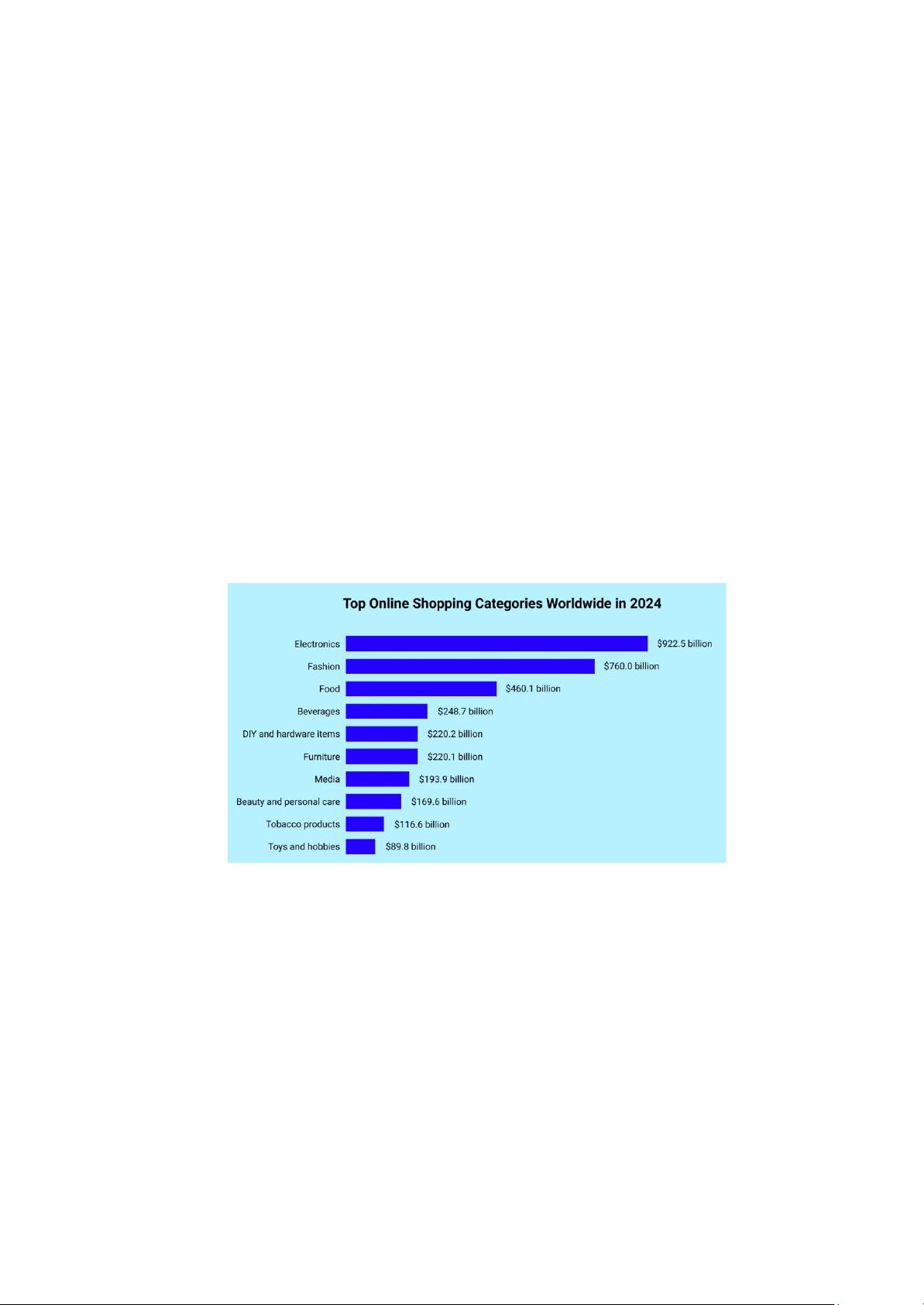
Top online shopping categories worldwide in 2024 Source: Statista
With a forecasted spend of $922.5 billion, electronics represent a significant portion
of global ecommerce sales. Along with the development of advanced technology devices,
the consumption habits of the majority of customers have clearly changed, consumers flock
online for the cutting-edge gadgets and convenience, trusting detailed product descriptions,
reviews, and comparison tools to make informed purchases. The coronavirus pandemic also
helped push e-commerce to new levels.
The rise of global e-commerce has a significant impact on Panasonic's supply chain
operations. This shift in distribution channels requires robust logistics and fulfillment
systems capable of managing global demand, including last-mile delivery and localized
customer service. To support global e-commerce, Panasonic needs an agile supply chain that
can quickly respond to shifts in demand. This includes maintaining inventory in strategic lOMoAR cPSD| 58950985
locations, integrating real-time data analytics, and using automated warehousing solutions
to fulfill online orders efficiently.
E-commerce expansion also necessitates the optimization of international shipping
and handling of tariffs, duties, and trade regulations. Panasonic must manage complex
logistics to ensure timely delivery while navigating international trade laws.
E-commerce requires a responsive, flexible supply chain with advanced logistics to
manage cross-border sales and direct-to-consumer models. Therefore, Panasonic must
manage complex logistics to ensure timely delivery while navigating international trade laws.
2.1.3. Global marketing
Global marketing practices must resonate across diverse regions while maintaining
Panasonic's brand identity. This includes creating adaptable and transferable marketing
campaigns that meet the specific needs of various markets
Panasonic maintains a strong global brand by emphasizing innovation, quality, and
sustainability in its marketing efforts. A consistent brand message allows for marketing
strategies that can be replicated across markets with minimal adjustments. This enables cost
efficiencies and coherence in brand identity worldwide. Despite a unified message, local
nuances are crucial. Panasonic adjusts its messaging to address regional market trends,
cultural differences, and local preferences. For example, Panasonic's marketing in the US
may emphasize smart home technologies, while in Asia, the focus might be on energy-
efficient solutions. A combination of global branding with localized marketing helps
Panasonic maintain a strong presence in different regions while ensuring consistency in its messaging.
Also, global digital platforms like YouTube, Instagram, and Twitter allow Panasonic
to launch campaigns that reach global audiences with transferable content.
Simultaneously, local influencers and platforms enable Panasonic to create region-specific promotions.
The trend in the electronics industry in recent years is movements for environmentally
friendly products. The company must aim to position itself as a healthy brand and participate
in many green and socially sustainable campaigns.
2.1.4. Sustainability at customer levels
Sustainability is increasingly becoming a key purchasing criteria for consumers
across the globe. Panasonic integrates sustainability into its products and supply chain to
align with customer values. With rising global demand for socially responsible procurement
- taking into account the environment, human rights, fair labor conditions, and fair trade -
Panasonic strives to conduct its business with suppliers in a way that not only provides
excellent technology and quality but also fulfills its corporate social responsibility (CSR) in lOMoAR cPSD| 58950985
the areas of human rights and responsible employment, occupational health and safety, green
procurement, clean procurement, compliance, and information security.
Panasonic’s focus on sustainable innovations like energy-efficient home appliances
that appeal to environmentally-conscious consumers. These products require specific
materials and components, pushing the company to focus on responsible sourcing and
reducing carbon footprints across its supply chain. The company must commit to reducing
greenhouse gas emissions by adopting renewable energy in manufacturing plants, recycling
electronic waste, and using sustainable packaging materials.
Panasonic also concentrates on creating products that are durable, repairable, and
recyclable, which aligns with growing customer expectations for sustainable and long-
lasting goods. This requires a reverse supply chain to manage product returns, repairs, and recycling processes.
Panasonic has been promoting activities with long-term environmental management
vision such as formulating factories that do not emit CO2 during their operation; establishing
the “Rules on Supply Chain Compliance” that stipulates the basic policy regarding supply
chain compliance and internal rules for its CSR implementation. Since 2007, Panasonic has
joined with Sharp and Toshiba to form an e-waste collection and recycling management
company called Electronics Manufacturers Recycling Management Company (MRM), with
the purpose of bringing manufacturers together into a collective effort to recycle electronic products.
2.2. Cost globalization drivers
2.2.1. Global scale economies
Global scale economies arise when a company can reduce its per-unit costs by
producing larger quantities of products, leveraging global operations to spread fixed costs
across a broader market. Panasonic, being a multinational corporation, benefits significantly
from these economies of scale.
Many of Panasonic’s products share common components across different regions,
such as screens for TVs or processors in appliances. Standardizing components across global
markets allows Panasonic to reduce manufacturing complexity, inventory costs, and
procurement expenses, further driving economies of scale.
2.2.2. Product development cost
Panasonic operates in industries where innovation and technological advancement
are critical. The product industry that Panasonic pursues is consumer electronics. They have
many industry characteristics that directly affect the choice of a reasonable production
strategy and technological competition is inevitable, so Panasonic constantly focuses on
upgrading the R&D department not only to serve the product design stage but also to ensure lOMoAR cPSD| 58950985
the entire production process is reasonable. Therefore, managing R&D costs is a significant challenge.
Panasonic has R&D centers in key regions such as Japan, the US, and Europe. This
global network enables the company to tap into local expertise, innovation ecosystems, and
access to new technologies. The globalization of R&D allows Panasonic to distribute
development expenses while enhancing innovation efficiency. Also, by developing
technologies that can be applied across multiple product categories, Panasonic can maximize
the return on R&D investments.
2.2.3. Accelerating innovation
Innovation within the supply chain is critical to Panasonic's ability to reduce costs,
improve efficiency, and remain competitive on a global scale. As globalization accelerates,
so does the need for Panasonic to continuously innovate its supply chain.
Automation and Robotics: Using robotics and AI-driven automation systems to
reduce labor costs and increase production efficiency. Automation also enhances precision
and reduces the likelihood of errors, which leads to cost savings through reduced waste and
higher-quality outputs. In high-labor-cost regions such as Europe and North America, this
automation significantly offsets labor expenses.
Digital Transformation and Data Analytics: Leveraging digital tools such as real-time
data analytics, predictive maintenance, and Internet of Things (IoT) technologies helps
Panasonic enhance its supply chain visibility and reduce inefficiencies. For example, IoT
sensors in factories provide real-time monitoring of equipment performance, reducing
downtime and maintenance costs. Similarly, data analytics allows Panasonic to optimize its
inventory management and forecast demand more accurately, reducing excess stock and minimizing holding costs.
Sensing: Sensing technology is for real-time analysis of worker and object
movements to enhance efficiency in inventory management, workflow optimization, and spatial data digitization. 2.2.4. Logistics cost
Logistics is a critical area where cost optimization can have a direct impact on
Panasonic's bottom line. As a global company, Panasonic faces significant logistics
challenges, including shipping costs, distribution complexities, and the need for timely delivery.
By leveraging technology, optimizing its global distribution network, and
implementing lean logistics strategies, Panasonic reduces logistics expenses and improves delivery efficiency. lOMoAR cPSD| 58950985
2.3. Government globalization drivers
2.3.1. Policies and regulations
Government policies and regulations significantly affect Panasonic’s global supply
chain operations, as different countries have distinct standards regarding trade, labor, safety,
and environmental sustainability. Key policy areas that impact Panasonic include:
Trade and Investment Policies: Many countries encourage foreign investment
through favorable trade agreements or economic partnerships. Panasonic benefits from these
agreements, such as free trade agreements (FTAs), which reduce trade restrictions and
facilitate smoother cross-border operations. For example, trade agreements between Japan
(Panasonic's home country) and other regions like the European Union (EU) or ASEAN
enable Panasonic to export goods and services with lower tariffs and simplified customs procedures.
Labor and Employment Laws: Panasonic must comply with labor regulations in
various countries where it operates factories and distribution centers. Labor policies
regarding wages, working conditions, and safety standards vary significantly between
regions, affecting the company’s operational costs and supply chain efficiency. For instance,
stricter labor laws in European countries may lead to higher production costs, while more
flexible labor policies in countries like Vietnam or India could offer cost advantages but
require compliance with local labor protections.
Intellectual Property (IP) Protection: Strong IP regulations in certain regions (e.g., the
US, EU, and Japan) offer Panasonic protection for its innovations and technologies,
particularly in high-tech industries like electronics and batteries. Ensuring compliance with
IP laws helps Panasonic safeguard its R&D investments, but weak IP enforcement in some
countries poses risks, particularly with potential imitation or infringement.
Environmental Regulations: Panasonic must also comply with varying environmental
policies across countries. Stringent environmental regulations in the EU (such as the EU’s
Restriction of Hazardous Substances Directive and the Waste Electrical and Electronic
Equipment Directive) force Panasonic to design and manufacture products with eco-friendly
materials and manage electronic waste responsibly. Similarly, Japan's environmental
policies push Panasonic to implement green manufacturing practices. 2.3.2. Tariff barriers
Tariffs are taxes or duties imposed by governments on imports and exports. They play
a significant role in shaping Panasonic’s global supply chain by influencing the cost of cross- border trade.
High tariffs increase the cost of importing components or finished products,
potentially affecting Panasonic's pricing strategies in international markets. For example, lOMoAR cPSD| 58950985
tariffs imposed by the US on imported electronics or components from countries like China
could impact the profitability of Panasonic’s products in the US market.
To mitigate the impact of tariffs, Panasonic may strategically locate manufacturing
plants in countries with lower or no tariff barriers, either to serve regional markets or to
export goods to tariff-friendly markets. For instance, Panasonic’s expansion of
manufacturing operations in Southeast Asia, particularly in Vietnam and Malaysia, allows
the company to avoid high tariffs when exporting to the US and EU, thanks to existing trade
agreements with these regions.
Panasonic benefits from regional trade blocs like the EU, ASEAN, and the North
American Free Trade Agreement (NAFTA)/ASEAN and Japan signed the ASEAN
Comprehensive Economic Partnership (AJCEP). These agreements lower or eliminate
tariffs on intra-regional trade, reducing costs and improving the competitiveness of
Panasonic’s products in member countries.
2.3.3. Non tariff barriers
Non-tariff barriers, such as import quotas, licensing requirements, and product
standards, can increase compliance costs and complicate Panasonic’s supply chain,
especially when operating across multiple jurisdictions with differing regulations.
2.4. Competitive globalization drivers
2.4.1. Competitive advantages
Panasonic’s competitive advantages revolve around its diversified product portfolio,
innovation capabilities, strong brand reputation, focus on sustainability, and global presence.
These advantages provide the company with leverage in its global supply chain and help it
maintain competitiveness across different markets.
Brand Image: Panasonic is one of the giants in the home appliances industry in the
market with its brand positioning along with “Japanese-style products”. Therefore, the
company is highly appreciated by customers with its product philosophy of bringing the
highest technology to bring customers the most authentic experience.
Market Position: Panasonic aims to serve global customers with its highest quality
products, but at the most reasonable prices. The company ensures the availability of products
to every segment of society through its affordable and reasonable pricing policy. Therefore,
reasonable pricing policies and cost-cutting strategies are implemented to penetrate each
market that the company wants to focus on. 2.4.2. Competitors
In the home appliance sector, Panasonic competes with global giants like Samsung,
LG, Sony. Both Samsung and LG have strong positions in consumer electronics, particularly
in TVs, smartphones, and home appliances. Samsung and LG leverage their economies of
scale, strong brand recognition, and advanced technology to compete with Panasonic. lOMoAR cPSD| 58950985
Samsung’s global reach and ability to produce components in-house (such as displays and
semiconductors) give it a cost advantage over Panasonic. Panasonic must therefore rely on
supply chain innovations, product differentiation (e.g., energy efficiency and eco-friendly
features), and strong customer loyalty to maintain competitiveness in this sector. On the
other hand, Sony is another key competitor in areas such as home entertainment systems and
digital cameras. Sony’s competitive advantage lies in its strong brand and innovation in high-
end electronics. Panasonic’s response is to differentiate its products through sustainability
features and smart home integration, while also optimizing its supply chain for cost savings.
The competitive pressures and increased motivation to establish a global presence
have taken on greater importance for Panasonic to develop an efficient supply chain to
maintain its market position and satisfy its customers.
IV. GLOBAL SUPPLY CHAIN MANAGEMENT ACTIVITIES OF PANASONIC 1. Purchasing Activities
1.1. Purchasing planning and strategy
Panasonic is well-known as a manufacturer of electronic devices and household
appliances. In recent years, the company has increasingly focused on producing components
and providing services for other businesses, such as electric vehicle batteries for Tesla.
Originating as a leading manufacturer of high-quality electronic components and
semiconductors, Panasonic predominantly produces its own products. However, the
company mainly purchases raw materials like copper, aluminum, steel, and nickel for
manufacturing purposes. For instance, Panasonic typically imports plastic from China,
purchases nickel powder from Australia, and sources lithium from the United States.
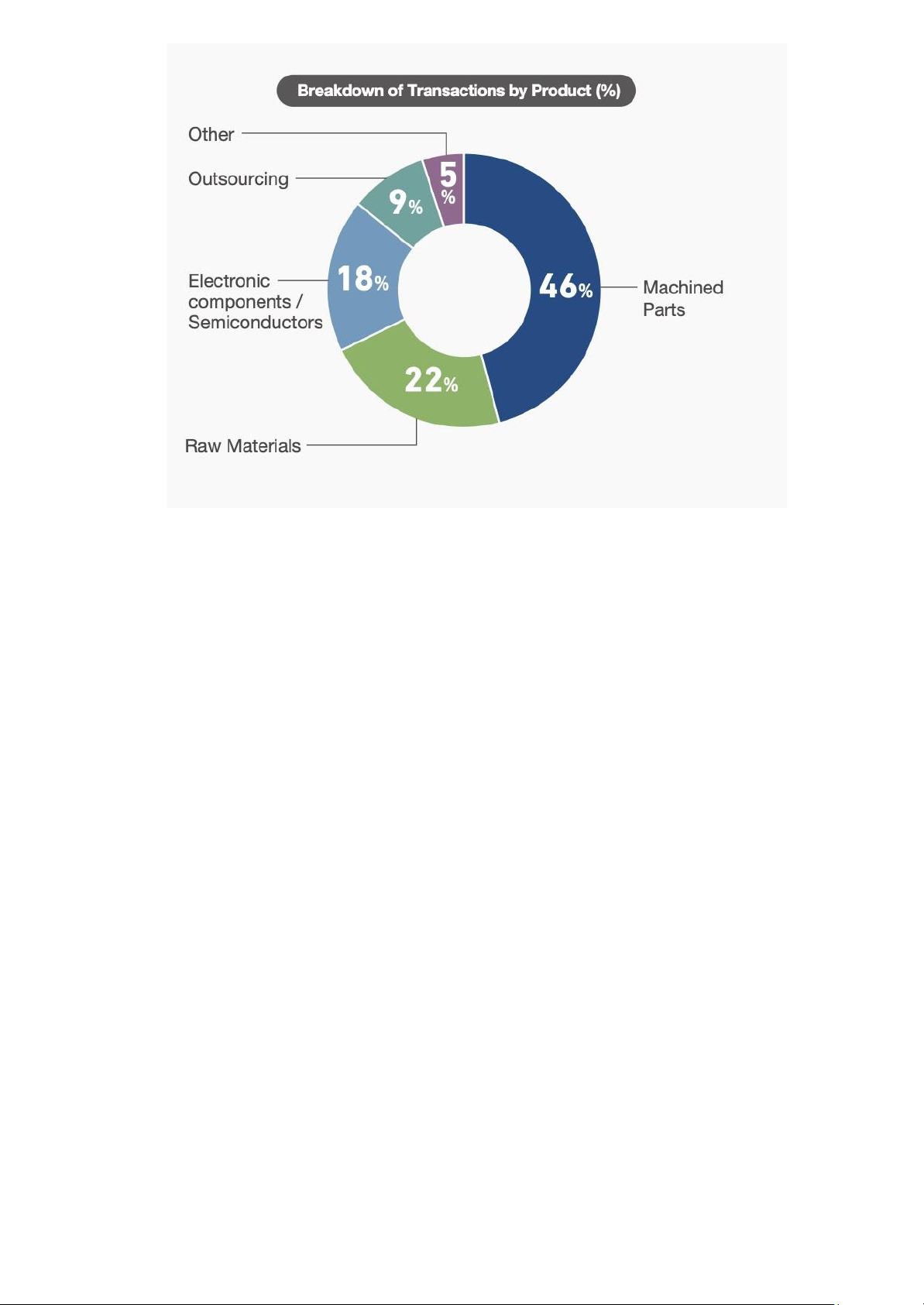
In addition, Panasonic also imports most of the machined parts needed for its
production lines that it does not produce itself or cannot produce efficiently. Importing these
parts allows Panasonic to focus on the important parts of its production process that it is
strong at, while still maintaining the majority of its production in-house. lOMoAR cPSD| 58950985
Sources: Sustainability Data Book 2022
1.2. Global Supplier Selection
Since its establishment, Panasonic has conducted business in line with its philosophy:
“The company is a public entity of society, contributing to society through our business
activities.” The company’s standard procurement agreements encompass CSR-related
matters, such as human rights, safe working environments, and environmental
consciousness. Consequently, Panasonic also sets requirements for its suppliers based on CSR criteria.
When selecting new suppliers, Panasonic stipulates that they must engage in
Corporate Social Responsibility (CSR) practices. The company carries out assessments to
verify suppliers’ performance in areas like human rights, labor conditions, health and safety,
environmental protection, and information security. Since 2015, Panasonic has required new
suppliers to conduct CSR self-assessments, using these reports as one of the tools for
evaluation. In March 2016, Panasonic Group released the “Panasonic Supply Chain CSR
Promotion Guidelines” (Version 1.0), which referenced international standards. This
document was later updated and revised in July 2018, now titled the “Panasonic Supply
Chain CSR Promotion Guidelines” (Version 2.0). These efforts reflect Panasonic’s
commitment to selecting suppliers that not only meet high standards but also align with the
sustainable strategies the company pursues. lOMoAR cPSD| 58950985
1.3. Global Supplier Network
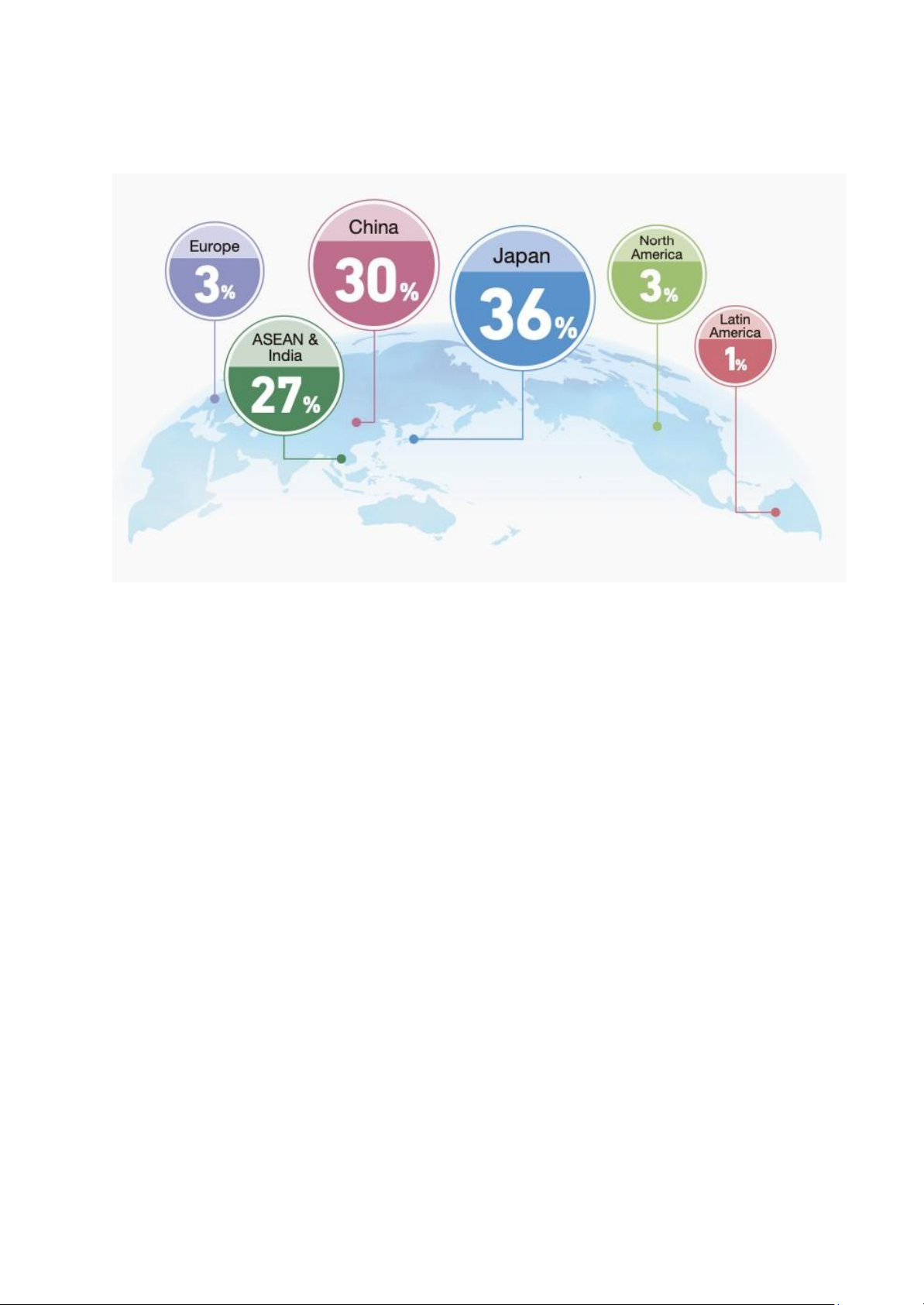
Panasonic Group does business with approximately 13,000 suppliers worldwide. The
Group promotes activities with its global business partners across its entire supply chain to
fulfill its Corporate Social Responsibility.
Sources: Sustainability Data Book 2022
Panasonic develops partnerships with suppliers in various regions to support global
manufacturing operations, helping to ensure quality and technological excellence, while also
complying with social responsibilities in issues such as human rights, health, safety, and
environmental protection. On the other hand, it minimizes the risk of dependence on a single
region, while leveraging technology and materials from key markets. The high regional
allocation in Japan, China, and ASEAN/India reflects a strategy of focusing on regions with
abundant supply and the ability to support large-scale production. 2. Operations Activities
2.1. Research and Development (R&D) Management
2.1.1. Organization of R&D Centers
Panasonic Group's R&D activities are primarily carried out by the parent company,
Panasonic Holdings Co., Ltd., which is involved in researching and developing company-
wide strategies related to technology and manufacturing, developing advanced technologies
from a medium - to long-term perspective, and creating production and foundational
technologies. Simultaneously, Panasonic is advancing R&D on a global scale at optimal
locations in Japan, North America, Europe, and Asia, utilizing a local talent-driven R&D system.
Tài liệu liên quan:
-

Tài Liệu Học Tập Quản Trị Chuỗi Cung Ứng - GIÁO TRÌNH GQC1
7 4 -

Bài giảng Nghiên cứu doanh nghiệp Nike trong Phân tích chuỗi cung ứng | Trường Đại học Kinh Tế Quốc Dân
19 10 -
Bài Thuyết Trình Ngành Dệt May Trung Quốc - LOGT26CD
28 14 -
Đề cương ôn tập Quản trị chuỗi cung ứng
33 17 -

Phân tích Mô hình Kinh doanh và Quản lý Chuỗi cung ứng của Samsung | Môn Quản trị chuỗi cung ứng quốc tế - Đại học Kinh Tế Quốc Dân
65 33