Application of PhET Simulation-Assisted Problem-Based Learning Model in Improving Students' Critical Thinking Skills on Rotational Dynamics Material
Application of PhET Simulation-Assisted Problem-Based Learning Model in Improving Students' Critical Thinking Skills on Rotational Dynamics Material. Tài liệu được sưu tầm giúp bạn tham khảo, ôn tập và đạt kết quả cao. Mời bạn đọc đón xem.
Môn: Tài liệu Tổng hợp 3.6 K tài liệu
Trường: Tài liệu khác 3.9 K tài liệu
Tác giả:








Preview text:
Journal of Educational Sciences Vol. 9 No. 4 (July, 2025) 1742-1752
Journal of Educational Sciences P-ISSN 2581-1657
Journal homepage: https://jes.ejournal.unri.ac.id/index.php/JES E-ISSN 2581-2203
Application of PhET Simulation-Assisted Problem-Based
Learning Model in Improving Students’ Critical Thinking Skills
on Rotational Dynamics Material
Fadia Mustikazahra*, Hera Novia, Lina Aviyanti
Physics Education, Universitas Pendidikan Indonesia, Bandung, 40154, Indonesia ARTICLE INFO A B S T R A C T Article history:
This research investigates the effectiveness of the Problem-
Based Learning (PBL) model assisted by PhET simulations Received: 22 April 2025 Revised: 29 May 2025
in enhancing students' critical thinking skills on rotational Accepted: 11 June 2025
dynamics. A quasi-experimental design was used in this
Published online: 05 July 2025
research, involving two groups: an experimental group using
PBL model with PhET simulations and a control group using Keywords:
PBL model without PhET simulations. The research
participants were high school students, and data were Problem-Based Learning Model; PhET Simulation;
collected through pre-test and post-test assessments
Students’ Critical Thinking Skills;
measuring critical thinking skills. The findings indicate that Rotational Dynamics Material
students in the experimental group demonstrated significant
improvement. Statistical analysis showed a higher mean
Corresponding author:
score increase in the experimental group compared to the E-mail: fadia@upi.edu
control group. These results suggest that the application of
PBL with PhET simulations is an effective approach to Article Doi:
fostering critical thinking in physics education, particularly
https://doi.org/10.31258/jes.9.4.p.1742-1752 in rotational dynamics.
This is an open access article under the CC BY- SA license. 1. Introduction
The 21st century, as the age of globalization, is an era where changes occur rapidly
in both information and technology. In the field of education, 21st-century learning
plays a crucial role in producing high-quality, superior, and competitive human
resources (Mardhiyah et al., 2021). A person with strong critical thinking skills will
evaluate given facts and reject inaccuracies or unfounded claims. Students who
have these skills have a larger perspective and are more capable of making crucial
decisions both at school and in their daily lives (Raj et al., 2022). However, in
Indonesia, students' critical thinking skills remain low, as reflected in the PISA
(Programme for International Student Assessment) rankings published by the
OECD (Organisation for Economic Co-operation and Development).
Fadia Mustikazahra et al. / Journal of Educational Sciences Vol. 9 No. 4 (July, 2025) 1742-1752 1743
Indonesia remains among the lowest-ranked countries, ranking 69 out of 81
countries in PISA 2022. Similarly, field observations indicate that students' critical
thinking skills in science learning are remain categorized as low. Research by Basri
et al. (2019) shows that critical thinking skills remain in the low category, with
evaluation, analysis, and self-regulation being the weakest sub-skills. Consistent
with these findings, the investigation conducted by Sarwanto et al. (2021) indicates
that students' critical thinking abilities are at a notably low level, demonstrated by
the observation that a mere 10% of students achieve scores exceeding the
established minimum criteria. An identified element contributing to this
observation is the employment of direct instruction paradigms by educators, which
predominantly utilize teacher-focused methodologies.
The low level of students' critical thinking skills may be influenced by several
factors, such as inappropriate learning models and teaching media (Kurniati et al.,
2022). Learning models and teaching media complement each other in creating
effective learning experiences. Suitable media help students organize unstructured
information, thereby supporting more effective learning outcomes (Kilroy, 2004).
There are many ways educators can develop students' critical thinking skills, one of
which is by using appropriate learning models in the learning process. One of the
recommended learning models in the "Kurikulum Merdeka" is Problem-Based
Learning (PBL). According to research conducted by Damayanti (2023), a well-
implemented and engaging PBL model encourages students to actively think during
the learning process. The steps involved in the PBL model also provide
opportunities for students to think critically in solving problems.
The implementation of a learning paradigm centered on the student is deemed
crucial, given that science education, particularly in physics, ought to extend
beyond mere conceptual and factual knowledge to incorporate students' personal
experiences, thereby facilitating their scientific understanding (Rahmadita et al.,
2021). A particular subject matter in physics suitable for the enhancement of critical
thinking skills is the study of rotational dynamics. Critical thinking skills are crucial
for understanding motion-related topics as they require strong reasoning abilities
and serve as a prerequisite for learning subsequent physics concepts.
Based on a preliminary study conducted by interviewing a physics teacher at a high
school in Bandung, physics learning still relies on simple and conventional
methods, where the teacher is the central figure in the learning process. The teacher
mentioned that students' critical thinking skills are still considered low, as indicated
by an average physics midterm score of 54.20, whereas the minimum passing grade
is 76. This was further supported by a preliminary critical thinking test on rotational
dynamics conducted by the researcher, which has an average score of 46.2.
Additionally, the teacher stated that laboratory-based physics experiments are
rarely conducted due to the limited availability of laboratory equipment. However,
it was noted that internet access is available in every classroom.
1744 Fadia Mustikazahra et al. / Journal of Educational Sciences Vol. 9 No. 4 (July, 2025) 1742-1752
As an alternative solution to the lack of experimental tools, schools can utilize
interactive web-based simulation applications such as Physical Education and
Technology (PhET), developed by the University of Colorado. This application has
been widely used by educators and students worldwide (Fuada et al., 2023). PhET
can serve as a substitute for real laboratories, as it provides models and simulations
that facilitate students' understanding of concepts (Astalini, 2019). Research by
Zahara et al. (2015) revealed that the use of PhET (Physics Education Technology)
in learning can improve students' academic performance and critical thinking skills.
Similarly, study by Stiawan et al. (2014) demonstrated that the use of PhET
enhances students' critical thinking skills, with the most dominant critical thinking
indicator being argument analysis. Ramadan et al. (2020) also found a significant
impact of using PhET simulations in problem-based learning to improve students'
critical thinking skills. Learning with PhET simulations enables students to observe,
engage in deeper learning, and gain meaningful learning experiences.
Existing research demonstrates that the utilization of a problem-based learning
model, when combined with PhET simulations, has a favorable effect on the
development of students' critical thinking proficiencies and their learning results.
Aisyah et al. (2024) concluded that the PBL model assisted by PhET in wave
mechanics significantly enhances students' critical thinking skills compared to
conventional learning. Similar findings were reported by Tiyas et al. (2024), where
the use of the PBL model assisted by PhET in momentum and impulse material
increased the post-test average score by 15%, with critical thinking skills
categorized as good and student participation categorized as moderately active and
active in each session. Based on the background that are mentioned, the researcher
implements the Problem-Based Learning model assisted by PhET Simulations,
which is expected to enchases students' critical thinking skills, particularly in rotational dynamics. 2. Methodology
A quantitative approach is adopted in this study, and the research design
implemented is a Quasi-experimental design featuring a Non-equivalent control
group. Therefore, the study involves the use of an experimental class alongside a
comparative class, or control class. The experimental class will experience a
problem-based learning model supported by PhET simulations, whereas the control
class will be taught via a problem-based learning model lacking the support of PhET
simulations. The scheme of research that will be applied can be seen in Table 1. Table 1. Scheme of Research Group Pretest Treatment Posttest Experiment O1 X1 O2 Control O1 X2 O2 (Sugiyono, 2013) Information:
𝑂1: Pre-test in Experimental and Control Class
Fadia Mustikazahra et al. / Journal of Educational Sciences Vol. 9 No. 4 (July, 2025) 1742-1752 1745
𝑋1: Treatment using Problem-Based Learning Model Assisted by PhET Simulations
𝑋1: Treatment using Problem-Based Learning Model
𝑂2: Post-test in Experimental and Control Class
This research involved students, teacher, and observer as participants. The
population consisted of 11th-grade high school students in school at Bandung. The
experimental class consisted of 33 students, while the control class consisted of 32
students. To assess students' critical thinking skills, a pre-test and post-test were
administered to both groups. The test items were developed based on critical
thinking indicators by Facione (1990), focusing on interpretation, analysis,
evaluation, inference, and explanation within the context of rotational dynamics.
The instrument’s validity and reliability were tested using Rasch model analysis.
Additionally, student worksheets, observation sheets, and students’ response sheets
were used to support qualitative analysis of students' engagement and learning
experiences with PhET simulations in the PBL framework.
The gathered information was subjected to analysis via SPSS 27.0, utilizing
multiple statistical assessments to establish the degree to which the Problem-Based
Learning (PBL) model, with the integration of PhET simulations, contributed to the
enhancement of students' critical thinking skills. The analysis steps were as follows: Normality Test
A preliminary step before undertaking hypothesis testing involved a normality test
to verify if the data adhered to a normal distribution. The Shapiro-Wilk test was
employed in this context because the sample size within each student group was
less than 50. The level of significance (p-value) for this assessment was fixed at 0.05:
• If p-value> 0.05, the data were normally distributed.
• If p-value < 0.05, the data were not normally distributed, and a non- parametric test was required. Hypothesis Test
To determine whether there was a significant difference in students' critical thinking
improvement between the experimental and control groups, the following tests were conducted:
• Independent Sample T-Test (if data were normally distributed) → To
compare the mean difference in pre-test and post-test scores between the two groups.
• Mann-Whitney U Test (if data were not normally distributed) → A non-
parametric alternative to compare the differences in scores.
1746 Fadia Mustikazahra et al. / Journal of Educational Sciences Vol. 9 No. 4 (July, 2025) 1742-1752
N-Gain Calculation
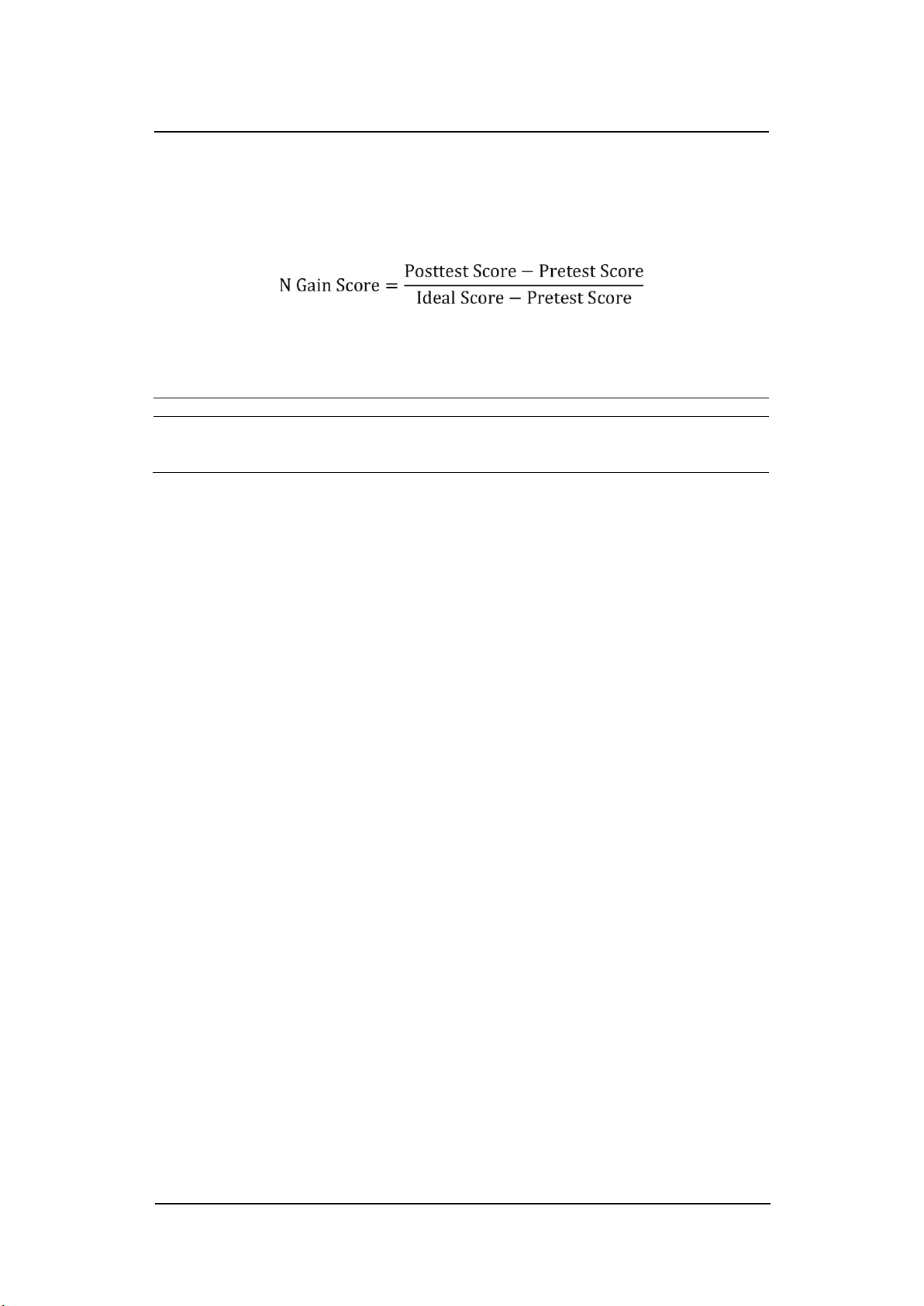
To measure the improvements on students’ critical thinking skills based on the
intervention, the N-Gain Score was calculated for both groups using the formula:
The N-Gain results were classified into three categories as seen on Table 2:
Table 2. N-Gain Score Categories N-Gain Score Categories 𝐠 > 𝟎, 𝟕𝟎 High
𝟎, 𝟕𝟎 ≥ 𝐠 ≥ 𝟑𝟎 Medium 𝐠 ≤ 𝟎, 𝟑𝟎 Low (Hake, 1999)
3. Result and Discussion
The research was conducted in two classes, namely the experimental class and the
control class, as assigned by the school. The experimental class received instruction
through the Problem-Based Learning (PBL) model assisted by PhET simulations,
while the control class followed conventional instruction using lectures and
problem-solving exercises. The study was implemented over four meetings,
covering initial orientation, presentation of real-world problems, concept
exploration through simulation, group discussion, as well as presentation and reflection sessions.
In each meeting of the experimental class, students were introduced to a contextual
problem that served as a stimulus for investigation. They were then guided to
explore solutions using the PhET interactive simulation. The teacher acted as a
facilitator, providing scaffolding as needed. During the activities, students used
student worksheets (LKPD) to help them organize information, formulate
hypotheses, and draw conclusions both independently and collaboratively.
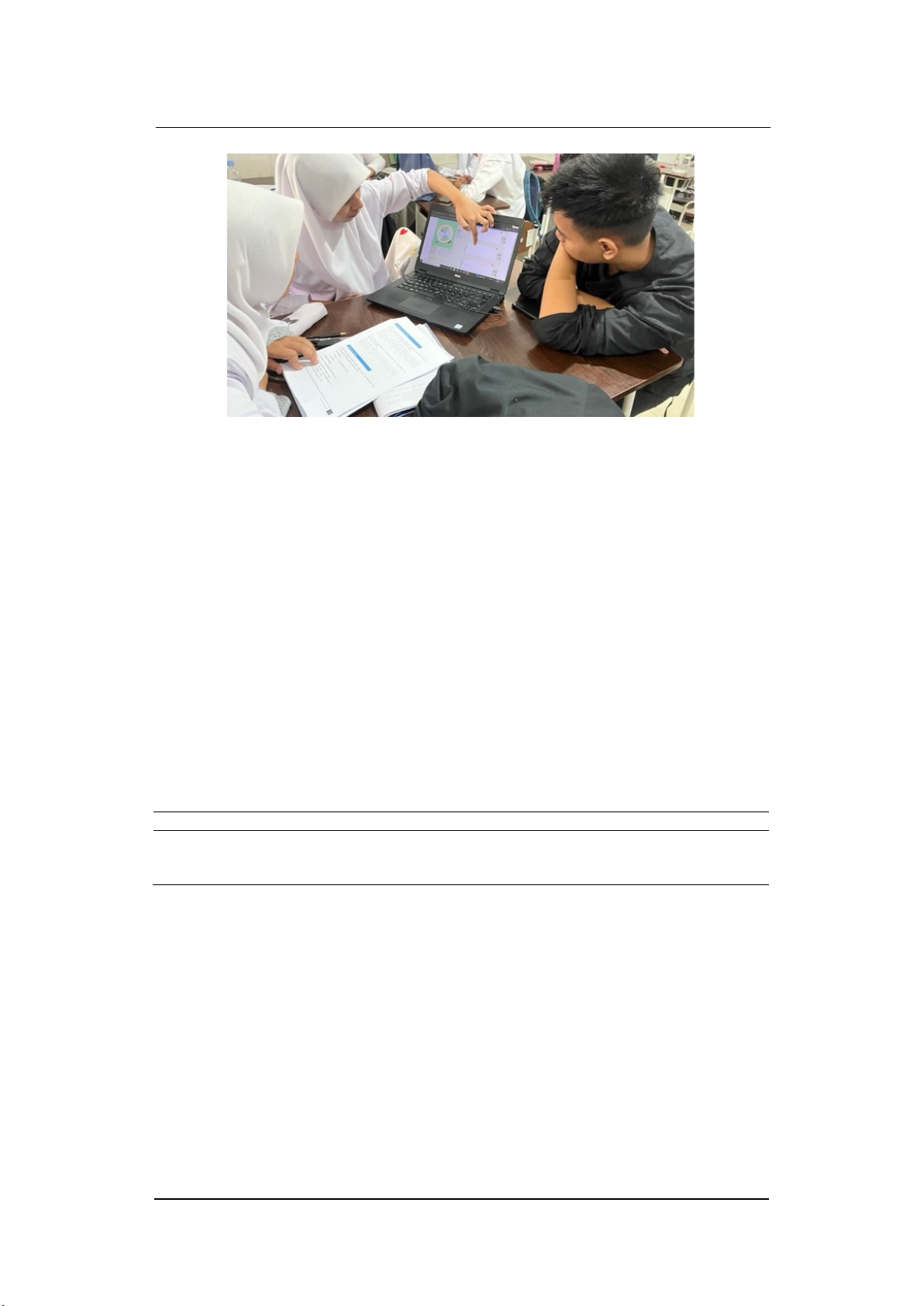
The image below illustrates one of the learning activities in which students use the
PhET simulation on rotational motion. In this session, students explored the effect
of mass distribution on rotational speed using a spinning chair model. By adjusting
variables such as arm position and mass placement, they were able to visualize the
concept of moment of inertia and angular momentum in a dynamic, interactive way.
This activity encouraged students to think critically about the physical phenomena
they observed and to communicate their reasoning in group discussions.
Fadia Mustikazahra et al. / Journal of Educational Sciences Vol. 9 No. 4 (July, 2025) 1742-1752 1747
Figure 1. Students Interacting with the PhET Simulation on Rotational Motion During Class
Using SPSS 27.0, the output of the data analysis provides insights into the
effectiveness of the Problem-Based Learning (PBL) model assisted by PhET
simulations in enhancing students' critical thinking skills. The results include
normality testing, hypothesis testing, and N-Gain analysis to determine the
statistical significance and learning improvement between the experimental and control groups. Normality Test Result
The Shapiro-Wilk test was conducted on post-test scores in both classes to
determine whether the data were normally distributed. Using SPSS 27.0, the output shows as seen in Table 3:
Table 3. Normality Test Result Data Experiment Class Control Class N 33 32 Mean 63.40 50.9 Sig. 0.438 0.169
The experimental group has a significance value (p-value) of 0.438, which is greater
than the 0.05 significance, indicating a normal distribution (p-value > 0.05). The
control class has a significance value (p-value) of 0.168, which is greater than the
0.05 significance value, indicating a normal distribution (p-value > 0.05). Since
both the experiment and control class have a normal distribution, the Independent
T-test was used for hypothesis testing instead of the Mann-Whitney U. Hypothesis Test Result
The hypothesis used in this research is:
• 𝑯𝟎: There is no significant difference in improving students' critical
thinking skills between the experimental class and the control class
1748 Fadia Mustikazahra et al. / Journal of Educational Sciences Vol. 9 No. 4 (July, 2025) 1742-1752
• 𝑯𝒂: There is a significant difference in improving students' critical thinking
skills between the experimental class and the control class.
Using a significance level of 0.05, the significance value obtained will be interpreted based on Table 4:
Table 4. Interpretation of Hypothesis Test Sig. Interpretation <0.05
𝐇𝟎 is rejected and 𝐇𝐚 is accepted >0.05
𝐇𝟎 is accepted and 𝐇𝐚 is rejected
The independent samples t-test, conducted using SPSS version 27.0, yielded an
output p-value of 0.009. Given that 0.009 is less than the established significance
level of 0.05, the 𝐻0 hypothesis was rejected, and the 𝐻𝑎 hypothesis was accepted.
From this result, it is concluded that a statistically significant difference exists in
the enhancement of students' critical thinking skills between the experimental and control instructional groups. N-Gain Analysis Result
To see how the improvement of students’ critical thinking skills on each learning
model that was applied, the n-gain is done by using SPSS 27.0, and the output of
the test will be interpreted based on Table 2 and the result of interpretation is shown in Table 5:
Table 5. Results of N-Gain Test Class N-Gain Categories Experiment 0.4677 Medium Control 0.2798 Low
Based on the output that was obtained from the SPSS 27.0 and based on the
interpretation result, we can infer that overall, the experiment class using the
problem-based learning model assisted by PhET simulation can increase students’
critical thinking skills with the category “Medium”. Despite the capacity of the
problem-based learning model, when used by the control class without the aid of
PhET simulation, to foster students’ critical thinking skills, the level of this
enhancement was categorized as “Low”.
An examination of the calculated mean normalized gain (N-Gain) for all students
on each question item reveals the extent of improvement in their critical thinking
skills within each defined indicator. The results of the calculation of the average n-
gain on each indicator are presented in Table 6. Based on Table 6, N-Gain on each
indicator indicates an increase of critical thinking skills in the category “Medium.”.
Within the control group, the critical thinking skill indicators of interpretation,
evaluation, and explanation demonstrated an improvement to the “Medium”
category, whereas the indicators of analysis and inference showed an increase only to the “Low” category.
Fadia Mustikazahra et al. / Journal of Educational Sciences Vol. 9 No. 4 (July, 2025) 1742-1752 1749
Table 6. Mean N-Gain on Critical Thinking Skills Indicator Critical Thinking Experiment Class Control Class Skills Indocator N-Gain Category N-Gain Category Interpretation 0.51 Medium 0.31 Medium Analysis 0.31 Medium 0.16 Low Evaluation 0.62 Medium 0.40 Medium Inference 0.42 Medium 0.22 Low Explanation 0.58 Medium 0.48 Medium
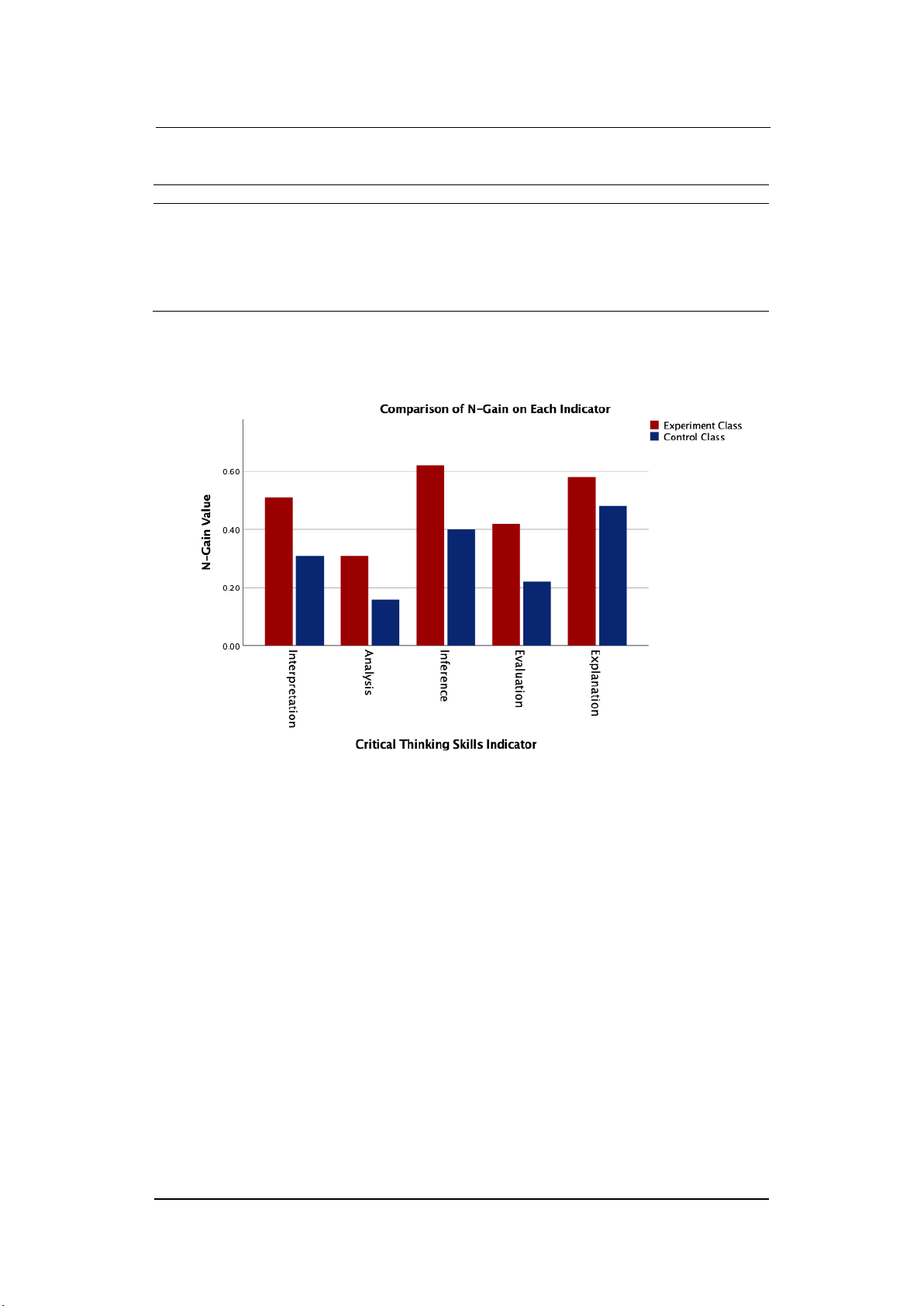
To visualize the comparison of n-gain on each indicator in expertimental and
control class, a bar chart is presented in Figure 2.
Figure 2. Comparison of N-Gain on Each Indicator
Referring to Figure 1, the normalized gain (N-Gain) score of the experiment class
demonstrates superiority over the control class in all measured indicators.
Therefore, it is reasonable to conclude that the advancement of students’ critical
thinking skills in each indicator within the experiment class, employing problem-
based learning with PhET simulation assistance, was more significant than that
observed in the control class, which utilized problem-based learning without the aid of PhET simulation.
The use of PhET simulations in learning has been shown to enhance students’
critical thinking skills. Through these simulations, students are encouraged to
analyze, evaluate, and draw conclusions based on the information they explore (Dy
et al., 2024). In the control class, although the Problem-Based Learning model was
implemented, students’ learning experiences were still limited to text-based
materials and group discussions, resulting in less consistent and generally lower
improvement in critical thinking skills. A similar finding was reported by Zulianti
(2024), who found that students in the experimental class using Problem-Based
1750 Fadia Mustikazahra et al. / Journal of Educational Sciences Vol. 9 No. 4 (July, 2025) 1742-1752
Learning supported by PhET multimedia simulations showed greater improvement
in critical thinking skills compared to those in the control group.
Furthermore, Salsabila et al. (2023) demonstrated that the experimental class using
the PBL model with PhET simulations achieved a moderate category of critical
thinking skill improvement, while the control class only reached the low category.
This was attributed to the use of virtual laboratories such as PhET, which can
increase students’ interest and motivation, thereby encouraging the development of
critical thinking in solving problems (Suranti et al., 2016). Students are enabled to
hypothesize, experiment, and formulate solutions to problems based on the
observed phenomena (Aca & Sulisworo, 2020). In other words, the synergy
between the Problem-Based Learning model and PhET simulations creates an
environment that actively engages students in the learning process, leading to the
enhancement of their critical thinking abilities (Haetami et al., 2023). 4. Conclusion
This research was implemented in one of the schools in Bandung. The approach of
this research is a quantitative approach with a Quasi-experimental design with a
Non-equivalent control group design. Data analysis that was collected was
performed using SPSS 27, including normality tests, hypothesis tests, and n-gain
calculations for each critical thinking indicator. This research has proven that the
Problem-Based Learning (PBL) model assisted by PhET simulations significantly
enhances students' critical thinking skills in rotational dynamics material. Analysis
using the independent t-test, a parametric method, demonstrates a significant
distinction between the experimental class, instructed with a problem-based
learning model aided by PhET simulation, and the control class, which received
only problem-based learning without PhET simulation.
The experimental class exhibited a more noteworthy improvement in the critical
thinking skills of its students. The increase in critical thinking indicators, which are
interpretation, analysis, evaluation, inference, and explanation—was more
increased in the experimental group, all of the indicators are in the medium
category, while the control group showed mixed results, with interpretation,
evaluation, and explanation are in the medium category and analysis and inference
in the low category. Based on the result, we can conclude that the use of a problem-
based learning model assisted by PhET simulation can increase students’ critical
thinking skills in the medium category. The findings of this research suggest that
integrating interactive simulations with student-centered learning strategies helps
students enhance their critical thinking skills. Educators are encouraged to
implement these methods to enhance critical thinking and engagement in physics
learning. Future research could explore the long-term impact of this approach on
students' other skills, such as problem-solving abilities.
Fadia Mustikazahra et al. / Journal of Educational Sciences Vol. 9 No. 4 (July, 2025) 1742-1752 1751 References
Aca, A, L., Sulisworo, D., & Maruto, G. (2020). The critical thinking skills impacts
on the utilization of PhET simulation in the flipped classroom setting.
Proceedings of the International Conference on Community Development
(ICCD 2020). Atlantis Press. https://doi.org/10.2991/assehr.k.201017.024
Aisyah, S. N., Kosim, K., Gunawan, G., & Gunada, I. W. (2024). The effect of
problem-based learning model assisted by PhET media on students’ critical
thinking skills. Indonesian Journal of STEM Education, 6(2), 86–101.
Astalini, A., Darmaji, D., Riantoni, C., & Susanti, N. (2019). Studi penggunaan
PhET Interactive Simulations dalam pembelajaran fisika. Jurnal Riset Dan Kajian Pendidikan Fisika, 6(2), 71.
https://doi.org/10.12928/jrkpf.v6i2.14202
Basri, H., Purwanto, P., As’ari, A., & Sisworo, S. (2019). Investigating critical
thinking skill of junior high school in solving mathematical problem. International Journal of Instruction, 12(3), 745-758.
https://doi.org/10.29333/IJI.2019.12345A
Damayanti, E., Yuliyanti, R., Najiah, M., & Nulhakim, L. (2023). Improving
critical thinking skills in thematic learning with the help of problem learning models. Jurnal Penelitian Pendidikan IPA, 9(7), 276–282.
https://doi.org/10.29303/jppipa.v9i7.3689
Dy, A. U., Lagura, J. C., & Baluyos, G. R. (2024). Using PhET Interactive
Simulations to improve learners' performance in science. EduLine: Journal of Education and Learning Innovation, 4(4), 520-530.
https://doi.org/10.35877/454RI.eduline2981
Facione, P. A. (2011). Critical thinking: What it is and why it counts. The California Academic Press.
Fuada, S., Danuarteu, M. D., Agustin, S., Carmelya, A. A., Fadhilah, I., Heong, Y.
M., & Kaewpukdee, A. (2023). Can PhET simulate basic electronics circuits for undergraduate students?.
Jurnal Infotel, 15(1), 97–110.
https://doi.org/10.20895/infotel.v15i1.861
Haetami, A., Zulvita, N. ., Dahlan, Maysara, Marhadi, M. A. ., & Santoso, T. .
(2023). Investigation of Problem-Based Learning (PBL) on Physics
Education Technology (PhET) Simulation in Improving Student Learning
Outcomes in Acid-Base Material . Jurnal Penelitian Pendidikan IPA, 9(11),
9738–9748. https://doi.org/10.29303/jppipa.v9i11.4820
Kurniati, I., Yuliani, Y., Suyono, S., & Mahroini, Z. (2022). Critical thinking skills
students on solar system material. JPPS (Jurnal Penelitian Pendidikan
Sains, 11(2), 130–141. https://doi.org/10.26740/jpps.v11n2.p130-141
Mardhiyah, R. H., Aldriani, S. N. F., Chitta, F., & Zulfikar, M. R. (2021).
Pentingnya keterampilan belajar di abad 21 sebagai tuntutan dalam
pengembangan sumber daya manusia. Lectura: Jurnal Pendidikan, 12(1),
29–40. https://doi.org/10.31849/lectura.v12i1.5813
Rahmadita, N., Mubarok, H., & Prahani, B. K. (2021). Profile of problem-based
learning (PBL) model assisted by PhET to improve critical thinking skills
of high school students in dynamic electrical materials. Jurnal Penelitian
Pendidikan IPA, 7(4), 617–624. https://doi.org/10.29303/jppipa.v7i4.799
1752 Fadia Mustikazahra et al. / Journal of Educational Sciences Vol. 9 No. 4 (July, 2025) 1742-1752
Raj, T., Chauhan, P., Mehrotra, R., & Sharma, M. (2022). Importance of critical
thinking in the education. World Journal of English Language, 12(3), 126–
133. https://doi.org/10.5430/wjel.v12n3p126
Ramadan, E. M., Jumadi, & Astuti, D. P. (2020). Application of e-handout based
on PhET simulation to improve critical thinking skills and learning
independence of high school students. Journal of Physics: Conference
Series, 1440(1), 0–7. https://doi.org/10.1088/1742-6596/1440/1/012025
Salsabila, N., Suryandari, K. C., & Salimi, M. (2023). The effect of pbl assisted by
PhET simulation on critical thinking skilss in class VI science learning at
elementary schools in the banyumudal cluster, kebumen regency, academic
year 2022/2023. SEEDS: Science, Engineering, and Development Studies,
7(1), 12-18. https://doi.org/10.20961/seeds.v7i1.80909
Sarwanto, Fajari, L. E. W., & Chumdari. (2021). Critical thinking skills and their
impacts on elementary school students. Malaysian Journal of Learning and
Instruction, 18(2), 161–187. https://doi.org/10.32890/mjli2021.18.2.6
Stiawan, E., Liliasari, L., & Rohman, I. (2014). Pengembangan keterampilan
berpikir kritis siswa SMA pada topik teori domain elektron melalui simulasi
interaktif PhET molecule shapes. Jurnal Pengajaran Matematika Dan Ilmu
Pengetahuan Alam, 19(2), 257. https://doi.org/10.18269/jpmipa.v19i2.468
Suranti, N. M. Y., Gunawan, G., & Sahidu, H. (2016). Pengaruh Model Project
Based Learning berbantuan Media Virtual terhadap Penguasaan Konsep
Peserta Didik pada Materi Alat-Alat Optik. Jurnal Pendidikan Fisika dan
Teknologi, 2(2), 73-79. https://doi/org/10.29303/jpft.v2i2.292
Tiyas, S. I. R. N., Khusaini, K., & Purwantini, A. (2024). Analisis penerapan model
pembelajaran problem-based learning (PBL) berbantuan media PhET di
SMA Brawijaya Smart School Malang. Jurnal Ilmiah Nusantara, 1(4), 909-
919. https://doi.org/10.61722/jinu.v1i4.1991
Zahara, S., Yusrizal, Y., & Rahwanto, A. (2015). Pengaruh penggunaan media
komputer berbasis simulasi Physics Education Technology (PhET) terhadap
hasil belajar dan keterampilan berpikir kritis siswa pada materi fluida statis.
Jurnal Pendidikan Sains Indonesia, 3(1), 251–258.
Zulianti, W. (2025). Pengaruh Model Problem Based Learning Berbantuan
Multimedia PhET Simulation terhadap Keterampilan Berpikir Kritis Siswa.
UNIEDU: Universal Journal of Educational Research, 5(3), 133-147.
https://doi.org/10.1234/uniedu.v5i3.158 How to cite this article:
Mustikazahra, F., Novia, H., & Avi yanti, L. (2025). Application of PhET
Simulation-Assisted Problem-Based Learning Model in Improving Students’
Critical Thinking Skills on Rotational Dynamics Material. Journal of
Educational Sciences, 9(4), 1742-1752.
Tài liệu liên quan:
-

Ung dung game hoa trong cac chien dich MKT
27 14 -
Bao cao Chi so TMDT Viet Nam 2025
30 15 -
Thông tư quy định về việc phân quyền, phân cấp và phân định thẩm quyền quản lý nhà nước về giáo dục cho chính quyền địa phương
32 16 -
Nghị quyết về phát huy các giá trị di sản văn hóa gắn với phát triên du lịch bền vững tỉnh Khánh Hòa đến năm 2025, định hướng đến năm 2030
34 17 -
Quyết định phê duyệt Chiến lược phát triển du lịch Việt Nam đến năm 2030
21 11