At the Speed of the Heart: Evaluating Physiologically-Adaptive Visualizations for Supporting Engagement in Biking Exergaming in Virtual Reality
At the Speed of the Heart: Evaluating Physiologically-Adaptive Visualizations for Supporting Engagement in Biking Exergaming in Virtual Reality. Tài liệu được sưu tầm giúp bạn tham khảo, ôn tập và đạt kết quả cao. Mời bạn đọc đón xem.
Môn: Tài liệu Tổng hợp 3.6 K tài liệu
Trường: Tài liệu khác 3.9 K tài liệu
Tác giả:













Preview text:
PDF Download 3749385.3749398.pdf 26 January 2026 Total Citations: 0 . Total Downloads: 281 .
Latest updates: hps://dl.acm.org/doi/10.1145/3749385.3749398 . . . . RESEARCH-ARTICLE
At the Speed of the Heart: Evaluating Physiologically-Adaptive . . Published:
Visualizations for Supporting Engagement in Biking Exergaming in 17 November 2025 . . Virtual Reality Citation in BibTeX format . .
SportsHCI 2025: Annual Conference on
OLIVER HEIN, University of the Bundeswehr Munich, Neubiberg, Bayern, Germany
Human-Computer Interaction and Sports November 17 - 19, 2025 .
SANDRA WACKERL, Ludwig-Maximilians-University Munich, Munich, Bayern, Germany Enschede, Netherlands . . CHANGKUN OU .
, Ludwig-Maximilians-University Munich, Munich, Bayern, Germany .
FLORIAN ALT, Ludwig-Maximilians-University Munich, Munich, Bayern, Germany .
FRANCESCO CHIOSSI, Ludwig-Maximilians-University Munich, Munich, Bayern, Germany . . .
Open Access Support provided by: .
University of the Bundeswehr Munich .
Ludwig-Maximilians-University Munich .
SportsHCI '25: Proceedings of the First Annual Conference on Human-Computer Interaction and Sports (November 2025)
hps://doi.org/10.1145/3749385.3749398 ISBN: 9798400714283 .
At the Speed of the Heart: Evaluating Physiologically-Adaptive
Visualizations for Supporting Engagement in Biking Exergaming in Virtual Reality Oliver Hein Sandra Wackerl Changkun Ou
University of the Bundeswehr Munich LMU Munich LMU Munich Munich, Germany Munich, Germany Munich, Germany oliver.hein@unibw.de sandra.wackerl@vodafone.de research@changkun.de Florian Alt Francesco Chiossi LMU Munich LMU Munich Munich, Germany Munich, Germany florian.alt@ifi.lmu.de francesco.chiossi@ifi.lmu.de
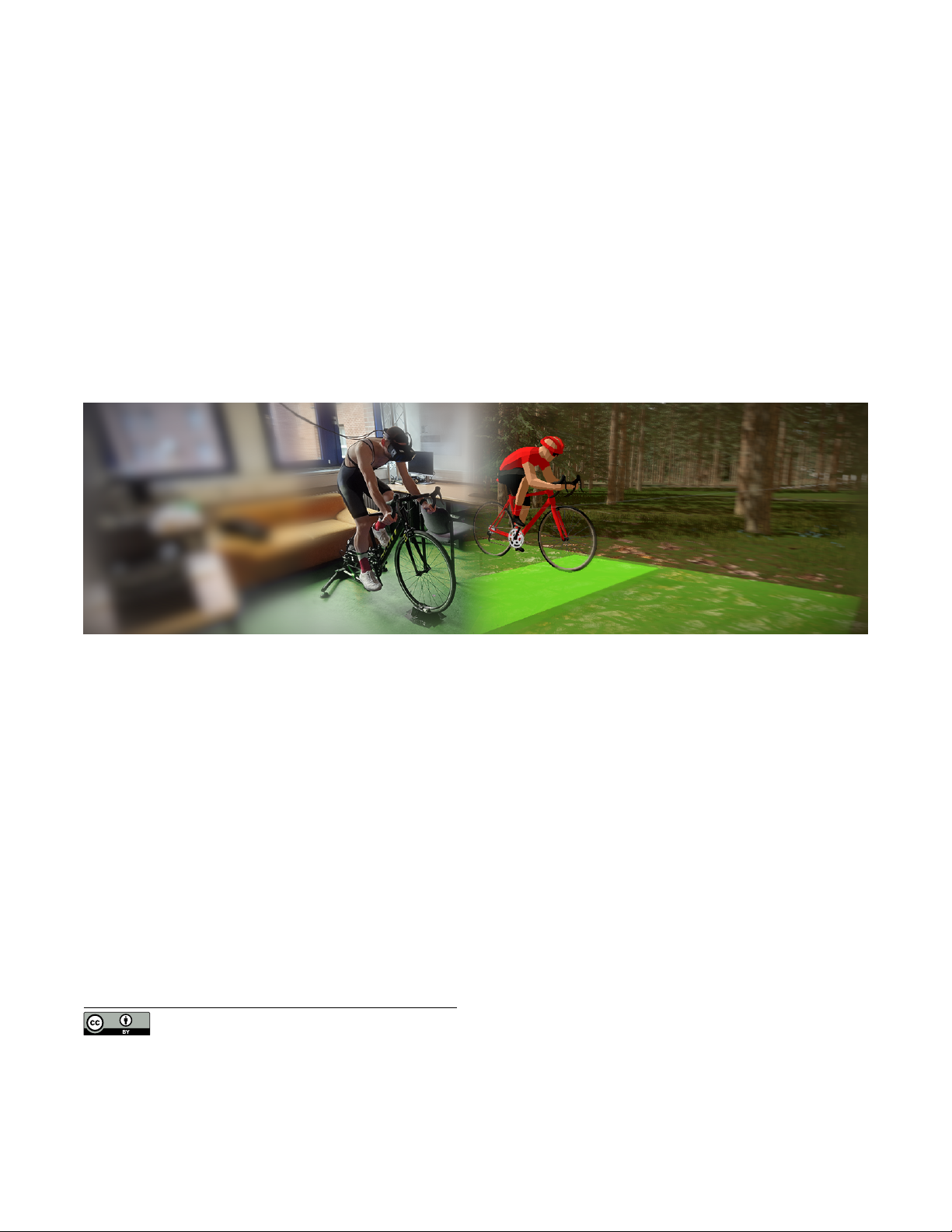
Figure 1: We enhance exergame performance by evaluating eight visual designs, identifying gamified elements such as Non-
Playable Characters (NPCs) as most effective. Based on this, we developed a VR cycling simulator featuring an adaptive NPC
that adjusts to the user’s heart rate to help maintain ideal cardio levels. The image shows a participant from our second
study (left) and the VR environment (right), where the participant cycles through a forest alongside the adaptive NPC, which
represents their optimal heart rate. Abstract
enjoyment, and motivation remained largely unchanged between
conditions. Our findings suggest that real-time physiological adap-
Many exergames face challenges in keeping users within safe and
tation through NPC visualizations can improve workout regulation
effective intensity levels during exercise. Meanwhile, although wear- in exergaming.
able devices continuously collect physiological data, this informa-
tion is seldom leveraged for real-time adaptation or to encourage
user reflection. We designed and evaluated a VR cycling simula- CCS Concepts
tor that dynamically adapts based on users’ heart rate zones. First,
we conducted a user study (𝑁
= 50) comparing eight visualiza-
• Human-centered computing → Virtual reality.
tion designs to enhance engagement and exertion control, finding
that gamified elements like non-player characters (NPCs) were
promising for feedback delivery. Based on these findings, we imple- Keywords
mented a physiology-adaptive exergame that adjusts visual feed-
Exergaming, Virtual Reality, Physiological Computing, Adaptive
back to keep users within their target heart rate zones. A lab study Systems, ECG
(𝑁 = 18) showed that our system has potential to help users main-
tain their target heart rate zones. Subjective ratings of exertion, ACM Reference Format:
Oliver Hein, Sandra Wackerl, Changkun Ou, Florian Alt, and Francesco
Chiossi. 2025. At the Speed of the Heart: Evaluating Physiologically-Adaptive
This work is licensed under a Creative Commons Attribution 4.0 International License.
Visualizations for Supporting Engagement in Biking Exergaming in Virtual
SportsHCI 2025, Enschede, Netherlands
Reality. In Annual Conference on Human-Computer Interaction and Sports
© 2025 Copyright held by the owner/author(s).
(SportsHCI 2025), November 17–19, 2025, Enschede, Netherlands. ACM, New
ACM ISBN 979-8-4007-1428-3/25/11
https://doi.org/10.1145/3749385.3749398
York, NY, USA, 18 pages. https://doi.org/10.1145/3749385.3749398
SportsHCI 2025, November 17–19, 2025, Enschede, Netherlands Hein et al. 1 Introduction
though subjective ratings of motivation and exertion remained un-
changed. These findings highlight the potential of real-time physi-
Monitoring physiological data, such as heart rate (HR), is widely
ological adaptation for precise, engaging, and safer VR exergame
used in athletic training to optimize performance, prevent overexer-
training while also identifying opportunities to further enhance
tion, and enhance endurance. Proper regulation of HR zones during motivation.
exercise is critical for cardiovascular adaptations, reducing fatigue,
By integrating real-time HR-based adaptation, VR exergames can
and minimizing injury risk [46, 76]. While professional athletes
improve training accuracy, engagement, and accessibility [71, 90].
leverage HR-based training to fine-tune intensity and recovery, non-
This personalization can benefit athletes of varying fitness levels,
professional users often struggle to interpret raw physiological data,
expanding the potential impact of exergaming for fitness, reha-
leading to ineffective workouts or unsafe exertion levels [56, 92].
bilitation, and adaptive health interventions. However, this study
Although modern wearables provide real-time HR tracking, there
does not seek to demonstrate long-term health impacts or practi-
is a lack of actionable feedback to encourage user reflection, mak-
cal deployment but rather explores the feasibility and immediate
ing users guess how to adjust their exertion [56, 77]. Bridging the
effects of adaptive HR feedback in a controlled, VR-based cycling
gap between sophisticated physiological tracking and meaningful environment.
exercise guidance remains a core challenge.
Digital platforms such as Strava have transformed cycling into
Contribution Statement. We contribute to the field of physio- 1
a social and competitive sport, while smart trainers like Wahoo ,
logical computing and adaptive exergaming by (1) introducing a 2 3 Garmin , and Zwift
enable structured home workouts [88]. De-
physiology-adaptive NPC that dynamically adjusts in real-time to
spite these advancements, existing tools still fail to provide real-time
optimize controlled exertion rather than merely increasing chal-
physiological adaptation, particularly for users lacking professional
lenge or competition, as seen in prior ghost AI and opponent-based
coaching or access to diagnostic assessments [91]. Prior research
exergaming; (2) demonstrating the effectiveness of real-time adap-
shows that real-time HR feedback can improve training outcomes
tive feedback for maintaining target heart rate zones in VR cycling,
[41], and social elements, such as virtual training partners, can sus-
distinguishing our work from traditional dynamic difficulty adjust-
tain motivation [1]. However, many exergames lack physiological
ment (DDA), which primarily focuses on task difficulty rather than
monitoring and adaptive feedback, making it difficult for users to ef-
physiological state regulation; and (3) providing open-source tools
fectively regulate their exertion levels [15]. Existing VR exergames,
and data to advance research in adaptive fitness, physiological com-
though used in specific domains such as kinematic analysis [54]
puting, and Mixed Reality exergaming. Our findings highlight how
or police training [55], rarely integrate physiological signals for
personalized, physiologically adaptive systems that prioritize safe,
real-time adaptive feedback. While early studies suggest that indi-
effective, and sustainable training broaden the impact of MR-based
vidualized feedback can enhance user experience and performance
exercise applications beyond performance enhancement alone.
[2, 71], a gap remains in ensuring exercise is both engaging and
physiologically effective [23, 30, 38]. 2 Related Work
To address this gap, we investigate how real-time physiological
In the following, we give an overview of physiologically adaptive
data can enhance VR-based exergaming by dynamically adjust-
systems in VR and summarize the VR exergaming applications and
ing visual feedback to help users maintain target HR zones. We
how visualizations are designed to support engagement during
developed a VR Cycling Simulator that adapts in-game elements sports activities.
based on HR changes, allowing users to train at optimal exertion
levels (Figure 1). Our work extends previous research by explor- 2.1
Physiologically Adaptive Systems in VR
ing how different HR visualizations impact exertion control and
Physiological computing leverages real-time bodily signals to adapt
implementing a closed-loop physiological adaptation system in a
interactive systems according to a user’s current state [19]. Virtual VR exergame.
Reality (VR) is particularly conducive to such adaptations due to
To evaluate this approach, we conducted two studies. In the
its immersive nature, which allows precise control over the envi- first study (𝑁
= 50), we examined user preferences for different
ronments and stimuli presented [15]. VR systems can dynamically
HR zone visualizations, identifying gamified feedback mechanisms
enhance engagement and well-being by monitoring physiological
(e.g., NPCs) as particularly promising for engagement and exertion
changes, creating a direct connection between a user’s experience
control. Based on these findings, we implemented an adaptive sys-
and their bodily reactions [11, 29].
tem that dynamically responded to participants’ HR. In a second
Among physiological signals, Electrocardiography (ECG) is par- study (𝑁
= 18), we compared this adaptive system to a random
ticularly relevant for VR exergaming. It provides insights into stress,
NPC condition, which lacked adaptation and a baseline control
arousal, and physical exertion [7, 25]. By tracking HR, systems can without additional feedback.
dynamically tailor activities to an individual’s cardiovascular state,
Our results show that adaptive feedback via an NPC visualization
ensuring users remain within optimal exertion levels [53]. This is
significantly improved users’ ability to maintain target HR zones,
crucial in exergames, where ECG offers strong construct validity
when examining motivation and performance [19].
1 https://eu.wahoofitness.com/devices/indoor-cycling/bike-trainers, last accessed Sep-
While the Motivation Intensity Model (MIM) [61, 62] links mo- tember 2, 2025.
tivation to perceived difficulty rather than directly to HR, HR can
2 https://www.garmin.com/en-US/c/sports-fitness/indoor-trainers/, last accessed Sep-
serve as an indirect measure of exertion, which in turn influences tember 2, 2025.
3 https://zwift.com/collections/smart-trainers, last accessed September 2, 2025.
perceived effort. In physically demanding tasks, effort mobilization At the Speed of the Heart
SportsHCI 2025, November 17–19, 2025, Enschede, Netherlands
depends on both the perceived challenge and the physiological
support engagement and performance. Our study investigates how
strain required to meet it. Because HR reflects both physical ex-
different representations of heart rate zones influence user experience,
ertion and autonomic arousal [5, 48, 78], it can be leveraged in
motivation, and exertion control, providing insights into the potential
closed-loop applications where task difficulty dynamically adapts
of closed-loop VR exergaming for fitness and training applications.
to the user’s physiological state, maintaining an optimal balance
between engagement and effort regulation. 2.3 Research on Cycling Simulators
Despite the wealth of sensing options, user-facing representa-
Recent work on cycling simulators has targeted multiple dimen-
tions of physiological signals often remain simplistic. To bridge
sions, i.e., competition, feedback strategies, realism, comfort, and
this gap, Wagener et al. [80] showcased a VR system using weather
emotional factors, to advance both user performance and engage-
metaphors to visualize stress data, prompting users to reflect on
ment in VR environments [44]. Given its strong influence on user
their feelings. Building on these insights, the next section explores
motivation, a key focus has been competition. For example, Shaw
how closed-loop physiological feedback can benefit VR exergam-
et al. [72] discovered that virtual ghost opponents or solo play often
ing, enhancing training quality and safety by adapting to real-time
lead to better performance and enjoyment than cooperative scenar- exertion levels.
ios, suggesting that competitive tension can be a potent motivator.
Expanding on this theme, Barathi et al. [3] examined interactive
feedforward methods, enabling cyclists to race against their own 2.2 Closed-Loop Exergaming in VR
prior performances. This approach improved results over merely
Exergaming is defined a blend of “exercise” and “gaming”,describes
racing a generic opponent by preserving intrinsic motivation and
video games requiring physical activity as part of the interaction,
personalizing the competitive benchmark. Likewise, Wünsche et al.
leveraging movement and physiological signals to create engaging
[87] demonstrated that dynamically adjusting an opponent’s pace
fitness experiences [49, 50]. Over two decades, exergaming research
to users’ heart rates can enhance engagement among less-fit partic-
has explored its potential to improve health, motivation, and user
ipants, though such balancing risks demotivating highly fit users. experience [31, 59].
Beyond competition, realism is another critical goal for cycling
Exergames often integrate real-time physiological sensing (e.g.,
simulators. Schramka et al. [69] integrated consumer VR devices
HR, electrodermal activity, or respiration) to personalize work-
and motion data to increase immersion, while Michael and Lut-
outs, adapting to an individual’s fitness level and exertion capacity
teroth [45] introduced ghost NPCs reflecting riders’ historical per-
[57, 74]. This integration spans across various physical activities,
formances, a tactic shown to enhance both performance and motiva-
from running and cycling to rehabilitation therapy, where adaptive
tion by reinforcing personal feedback loops. To mitigate simulator
difficulty adjustment ensures users train within optimal intensity
sickness and further amplify realism, Wintersberger et al. [85] pro-
ranges [31, 58]. Exergames also vary in immersiveness, ranging from
posed a subtle tilting mechanism, demonstrating that motion cues
screen-based motion games (e.g., Kinect, Wii Fit) to fully immersive
can significantly improve cycling experiences without negatively
VR-based exergames simulating dynamic, interactive environments
impacting performance or comfort. Wu et al. [86] added to these [13, 14].
advancements by creating a smart seat pad, capturing complex met-
VR enhances exergaming by immersing users in visually and
rics like pedaling stability and leg-strength balance, yielding richer
aurally rich environments, potentially increasing motivation and
assessments than standard sensors.
engagement [12, 21]. However, many VR exergames fail to ensure
Finally, emotional and physiological aspects also strongly shape
users train at physiologically appropriate levels, potentially limit-
VR cycling experiences. Potts et al. [59] investigated adaptive VR
ing fitness benefits and safety [7, 25]. For instance, non-adaptive
environments that respond to a user’s emotional state, finding
exergames may push users into overly strenuous activity or fail
that exertion levels and mood significantly influence how cyclists
to provide sufficient exertion, making their effectiveness unpre-
perceive and interact with virtual contexts.
dictable [58]. As noted by Martin-Niedecken et al. [43], numerous
researchers have demonstrated that HR-based approaches are both 2.4
Training Based on Physiological Sensing
feasible and effective for balancing player abilities and game chal- and HR Zones
lenges in exergames. However, these methods are also subject to
criticism, as heart rate is an individual metric influenced by a range
Physiological sensing provides real-time insight into a user’s exer-
of internal and external factors.
tion level and stress, enabling more targeted and effective workouts
Closed-loop exergaming aims to address this challenge by incor-
[70]. Yet, as Hao et al. [28] highlight, few accessible tools offer exten-
porating biocybernetic adaptation, where real-time physiological
sive biosignal data for practical applications like guiding breathing
signals (e.g., heart rate zones) are fed back into game mechanics and
patterns or refining workout strategies.
difficulty adjustments [49]. Such adaptive systems can dynamically
Most structured training regimens alternate workouts of vary-
modulate resistance, speed, or competition intensity to maintain tar-
ing frequency, duration, and intensity. A common approach is to
get exertion levels, creating safer and more effective workouts [31, 59].
monitor heart rate (HR) within specific zones, which systematically
Research shows that adaptive difficulty control in exergames can
relate exertion level to training goals [68]. This allows individuals
enhance both engagement and performance, leading to long-term
to build endurance, manage cardiac stress, and reduce injury risk
adherence to exercise regimens [67, 87].
by tailoring their efforts to each prescribed zone. Recent studies
In this work, we contribute to physiologically adaptive exergam-
have augmented this approach with music or soundscapes, using
ing by designing and implementing adaptive visualizations in VR to
auditory cues to nudge cyclists toward a desired HR. For instance,
SportsHCI 2025, November 17–19, 2025, Enschede, Netherlands Hein et al.
Rubisch et al. [64] showed that tempo-based music prompts can
visual representations [80], and Bartle’s four-player types frame-
increase or decrease pedaling cadence, keeping participants closer
work [4]. For each of the nine designs (including a baseline sce-
to target HR zones. Likewise, Fardoun et al. [20] employed ecolog-
nario), we produced short (approximately one-minute) demo videos,
ical soundscapes on stationary bikes, demonstrating that subtle
available in our supplementary material. The methodology of this
auditory signals can naturally influence cadence and create a more
study followed the approach outlined by Lee et al. [40], focusing immersive training experience.
on user-driven insight into visualization preferences.
Physiologically, each individual’s HR range spans from resting
to maximum rates. Between these two endpoints are zones cor- 3.1 Method
responding to different exercise intensities and benefits. Various
We designed an online survey to identify the most preferred visual-
formulas estimate an individual’s maximum heart rate (𝐻 𝑅 ), 𝑚𝑎𝑥
ization. Inspired by prior work on designing navigation instructions
primarily based on age [22, 24, 32, 75]; in this work, we use the
in mixed reality by Lee et al. [40], we identified four high-level types
widely cited equation of Tanaka et al. [75], 𝐻 𝑅 = 208 − .7 × Age. 𝑚𝑎𝑥
of visualizations: Gamification, Change of Environment, Distortion
Zones are then defined as percentages of 𝐻 𝑅 . While different 𝑚𝑎𝑥
of Reality, and Visual Overlays. We created nine visualizations,
zone classifications exist, the five-zone model remains common
including a baseline scenario, and compared them using a within- practice:
subjects design. We showed these visualizations in the form of
text and sample video to the participants. Then, they ranked their
Zone 1 – Very light Intensity, 50-60% of 𝐻 𝑅 . 𝑚𝑎𝑥
preferred visualizations per scenario.
Zone 2 – Light Intensity, 60-70% of 𝐻 𝑅 . 𝑚𝑎𝑥
Zone 3 – Moderate Intensity, 70-80% of 𝐻 𝑅 .
Gamification aims to engage and motivate individuals by in- 𝑚𝑎𝑥
Zone 4 – Hard Intensity, 80-90% of 𝐻 𝑅 .
troducing features like points, rewards, competition, and 𝑚𝑎𝑥
Zone 5 – Maximum Intensity, 90-100% of 𝐻 𝑅 .
achievement levels (inspired by work of Ketcheson et al. 𝑚𝑎𝑥
[37], Shaw et al. [72] and Xu et al. [89]).
Because these zones mirror physiological thresholds, ranging
Change of Environment involves altering the surroundings
from easy endurance work to all-out efforts, aligning exercise in-
or context in which an experience occurs, to influence per-
tensity to specific zones can optimize cardiorespiratory adaptation
ceptions, emotions, and behavior (inspired by work of Guo while minimizing risk. et al. [26]).
Distortion of Reality manipulates perception through visual, 2.5 Summary
auditory, or sensory illusions, allowing users to experience
Prior research highlights the potential of physiological sensing
a reality that deviates from actual stimuli(inspired by prior
data to enhance exergaming by enabling adaptive and personal- work of Ioannou et al. [33]).
ized workout experiences. However, despite its strong ability to
Visual Overlays blend digital elements with the real environ-
improve exercise quality and engagement, current systems pro-
ment, enhancing information presentation and providing
vide little support for amateur users, who often lack actionable
context (inspired by prior work by von Sawitzky et al. [79]).
feedback to optimize their exertion levels. Biking emerges as a
Our designs represent and integrate all of these different ways
particularly promising use case due to its widespread popularity,
of visualizing information. For this purpose, we developed two
seamless integration with physiological sensors, and structured
visualizations per possible way of visualizing information, so eight
endurance training benefits. Building on these insights, we ex-
visualizations in total, which are in alphabetical order: Atmosphere,
plore how physiology-driven visualizations can enhance biking
NPC, Coins, Environment, Frame, GUI, Motion Blur and Saturation.
exergames by improving user experience and exertion regulation in
The ninth design is a baseline scenario, where the status quo of
immersive virtual environments. Our work contributes to the field
cycling with a heart rate sensor connected to your bike computer is
by (1) leveraging ubiquitously available sensing data for exergam-
portrayed. We present a detailed description of every visualization
ing, (2) addressing the lack of structured physiological feedback for (cf. Table 1).
amateur users, and (3) designing adaptive visualizations that sup- 3.1.1 Change of Environment.
port exertion control in VR-based biking. With these foundations,
Atmosphere. In this visualization, atmospheric conditions
our work explores not just whether bioadaptive exergaming can be
shift dynamically with the user’s current heart rate. The de-
effective, but how it might be felt and understood by users in situ.
fault (optimal) state is a cool, sunny forest in the afternoon,
signifying the target HR zone. If the user’s heart rate exceeds 3
Study 1: Exploring Suitable HR Zone
that range, the simulation transitions into an early-morning Visualizations
scene with reddish light and limited visibility due to fog.
Interactive exergames often struggle to guide users toward effective
Conversely, when the user’s heart rate falls below the target,
physical activity levels, partly due to limitations in how physio-
it becomes a rainy, gloomy evening, reinforcing the sense of
logical data (e.g., HR) is presented and interpreted. To address this
cold and wind. This design communicates zone deviations
challenge, we conducted an online survey comparing nine distinct
through color, lighting, and weather changes, prompting
HR zone visualizations, asking participants to rank their preferred users to adjust their efforts.
designs for future implementation. These visual concepts drew
Environment. Here, the landscape biome adapts to the user’s
inspiration from mixed reality navigation studies [17, 47, 52], com-
heart rate. Under optimal conditions, cyclists remain in a
mercial exergaming platforms [6, 82], motivation theory based on
spring forest, visually linked to a moderate, sustainable HR. At the Speed of the Heart
SportsHCI 2025, November 17–19, 2025, Enschede, Netherlands
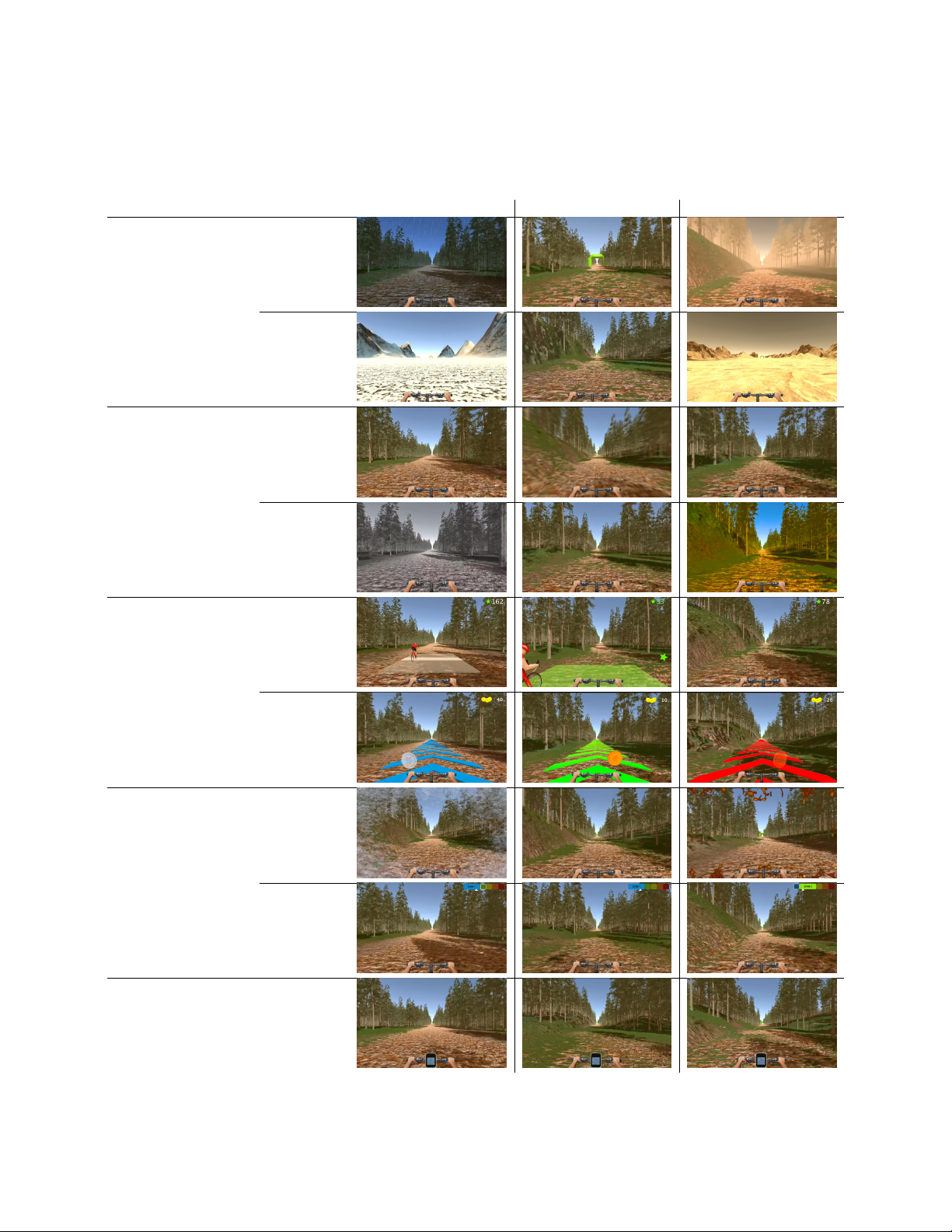
Table 1: Visualizations: We created eight visualizations for our first study, following four types (gamification, change of
environments, distortion of reality, visual overlay), as identified by prior work. For each type, we created two different
visualizations. A non-adaptive baseline complements this set. Group Visualization HR too low HR optimal HR too high Change of Environment Atmosphere Environment Distortion of Reality Motion Blur Saturation Gamification NPC Coins Visual Overlays Frame GUI Baseline
SportsHCI 2025, November 17–19, 2025, Enschede, Netherlands Hein et al.
Surpassing the upper threshold transports riders into a hot,
to high (right). A white arrow beneath this scale indicates
arid desert setting, whereas dropping below the zone places
the user’s current heart rate. If the arrow aligns with the
them in an icy, snow-covered environment. By jumping be-
highlighted zone, the user is in the target range. Deviating
tween these contrasting worlds, the system underscores de-
above or below causes the wider highlight segment to shift
viation from the target zone, motivating users to adjust pace
to the corresponding zone, visually illustrating how far the
or intensity to return to the forest.
user’s heart rate has strayed. A distinct frame around the 3.1.2 Distortion of Reality.
optimal segment reinforces the target zone, reminding the
Motion Blur. In this design, motion blur intensifies as the
user to modify their intensity to keep the arrow on target. We
user’s heart rate approaches the target zone. The goal is to
acknowledge that the GUI condition, while informative, was
remain in a “flow mode” where trees and scenery seem to
not fully optimized for VR. Future work could investigate
fly by, conveying a sense of high speed. If the user drifts
more immersive and ergonomically integrated GUI designs.
away from the optimal heart rate, the motion blur subsides, 3.1.5
Baseline. The baseline visualization mimics a typical bike
making the environment appear slower.
computer mounted on the handlebars. A numerical display presents
Saturation. Here, the environment’s color saturation indicates
the user’s current heart rate, while five adjacent boxes (labeled 1
whether the user is in the correct heart rate zone. Under op-
to 5) represent heart rate zones. The box containing a heart icon
timal conditions, the surroundings look naturally colored.
corresponds to the zone the user is currently in. This design provides
If the user’s heart rate exceeds the target zone, colors be-
straightforward numeric feedback but lacks adaptive visual cues for
come oversaturated; if it falls below, saturation gradually
how to regain or maintain the target zone. The baseline condition
drains until the world is nearly black and white. These visual
intentionally offers minimal feedback to serve as a reference point
changes alert users to adjust their intensity and return to a
against which other designs can be evaluated. natural palette. 3.1.3 Gamification. 3.2 Apparatus
NPC. In this design, an NPC cycles alongside the user on the
We disseminated an online survey to reach a broad participant
same route. The NPC’s distance depends on the user’s heart
base via our university mailing list and by directly contacting local
rate relative to a target zone. Ideally, the user remains parallel
cycling clubs. The survey featured brief text descriptions and short,
to the NPC (i.e., they match speed). If the NPC pulls ahead,
one-minute demo videos showcasing each of the nine different
the user’s heart rate is too low; if it trails behind, the user’s
HR zone visualizations. To produce these videos, we first recorded
heart rate is too high. A semi-transparent green area and
footage from our Baseline Unity scene, which depicts a cyclist riding
a green line highlight the NPC’s ideal position. Users earn
along a straight, forested gravel path (see Table 1). We overlaid
points whenever their front wheel lines up with the green
each proposed visualization in Adobe Premiere Pro CC, ensuring a
line, signifying alignment with the target HR. If the user
consistent riding scenario across all conditions.
drifts away from this zone, the line and area fade to gray, and no points are awarded. 3.3 Procedure
Coins. Users collect coins or jewels placed along the route,
We hosted the survey on Google Forms4 and publicized it through
but only if they maintain their heart rate within the speci-
the university mailing list, a departmental Slack channel, and a local
fied zone. Whenever the user is outside the target HR, the
cycling club. After providing informed consent and completing a
collectibles turn gray and become uncollectable. To help
short demographic questionnaire, participants were presented with
users gauge their HR status, colored arrows at the bottom
each of the nine visualizations in a randomized sequence. They read
of the scene reflect the current zone: green indicates that
a concise textual explanation and watched a corresponding video
the user is on target, red signals a heart rate that is too high,
for each visualization before ranking their favorite designs on the
and blue signifies that it is too low. These immediate visual
basis of personal preference. We did not specify particular usage
cues encourage frequent adjustment of pedaling intensity to
contexts (e.g., casual exercise or professional training); participants maximize coin collection.
were simply asked to choose which visuals they liked best. 3.1.4 Visual Overlays.
Frame. In this design, the user aims to keep an unobstructed 3.4 Participants
view by maintaining an optimal heart rate. When the heart
We received 50 valid survey responses over one week. Participants
rate is within the desired range, the screen remains clear. If
ranged in age from 20 to 62 (𝑀 = 33.06, 𝑆𝐷 = 10.53), with
the heart rate rises too high, flames appear at the periphery 𝑎𝑔𝑒 𝑎𝑔𝑒
48% identifying as male (24), 42% as female (21), and 10% opting not
of the user’s field of vision and creep inward with further
to specify their gender (5). When asked about previous exposure to
deviation. Conversely, if the heart rate falls below the target
AR/VR technologies, most indicated having never used these devices
range, an ice-like visual overlay begins to form around the
(26), followed by a few times (13), once (7), weekly (2), and daily (2).
edges, progressively narrowing the user’s central view. These
Regarding cycling habits, participants reported biking an average
visual cues compel the user to adjust their effort to restore a
of 2.22 days per week (𝑆 𝐷 = 1.86), covering approximately 37.00 clear field of view.
GUI. A color-coded scale is fixed to the right side of the user’s
view, depicting multiple heart rate zones from low (left)
4 https://www.google.de/intl/de/forms/about/, last accessed September 2, 2025 At the Speed of the Heart
SportsHCI 2025, November 17–19, 2025, Enschede, Netherlands
km (𝑆 𝐷 = 48.97) weekly. The overall sample thus encompassed a
profiles that limit direct applicability. Future research could expand
wide range of VR familiarity and cycling experience.
this design space across different athletic activities to more thor-
oughly assess how varied visualizations affect both user experience 3.5 Results
and performance outcomes. Although combining multiple visual
feedback methods might produce richer, more adaptive exergames,
We began our analysis by computing the average rank for each
it also introduces potential risks such as cognitive overload or tech-
of the nine visualization concepts, identifying the design with the lowest
nical complexity. Our focus on single-visualization prototypes was
mean rank as the most favored. In this dataset, the top-
intended to preserve clarity and interpretability, allowing us to eval-
ranking visualization was “NPC” (see Figure 2). To verify that these
uate each concept’s impact in isolation. We recommend a stepwise
differences in preference were statistically robust, we conducted
approach, validating individual designs thoroughly before layering
a Friedman test. This revealed a significant effect of visualization 2
more complex interactions or visuals. The evaluation of the nine on ranked preference, 𝜒
(8, 50) = 40.23, 𝑝 < .001, indicating that
visualizations was conducted without participants cycling simul-
participants did not view all designs equally.
taneously, which may have influenced their preferences and led
Preference Estimation. Post-hoc inspection of the mean ranks
to an early focus on the NPC version. Despite these constraints,
showed that “NPC” (M = 3.60, SD = 2.96) outperformed the other
our findings highlight the potential of the tested visualizations,
conditions, confirming it as the most popular choice among par-
NPC in particular, to enhance performance and engagement in ex-
ticipants. Table 2 summarizes the descriptive statistics for all nine
ergames. Future work could build on this foundation by refining visualizations.
and integrating designs into other fitness scenarios.
Table 2: Descriptive Statistics for Visualizations 4
Study 2: Physiologically-Adaptive Visualization Mean Rank SD
Visualizations for Biking Engagement GUI 3.74 2.38 4.1 Study Design Motion Blur 5.60 2.68 Baseline 5.08 2.76
We implemented the highest-rated design from Study 1, i.e., Adap- NPC 3.60 2.96
tive NPC, within a 3D VR environment. This study assessed whether Saturation 6.32 2.18
a physiologically adaptive NPC, driven by real-time heart rate (HR) Frame 5.24 2.51
monitoring, helps users maintain optimal HR zones while cycling, Atmosphere 5.18 2.17
and how it influences subjective exertion, enjoyment, and motiva- Environment 5.48 2.13 tion. Coins 4.76 2.35
Conditions. To isolate the influence of adaptive feedback, we in-
cluded three conditions: Adaptive NPC, Random NPC, and a Baseline 3.6 Discussion
control. In the Adaptive NPC condition, the system continuously
Overall, participants rated NPC, GUI, and Coins considerably higher
processed each participant’s HR data, identifying which zone they
than the other visualizations (Atmosphere, Frame, Environment, Mo-
were in and adjusting the NPC’s speed accordingly. By contrast,
tion Blur, and Saturation), with NPC emerging as the most preferred.
the Random NPC condition presented a gamified element without
We attribute these outcomes to users’ familiarity with straightfor-
adaptation, allowing us to distinguish NPC-based gamification ef-
ward information displays (GUI ) and gamification elements (NPC).
fects from physiological adaptation. The Baseline condition served
This is consistent with prior findings that pre-exposure to con- as a no-NPC reference.
ventional interaction paradigms can influence preference in MR [10, 40].
Design. We employed a within-participants experimental setup
Although multiple design directions were initially explored, we
in which each participant experienced all three conditions in a coun-
aimed to isolate a single, well-received approach for deeper scrutiny.
terbalanced order. To mitigate learning effects, we used a balanced
The results suggest NPC, and to some extent GUI, present a strong
Latin Williams square design with six distinct orderings [81]. In
candidate for continued development in exergaming scenarios. Nev-
total, the experimental procedure spanned four blocks, as depicted
ertheless, designs like Motion Blur or Environment may excel under
in Figure 6. The research protocol was reviewed and approved by
different conditions or when combined with other feedback mecha-
our university’s ethics committee, ensuring compliance with ethical
nisms, highlighting future opportunities for research.
standards for human-participant studies.
We emphasize that each visualization or combination thereof
We explored the following research questions, informed by related
would require a dedicated investigation beyond the current study’s work:
scope. Future work should systematically test these alternatives and
consider factors like cognitive load, motion sickness, or real-time
RQ1. Does real-time adaptive feedback support users in main-
adaptation logic to refine how physiological data are conveyed in taining target HR zones? VR exergames.
RQ2. How does adaptive feedback compare to non-adaptive
Limitations. This study does not encompass the entire spectrum
or random designs in performance and experience?
of possible designs, and the concepts were specifically created for a
RQ3. What effects do adaptive visualizations have on perceived
cycling context, other sports may have distinct demands and motion exertion and motivation?
SportsHCI 2025, November 17–19, 2025, Enschede, Netherlands Hein et al.
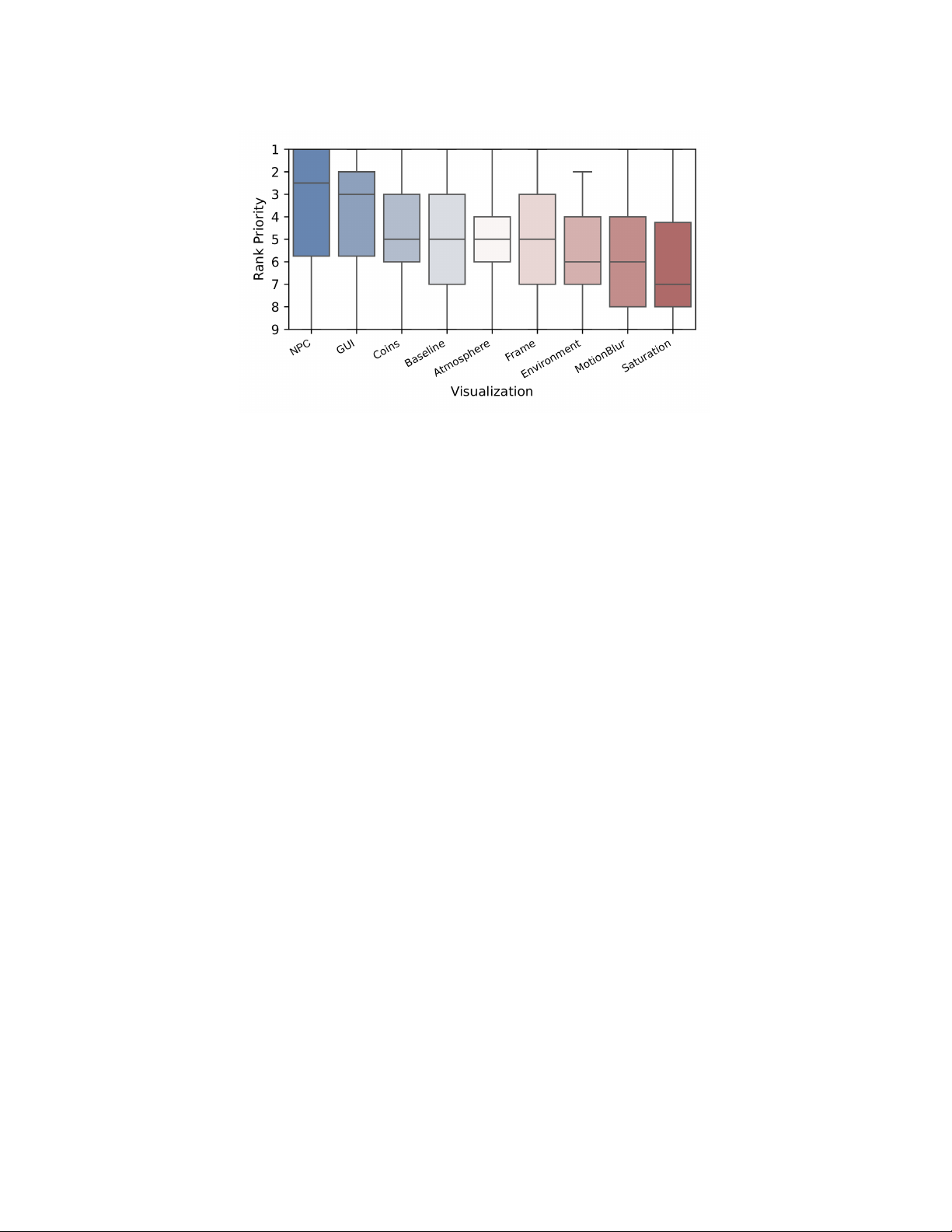
Figure 2: Rank Preferences Results: We investigated preference results by computing rank average based on rank sum. Boxplots
depict ranks by participants on individual visualizations. Lower scores mean higher preference. Here, the NPC visualization
was the most preferred by users across scenarios (lowest rank).
We evaluated five aspects: (I) Heart Rate, (II) Optimal Heart
whose speed changed unpredictably. This design lets us gauge
Rate Ratio, (III) intrinsic motivation via the Intrinsic Motivation
whether improvements in performance measures (e.g., maintain-
Inventory (IMI) [65], (IV) subjective exertion via the Perceived Ex-
ing target heart rate, motivation) stem from adaptive feedback or
ertion (Borg Rating of Perceived Exertion Scale) [8, 84], and (V)
simply from riding alongside any NPC. Comparing the Random
physical activity enjoyment via the Physical Activity Enjoyment
NPC to the Adaptive NPC isolates the specific impact of real-time
Scale (PACES) [36]. We introduced a Randomized NPC condition physiological adaptation.
in which the NPC’s speed changed arbitrarily, independent of the
Participants in all three conditions followed the same procedure:
participant’s HR to control for any biases in performance and sub-
they were immersed in a high-fidelity VR forest with realistic en-
jective ratings. This setup helps distinguish the effects of genuine
vironmental audio and rode along a straight gravel road. Steering
physiological adaptation from mere gamification’s effects.
was unnecessary because the path extended forward without turns.
Since our main goal was to determine whether participants could
To raise their heart rate (HR), participants pedaled more intensely;
more accurately maintain the designated HR zone, we relied on
to lower it, they eased off or stopped pedaling. Over a six-minute
normalized heart rate in our analysis. Specifically, each participant’s
session, they aimed to keep their HR within progressively more de-
HR was expressed as a percentage of their individual HR , al-
manding zones. For the first two minutes, they remained in Zone 1 max
lowing for direct comparisons among users with differing fitness
(very light intensity, 50–60% of 𝐻 𝑅 ). After two minutes, they max levels.
shifted to Zone 2 (light intensity, 60–70% of 𝐻 𝑅 ). Following max
another two minutes, the target increased to Zone 3 (moderate in- 4.2
Architecture of the Adaptive Visualization tensity, 70–80% of 𝐻 𝑅
). At the end of the six minutes, a text max
prompt appeared in their field of view, signaling the completion of
To obtain heart rate data, we first captured raw ECG signals and the run.
streamed them to a Python-based TCP/IP server, allowing bidirec-
tional communication between the Lab Streaming Layer (LSL) and 4.3.1
Baseline. In the Baseline condition, participants cycle along
our VR (Unity) environment. Real-time ECG preprocessing was
a forested gravel road while aiming to remain within the designated
handled by the Neurokit Python Toolbox [42] within this client–
heart rate (HR) zone. A conventional bike computer is mounted on
server pipeline. Specifically, the ECG data passed through a 3–45 Hz
the handlebar, displaying the participant’s current HR and a bar
Finite Impulse Response (FIR) band-pass filter (3rd order) before
labeled 1–5 (representing the five HR zones). A black heart icon
Hamilton’s method [27] segmented the signal to detect QRS com-
appears over the number corresponding to the user’s current zone,
plexes. The system then calculated mean heart rate (HR) from these
and a green box highlights the target zone. The user is in the correct
detected peaks, providing the necessary real-time physiological
zone if the green box encircles the heart icon. Participants can
data for our adaptive exergaming logic. Our ECG pipeline did not
increase or decrease their HR by pedaling more or less vigorously
include explicit motion artifact filtering. We note this as a technical
(or even stopping), to keep the heart icon aligned with the target
limitation and that future systems could be improved. zone. 4.3 Independent Variables 4.3.2
Random NPC. In this condition, an NPC rides alongside the
We implemented three conditions to disentangle the effects of phys-
participant on the same straight forest road. As in the baseline,
iological adaptation from those of gamification. In addition to a
users aim to maintain a specified HR zone and receive continuous
Baseline (no NPC) and an Adaptive NPC, we added a Random NPC
HR feedback from the handlebar bike computer (showing both their At the Speed of the Heart
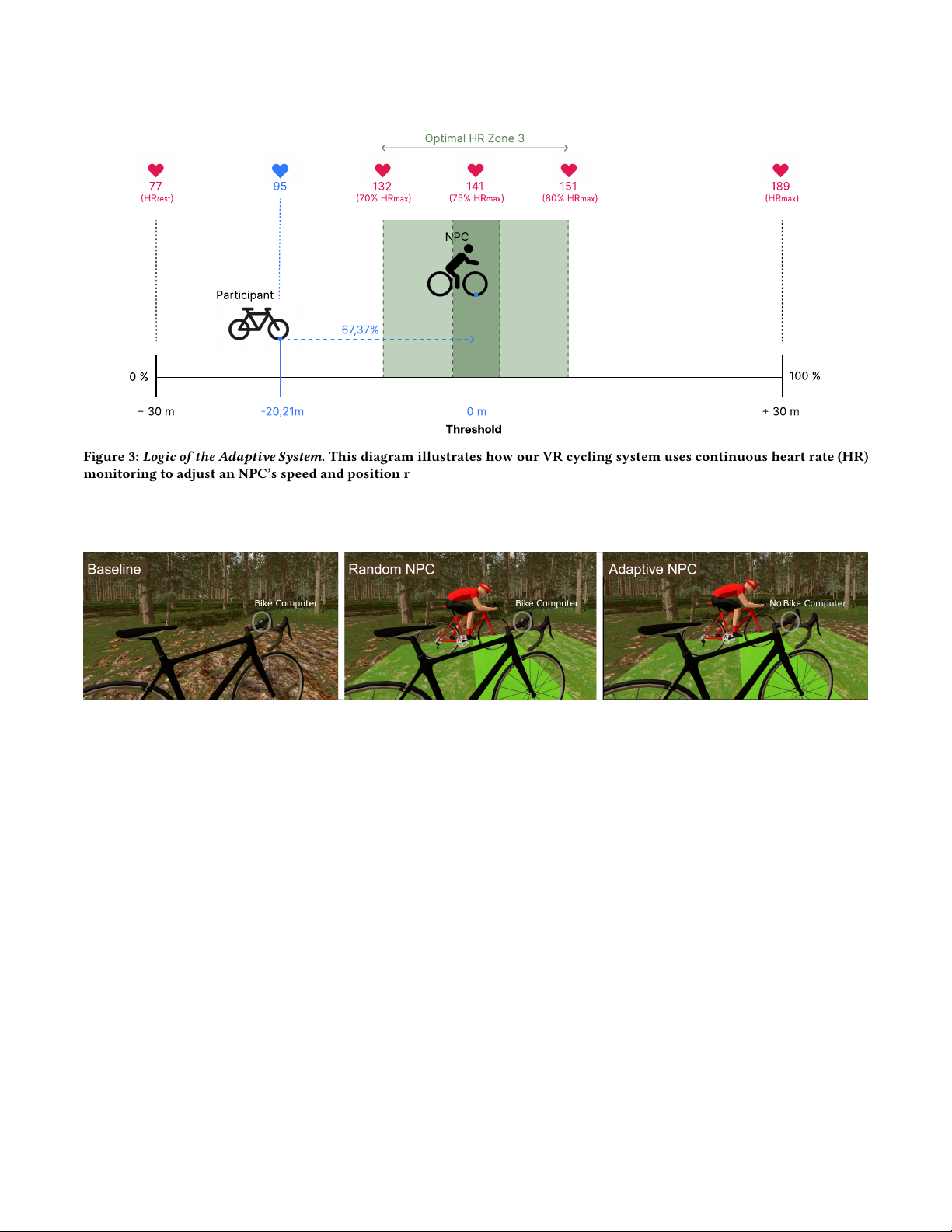
SportsHCI 2025, November 17–19, 2025, Enschede, Netherlands Optimal HR Zone 3 77 95 132 141 151 189 (HRrest) (70% HRmax) (75% HRmax) (80% HRmax) (HRmax) NPC Participant 67,37% 0 % 100 % − 30 m -20,21m 0 m + 30 m Threshold
Figure 3: Logic of the Adaptive System. This diagram illustrates how our VR cycling system uses continuous heart rate (HR)
monitoring to adjust an NPC’s speed and position relative to the participant. When the user’s HR is within the target range
(e.g., Zone 3: 132–151 bpm or 70–80% of HR
for a 30-year-old), the NPC maintains pace alongside the user. Should the user’s max
HR drop below or rise above this range, the NPC lags behind or moves ahead by up to ±30 meters to reflect the extent of HR
deviation. This adaptive mechanism motivates participants to match the NPC’s position, helping them stay within their ideal exercise zone.
Figure 4: In-Game Overview of the Three Conditions ‘Baseline’, ‘Random NPC’ and ‘Adaptive NPC’: In the Baseline condition
(left), the participant views a bike computer displaying their heart rate but does not interact with an NPC. In the Random
NPC condition (middle), an NPC cycles alongside the participant, but its position changes randomly and is not influenced
by the participant’s heart rate. In the Adaptive NPC condition (right), the NPC’s position dynamically adjusts based on the
participant’s heart rate, encouraging the participant to maintain their heart rate within the target zone.
current and target zones). However, the NPC’s distance from the
to the bike’s handlebar. Therefore, the users cannot see their exact
participant fluctuates randomly within a ±30 meter range. Theo-
current HR and zone. Figure 4 visually compares the conditions.
retically, these unpredictable movements should not influence the
participant’s performance or behavior, allowing us to test whether 4.4 Dependent Variables
NPC-based gamification alone affects HR maintenance. 4.4.1
Heart Rate and Optimal HR Ratio. HR is a primary physi- 4.3.3
Adaptive NPC. Next to the users, an NPC rides the same
ological indicator of exercise intensity. As detailed in Section 4.6,
route on his bike. They aim to keep up with the NPC. This means
our system continuously recorded participants’ HR to capture their
the NPC should always ride the same height as the user. The user
real-time physical responses. We evaluated normalized heart rates
should not overtake the NPC, ride ahead or behind. The distance
to assess how well participants maintained their target HR zone
of the virtual NPC changes depending on the user’s current HR.
across conditions. As the goal of our system is not high exertion
The NPC’s speed is based on the user’s HR and the frequently set
but controlled exertion, we focus on the stability of HR adaptation
HR zone. The users can assume their own HR by the distance to
rather than peak values. To quantify how well they adhered to
the NPC. If the NPC is in front of the user, the user’s heart rate is
their prescribed HR range, we calculated participants’ Optimal HR
too low. If the NPC is behind the user, the user’s heart rate is too
Ratio. Specifically, we determined, at each time point, whether the
high. A light green (transparent) area and a green line are displayed
participant’s HR was within the target zone, then converted the
around the NPC (Figure 3). If the distance is too great, this area will
proportion of “on-target” time into a percentage. A higher Optimal
be grayed out. In this scenario, there is no bike computer attached
HR Ratio reflects stronger compliance with the desired intensity
SportsHCI 2025, November 17–19, 2025, Enschede, Netherlands Hein et al. Varjo XR-3 HMD VR Base Station 1 VR Base Station 2 Polar H10 Sensor Artificial Airflow
Data Transfer via 2x USB-C Cables (fixed on ceiling) + HR Data via Bluetooth Fan Power(Watt) Data via Bluetooth Main Computer Artificial Ambient Sound Music Speaker Scott Speedster 40 Wahoo KICKR v5 Road Bike Wahoo SNAP Wheel Block
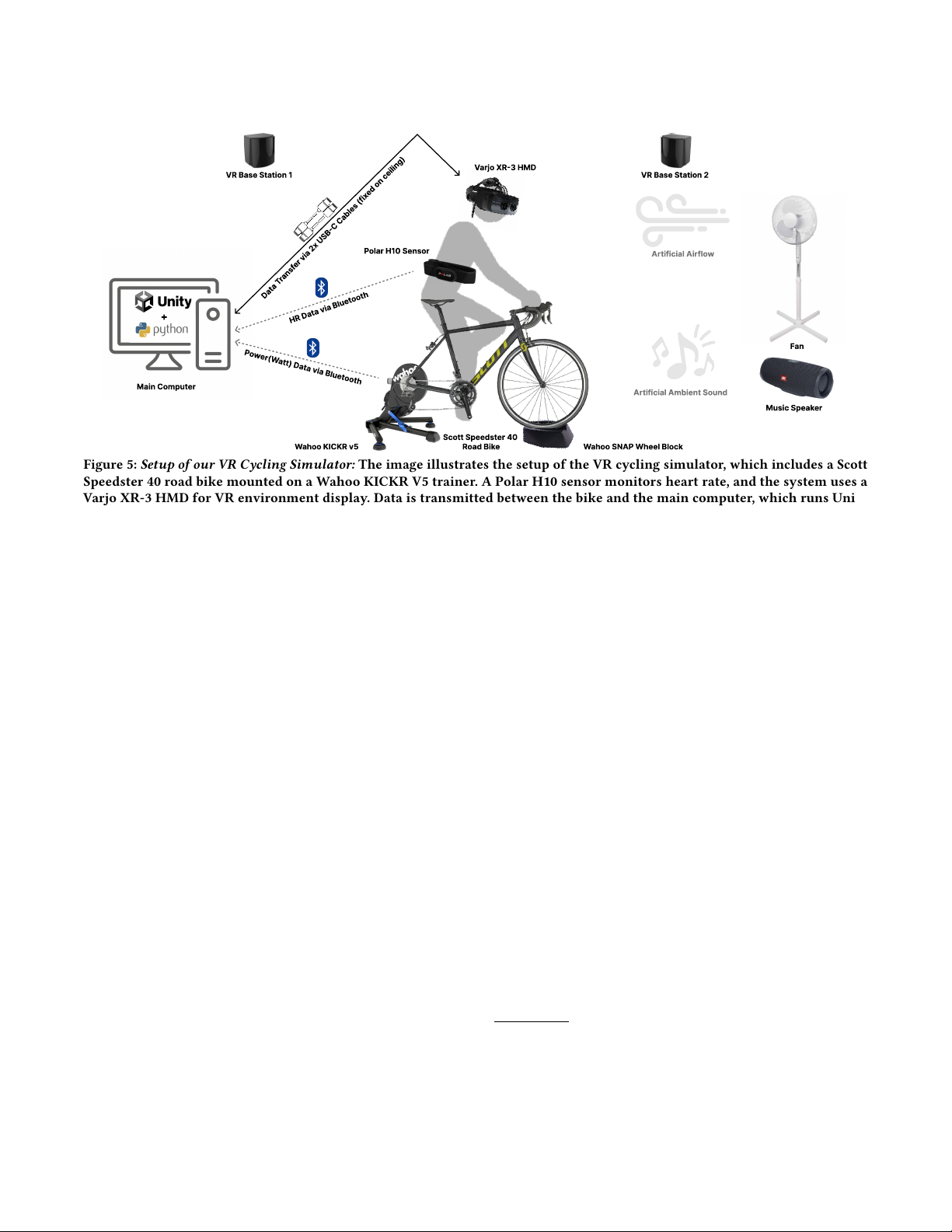
Figure 5: Setup of our VR Cycling Simulator: The image illustrates the setup of the VR cycling simulator, which includes a Scott
Speedster 40 road bike mounted on a Wahoo KICKR V5 trainer. A Polar H10 sensor monitors heart rate, and the system uses a
Varjo XR-3 HMD for VR environment display. Data is transmitted between the bike and the main computer, which runs Unity
and Python via Bluetooth. Additional elements include two VR base stations for tracking, a fan for artificial airflow, ambient
sound from a music speaker, and a Wahoo SNAP Wheel Block for bike stability. For a complete description of the apparatus, refer to Section 4.5.
level and can be interpreted as more efficient engagement in the 4.5 Apparatus and Implementation prescribed workout.
We developed our VR cycling environment and all related tasks in
Unity 3D (Version 2022.3.20f1), the same platform used to create 4.4.2
Borg Rating of Perceived Exertion (RPE).
sample videos in Study 1. For the physical setup, we combined a Perceived Exertion
Scott Speedster 40 road bike (size M, 54 cm) with a Wahoo KICKR
(RPE) measures how strenuous participants feel their workout is, as
Smart Trainer v5. The Scott Speedster features an aluminum frame
opposed to relying purely on physiological readings. We employed
and fork, plus a Shimano Claris 2×8 gearbox; size M was chosen to
the Borg Rating of Perceived Exertion Scale [8], a 6–20 range where
accommodate the average European adult [63].
6 corresponds to “no exertion at all” and 20 signifies “maximal
The Wahoo KICKR v5 was selected for its lateral movement
exertion.” After each cycling session, participants reported their RPE
support and auto-calibration. According to the manufacturer, it
score. Higher values indicate a greater sense of difficulty, offering 5
achieves ±1% accuracy . We connected the KICKR to our main
insight into subjective workload beyond HR-based metrics. 6
computer via Bluetooth (Cycling Power-Service) , enabling a Python
script to receive live cycling power data (in Watts). Using a standard 4.4.3
Physical Activity Enjoyment Scale (PACES). The Physical Ac-
velocity-conversion method [66], we estimated the participant’s
tivity Enjoyment Scale (PACES) [36] is widely used to measure sub-
speed in km/h but did not store raw power data. We removed the
jective enjoyment of exercise [34, 51]. In its original form, PACES
bike’s rear wheel to mount it directly on the trainer, then secured
contains 18 statements rated on a 7-point Likert scale, capturing the
its front wheel in a Wahoo SNAP Wheel Block (fixed to the floor
pleasure and satisfaction derived from physical activity. Because 11
with duct tape), preventing any steering input in the VR simulation.
of these items are negatively worded, their scores must be reversed
Participants wore a Mixed Reality head-mounted display (HMD)
before calculating the overall enjoyment level. Higher PACES totals
to experience the immersive environment, while the Unity scene
indicate a greater sense of enjoyment during physical exercise.
featured a straight gravel road through a forest. Because steering
was disabled, forward motion was the sole user input. An NPC model 7 4.4.4
Intrinsic Motivation Inventory (IMI).
(purchased from the Unity Asset Store ) provided a virtual cycling The Intrinsic Motivation
companion where needed (e.g., in Adaptive NPC or Random NPC
Inventory (IMI) [65] gauges the degree to which participants find an
conditions). This apparatus and software stack ensured consistent,
activity inherently rewarding rather than driven by external pres-
controlled VR biking scenarios across all conditions.
sures. This study employed a 30-item version covering five dimen-
sions: Interest/Enjoyment, Perceived Competence, Effort/Importance,
5 https://eu.wahoofitness.com/devices/indoor-cycling/bike-trainers/kickr-buy, last ac-
Pressure/Tension, and Value/Usefulness. Some items were negatively cessed September 2, 2025.
6 https://www.bluetooth.com/specifications/specs/cycling-power-service-1-1/, last ac-
worded and thus reverse-scored before summation. Higher scores cessed September 2, 2025.
on each dimension reflect stronger intrinsic motivation within that
7 https://assetstore.unity.com/packages/3d/vehicles/land/low-poly-cyclist-184962, last particular category. accessed September 2, 2025. At the Speed of the Heart
SportsHCI 2025, November 17–19, 2025, Enschede, Netherlands
For head-mounted display (HMD) hardware, we selected a Varjo XR-
Zone 2 (light, 60–70% of 𝐻 𝑅
), and finally Zone 3 (moderate, max
3, which offers a 115° horizontal field of view, a 90 Hz refresh rate, 70–80% of 𝐻 𝑅
). Participants received instructions on viewing max
and dual 12 MP video pass-through at 90 Hz. Its built-in motorized
HR data (and, if relevant, NPC behavior) in their headsets. They
interpupillary distance (IPD) adjustment (59–71 mm), three-point
could increase HR by pedaling more vigorously or lowering it by
headband, and face cushions help ensure a secure fit. Although the
reducing effort or briefly stopping. At the 6-minute mark, a text
device weighs approximately 980 g, we chose an XR-capable HMD
prompt informed them to end the run.
instead of a VR-only model for flexible adaptation and the option to
quickly remove participants from the virtual environment if they
experienced motion sickness. Two HTC Steam VR Base Station 2.0 4.8 Procedure
units enabled outside-in tracking, and we ran two USB-C cables
We conducted the study in a controlled lab environment at our uni-
overhead to minimize cable interference.
versity. Upon arrival, each participant was briefed on the study’s
Participants wore a Polar H10 chest strap (130 Hz sampling rate,
objectives and the HR zones they would aim to maintain, as de-
Polar, Finland) to capture electrocardiogram (ECG) data. The strap
picted on a printed reference sheet. We obtained informed consent,
was positioned around the lower chest; after roughly two minutes
emphasizing that participants could halt the study at any point
of adjustment, it produced consistent signal quality. To enhance
should they experience discomfort or motion sickness. Next, we
immersion and reduce motion sickness, we placed a fan in front
adjusted the bike saddle to a suitable height, lightly moistened the
of the bike to simulate airflow and provided natural forest sound
Polar H10 chest strap, and demonstrated how to position it properly
effects (birdsong, rustling leaves) via external speakers [18, 73]. This
using a provided illustration. For participants unfamiliar with a
minimized the need for additional head-mounted audio equipment
road bike’s gear shifting, we offered a brief tutorial before they
and maintained a low-noise environment.
mounted the bike to begin a training phase in VR.
Figure 5 illustrates the overall VR cycling simulator. We also
Participants acclimated to the virtual environment during this
implemented an auxiliary GUI window, visible only to the study
training session and practiced shifting gears without directly view-
examiner, to input participant ID and age for accurate HR-zone
ing their limbs in VR. Immediately following the training, partici-
calculations before each session. While participants pedaled, the
pants rested briefly and completed a demographics questionnaire,
examiner could monitor the participant’s current HR, detected HR
which included items about any motion sickness encountered. They
zone, and remaining time, ensuring real-time supervision and quick
were given a unique ID to preserve anonymity when correlating adjustments if necessary.
their survey responses with ECG data.
To support replication and further research, we have released
The main experiment consisted of three distinct cycling condi-
our Unity project, including the NPC adaptation logic and heart rate
tions presented consecutively. Before each condition, the experi-
integration scripts, on Open Science Framework (see Section 9). This
menter entered the participant’s ID, age, and desired zone duration
repository includes setup instructions and guidelines for adapting
into a private UI panel to ensure correct HR-zone adaptation. As
the visualizations. Our pipeline integrates Unity, Python (NeuroKit),
participants cycled, we matched a fan’s speed to their virtual pace
and Lab Streaming Layer (LSL), and is designed for modular reuse in
to boost immersion. A short, standardized explanation was read
varied mixed reality contexts. We welcome extensions and remixing
aloud before the start of each condition. Upon finishing a condition,
of this toolkit for adaptive applications.
participants completed a corresponding section of the question- naire. 4.6
ECG Recording and Preprocessing
After experiencing all three conditions, participants were de-
We acquired ECG data at a 130 Hz sampling rate using a Polar H10
briefed and compensated for their time. Figure 6 provides an overview
chest strap (Polar, Finland). Before recording, each electrode was of the entire workflow.
moistened with lukewarm water and placed just below the chest
muscles, over the xiphoid process of the sternum, ensuring proper
contact and minimal noise. All real-time ECG processing occurred 4.9 Participants
via the Neurokit Python Toolbox [42]. We first applied a 3rd-order
We recruited 18 participants (𝑀 = 35 = 12 age .27, 𝑆 𝐷age .88), of
Finite Impulse Response (FIR) band-pass filter (3–45 Hz) to reduce
whom 12 identified as male (66.67%) and 6 as female (33.33%). Ini-
baseline drift and high-frequency artifacts. Hamilton’s method [27]
tially, we sought individuals who cycle more than 5 km per week
then segmented the filtered signal to detect QRS complexes, from
[60] or engage in other sports involving HR-based training. How-
which the instantaneous heart rate (HR) was extracted.
ever, we also included participants who reported cycling less fre-
quently, yet still on a regular basis. 4.7 Task
On average, participants reported cycling 3.06 ± 2.15 days per
Building on prior work [39], we created a 6-minute cycling task set
week and covering 77.72 ± 98.79 km weekly. They also engaged in
in a high-fidelity virtual forest. During a 2-minute familiarization
other sports 2.61 ± 1.38 times per week. Five participants specifically
phase, participants experienced the environment and learned to
mentioned using heart rate data to guide their workouts. Regarding
operate the road bike. Once the main session began, they pedaled
AR/VR experience, nine had never used a head-mounted display
along a straight gravel path for 6 minutes without steering inputs.
(HMD), two had done so once, six had tried one a few times, and
The objective throughout was to maintain a target HR that evolved
1 participant used an HMD weekly. Only 1 of the 18 owned a VR
every 2 minutes: from Zone 1 (very light, 50–60% of 𝐻 𝑅 ) to device. max
SportsHCI 2025, November 17–19, 2025, Enschede, Netherlands Hein et al. Latin Square Randomization 2 mins 6 mins 6 mins 6 mins Rest Rest Rest Rest Training + Baseline + Random + Adaptive Randomized + NPC NPC Control Adaptation Informed Consent Questionnaires Questionnaires Questionnaires Questionnaires
Figure 6: Experiment Procedure. Participants begin with a 2-minute training session to get accustomed to the VR environment
and cycling equipment. The experiment then proceeds through three 6-minute conditions (Baseline, Random NPC, and Adaptive
NPC) in a Latin-square randomized order. After each condition, participants rest briefly and complete questionnaires regarding
their experience. The study ends once all three conditions are finished. A more detailed description is provided in Section 4.8.
During a 10-point Likert scale assessment of motion sickness in
participants had a modestly lower normalized HR than those in
the training phase, 16 participants reported no or minimal discom-
Adaptive NPC, while Random NPC yielded the lowest normalized
fort (scores of 1–3), and 2 reported minor to medium symptoms
HR overall (see Figure 8b). The relatively large negative effect size
(scores of 4–6). No one gave higher ratings (7–10) or exited the
in the Random NPC condition underscores its stronger influence
study early, indicating that the VR setup was broadly tolerable
on reducing participants’ HR, as evidenced by the more pronounced
across varied experience levels.
departure from the intercept estimate. 5.1.2
Optimal Heart Rate Ratio. The model’s intercept was esti- 5 Study 2: Results
mated at 79.08 (95% CI [68.19, 89.97], 𝑡 (46) = 14.62, 𝑝 < .001).
We begin by reporting outcomes for heart rate (HR) and the Optimal
Within this model, the Baseline condition exerted a significantly
HR Ratio, followed by the subjective questionnaire measures (BORG,
negative influence on the percentage of time spent in the optimal 8
PACES, and IMI). We employed Linear Mixed Models to account
HR zone, with a large effect size (𝛽 = −56.02, 95% CI [-68.49, -43.54],
for between-participant variance and repeated measures across
𝑡 (46) = −9.04, 𝑝 < .001; Std. 𝛽 = −1.76, 95% CI [-2.15, -1.36]).
different target zones. Specifically, for ECG-derived measures, we
Likewise, the Random NPC condition also produced a significantly used:
negative effect (𝛽 = −22.57, 95% CI [-35.04, -10.09], 𝑡 (46) = −3.64,
measure Condition + (1 | participant) + (1 | Target
𝑝 < .001; Std. 𝛽 = −.71, 95% CI [-1.10, -.32]), though its impact was Zone)
moderate by comparison. These findings indicate that participants
where Condition (Adaptive NPC, Random NPC, Baseline) was a
allocated significantly less of their cycling time to the target HR
fixed effect, and both participant and Target Zone were random
zone under both Baseline and Random NPC, relative to Adaptive
intercepts. For the subjective questionnaires (BORG, PACES, and
NPC. Consequently, the Adaptive NPC condition most effectively IMI), our model simplified to:
helped participants maintain optimal HR across all target zones
measure Condition + (1 | participant) (Figure 8a).
since target-zone considerations did not apply to these self-report 5.2 Subjective Results
data. We report standardized beta coefficients (Std. 𝛽 ) to describe
effect sizes independently of each variable’s original scale [9, 83], 5.2.1
Borg Rating of Perceived Exertion (RPE). The intercept of
providing a clear sense of the relative magnitude of each effect.
the model, corresponding to the Adaptive NPC condition, was
estimated to be 11.82 (95% CI [10.77, 12.88], 𝑡 (46) = 22.54, 𝑝 < 5.1 ECG
.001). Neither the Baseline scenario nor the Random NPC scenario 5.1.1 Heart Rate.
significantly affected perceived exertion. Specifically, the effect
Our heart rate model exhibited a moderate over- 2
of Baseline was statistically non-significant and negative, with all explanatory power (𝑅
= .26), with the fixed effects contributing 𝑐 2 a small effect size (𝛽
= −.88, 95% CI [−2.08, .31], 𝑡 (46) = −1.49, 𝑅
= .14. The intercept, corresponding to the Adaptive NPC con- 𝑚
𝑝 = .144). Similarly, the effect of Random NPC was also statistically
dition, was estimated at 0.69 (95% CI [.65, .73], 𝑡 (138) = 32.37,
non-significant and negative, with a low effect size (𝛽 = −.06, 95% CI
𝑝 < .001). Within this framework, the effect of the Baseline con-
[−1.25, 1.14], 𝑡 (46) = −.10, 𝑝 = .921). These results suggest neither
dition was significant and negative (𝛽 = −.05, 95% CI [-.08, -.01],
the Baseline scenario nor the Random NPC significantly affected
𝑡 (138) = −2.80, 𝑝 = .006), with a standardized effect size of −.50
participants’ perceived exertion as compared to the Adaptive NPC
(95% CI [-.86, -.15]), indicating a medium effect [9]. condition.
Likewise, the effect of the Random NPC condition was significant
and negative (𝛽 = −.09, 95% CI [-.12, -.06], 𝑡 (138) = −5.20, 𝑝 < .001), 5.2.2
Physical Activity Enjoyment Scale (PACES). Overall, the model’s
with a larger standardized effect size of −.94 (95% CI [-1.29, -.58]), 2 −3
explanatory power was very weak (conditional 𝑅 = 1.52 × 10 ),
suggesting a large effect [9]. These findings imply that Baseline
with the fixed effects contributing minimally to the model’s explana- 2 −4 8 tory power (marginal 𝑅 = 1.26 × 10 ). The intercept of the model,
Restricted Maximum Likelihood (REML) estimation with Satterthwaite’s approxima- tion for degrees of freedom.
corresponding to the Adaptive NPC condition, was estimated to At the Speed of the Heart
SportsHCI 2025, November 17–19, 2025, Enschede, Netherlands
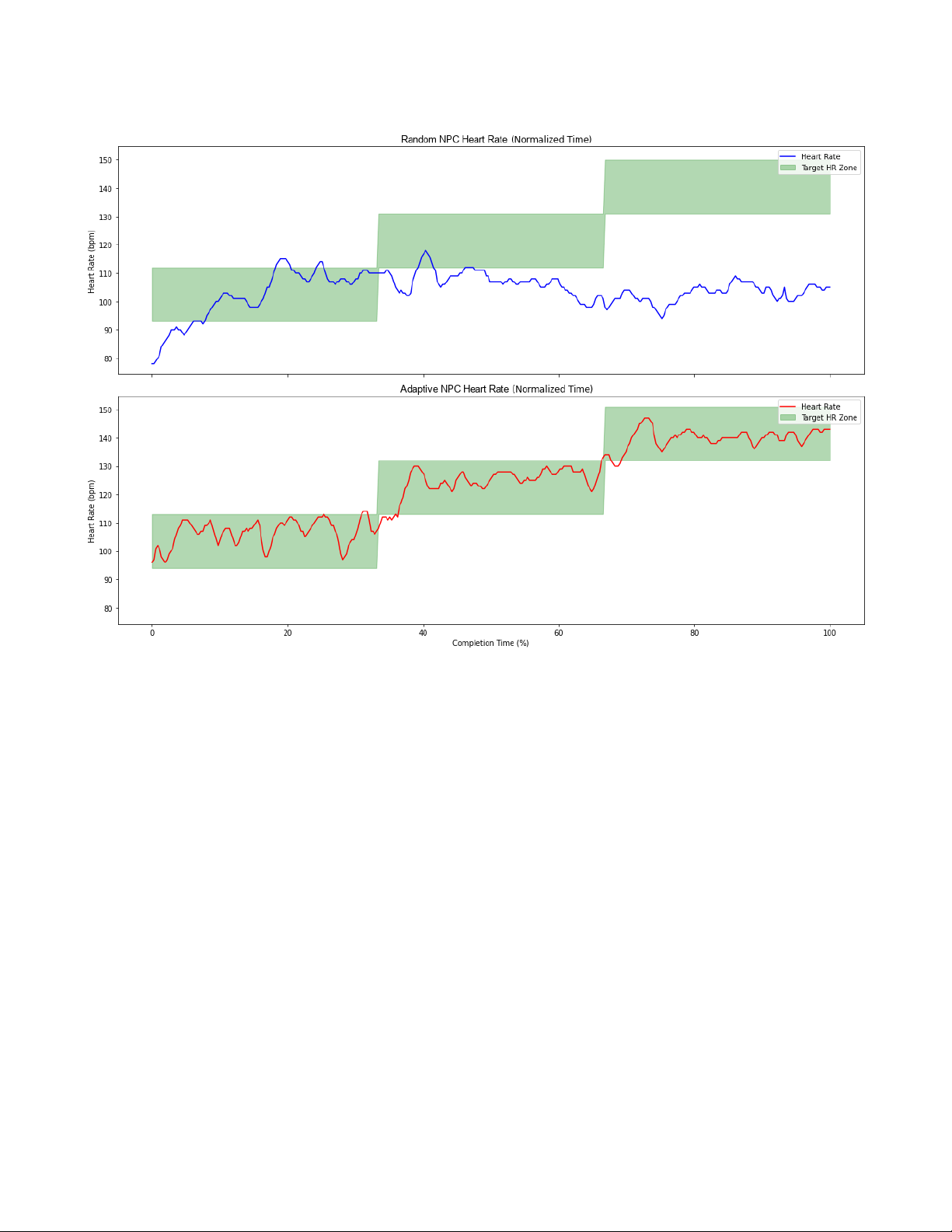
Figure 7: Optimal Heart Rate Adaptation: We depict the participant’s HR evolution across Target HR zones for the two adaptive
visualizations. The Random NPC is depicted on top, while the Adaptive NPC is at the bottom. For the Adaptive NPC
visualization, participants kept their HR in the optimal HR ratio for .749 % (SD = .02) of the time, while in the Random NPC
visualization, participants stayed, on average, .655 % (SD = .021) of their time in the optimal HR ratio. HR data points are fitted within a uniform time scale. −3 −3 −3 −4 −5 be 4.45 × 10 (95% CI [4.19 × 10 , 4.72 × 10 ], 𝑡 (967) = 32.56, 95% CI [−1.16 × 10 , 1.53 × 10
], 𝑡 (1525) = −1.51, 𝑝 = .132; Std.
𝑝 < .001). Neither the Baseline condition nor the Random NPC
𝛽 = −.09, 95% CI [−.20, .03]). However, the effect of Random NPC
condition significantly affected participants’ enjoyment of physical
was statistically significant and negative, with a small to moderate −5 −4 −5
activity, as measured by the PACES scale.
effect size (𝛽 = −7.96 × 10 , 95% CI [−1.45 × 10 , −1.38 × 10 ],
Specifically, the effect of the Baseline condition was statistically
𝑡 (1525) = −2.37, 𝑝 = .018; Std. 𝛽 = −.14, 95% CI [−.25, −.02]). The
non-significant and positive, with a minimal effect size (𝛽 = 3.85 ×
results indicate participants showed no significant change in mo- −5 −4 −4 10 , 95% CI [−3.37 × 10 , 4.13 × 10
], 𝑡 (967) = .20, 𝑝 = .840).
tivation when transitioning from the Baseline to the Adaptive
Similarly, the effect of the Random NPC condition was statistically
NPC condition (𝑝 = .132). However, participants’ motivation sig-
non-significant and negative, also with a small effect size (𝛽 =
nificantly decreased when transitioning from the Adaptive NPC − −5 −4 −4 2.80 × 10 , 95% CI [−4.03 × 10 , 3.47 × 10 ], 𝑡 (967) = −.15, 𝑝 =
condition to the Random NPC condition (𝑝 = .018). These findings
.884). These findings suggest neither the Baseline condition nor the
suggest an adaptive visualization designed to support an optimal
Random NPC condition compared to the Adaptive NPC condition
HR ratio increased intrinsic motivation compared to a random
significantly influenced participants’ enjoyment of physical activity, visualization.
as assessed by the PACES scale. 5.3 Summary 5.2.3
Intrinsic Motivation Inventory (IMI). The model’s total ex-
Below, we recap and relate the key findings to our three research 2
planatory power was moderate (𝑅 = .13), with the part questions. conditional 2 −3
related to the fixed effects alone (marginal 𝑅 ) being 3.27 × 10 . 5.3.1
RQ1: Real-Time Adaptations Increase Users’ Capacity to Main-
Within this model, the effect of Baseline was statistically non-
tain an Optimal HR. Compared to the Adaptive NPC condition, −5
significant and negative, with a small effect size (𝛽 = −5.05 × 10 ,
participants in Baseline had a slightly lower normalized HR, while
SportsHCI 2025, November 17–19, 2025, Enschede, Netherlands Hein et al. (a) Time in optimal HR zone. (b) Normalized HR.
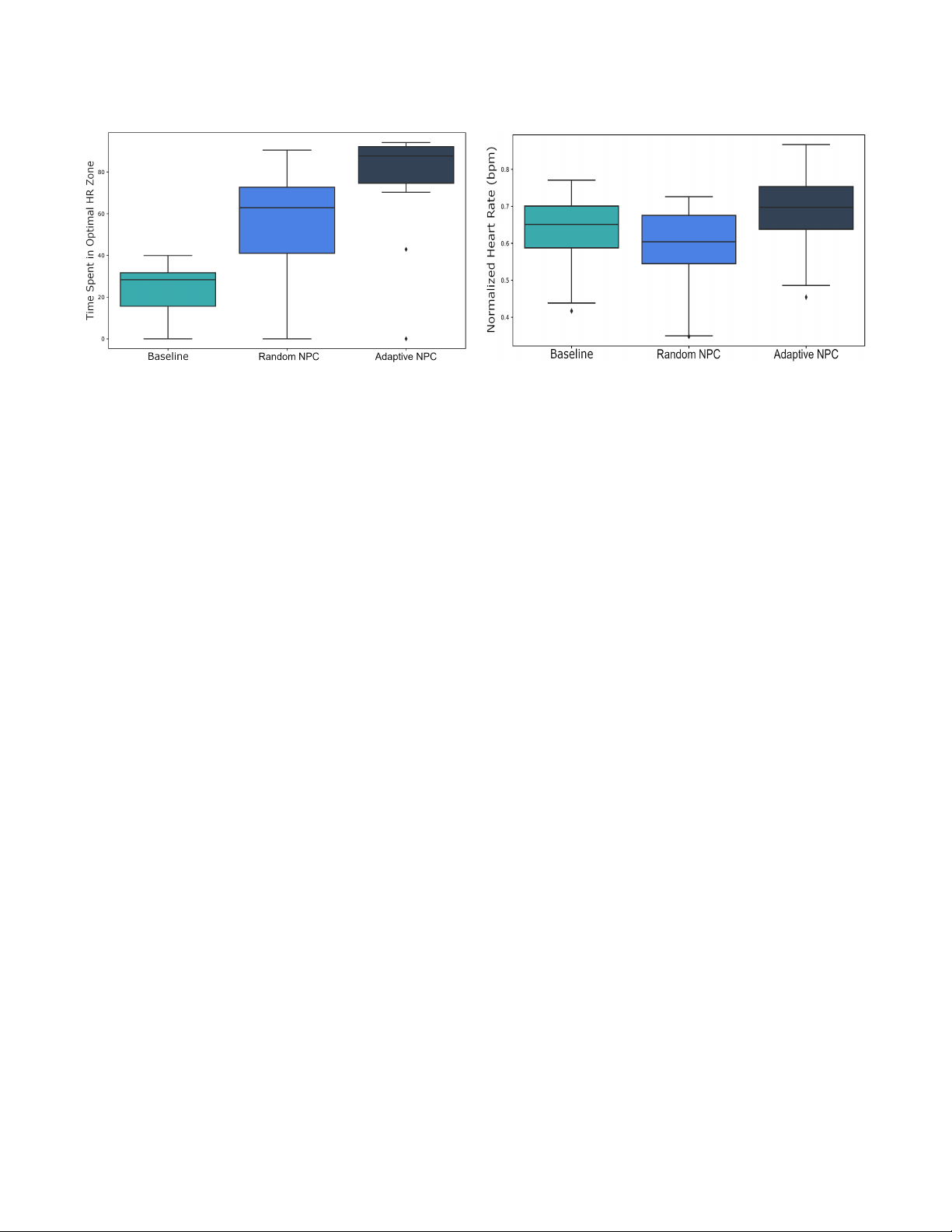
Figure 8: Comparison of heart-rate outcomes across conditions. (a) Time in optimal HR zone. Participants in the Adaptive NPC
condition spent significantly more time in the optimal HR zone compared to both Baseline and Random NPC. While both
control conditions reduced time in the target zone, the reduction was strongest in Baseline, indicating that the adaptive feedback
provided the most consistent support for sustaining optimal exertion. (b) Normalized HR. The Adaptive NPC condition
maintained a significantly higher heart rate than both Baseline and Random NPC. The Random NPC condition produced the
lowest normalized HR overall, reflecting a substantial drop in participants’ engagement compared to the adaptive support.
Together, these results show that adaptive feedback was most effective in promoting and maintaining active cardiovascular engagement.
those in Random NPC exhibited the lowest normalized HR over-
IMI, transitioning from Baseline to Adaptive NPC did not yield a
all (see Figure 8b). This suggests that Random NPC exerted the
significant change in motivation (𝑝 = .132). However, participants
most substantial downward effect on HR, yet neither Baseline nor
displayed a significant decrease in motivation when moving from
Random NPC significantly altered subjective effort, according to
Adaptive NPC to Random NPC (𝑝 = .018). This pattern suggests
the Borg RPE scale. Despite Adaptive NPC producing the highest
that adaptive visualizations, which help maintain an optimal HR ra-
normalized HR, its presence did not inflate participants’ perceived
tio, may increase intrinsic motivation more effectively than merely
exertion relative to the other conditions. These observations imply adding a non-responsive NPC.
that real-time adaptive cues (like those in Adaptive NPC) help
Although gamification itself did not markedly influence moti-
users maintain more precise HR levels without increasing subjec-
vation or enjoyment, the manner in which the NPC is designed
tive fatigue, underscoring the potential of personalized adaptation
and behaves appears critical. While the study relied on quantitative for accurate training.
measures, informal feedback suggested participants found the NPC
engaging and intuitive. Future studies could investigate how NPC 5.3.2
RQ2: Adaptive Visualizations Support the User in Optimal
appearance and interaction variations further enhance intrinsic mo-
Cardio Levels. Participants in the Baseline condition spent signifi-
tivation and should incorporate structured qualitative interviews
cantly less time in the target HR zone than those in Adaptive NPC to validate these impressions.
(Figure 8a), and the same was true for Random NPC. In other words,
Adaptive NPC emerged as the most effective method for helping
users sustain an optimal HR across multiple target zones, align- 5.4 Limitations
ing with our earlier evidence that real-time adaptations improve
heart rate regulation. Notably, neither Baseline nor Random NPC
We relied on Tanaka et al. [75] to estimate 𝐻 𝑅 ( = 208 − max 𝐻 𝑅max
conditions altered perceived exertion from the user’s perspective,
.7 × Age) in lieu of the more common 220 − Age equation [16].
suggesting that adaptive mechanisms can enhance workout preci-
This choice stemmed from evidence suggesting Tanaka et al. [75]
sion without increasing subjective effort. These findings imply that
provides a slightly more accurate estimate for some populations.
real-time adaptive visuals may be a valuable tool for recreational
Nevertheless, alternative formulas, such as Karvonen’s method [35],
athletes and professionals, allowing them to train with greater
may yield different zone thresholds. A logical extension of this work
accuracy and physiologically-tailored exercise intensities.
would be systematically comparing these baseline computations
to evaluate any performance or usability trade-offs in exergame 5.3.3
RQ3: Adaptive Visualizations Not Necessarily Support Motiva- feedback.
tion and Enjoyable Physical Exertion. As measured by the PACES
Our study design also involved multiple varying conditions
scale, neither the Baseline condition nor the Random NPC con-
(e.g., NPC presence, visualization style, and feedback modality).
dition significantly altered participants’ enjoyment of physical ac-
Although our central comparison between Adaptive and Random
tivity compared to the Adaptive NPC condition. According to the
NPCs effectively isolates the impact of physiological adaptation, At the Speed of the Heart
SportsHCI 2025, November 17–19, 2025, Enschede, Netherlands
since both conditions include an NPC,other interacting factors re- 6.2
Adaptive Visualizations Are Well Suited to
main entangled. Additionally, the short-term duration of our study Support Interval Training.
limits conclusions about long-term effects on motivation and ad-
Rather than relying on numerical displays or passive indicators, herence.
our system renders physiological feedback as a spatial interaction,
Another limitation lies in the cycling-specific nature of our vi-
embodied by a virtual cycling companion. This design allows users
sualizations and interaction tasks. While cycling integrates well
to “read” their body’s performance through in-world cues, not
with VR, other sports involve different biomechanical patterns and
external metrics. This approach aligns with broader HCI work on
pacing constraints. This focus narrows the generalizability of our
embodied interaction and tangible computing, where the boundary
findings to other athletic contexts.
between system and body becomes more fluid and perceptually integrated.
Our findings indicate that the Adaptive NPC design not only 6 General Discussion
improved participants’ heart rate maintenance but did so without
elevating their perceived exertion. This outcome suggests that real-
Our findings show that adaptive visualizations can positively in-
time adaptive feedback can be particularly beneficial for interval
fluence users’ physiological responses and overall training effec-
training programs, which rely on frequent transitions between
tiveness. Our findings demonstrate that real-time physiological
high-intensity and lower-intensity effort to enhance cardiovascular
adaptation can improve users’ ability to remain in their target heart
capacity. Real-time adaptation allows these visually guided sys-
rate zone without negatively impacting perceived effort or enjoy-
tems to promptly indicate when users should adjust their intensity,
ment. This supports the feasibility of incorporating bioadaptive
facilitating rapid comprehension and more precise adherence to
mechanisms into immersive fitness platforms, where moment-to-
target HR zones (see Figure 7). In this way, an Adaptive NPC can
moment regulation of exertion is beneficial, such as in home fitness,
outperform conventional static cues by reducing guesswork about
rehabilitation, or high-intensity interval training (HIIT) scenarios. pacing or intensity changes.
Importantly, our design emphasizes engagement through embod-
Additionally, layering in gamification elements, such as in-game
iment, where physiological signals are not abstractly shown, but
rewards or progress markers, can help sustain user interest and mo-
integrated directly into gameplay via NPC behavior. In this section,
tivation, making structured interval regimens more engaging and
we revisit the key lessons from our research and discuss method-
enjoyable. This synergy between adaptive feedback and gamifica- ological considerations.
tion thus can enhance both the effectiveness and overall experience
of interval training, ultimately leading to more consistent progress and better fitness outcomes. 6.1
Gamification Only Works in Combination 6.3
Why Motivation and Enjoyment Did Not With Adaptation Shift (Yet)
A central insight from this study is the interdependence between
The absence of significant differences in intrinsic motivation (IMI)
gamification elements and adaptive features in sustaining user
or enjoyment (PACES) between conditions may reflect several fac-
engagement and motivation. While a non-adaptive NPC may some-
tors. First, the session durations were brief (6 minutes per condi-
times undermine motivation, pairing NPC or game-like feedback
tion), which may not provide enough time for affective differences
with real-time physiological adaptation can transform these ele-
to emerge. Second, many participants were inexperienced with
ments into potent drivers of commitment. Specifically, the Adap-
VR cycling, and cognitive resources may have been allocated to
tive NPC in our study was more effective at helping participants
learning basic operation rather than assessing emotional responses.
maintain their HR targets and feel intrinsically motivated than
Lastly, while physiological adaptation improved exertion control,
the Random NPC. This aligns partially with Shaw et al. [72], who
its novelty or emotional payoff might require repeated sessions or
found that competing against an NPC boosted performance and
gamified progression to fully manifest. These limitations do not
motivation. However, in their work, the user’s previous session data
diminish the system’s contribution but instead point to its potential
controlled the NPC. In contrast, our Random NPC did not reflect in longer-term deployment.
any aspect of user performance, possibly leading to confusion and lower motivation. 6.4
Explore Long-Term Effects of Concepts.
These observations indicate that gamification by itself may either
increase or decrease engagement depending on how responsively it
Our investigation adopted a phased approach. First, we surveyed a
connects to the user’s actual training state. When integrated with
variety of Mixed Reality (MR) visualizations for cycling, identifying
real-time HR adaptation, NPCs become more than just animated
NPC and GUI as standout designs relative to a baseline. We then
companions: they offer feedback loops reinforcing effort and pro-
concentrated on the NPC concept in a second study that addressed
moting skillful pacing. Future work should examine variations of
three core questions about real-time adaptation’s impact on heart
NPC behavior, such as replay-based or cooperative models, to de-
rate maintenance, perceived exertion, enjoyment, and motivation.
termine how different adaptive strategies affect both short-term
While these findings underscore the short-term effectiveness of
performance and long-term motivation. Exergames can leverage
adaptive feedback in helping users achieve target HR zones, they
gamification more consistently by refining these design choices to
reveal smaller gains for hedonic measures. This discrepancy is
foster effective, engaging workouts.
especially relevant if the goal is to keep amateur users engaged
SportsHCI 2025, November 17–19, 2025, Enschede, Netherlands Hein et al.
over longer periods, where enjoyment and motivation play a more Acknowledgments decisive role.
Francesco Chiossi was supported by the Austrian Science Fund
Notably, although our NPC design enhanced physical perfor-
(FWF) [I6682] as part of the project AIM: Multimodal Intent Com-
mance, we did not observe substantial motivational benefits, con-
munication of Autonomous Systems and Project ID 251654672 TRR
trasting with Michael and Lutteroth [45], who reported increased 161.
intrinsic motivation over a four-week interval. It is plausible that
such motivational shifts become more pronounced with extended AI Disclosure Statement
practice, suggesting the importance of long-term studies for a
During the preparation of this work, the authors used OpenAI’s
clearer picture. A third longitudinal step, tracking whether and
GPT-4 and Grammarly for grammar and style editing. All content
how these adaptive exergame concepts sustain motivation over
was reviewed and edited by the authors, who take full responsibility
weeks or months, would further refine our understanding of how for the final publication.
best to encourage regular engagement and real fitness gains. References 7 Future Work [1]
Maedeh Agharazidermani, Lincoln Lu, and Kristy Elizabeth Boyer. 2023. Ex-
ploring Real-Time Collaborative Heart Rate Displays for Cycling Partners. In
Several promising directions arise from our findings. A logical next
Proceedings of the 25th International Conference on Mobile Human-Computer In- teraction. 1–7.
step would involve systematically comparing different 𝐻 𝑅 esti- max [2]
Josh Andres, MC Schraefel, Nathan Semertzidis, Brahmi Dwivedi, Yutika C Kulwe,
mation methods (e.g., Tanaka et al., Karvonen, and other formulas)
Juerg Von Kaenel, and Florian Floyd Mueller. 2020. Introducing peripheral
to assess how these variations impact exergame performance, feed-
awareness as a neurological state for human-computer integration. In Proceedings
of the 2020 CHI conference on human factors in computing systems. 1–13.
back precision, and user perception. [3]
Soumya C Barathi, Daniel J Finnegan, Matthew Farrow, Alexander Whaley, Pippa
Given the limited motivational effects observed in the short
Heath, Jude Buckley, Peter W Dowrick, Burkhard C Wuensche, James LJ Bilzon,
Eamonn O’Neill, et al. 2018. Interactive feedforward for improving performance
term, future research should investigate how more sophisticated
and maintaining intrinsic motivation in VR exergaming. In Proceedings of the
NPC designs, featuring lifelike behaviors, emotional expressions,
2018 CHI conference on human factors in computing systems. 1–14.
and adaptive interactions, can enhance sustained user engagement. [4]
Richard Bartle. 1996. Hearts, clubs, diamonds, spades: Players who suit MUDs.
Journal of MUD research 1, 1 (1996), 19.
Longitudinal studies are especially important to evaluate how these [5]
Helen C Beh. 1990. Achievement motivation, performance and cardiovascular
adaptive elements influence motivation, adherence, and enjoyment
activity. International Journal of Psychophysiology 10, 1 (1990), 39–45.
over extended periods. Additionally, expanding beyond cycling to [6]
Marit Bentvelzen, Gian-Luca Savino, Jasmin Niess, Judith Masthoff, and Paweł W
Wozniak. 2022. Tailor My Zwift: How to Design for Amateur Sports in the Virtual
include diverse sports and movement dynamics will help assess the
World. Proceedings of the ACM on Human-Computer Interaction 6, MHCI (2022),
generalizability of adaptive exergame frameworks. 1–23. [7]
Elaine Biddiss and Jennifer Irwin. 2010. Active video games to promote physical
Multi-user or competitive settings should also be explored, where
activity in children and youth: a systematic review. Archives of pediatrics &
real-time physiological feedback could enhance shared or socially
adolescent medicine 164, 7 (2010), 664–672.
driven training experiences. Ultimately, refining adaptive NPCs [8]
Gunnar A Borg. 1982. Psychophysical bases of perceived exertion. Medicine and
science in sports and exercise 14, 5 (1982), 377–381.
across varied contexts and timescales can support the development [9]
Marc Brysbaert and Michaël Stevens. 2018.
Power analysis and effect size in
of more engaging, personalized, and effective VR fitness experi-
mixed effects models: A tutorial. Journal of cognition 1, 1 (2018). https://doi.org/ ences. 10.5334/joc.10 [10]
Yifei Cheng, Yukang Yan, Xin Yi, Yuanchun Shi, and David Lindlbauer. 2021. Se-
manticadapt: Optimization-based adaptation of mixed reality layouts leveraging
virtual-physical semantic connections. In The 34th Annual ACM Symposium on
User Interface Software and Technology. 282–297. 8 Conclusion [11]
Francesco Chiossi, Changkun Ou, Carolina Gerhardt, Felix Putze, and Sven Mayer.
This work contributes a modular framework for embedding biofeed-
2025. Designing and Evaluating an Adaptive Virtual Reality System using EEG
Frequencies to Balance Internal and External Attention States. International
back into immersive fitness training. These scenarios show how
Journal of Human-Computer Studies 196 (February 2025), 103433. https://doi.org/
personalized biofeedback can become a game mechanic, not just an 10.1016/j.ijhcs.2024.103433
analytics overlay. By emphasizing real-time interpretability, our sys- [12]
Francesco Chiossi, Changkun Ou, Carolina Gerhardt, Felix Putze, and Sven Mayer.
2025. Designing and Evaluating an Adaptive Virtual Reality System using EEG
tem makes physiological data accessible and actionable, especially
Frequencies to Balance Internal and External Attention States. International
for amateur users who often lack coaching or domain expertise.
Journal of Human-Computer Studies 196 (Feb. 2025), 103433. https://doi.org/10. 1016/j.ijhcs.2024.103433
We present a design space of heart rate-driven visualizations that [13]
Francesco Chiossi, Changkun Ou, and Sven Mayer. 2024. Optimizing Visual
includes gamification, environmental changes, and distortion-based
Complexity for Physiologically-Adaptive VR Systems: Evaluating a Multimodal
feedback. We introduce a novel interaction paradigm where physi-
Dataset using EDA, ECG and EEG Features. In Proceedings of the 2024 International
Conference on Advanced Visual Interfaces (AVI ’24). ACM, Article 25, 9 pages.
ological feedback is represented as the spatial position of an NPC,
https://doi.org/10.1145/3656650.3656657
and provide the associated software stack for real-time adaptation. [14]
Francesco Chiossi, Yagiz Turgut, Robin Welsch, and Sven Mayer. 2023. Adapting
Visual Complexity Based on Electrodermal Activity Improves Working Memory
Performance in Virtual Reality. Proc. ACM Hum.-Comput. Interact 7 (2023). [15]
Francesco Chiossi, Johannes Zagermann, Jakob Karolus, Nils Rodrigues, Priscilla 9 Open Science
Balestrucci, Daniel Weiskopf, Benedikt Ehinger, Tiare Feuchtner, Harald Reiterer,
Lewis L Chuang, et al. 2022. Adapting visualizations and interfaces to the user.
We encourage readers to reproduce and extend our results and anal-
it-Information Technology 64, 4-5 (2022), 133–143.
ysis methods. Therefore, our experimental setup collected datasets, [16]
Luis Eduardo Cruz-Martínez, Jaime Tomás Rojas-Valencia, Juan Felipe Correa-
Mesa, and Carlos Correa-Morales. 2014. Maximum Heart Rate during exercise:
and analysis scripts are openly available on the Open Science Frame-
Reliability of the 220-age and Tanaka formulas in healthy young people at a work (https://osf.io/acpxy/).
moderate elevation. Revista de la Facultad de Medicina 62, 4 (2014), 579–585. At the Speed of the Heart
SportsHCI 2025, November 17–19, 2025, Enschede, Netherlands [17]
Arindam Dey, Mark Billinghurst, Robert W Lindeman, and J Edward Swan. 2018.
Virtual Reality and 3D User Interfaces (VR). 802–811. https://doi.org/10.1109/
A systematic review of 10 years of augmented reality usability studies: 2005 to VR51125.2022.00102
2014. Frontiers in Robotics and AI 5 (2018), 37. [41] Ryan T. Li. 2016.
Wearable Performance Devices in Sports Medicine. Sports [18]
Sarah D’Amour, Jelte E Bos, and Behrang Keshavarz. 2017. The efficacy of airflow
Health 8 (2016), 74 – 78. https://doi.org/10.1177/1941738115616917
and seat vibration on reducing visually induced motion sickness. Experimental [42] Dominique Makowski, Tam Pham, Zen J. Lau, Jan C. Brammer, François
brain research 235 (2017), 2811–2820.
Lespinasse, Hung Pham, Christopher Schölzel, and SH Chen. 2021. NeuroKit2: [19]
S. Fairclough. 2017. Physiological Computing and Intelligent Adaptation. (2017),
A Python toolbox for neurophysiological signal processing. Behavior research 539–556.
https://doi.org/10.1016/B978- 0- 12- 801851- 4.00020- 3
methods 53, 4 (2021), 1689–1696. https://doi.org/10.3758/s13428-020-01516-y [20]
Habib M. Fardoun, Victor M. R. Penichet, and M. Elena Alghazzawi, Daniyal [43]
Anna Lisa Martin-Niedecken, Tiziana Schwarz, and Alexandra Schättin. 2021. M.and De la Guia. 2015.
A Stationary Bike in Augmented Audio Reality.An
Comparing the impact of heart rate-based in-game adaptations in an exergame-
Investigation on Soundscapes Influence on Preferred Biking Speed. In ICTs for
based functional high-intensity interval training on training intensity and expe-
Improving Patients Rehabilitation Research Techniques. 176–192.
rience in healthy young adults. Frontiers in Psychology 12 (2021), 572877. [21]
Florian ’Floyd’Mueller, Rakesh Patibanda, Richard Byrne, Zhuying Li, Yan Wang, [44]
Andrii Matviienko, Josh Andres, and Florian ‘Floyd’ Mueller. 2024. Grand chal-
Josh Andres, Xiang Li, Jonathan Marquez, Stefan Greuter, Jonathan Duckworth,
lenges in CyclingHCI. In Proceedings of the 2024 ACM Designing Interactive Sys-
et al. 2021. Limited control over the body as intriguing play design resource. In
tems Conference (Copenhagen, Denmark) (DIS ’24). Association for Computing
Proceedings of the 2021 CHI Conference on Human Factors in Computing Systems.
Machinery, New York, NY, USA, 2577–2590.
https://doi.org/10.1145/3643834. 1–16. 3661550 [22]
SM FOX III. 1971. Physical activity and the prevention of coronary heart disease. [45]
Alexander Michael and Christof Lutteroth. 2020. Race yourselves: A longitudinal
Ann Clin Res 3 (1971), 404–432.
exploration of self-competition between past, present, and future performances [23]
Zan Gao and Senlin Chen. 2014. Are field-based exergames useful in preventing
in a vr exergame. In Proceedings of the 2020 CHI Conference on Human Factors in
childhood obesity? A systematic review. Obesity Reviews 15, 8 (2014), 676–691. Computing Systems. 1–17. [24]
Ronald L Gellish, Brian R Goslin, Ronald E Olson, AUDRY McDONALD, Gary D [46]
Karvonen Mj. 1957. The effects of training on heart rate: a longitudinal study.
Russi, and Virinder K Moudgil. 2007. Longitudinal modeling of the relationship
Ann med exp biol fenn 35 (1957), 307–315.
between age and maximal heart rate. Medicine and science in sports and exercise [47]
Andreas Möller, Matthias Kranz, Stefan Diewald, Luis Roalter, Robert Huitl, 39, 5 (2007), 822–829.
Tobias Stockinger, Marion Koelle, and Patrick A Lindemann. 2014. Experimental [25]
Lee EF Graves, Nicola D Ridgers, Karen Williams, Gareth Stratton, Greg Atkinson,
evaluation of user interfaces for visual indoor navigation. In Proceedings of the and Nigel T Cable. 2010.
The physiological cost and enjoyment of Wii Fit in
SIGCHI conference on human factors in computing systems. 3607–3616.
adolescents, young adults, and older adults.
Journal of Physical Activity and [48]
Emma Mosley and Sylvain Laborde. 2022. A scoping review of heart rate variabil- Health 7, 3 (2010), 393–401.
ity in sport and exercise psychology. International Review of Sport and Exercise [26]
Xiang Guo, Erin Robartes, Austin Angulo, T Donna Chen, and Arsalan Heydarian. Psychology (2022), 1–75.
2021. Benchmarking the use of immersive virtual bike simulators for understand- [49]
Florian’Floyd’ Mueller, Richard Byrne, Josh Andres, and Rakesh Patibanda. 2018.
ing cyclist behaviors. In Computing in Civil Engineering 2021. 1319–1326.
Experiencing the body as play. In Proceedings of the 2018 CHI Conference on [27]
Patrick Hamilton. 2002. Open source ECG analysis. In Computers in Cardiology.
Human Factors in Computing Systems. 1–13.
IEEE, Memphis, TN, USA, 101–104.
https://doi.org/10.1109/CIC.2002.1166717 [50]
Florian’Floyd’ Mueller, Tuomas Kari, Zhuying Li, Yan Wang, Yash Dhanpal Mehta, [28]
Tian Hao, Chongguang Bi, Guoliang Xing, Roxane Chan, and Linlin Tu. 2017.
Josh Andres, Jonathan Marquez, and Rakesh Patibanda. 2020. Towards designing
MindfulWatch: A smartwatch-based system for real-time respiration monitoring
bodily integrated play. In Proceedings of the Fourteenth International Conference
during meditation. Proceedings of the ACM on Interactive, Mobile, Wearable and
on Tangible, Embedded, and Embodied Interaction. 207–218.
Ubiquitous Technologies 1, 3 (2017), 1–19. [51]
Sean P Mullen, Erin A Olson, Siobhan M Phillips, Amanda N Szabo, Thomas R [29]
Juan Luis Higuera-Trujillo, Juan López-Tarruella Maldonado, and Carmen Llinares
Wójcicki, Emily L Mailey, Neha P Gothe, Jason T Fanning, Arthur F Kramer, and
Millán. 2017. Psychological and physiological human responses to simulated and
Edward McAuley. 2011. Measuring enjoyment of physical activity in older adults:
real environments: A comparison between Photographs, 360 Panoramas, and
invariance of the physical activity enjoyment scale (paces) across groups and
Virtual Reality. Applied ergonomics 65 (2017), 398–409.
time. International Journal of Behavioral Nutrition and Physical Activity 8 (2011), [30]
Christoph Höchsmann, Michael Schüpbach, and Arno Schmidt-Trucksäss. 2016. 1–9.
Effects of exergaming on physical activity in overweight individuals. Sports [52]
Alessandro Mulloni, Hartmut Seichter, and Dieter Schmalstieg. 2011. Handheld Medicine 46 (2016), 845–860.
augmented reality indoor navigation with activity-based instructions. In Pro- [31]
T. Huber, S. Mertes, S. Rangelova, S. Flutura, and E. André. 2021. Dynamic
ceedings of the 13th international conference on human computer interaction with
Difficulty Adjustment in Virtual Reality Exergames through Experience-driven
mobile devices and services. 211–220.
Procedural Content Generation. IEEE Symposium Series on Computational Intelli- [53]
John E Muñoz, Mónica Cameirão, S Bermúdez i Badia, and E Rubio Gouveia. 2018.
gence (SSCI) (2021), 1–8. https://doi.org/10.1109/SSCI50451.2021.9660086
Closing the loop in exergaming-health benefits of biocybernetic adaptation in [32]
Omri Inbar, AMI Oren, MICKEY Scheinowitz, ARIE Rotstein, RONALD Dlin, and
senior adults. In Proceedings of the 2018 Annual Symposium on Computer-Human
RICHARD Casaburi. 1994. Normal cardiopulmonary responses during incremen-
Interaction in Play. 329–339.
tal exercise in 20-to 70-yr-old men. Medicine and science in sports and exercise 26 [54]
John E Muñoz, Shi Cao, and Jennifer Boger. 2019. Kinematically adaptive ex- (1994), 538–538.
ergames: personalizing exercise therapy through closed-loop systems. In 2019 [33]
Christos Ioannou, Patrick Archard, Eamonn O’neill, and Christof Lutteroth. 2019.
IEEE International Conference on Artificial Intelligence and Virtual Reality (AIVR).
Virtual performance augmentation in an immersive jump & run exergame. In IEEE, 118–1187.
Proceedings of the 2019 CHI conference on human factors in computing systems. [55]
John E Muñoz, Luis Quintero, Chad L Stephens, and Alan T Pope. 2020. A 1–15.
psychophysiological model of firearms training in police officers: A virtual reality [34]
Darko Jekauc, Carina Nigg, Claudio R Nigg, Markus Reichert, Janina Krell-Roesch,
experiment for biocybernetic adaptation. Frontiers in psychology 11 (2020), 683.
Doris Oriwol, Steffen Schmidt, Kathrin Wunsch, and Alexander Woll. 2020. Mea- [56]
Phuc-Thinh Nguyen, Minh-Son Dao, M. A. Riegler, R. U. Kiran, Thai-Thinh Dang,
surement properties of the German version of the Physical Activity Enjoyment
Duy-Dong Le, Kieu-Chinh Nguyen-Ly, Thanh-Qui Pham, and Van-Luong Nguyen.
Scale for adults. Plos one 15, 11 (2020), e0242069.
2023. Training Performance Indications for Amateur Athletes Based on Nutrition [35]
Martti J Karvonen. 1984. Physical activity and cardiovascular morbidity. Scandi-
and Activity Lifelogs. Algorithms 16 (2023), 30. https://doi.org/10.3390/a16010030
navian Journal of Work, Environment & Health (1984), 389–395. [57]
Yoonsin Oh and Stephen Yang. 2010. Defining exergames & exergaming. Pro- [36]
Deborah Kendzierski and Kenneth J DeCarlo. 1991. Physical activity enjoyment
ceedings of meaningful play 2010 (2010), 21–23.
scale: Two validation studies. Journal of sport & exercise psychology 13, 1 (1991). [58]
Wei Peng, Jih-Hsuan Lin, and Julia Crouse. 2011. Is playing exergames really [37]
Mallory Ketcheson, Zi Ye, and TC Nicholas Graham. 2015. Designing for exertion:
exercising? A meta-analysis of energy expenditure in active video games. Cy-
how heart-rate power-ups increase physical activity in exergames. In Proceedings
berpsychology, Behavior, and Social Networking 14, 11 (2011), 681–688.
of the 2015 Annual Symposium on Computer-Human Interaction in Play. 79–89. [59]
Dominic Potts, Zoe Broad, Tarini Sehgal, Joseph Hartley, Eamonn O’Neill, Cres- [38]
Tanja Kojić, Lan Thao Nugyen, and Jan-Niklas Voigt-Antons. 2019. Impact of
cent Jicol, Christopher Clarke, and Christof Lutteroth. 2024. Sweating the Details:
constant visual biofeedback on user experience in virtual reality exergames. In
Emotion Recognition and the Influence of Physical Exertion in Virtual Reality
2019 IEEE international symposium on multimedia (ISM). IEEE, 307–3073.
Exergaming. In CHI 2024-Proceedings of the 2024 CHI Conference on Human Factors [39]
Thomas Kosch, Andrii Matviienko, Florian Müller, Jessica Bersch, Christopher
in Computing Systems: Proceedings of the 2024 CHI Conference on Human Factors
Katins, Dominik Schön, and Max Mühlhäuser. 2022. NotiBike: Assessing Target in Computing Systems.
Selection Techniques for Cyclist Notifications in Augmented Reality. Proc. ACM [60]
Sasank Reddy, Katie Shilton, Gleb Denisov, Christian Cenizal, Deborah Estrin,
Hum.-Comput. Interact. 6, MHCI, Article 197 (sep 2022), 24 pages. https://doi.
and Mani Srivastava. 2010. Biketastic: sensing and mapping for better biking. org/10.1145/3546732
In Proceedings of the SIGCHI conference on human factors in computing systems. [40]
Jaewook Lee, Fanjie Jin, Younsoo Kim, and David Lindlbauer. 2022. User Pref- 1817–1820.
erence for Navigation Instructions in Mixed Reality. In 2022 IEEE Conference on
SportsHCI 2025, November 17–19, 2025, Enschede, Netherlands Hein et al. [61]
M Richter, GHE Gendolla, and RA Wright. 2016. Three decades of research on [81]
Bing-Shun Wang, Xiao-Jin Wang, and Li-Kun Gong. 2009. The construction of a
motivational intensity theory: What we have learned about effort and what we
Williams design and randomization in cross-over clinical trials using SAS. Journal
still don’t know. Advances in motivation science 3 (2016), 149–186.
of statistical software 29 (2009), 1–10. https://doi.org/10.18637/jss.v029.c01 [62]
Michael Richter and Katja Knappe. 2014.
Mood impact on effort-related car- [82]
Daniel Westmattelmann, Jan-Gerrit Grotenhermen, Benedikt Stoffers, and Ger-
diovascular reactivity depends on task context: Evidence from a task with an
hard Schewe. 2021. Exploring the adoption of mixed-reality sport platforms: A
unfixed performance standard. International Journal of Psychophysiology 93, 2
qualitative study on ZWIFT.. In ECIS. (2014), 227–234. [83]
Robert W Wiley and Brenda Rapp. 2019. Statistical analysis in Small-N Designs: [63]
Matthew R Robinson, Gibran Hemani, Carolina Medina-Gomez, Massimo Mez-
using linear mixed-effects modeling for evaluating intervention effectiveness.
zavilla, Tonu Esko, Konstantin Shakhbazov, Joseph E Powell, Anna Vinkhuyzen,
Aphasiology 33, 1 (2019), 1–30. https://doi.org/10.1080/02687038.2018.1454884
Sonja I Berndt, Stefan Gustafsson, et al. 2015. Population genetic differentiation [84]
Nerys Williams. 2017. The Borg rating of perceived exertion (RPE) scale. Occu-
of height and body mass index across Europe. Nature genetics 47, 11 (2015),
pational medicine 67, 5 (2017), 404–405. 1357–1362. [85]
Philipp Wintersberger, Andrii Matviienko, Andreas Schweidler, and Florian [64]
J Rubisch, M Husinsky, J Doppler, H Raffaseder, B Horsak, B Ambichl, and A Michahelles. 2022.
Development and evaluation of a motion-based VR bicy-
Figl. 2010. A mobile music concept as support for achieving target heart rate in
cle simulator. Proceedings of the ACM on Human-Computer Interaction 6, MHCI
preventive and recreational endurance training. AM ’10: Proceedings of the 5th (2022), 1–19.
Audio Mostly Conference: A Conference on Interaction with Sound (2010). [86]
Yi Wu, Luis Alonso González Villalobos, Zhenning Yang, Gregory Thomas Crois- [65]
Richard M Ryan and Edward L Deci. 2000. Self-determination theory and the
dale, Çağdaş Karataş, and Jian Liu. 2023.
SmarCyPad: A Smart Seat Pad for
facilitation of intrinsic motivation, social development, and well-being. American
Cycling Fitness Tracking Leveraging Low-cost Conductive Fabric Sensors. Pro- psychologist 55, 1 (2000), 68.
ceedings of the ACM on Interactive, Mobile, Wearable and Ubiquitous Technologies [66]
Tejas Savadi, VN Abhilash, Kean Fernandes, and Sharanbassappa S Patil. 2022. 7, 3 (2023), 1–26.
Development of Drive Cycle and Resultant Powertrain Calculations of Electric [87]
Burkhard C Wünsche, Michael Abernethy, Sylwia Hyniewska, Zhang Luo,
Bicycle. In Recent Advances in Hybrid and Electric Automotive Technologies: Select
Roshan Prakash Pawar, Sheng Cao, Christopher Brock, Alex Shaw, and Christof
Proceedings of HEAT 2021. Springer, 119–124. Lutteroth. 2021.
Rift racers-effect of balancing and competition on exertion, [67]
S. Schmidt, P. Ehrenbrink, B. Weiss, J.-N. Voigt-Antons, T. Kojic, A. Johnston, and
enjoyment, and motivation in an immersive exergame. In 2021 36th International
S. Möller. 2018. Impact of Virtual Environments on Motivation and Engagement
Conference on Image and Vision Computing New Zealand (IVCNZ). IEEE, 1–6.
During Exergames. Proceedings of the Tenth International Conference on Quality [88]
Joy Xu. 2021. Psychological interventions of virtual gamification within academic
of Multimedia Experience (QoMEX) (2018), 1–6. https://doi.org/10.1109/QoMEX.
intrinsic motivation: A systematic review. Journal of affective disorders 293 (2021), 2018.8463389 444–465.
https://doi.org/10.1016/j.jad.2021.06.070 [68]
Christoph Schneider, Florian Hanakam, Thimo Wiewelhove, Alexander Döweling, [89]
Wenge Xu, Kangyou Yu, Xuanru Meng, Diego Monteiro, Dominic Kao, and
Michael Kellmann, Tim Meyer, Mark Pfeiffer, and Alexander Ferrauti. 2018. Heart Hai-Ning Liang. 2023.
Exploring the effect of the Group Size and Feedback
rate monitoring in team sports—a conceptual framework for contextualizing heart
of non-player character spectators in virtual reality exergames. Frontiers in
rate measures for training and recovery prescription. Frontiers in physiology 9 Psychology 14 (2023), 1079132. (2018), 639. [90]
Maryam Zahabi and Ashiq Mohammed Abdul Razak. 2020. Adaptive virtual [69]
Filip Schramka, Stefan Arisona, Michael Joos, and Alexander Erath. 2017. De-
reality-based training: a systematic literature review and framework. Virtual
velopment of virtual reality cycling simulator. Arbeitsberichte Verkehrs-und Reality 24 (2020), 725–752. Raumplanung 1244 (2017). [91]
E. Zemková and D. Hamar. 2018. Sport-Specific Assessment of the Effectiveness [70]
Dhruv R Seshadri, Ryan T Li, James E Voos, James R Rowbottom, Celeste M
of Neuromuscular Training in Young Athletes. Frontiers in Physiology 9 (2018).
Alfes, Christian A Zorman, and Colin K Drummond. 2019. Wearable sensors for
https://doi.org/10.3389/fphys.2018.00264
monitoring the physiological and biochemical profile of the athlete. NPJ digital [92]
Yu-Xiang Zhao, Zheng-Xian Lu, Yi-Zeng Hsieh, Shih-Syun Lin, and Pei-Ying medicine 2, 1 (2019), 72.
Chiang. 2021. The Wearable Physical Fitness Training Device based on Fuzzy [71]
Francesco Sessa, Giovanni Messina, Anna Valenzano, Antonietta Messina, Monica
Theory. Applied Sciences (2021). https://doi.org/10.3390/app11219976
Salerno, Gabriella Marsala, Giuseppe Bertozzi, Aurora Daniele, Vincenzo Monda,
and Raffaele Russo. 2018. Sports training and adaptive changes. Sport Sciences
for Health 14 (2018), 705–708. [72] Lindsay A Shaw, Jude Buckley, Paul M Corballis, Christof Lutteroth, and
Burkhard C Wünsche. 2016. Competition and cooperation with virtual players
in an exergame. PeerJ Computer Science 2 (2016), e92. [73]
Lindsay Alexander Shaw, Burkhard Claus Wuensche, Christof Lutteroth, Jude
Buckley, and Paul Corballis. 2017. Evaluating sensory feedback for immersion in
exergames. In Proceedings of the Australasian Computer Science Week Multicon- ference. 1–6. [74]
Jennifer Sween, Sherrie Flynt Wallington, Vanessa Sheppard, Teletia Taylor,
Adana A Llanos, and Lucile Lauren Adams-Campbell. 2014. The role of exergam-
ing in improving physical activity: a review.
Journal of Physical Activity and
Health 11, 4 (2014), 864–870. [75]
Hirofumi Tanaka, Kevin D Monahan, and Douglas R Seals. 2001. Age-predicted
maximal heart rate revisited. Journal of the american college of cardiology 37, 1 (2001), 153–156. [76]
Rebecca Tanner and Christopher Gore. 2012. Physiological tests for elite athletes. Human kinetics. [77]
Colin D Tomes, Sally Sawyer, R. Orr, and B. Schram. 2019. Ability of fitness testing
to predict injury risk during initial tactical training: a systematic review and meta-
analysis. Injury Prevention 26 (2019), 67 – 81. https://doi.org/10.1136/injuryprev- 2019- 043245 [78]
Waleed Umer, Yantao Yu, Maxwell Fordjour Antwi-Afari, Li Jue, Mohsin K Sid-
diqui, and Heng Li. 2022. Heart rate variability based physical exertion monitoring
for manual material handling tasks. International Journal of Industrial Ergonomics 89 (2022), 103301. [79]
Tamara von Sawitzky, Thomas Grauschopf, and Andreas Riener. 2022. Hazard
notifications for cyclists: comparison of awareness message modalities in a mixed
reality study. In Proceedings of the 27th International Conference on Intelligent User Interfaces. 310–322. [80]
Nadine Wagener, Marit Bentvelzen, Bastian Dänekas, Paweł W. Woźniak, and Jasmin Niess. 2023.
VeatherReflect: Employing Weather as Qualitative Rep-
resentation of Stress Data in Virtual Reality. In Proceedings of the 2023 ACM
Designing Interactive Systems Conference (Pittsburgh, PA, USA) (DIS ’23). As-
sociation for Computing Machinery, New York, NY, USA, 446–458. https:
//doi.org/10.1145/3563657.3596125
Document Outline
- Abstract
- 1 Introduction
- 2 Related Work
- 2.1 Physiologically Adaptive Systems in VR
- 2.2 Closed-Loop Exergaming in VR
- 2.3 Research on Cycling Simulators
- 2.4 Training Based on Physiological Sensing and HR Zones
- 2.5 Summary
- 3 Study 1: Exploring Suitable HR Zone Visualizations
- 3.1 Method
- 3.2 Apparatus
- 3.3 Procedure
- 3.4 Participants
- 3.5 Results
- 3.6 Discussion
- 4 Study 2: Physiologically-Adaptive Visualizations for Biking Engagement
- 4.1 Study Design
- 4.2 Architecture of the Adaptive Visualization
- 4.3 Independent Variables
- 4.4 Dependent Variables
- 4.5 Apparatus and Implementation
- 4.6 ECG Recording and Preprocessing
- 4.7 Task
- 4.8 Procedure
- 4.9 Participants
- 5 Study 2: Results
- 5.1 ECG
- 5.2 Subjective Results
- 5.3 Summary
- 5.4 Limitations
- 6 General Discussion
- 6.1 Gamification Only Works in Combination With Adaptation
- 6.2 Adaptive Visualizations Are Well Suited to Support Interval Training.
- 6.3 Why Motivation and Enjoyment Did Not Shift (Yet)
- 6.4 Explore Long-Term Effects of Concepts.
- 7 Future Work
- 8 Conclusion
- 9 Open Science
- Acknowledgments
- References
Tài liệu liên quan:
-

Ung dung game hoa trong cac chien dich MKT
17 9 -

Bao cao Chi so TMDT Viet Nam 2025
15 8 -

Thông tư quy định về việc phân quyền, phân cấp và phân định thẩm quyền quản lý nhà nước về giáo dục cho chính quyền địa phương
22 11 -
Nghị quyết về phát huy các giá trị di sản văn hóa gắn với phát triên du lịch bền vững tỉnh Khánh Hòa đến năm 2025, định hướng đến năm 2030
12 6 -

Quyết định phê duyệt Chiến lược phát triển du lịch Việt Nam đến năm 2030
12 6