Bài giảng chương 1 Thương mại điện tử | Đại học Huế
Bài giảng chương 1 Thương mại điện tử | Đại học Huế. Tài liệu giúp bạn tham khảo, ôn tập và đạt kết quả cao. Mời đọc đón xem!
Môn: Thương mại điện tử (ĐHH) 11 tài liệu
Trường: Đại học Huế 411 tài liệu
Tác giả:

















Preview text:
C H A P T E R The Revolution is Just Beginning
L E A R N I N G O B J E C T I V E S
After reading this chapter, you will be able to:
1. 1 Understand why it is important to study e-commerce. NEW Video Cases
1. 2 Define e-commerce, understand how e-commerce differs from e-business, See eText Chapter 1 to watch
identify the primary technological building blocks underlying e-commerce, these videos and complete
and recognize major current themes in e-commerce. activities:
1. 3 Identify and describe the unique features of e-commerce technology and 1.1 Shopify and the Future
discuss their business significance. of E-commerce
1. 4 Describe the major types of e-commerce. 1.2 YouTube and the
1. 5 Understand the evolution of e-commerce from its early years to today. Creator Economy
1. 6 Describe the major themes underlying the study of e-commerce. T i k T o k :
C r e a t o r s a n d t h e C r e a t o r E c o n o m y
uring its first decade or so, the Web was a
very different place than it is today. It was
much more static and used primarily to
gather information. That al started to change around
the mid-to-late 2000s, with the development of Web
2.0, a set of applications and technologies that enabled
the creation of user-generated content. Coupled with
the development of the smartphone and smartphone
apps, this laid the groundwork for social networks and
the sharing of al sorts of content that al owed people to
express themselves online. People who develop and dis-
tribute such content are now typical y referred to as “creators,” a label originated by YouTube ©Daniel Constante/Shutterstock
in 2011 for a growing class of users that were attracting large audiences to their channels.
From there, the label spread. Influencers, who use social media to grow a fol owing and exert
influence over the purchasing decisions of those fol owers, typical y for some form of compen-
sation or monetization, can be considered a subset of creators, although some use the terms
synonymously. A recent report estimates the number of creators at 200 mil ion worldwide, and
an entire supporting ecosystem, referred to as the creator economy, has spread up around
them. TikTok is one of the preeminent content platforms in the creator economy.
TikTok, the third-most-popular social network in the United States behind Facebook
and Instagram, is also one of the fastest growing, with 95 mil ion U.S. users and more than
750 mil ion worldwide. (TikTok says it has more than 1 bil ion users.) Launched in 2017,
TikTok is a short-form video-sharing app owned by Chinese company Bytedance. TikTok
videos were initial y limited to 15 seconds but can now be up to 10 minutes long. Many
TikTok videos feature music, with users lip-syncing, singing, and dancing; others focus on
comedy and creativity. Users can “remix” posts from other users and put their own spin on
them, using the app’s array of editing tools, filters, and other effects. Algorithms analyze
the viewing habits of each user, and its “For You” page provides content that is custom-
ized based on the user’s activity. The algorithm makes it possible for TikTokers to amass
mil ions of fol owers within a matter of weeks, creating stars faster than any other platform.
TikTok skews much younger than other social networks and is the most popular net-
work in the United States among children, teens, and young adults. Almost 70 percent of
its U.S. users are under the age of 35. In 2022, TikTok is expected to become the lead-
ing social network platform among U.S. adult users (ages 18 and over) in terms of time
spent per day (more than 45 minutes), surpassing YouTube. A survey of 7,000 TikTok users
revealed that almost 70% fol ow specific creators. Gen Z is leading the charge, with 50%
saying that they fol ow specific TikTok creators. 3 4
C H A P T E R 1 T h e R e v o l u t i o n i s J u s t B e g i n n i n g
There are a number of ways that creators can earn money. They can be supported
by advertising, for instance, receiving payment directly from a brand for creating or shar-
ing sponsored content or for featuring a product placement, or they may be paid a share
of the advertising revenue earned by the platform on which their content appears. They
can also sel digital content, either on a per-piece basis or on a subscription basis, as wel
as physical products. Non-fungible tokens (NFTs), which can be used to create unique
digital assets such as col ectibles, artwork, badges, and stickers, are a newer form of digital
content that creators are beginning to use as rewards for their fans. Creators can also get
“tips” from their fans (often characterized as “buying the creator a coffee”), money from a
fan club or a donation platform, or for other types of fan engagement. Most creators use a
variety of these income-generating methods rather than relying on just one.
Of the estimated 200 mil ion creators, a much smal er subset characterizes them-
selves as “professionals.” For these people, being a creator has evolved into a business. The
leading creators on TikTok can earn mil ions of dol ars. For example, Charli D’Amelio, who
is probably the most wel -known, with around 145 mil ion fol owers, earned $17.5 million
in 2021 according to Forbes, putting her at the top of the list of professional creators.
Trained as a competitive dancer, Charli started posting dance and lip-synch videos on
TikTok in May 2019 when she was just 15, and she quickly amassed a large fol owing. Her
older sister, Dixie D’Amelio, a singer with 57 mil ion fol owers, was second on the list, with
$10 million in earnings. The two sisters have capitalized on their TikTok fame by branching
out into a clothing line as wel as a Hulu docuseries, among other initiatives. In the third
spot is Addison Rae, also a competitive dancer, with around 88 mil ion fol owers and about
$8.5 million in earnings. As with the D’Amelio sisters, Rae has leveraged her TikTok fame,
releasing a music single in 2021 as wel as inking a deal with Netflix.
But not everything is rosy in the creator economy. Although superstar creators can
make an incredible amount of money, it is extremely difficult for the average creator to
SOURCES: “What Is the ‘Creator
Economy,’” by Werner Geyser,
earn enough to replace a ful -time income, and most creators make only a very limited Influencermarketinghub.com,
amount of income, if any. Almost half of ful -time creators make less than $1,000, and only
June 10, 2022; “In a First, TikTok Wil Beat YouTube in User Time
12% make more than $50,000, underscoring how difficult it can be to be a creator. The
Spent,” by Sara Lebow, Insider
majority of creators do not have any sponsorship or branding deals, and even among those
Intel igence/eMarketer, May 26,
2022; “The State of the Creator
who do, most make less than $100 per paid post.
Economy: Definition, Growth, &
Being a content creator is also much more time consuming and stressful than many
Market Size,” by Werner Geyser,
Influencermarketinghub.com, May
might assume. Jack Innanen, a 22-year-old TikTok star from Toronto, Canada, has 2.8 mil-
20, 2022; “TikTok Is Giving Top
lion fol owers. Innanen spends hours shooting video, editing, storyboarding, engaging with
Creators a Cut of Ad Revenues,”
by Daniel Konstantinovic, Insider
fans, and trying to obtain brand deals. Chrissy Chlapecka, a 21-year-old former Starbucks
Intel igence/eMarketer, May 5,
barista, is another example. Chlapecka started posting videos on TikTok as a way to deal
2022; “2022 Creator Report,”
Linktr.ee, April 20, 2022; “200
with boredom during the Covid-19 pandemic and has since amassed 4.8 mil ion fol owers. Mil ion People Are Earning
She spends at least an hour a day selecting her clothing and having her hair and makeup
Money from Content Creation,”
by Sam Gutel e, Tubefilter.com,
professional y done, in preparation for filming at least one video per day. Chlapecka
April 20, 2022; “TikTok Faces a
notes that most people underestimate the amount of work that creators have to do and
Wave of Creator Frustration and
Content Moderation Issues,” by
that it takes skil and perseverance to come up with fresh ideas day after day, establish a
Daniel Konstantinovic, Insider
relationship with online fol owers, and try to obtain sponsorships. The grind wears many
Intel igence/eMarketer, March 25,
2022; “With a Voice Like Ariana
content creators down, leading to potential mental and physical health problems. TikTok’s Grande and a Message of Self-
algorithm adds to the stress, as it is constantly serving up new content, making it hard for
Love, Chicago TikTok Sensation
T i k T o k : C r e a t o r s a n d t h e C r e a t o r E c o n o m y 5
creators to maintain their viewership. Creators note that this volatility can be rattling: As
Aims to Be a Virtual Big Sister,” by
Ashley Capoot, Chicago Tribune,
quickly as their views rise, they can also fal , with fans moving on to the next new thing. And February 2, 2022; “TikTok,
there is also an even darker side to being a content creator. Creators report being the sub-
Instagram Influencers Criticize
Creator Payment Programs,” by
ject of bul ying, harassment, and threats. Internet trol s, especial y, can be brutal y vicious.
Rachel Wolff, Insider Intel igence/
TikTok has established a $200 million Creator Fund, which it says is aimed at sup- eMarketer, January 29, 2022;
“Making Money Online, the Hard
porting creators seeking to make their livelihood through innovative content. To be eligible
Way,” by Shira Ovide, New York
for the Creator Fund, creators must be at least 18 years old, must have at least 10,000
Times, January 27, 2022; “Payday
for TikTok’s Biggest Stars,” by
fol owers, and must have accumulated at least 10,000 video views in the previous 30 days
Katharina Buchholz, Statista.com,
before they apply. Some creators feel that this shuts out beginning and niche creators,
January 11, 2022; “Top-Earning
TikTok-ers 2022: Charli and Dixie
who need the most support. In addition, the amount paid to creators by the Fund has been
D’Amelio and Addison Rae Expand
less than many expected when it was first announced, with an opaque payment structure.
Fame—and Paydays,” by Abram Brown and Abigail Freeman,
Unlike YouTube, which gives creators a cut of the ad revenues generated on the platform, Forbes.com, January 7, 2022;
TikTok did not. However, in May 2022, TikTok announced that it would expand its creator
“TikTok Shares New Insights into
Usage Trends, and Its Impacts on
monetization options via a new program cal ed TikTok Pulse, which wil run ads alongside
Audience Behaviors,” by Andrew
the top 4% of al videos and give creators a 50% cut of those ad revenues. However, many
Hutchinson, Socialmediatoday.com,
August 30, 2021; “Young Creators
feel that this does not go far enough and once again shuts out smal er and niche creators. Are Burning Out and Breaking
These critics point out that TikTok’s ad revenues, which are expected to top $11 billion in
Down,” by Taylor Lorenz, New York
Times, June 8, 2021; “TikTok Is
2022 (surpassing the combined ad revenues of Twitter and Snapchat), have been growing
Paying Creators. Not Al of Them
rapidly and that it would be more equitable if TikTok shared that revenue more broadly with
Are Happy,” by Louise Matsakis, Wired.com, September 10, 2020.
the people responsible for attracting users to the platform. 6
C H A P T E R 1 T h e R e v o l u t i o n i s J u s t B e g i n n i n g
In 1994, e-commerce as we now know it did not exist. In 2022, almost 215 million
U.S. consumers are expected to spend about $1.3 trillion, and businesses about
$8.5 trillion, purchasing products and services via a desktop/laptop computer,
mobile device, or smart speaker. A similar story has occurred throughout the world.
There have been significant changes in the e-commerce environment during this time period.
The early years of e-commerce, during the late 1990s, were a period of business
vision, inspiration, and experimentation. It soon became apparent, however, that estab-
lishing a successful business model based on those visions would not be easy. There fol-
lowed a period of retrenchment and reevaluation, which led to the stock market crash
of 2000–2001, with the value of e-commerce, telecommunications, and other technology
stocks plummeting. After the bubble burst, many people were quick to write off e-com-
merce. But they were wrong. The surviving firms refined and honed their business mod-
els, and the technology became more powerful and less expensive, ultimately leading to
business firms that actually produced profits. Between 2002 and 2007, retail e-commerce
grew at more than 25% per year.
Then, in 2007, Apple introduced the first iPhone, a transformative event that marked
the beginning of yet another new era in e-commerce. Today, mobile devices, such as
smartphones and tablet computers, and mobile apps have supplanted the traditional
desktop/laptop platform and web browser as the most common method for consum-
ers to access the Internet. Facilitated by technologies such as cellular networks, Wi-Fi,
and cloud computing, mobile devices have become advertising, shopping, reading, and
media-viewing machines, and in the process they have transformed consumer behav-
ior yet again. During the same time period, social networks such as Facebook, Twitter,
YouTube, Pinterest, Instagram, Snapchat, and TikTok, which enable users to distribute
their own content (such as videos, music, photos, personal information, commentary,
blogs, and more), rocketed to prominence. As discussed in the opening case, many such
users, now referred to as creators and/or influencers, have taken additional steps to
monetize their content. The mobile platform infrastructure also gave birth to another
e-commerce innovation: on-demand services that are local and personal. From hailing a
taxi to finding travel accommodations, to food delivery, on-demand services have created
a marketspace that enables owners of resources such as cars, spare bedrooms, and spare
time to find a market of eager consumers looking for such services. Today, mobile, social,
and local are the driving forces in e-commerce. But e-commerce is always evolving.
On the horizon are further changes, driven by technologies such as artificial intelligence,
virtual and augmented reality, and blockchain, among others.
While the evolution of e-commerce technology and business has been a powerful
and mostly positive force in our society, it is becoming increasingly apparent that it also
has had, and continues to have, a serious societal impact, from promoting the invasion
of personal privacy to aiding the dissemination of false information, enabling wide-
spread security threats, and facilitating the growth of business titans, such as Amazon,
Google, and Facebook (which has rebranded as Meta), that dominate their fields, leading
to a decimation of effective competition. As a result, the Internet and e-commerce are
entering a period of closer regulatory oversight that may have a significant impact on
the conduct of e-commerce in the future.
I n t r o d u c t i o n t o E - c o m m e r c e 7
1.1 THE FIRST FIVE MINUTES: WHY YOU SHOULD STUDY E-COMMERCE
The rapid growth and change that have occurred in the first quarter-century or so since
e-commerce began in 1995 represents just the beginning—what could be called the first
five minutes of the e-commerce revolution. Technology continues to evolve at expo-
nential rates. This underlying evolution presents entrepreneurs with opportunities to
create new business models and businesses in traditional industries and in the process
disrupt—and in some instances destroy—existing business models and firms. The rapid
growth of e-commerce is also providing extraordinary growth in career and employ-
ment opportunities, which we describe throughout the book.
Improvements in underlying information technologies and continuing entrepre-
neurial innovation in business and marketing promise as much change in the next
decade as was seen in the previous two and a half decades. The twenty-first century will
be an age of a digitally enabled social and commercial life, the outlines of which we can
still only barely perceive at this time. It appears likely that e-commerce will eventually
impact nearly all commerce and that most commerce will be e-commerce by the year 2050, if not sooner.
Business fortunes are made—and lost—in periods of extraordinary change such as
this. The next five to 10 years hold exciting opportunities—as well as significant risks—
for new and traditional businesses to exploit digital technology for market advantage,
particularly in the wake of the Covid-19 pandemic, which continues to have a broad and
lasting impact on many aspects of life, ranging from how businesses operate, to how
consumers act, and to how social and cultural life evolves.
It is important to study e-commerce in order to be able to perceive and understand
the opportunities and risks that lie ahead. By the time you finish this book, you will be
able to identify the technological, business, and social forces that have shaped—and
continue to shape—the growth of e-commerce and be ready to participate in, and ulti-
mately guide, discussions of e-commerce in the firms where you work. More specifically,
you will be able to analyze an existing or new idea for an e-commerce business, iden-
tify the most effective business model to use, and understand the technological under-
pinnings of an e-commerce presence, including the security and ethical issues raised
as well as how to optimally market and advertise the business, using both traditional
digital marketing tools and social, mobile, and local marketing.
1.2 INTRODUCTION TO E-COMMERCE
In this section, we’ll first define e-commerce and then discuss the difference between
e-commerce and e-business. We will also introduce you to the major technological build-
ing blocks underlying e-commerce: the Internet, the Web, and the mobile platform. The
section concludes with a look at some major current trends in e-commerce. 8
C H A P T E R 1 T h e R e v o l u t i o n i s J u s t B e g i n n i n g WHAT IS E-COMMERCE? e-commerce
E-commerce involves the use of the Internet, the World Wide Web (Web), and mobile the use of the Internet,
apps and browsers running on mobile devices to transact business. Although the terms the Web, and mobile
Internet and Web are often used interchangeably, they are actually two very different apps and browsers
things. The Internet is a worldwide network of computer networks, and the Web is one of running on mobile devices
the Internet’s most popular services, providing access to trillions of web pages. An app to transact business.
(shorthand for “application”) is a software application. The term is typically used when More formal y, digital y
referring to mobile applications, although it is also sometimes used to refer to desktop enabled commercial
computer applications as well. A mobile browser is a version of web browser software transactions between
accessed via a mobile device. (We describe the Internet, Web, and mobile platform more and among organizations
fully later in this chapter and in Chapters 3 and 4.) More formally, e-commerce can be and individuals
defined as digitally enabled commercial transactions between and among organizations
and individuals. Each of these components of our working definition of e-commerce
is important. Digitally enabled transactions include all transactions mediated by digital
technology. For the most part, this means transactions that occur over the Internet, the
Web, and/or via mobile devices. Commercial transactions involve the exchange of value
(e.g., money) across organizational or individual boundaries in return for products and
services. Exchange of value is important for understanding the limits of e-commerce.
Without an exchange of value, no commerce occurs. The professional literature
sometimes refers to e-commerce as digital commerce. For our purposes, we consider
e-commerce and digital commerce to be synonymous.
THE DIFFERENCE BETWEEN E-COMMERCE AND E-BUSINESS
There is a debate about the meaning and limitations of both e-commerce and e-business.
Some argue that e-commerce encompasses the entire world of digitally based organi-
zational activities that support a firm’s market exchanges—including a firm’s entire
information system infrastructure. Others argue, on the other hand, that e-business
encompasses the entire world of internal and external digitally based activities, includ-
ing e-commerce. We think it is important to make a working distinction between
e-commerce and e-business because we believe they refer to different phenomena.
E-commerce is not “anything digital” that a firm does. For purposes of this text, we e-business
will use the term e-business to refer primarily to the digital enabling of transactions the digital enabling of
and processes within a firm, involving information systems under the control of the transactions and processes
firm. For the most part, in our view, e-business does not include commercial transac- within a firm, involving
tions involving an exchange of value across organizational boundaries. For example, a information systems under
company’s online inventory control mechanisms are a component of e-business, but the control of the firm
such internal processes do not directly generate revenue for the firm from outside busi-
nesses or consumers, whereas e-commerce, by definition, does. It is true, however, that
a firm’s e-business infrastructure provides support for online e-commerce exchanges:
The same infrastructure and skill sets are involved in both e-business and e-commerce.
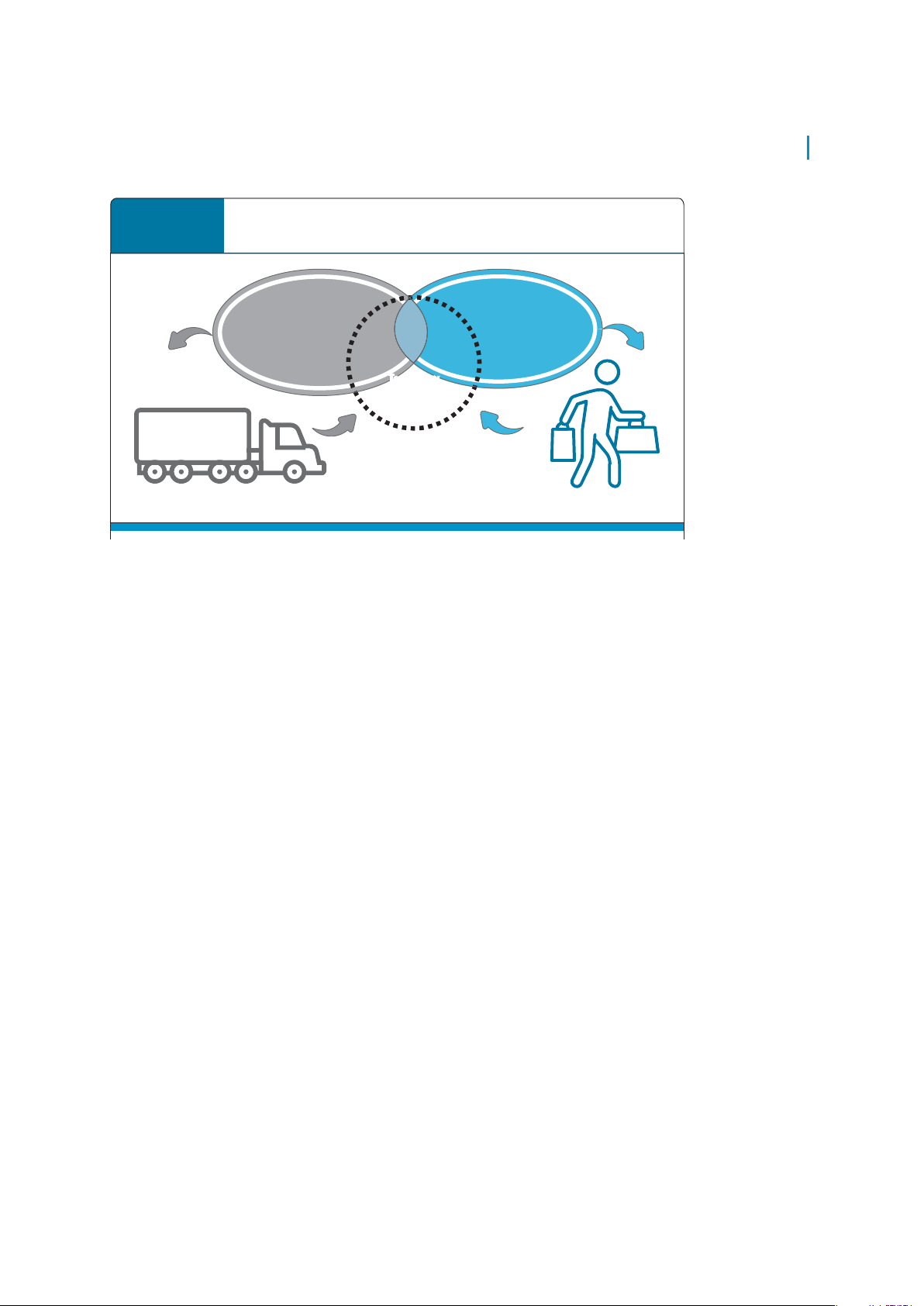
E-commerce and e-business systems blur together at the business firm boundary,
at the point where internal business systems link up with suppliers or customers
(see Figure 1.1). E-business applications turn into e-commerce precisely when an
exchange of value occurs. We will examine this intersection further in Chapter 12.
I n t r o d u c t i o n t o E - c o m m e r c e 9 FIGURE 1.1
THE DIFFERENCE BETWEEN E-COMMERCE AND E-BUSINESS E-business E-commerce Systems Systems The Internet The Internet Mobile Mobile Technology Infrastructure THE FIRM SUPPLIERS CUSTOMERS
E-commerce primarily involves transactions that cross firm boundaries. E-business primarily involves the
application of digital technologies to business processes within the firm.
TECHNOLOGICAL BUILDING BLOCKS UNDERLYING E-COMMERCE: THE
INTERNET, THE WEB, AND THE MOBILE PLATFORM
The technology juggernauts behind e-commerce are the Internet, the Web, and the
mobile platform. We describe the Internet, the Web, and the mobile platform in
some detail in Chapter 3. The Internet is a worldwide network of computer networks Internet
built on common standards. Created in the late 1960s to connect a small number of worldwide network of
mainframe computers and their users, the Internet has since grown into the world’s computer networks built
largest network. It is impossible to say with certainty exactly how many comput- on common standards
ers and other mobile devices (such as smartphones and tablets) as well as other
Internet-connected consumer devices (such as smartwatches, connected TVs, and
smart speakers like Amazon’s Echo) are connected to the Internet worldwide at any
one time. However, some experts estimate that as of 2022, there are about 15 billion
connected devices (not including smartphones, tablets, or desktop/laptop comput-
ers) already installed (Watters, 2022). The Internet links businesses, educational
institutions, government agencies, and individuals together and provides users with
services such as e-mail, document transfer, shopping, research, instant messaging, music, videos, and news.
The Internet has shown extraordinary growth patterns when compared to other
electronic technologies of the past. It took radio 38 years to achieve a 30% share of U.S.
households. It took television 17 years to achieve a 30% share. In contrast, it took only
10 years for the Internet/Web to achieve a 53% share of U.S. households once a graphical
user interface was invented for the Web in 1993. Today, in the United States, more than
300 million people of all ages (almost 90% of the U.S. population) use the Internet at
least once a month (Insider Intelligence/eMarketer, 2022a). 10
C H A P T E R 1 T h e R e v o l u t i o n i s J u s t B e g i n n i n g World Wide Web
The World Wide Web (the Web) is an information system that runs on the Internet (the Web)
infrastructure. The Web was the original “killer app” that made the Internet commer- an information system
cially interesting and extraordinarily popular. The Web was developed in the early 1990s running on the Internet
and hence is of much more recent vintage than the Internet. We describe the Web in infrastructure and that
some detail in Chapter 3. The Web provides access to trillions of web pages indexed by provides access to
Google and other search engines. These pages are created in a language called HTML tril ions of web pages
(HyperText Markup Language). HTML pages can contain text, graphics, animations, and
other objects. Prior to the Web, the Internet was primarily used for text communications,
file transfers, and remote computing. The Web introduced far more powerful capabili-
ties of direct relevance to commerce. In essence, the Web added color, voice, and video to
the Internet, creating a communications infrastructure and information storage system
that rivals television, radio, magazines, and libraries.
There is no precise measurement of the number of web pages in existence, in part
because today’s search engines index only a portion of the known universe of web pages.
By 2013, Google had indexed 30 trillion individual web pages, and by 2016, the last year
that Google released data on the size of its index, that number had jumped to more than
130 trillion, although many of these pages did not necessarily contain unique content.
Since then, it is likely that the number has continued to skyrocket (Wodinsky, 2021).
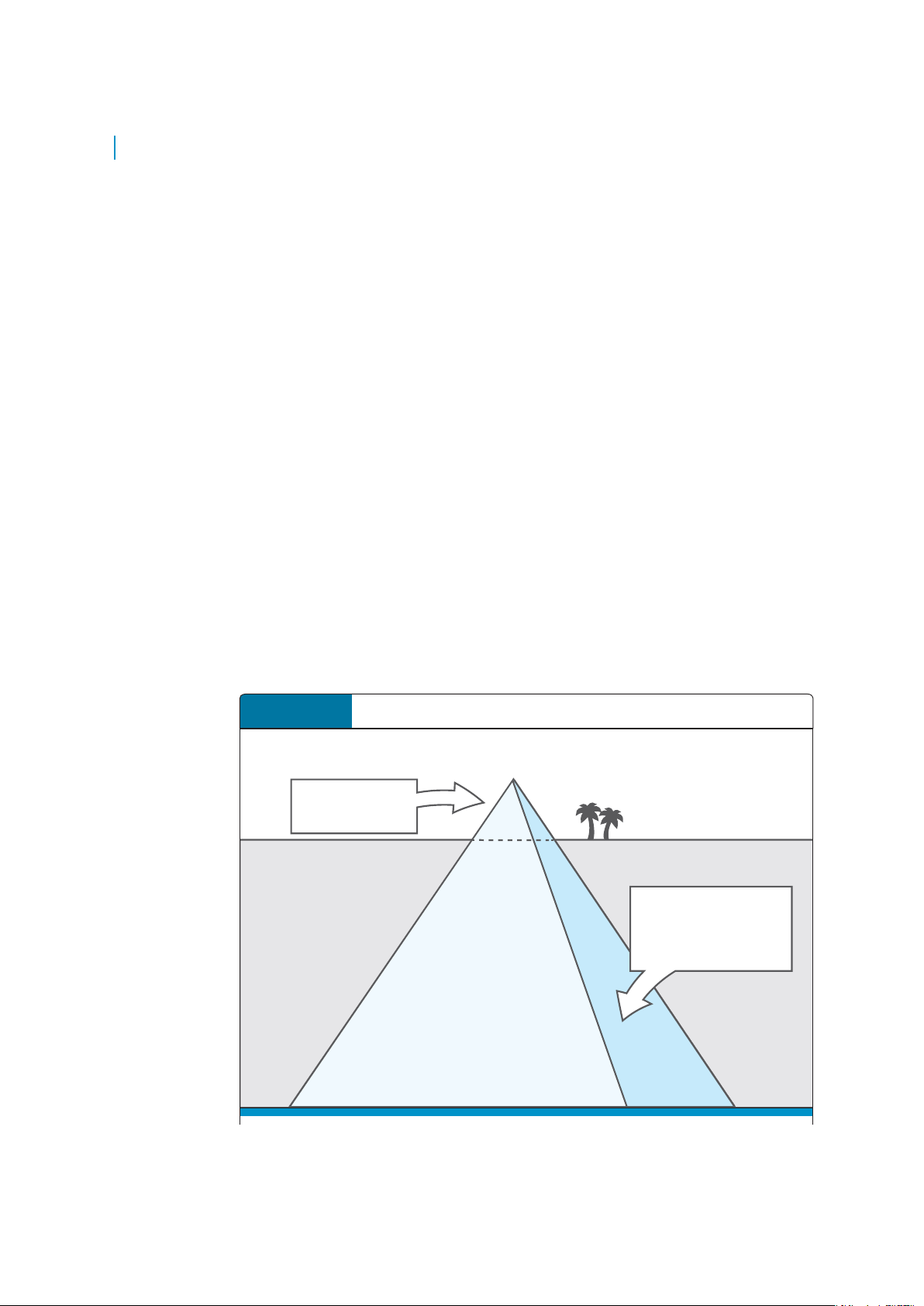
In addition to this “surface” or “visible” Web, there is the so-called deep Web, which is
reportedly 500 to 1,000 times greater than the surface Web. The deep Web contains data-
bases and other content that is not routinely identified by search engines such as Google
(see Figure 1.2). Although the total size of the Web is not known, what is indisputable is
that web content has grown exponentially over the years. FIGURE 1.2 THE DEEP WEB SURFACE/VISIBLE WEB 130 tril ion web pages identified by Google DEEP WEB Subscription content, databases (government, corporate, medical, legal, academic), encrypted content
The surface Web is only a smal part of online content.
I n t r o d u c t i o n t o E - c o m m e r c e 11 FIGURE 1.3
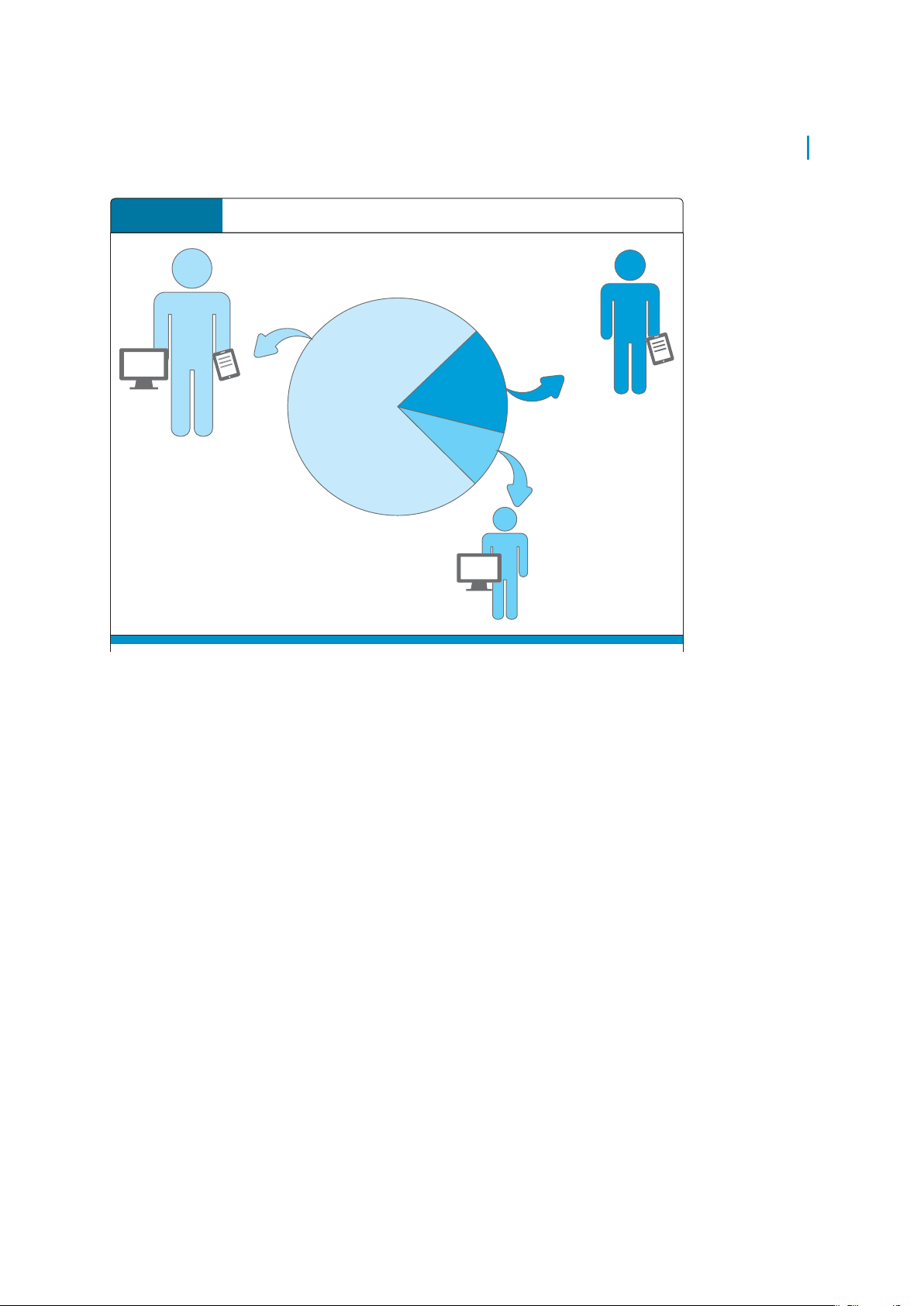
INTERNET ACCESS IN THE UNITED STATES, 2022 Mobile-only Internet users 59 million Dual desktop/laptop and mobile 20% Internet users 221 million 73% Desktop/laptop-only Internet users 21 million 7%
More than 73% of Internet users in the United States (about 220 mil ion people) use both desktop/laptop
computers and mobile devices to access the Internet. About 20% (about 60 mil ion people) go online only
by using a mobile device. Just 7% (about 20 mil ion people) use only a desktop or laptop computer to access the Internet.
SOURCES: Based on data from Insider Intel igence/eMarketer, 2022a, 2022c, 2022d.
The mobile platform has become a significant part of Internet infrastructure. The
mobile platform provides the ability to access the Internet from a variety of mobile mobile platform
devices such as smartphones, tablets, and ultra-lightweight laptop computers such as provides the ability
Google’s Chromebook via wireless networks or cellphone service. Figure 1.3 illustrates to access the Internet
the variety of devices that people in the United States use to access the Internet. Mobile from a variety of
devices play an increasingly prominent role in Internet access. In 2022, about 93% of mobile devices such as
U.S. Internet users use a mobile device to access the Internet at least some of the time smartphones, tablets,
(Insider Intelligence/eMarketer, 2022b). and ultra-lightweight laptop computers
The mobile platform is not just a hardware phenomenon. The introduction of
the Apple iPhone in 2007, followed by the Apple iPad in 2010, has also ushered in a
sea-change in the way people interact with the Internet from a software perspective.
In the early years of e-commerce, the Web and web browsers were the only game in
town. Today, in contrast, more people in the United States access the Internet via a
mobile app on a mobile device than by using a desktop/laptop computer and web
browser. Insight on Technology: Will Apps Make the Web Irrelevant? examines in more
depth the challenge that apps and the mobile platform pose to the Web’s dominance of the Internet ecosphere. 12
C H A P T E R 1 T h e R e v o l u t i o n i s J u s t B e g i n n i n g INSIGHT ON TECHNOLOGY
WILL APPS MAKE THE WEB IRRELEVANT?
Nowadays, it’s hard to recal a than desktop computers to access the Internet.
time before the Web. How did we The time U.S. adults are spending using mobile
get along without the ability to go devices has exploded and now accounts for four
online to search for an item, learn and a half hours a day. Of the time spent using
about a topic, play a game, or watch mobile devices, people spend almost four times
a video? Although the Web has come a the amount of time using apps (three hours and
remarkably long way from its humble begin-
22 minutes) compared to the time spent using
nings, some experts think that the Web’s best mobile browsers (about 52 minutes).
days are behind it. Opinions vary about the
Consumers have gravitated to apps for
future role of the Web in a world where apps several reasons. First, smartphones and tablet
have become a dominant force in the Internet computers enable users to use apps anywhere,
ecosystem. In 10 years, wil the Web be a for-
instead of being tethered to a desktop or having
gotten relic? Or wil the Web and apps coexist to lug a heavy laptop around. Of course, smart-
peaceful y as vital cogs in the Internet ecosys-
phones and tablets enable users to use the Web
tem? Wil the app craze eventual y die down too, but apps are often more convenient and
as users gravitate back toward the Web as the boast more streamlined, elegant interfaces than
primary way to perform online tasks? mobile web browsers.
Apps have grown into a disruptive force
Apps are not only more appealing to
ever since Apple launched its App Store in consumers in certain ways but are also much
2008. The list of industries that apps have more appealing to content creators and media
disrupted is wide-ranging: communications, companies. Apps are easier to control and
media and entertainment, logistics, education, monetize than websites, not to mention they
health care, dating, travel, and financial ser-
can’t be crawled by Google or other services.
vices. Despite not even existing prior to 2008, On the Web, the average price of ads per thou-
in 2021, sales of apps accounted for more sand impressions has fal en, and many content
than $170 billion in revenues worldwide, and providers are stil mostly struggling to turn the
the app economy is continuing to show robust Internet into a profitable content delivery plat- growth.
form. Much of software and media companies’
Although the usage of apps tends to be focus has shifted to developing mobile apps for
highly concentrated, consumers are trying new this reason.
apps al the time and typical y use more than 45
In the future, some analysts believe that the
different apps per month, leaving room for new Internet wil be used to transport data but that
app developers to innovate and create success-
individual app interfaces wil replace the web
ful apps. Users are downloading an increasing browser as the most common way to access
number of apps, with the number of downloads and display content. Even the creator of the
reaching 230 bil ion worldwide in 2021, accord-
Web, Tim Berners-Lee, feels that the Web as we ing to research firm Data.ai. know it is being threatened.
In 2014, for the first time ever, people in
But there is no predictive consensus
the United States used mobile devices more about the role of the Web in our lives in the
I n t r o d u c t i o n t o E - c o m m e r c e 13
next decade and beyond. Although apps may to load instantly, even in areas of low
be more convenient than the Web in many connectivity. Some people think that
respects, the depth of the web browsing a good PWA can ultimately function as a
experience trumps that of apps. The Web is total replacement for a company’s mobile
a vibrant, diverse array of sites, and brows-
website, its native app, and even possibly
ers have an openness and flexibility that its desktop website.
apps lack. The connections among websites
The shift toward apps and away from
enhance their usefulness and value to users, the Web is likely to have a significant impact
and apps that instead seek to lock in users on the fortunes of e-commerce firms. As
cannot offer the same experience. In addi-
the pioneer of apps and the market leader
tion, the size of the mobile web audience stil in apps, smartphones, and tablet comput-
exceeds that of the mobile app audience. And ers, Apple stands to gain from a shift toward
when it comes to making purchases online, apps, and although it also faces increas-
using a web browser on a desktop computer ing competition from other companies,
stil handily beats using mobile devices. Retail including Google, the established success
purchases made on desktops/laptops stil of the App Store wil make it next to impos-
account for almost 60% of all online retail sible to dethrone Apple. For instance, while purchases.
the number of downloads from Google’s
Analysts who are more optimistic about Google Play store was almost four times
the Web’s chances to remain relevant in an as many as the number of downloads from
increasingly app-driven Internet ecosystem Apple’s App Store in 2021, the App Store
feel this way because of the emergence of still made nearly twice the amount of rev-
HTML5 and progressive web apps (PWAs). enue ($85 billion) than Google Play did
HTML5 is a markup language that enables ($48 bil ion). Google hopes that PWAs are at
more dynamic web content and allows least a partial answer to the problem pre-
for browser-accessible web apps that are sented by native apps, because the more
as appealing as device- specific apps. A activity that occurs on native apps, which
PWA, which combines the best elements Google cannot crawl, the less data Google
of mobile websites and native mobile apps, has access to, which impacts its web-based
functions and feels like a native app but advertising platform.
does not need to be downloaded from an
Ultimately, most marketers see the future
app store and thus does not take up any of as one in which the Web and mobile apps work
the mobile device’s memory. Instead, it runs together, with each having an important role in
directly in a mobile web browser and is able serving different needs.
SOURCES: “US Time Spent with Connected Devices: A Return to Pre-Pandemic Growth,” by Jessica Lins, Insider Intel igence/eMarketer, June 9,
2022; “US Desktop/Laptop Retail Ecommerce Sales,” by Insider Intel igence/eMarketer, June 2022; “Average Number of Apps Used per Month, US Mobile
Devices, 2019–2021,” by Insider Intel igence/eMarketer, January 27, 2022; “The State of Mobile 2022,” Data.ai.com, January 2022; “Global Consumer
Spending in Mobile Apps Reached $133 Bil ion in 2021, Up Nearly 20% from 2020,” Sensortower.com, December 2021;“Why Progressive Web Apps Are
the Future of the Mobile Web: 2020 Research,” by Jason Rzutkiewicz and Jeremy Lockhorn, Ymedialabs.com, September 19, 2020; “Publishers Straddle the
Apple-Google, App-Web Divide,” by Katie Benner and Conor Dougherty, New York Times, October 18, 2015; “How Apps Won the Mobile Web,” by Thomas
Claburn, Informationweek.com, April 3, 2014; “Mobile Apps Overtake PC Internet Usage in U.S.,” by James O’Toole, Money.cnn.com, February 28, 2014;
“Is The Web Dead in the Face of Native Apps? Not Likely, but Some Think So,” by Gabe Knuth, Brianmadden.com, March 28, 2012; “The Web Is Dead? A
Debate,” by Chris Anderson, Wired.com, August 17, 2010; “The Web Is Dead. Long Live the Internet,” by Chris Anderson and Michael Wolff, Wired.com, August 17, 2010. 14
C H A P T E R 1 T h e R e v o l u t i o n i s J u s t B e g i n n i n g MAJOR TRENDS IN E-COMMERCE
Table 1.1 describes the major trends in e-commerce in 2022–2023 from a business, tech-
nological, and societal perspective, the three major organizing themes that we use in
this book to understand e-commerce (see Section 1.6).
From a business perspective, one of the most important trends to note is that all forms
of e-commerce continue to show very strong growth. Retail e-commerce grew by more
than 35% in 2020, in part as a result the Covid-19 pandemic, and in 2022 is expected to top
the $1 trillion mark for the first time. By 2026, it is estimated that retail e-commerce will
account for almost $1.7 trillion in revenue. Retail m-commerce also grew astronomically
(by more than 44%) in 2020 and is anticipated to increase to more than $415 billion in
2022, constituting about 40% of all retail e-commerce sales. By 2026, retail m-commerce is
expected to account for almost $700 billion. Social networks such as Facebook, Instagram,
TikTok, Twitter, and Pinterest are enabling social e-commerce by providing advertising,
searches, and the ability to purchase products without leaving the site. Local e-commerce
is being fueled by the explosion of interest in on-demand services. B2B e-commerce, which
dwarfs all other forms, also is continuing to strengthen and grow. The Covid-19 pandemic
has resulted in an increased—and what is expected to be a lasting—shift to e-commerce.
From a technology perspective, the mobile platform based on smartphones and
tablet computers has finally arrived with a bang, driving astronomical growth in
mobile advertising and making true mobile e-commerce a reality. The use of mobile
messaging services such as Facebook Messenger, WhatsApp, and Snapchat has cre-
ated an alternative communications platform that is beginning to be leveraged for
commerce as well. Cloud computing is inextricably linked to the development of the
mobile platform because it enables the storage of consumer content and software on
cloud (Internet-based) servers and makes the content and software available to mobile
devices as well as to desktops. Other major technological trends include the increasing
ability of companies to track and analyze the flood of online data (typically referred
to as big data) being produced. The Internet of Things (IoT), comprised of billions of
Internet-connected devices, continues to grow exponentially and is driving the growth
of a plethora of smart devices as well as adding to the torrent of data. Other major
technological trends include increasing use of artificial intelligence technologies,
increasing interest in blockchain technologies, and increasing focus on the concept of
a metaverse that will create an immersive, 3D Internet experience using augmented
and virtual reality technologies.
At the societal level, other trends are apparent. The Internet and mobile platform pro-
vide an environment that allows millions of people to create and share content, establish
new social bonds, and strengthen existing bonds through social networks and other types
of online platforms. At the same time, privacy seems to have lost some of its meaning in
an age when millions create public online personal profiles, leading to increased concerns
over commercial and governmental privacy invasion. The major digital copyright owners
have increased their pursuit of online piracy with mixed success while reaching agree-
ments with the big technology players such as Apple, Amazon, and Google to protect intel-
lectual property rights. Sovereign nations have expanded their surveillance of, and control
over, online communications and content as a part of their anti-terrorist activities and their
traditional interest in law enforcement. Online security, or the lack thereof, remains a sig-
nificant issue, as new stories about security breaches, malware, hacking, and other attacks emerge seemingly daily.
I n t r o d u c t i o n t o E - c o m m e r c e 15 TABLE 1.1
MAJOR TRENDS IN E-COMMERCE, 2022–2023 B U S I N E S S
• Retail e-commerce and m-commerce both settle back to “normal” growth rates (around 10%)
after surging in 2020–2021 because of the Covid-19 pandemic.
• The mobile app ecosystem continues to grow, with almost 250 mil ion U.S. adults using smartphone
apps and more than 145 mil ion using tablet computer apps in 2022.
• Social e-commerce, based on social networks and supported by advertising, continues to grow
and is estimated to generate about $55 bil ion in 2022.
• Local e-commerce, the third dimension of the mobile, social, local e-commerce wave, also is
growing in the United States, fueled by an explosion of interest in on-demand services such as
Uber, Instacart, DoorDash, and others.
• B2B e-commerce revenues in the United States are expected to reach about $8.5 tril ion.
• Mobile advertising continues to grow, accounting for more than two-thirds of al digital ad
spending but may be impacted by new privacy-related app store rules that restrict the ability of advertisers to track users.
• The media business becomes more and more decentralized, with content created and distributed
online by users (now typical y referred to as creators) becoming more and more prevalent, giving
rise to what is often termed the creator economy. T E C H N O L O G Y
• A mobile platform based on smartphones, tablet computers, wearable devices, and mobile
apps has become a reality, creating an alternative platform for online transactions, marketing,
advertising, and media viewing.
• Cloud computing completes the transformation of the mobile platform by storing consumer
content and software on “cloud” (Internet-based) servers and making it available to any
consumer-connected device, from the desktop to a smartphone.
• The Internet of Things (IoT), comprised of bil ions of Internet-connected devices, continues to
grow exponential y and drives the growth of a plethora of “smart/connected” devices such as
TVs, watches, speakers, home-control systems, cars, etc.
• The tril ions of online interactions that occur each day create a flood of data, typical y referred to
as big data. To make sense out of big data, firms turn to sophisticated software cal ed business
analytics (or web analytics) that can identify purchase patterns as wel as consumer interests and intentions in mil iseconds.
• Artificial intel igence technologies are being increasingly employed in a variety of e-commerce-
related applications, such as for analyzing big data, customization and personalization, customer
service, chatbots and voice assistants, and supply chain efficiency.
• Blockchain, the technology that underlies cryptocurrencies, non-fungible tokens (NFTs), and the concept
of a more decentralized Internet known as Web3, attracts increasing interest, particularly from traditional
financial service firms as wel as firms seeking to use the technology for supply chain applications.
• Facebook rebrands as Meta, jumpstarting an increased focus on the “metaverse,” which entails
moving the Internet experience beyond 2D screens toward immersive, 3D experiences using
augmented and virtual reality technologies. S O C I E T Y
• User-generated content (UGC), published by creators online in the form of video, podcasts, newsletters,
literary content, online classes, digital art, and more, continues to grow and provides a method of self-
publishing that engages mil ions: both those who create the content and those who consume it.
• Concerns over commercial and governmental invasion of privacy increase.
• Concerns increase about the growing market dominance of Amazon, Google, and Meta (often
referred to as Big Tech), leading to litigation and cal s for government regulation.
• Conflicts over copyright management and control continue, although there is now substantial
agreement among online distributors and copyright owners that they need one another.
• Surveil ance of online communications by both repressive regimes and Western democracies grows.
• Online security continues to decline as major companies are hacked and lose control of customer information.
• On-demand services and e-commerce produce a flood of temporary, poorly paid jobs without benefits. 16
C H A P T E R 1 T h e R e v o l u t i o n i s J u s t B e g i n n i n g
1.3 UNIQUE FEATURES OF E-COMMERCE TECHNOLOGY
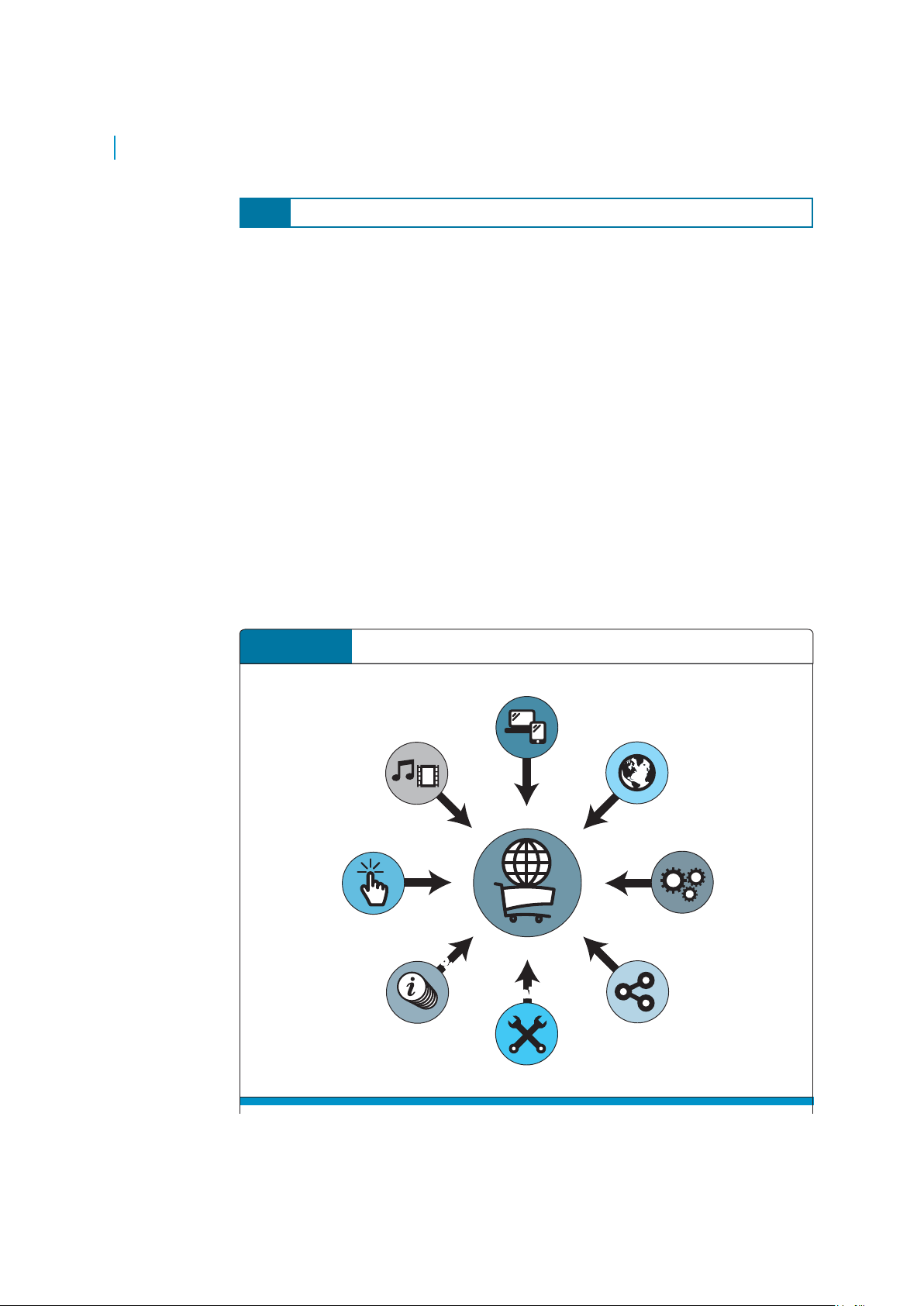
Figure 1.4 illustrates eight unique features of e-commerce technology that both chal-
lenge traditional business thinking and help explain why we have so much interest in
e-commerce. These unique dimensions of e-commerce technologies suggest many new
possibilities for marketing and selling—a powerful set of interactive, personalized, and
rich messages is available for delivery to segmented, targeted audiences.
Prior to the development of e-commerce, the marketing and sale of goods was a
mass-marketing and salesforce–driven process. Marketers viewed consumers as pas-
sive targets of advertising campaigns and branding “blitzes” intended to influence
their long-term product perceptions and immediate purchasing behavior. Companies
sold their products via well-insulated channels. Consumers were trapped by geo-
graphical and social boundaries, unable to search widely for the best price and quality.
Information about prices, costs, and fees could be hidden from the consumer, creat- information
ing profitable information asymmetries for the selling firm. Information asymmetry asymmetry
refers to any disparity in relevant market information among parties in a transaction. any disparity in relevant
It was so expensive to change national or regional prices in traditional retailing (what market information among
are called menu costs) that one national price was the norm, and dynamic pricing to parties in a transaction
the marketplace (changing prices in real time) was unheard of. In this environment, FIGURE 1.4
EIGHT UNIQUE FEATURES OF E-COMMERCE TECHNOLOGY Ubiquity Richness lobal reac G h E-commerce Universal Interactivity s tandards Social Information d Personal a ization te e c n s i t y h n o l ogy Cu n stomizatio
E-commerce technologies provide a number of unique features that have impacted the conduct of business.
U n i q u e F e a t u r e s o f E - c o m m e r c e T e c h n o l o g y 17
manufacturers prospered by relying on huge production runs of products that could
not be customized or personalized.
E-commerce technologies make it possible for merchants to know much more
about consumers and to be able to use this information more effectively than was ever
true in the past. Online merchants can use this information to develop new informa-
tion asymmetries, enhance their ability to brand products, charge premium prices for
high-quality service, and segment the market into an endless number of subgroups,
each receiving a different price. To complicate matters further, these same technologies
also make it possible for merchants to know more about other merchants than was ever
true in the past. This presents the possibility that merchants might collude rather than
compete on prices and thus drive overall average prices up. This strategy works espe-
cially well when there are just a few suppliers (Varian, 2000a). We examine these different
visions of e-commerce further in Section 1.4 and throughout the book.
Each of the dimensions of e-commerce technology illustrated in Figure 1.4 deserves
a brief exploration as well as a comparison to both traditional commerce and other
forms of technology-enabled commerce. UBIQUITY
In traditional commerce, a marketplace is a physical place you visit in order to transact. marketplace
For example, television and radio typically motivate the consumer to go someplace to physical space you visit
make a purchase. E-commerce, in contrast, is characterized by its ubiquity: It is avail- in order to transact
able just about everywhere and at all times. It liberates the market from being restricted ubiquity
to a physical space and makes it possible to shop from your desktop, at home, at work, available just about
or even from your car. The result is called a marketspace—a marketplace extended everywhere and at al times
beyond traditional boundaries and removed from a temporal and geographic location.
From a consumer point of view, ubiquity reduces transaction costs—the costs of par- marketspace
ticipating in a market. To transact, it is no longer necessary to spend time and money marketplace extended beyond traditional
traveling to a market. At a broader level, the ubiquity of e-commerce lowers the cogni- boundaries and removed
tive energy required to transact in a marketspace. Cognitive energy refers to the mental from a temporal and
effort required to complete a task. Humans generally seek to reduce cognitive energy geographic location
outlays. When given a choice, humans will choose the path requiring the least effort—
the most convenient path (Shapiro and Varian, 1999; Tversky and Kahneman, 1981). GLOBAL REACH
E-commerce technology permits commercial transactions to cross cultural, regional,
and national boundaries far more conveniently and cost-effectively than is true in tra-
ditional commerce. As a result, the potential market size for e-commerce merchants is
roughly equal to the size of the world’s online population (more than 4.5 billion in 2022)
(Insider Intelligence/eMarketer, 2022e). More realistically, the Internet makes it much
easier for startup e-commerce merchants within a single country to achieve a national
audience than was ever possible in the past. The total number of users or customers that reach
an e-commerce business can obtain is a measure of its reach (Evans and Wurster, 1997). the total number of
In contrast, most traditional commerce is local or regional—it involves local mer- users or customers
chants or national merchants with local outlets. Television, radio stations, and newspa- that an e-commerce
pers, for instance, are primarily local and regional institutions with limited but powerful business can obtain 18
C H A P T E R 1 T h e R e v o l u t i o n i s J u s t B e g i n n i n g
national networks that can attract a national audience. In contrast to e-commerce tech-
nology, these older commerce technologies do not easily cross national boundaries to a global audience. UNIVERSAL STANDARDS
One strikingly unusual feature of e-commerce technologies is that the technical standards
of the Internet, and therefore the technical standards for conducting e-commerce, are universal standards
universal standards—they are shared by all nations around the world. In contrast, most standards that are
traditional commerce technologies differ from one nation to the next. For instance, televi- shared by al nations
sion and radio standards differ around the world, as does cellphone technology. around the world
The universal technical standards of e-commerce greatly lower market entry costs—
the cost merchants must pay just to bring their goods to market. At the same time, for
consumers, universal standards reduce search costs—the effort required to find suitable
products. And by creating a single, one-world marketspace, where prices and product
descriptions can be inexpensively displayed for all to see, price discovery becomes sim-
pler, faster, and more accurate (Banerjee et al., 2016; Bakos, 1997; Kambil, 1997). Users,
both businesses and individuals, also experience network externalities—benefits that
arise because everyone uses the same technology. With e-commerce technologies, it
is possible for the first time in history to easily find many of the suppliers, prices, and
delivery terms of a specific product anywhere in the world and to view them in a coher-
ent, comparative environment. Although this is not necessarily realistic today for all or
even most products, it is a potential that will be exploited in the future. RICHNESS richness
Information richness refers to the complexity and content of a message (Evans and Wurster, the complexity and
1999). Traditional markets, national sales forces, and retail stores have great richness: They content of a message
are able to provide personal, face-to-face service using aural and visual cues when making
a sale. The richness of traditional markets makes them a powerful selling or commercial
environment. Prior to the development of the Web, however, there was a trade-off between
richness and reach: the larger the audience reached, the less rich the message.
E-commerce technologies have the potential for offering considerably more infor-
mation richness than traditional media such as printing presses, radio, and television
can because the former are interactive and can adjust the message to individual users.
Chatting online with a customer service representative, for instance, can come close to
the customer experience that takes place in a small retail shop. The richness enabled by
e-commerce technologies allows retail and service merchants to market and sell “com-
plex” goods and services that heretofore required a face-to-face presentation by a sales
force to a much larger audience. INTERACTIVITY
Unlike any of the commercial technologies of the twentieth century, with the possible interactivity
exception of the telephone, e-commerce technologies allow for interactivity, mean- technology that al ows for
ing they enable two-way communication between merchant and consumer and among two-way communication between merchant
consumers. Traditional television or radio, for instance, cannot enter into conversations and consumer and
with viewers or listeners, ask them questions, or request customers to enter information among consumers into a form.
U n i q u e F e a t u r e s o f E - c o m m e r c e T e c h n o l o g y 19
Interactivity allows an online merchant to engage a consumer in ways similar to a
face-to-face experience. Comment features, community forums, and social networks
with social sharing functionality such as Like and Share buttons all enable consumers to
actively interact with merchants and other users. Somewhat less obvious forms of interac-
tivity include responsive design elements such as websites that change format depending
on what kind of device they are being viewed on, product images that change as a mouse
hovers over them, the ability to zoom in or rotate images, forms that notify the user of a
problem as they are being filled out, and search boxes that autofill as the user types. INFORMATION DENSITY
E-commerce technologies vastly increase information density—the total amount and information density
quality of information available to all market participants, consumers and merchants the total amount and
alike. E-commerce technologies reduce information collection, storage, processing, and quality of information
communication costs. At the same time, these technologies greatly increase the cur- available to al market
rency, accuracy, and timeliness of information—making information more useful and participants
important than ever. As a result, information becomes more plentiful, less expensive, and of higher quality.
A number of business consequences result from the growth in information
density. One of the shifts that e-commerce is bringing about is a reduction in infor-
mation asymmetry among market participants (consumers and merchants). Prices
and costs become more transparent. Price transparency refers to the ease with which
consumers can find out the variety of prices in a market; cost transparency refers to
the ability of consumers to discover the actual costs merchants pay for products.
Preventing consumers from learning about prices and costs becomes more diffi-
cult with e-commerce, and, as a result, the entire marketplace potentially becomes
more price competitive (Sinha, 2000). But there are advantages for merchants as well.
Online merchants can discover much more about consumers, which allows mer-
chants to segment the market into groups willing to pay different prices and permits
merchants to engage in price discrimination—selling the same goods, or nearly the
same goods, to different targeted groups at different prices. For instance, an online
merchant can discover a consumer’s avid interest in expensive exotic vacations and
then pitch expensive exotic vacation plans to that consumer at a premium price,
knowing this consumer is willing to pay extra for such a vacation. At the same time,
the online merchant can pitch the same vacation plan at a lower price to more price-
sensitive consumers. Merchants also have enhanced abilities to differentiate their
products in terms of cost, brand, and quality. personalization the targeting of marketing
PERSONALIZATION AND CUSTOMIZATION messages to specific individuals by adjusting
E-commerce technologies permit personalization: Merchants can target their mar- the message to a
keting messages to specific individuals by adjusting the message to a person’s name, person’s name, interests,
interests, and past purchases. Today this is achieved in a few milliseconds and fol- and past purchases
lowed by an advertisement based on the consumer’s profile. The technology also customization
permits customization—changing the delivered product or service based on a user’s changing the delivered
preferences or prior behavior. Given the interactive nature of e-commerce technol- product or service based
ogy, much information about the consumer can be gathered in the marketplace at the on a user’s preferences moment of purchase. or prior behavior 20
C H A P T E R 1 T h e R e v o l u t i o n i s J u s t B e g i n n i n g
With the increase in information density, a great deal of information about
the consumer’s past purchases and behavior can be stored and used by online mer-
chants. The result is a level of personalization and customization unthinkable with
traditional commerce technologies. For instance, you may be able to shape what you
see on television by selecting a channel, but you cannot change the contents of the
channel you have chosen. In contrast, the online version of the Wall Street Journal
allows you to select the type of news stories you want to see first and gives you the
opportunity to be alerted when certain events happen. Personalization and custom-
ization allow firms to precisely identify market segments and adjust their messages accordingly.
SOCIAL TECHNOLOGY: USER-GENERATED CONTENT (UGC), CREATORS, AND SOCIAL NETWORKS
In a way quite different from all previous technologies, e-commerce technologies have
evolved to be much more social by allowing users to create and share content with a
worldwide community. Using these forms of communication, users are able to create
new social networks and strengthen existing ones.
All previous mass media in modern history, including the printing press, used
a broadcast (one-to-many) model: Content is created in a central location by experts
(professional writers, editors, directors, actors, and producers), and audiences are con-
centrated in huge aggregates to consume a standardized product. The telephone would
appear to be an exception, but it is not a mass communication technology. Instead, the
telephone is a one-to-one technology. E-commerce technologies invert this standard
media model by giving users the power to create and distribute content on a large scale
and permitting users to program their own content consumption. E-commerce tech-
nologies provide a unique, many-to-many model of mass communication, and over the
last several years, user-generated content (UGC), in the form of video, podcasts, news-
letters, literary content, online classes, digital art, and more, has come to occupy an
ever-increasing role in the online content landscape. People who develop and distribute
such content are now typically referred to as “creators.” More than 200 million people
worldwide characterize themselves as creators, and an entire ecosystem, referred to as
the creator economy, has sprung up around them. The creator economy includes social
network platforms, content creation tools, monetization tools, fan interaction and com-
munity management tools, ad platforms, and administrative tools that support creators
and enable them to earn revenue.
Table 1.2 provides a summary of each of the unique features of e-commerce tech-
nology and each feature’s business significance. 1.4 TYPES OF E-COMMERCE
There are a number of different types of e-commerce and many different ways to char-
acterize them. For the most part, we distinguish different types of e-commerce by the
nature of the market relationship—who is selling to whom. Mobile, social, and local
e-commerce can be looked at as subsets of these types of e-commerce.
T y p e s o f E - c o m m e r c e 21 TABLE 1.2
BUSINESS SIGNIFICANCE OF THE EIGHT UNIQUE FEATURES OF E-COMMERCE TECHNOLOGY
E - C O M M E R C E T E C H N O L O G Y D I M E N S I O N
B U S I N E S S S I G N I F I C A N C E
Ubiquity—E-commerce technology is available
The marketplace is extended beyond traditional boundaries and is
anytime and everywhere: at work, at home, and
removed from a temporal and geographic location. “Marketspace” is elsewhere via mobile devices.
created; shopping can take place anywhere. Customer convenience is
enhanced, and shopping costs are reduced.
Global reach—The technology reaches across
Commerce is enabled across cultural and national boundaries seamlessly
national boundaries and around the earth.
and without modification. “Marketspace” includes potential y bil ions of
consumers and mil ions of businesses worldwide.
Universal standards—There is one set of
There is a common, inexpensive, global technology foundation for technology standards. businesses to use.
Richness—Video, audio, and text messages are
Video, audio, and text marketing messages are integrated into a single possible.
marketing message and consuming experience.
Interactivity—The technology enables interaction
Consumers are engaged in a dialog that dynamical y adjusts the with the user.
experience to the individual consumer and makes the consumer a
co-participant in the process of delivering goods to the market.
Information density—The technology reduces
Information processing, storage, and communication costs drop
information costs and raises quality.
dramatical y, while currency, accuracy, and timeliness improve greatly.
Information becomes plentiful, cheap, and accurate.
Personalization/Customization—The
Marketing messages can be personalized and products and services
technology permits personalization and customization.
customized, based on individual characteristics.
Social technology—The technology supports
Enables user content creation and distribution and supports
user-generated content (UCG), creators, and social
development of social networks. networks.
BUSINESS-TO-CONSUMER (B2C) E-COMMERCE
The most commonly discussed type of e-commerce is business-to-cons umer (B2C) business-to-consumer
e-commerce, in which online businesses attempt to reach individual consumers. B2C (B2C) e-commerce
e-commerce includes purchases of retail goods; travel, financial, real estate, and other online businesses sel ing
types of services; and online content. B2C has grown exponentially since 1995 and is the to individual consumers
type of e-commerce that most consumers are likely to encounter (see Figure 1.5).
Within the B2C category, there are many different types of business models.
Chapter 2 has a detailed discussion of seven different B2C business models: online retail-
ers, service providers, transaction brokers, content providers, community providers/
social networks, market creators, and portals. Then, in Part 4, we look at each of these
business models in action. In Chapter 9, we examine online retailers, service provid-
ers (including on-demand services), and transaction brokers. In Chapter 10, we focus
on content providers. In Chapter 11, we look at community providers (social networks),
market creators (auctions), and portals.
The data suggests that, over the next five years, B2C e-commerce in the United
States will continue to grow by more than 10% annually. There is tremendous upside
potential. Today, for instance, retail e-commerce (which currently comprises the