The Power of Board Games for Multidomain Learning in Young Children
The Power of Board Games for Multidomain Learning in Young Children
Môn: Tài liệu Tổng hợp 3.6 K tài liệu
Trường: Tài liệu khác 3.9 K tài liệu
Tác giả:




















Preview text:
The Power of Board Games
for Multidomain Learning in Young Children •
Daniela K. O’Neill and Paige E. Holmes
The authors conduct a broad, cross-cultural review of the literature in fields
such as psychology, education, speech-language pathology, early interven-
tion, and library science concerned with board games and learning in young
children. They include experimenter-developed and commercial board
games and children’s learning in mathematics, science, and language, as wel
as social, emotional, and cultural understanding. The authors discuss findings
related to teaching and the classroom, speech-language therapy, intervention
programs, and home and community settings such as libraries. Pointing to
the nascent nature of the research in many areas, they highlight how board
games, especial y those featuring cooperative play, can foster multidomain
learning and offer promising avenues for future research. Key words: board
games; learning; play, playful learning; tabletop games; young children Introduction
In summer 2019, in a graduate seminar on children’s language develop-
ment, we hosted a series of drop-in Family Board Game Fun events at a local
library. Our goal was to promote communicative interactions rich in learning
opportunities for children in a playful setting. We decided to do so by intro-
ducing families with young children at these events to the many new board
games available for children—games that foster different kinds of learning and
feature different and engaging themes. These games offered cooperative and
competitive play in versions for children as young as two and had short play-
ing times of less than fifteen minutes. To inform and engage parents further
at the events, we highlighted different types of learning afforded by the board 58
American Journal of Play, volume 14, number 1 © 2022 by The Strong
Contact Daniela K. O’Neill at doneill@uwaterloo.ca
The Power of Board Games for Multidomain Learning 59
games for children under twelve in a set of posters for the events based on a brief literature review.
The board games and the information in our posters proved both new and
of interest to many patrons, including parents, teachers, and librarians. Parents
who first declined our invitation to drop in, often claimed that their children
were too young or that they did not have enough time. When we described the
features of our games, many families came to take a look, then chose a game and
began playing. The events became a big success, and the room soon filled up with
talk and laughter and play with siblings, parents, and grandparents, and play in
several languages other than English. Feedback offered to the library was enthu-
siastic and included requests for a permanent, circulating collection of games.
When COVID-19 forced the library to close, we pivoted to conduct a more
thorough and exhaustive literature search and review of learning during board
game play for children of elementary school age and younger (two to twelve
years old). Our review of this literature considers academic work from both
experimental and nonexperimental fields and contributions from more infor-
mal sources such as blogs written by speech-language pathologists and other
professionals working with children. Although the board games mentioned in
these informal sources have yet to attract much academic research, they are
extensively discussed informal y by the experts in these areas. Moreover, some
board game manufacturers already consider children’s development in domains
such as language when designing their games, even producing pamphlets along
with their games with tips for parents (HABA 2016).
We seek to present and summarize these findings about children’s learning
related to mathematics; science; language; and social, emotional, and cultural
understanding. Our goal is to help both academic and nonacademic audiences
gain a more detailed picture of what we know so far about young children’s
learning from board games. Further knowledge and organization of this lit-
erature can benefit a wider audience of parents, educators, and other profes-
sionals and community members wishing to provide rich learning experiences
to children in at least two ways. First, it can offer a wider scope of board game
learning to inform a game’s design (and to evaluate such games for purchase and
use). Second, those observing children playing a game can better understand
and recognize the full breadth of rich learning opportunities and experiences
taking place. Indeed, our findings both exceeded our expectations in terms of
the number of domains and surprised us in terms of the lack of experimental
research in some domains, which we suggest worthy of further investigation. 60
A M E R I C A N J O U R N A L O F P L A Y
The Landscape of Board Games and the
Games Appearing in Our Review
The current board game landscape is vast and diverse. Some may not be familiar
with the board game industry and the distinctions made among board games, so
we aim to provide a short overview of the types of games included in our review.
We focus on the novice with respect to board games and their history because
most of the sources we reviewed were written by nonexperts who simply use the
term “board game(s)” without further discussion of their types.
To begin, very broadly defined, the types of board games (or tabletop games
as they are also frequently called) appearing in this review all fit the following
description in line with definitions in the board game field: any face-to-face
game played on a surface or table with various accessories, ranging from die,
game boards, tokens, and cards (Parlett 1999; Woods 2012).
Also, many of the games we review were developed by researchers and fea-
ture a classic positional race style. That is, the contemporary board game market
has been divided into three categories (Woods 2012): nonproprietary, classical
or traditional games, that is mass-market games produced in large numbers
and “constituting the common perception of commercial board games” (15);
and games targeted towards a smaller market of “hobby gamers” (15). Although
we consider very few classical or traditional board games such as chess or Go,
many of the researcher-developed board games do take the form of traditional
positional race style games in which players race to be the first to reach the end
of the board. Indeed, many are similar to Snakes and Ladders or Candy Land,
both of which were also among the first mass-market family games designed
primarily for children to play together with parents or under the supervision of
other adults such as teachers (Parlett 1999, 347–49).
Final y, one large category of hobby games includes Eurogames, and it
may come as a surprise to readers familiar with the contemporary landscape
of board games how few of the board games in the studies have the features of
newer midtwentieth-century games, especial y given the innovation of the past
fifty years. Nevertheless, in a few of the experimenter-developed board games we
reviewed, we found three key features in midtwentieth-century games, including
Eurogames: thematic subject matter, off-board play, and several ways of winning
including winning cooperatively (Donovan 2017; Estes 2018; Moriarity and Kay
2019; Parlett 1999; Woods 2012). We describe these three features more ful y in sections to follow.
The Power of Board Games for Multidomain Learning 61
First, in contrast with abstract, older-style positional games, midtwentieth-
century games were “chiefly characterized by a thematic subject matter” (Parlett
1999, 9), a subject matter often educational within the category of family games.
Theme games often seek to “simulate or represent some sort of real-life activity”
(348), and this can range from simulation (involving some kind of practice for
real life) to representational (involving a less realistic focus on recreation and
fun). In other words, some games represented very specific real-life activities
(e.g., bul ying) to teach and practice very specific skil s and others educated in
a less realistic way that emphasized fun.
Second, in contrast to classic board games, twentieth-century board games
featured “off-board play” (Parlett 1999, 346), an early example being Monopoly
(published first in 1935) in which “the play of the game centres, so to speak,
‘above the board,’ in the minds and interactions of the players themselves” (7),
and board position is irrelevant to winning the game. Although the play in
many of the board games we reviewed still centers largely on the board, some
of it occurs off the board, especial y in those games in which children must act cooperatively.
Third, in more contemporary board games, especial y Eurogames, there
often exist multiple paths to winning, and winning is not everything—how
players play the game and make it a positive social experience can matter just
as much. The Eurogame Settlers of Catan (1995)—originally developed in
Germany and titled Die Siedler von Catan—sparked a new wave of critical-
thinking games built on such new features as free-form boards and using
miniature pieces introduced by predecessors like the tabletop war simulation
game Kriegspiel and the family game Risk (Donovan 2017; Moriarity and Kay 2019; Woods 2012).
They were dubbed Eurogames because they had been first developed and
introduced in Europe, and Woods (2012) and others (Donovan 2017; Moriarity
and Kay 2019) have described some of their key features, including the rare use
of dice; a randomized board layout; indirect rather than direct competition to
gain resources; the need for planning, critical thinking, and changing tactics; a
flexible scoring system and multiple paths to winning that ensure no one player
can leap ahead early to win; high quality construction and aesthetics; accessible
to many ages; and set and predictable playing times. In some of these board
games, players at times must work together to further their individual goals;
some may be designed for entirely cooperative play.
The themes and topics of Eurogames are incredibly diverse (e.g., birding, 62
A M E R I C A N J O U R N A L O F P L A Y
honeybees, early railroads), and some features are designed specifical y to appeal
to children as young as two years of age, such as the short ten-minute playing
times and large wooden pieces of the cooperative game First Orchard, one of
several games in the My Very First Games series by HABA. In this review, we see
games that, for example, address broader themes and require strategic thinking
and consideration of multiple factors.
Active Learning in Board Games
Board games can be a very effective means to promote active learning when
children “are engaged in some activity that forces them to reflect upon ideas
and how they are using those ideas” (Collins and O’Brien 2003, 5). Noda,
Shirotsuki, and Nakao carried out a large metareview and effects analysis of
twenty-seven studies conducted in educational settings that specifical y com-
pared the knowledge of children both before and after they were provided an
active board game–based learning instruction versus a passive form of learn-
ing instruction such as a lecture. Studies that included children aged four to
twelve strongly suggested board games were an effective tool to encourage
active learning and the retention of knowledge. They also found that board
games helped increase students’ motivation for learning and even lead to posi-
tive changes in behavior (Noda, Shirotsuki, and Nakao 2019). These studies
covered different types of mathematical and scientific knowledge, but overal
the majority consisted of traditional, positional race games in which players
progress along a pathway by rolling dice and by answering questions about
whatever topic a teacher wished to teach players, all of which produced a
sole winner (See the appendix at the end of this article. Note that the board
games mentioned in this article that are also included in Noda, Shirotsuki,
and Nakao’s 2019 review appear with an asterisk.)
Inside or outside a classroom, games—including board games—can be a
form of active, playful learning (Hirsh-Pasek, Golinkoff, and Eyer 2003), along-
side free play and guided play. All of these foster learning because they engage
children in meaningful and social y interactive fun (Hassinger-Das et al. 2017).
Such guided play can help children learn as well as, if not better than, traditional
forms of teaching (Weisberg et al. 2015). During children’s board game play,
researchers suggest, guided play might be incorporated by teachers or parents
asking open-ended questions that help children think more deeply about what
The Power of Board Games for Multidomain Learning 63
they are doing and help them absorb information at their own pace. Moreover,
the roll of dice or the spin of wheels can introduce the element of chance and
help reduce adult control even as children maintain a sense of agency and control
in guided play (Hassinger-Das et al. 2017). Moreover, in keeping with a much
longer view of children’s play as important to many domains of learning (Sutton-
Smith 1979; Singer, Golinkoff, and Hirsh-Pasek 2006), board games have the
potential to promote children’s learning more broadly.
The Scope of This Review Sources
To aid our query into what children can learn from board games, we searched
the academic literature using the journal databases of our university’s library
(e.g., PsycInfo, BioMed, ERIC, JSTOR, MLA, SSRN). We followed up on the
studies cited in that literature and conducted further, broader searches via such
search engines as Google Scholar and Google, looking for sources like the blogs
of speech-language pathologists. For reasons of space—and in line with some
definitions of board games (e.g., Parlett 1999)—we have not included games
played solely with cards or dice. The studies we reviewed also do not include
other types of hobby games, such as war games or role-playing games (Woods
2012), given that they tend to be for adults. Also for reasons of space, we capped
the age of children we considered at twelve years, a natural boundary between
elementary and middle or high school. Use of Terms
Readers should note that the use of the term “board game(s)” in the empirical
studies we reviewed was often not further qualified according to the typical
distinctions made in the board game literature (e.g., traditional, positional,
Eurogame, etc.), largely because the authors and audiences for these articles
come from other disciplines, such as psychology or education. As a result,
when we draw from or quote these authors, we often use “board game” without
further specification given its absence in the original source. However, when
we found enough information in the sources, we do give short descriptions
of the board games (in our text and in table 1) to help readers understand the games’ natures.
We qualify the board games as one of three types: experimenter developed 64
A M E R I C A N J O U R N A L O F P L A Y
for a particular study and thus not commercial y available; author or child devel-
oped if created for a purpose other than an experimental study, such as for an
observational study or classroom project; and commercial y available. When
possible, we give the specific name of the board game. In addition, in table 1
when we call a source an experimental study, we present only the results found
significant in statistical analyses conducted by the original authors. Mathematical Learning Numerical Knowledge
The use of board games to develop early mathematical knowledge is a well-
studied topic, but it is one that has taken place almost exclusively within lab
or school settings. A large number of studies, across many different countries,
have specifical y examined numerical knowledge acquired via board games by
young children, such as identifying numbers, comparing number sizes, adding
and subtracting, and number line estimations.
These studies have primarily used researcher-developed linear or grid
positional board games with numbered spaces, and we refer to them as “num-
ber board games.” The number of numbered spaces varies, reaching a maxi-
mum of one hundred, and the grid sizes range from about five by five inches to
ten by ten inches. Some of the grid boards contain extra up and down possibili-
ties similar to Snakes and Ladders. Ramani and Siegler (2008; 2011) pioneered
the original number board game designs with fairly short play times (fifteen to
twenty minutes). Among four- to five-year-old American children from low-
income families, the studies found that after playing a number board game,
children’s ability to carry out numerical magnitude comparisons, numeral
identification, and number line estimation tasks improved and that this effect
was observed up to nine weeks later. Eloffson and her colleagues (Eloffson et al.
2016) similarly found five-year-old Swedish children’s arithmetic calculations
improved following number board game play. In other countries, additional
research found playing number board games led to significant improvements
in three-year-old Canadian children’s ability to complete successfully an
object counting task (Dunbar et al. 2017), six-year-old German children’s
overall mathematical competencies (Skillen, Berner, and Seitz-Stein 2018), and
four- to six-year-old Chinese children’s interest in mathematics (Cheung and
McBride 2017). Number board games have also been shown to have benefits
The Power of Board Games for Multidomain Learning 65
for the numerical knowledge of four- to ten-year-old autistic children (Satsangi
and Bofferding 2017). Within the setting of a children’s museum, Bustamante
and his colleagues (Bustamante et al. 2020) analyzed the effect a life-sized,
researcher-developed board game, Parkopolis, had on children’s and adults’
dialogue and interactions about numbers compared to another exhibit without
a board game. Parkopolis generated significantly more interactions featuring
such talk (e.g., fractions, patterns) than the exhibit not featuring a board game.
Although experimental studies in public settings such as museums are more
challenging to conduct, we are encouraged to see learning from board games
studied alongside other forms of learning children may gain from museum
exhibits (Andre, Durksen, and Volman 2017).
One outcome of this experimental research on numerical learning from
board games has been the “cognitive alignment framework” (Laski and Siegler
2014, 853), which states that the more precisely the physical materials and learn-
ing activities are aligned with the desired mental representations, the more likely
students are to acquire these representations. So, for example, using a researcher-
developed Race to Space positional board game with a grid of ten-by-ten-inch
squares numbered one to one hundred, Laski and Siegler (2014) compared the
effect of asking five-year-old children to “count-on” from their current num-
ber on the board (e.g., from square five, a child rol s a two and counts-on six,
seven) versus the more usual “count-from-one” strategy (e.g., count one, two,
after rolling a two). The strategy of counting-on resulted in more mathematical learning than counting-from.
To date, few studies have considered how, or why, board game play at home
may impact children’s learning of mathematics. Some studies suggest that how
often board games are played may matter. Among five- to six-year-old Italian
children, the frequency of board game play at home was positively related to
their counting ability (Benavides-Varela et al. 2016). Similarly, among American
children four to five-and-a-half years old, greater numerical knowledge posi-
tively related to the number of settings in which they had played commercial y
available board games, either at their own homes or at the homes of others, and
to the very mention of playing Chutes and Ladders. Board game play at home
was also more frequently reported for preschoolers from middle-income than
preschoolers from low-income backgrounds, even when the middle-income
children were younger (Ramani and Siegler 2008, 2011).
In line with the cognitive alignment framework, Ramani and Siegler (2008,
2011) suggest that the experience of playing board games at home such as Chutes 66
A M E R I C A N J O U R N A L O F P L A Y
and Ladders, which more closely align with the specific design features of their
researcher-developed number board games, relates to greater numerical knowl-
edge among preschool-aged children, particularly for those from low-income
homes. Furthermore, they suggest that board games in which children have to
roll dice or twirl spinners, translate the dots into a number, use that number
to count out how many spaces to advance on the board, and receive multiple
kinaesthetic cues (such as hearing the names of the numbers or seeing the differ-
ence in length of distance moved with increased value of numbers) are likely to
develop children’s numerical knowledge. At present, however, these hypotheses
remain to be supported experimental y.
Mathematical Reasoning and Problem Solving
Among older elementary school-aged children, board games have been
used mostly within school settings to develop mathematical reasoning and
problem-solving skil s, including the use of abstract strategies and different types
of reasoning such as inductive, metaphoric, or imagistic. But findings to date
suggest methods with more in-depth analyses of strategies and reasoning may
be required to understand how board games can foster these skil s. For example,
when an intervention with elementary school-aged children has simply consisted
of learning to play a game such as chess, findings are mixed: one study found a
subsequent effect on mathematical problem-solving scores (Sala, Gorini, and
Prevettoni 2015), and another suggested no such effect (Sala and Gobet 2017),
both with few further conclusions possible. Other sources describe how board
games can be used by teachers in a math class. For example, Ascher (2001)
describes teachers using such questions as “How many intersection points does
the configuration contain?” (98) in connection with Mongolian game boards to
help develop elementary school-aged children’s geometric and logical thinking
in relation to different polygon shapes of the game boards. But, no data was
collected to show if and how such learning occurred.
In contrast to these studies, McFeetors and Palfy (2018)—by employing
a much more detailed qualitative analysis of children’s verbal reasoning while
playing board games—were able to show in much more depth how board game
play can help develop children’s mathematical reasoning and problem solving.
They used methods grounded in Dewey’s (1938; 1997) theory that students
learn through active participation, col aboration with peers and the teacher,
and reflection by the learner that ascribes meaning to the activity. Thus, they
had students from grades five and six in a math class play four commercial y
The Power of Board Games for Multidomain Learning 67
available board games that required the use of increasingly abstract strate-
gies—Gobblet Gobblers, Othello, Tic Stac Toe, and Go. The researchers were
interested in seeing whether they could observe and document children’s use
and growth with respect to different kinds of reasoning important to solving
mathematical problems such as inductive, deductive, metaphoric, analogic,
imagistic, indirect, and informal reasoning.
And indeed, by using multiple forms of qualitative data—such as chil-
dren’s verbal answers and explanations to teachers’ and peers’ questions about
the strategies deployed, including drawings to support their ideas—they were
able to capture forms and verbs of reasoning demonstrated by students. They
were also able to show how this classroom intervention with this set of board
games led to growth in students’ emergent reasoning ability and strategy use
and development. The following detailed description provided by McFeetors
and Palfy of one student’s experience playing the game Go il ustrates the point.
The student, Renée, first showed her skill at refining and modifying existing
strategies when playing Othello. But when her group moved on to the more
challenging game of Go, she started to analyze the rules and board arrange-
ment possibilities which she explained using metaphoric reasoning (e.g., “to
make a wal ” [118, figure 5]). She then began using metaphors as reasoning for
certain moves and conjectures of what might be an effective strategy for game
play (e.g., “to capture the other player and mark territory” [119, in figure 6]).
These conjectures eventual y led to greater imagistic reasoning and generalized
strategic claims employing inductive reasoning.
After playing the game over the nine, one-hour sessions, Renée could justify
her strategies and explain how they could be used by other students. Renée’s is
but one of several examples of rich mathematical reasoning during play with
these board games observed in this unique study. Summary
Overall, the enhancement of children’s mathematics and problem-solving
skil s by playing board games depends specifical y on the type of game—that
is, researcher-developed board games designed for this enhancement, as are
number board games—and played in a certain way (such as with specific feed-
back for particular types of errors). The use and investigation of commercial y
available board games for mathematics and problem solving appears much less
frequently in academic and nonacademic sources. One notable exception is
McFeetors and Palfy’s (2018) in-depth investigation of children’s reasoning when 68
A M E R I C A N J O U R N A L O F P L A Y
playing with a set of commercial strategy games. They note that ideas for using
commercial games more general y to promote mathematical reasoning (e.g.,
Farkle, SET, Rush Hour) have been shared by teachers but that they are not often
the subject of systematic research.
McFeetors and Palfy (2018) also reflect on the potential advantages of using
commercial board games in the classroom. They argue that such games promote
student activity via their interactive nature and that their availability outside
the classroom leads to their perception as “authentic” board games. Indeed,
McFeetors and Palfy observed that children were immediately engaged by the
board games. They talked about playing them at home, some began to play
them outside of school, and they liked that the games were not developed for
one specific mathematical idea. Science Learning
Much stronger support exists for the use of board games as a tool to help students
increase their knowledge of scientific topics such as biology and nutrition. Pep-
pler, Danish, and Phelps (2013) say such games help students make “deep con-
nections to disciplinary content” (686). Students use this knowledge to motivate
behavior change and understand complex systems. Interestingly, with respect
to learning about complex systems, col aborative board game play may hold an
advantage over competitive game play.
In learning disciplinary content, for example, sixth-grade children
showed gains in their knowledge of anatomy and physiology, diet, and lifestyle
risk factors after playing a researcher-developed health-themed board game,
Lifestyles, compared to a group receiving regular classroom activities (Bartfay
and Bartfay 1994). Wulanyani and associates (Wulanyani et al. 2019) used a
Snakes and Ladders–style, researcher-developed game to educate elementary
school-aged Indonesian children about the soil parasite taeniasis. The authors
concluded that the board game may be a promising learning tool, given chil-
dren’s correct answers increased from 40 percent to 59 percent after playing the game in small groups.
Noda, Shirotsuki, and Nakao (2019) found that board game play helped
increase the motivation of students for learning and even led to positive behav-
ior changes. For example, teachers noted a growing interest in and appreciation
of nutrition by eleven- to fourteen-year-olds after they played the researcher-
The Power of Board Games for Multidomain Learning 69
developed positional board game, Kalèdo, in which they learned about energy
intake and expenditure via a Mediterranean diet (Amaro et al. 2006). Moreover,
in a very large longitudinal study conducted with over thirteen hundred, nine-
to nineteen-year-olds in twenty Italian schools, the group who played Kalèdo
showed improved nutrition knowledge and dietary behavior over six months
and significantly lower BMI z-scores than the control group receiving no inter-
vention (Viggiano et al. 2015).
In another uniquely in-depth study that involved detailed recording and
examination of children’s talk with peers, Peppler, Danish, and Phelps (2013)
observed how greater scientific learning (especial y learning about complex
systems) may occur when children play board games col aboratively rather than
competitively. The study used its own researcher-designed positional board
game, HIVEMIND, in a classroom setting to teach six- to nine-year-old Ameri-
can children advanced scientific knowledge about honeybees and their collect-
ing of nectar and how this communal behavior of bees constituted a “complex system” (687).
To engage the children in complex-systems thinking, the game incor-
porated randomness and probability—for example, a bee does or does not
observe the dance indicating the nectar’s location—so students could assess
its impact on the system of nectar collection. The study also explored whether
playing the game collaboratively (single team score sheet) or competitively
(individual score sheet) affected peer discourse during play, subsequent post-
play debriefings by the teacher, and children’s learning outcomes. It found that
children playing col aboratively discussed scientific content and made pattern
inferences significantly more often those playing competitively. For example,
the col aborators noticed that not all scout bees found a flower with nectar,
which affected nectar collection and the winter survival of the hive. The col-
laborating children more frequently read the cards with scientific information
out loud together, stayed on topic, discussed their scores as a team, remained
engaged in the game, and proved more active listeners compared to the com-
petitive group, who also, for example, showed little interest in the turns of
others. All these col aborative behaviors may have promoted greater learning
of the material, which the authors also attribute to the way col aborative play
aligned with the col aborative nature of the complex system being examined
(i.e., bees working together to collect nectar).
When we consider the benefits of board games for scientific learning
among much younger children, we find it interesting to note that some com- 70
A M E R I C A N J O U R N A L O F P L A Y
mercial board games may introduce scientific knowledge in a playful manner
to two- and three-year-old children. For example, the same topic—honeybees’
nectar collection—is the focus of Hanna Honeybee, a HABA game targeted at
children as young as two and part of HABA’s My Very First Games collection.
Concentrating not just on honeybees’ nectar collection but also on how nectar
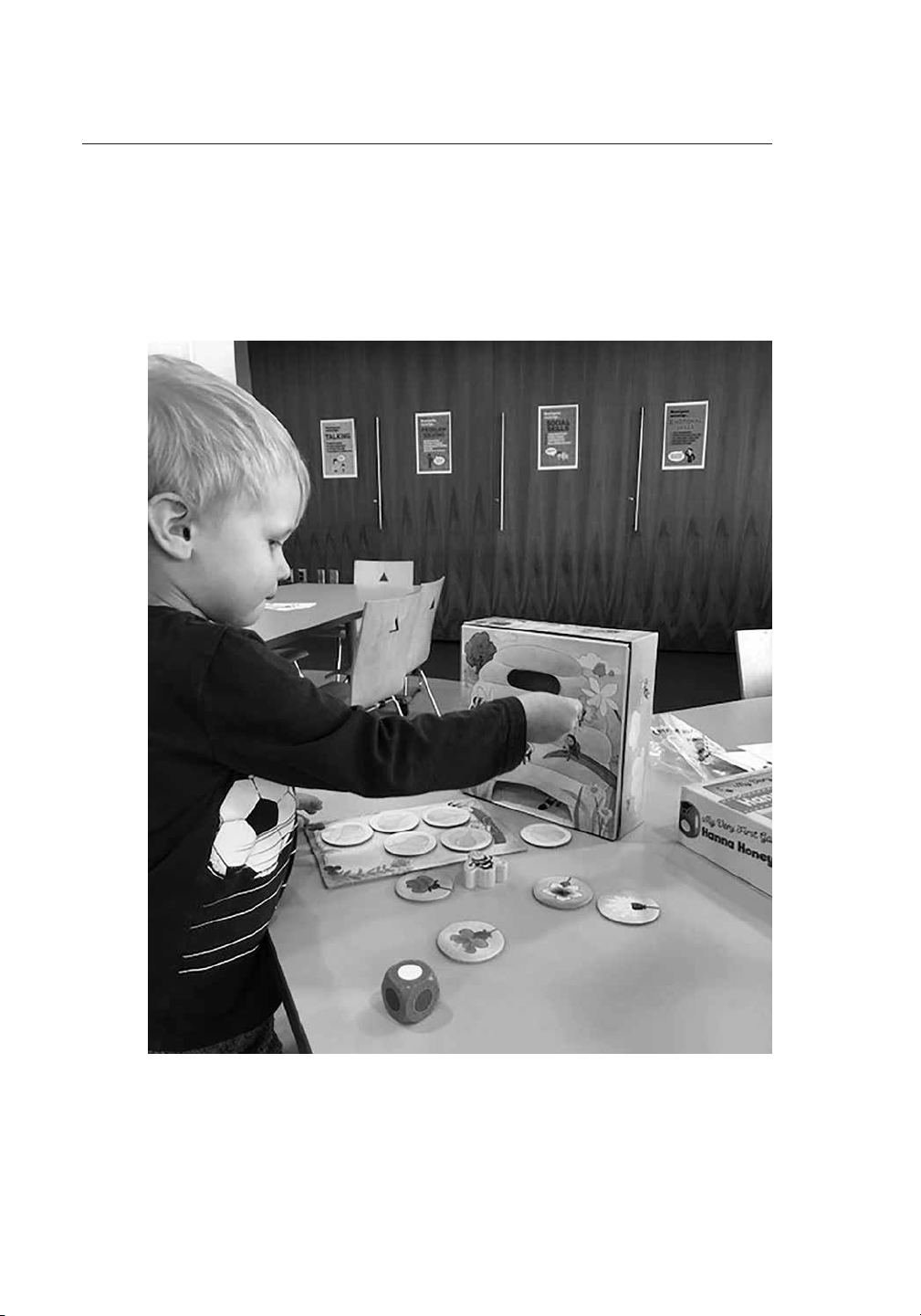
Figure 1. A three-year-old playing HABA’s Hanna Honeybee during a family board game event
at Kitchener Public Library. Photo taken by Daniela O’Neill on June 19, 2019, and provided with permission of parent.
The Power of Board Games for Multidomain Learning 71
is turned into honey in the beehive, players work together to produce as much
honey for the honeypot as they can before too many flowers wilt and fall out
of the game determined by the roll of the die. Players use a large wooden bee
to fly to different flowers to collect nectar, fly the flower token (i.e., nectar) to
the three-dimensional beehive constructed from the box, deposit the flower
token, and watch a honey token emerge from the beehive to put in a honeypot.
Inside the box, the mechanism flips the token from flower to honey side before it reemerges. (See figure 1.)
Like other games in HABA’s My Very First Games col ection, Hanna Honeybee
comes with a pamphlet for parents that indicates how the game can help foster
a child’s development in color recognition and identification, fine motor skil s,
communication, and other areas. This pamphlet (HABA 2016, 4–7) also provides
tips for parents on how to encourage learning and discussion, which include
specific steps parents can take when they play the game with their children (e.g.,
“Talk about Hanna HoneyBee, how she flies from flower to flower collecting
sweet nectar to bring back to the hive” [4] or providing explanations such as
what the wilted flower on the die means: “one flower is already wilted and has
no more nectar” [5]). Perhaps future research could consider whether even very
young children can learn complex systems through cooperative play at home
or with peers in a classroom setting with a commercial y available game like Hanna HoneyBee. Summary
When board games are tailored to specific concepts, such as complex systems
in science, they can be used to help children learn these concepts (Peppler,
Danish, and Phelps 2013). Other than mathematics, most board game studies
consider scientific thinking, and the findings of those we reviewed suggest that
board game intervention can lead to significant gains in the learning of scien-
tific information—for example, increased knowledge about nutrition and diet
(Amaro et al. 2006; Viggiano et al. 2015). Peppler and colleagues call for more
research to determine best practices for board game use as a teaching tool in the
classroom, especial y since competitive play led to less learning and more ten-
sion among players (Peppler, Danish, and Phelps 2013). In addition, educators
may have to juggle student preferences for commercial games, which parents
and children sometimes viewed as more accessible, fun, and authentic. We add
that much remains to be explored concerning cognitive and scientific learning
within classrooms and also within informal home settings. 72
A M E R I C A N J O U R N A L O F P L A Y Language Learning Vocabulary and Discourse
Studies show that children’s early vocabulary and their later, more sophisticated
discourse skil s, such as maintaining a conversation or telling a story, can be fos-
tered by playing researcher-developed and commercial board games. Within the
domain of speech-language pathology, in particular, commercial board games
are recognized as a means to develop these skil s further during interventions (Poss and Bugaj 2020).
Hassinger-Das and her colleagues (Hassinger-Das et al. 2016) investigated
a board game intervention aimed at increasing the vocabulary knowledge of
four-year-olds. Children participated in shared book reading followed by defi-
nition review and guided play either in the form of a researcher-developed
vocabulary review game modelled on Snakes and Ladders or a nonvocabulary
researcher-developed version of the game. The vocabulary version of the board
game contained ten squares on which children were asked a question related
to a word they had encountered in the book. The questions ranged from low to
high demand (e.g., “Can you point to the lane in the book?”; “Why might you
make a fierce face?” [75]). At posttest, children in the vocabulary game group
demonstrated greater gains in receptive and expressive knowledge of the words
taught than those in the comparison group.
Along with other toys and playful activities, speech-language pathologists
use commercial y available board games to build children’s language and com-
munication skil s and to meet specific goals in intervention and therapy with
children. In reviewing personal sites and blogs, with respect to early vocabu-
lary development, we noted they frequently recommended Candy Land to help
children learn vocabulary related to colors and candy (Galstian 2018). Poss and
Bugaj (2020) describe how many board games can provide numerous, similar
opportunities to model and target vocabulary and short phrases (e.g., get, take,
who, your turn, do you want) as well as possible new words (e.g., trol , princess).
Turning to more sophisticated, later developing language skil s, Sorsana,
Guizard, and Trognon (2013) explored expository discourse skil s among ten
trios of French four- to six-year-old children by having one child (the expert),
who had learned how to play a researcher-developed game “similar to the Game
of Goose” (1457), explain the rules and then teach it to two children (the novices)
who were unfamiliar with it. Successful y explaining a game relies on sophisti-
cated pragmatic language skil s such as taking the others’ perspective, monitoring
The Power of Board Games for Multidomain Learning 73
understanding and errors, providing clarifications if needed, and understanding
more complex vocabulary and syntactic structures. As the authors state, “In
order to do this, both linguistic, cognitive, as well as interpersonal skil s are
mobilized” (1455). The study revealed that expert children demonstrated such
skil s, explaining on average seven of eleven rules and answering approximately
90 percent of their playmates’ questions.
Toe and Paatsch (2018) explored expository discourse skil s with Austra-
lian eight- to thirteen-year-old peer dyads, one an expert and one a novice. The
dyads included one child who had normal hearing and one child who was deaf
or hard of hearing (DHH) in both roles to compare their expository abilities to
convey the key elements and rules of the commercial board game Secret Square,
a game in which children seek a token hidden under one of twenty-five small
pictures by asking yes or no questions. Despite differences in succinctness and
frequency, overal , both groups of children understood and communicated the
key features and rules of the game, and experts checked for understanding while
novices sought clarifications.
Speech-language pathologists have often recommended Clue to help older
children develop the ability to formulate and answer questions and communicate
their reasoning (Fors 2018). Although they suggested no specific board games
to help children build narrative skil s, Eeboo’s Fairytale Spin to Play—a board
game we used in our library events—provides a fitting example. Children spin
for a story background picture (e.g., castle scene), heroes and vil ains, and other
story elements. When they have collected all the story elements, they are encour-
aged to make up a story to share with the players, something we saw children
do enthusiastical y. Some board games directed more at parents also include
instruction booklets with ideas and tips that encourage the playful develop-
ment of language skil s while playing the game with a child, much like HABA My Very First Games. Learning a New Language
Board games can also offer a way for children to practice a new language in a
low-risk, fun environment (Smith 2006). Key features of board game play can
align uniquely with—and be supportive of—the process of learning a language,
helping provide the classroom atmosphere teachers wish to create. Students in
language-learning classrooms must feel they can take risks, make mistakes, be
creative in practicing new words and sentences, and feel “psychological y com-
fortable and safe in their learning environment” (Ely 1986, 23). 74
A M E R I C A N J O U R N A L O F P L A Y
There are several reasons board game play matches these aims (Smith
2006). First, the vocabulary and discourse tend to be more constrained and easy
to understand and predict, which can reduce players’ anxiety about speaking
in an unfamiliar language. Second, board game play supports symmetric turn
taking, which provides all players with a turn to talk, generates repetition that
lets players hear the language forms several times, and creates a more relaxed
atmosphere. Third, if the board game has a col aborative feature, it can encour-
age both joint problem solving and experimenting with new language structures
and vocabulary related to the game.
In Smith’s study (2006), she observed four schools in the United Kingdom
where seven- to ten-year-old children played the researcher-developed board
game Have Fun with Verbs to explore the interactive behaviors of bilingual learn-
ers. The game’s sentence-construction task encouraged such experimentation,
creativity, and play with language because of the supportive help and encourage-
ment of peer players. And indeed, students worked together to solve the language
problems, offer feedback and suggestions, experiment with constructions, and
react positively by nodding, clapping, and laughing. Summary
When we consider the role of board games in enhancing language and com-
munication skil s, we find it striking that they are being used in many different
contexts for a wide variety of skil s ranging from enhancing early vocabulary to
developing sophisticated grammatical and discourse skil s. The detailed analysis
of interactions during board game play in some of these studies have revealed
areas of difficulty with language and communication hitherto less recognized,
which now require specific assessment and potential intervention (Toe and
Paatsch 2018). For example, we need to create authentic communicative expe-
riences to reveal more accurately the abilities of students—especial y those who
may be neurodivergent, shy, or reticent—to teachers who otherwise may have
fewer means of evaluation (Toe and Paatsch 2018; Smith 2006). And we should
consider the possibility of capturing “the dynamic process of learning ‘in action’” (Smith 2006, 434).
We should note that most of the board games in these studies have been
researcher developed to align with language skills being taught. And this is
viewed as key to the positive findings by these authors. In fact, in this literature,
the term “intrinsic integration,” coined by Kafai (1996) is used to describe situ-
ations in which a game’s design features and structure are well aligned with the
The Power of Board Games for Multidomain Learning 75
educational content to be learned (Hassinger-Das et al. 2017). Whether using
commercial games would result in similar findings has received little study,
and at present, arguments for their usefulness depend largely on some board
games receiving positive recommendations from the professional community
in descriptive articles (Poss and Bugaj, 2020) or informal sources such as blogs,
podcasts, or social media. These recommendations could serve, however, as a
basis for further exploration of particular board games or a particular genre of
board games (e.g., storytelling).
Social, Emotional, and Cultural Learning
Social and Emotional Learning
Social and emotional learning (SEL) is general y viewed as encompassing five
key skil s: self-awareness, self-management, social awareness, relationship skil s,
and responsible decision making (Weissberg et al. 2016). And many researchers
believe board games afford rich learning opportunities for SEL both inside and
outside the classroom, such as in clinical or therapeutic settings.
Two larger reviews exploring the role of games in playful learning (Has-
singer-Das et al. 2017) and social and emotional learning (Hromek and Rof-
fey 2009) have mentioned board games and SEL. Hassinger-Das et al. (2017)
suggest that, even when games are not designed to do so, the need to adhere
to a particular set of rules and to take turns may be one reason the games effec-
tively foster self-management skil s such as self-regulation. Moreover, games that
involve multiple players “inherently offer opportunities for social interactions
and practice in turn taking, communication, negotiation, and conflict resolu- tion, and empathy” (200).
Hromek and Roffey (2009) argue that “the natural affiliation between chil-
dren, play, and the desire to have fun with others makes games an ideal vehicle
for teaching SEL” (626), including such skil s as regulating negative emotions,
taking turns and sharing, and treating others in a fair, just, and respectful man-
ner. The authors point out that even just allowing children to decide themselves
who will go first can provide a valuable opportunity for young players to balance
fairness, self-interest, and their emotions.
Cooperative board games, in particular, may offer valuable opportunities
for children to develop socio-emotional skil s. Cooperative games are now a
prominent and growing alternative to competitive games available commercial y 76
A M E R I C A N J O U R N A L O F P L A Y
(Jolin 2016), but this style of game is not limited to adult players. Cooperative
games designed for families (and children even as young as two) have been
steadily gaining traction. Cooperative board games involve all players working
together to reach a common goal (Bay-Hinitz and Wilson 2005). The players
work as a team and share the payoffs and outcomes. Thus, if the team wins,
everyone wins; if the team loses, everyone loses (Zagal, Rick, and Hsi 2006).
Indeed, a tension between short-term goals and longer-term goals can arise in
cooperative games, so that the “group dynamics can get more complicated, not
less” (51) in cooperative- versus competitive-style games (Moriarity and Kay 2019; see also Erway 2018).
As we have described, play interactions of six- to nine-year-olds with
HIVEMIND differed in its competitive and its cooperative versions (Peppler,
Danish, and Phelps 2013). With respect to team play and affective aspects, posi-
tive comments to others on their team (e.g., “go, team, go”) and a greater number
of shorter, productive rounds occurred more frequently with col aborative play.
Zan and Hildebrandt (2003) found that among younger children dyadic inter-
actions displayed more developmental y advanced reciprocal negotiations and
shared experiences during cooperative play. The study observed these interac-
tions as first-grade children played two researcher-developed board games that
had similar rules, board game design, and ways of movement, but differed in
theme and in goal structure—cooperative (Homesteader) or competitive (Bad-
gers). Interestingly, the researchers did not use commercial y-available coop-
erative games because they were unable to find equal y chal enging competitive
games (Zan and Hildebrandt 2003), a limitation that may have changed in the
intervening years with many more cooperative strategy games now available.
Bay-Hinitz and Quilitch (1994) and Bay-Hinitz and Wilson (2005) used sets of
commercial y available cooperative board games (Max, Harvest Time, Granny’s
House, Sleeping Grump) and competitive board games (Candy Land, Chutes and
Ladders, Aggravation and Double Trouble) along with physical games with four-
and five-year-old preschoolers. Unfortunately, the studies do not separate the
results for board games and physical games, although they did find that aggres-
sive behaviors decreased from baseline during col aborative play as cooperative
behaviors increased. In competitive games, friendship status may also play a
role. Nine- and ten-year-old friend dyads argued more about conflicting rules
in a researcher-developed positional Snake Pit board game than did nonfriend dyads (Hartup et al. 1993).
Board game intervention may also increase empathy and the awareness
The Power of Board Games for Multidomain Learning 77
of bullying. In a classroom setting, Nieh and Wu (2018) found that eleven-
and twelve-year-olds who played a researcher-developed col aborative bul y-
ing awareness-themed positional board game, Galaxy Rescuers, demonstrated
greater knowledge about bul ying and changes in bul ying attitudes and empathy
compared to a group taught using conventional methods.
Beyond the classroom, board games also find use in clinical and therapeu-
tic settings to meet social and emotional learning goals for children. Speech-
language pathologists also frequently use (and recommend) commercially
available board games (among other games) to teach and build social-
interaction skil s in young neurotypical and neurodivergent children such as autistic
children and children with ADHD (attention deficit hyperactivity disorder)—
skil s like turn taking, joint attention, and nonverbal communication, as well as
other social skil s such as the control of impulses (Katie 2013). In psychotherapy,
commercial board games (defined as any structured game with rules, such as
Candy Land) can be part of the treatment itself because they al ow young patients
to work through many of the developmental goals of middle childhood includ-
ing learning to sit still and wait for a turn, share with other players, restrain
impulsive behaviors, delay gratification, and tolerate losing (Bellinson 2013).
In particular, Bellinson notes that observing how children bend the rules (e.g.,
refuse to land on spaces that might send them back to the start) can be reveal-
ing about whether they feel frustrated and overwhelmed in their everyday life
and wil benefit from practicing alternative strategies. These strategies then take
place in a low-risk setting where young patients receive adult model ing and help
develop such skil s further (e.g., tolerating setbacks).
In clinical contexts, board games can be also be tools for socio-emotional
development. Fernandes, Arriaga, and Esteves (2014) used a researcher-devel-
oped Adventure at the Hospital intervention with nine- to eleven-year-old
Portuguese children facing surgery to evaluate an educational set of materials
provided in one of three forms (booklet, board game, or video). These educate
children about seven stages related to their hospital visit as compared to a set of
materials focused solely on entertainment (e.g., Snakes and Ladders). Children’s
worries were significantly reduced after playing any of three educational set of
materials, and this decline was not seen with any materials in the entertain-
ment set. In another study, six- to seventeen-year-olds with ADHD were taught
chess by an expert for eleven weeks, and they showed a significant decrease in
inattention and hyperactivity-impulsivity between pretest and posttest scores
(Blasco-Fontecil a et al. 2016).
Tài liệu liên quan:
-

Ung dung game hoa trong cac chien dich MKT
21 11 -

Bao cao Chi so TMDT Viet Nam 2025
23 12 -

Thông tư quy định về việc phân quyền, phân cấp và phân định thẩm quyền quản lý nhà nước về giáo dục cho chính quyền địa phương
29 15 -

Nghị quyết về phát huy các giá trị di sản văn hóa gắn với phát triên du lịch bền vững tỉnh Khánh Hòa đến năm 2025, định hướng đến năm 2030
22 11 -

Quyết định phê duyệt Chiến lược phát triển du lịch Việt Nam đến năm 2030
15 8