Chapter 2 Organization in Factory
Chapter 2 Organization in Factory
Môn: Tài liệu Tổng hợp 3.6 K tài liệu
Trường: Tài liệu khác 3.9 K tài liệu
Tác giả:





Preview text:
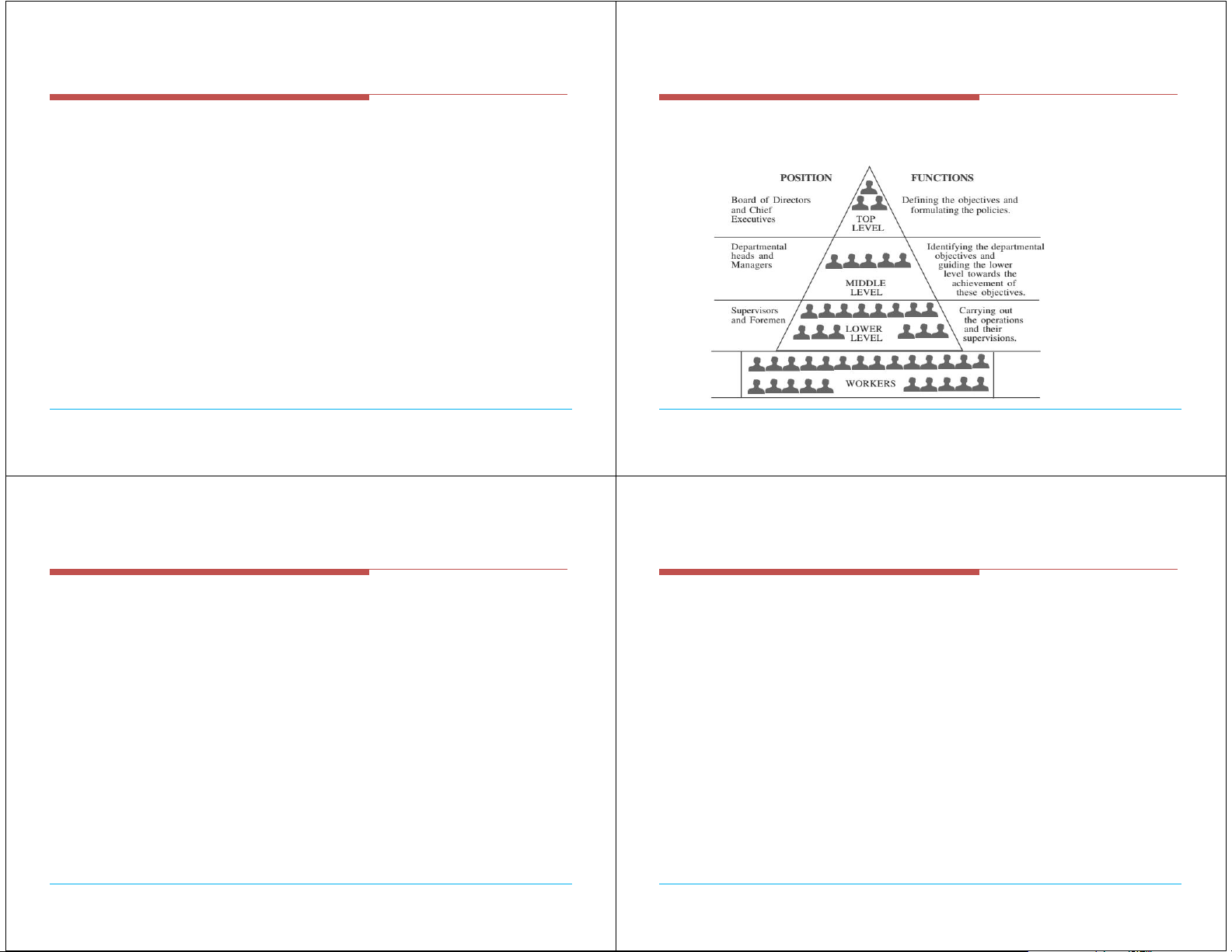
2.1 ORGANIZATION IN WORKSHOP 1. Organization needs: Chapter 2
To meet the goals of company, all individuals work
together (link, share, and co-operate,…). ORGANIZATION PLANNING Organization structure, jobs description, goals, IN FACTORY managers, responsibilities, powerful, emergency
situations, how to report,… 2/28 2.1 ORGANIZATION IN WORKSHOP 2.1 ORGANIZATION IN WORKSHOP
The trend of “relevant/good” organization as follows: 2. Organization goals: 1.
Reduce the number of “arising” troubles in management,
The goal of Organization in Factory is that establishing
team-work environment/condition. They work together to 2.
Meet all requirements with “relevant” effort,
meet the orders within “lowest” costs. 3. Reduce conflicts,
Work together, TEAM-WORK. 4.
Support for teamwork, cooperation, … 5.
Work efficiently within allowance cost. 3/28 4/28 2.1 ORGANIZATION IN WORKSHOP 2.1 ORGANIZATION IN WORKSHOP 3. Organization design: 3. Organization design:
To meet all organization requests ( meet org. goals).
Determine required functions to meet all goals.
Group work-elements, integrate functions.
To meet operational requests (after analyzing
manufacturing requirements).
Design, description all jobs to assign employees.
Assign individuals to jobs and determine functions.
Other goals: sales, customers, products, wages and lifes of employees,… 5/28 6/28 2.1 ORGANIZATION IN WORKSHOP 2.1 ORGANIZATION IN WORKSHOP
There are 2 view-points in Org. Design in operations: 4. Organization chart: 1.
All impact factors are meticulously considered when
organization is designed this is the ideal way, but
Present organization structure in operations,
difficult to apply in realistic. 2.
Focus on the flexibility of organization, i.e. Organization
structures are non-stable in realistic operation.
Show all relationship among functions and/or positions/individuals.
The goal of designing is “relevant” organization that we
find-out and train candidacies for assigning. 7/28 8/28 2.1 ORGANIZATION IN WORKSHOP 2.2 ORGANIZATION PRINCIPLES a. Subordinate
Advantages and benefit of organization structure:
Number of subordinators, this is basic principle in human resource.
No. of subordinators report (to the same manger) (from 4 to 8 subordinators). 1.
Present directly management quickly check for
functional responsibilities. 2.
Provide information about positions and number of responsibility person. 3.
Use for training programs and planning. 4.
Show all work relationships in factory, and confirm all
managers (supervisors, technicians, production managers,...). 9/28 10/28 2.2 ORGANIZATION PRINCIPLES 2.2 ORGANIZATION PRINCIPLES
Some factors affect to determine no. of subordinators:
Some factors affect to determine no. of subordinators:
1. Managerial level: top managerial level few people
3. Ability of subordinators: if subordinators can conduct report and vise versa.
their job increasing no. of subordinators.
2. Regular problems: popularity, repeat,.. involve bottom
4. Monitoring: if monitoring is important reducing no.of
managerial level (low level). subordinators and vise versa. 11/28 12/28 2.2 ORGANIZATION PRINCIPLES 2.2 ORGANIZATION PRINCIPLES b. Managerial levels: c. Job division
It’s not necessary to have a lot of managerial levels
Some affect factors for division: (should be 4 levels).
1. Functions: based on specific functions.
Subordinate principle is high priority than others.
2. Process: based on process, teams, groups
professional jobs/tasks improve productivity, management and control. 13/28 14/28 2.2 ORGANIZATION PRINCIPLES 2.2 ORGANIZATION PRINCIPLES c. Job division
d. Responsibilities and authorities:
3. Equipment: based on process, popularity with cell layout or group technology layout.
Appointed/formal authority (assigned),
4. Location: based on specific locations.
Informal authority (knowledge, job, experience and
5. Items: based on family of items. goodwill),
6. Customers: based on domestic or export.
Supported by employees (lower grades).
Decision making authority. 15/28 16/28 2.2 ORGANIZATION PRINCIPLES 2.2 ORGANIZATION PRINCIPLES
d. Responsibilities and authorities: e. Recruitment:
Responsibility is a duty to complete assigned tasks/jobs.
Internal and/or external recruitment.
Responsibility is assigned and authority is oppointed, Plan for Training.
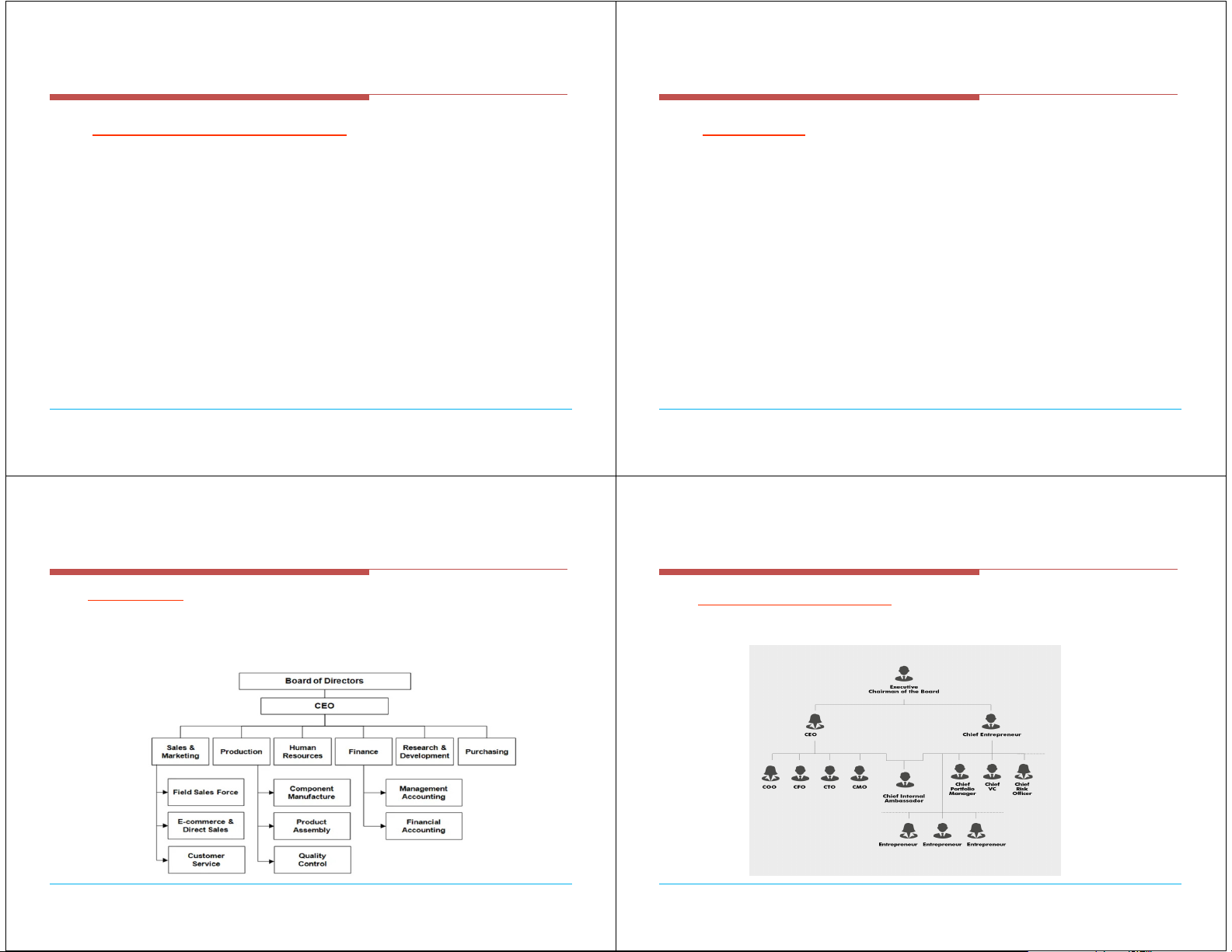
Responsibility belongs to employees (lower grades), 17/28 18/28 2.3 ORGANIZATION STRUCTURE 2.3 ORGANIZATION STRUCTURE 1. Direct structure:
2. Direct structure and consultation The simplest structure,
Consultation functions added (consultants, report to top managers).
The vertical lines organization structure,
Suitable for almost companies, and to become popular structures now.
Relevant to start-up/small companies,... 19/28 20/28 2.3 ORGANIZATION STRUCTURE 2.3 ORGANIZATION STRUCTURE Consultation styles: Consultation styles:
Service group: to take care some specific jobs such as:
Consultant group: less power, including some specific building, purchasing, transportation, maintenance,
experts to consult decision making for top managers.
insurrance, technical, research,... look like consultant group.
Control group: personnel, credit, budget, accountant, audit,
Operations group: including some operation experts,
and they have authority in their specific functions.
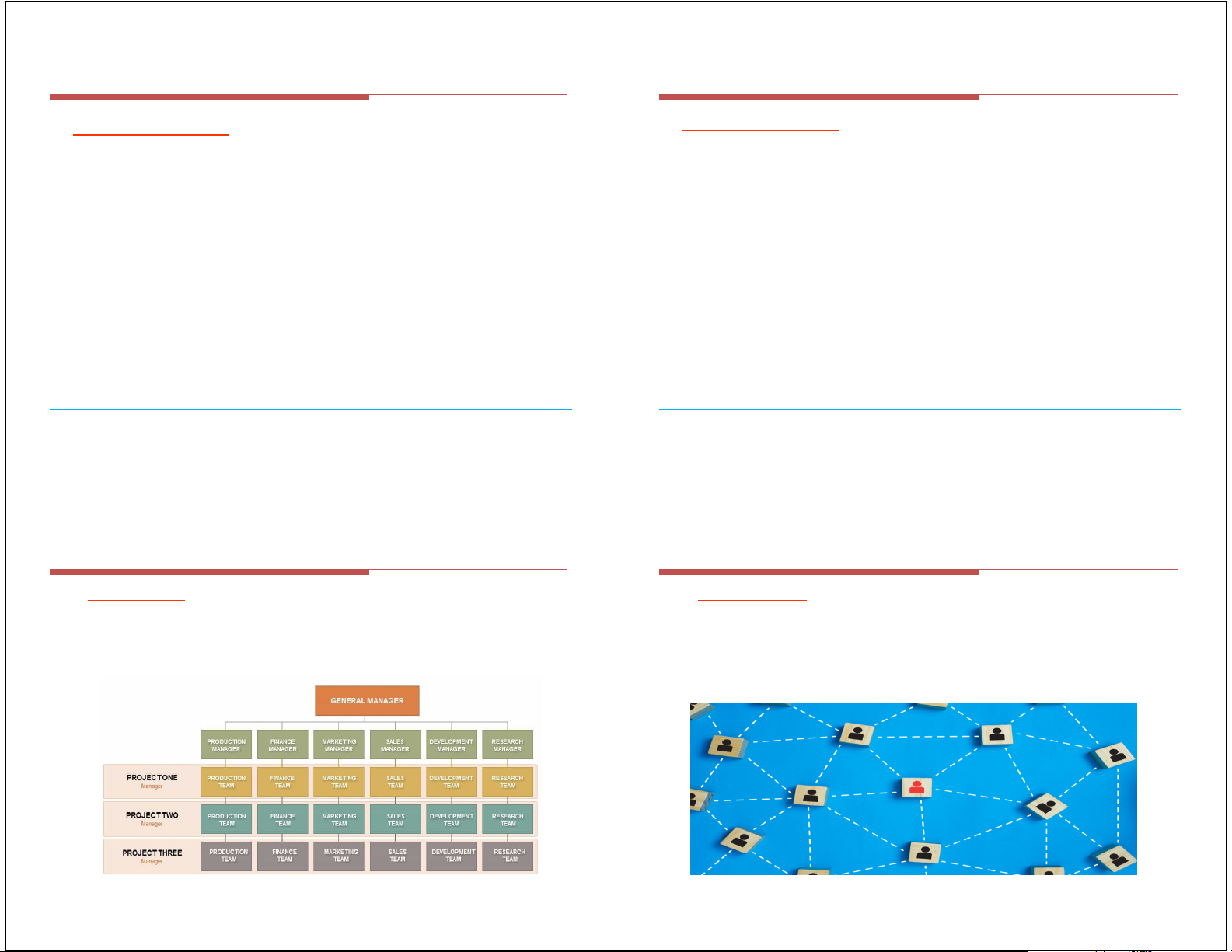
comments for production planning/activities Operations Department. 21/28 22/28 2.3 ORGANIZATION STRUCTURE 2.3 ORGANIZATION STRUCTURE 3. Matrix structure: 4. Informal structure: Become popularity;
Informal authorities in functions and departments (>< formal authorities are
Cross functions among Functions departments and specific projects. appointed).
cross-responsibility, and cross-management.
Based on relationships in works and management, it does not present in organization structure.
Consider its affects to operations and production activities. 23/28 24/28
2.4 ORGANIZATION PLANNING (2 point of views)
2.4 ORGANIZATION PLANNING (2 point of views)
1. Organization is dynamics structure, and it always
changed. After designing, it must be implemented in
realistics should be updated.
To design “ideal” / “relevant” structures or nearly,
2. Organization can not meet factory’s targets itself. Based
To compromise/harmonize among work relationships in
on organization structure, factory must develop all factory.
required functions to meet the targets (this is the
responsibilities of industrial engineers). 25/28 26/28
2.4 ORGANIZATION PLANNING (2 point of views)
2.4 ORGANIZATION PLANNING (2 point of views) Some advantages: Some advantages:
3. detailed job description: studying clearly jobs and
1. continuity: the organization data will help managers plan responsibilities respective people (managers,
for personnel replacement (if necessary).
employees) can complete their jobs effectively.
4. long-term planning: organization structure should be 2. internal promote: when organization structure is
updated in long-term planning. Focus on specific
changed, internal promotions should be considered for personnel troubles. changing positions.
5. stability: the stability of factory depends upon the
flexibility and dynamic of organization. The good
organization planning safe for factory in future. 27/28 28/28
Tài liệu liên quan:
-

Ung dung game hoa trong cac chien dich MKT
23 12 -

Bao cao Chi so TMDT Viet Nam 2025
27 14 -
Thông tư quy định về việc phân quyền, phân cấp và phân định thẩm quyền quản lý nhà nước về giáo dục cho chính quyền địa phương
30 15 -
Nghị quyết về phát huy các giá trị di sản văn hóa gắn với phát triên du lịch bền vững tỉnh Khánh Hòa đến năm 2025, định hướng đến năm 2030
28 14 -
Quyết định phê duyệt Chiến lược phát triển du lịch Việt Nam đến năm 2030
17 9