Effect of Different Extraction Methods on Quality Characteristics of Rapeseed and Flaxseed Oils
Effect of Different Extraction Methods on Quality Characteristics of Rapeseed and Flaxseed Oils. Tài liệu được sưu tầm giúp bạn tham khảo, ôn tập và đạt kết quả cao. Mời bạn đọc đón xem.
Môn: Tài liệu Tổng hợp 3.6 K tài liệu
Trường: Tài liệu khác 3.9 K tài liệu
Tác giả:











Preview text:
Hindawi Journal of Food Quality
Volume 2022, Article ID 8296212, 12 pages
https://doi.org/10.1155/2022/8296212 Research Article
Effect of Different Extraction Methods on Quality
Characteristics of Rapeseed and Flaxseed Oils
Shuzhen Wang ,1 Jinying Wang ,1,2 Guoxin Dong ,1 Xia Chen ,1 Shulin Wang ,1
Feng Lei ,1 Xuebing Su ,3 and Qin Bai 3
1College of Agriculture and Animal Husbandry, Qinghai University, Xining 810016, China
2State Key Laboratory of Plateau Ecology and Agriculture, Qinghai University, Xining 810016, China
3Qinghai Tongda Oil Processing Co. Limited, Haidong 810600, China
Correspondence should be addressed to Jinying Wang; wangjinying0128@126.com
Received 25 May 2022; Revised 11 August 2022; Accepted 29 August 2022; Published 19 September 2022
Academic Editor: Vita Di Stefano
Copyright © 2022 Shuzhen Wang et al. .is is an open access article distributed under the Creative Commons Attribution License,
which permits unrestricted use, distribution, and reproduction in any medium, provided the original work is properly cited.
.is study reports the effect of roasted pretreatment combined with screw press, hydraulic press, and Soxhlet extraction methods
on various quality indexes of rapeseed and flaxseed oils, including the oil yield, sensory indexes (color, smell, clarity, viscosity, and
colligation score), physicochemical properties (acid value, peroxide value, saponification value, moisture and volatiles), major
components (fatty acid composition and triglyceride composition), and minor components (volatile compounds, total phenols,
and vitamin E contents). .e results indicated that the oil yield, sensory indexes, physicochemical properties, fatty acid
composition, volatile compounds, total phenol, and vitamin E contents in vegetable oils have been significantly affected by
different extraction methods. .e yields of rapeseed and flaxseed oils of Soxhlet extraction method were increased by 30.10%–
73.90% and 6.30%–54.40%, respectively, compared with other treatment groups. In addition, roasted pretreatment significantly
increased the yields of oils by 4.10%–25.00% and 6.70%–23.15%, respectively, compared with the untreated group. .e contents of
linolenic acid and vitamin E in rapeseed and flaxseed oils extracted from screw press method were higher. In particular, the
linolenic acid content of cold-pressed rapeseed oil extracted by screw press increased by 1.50%–23.80% compared with other
treatment groups. In addition, the contents of vitamin E in cold-pressed rapeseed oil and flaxseed oil obtained by screw press
increased by 1.22%–78.91% and 3.00%–18.80%, respectively. .e Soxhlet extraction could improve oil yield and total phenol
content, but the quality of the oil was inferior due to high acid values (0.93–3.36 mg KOH/g) and peroxide values (0.70–5.23 meq
O2/kg). Furthermore, the hydraulic press method could extract vegetable oils with excellent sensory scores. .e roasted pre-
treatment gives the rapeseed and flaxseed oils a good smell. .e major volatile compounds in rapeseed and flaxseed oils were
aldehydes, acids, alcohols, heterocycles, and ketones. Different extraction methods and pretreatment had no significant effect on
the compositions and contents of triglycerides. .is study provides a basic understanding on the selection of appropriate oil
extraction techniques for oil extraction at a large scale. 1. Introduction
micronutrients including antioxidant vitamins such as vi-
tamin E [4], polyphenols such as sinapic acid (free phenolic
Rapeseed is one of the major edible vegetable oil seeds with
acid), sinapine (esterified form; the most abundant species)
high oil contents (38%–50%) [1]. Canada and China are the
[5], and phytosterols [6], which have strong antioxidant,
top two producers of rapeseeds worldwide, and rapeseed oil
senility-delaying, and antihypercholesterolemic activities
is mainly consumed in China [2]. As the traditional bulk
[7]. In particular, vitamin E offers protection against oxi-
edible oil in China, natural rapeseed oil is rich in omega-3
dative deterioration and maintains the sensory properties of
polyunsaturated fatty acids, and the dominant type is foods [8].
linolenic acid, which represents ∼8% of total fatty acids [3].
Oilseed flax (Linum usitatissimum L.) is one of the most Rapeseed oil also contains many cardioprotective
important oil crops in the alpine regions of North and
6095, 2022, 1, Downloaded from https://onlinelibrary.wiley.com/doi/10.1155/2022/8296212 by Readcube (Labtiva Inc.), Wiley Online Library on [16/12/2025]. See the Terms and Conditions (https://onlinelibrary.wiley.com/terms-and-conditions) on Wiley Online Library for rules of use; OA articles are governed by the applicable Creative Commons License 2 Journal of Food Quality
Northwest China [9]. As an ancient edible vegetable oil,
processors to select the extraction methods that result in
flaxseed oil contains an abundant omega-3 fatty acids and the optimal oil quality.
small amounts of other components such as polyphenols
and phytosterols. Omega-3 fatty acids have been reported to
2. Materials and Methods
be associated with a lower risk of cardiovascular disease [10],
diabetes [11], and cancer [12].
2.1. Samples and Chemicals
Oil extraction methods play an important role in veg-
etable oil yields, qualities, and oxidation stability. .ere are
2.1.1. Samples. Rapeseeds “Qingza No. 12” and flaxseeds
many technical processes involved in the extraction of oils
“Dingya No. 18” were collected from the Xining and Guide
from the same origin, making the final products different in
in Qinghai (harvest date: March 2021). .e seeds were stored
physicochemical proprieties and nutritional values [13, 14]. at 4°C until extraction.
In China, there are many traditional extraction methods,
such as solvent extraction and mechanical pressing. Screw
2.1.2. Reagents. Chromatographic-grade n-heptane and
press is one of the oldest and most popular methods for oil
methanol were purchased from Damao Chemical Reagents
production worldwide [15] because the technique is easy to
Co. (Tianjin, China). Methyl undecanoate, methyl hex-
operate and maintain. However, the method could only
adecanoate, methyl stearate, methyl oleate, methyl linoleate,
partially defat the seeds. .erefore, the resulting press cake
and methyl linolenate were purchased from Sigma Aldrich
must be defatted by percolation with hexane. Another Trading Co. (Shanghai, China).
mechanical pressing method is the hydraulic press method,
which is also one of the oldest and simplest methods for oil
extraction. Although the hydraulic press method results in a 2.2. Oil Extraction
lower oil yield than the solvent extraction method, the
2.2.1. Sample Pretreatment. Seeds were cleaned and sieved
method gives oil higher quality. One study has reported that
to remove debris. .e whole seeds are roasted in an elec-
oils extracted with the hydraulic press tend to contain a
tromagnetic oven, the roasted temperature is 160°C–180°C,
higher content of phytosterols [16]. Solvent extraction is one
the time is 10 min, and the seeds are constantly turned
of the cheapest and most efficient techniques for producing
during the roasting to avoid burning. Untreated seeds were
edible oils [17], such as Jojoba oil, soybean oil, palm oil, and
used as controls, which represent the cold application.
jatropha oil. In the solvent extraction method, oil seeds are
pretreated (grind) and then placed in a suitable solvent to
extract the oil from the solid matrix to the liquid phase.
2.2.2. Screw Press. Vegetable oil was extracted using an XZ-
Zanqui et al. [18] showed that the average oil yield of flaxseed
Z505W horizontal screw press machine (Guangzhou Xuz-
oil extracted by the subcritical n-propane fluid extraction
hong Food Machinery Co., LTD, China). .e output of the
(SubFE) method was 28%, and it had higher purity and
screw press was 0.36 t/h. Gravity fed samples at the hopper of higher oxidation stability.
the screw press, and the oil was collected at the outlet. .e
Because it is difficult to extract all of the oil contents from
temperatures of the screw press were 160°C–180°C. Oil
seeds, particularly by mechanical methods, it can be bene-
temperature was 40°C. To slow down oil oxidation and
ficial to develop a pretreatment method that generates oil
remove some impurities, after centrifugation at 2500g for
with a high yield from oilseeds while maintaining the nu-
15 min, the oil samples were kept in a 250 mL brown bottle
tritional and quality characteristics. Researchers have re-
and stored in a refrigerator at 4°C until further analysis.
cently studied several pretreatments for improving oil yields,
such as roasted, freeze-thaw, microwave irradiation [19] and
2.2.3. Hydraulic Press. Oilseed flakes were packed in a cloth
dielectric [20] and ultrasound-assisted hexane extraction.
sheet and placed in a metallic pressing cylinder. .e raw
Roasting is a pretreatment method of oilseeds which can
material capacity of the hydraulic press is 3–6 kg. .e oilseed
provide significant benefits to seeds used for consumption
flakes inside the metallic cylinder were then preheated at
and oil extraction. .is method promotes some desirable or
60°C–70°C. While heating, the metallic cylinder was pressed
undesirable changes in chemical, physical, and nutritional
using an XZ-Z505W hydraulic press machine (Guangzhou
characteristics [21, 22]. Roasting seeds before oil extraction
Xuzhong Food Machinery Co., LTD, China). At a pressure
has been shown to have a significant impact on oil as it helps
of 50 MPa for 15 min, oil temperature was 50°C. After that,
to generate a distinctive aroma and improve the oxidative
the oil was centrifuged at 2500g for 15 minutes and then
stability of the oil due to by-products formed as a result of
stored in a 250 mL brown bottle at 4°C until subsequent the Maillard reaction [23]. analysis.
.e main objective of this study is to compare the
effects of different extraction methods, including screw
press, hydraulic press, and Soxhlet extraction methods, on
2.2.4. Soxhlet Extraction. Vegetable oil was extracted from
the quality of rapeseed and flaxseed oils. .e major
these samples with a SOX406 fat analyzer (Shandong Hai-
components (fatty acid composition and triglyceride
neng Scientific Instrument Company, China). In a typical
composition) and minor components (volatile compo-
extraction, ground dried seeds (6 g) were packed in a thimble
nents, vitamin E, and total phenol contents) were analyzed
and then extracted with petroleum ether (100 mL). .e
to assess the quality of oils. .is study provides data for
immersion, washing, and recovery steps were performed at
6095, 2022, 1, Downloaded from https://onlinelibrary.wiley.com/doi/10.1155/2022/8296212 by Readcube (Labtiva Inc.), Wiley Online Library on [16/12/2025]. See the Terms and Conditions (https://onlinelibrary.wiley.com/terms-and-conditions) on Wiley Online Library for rules of use; OA articles are governed by the applicable Creative Commons License Journal of Food Quality 3
70°C, and each step lasted for 2, 5, and 1 h, respectively. All
subjecting to high-performance liquid chromatographic
the extracted oils were collected, and the residual solvent was analysis.
removed using a draught drying cabinet. .e oil was stored
(2) HPLC-ELSD Analysis. Triglycerides were analyzed
in 250 mL brown bottle at 4°C until further analysis.
using a LC-20AD high-performance liquid chromatograph
(HPLC) (Shimadzu, Tokyo, Japan) equipped with an
evaporative light-scattering detector (ELSD) and a C18 2.3. Analytical Methods
column (5.0 μm, 4.6 × 250 mm). .e column temperature
was set at 40°C, and the detector temperature was set to 30°C.
2.3.1. Sensory Analysis. Oil sensory analysis was carried out
Sample at a volume of 5 μL was injected into the HPLC and
according to Szydłowska-Czerniak et al. [24]. Fifteen pro-
then eluted with acetonitrile : isopropanol (30 : 70, v/v) at a
fessional evaluators were employed to evaluate the color, flow rate of 0.5 mL/min.
smell, clarity, viscosity, and colligation score of the samples.
(3) Qualitative and Quantitative Analysis. Based on their
.e samples were given scores on a 5-point scale ranging
ECN partitioning, which occurs in the same order as the
from 0 (extremely low) to 5 (extremely high).
number of carbon atoms in ECN (from small to large), each
triglyceride was qualitatively analyzed based on the order in
2.3.2. Physicochemical Properties. Standard methods of the
which the peak emerged. .e area normalization method
International Organization for Standardization (ISO) were
was used for quantitative analysis.
used to determine the acid value (ISO 660, 2020), peroxide
value (ISO 3960, 2017), saponification value (ISO 3657,
2020), and moisture and volatiles contents (ISO 665, 2020).
2.3.5. Volatile Compounds. Volatile compounds were de-
termined by reference to the method of Ojeda-Amador et al.
with minor modifications [27].
2.3.3. Fatty Acid Profile. Fatty acid contents were deter-
(1) Solid-Phase Microextraction (SPME). Solid-phase
mined according to laboratory-established methods [25].
microextraction (SPME) was performed using a 50/30 μm
(1) Sample Preparation. 100 ± 0.1 mg of oil samples,
PDMS/DVB/CAR PK3 fiber (Beijing, China). 6 ± 0.1 g of oil
40 mL of methanol, 1 mL of potassium hydroxide methanol
was transferred into a 15 mL glass vial, which was then
(1 mol/L), and 0.5 mL of methyl undecanoate (10 mg/mL;
inserted with a microstirring bar. .e vial was placed in a
internal standard solution) were mixed until homogenous,
magnetic water bath at 80°C and stirred magnetically. After
and the mixture solution was then shaken in water bath at
allowing the sample to equilibrate for 20 min, the needle of
50°C for 60 min until the solution was clear. .en, the ester
the SPME device was inserted into the vial, and the fiber was
layer was extracted using n-heptane. .e FAME solutions
allowed to expose to the headspace of the sample. After
were diluted with n-heptane prior to injection into the GC
40 min of exposure, the fiber was retracted from the vial column.
headspace and then inserted into the gas chromatograph
(2) GC-FID Analysis. .e prepared samples were injector.
autoinjected into a Shimadzu GC-2030 gas chromatograph
(2) GC-MS Analysis. An QP2020 NX series gas chro-
(Shimadzu, Japan) equipped with a fused silica Wonda Cap
matograph-mass spectrometer (Shimadzu, Japan) was used WAX column (60 m in length × 250 μm in
to analyze volatile compounds adsorbed on the SPME fiber.
diameter × 0.25 μm). .e injector and detector temperatures
.e separation was carried on an InertCap-wax column
were fixed at 250°C. High-purity hydrogen was used as the
(30 m × 0.25 mm, 0.25 μm). Helium was used as the carrier
carrier gas flowing at a flow rate of 1 mL/min. .e injection
gas flowing at a flow rate of 1.0 mL/min. .e injector was
volume was 1 μL, and the injection was carried out at a split
operated at 250°C in a split mode at split ratio of 50 : 1. .e
ratio of 46 : 1. .e column temperatures were programmed
SPME fiber was kept in the injector for 5 min. .e column
as follows: initial oven temperature was set at 100°C and held
was maintained at a temperature of 40°C for 2 min; after that,
for 13 min; raised to 180°C at 10°C/min and held for 6 min;
it was heated to 220°C at a rate of 5°C/min and held for
raised to 200°C at 1°C/min and held for 20 min; and finally
10 min. .e MS conditions were as follows: source tem-
raised to 230°C at 4°C/min and held for 10.5 min.
perature, 150°C; transfer line temperature, 260°C; acquisi-
(3) Qualitative and Quantitative Analysis. Qualitative
tion mode, electron impact (EI 70 eV) at 3 scans per second;
analysis of fatty acids was carried out based on the retention
and mass range, 235–350 m/z.
time of 5 types of fatty acid methyl esters, and quantitative
(3) Qualitative and Quantitative Analysis. In qualitative
analysis was conducted using the internal standard method.
analysis, the spectra of the compounds were searched against
the NIST 14 standard spectrum library and compared with
those of the standard. .e area normalization method was
2.3.4. Triglyceride Profile. Triglyceride contents were de- used in quantitative analysis.
termined according to laboratory established methods [26].
(1) Sample Preparation. 1 ± 0.1 g of oil was mixed with the
mobile phase (acetonitrile : isopropanol (30 : 70, v/v)) in a
2.3.6. Total Phenols. Total phenols content was estimated by
10 mL volumetric flask. After swirling for 1 min until
the Folin-Ciocalteu colorimetric method, based on the
completely mixed, the mixture was filtered through a
procedure of Suri et al. [28], using gallic acid as a standard
0.45 um nylon filter membrane in an injection flask before phenolic compound.
6095, 2022, 1, Downloaded from https://onlinelibrary.wiley.com/doi/10.1155/2022/8296212 by Readcube (Labtiva Inc.), Wiley Online Library on [16/12/2025]. See the Terms and Conditions (https://onlinelibrary.wiley.com/terms-and-conditions) on Wiley Online Library for rules of use; OA articles are governed by the applicable Creative Commons License 4 Journal of Food Quality
(1) Sample Preparation. Oil sample was weighed to
(OriginLab, USA). All results were expressed as arithmetic
0.5 ± 0.1 g and then subjected to extraction with 2.5 mL of
means of three independent measurements ± standard de-
70% methanol solution. After 5 min, the sample was viations (SDs).
ultrasonicated for 5 min, refrigerated for 5 min, and then
centrifuged for 5 min at 2500g, and the supernatant was
3. Results and Discussion
transferred to a 10 mL volumetric flask. .e above process
was repeated 3 times, and the volume was fixed with 70%
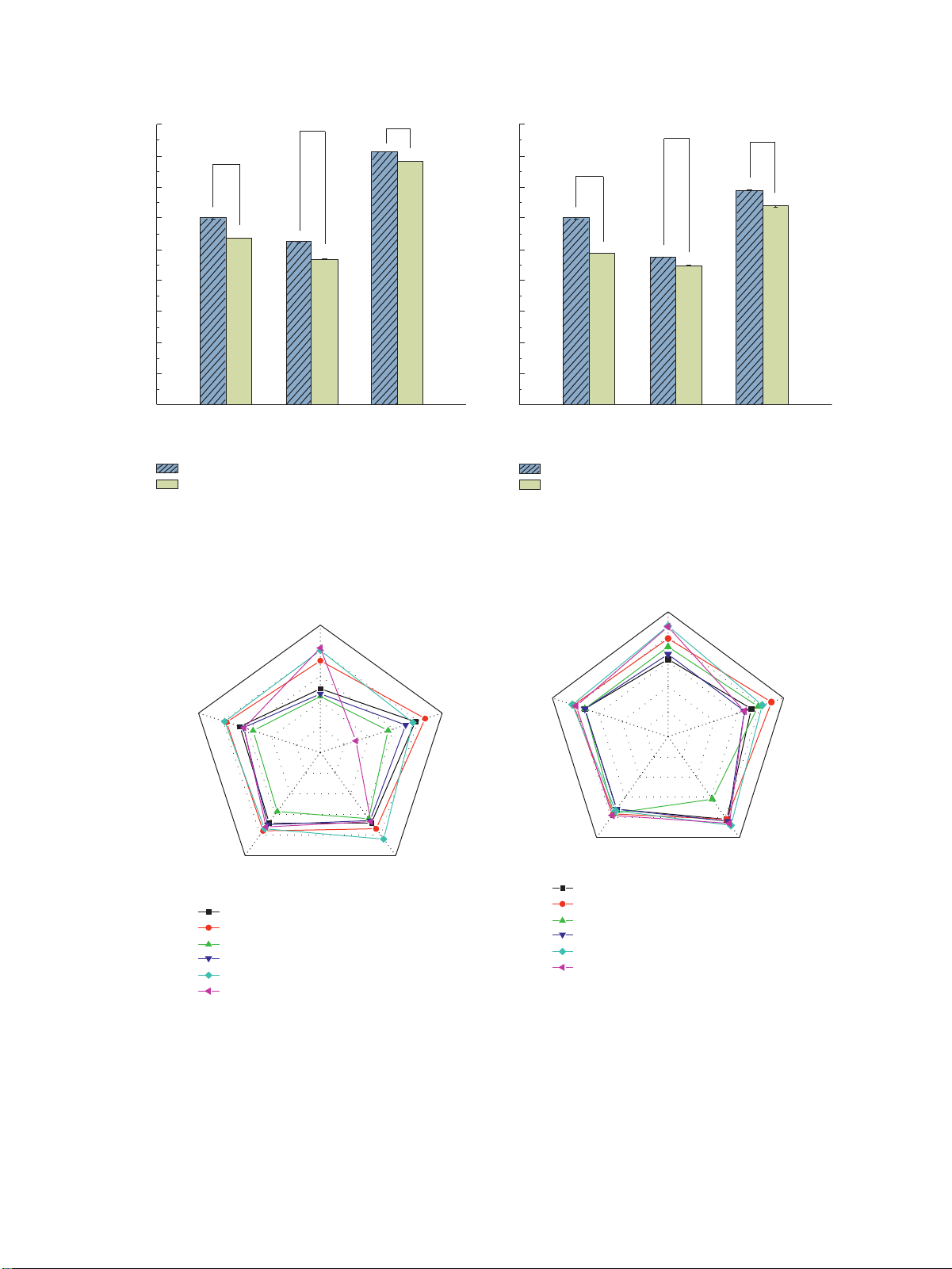
3.1. Oil Extractions. Figure 1 shows the effect of different oil
methanol solution. In another 10 mL volumetric flask, 1 mL
extraction methods on rapeseed and flaxseed oil yield.
of extraction solution, 1 mL of diluted Folin-Ciocalteu (FC)
Figure 1(a) shows that the rapeseed oil yield extraction by
reagent, and 3 mL of 10% sodium carbonate solution were,
the Soxhlet extraction method is the highest, which is
respectively, added. Pure water was added for volume
39.10%–40.70%, while the rapeseed oil yields of screw press
measurement and then let stand in darkness for 2 h.
and hydraulic press method are 24.00%–30.00% and
(2) Qualitative and Quantitative Analysis. .e absor-
23.40%–26.20%, respectively. .e yield of the hot-pressed
bance at 765 nm was measured using a UV-1780 spectro-
treatment group was higher than that of the cold-pressed
photometer (Shimadzu, Japan). .e total phenol content
treatment group, which indicated that roasted pretreatment
was calculated by the equation obtained from the standard
could increase the rapeseed oil yield. .is may be because curve of gallic acid, which was:
Y � 0.0799X +
roasted pretreatment destroys the cellular structure of the
0.0368 R2 � 0.9981.
seeds, making the oils easier to extract [30]. Different oil
extraction methods and pretreatment had significant effects
on rapeseed oil yield (P < 0.05); the yield of rapeseed oil
2.3.7. Vitamin E. Vitamin E was measured based on Faghim
prepared by the Soxhlet extraction method increased by
et al.’s method with slight modifications [29].
30.10%–73.90% compared with other methods. .e yield of (1) Sample Preparation. Sample was accurately
rapeseed oil in hot-pressed treatment increased by 4.10% to
(Y � 0.0799X + 0.0368 R2 � 0.9981) weighed to 1.5 ± 0.1 g
25.00% compared with that in cold-pressed treatment.
and then placed in a 50 mL brown centrifuge tube. After 0.2 mL
Figure 1(b) shows that the yield of flaxseed oil obtained
of 50% potassium hydroxide, 0.6 mL of anhydrous ethanol, and
by different oil extraction methods is Soxhlet extraction
0.2 mL of 16 g/L pyrogallic acid were added, the tube was (31.88%–34.50%) > screw press (24.36%–30.00%)
shaken for 1 min. Saponification was carried out in a water bath
> hydraulic press (22.34%–23.84%). .e Soxhlet extraction
at 80°C for 30 min in darkness. After the reaction was complete,
method has the highest yield of flaxseed oil, but its appli-
the tube was cooled down to room temperature in cold water.
cation in the food industry is limited due to the presence of
Five milliliters of petroleum ether was added to the saponifi-
organic solvent residue in the oil. In contrast, the yield of
cation reaction solution, and the mixture was vigorously mixed
flaxseed oil extracted by screw press was 8.07%–34.28%
by oscillation for 1 min; after that, it was let stand for 15 min.
higher than that of hydraulic press, which was more suitable
.e petroleum ether layer was transferred into another 50 mL
for producing flaxseed oil. Different pretreatments had
brown centrifuge tube. .e extraction step was repeated using
significant effects on the yield of flaxseed oil, and the yield of
5 mL and 3 mL of petroleum ether. .e three extracts were then
cold-pressed flaxseed oil was 6.70%–23.15% lower than that
combined and dried under nitrogen stream at room tem- of hot-pressed flaxseed oil.
perature. .e dried sample was redissolved in 0.2 mL of
chromatography-grade methanol, filtered through a 0.22 μm
membrane, and then immediately subjected to analysis.
3.2. Sensory Quality. .e sensory quality of rapeseed and
(2) HPLC-DAD Analysis. .e content of vitamin E in oil
flaxseed oils prepared by different oil extraction methods
samples was analyzed by 1100-VWD HPLC equipped
was evaluated based on various indicators including color,
(Agilent, China) with a photodiode array detector, of which
smell, clarity, viscosity, and colligation score, and the results
the emission wavelength was set at 300 nm. .e injection
are shown in Figure 2. As illustrated in Figure 2(a), the
volume was 10 μL. .e separation was carried out using a
sensory scores of rapeseed oil extracted by hydraulic press
.ermo Scientific Syncronis HPLC column with dimensions
were highest, followed by those of oil extracted by screw
of 250 mm × 4.6 mm. .e flow rate was set at 1.3 mL/min.
press and Soxhlet extraction. Additionally, hot-pressed
Methanol and water at a ratio of 92/8 (v/v) were used as the
rapeseed oil had a better smell, while cold-pressed oil had mobile phase. better color and clarity.
(3) Qualitative and Quantitative Analysis. Qualitative
.e sensory quality of flaxseed oil was similar to that of
analysis was carried out using vitamin E standard, and
rapeseed oil. In particular, hot-pressed flaxseed oil had a
quantitative analysis was conducted using the standard curve,
better smell than cold-pressed flaxseed oil. .is indicates
of which the equation was Y � 1.3901X + 0.1644 R2 � 0.999.
that using roasting as a pretreatment step for rapeseed oil
and flaxseed oil extraction could increase consumer satis-
2.4. Statistical Analysis. .e data was statically analyzed
faction. .is is consistent with research by Yin et al. [31]
using SPSS 26.0 (IBM, USA). To identify significant dif-
which showed that consumers prefer roasted sesame oil to
ferences among the extraction methods, two-way analysis of
cold-pressed sesame oil. Based on the sensory quality, hy-
variance (ANOVA) was performed at 95% significance level
draulic press is the most suitable method for extracting oils
(a � 0.05). Graphs were prepared using Origin 2018 from rapeseed and flaxseed.
6095, 2022, 1, Downloaded from https://onlinelibrary.wiley.com/doi/10.1155/2022/8296212 by Readcube (Labtiva Inc.), Wiley Online Library on [16/12/2025]. See the Terms and Conditions (https://onlinelibrary.wiley.com/terms-and-conditions) on Wiley Online Library for rules of use; OA articles are governed by the applicable Creative Commons License Journal of Food Quality 5 45 ** ** 45 ** ** a 40 b ** 40 ** 35 35 a b c 30 c 30 d e 25 25 d f e f 20 20 Oil yield (%) Oil yield (%) 15 15 10 10 5 5 0 0
Screw press Hydraulic press Soxhlet extraction
Screw press Hydraulic press Soxhlet extraction Oil sample Oil sample Hot Hot Cold Cold (a) (b)
Figure 1: Oil yield of rapeseed and flaxseed oils extracted by different extraction methods. (a) Rapeseed oil and (b) flaxseed oil. ** ** Color Color 5 5 4 4 3 3 Colligation 2 Colligation score Smell 2 Smell score ** 1 ** ** ** 1 0 0 Viscosity Clarity ** ** Viscosity Clarity ** ** Hot pressed of screw Hot pressed of hydraulic Hot pressed of screw Hot pressed of soxhlet Hot pressed of hydraulic Cold pressed of screw Hot pressed of soxhlet Cold pressed of hydraulic Cold pressed of screw Cold pressed of soxhlet Cold pressed of hydraulic Cold pressed of soxhlet (a) (b)
Figure 2: Sensory scores of rapeseed oil and flaxseed oil extracted by different extraction methods. (a) Rapeseed oil and (b) flaxseed oil. 3.3. Physicochemical Properties. .e physicochemical
.e highest acid and moisture values were determined in
properties of oils extracted from oilseeds using different
Soxhlet extraction in hot rapeseed oil. .e highest per-
extraction methods are shown in Table 1. Acid values of
oxide value was determined in Soxhlet extraction in hot
the extracted rapeseed and flaxseed oils were 0.51–3.36 mg
flaxseed oil. In particular, the acid values of hot-pressed
KOH/g and 0.82–1.59 mg KOH/g, respectively, and their
rapeseed oil extracted by Soxhlet extraction were
peroxide values were between 0.22 and 5.23 meq O2/kg.
2.11∼6.58 times those of other treatments. .is might be
6095, 2022, 1, Downloaded from https://onlinelibrary.wiley.com/doi/10.1155/2022/8296212 by Readcube (Labtiva Inc.), Wiley Online Library on [16/12/2025]. See the Terms and Conditions (https://onlinelibrary.wiley.com/terms-and-conditions) on Wiley Online Library for rules of use; OA articles are governed by the applicable Creative Commons License 6 Journal of Food Quality
Table 1: Physicochemical properties of rapeseed and flaxseed oils.
Acid value (mg KOH/ Peroxide value (meq O Saponification value Moisture and Oil sample Extraction Pretreatment 2/ g) kg) (mg/g) volatiles (%) Hot 0.70 ± 0.04cA 1.16 ± 0.00bA 194.25 ± 2.04cB 0.05 ± 0.00cB Screw press Cold 0.56 ± 0.00dB 0.63 ± 0.04dB 195.87 ± 0.75bA 0.09 ± 0.02bA Rapeseed Hot 0.51 ± 0.01eB 0.52 ± 0.01eA 179.88 ± 1.72dB 0.03 ± 0.00cB Hydraulic press oil Cold 0.52 ± 0.06eA 0.46 ± 0.03fB 199.88 ± 1.11aA 0.10 ± 0.00bA Soxhlet Hot 3.36 ± 0.18aA 0.70 ± 0.01cB 173.21 ± 1.69fB 1.54 ± 0.01aA extraction Cold 1.38 ± 0.18bB 1.45 ± 0.07aA 178.60 ± 1.17eA 0.06 ± 0.01dB Hot 1.01 ± 0.00cB 0.30 ± 0.00dB 183.23 ± 0.25cB 0.10 ± 0.03cB Screw press Cold 1.59 ± 0.07aA 0.85 ± 0.04cA 197.51 ± 0.06abA 0.15 ± 0.01cA Hot 0.95 ± 0.01cA 2.31 ± 0.01bA 183.26 ± 0.04cB 0.06 ± 0.00cB Flaxseed oil Hydraulic press Cold 0.82 ± 0.03dB 0.22 ± 0.02dB 199.43 ± 0.63aA 0.14 ± 0.00cA Soxhlet Hot 1.23 ± 0.06bA 5.23 ± 0.25aA 185.16 ± 0.36cB 1.05 ± 0.04aA extraction Cold 0.93 ± 0.03cB 0.75 ± 0.01cB 195.28 ± 0.21bA 0.92 ± 0.14bB
Note. Different letters in the same column represent significant differences (P < 0.05).
because the oil’s water content was too high, which was
study, the fatty acid profiles of all the oil samples were nearly 1.54%.
indistinguishable, despite the different extraction methods
Moreover, with the increase of temperature, the hy-
used. However, the statistical analysis showed significant
drolysis reaction of oil accelerated; thus, the acid value
differences between them, particularly the amount of oleic,
increased. .e peroxide value of hot-pressed flaxseed oil
linolenic, and linoleic acids, which are the major fatty acids
extracted by Soxhlet extraction was determined to be
in these oils. .e content of linolenic acid is higher in screw
5.23 meq O2/kg, which was an increase of 1.26%–22.77%
press in comparison to the hydraulic press and Soxhlet
compared with that of oil in other treatment groups. .e rise
extraction. In particular, the linolenic acid content of cold-
in the peroxide values of rapeseed and flaxseed oils obtained
pressed rapeseed oil extracted by screw press was deter-
from the Soxhlet extraction system may be attributed to the
mined to be 9.68 g/100 g, which was an increase by 1.50%–
solvent used, the applied heat, and the presence of oxygen in
23.80% compared with that of oil in other treatment groups.
the system [32]. Similar results were reported for flaxseed
Different pretreatments had no significant effect on the fatty
oils. Kulkarni et al. [33] observed that oil extracted by
acid composition of rapeseed oil but had a significant effect
Soxhlet method had the highest peroxide value, whereas the
on its content (P < 0.05).
peroxide value of commercial screw press expeller was the
High levels of linolenic acid were detected in flaxseed oils
lowest. .e saponification values of rapeseed and flaxseed
(47.72–51.01 g/100 g), making them a rich source and de-
oils extracted by different methods were found to be between
livery tool of the essential fatty acid ω-3, followed by oleic
173.21 and 199.88 mg/g; these values reflect not only the
acid (24.33–27.02 g/100 g), linoleic acid (13.49–14.48 g/
average molecular weight of the oils but also their purity. .e
100 g), palmitic acid (5.27–5.97 g/100 g), and stearic acid
saponification value of hot-pressed rapeseed oil extracted (4.82–5.16 g/100 g). .e total SFA contents were
using Soxhlet extraction was the lowest with a value of
10.25–10.97 g/100 g, and the total UFA content was
173.21 mg/g, and this may be due to the fact that the oil
86.57–91.05 g/100 g. .e overall fatty acid profile of flaxseed
contains some impurities that cannot be saponified.
oils was similar to that reported previously [35].
.e effects of different extraction methods on the
composition and content of fatty acids in flaxseed oil were
3.4. Fatty Acid Profile. .e fatty acid profiles of rapeseed and
the same as those in rapeseed oil. .e content of linolenic acid
flaxseed oils extracted by different methods are presented in
in cold-pressed flaxseed oil extracted from a screw press was
Table 2. Five major fatty acids presented in the two types of
the highest, 1.10%–6.90% higher than that in other treatment
oils were palmitic acid (C16 : 0), stearic acid (C18 : 0), oleic
groups. In addition, the linoleic acid content of hot-pressed
acid (C18 : 1), linoleic acid (C18 : 2), and linolenic acid (C18 :
flaxseed oil extracted by hydraulic press increased by 4.73% to
3). Oleic acid and linoleic acid (64.20–67.42 g/100 g and
11.06% compared with other treatment groups. Teixeira et al.
15.01–15.82 g/100 g, respectively) were the most abundant
[36] also used statistical analysis to show a significant dif-
fatty acids found in the rapeseed oils, followed by linolenic
ference (P < 0.05) between fatty acid compositions in samples
acid (7.82–9.68 g/100 g), palmitic acid (3.31–4.75 g/100 g),
extracted by different extraction methods.
and stearic acid (2.38–2.89 g/100 g). .e contents of oleic
acid, linoleic acid, and linolenic acid, which are unsaturated
fatty acids (UFA), and palmitic acid and stearic acid, which
3.5. Triglycerides. .e effects of different extraction methods
are saturated fatty acids (SFA), were determined. .e
on composition of triacylglycerols in rapeseed and flaxseed
contents of saturated and unsaturated fatty acids in rapeseed
oils are shown in Table 3. Some functional properties of oils
oil were 5.69–7.64 g/100 g and 87.03–92.75 g/100 g, respec-
depend on not only their fatty acid composition but also the
tively. .e overall fatty acid profile of rapeseed oils presented
distribution of the fatty acids at the three positions of the
in this work is similar to that reported previously [34]. In this
glycerol backbone. .e predominant triglycerides presented
6095, 2022, 1, Downloaded from https://onlinelibrary.wiley.com/doi/10.1155/2022/8296212 by Readcube (Labtiva Inc.), Wiley Online Library on [16/12/2025]. See the Terms and Conditions (https://onlinelibrary.wiley.com/terms-and-conditions) on Wiley Online Library for rules of use; OA articles are governed by the applicable Creative Commons License Journal of Food Quality 7 aA aB aA bB bB 1 aA 1 abB aA bB aA aA aB 0.45 0.37 0.43 0.37 0.0 1.5 2.92 5.42 1.60 1.62 0.58 1.27 ± ± ± ± ± UFA ± ± ± ± ± ± ± 92.75 92.56 91.05 88.22 87.03 91.05 88.59 89.26 87.75 90.44 86.57 91.05 dB cA bA abB aA 1 aA bB eB dA abA abB abA 12 1 11 18 0. 0.0 0.07 0.0 0.00 0.09 0.33 0.69 0. 0.04 0.02 0. SFA ± ± ± ± ± ± ± ± ± ± ± ± 16 15 6. 6.43 7.64 7. 5.69 5.98 10.25 10.39 10.26 10.56 10.52 10.97 aB aA aA bB bB aB bA aA bB aA abB aA 11 :3 17 14 0. 0.24 0.07 0.03 0.02 0. 1.66 3.25 0. 1.65 0.96 0.68 ± ± ± ± ± ± ± ± ± ± ± ± 1 methods. C18 12 14 9.54 9.68 9. 8.24 7.82 8.29 50.77 51.0 47.72 49.33 48. 50.95 g) extraction aA aB aA aB bB aA bB abA aA abB abB abA (g/100 1 18 1 :2 0.3 0.05 0.09 0. 0.0 0.25 0.44 12 0.90 0.37 0.02 0.04 0. ± ± ± ± ± ± ± ± ± ± ± ± acids C18 1 different 15.80 15.68 15.82 15.73 15.0 15.79 13.49 13.72 14.48 14.09 13.80 14.30 Fatty from aA aB aA bB bB aA bB bA aB abA bB abA :1 16 12 17 0.03 0.07 19 0.45 0. 0.00 1. 0.83 1. 0.05 1.34 0.06 0. obtained ± ± ± ± ± ± ± ± ± ± ± ± C18 11 oils 67.42 67.20 66. 64.25 64.20 66.98 24.33 24.53 25.55 27.02 24.63 25.80 flaxseed cB bA aA aB 1 eB dA bB aA aB aA bB aA :0 15 12 0.06 0.00 0.03 0.0 0.00 0.04 0. 0.33 0.23 0.04 0.00 0. and ± ± ± ± ± ± ± ± ± ± ± ± C18 1 1 16 2.6 2.76 2.89 2.87 2.38 2.5 4.86 4.96 4.99 5. 4.82 5.00 rapeseed .05). 0 of < cdB cA 1 aA bB eB dA abB abA bB 1 abA abB aA :0 18 12 (P 0.06 0.0 0.04 0.00 0.00 0.05 0. 0.36 0.0 0. 0.02 0.06 ± ± ± ± ± ± ± C16 ± ± ± ± ± profiles 1 3.55 3.66 4.75 4.29 3.3 3.47 5.39 5.42 5.27 5.40 5.70 5.97 differences acid Fatty 2: significant Hot Cold Hot Cold Hot Cold Hot Cold Hot Cold Hot Cold able Pretreatment T represent press press column methods press press extraction extraction same Screw Screw the Hydraulic Hydraulic in Extraction Soxhlet Soxhlet letters oil oil sample Different Oil Rapeseed Flaxseed Note.
6095, 2022, 1, Downloaded from https://onlinelibrary.wiley.com/doi/10.1155/2022/8296212 by Readcube (Labtiva Inc.), Wiley Online Library on [16/12/2025]. See the Terms and Conditions (https://onlinelibrary.wiley.com/terms-and-conditions) on Wiley Online Library for rules of use; OA articles are governed by the applicable Creative Commons License 8 Journal of Food Quality aA aA aA aA 1 aA aA aA aA 1 aA aA aA aA 12 12 1 1 0.03 0.06 0.24 0.0 0.78 0.65 0.09 0.0 0. 0. 0.2 0.0 ± ± ± ± ± ± ± ± ± ± ± ± ECN48 POO 1 13 19 6. 6. 5.90 5.82 6.04 5.43 2.42 2.34 2.59 2.32 2.64 2.4 aA aA aA aA aA aA aA aA aA aA aA aA 11 11 0. 1.80 2. 0.06 0.57 0.56 11 18 0. 0.06 1. 0.54 0.02 ± ± ± ± 0.06 ± ± ± ± ± ± ± ± ECN48 OOO 1 1 41.93 40.82 37.26 39.44 41.20 41.94 6.9 6.73 7.69 6.6 6.34 6.96 aA aA aA aA aA aA aA aA aA aA aA aA 19 1 1 0.42 0.68 0.99 0.04 0. 0.9 13 0.03 0.02 0. 0.4 1.03 0.02 ± ± ± ± ± ± ± ± ± ± ± ± ECN46 OOL 17 21.90 22.54 23.02 23.62 22.28 22.34 8.28 8. 8.85 8.08 9.68 8.38 aA aA aA aA aA aA aA aA aA aA aA aA 1.02 0.23 0.50 0.04 0.50 0.76 0.08 0.03 0.06 0.04 0.06 0.04 (%) OLL ± ± ± ± ± ± ± ± ± ± ± ± oils. ECN44 11 16 17.03 18. 18.78 19. 18.67 18.09 17.62 17.74 17.64 17.65 17.82 17.63 flaxseed aA aA aA aA aA aA aA aA aA 1 aA aA aA 16 1 10 and riacylglycerols 0.03 0. 0.58 0.0 1.87 0. 0.02 0.06 0.0 0.04 0.05 0.02 T LLL ± ± ± ± ± ± ± ± ± ± ± ± ECN42 11 5.48 5.35 6. 6.76 3.98 5.34 13.70 13.65 13.54 13.62 13.20 13.66 rapeseed in aA aA aA aA aA aA aA aA aA 1 aA 1 aA aA 0.08 0.42 1.0 0.0 0.30 0.54 0.09 0.04 1.35 0.04 2.00 0.00 ± ± ± ± ± ± ± ± ± ± ± ± ECN40 OLnLn 18 10 2.82 2.48 2.99 2.56 2.67 2.65 23. 23.44 22.39 23.40 21.37 23. triacylglycerols aA aA aA aA aA aA aA aA aA aA aA aA of 10 14 1 11 0.04 0.02 0.52 0.08 0. 0.36 2. 0.0 0. 0.00 1.84 0.03 ± ± ± ± ± ± ± ± ± ± ± ± ECN38 LLnLn 1 11 .05). 0.6 0.60 1. 0.95 0.68 0.63 8.05 9.53 9.40 9.48 8.86 9.60 0 < (P Composition aA aA aA aA aA aA aA 1 aA aA aA aA aA 1 3: 11 0.0 0.23 0.06 0.08 0. 0.07 0.04 0.06 0.27 0.0 2.08 0.06 ± ± ± ± ± ± ± ± ± ± ± ± ECN36 1 able LnLnLn 11 16 differences T 0.46 0.40 0.66 0.52 0.43 0.46 16. 16.09 15.8 16.05 14.74 16. significant Hot Cold Hot Cold Hot Cold Hot Cold Hot Cold Hot Cold Pretreatment represent column press press methods press press extraction extraction same the Screw Screw in Hydraulic Hydraulic Extraction Soxhlet Soxhlet letters oil oil sample Different Oil Rapeseed Flaxseed Note.
6095, 2022, 1, Downloaded from https://onlinelibrary.wiley.com/doi/10.1155/2022/8296212 by Readcube (Labtiva Inc.), Wiley Online Library on [16/12/2025]. See the Terms and Conditions (https://onlinelibrary.wiley.com/terms-and-conditions) on Wiley Online Library for rules of use; OA articles are governed by the applicable Creative Commons License Journal of Food Quality 9
in rapeseed oil included OOO (37.26%–41.94%), OOL
.e major volatile compounds in flaxseed oils are acids
(21.90%–23.62%), and OLL (17.03–19.16%). .e major fatty
(5.36%–32.27%), aldehydes (1.97%–34.77%), heterocycles
acids constituting triglycerides were oleic acid and linoleic
(7.26%–46.79%), alcohols (3.51%–29.53%), and ketones
acid. .is result is in accordance with the GC analysis of total
(2.18%–20.76%). Different oil preparation processes and
fatty acid content in rapeseed oil, in which the compositions
pretreatment affected the contents of volatile compounds in
of oleic acid (64.20–67.42 g/100 g) and linoleic acid
flaxseed oils. Compared to other findings, Danh et al. [38]
(15.01–15.82 g/100 g) were highest (Table 2). Different ex-
have also revealed that the volatile components of the lav-
traction methods had no significant effect (P > 0.05) on the
ender essential oils exhibit considerable variations among
compositions and contents of triglycerides. Compared with the extraction methods.
blank control, the composition and content of triglyceride in
Acids accounted for 5.36%–32.27% of total volatiles in
rapeseed oil were not significantly affected by roasted pre-
flaxseed oils; however, they have a relatively high
treatment (P > 0.05).
threshold value and do not significantly contribute to the
Eight types of triglycerides were found in flaxseed oil:
odor of vegetable oils. .erefore, the aroma of oils ob-
LnLnLn, LLnLn, OLnLn, LLL, OLL, OOL, OOO, and POO.
tained by the experiment is mainly due to only several
Among all these triglycerides, OLnLn (21.37%–23.44%),
volatile components. .e content of aldehydes in flaxseed
OLL (17.62%–17.82%), LnLnLn (14.74%–16.16%), and LLL
oils extraction from screw press was the highest, which
(13.20%–13.70%) constituted the main body of triglycerides,
was 1.70–17.65 and 1.70–3.50 times those of hydraulic
and the sum of their contents exceeded 71% of total content
press and Soxhlet extraction, respectively. Alcohols have
of triglycerides. .is is consistent with the results from fatty
aromatic, vegetative, rancid, and earthy flavors. Alcohols
acid determination, in which the content of linolenic acid
were detected mainly in the cold-pressed flaxseed oil
(Ln) was found to be highest (47.72–51.01 g/100 g). Different
obtained from hydraulic press method, which were
extraction methods and pretreatment had no significant
3.00–8.40 times higher than those in other treatment
effect (P > 0.05) on the compositions and contents of tri-
groups. Heterocyclic substances are the products of the
glycerides, which was consistent with the results of rapeseed
Maillard reaction, which mainly include pyrazine, furan, oil.
pyrrole, pyrimidine, and thiazole. High protein oilseeds
are the basic materials for the Maillard reaction. As can be
seen from Table 4, the contents of heterocyclic substances
3.6. Volatile Compounds. .e effects of different extraction
in flaxseed oil samples extracted using screw press and
processes on the volatile components of rapeseed and
hydraulic press methods were higher than those in oil
flaxseed oils are presented in Table 4. A total of 8 volatile
samples extracted using Soxhlet extraction. In particular,
compounds, aldehydes, acids, alcohols, heterocycles, al-
the contents of heterocyclic substances in hot-pressed
kanes, esters, ketones, and olefins, were identified in the two
flaxseed oil extraction by the hydraulic press were the
types of oils. Aldehydes, acids, alcohols, heterocycles, and
highest, 2.50–6.50 times higher than those in other
ketones were the main volatile components identified in treatment groups.
rapeseed oils. .e contents of alkanes, esters, ketones, and
alkenes were lower than those of other volatile compounds.
Aldehydes mainly impart the fresh, green, grass, and fatty
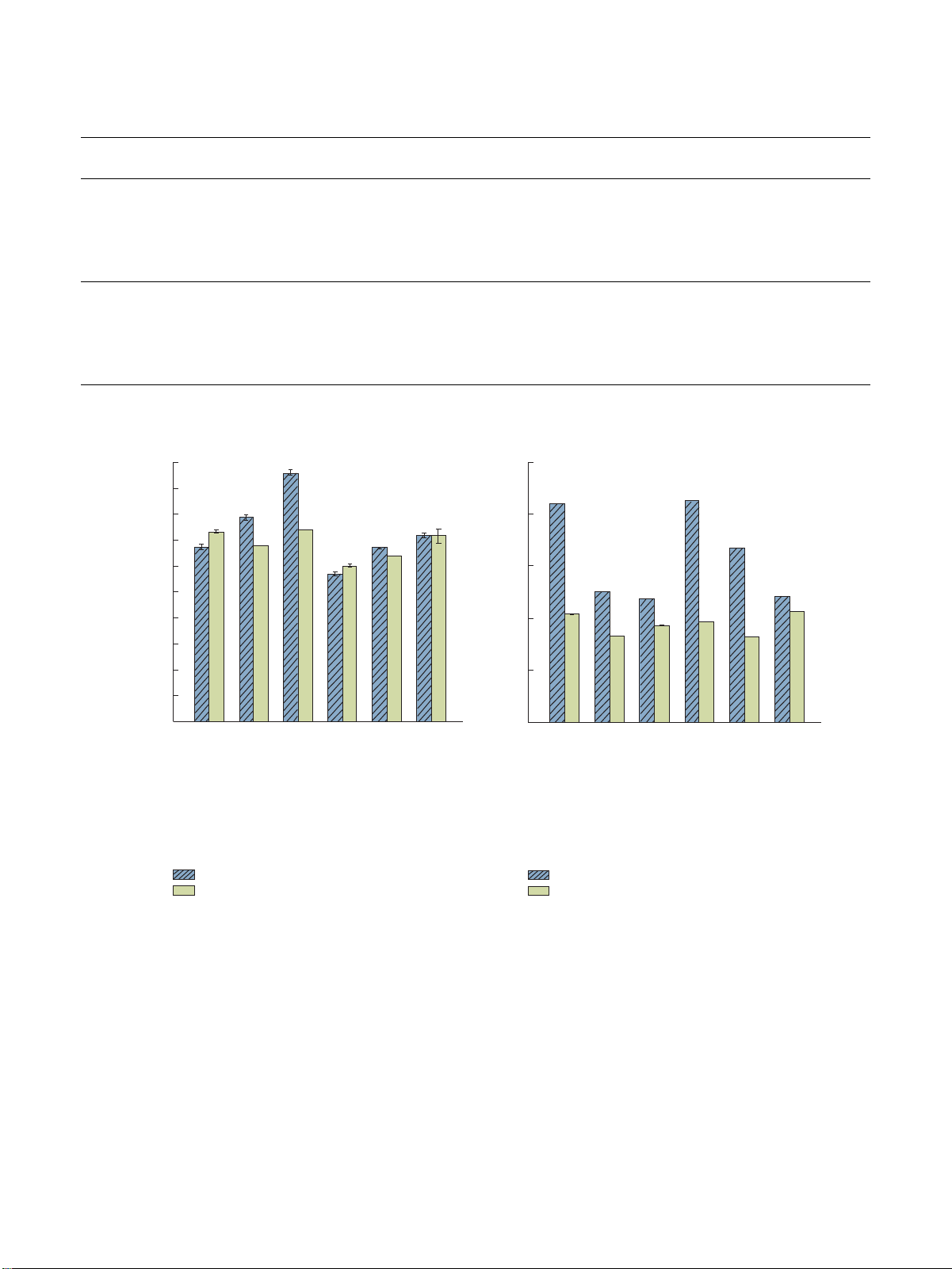
3.7. Total Phenol Content and Vitamin E. Total phenol and
flavors of oils, while heterocycles play a crucial role in their
vitamin E contents of rapeseed and flaxseed oils extracted
nutty and roasted flavors. In addition, some alcohols (fruity,
using different methods are presented in Figure 3. .e total
coconut) and ketones (floral, fragrant) also contribute to the
phenolic contents in rapeseed and flaxseed oils were
flavors of oils. Aldehydes are the oxidized products of lipids,
102.66–191.67 μg/g and 120.16–147.83 μg/g, respectively.
mainly linoleic acids and linolenic acids. Aldehydes were .e contents of vitamin E in rapeseed oil
found to be the dominant volatile compounds accounting
(474.70–849.30 mg/kg) were significantly higher than those
for 1.85%–22.62% of the total amounts of volatiles in the oil
in flaxseed oil (330.30–424.90 mg/kg).
samples. Zhong et al. [37] have determined the volatile
Furthermore, the total phenol contents of the two types
components in cold-pressed camellia oil and reported the
of oils prepared by Soxhlet extraction method were the
presence of nine saturated aldehydes, from valeraldehyde to
highest. .e total phenol contents in hot-pressed oils were
nonanoic acid, in the oil. .e volatile components of
higher than those of cold-pressed oils, which was consistent
rapeseed oils were significantly affected by different ex-
with the work of Wang et al. [39] on the steam explosion
traction methods. In addition, the contents of various vol-
pretreatment of rapeseed. In particular, the total phenol
atile components in rapeseed oil are affected by roast
contents of hot-pressed rapeseed oil and flaxseed oil
pretreatment. .e contents of acids, aldehydes, and alcohols
extracted by Soxhlet extraction increased by 21.88%–68.10%
in cold-pressed rapeseed oil extraction by the hydraulic press
and 1.11%–23.03%, respectively, compared to other
were the highest, which were 2.33–6.53, 1.34–3.47, and
methods. .is may be due to the fact that the extraction time
1.41–4.2 times those in other treatment groups, respectively.
of the Soxhlet extraction method was 8 h, which was 12–60
.e contents of heterocycles and ketones compounds in hot-
times longer than that of other methods. Moreover, the
pressed rapeseed oil extraction from screw press were, re-
Soxhlet extraction was continuously repeated using a con-
spectively, 1.30–3.00 and 1.34–3.37 times higher than those
densed pure solvent; as a result, the total phenol content was in other treatment groups.
the highest. .ese results indicate that different extraction
6095, 2022, 1, Downloaded from https://onlinelibrary.wiley.com/doi/10.1155/2022/8296212 by Readcube (Labtiva Inc.), Wiley Online Library on [16/12/2025]. See the Terms and Conditions (https://onlinelibrary.wiley.com/terms-and-conditions) on Wiley Online Library for rules of use; OA articles are governed by the applicable Creative Commons License 10 Journal of Food Quality
Table 4: SPME-GCMS analysis of volatile compounds in rapeseed and flaxseed oils. Extraction Volatile compounds (%) Oil sample Pretreatment methods
Acids Aldehydes Heterocycles Alcohols Alkanes Esters Ketones Alkenes Other Hot 10.77 1.85 23.9 16.01 0.5 1.38 13.45 1.87 30.27 Screw press Cold 17.75 15.12 11.12 13.03 0.87 1.63 3.99 1.58 34.91 Hot 11.99 6.52 18.43 5.79 1.52 3.96 10.05 4.3 37.44 Rapeseed oil Hydraulic press Cold 43.22 22.62 — 18.29 3.26 — 12.6 — 0.01 Hot 18.53 13.52 12.97 4.35 7.56 0.37 7.81 18.57 16.32 Soxhlet extraction Cold 6.62 16.83 7.96 8.18 10.12 4.2 7.78 4.44 33.87 Hot 32.27 34.77 12.06 9.5 2.92 3.32 2.68 — 2.48 Screw press Cold 31.24 26.38 18.82 6.19 1.39 1.99 5.24 — 8.75 Hot 5.36 1.97 46.79 4.69 1.2 3.75 2.18 31.52 2.54 Flaxseed oil Hydraulic press Cold 25.48 15.46 10.58 29.53 — — 15.02 — 3.93 Hot 21.62 9.94 10.17 3.51 7.31 5.81 20.76 3.18 17.7 Soxhlet extraction Cold 20.72 15.65 7.26 10.12 8.8 2.05 13.55 2.32 19.53
Note. —: less than 0.5% or undetectable. 200 a 1000 180 b a b 160 800 A A c A d B 140 d c C µg/g) 120 e C g/kg) 600 ls ( d 100 e f heno A B 80 400 D C E E itamin E (m Total p 60 V 40 200 20 0 0 crew ulic ulic crew crew ulic ulic crew f s oxhlet oxhlet oxhlet oxhlet ydra f s f s f s f s ydra f s ydra f s ydra f s ed o f h ed o f h ed o f h ed o f h ed o ed o ed o ed o ress ed o ress ed o ress ed o ress ed o ress ress ress ress ot p ress ress ot p ress ress H ot p old p H ot p old p ot p H C old p ot p H C old p H C old p C old p C H C Rapeseed oil Rapeseed oil Flaxseed oil Flaxseed oil (a) (b)
Figure 3: Total phenol and vitamin E contents in rapeseed and flaxseed oils. (a) Total phenol. (b) Vitamin E.
processes significantly affected the total phenol contents in
other methods. Compared with screw press, the vitamin E the two types of oils.
loss rates of the two oils obtained by hydraulic press and
.e vitamin E contents in the two types of oils were also
Soxhlet extraction were 14.00%–41.00% and 4.00%–44.00%,
significantly different and were affected by other extraction
respectively. In general, the vitamin E content of the oil can
processes. .e vitamin E content of rapeseed oil is ∼2 times be increased by screw press.
that of flaxseed oil. .e vitamin E content of rapeseed oil and
flaxseed oil produced by screw press was higher than that of 4. Conclusion
the hydraulic press and Soxhlet extraction. In addition,
the contents of vitamin E in cold-pressed rapeseed oil
.e mechanical press was considered superior to the Soxhlet
and flaxseed oil obtained by screw press increased by
extraction method in terms of sensory score and physico-
1.22%–78.91% and 3.00%–18.80%, respectively, compared to
chemical indexes (acid value, peroxide value, saponification
6095, 2022, 1, Downloaded from https://onlinelibrary.wiley.com/doi/10.1155/2022/8296212 by Readcube (Labtiva Inc.), Wiley Online Library on [16/12/2025]. See the Terms and Conditions (https://onlinelibrary.wiley.com/terms-and-conditions) on Wiley Online Library for rules of use; OA articles are governed by the applicable Creative Commons License Journal of Food Quality 11
value, moisture, and volatiles). .e physicochemical indexes
Research Transformation and Industrialization Special
of oil extracted by the screw press method were comparable
Project (Grant no. 2021-NK-C19).
to those of oil extracted by the hydraulic press. .e contents
of vitamin E in cold-pressed rapeseed and flaxseed oils References
obtained by screw press increased by 1.22%–78.91% and
3.00%–18.80%, respectively, compared to other methods. By
[1] Y. Xie, F. Wei, S. L. Xu et al., “Profiling and quantification of
contrast, the total phenol contents of hot-pressed rapeseed
lipids in cold-pressed rapeseed oils based on direct infusion
and flaxseed oils extracted by Soxhlet extraction increased by
electrospray ionization tandem mass spectrometry,” Food
21.88%–68.10% and 1.11%–23.03%, respectively, compared
Chemistry, vol. 285, pp. 194–203, 2019.
to other methods, and the oil yields increased by 30.10%–
[2] C. X. Ji, Y. J. Zhai, T. Z. Zhang, X. Shen, Y. Bai, and J. Hong,
73.90% and 6.30%–54.40%, respectively. Nonetheless, the
“Carbon, energy and water footprints analysis of rapeseed oil
production: a case study in China,” Journal of Environmental
quality of the oil was inferior due to high acid value
Management, vol. 287, Article ID 112359, 2021.
(0.93–3.36 mg KOH/g), peroxide value (0.70–5.23 meq O2/
[3] E. Beyzi, A. Gunes, S. Buyukkilic Beyzi, and Y. Konca,
kg), and moisture and volatile contents (0.06%–1.54%), and
“Changes in fatty acid and mineral composition of rapeseed
the possibility of using the defatted flour is limited to the
(Brassica napus ssp. oleifera L.) oil with seed sizes,” Industrial
presence of a residual solvent. In addition, the profiles of
Crops and Products, vol. 129, pp. 10–14, 2019.
fatty acids obtained from different extraction methods and
[4] F. D. Goffman, W. .ies, and L. Velasco, “Chemotaxonomic
pretreatment were similar, but the statistical analysis showed
value of tocopherols in Brassicaceae,” Phytochemistry, vol. 50,
that the profiles differed significantly. In particular, the no. 5, pp. 793–798, 1999.
linolenic acid contents of cold-pressed rapeseed and flaxseed
[5] J. B. Li and Z. Guo, “Concurrent extraction and transfor-
oils extracted by screw press were determined to be 9.68 g/
mation of bioactive phenolic compounds from rapeseed meal
100 g and 51.01 g/100 g, respectively, which increased by
using pressurized solvent extraction system,” Industrial Crops
and Products, vol. 94, pp. 152–159, 2016.
1.50%–23.80% and 1.10%–6.90% compared with other
[6] Y. X. Cong, M. M. Zheng, F. H. Huang, C. Liu, and C. Zheng,
treatments, respectively. Different extraction methods did
“Sinapic acid derivatives in microwave-pretreated rapeseeds
not affect the composition and content of triglycerides in the
and minor components in oils,” Journal of Food Composition
two types of oils. Aldehydes, acids, alcohols, heterocycles,
and Analysis, vol. 87, Article ID 103394, 2020.
and ketones were the main volatile components in both
[7] S. C. Chew, “Chapter 7—cold pressed rapeseed (Brassica
types of oils. Different extraction methods also affected the
napus) oil,” Cold Pressed Oils, Academic Press, London, UK,
volatile components of rapeseed and flaxseed oils. 2020.
[8] A. Delgado, S. Al-Hamimi, M. F. Ramadan et al., “Contri-
bution of tocols to food sensorial properties, stability, and Data Availability
overall quality,” Journal of Food Quality, vol. 2020, Article ID 8885865, 8 pages, 2020.
.e data used to support the findings of this study are in-
[9] Y. H. Gao, “Oilseed flax (Linum usitatissimum L.), an cluded within the article.
emerging functional cash crop of China,” Oil Crop Science, vol. 5, no. 2, 2020.
[10] T. Toulabi, M. Yarahmadi, F. Goudarzi, F. Ebrahimzadeh, Conflicts of Interest
A. Momenizadeh, and S. Yarahmadi, “Effects of flaxseed on
blood pressure, body mass index, and total cholesterol in
.e authors declare no conflicts of interest.
hypertensive patients: a randomized clinical trial,” Explore-
@e Journal of Science and Healing, vol. 18, no. 4, pp. 438–445,
Authors’ Contributions 2022.
[11] N. M. Jangale, P. P. Devarshi, A. A. Dubal et al., “Dietary
Shuzhen Wang contributed to methodology, formal anal-
flaxseed oil and fish oil modulates expression of antioxidant
ysis, data curation, and review and editing. Jinying Wang
and inflammatory genes with alleviation of protein glycation
contributed to conceptualization, resources, methodology,
status and inflammation in liver of streptozotocin-nicotin-
supervision, and writing of the original draft, review and
amide induced diabetic rats,” Food Chemistry, vol. 141, no. 1,
editing, and project administration. Guoxin Dong con- pp. 187–195, 2013. [12] R. Deshpande, P. Raina, K. Shinde, P. Mansara,
tributed to formal analysis and review and editing. Xia Chen
M. Karandikar, and R. Kaul-Ghanekar, “Flax seed oil reduced
contributed to methodology and supervision. Shulin Wang
tumor growth, modulated immune responses and decreased
contributed to formal analysis and supervision. Feng lei
HPV E6 and E7 oncoprotein expression in a murine model of
contributed to data curation and review and editing.
ectopic cervical cancer,” Prostaglandins & Other Lipid Me-
Xuebing Su contributed to provision of resources and su-
diators, vol. 143, Article ID 106332, 2019.
pervision. Qin Bai contributed to provision of resources and
[13] M. Issaoui and A. M. Delgado, “Grading, labeling and investigation.
standardization of edible oils,” Fruit Oils: Chemistry and
Functionality, Springer, Berlin, Germany, 2019.
[14] M. F. Ramadan and J. M¨orsel, “Oxidative stability of black Acknowledgments
cumin (nigella sativa l.), coriander (coriandrum sativum l.)
and niger (guizotia abyssinica cass.) crude seed oils upon
.is work was supported by the Science and Technology
stripping,” European Journal of Lipid Science and Technology,
Department of Qinghai Province, Qinghai Enterprise
vol. 106, no. 1, pp. 35–43, 2004.
6095, 2022, 1, Downloaded from https://onlinelibrary.wiley.com/doi/10.1155/2022/8296212 by Readcube (Labtiva Inc.), Wiley Online Library on [16/12/2025]. See the Terms and Conditions (https://onlinelibrary.wiley.com/terms-and-conditions) on Wiley Online Library for rules of use; OA articles are governed by the applicable Creative Commons License 12 Journal of Food Quality
[15] G. C. Mrema and P. B. McNulty, “Mathematical model of
[30] D. Zhang, X. J. Li, Y. P. Cao, C. Wang, and Y. Xue, “Effect of
mechanical oil expression from oilseeds,” Journal of Agri-
roasting on the chemical components of peanut oil,” LWT--
cultural Engineering Research, vol. 31, no. 4, pp. 361–370, 1985.
Food Science and Technology, vol. 125, Article ID 109249, [16] A. Rabad´an, M. ´
Alvarez-Ort´ı, R. G´omez, A. Alvarruiz, and 2020.
J. E. Pardo, “Optimization of pistachio oil extraction re-
[31] W. T. Yin, M. Washington, X. T. Ma et al., “Consumer ac-
garding processing parameters of screw and hydraulic
ceptability and sensory profiling of sesame oils obtained from
presses,” LWT--Food Science and Technology, vol. 83, no. 15,
different processes,” Grain & Oil Science and Technology, pp. 79–85, 2017.
vol. 3, no. 2, pp. 39–48, 2020.
[17] M. D. Luque de Castro and F. Priego-Capote, “Soxhlet ex- [32] M. M. ¨
Ozcan, K. Ghafoor, F. Al Juhaimi, I. A. M. Ahmed, and
traction: past and present panacea,” Journal of Chromatog-
E. Babiker, “Effect of cold-press and soxhlet extraction on
raphy A, vol. 1217, no. 16, pp. 2383–2389, 2010.
fatty acids, tocopherols and sterol contents of the moringa
[18] A. B. Zanqui, D. R. De Morais, C. M. Da Silva et al., “Sub-
seed oils,” South African Journal of Botany, vol. 124,
critical extraction of flaxseed oil with n-propane: composition pp. 333–337, 2019.
and purity,” Food Chemistry, vol. 188, pp. 452–458, 2015.
[33] N. G. Kulkarni, J. R. Kar, and R. S. Singhal, “Extraction of
[19] M. Yang, F. H. Huang, C. S. Liu, C. Zheng, Q. Zhou, and
flaxseed oil: a comparative study of three-phase partitioning
H. Wang, “Influence of microwave treatment of rapeseed on
and supercritical carbon dioxide using response surface
minor components content and oxidative stability of oil,”
methodology,” Food and Bioprocess Technology, vol. 10, no. 5,
Food and Bioprocess Technology, vol. 6, no. 11, pp. 3206–3216, pp. 940–948, 2017. 2013.
[34] Q. R. Sun, J. Shi, M. Scanlon, S. J. Xue, and J. Lu, “Opti-
[20] B. G. Xu, B. X. Wei, X. F. Ren et al., “Dielectric pretreatment of
mization of supercritical-CO2 process for extraction of to-
rapeseed 1: influence on the drying characteristics of the seeds
copherol-rich oil from canola seeds,” LWT--Food Science and
and physico-chemical properties of cold-pressed oil,” Food
Technology, vol. 145, Article ID 111435, 2021.
and Bioprocess Technology, vol. 11, no. 6, pp. 1236–1247, 2018.
[35] X. L. Sun, Y. J. Wang, H. K. Li, J. Zhou, J. Han, and C. Wei,
[21] P. Gao, Y. Cao, R. J. Liu, Q. Jin, and X. Wang, “Phytochemical
“Changes in the volatile profile, fatty acid composition and
content, minor-constituent compositions, and antioxidant
oxidative stability of flaxseed oil during heating at different
capacity of screw-pressed walnut oil obtained from roasted
temperatures,” LWT--Food Science and Technology, vol. 151,
kernels,” European Journal of Lipid Science and Technology, Article ID 112137, 2021.
vol. 121, no. 1, Article ID 1800292, 2018.
[36] G. L. Teixeira, S. M. Ghazani, M. L. Corazza, A. G. Marangoni,
[22] Y. P. Zou, Y. Y. Gao, H. He, and T. Yang, “Effect of roasting on
and R. H. Ribani, “Assessment of subcritical propane, su-
physico-chemical properties, antioxidant capacity, and oxi-
percritical CO2 and soxhlet extraction of oil from sapucaia
dative stability of wheat germ oil,” LWT--Food Science and
(Lecythis pisonis) nuts,” @e Journal of Supercritical Fluids,
Technology, vol. 90, pp. 246–253, 2018.
vol. 133, no. 1, pp. 122–132, 2018. [23] S. Mildner-Szkudlarz, M. R´o˙za´nska, A. Siger,
[37] H. Zhong, D. R. Bedgood, A. G. Bishop, P. D. Prenzler, and
P. L. Kowalczewski, and M. Rudzinska, “Changes in chemical
K. Robards, “Effect of added caffeic acid and tyrosol on the
composition and oxidative stability of cold-pressed oils ob-
fatty acid and volatile profiles of camellia oil following
tained from by-product roasted berry seeds,” LWT--Food
heating,” Journal of Agricultural and Food Chemistry, vol. 54,
Science and Technology, vol. 111, pp. 541–547, 2019. no. 25, pp. 9551–9558, 2006.
[24] A. Szydłowska-Czerniak, A. Tymczewska, M. Momot, and
[38] L. T. Danh, L. N. Han, N. D. A. Triet, J. Zhao, R. Mammucari,
K. Wlodarczyk, “Optimization of the microwave treatment of
and N. Foster, “Comparison of chemical composition, anti-
linseed for cold-pressing linseed oil—changes in its chemical
oxidant and antimicrobial activity of lavender (lavandula
and sensory qualities,” LWT--Food Science and Technology,
angustifolia L.) essential oils extracted by supercritical CO2,
vol. 126, Article ID 109317, 2020.
hexane and hydrodistillation,” Food and Bioprocess Tech-
[25] X. R. Wang, Y. Z. Han, Y. X. Li, S. Wang, and J. Wang,
nology, vol. 6, no. 12, pp. 3481–3489, 2013.
“Detection of Qinghai-tibet plateau flaxseed oil adulteration
[39] W. J. Wang, B. Yang, W. L. Li, Q. Zhou, C. Liu, and C. Zheng,
based on fatty acid profiles and chemometrics,” Food Control,
“Effects of steam explosion pretreatment on the bioactive
vol. 130, Article ID 108332, 2021.
components and characteristics of rapeseed and rapeseed
[26] J. Y. Wang, Y. Z. Han, X. Wang et al., “Adulteration detection
products,” LWT--Food Science and Technology, vol. 143,
of qinghai-tibet plateau flaxseed oil using HPLC-ELSD pro- Article ID 111172, 2021.
filing of triacylglycerols and chemometrics,” LWT--Food
Science and Technology, vol. 160, Article ID 113300, 2022.
[27] R. M. Ojeda-Amador, G. Fregapane, and M. D. Salvador,
“Influence of cultivar and technological conditions on the
volatile profile of virgin pistachio oils,” Food Chemistry,
vol. 311, Article ID 125957, 2020.
[28] K. Suri, B. Singh, A. Kaur, M. P. Yadav, and N. Singh, “In-
fluence of microwave roasting on chemical composition,
oxidative stability and fatty acid composition of flaxseed
(Linum usitatissimum L.) oil,” Food Chemistry, vol. 326, Article ID 126974, 2020.
[29] J. Faghim, M. B. Mohamed, M. Bagues, F. Guasmi, T. Triki,
and K. Nagaz, “Irrigation effects on phenolic profile and extra
virgin olive oil quality of “Chemlali” variety grown in South
Tunisia,” South African Journal of Botany, vol. 141, pp. 322– 329, 2021.
Tài liệu liên quan:
-

Ung dung game hoa trong cac chien dich MKT
27 14 -

Bao cao Chi so TMDT Viet Nam 2025
30 15 -
Thông tư quy định về việc phân quyền, phân cấp và phân định thẩm quyền quản lý nhà nước về giáo dục cho chính quyền địa phương
32 16 -
Nghị quyết về phát huy các giá trị di sản văn hóa gắn với phát triên du lịch bền vững tỉnh Khánh Hòa đến năm 2025, định hướng đến năm 2030
34 17 -
Quyết định phê duyệt Chiến lược phát triển du lịch Việt Nam đến năm 2030
21 11