Effects of Heat Stress Exposure and Climate Change on Health and Safety of Outdoor Workers
Effects of Heat Stress Exposure and Climate Change on Health and Safety of Outdoor Workers. Tài liệu được sưu tầm giúp bạn tham khảo, ôn tập và đạt kết quả cao. Mời bạn đọc đón xem.
Môn: Tài liệu Tổng hợp 3.6 K tài liệu
Trường: Tài liệu khác 3.9 K tài liệu
Tác giả:












Preview text:
ISSN: 0973-4929, Vol. 16, No. (3) 2021, Pg. 836-847
Current World Environment www.cwejournal.org
Effects of Heat Stress Exposure and Climate Change on
Health and Safety of Outdoor Workers
TAREK ABOKHASHABAH1, BASSEM JAMOUSSI1, AHMED SALEH SUMMAN1,
EZZ ABDELFATTAH2 and IJAZ AHMAD3*
1Department of Environmental Science, Faculty of Meteorology, Environment and Arid
Land Agriculture, King-Abdulaziz University, 21589 Jeddah, Saudi Arabia.
2Department of Statistics, Faculty of Sciences, King-Abdulaziz University, 21589 Jeddah, Saudi Arabia.
3Department of Occupational Safety and Health, National Skills
University, 44000 Islamabad, Pakistan. Abstract
The studies carried in the world regarding the possible significant influence
of climate change on the health and safety of outdoor workers has not been
given the due consideration (especially in the least developed and developing Article History
countries). Hundreds and thousands of outdoor workers are exposed Received: 11 August 2021 Accepted: 15 December
to elevated temperatures, humid environments and climate extremes in 2021
combination with urban air pollution; which is ultimately impacting their safety
and well-being. The statistics show that in the past few years, due to the rise Keywords
in temperature on earth and frequent heat waves within urban settlements, Climate Change; Heat Stress;
an abrupt increase has been observed in the rate of heat-related health Health and Safety;
problems. Exposure to extreme heat (exceeding 40 ºC)causes many direct and Outdoor Work.
indirect health hazards, which include vector-borne diseases and exposure to
certain harmful chemicals. Currently, the climatic and heat-related effects are
decreasing the working capacity of workers and increase in the future. it is
projected that the frequency and magnitude of these effects will increase. With
the rise in temperature and the occurrence of frequent heat waves in urban
areas, the number of health issues due to high (maximum average)temperature
have increased rapidly. This article discusses the impacts of heat exposure
and climatic change on productivity,health and safety of outdoor workers by
summarizing findings from the literature, and eventually recommends control
measures for reducing heat exposure at the outdoor work areasand climatic
adaptations. In addition, it argues that there is a need for more research about
the impacts on health and economic conditions due to heat and climate change
in the workplace on global level (especially in developing countries).
CONTACT Ijaz Ahmad drahmadtarar@gmail.com Department of Occupational Safety and Health, National Skills
University, 44000 Islamabad, Pakistan.
© 2021 The Author(s). Published by Enviro Research Publishers. This is an
Open Access article licensed under a Creative Commons license: Attribution 4.0 International (CC-BY).
Doi: http://dx.doi.org/10.12944/CWE.16.3.15
ABOKHASHABAH et al., Curr. World Environ., Vol. 16(3) 836-847 (2021) 837 Introduction
evident environmental problems of this century,
Outdoor workers are the front-liners who are
which are impacting human’s health in one way
exposed to various physical, biological, chemical,
or another. Along with this, the prevailing situation
ergonomic and psychological occupational hazards.
of air pollution and urban population growth, which
Among these hazards, one of the most prominent
according to the United Nations is expected to
ones are the environmental stresses and severe
increase to about 57% in 2050, are exacerbating
climatic conditions. They are mostly exposed for
the situation especially in developing countries.16
a longer period to high levels of heat and other
Keeping in mind this scenario, World Health
stresses like UV radiation, atmospheric pollutants,
Organization (WHO) has asked the members states
and urban heat island (UHI) effect.1 This chronic to take significant measures to curtail the impacts
exposure canproduce severe as well as frequent
of climate change associated with human health.17
known occupational health hazards.2,3 In past
studies, it has been reported that the rise in outdoor
Although climate change is one of the most
temperature can result in health issues for out
familiar global environmental issues of the
door workers. The frequent, severe, and long-term
present and future, yet its harmful effects on
exposure to UV radiations causes severe health
occupational health and safety of human resources
effects in workers such as eye problems, skin cancer, (workers and employees) have not been given much
and immune dys function.1,4,5,6,7 In addition to these
consideration.18 Owing to the rapid expansion of
health effects, heat stroke, heat syncope, heat rash, cities globally, the urban island heat effect (UHI)
heat exhaustion, and rhabdomyolysis are some of
has become an effect of climate change due to
the most common heat related health issues which
human induced activities.19 Climate change impacts
occur due to long-term exposure to frequent and
have altered the ambient environment for workers,
intense heat or high temperature. Exposure to high
due to which new hazards have been added to
temperature can also affect the focus of workers on already existing ones in the workplace. As a result,
their work, and this result in higher risk of injury and
outdoor workers will have to face harsh working
lapse in their safety. Further more, due to prevalent
conditions; extreme heat, toxic substances, and
global climatic changes and Urban Heat Island (UHI),
higher risk of infectious and vector borne diseases.1,7
the levels of atmospheric pollutants, particularly
In addition to these impacts, there will be risk of
ground level ozone, are increased. The exposure of
damage to infrastructure and ultimately humans like
outdoor workers to such air pollutants has chronic
community members, workers, and emergency crew
health effects (like allergic reactions and various from extreme weather conditions.20 According to
respiratory problems).8,9,10,11,12
International Labor Organization (ILO), fire fighters,
farmers, emergency responders, health care staff,
Heat exposure and climatic effects cause objective transportation workers, and utility workers will be
and subjective health related symptoms like heat
more vulnerable to climate change.21
cramps, heat rash, heat edema, synope etc.13
These are in line with hypothesis that the exposure
Furthermore, climate change intensifies the health
to heat increases the risk of occupational ill health,
and safety issues and their severity of risk to workers
accidents, and injuries. It is reported in Taiwan
in workplaces. It is anticipated that workers will be
and Thailand that temporary workers suffered
more affected by climate change than public as
from intense heat strain due to working in hot and
they will be frequently exposed to harsh weather
physically demanding works at the construction
conditions. Exposure to heat and effects of climate
sites along with hot living conditions in sites near
change and their severity will be more for outdoor
residences.14 According to Campbell (2018) heat
workers (migrant workers, day laborers, or any
waves have caused an increase in the hospitalization
other who has social or economic problems).
rate due to upsurge in the rate of cardiovascular
This article summarizes the current information
diseases during the high temperature periods in
on relevant health effects of climate change,
Vietnam and Puerto Rico.15 By improving the living
exposure to extreme temperatures on outdoor
and working conditions of workers at workplace,
workers. It also offers various available adaptation
the heat related issues can be eliminated or
plans to reduce the impacts of climate change
minimized.14 Climate extremes are some of the most
and to enhance capacities of outdoor workers.
ABOKHASHABAH et al., Curr. World Environ., Vol. 16(3) 836-847 (2021) 838
The current study focuses only on tropical developing
for compiling this study is the literature search
countries, and the main aim of this study is to draw
(including research papers, review papers and
the attention on evolving research areas because
organizational reports) relevant to the core areas
of their relevance to the effects of extreme heat of this study.
exposure, health and safety concerns and climate
change adaptation actions of outdoor workers.
This study will aid the policy makers, researchers,
It encompasses the chances of effects of climate decision makers, academicians, and regulators
change and exposure to heat that will at the
to undertake efficient measures to tackle the
end affect the productivity of outdoor workers.
adversities of climate change and exposure to heat.
Accordingly, not only direct but also indirect hazards
Exposure to humid and harsh environment, extreme
of increasing heat to health and safety of vulnerable
weather conditions, biological and air pollutants
groups of outdoor workers, exposure to harmful
are some of these adversities of climate change
chemicals, vector borne diseases and infectious
on occupational health and safety of workers or
are discussed. Moreover, the principle methodology occupational hazards.
Fig.1: Climate change and occupational health and safety, adopted and modified from Schulte and Chun, 2009.20
Typical Climate of Tropics, Heat and its Effects
Just like the rest of the world, climate change
Tropics refer to the regions that lie between tropic
is occurring in the tropics as well, and the
of Cancer (23.45 ºN) and tropic of Capricorn
warming of 0.7 to 0.8 ºC has been noted.24
(23.45 ºS), different regions have difference in their Singapore is an example of this warming, and it is
climate and temperature patterns.22 The areas
estimated that it may become the warmest place
adjacent to tropical rainforests (like Philippines,
till the next century.24 This rise in temperature has
Cebu, Mactan etc) have mean temperature of
initiated many impacts in the tropics which include
22 to 28 ºC with high humidity, while areas
frequent floods, drought, glacial melting, coral
like Bangladesh adjacent to seasonal tropical
bleaching etc.24 Moreover, according to fifth report
forests often reach 40 ºC and even more.23
of IPCC, not only the frequency and intensity of
M o r e o v e r, t r o p i c s h a v e d r y r e g i o n s a s
heat waves are increasing but also their length of
w e l l , w h i c h i n c l u d e t h e a r e a s a d j a c e n t
prevalence is increasing, which is an adverse impact
t o h o t d e s e r t s w h e r e t h e t e m p e r a t u r e
of climate change.25 It has been found that these
in summer exceeds 40 ºC in the afternoon and
heat waves are influencing the health of populations
drops up to 30 ºC at night or early morning.22
in tropical regions. In Vietnam, which is located within
ABOKHASHABAH et al., Curr. World Environ., Vol. 16(3) 836-847 (2021) 839
latitude of 10º-23º N, heat waves have caused an
etc) are often responsible for injuries, diseases,
increase in the hospitalization rate due to upsurge in
mental stress, and death of workers at workplace.
the rate of cardiovascular diseases during the high
During and after the disaster, the staff involved in
temperature periods in this country.15 Puerto Rico
rescue and rehabilitation operations is at risk of
(located at 18 ºN), which is an island; its population
exposure to different hazards at the site. Further
has reported increase in mortality rates due to
more, acute and chronic health problems like
stroke and cardiovascular diseases during the high
cardiac diseases, pulmonary disorders, and various temperature periods.15
allergic problems are aggravated by air pollution.33,34
Moreover, there are some factors that affect the
Exposure to Heat and Hot Environments at exposure to air pollutants like location of workplace Workplace
or site, weather conditions, and materials being
Workers exposed to intense heat, hot work used at the site. Generally, warmer temperature
environment for extended time, or involved in
creates greater chance of air pollutant's exposure
exhausting physical works might be at risk of
(such as particulate matter and ground-level
heat stress. Some of the most common and
ozone).35,36,37 Furthermore, workers are presumably
adverse effects of heat exposure are heat stroke, affected by increased air pollution during pollen
heat exhaustion, rhabdomyolysis, and often death
production season. These affected workers include
of individual.3 Work related exposure to heat also
the outdoor workers (such as drivers, fire fighters
increases the risks of traumatic injury. The increased
etc.) and the indoor workers inhaling unfiltered air. 2
induration, frequency, and intensity of exposure to
heat elevates the risk of illness and death.26,27 Biological Hazards
Frequent changes in average temperature and
Besides outdoor workers, goods delivery men, utility
rainfall patterns badly affect the spread of pathogens,
workers, farm workers, construction workers and
vectors, plants, and allergens. The overall rise in
all those who have to work in unsuitable outdoor
the temperature due to climate change has been
work environment such as lack of ventilation system
affecting the human health in a number of ways.
are at high risk of various hazards related to
One of them is the frequent outbreak of epidemics
heat.28 In general, workers in all those workplaces
(infectious/contagious diseases). The infectious
have inadequate welfare facilities; like access to
agents like bacteria, viruses and protozoa along
water, availability of rest area, and cool space
with the vectors like ticks, flies and mosquitoes
are at high level of risk.29 The rise in atmospheric
are influenced by climatic variability. Therefore,
temperature due to climate change increases the
the climate change boosts their production and
risk of exposure and their effects on workers of increases the extent of disease transmission in
certain toxic chemicals.30 Volatilization of certain
human beings. The health issues caused by such
chemicals occurs due to rise in temperature,
pathogens can be food borne diseases, water
which increases the risk of exposure to these
borne diseases (e.g:typhoid), vector borne diseases
environmental pollutants. It means that the toxicity
(e.g: Zika, Dengue, Lyme,Chikungunya etc.), asthma
(ability of a chemical to cause harm) and the
(due to molds and pollens), and health effects caused
mobility of chemical pollutants are increased due
by poisonous plants (e.g: skin and lungs irritation)
to climatic changes.This leads to transportation of
Apart from health impacts linked with biological
airborne particles to remote areas.31 For instance,
hazards, multiple adverse occupational health
the alteration in food webs, melting of ice cover and
disorders are related to pesticides exposure. For
changes in carbon cycle increase the concentration
instance, organochlorine pesticides can cause
of Persistent Organic Pollutants (POPs) in soil, water
chronic bronchitis, insecticides can result in
and biosphere.32 The high atmospheric humidity and
sarcoidosis and bipyridyl herbicides can develop
temperature enhances persevere of the chemicals
allergic rhinitis.38 As compared to the indoor workers,
for a longer time in atmosphere.
outdoor workers are more vulnerable to these effects.
Extreme Weather Conditions And Air Pollution
Natural disasters or extreme weather events (floods,
droughts, landslides, storms, lightning, wildfires
ABOKHASHABAH et al., Curr. World Environ., Vol. 16(3) 836-847 (2021) 840
Outdoor Workers Exposure to Heat Stress and with impaired health are particularly at risk when its Health Outcomes
exposed to heat and elevated temperature due to
Studies have revealed that thousands of workers
climate change. Heat stroke isan impact that can
can become ill every year due to exposure to
also occur in physically healthy workers who carry
working environments characterized by high
out intensive heavy work in longer exposure to
temperatures.5 Most of the people exposed to high
heat due to social and economic problems. The
level of heat develop chronic illnesses while others
heat related illnesses come from exposure to hot
become allergic to heat conditions.4 Workers tend
temperatures or prolonged heat. In order to cause
to perform ineffectively when the working conditions cooling effect within human body during prolonged
are not favorable. According to Roghanchi and
heat exposure, blood rushes and reaches to the
Kocsis (2018), workers perform differently when surface of the skin. Thus, less blood comes to the
exposed to diverse conditions. When working in a brain, muscles, and different organs. This could
hot environment, there is a high likelihood of heat
interfere with both physical strength and mental
increase because of the normal metabolic activities
capacity leading sometimes to risks that may
and heat from the sun. Generally, the impact of
damage the health, and causes disorders such as
heat on health is measured in terms of mortality
heat induced rash, stroke and cramps, heat syncope
or hospital admissions.53 Aged workers and those and rhabdomyolysis.
Table 1: Health issues related to heat stress Main health issues Associated impacts References related to heat stress Heat stroke
• Death or permanent disability 4,44
• Less blood flow to brain, muscles and different organs Skin damage • Skin burns • Skin cancer 42,43 Dehydration • Loss water and minerals
• Muscles cramps or heat cramps
• Pain sensation in voluntary muscles (mainly arms, 44 legs, or torso) Psychological set-back
• Lowering of cognitive performance • Loss of productivity, 42,43
At many outdoor working sites,workers reported
physical, psychological, and mental effects on the
that those who experienced heat stress often had
health of these construction site workers due to
to stop working, and the results were fatalin some
exposure to heat stress. Among the effects is the
cases. Therefore, thermal stress isthe major cause
exhaustion and skin burns, lowering of cognitive
of health complications among such workers.5
performance, psychological impacts, loss of
The fatalities in thermal stress often increase during
productivity, and the build up of these conditions
summer when the temperatures are extremely
develop to severe illnesses like skin cancer and
high. Since most countries do not have heat thermal stress.42,43
stress regulation methods, heat prevention and
treatment of symptoms could be an option that
Heat stroke is a significant heat related health issue,
could help construction companies to deal with
and it should be treated as a prioritized medical
heat stress.40 The effects of heat stress on normal
emergency. The occurrence of heat stroke is caused
body functioning can be measured using the rate of
by the condition when the human body does not
heartbeat, body consumption of oxygen, expenditure
effectively dissipate heat and lose the ability to
of energy, fatigue, and minute ventilation.41 These
regulate the body temperature.4,44 The mean body
measurements are brought out via case control
temperature quickly raises, homeostasis mechanism
studies. There exists strong evidence that heat has
ABOKHASHABAH et al., Curr. World Environ., Vol. 16(3) 836-847 (2021) 841
stops working, and the body becomes unable to
Role of Governments and International Standards
lower the temperature. At the time of heat stroke,
The temperature on the Earth is increasing at an
body temperature reaches to 106°F or higher within alarming rate, which in future will demand governments,
ten to fifteen minutes. Heat exhaustion mostly leads employers, and workers to be more prepared for
to heat stroke which occurs after being exposed to
facing the health risk of climate change. It will be a
high temperatures accompanied by elevated core
prerequisite to take critical steps to follow adaptation
body temperatures around 100.4°F–102.2°F, and and to manage various health risks of climate
it often is escorted by dehydration.44 The normal
change particularly impacts of high temperature.
range of human body temperature is 36.5 to This could be achieved by proper regulatory
37.5 ºC, but when exceeding from 40 ºC or 40.5 ºC
frameworks like labor-related agreements,
(equivalent to 104 and 105 ºF respectively) it may
standards, regulations and rules. The role of
leads to heatstroke.13 Generally, if environmental
international labor standards in the promotion of
t e m p e r a t u r e i s b e t w e e n 4 0 º C o r 5 4 º C
adaptation to reduce the impact of rising temperature
(between 105 and 130 ºF), then human beings
is very helpful around the world. These international
can experience heat exhaustion. Moreover, if
standards provide various tools for the management
this environmental temperature exceeds 54 ºC
of health-related issues related to extreme heat
(130 ºF), then it leads towards heat stroke.45
stress, and to safeguard the decent work conditions
Heat stroke results in death or permanent disability
in workplaces. The Occupational Safety and Health
if emergency medical treatment is not provided
Convention, 1981 (No. 155) and its associated
timely. The main signs of heat stroke are slurred
Recommendation, (No. 164) both consider heat
speech, hot dry skin, confusion, clumsiness,
stress as a significant hazard at workplace.
fainting/unconsciousness, profuse sweating,
The C155 and R164, international labor standards,
seizures, and high body temperature. Due to over
both provide direction to the states for formulation
sweating, body losses enough water and minerals,
and execution of national occupational safety and
which causes muscles cramps (that occur in a hot
health policy. In addition to other workplace hazards,
environment or during or after exercise) or spasms
this policy will specifically address heat stress in
called heat cramps. This results inpain and spastic
accordance with the requirements and consultation
contractions in voluntary muscles (mostly in the
of stakeholders, i.e., individuals, employers, and arms, legs and torso). workers’ organizations.
Table 2: International standards for the management of
health-related issues related to extreme heat stress Standards Purpose
Occupational Safety and Health Convention, 1981
Provide direction to the states: (No. 155)
For formulation and execution of national occupational safety and health policy
Associated Recommendationof C155 (No. 164)
Workers’ Housing Recommendation, 1961 (No. 115) Suggest regulations:
For managing heat stress risk and guiding about
Protection of Workers’ Health Recommendation,
adaptation efforts by workers, employers and 1953 (No. 97) government organizations
Hygiene Recommendation, 1964 (No. 120)
Additionally, according to Occupational Safety
complementary Recommendation No.164 requires
and HealthConvention No. 155, prevention
national Occupational Safety and Health policy
of illness, injuries and accidents occurring at
to include actions taken for regulating physical
the workplace is the responsibility of national
factors such as humidity, temperature, light and
occupational safety and health safety polity. The
ventilation at the workplace. Moreover, other
ABOKHASHABAH et al., Curr. World Environ., Vol. 16(3) 836-847 (2021) 842
international labor standards such as the Workers’ Heatexposure Mitigation
Housing Recommendation, 1961 (No. 115), the The laborers, working outdoors or in an open
Protection of Workers’ Health Recommendation, environment that are prone to long-term heat
1953 (No. 97) and the Hygiene Recommendation,
exposure include construction, agricultural
1964 (No. 120) suggest regulations for managing workers, road cleaners and municipality,
heat stress risk and adaptation efforts by workers’, fire fighters, window cleaners, fueling and service
employers’ and government organizations.
station attendants etc. In urban areas with climatic
Furthermore, Recommendation No. 97 demands
and weather conditions along with air pollution,
that employers should carry out all necessary actions
Urban Heat Island may further aggravate the
to eliminate, reduce, mitigate and prevent all possible
situation and impact outdoor working conditions.
hazards and risks at the workplace and provide
To adequately address heat stress, it is best to
sufficient and suitable protection to the workers manage this holistically and implement a variety of
including excessive heat and sudden temperature
measures including assessment of the on site risks variations.
and determination of hazards, implementation of
suitable effective engineering control measures,
Governments are the main bodies that are involved
devising effective heat stress program for workers
in controlling environment that affect the behavior effected from heat stress, implementation of
of employers and workers. They also provide guide
mid-day break, working hours, facilities provision
lines for the different actions to be carried out for regulations during the summer months for outside
the control of adversities of heat stress and climate employees.
change on a workplace. A regulatory framework is
very necessary to be implemented for these issues.
A comprehensive risk assessment and acclimatization
An early alarm system for heat extremes is very
program, an effective communication system, onsite
important to mitigate such extreme temperature
welfare facilities, provision of appropriate body
problems.35,46 In developing countries, the main
cooling devices, pre-employment screening and
constraints are financial and technical restrictions. medical clearance canbe considered for outdoor
These should have to be considered prior to the
heat exposure managing techniques. Moreover,
development of such a mechanism. It is crucial
personal protective gadgets, administrative and
to promote international cooperation, information
engineering measures are always viable options
sharing and joint action under the umbrella of
in reducing the impacts of working outdoor,
International Labor Organization (ILO) to attain
especially in extreme summer and extreme winters.
the overall development of the infrastructure
Studies have identified that thermal stress is among
needed to adapt to heat stress. It would help in
the leading heat-related illness and prolonged
strengthening resilience and adaptive capacity of
exposure to the sun without breaks hampers the
workers who are the most vulnerable to heat stress
performance and effectiveness of an employee.5,46
like farm workers.21,47 Social protection instruments
Therefore, depending upon work site conditions,
can compensate for the loss of income and
shortening of working periods, job rotation, frequent
employment due to environmental hazard at work.
rests, improvement of ventilation, and provision
Regulatory interventions are required for the
of air conditioning facility can be very effective.
promotion of special technologies, advancement
Along with this, using sunscreen, light clothes on
in technical standards for infrastructure and
head, goggles, putting on hats, and construction of
strengthening of public employment polices to
movable shades are proven best safety and health
tackle the problem of migration of workers from
practices according to literature.48
rural areas to cities or to facilitate migration due
to future impacts of climatic events on vulnerable
Climate Change Adaptation
works group. Sometimes temporary or permanent
In order to ensure minimization of the impacts
migration is the only adaptation strategy to mitigate
of climate change on occupational health and the effects of climate change.
safety (work related illnesses and injuries) of
ABOKHASHABAH et al., Curr. World Environ., Vol. 16(3) 836-847 (2021) 843
outdoor workers, multiple approaches would be
of the main procedures for the management of
required. Employers’ and employees’ readiness in
health and safety. These practices should focus
mitigating the impacts of climate change can not
on existing and additional health hazards which
only be evaluated by recognition and anticipation of
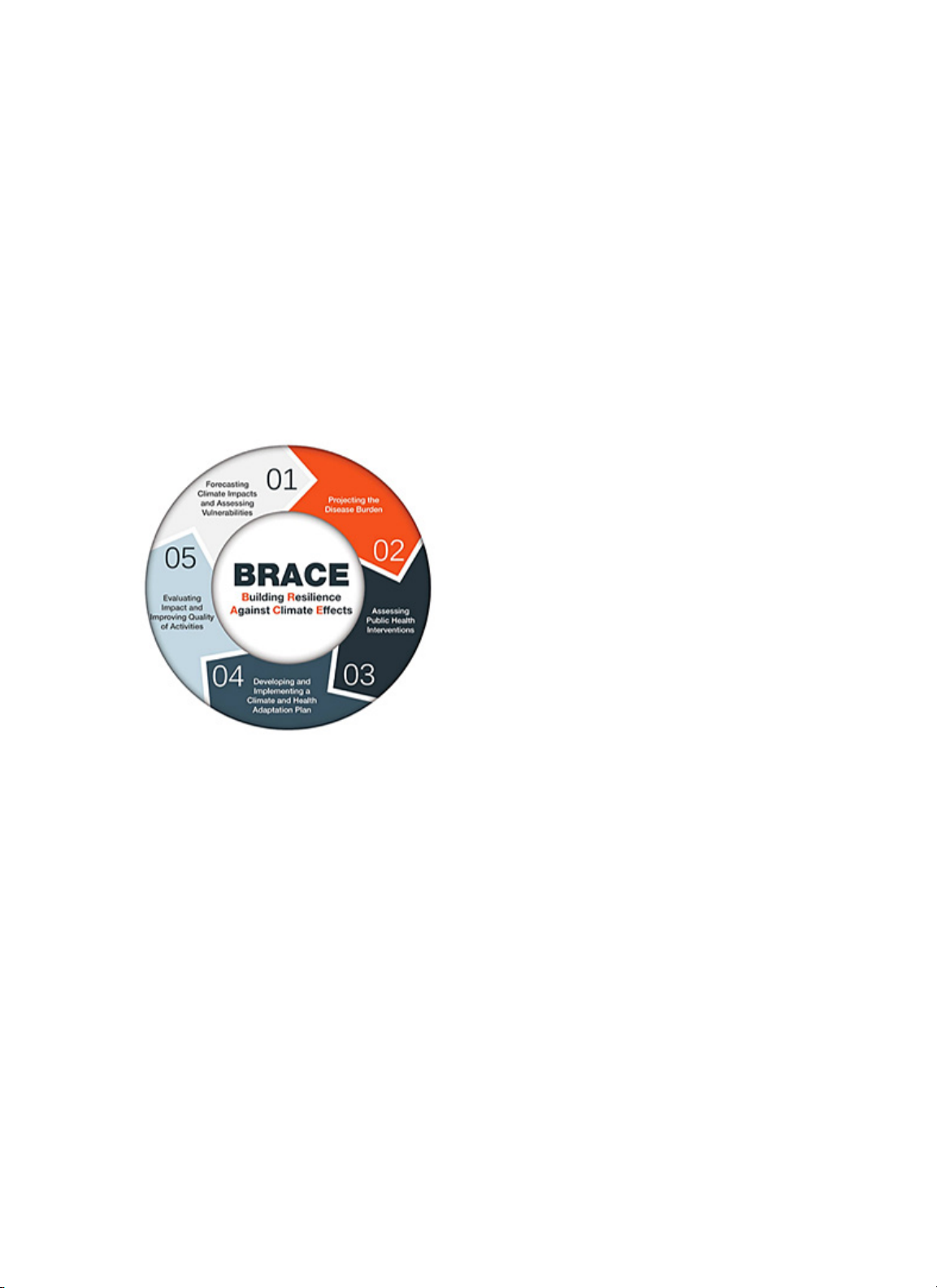
arise from climate change. The BRACE framework
potential occupational safety and health hazards and
(an adaptive management approach) can help
climate change, but also their mitigation methods.49
employers and workers to adapt to the new
For example, adaptation and mitigation policies of
normal. Following is the list showing employer’s
climate change couldresult in changes in building preparedness:
design and energy consumption which can have
positive impacts on health and safety of workers. •
Allocation of resources for identification of
The scope of occupational health surveillance hazards
should be expanded to incorporate health and safety •
Identification of vulnerable groups in
impacts caused by climate change on workers.49 workplace •
Ensure the execution of control measures in
accordance with policies, procedures, and equipment
Employer readiness consists of amendments in
building safety, scheduling, work operations and
interactions and integration with other preparedness
such as involving the fire department in process
safety management or launching a communication
system to reach workers at home.52 National Institute
for Occupational Safety and Health (NIOSH) provides
recommendations that emergency responders
must be protected under any circumstances and
facilitates the integration of health monitoring system
into incident command structure for long-term
monitoring of potential health effects after exposure
of emergency-response (The Emergency Responder
Health Monitoring and Surveillance Framework).44
Fig.2: Framework of the Centers for Disease
Control and Prevention (CDC), Building Conclusion
Resilience against Climate Effects (BRACE),
It is evident that due to intense climatic and
Adopted and modified from Centers for
weather conditions, severe workplace heat
Disease Control and Prevention.39
exposures increase the rate of incidents and
A holistic method which is adopted to address the
health illnesses indeveloping countries and
possible influence of climate change on health
fast-paced working places. General public’s health
and safety of employees and workers includes
is the most addressed research and policy issue till
integrated hazard recognition, coordination and
date in climate change research; however, much
response.50 The vulnerability assessment leading to
evidence is also present regarding the influence of
mitigation action and evaluation can be utilized to
climate change on occupational health and safety
reduce occupational health and safety hazards and
of employees and laborers in outdoor environments.
risks making the workplace environment safe for
Workplace heat exposure along with the climatic
the workers, according to the “Building Resilience
extremes result in rise in heat related injuries to
against Climate Effects Framework of the Centers manual workers, especially in tropical regions.
for Disease Control and Prevention”.49,51
If effective climate adaptation and heat exposure
avoidance procedures are taken in the workplace,
The commitment of the top management, workers’
such effects can be reduced. Owing to the lack of
participation in hazard identification, risk assessment reporting system of heat-related disorders and the
process and taking control measures are some
lack of awareness, the possible impacts of workplace
ABOKHASHABAH et al., Curr. World Environ., Vol. 16(3) 836-847 (2021) 844
heat exposure are miscalculated globally.From the Acknowledgments
studies considered, it is evident that safety and
The author would like to thank Magadh University for
health of outdoor workforce are influenced by many granting the Ph.D. research work. The Department
factors like socio-demographic variables, policy and
of Environmental Science, A.N. College, Patna of
regulations, prevailing working conditions, availability
the Magadh University, is highly appreciated for
and provision of facilities at workplace, and worker’s
allowed the GIS laboratory work. The author is
own attitude. The workers' attitude, behavior,
also profoundly grateful to the National Remote
ideas, perceptions, and beliefs however are proved
Sensing Center (NRSC), Indian Space Research
to be the significant factors in many studies as Organization (ISRO) Govt. of India for their guidance
they shape workers’ orientation towards safety,
during the Satellite data procurement.
hazards, and risks. Along with the consideration of
procedures for the protection of human resources Funding
(employees and workers) from extreme heat exposure
There is no funding or financial support for this
because of climate change, the development research work.
of appropriate surveillance programs is unavoidable.
These may help in suitable occupational heat Conflict Of Interest
exposure assessment and mitigation of the
Declare the conflict of interest in the manuscript
injuries and ill-health effects that occur due to high
temperature caused by climate change extremes. References 1.
Schulte PA, Chun H. Climate Change and
Climate Change and Occupational Health
Occupational Safety and Health: Establishing
and Safety. NIOSH Science Blog. Centre for
a Preliminary Framework. J. Occup. Environ.
Disease Control and Prevention. 2014. Hyg. 2009;6:542–554. 7.
Flouris AD, Dinas PC, Ioannou LG, Nybo 2.
Ahmad I, Balkhyour MA, Abokhashabah TM,
L, Havenith G, Kenny GP, Kjellstrom T.
IsmailIM, Rehan M. Workplace Safety and
Workers’ health and productivity under
Health Conditions and Facilities in Small
occupational heat strain: A systematic review
Industries in Jeddah. Saudi Arabia. Journal
and meta-analysis. Lancet Planet. Health.
of Safety Studies. 2017 a;3 (1):37-52. 2018;2:e521–e531. 3.
Ahmad I, BalkhyourMA, AbokhashabahTM, 8.
Kjellstrom T, Kovats RS, Lloyd SJ, Holt T, Tol
I s m a i l I M , R e h a n M . O c c u p a t i o n a l
RS. The direct impact of climate change on
Musculoskeletal Disorders among Taxi
regional labour productivity. Arch. Environ.
Industry Workers in Jeddah. Saudi Arabia:
Occup. Health. 2009;64:217–227.
Biosciences Biotechnology Research Asia. 9.
Nilsson M, Kjellstrom T. Climate change 2017b;14(2):593-606.
impacts on working people: How to develop 4.
Ahmad I, RehanM, BalkhyourMA, IsmailIM.
prevention policies. Glob. Health Action.
Assessment of Occupational Health and 2010;3:1543.
Safety in Motor Vehicle Repair Workshops 10.
Gubernot DM, Anderson GB, Hunting KL. The
in Jeddah. Biosciences Biotechnology
Epidemiology of Occupational Heat-Related
Research Asia. 2017c;14(3):901-913.
Morbidity and Mortality in the United States: 5.
Abokhashabah T, Jamoussi B, Summan
A Review of the Literature and Assessment
AS, Abdelfattah E, Ahmad I.A review of
of Research Needs in a Changing Climate.
occupational exposure to heat stress,
Int. J. Biometeorol. 2014;58:1779–1788.
its health effects and controls among 11.
Campbell-Lendrum D, Manga L, Bagayoko
construction industry workers: A case of
M, Sommerfeld J.Climate change and
Jeddah, KSA. Int. J. Biosci. 2020;17(1):35-45;
vector-borne diseases: What are the doi:10.12692/ijb/17.1.35-45.
implications for public health research and 6.
Kiefer M, Lincoln J, Schulte P, Jacklistch B.
policy? Philos. Trans. R. Soc. B Boil. Sci.
ABOKHASHABAH et al., Curr. World Environ., Vol. 16(3) 836-847 (2021) 845 2015;370:20130552. 22.
Galvin JFP. The weather and climate of the 12.
EASAC European Academies’ Science
tropics, Part 1- Setting the scene. Weather.
Advisory Council. The Imperative of Climate 2007; 63(9):245-251.
Action to Protect Human Health in Europe; 23.
Galvin JFP. The weather and climate of the
EASAC Policy Report 28 June 2019; EASAC
tropics, Part 9- Climate, flora and fauna.
European Academies’ Science Advisory
Weather. 2009; 64(4):100-107.
Council: Halle, Germany, 2019; ISBN 978-3- 24.
Corlett RT. The impacts of climate change 8047-4011-2.
in the Tropics. State of the Tropics Report. 13.
Behera JR, Mohanty N. Heat-related illness 2014; 155-160.
in Tropics. IAP textbook of tropical diseases. 25.
Inter-governmental Panel on Climate Change, 2020:689-696.
2013. Climate Change 2013: The physical 13.
Behera JR, Mohanty N. Heat-related illness
science basis, contribution of working
in Tropics. IAP textbook of tropical diseases.
group 1 to the fifth Assessment Report 2020:689-696.
of the Intergovernmental Panel on Climate 14.
Yoopat P, Toicharoen P, Glinsukon T,
Change, Cambridge, United Kingdom.
Va n w o n t e r g h e m K , L o u h e v a a r a V.
26. Xiang J, Bi P, Pisaniello D, Hansen A. The
Ergonomics in practice: physical workload
impact of heat waves on workers’ health and
and heat stress in Thailand. Int J Occup Saf
safety in Adelaide, South Australia. Environ. Ergon. 2002;8:83–93. Res. 2014;133:90–95.
15. Campbell S, Remenyi TA, White CJ, Johnston 27. Thompson KMA, Coates AM, Incognito
FH. Heatwave and health impact research:
AV, Whinton AK. Chronic heat exposure
A global review. Health and place. 2018;
for health and exercise performance 53:210-218.
- cardiovascular research heats up. J. Physiol.
16. Moda HM, Minhas A. Impacts of climate
2017;595(13):4137-4138. doi:10.1113/
change on outdoor workers and their safety: JP274003
some research priorities. International journal 28.
Gubernot DM, Anderson GB, Hunting KL.
of environmental research and public health.
The epidemiology of occupational heat 2019;16(18):3458.
exposure in the United States: a review of the
17. WHO. Heat-Health Action Plans Guidance;
literature and assessment of research needs
WHO Regional Office for Europe: Geneva,
in a changing climate. International Journal Switzerland, 2008.
of Biometeorology. 2014;58(8):1779-1788. 18.
Thomas F, Sabel CE, Morton K, Hiscock 29.
Kjellstrom T, Freyberg C, Lemke B, Otto
R, Depledge MH. Extended impacts of
M, Briggs D. Estimating population heat
climate change on health and wellbeing.
exposure and impacts on working people
Environ. Sci. Policy. 2014;44:271–278.
i n c o n j u n c t i o n w i t h c l i m a t e c h a n g e .
19. Naserikia M, Shamsabadi EA, Rafieian
I n t J B i o m e t e o r o l . 2018;62(3):291-
M, Filho WL. The Urban Heat Island in an
306. doi:10.1007/s00484-017-1407-0.
Urban Context: A Case Study of Mashhad, PMID: 28766042.
Iran. Int. J. Environ. Res. Public Health. 30.
B a l b u s J M , B o x a l l A B , F e n s k e R A , 2019;16:313.
McKone TE, Zeise L. Implications of global 20.
Schulte PA, Chun H. Climate change and
climate change for the assessment and
occupational safety and health: establishing
management of human health risks of
a preliminary framework. J Occup Environ
chemicals in the natural environment.
Hyg. 2009;6 (9) :542-54. PMID: 19551548.
Environmental Toxicology and Chemistry.
doi:10.1080/15459620903066008. 2013;32:62–78.
21. ILO. World Social Protection Report 2017– 31.
Bourbonnais R, Zayed J, Levesque M, Busque
19: Universal social protection to achieve
MA, Duguay P, Truchon G. Identification of
the Sustainable Development Goals (Geneva).
workers exposed concomitantly to heat
2018b. World Employment and Social
stress and chemicals. Industrial Health.
Outlook 2018: Greening with jobs (Geneva). 2013;51:25–33. 2017. 32.
Noyes PD, McElwee MK, Miller HD, Clark
ABOKHASHABAH et al., Curr. World Environ., Vol. 16(3) 836-847 (2021) 846
BW, Tiem LA, Walcott KC, Erwin DL.
and Perceptual Responses of Construction
T h e t o x i c o l o g y o f c l i m a t e c h a n g e :
Workers (Bar Benders and Bar Fixers) In
Environmental contaminants in a warming
a Hot Environment.Applied Ergonomics.
w o r l d . E n v i r o n m e n t I n t e r n a t i o n a l . 2014;45:1705–1711. 2009;35: 971-986.
42. Kjellstrom T, Holmer I, Lemke B. Workplace 33.
Gubernot DM, Anderson GB, Hunting KL. The
heat stress, health and productivity
Epidemiology of Occupational Heat-Related
– an increasing challenge for low and
Morbidity and Mortality in the United States:
middle-income countries during climate
A Review of the Literature and Assessment
change. Global Health Action. 2009;2:1.
of Research Needs in a Changing Climate. doi: 10.3402/gha.v2i0.2047.
Int. J. Biometeorol. 2014;58:1779–1788. 43.
Parsons K. Human thermal physiology 34.
Campbell-Lendrum D, Manga L, Bagayoko
and thermoregulation. In Human Thermal
M, Sommerfeld J.Climate change and
Environments. 2014;pp. 98-117. CRC Press.
vector-borne diseases: What are the 44. National Institute for Occupational Safety
implications for public health research and
and Health (NIOSH). Emergency responder
policy? Philos. Trans. R. Soc. B Boil. Sci.
health monitoring and surveillance (ERHMS). 2015;370:20130552.
Atlanta, GA: Centers for Disease Control and
35. Bi P, Williams S, Loughnan M, Lloyd G, Hansen Prevention. 2018.
A, Kjellstrom T, Dear K, Saniotis A. The effects 45. Luo EK. Hot and cold: Extreme temperature
of extreme heat on human mortality and
safety. 2018; https://www.healthline.com/
morbidity in Australia: Implications for public
health/extreme-temperature-safety retried on
health. Asia Pacific Journal of Public Health. 1st December, 2021. 2011;23(2):27–36.
46. Pogacar T, Casanueva A, Kozjek K, Ciuha
36. Fiore AM, Naik V, Leibensperger EM. Air
U, Mekjavic IB, BogatajKL, Crepinšek Z. The
quality and climate connections. Journal of
effect of hot days on occupational heat stress
the Air and Waste Management Association.
in the manufacturing industry: Implications 2015;65:645–685.
for workers’ well-being and productivity. 37.
US Global Change Research Program. The
International Journal of Biometeorology.
impacts of climate change on human health 2018;62(7):1251–1264.
in the United States: A scientific assessment. 47. ILO. Working on a Warmer Planet: The Washington, DC. 2016.
Impact of Heat Stress on Labour Productivity
38. Ye M, Beach J, Martin JW, Senthilselvan
and Decent Work. International Labour Office:
A. Occupational Pesticide Exposures and
Geneva, Switzerland. 2019.
Respiratory. Health International Journal of
48. Steenland K, Zhao L, Winquist A. A cohort
Environmental Research and Public Health.
incidence study of workers exposed 2013; 10:6442-6471.
t o p e r f l u o r o o c t a n o i c a c i d ( P F O A ) . 39.
Kjellstrom T, Briggs D, Freyberg C, Lemke B,
Occup Environ Med. 2015;72(5):373-
Otto M, Hyatt O. Heat, Human Performance,
80. PMID: 25601914. doi:10.1136/
and Occupational Health: A Key Issue for oemed-2014-102364.
the Assessment of Global Climate Change 49.
Levy BS, Roelofs C. Impacts of climate
Impacts. Annu Rev Public Health. 2016;37:
change on workers’ health and safety.
97-112. PMID: 26989826.doi: 10.1146/
In Oxford Research Encyclopedia of Global
annurev-publhealth-032315-021740. Public Health. 2019.
40. Yi W, Chan APC. Effects of Heat Stress on 50. Roelofs C. Without warning: Worker
Construction Labor Productivity in Hong
d e a t h s f r o m h e a t 2 0 1 4 – 2 0 1 6 .
Kong: A Case Study of Rebar Workers.
New Solutions. 2018;28(2):344–357.
International Journal of Environmental 51.
Marinucci GD, Luber G, Uejio CK, Saha
Research and Public Health. 2017;14(9):1055.
S, Hess JJ. Building resilience against doi:10.3390/ijerph14091055.
c l i m a t e e ff e c t s : A n o v e l f r a m e w o r k
41. Wong DP, Chung JW, Chan APC, Wong
to facilitate climate readiness in public
FK, Yi W. Comparing the Physiological
health agencies. International Journal of
ABOKHASHABAH et al., Curr. World Environ., Vol. 16(3) 836-847 (2021) 847
Environmental Research and Public Health.
in Selecting an Appropriate Heat Stress 2014;11:6433–6458.
Index to Protect Workers in Hot and Humid 52.
Occupational Safety and Health Administration
Underground Mines. Safety and Health
( O S H A ) . E m e r g e n c y p r e p a r e d n e s s
at Work. 2018;9(1):10-16. ISSN 2093-
and response. Washington, DC. 2018.
7911,doi: 10.1016/j.shaw.2017.04.002. 53.
Roghanchi P, Kocsis KC. Challenges
Tài liệu liên quan:
-

Ung dung game hoa trong cac chien dich MKT
18 9 -

Bao cao Chi so TMDT Viet Nam 2025
15 8 -

Thông tư quy định về việc phân quyền, phân cấp và phân định thẩm quyền quản lý nhà nước về giáo dục cho chính quyền địa phương
24 12 -
Nghị quyết về phát huy các giá trị di sản văn hóa gắn với phát triên du lịch bền vững tỉnh Khánh Hòa đến năm 2025, định hướng đến năm 2030
14 7 -

Quyết định phê duyệt Chiến lược phát triển du lịch Việt Nam đến năm 2030
13 7