Tài liệu sưu tầm. Eyewitness Cat
Tài liệu sưu tầm . Sách về các loại mèo. Tài liệu được tổng hợp và sưu tầm gồm 73 trang. Mời các bạn tham khảo
Môn: Tài liệu Tổng hợp 3.6 K tài liệu
Trường: Tài liệu khác 3.9 K tài liệu
Tác giả:





Preview text:
Eyewitness
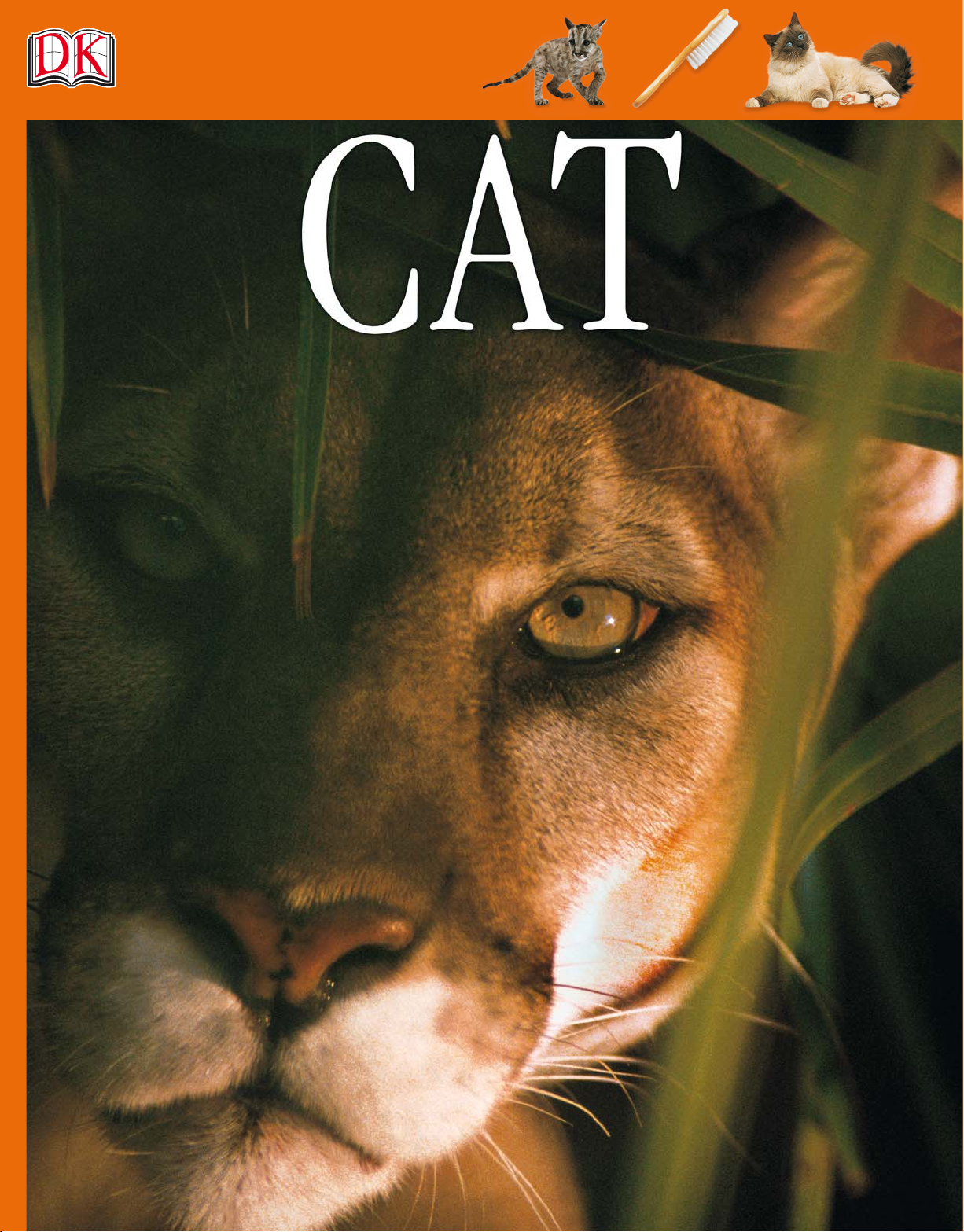
(c) 2011 Dorling Kindersley. All Rights Reserved. Eyewitness CAT
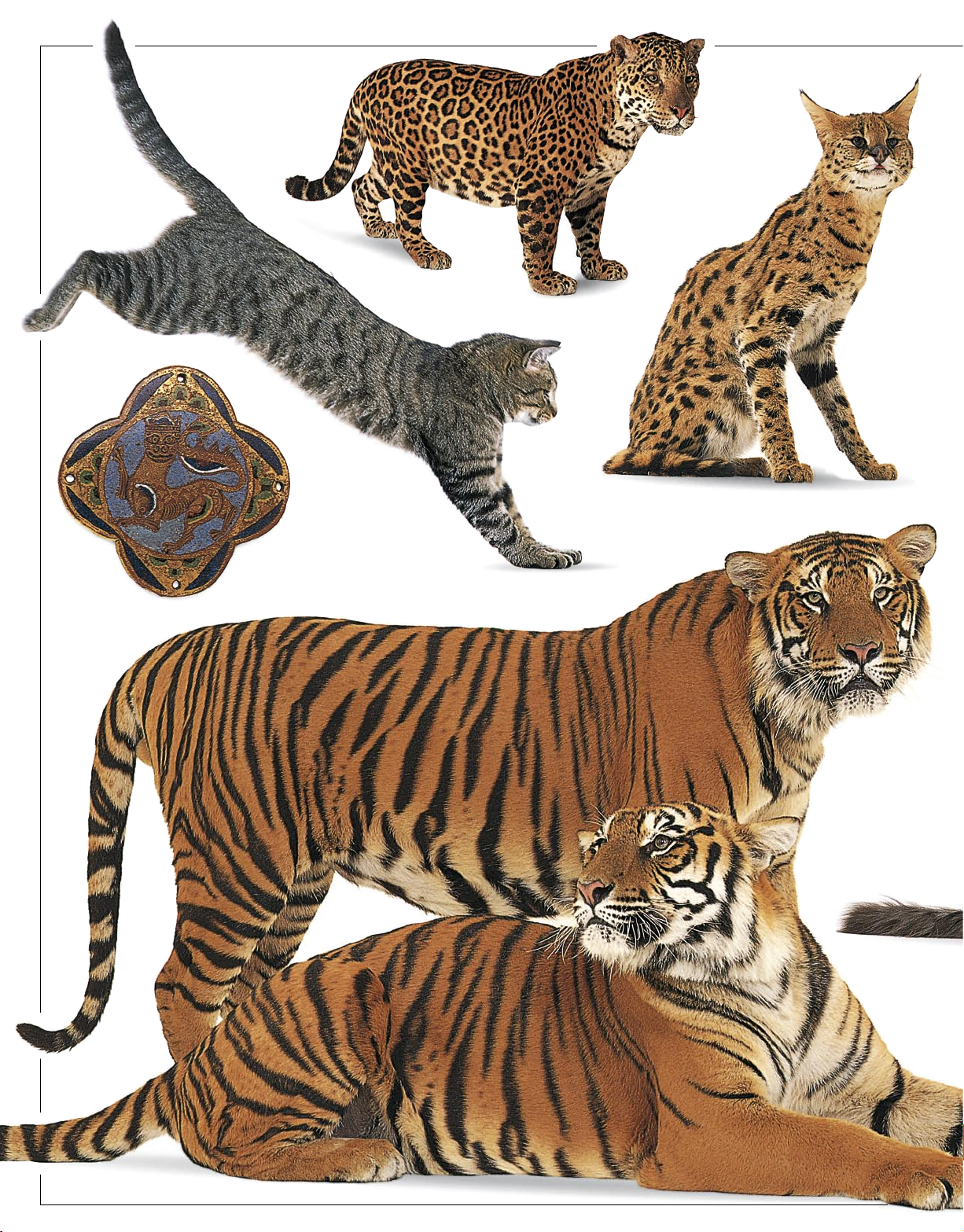
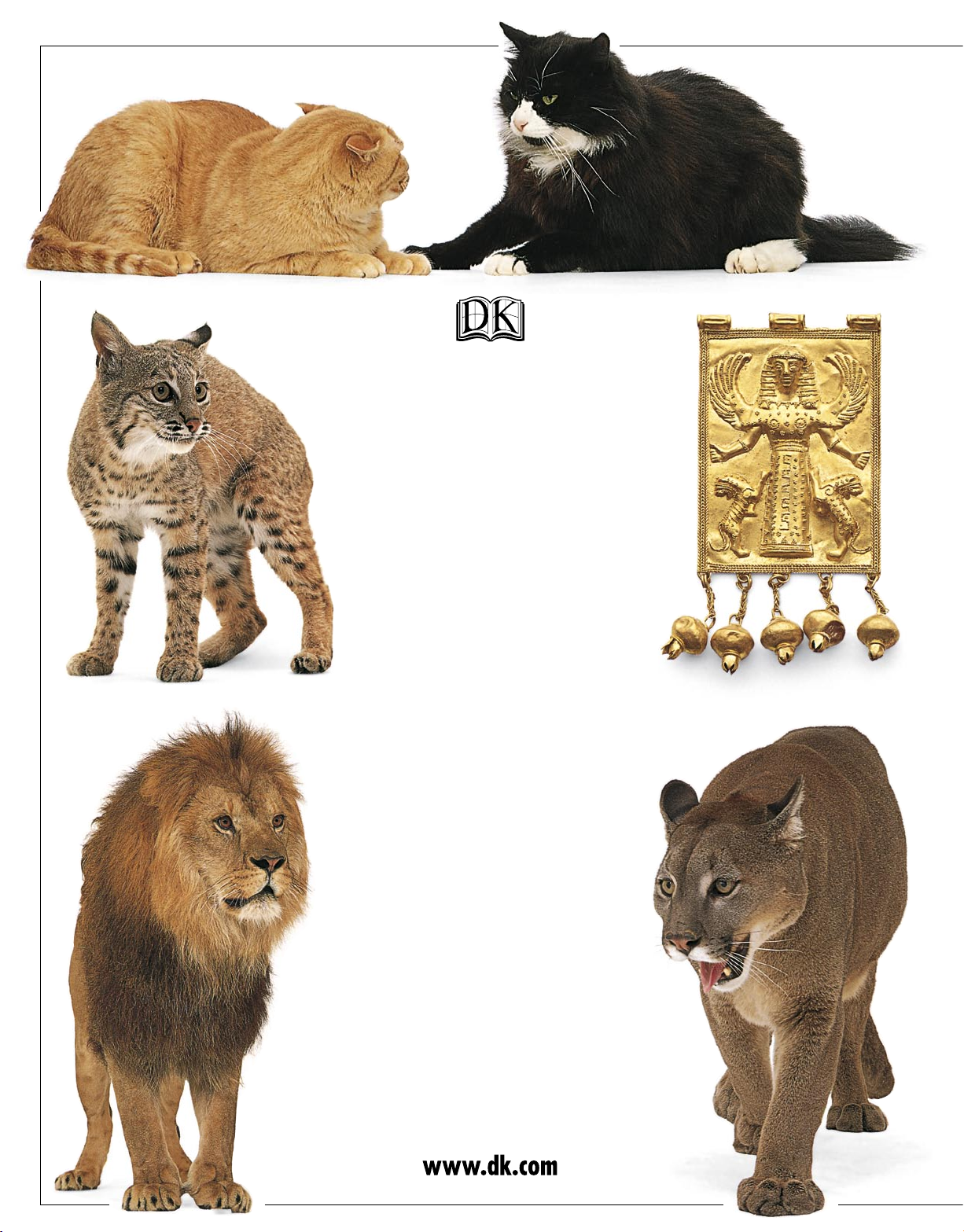
(c) 2011 Dorling Kindersley. All Rights Reserved. Jaguar Serval Plaque showing a crowned lion, Limoges, Tabby cat 12th century Tigers
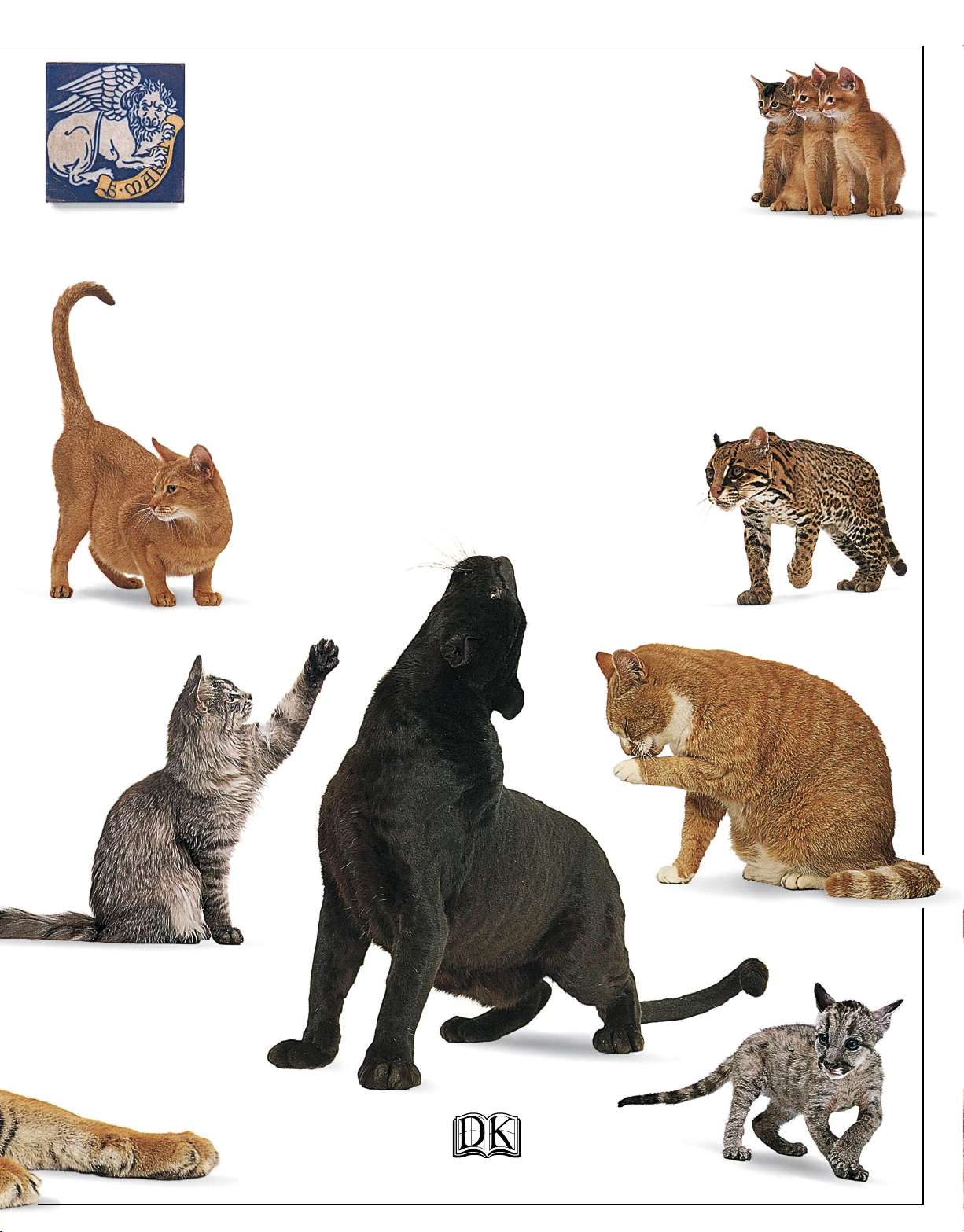
(c) 2011 Dorling Kindersley. All Rights Reserved. Eyewitness 19th-century inlaid earthenware tile. The lion is the symbol of St. Mark the evangelist CAT Abyssinian kittens Written by Juliet Clutton-BroCk Ocelot Abyssinian Ginger and white cat Maine coon Black leopard Puma cub Dk Publishing, inc.
(c) 2011 Dorling Kindersley. All Rights Reserved. Ginger cat Black-and-white cat London, new yorK, meLbourne, munICH, and deLHI
Project editor Gillian Denton
Art editor thomas keenes
Senior editor Helen Parker
Senior art editor Julia Harris
Production louise Barratt
Picture research Diana Morris
Special photography Dave king
Additional special photography Philip Dowell, Colin keates ABiPP Revised Edition
Managing editors Linda Esposito, Andrew Macintyre
Managing art editor Jane Thomas
Senior editor David John
Project art editor Joanne Little Editor Sarah Phillips
Art editor rebecca Johns Production luca Bazzoli
Picture research Sarah Pownall DTP designer Siu Yin Ho early Greek gold Bobcat Consultant kim Bryan necklace plate
U.S. editor elizabeth Hester
Senior editor Beth Sutinis
Art director Dirk kaufman
U.S. DTP designer Milos Orlovic
U.S. production Chris Avgherinos
This Eyewitness ® Guide has been conceived by
Dorling kindersley limited and editions Gallimard
This edition published in the United States in 2004
by Dk Publishing inc., 375 Hudson Street, new York, nY 10014 06 07 08 10 9 8 7 6 5 4
Copyright © 1991, © 2004 Dorling kindersley limited
All rights reserved. No part of this publication may be reproduced,
stored in a retrieval system, or transmitted in any form or by any
means, electronic, mechanical, photocopying, recording, or otherwise,
without the prior written permission of the copyright owner.
Published in Great Britain by Dorling kindersley limited.
A catalog record for this book is available from the library of Congress.
iSBn 13: 978-0-7566-0662-6 iSBn 10: 0-7566-0662-4 (PlC)
iSBn 13: 978-0-7566-0661-9 iSBn 10: 0-7566-0661-6 (AlB) Lion
Color reproduction by Colourscan, Singapore
Printed in China by toppan Printing Co., (Shenzhen) ltd Discover more at Puma
(c) 2011 Dorling Kindersley. All Rights Reserved. Contents Leopard 6 What is a cat? 8 The first cats 10 Cat clans 12 The bare bones 14 Inside out 16 44 Supersenses Cats’ kin 18 46 Magnificent movers The taming of the cat 20 48 Cleaning up Myths and legends 22 50 Playing cat and mouse Aristocats 24 52 The young ones Shorthairs 26 56 Cat characteristics Longhairs 28 58 Top cat Curious cats 30 60 Tiger, tiger, burning bright Street life 32 62 Tree climber Caring for your cat 34 64 Water cat Did you know? 36 66 High society Identifying breeds 38 68 Plains drifters Find out more 40 70 Forest felines Glossary 42 72 Speed king Index
(c) 2011 Dorling Kindersley. All Rights Reserved. What is a cat?
Cats are possibly the most beautiful and
graceful of all animals. they are sleek, with fine fur
that is often strikingly marked with spots or stripes
(pp. 14–15), and elegant heads with pointed ears
and large eyes. Both the wild cat and the domestic
cat belong to one family, the Felidae. Although they
vary in size from the common house cat to the huge CATECHISM
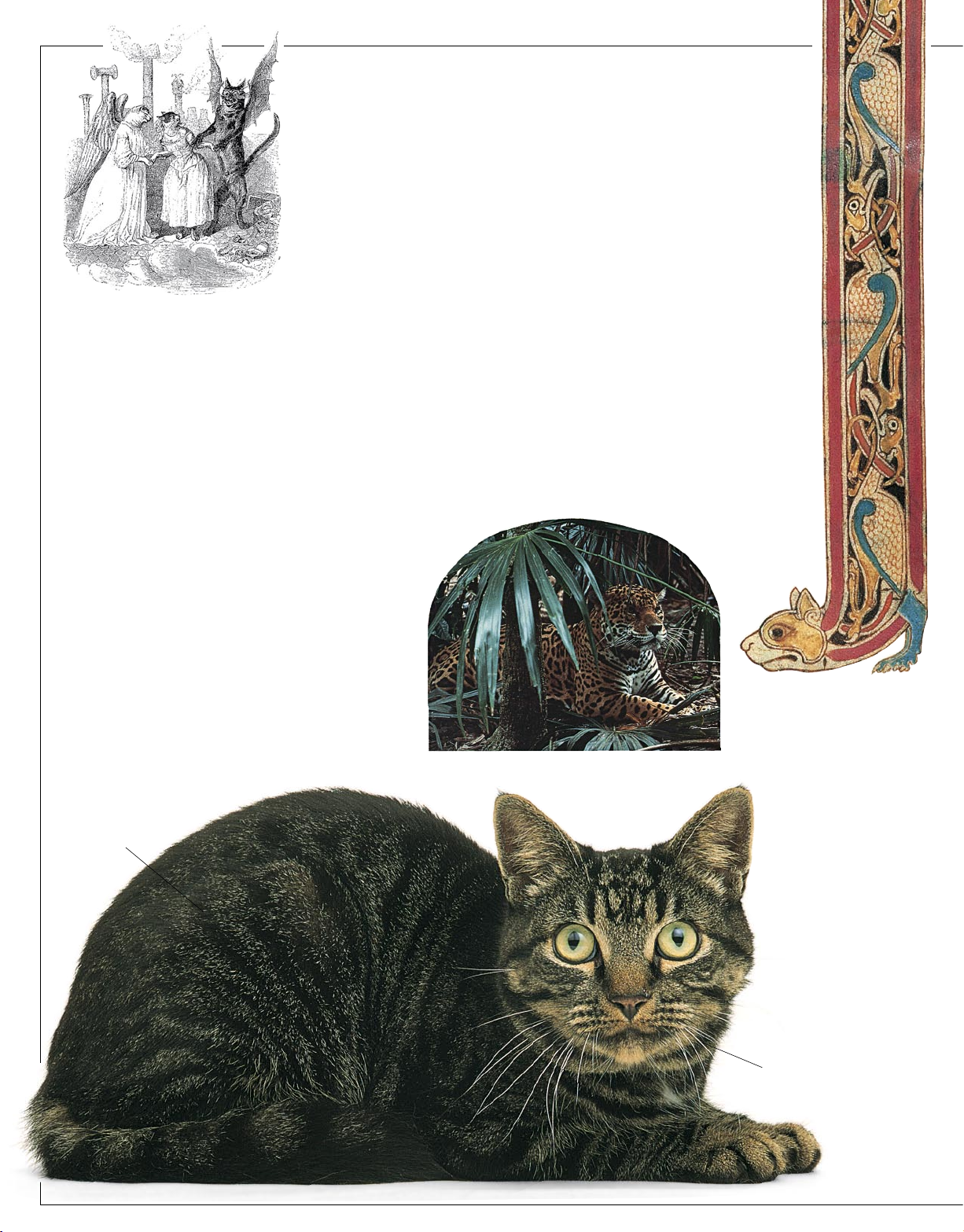
In Christian communities, cats
Siberian tiger, they look alike and behave in similar have always represented both
ways; a tiger rolling in the grass looks a lot like a good and evil. In this 19th century illustration set
giant tabby (pp. 26–27). Cats have all the features against an industrial
typical of mammals: they walk upright and are warm- background, good and bad cat
spirits fight over the soul of a cat blooded, and they have a protective skeleton, a four-
chambered heart, and mammary glands which secrete milk
to feed the young. Cats are among the most successful of all carnivores, or meat
eaters, and most of them live and hunt on their own. This solitary life is possible
because cats prey upon animals that are smaller than themselves and are
therefore not too difficult to kill. the
exception is the lion (pp. 28–29), which
hunts in a family group, or pride. The
domestic cat is one of the most popular
of all animal companions because it is
affectionate, intelligent, and playful. NOW YOU SEE ME…
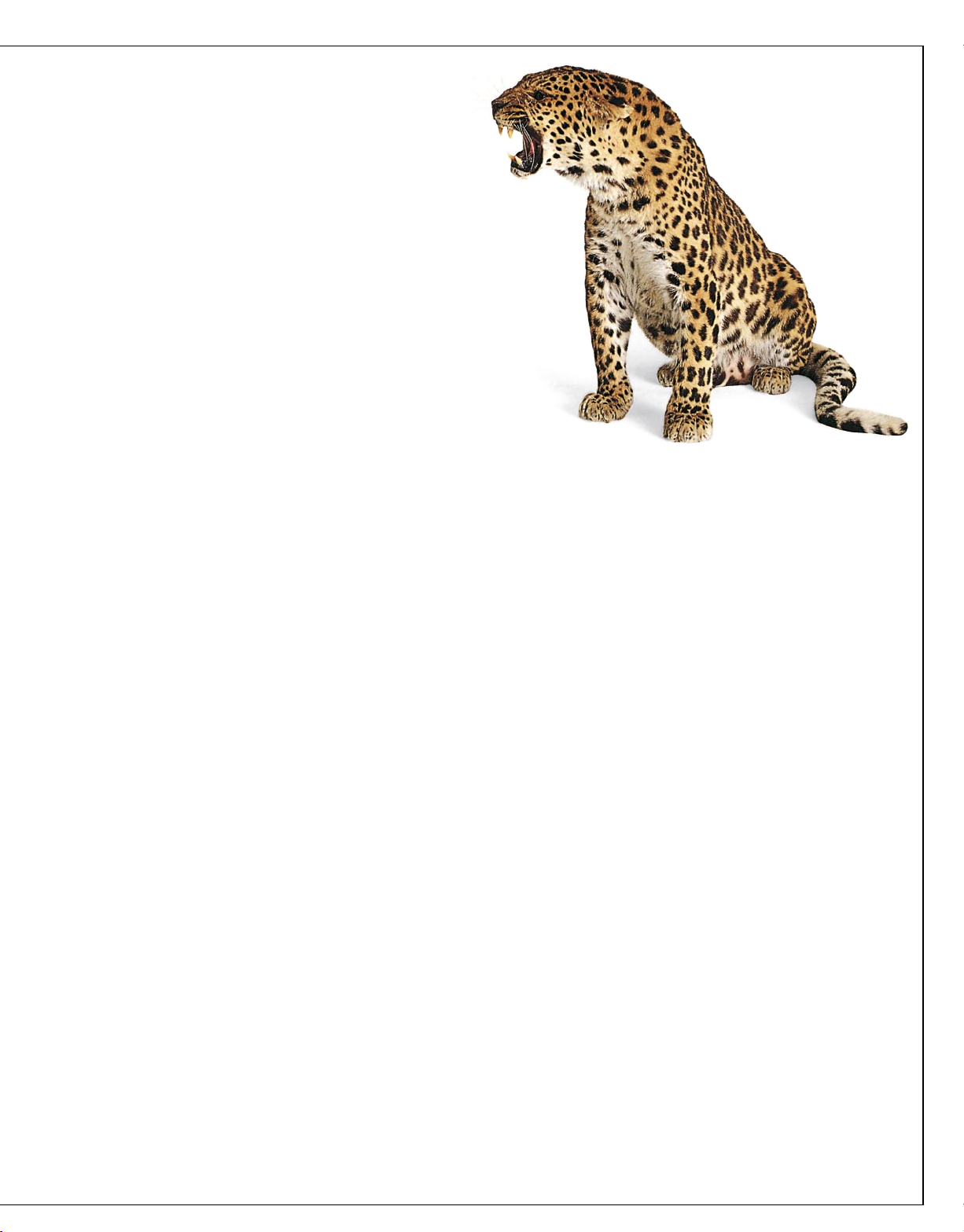
This jaguar is well-hidden. The striped and spotted ACCORDING TO THE GOSPEL
fur of the cat family provides very effective The beautiful Lindisfarne
camouflage in the great variety of habitats in which Gospels were written and
cats live. Both stripes and spots blend in well in decorated in Saxon
forests, jungles, grasslands, and plains. northumbria in Britain, around a.d. 700. the domestic cat was clearly a familiar sight around the The narrow stripes countryside at this time. and tabby markings of this domestic cat are inherited from its ADAPT AND SURVIVE wild ancestor Domestic cats are very adaptable. They can live in a room, a barn, or a palace, and they are found all over the world from tropical Africa to lands of snow and ice, such as Greenland. The cheetah can be successfully tamed, but the domestic cat is the only member of the cat family that lives and breeds happily within human society.
Whiskers are organs of touch
and help al cats - big, smal ,
wild, or domestic - to feel objects in the dark
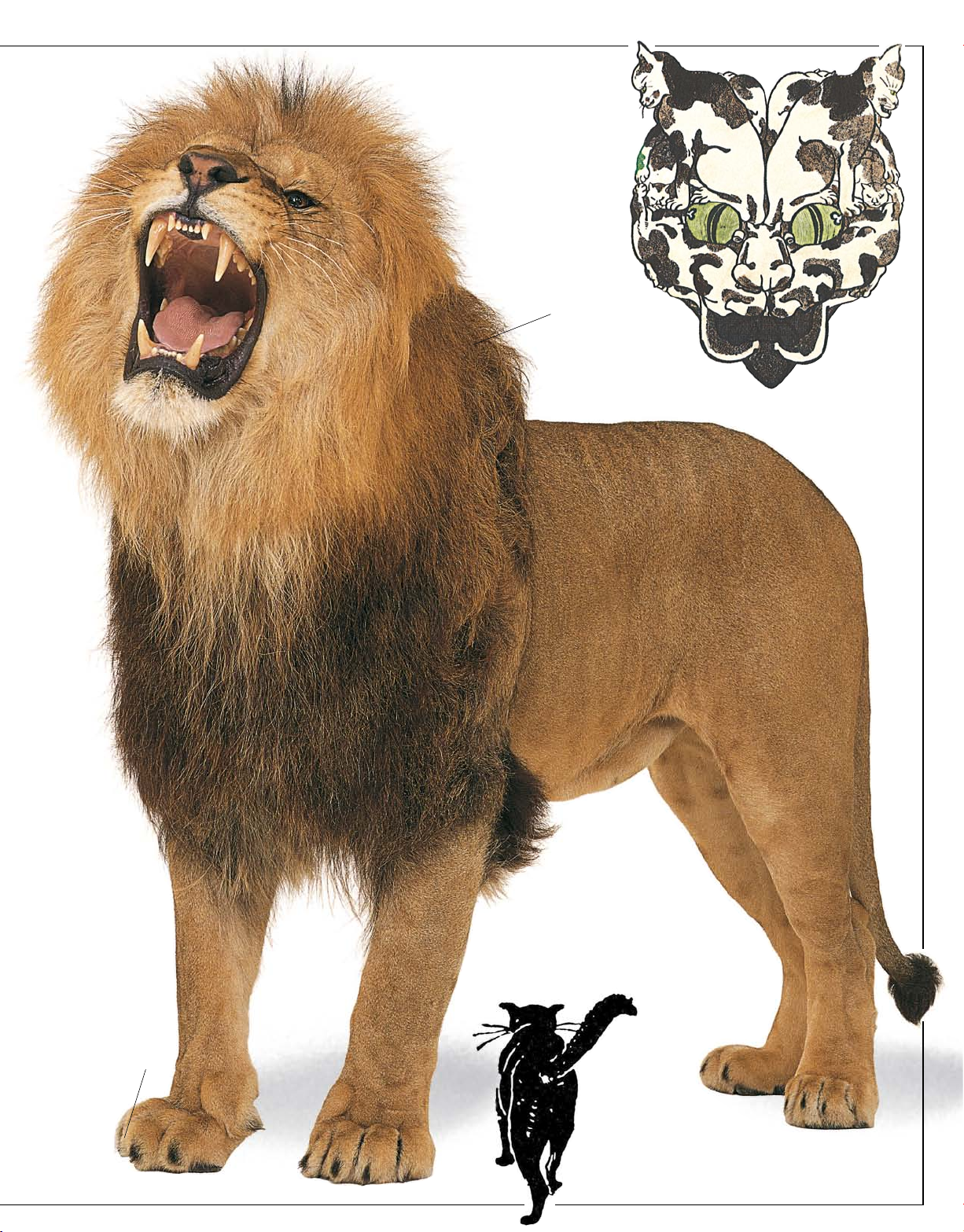
(c) 2011 Dorling Kindersley. All Rights Reserved. JAPANESE CAPRICE In certain religions, such as islam and Buddhism, cats have had a far happier history than in Christianity. The Japanese have a definite sympathy with the mysterious cat, and have often indicated its changeable nature by portraying one cat made up of many. The mane of the adult male lion is the only obvious sign of sexual
difference in the whole cat family COOPERATIVE CAT The lion is the only social cat. It lives in a shared territory with other
members of its pride and hunts
on a cooperative basis. This enables it
to hunt herd animals bigger than itself, like
antelope and zebra. like all cats, lions kill
their prey by stalking and then leaping on it and
biting into the neck (pp. 28–29). Al cats have claws, and all except the cheetah sheath them when at rest (pp. 42–43) THE CAT THAT WALKED BY HIMSELF the British writer rudyard
kipling explained the cat’s place
in human affection and its need for
solitude in a wonderful story called
The Cat That Walked By Himself.
(c) 2011 Dorling Kindersley. All Rights Reserved. The first cats
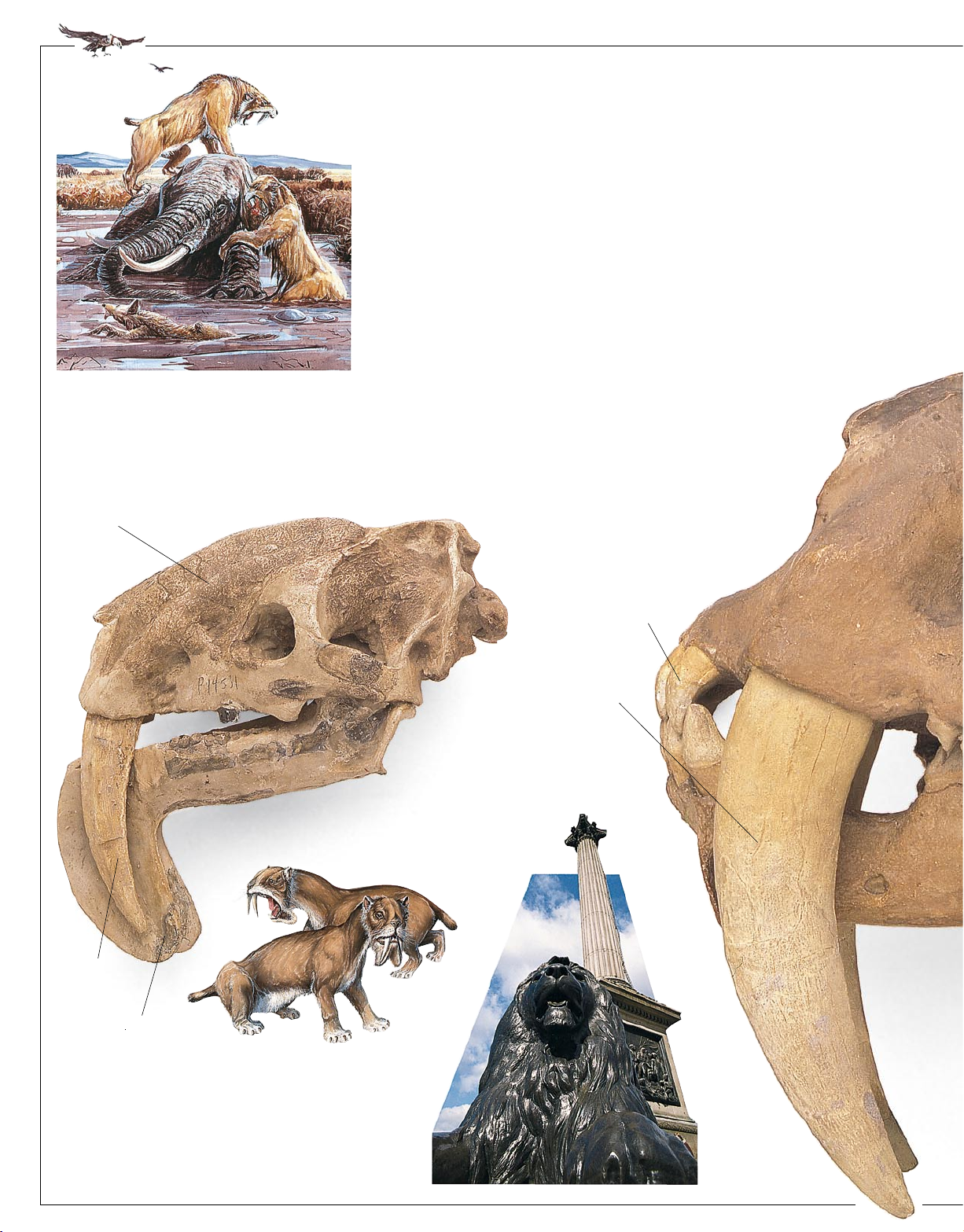
Millions of years ago, many cat-like animals
walked the earth, some more massive and fierce
than any alive today. The earliest fossil ancestors of
the cat family come from the Eocene period, some
50 million years ago. these ancestors evolved into
the species of large and small cats that are living
today, such as the lion and the house cat. Another
line of evolution produced the now extinct saber-
toothed cats, so-called because the huge
canine teeth in the upper jaw were like STUCK ON YOU
daggers, or sabers, and the cats killed their
in the ice Age, a natural eruption of black, sticky tar
prey by stabbing it with these weapon-like
at rancho la Brea, now part of los Angeles,
California, trapped thousands of different animals,
teeth. Some saber-toothed cats were large;
including 2,000 saber-toothed Smilodon. These
others were small. The American species
carnivores probably got stuck when they rushed
into the tar after prey that was trying to escape
Smilodon, well-known from the la Brea tar from them.
pits in California, was a little larger than a modern tiger. Tooth root Very large teeth for biting off chunks of meat Huge saber-teeth used as daggers to stab prey THYLACOSM1LUS
Thylacosmilus looked like a saber-toothed cat, but it was
no relation to the cat family.
Thylacosmilus was a marsupial
(the young develop after birth in
their mother’s pouch) that lived in South
America during the Pliocene period, about 7 million years ago. Continuously growing upper Artist’s canine tooth impression of Thylacosmilus
Lower jaw developed into a
bony sheath, protecting large canine teeth SUITABLE MONUMENT
Sir edwin landseer (1802–1873) sculpted the lions that flank
Admiral Lord Nelson’s column in London’s Trafalgar Square, to
commemorate British victories in battle. During the last ice
Age, real lions roamed the freezing landscapes of Britain in
search of prey like bison and wild horses. the bones of these
extinct lions have been found right underneath the Landseer
lions in the heart of modern London.
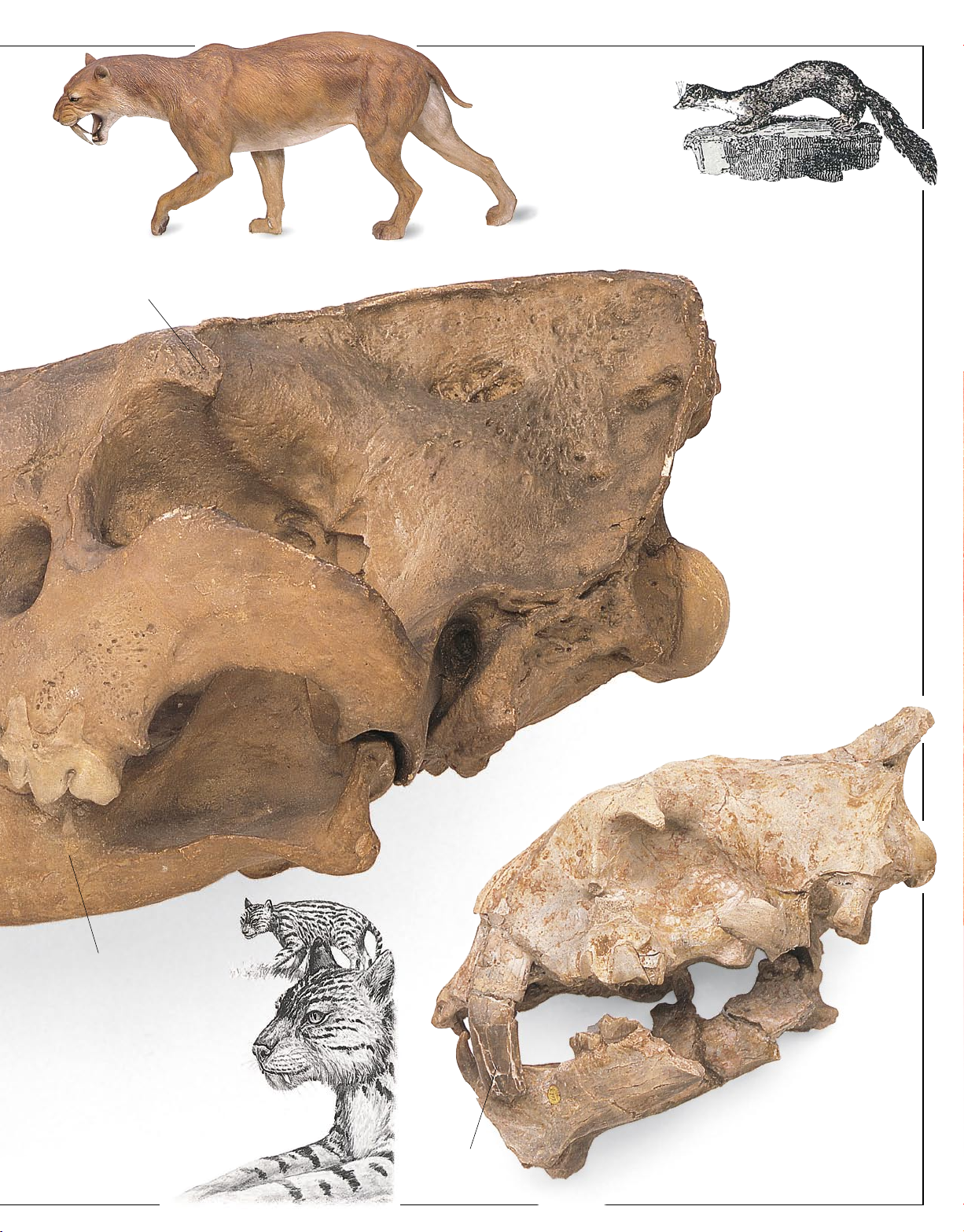
(c) 2011 Dorling Kindersley. All Rights Reserved. SMILODON
This was a large, saber-toothed cat that inhabited open grasslands. like the lion of
today, the extinct Smilodon lived in family groups and preyed on large herd animals like reconstruction of bison and mammoth. It Smilodon. No one did not become extinct MIACIS can know its until the end of the last
Miacis was a distant ancestor of the true color. Ice Age, about 10,000
cat family. it looked like a marten years ago.
but had longer legs. It probably
lived in the tropical forests of the
eocene period, about 50 million
Smilodon was smal -brained,
years ago. Miacis has been found as
and most of its skul was made a fossil in Germany. up of jaws and teeth THE STABBER
Smilodon’s saber-teeth extended well below the
lower jaw, so the animal could use them without opening its
mouth wide. The teeth were used
like daggers to stab prey. All the
saber-tooths had somewhat weak
lower jaws, but the muscles used to
bring the head down could exert a
powerful force, essential when stabbing huge, slow-moving animals like the mammoth. Weak lower jaw DINICTIS Dinictis was about the same size as today’s serval HOPLOPHONEUS (pp. 38-39), and like the This was one of the serval was probably a earliest extinct cats. It
grassland predator. Dinictis lived in North America in the has been found as a fossil
oligocene period, about 35 million in South Dakota.
years ago. Hoplophoneus was only
distantly related to Smilodon but also had Stabbing
large canine teeth for stabbing its prey. tooth
(c) 2011 Dorling Kindersley. All Rights Reserved. Cat clans
Cats kill other animals for food, which means that they
are part of the order Carnivora (meat eaters) along with
about 200 other species, including bears, pandas, dogs,
hyenas, raccoons, and weasels. There are four groups
within the cat family: the small cats, which includes 28 different
species including domestic cats and cats as diverse as the small
black-footed cat and the large puma; the large cats (the lion, tiger,
jaguar, leopard, and snow leopard); and two groups consisting of
only one cat each, the cheetah and the clouded leopard. Wild cats
are native to every continent except Australia, where they have
been introduced by humans, and Antartica. The domestic cat is
descended from one species of small wildcat, Felis silvestris,
which is still found today in parts of Europe, western Asia,
and Africa. The small cats differ from the large cats not only
because they are smaller but also because they are unable
to roar. Cats have remarkably well-developed senses, fast
movements, and very sharp teeth, and
are the most highly specialized meat eaters of all the carnivores. ORIGIN OF THE SPECIES Carl von linné (linnaeus; 1707-1778) was a Swedish
botanist. He invented the system of
giving Latin names to plants and
animals. He called the domestic cat
Felis catus and the lion Felis leo. PUMA The puma, or cougar, is an oversized small cat that can purr like a tabby. It lives in North and South America. The first European
settlers thought it was a lion
but couldn’t understand what had happened to its mane! BOBCAT This inhabitant of North America looks like a lynx Small cats
without the long ear tufts. It is the most common wild cat in
Small cats include all the smaller wild cats North America but is
as well as the domestic cat. All the small seldom seen.
cats live on their own and hunt by night.
They are found all over the world in a great DOMESTIC CAT
variety of habitats, and tragically, many
Today, there are nearly as many breeds of domestic
cats as there are breeds of dogs. They are all
have been hunted almost to extinction for
descended from the wildcat (Felis silvestris).
their soft, beautifully patterned fur. 10
(c) 2011 Dorling Kindersley. All Rights Reserved. Big cats The big cats are at the top of the hunting pyramid and require a great deal of meat. They have always been fewer in number than the small cats, which are more easily able to find sufficient food for their needs. TIGER The tiger is the largest and heaviest of all the cats. It is a night hunter, preying on animals smaller than itself.
Tigers are found from tropical ON THE SCREEN India to icy Siberia.
The lion has often been used as a
symbol of quality. One of the best
known advertising cats is the MGM
lion, seen here practicing his roar. Odd cats out Ancestors
Two members of the cat family are distinct of early cats
from all others – the clouded leopard and the
cheetah. The clouded leopard is a large animal Social Solitary
but does not roar like the other big cats, nor hunters hunters
does it groom or rest like a small cat. the
cheetah is unique because it is a running cat; leaping running all others are leaping cats. cats cats Other big Clouded Small CLOUDED LEOPARD Lion cats leopard cats Cheetah
The clouded leopard is about the
size of a small leopard but is not
closely related. It lives in the
forests of Southeast Asia but is
rarely seen and is in danger of THE DESCENT OF THE CAT extinction. like the true
The relationships and fossil history of the
leopard, it often climbs trees.
different cats are not fully understood. In
this diagram, the cheetah is separated
from all the others and is called a running CHEETAH
cat because it is unique in being able to
the cheetah is unlike all other cats –
chase its prey at incredible speed.
it does not have sheaths over its claws
However, it kills its prey in the same way
(pp. 14–15) and it can run at great
as all cats – by leaping on it and biting
speed. This ability is an adaptation to life as
into its neck. All other cats are called
a hunter on the African grasslands where there
leaping cats because they slowly stalk
are many other competing carnivores.
their prey and then leap on it. 11
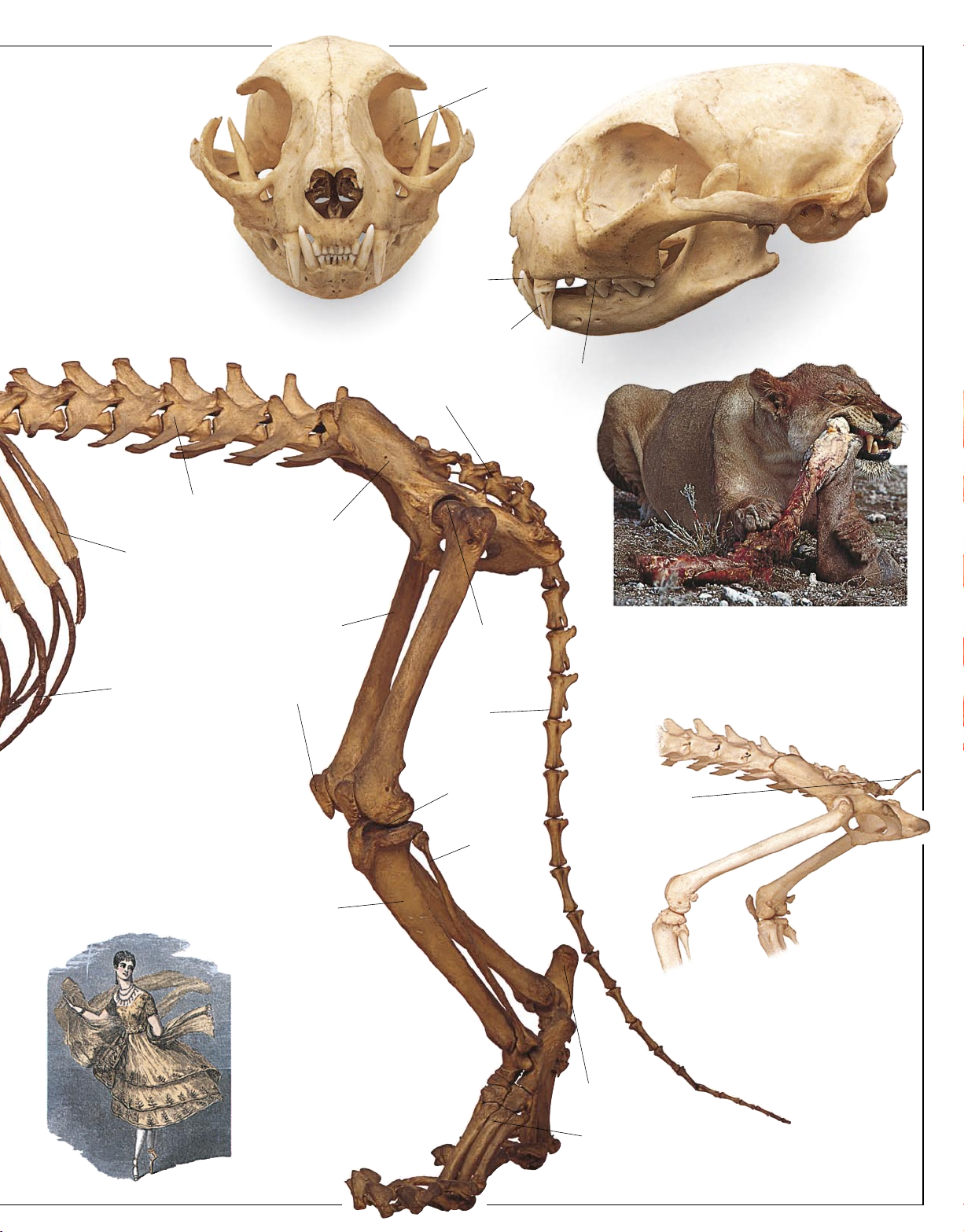
(c) 2011 Dorling Kindersley. All Rights Reserved. The bare bones
The skeleton, consisting of about 250 bones, provides a rigid
framework for the soft parts of the body, protecting them from shock and
injury, and at the same time allowing the cat to move with great agility and
suppleness. the skull, in both large and small cats, is highly specialized for
killing prey and devouring it in the shortest possible time, before other
predators can steal it. the eye sockets (orbits) are large and round to allow a
wide field of vision, the hearing parts of the skull are large, and the short
jaws open very wide. Cats kill their prey with bites from their very NIGHT PROWLER
sharp canine teeth and then tear off pieces of meat with This snow leopard, Spine of thoracic hunting at night, reveals
their carnassial (tearing) teeth. they do not chew their vertebrae its fearsome teeth as it
food, but bolt it down; nor do they gnaw at bones, so gets ready to attack.
they do not need as many teeth as dogs. Large eye
High crest for attachment socket of jaw muscles Long root of the canine tooth Neck (cervical) vertebrae Very heavy lower jaw for powerful Shoulder bone bite (scapula) ALL THE RIGHT CONNECTIONS In order to pounce on its Thoracic prey, climb trees, run bony rib fast, and reach every part of its body to groom itself, the cat has to be Breastbone amazingly supple. the (sternum) muscular connections between the bones (vertebrae)
of the neck and back allow the Elbow
cat to stretch in all directions. joint Front leg bone
The big cat stretches in the same (ulna) way as the small cat Front leg bone CAT SKELETON the skeleton of the domestic (radius)
cat is just like a tiger’s, except
that the chest is not as deep; there is a difference in structure at the base of the tongue, allowing the small cat to purr; the sheaths of the claws (pp. 14–15) Foot (carpal) are longer in the small bones cat; and the tail is more flexible. Claws in their sheaths 12
(c) 2011 Dorling Kindersley. All Rights Reserved. CAT SKULLS this skull shows the big, Eye socket round eye sockets of the (orbit) domestic cat, its short face, and its large, sharp teeth. In some breeds of domestic cat, like the Persian, the face has been bred to be so short that there is hardly any room for the teeth, and the animal snuffles because it cannot breathe properly through its flattened nose. Side view of Biting tooth domestic cat skull (incisor) Front view of domestic cat skull Kil ing tooth tiger skeleton (canine) Tearing tooth (carnassial) Sacral vertebrae Lumbar vertebrae Hip bone (pelvis) Four false ribs, not attached to the sternum JUST A BITE Thigh bone Hip
this lioness can break a bone with one bite of (femur) joint
her strong jaws. All cats can open their mouths Costal cartilages
very wide, owing to the thick bones at the angle join the ribs to
of the jaw and the powerful ligaments that join the sternum Kneecap
the lower jaw to the upper jaw in a hinge, just (patel a) below the front of the ear. Caudal vertebrae TIGER SKELETON
the skeletons of all cats are similar. the
skull is rounded with short jaws and a
largish braincase (cranium). there are
seven neck vertebrae, as in most Knee joint The skeleton shows
mammals, but they are compressed, clearly that this Manx
making the cat’s neck shorter in cat was completely
comparison to the rest of its body. The rib tail ess
cage is deep and the strong hind leg Back leg
bones are longer than the foreleg bones. bone
The number of bones in the tail varies (fibula)
from species to species; the tiger, for
example, has more bones in its tail than Back leg does the bobcat. bone (tibia) MISSING LINK Although Manx cats did not originate TOEING THE LINE
on the Isle of Man in the Irish
It is impossible for a person to Sea, they have been known stand on tiptoe without there for over 200 years support; ballet toeshoes have
(pp. 58–59). their lack of a
blocks in the toes. the joints
full tail is thought to be due to
and bones of all cats’ feet have inbreeding in the past.
evolved in such a way that they always walk on their toes. Heel bone (calcaneum) Hind foot bones (metatarsals) 13
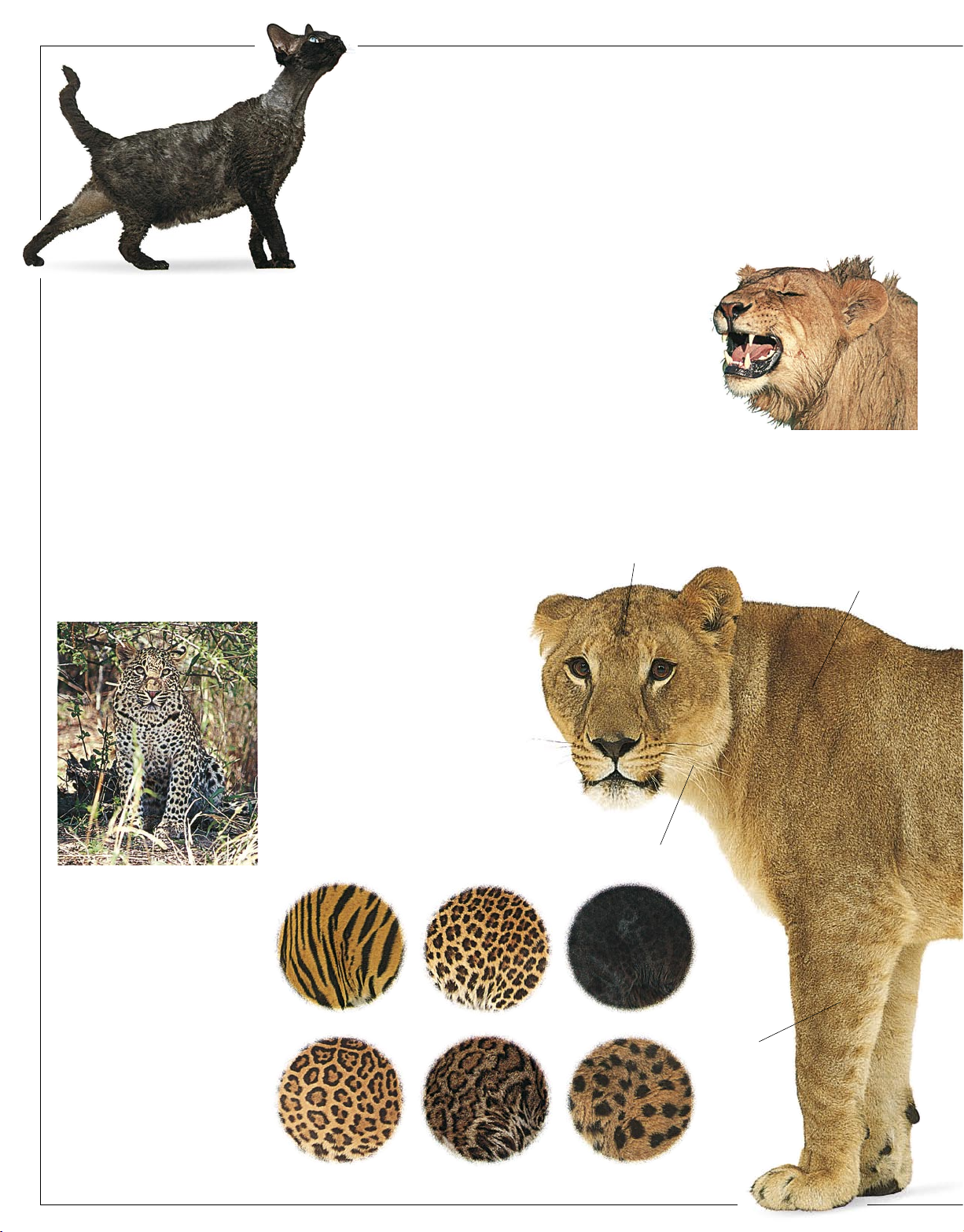
(c) 2011 Dorling Kindersley. All Rights Reserved. Inside out
Everything about the cat has evolved so that it can feed on
other live animals. it has to be a fast thinker, a fast killer, and, in
order to outwit other predators, a fast eater. Therefore, all cats
are agile and have very fast reactions, and their bodies are thin
and powerful. Cats are very intelligent, and their
brains are large in relation to the size of GENE MACHINE
their bodies. Their diet consists of meat
The curly coat of this rex is an abnormality caused by genetic
alone. After a kill, the wild cat will gorge
mutation. Inbreeding reduces gene
itself on the flesh of its prey, and then
variability and leads to the appearance
of abnormal genes in the offspring.
may go for several days digesting this
meat, before it hunts again. The
rough tongue can scrape flesh from bones as well as draw food
into the mouth (pp. 20–21). Cats have sweat glands and reduce FLEHMEN
excess body heat by sweating. However, their fur covering
the special grimace (flehmen) of this
leaves only the glands on the paw pads and, in some cases,
lion shows that he is using the Jacobson’s
(taste-smell) organ to tell if there is a
the nose, effective for heat loss. The male cat has large
lioness in heat nearby (pp. 16–17). By
anal glands which produce the pungent smell that
lifting his head and curling back his
upper lip, the lion is drawing the scent-
makes many people prefer to have their tomcats
laden air over the Jacobson’s organ in the rendered sterile. Rounded head roof of his mouth. with short face Lithe body Fur A fur coat has many uses. It keeps the cat warm, acts as camouflage, carries the scent of the animal, and acts as an
organ of touch by means of the sensitive roots of each hair
(pp. 16–17). All wild cats have a
two-layered coat: an undercoat of
fine soft wool, and an outer coat of
coarser, longer hairs (guard hairs).
The hairs of the outer coat carry the Whiskers
fur’s spotted or striped pattern. SPOT ME
The spotted coat of the leopard is
perfect for camouflage and makes
the cat invisible in the sun-dappled,
wooded grasslands where it lives.
Only the tawny-yellow eyes of this
leopard would be seen, as the cat
waits staring intently for any movement that might mean the possibility of a meal. Tiger Leopard Panther Long FUR COATS legs
It is easy to see how different the
furs of cats are when they are
placed side by side in this way. It is also easy to see why, for
hundreds of years, cat fur has been used to make coats for
humans. Today, many people feel
that it is cruel to kill animals for Jaguar Ocelot their fur. Serval 14
(c) 2011 Dorling Kindersley. All Rights Reserved. Claws Claws are formed of keratin, a protein which also forms the outer layer of skin and is found in human nails. The cat’s hind paws have four claws each; the forepaws, five each. The fifth claw is placed like a thumb and helps the cat to grip when climbing or holding prey. relaxed PURRFECT COMMUNICATION
The purr is another characteristic of the small cat. In all small cats, the set of bones at the
base of the tongue is hard and bony. in big cats, which can only roar (pp. 10–11), these
bones are made partly of cartilage. The cat purrs when vibrations are set up in the bones
by the nervous system. Both wild and domesticated cats purr
when they are content, and female cats purr when Tightened
suckling their kittens. Cats also purr when they are
worried or sometimes when in pain. CLAWS FOR CONCERN All cats except the cheetah (pp. 42–43) have a unique NAUGHTY PUSS Stomach Kidney Large
arrangement for the protection of This advertisement intestine
their claws. When the claws are illustration shows the
relaxed, they are covered by a bony use – or misuse – of the Trachea
sheath – an extension of the last bone claws. A cat playing can
of each toe (top). the claws are rapidly inflict painful scratches.
extended by special flexor muscles,
and the toes spread out at the same Esophagus Anus time (above). Heart Bladder Artery Liver Vein Small intestine CUT-THROUGH CAT
This picture shows how the digestive system fits into
the body cavity and is enclosed by the ribs and the
muscles of the belly. The throat leads into the
esophagus, which takes the food to the stomach and
then to the small intestine. Here the nutritious parts
of the food are absorbed into the bloodstream. The
waste matter passes through the large intestine and out of the anus. Long tail for balance GOOD POINTS
The muscular body of the lioness follows
the line of her skeleton. She has a rounded
head, a short face, a lithe body, long legs,
and a long tail which helps the heavy cat to
balance when she leaps on her prey.
Sensitive whiskers on the sides of her face
help her to find her way in the dark. the MUSCLE BOUND
parts of the brain that control the senses of When the skin is
sight, smell, hearing, and balance are removed, the
particularly well-developed in cats. arrangement of the muscles can be seen. The muscles of the
shoulder are very powerful and are
used when the cat leaps onto its prey. 15
(c) 2011 Dorling Kindersley. All Rights Reserved. Supersenses
Most wild cats live on their own and
hunt for food at night. Their senses are
highly developed and they can move quietly, TIME FOR A DRINK
see everything around them, hear the
A puma drinks from a freshwater pool.
slightest noise, and smell other animals that All cats except the sand cat (pp. 38–39) need water regularly. WATCH THE GAP
are nearby in the dark. the small cat kills Cats are able to judge distances and spaces
quickly and usually eats as fast as possible, very accurately. The
because it must always be on the alert, prepared to race up a tree or dive whiskers and guard (outer) hairs are highly
down a hole if danger threatens. Cats have one sense that humans do sensitive to the slightest pressure. So if there is
not have—the “taste-smell” sense—which, among other things, enables room for the fur, there is
the male to know when the female is in heat (pp. 14–15). the homing room for the cat inside.
instinct of cats is legendary and there are countless stories of cats finding
their way home over long distances. This may be due partly to their
highly developed senses, but they may have other ways of knowing
where they are that we do not fully understand. One theory is that
they use a strong magnetic sense. CELL MATES
In 1601, the Earl of Southampton was
imprisoned in the Tower of London for his
part in a rebellion against Queen elizabeth i.
Pupils expanded (above), narrowed (below)
The story goes that his cat, living
in the earl’s London house, found
its way across the city to the Tower. Once there, it crossed
roofs and battlements until it
found the room in which the earl THE EYES HAVE IT PUPIL POWER
was imprisoned. But how to get A cat can see about six times
The eyes of a cat are large in relation to in? The clever cat somehow better than a human at night
its face. they are round and can look
located the chamber’s chimney
because its eyes have a layer of
forward as well as in a wide angle all and climbed down to join its
extra reflecting cells (the tapetum
around the head. in darkness, the pupils
master. This triumphant tale of
lucidum) which absorb light.
expand to an enormous size in order to
feline navigational skills may These reflectors shine in
allow as much light as possible to enter. well be true, because this the dark when a cat’s eyes
In bright light, they narrow to tiny slits in painting was done at the time. are caught in the glare
the small cats and to tighter circles in of a headlight. most of the big cats. STRETCH ‘N’ SNIFF
When cats are presented with food or come across
any strange object, they are always
cautious. They may first reach out and gently tap it with a paw before stretching out and exploring further with the nose.
Cats cannot smel as well
as dogs can, but smel helps
them to recognize mates,
food, objects, other animals, Tortoiseshell and white cat and humans 1
(c) 2011 Dorling Kindersley. All Rights Reserved. FIVE SENSES
In all cats, the five senses of sight, hearing, smell, taste, and
Large, funnel-shaped ears draw sound
touch are more highly developed than they are in
waves into the inner ear so that the cat
humans. Although humans are more sensitive to
can judge the direction of a noise
color, cats make better use of the light. When it is
too dark for even a cat to see, it can still hear
prey or danger and successfully feel its way
around with its whiskers, its feet, and the Eyes open wide when a
very sensitive outer hairs of its body
cat is alert and interested. and tail fur.
Eyes close to a slit when it is angry or frightened. THE CAT’S WHISKERS Whiskers are long, stiff hairs with sensitive nerve endings at their roots. They spread out around the cat’s face so that the cat can feel where it is in relation to objects nearby. In bad light, they act as a backup to the cat’s sight. The nose, which has no fur covering, is a
very sensitive organ. It draws in scents onto receptors on many thin, curled bones in the front of the skul . Rough tongue used for grooming the coat, cleaning kittens, and lapping up liquids. Sense of taste is important, because as the cat bolts down its
meat, it must be able to
distinguish quickly any part that might be rotten and harmful. Sorrel Abyssinian
(c) 2011 Dorling Kindersley. All Rights Reserved. Magnificent movers
Every part of the cat’s body is adapted for instant action and perfectly
balanced movement. All cats – even the heaviest, like the lion and the tiger –
are extremely agile and can leap with great power, although they cannot run
very fast over any distance. Their agility and strength is essential, because all
cats kill their prey by stalking and then pouncing onto the animal’s back and
biting its neck. the muscles and bones of the chest and neck are particularly LUNGING LEO
powerful (pp. 14–15), and the ligaments very flexible. unlike many other A big cat is so
carnivores, the cat has collarbones, which prevent it from jarring its powerful that it can kill with one lunge of
shoulders when it leaps from a height. The shoulder blades are a paw. This lion
placed well on the side of the deep chest (pp. 12–13), knows its strength and would usually
which helps the cat to climb, and never hurt another member of its pride
most of the weight is carried on
the forelimbs. Cats that climb
trees, like the leopard (pp. 32–33), have long tails,
which help them to balance. All cats walk on their Cat is at full
toes (pp. 12–13) and their feet have thick, soft stretch in pads so they can move quietly. mid-leap Cat puts al four paws ONE GIANT LEAP…
together for maximum power All cats can jump, and at take-off like other animals they do
this by flexing and relaxing the
muscles of the limbs and the back,
while at the same time balancing
with the tail. The cat differs from
other jumping animals in that it is
able to pinpoint its landing position
with great accuracy. This is a necessity
for a hunter of small, fast-moving prey. Puma cub Cat balances on back paws as it begins leap NINE LIVES When cats fall from great heights, they almost always
land on their feet. Many of the small cats, as well as the
leopard, spend a great part of their lives in trees. Their marvelous sense of balance is
an adaptation to the difficult task of hunting a fast-moving
animal, such as a squirrel or a When walking or bird, while creeping along a running, diagonal legs flimsy branch. The nervous
go together. Right front
system has evolved so that the leg and left hind leg PRACTICE
cat, even in the midst of a fall, move in unison. MAKES PERFECT can right itself so as not to All cubs and kittens have to damage its head or the soft
exercise their limbs and muscles parts of its body when it before they can achieve the
reaches ground. There is a lot
flexibility and agile movements of
of truth in the old saying that
their parents. This young cub’s paws
“a cat has nine lives” because,
seem too big for its body, but it is by its fast reactions, it can
practicing running and stalking and will escape from situations that
soon be as lithe as its mother. would kill other animals. 1
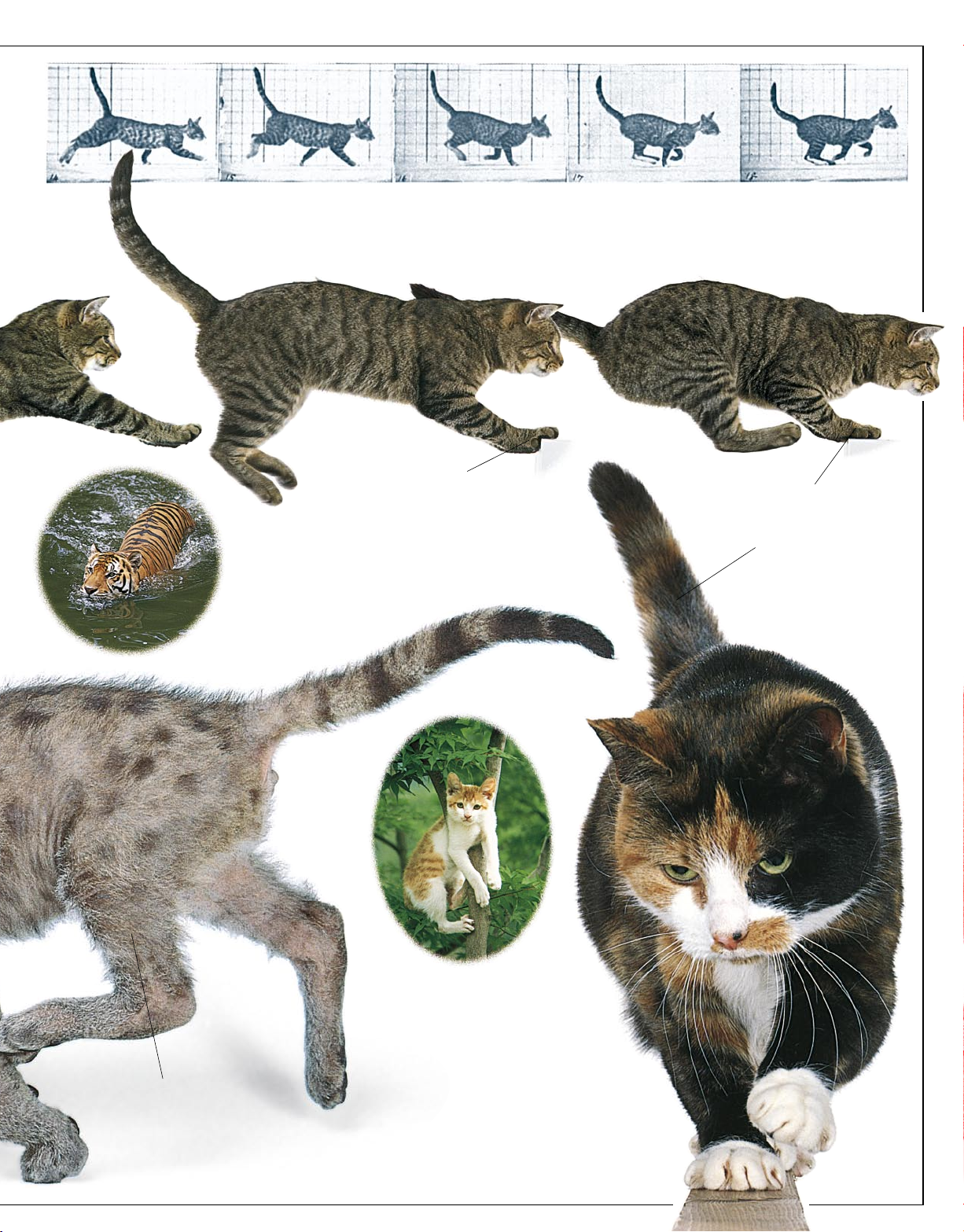
(c) 2011 Dorling Kindersley. All Rights Reserved. RUNNING WILD
When a cat runs, it pushes off with both back legs at the same time to achieve
maximum forward movement, but places the front paws down separately, although
in quick succession. this famous sequence by eadward Muybridge was taken in
1887, and clearly shows how a cat moves its limbs when running. Front paws land and
cat begins to bring back Al four paws paws forward touch ground COOL CAT
All cats can probably swim if they have to, Tail is essential for
but few seem to enjoy it. The tiger is an balance, like the
exception. A good swimmer, it spends a fair pole carried by a
amount of time in or near water. tightrope walker Tigers living in the tropical rain forests of Asia use water as a way of keeping cool. UP A GUM TREE
All kittens have to learn to climb. At first,
just like children, they are frightened of
falling and are not good judges of their
own capabilities. kittens often venture too
far up a tree or onto a roof and are then
terrified of going on or back. After a few Loose skin, and
misadventures and false starts, however, all muscles not yet
but the most timid take the plunge developed
earthward and land on their feet. BALANCING ACT
this cat shows how it can walk along the top of a high,
narrow fence without concern. It places its paws one in front
of the other and is never in danger of falling. 1
(c) 2011 Dorling Kindersley. All Rights Reserved.
Tài liệu liên quan:
-

Ung dung game hoa trong cac chien dich MKT
31 16 -

Bao cao Chi so TMDT Viet Nam 2025
34 17 -

Thông tư quy định về việc phân quyền, phân cấp và phân định thẩm quyền quản lý nhà nước về giáo dục cho chính quyền địa phương
38 19 -
Nghị quyết về phát huy các giá trị di sản văn hóa gắn với phát triên du lịch bền vững tỉnh Khánh Hòa đến năm 2025, định hướng đến năm 2030
37 19 -

Quyết định phê duyệt Chiến lược phát triển du lịch Việt Nam đến năm 2030
25 13