Factors Influencing CRM Implementation at DHL: Insights and Analysis
Factors Influencing CRM Implementation at DHL: Insights and Analysis
Môn: Marketing tổng hợp 85 tài liệu
Trường: Trường Đại học Tài Chính - Marketing 1 K tài liệu
Tác giả:











Preview text:
See discussions, stats, and author profiles for this publication at: https://www.researchgate.net/publication/337759984
The Factors Affecting Customer Relationship Management Implementation at DHL Company in
Article · December 2019
DOI: 10.24086/cuejhss.vol3n1y2019.pp43-51 CITATIONS READS 4 1,043 5 authors, including: Qusay Hameed Al-Salami Ibraheem A Saadi Cihan University-Erbil
University of Malaysia, Kelantan
26 PUBLICATIONS 21 CITATIONS
6 PUBLICATIONS 16 CITATIONS SEE PROFILE SEE PROFILE Zaid Sawadi Rabeea K. Saleh University of Mosul Cihan University
9 PUBLICATIONS 13 CITATIONS
2 PUBLICATIONS 5 CITATIONS SEE PROFILE SEE PROFILE
Some of the authors of this publication are also working on these related projects:
Ant Colony Optimization Algorithm View project Genetic Algorithm View project
Al content fol owing this page was uploaded by Qusay Hameed Al-Salami on 12 May 2021.
The user has requested enhancement of the downloaded file.
Cihan University-Erbil Journal of Humanities and Social Sciences 43
The Factors Affecting Customer Relationship
Management Implementation at DHL Company in Baghdad, Iraq
Qusay H. Al-Salami1, Ibraheem A. Saadi2, Zaid T. Sawadi3 and Rabeea Kh. Saleh1
1Department of Business Administration, Cihan University-Erbil, Erbil, Kurdistan Region, Iraq
2Malaysian Graduate School of Entrepreneurship and Business, University Malaysia Kelantan, Kuala Lumpur, Malaysia
3Department of Management Information Systems, University of Mosul, Mosul, Iraq
Abstract—Customer relationship management (CRM) has the ability to achieve success and growth of enterprises in the present time’s
environment of broad competition and rapid technological development. CRM helps organizations to know the customers well and to
establish sustainable relationships with them. The main goal of this study is to investigate the factors affecting CRM implementation
at DHL Baghdad. To achieve this goal and considering the research model, four hypotheses were formulated, and the required data
were collected through a structured questionnaire. The data were quantitatively analyzed using SPSS 17. According to the findings
derived from the data analysis, the researchers concluded that the first factor (technology) has a positive and significant influence
on CRM implementation, while the other three factors (human resource, knowledge of CRM, and knowledge management) had an
insignificant but positive influence on CRM implementation. Thus, H1 was supported, while H2, H3, and H4 were partly supported.
Keywords—Customer relationship management technology, Customer relationship management, Human resource, Knowledge
management, Knowledge of customer relationship management. I. IntrodUctIon
knowledge of CRM (KCRM), and knowledge management
Customer relationship management (CRM) becomes
[KM]), whereby this can be achieved by providing answers
increasingly popular and has become one of the hottest topics to the following question.
of scientific and practical area in the field of business. In fact,
How can technology, HR, and KCRM and KM affect
due to the rapid competitive environment, CRM is critical
CRM implementation at DHL Baghdad?
and has become an area for the performance of companies.
Recently, CRM has become one of the most contentious
issues and a focal point in the field of business (Balaram II. REVIEw of CRM
and Adhikari, 2010). It is important to mention that CRM
CRM is not a product or service; it is an overall business
is largely based on the belief that establishing a continuous
strategy that enables companies to successfully control
relationship with customers is the keystone of obtaining
relationships with the customers. CRM provides an overview
loyal customers who are more advantageous than those
of customers in organizations (Parvatiyar and Sheth, 2001).
nonloyal ones (Dowling, 2002). In this regard, the successful
The reasons for CRM coming into existence are the changes
implementation of CRM will be of large profit to the
and development in the environment and market technology.
organizations adopting it as well as a help in increasing the
The goal of a professional CRM strategy is to extend, retain,
benefits of sales through superior market segmentation, higher
and keep the profitability of customers (Stone and Foss, 2001).
quality products, customizing products and services, gaining
CRM is a method that can lead to build enduring
access to employee satisfaction, and above all, ensuring long-
relationships with the customers and raise profits by
term customer loyalty, and retention (Almotairi, 2009).
the strategies of focusing on the customer. CRM is a
This study has investigated the factors that affect CRM
customer-oriented marketing effort which is dependable
implementation, such as (Technology, human resource [HR],
for managing and accumulating customers’ details to serve
Cihan University-Erbil Journal of Humanities and Social Sciences
Volume III, No. 1(2019), 9 pages
DOI: 10.24086/cuejhss.vol3n1y2019.pp43-51
Received 26 December 2018; Accepted 21 April 2019; Regular research paper: Published 30 June 2019
*Corresponding author's e-mail: qusay.hameed@cihanuniversity.edu.iq
Copyright © 2019 Qusay H. Al-Salami, Ibraheem A. Saadi, Zaid T. Sawadi, Rabeea Kh. Saleh. This is an open-access article distributed under
the Creative Commons Attribution License (CC BY-NC-ND 4.0).
10.24086/cuejhss.vol3n1y2019.pp43-51 44
Cihan University-Erbil Journal of Humanities and Social Sciences
the customers in the present and future. Moreover, CRM III. CRM ImPLEMEntatIon
is a process of strategic marketing of which the purpose
Implementation of the CRM system is more than the
is to manage, understand, and predict the customers’ demands.
installation of a software package. All purposeful areas of
As well, CRM is the development, establishment,
the business must be involved in marketing, HRs, IT, sales,
optimization, and maintenance of long-standing mutually
and product development and so on. This can be achieved
important relationships. It is a set of business practices to
through ensuring that all employees understand CRM with all
verify, identify, develop, acquire, and maintain the loyalty
its’ aspects and what CRM means in the business. Moreover,
of the customers and sustainable profitability through
providing suitable services and products, in due time
information meetings or formal training are necessary to be
(Perppers and Rogers, 1999), whereby CRM is a wide-
provided to the employees (Mamoun et al., 2011).
ranging strategy and process of retaining, partnering, and
The existence of a suitable strategy in the organization
acquiring with customers to make greater value for the
does not guarantee its’ success with CRM. It is necessary
customer and the company (Parvatiyar and Sheth, 2001).
to apply an effective implementation of CRM (Bohling
It is a means of understanding the customers’ behavior
et al., 2006). According to Mamoun et al. (2011), the model
through deep communication with them to develop
of CRM implementation has four main elements: Change
performance, which is represented in attracting clients,
management, readiness assessment, employee engagement,
keeping them and increasing their profitability and loyalty
and project management. Moreover, they added, the (Swift, 2001).
successful CRM’s implementation lies on the employment of
The companies must use CRM in the field of technology,
five functional processes which combine these four elements:
e-commerce, and research methodology to manage
Value creation process, strategy development process,
customer relationships (Stone and Foss, 2001). This CRM
information management process, multichannel integration
definition clarifies that it is important to use technology
process, and performance assessment process.
in dealing with customers. CRM is the act of considering
The positive implementation of CRM has been proven
the main organization’s customers in the management of
to reduce operational costs, inspire employee confidence,
customer knowledge and the organization’s efficiency,
develop decision-making, and increase customer satisfaction
by way of enhancing the efficiency of the organizational (Reid and Catterall, 2002).
decisions interrelated with leading customers, therefore,
Bohling et al. (2006) suggest five dimensions of CRM
to the improvement of the performance of marketing in
implementation: Organizational structure designed for
the organizational performance in particular (Arnett and
relationships, managerial behaviors, employee training Badrinarayanan, 2005).
programs which manage relationships, systems to facilitate
Fig. 1 clarifies the timeline of the CRM concept
the process and a plan that supports retention, loyalty, and
evolution. The change from transactional marketing to
stable customer interaction. The CRM’s implementation
relational marketing has radically increased the significance
needs to be an integrated approach toward people, processes,
of the long-term economic value of the organizations’
and technology. The definitions mentioned above indicate
customers. The concept of customer value indicates the
that the successful implementation of CRM relies on staff,
current value of the future cash flows attributed to the
technological tools, and a variety of processes that cover the
customer relationship. Customer value is the economic
entire company (Reid and Catterall, 2002). In the interest of
value of the customer relationship to the company.
parsimony, the implementation process of CRM is examined
Customer value tends to transmit the strategic planning
under three headings: Processes, technology, and people.
forms toward a long-term relationship with the customer,
Viljoen et al. (2005) suggest technological utilization:
rather than maximizing the short-term sales (Kumar and
The use of technology in CRM facilitates the effectiveness Reinartz, 2008).
of business operations. Mahdi et al. (2012) indicated
that companies must use technological tools to increase
the reliability of building relationships and help them to
First Generation Second Generation Third Generation
respond to and monitor the changing demands of customers. >1990 >1996 >2002
Technology allows companies to mechanize operations and Cal Center Strategic CRM
enable CRM to be highly qualified. Integrated customer-facing Management front-end
In addition, technological tools facilitate change (mktg., sales, service)
management within organizations. CRM technologies have Sale Force ERP integration
three types that can be implemented: Collaborative CRM, Automation Customer analytics
analytical CRM, and operational CRM (Prasanna and Kumar, Complete web integration Goals:
2014). According to Viljoen et al. (2005), the operation of
Improve service Reduced cost of interaction Costs reduction
CRM system stores will appropriate the information of Operations Increase customer retention Revenue growth
customers in databases to facilitate business communication. increase Sales
These systems are responsible for the CRM’s functionality efficiency Improve customer experience Competitive advantage
and they also develop the efficiency of the CRMs supporting
Fig. 1. Timeline of Customer relationship management evolution (Kumar
processes. Besides that, they listed examples of several and Reinartz, 2008).
technologies which help in faxes, call centers, websites, and
10.24086/cuejhss.vol3n1y2019.pp43-51
Cihan University-Erbil Journal of Humanities and Social Sciences 45
mail. Analytical CRM helps companies to recognize their
degree to which management and employees agree to take
customers by employing different tools of data analyzing.
CRM and support CRM implementation.
Processes and leverage by technology increase efforts to
Viljoen et al. (2005) stated that there is some complexity
build a relationship (Belghis, and Gholamhossein, 2013).
in measuring the outcomes of CRMs performance since, as
According to Parvatiyar and Sheth (2001), “the lifeblood
various authors have increased the importance of the CRM
of the CRM’s implementation is the HR, as they are the
idea, there is still no validated measurement scale to evaluate
building blocks of customer relationships.” It is necessary to
its outcome. The measurement of companies’ performance
have a perfect staff to recover investments made in systems
depends on a limited number of analyses of financial measures.
and processes. To have thriving CRM implementation, firms
However, if the aim was to assess the impact of CRMs
have to engage in change management, which helps the
ambition, which seeks to improve relations with customers,
employees in the company to understand how the change
any measure of results must also include the viewpoint of
affects their implementation vis-à-vis CRM implementation.
the customers. Thus, the success of the CRM implementation
Furthermore, it is necessary to consider the culture regarding
depends on the active participation of the workers in the
change management. The culture requires staff to accept
organization. Hence, a CRM organization should be a primary
any changes and be prepared for the consequences of the
means through which companies effect fundamental changes
implementation of CRM. This is important when establishing
in the way they organize their actual business processes for
an organizational structure which emphasizes the need for
customers and employees (Mamoun et al., 2011).
every member of the company to focus on establishing a
According to Venelin and Vanya (2017), CRM is an
strong customer relationship (Dowling, 2002).
information system designed to manage and improves
Adrian and Pennie (2006) suggested that there are
the service provided to the customer, use its contacts in
five base processes that help one to be aware of CRM:
targeted marketing campaigns, and organize information and
Performance assessment, strategy review, value creation,
interactions with its customers to create loyal customers and
multi-channel integration, and information management.
thus generate more income. Because of their diversity and
Perppers and Rogers (1999) listed six necessary
processes for the successful implementation of CRM:
flexibility, there are three types of standard CRM systems.
Lead management, campaign management, contract
management, offer management, complaint management,
IV. Factors AffEctIng CRM ImPLAntatIon
and service management. In contrast, Almotairi (2009)
presents three more CRM processes: Services, sales, and
Table I illustrates the investigated factors from different marketing.
authors which affect CRM. It is clear from this table that there
Reid and Catterall (2002) suggested that CRM aims to
are 11 authors who have published several papers related to
provide value for all customers and stakeholders to achieve
the factors affecting CRM. As it turns out, there are four core
a different valuable relationship; other than that, the strategy
factors (Technology, HR, KCRM, and KM) that have been
must be handled in progress followed by the process of
investigated separately in different studies; however, they
creating value. Fakhraddin et al. (2013) argued that imposing
have not been put together in one study as factors affecting
and achieving the full advantages of CRM require the
CRM. Based on that, this paper has been the first to do so.
dedication of top management with a clear organizational
change which is compiled through the expected CRM
creativities. He added that the effective implementation of V.TEcHnologY
CRM requires a company to coordinate people effectively,
Prasanna and Kumar have been proven that technology
business processes, and technology; it also represents the
positively affects CRM implementation as it is mentioned TABLE I
Factors AffEctIng CRM ImPLAntatIon as PrEsEntEd In LItEratUrE (CrEAtEd bY REsEArcHErs) Authors CRM factors Technology Human Knowledge Knowledge Information management Communication CRM resource of CRM management technology
commitment channels of interaction strategies
Belghis and Gholamhossein,(2013) √ √ √ √ Fakhraddin and Marzieh (2013) √ Fakhraddin et al. (2013) √ √ √ Hadi et al. (2011) √ Viljoen et al. (2005) √ Bidisha and Mukulesh, (2013) √ Mahdi et al. (2012) √ David and Wendy, (2010) √ Khushboo, (2015) √ Gebert et al. (2002) √ √
Garcia-Muril o and Annabi, (2002) √
CRM: Customer relationship management
10.24086/cuejhss.vol3n1y2019.pp43-51 46
Cihan University-Erbil Journal of Humanities and Social Sciences
in their published paper in 2014, “CRM technology is an
It is quite wrong to impose the CRM without the mutual
important strategic tool for any organization to achieve CRM
involvement between the employees and the customers.
success in application.” The technology role enables CRM
The most complex stage in the CRM process is contacting
use (Prasanna and Kumar, 2014) and allows organizations to
the individuals in the firm. Internal marketing plays the most
achieve better customization and greater service at a lower
significant task of customer service delivery and customer-
cost (Mahdi et al., 2012).
oriented processes in every organization. Internal marketing
Moreover, technologies play significant roles in companies’
is the interactivity between marketing and HR management
CRM programs and chiefly for those with huge customer bases. (Mamoun et al., 2011).
In fact, CRM technology is the backbone of various operational
Kumar and Reinartz (2006) suggested that customers
aspects of CRM, such as the automation of the sales force and
would prefer to communicate with employees rather
operations of the call center. Accordingly, it is necessary from
than electronic systems. This indicates the reason of why
both perspectives of administrative and academic departments
academic researchers state that HR is the first priority to be
to understand how organizations use, implement, and take
considered among all the CRM resources. Based on Rigby
advantage of these technologies (Swift, 2001).
et al. (2002), CRM can be implemented more powerfully
Whereby, Alhassan (2005) has also proved the impact of
by encouraging employees to be more conscious of
technology on CRM implementation in 2012, “as with many
customer’s expectations. HR management is an extremely
other modern business concepts, CRM has largely developed
important element for employees’ behavior and skills in the the Western World. company.
However, due to the marketing load of CRM technology
H2: HR has a positive and significant influence on CRM
vendors, organizations in developing parts of the world are implementation.
only gradually adopting the technologies and principles of
CRM to manage their relationships with customers.”
CRM technology has been used for CRM application VII. KCRM
software in several ways of organizations’ CRM programs.
These range from account management applications through
This factor deals with people or organization administrators
business intelligence systems, sales force automation, and
who are involved in drawing up the policies and in driving marketing automation.
CRM to success (Belghis and Gholamhossein, 2013).
According to the perspective of a relationship process
KCRM is one of the factors that positively affect CRM
management, an organization can use CRM technology
implementation as it is mentioned by Garrido-Moreno and
to maintain the relationship initiation and termination
Padilla-Meléndez in their published paper in 2011, “It is
activities, as well as to carry out the necessary analytics
important for administrators to have good management
to create information in supporting these activities (Mahdi
capacity; they must know CRM and understand it well. They et al., 2012).
are expected to make clear visions to guide the company
H1: Technology has a positive and significant influence on
through representing CRM in an effective approach, to CRM implementation.
assume responsibility for developing strategies of CRM, and
to propel performance through some securities supporting
CRM, including working environment, resources, technology, VI. HR
and time. The directors have to have the ability to relieve
As for HR and its relationship with CRM, Khushboo
the troubles which make them unsuccessful in achieving the
(2015) has mentioned in his published paper in 2015 that target they had expected.”
HRs positively affect CRM implementation. “It has been
While Greenberg (2001) has also proved that KCRM
observed that the employees are the central effectiveness
strongly affects CRM implementation, “The employees are
of CRM; so, due to the importance of the employees,
required to known well the CRM system, organizational
organizations should manage its relationships with them if
visions and strategies, and to also be aware of the customer-
the organization seeks to serve well the customers. Thus,
oriented services’ values as well as the importance of
the company must consider the employees as the eyes of the
building and maintaining a perfect relationship between the customer.”
organization and its customers.”
According to Simns (2003), Bill Cooney, who was a
H3: KCRM has a positive and significant influence on
deputy CEO in a USAA company, specializing in American CRM implementation.
property and casualty insurance with a profit of over $60
billion and customer retention of 100% while always ranking
among the 100 top companies in the USA, remarked that: VIII. KM
“If you do not care about your employees, the employees
According to the high growth of customers’ knowledge,
will not care about the customers. We must give employees
managing knowledge has become an important key in
everything they need to be happy; in contrast, we will have
all aspects of the CRM process, which helps in getting
satisfied customers and that will help our company survive.”
successful CRM. Thus, managers must manage and update
Therefore, Simns (2003) stated the success of CRM
their knowledge to identify and achieve the customers’ needs
depends heavily on the involvement of the staff in all stages.
as fast as they can (Stefanou et al., 2003).
10.24086/cuejhss.vol3n1y2019.pp43-51
Cihan University-Erbil Journal of Humanities and Social Sciences 47
The company cannot focus on customers without
knowing the customers’ needs. Customer needs driven the
CRM strategies to clarify the needs of the customer through
analyzing customer information. According to Stefanou
et al. (2003), when an organization transfers customer
information to customer knowledge, it is an exponent of
CRM success. Gebert et al. (2002) state that information
about customers must be collected through interactions
across all areas or functions of the organization so that a
360-degree customer view is established, maintained, and continually updated.”
According to Garrido-Moreno and Padilla-Meléndez,
who proved the significant relationship between KM
and CRM implementation in their published paper in
2011 “CRM utilization is directly associated with the
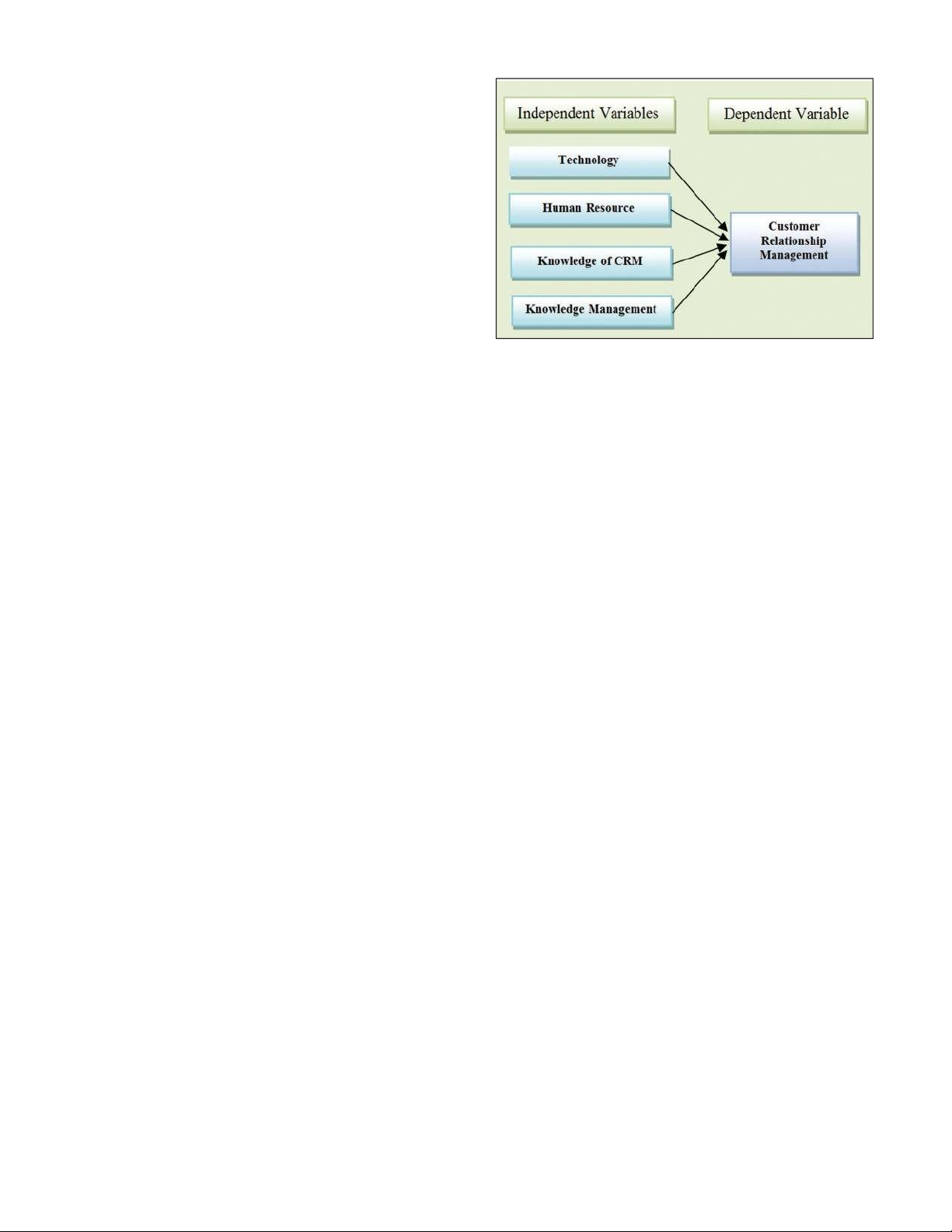
Fig. 2. Research model (Created by Researchers).
increase of customer knowledge, which in contrast will
positively affect customer satisfaction. KM helps an
organization to improve its relationship with its valuable
Two Street, and Mansour Branch with a total population of
customers to obtain loyal customers and create competitive 93 employees. advantages.”
In the process of gathering data; quantitative approach
was used to collect information from the employees of
Moreover, Zablah et al. proved this significant relationship
DHL/Baghdad. A structured questionnaire has been used with
in 2004, “organizations must be expert at managing
closed-ended questions. The purpose of the questionnaire was
knowledge about their customers and knowledge that is
to measure the influence of the research independent variables
beneficial to the customers; consequently, customer focus
(Technology, HR, KCRM, and KM) on the dependent
will be one of the organization’s goals.”
variable CRM implementation. The questionnaire consists of
This knowledge includes, but is not limited to, industry,
three sections. Section 1 consists of three general questions
knowledge about one’s company, customers, competitors,
related to the respondents’ background and experience.
the processes and procedures that allow companies to
Section 2 consists of five questions related to overall CRM
work well with partners and the company structures that
performance in the company, and its impact on the marketing
allow companies to be effective and efficient (Belghis and
and financial results. Section 3 consists of 25 questions Gholamhossein, 2013).
measuring the research’s dependent and independent
H4: KM has a positive and significant influence on CRM
variables. Five questions were asked based on each variable, implementation.
while five-point Likert scale was used as a response scale for
each statement in the survey questionnaire which ranges as
1 = strongly disagree, 2 = disagree, 3 = neutral, 4 = agree, IX. REsEArcH ModEL
and 5 = strongly agree. The researchers used the rating
The research model (Fig. 2) suggests that the research
scale because it is clear and commonly used to ask people
independent variables (technology, HR, KCRM, and KM) have
about their opinion and attitude (Tsapelas et al., 2010). The
a significant and positive influence on CRM implementation.
questionnaire has been distributed randomly among the
The research questions which are 25 demonstrates in Table
employees using a sample survey method, and the results
II with its resources that measuring the research dependent
are generalized to the entire population. Randomization has
and independent variables. Five questions were asked based
been used as it protects against bias in the selection process, on each variable.
so in distributing the questionnaire there was no preferential
treatment in respondents selection. The researchers were
keen to distribute questionnaires to a range of gender and X. REsEArcH MEtHodologY
age. This is to avoid bias for surveying all the respondents
The case study of this research is DHL Company/Baghdad
from only a certain range of age and gender. Finally, the data
branches. DHL is a division of a German postal center, offers
statistically analyzed using (SPSS) software.
international express mail services. DHL established in 1969
to deliver documents between San Francisco and Honololo.
In the late seventies of the 20th century, the company has XI. PoPULAtIon and SamPLE
expanded it activates in the whole world. In Iraq, there are
The target population of this study was the employees of
many DHL branches separated in seven Iraqi Governorates
DHL/Baghdad. The sample size is 75 employees from the
that are Baghdad, Mosul, Basra, Salah AL-Dien, Erbil, Tikrit,
population of 93 employees. This sample was calculated and Kirkuk.
using Eq. 1 based on a formula (Yamane, 1973; Anaman and
However, in Baghdad, there are six DHL branches which
Okai, 2016) given as follows, while the significant level is
located at Sadoun Street, Palestine Street, Kadhimiya, Sixty- accepted at 95%.
10.24086/cuejhss.vol3n1y2019.pp43-51 48
Cihan University-Erbil Journal of Humanities and Social Sciences TABLE II
MEAsUrEMEnt ScalE ItEMs for ModEL VarIABLEs (AdaPtEd tHE QUEstIonnaIrEs from PrEVIoUs StUdIEs) Factors
Measurement criterions (indicators) References Customer relationship
There is a perfect CRM system in the company.
Ampoful, A. (2012). The Effect of Customer Relationship management
Management (CRM) on the Profitability of Financial, Master Thesis,
Institute of Distance Learning, KNUST.
CRM system in the company building better relationship
Saeed, F. (2011). Customer Relationship Management Practices, Master with customers
Thesis, Luleå University of Technology.
CRM directly affects trust and perceived customer value
Maroofi, F., & Dehghani, M. (2013). The effect of knowledge
management on CRM prosperity. International Journal of Research, 9 (3), 80-81.
CRM achieves growth in sales and market share
Maroofi, F., & Dehghani, M. (2013). The effect of knowledge
management on CRM prosperity. International Journal of Research, 9 (3), 80-81.
CRM increases the profitability of the company
Maroofi, F., & Dehghani, M. (2013). The effect of knowledge
management on CRM prosperity. International Journal of Research, 9 (3), 80-81. Technology CRM customizations documented
Drohan, R. (2010). Exploring the Nature of Effective Customer
Relationship Management Capability, Master Thesis, Waterford Institute of Technology.
CRM technologies support the customer’s environment, such
Saeed, F. (2011). Customer Relationship Management Practices, Master
as (Database, operating system, web server, and so forth)
Thesis, Luleå University of Technology.
The company applies Microsoft Dynamics CRM update
Drohan, R. (2010). Exploring the Nature of Effective Customer
rollups on your environments such as (Server, Client, Email
Relationship Management Capability, Master Thesis, Waterford Router, Report Server….) Institute of Technology.
IT organization utilizes and adheres to an established operations Maroofi, F., & Dehghani, M. (2013). The effect of knowledge
framework such as Microsoft Operations Framework (MOF) or management on CRM prosperity. International Journal of Research,
Information Technology Infrastructure Library (ITIL) 9 (3), 80-81.
The company provides you a roadmap for your CRM
Lynch, P. (2008). Measuring and Understanding the Intensity of
system such as (Upgrades, additional features, technical
Industrial User Involvement in the Early Stages of New Product enhancements, and so forth.)
Development, PhD Thesis, Waterford Institute of Technology. Human resource
The employees are well trained in using customer-related
Rigby et al., 2002; Reinartz et al. (2004). Keramati et al. (2009). technologies Keramati et al., 2010.
There is a qualified technical staff to provide technical
Nili, A. (2010). The Impact of CRM on Customer Retention in
support for the use of technology to build satisfactory
Electronic Banking, Master Thesis, Luleå University of Technology. relationships with customers
There is marketing and sales expertise to have the desired
Rigby et al., 2002; Reinartz et al. (2004). Keramati et al. (2009). CRM Keramati et al., 2010.
The employees have shown their commitment to the
Nili, A. (2010). The Impact of CRM on Customer Retention in customers’ strategy
Electronic Banking, Master Thesis, Luleå University of Technology.
Firm motivates employees to submit with CRM objectives
Maroofi, F., & Dehghani, M. (2013). The effect of knowledge
management on CRM prosperity. International Journal of Research, 9 (3), 80-81. Knowledge of CRM
The company implemented CRM guidelines
Ghavani, A. (2006). The Impact of CRM on Customer Retention,
Master Thesis, Luleå University of Technology.
The company has enough knowledge about CRM practices
Barbara, E. (2011). Improving Customer Relationship Management in and improvement
the Banking Industry. Master Thesis, Kwame Nkrumah University of Science and Technology.
The company prepared employees to work in CRM
Barbara, E. (2011). Improving Customer Relationship Management in environment
the Banking Industry. Master Thesis, Kwame Nkrumah University of Science and Technology.
There is a clear action to educate al employees on CRM
Ghavani, A. (2006). The Impact of CRM on Customer Retention, system
Master Thesis, Luleå University of Technology.
CRM practices customers oriented
Ghavani, A. (2006). The Impact of CRM on Customer Retention,
Master Thesis, Luleå University of Technology. Knowledge
There is intranet facilitates interaction between employees in
Kumer, T. (2007). Customer Management in the e-Business management
a different location and accelerates flow knowledge sharing
Environment, Master Thesis, Lulea University of Technology.
Leadership and charisma are one of the organizational culture
Kumer, T. (2007). Customer Management in the e-Business
features that lead to successful customer knowledge sharing
Environment, Master Thesis, Lulea University of Technology. the atmosphere
Management has Customer experience about products and\or
Ventaglio, D. (2013). Knowledge Management Driving Customer
services, which enhance tacit knowledge sharing process.
Behavior, Master Thesis, Pepperdine University.
Self-management is one of the organizational culture features
Vaezitehrani, S. (2013). Customer Knowledge Management in Global
that lead to success in customer knowledge sharing the
Software Projects, Master Thesis, Chalmers University of Technology. atmosphere
Groupware products and\or software enhances rapid
Ventaglio, D. (2013). Knowledge Management Driving Customer
knowledge creation, classification, storing, and reuse
Behavior, Master Thesis, Pepperdine University.
CRM: Customer relationship management
10.24086/cuejhss.vol3n1y2019.pp43-51
Cihan University-Erbil Journal of Humanities and Social Sciences 49 n =N/[1+N (e)2] (1)
reliability. The result indicates that the measurement set used
in the study was reliable as Cronbach Alpha >0.70.
n=93/[1+93 (0.05)2] = 75 samples
Moreover, correlation analysis was used to investigate
Here, n=Sample size, N=Population of sample,
the strength and direction of the linear relationship between e=Significance level (0.05).
the independent variables and the dependent variable.
A pilot test was conducted before finalizing the
According to Cohen, (1988) the strength of relationship
questionnaire, and the survey was conducted during the
between two variables considered low in case of month of March 2019.
r=(0.10-0.29/−0.10-−0.29), moderate r=(0.30−0.49/−0.30-
−0.49), and high r=(0.50-1/−0.50-−1). This research
indicated that there is a highly significant positive XII. FIndIng and DIscUssIon
relationship found between all independent variables and
The questionnaire was distributed among the employees
CRM implementation as r>0.5, p<0.001 for all variables.
of DHL/Baghdad; for the purpose of investigating the
The higher the score is on technology, HR, KCRM, and
influence of technology, HR, KCRM, and KM on CRM
KM, the more success in CRM implementation will be implementation.
achieved. Table IV presents the results of reliability and
The first section of this questionnaire is three general correlation.
questions related to the respondents’ background and
The regression statistic shows that R² is 0.778 which
experience as reported in Table III.
means 78% of the variation in CRM implementation
The second and third sections of the questionnaire are
is explained by the independent variables. The Durbin
measuring the research dependent and independent variable.
Watson statistics show that the serial correlation of
Different statistical analysis was used. First, the mean value
residuals is 1.731 which falls within the acceptable range
and standard deviation for all variables were determined
(1.5 and 2.5). This indicates that there is no autocorrelation
after computing the five items related to each variable.
problem in the data. The F value (61.445) is also found
Furthermore, a reliability analysis using Cronbach’s Alpha
to be significant at 5% level of significance (0.000). This
was performed to determine to what extent items are related
concludes that the regression model used in this study to each other. was fit.
According to Nunnally and Bernstein, (1994) Cronbach’s
The collinearity statistics (tolerance test and variance
alpha with larger values (>0.70) indicates higher internal
inflation factor [VIF] test) were used to determine the
consistency in the measured dimension and hence greater
presence of multicollinearity among the independent
variable in this study. Both the VIF and tolerance fall within
acceptable range (VIF = 1-10 and tolerance = 0.1-1.0) TABLE III
that means there is no multicollinearity problem in the REsPondEnts’ BacKgroUnd
regression model used for this study. Furthermore, the result Factor Categories Frequency Count Percentage
indicates that technology has a positive and significant 1. Gender Male 75 47 63
influence on CRM implementation; as it assigned a high Female 28 37
unstandardized coefficient value (beta) of 0.747; and 2. Work experience <1 75 14 19 1-2 33 44
p=0, while HR, KCRM, and KM have an insignificant 3-5 19 25
and positive influence on CRM implementation, as they >5 9 12
assigned positive unstandardized coefficient values; and 3. Managerial level Top 75 9 12
p>0.01. Thus, H1 was supported, while H2, H3, and H4 Middle 21 28
were partly supported. Details of regression statistics are Lower 45 60 presented in Table V. TABLE IV
RELIABILItY And CorrELAtIon REsULts Factors No. of items Mean±Std. deviation Cronbach’s alpha Correlation Independent variables (IV) Technology 5 4.38±0.829 0.925 IV with DV Pearson Sig. (2-tailed) Correlation’s Correlation (r) direction Human resources 5 4.20±0.881 0.857 Tech and CRM 0.880 0.000 High Knowledge of 5 4.24±0.836 0.820 HR and CRM 0.662 0.000 High CRM Knowledge 5 4.32±0.617 0.853 KCRM and CRM 0.777 0.000 High management Dependent variable (DV) CRM 5 4.22±0.845 0.842 KM and CRM 0.530 0.000 High implementation
CRM: Customer relationship management, KM: Knowledge management, KCRM: Knowledge of customer relationship management, HR: Human resource
10.24086/cuejhss.vol3n1y2019.pp43-51 50
Cihan University-Erbil Journal of Humanities and Social Sciences TABLE V
IOSR Journal of Business and Management, 14(2), 8-16.
REsULts of REgrEssIon StatIstIcs
Bohling, T., Bowman, D., LaVal e, S., Mit al, V., Narayandas, D., Ramani, G., & Factors Unstandardized
p value Col inearity statistics
Varadarajan, R. (2006). CRM implementation: Effectiveness issues and insights. coefficient value (beta) Tolerance VIF
Journal of Service Research, 9(2), 184-194. Technology 0.761 0.000 0.179 5.585
Cohen, J. (1988). Statistical power analysis for the behavioral sciences. 2nd ed. Human resource 0.043 0.589 0.472 2.120
Hil sdale, NJ: Lawrence Earlbaum Associates. Knowledge of 0.090 0.425 0.256 3.903 CRM
David, J., & Wendy, L. (2010).Amulti-layered approach to CRM implementation: Knowledge 0.058 0.543 0.652 1.534
An integration perspective. European Management Journal, 28(10), 153-167. management
Dowling, G. (2002). Customer relationship management: In B2C markets, often
R²= 0.778, Adjusted R² = 0.766, F value= 61.445, Sig. F change= 0.000
less is more. California Management Review, 44(3), 87-104.
CRM: Customer relationship management, VIF: Variance inflation factor
Fakhraddin, M., & Marzieh, D. (2013). Symptom of knowledge management XIII. Concl
ability for KM efficiency. International Journal of Research in Social Sciences, UsIon 3(4), 1-13.
This study focused on the factors that affected CRM at DHL
Fakhraddin, M., Bahareh, M., & Hooshmand, F. (2013). Effective factors on
Baghdad. The purpose of this study was to measure the
CRM development. Asian Journal of Business Management, 5(1), 52-59.
influence of independent variables (technology, HR, KCRM,
and KM) on CRM implementation. According to the finding of
Garcia-Muril o, M., & Annabi, H. (2002). Customer knowledge management.
Journal of the Operational Research Society, 53(8), 875-884.
this study, it has been found that the first factor (technology) has
a positive and significant influence on CRM implementation;
Garrido-Moreno, A., & Padil a-Meléndez, A. (2011). Analyzing the impact
as it assigned a high unstandardized coefficient value while the
of knowledge management on CRM success: The mediating effects of organizational factors.
other three factors (HR, KCRM, and KM) have insignificant
International Journal of Information Management, 31(6), 437-444.
but positive influence on CRM implementation.
As they assigned positive unstandardized coefficient
Gebert, H., Geib, M., Kolbe, L., & Riempp, G. (2002). Towards Customer
Knowledge Management Integrating Customer Relationship Management and
values, thus, H1 was supported, while H2, H3, and H4 were
Knowledge Management Concepts (pp. 296-298). The Second International partly supported.
Conference on Electronic Business (ICEB 2002). Taipei, Taiwan: ICEB.
Finally, it can be concluded that high quality of CRM
implementation will enhance the organization sales and
Greenberg, P. (2001), CRM at the speed of light: Capturing and keeping
customers in internet real time. Osborne/McGraw-Hil , Berkeley, California. marketing activities.
Without customers, you will not have a long-term business.
Hadi, N., Ilham, S., & Shishi, K. (2011). The influence of customer knowledge on
To attract customers, the organization must have good
CRM performance of Malaysian ICT companies: A structural equation modeling
approach. International Journal of Business and Management, 6(7), 181-198.
effective CRM system which helps to classify the customers’
needs and communicate them in a way that can meet their
Khushboo, B. (2015). Trends in HRM and CRM. IJRAR International Journal satisfaction.
of Research and Analytical Reviews, 2(1), 49-53.
Kumar, V., & Reinartz, W. (2006). Customer relationship management:
A databased approach. Hoboken, NJ: John Wiley and Sons. REfErEncEs
Kumar, V., & Reinartz, W. (2008). Customer relationship management:
Adrian, P., & Pennie, F. (2006). Customer relationship management: From
A database approach. New York: John Wiley and Sons, Inc.
strategy to implementation. Journal of Marketing Management, 22(6), 135-168.
Mahdi, B., Mazaher, G., & Mohammad, A. (2012). Information Technology
Alhassan, G. (2005). CRM technology use and implementation benefits in
(IT) as an Improvement Tool for Customer Relationship Management (CRM).
an emerging market. Journal of Database Marketing and Customer Strategy
The First International Conference on Leadership, Technology, and Innovation
Management, 3(19), 82-97.
Management (pp. 59-64). Procedia-Social and Behavioral Sciences, Isfahan, Iran: CRM.
Almotairi, M. (2009). A Framework for CRM Success (pp. 13-14). Proceedings
of the European and Mediterranean. The First International Conference on
Mamoun, N., Samer, E., Hesham, S., & Bayan, N. (2011). Customer relationship
Information Systems. Izmir, Turkey: CRM.
management implementation an investigation of a scale’s generalizability and
its relationship with business performance in a developing country context.
Anaman, K., & Okai, J. (2016). Extent of awareness of birth control methods and
International Journal of Commerce and Management, 21(2), 158-191.
their use by women in a PERI-urban area of Accra, Ghana. Modern Economy, 7, 39-54.
Nunnal y, J., & Bernstein, H. (1994). Psychometric theory. 3rd ed. New York: McGraw-Hil , Inc.
Arnett, D., & Badrinarayanan, V. (2005). Enhancing customer-needs-driven
CRM strategies: Core sel ing teams, knowledge management competence,
Parvatiyar, A., & Sheth, J. (2001). Customer relationship management: Emerging
and relationship marketing competence. Journal of Personal Selling and Sales
practice. Process, and discipline. Journal of Economic and Social Research,
Management, 1(4), 329-343. 3(2), 1-34.
Balaram, A., & Adhikari, B. (2010). Managing customer relationships in service
Perppers, D., & Rogers, M. (1999). The one to one manager: Real-world lessons
organizations. Administration and Management Review, 21(2), 65-78.
in customer relationship management. New York: Doubleday.
Belghis, B., & Gholamhossein, H. (2013). Studying the factors affecting the
Prasanna, M., Kumar, V. (2014). Information technology: Roles, advantages
customer relations management (CRM) in marun petrochemical company.
and disadvantages. International Journal of Advanced Research in Computer
Interdisciplinary Journal of Contemporary Research in Business, 4(11), 845-957.
Science and Software Engineering, 10(4), 203-312.
Bidisha, L., & Mukulesh, B. (2013). Employee retention: Areview of literature.
Reid, A., & Catteral , M. (2002). Invisible DATA quality issues in a CRM
10.24086/cuejhss.vol3n1y2019.pp43-51
Cihan University-Erbil Journal of Humanities and Social Sciences 51
implementation. Journal of Database Marketing and Customer Strategy
Tsapelas, I., Fisher, H., & Aron, A. (2010). Infidelity: When, where, why. In:
Management, 12(4), 305-314.
W. R. Cupach & B. H. Spitzberg (Eds.), The dark side of close relationships II
(pp. 175-196). New York: Routledge.
Rigby, D., Reichheld, F., & Schefter, P. (2002). Avoid the four perils of CRM.
Harvard Business Review, 80(2), 101-109.
Venelin, T., & Vanya, B. (2017). Customer Relationship Management. Vol. 17.
(pp. 25-28). 13th International Scientific Conference, the Teacher of the Future,
Simns, J. (2003). How Can Value of CRM Activity be Measured, Marketing. Budva, Montenegro: ISC. London: Hypermarket.
Viljoen, M., Bennett, J. A., Berndt, A. D., & Vanzyl, C. R. (2005). The use of
Stefanou, C., Christos, S., & Amalia, S. (2003). CRM and customer-centric
technology in customer relationship management (CRM) (pp. 106-116). South
knowledge management: An empirical research. Business Process Management
Africa: University of Johannesburg. Journal, 9(5), 617-634.
Yamane, T. (1973). Statistics: An introductory analysis. 3rd ed. New York:
Stone, M., & Foss, B. (2001). Defining CRM and assessing its quality. Successful Harper and Row.
customer relationship marketing (pp. 3-20). London, United Kingdom: Kogan.
Zablah, R., Bel enger, D., & Johnston, W. (2004). An Evaluation of divergent
Swift, R. (2001). Accelerating customer relationships: Using CRM and
perspective on customer relationship management: Toward a common
relationship technologies. Upper Saddle River New Jersey: Prentice Hal
understanding of an emerging phenomenon. Industrial Marketing Management, Professional. 33(6), 475-489.
10.24086/cuejhss.vol3n1y2019.pp43-51
Downloaded by Nguyen Linh (vjt29@gmail.com) View publication stats
Tài liệu liên quan:
-
Phân Tích Môi Trường Marketing: Vi Mô và Vĩ Mô trong Doanh Nghiệp
12 6 -
Quy trình Nghiên cứu Marketing: Từ Cơ Bản Đến Ứng Dụng
13 7 -
Câu hỏi trắc nghiệm ôn tập Marketing - MAR
24 12 -
Marketing QUI TRÌNH PHÁT TRIỂN SẢN PHẨM MỚI: 8 Bước Quan Trọng
19 10 -
Bản chất và Chức năng của Tiền Tệ - Học phần Hiih
20 10